2018 in Books
Originally published in two parts — a mid-year check-in in July and a year-end reckoning in December. Collected here as one post.
The First Half

Looks like 2018 is half over. Originally, I was using this to keep track of all the books I read this year. But as part of my reading, I’ve wanted to keep track of the things in each book that stuck out to me. Turns out, a lot of things stuck out to me thus far. So many that when I try and open this on the Medium app, it crashes. So, I’ve read 30 books so far this year. And to save myself from having a massive post at the end of the year, I’ll just share this now as Part I.
Here are some things to know.
First, this is a long post. This isn’t meant for casual consumption, so if you’re here at all, you’re a brave soul. This is meant, more than anything, as a repository for me to remember what struck me as I read, and as summaries of books I don’t want to forget. The desire to read has raced so much further ahead of the desire to comprehend, and I want to make sure that I do everything I can to improve my comprehension. I included all the quotes that I underlined or highlighted as I read. I included images of the book covers so you can quickly scroll from book to book if you’re curious.
The second thing, I made a concerted effort to read more fiction this year (thanks to my English-major wife Camden, and my champion-reader Aunt Cindy, who read 177 books in 2017.) I gravitated a lot towards Cormac McCarthy because I thought “I need more reasons to be depressed in my life.” In all seriousness, McCarthy is one of the most enjoyable authors I’ve had the privilege to peruse. Not that I’ve perused him. But like his words. On the page. Anyways… I bring this up because I also highlighted what struck me from the fiction I read. I tried not to have any spoilers, but if you’re hankering for some of the fiction I’ve got here, and you’re a spoiler-averse conformist, best to skip those ones.

Turnaround*
I’ve always respected Mitt Romney for as long as I’ve had the opportunity to know who he was. I had the great privilege to work at Solamere Capital, which is managed by Tagg Romney, Mitt’s son, and had the chance to sit in several meetings where Mitt was involved as well. I’ll never forget one particular conversation; we were discussing a company we could purchase, and the cost synergies that could be realized. Mitt Romney spoke up and said, “Never speak lightly of those potential cost cutting areas. A lot of times, the costs to cut represent people’s jobs, and we never want to treat that lightly.” Many thanks to Pioneer Book in Provo, Utah for exposing me to this book.
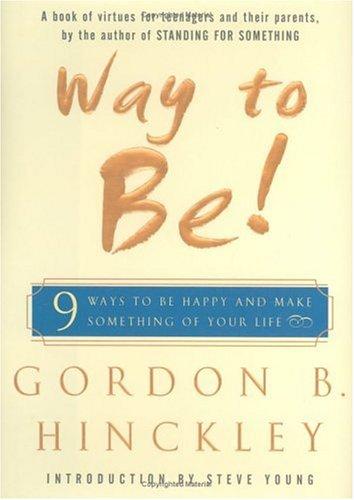
Way To Be*
When I was maybe 12 or 13, my parents got me this book for Christmas. I remember reading it then, I remember reading it when I was maybe 16 or 17, and I read it this year. President Hinckley, the President of the Church of Jesus Christ of Latter-Day Saints, certainly was writing to a mostly teenage audience, I was so inspired by how beneficial his words were as he laid out 9 ways to be:
- Be Grateful
- Be Smart
- Be Clean
- Be True
- Be Humble
- Be Prayerful
- Be Positive
- Be Still
- Be Involved
Each one of those attributes meant something different to me. I sat down early in the morning and came across this book, and read it from beginning to end (before you begin a slow clap, it’s a relatively quick read.) But to have so much truth offered in such quick succession, offered a new way to think about my life and the choices I make.
The Greatest Miracle in the World*
I don’t remember where I first heard about Og Mandino’s books, but I remember it was some time during my LDS Mission while I was in Waynesboro, PA. The first book of his I was exposed to was The Greatest Salesmen in the World. Mandino’s way of taking truths and weaving them into a narrative was inspiring for me. In the same early morning that I finished Gordon B. Hinckley’s ‘Way to Be,’ I also finished this short book, and I felt a powerful impression of the truths it was offering. Many thanks to the Freed Spirit Bookstore on Main St. in Waynesboro, PA for getting me my copy of this book. I’m not even sure they’re still in business anymore.
Dumbing Us Down*
I’ve been reading more and more about education, and realizing how little about it I know. It began last year when I read ‘The Smartest Kids in the World’ by Amanda Ripley and has continued in bits and pieces. Before I took the job I have now, I was in the process of interviewing for a job with Teach For America. My intention was to get that job and request a teaching position in New York City. I felt like that melting pot was one of the best places to get the experience I wanted. And while I’m sure I would have learned some truly invaluable lessons in New York, I chose a different path. But much of what I think I would have learned and been frustrated by, is clearly laid out in this book by a 30-year veteran of teaching all over New York. Many thanks to some random professor who left a stack of books in the BYU Spencer W. Kimball Tower (SWKT), because this was one of them and I thoroughly enjoyed it.
How To Build a Business Warren Buffett Would Buy*
As I got more involved in private equity and venture capital, everyone and their mother told me that if I wanted to be a good investor, reading everything I could about great investors was a requirement. I don’t remember where I first heard about Warren Buffet, but I’m grateful to my parents for getting me his biography, Snowball, for Christmas in 2013. Many thanks to the BYU Rollins Center for giving me my copy of this book. As much as I knew about Warren Buffet, hearing about his interactions with a Utah business, especially one where not being open on Sundays was such a strategic decision, was impactful.
Walden*
At the beginning of 2016, I didn’t know anything about Walden, and what little I knew of Henry David Thoreau could be summed up as “what smarter people than me read for fun.” Thanks to Solamere Capital, I had the chance to spend the summer in Boston, and a trip to Walden Pond was a no-brainer. I saw the replica of Thoreau’s little house, and became fascinated with the idea of such solitude. To be 100% clear, I still think I’m not smart enough to really grasp this whole “transcendentalism” thing. But what I did learn was the power of casting off any norms that society has required of you. If you can remove the burden of expectation, therein lies the beginning of anything important.
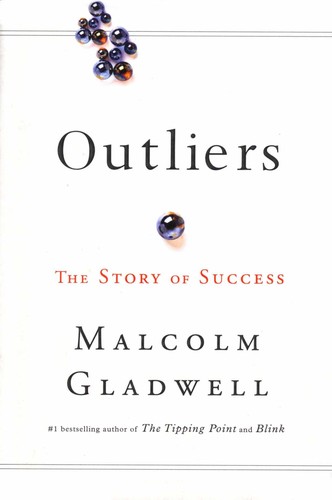
Outliers*
Usually, when I read books like this it’s more of a personal reflection. This book, however, made me think much more of my own children and the environment I’m creating for them to grow up in. Gladwell points out that “geniuses never actually make it on their own.” One story he told was of Chris Langan, with an IQ higher than Einstein but who had been kicked out of Reed and Montana State, never really finding acceptance in academia. When asked about whether he would ever teach somewhere like Harvard, he said, “When you accept a paycheck from these people, it is going to come down to what you want to do and what you feel is right versus what the man says you can do to receive another paycheck.” Gladwell’s response: “What? One of the main reasons college professors accept a lower paycheck than they could get in private industry is that university life gives them freedom to do what they want to do and what they feel is right. Langan has Harvard backwards.”
But the point he goes on to make is that Langan, though he had all the intelligence he could ever need, had to do everything alone. He didn’t know how to go through the process. I don’t profess to want desperately for my kids to be geniuses, but if I want them to be successful, I recognize the necessity for providing the support that most people can’t get alone.
The second big takeaway was the role of hard work; specifically, coming from a background where hard work is expected. Gladwell mentioned a Chinese proverb:
“No one who can rise before dawn three hundred sixty days a year fails to make his family rich.”
That, coupled with the idea that on average, Chinese kids spent something like 40% more time trying to solve a problem, it makes me think of kids I’ve talked to who, when trying to do something hard, give up relatively soon and hand it to me, saying “I need help.”
This book contrasted directly with what I read about in “Dumbing Us Down.” It’s great to say we should want less time in school and more time being taught in the world by family, but what about the kids that don’t have a family that can give them that? Where, if they’re not in school, they’re just exposed to more negative influences?

TheAutobiographyofBenjaminFranklin*
I came across the idea of a Junto. I think it was in Alexander Hamilton by Chernow, but I can’t remember exactly. The idea intrigued me and actually led me to form my own Junto this past year, engaging in mutually improving conversations every Saturday at 7 AM PT. I wanted to get a better understanding of the man who would create such an organization, and I was certainly not disappointed. Many thanks to the USS Constitution Museum in Boston, not only for exposing me to this book, but also for offering me the opportunity to tour the oldest commissioned naval vessel still afloat. That idea of keeping an active ship for posterity reminds me of a game I used to play as a kid. I don’t mean to compare my short gaming career to the US Navy, but I remember it fondly.
I played Age of Empires II religiously almost every day. I would run campaign after campaign, building and destroying empires. I would tell myself stories with ever skirmish and advancement. I remember a campaign once where I controlled an island and had built a pretty substantial army. Unbeknownst to me, my enemy lurked in the shadows building just as formidable an army to meet mine. When I sent my troops into battle, I was distracted by an attack on my people back on the island. I diverted my attention to restore peace on the island, but when I returned to the battle in progress, only 5 or so of my Paladins were alive (I almost always played as the Celts.) As I rushed them back to our home island, the enemy pursued, destroying most of my protective ships and killing some of the few remaining Paladins in their retreat. By the time we reached the island, only one survived. To honor him, I placed him in my castle stronghold, built additional walls around him, had my Monks heal him, and allowed him to rest as a reminder to my people of the battles gone before.
Referring to Franklin’s belief in not eating animals — “I balanced some time between principle and inclination, until I recollected that, when the fish [I caught] were opened, I saw smaller fish taken out of their stomachs; then I thought, ‘If you eat one another, I don’t see why we mayn’t eat you.” So I dined upon cod very heartily, and continued to eat with other people, returning only now and then occasionally to a vegetable diet. So convenient a thing to be a reasonable creature, since it enables one to find or make a reason for everything one has a mind to do.” In reference to a man Franklin knew — “He had some reason for loving to dispute, being eloquent, an acute sophister, and, therefore, generally successful in argumentative conversation. He had been brought up to it from a boy, his father, as I have heard, accustoming his children to dispute with one another for his diversion, while sitting at table after dinner; but I think the practice was not wise, for, in the course of my observation, these disputing, contradicting, and confuting people are generally unfortunate in their affairs. They get victory sometimes, but they never get good will, which would be of more use to them.” Referring to a disagreeable acquaintance of Franklin’s who was not on his side — “I did not, however, aim at gaining his favor by paying any servile respect to him, but, after some time, took this other method. Having heard that he had in his library a certain very scarce and curious book; I wrote a note to him, expressing my desire of perusing that book, and requesting he would do me the favor of lending it to me for a few days. He sent it immediately, and I returned it in about a week with another note, expressing strongly my sense of favor. When we next met in the House, he spoke to me (which he had never done before), and with great civility; and he ever after manifested a readiness to serve me on all occasion, so that we became great friends, and our friendship continued to his death. This is another instance of the truth of an old maxim I had learned, which says ‘He that has once done you a kindness will be more ready to do you another, than he whom you yourself have obliged.’” Benjamin Franklin’s virtues:
- Temperance: Eat not to dullness; drink not to elevation
- Silence: Speak not but what may benefit others or yourself; avoid trifling conversation
- Order: Let all your things have their places; let each part of your business have its time.
- Resolution: Resolve to perform what you ought; perform without fail what you resolve.
- Frugality: Make no expense but to do good to others or yourself i.e. waste nothing.
- Industry: Lose no time; be always employed in something useful; cut off all unnecessary actions.
- Sincerity: Use no hurtful deceit; think innocently and justly; and, if you speak, speak accordingly.
- Justice: Wrong none by doing injuries, or omitting the benefits that are your duty.
- Moderation: Avoid extremes; forbear resenting injuries so much as you think they deserve
- Cleanliness: Tolerate no uncleanliness in body, cloaths, or habitation.
- Tranquility: Be not disturbed by trifles, or at accidents common or unavoidable
- Chastity: Rarely use venery but for health or offspring, never to dulness, weakness, or the injury of your own or another’s peace or reputation.
- Humility: Imitate Jesus and Socrates NoApology*: TheCaseForAmericanGreatness
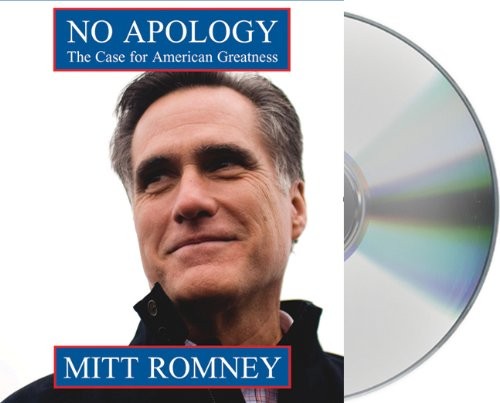
The 2012 presidential election was one of the first I was able to vote in. During 2012, I was serving as an LDS missionary in Pennsylvania. If you’re not aware, LDS missionaries cut themselves off from the rest of the world as much as possible. I was able to vote via an absentee ballot, and I tried to educate myself as much as I could when you don’t watch TV, listen to the radio, or use the internet for more than weekly emails to family. I voted for Mitt Romney. I know a lot more now than I did then. I would still vote for Mitt Romney. I desperately wish I still lived in Utah this year so that I could have volunteered for Mitt Romney’s campaign for Senate.
Mick Moylan, a friend of mine, who is originally from Ireland, and is studying finance at BYU, also had the chance to intern at Solamere, and grew close to some of the folks helping run Mitt Romney’s campaign. He was offered a role with the campaign, and would need to withdraw from his classes for a semester to participate. When he and I talked about it, he asked what I thought, and with every measure of level-headedness, I made it very clear: “No matter what you do, I’ll respect your decision. But if you turn down this opportunity, it will be the stupidest thing I’ve ever heard of.” I think I have a future in diplomacy.
There was a wide range of reasons for me to believe Mick was facing the opportunity of lifetime, but a big one in my mind was the opportunity to work with a giant like Mitt Romney. He’s a man who I respect greatly, and anyone who can benefit from interactions with him is truly privileged. Many thanks to the personal library of Matt Waldrip, and Pioneer Book in Provo, Utah for exposing me to this book.
Referring to his father — “Mitt,” he would reply, “the pursuit of the difficult makes men strong.” Referring to a teacher he had — “He tore our papers apart paragraph by paragraph and line by line with critiques that sharpened our skills without crushing our confidence. He insisted that my classmates and I push our thinking and our writing beyond the superficial. I don’t remember what grades he gave me, but I do remember what he taught me.” “At the core of our system of government is an informed, involved, and responsible citizenry. The real peril to the nation if its citizenry fails to meet its duties was recognized by the Founders.”* All The Pretty Horses*
Many thanks to my wife Camden for convincing me to read this book, and letting me read her copy. This was one of many books that, as she was reading it, she would make a growling noise, before declaring to me in all earnestness, “I just want you to read this book so bad, so that we can talk about it.” I kept calling it the horse book. Finally, I decided to take her up on it, and I was hooked. Every McCarthy book I’ve read thus far didn’t take me longer than a week to read (and I read quite a few.) And it all started with this one.
As a kid, I read a series called ‘The Storm Testament’ over and over again. The story was set in the mid-1800’s about a boy who lives among a Ute tribe in Utah, before returning to the early Mormon settlements and participates in their journeys as part of this historical fiction. That, along with a deeply entrenched interest in John Wayne movies, led to being a cowboy for basically every Halloween, working at a horse ranch, and falling in love with my rural family-town of Luna, New Mexico. This book was just a cherry on top of my secret equestrian obsession.
Leap of Faith*
I owe a special debt of gratitude to Elder Zach Collier. We served together as missionaries in Pennsylvania, and he was the first person to expose me to Mormon Apologetics generally, with sites like FairMormon, and specifically, this book Leap of Faith.
I had the opportunity earlier this year to have a conversation with a friend who had come to the conclusion that there is a God, but as to whether or not he would speak through a specific church, that was a different question entirely. This led me to be reminded of this book, and more specifically to ponder more fully on the idea of forming a hypothesis, and testing it. Religion can have the same inquiries made as science, albeit the methods of evaluation are more emotional and qualitative.
I’m grateful to Bob Bennett for doing something that an inadequate number of Mormons and non-Mormons alike do, and that is to honestly ask the question — “where did the Book of Mormon come from?”
The author of Leap of Faith addresses a variety of questions as to the origins of the Book of Mormon. He evaluates three scenarios — Joseph Smith did it himself, he had help from a 3rd party, or God actually helped him. Within each of these scenarios he evaluates motive, and when he gets to God’s motive, he points out that “it is significant enough to provide a motive for God to have been involved in bringing the Book of Mormon forward in our time.” WhatIFoundinaThousandTowns*
One of my recurring themes of thought so far this year has been how small to mid-size towns and cities grow, thrive, and remain prosperable. Whenever I think about a topic that I wish I understood more, I always think about how I just want to talk to a bunch of people about the thing, particularly people who are inimtately involved in it (for example, I’ve always wanted to write a book about bookstores, and I daydream about interviewing owners of bookstores.) To that point, Dar Williams’ provided that insight when it came to the small towns she profiled.
This was a book that, while I appreciate the insights Dar Williams has, and I respect her as an artist and mother and community member, I was underwhelmed by the quality of writing. This was one of the books I was probably most near to not finishing (granted, there are plenty of books that I start and don’t finish, so it was above those on the scale.) There was plenty of valuable anecdotal thought in what she wrote; just look how many quotes I highlighted below. But there are a lot better resources out there for developed urban thought and theory.
Many thanks to the Elliot Bay Book Company in Seattle for exposing me to it.
In relation to gentrification — “What good is it if the people who do their best work because they “buy in” to the city have to live somewhere else?” The Road*
My second run with Cormac McCarthy, and he did not disappoint. Before beginning the read, I went to consult my local McCarthy expert. I thought Camden would have some initial thoughts before I began. Turns out, she hadn’t read it. She’d read Child of God, No Country For Old Men, and All The Pretty Horses, but nothing else by ol’ Cormac. Thus began the greatest race of our generation. The most amazing race since the TV show (which turns out, has had 30 seasons.) To see which of us could read more books by Cormac McCarthy.
As to the road itself, in all seriousness, I occasionally have the experience where I read a book and the distinct impression is: “this is important.” Dystopian world-building has become pervasive in fiction, especially of the teen variety. Even in TV, there is a massive market for imagining some of the worst-case scenarios that mankind could face. Camden and I were big fans of the Walking Dead for a while. One stark contrast that I drew between all of those stories and The Road was how anti-climactic this book was. There was no ultimate bad guy. There was no Negan-like force to reckon with. The world was cold, fruitless, and raw, and here’s the story of this man and his son.
Some of the reviews at the front of the book seemed to sum it up well:
“Devastating…McCarthy has never seemed more at home, more eloquent, than in the sere, postapocalyptic ash land of The Road.”
“Why read this?…Because in its lapidary transcription of the deepest despair short of total annihilation we may ever know, this book announces the triumph of language over nothingness.”
After having their things stolen and chasing down the thief, the man takes the thief’s clothes and shoes, leaving him as he had left them — Lessons from Private Equity Any Company Can Use*
I often talk about all the great internship experiences I had while I was in college. One such experience was my first exposure to true blue private equity. I had worked at early stage venture funds, but PE was a different beast all together, or so I learned as I started working for Cicero Group’s private equity practice. My manager at the time, Spencer Nelson, gave me this little book, which he’d gotten from Randy Shumway. This was my first exposure to how to think like an investor.
I read most of it during my internship, but never finished it all the way through. This year, I came across it and committed to reading it. I’m working at a PE fund, figured it couldn’t hurt. And I appreciated the insight it offered.
- Define the full potential: The target is increased equity value — how to turn $1 of equity value today into $3, $4, or $5 tomorrow. Strategic due diligence is the way to set the number, and growing cash flow by pursuing a few core initiatives is the way to get there.
- Develop the blueprint: The blueprint is the road map for reaching your full potential — the who, what, where, when, and how. It zeroes in on the few core initiatives and delineates a step-by-step plan to turn them into results. The emphasis is on measurable action.
- Accelerate performance: This involves molding the organization to the blueprint, matching talent to key initiatives, and getting people to own them. It also involves creating a rigorous program to achieve your ends — one that combines tools, discipline, and the monitoring of a few key metrics.
- Harness the talent: This requires creating the right incentives to recruit, retain, and motivate your best talent — and get them to think and act like owners. It also requires assembling a decisive and efficient board.
- Make equity sweat: The challenge is to embrace LBO economics. This calls for managing working capital aggressively, disciplining capital expenditures, and working the balance sheet hard.
- Foster a results-oriented mind-set: The goal is to inculcate PE disciplines so that they become part of the company’s culture and create a repeatable formula for achieving results. Man’s Search For Meaning*
The first time I heard about this book was in talking to a man next to me on a plane. I was reading JD Vance’s ‘Hillbilly Elegy’ and mentioned that it was occasionally really depressing, but insightful. The man said what I was reading couldn’t be anything close to Man’s Search For Meaning. He was right. When I’ve read or watched end-of-the-world scenarios, I sometimes wonder, ‘what is even the point in trying to stay alive?’ But the idea of meaning — finding the value in existing, no matter our circumstances, is important. Dignity is an undervalued concept. Life should be about enabling more and more people to live a dignified and meaningful life.
Special thanks to Erik Hansen for letting me borrow his copy of this book.
From the introduction — “Viktor Frankl’s Man’s Search For Meaning is one of the great books of our time. Typically, if a book has one passage, one idea with the power to change a person’s life, that alone justifies reading it, rereading it, and finding room for it on one’s shelves. This book has several such passages.” Janesville*
In line with my theme this year of thinking about how small to medium sized towns and cities grow, thrive, and sometimes fail, I was really interested in this book. Since the 2016 election, I’m not sure that people have rushed to understand the less-pondered lower middle class and Midwestern culture of America, as much as people already thinking about those things had their ideas suddenly elevated. This book had been in the works for years, but it became timely as the circumstances evolved around it.
More than anything, what struck me about this book was the role of economic dependence for a certain community. Janesville’s economy was completely dependent on the GM plant, and when that went away, their ability to sustain life as a community was significantly damaged. People talk about the world being flat and how technology and the internet have made the world ultimately accessible, makes me believe that no community should need to be economically dependent in this way, and that efforts could be made to diversify the things that drive value in any given community.
Many thanks to the Books, Inc. on California St. in San Francisco for exposing me to this book.
Child of God*
Round 3 with Mr. McCarthy, and I gotta say — this was the least fun I’ve ever had in my life. The book is short, and chronicles a terrible thing. The key takeaway I had came from the title, and a brief interaction that I quoted below. “Child of God.” The nature of human-kind is something a lot of people have thought on. The same humanity that leads someone to save someones life, or take them in, is the same humanity that leads to murder, rape, robbery, and pain. What are we to make of that?
A lot of people use it to “annihilate” the idea of God. Stephen Fry, a vocal atheist, was asked what he would say if God turned out to be real, and he met Him/Her/It face to face.
“Bone cancer in children? What’s that about? How dare you? How dare you create a world where there is such misery that is not our fault? It’s not right. It’s utterly evil.”
You could add some of the things that happen in this book to Fry’s list. And as I thought about the idea of a Child of God, but one that does something we would call evil, what does that say about God? In my mind, the answer has everything to do with perspective. If this life is all their is, then yes, any amount of avoidable suffering is despicable and wrong. But if today is the only day we live, then getting surgery, vaccinations, putting our kids in timeout, or even making them exercise, or eat healthy, all of those things are completely out of the question and wrong, because they take this little time we have and fill it with unfortunate things.
But today is not the only day. This life is not all there is. And so what suffering we see here is not an ultimate thing, and to treat it as if it was, is the same as saying we should never vaccinate our kids because it hurts them. It does. But in the long run, the result is more important than the pain.
Praise To The Man BYU Speeches put together this book of some of the best speeches that have been given at BYU on the topic of Joseph Smith, the first President of the Church of Jesus Christ of Latter-Day Saints. I won this book by doing a trivia challenge about Mormon speakers. I then lost the book I won, was late for class, ran back and gave the right answers to someone else so that they could win me another copy of the book, then ran back my class, and on the way met the girl who I went on my first date with at BYU after my mission. It wasn’t a great date, and I didn’t see her again. But hey, the story is great. Specifically, I’ve carried this book around for 5 years and never read it. I finally set out to read it and what I was struck by was the different ways in which people have identified the importance of someone like Joseph Smith as it relates to the whole of religious thought. If what Joseph Smith said happened to him actually did happen, it’s the most important thing to happen since the life of Jesus Christ. If there really is a prophet on the earth today like Moses, it’s probably important. The Power of the Everyday Missionary*
While this book is specifically about helping members of the LDS church, or Mormons, share what they believe, I think the concept of being missionaries of our causes is something that has been lost. If you have something in your life that you think offers you value, whether it’s a religion, a product, a service, a practice, a habit, anything — if you really care about someone, shouldn’t you want to share that with them? They may not accept it, it may not work for them, and that’s okay. But the act of sharing something you care about should be seen less as intrusive, or inappropriate, and more as a sign of love and caring.
Many thanks to Gary and Sherry Neuder for exposing me to this book.
Me and Earl and the Dying Girl*
Camden and I first saw this movie on a plane on our way to Hawaii. We watched the movie, and Camden had a very emotional reaction. She lost a brother to cancer, and the movie is hard to watch. I felt awful for having had us watch it, but afterwards Camden was grateful to have watched it. She is a strong person, and has born her grief with a lot of perspective. Afterwards, when we got to Seattle, we bought this book and she read it, and enjoyed it. It took me a long time to finally get around to reading it.
Many thanks to the Elliot Bay Book Company in Seattle for giving us our copy.
Blink*
Malcolm Gladwell was once described by my behavioral economics professor as muffin top research, just taking the sweet interesting tidbits off the top without any solid foundation. Pop culture psychology is another example. I think what Gladwell provides exceedingly well is anecdotes; illustrations of principles that have true concepts behind them, but may not always be aligned in exactly the right way. For any serious student of the ideas he writes about, he provides a valuable addition to your understanding, but probably wouldn’t base your entire theoretical base on him.
In those moments, our brain uses two very different strategies to make sense of the situation. The first is the one we’re most familiar with. It’s the conscious strategy. We think about what we’ve learned, and eventually we come up with an answer. This strategy is logical and definitive. But it takes us eighty cards to get there. It’s slow, and it needs a lot of information. There’s a second strategy, though. It operates a lot more quickly. It starts to kick in after ten cards, and it’s really smart, because it picks up the problem with the red decks almost immediately. It was the drawback, however, that it operates — at least at first — entirely below the surface of consciousness. It sends its messages through weirdly indirect channels, such as the sweat glands in the palms of our hands. It’s a system in which our brain reaches conclusions without immediately telling us that it’s reaching conclusions.” Quote from Sigmund Freud — “When making a decision of minor importance, I have always found it advantageous to consider all the pros and cons. In vital matters, however, such as the choice of a mate or a profession, the decision should come from the unconscious, from somewhere within ourselves. In the important decisions of personal life, we should be governed, I think, by the deep inner needs of our nature.”
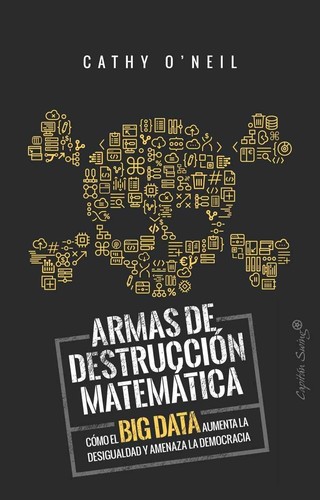
Weapons of Math Destruction
Everything about the world can be summed up as data. What isn’t as cut and dry is what that data means. This book is a great introduction to the ideas behind algorithms and how inherent bias can be built into even the most seemingly benign system.
Special thanks to Folio Booksin San Francisco for exposing me to this book.
- I will remember that I didn’t make the world, and it doesn’t satisfy my equations.
- Though I will use models boldly to estimate value, I will not be overly impressed by mathematics.
- I will never sacrifice reality for elegance without explaining why I have done so.
- Nor will I give the people who use my model false comfort about its accuracy. Instead, I will make explicit its assumptions and oversights.
- I understand that my work may have enormous effects on society and the economy, many of them beyond my comprehension.
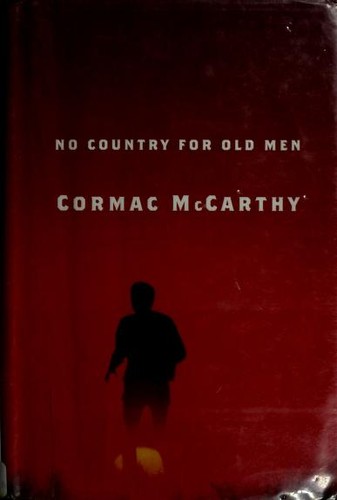
No Country For Old Men
In high school, I was a big fan of directors like Martin Scorsese, Quentin Tarantino, and the Coen Brothers. I’ve known about No Country For Old Men for a long time, but had never seen the movie, and only recently knew that it was based on a book. After getting my feet wet in a few other McCarthy specials, I was finally ready to get exposed to this one. And it didn’t disappoint. The biggest impact I saw from this was the lack of conclusion, reflecting the messiness in the world. In reality, you don’t always find out who did it, you don’t always catch the bad guy, there isn’t always a happy ending.
The Lost Continent
This book fits into my bucket of thinking about small towns and what sets them apart. Bill Bryson also just happens to be so dang funny. I was frequently taking pictures of jokes and sending it to my wife or my brother. There really is no end result, no summary. He sees good, and he sees bad as he travels around the whole country.
Thanks to Camden for getting me this birthday present, and for Bell’s Books in Palo Alto for my copy.
Talking about college kids (remember, this book was written in the 80s)— “These kids wear button-down-collar shirts and penny loafers. They look like they’re on their way to an Osmonds concert. And they don’t know anything! You talk to them in a bar and they don’t know who’s running for president. They’ve never heard of Nicaragua. It’s scary. They’re getting an education, can you believe that? They want to be insurance salesmen and computer programmers. That’s their dream in life. They want to make a lot of money so they can go out and buy more penny loafers and Madonna albums. It terrifies me sometimes.” In a casino — “On the way out my attention was caught by a machine making a lot of noise. A woman had just won $600. For ninety seconds the machine just poured out money, a waterfall of silver. When it stopped, the woman regarded the pile without pleasure and began feeding it back into the machine. I felt sorry for her. It was going to take her all night to get rid of that kind of money.”
Education Nation
In line with my interest in learning more about education, I had the chance to read this book where, little did I know, was sponsored by George Lucas’ foundation. From Star Wars to education, the man has range. What was fascinating about this book was the practical examples they gave of these new educational philosophies.
Thanks to Powell’s in Portland for exposing me to this book.
The Screwtape Letter
Before my LDS mission, I maybe knew that C.S. Lewis had written the Chronicles of Narnia, but only because of the movies. Other than that, I didn’t know much about him. On my mission, I got a CD of “Mere Christianity,” and loved it. While I was in Altoona, PA, Sharon and Emmet Cook had a copy of the Screwtape Letters in their bathroom, and that was the first time I heard about this book. It was a quick read and a clear commentary on the temptations we go through, and how we can choose to respond to them.
So You’ve Been Publicly Shamed
I first heard about Jon Ronson from a Reply All podcast episode where he told some of the same stories in the book. Camden actually ended up reading this book first and then encouraging me to follow suit. What really struck me about this book was his comparisons to public shamings in the olden days, with whippings, and the stocks, etc. What I can’t understand is that lack of human empathy in those situations. I remember as a kid feeling a deep fear of injustice; when other kids would get picked up against their will and thrown in a trash can, or things like that. Even if it wasn’t me, even if it wasn’t someone I knew, I felt so uncomfortable with that. How people can do anything like that is an enigma, but Ronson specifically points out the power of the internet in being able to intensify that experience, and it’s frightening.
The story that struck me the most was the vortex of shame that occurred at a tech conference. Two white guys were making inappropriate sexual comments behind a woman named Adria at the conference. Adria was offended, stood up, took a picture of the two guys, and tweeted it out. The online backlash was swift and merciless. One of the guys in particular, Hank, was targeted and fired from his job. He shared online that he had been fired, and the backlash turned and shifted its focus onto Adria, who was then also fired. This story reminded me of a John Oliver piece about online abuse and how much worse it is for women than for men. After an experience where the author was going to dress as a woman and see how he got treated, but was too afraid to do it — “Now, as I lay in my hotel room, I understood the truth of it. My terror of humiliation had closed a door. Great adventures that might have unfolded involving me dressed as a woman would never now unfold. I’d been constrained by the terror. It had blown me off course. Which, actually, meant that I was just like the vast majority of people.” A guy who decided to lie in a story because he thought it was important — “You want to do something in the world? Be willing to throw your life away. I was, ‘Fine. I’ll throw my life away. Fine.’” James Gilligan, a psychologist who studied chronic murder and suicide rates in Massachusetts prisons, said that all these prisoners would say the same kind of thing. “The men would all say that they had died. One inmate told me he feels like ‘food that is decomposing.’ These men’s souls did not just die. They have dead souls because their souls were murdered. How did it happen? A central secret. And that was secret was that they felt ashamed — deeply ashamed, chronically ashamed, acutely ashamed.’” It’s disorienting,” I said, “that the line between hell and redemption in the U.S. justice system is so fine.”
Evicted
Another book that I was attracted to in line with my thoughts around small towns and cities, and particularly focusing on the negative side of things. This book was pretty heart wrenching. When you’re an upper middle class white dude, you just don’t get exposed to these kinds of situations. What was really fascinating was at the end when the author lays out how he pursued this project, and he really did insert himself into this type of life and situation. This was another book where, as I read, I kept thinking — “this is important.”
My wife and I manage our apartment complex that we currently live in, and we frequently turn people who apply to live here because they didn’t pass in the “system.” We have no control over that, but the book pointed out the idea that even if you try and create a fair way to evaluate people, if the system is set up to unfairly disadvantage women and people of color, your “fair measurement” is still going to be inherently biased.
Thanks to Green Apple Books in San Francisco for exposing me to my copy of this book.
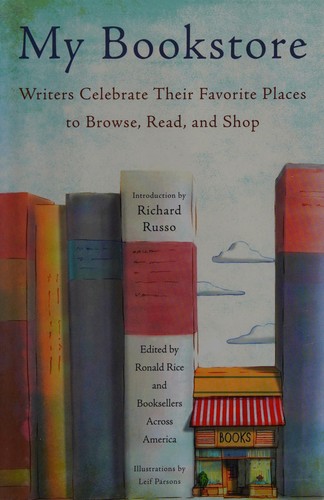
My Bookstore
I mentioned before how I have this weird desire to write a book about bookstores, and particularly how good bookstores stay in business. This, I thought, would give me good exposure to a variety of bookstores, what they have in common, how they differ. And it was great for that, though there was a lot of wishy-washy arguments about why Amazon and ebooks are stupid, and bookstores are important. I agree that bookstores are important, but it can’t be in spite of Amazon, they have to evolve to co-exist with Amazon. That’s what I hope to write a book about someday.
Thanks to Dog Eared Books in San Francisco for exposing me to this book.
Buffett: The Biography
I thoroughly enjoy everything I’ve read about Warren Buffett. I had read Snowball, Warren Buffet’s more recent biography, but I heard about this one on the Investor’s Field Guide podcast where the guest, Savneet Singh, whose trying to build the Berkshire Hathaway of software, mentioned reading it when he was younger. There are a number of things that struck me in this book, but more than anything, it was the dogmatic focus with which Buffett lives his life. He doesn’t want to have time for anything other than what he loves to do. That’s why he “tap dances to work every morning.”
Rosner stayed for twenty years. Toward the end of his tenure, he told Buffett: “I’ll tell you why it worked. You forgot you bought this business. And I forgot I sold it.”
- Look for managers who treated the shareholders’ capital with ownerlike care and thoughtfulness.
- Study prospects — and their competitors — in great detail. Look at raw data, not analysts’ summaries. Trust your own eyes, Buffett said. But one needn’t value a business too precisely. A basketball coach doesn’t check to see if a prospect is six foot one or six foot two; he looks for seven-footers.
- The vast majority of stocks would not be compelling either way — so ignore them. Merrill Lynch had an opinion on every stock; Buffett did not. But when an investor had conviction about a stock, he or she should also show courage — and buy a ton of it.”
The Second Half

The end of the year is a time when you can either look backward with regrets, or forward with hope, or backward with longing, and forward with dread. I guess it depends on how your year went.
For me, I look backward with fondness and forward with determination.
I love the pictures above. My son Dax is 2 years old and loves books like a mad man. We went to the doctor a few months ago and he said Dax is an advanced talker for his age. Now, every child is different and they develop at different speeds. What works for one will be different for another. But when it comes to Dax, I have a hypothesis on why he can talk as well as he can. And it doesn’t have to do with me; it has everything to do with how often I come home from work and find Dax and Camden deep in a book.

I’m grateful for my wife Camden, who works tirelessly and never slips into madness even when she reads The Little Blue Truck for the 98th time in one day. Books are an important part of our family. Recently, I was asked what my wife and I do for fun. The only things I could think of are play catch while we talk and go to bookstores. We anchor our day trips and vacations around bookstores.
I’m grateful to be a part of this little man’s journey as we all learn something new every day.

This post is to continue a record of the books I read during the second half of the year. the first half of this post includes the first 30 books I read this year from January to June. You’ll notice that in Part 2, I only read 11 books. After I finished Part 1, I did some reflecting on what I was trying to accomplish with the reading I was doing.
My wife read High Performance Habits by Brendon Burchard and shared the following quote with me and it set me on a path to try and think through my personal curriculum.
High performers are very clear about the skill sets they need to develop now to win in the future. They don’t draw a blank when you ask them, “What three skills are you currently working to develop so you’ll be more successful next year?” When I’m brought in to work with Fortune 500 senior executives, I have them open their calendars and talk me through their upcoming days, weeks, and months. It turns out that executives who score higher on the HPI tend to have more blocks of time already scheduled for learning than do their peers with lower scores. There’s an hour blocked out here for taking an online training, another there for executive coaching, another for reading, and yet another for a mastery-oriented hobby (piano, language learning, cooking class, and so on). They’ve built a curriculum for themselves and are actively engaged in learning. What’s clearly linking all these blocks of scheduled time is the desire to develop specific skill sets. The online training is about how to code or manage finances better; the executive coaching is focused on developing listening skills; the reading focuses on a specific skill they’ve been trying to master, such as strategy, listening in meetings, or story development; the hobby is something they take seriously — they aren’t doing it just for pleasure, per se, but to actively develop mastery. Here’s the big distinction: High performers are also working on skills that focus on what I call their primary field of interest (PFI). They aren’t scattershot learners. They’ve homed in on their passionate interests, and they set up activities or routines to develop skill in those areas. If they love music, they laser in on what kind of music they want to learn, and then study it. Their PFI is specific. They don’t just say “music” and then try to learn all forms of music — playing guitar, joining an orchestra, singing with a band. They choose, say, a five-string guitar, find a master teacher, and make time for practice sessions that focus more on skill building than on casual exploration. In other words, they know their passions and set up time to dial in the skills that will turn those passions into proficiencies. This means high performers approach their learning not as generalists but as specialists.
- Think about your PFI (primary field of interest) and write down three skills that make people successful in that field.
- Under each skill, write down what you will do to develop it. Will you read, practice, get a coach, go to a training? When? Set up a plan to develop those skills, put it in your calendar, and stay consistent.
- Now think about your PFI and write down three skills that you will need in order to succeed in that field five to ten years from now. In other words, try to imagine the future. What new skill sets will you likely need then? Keep those skills on your radar, and start developing them sooner rather than later.
I’ll lay out my personal curriculum in a separate post at some point, and I’ll be rolling out the project that Camden and I spent the majority of our time on sometime in January. But for now, the result was fewer books with a bigger focus on learning to live intentionally.
I said this before, and I’ll say it again. This is a long post. This isn’t meant for casual consumption, so if you’re here at all, you’re a brave soul. This is meant, more than anything, as a repository for me to remember what struck me as I read, and as summaries of books I don’t want to forget. The desire to read has raced so much further ahead of the desire to comprehend, and I want to make sure that I do everything I can to improve my comprehension. I included all the quotes that I underlined or highlighted as I read. I included images of the book covers so you can quickly scroll from book to book if you’re curious.

Educated
This was an interesting book for me, not only for the same reasons that it was interesting to people like Bill Gates, but because in the book Tara talks about going to the Pembroke King’s Programme at Cambridge, UK. It’s the same program I went to in 2014 right before I got married. She talks about some of the same professors that I had. And that experience had a drastic impact on my life and the potential that I saw myself as capable of. This book was a fascinating exploration of the impact people’s upbringing can have on them, but also the potential that anyone has to expand beyond their scripting and learned bias’.
Dear White People
This is a very different book than what I typically read, in large part because its more like a storyboard than a book that you underline and take passages out of. There are some really spectacular visuals, drawing, decision trees, etc. I think one of the best things you can do when you recognize you’re part of a powerful majority is to tread thoughtfully. You can’t always change the system that you’re a part of, you can’t help but be born the race that you are, but you can be thoughtful about the impact that your words, and actions, and even subconscious bias’ have on those around you. And then, if at all possible, go ahead and try and change the system you’re a part of.

Barbarians at the Gate
As someone working in private equity, this is a book that is recommended to me constantly. Very different from my day-to-day, and even the specifics of the firm I work at, but the essence is mind-boggling. This is something I think will become a growing trend in the near future, where people start to rethink the “grow at all costs” mentality that has become more common, and focus on building more sustainable businesses. The story of RJR Nabisco is one of a sustainable business soiled by greed and excess.
The Righteous Mind: Why Good People Are Divided By Politics and Religion
I’m part of a Junto, a group that comes together to discuss thought-provoking ideas and work towards mutual improvement. As a group, we decided to read this book. As we worked through it, we continued to discuss the models that Haidt uses to describe our thought processes and it was spot on. One of the quotes that stuck out to me the most revolves around this idea of our reason acting as an internal lawyer to justify our actions:
“Why do we have this weird mental architecture? As hominid brains tripled in size over the last 5 million years, developing language and a vastly improved ability to reason, why did we evolve an inner lawyer, rather than an inner judge or scientist? Wouldn’t it have been most adaptive for our ancestors to figure out the truth, the real truth about who did what and why, rather than using all that brainpower just to find evidence in support of what they wanted to believe? That depends on which you think was more important for our ancestors’ survival: truth or reputation.”
Everything I’ve read about in behavioral economics has reinforced this idea that what most of us see as rational and logical determination of reality is actually often pretty irrational. And what I read in Righteous Minds presented this idea that even when we think we’re using external data to support our reasoning, it’s often selected based on our ability to confirm our existing beliefs. And that’s dangerous if you’re trying to focus on what’s actually true.
In addition to this, within our Junto I noticed that everyone reading the book jumped right to “how do I convince people that I’m right?” There are a crap ton of articles talking about how to convince people when you’re arguing about politics. What struck me was that no one really stopped to think about “how do I stop and reflect on how maybe I need to allow myself to be convinced?” If everyone is spending the same time figuring out how to convince each other they’re right when, according to Haidt, we’re all just reinforcing our existing beliefs with limited data, how is anyone ever going to actually change their mind?
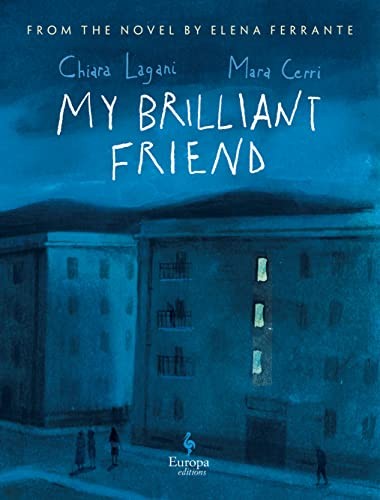
My Brilliant Friend
Special thanks to my wife Camden for exposing me to this book. Camden reads a lot but it’s a much higher bar for her to talk about a book she truly loves. I think her own review is enough.

A young girls mother in regards to her daughter’s ability to continue her education – “We can’t pay for the lessons, but you can try to study by yourself and see if you pass the exam.’ I looked at her uncertainly. She was the same: lusterless hair, wandering eye, large nose, heavy body. She added, “Nowhere is it written that you can’t do it.”
Essentialism
I have put off reading this book, though now I’m not sure why. This had a huge impact on the way I think about productivity. I’ve always been the kind of person to want to say yes to as much as possible. The chart that had the most impact on me was this one.

More than anything I realized the drain on my energy that came from wanting to do so many things in so many directions. Instead, targeting my energy towards the most important things. That doesn’t mean the most important things can be limited to one single activity in your life, but that the things that are NOT most important cannot be allowed to take away from that energy.
Thanks to Tayler Tannerfor recommending this book to me back in 2015.
My Story by Elizabeth Smart
As I listened toMy Story on the drive to Utah for Thanksgiving, I was repeatedly reminded of a quote from Righteous Minds:
“Children construct their moral understanding on the bedrock of the absolute moral truth that harm is wrong.”
When listening to the story of Elizabeth Smart and how she was forcibly taken from her home at the age of 14 and kept hostage, and repeatedly raped, I couldn’t help but think again and again, “how can someone inflict that kind of harm?” How are there people who engage in child sex trafficking, torture, abuse? How can we come from that childhood moral matrix of being against harm and fall so far to inflicting that kind of harm?
And more than that, I’ve never been more impressed than I am by Elizabeth Smart’s ability to acknowledge the suffering she endured and work tirelessly to ensure no one else has the same experience. In some part, I’m sure, that comes from following her mother’s advice.
Advice from her mother after she was rescued: ‘Elizabeth, what these people have done to you is terrible, and there aren’t words strong enough to describe how wicked and evil they are. They’ve stolen nine months of your life from you that you will never get back. But the best punishment you could ever give them is to be happy, is to live your life, is to move forward and do all of the things that you want to do. Because by feeling sorry for yourself and holding onto the past and reliving it over and over and over again, that’s only allowing them to steal more of your life away from you and they don’t deserve that. They don’t deserve another single second more of your life. So you be happy and you move forward.”
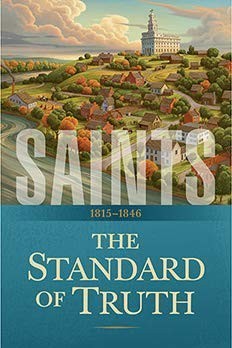
Saints: Volume 1
I’m a member of The Church of Jesus Christ of Latter-Day Saints. This year, they released a volume of history on the church from the time it was founded to the death of Joseph Smith. Regardless of how you feel about The Church of Jesus Christ of Latter-Day Saints, I have a lot of respect for their desire to collect and chronicle history. The church has worked very hard to save massive amounts of records and history and make it available through a number of projects. This is just the latest in that effort.

The Undoing Project by Michael Lewis
I’ve read a number of books on behavioral economics since first taking a class on it in 2016. But this was something a little bit different, where it dove into the lives and careers of the fathers of behavioral economics, Amos Tversky and Daniel Kahneman. Both men had massive intellects and were incredibly thoughtful. And I think the result of behavioral economics revolves around the ability to be thoughtful and analytical in a way that questions much of what you think to be simple reality.
About Danny Kahneman — “His defining emotion is doubt,’ said one of his former students. ‘And it’s very useful. Because it makes him go deeper and deeper and deeper.” [One of the opponents of Danny and Amos’ work] “argued that as man had created the concept of rationality he must, by definition, be rational. ‘Rational’ was whatever most people did. Or, as Danny put it in a letter that he reluctantly sent in response to one of Cohen’s articles, ‘Any error that attracts a sufficient number of votes is not an error at all.”
The Innovation Blind Spot
I first heard about Village Capital when I was an intern at the University Venture Fund in 2015. From there, I’ve always respected them as a firm from afar and had the chance to go to one of their events at Autodesk this year to better connect investors and social entrepreneurs. As part of the event, I was given a copy of Ross Baird’s book. If you’re looking for a perspective on impact investing, this is an incredibly valuable one.
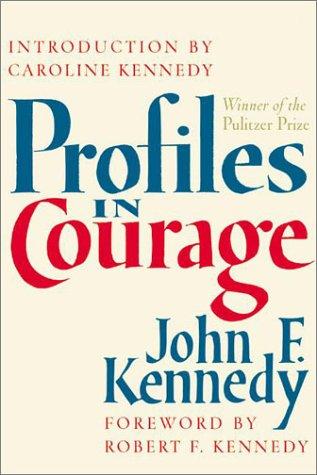
Profiles In Courage
I stumbled upon this book at Pioneer Book in Provo, UT, one of my favorite places to find oldies buy goodies. What I repeatedly noticed was the feeling that most of these men had that the intelligent members of their constituencies would be able to understand their course of action. Operating under the expectation of an informed electorate is key to an effective democracy, though I sometimes struggle to believe that this is representative of the majority of the population.
Referring to John Quincy Adams — “In spite of a life of extraordinary achievement, he was gnawed constantly by a sense of inadequacy, of frustration, of failure. Though his hard New England conscience and his remarkable talents drove him steadily along a road of unparalleled success, he had from the beginning an almost morbid sense of constant failure.” A letter written by John Quincy Adams to his father John Adams, at the age of 9 — “Dear Sir: I love to receive letters very well; much better than I love to write them. I make but a poor figure at composition. My head is much too fickle. My thoughts are running after bird’s eggs, play and trifles, till I get vexed with myself. Mamma has a troublesome task to keep me a studying. I own I am ashamed of myself. I have but just entered the third volume of Rollin’s History, but designed to have got half through it by this time. I am determined to this week to be more diligent. I have set myself a stint to read the third volume half out. If I can but keep my resolution, I may again at the end of the week give a better account of myself. I wish, sir, you would give me in writing some instructions with regard to the use of my time, and advise me how to proportion my studies and play, and I will keep them by me, and endeavor to follow them. With the present determinations of growing better, I am, dear sir, your son.”
The Full List — 41 books
Every book I read in 2018. Covers link through to the bookshelf.
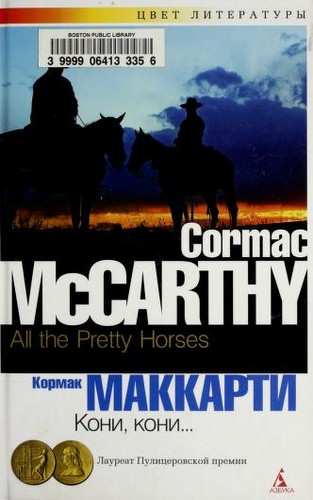 All The Pretty Horses — Cormac McCarthy
 Barbarians at the Gate — Bryan Burrough, John Helyar
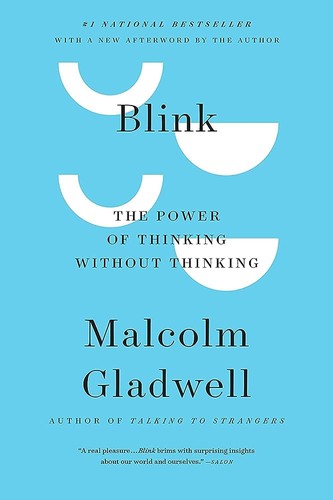 Blink — Malcolm Gladwell
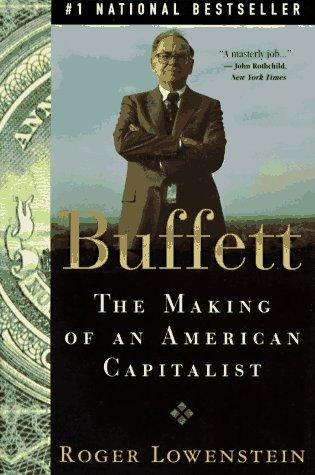 Buffett: The Biography — Roger Lowenstein
 Child of God — Cormac McCarthy
 Dear White People — Justin Simien
 Dumbing Us Down — John Taylor Gatto
 Educated — Tara Westover
 Education Nation — Milton Chen
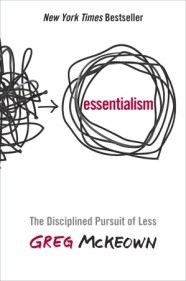 Essentialism — Greg McKeown
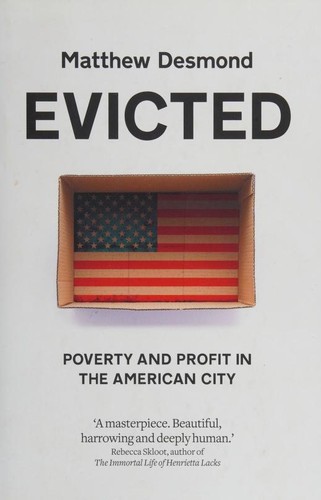 Evicted: Poverty and Profit in the American City — Matthew Desmond
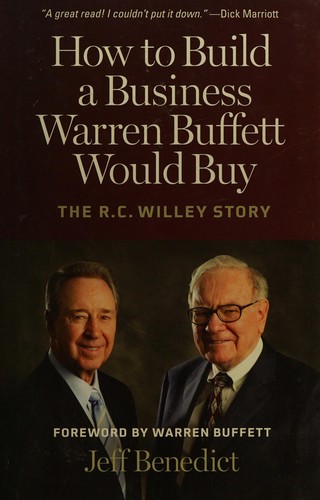 How to Build a Business Warren Buffett Would Buy — Jeff Benedict
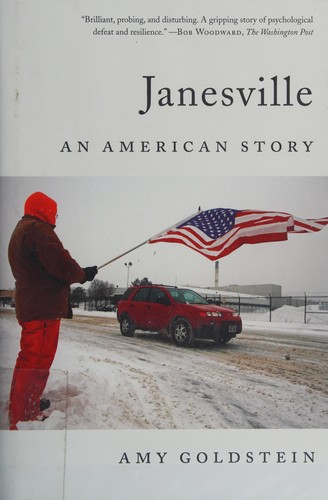 Janesville — Amy Goldstein
 Leap of Faith — Bob Bennett
 Lessons From Private Equity Any Company Can Use — Orit Gadiesh, Hugh MacArthur
 Man’s Search For Meaning — Victor E. Frankl
 Me and Earl and The Dying Girl — Jesse Andrews
 My Bookstore — Ronald Rice
 My Brilliant Friend — Elena Ferrante
 My Story — Elizabeth Smart
 No Apology — Mitt Romney
 No Country For Old Men — Cormac McCarthy
 Outliers — Malcolm Gladwell
 Praise To The Man
 Profiles in Courage — John F. Kennedy
 Saints: The Standard of Truth — The Church of Jesus Christ of Latter-day Saints
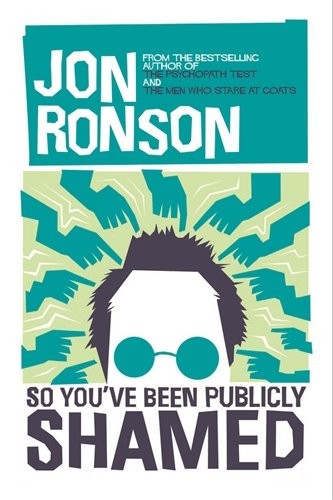 So You’ve Been Publicly Shamed — Jon Ronson
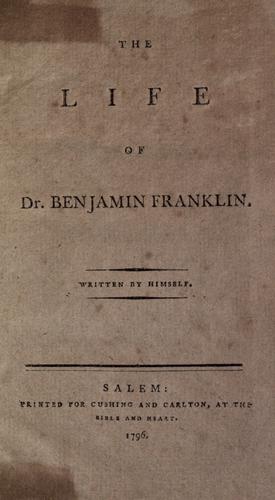 The Autobiography of Benjamin Franklin — Benjamin Franklin
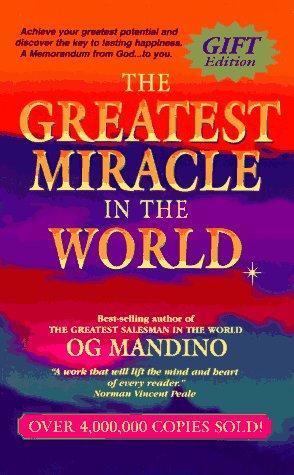 The Greatest Miracle in the World — Og Mandino
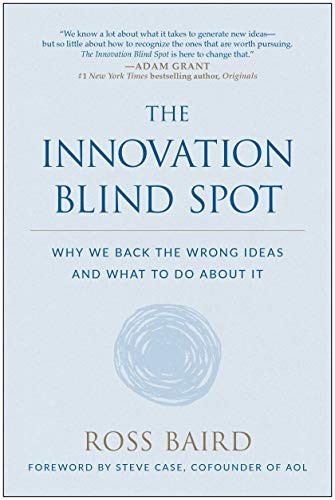 The Innovation Blind Spot — Ross Baird
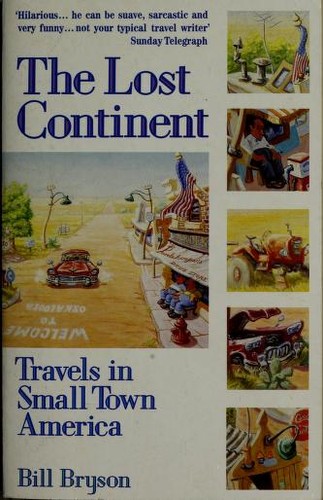 The Lost Continent — Bill Bryson
 The Power of Everyday Missionaries — Clayton M. Christensen
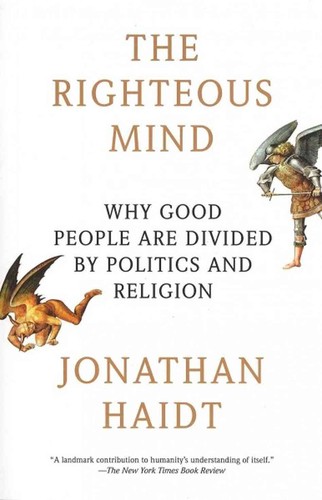 The Righteous Mind — Jonathan Haidt
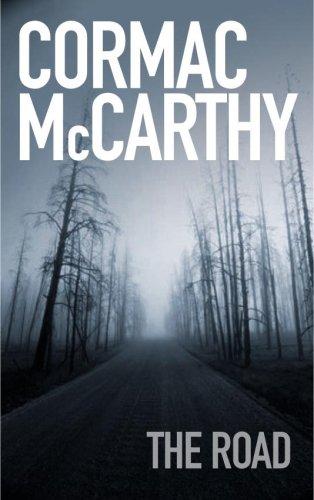 The Road — Cormac McCarthy
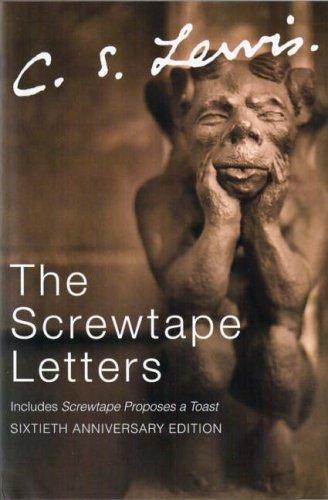 The Screwtape Letters — C.S. Lewis
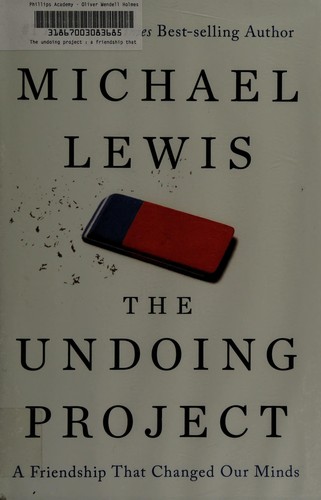 The Undoing Project — Michael Lewis
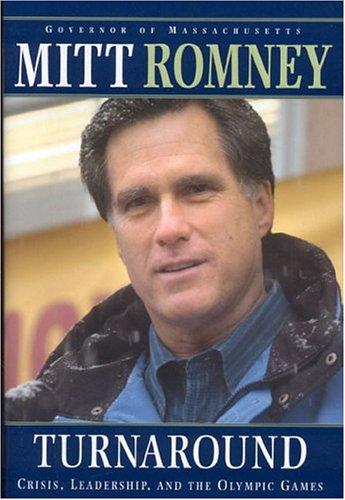 Turnaround — Mitt Romney
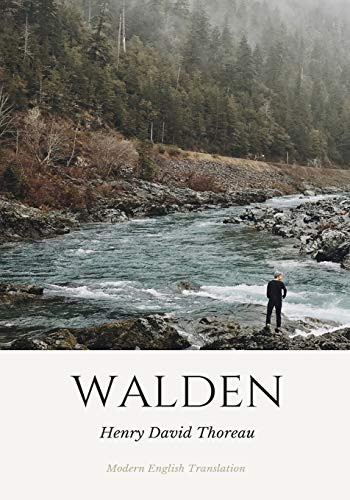 Walden — Henry David Thoreau
 Way to Be! — Gordon B. Hinckley
 Weapons of Math Destruction — Cathy O’Neil
- 📕 What I Found in a Thousand Towns — Dar Williams