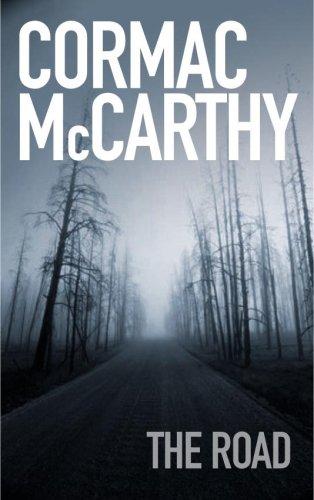
The Road
Key Takeaways
Kyle, in 2018 in Books: My second run with Cormac McCarthy, and he did not disappoint. Before beginning the read, I went to consult my local McCarthy expert. I thought Camden would have some initial thoughts before I began. Turns out, she hadn’t read it. She’d read Child of God, No Country For Old Men, and All The Pretty Horses, but nothing else by ol’ Cormac. Thus began the greatest race of our generation. The most amazing race since the TV show (which turns out, has had 30 seasons.) To see which of us could read more books by Cormac McCarthy.
As to the road itself, in all seriousness, I occasionally have the experience where I read a book and the distinct impression is: “this is important.” Dystopian world-building has become pervasive in fiction, especially of the teen variety. Even in TV, there is a massive market for imagining some of the worst-case scenarios that mankind could face. Camden and I were big fans of the Walking Dead for a while. One stark contrast that I drew between all of those stories and The Road was how anti-climactic this book was. There was no ultimate bad guy. There was no Negan-like force to reckon with. The world was cold, fruitless, and raw, and here’s the story of this man and his son.
Some of the reviews at the front of the book seemed to sum it up well:
Cormac McCarthy’s post-collapse novel, read by Kyle as a fatherhood book. The highlights are the father-son exchanges rather than the landscape:
- What you put in your head. “Just remember that the things you put into your head are there forever… You forget what you want to remember and you remember what you want to forget.”
- Small promises and big ones. The cocoa scene, preserved in full below — the boy holding his father to a promise about sharing: “If you break little promises you’ll break big ones. That’s what you said.” The clearest statement in the book of integrity as a practice of small consistencies.
- Who carries the worry. The exchange where the father admits fear — “I’m scared, he said. Do you understand?… You’re not the one who has to worry about everything” — and the boy answers, “Yes I am. I am the one.”
- Against deferral. “People were always getting ready for tomorrow. I didn’t believe in that. Tomorrow wasn’t getting ready for them.”
- The thief. The father strips the man who robbed them and leaves him as he’d left them — and the boy’s refusal to accept it is the book’s moral centre: “I wasn’t going to kill him, he said. But the boy didn’t answer.”
Connections
Books: No Country For Old Men · All The Pretty Horses — the McCarthy shelf. The Water Knife on collapse. The Last Lecture on fathering under a deadline.
Concepts: Parenting · Integrity — the little-promises passage. Historical Futurism for the collapse register.
People: Cormac McCarthy.
Books: Cormac McCarthy’s other novels on Kyle’s shelf — Blood Meridian, No Country For Old Men, All The Pretty Horses, Child of God — which together span the border trilogy through the post-apocalyptic. On the dystopian side it sits with Red Rising, The Water Knife, Snow Crash, Ready Player One, and Brave New World in the survey of futurist fiction assembled for the Historical Futurism research. Essays: A Tale of Two Markets and Revisiting A Tale of Two Markets — cited in the Connections aside of both; Decades; Historical Futurism (Essay) — grouped there with I, Robot and Ready Player One as the fiction Kyle draws on when writing about how the future gets imagined. Concepts: Historical Futurism — this is the darkest end of that frame: the imagined future as warning rather than blueprint; Dystopia.
Highlights
- “Just remember that the things you put into your head are there forever, he said. You might want to think about that.
Kyle: You forget some things, don’t you? Kyle: Yes. You forget what you want to remember and you remember what you want to forget.”
- “In a pocket of his knapsack he’d found a last little packet of cocoa and he fixed it for the boy and then poured his own cup with hot water and sat blowing at the rim.
Kyle: You promised not to do that, the boy said. Kyle: What? Kyle: You know what, Papa. Kyle: He poured the hot water back into the pan and took the boy’s cup and poured some cocoa into his own and then handed it back. Kyle: I have to watch you all the time, the boy said. Kyle: I know. Kyle: If you break little promises you’ll break big ones. That’s what you said. Kyle: I know. But I won’t.”
- “People were always getting ready for tomorrow. I didn’t believe in that. Tomorrow wasn’t getting ready for them. It didn’t even know they were there.”
- “Coughing. Coughing. He bent over, holding his knees. Taste of blood. The slow surf crawled and seethed in the dark and he thought about his life but there was no life to think about and after a while he walked back.”
- “The man squatted and looked at him. I’m scared, he said. Do you understand? I’m scared.
Kyle: The boy didn’t answer. He just sat there with his head bowed, sobbing. Kyle: You’re not the one who has to worry about everything. Kyle: The boy said something but he couldn’t understand him. What? He said. Kyle: He looked up, his wet and grimy face. Yes I am, he said. I am the one.” Kyle: After having their things stolen and chasing down the thief, the man takes the thief’s clothes and shoes, leaving him as he had left them —
- “The man tried to see his face in the blue light from the burner. I wasn’t going to kill him, he said. But the boy didn’t answer. They rolled themselves in the blankets and lay there in the dark. He thought he could hear the sea but perhaps it was just the wind. He could tell by his breathing that the boy was still awake and after a while the boy said: But we did kill him.”
Referenced in
- All The Pretty Horses book
- Blood Meridian book
- Child of God book
- Cormac McCarthy note
- Integrity note
- No Country For Old Men book
- The Water Knife book