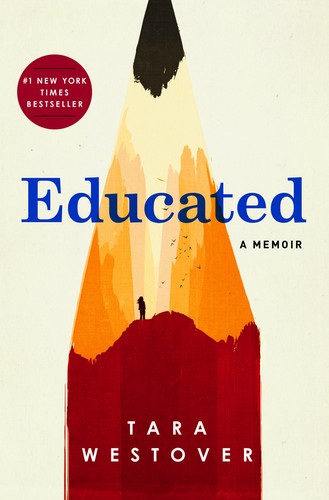
Educated
Key Takeaways
Kyle, in 2018 in Books: This was an interesting book for me, not only for the same reasons that it was interesting to people like Bill Gates, but because in the book Tara talks about going to the Pembroke King’s Programme at Cambridge, UK. It’s the same program I went to in 2014 right before I got married. She talks about some of the same professors that I had. And that experience had a drastic impact on my life and the potential that I saw myself as capable of. This book was a fascinating exploration of the impact people’s upbringing can have on them, but also the potential that anyone has to expand beyond their scripting and learned bias’.
Connections
Kyle’s Self-Mastery notes invoke Educated for its portrait of positive liberty as self-mastery — the rule of the self by the self — reached through Education.
Highlights
Roam capture metadata — Author: Tara Westover · Reading Status: Books Read · Source: https://medium.com/@kwharrison13/2018-in-books-c4f812a37bd5 · Recommended By: BYU Bookstore · Tags: #Books
- ==Highlighted Quotes==
- ==START REVIEWING HERE>>>==
- “I believe finally, that education must be conceived as a continuing reconstruction of experience; that the process and the goal of education are one and the same thing.” (John Dewey)
- “There’s a sense of sovereignty that comes from life on a mountain, a perception of privacy and isolation, even of dominion. In that vast space you can sail unaccompanied for hours, afloat on pine and brush and rock. It’s a tranquillity born of sheer immensity; it calms with its very magnitude, which renders the merely human of no consequence. Gene was formed by this alpine hypnosis, this hushing of human drama.”
- “We understood that the dissolution of Mother’s family was the inauguration of ours. The two could not exist together. Only one could have her.”
- “All the decisions that go into making a life — the choices people make, together and on their own, that combine to produce any single event. Grains of sand, incalculable, pressing into sediment, then rock.”
- “Learning in our family was entirely self-directed: you could learn anything you could teach yourself, after your work was done. Some of us were more disciplined than others.”
- “Dad lived in fear of time. He felt it stalking him. I could see it in the worried glances he gave the sun as it moved across the sky, in the anxious way he appraised every length of pipe or cut of steel. Dad saw every piece of scrap as the money it could be sold for, minus the time needed to sort, cut and deliver it.”
- “The skill I was learning was a crucial one, the patience to read things I could not yet understand.”
- “All my life those instincts had been instructing me in this single doctrine — that the odds are better if you rely only on yourself.”
- “I walked back to the kitchen, comparing the clean, balanced equation to the mayhem of unfinished computations and dizzying sketches. I was struck by the strangeness of that page: Dad could command this science, could decipher its language, decrypt its logic, could bend and twist and squeeze from it the truth. But as it passed through him, it turned to chaos.”
- “The women moved toward the door, but the door was blocked — by loyalty, by obedience. By her father. He stood, immovable. But the woman was his daughter, and she had drawn to herself all his conviction, all his weightiness. She set him aside and moved through the door.”
- “I had finally begun to grasp something that should have been immediately apparent: that someone had opposed the great march toward equality; someone had been the person from whom freedom had to be wrested.”
- “I had discerned the ways in which we had been sculpted by a tradition given to us by others, a tradition of which we were either willfully or accidentally ignorant. I had begun to understand that we had lent our voices to a discourse whose sole purpose was to dehumanize and brutalize others — because nurturing that discourse was easier, because retaining power always feels like the way forward.”
- “Not knowing for certain, but refusing to give way to those who claim certainty, was a privilege I had never allowed myself. My life was narrated for me by others. Their voices were forceful, emphatic, absolute. It had never occurred to me that my voice might be as strong as theirs.”
- “It’s strange how you give the people you love so much power over you, I had written in my journal. But Shawn had more power over me than I could possibly have imagined. He had defined me to myself, and there’s no greater power than that.”
- “I began to experience the most powerful advantage of money: the ability to think of things besides money. My professors came into focus, suddenly and sharply; it was as if before the grant I’d been looking at them through a blurred lens. My textbooks began to make sense, and I found myself doing more than the required reading.”
- “I’d wanted moral advice, someone to reconcile my calling as a wife and mother with the call I heard of something else. But he’d put that aside. He’d seemed to say, “First find out what you are capable of, then decide who you are.”
- “The most powerful determinant of who you are is inside you,” he said. “Professor Steinberg says this is Pygmalion. Think of the story, Tara.” He paused, his eyes fierce, his voice piercing. “She was just a cockney in a nice dress. Until she believed in herself. Then it didn’t matter what dress she wore.”
- “Positive liberty is Self-Mastery — the rule of the self, by the self. To have positive liberty, he explained, is to take control of one’s own mind; to be liberated from irrational fears and beliefs, from addictions, superstitions and all other forms of** self-coercion**.”
- “Of the nature of women, nothing final can be known. Never had I found such comfort in a void, in the black absence of knowledge. It seemed to say: whatever you are, you are woman.”
- “Everything I had worked for, all my years of study, had been to purchase for myself this one privilege: to see and experience more truths than those given to me by my father, and to use those truths to construct my own mind. I had come to believe that the ability to evaluate many ideas, many histories, many points of view, was at the heart of what it means to self-create. If I yielded now, I would lose more than an argument. I would lose custody of my own mind. This was the price I was being asked to pay, I understood that now. What my father wanted to cast from me wasn’t a demon: it was me.”
- “If the first fall was God’s will, whose was the second?”
- “Who writes history? I thought. I do.”
- “But vindication has no power over guilt. No amount of anger or rage directed at others can subdue it, because guilt is never about them. Guilt is the fear of one’s own wretchedness. It has nothing to do with other people.”