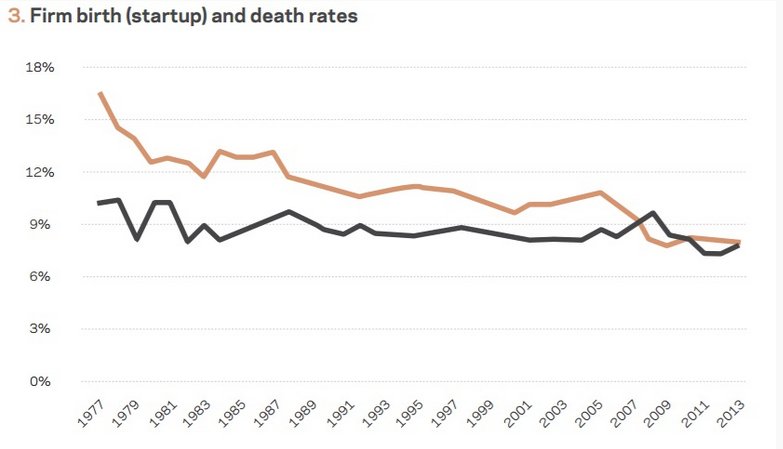
Company Building
The architecture of organizational excellence
How companies are built as enduring organizations — including organizational structure, employee incentives, cultural norms, and operational systems. Extends beyond conventional startups to innovation institutions (Bell Labs, Disney's Imagineers, IBM's Wild Ducks, Edison's Muckers) and alternative ownership/incentive models. The question is always: what makes an organization capable of sustained excellence?
Peter Thiel on the type of company more startup founders should build Thiel first emphasizes his belief that when starting a company, you should always ask: “Can this company become a monopoly?” He then lists three of the most common types of monopolies: Super fast https://pbs.twimg.com/amplify_video_thumb/2062269268859777024/img/j52bIAU_ZK7QpN_b.jpg
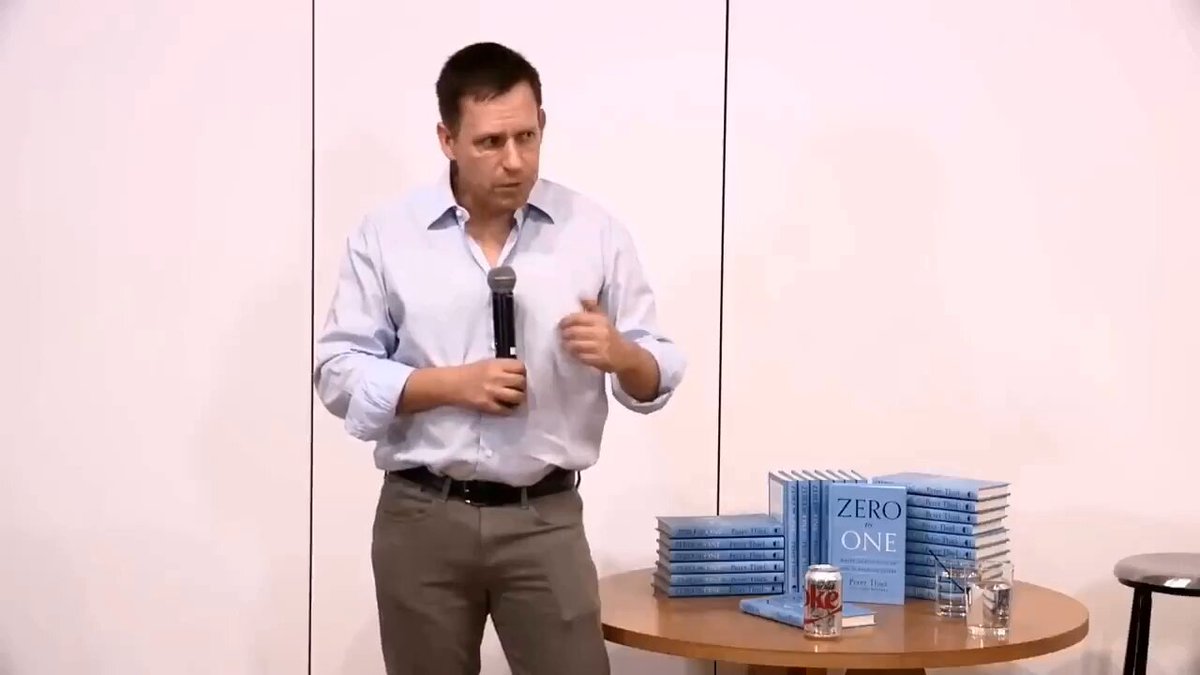
You probably have not heard the names of 90% of Lockheed Martins suppliers. Never ignore the small shops in middle America. They are the defense industrial base. >$6.9B/year goes to 7,100+ small businesses alone >Lockheed won the SBA's Dwight D. Eisenhower Award for Excellence, the most prestigious honor for large prime contractors working with small businesses >$36B/year flows to 13,000+ suppliers across all 50 states >93% of those suppliers are American >The F-35 has 2,100+ suppliers. Nearly half are small businesses >Lockheed's Orion spacecraft: 2,900 suppliers. 50% small business >These aren't subcontractors in name only. These are machine shops in PA, ceramics labs in LA, precision engineers in MA, painting companies in AR, castings foundries in NH >One small shop in Cleveland runs the only 50,000-ton forging press on earth. Makes F-35 bulkheads in a single piece of titanium >Every F-35 carries 920 lbs of rare earths. China refines 90% of the global supply >The Pentagon once discovered Chinese alloys in the F-35 through a 4-layer game of telephone: Lockheed > Honeywell > pump supplier > magnet supplier > "that's from China" >There's a 2027 deadline to eliminate Chinese rare earths from all US weapons systems
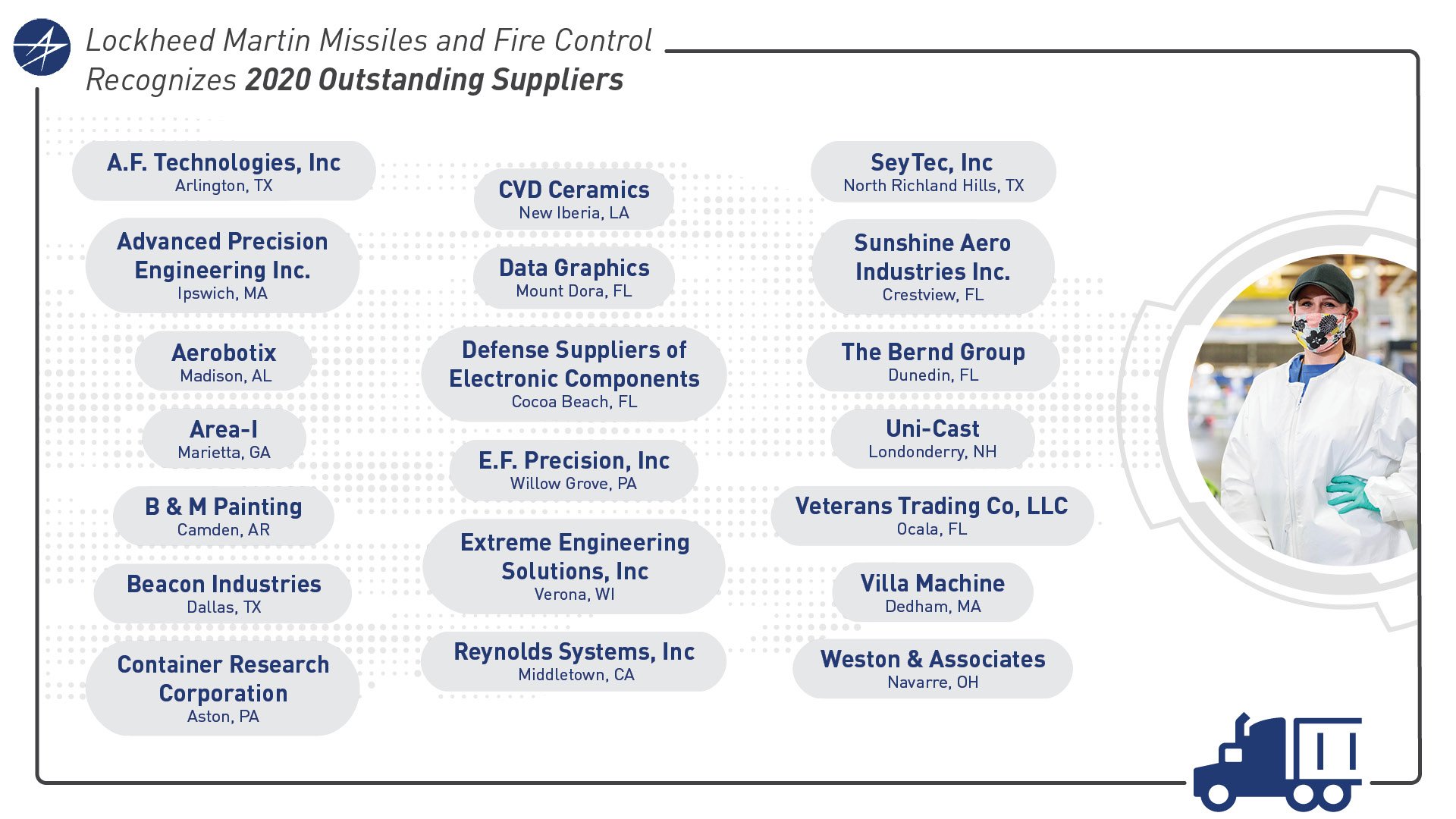
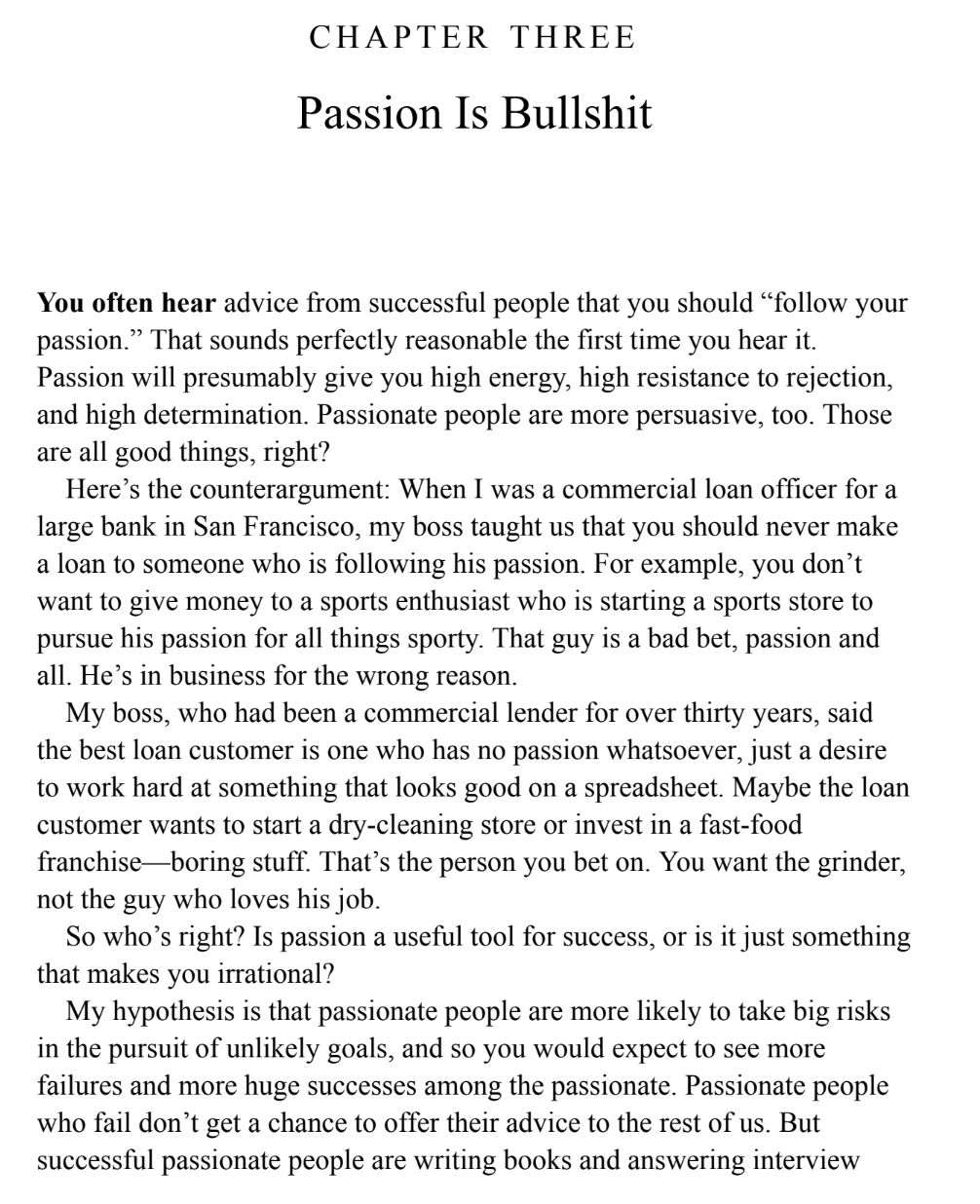
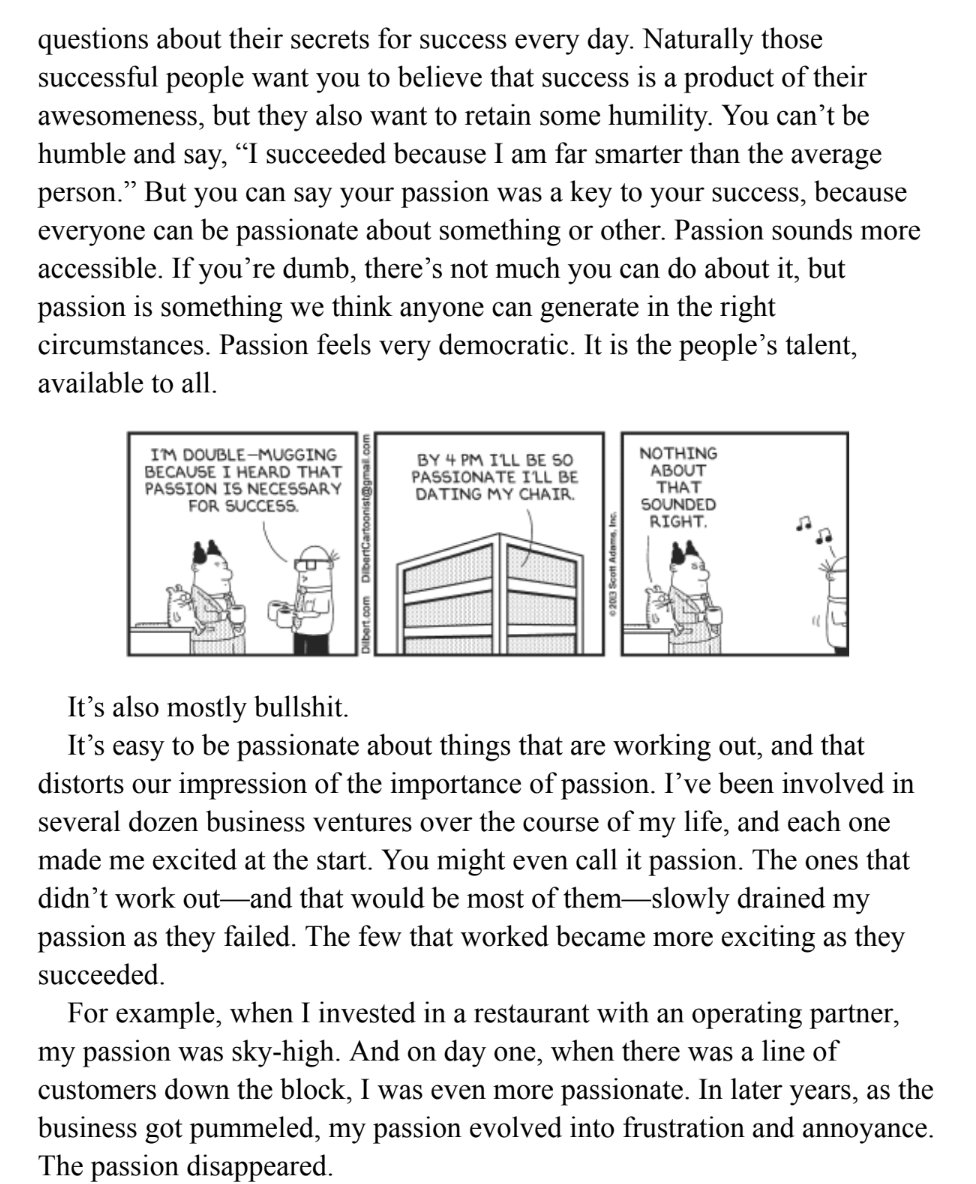
"You want the grinder" Scott knew. https://pbs.twimg.com/amplify_video_thumb/2024496275425812480/img/pSEvPiLKHnvXgtxg.jpg **Quoting @jawwwn_:** > .@PalmerLuckey on following your dreams: “Dumbest shit I’ve ever heard.” > > “My kids will probably have stupid dreams at some point in their life, I’m not going to tell them to follow that—are you crazy?” > > “Most people would be better off following where they can have the biggest https://t.co/NgeiPfFyNI

Peter Thiel on the type of company more startup founders should build Thiel first emphasizes his belief that when starting a company, you should always ask: “Can this company become a monopoly?” He then lists three of the most common types of monopolies: Super fast https://pbs.twimg.com/amplify_video_thumb/2062269268859777024/img/j52bIAU_ZK7QpN_b.jpg
You probably have not heard the names of 90% of Lockheed Martins suppliers. Never ignore the small shops in middle America. They are the defense industrial base. >$6.9B/year goes to 7,100+ small businesses alone >Lockheed won the SBA's Dwight D. Eisenhower Award for Excellence, the most prestigious honor for large prime contractors working with small businesses >$36B/year flows to 13,000+ suppliers across all 50 states >93% of those suppliers are American >The F-35 has 2,100+ suppliers. Nearly half are small businesses >Lockheed's Orion spacecraft: 2,900 suppliers. 50% small business >These aren't subcontractors in name only. These are machine shops in PA, ceramics labs in LA, precision engineers in MA, painting companies in AR, castings foundries in NH >One small shop in Cleveland runs the only 50,000-ton forging press on earth. Makes F-35 bulkheads in a single piece of titanium >Every F-35 carries 920 lbs of rare earths. China refines 90% of the global supply >The Pentagon once discovered Chinese alloys in the F-35 through a 4-layer game of telephone: Lockheed > Honeywell > pump supplier > magnet supplier > "that's from China" >There's a 2027 deadline to eliminate Chinese rare earths from all US weapons systems
"You want the grinder" Scott knew. https://pbs.twimg.com/amplify_video_thumb/2024496275425812480/img/pSEvPiLKHnvXgtxg.jpg **Quoting @jawwwn_:** > .@PalmerLuckey on following your dreams: “Dumbest shit I’ve ever heard.” > > “My kids will probably have stupid dreams at some point in their life, I’m not going to tell them to follow that—are you crazy?” > > “Most people would be better off following where they can have the biggest https://t.co/NgeiPfFyNI
**Article: "Against “Against Taste”"** **Canonical:** https://x.com/i/article/2024154570444906496 > Taste did not suddenly arrive. Every few years the word comes back into fashion and starts carrying more weight than it should. But taste itself is simple. It is knowing what is good. That sounds… ### Full text (verbatim) **"Against 'Against Taste'"** — Karri Saarinen (@karrisaarinen), Feb 18, 2026 Taste did not suddenly arrive. Every few years the word comes back into fashion and starts carrying more weight than it should. But taste itself is simple. It is knowing what is good. That sounds abstract, but in practice it isn't. The simplest test I use is this: could I serve a better sushi dinner than Jiro? I am almost certain I could not. No amount of AI, no amount of reading, no perfectly optimized workflow would close that gap. I would still miss something. The feel of the rice. The temperature. The sequencing. The sourcing. The decades of palate refinement. The thousands of small decisions that compound into an experience. The gap isn't information. It's judgment. **Taste is judgment built through experience under constraint. You cannot shortcut it by having access to more tools.** *Re: https://x.com/WillManidis/status/2023866928608002183* There's an argument that what we now call taste is just consumption. That when patronage disappeared, all that remained was selection. That taste is what you call the patron's function after the patron leaves the room. I think that collapses different roles into one. Patronage is a structure. It's a way of financing and organizing work. It can produce greatness, but it can just as easily produce mediocrity. The presence of capital and friction does not guarantee quality. It guarantees resources. One reason why we see the great works of patronage is because great works were preserved and valued over time. The vanity and mediocrity disappeared. But to me taste is something else. It's the internal compass that lets someone recognize quality in the first place and strive towards it. Michelangelo had taste. Julius II had enough taste to recognize when to push and when to allow something bigger to unfold. But taste isn't passive selection at the end of a process. It is informed judgment throughout the process. Where I agree is that pure consumption is empty. Filling an apartment with perfectly "tasteful" furniture is not necessary taste, it might be just vanity. Lot of modern American archifure is this way where it meant to impress in vain way and not to have some kind of tasteful quality in it. The quality without the name. It also helps to separate art and design. Art expresses. What counts as good is often socially decided. Critics, institutions, and context shape interpretation. Sometimes the meaning has to be constructed because there is no functional test. At certain point the artist will matter more than the art piece. Good taste in art can slip in to validating itself. Product design operates differently since it has external, more or less objective, validators users or customers. A car has to work. A hospital has to function. Software has to perform reliably and scale. There are constraints and feedback loops. Users verify whether it succeeds. Taste in design is not just solving the problem, but solving it elegantly. Elegance is coherence, restraint, proportion, clarity. It is the difference between something that technically works and something that feels great. Most of that work is invisible. It lives in system architecture, in how errors are handled, in performance margins, in materials that age well, in decisions about maintenance and scale. This has lived as long as humans have been creating a building. Designing and building a barn might exercise great taste and judgement. The non-builders often see taste is about selection, curation, higher purpose. Artists talk about cheap turpentine for a reason. **Craft lives in materials, constraints and in their daily work. Serious practitioners argue about details. Taste is exercised inside the work, not curated at the end.** There is also the fear that in an AI world humans will be reduced to discriminators, judging outputs generated elsewhere. But real taste is not an only a filter. **It shapes direction before inputs and before outputs are finalized. It sets constraints, defines standards, and rejects entire categories or paths.** The real commentary on here is that Silicon Valley loves their slogans and concepts. Companies love talk about taste when it becomes fashionable, while optimizing for speed, growth, and fundraising. These words are used aesthetic signals but what really matters is the next launch/funding. Under those incentives, there is no real place for taste and talking about it doesn't mean actually exercising it. Taste is not the residue of a broken relationship between capital and labor. It is knowing what good looks like, defending that standard, and refining toward it over time. Humans after AI are not just critics. They are definers of quality. They decide what is worth building in the first place and when it is good enough to ship. That has always been the work of the creator and the moral code. Strive for something good. *— Karri Saarinen (@karrisaarinen), "ceo of @linear, previously: @coinbase @airbnb, YC alumni". 27 replies / 55 reposts / 417 likes / 54K views at capture.*
2026-02-18**Article: "Reading Incentives Without Losing Your Soul"** **Canonical:** https://x.com/i/article/2001700670349660160 > There's a particular kind of cleverness that gets celebrated in startup circles: the ability to see through everything. To identify the "real" motivation behind every action. To reduce human behavior… ### Full text (verbatim) **"Reading Incentives Without Losing Your Soul"** — sarah guo (@saranormous), Dec 18, 2025 There's a particular kind of cleverness that gets celebrated in startup circles: the ability to see through everything. To identify the "real" motivation behind every action. To reduce human behavior to a simple calculus of self-interest. This usually gets called being "clear-eyed about incentives." **Often it's just cynicism wearing a Patagonia vest.** Understanding incentive structures genuinely matters. If you're building a company or investing in one, you need to think carefully about why people do what they do. You need to design compensation that rewards the outcomes you want. You need to anticipate how partnerships might evolve when interests diverge. Ignoring incentives is naive, and naivety kills companies. But there's a failure mode on the other side that's equally dangerous, and far less discussed. #### The trap of pure incentive thinking I love game theory. But when you start seeing every human interaction as a game-theoretic puzzle, you lose access to information that matters. You stop noticing when people are genuinely trying to help—which means you stop being able to identify your best potential partners, employees, and investors. You design systems that assume bad faith, which then create it. You become the person who, upon hearing about an act of generosity, immediately asks "but what are they really getting out of it?" I've watched founders torpedo partnerships because they couldn't accept that people are not fully financially driven. Trust is earned, but when people earn it, if you don't give them that trust, you also lose something important. The sophisticated-sounding question "what's their angle?" can blind you to important information: that many people, much of the time, are trying to do right by each other. #### Incentives as context, not explanation The most effective operators I know think of incentives as the water everything swims in. Pervasive, but not the whole story. Your sales team will focus on what you measure. Compensating "new logo adds" or "account expansion" or "usage" or "additional product adoption" can do wildly weird or wildly useful things for a sales team. Most of the great salespeople also genuinely love helping customers solve problems. I enjoy understanding territory division and SPIFs. The art is designing systems that let the second flourish while the first keeps everyone honest. In venture, **"structure determines strategy"** — a fund's size, stage, and return requirements will push investors toward certain behaviors whether they intend it or not. The art is building relationships where you can talk openly about where interests align and where they might not. I'm obsessive about this at my own firm, Conviction, in part because I've felt the pull myself. As a first-year VC associate, I was comped on "sourcing" rather than my P&L. So I put an awful lot of effort into sourcing and pushing for investments to get done, even when I really wanted to act like an owner. **The incentives were pointed one direction; my self-image pointed another. The incentives mostly won, until I later changed them.** The question I keep returning to now: how do we structure ourselves to be great pickers and company-builders, rather than asset managers? Those are very different jobs, and the incentives pull in different directions. Get the structure wrong and you'll drift toward the second even if everyone on the team wants to do the first. #### In practice When designing incentive structures, start by assuming good faith, then build in accountability. This feels different from assuming bad faith and trying to constrain it. The former creates an environment where trust can grow; the latter creates one where everyone protects themselves. Example being vesting schedules: you can frame an out-of-market offer with higher equity comp and a six-year vest as "we don't trust you to stick around" or as "we're building something together and want to make sure we're both aligned." Same structure, completely different culture. When evaluating other people's incentives, remember that humans are messy. We act against our narrow self-interest all the time—for pride, for meaning, for relationships, out of curiosity or stubbornness or loyalty or spite. At the meta level, **self-image can be one of the greatest incentives: people will leave money on the table to be the kind of person they want to be.** I know more than one founder who turned down a multi-billion dollar acquisition because he wanted to see if his idea about the market was right. Couldn't explain it in terms of expected value. Just wanted to know. A mental model that flattens all this into "people respond to incentives" would have completely missed what he was about. When someone does something generous, try letting yourself believe it. You might be wrong occasionally. But a life spent keeping score and searching for hidden angles is worse than being fooled now and then. The smartest thinkers about incentives aren't the cynics. They're people who understand that incentive structures are one layer of a much richer picture, and that the best outcomes come from working with human nature in its fullness. **Design for the humans you want and want to be, not the humans you fear.** *— sarah guo (@saranormous), "startup investor/helper, founder @conviction". 29 replies / 52 reposts / 510 likes / 151K views at capture.*
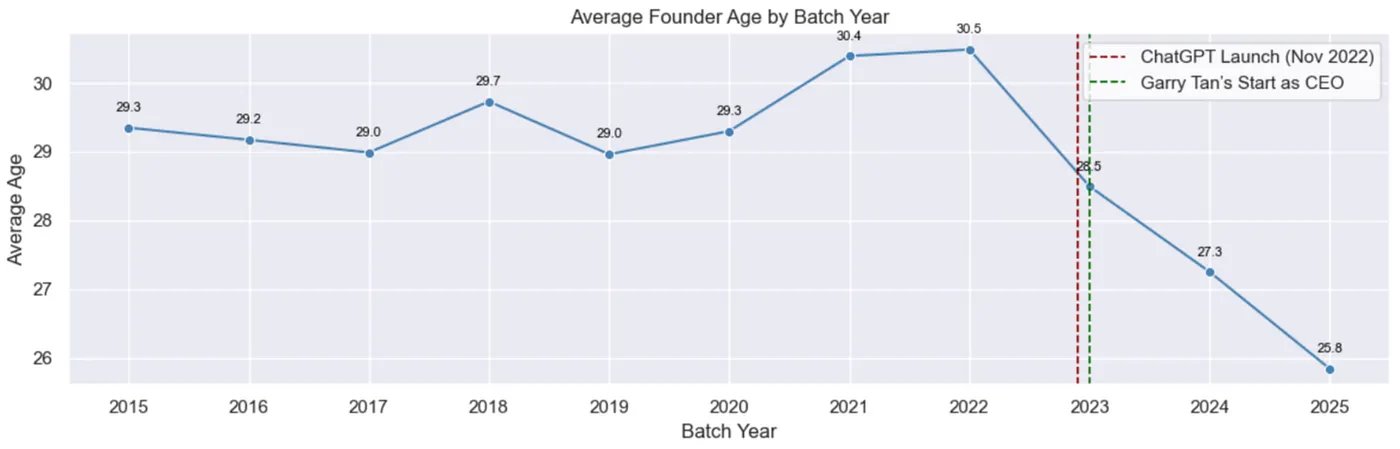
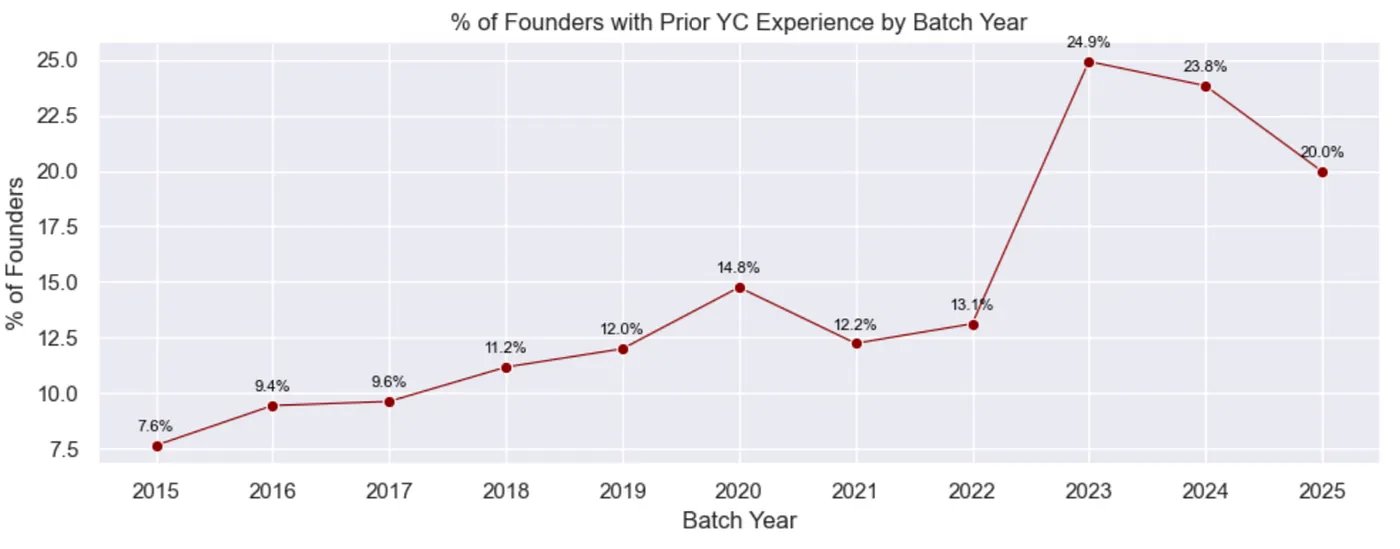
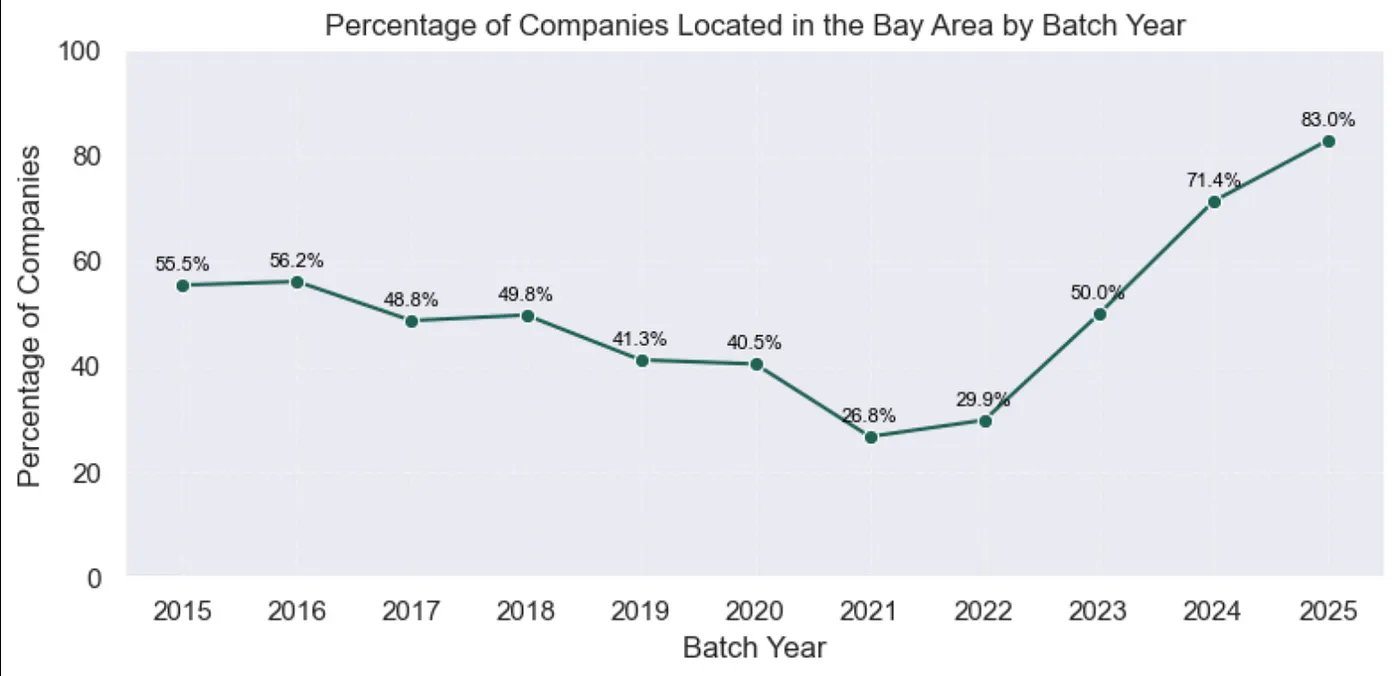
2025-12-18Startup culture feels very different these last few years. This analysis of the 'new' Y Combinator under @garrytan's leadership highlights shifts: • YC founders are younger, averaging ~26 years old • More graduated from a top 20 university, now more than 50% • Massive https://t.co/ShNf33BHPL

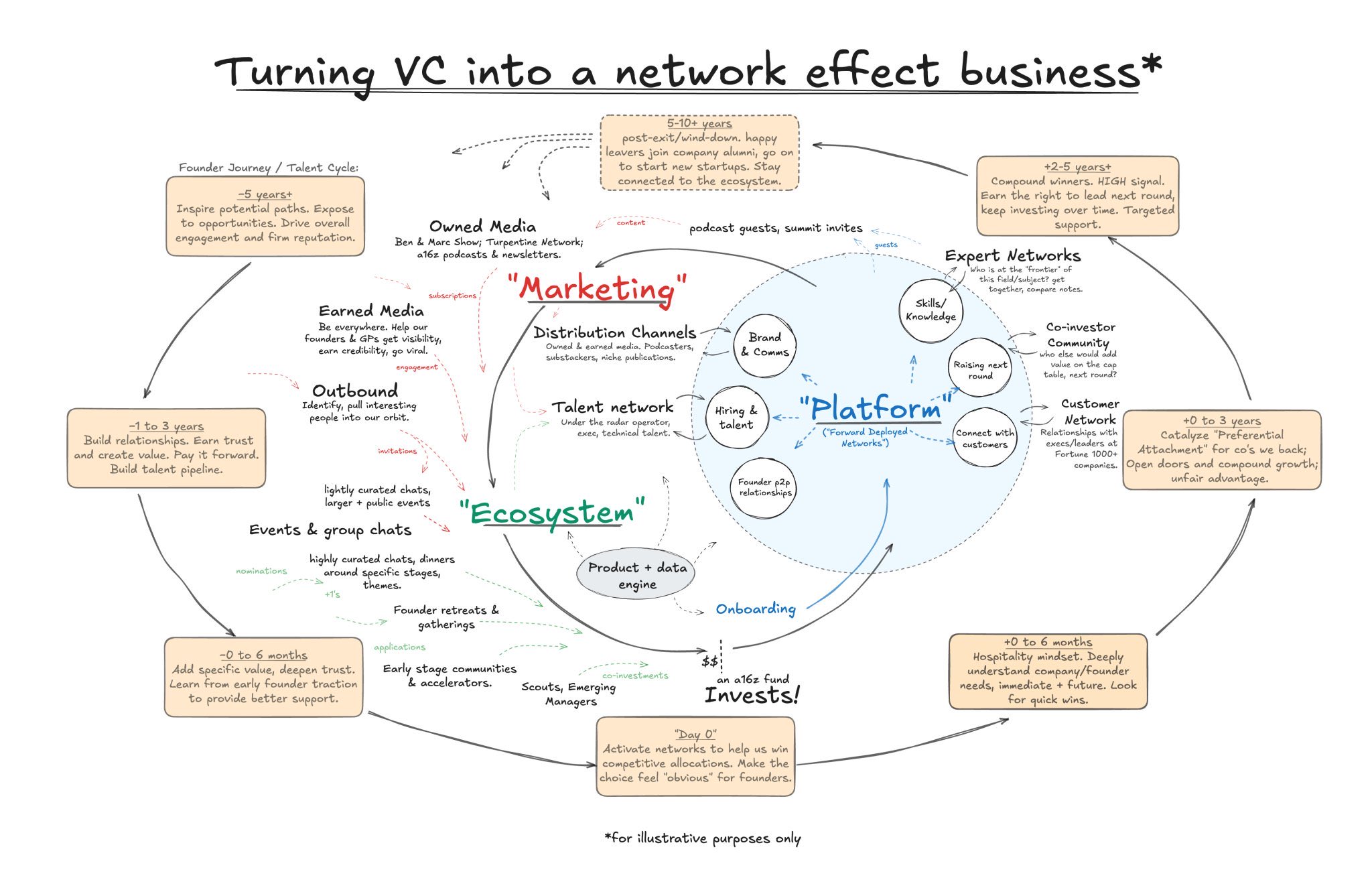
This is @a16z’s plan for domination. It’s the reason they’re the world’s #1 venture capital firm with $56B under management. They didn’t just build a fund ... they built an ecosystem Instead of only offering capital, they built: • Owned media – podcasts, newsletters, and https://t.co/mxJqvEuAG3
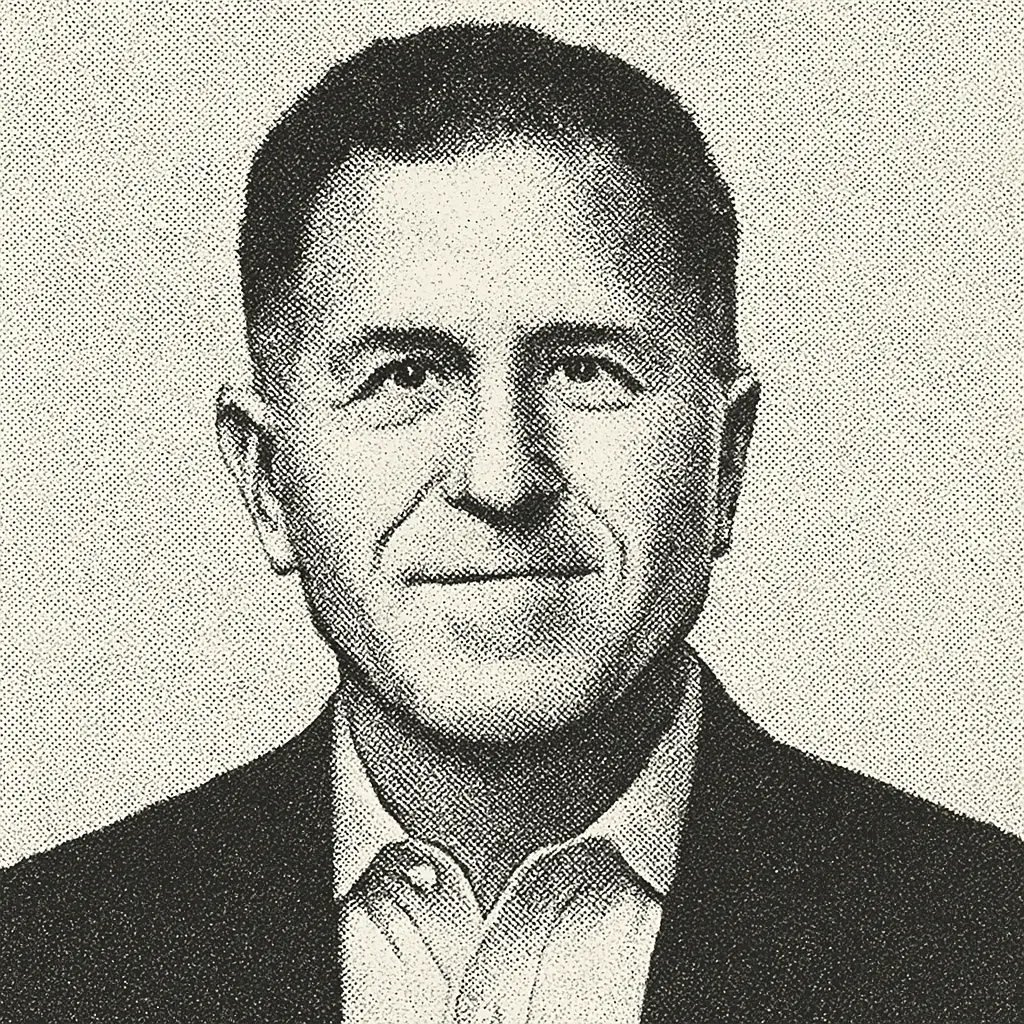
Today we begin the first 100 Year Conversation with @MichaelDell. A project to capture timeless wisdom from leaders who have built institutions that endure. At the heart of the work is one question: How do you build something that lasts 100 years? Few founders have endured through four eras of technology: PC, Internet, Mobile/Cloud, and now AI. Michael Dell is one of them ↓
Meta is not the first company OpenAI has had to compete with to retain its talent. Before Meta, OpenAI had to contend with another deep pocketed organisation, one that was also a formidable competitor in the battle for top AI talent, just like Zuck. Source: The book 'Supremacy'. 'Empire of AI' is another book that has a lot of interesting details on the early days of OpenAI. My favorite framework is counter-positioning, whether I’m thinking about companies or even hiring. In a recent podcast, OpenAI’s former Head of Research, Bob McGrew (see first screenshot), talked about why they refer to employees as “members of the technical staff.” Of course, one reason is that Greg Brockman modeled the organization on Bell Labs and other research institutions where there was flatter org structure, but I believe another reason was to attract individuals who didn’t want their career growth to be limited by whether or not they had a PhD. This is a counter position to DeepMind, where Demis Hassabis established a clear hierarchy based on academic credentials (see 2nd screenshot).
Sep 4, 2025 Original deleted — preserved hereThe idea of “lol it’s been done already” has stopped a ton of ton of great things from happening. And every few years, someone who says “yeah. But I’m gonna do it anyways” ends up becoming one of the greatest to ever do it.
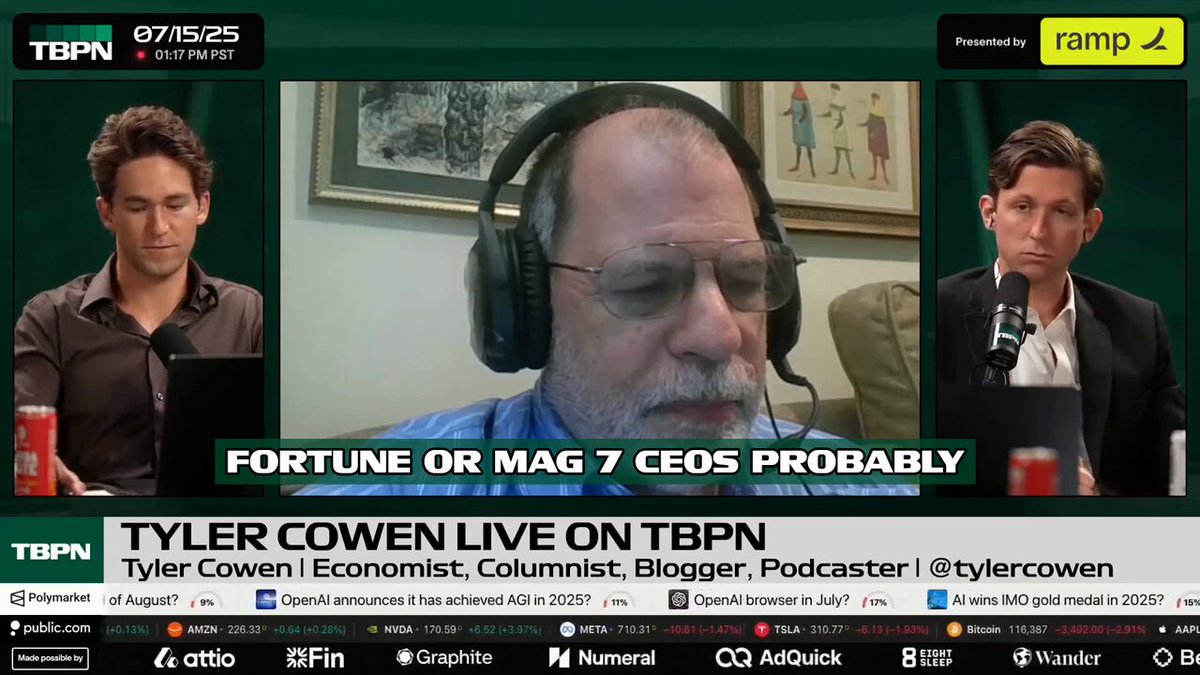
*[video not archived in-repo — tbpn_1945925369821024364_v1.mp4 was too large for git; the file is in `~/wiki-media-archive/tweets/`. The poster frame and the verbatim text above are the record.]* We asked @tylercowen about the importance of team dynamics in AI research. "I'm an NBA basketball fan and what I observe is the top teams need some time to gel." "There's something about how it gels and the process... I think it's a fascinating experiment. I'm dying to find out https://pbs.twimg.com/amplify_video_thumb/1945925041499127808/img/F9gKoWRvgVG1xSa8.jpg
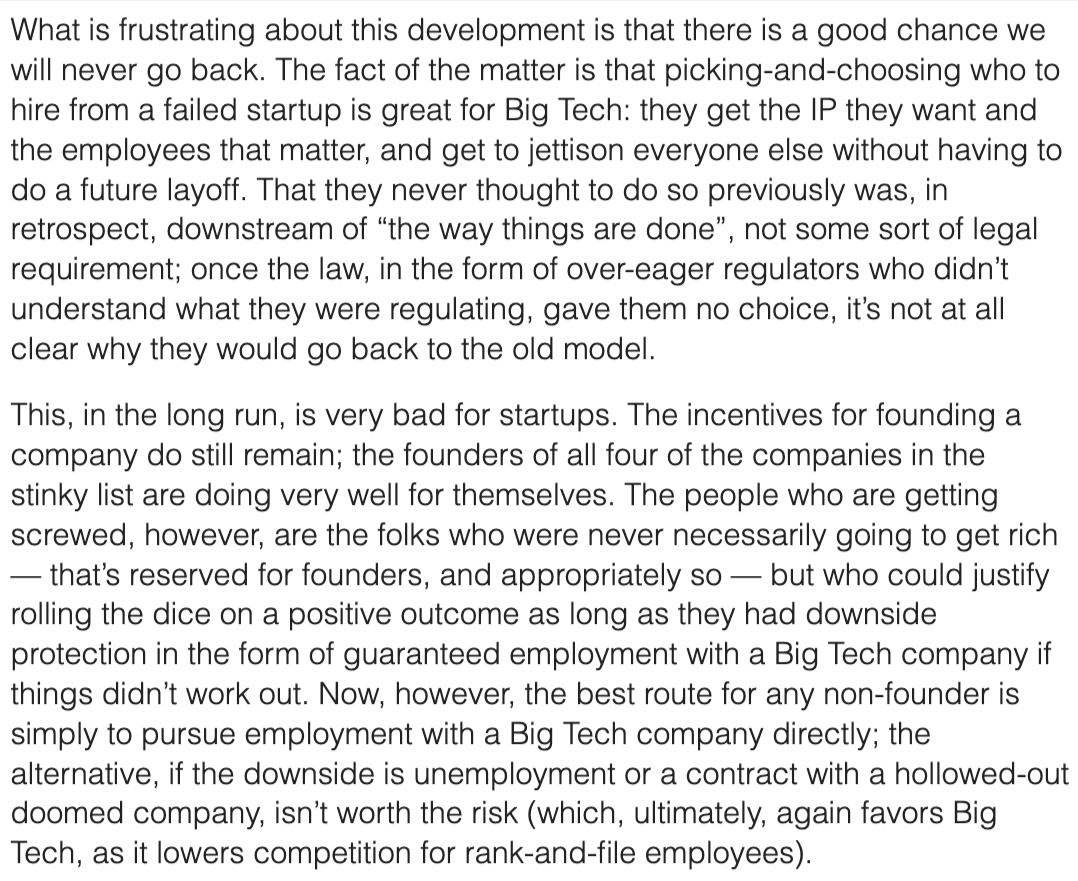
Spot on from @benthompson today The breaking of the tech social contract means the value proposition of working at a startup has gone way, way down https://t.co/86Y8Pg0WuT
It is easy to criticise consumer internet startups in India, especially when you compare them to the deep technical excellence being built in US/China. Using our example, the reality is this: there are almost 1.5 Lakh real people who are earning livelihoods on Zepto today - a company that did not exist 3.5 years ago. ₹1,000+ Crores of tax contribution to the government per year, over a billion dollars of FDI brought into the country and hundreds of crores invested in organizing India's backend supply chains (especially for fresh fruits and vegetables). If that isn't a miracle in Indian innovation, I honestly don't know what is. Why doesn't India have its own large-scale foundational AI model? It's because we still haven't built great internet companies. Most technology-led innovation over the past 2 decades has originated from consumer internet companies. Who scaled cloud computing? Amazon (originally a consumer internet company). Who are the big players in AI today? Facebook, Google, Alibaba, Tencent etc. (all started as consumer internet companies). Consumer internet companies drive this innovation because they have the best data, talent, and capital to put behind it. We need to build great local champions in internet that are generating hundreds of millions of dollars in FCF first if we ever want to get a piece of great technology revolutions. The startup ecosystem, the government, and the owners of large pools of Indian capital need to actively support the creation of these local champions, not pull down the teams that are trying hard to get there. Zepto is still far away from being a great Internet company that can hold a candle to the global best. But we are executing day in and day out to get there. I can promise that any capital we generate from this business (and it honestly looks like we will) will be invested towards long-term innovation and value creation in India. That is essentially what I am dedicating the next few decades of my life to try to do: create dynamism in the Indian economy and our capital markets, in the same way the Americans have for decades. We have the talent and capital; we just need the execution.
Apr 3, 2025YC used to feel like a window into understanding the areas progressing from “what smartest people are doing on weekends” -> vc-backed startup. Today it feels like the best window into what is the current consensus thing. Not bad & still a good basket but meaningfully
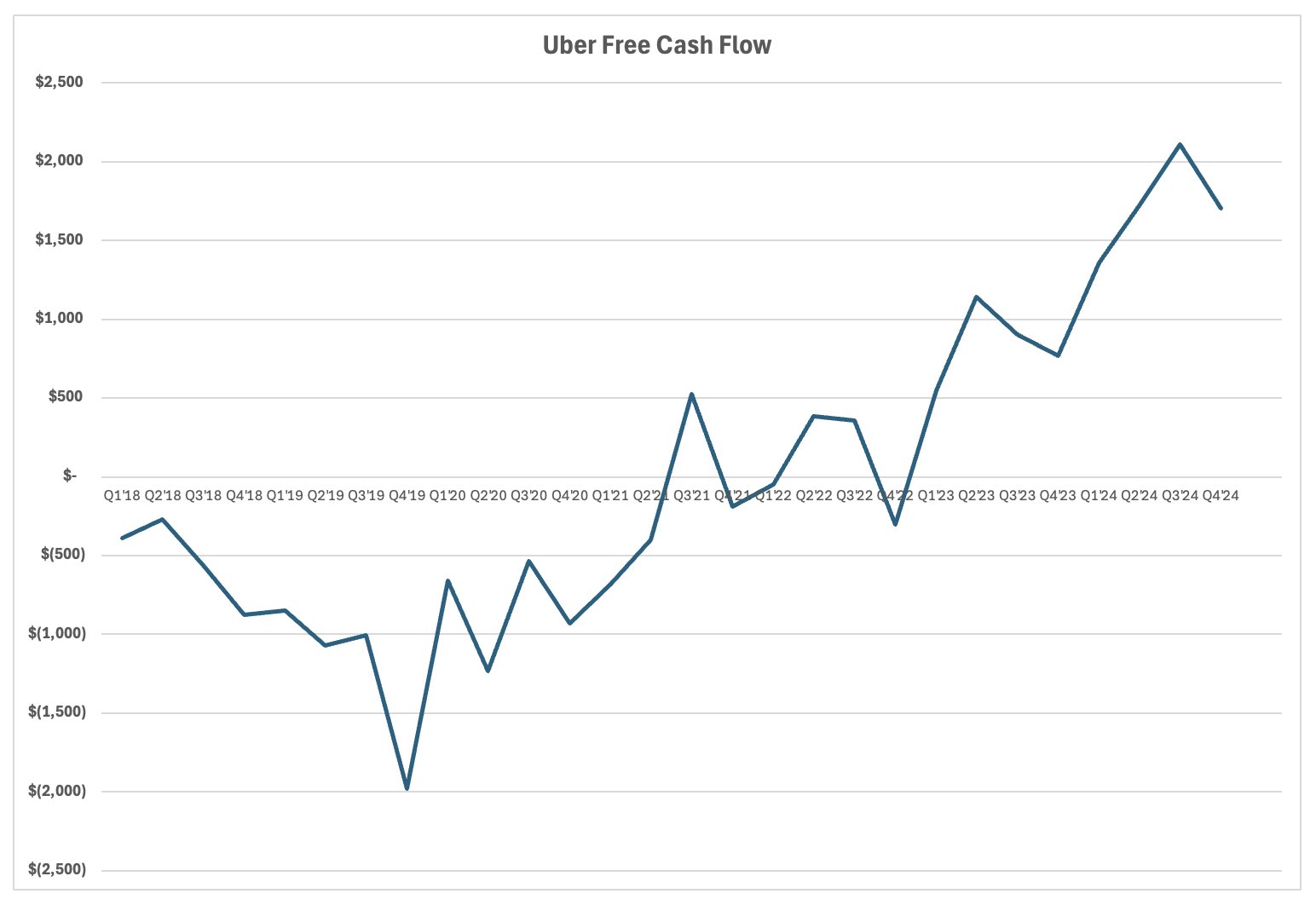
Mar 14, 2025Uber defined the current generation of startup mentality. Raise ungodly amounts of money, burn your unit economics into the ground in pursuit of scorched earth. Bleed your competitors dry by sheer force of fundraising. Then, and only then, do you pursue sustainable economics. https://t.co/dzMY3VXK9f
Doug Leone on building a successful venture firm: "The two most important things are (1) performance, and (2) teamwork. But if you don't have number 1 then nothing else matters."
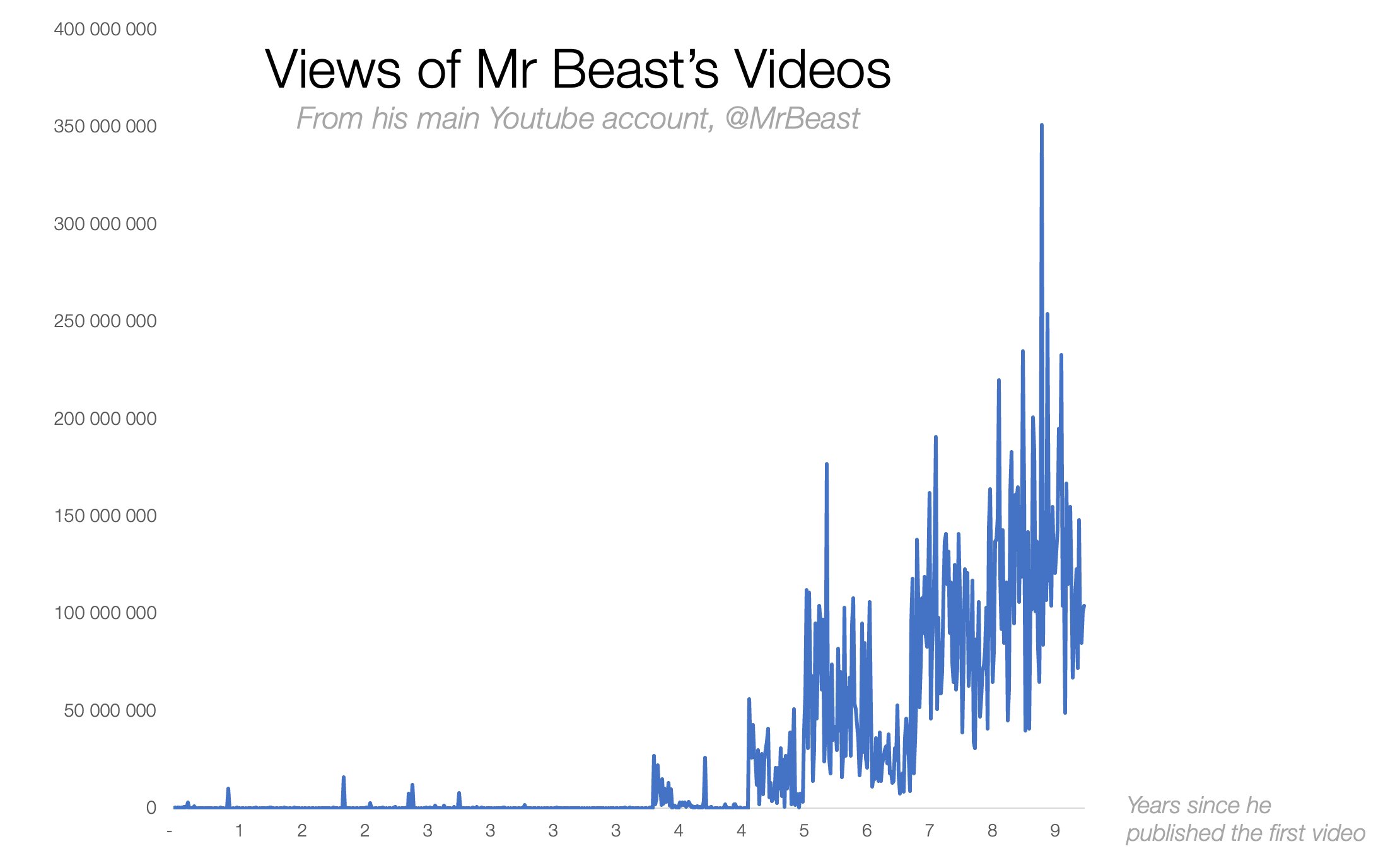
Sep 14, 2024Mr Beast has published one video every 11 days for ten years. Majority of anything is just doing the thing. https://t.co/O3ukYyMMS6
Lessons Steve Jobs wanted to pass on. Written right before he died. In his own words: 1. ON BUILDING A REAL COMPANY: I hate it when people call themselves “entrepreneurs” when what they’re really trying to do is launch a startup and then sell or go public, so they can cash https://t.co/dRmczKJqT9

“You’ve got 375 Principles. Those aren’t principles. Toyota has 14 principles. Amazon has 14 principles. The Bible has ten. Three hundred and seventy-five can’t possibly be principles. They are an instruction manual.” https://nymag.com/intelligencer/article/ray-dalio-rob-copeland-the-fund-book-excerpt.html
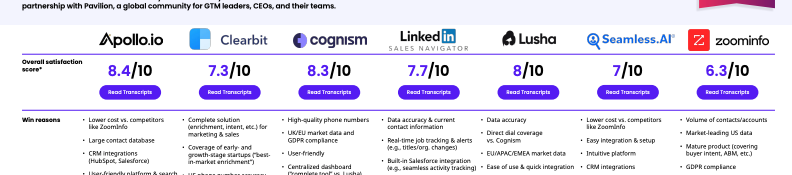
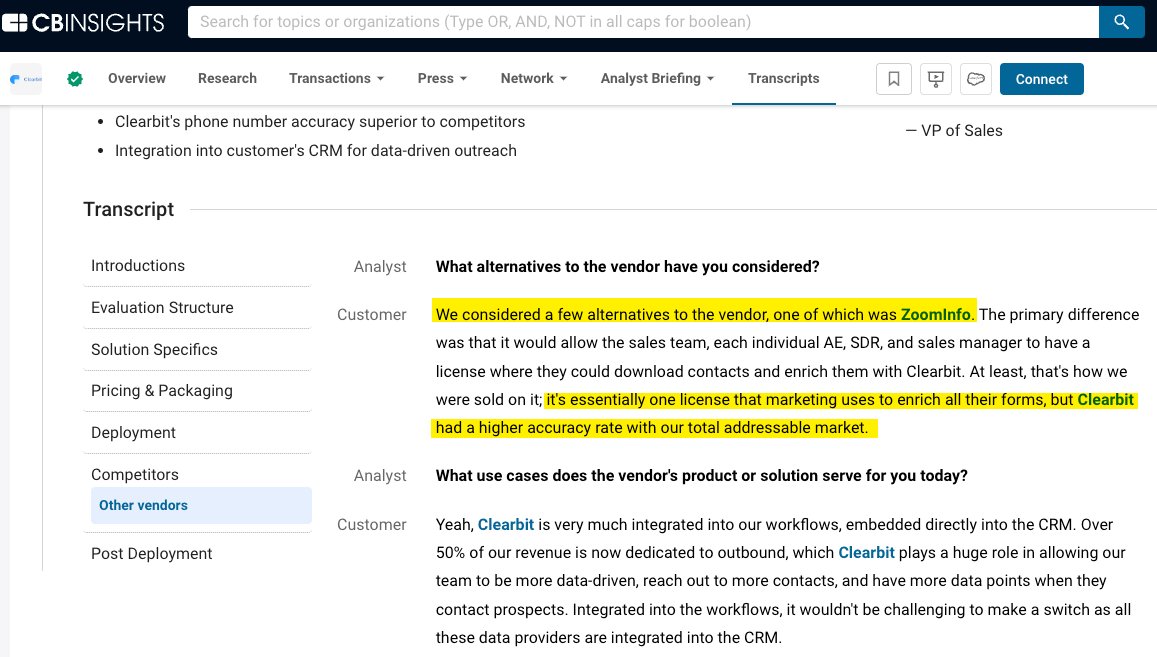
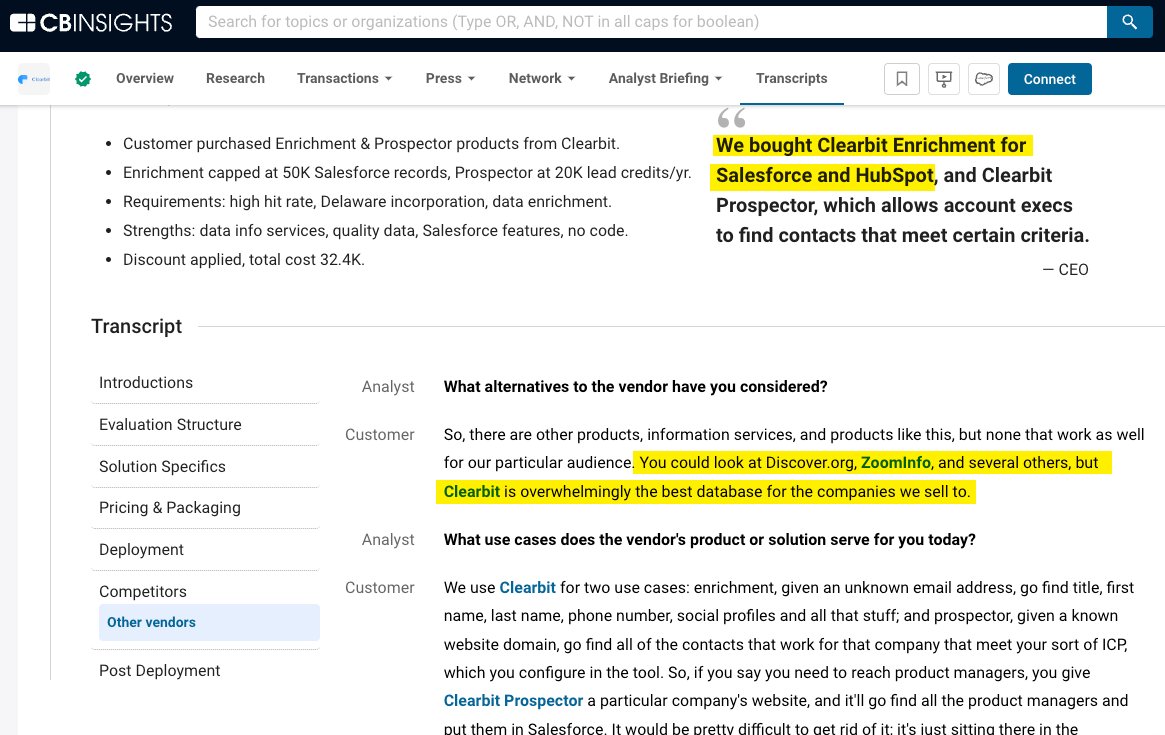
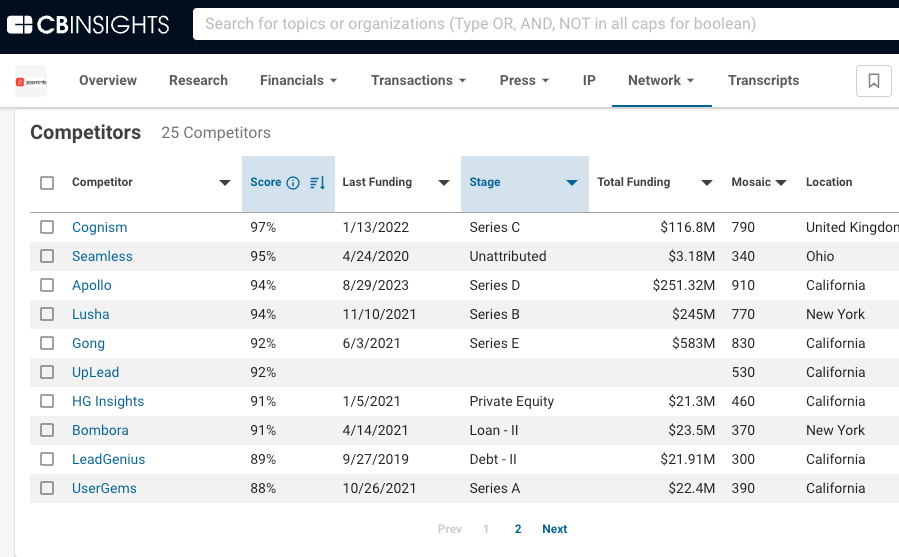
2023-11-08🧩🎯 M&A strategy teardown Why did @HubSpot ($HUBS) acquire @clearbit? TL;DR 1. The obvious near-term opportunity is going after @ZoomInfo $ZI 2. More interestingly, this really sets up a longer-term fight with @LinkedIn Sales Navigator (owned by $MSFT) First, let's talk https://t.co/Shurw5Uz00
When I'm trying to help founders find new startup ideas, I usually start by trying to figure out what's unusual about them. What do they know or care about that few other people do? There's usually something, and it often leads to an idea. If this new idea was already inside them, why hadn't it bubbled to the surface? Two reasons: they didn't realize what was unusual about them, and they discounted it as a source of ideas. One reason people discount their unusual qualities as a source of ideas is that they think of them as random, or even weaknesses. But even apparent weaknesses can be sources of ideas.
Aug 13, 2023I interviewed Stripe business lead (and Xoogler) @msiliski about the product culture at @Stripe. Here’s what I learned. 🧵 👇 Stripe combines deep thinking with speed. Moving fast has always important to the company: CEO @patrickc has long kept a public list of historical examples of people accomplishing big things fast. (Latest addition: COVID vaccines) https://t.co/ztc6WdA2ow How to balance going deep with moving fast? Stripe runs on written long-form documents. As Michael says, “that means somebody can go deep, like all the way down, and then distill it back out to everybody else. So you don’t have to do all of that work yourself.” Michael also shared the concept of “product shaping.” “Shaping is the process of creating a rough solution to a concrete user problem — it fills the space between the broad strategy and the detailed product specification, or the PRD.” Stripe thinks on a multi-decade scale. “I personally like to think 10 to 30 years to get out of the three- to five-year mode. It’s always hard to look 30 years in the future and craft a particular product, but I think you can look at long-term trends.” There’s a lot more in my newsletter, including how Stripe compares to Google, why “taste” is important at Stripe, and what the company looks for in a product manager: https://t.co/L1b7qhemtO That last part is super important right now as Stripe is looking for a *lot* of product managers. Here’s the full list, in hubs around the world and remote: https://t.co/n9OLg5o5ND I want to thank @msiliski for spending so much time with me, and for Stripe for allowing him to do so on the record. https://t.co/L1b7qhemtO Back to the top of this thread: https://t.co/krh4fFe5UD
May 24, 2023 Original deleted — preserved hereThe newest job role you’ve probably never heard of: “Community Designers” (CDs) This isn’t UX. This isn’t community management. This is something brand new. If you want a top community, you need to design a top community experience THREAD: Community Designers unlock potential: What is a Community Designer? The Chief Product Officer of the community More concretely: A Community Designer responsibilities include: - Identify the community - Distill insights - Recruit founding members - Design community space - Create community manifesto - Work with product/eng/CM to build community - Community experience product iteration Why does my startup need a Community Designer? - Because your retention will go up - Because your word-of-mouth will go up - Because not all communities are created equal Not investing in a community designer is expensive The difference between a Community Manager and a Community Designer: Community manager: makes sure the ship is smooth sailing Community designer: design the ship Note: often, the community manager IS the community designer What does success look like for a Community Designer? - A Product Manager strives for product/market fit - A Community Designer strives for community/market fit What is community/market fit? People walk into the space and it makes them feel like alive It's thriving, energetic, inclusive, invigorating and brings them back A good community designer: ships a community experience he/she/they THINKS the community will like A great community designer: ships a community experience he/she/they KNOWS the community will like Point: A great community designer walks in lockstep with their community Community managers are a HIGHLY underrated hire for startups But, community designers are barely on the map This will change over the next decade Communities don’t thrive by accident Hiring a community designer could be the most impactful hire you make in your company I’m pretty sure me and @latecheckoutplz team coined the term Community Designer We plan on talking a lot more about it Follow me on Twitter @gregisenberg and @latecheckoutplz to stay updated For more detailed breakdowns of what's happening in community design, you'll want to sign up to my free newsletter There are almost 17,000 subscribers already Join us: https://t.co/o2YiBTeG4v I'm so excited to see this new area of tech/product/marketing blossom It's a good time to be in community Fun fact: @ginab informed me she’s come up with the term 2 years ago. Credit to her! She’s the fantastic CEO of @MightyNetworks. I’m a big fan
May 24, 2023 Original deleted — preserved hereBuilding a financial model at the seed stage is underrated. The final projections don’t really matter. The key is to use the process of building a bottoms-up model to your advantage: it can help you understand how challenging your product’s unit economics are (or not). Alright folks - by popular demand, I've put together a *really* quick model template that someone just getting started out can use to forecast revenue and build out unit economics with. https://t.co/Dd57YFP1wC
May 23, 2023 Original deleted — preserved hereI've read all of Jeff Bezos's 23 years of Amazon shareholder letters twice now. It's an MBA of its own. Here's what I learned about startups, entrepreneurship, investing and more: Your customers are loyal to you right up until the second that someone else offers them a better service. Listen to customers, but don't just listen to customers also invent on their behalf. Here's Jeff Bezos on coming up with the Amazon Kindle: We set ourselves the incredibly audacious goal of improving upon the physical book. So don't be afraid to set big goals. And remember that if you don't execute well, it will be done by someone else. Many of the problems you'll face will have no textbook solutions, and so you should happily invent new approaches. Find the real root cause or causes of a problem — and do real root fixes. So then, when you fix it, you’re not just fixing it for one customer. You’re fixing it for every customer. Risk aversion limits innovation and long-term value creation. The path to success isn't straight. Success often comes through iteration: invent, launch, reinvent, relaunch, start over, rinse, repeat, again and again. Remember that failure is part invention. So better to fail early and iterate until you get it right. How to achieve outsized returns: Outsized returns come from betting against conventional wisdom. Given a ten percent chance of a one hundred times payoff, you should take that bet every time. But you're still going to be wrong nine times out of ten. Big winners pay for many experiments. 1/2 Let's talk about baseball. If you swing for the fences, you're going to strike out a lot, but you're also going to hit some home runs. It's as true for business as it is for baseball. However, there's just one difference. 2/2 Baseball has a truncated outcome distribution: No matter how well you connect, the most you can get is 4. In business, every once in a while, when you step up to the plate, you can score one thousand runs. This long-tailed distribution of returns is why you should be bold. Here's Bezos talking about the Echo: 1/2 If you had asked a customer "Would you like a black, always-on cylinder in your kitchen about the size of a Pringles-can that you can talk to and ask questions, that also turns on your lights and plays music?" They would've said no. 2/2 No customer was asking for Echo. This was definitely Amazon wandering. Wandering is an essential counterbalance to efficiency. You need to employ both. The outsized discoveries require wandering. How to think long-term? Think it's good enough today, but it will get so much better. Be an owner 💎🙌 Many investors are short-term tenants, they turn their portfolios so quickly that they are really just renting the stocks they temporarily "own." Owners aren't so short-sighted. Long-term thinking is both a requirement and an outcome of true ownership. Invest in long-term market leadership rather than short-term profitability, or short-term market reactions. "In the short run, the market is a voting machine but in the long run, it is a weighing machine." — Benjamin Graham You aren't 10% smarter with a 10% increase in stock price and conversely aren't 10% dumber when it goes down. Always want to be weighed. It's impossible to produce extraordinary results without extraordinary people. 3 questions to consider before hiring: 1. Will you admire this person? 2. Will they raise the average level of effectiveness of the group? 3. Along what dimension might this person be a superstar? Pay to Quit. Once a year, Amazon offers to pay its employees to quit. While the headline says "Please Don't Take This Offer." The goal is to make them rethink their priorities. An employee staying somewhere they don't want to be isn't healthy for the employee or the company. "Leaders have relentlessly high standards — many people may think they are unreasonably high." (Amazon leadership principles) How to achieve high standards: 1/2 First, you have to be able to recognize what good looks like in that domain. Second, you must have realistic expectations for how hard it should be to achieve that result — the scope. 2/2 Just one example / perfect headstands Most people think that if they work hard, they can master a handstand in about two weeks. In reality, it takes about six months of daily practice. If you think you can do it in two weeks, you're just going to end up quitting. Most decisions should be made with around 70% of the information you wish you had. Wait for 90, and you're being slow. Plus, if you're good at course correcting, which you should be, then being wrong will be less costly than being slow. "Disagree and commit." If you have conviction without consensus, it's helpful to say, "Look, I know we disagree on this, but will you gamble with me on it?" No one can know the answer for sure, and you'll probably get a quick yes. Finally, it's always Day 1. Day 2 is stasis. Followed by irrelevance. Followed by excruciating, painful decline. Followed by death. And that is why it is always Day 1. If you enjoyed this thread, consider getting the ebook version. At 15 mins, it's slightly bigger — enough to share the ideas more freely. It's $9, so, maybe, show your support! Regardless, retweet, and follow me @sumitgrrg for more of these. Thanks! https://t.co/pa3MwgLWCj
May 23, 2023 Original deleted — preserved hereMost Investors quickly realize that Board meetings follow patterns. The environment is very serious and Board meetings reflect this. What follows is a classification framework for today's Board meetings (including a soundtrack). Be prepared for a healthy dose of angst:🧵👇 I used to think that Board meetings were mysterious gatherings in smoky rooms where fights would break out and company-making or breaking decisions were made. I imagined that from time-to-time I’d have to swipe everything off the Board Table to share a brilliant master plan. And of course, entrances would be in slow motion with each Board member having his/her own theme music. My favorite entrance theme is linked below. Truly kick ass. The powers that be would never let my theme be that cool. https://t.co/gmDhMAmOOt What I quickly found out is that the reality of being a Board member is different than I imagined. When times are good, most Board meetings feel like a variation of the same agenda: Minutes, financials, committee updates, technical matters and topical discussions. But when times are bad, Board meetings take on an entirely different agenda. Everything is focused on survival. Everything. And given how market conditions have dramatically taken a turn for the worse over the past year, Board meetings universally reflect this new norm. Board meetings create a shared perspective of a business’s trajectory, challenges and potential. They generate alignment and feelings which don’t come in an unlimited number of combinations so neither do Board meetings. Here are a few “archetypes” for today’s Board meetings: Slow Me Down Even with a bad macro backdrop, some startups have cracked the code on their business model and are growing nicely. In the last super-cycle, the Board then shifted its advice from being pragmatic to chasing hyper-growth. But this cycle is different. For startups that have cracked the code, Board conversations revolve around balancing growth with burn, the path to profitability and the drivers of enterprise value. Board meetings are about convincing Founders to stage their ambition and to slow down to outlast the environment The soundtrack for this meeting would be upbeat but controlled. Listening to the music would make you feel calm and happy. If I only had one track to play, it would be “Slow Me Down” by Emmy Rossum. https://t.co/oCGPk8t207 Trying My Best In this environment, very few startups are consistently “up and to the right”. The vast majority of startups have a few things going well but feel “kind of broken” at the same time. As a result, most Board meetings fall into the “Trying My Best” category. These Board meetings are tests of trust. Coming out of these Board meetings, Board members need to determine if they’re comfortable operating in a “trust but verify” model or if changes need to be made. Board members will be looking for proof that the startup’s leadership team is delivering on promises made in the operating plan and that the startup is on a path to be fundable in the future. Everyone wants the Founder to be pragmatic and focused. In the last cycle, the soundtrack would be energetic because the probability of getting to the next stage was high. But in today’s environment the soundtrack would be mellow. If I only had one track to play, it would be “Trying My Best” by Anson Seabra. https://t.co/Lm2YTXe9wA Man In The Mirror Boards and Founders don’t see the world through the same lens. Board Members are plugged into the broader startup ecosystem and are on top of current market conditions. Founders are insular but they know their business better than their Board members do. This is to be expected and a natural byproduct of where “time is spent”. In good times the differences in perspectives can be extremely additive in the arc of a startup’s life. But in bad times the differences create tension and can get in the way of making critical decisions. These Board meetings can take on a very toxic dynamic when there are major disconnects about the best path forward. Board meetings can quickly start to feel like battle zones. And the chaos doesn’t end until one side emerges as victorious. Either the Board needs to look in the mirror and come around to the Founder’s perspective or vice versa. Until then, the company’s performance takes a back seat to hashing out toxic dynamics. The soundtrack for this type of meeting would be sad and gloomy. Listening to the music would be draining and bring out deeply suppressed emotions. If I only had one track to play, it would be a really dark version of “Man In the Mirror” by J2 https://t.co/M6Mb2uj2qI Jiggle Jiggle Every unprofitable startup needs capital to survive and there comes a time when either a term sheet arrives or a Founder has to prepare for the worst. Raising capital in today’s environment is really difficult so when money shows up everyone is relieved. In particular, the first Board meeting after a company is “capitalized” has a unique feel. Everyone is in good spirits and the CEO takes time to thank everyone for their support. All new investors are welcomed with open arms. And agendas are typically light and perfunctory. The soundtrack for this type of meeting would be light and contain little substance. Pop bubblegum at its best. There are a million songs that represent this type of meeting because they’re all the same. “Jiggle Jiggle” by Duke & Jones is a good example. https://t.co/9s5rGXEDIW Dear Agony The final type of Board meeting is a natural function of investing in unproven businesses. Sometimes they're failing, and when they are Board meetings take on a really sad tone. Everyone feels gobsmacked once it’s clear that a startup is unlikely to survive. These meetings are about making strong declarations and making tough calls. They test the ability of the Board members and CEO to put emotions aside and discuss bad news in a professional manner. It’s about making decisions that have consequences. The hardest discussions revolve around “pass the hat” or “turn off the lights” decisions. The true perspectives of Board members and the company’s Executives will always come out. Remaining calm and rational works best but emotions frequently get in the way. The soundtrack for this meeting would be sad and gloomy. Listening to the music for any length of time would be draining and bring out deeply suppressed emotions. If I only had one track to play, it would be “Dear Agony” by Breaking Benjamin. https://t.co/4N3BhXUBUu TL;DR: Board meetings are predictable so it serves everyone to know in advance which type of Board meeting they’re likely to be part of. That way the DJ can queue up the right soundtrack and make sure everyone is vibing accordingly.

In 2017, Walmart bought Bonobos for $310M. Now? They're selling it to Express for $75M. Did anything come out of the D2C wave alive?
2023-04-18How to add value 101: 🚫 Old way: “What do you want me to do?” ✅ New way: “I recommend X. Here's rationale, data, and examples of why this will work. The risk is Y but we can address by Z. If you agree, I can start by doing [first step]." Be proactive and assert what to do.
Jan 23, 2023This is the attitude that builds incredible things. Let all the people who don’t desire greatness leave. https://t.co/Q3do2tjX4f I’m happy we were able to do this at @comma_ai but in a more understated way. Build a culture where you just sort of don’t fit in if you don’t aspire to excellence.
Nov 22, 2022 Original deleted — preserved hereUpdated after FTX: “5 Reasons to Actually Have Board Meetings” https://t.co/weeKfPWWqm “#1. VCs that attend regular board meetings are much, much more likely to invest again. And to make intros for the next round. Never assume a VC will write you a second check. There is no obligation to write another one. But, you can hack it.”
Nov 19, 2022The biggest difference between a $50B company and a $1B company is the ability to own more of your addressable universe. You either die a point solution, or you live long enough to become a platform. Snowflake, Datadog, Crowdstrike Here’s how some of the best platforms do it…
Nov 15, 2022Buffett on moats in 2000: "If you are evaluating a business, the number one question you want to ask yourself is whether the competitive advantage has been made stronger and more durable. That’s more important than the P&L for a given year." On Porter's 5 Forces: "I’ve never really read Porter. I’ve read enough about him to know that we think alike, in a general way. I think he talks about durable or sustainable competitive advantage and that is exactly the way we think" "The best way to do it is study the people that have achieved that and ask yourself how they did it and why they did it." "What it is that gives you that moat around the razor blade business? Here’s a worldwide business and yet people don’t go into it. Why was State Farm successful against people that had lots of capital? We like to ask ourselves questions like that." "Study things like Mrs. B out at the Nebraska Furniture Mart, who takes $500 and turns it into the largest home furnishing store in the world. There has to be some lessons in things like that. What gives you that kind of a result and that kind of competitive advantage over time?" "That is the key to investing. If you can spot it when others don’t spot it so well, you will do very well. And we focus on that."

1) “Moats” are a term thrown around a lot in startup circles In reality, companies don’t build moats, they build "CAPABILITIES" that yield them We’ve created a simplified, but exhaustive framework for capabilities that create company defining moats https://t.co/f1YESxshUk 2) We've written in the past that moats aren't some squishy subjective quality, they're quantitatively demonstrated measure of competitive advantages Your "moat" is the result of the competitive advantage, not what creates it Capabilities create them https://t.co/KFvYumox6H 3) With that, we sought to define what capabilities create moats, borrowing inspiration from Bruce Greenwald's notion of captivity Bruce is one of Buffet's greatest influences and his book Competition Demystified may be the best business book of all time https://t.co/8KKDnmbovq 4) The bedrock of this framework is captivity and Bruce breaks into 2 camps - Customer Captivity and Resource Captivity At the heart of this are power dynamics. If you have power over the customer or resource that enables you to return above market returns, you have captivity. 5) Much of Competition Demystified focuses on captivity yielded from scale (i.e. economies of scale), we expand upon this with a more digital oriented framework that incorporates network effects and organizational design as ways to establish captivity. 6) Scale capabilities are ones where your economic returns increase with the size of your operations. These are largely resource driven, but can exist on the demand side as well. This has been the primary engine of economic activity for the industrial age. Examples below 7) Network effects are largely the opposite, leveraging networks of customers/users, data and development partners to establish captivity. These have been the driver for many of the modern internet giants. Examples below 8) Organizational design capabilities are largely yielded by your business model and positioning in market. Helmer's 7 Powers dives deeper into some of these and we think these are powerful as digital companies begin to operate in analog spaces. Examples below: 9) As we advise the companies we work with, we focus LESS on REVENUE and MORE on CAPABILITY building Lots of people can sell a dollar for 99 cents, but capabilities enable you to accrue highly margin accretive business That's what we focus on, how can you create a FCF monster 10) Our job is to prove that we can establish a moat trajectory and that is ALL THAT MATTERS If we see a viable path toward a moat we want to prove that before the Series A, knowing that if we accomplish that, we've won Focus on building the capability, it's ALL THAT MATTERS 11) And as always, many thanks to @mjmauboussin, who's research has served as a constant source of inspiration for how we define our point of view on competitive advantage in the digital age
Oct 23, 2022Third, look for founders with a big vision — and that know how to execute it They had a clear vision. The true TAM was $2m (literally), but they explained how leaders like LinkedIn would use Algolia as their core LinkedIn isn’t a customer (I don’t think) but many like them are
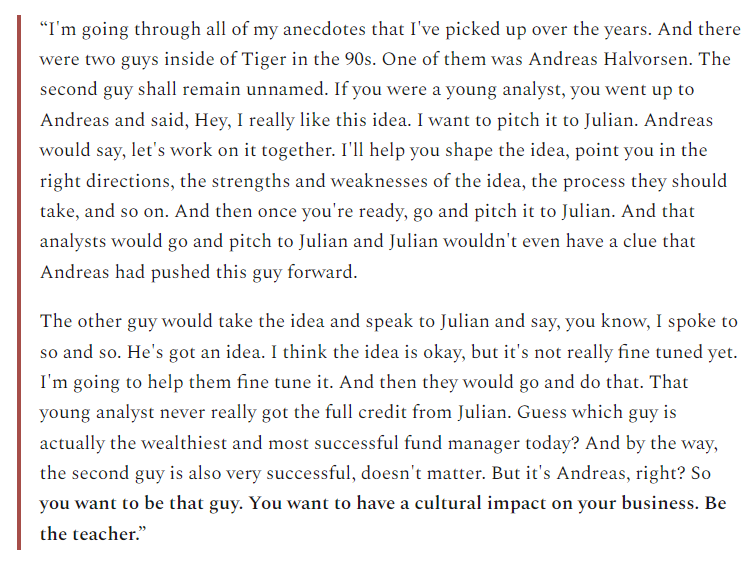
Oct 20, 2022Teaching at Tiger via @alixpasquet “If you were a young analyst, you went up to Andreas Halvorsen and said, Hey, I want to pitch it to Julian. Andreas would say, let's work on it together. I'll help you shape the idea. Once you're ready, go and pitch it to Julian. "And that analysts would go and pitch to Julian and Julian wouldn't even have a clue that Andreas had pushed this guy forward." "The other guy would speak to Julian and say, you know, so and so has an idea. I'm going to help them fine tune it. That young analyst never really got the full credit from Julian. Guess which guy is actually the wealthiest and most successful fund manager today?" from 'Learning for Analysts and Future Portfolio Managers' https://t.co/5UuhSwQqQT
Most board meetings are a total waste of time. Here’s how to make them actually worthwhile 👇 1⃣ Do a board “retreat” vs quarterly meetings Not all board meetings should be created equally. Once a year, get everyone together in person for a 36 hour retreat - part working session, part social. Rapport will skyrocket 🚀 From there, virtual check-ins throughout the year can be less involved + more productive. 2⃣ Walk through materials in a Loom video vs live. Many teams spend 80% of board time reviewing materials, and 20% for discussion. Flip that on its head. Put your board to work before the meeting starts so you can discuss the topics you really care about as a group. 3⃣Spend less time creating materials. Your team hates preparing slides (you have a company to run); board members don’t want to read a novel. Go through your last board pack with a director you trust and ask what was unnecessary. You’ll kill 50%+ of work next time around. 4⃣Focus on what’s NOT working vs. what’s going well. It’s easy to make a board meeting a ‘rah rah’ self-congratulatory session. That’s a waste of time. The best founders own the company’s challenges; the best board members will give real feedback. 5⃣Call out board members for bad behavior. It’s extremely obvious when someone isn’t prepared, is checking their devices, or is being disruptive. If you let it slide, the discussion will suffer. You’ll be wow-ed by the quality improvement when you hold them accountable. 6⃣keep the board room small. Have you had a quality discussion with 12 people before? It’s impossible. If you've raised multiple rounds, you may have this challenge. Split the meeting up: first part, everyone; second part, “select” group of <5. Save real talk for the latter. 7⃣ Finally: board meetings are for you, not for investors. This helps with framing the agenda. What do you actually want input on? vs. Here's a report card of our performance (cover that in interim updates) Board meetings don't have to be a drain. If they are, make some changes. If you've got good ideas for board meetings I can pass on to my portfolio companies, please weigh in!
Sep 2, 2022I am sorry, as a founder, the only thing that matters at pre-seed and seed: Can you tell a story? Can you compel the other side to join you, as an investor, customer or team member. You maybe the smartest but you don’t have data at this point so you have to inspire.
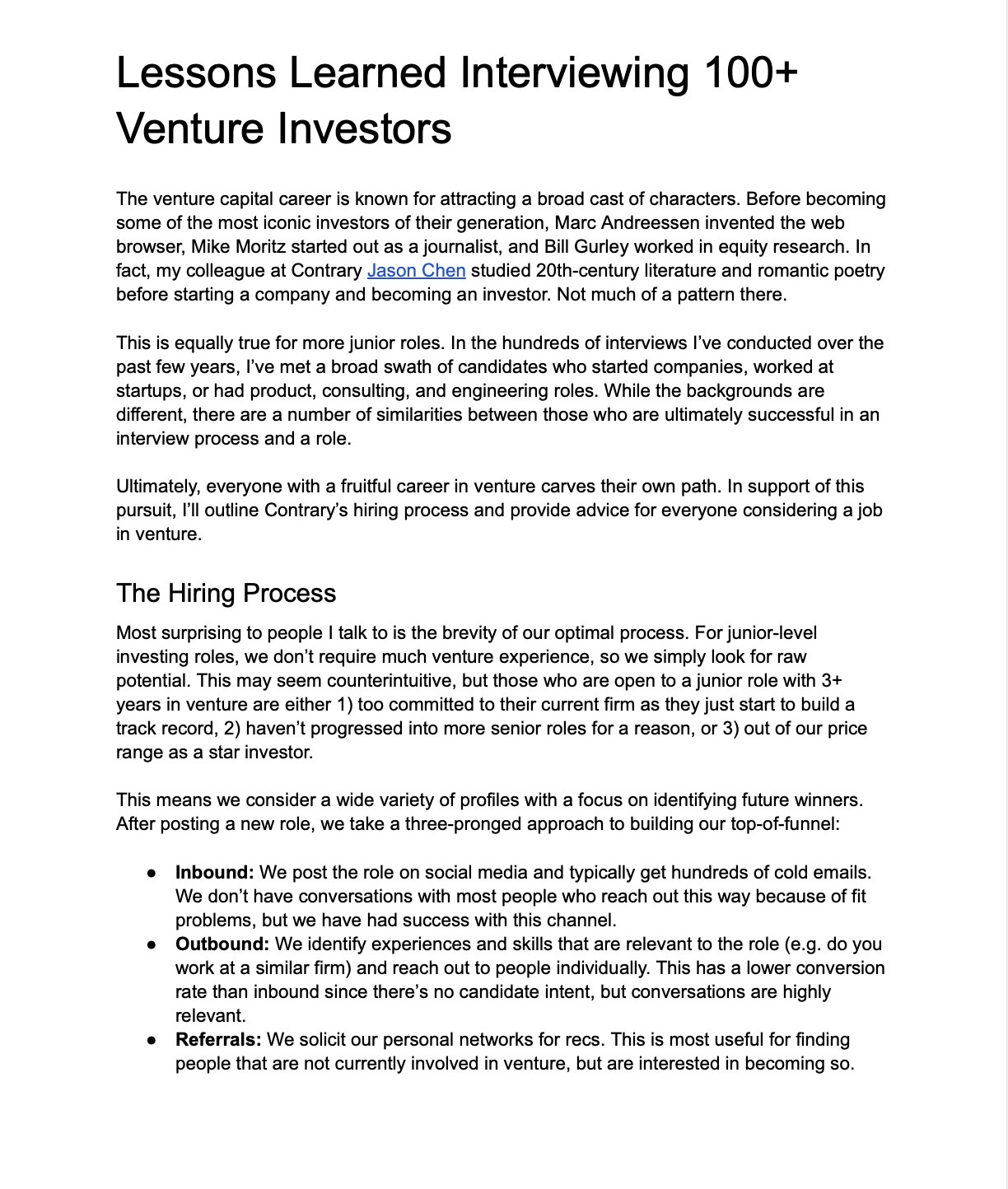
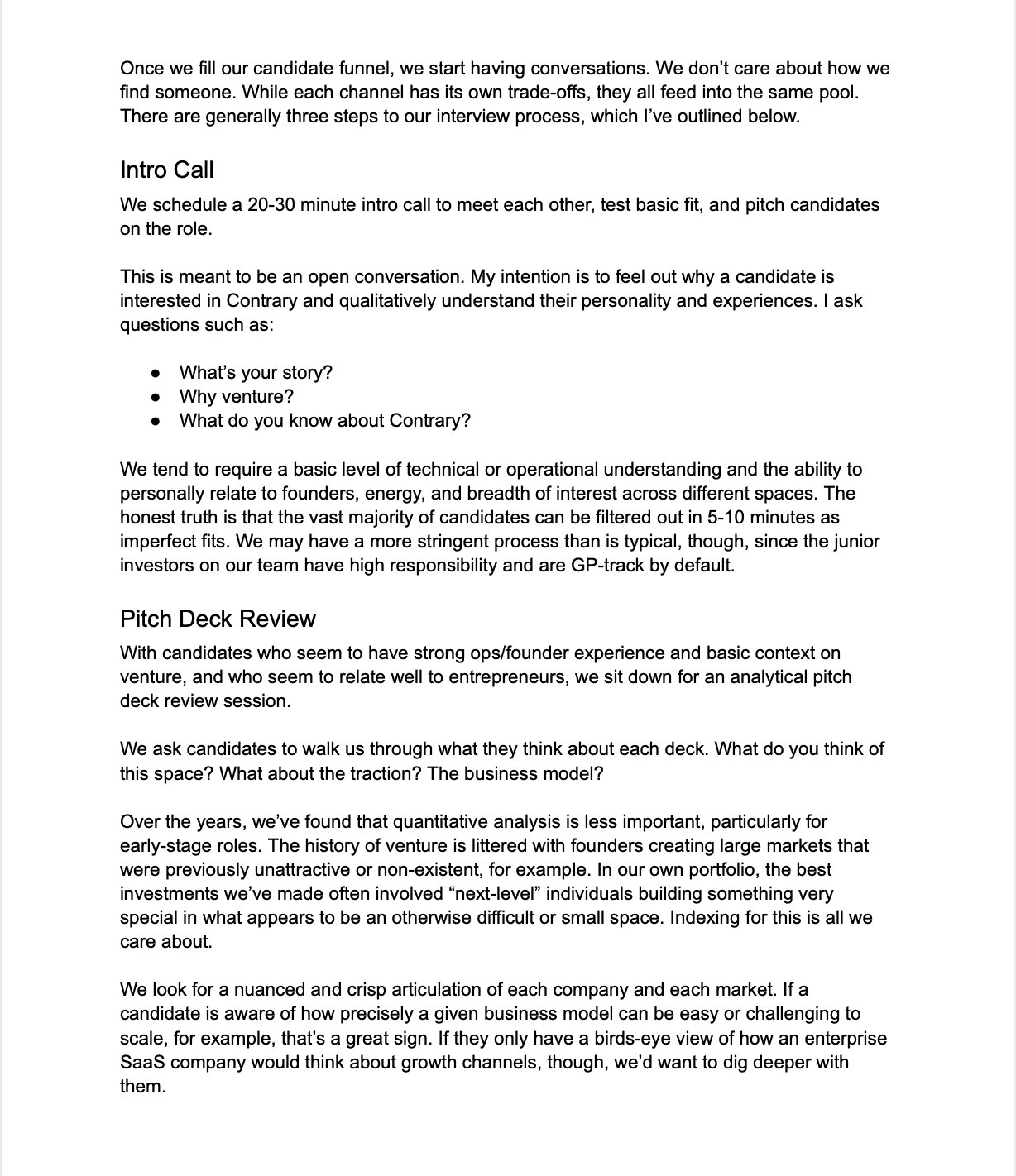
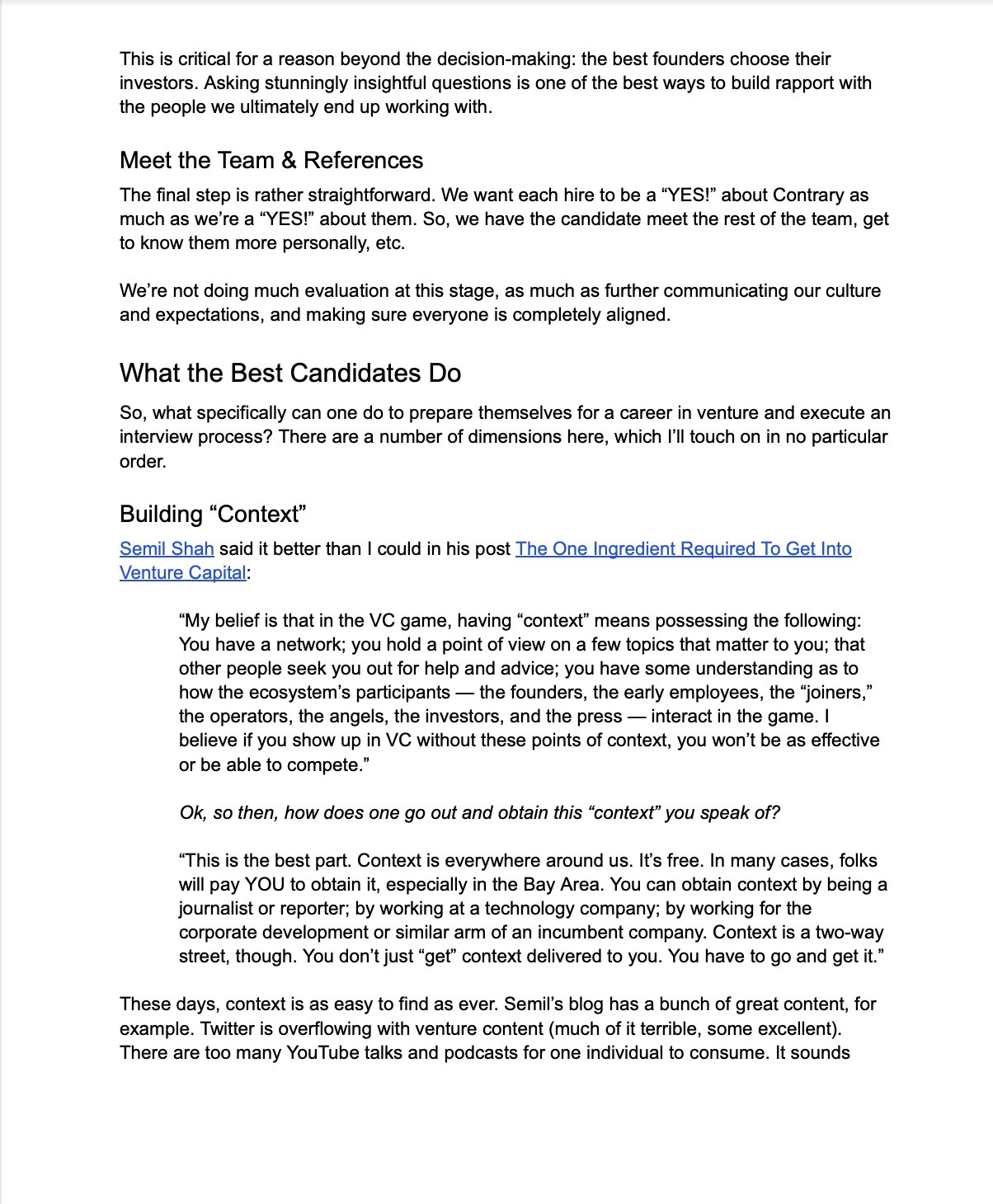
Aug 30, 20222500 words on Contrary's hiring process and lessons learned interviewing 100+ venture investors Posted here by our friends at @joinLeland: https://t.co/8TnTN1Egh6
Jeff Bezos said: “There is no way to write a six-page narratively structured memo and not have clear thinking.” Here’s the writing framework Bezos uses (that you can too): Bezos made Amazon into a writing culture by banning powerpoint and forcing everyone to write 6-page memos for meetings. He called them “narratives.” Amazon uses a tailored process and specific writing guidelines to make this happen. Each memo is structured around the same 6 components: • Intro • Goals • Tenets • Current state • Lessons learned • Strategy Meeting attendees get 20 min to read the doc. Then they spend the rest of the meeting tearing apart the ideas it presents. After the meeting, the memo owner makes edits and sends out a final version to all involved parties. From everything I’ve read, it’s a heck of a task and really is required for all meetings. To keep it consistent, Amazon uses 7 rules for writing its memos: Use shorter than 30 words per sentence Constraints drive clear thinking. And the best constraints force you to use less words, not more (sorry, school). If you can explain something in simple terms, you likely understand it well. Replace adjectives with data “Customers love Prime.” “Customers with Prime spend on average 3x more than those without and we retain 90% of them year over year.” Specificity leads to clear results and quick decision making. Pass the “so what” test The reader should immediately know what action you want them to take. Make sure to answer who, what, and when. Otherwise, you’ve wasted your time and the reader’s. Eliminate weasel words Most weasel words are adverbs. “Nearly “Significantly” These words are imprecise and nobody knows what they mean. Get rid of them. As Stephen King says, “The road to hell is paved with adverbs.” Use subject-verb-object sentences The goal of writing is to transfer your thoughts to another person with as little lost in translation as possible. It’s a big game of telephone. The simpler your sentences, the more accurately your ideas will be translated. Avoid clutter words Utilize → use In order to → to Until such time as → until Due to the fact → because Getting rid of clutter focuses your message on the parts that matter. Avoid jargon and acronyms Companies are littered with internal jargon. But this excludes new employees and anyone external to the company. When wanting to use an acronym, write it out the first time it’s used in any document. Clear > clever To me, Amazon’s writing focus does three things: • Filters for clear thinkers • Makes knowledge transfer easy • Eliminates unnecessary meetings Just imagine how many pointless meetings you’d eliminate if the owner had to write a six page paper. Hope you enjoyed that! If so: 1. Follow @nathanbaugh27 for weekly writing on storytelling and creativity in business 2. Join 22k on my free newsletter to level up your storytelling https://t.co/cPjT4HvPLv Tldr (Amazon writing tips) Replace adjectives with data Eliminate weasel words Use <30 words per sentence Pass the “so what” test Avoid jargon & acronyms Use subject-verb-object structure Avoid clutter This idea from Paul Graham perfectly captures why good writers are so rare. In my opinion, Amazon’s process naturally filters for this kind of person and has played a major role in the company’s prolonged success. https://t.co/8BAYiLjgFi
Aug 5, 2022“Hybrid” SaaS has taken off. Companies like Atlassian, Shopify, and Zoom have built SMB-focused product lines without sales people. At Slack, we’ve scaled our “self-service” biz to hundreds of thousands of customers and hundreds of millions in ARR. 🧵 8 hard-earned lessons: Take a consumer-grade approach to building SaaS software. Make the service so delightful and pleasant, people love using it enough to buy with a credit card. No talking to a sales person required. Focus on comprehension & desirability in the critical first day and week. People need to understand the product and believe in its value enough to invest in learning it up front. Respect people’s precious time and attention. Avoid the “owner’s delusion”. Don’t assume new users care to learn how to use your software. Thoughtfully consider the end-to-end experience where people just barely care to progress through your steps. It’s hard to directly increase the top-of-funnel. Paid marketing is hard to make meaningful scale vs a large organic base. Instead, always we’ve focused on helping more customers love Slack enough to advocate for it by relentlessly improving the core product experience. Don’t build new features looking at the rear view mirror. Expand the capabilities of the product to meet the unique needs of your new audiences – the next million customers. Make the trials experience robust and plentiful. It should be easy to try the paid plan and experience its value, so that it’s obvious to commit to paying. Have a freemium plan with enough real value for those who are still undecided and want to use the product casually. Align every team at the company around a small set of north star metrics. They should represent key stages in your the new customer journey. Ideally they’re responsive to product changes and long-term leading predictors of business growth. The magical byproduct of self-service is landing organically in large enterprises. The vast majority of Slack’s enterprise customers started with organic usage. Remove email capture forms. Treat people like adults and let them use the product upfront. Then have sales reach out. Hybrid SaaS tl;dr: • Build consumer-grade tools • Focus on comprehension & desirability • Avoid the “owner’s delusion” • Foster advocates with a great product • Make trials/freemium robust + plentiful • Align on north star metrics • Land organically in large enterprises
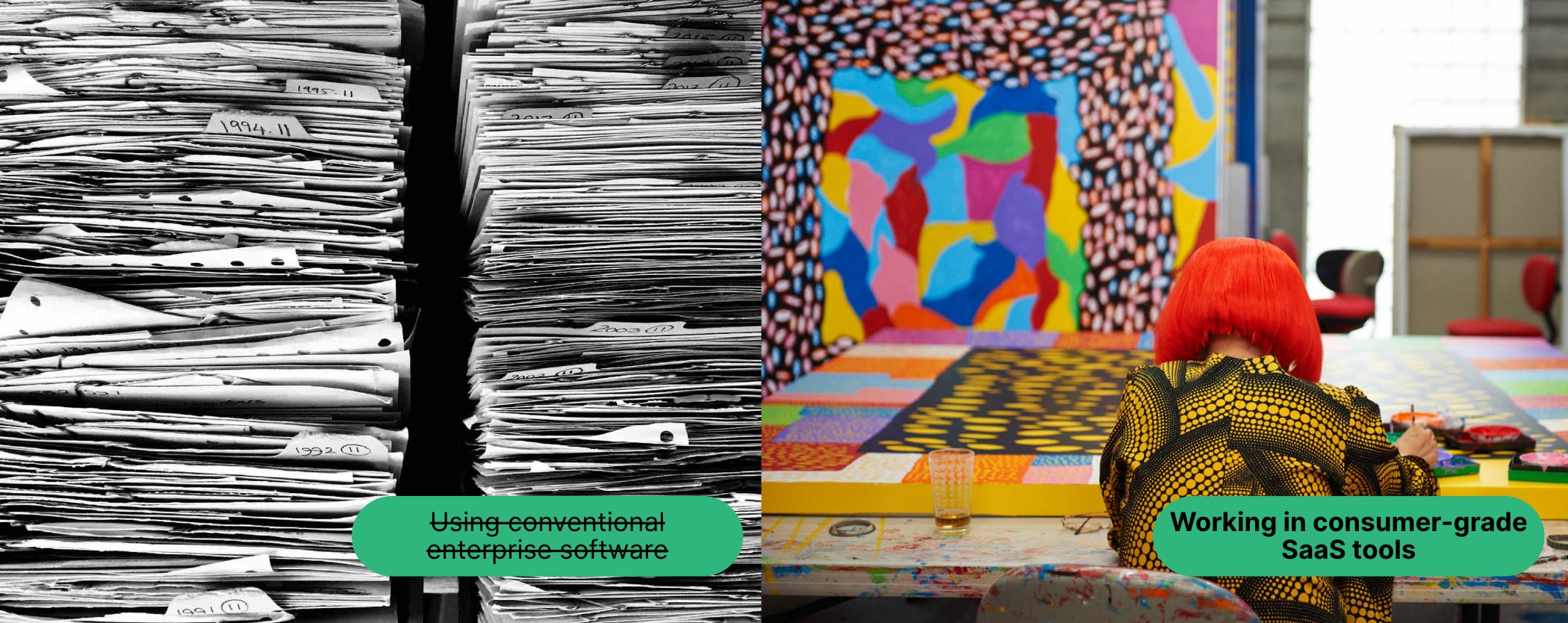
At @contrarycapital we work with hundreds of potential future founders. One of the most common questions I hear is "what are the best experiences I can get that will prepare me to be a founder?" Here are the 5 most common pieces of advice 👇 The five experiences worth optimizing your background for: 1. Product–market fit 2. Co-founder risk 3. The ability to hire well 4. The ability to sell 5. The ability to fundraise
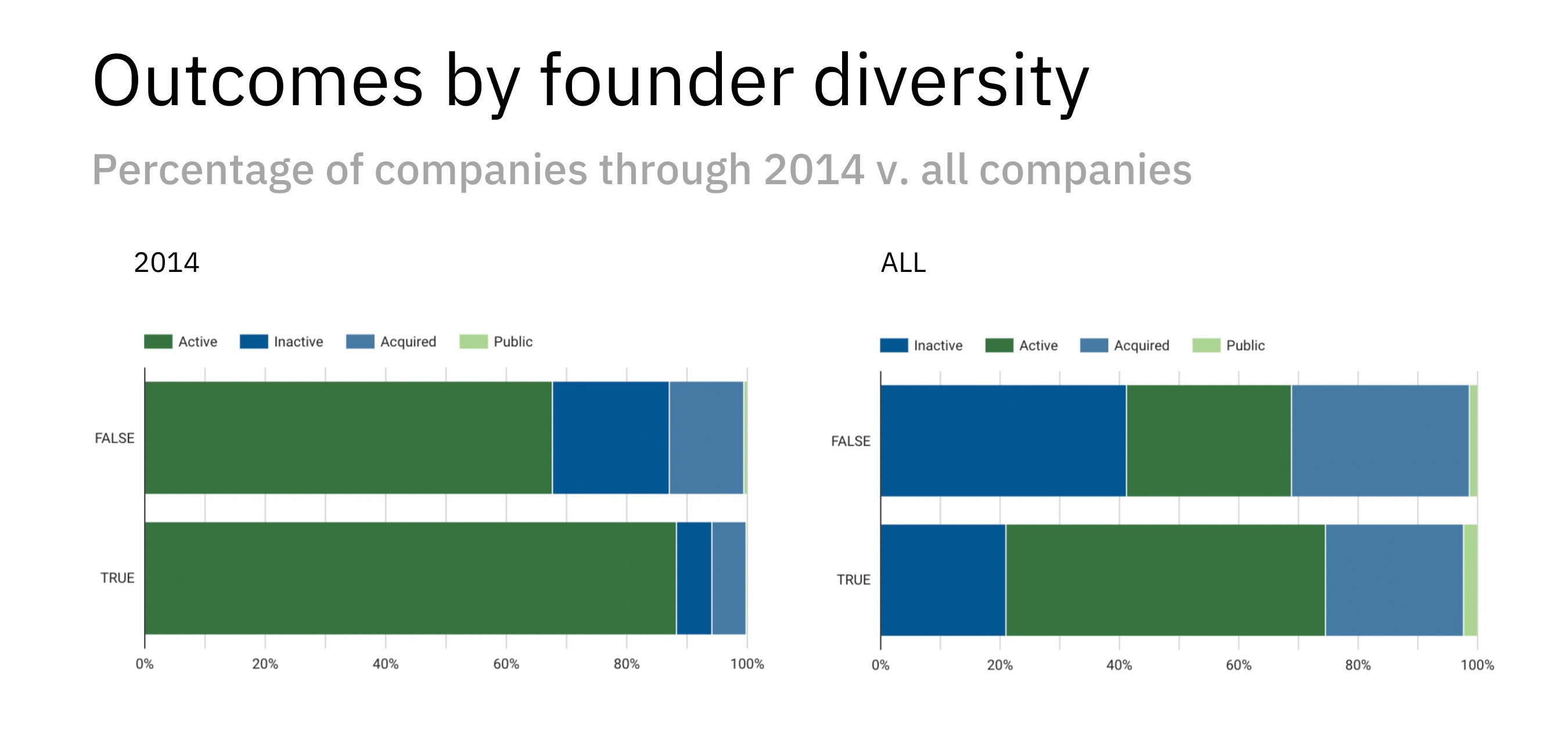
Jun 27, 20228. Outcomes by founder Companies founded by underrepresented entrepreneurs stay alive longer. This is true even when you only look at startups up to 2014. https://t.co/s8C9AqbU4h
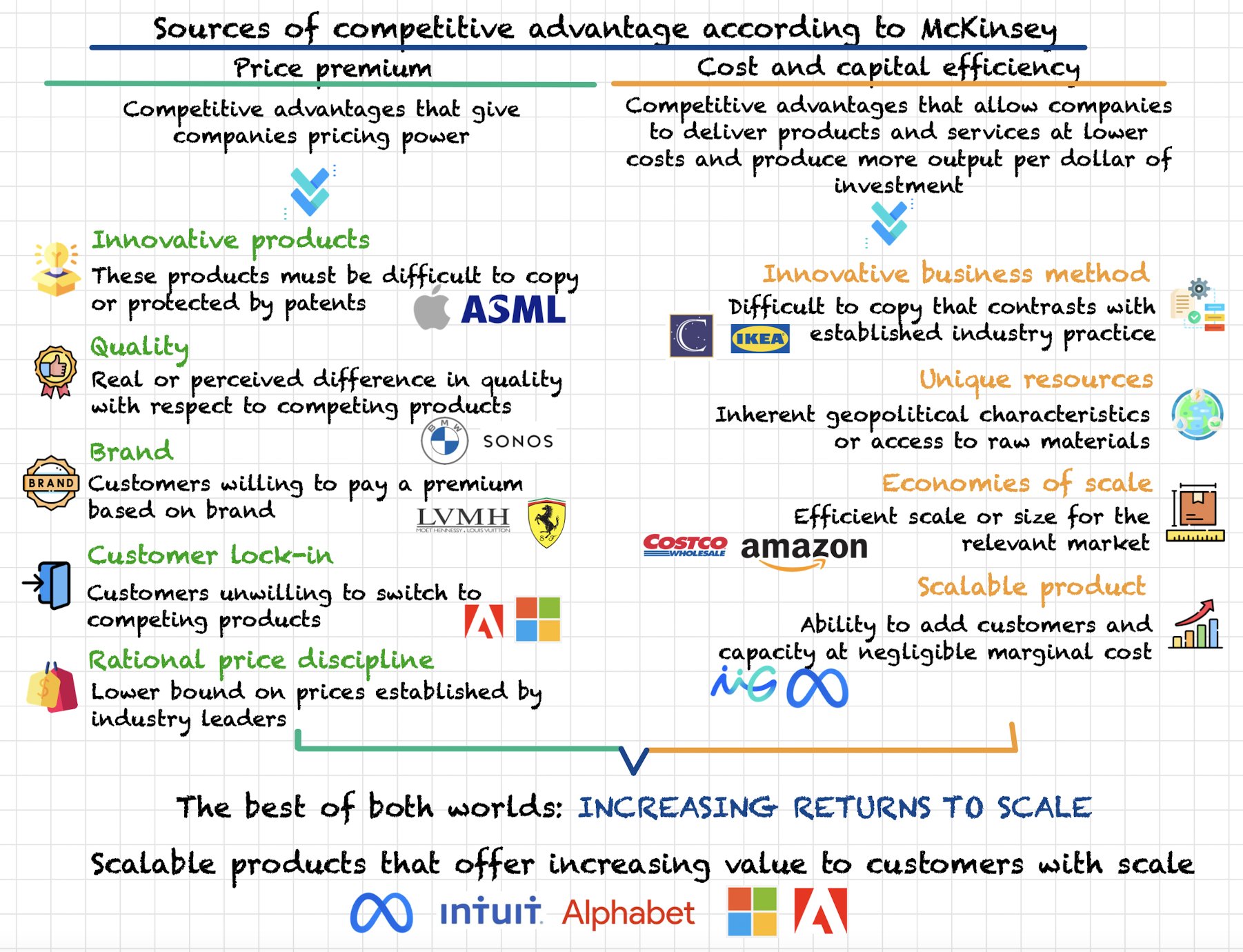
I summarized @McKinsey's 10 sources of competitive advantage in one image and included some examples that I think fit the description (list is not exhaustive, of course) Can you think of any more examples?
(1/8) The pandemic was great for software companies. Businesses needed to transform how they operated, and software was selling the picks and shovels But companies got lazy. They got used to inbound demand Now many SaaS Co’s are in for a world of pain. What’s going on? (2/8) To back up, SaaS Co’s don’t have 1 go-to-market. There’s some combo of: - Freemium - No-touch self-service - Light touch inbound (smb) - High touch inbound (ent) - High touch outbound - Field - Partner Channel Think of it like a portfolio of revenue sources/channels (3/8) Each acquisition channel has really specific unit economics which you need to align. Ex: You can’t use field sales ($100k customer acquisition cost) to sell a $8000/yr product). TL;DR - CAC increases DRAMATICALLY as you increase complexity (4/8) During COV*D, SaaS was inundated w/ inbound demand. Was great, but causing issues: 1. Low visibility into steady-state CAC: Sales were easy. Outbound became inbound. Inbound was self-serve. Now reversing 2. Reps haven’t sold complex, outbound, competitive deals in 2 yrs (5/8) GTM/unit economics issues continued: 3. Over investment in inbound channels: Ppl, tech, process, ops all shifted to support inbound/self-service. Now that looks like resource misallocation 4. Heavy VC investment + incumbent product expansion means more competition (6/8) 5. Competition limits pricing power, increases sales complexity. Blows out CAC and caps Lifetime Value. Many SaaS co’s have long payback periods. Don’t make money on customer for 12-24 months So now your unit economics are broken + your internal resources as misallocated (7/8) The good news is some Co’s now have really agile, simple, low-CAC acquisition muscles If you “stayed fit”, nurtured complex GTM channels, you leveled up. Have a more robust acquisition portfolio Note: Product must be able to support high rev deals to justify other motions (8/8) Takeaway. If: - You ONLY have the “low-touch” muscle - You let the complex sales skills go rusty - All your resources were moved away from other acquisition channels …you’re having a very bad time Thread inspired by @ExitMultiple https://t.co/yfcKDN2plN
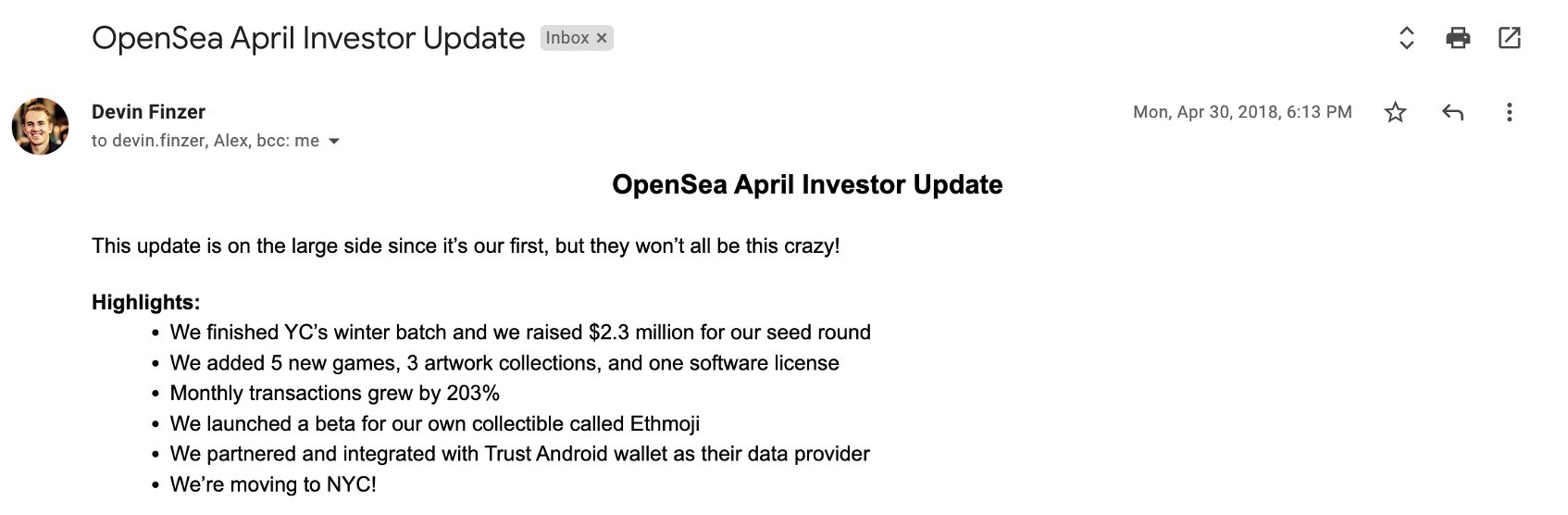
Jun 12, 2022 Original deleted — preserved hereFounders often debate whether it's worth spending time on investooor update emails. Fwiw I've found strong correlation between consistent updates at early stage and long-term success A snippet from the first @opensea update in 2018: Reasons for spending time on updates: - Useful to organize thoughts on regular basis and make sure everything your team is doing is aligned w/ long-term vision - Your investors are extended team and communication helps them help you Reasons against: - Product market fit is only thing that matters early on and time spent on email is time away from finding product market fit I see both sides, but empirically in the @1confirmation portfolio so far the founders with the best communication have also had the most success
Posting a memo I sent to the @scale_AI team back in 2019. The core idea is that most organizations fall prey to a slow death of optimism, causing a slow, excruciating halt. Thread below 👇 https://t.co/7AlBgxCnK6 The scope, or how long we say something will take, influences how long something takes. When we say things will take a long time, they will take a long time. When we say things will take a short amount of time, they will take less time. You can see this in a histogram of all marathon times. People are really good at accomplishing their goals—lots of people get marathon timings right below 3, 3.5, 4 hrs, etc Humans are motivated by goals, and these goals are influenced by our intrinsic optimism of our potential The opposite is also unfortunately true—pessimistic people get less done. They will estimate that things will take much longer than they should, and in the process, they WILL take longer than they should. Added up over any meaningful period of time, it's crippling. Check out the post, and other memos I've sent to the @scale_AI team, below! https://t.co/7AlBgxCnK6
May 30, 2022A lot of SaaS companies trying to become a “platform” by launching multiple products. But, often they launching into markets where they don’t have a clear right to win. In theory, you want to be multi-product and investors seek out platform businesses. But mgmt teams trying to force it, because they feel pressure to sustain growth/multiple. To be successful w/multiple products you have to have a reason to win the business beyond “we can cross-sell” Best product expansion strategies are often along a different vector than current industry structure. Example: NOW moving into workflow rather than expanding into other IT tools. CRM launching platform before moving on to another cloud. You want to expand with a value proposition that is both compelling and unique to you. DDOG expanded from infra level to APM and logs. Starting at infra and expanding up/out created a unique value prop that was hard to counter because no one else had good infra monitoring Bad product expansion is usually tied to a user expansion thesis w/o corresponding right to win. ZEN moving into CRM is a good example. Adjacency, but value prop not compelling enough. AMPL is a product analytics company with a roadmap in CDP and experimentation and feature mgmt. unclear what right to win is in these markets? Adjacent users/data sets, but what else? New products take ~3yrs to generate bookings. In a capital constrained environment, smart companies will get much more focused on only launching and investing resources in products where they have right to win. Otherwise org distracted and efficiency degrades. Oh…another bad expansion strategy = RNG. Messaging and video are crowded markets with a large number of free/bundled offerings. What is RNG’s right to win with a bundled messaging, video, phone solution?
May 24, 2022The most tumultuous time in my career was working for a business launching its 2nd product Once we succeeded, it was just another “muscle”/skill we had at our disposal Call it “economies of scope”: the ability to expand TAM by introducing new products It was such a difficult experience we almost died a few times The safer thesis is to invest post second product as things have been de-risked, and the company had a new competency, they’ve learned economies of scope Risk is super high for 1st-to-2nd product journey I wonder if I’ve been negatively impacted by living the journey and seeing how precarious it was. Near death experience for the biz, essentially have to run 2 companies in one. Made me more skeptical of TAM assertions from one-product businesses, and less likely to invest. And definitely more skeptical of M&A to acquire that second business/product. You didn’t get the battle scars of having to incubate the business yourself
May 23, 2022 Original deleted — preserved hereThe worst product and engineering directors/executives I’ve worked with or observed shared this one thing: They refused to write their strategy and goals down and share it. Instead, they kept changing it on the go. Not writing down was a strategy to avoid accountability. The outcome was how, over time, different reports had different views of what the strategy was and were out of the loop when it changed. They shipped projects that were no longer relevant after goals change they were not told about. Grumbling, attrition followed, predictably. Ironically, these product and engineering leaders worked longer hours and travelled so much more than those who scaled themselves via sharing strategy in a written form. A lot of them loved doing this: but the information gaps kept burning them more and more, over their tenure.
May 1, 20220. Startup CEOs: if you want to hire the leader for a particular function, follow this playbook. 1. Identify 2-5 fast growing companies that are bastions of excellence for that function. 1a. How do you identify these companies? Ask your friendly VCs. Ask customers. Ask other functional leaders which companies they admire. 1b. Do ensure that these companies “map” to your company in ways that matter for that function. For example, if you’re selling to SMBs and you want to hire a head of sales, you would likely not look at enterprise SaaS companies. But you might consider them for a people lead. 2. Make an organizational map of the function at each target company, starting with the leader of the function, extending to their reports, and so on. LinkedIn + employee interviews are your best friends here. This will necessitate some trial and error. 3. Your target list will be the direct reports to the functional leader at your target companies. These people are the most likely to leave because they want to lead the function at another company. 3a. Ensure that the person has been in their role at least 1-2 years, otherwise they haven’t really understood what it takes to lead the function. But if they have been at their role for 5 years without being made the leader, that might not be a good fit either. 3b. You want to see a track record of increasing scope and responsibly within that function, which is a good sign at a company that’s excellent at that function. 3c. Whether you can get these folks to engage, depends on how many stages you’re behind the target company. Eg if the target co is newly public and you’re pre-IPO, you’re 1 stage behind and have a good shot at hiring a direct report to the leader of the function. 3d. But if you’re series B, you might need to go a couple levels deeper in the org to find the right person for you. And they’re probably the right fit for your stage / size. 4. Of course, you still need to interview these folks to ensure they are a good culture fit, that they know what they’re doing, etc. but this is a foolproof way to build your target list. 5. I’ve seen this playbook used successfully by several companies I’ve been involved with. I’ve also worked at companies that have been successfully targeted (“raided”?) by younger companies. Such is the Darwinian world of technology companies. 6. Tldr create a target list of companies, map out the functional org for each, and then snipe the right folks at the right levels that map to your company stage / size. 7. Please note that I’m NOT recommending targeting your direct competitor. I’m recommending finding companies that are excellent at a function.
Apr 20, 2022A 34-year-old former Oracle employee built a $209 BILLION company The result? It is known to be the world's number one CRM Here're the unbelievable marketing stunts he used that you've NEVER heard of👇🏽👇🏽👇🏽 Marc Benioff started Salesforce in 1999 in a tiny apartment He is the craziest celebrity CEO in the tech industry The founder of Salesforce has the mind of a fox and the body of a bear Here are some of the craziest stunts he pulled off: https://t.co/IypFTd34Oo 1/ Hiring Fake Protestors When salesforce was launched, Benioff hired fake "protesters" at a conference for their biggest rival Siebel Systems They picked up signs chanting "The Internet is really neat, Software is obsolete" He even hired a fake TV crew to cover the "protest" He had also considered hiring an armored tank to enter the scene, driven by someone dressed like General Patton But then decided that "such a stunt might be too outlandish," Siebel called the police and a big news story was born 2/ Commandeered taxis at a rival's event to deliver a 45-minute pitch Siebel had their biggest event held in Cannes, France Benioff took a different tactic: capture the audience— in a cab. Most attendees of the conference flew into Nice and took a cab to Cannes. So Salesforce rented all the airport taxis and then used the 45-minute drive to pitch Siebel executives ticked off that no other rides were available And again called the police 3/ Threw Microsoft's guerrilla marketing stunt back In 2010, Microsoft tried its hand at using guerrilla tactics on Salesforce. Microsoft hired people to ride around in Segways at a Salesforce conference They were carrying an ad showing an older man (presumably a corporate user) with a slogan that said “I didn’t get forced" Get it? Its a play on Salesforce But during Benioff's keynote speech he brought the man in the ad on stage and begged the fake customer to use Salesforce 4/ Turned a canceled Oracle keynote into a media frenzy Marc Benioff landed a keynote speech at Oracle's Openworld conference in 2011 The two companies have been rivals for years. But he did. And then Oracle tried to move his keynote to later in the week. So Benioff issued a press release saying Oracle canceled his speech and he would instead talk at a nearby restaurant He told "Sorry Larry, the cloud can't be stopped” Journalists ate it up with many attending Benioff's fake keynote instead of the one planned by the conference 5/ Messing with the Dalai Lama In 2003 the company mailed out hundreds of apology letters over a stunt that featured the Dali Lama without his consent. It sent a poster inviting 500 guests to attend a speech by the Dalai Lama It featured the Buddhist leader meditating under the slogan "There is no software on the path to enlightenment" The sponsor Himalayan Foundation got offended So Benioff ate crow In the end, Salesforce did not attend the event, instead made a $100,000 donation That's all guys If you want to learn more about: - Marketing breakdowns - Growth Marketing tips - Growth strategies Follow @agarwal__gaurav :) I will be posting insane value threads every week 🚀🚀 If you liked the thread, please do not forget to retweet (It would mean a lot to me) https://t.co/WoOBIJxoiv
Apr 20, 202211 Promises from a Manager: a 🧵 1. We’ll have a weekly 1:1. I’ll never cancel this meeting, but you can cancel it whenever you like. It’s your time. 2. Our 1:1 agenda will be in the meeting invite so we remember important topics. But you’re always free to use the time for whatever’s on your mind. 3. When I schedule a meeting with you, I’ll always say *when I schedule it* what it’s meant to be about. I will not schedule meetings without an agenda. 4. When I drop into your DM’s, I’ll always say “hi and why.” No suspense, no small talk while you are wondering what I want. 5. News or announcements that significantly impact you, your work, or your team will come from me directly in a 1:1, not revealed in a big meeting. 6. You’ll get feedback from me when it’s fresh. There will be no feedback in your performance review that you’re hearing for the first time. 7. I trust you to manage your own time. You don’t need to clear with me in advance your time AFK or OOO. 8. Your work gets done your way. My focus is on outcomes, not output. Once we’re clear on where we need to go, how to get there is up to you. If I ever find it necessary to suggest a specific approach, I will supply an example. 9. A team is strongest when it’s working together, looking after one another, and taking care of each other. Please look to your left and to your right for opportunities to help your colleagues. Please ask for help when you need it. Nobody works alone. 10. I trust you to skip level and talk to my manager or other senior management about anything you feel is relevant. You don’t need to clear it with me, and I’m not going to get weird about it when you do. 11. I will attribute credit appropriately to you and your team. I will never exaggerate my own role or minimize your contribution. I’ll be especially certain to nail down attribution when senior management are hearing of our accomplishments. If this sounds good to you, please reciprocate by giving me in return what I need most: The truth. Give me your feedback, say when I’m wrong, and tell me your ideas for how we can do better. If we trust each other, we can learn and grow together. That’s how I want to work with you. /🧵
Apr 18, 2022☁️ Who is Barry McCarthy? Here's what I learned about the guy who runs his companies like a sports team: $PTON $NFLX $SPOT Barry McCarthy is not a household name, but I would expect that to change 🎬 From modeling customer economics at $NFLX 🎧 To leading the direct IPO at $SPOT 🚲 Now driving a turnaround at $PTON ✅ An impressive record @ recurring rev businesses made me dive in more 👇 $PTON would normally never pique my interest BUT On Jan 8, Barry McCarthy was appointed CEO AND A cost-saving plan was announced to delivery "at least $800 Million" in run-rate savings So who is this guy? (besides the new CEO of an expensive bike company) Barry McCarthy's Brief Resume: $NFLX CFO (April 1999 - Dec 2010) $SPOT CFO (July 2015 - Jan 2020) $PTON CEO (Start Feb 2022) 1️⃣ This guy got customer economics before it was cool Barry was CFO of $NFLX when investors were still modeling subscription businesses as BOP Subs - Churn + Adds * Price. https://t.co/PIAu55SHsF However when fast growing subscription businesses report % churn for a given period, it masks a key dynamic of subscription economics: churn rates vary based on subscriber maturity. https://t.co/UE2fHGFhyD 2️⃣ Overall, sounds like a badass who will drive results. Barry's first email to $PTON staff leaked highlighting his mgmt principles: 1) moving quickly based on data-driven decisions 2) focus and prioritize 3) think from first principles 🎩 @laurenthomas Check out the full letter: https://t.co/Jhb6hnHMvg 3️⃣ Balancing customer value and margin In a great interview with @dealbook, Barry talks about the potential of building a connected fitness platform and how $PTON would think about subscription pricing and value 🎩 @AndrewrSorkin @LaurenSHirsch 4️⃣ Winning "We’re a sports team, and we’re trying to win the Super Bowl. And so we’re going to put the best players on the field we can. And if you go down the field, and we throw you the ball, and you drop it a bunch, we’re going to cut you." -Barry McCarthy $PTON $SPOT $NFLX Full Interview: https://t.co/WC6L8FR1Qy 5️⃣ "An Unlikely Iconoclast" Barry argued $SPOT should skip the traditional IPO path and do a direct listing: 1) Avoid regulations, fees and distractions 2) Well-known consumer brand 3) Value was already well-known (private trades by existing investors) 🎩 @teddyschleifer Full write-up: https://t.co/B8MKoQWx7g Want to stay updated on the latest SaaS strategy, analysis, and news? 📰 Subscribe to my newsletter: https://t.co/6Xba6fpWH7 You look like someone who likes SaaS metrics 🤓 Follow me @BreakingSaaS Enjoyed the thread? Share with your friends: https://t.co/tDjiX34hs9
Apr 10, 2022My favourite ever advice on great board membership: "Better to remain silent and be thought a fool than to speak and to remove all doubt."
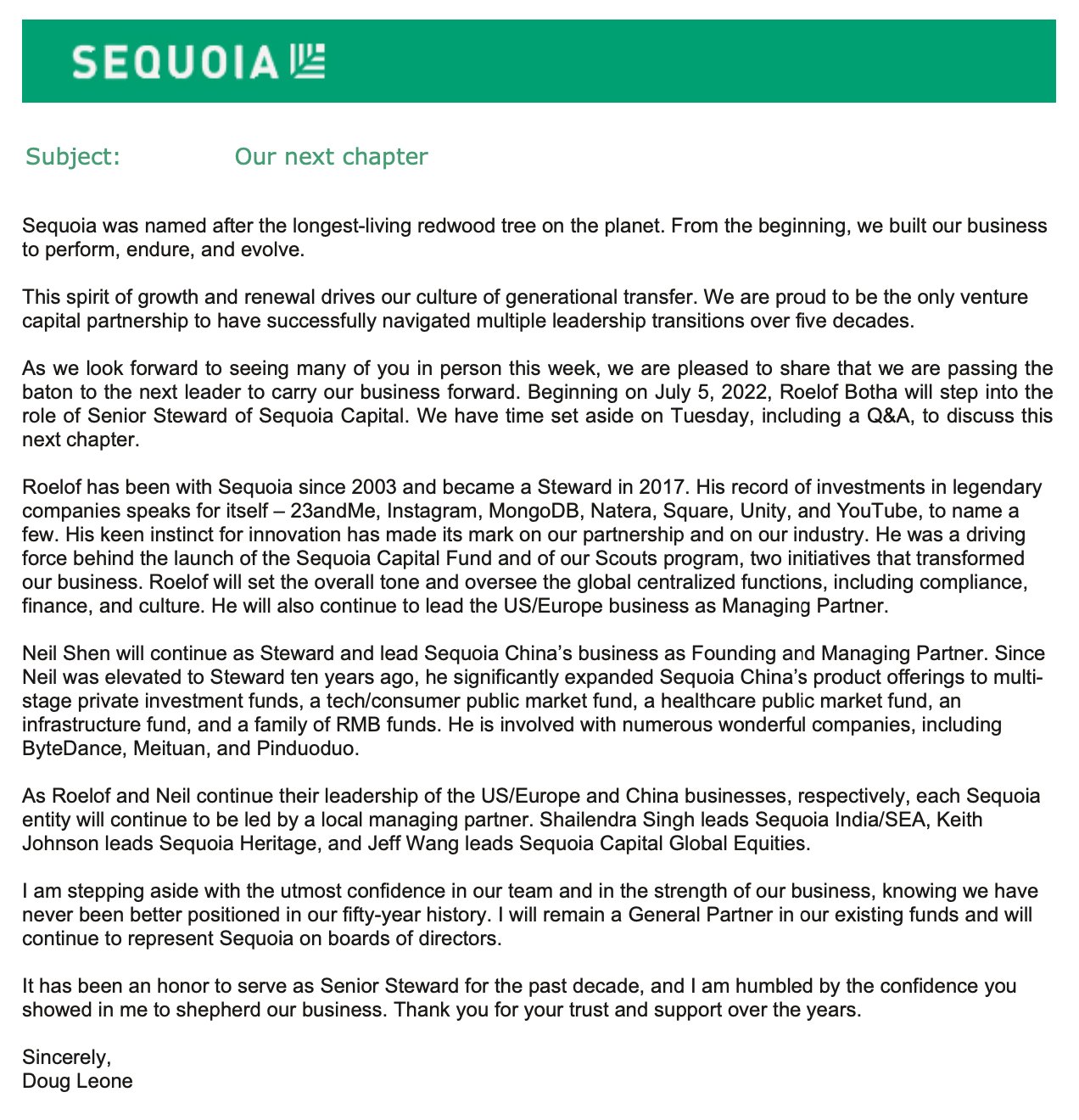
Apr 5, 2022 Original deleted — preserved hereTwo impressive takeaways: (1) The ONLY venture firm to successfully manage multiple leadership transitions (VCs are terrible at succession) (2) Interesting to see them refer to their funds as "product offerings." Most funds should think more about what product they're offering.
As an entrepreneur, I have had amazing Board Members and terrible ones. Then I became one. But there was no manual, so I made a lot of expensive mistakes. After 1,000+ board meetings, I decided to write one. Here’s Good Director/Bad Director: Good Director knows they only have two jobs: 1. Hire and compensate the right CEO. 2. Approve the budget and strategic plan. Bad Director thinks their main job is to provide good ideas. They think the board’s job is to micro-manage the CEO. Good Director knows that things always go wrong. They make it safe to share bad news and simply ask: “So what are we doing about it and how can I help?” Bad Director loses their temper and berates management when they get bad news. They incentivize management to hide bad news. Good Director hits a home run once or twice a year. Typically a recruit, strategic partnership, new investor, etc. They are always looking for opportunities to help. Bad Director just shows up for the meetings and otherwise doesn’t think much about the company. Good Director trusts the CEO completely until they don’t. Once they don’t, it is time to make a change. There’s no in between. Bad Director constantly tests and scrutinizes the CEO, making them feel insecure in their role and always on the brink of being fired. Good Director has extremely high standards for board meetings and communicates them clearly. That means clear presentation, timely financials/KPIs, focus on strategy not reading materials out loud. Bad Director takes whatever management gives them as “normal”. Good Director never undermines the CEO in front of their team. Any difference of opinion is resolved privately and with ultimate deference to the CEO. Bad Director will be unaware of who is on the email thread or in the room and will be “fast and loose” with their words. Good Director will request the materials 48 hours or more in advance and will have read them. They will say “We have all read the materials, so let’s dive right into the most important things.” Bad Director will show up having read nothing and expect management to read aloud. Good Director will recognize when they are too busy to be useful/engaged and step aside, ideally recommending someone with the time and energy. Bad Director will be unwilling to give up the power no matter what. Good Director knows that management can only focus on 1-2 things at once. Bad Director forwards an article they read with the subject line: “Why Aren’t We Doing THIS?!?!” Good Director always remembers that they are a fiduciary of all shareholders. Bad Director looks at every decision as: “What is in it for my firm/pocketbook?” Being a Director is a privilege and a huge responsibility. It is the highest leverage thing you can do in business. Try your best to be the Good Director (I am still the Bad one sometimes, but I’m trying!) Follow @XavierHelgesen for more of this sort of thing.
Apr 2, 2022 Original deleted — preserved hereI bought a small 20 acre ranch in Fredericksburg, Texas (1.5 hours from Austin). The goal: create a fun rental where my guests can hang, workout, do outdoors stuff, and relax. I'm super excited to finally share it with you all. The booking link is below in the nest tweet. Here's the Airbnb link: https://t.co/JhWMQPSafQ Price ranges from $350-$1900 depending on dates. So click around and see if anything works for you. Would love to have ya! What I'm working on: 1. Adding a gym, pool, running trails 2. Building a few more cabins on the property If this goes well and I like the business we'll expand to a few other cities!
Mar 29, 2022 Original deleted — preserved here1/The logistics of starting a company in the U.S. are a mostly solved problem: Stripe Atlas for company formation, Mercury for business banking, Ramp/Brex for corporate cards, Carta for cap table management, Gusto for HR. Yet, just getting started in many countries is HARD 🧵 2/ In Brazil for instance, to form a venture backable company that can accept investment from US & Brazilian investors requires (busy and expensive) lawyers familiar with 3 countries (Brazil, Cayman, US) & often slow to open business bank accounts in both Brazil & US 3/ Not only is the company formation hurdle a challenge for experienced entrepreneurs (all of that time and energy would be better spent building and advancing toward your vision), it adds significant friction for entrepreneurs in the experimentation phase. 4/ Entrepreneurs can now go to https://t.co/c1Au6FAa8t & start their company for a fraction of the cost & time. This is just the tip of the product vision for making entrepreneurship more accessible. The team is quickly building to offer a full product suite for cos across LatAm 5/ The full power of @latitudlatam lies in the community & resources the team has built to support its product offering. Latitud fellowship has helped 800+ entrepreneurs at the earliest stages of company formation by providing community, company building resources and mentors. 6/ Latitud’s angel fellowship helps more experienced operators learn how to angel invest, and hence help Latitud’s fellows. Latitud’s fund provides early seed funding for many of its graduates. 7/@latitudlatam is accelerating a powerful flywheel of entrepreneurs in LatAm. Latitud is the product (company formation & more) & the distribution(Latitud fellows become customers!) @GEVS94 & I are thrilled to back @brianrequarth @ginag @YuriDanilchenko https://t.co/Kvcb11p2hX
Mar 28, 2022Steve Jobs used this pricing strategy to sell 40 million iPads: Price Anchoring. What it is & how to use it: 🧵 Our brains are responsible for thousands of decisions daily. We can't possibly consider every angle of each choice we're faced with. To combat indecision, the brain uses "heuristics" or mental short cuts based on previous experience. Heuristics allow for highly accurate & instant decisioning. But like any short cut, there is risk. Sometimes there are holes in the logic. Holes that make us susceptible to irrational decisions -- like accepting a price without objection. Price anchoring is a loophole caused by heuristics. It's the psychological bias to overemphasize the first piece of information (or price) presented to us. This strongly influences how we perceive additional information. Companies use this to boost profits & sales. In 2010, Jobs was unveiling the iPad in one of his legendary product launches. While on stage passionately discussing scrolling experience & WiFi capabilities... He was setting a price anchor. The massive screen behind him displayed $999 (the assumed price of the iPad). After a dramatic pause, Jobs had one more announcement. Apple had "exceeded product cost" expectations and will price the iPad at... $499 The crowd *literally* begins screaming & clapping -- safe to say everyone there (plus 40M others) bought an iPad. Anchored to $999 as the only reference point for value, consumers see $499 as a great deal. A rational mind would try to understand material & labor costs, or utility to determine value. Considering thousands of data points to make a decision requires too much mental energy. So instead of agonizing over every detail, the brain uses a short cut. And the value is the spread between the anchor and the actual price paid. In this case, $500. The weird part about anchors? Even non-price numbers can influence buying decisions in a big way. Numbers have a spell-like power over the brain. At MIT, Dan Ariely (Duke PhD), ran this experiment: Students wrote down the last two digits of their social security number. Shortly after, they were asked to state the price they would pay for a bottle of wine. The results were staggering. Students with higher ending SSN digits would pay up to 400% more for the same wine. Even arbitrary numbers change buying behavior drastically. Companies have invested time & money into understanding behavioral economics to enhance profits. Price anchors are widely used because they are notoriously hard to evade because of their deep hold in the human psyche. Here's a few more examples: ⬇️ ⬇️ ⬇️ One of the most recognizable is Amazon's "strikethrough" price. On nearly every product, they show: 1. High Price (struck through) 2. New, Lower Price 3. Savings Amount With every purchase customers can see the value they're getting right in front of them. Brilliant! Another type is a "Competitor Anchor. " The goal is to anchor the consumer to your top selling point - In this case, getting your consumer to prioritize price over data/coverage in their decision making. But price anchors aren't reserved for Fortune 500s. Your SMB or Startup can boost profits & sales by using this behavioral science technique. In addition to the the strategies above... Here's 2 more: 1. Understand customer anchors: Unless you've created a new product category (unlikely), then your customers already have an anchor. Craft your offer relative to their existing anchor to create more perceived value for your product. 2. Highest option first: Consider presenting your highest priced option first -- it will serve as the anchor. If you lead with your lowest priced option, it becomes tough to create perceived value with your higher priced option. Start high, then come down (if needed). Lastly, as a consumer how can we avoid being subjected to price anchors? 1. Don't negotiate against yourself Undoubtedly, anchors are powerful, but as time passes the effect fades. Realize it's best to walk away and re-engage once the rational mind is in control. 2. The seller cannot be the reference Anchor pricing garners power from the reference point you were provided. Usually the SALESMAN is the one setting the anchor. You need an unbiased reference point to make a rational decision. Find another anchor. The human mind is Mother Nature's super computer. But sometimes the rational/logical mind is easily tripped up. Understand how holes in logic are formed and adjust offers accordingly. Then you'll be doing business like the best. For more on anchor pricing check out... Predictably Irrational by Dan Ariely Thinking Fast, And Slow by Kahneman & Tversky If you enjoyed this... Follow me @barrettjoneill for tactical business & growth content. Please RT so others can can understand anchor pricing and it's power.

VCs: What are your favorite ways to invest in your own team? VC is often seen as a solo sport but just like any other org, team is always your biggest (+most malleable) asset Here are a few things we’ve tried @TobaCapital— 1. Book clubs are a great intellectual investment When I joined as our first/only climate investor, we kicked off by reading & discussing Kim Stanley Robinson’s Ministry for the Future We’ve since gone on to read 3 more books, all focused on macro & impact not just on deals 2. A team-plus trip was a key emotional investment We recently went to Mexico for a week that was mostly fun with a little work sprinkled in — partners, kids, babies and dogs all aboard Generated not only ideas but new trust and shared history 3. Acknowledging the world outside deals bc ‘work’ isn’t separate from life Before every investment committee we check in on crazy world events — unfortunately there’s been new material every week 🇺🇦 It helps to process with other smart people and counteract potential VC myopia What are other best practices folks have tried / heard of / aspired to?
Mar 25, 2022Hire for slope, not y-intercept. 🧵 1/ I know, this advice is so cliche 🙄. But I can’t help but brag about the @segment mafia a bit and wanted to shout out a few high slope 📈career journeys from Segment — specifically, folks that are now unrecognizable to where they were ~5 years ago. 2/ Extreme caveat ‼️ that this is an incomplete list of people I had the privilege of working with super closely, but I’d very much invite other Segmenters to brag on someone they admire! 3/ @hareemmannan - from mid-level product designer to VP Product & Design @ Pave (in 3 years!), @stephsevans - from partnerships IC (in an admittedly… very confused partnerships org) to PM to Director of Product @ Pave 4/ @laurenmhreeder - from new grad product analyst to PM to Product Leader to Sequoia Partner 5/ @tejasmanohar - from 16 year-old software engineer to epic Co-Founder (cc @HightouchData ) and @joshwget - same path, but started a little bit wiser than our 16yo friend ;) 6/ @fullung - from sr eng manager to VP engineering (and CTO interest from every company in the valley) / @danielstjules - from sr engineer to Sr. Director of Engineering (and VP Eng interest from every company in the valley) 7/ @reinpk - from a man who used to blush quoting deals higher than $10k to literally saving the world (cc @CharmIndustrial) / @ivolo - from wild man to https://t.co/ljSAeo71qC man, also literally saving the world 8/ @sperand_io - from support engineer to PM to Product Leader to Product Architect to M&A Leader at @stripe 9/ @nettofarah and @mshwery - from sr engineer to future 🦄 co-founders (ok had to shout out 🐨🐨🐨 a little, sorry team!!) 10/ @NatashaKatoni - from mid-level recruiter to Operating Partner @ Amplify Ventures and the favorite Talent/Recruiting VC Partner of pretty much anyone in the valley 11/ @_anoonan - from support engineer to engineer to staff engineer to principal engineer, who also authored Segment’s most popular blog post of all time (200k+ views, conference award winning talk, etc.) 12/ @c8sul - from EA to PM to earning a promotion as a PM (in like under a year)... been wild to see your path, Caitlyn! (Also currently paying it forward with a Women Impact Tech talk today, check it out!) 13/ All of these are examples of incredible trajectories by virtue of curiosity, hunger, hard work, and an environment where people can show up, do their best work. So if you're hiring... and someone doesn't have it all just yet... but has that 📈📈📈... you too can make ✨ 14/ Finally, you will notice that a lot of these folks are women — I believe that a bit of extra clarity on what you’re actually looking for (ie., skills not a particular title) and hiring for slope instead of y-intercept is the best thing you can do to level the playing field 15/ omg sorry I gotta shout @coleencoolidge from Director of Security to CISO of a small private company to CISO of a large public company! 😍
Mar 16, 2022Just talked to engineer at BigCo. Got 4% raise this yr. New offer at other BigCo: 100% increase in total comp, same level Happens a stupefying amount at BigCos. Can’t/won’t give internal folks bumps but will for new hires. Revolving door for emps between BigCos Straight up dumb fwiw, this is one of those classic "playing the wrong game" situations....my view summed up... https://t.co/rvc3ibwi9W
Mar 16, 2022 Original deleted — preserved hereWhen times get more stressful in venture, VC-founder alignment becomes even more important Here are my 10 Top Ten Tips to Have Happier Investors. Even in more challenging times: 🔽🔽🔟🔽🔽 #1. Send out Monthly Investor Updates — 48 Hours After the Month Ends. This is your best hack. The key here is not to spend a ton of time on it. You should already know your MRR, cash burn, NPS, all your key metrics almost immediately after the month ends. So send it out! #2. Get Board Meeting Materials Out 3 Days Before the Board Meeting. It's time. Get the materials out 3 days ahead of time. That instills huge confidence in your investors. The slides that don’t show up until the morning of the meeting? Confidence destroyer. #3. Have Clarity on, and Share, your Zero Cash Date. You should know exactly when you are running out of money … and update that date every month or so. Share it, so everyone knows and can plan accordingly. More on that here: https://t.co/p3txvxQNbF #4. Have Your Team Present More, and You Less. All-hands meetings, board meetings, etc. Yes, you are the CEO. But everyone hears from you all the time. Your investors and team will learn lot more hearing about sales from your VP of Sales, your CTO co-founder … and not you #5. Regularly Ask Your Investors How Happy They Are on a Scale of 1-10. You don’t have to do this every week. But learn your Investor NPS. If you ask for a firm number, you’ll get it. And importantly, it likely will be different than you think. #6. Transparency is Key -- But Stay Positive. It’s easy to be self-critical. And be honest. But if your growth is OK, make sure to have as many positives and negatives. Even investors need positive reinforcement. They need the truth, but both the good and the less-than-good #7. Invest More Time In The “Heavy Lifter”. Usually one investor will help you the most: recruit team, more capital, promote the company, be its biggest champion. Don’t take this for granted. Spend more time with her. She’s the one that will produce the most benefits for you. #8. Don’t Expect Another Check from Any of Them. Just assume none of your investors invest again. This will de-stress a lot of relationships right there. More here: https://t.co/zG3nn9PybD #9. Bring Your Investors Together. In the old days, VCs hung out in packs. But there are 1,000+ new firms, and everyone invested over Zoom and fast. This means many of your investors never really got to know each other. There’s only downside for you there. 10. Most Importantly — Do Not Hide Bad News. This is the 1 mistake I see. Communication and updates tail off during tough times. That’s backwards. Professional investors are OK losing money. What stresses them out are surprises. Even more here: https://t.co/kMEtpCwWsj
Mar 15, 2022From scrolling on Twitter, one might conclude that it is a terrible idea to work at GAMMA (Google Apple Microsoft Meta Apple) companies & other tech megacorps. While that might be true for some people, here are 7 good reasons why it is smart to consider working at a GAMMA corp: 1) Thinking Big If you’re a person with High Agency, GAMMA corps will instill in you the habit of thinking big. Like, really big I didn’t think much of this while I was at GAMMA corps, but once I left to go elsewhere, it was striking how rare this is at startups & midsized corps What’s more, founders of the very best startups tend to be extremely ambitious themselves. And post-PMF, they often need to hire leaders who are neither afraid of thinking big nor get intimidated by 10X/100X goals. Working at a GAMMA corp is a fantastic way to build this muscle. 2) Making an Impact In career conversations, I hear regularly from people that the main reason they want to join a startup is that they want to make an impact. At this point, I probe further, and I find that in at least ½ the cases, the person means “making an impact on society” At that point, I have to remind them that if making a positive impact on society is a priority, joining a startup is not a very smart decision. Especially if the person is mid-career or advanced career, their odds of making a major societal impact are much higher at a GAMMA corp. You see, when it comes to societal impact through tech, here’s what should make GAMMA corps a no-brainer: a) Massive resources b) Multiple major products c) Many projects focused on societal impact Plus, GAMMA corps are always looking for talented people for these initiatives. 3) Financial Security While for some odd reason it isn’t cool to openly talk about this in some parts of the world, financial security matters. A lot. If you’re a talented, energetic person who can work N years at a GAMMA corp, it is the most surefire path to financial security. And if after being at a GAMMA corp for N years you can manage to keep your high agency, energy, ownership mindset alive (plenty of people I know have done it), this financial security will let you take greater risks with way less personal stress, as a founder or startup employee. And don’t forget: Making this choice does not mean you are “a loser”. Even if you get judged by a startup pal, remember that the person judging you isn’t going to pay for your mortgage, your child’s college, a loved one’s healthcare costs. Don’t lose sight of what truly matters. 4) Learning the Art of Influence Yes, it is often hard to get things done at GAMMA corps. Sometimes excruciatingly so. I get it. But there is a flip-side to it. With attention & practice, you will become really good at influencing people, especially as a PM or a manager of a team Influence, when practiced with integrity, is an invaluable skill. Working on gnarly challenges at Yahoo early in my PM career & at Google was great training ground for me as a leader & I’ve reaped many benefits later in my career & personal life (e.g. home remodeling projects 🙂) 5) Learning Operations You can learn a lot by watching how GAMMA corps are run. Almost anyone at any level can get a glimpse of these company operations becos most of these corps & their leaders are quite transparent about what’s being worked on, how & why (Apple is an exception) Within GAMMA, generational companies are extra-special. These are companies that end up defining our industry (Amazon being the current generational company, Google being the prior one, and Microsoft prior to that). At their peak, it’s great to watch & learn from their operations 6) Building a Strong Network If, like me, you didn’t go to a top 10 college, working even for a few years at a GAMMA corp can boost your network better than anything I know. This applies at any stage, but the network (and brand) compounds best if you do it earlier in your career. That said, many GAMMA employees fail to take full advantage of the sheer density of talent around them. So here’s a great hack: ask each of your immediate team members to name the 5 best people they know at the company. Grab a (virtual) coffee with them. Build rapport. Repeat. 7) Creating a Balance, on your terms Probably the most tweeted criticism of GAMMA corps on this app is that you don’t have to do much work there. From my personal experience, that’s a gross generalization. IME, most of the best teams at GAMMA corps are very ambitious & energetic. But, there’s also another angle here. Working at a GAMMA corp gives you the flexibility to go fast at times, or move slower, on your own terms. And there’s nothing wrong with that. Remember, we all have less time than we think we do: with our parents, our children, our friends. All in all, if you’ve never worked at a GAMMA corp, don’t automatically reject the idea becos you only see GAMMA criticism in the media or on this app. And if you’re still saying “I’d never work at a GAMMA corp,” that’s fine too. Like most things in life, it is not for everyone🙂 Back to the top of this thread: https://t.co/OjO0AiOFlw
Mar 14, 2022 Original deleted — preserved here"Swinging the Pendulum" is my favourite operating principle @Shopify. I learned it here and used for many years in leadership. It's a metaphor we used to communicate when we need teams to start optimizing for the other end of the spectrum. Here's how it works: We'd often oscillate on telling teams to, eg: - optimize for speed vs. focus on quality - everyone needs KPIs vs. only qualitative goals - don't think about revenue vs. generate revenue! This seems needlessly confusing - why weren't we consistent, why didn't we choose? What we really wanted was the middle ground, eg. "use KPIs but don't blindly chase them", but we learned quickly this was too nuanced for a large culture to execute effectively It led to too many inconsistent individual decisions, making key outcomes impossible to execute By swinging the pendulum and changing focus periodically, we essentially accepted more extreme outcomes in the short term, but in the long term arrived at the middle ground we sought after As an IC in my first year, this was frustrating at times and seemed to imply management dysfunction or misalignment But over a longer arc of time, seeing how it ultimately resulted in a balanced execution of the product and business made the value very clear It also had two very powerful second order effects: 1. it allowed breakthroughs on the product 2. it trained our culture to be resilient to change Eg. of a breakthrough: we swung the pendulum to care about performance on our online stores above all else This over optimization enabled teams to innovate on performance in a way they couldn't if they had to balance effort. Result: storefronts loaded 2x faster within a year On resilient culture: every time you swing the pendulum, you end up blowing up roadmaps of many teams. When you do it regularly, though, you train teams to let go of their sunk cost and embrace company > team > self (assuming you communicate The Why effectively, which is hard) Swinging the Pendulum is hard to use because it makes you look inconsistent and disorganized as a leader. But it's a realist operating principle that acknowledges the limits of communicating nuance in large company, and it IS consistent - just over the long run.
Mar 11, 2022Reality distortion: “In [Jobs’s] presence, reality is malleable. He can convince anyone of practically anything. It wears off when he’s not around, but it makes it hard to have realistic schedules.” Apple engineer Bud Tribble
Mar 10, 2022Utah startups always ask how they can become more of a force vs Silicon Valley. 1. Seed/angel investors: stop trying to buy 40% of a company. Even if you can. 2. Founders: Give employees more equity. Multi-billion dollar successes producing <10 millionaires is a tragedy. 3. Get young people out of these business plan/model/canvas/pitch competitions and get them building stuff. If business schools spent half as much learning to build stuff as they do in PowerPoint and “validating demand” there would be 100x as many companies.
Mar 10, 2022Digital Ocean is a great $500m ARR case study on how nailing a niche, and staying focused on a core ICP in a huge market, can pay off. Even if you’re far smaller than the Huge Guys. 5 Interesting Learnings: 🔽🔽🔽🔽🔽 #1. DigitalOcean is growing an impressive 37% at $500,000,000 in ARR, and staying >very< SMB with 600,000+ customers ... but still driving deal sizes up a bit to $60/month. A deep dive on how they do it with their A+ CEO here: https://t.co/eq5cQdXXQv #2. From so-so NRR (101% in 2020) to Top-Tier for SMBs (116%) in just 2 years. Digital Ocean, even with tiny customers, maintained 100%+ NRR. But lately with focus on just a bit bigger customers … more than $50 a month, versus less … they’ve driven NRR up from 105% to 116% #3. Sticking to their knitting of companies with < 500 employees. DigitialOcean doesn’t want to take on AWS, Azure and Google in the enterprise and doesn’t really try. It knows its strengths -- and the SMB Cloud segment is still growing 27% a year. #4. Their $50/month customers are only 15% of the base -- but 83% of the revenue. Its sub-$50 a month customers, while 83% of their base, are only growing 6% year-over-year and now just 17% of revenue. But its 100k $50+ a month customers are growing quickly, at 24% YoY. #5. Growth >accelerated< after $300,000,000 in ARR Another great challenge to the idea growth has to always slow in Cloud and SaaS. Growth for Digital Ocean did slow for a while, but they reignited the past 2 years:
Mar 9, 2022What on earth does a CEO do? The best articulations of this I found came from @wolfejosh, @bznotes, @fredwilson Here is my version inspired by theirs. 5 jobs of a CEO: Direction, Dollars, Diamonds, Decibels, Delivery
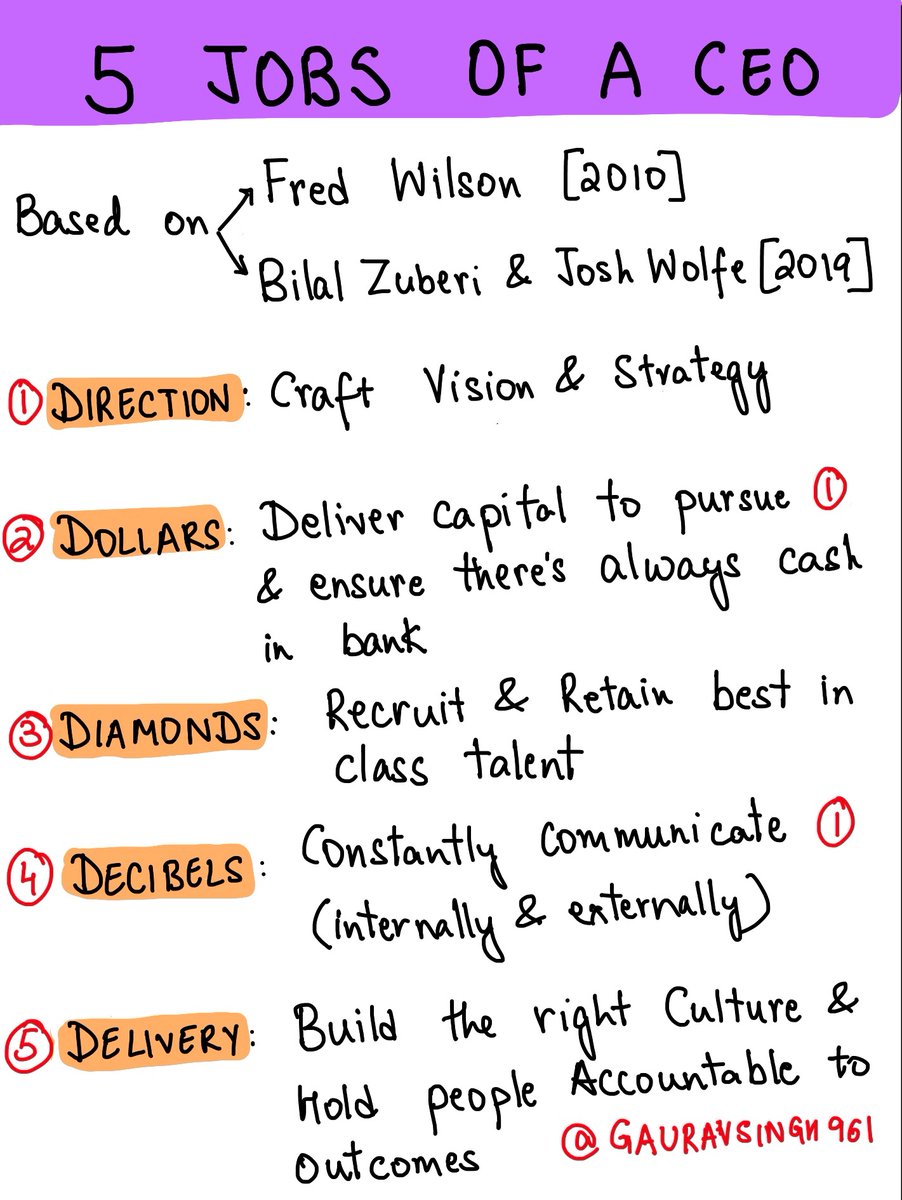
It’s difficult to build a successful startup but even more difficult if you make avoidable mistakes. Self-inflicted wounds are usually well-intentioned actions that end poorly: Champagne that ends with a hangover. Here are a few common errors startups should avoid: 🧵👇 Funding at too high a price Champagne: The press that surrounds an equity raise can feel really good. Big headline prices make Founders, Employees and Investors happy in the moment. Hangover: A Founder who funds his/her company based on a convincing Investors to “assume everything goes right” have put themselves and their teams in a pressure cooker situation. The day after money is wired Employees have to deliver against a Founder’s aggressive promises. Any market correction or miss in forecast makes the next funding round more difficult. And many Founders don’t realize that if the last round was funded at a really high valuation, their company could enter a “no bid situation”. Investors would rather say no than suggest a flat or down round to a Founder. Even pricing a company up by 20% is challenging because a new Investor will have to convince his/her Partnership about the company and a small markup implies that the company isn’t a rocket ship. Hiring people very quickly post fund raise Champagne: Startups love to hire people because it provides relief overworked teams ask for and it allows progress to be made on projects that are deemed critical to the startup’s roadmap. Hangover: If a startup hires too quickly it will inevitably make hiring mistakes and have to undo the damage. Onboarding talent is one of the most important drivers of a startup’s success, but it takes time and effort to recruit and train so this isn’t a tick-the-box exercise. The best judges of talent and fit within an organization are usually busy executing against the startup’s core mission. If they can carve out 25%+ of their time for recruiting and training, the rest of the team only has to spend 10% of its time managing mistakes. But the opposite is also true. If your best people only spend 10% of their time recruiting, it means the rest of the team will spend 50% of its time undoing the damage the “mistakes” end up making. There’s a governor on “good hiring” which shouldn’t be overlooked. Resourcing too many initiatives post fund raise Champagne: It feels great to accelerate a roadmap by resourcing major new initiatives. After a raise, a startup has money to fund new projects and is expected to accelerate growth, so on paper “doing more” is a good answer. Hangover: When a startup chases too many initiatives, it’s highly likely that at least one of them will turn into a dumpster fire that will require the entire company’s attention to put out. Fire fighting sucks time and energy from the team and consumes valuable resources. Dumpster fires also become anti-proof about a startup’s trajectory and operational competencies. Future Investors will look at how successful past decisions have been when evaluating a startup’s plans. Overcoming anti-proof isn’t easy and can set a startup back years. Assuming repeatability of results Champagne: It feels really good when a startup finds early PMF and figures out a go-to-market-motion that delivers double digit monthly growth. Doubling and tripling down on growth seems like an easy decision when things are working. Hangover: Turning up a growth machine too quickly increases the odds that something is going to break. Knowing what results are repeatable is important because putting on “bad growth” or “expensive growth” can be very damaging to a young startup. Scaling quickly can come with a deterioration in the efficacy of marketing dollars and many times brings in marginally worse customers (who might not stick around). Adding lots of bad customers is worse than slow and steady good customer growth when it’s time to raise capital. Founder led sales aren’t the same as sales made by a inside sales force. Doubling spend in a channel that’s working doesn’t mean the incremental spend will produce solid results. A company’s 10,000th customer might not perform like a company’s 1st customer. Falling in love with the solution instead of the problem Champagne: It feels good for a Founder to tell the world about how his/her startup has a magical solution to a profound problem. Storytelling is a tool that Founders use to help important stakeholders build conviction. Hangover: Falling in love with a problem is more important than falling in love with a solution because it might take a few tries to get the solution right. It’s a mistake for a Founder to stand behind their solution when the market tells them it isn’t right. This also means that overbuilding functionality before getting a market read can be dangerous. It’s a sign that a team believes they know what the market wants. In extreme cases it amounts to making a “bet your company bet” that your solution is right. Every day in denial is another day’s worth of work that might need to be undone as well as another day’s worth of money that’s been spent chasing the wrong solution. Founders should only tether themselves to their solution when it’s clearly working. Blindly Following Advice Champagne: It’s comforting for a Founder to act on advice when it comes from trusted Advisors. Founders have to make difficult decisions every day and Advisors can help them make good choices when faced with incomplete and imperfect data. Hangover: Advice isn’t 100% reliable and if followed blindly can end in tears. When it comes to solving a startup’s problems, a Founder needs to digest the recommendations coming from all directions and ultimately be his/her own Advisor. Great Advisors can provide valuable guidance when it comes to navigating tricky situations and/or making tough decisions. But they aren’t on the battlefield and they aren’t accountable for delivering results. Founders need to listen and digest but then choose their own path. TL;DR: We need to learn from mistakes and become smarter and wiser as a result. But why make avoidable mistakes when there are plenty of other mistakes you’ll end up making on your journey! “A person who never made a mistake never tried anything new” – Albert Einstein
Mar 2, 2022Tools for making difficult decisions: “Looking backwards” - let’s say you achieve your goals, and now you’re reflecting back — what were the key determining decisions? - say you failed — what’s the primary cause? “5 whys” If you are an engineer you probably do this instinctively when debugging. It’s useful to just keep asking why to get to the root deciding factor. “Restating the goal” Debating something for long you might lose the forest for the trees. Practice going back to the goal and saying it in as many different (ideally simpler) ways as possible. “Fundamental thinking” What is really the fundamental nature of your decision? Go to the most useful reductionist view of things; the kind the nerds think about when they hit the bong — eg “we are ultimately bouncing atoms in empty space” etc — and try to reason upwards. “Radical thinking” This one of our values @Replit — as yourself “what’s the radical thing to do here” It helps you break the mold and expand the boundaries of the decision space. “Negative framing “ If you wanted to achieve the opposite of your stated goal what would you do? Now do the opposite. “Trial and error” You can always decide and backtrack. People often forget this is possible. “Seek pain” Another Replit principle. We often are delaying and running away from pain even when it’s the better decision. So maybe you already know the answer but you are just afraid of it? “Procrastinate” Dangerous weapon but could be effective. Of the decision is proven too difficult sometimes delaying would reveal more useful information (or rarely it could become less important) “Infinite resources” What if you were not bounded by money or other limited resources? Sometimes it’s then obvious what you would do. Now scale that down until it’s affordable. “First day thinking” If today was the first day of your life, runway, or job what would you do differently? This helps you break away from sunk cost.
Feb 25, 2022Creative work is inherently unequal. This is very visible in the income distributions of singers and movie stars, but less visible in white-collar professions. Why? Thanks to/because of the office. 1/7 Office-based companies only hire from a small local talent pool. In a small pool, employees face less competition & are less likely to encounter "outlier" competitors who are 50x better than them. (if NBA teams only hired locally, worse players would get to join the league) 2/7 Employee evaluation in offices is biased towards input and presenteeism rather than output and impact. At the office, "showing up" counts for a lot, making it easy for low-performers (or whole layers of management) to survive. 3/7 Offices also handicap the best performers, pulling them down with distractions and wasting their time with meetings and commutes. 3/7 Office "culture" limits the spectrum of salaries and perks. When everyone is in the same place, it's hard to pay one programmer 20 times more than the person sitting next to them, or less one person do a day's work in one hour and then take a nap. 4/7 Once companies discover the benefits of hiring from a larger pool, there's no going back. To remain competitive, most companies will have to adopt some level of remote and flexible work. 5/7 https://t.co/lIV2FQijDs And once more employees work remotely, the distribution of income in white-collar professions will increasingly resemble that of entertainment and athletes. 6/7 https://t.co/LJbFPFPJRI In such a world, anyone who works remotely gets a chance to earn like a superstar. But they also lose access to stable, guaranteed income and the safety of being "average." Are you ready? 7/END https://t.co/Btvf7Is7cE
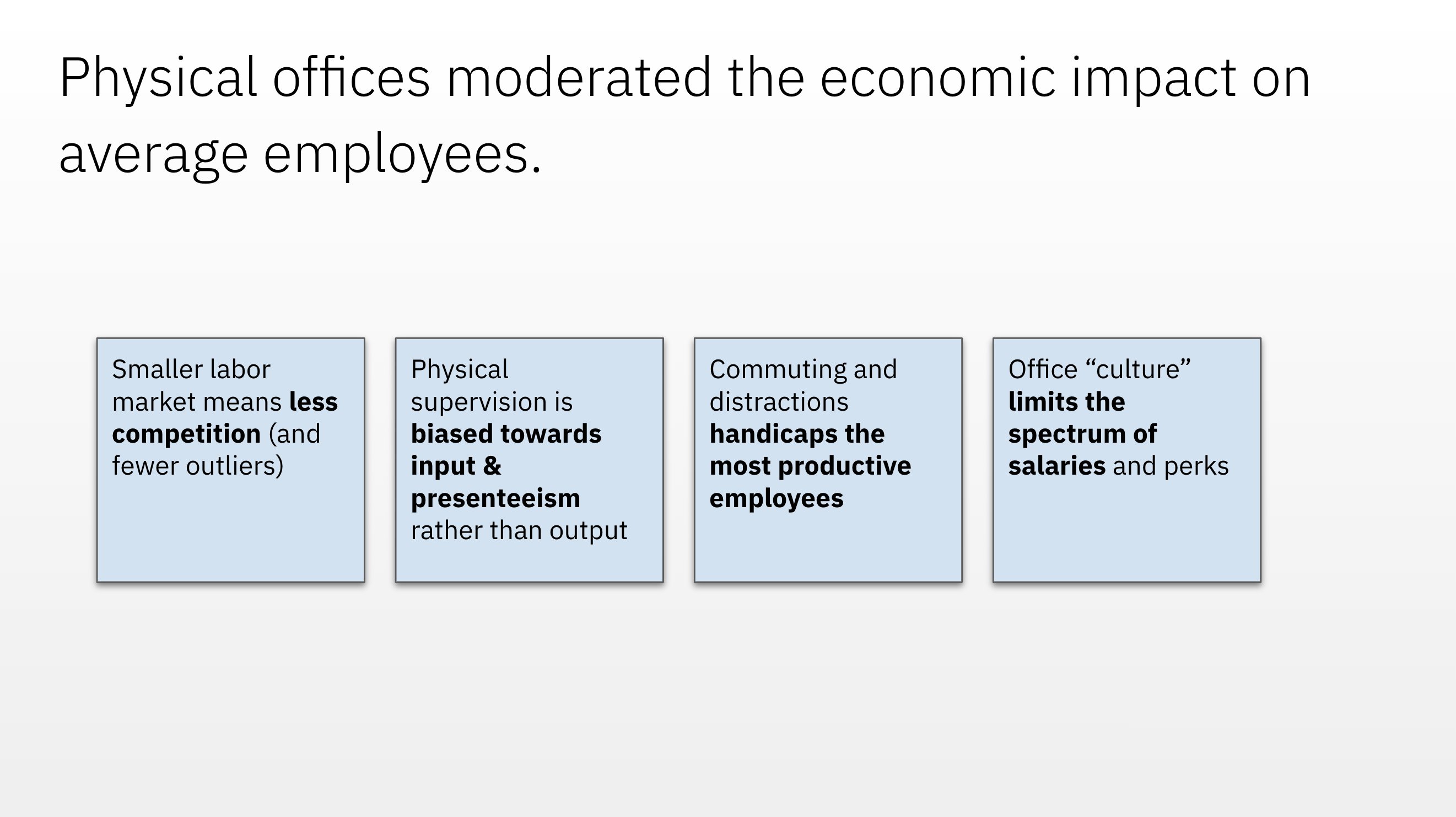
Explicit call for Shopify to get into demand generation. And to do it in a direct way, actually purchasing ads on behalf of customers as opposed to providing data to be used by customers. https://t.co/81QcsiN0PG Been thinking about Shopify and demand gen for a few years now. Seemed like it was both logical and to some extent necessary. With ATT, it is now almost undoubtedly necessary. https://t.co/Zbi0dTZaOX thread on Shopify demand gen https://t.co/gHWPIVaSlo What gives me pause about Ben's suggestion is how does Shopify determine where to drive demand, once it determines to start buying it? The tight rope SHOP has walked is wanting to help with demand gen, without commoditizing or picking favorites. How would that work with this?
Feb 22, 2022Project mgmt tools like $MNDY, $ASAN $SMAR + Notion are growing like crazy but who can sustain that growth in the long term? Let’s compare the growth playbook of everyone in this space to predict who will be the next $TEAM👇 Project management is a huge space with lots of spending on digital advertising. Let’s take 1 channel: YouTube. Among all public enterprise software corps, $ASAN and $MNDY ranked 1 and #3 in YT ad spend in the past year (ClickUp, if public would’ve been 1) The same applies for Google ads. Among all public enterprise software corps, project mgmt tools made up 3 of the top 5 in Google paid traffic, with $ASAN 2nd and $MNDY 4th. Let’s face it: this is a ruthlessly competitive space where everyone is paying for growth at any cost. To increase their chances of profitability, the winner needs to excel in: 1) content marketing/SEO and 2) word of mouth. Anyone can keep paying for ads or add more salespeople. But the long term winner needs to find “sustainable growth engines that aren’t rented” @buccocapital So let’s start with content/SEO - Who’s winning here? Looking at organic, unbranded search traffic, the winner is $TEAM with over 1.5M visits/month, surpassing everyone else *combined*. $SMAR was 2nd, followed by $ASAN $MNDY. AirTable and Notion has not focused on content much. Who’s winning when it comes to word of mouth? Based on Twitter mentions, Notion is clearly 1 with Trello 2nd. If we only look at tools that target enterprises, then $ASAN gets recommended the most, beating $MNDY. Interesting, Jira/Confluence is among the least recommended. Having strong word of mouth depends on having a devoted user base that love your product. Reddit subscribers are a decent proxy for measuring the strength of their communities. Here again, Notion beats everyone else with the most Reddit subscribers. Next, who is winning over those huge enterprises? According to @Revealera, among all enterprises won by $MNDY and $ASAN since last Q the median employee size was 501 for MNDY vs 717 for ASAN. Asana recently won over MSFT and Stripe while MNDY recently won over TWTR NFLX + Nomura What about Notion? While many perceive them as a tool for small orgs, Notion already has a handful of large companies on their Enterprise Plan such as AMZN, ADBE, IBM, SQ, OKTA. They have a successful top of the funnel and if they ever develop a GTM for enterprises, watch out. In conclusion Notion is beating everyone in product led growth. Clickup, MNDY ASAN are spending big on marketing/sales. Their growth strategy look very diff. than success stories like TEAM/HUBS who built an efficient sales machine thru word of mouth + content to complement sales. 1 last chart: the # of times each product is mentioned w/ each competitor in a G2Crowd review. $TEAM (Trello + Jira) gets mentioned the most in reviews for almost all of these products. These upstarts might have to steal share from $TEAM to sustain growth. cc @BucknSF
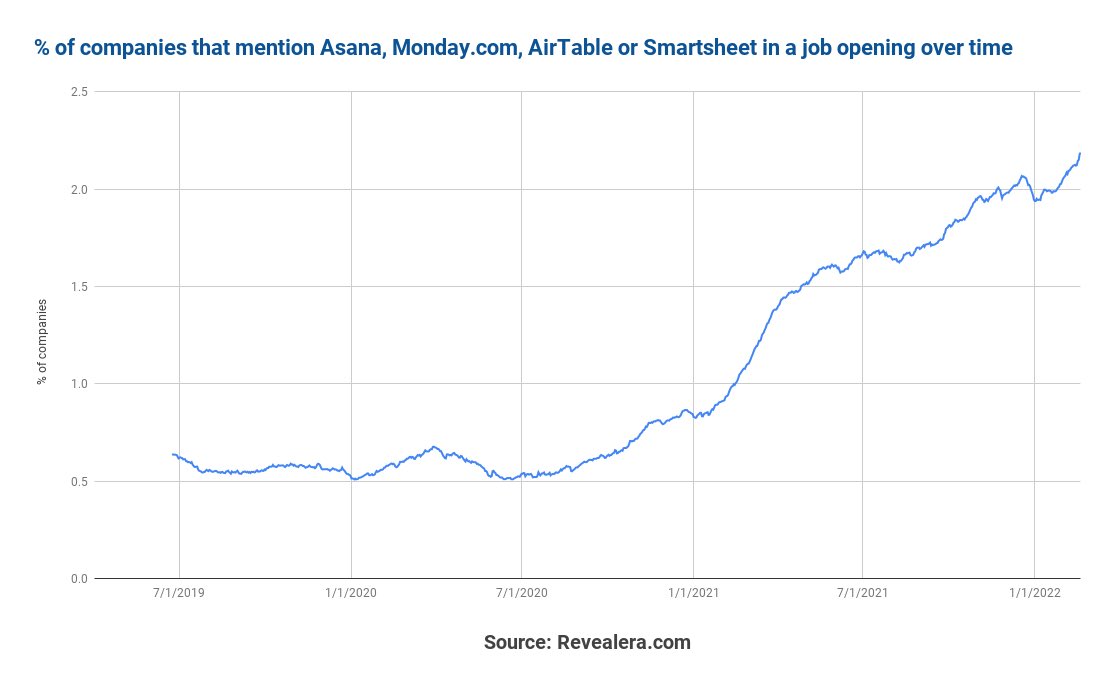
I found a business with 50 employees, 20 billion page views a month and that did $1 billion in sales in 2018. They never raised money but I guarantee you have bought a coffee table or found your next job on the site. Here is the story and 5 lessons worth learning👇 Craig Newmark describes himself as "nerd patient zero". And in 1995 he is 42 years old and moves to San Francisco to work at Charles Schwab. But like anyone in a new city, he's lonely. So what does he do? Creates an email distribution list with 10 people. The goal? Feature fun local events in San Francisco. The first event takes place at Joe's Digital Diner. People show up, eat spaghetti and meatballs and talk about the using new multimedia tech. Craig posts more events. And something weird happens. People start begging to be added to the email list. So the list grows to 250 people. By 1996 he buys and builds craigslist(dot)org. By 1997 Craigslist hit 1 million page views a month. People start asking him, "Hey, can we put this job on there?" or "Can you post this thing I want to sell?" Craigslist turns from an event site to selling Classified Ads. If you're a Zoomer like me, classified ads mean people or businesses pay Craigslist to: • List cars for sale • Advertise job openings • List apartments for sale and more! So Craig quits his job in 1998 and hires a team. In 2007, they hit $50 million in sales. Today, Craigslist is in over 700 cities and 70 countries. They have • 25 million+ classified ads • 1.5 million+ job postings Here's how the did it👇 1) Forget the Fancy Craigslist may have the ugliest website on the internet. Why almost no changes in 25 yrs? "People told us they don't want fancy. They want simple, straightforward and fast." Whenever you think you need a fancy site, remember this hit a billion in sales: 2) Chief Customer Service Rep Craig obsessed over customer service because the community became the heartbeat of the business. What do our people want? How can we make it super simple to get? Bonus: his linkedin says it all 3) Kill Them with Freeness As craigslist grew, businesses bombarded Craig asking to advertise. But he realized that banner ads and pop ups kill user experience. So they made it free for users with no ads. Only pay to list certain items. Pass the cost to those making money. 4) Cheapness is a Virtue In the early days, the Craigslist office contract stated the landlord paid for toilet paper. So Craig refused to buy toilet paper. He didn't care if it was crazy. In a world full of fundraising and flash, this matters even more. h/t @thesamparr 5) Fire Yourself Craig knows he "kinda sucks" at managing people. So in 2000, he hires Jim Buckmaster after seeing him post his resume on Craigslist. Too often, we let our egos win. But if Craig never fired himself, they never becomes a big business. Now, Craigslist has had a tough last few years. Facebook Marketplace, Airbnb and others are taking market share. But the crazy part is that isn't the focus: "Financial metrics aren't the focus; they're a pleasant side effect if we manage to do a good job by our users." "We look at the number of thank-you notes from users who have found their entire lives on our site - from spouse to house, job, furnishings, cat, dog, friends and a social life." -- Jim Buckmaster, CEO of Craigslist If you picked up a new insight, retweet the 1st tweet to share with a friend! https://t.co/uCKyfzsYtu Follow me @chrishlad for more frameworks, systems and business breakdowns. And join 9,300+ others and subscribe for free threads like this right to your inbox every week: https://t.co/Zr6gAK3oP0
Feb 20, 2022T2D3 is a famed playbook to building a Billion dollar business: 2 years of tripling ARR, then 3 years doubling it. startups recently pitched me on T2D3 that missed the first (IMPORTANT) part: before T2D3, you have to get PMF & $2M ARR! THEN you can T2D3 here is the original post from @NeerajVC that still holds up pretty well (though the $B valuation usually comes way earlier these days and there are different paths to growth than sales-led) https://t.co/NqK4E75X6o
Feb 9, 2022Most first-time founders/managers burn out their first batch of employees because of bad management. I am not great at it but learned a few things on management over the years. Summarized my learnings – hope it helps ✌️ Here the full article: https://t.co/CpwrEDdElb Phew, I was worried HN might like it too much. https://t.co/CpwrEDdElb
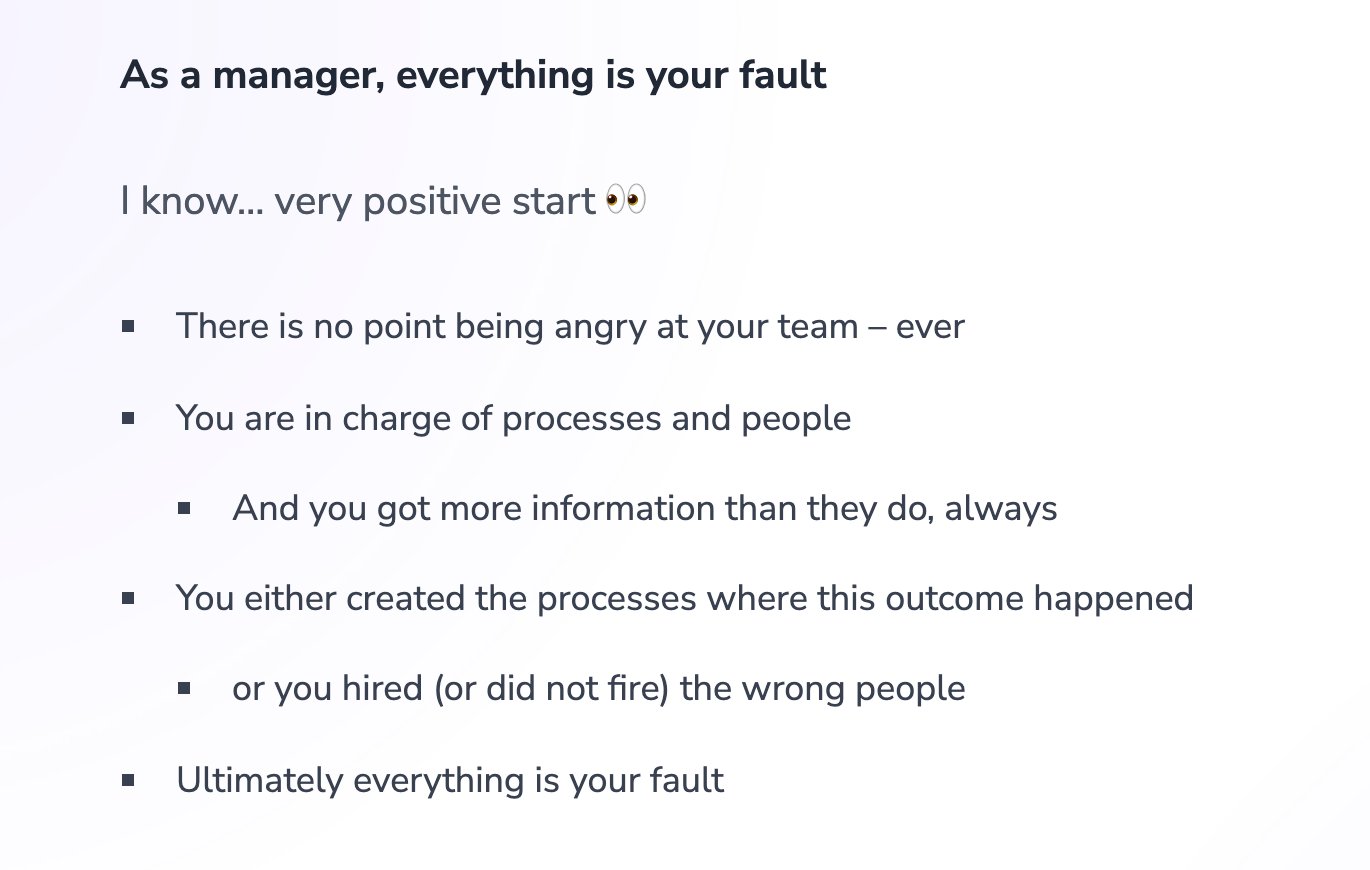
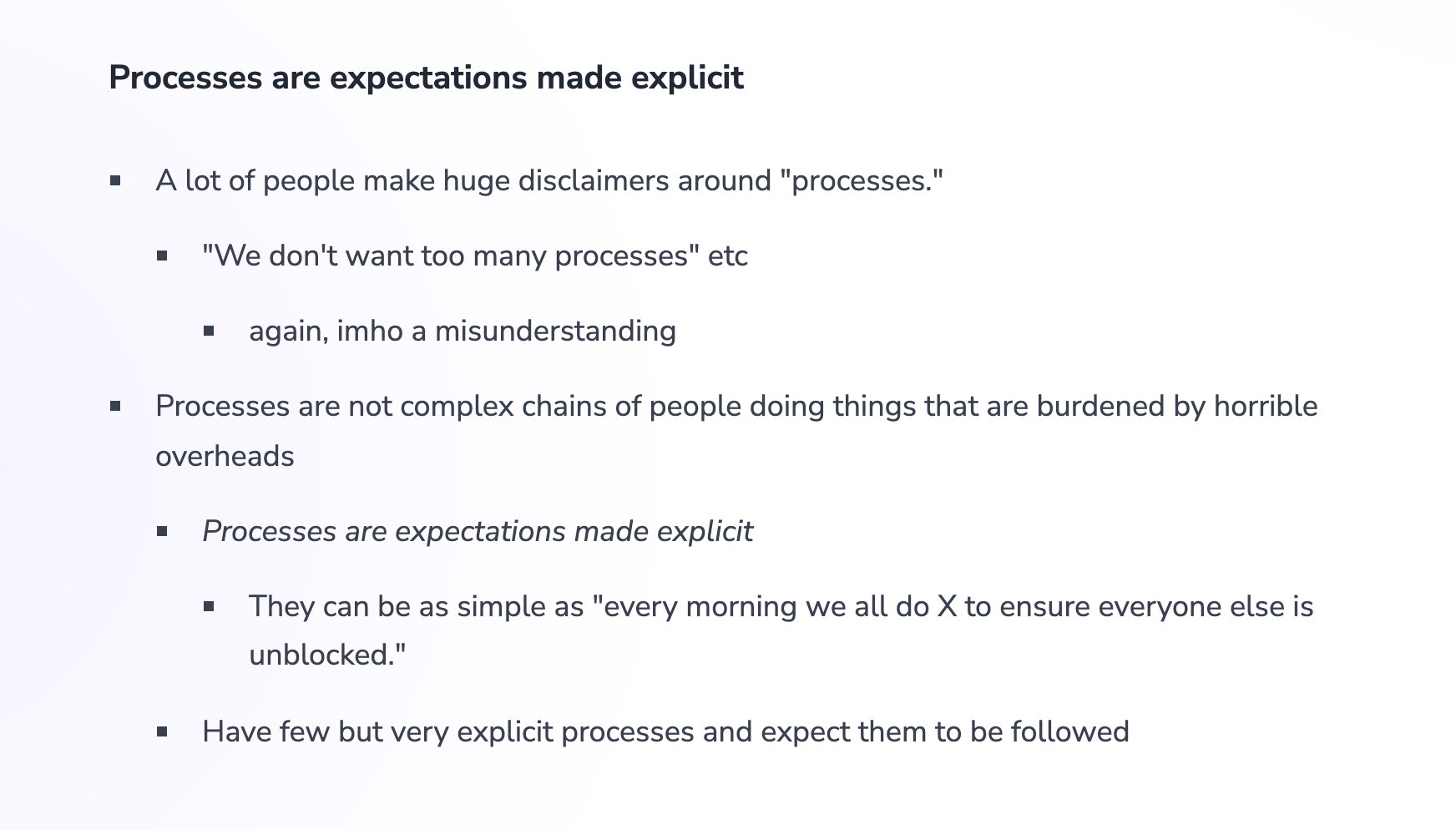
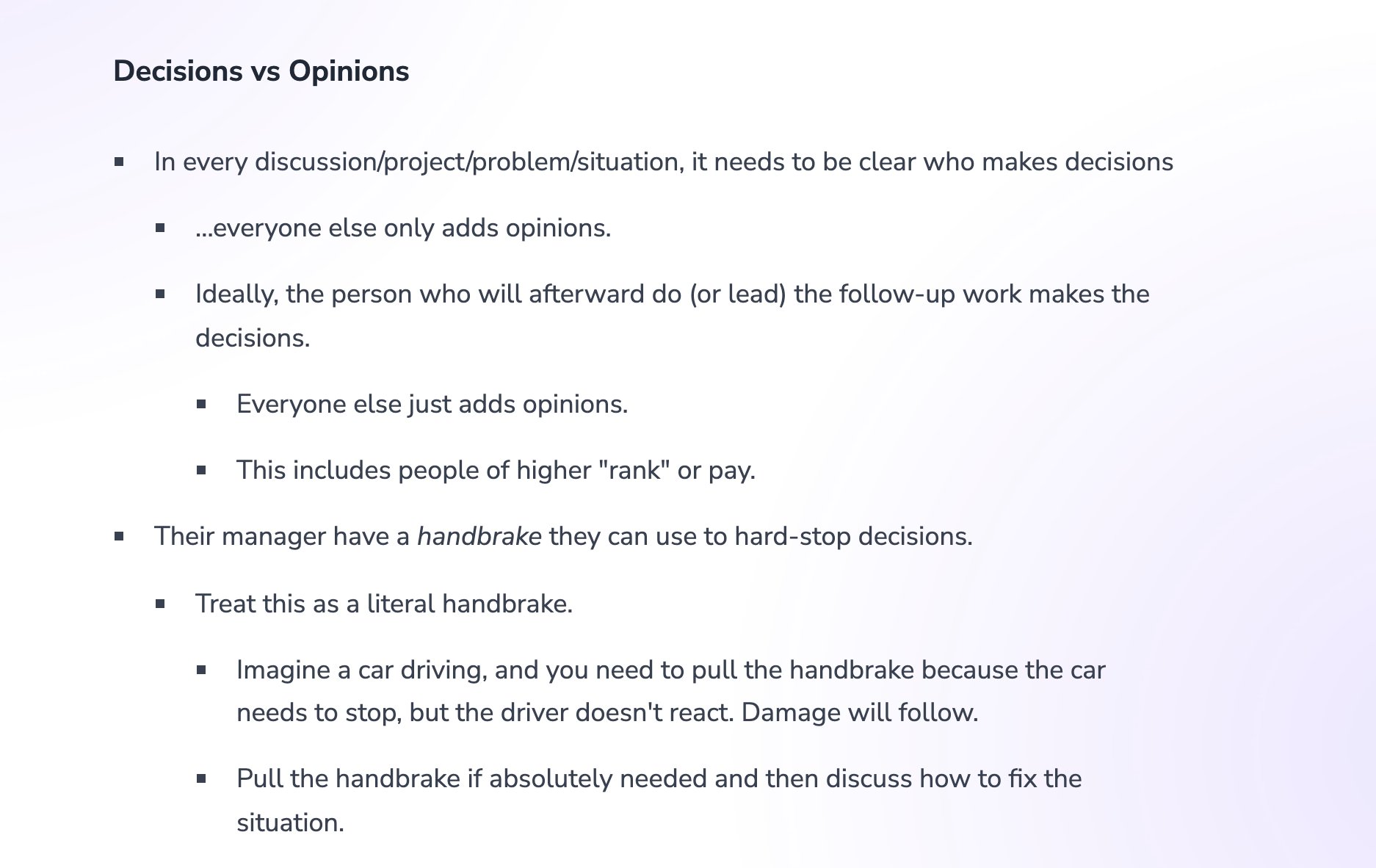
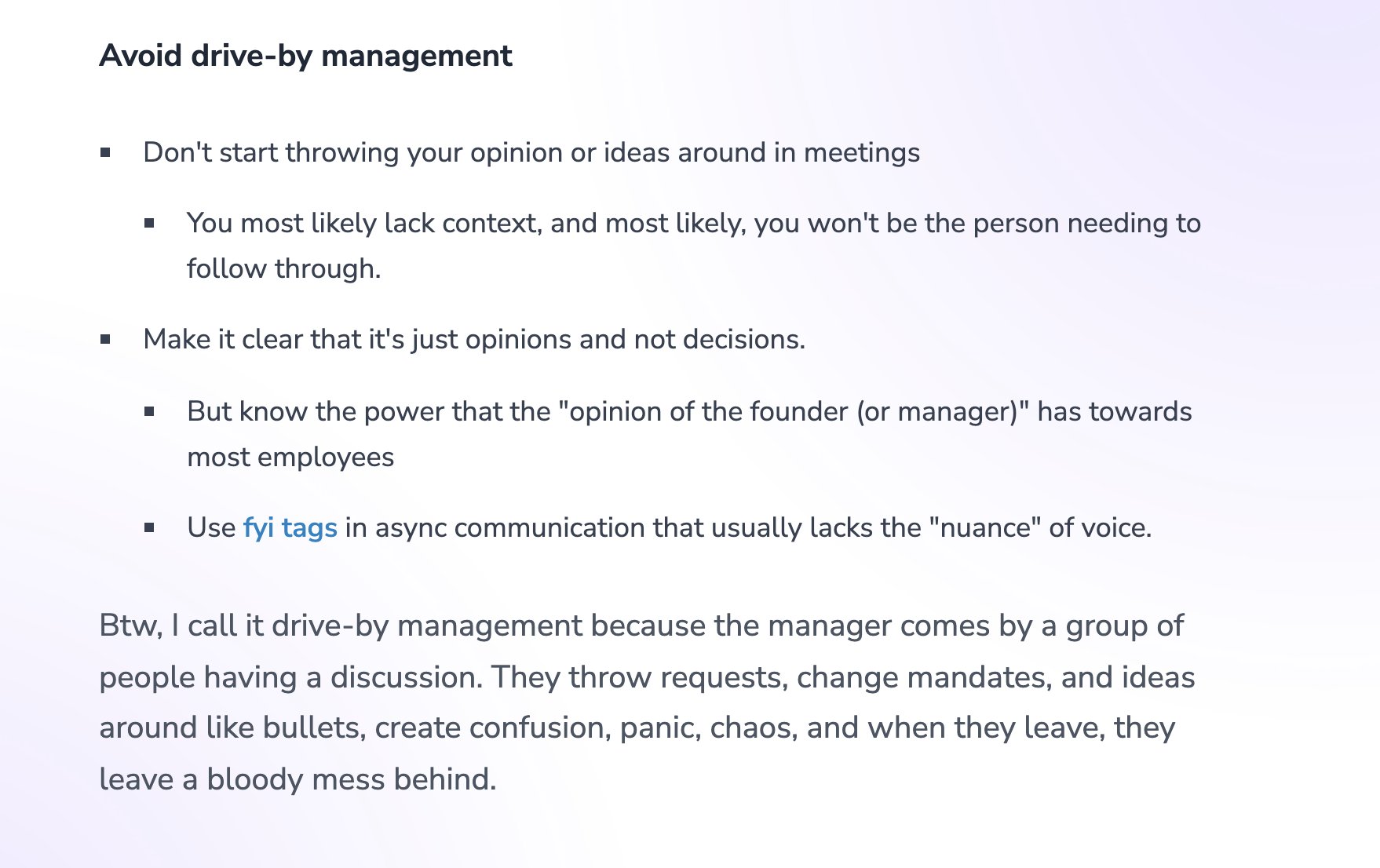
The other day I did a deep look at the Top 20 public SaaS companies doing PLG and freemium As a group, they are all growing >faster< than last year, at an average of $400m in ARR. Which is just incredible! My Top 20 learnings here: 🔽🔽🔽🔽🔽 #1. 60% of Asana’s customers still come from self-service, 40% from sales. This is trending to 50/50 now that Asana has crossed $400m in ARR, but still a reminder self-serve combined with sales jumping on the bigger deals can scale very, very far #2. 80% of Datadog’s revenue at $1.2B revenue comes from its $100k+ customers — it used to be 80% from small customers. But even today, its Free edition is still core to its lead gen You don’t need to leave Free behind, even at $1.2B+ ARR. #3. 60% of Expensify’s Customers started off in the Free edition, even at IPO. And most were end-users using Free that then recommended Expensify to their managers. Amazing to see end-users without budget using a Free edition still driving the majority of growth at $150m+ ARR #4. Toast’s SMB NRR is 114% today — but it took 4 full years just to get to 100%. A reminder that you don’t need to settle for sub-100% NRR from SMBs. And also that, with SMBs, it can take a while and a lot of value-add and learnings to get that NRR over 100%. #5. 38% of Freshworks customers still pay monthly, even at $400m+ ARR and a $5k ACV on average We’ll see something similar with Zoom below. You don’t need to force it Annual contracts aren't always magic. You can build a decacorn without walking away from monthly payments.
Feb 7, 2022 Original deleted — preserved hereCalendly is quieting making one of the greatest freemium -> enterprise progressions since Slack Explosive self-serve growth to $50m ARR, then rapid expansion into enterprise after as it begins to become part of the default IT stack in bigger companies Super impressive A bit more on how they actually did it, and do it, here from CMO @patrickmoran: https://t.co/GKkTjO5N1Z
Feb 5, 2022From PayPal S-1 back in the early 2000s Just wild how young, and star studded management team (in hindsight) $PYPL had. I wonder whether such a team can ever be assembled together under one company again. h/t @TrungTPhan
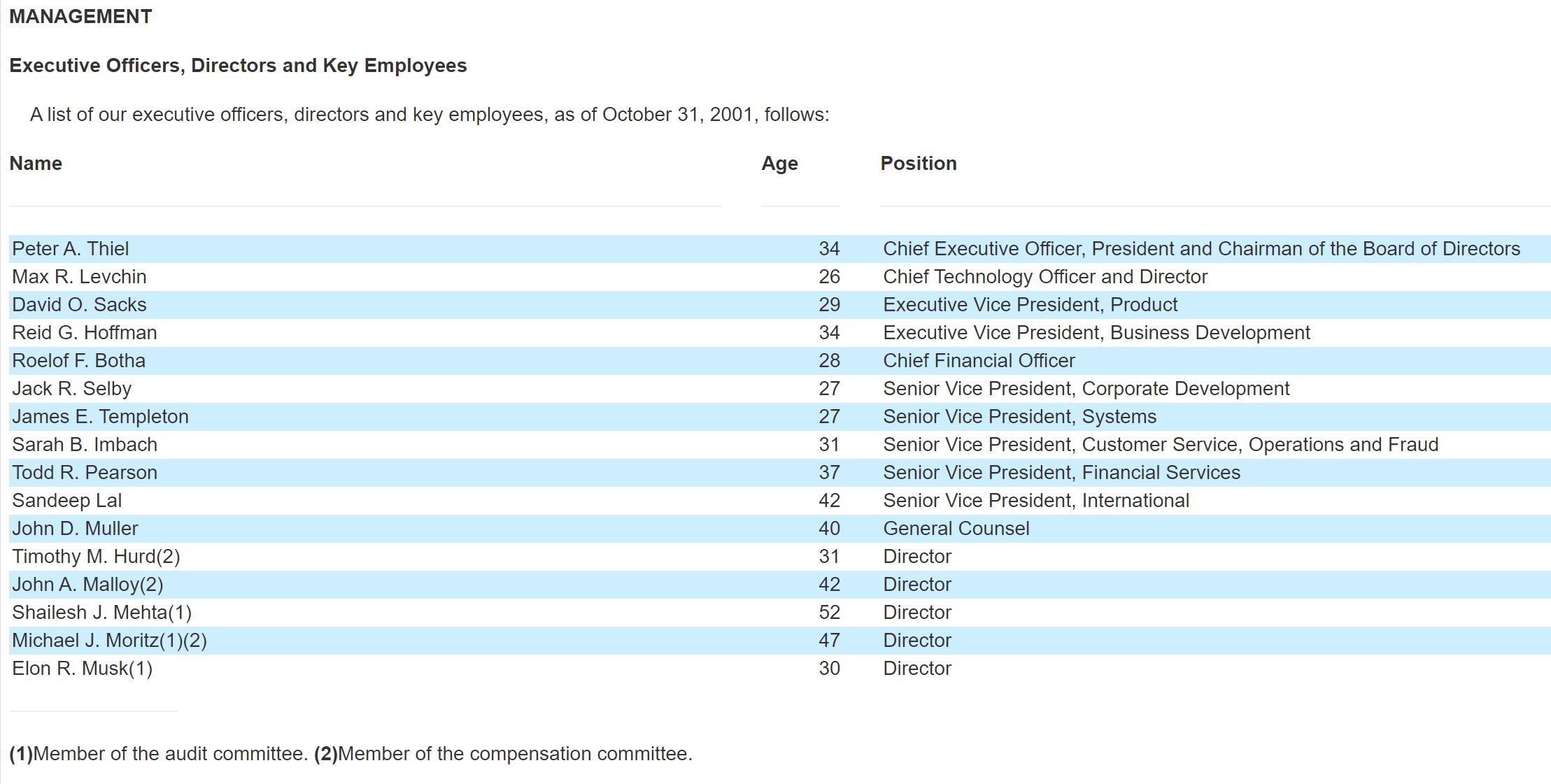
Popular idea: what gets measured gets improved. Corollary: things that get measured will consume your focus. If you put "$1k MRR (+8% vs last mo)" in an investor update, readers will begin focusing on MRR & growth prematurely. Resist KPIs that you're not trying to improve yet.
Feb 1, 2022YCombinator is not worth it, a thread: These days, I get asked by founders all the time: “Should I do YC (YCombinator)?” My answer used to be: “Probably not worth it, but if you really want to, sure.” Today, given what YC has become, my answer is a hard: “No.” Here’s why 👇 Before we dig in, a note on my motivation. Some think my recent tweets are marketing stunts. The truth: there’s nothing that pisses me off more than the Mob Sh*t that goes on in Silicon Valley. My mission of empowering the next generation of entrepreneurs drives all my work. Ok, now to YC… This thread is long, but here’s the main takeaway: YC might have started off pure. But money, power, and greed have corrupted it. Today, YC is a lottery factory capturing 10%+ from founders with little concern about the individuals going through the program. The problem: founders new to Silicon Valley think of YC as a MUST. This is the narrative that needs to be put to bed. And, I’ll go one step further, it is a MUST AVOID. Why? First and foremost, the cost is beyond predatory. For $500k, YC has two separate safes, one for 7% and one at the earliest possible valuation in your company. This result: they own 10%-14% of your company out of the gate. This is ENORMOUS ownership and can be larger than your entire employee option pool thru Series A And it’s NOWHERE near value created. 1-2% of the company? Perhaps Some % of the first round raised, ie an investment bank? Definitely But 10%-14% is disgusting 🤮 When building a startup, the failure case doesn’t matter… 10%-14% of nothing is nothing. But the success case for your startup, which is the intention, this is enormous 💥💥💥 If Bolt went through YC, their stake would be worth nearly $1B. This equity is PRECIOUS. Its most important utility: compensating employees and your TEAM… the people actually building with you. Founders generally consider YC with 5 beliefs: 1. YC’s name will raise valuation by more than 10-14% 2. YC will coach and mentor you 3. YC will put you in front of 100s investors at demo day 4. YC will help you sell into YC 5. YC will connect you with peers Let's go one by one: >> YC’s name will help raise valuation by more than 10-14% First off, this is a logical fallacy. Your first engineer should double the value of your company, creating a product from nothing. But they don’t get 100% of the company! Every percent should have 10X impact. Even still, the YC brand doesn’t help with valuation anymore. In the past, it did. Limited class sizes of <40, high prestige. Now the batch size: 400. … You’ll literally be one of 400 companies. The prestige has been stripped. The result: I have even more respect for non YC founders these days. I still respect YC founders, but I frankly feel bad that they got caught in the trap. New to Silicon Valley, it’s not their fault. They got caught in the narrative. >> YC will coach you on company building My YC founder friends: “The advice is minimal” Rushed office hours. Generic advice. YCombinator is a machine, and going deep with a founder is basically impossible by design. Think about it… It’s impossible to advise 100s of companies in a personalized, high-touch way. Hopefully a few out of the thousand work so they can collect their fees 💰 YC is a LOTTERY 🎟 They don’t care about any *specific* company succeeding…. they only care about having as many lottery tickets as possible. I’ve heard countless stories of YC founders IN THE PROGRAM being treated like crap. That makes me livid. Founders are pouring their lives into their companies and are giving ridiculous amounts of equity to the program. At the very least they could be treated well. Another dynamic: The top companies get far more attention. This is because the partners will focus on the few lottery tickets that move the needle. Again, makes sense given the incentives. >> YC will put you in front of 100s investors at demo day Yes this happens. But no, it’s not unique. Nearly every accelerator does this. YC perhaps has more investors, but it’s simultaneously the HARDEST accelerator to stand out given the outlandish batch size. As a result: their YC's incentives are WAY more aligned with investors. Everyone is chasing to be in the top 10. The bottom 390 are left behind. They know this too and must play favorites. Supposedly YC partners will call certain VCs and tell them who the top picks are. >> YC will help you sell into YC This part actually is true. #TheMob If your startup sells to other startups, they have a monopoly on this. That said, plenty of companies figure it out without them. You can too. >> YC will connect you with peers at the same stage Tech is a very welcoming community ❤️ With a little work, this is easy. But it's certainly NOT worth ANY equity in your company. Back when I started Bolt, YC had prestige, smaller classes, and was more hands-on. However, not going through YC made me a stronger recruiter, fundraiser, and company builder. I went through the real deal startup Jedi training, no Mob support. The effort is worth the freedom. Here’s my advice if you’re a new founder: Seek advice from other founders. Follow them on twitter. Read their blogs and books. Network your way into them. Be a student, direct from the source. Fundraising can be done by organically building a network that serves as your support system and investor intro nodes. Read my book Fundraising, it costs $11, not 11% 😉 Specifically, and abbreviated —> 1. Hustle to make friends with other founders. 2. Host social meetups to turn friends into more friends. 3. Start building something differentiated. 4. Leverage your network when it’s time to raise. There are also numerous other accelerators who will give you personalized care, take minimal equity, and who actually care about you as an individual. See: StartX Backend Capital Pear Fellowship Also, certain great investors, just for letting them invest, add tremendous value. So, to conclude: YC as a profit-seeking institution has leaned ALL IN on the profit. They’ve completely lost sight of who matter most: the people behind the companies. And are just building a lottery ticket machine. I fundamentally believe that there is no such thing as a machine for building companies. If I followed the “YC Playbook” Bolt would have never made it. We broke all their rules. I’ve personally coached and mentored nearly 100 companies. Many of which were YC alumni. Afraid to go to YC partners, they’ve consistently come to me for advice. I wonder why… Even Paul Graham KNEW this was a bad idea. But it seems like profits won over founders at the end of the day. A typical story for The Silicon Valley Mob and any institution with too much power. https://t.co/nPCPL8wOGN Take it from me, you don’t need YC. You DON’T NEED the badges of approval. Or the big name brand accelerators or VCs. They don’t make the company. YOU do. In fact, they often do more damage than good. High ego. Minimal respect for founders and team. Short-term profit seeking. A more fundamental point: Do you want your company to be known as the "YC or Sequoia Company", and transfer all the credit for what your TEAM has built to some other institution? NO WAY. I would never want that for Bolt. My team did the work and should get ALL the credit. In short, build your network. Learn from founders. Find folks who will invest meaningfully in YOU. When you find a FOUNDER who believes in YOU and is willing to make TIME, give THEM 1%. They’ll add FAR more value. And they’ll be with you for life, not just for a lottery ticket. Ok I’m done with my rant 😊 To all the up and coming founders, I’m here for ya. You’ve chosen a courageous path; one where you’re creating something new for the planet. And you don’t deserve the way you’ve been treated thus far. Together, it’s time to level the playing field. So… two things... 1/ I’m building a better system. Join the waitlist: https://t.co/VzcSMruor6 2/ I’m compiling stories from founders who’ve been victims of The Mob. Please share your story: https://t.co/sqvqNzSe72
Jan 29, 2022 Original deleted — preserved hereI've learned more about being an operator from @rabois and @DavidSacks than anyone else. Here are some of my favourite resources👇👇👇 1. Developing an operational philosophy + strategy + measurements; https://t.co/zjzv2wXiQa 2. Advice with examples + marketing; https://t.co/2s5Gno7yZN 3. Dealing with people; https://t.co/nRCRBOT9ss 4. Personal management; https://t.co/sfjA4UdWqz 5. SaaS operations + numbers (yes, the entire substack); https://t.co/ABAemAa2J2 There's plenty more but I found these to be super useful, big shout out to @rabois and @DavidSacks for documenting and sharing this! If you liked this thread, drop me a follow @kanoj_vora, I write threads about philosophy, finance, tech and other things I find interesting. Here's a thread you may be interested in; https://t.co/mhEQtHGSrJ
Jan 27, 2022Most VCs are more like law firms than tech companies. But that's changing What would a product-led venture firm look like? A clearly differentiated strategy + unique approach to founders? https://t.co/MEwevhmHlM @paradigm is one great example 🧵 https://t.co/f0dvvh9OLX

How are Slack, Zapier, and MongoDB doing sales? When should I add my first sales hire? Should I calculate PQLs at the account or lead level? @getpocus partnered with @firstround to launch the first ever Product-Led Sales Benchmark Report & answer these questions. We surveyed 200+ GTM leaders at PLG companies like @airtable @asana @SlackHQ and @MongoDB. Here's what we found: 1️⃣ THE MYTH OF NO SALES AT PLG = BUSTED. Over 97% of survey respondents either have a sales team or plans to add a sales team. 2️⃣ PLS IS IN ITS INFANCY We've all agreed that sales is critical to PLG, but best practices & frameworks are still not fully developed. But, the future is bright. 24% of respondents are looking to add a third-party tool to enable PLS and another 12% are pursuing internal tools. 3️⃣ PQLS ARE GAINING TRACTION 47% of sales teams conduct outreach to PQLs, which is about equal to teams relying on MQLs (50%). 4️⃣ PATH TO ENTERPRISE = HUMAN INTERACTION 57% responded that the primary path for enterprise is 'contact sales' while only 7% of companies allow users to self-serve onto enterprise plans. 5️⃣ SALES-ASSIST IS SNEAKING INTO ORG CHARTS 28% of companies have added a sales-assist role, but are still in the early stages of defining the best practices. Full report: https://t.co/sWAoKDCKSZ
Jan 25, 20221/ There’s an element of mentorship that I don’t see discussed a lot. (Yes, finding a mentor is a whole other story, and much advice focuses on that). But the key to a good mentor relationship is that you *actually take action* on the advice you’ve been given. 2/ As an old boss puts it, “you must be someone that’s helpable.” Which is a corollary to “only help others who can be helped.” The trick isn’t that you MUST put everything the mentor tells you to action. The trick is that you find SOME aspect of the advice and apply that. 3/ Why is this important? Or rather, why do mentors give their time and energy to help “only those who can be helped?” The answer is what the mentor gets out of the relationship, right? A mentor doesn’t want to feel like they’re wasting their time. 4/ Taking action on a mentor’s advice shows that you’re taking the mentor seriously. And you give them the pleasure of watching their advice making a difference in your life. 5/ The heuristic I use is actually simple: I ask myself that the next time we (the mentor and I) meet, am I able to say something of the form of ‘you told me X, and I applied it, and here’s what happened …” If yes, great! If no, wait till you can before meeting again … 6/ Obvious corollaries: if you can’t find even SOME aspect of the mentor’s advice to put to practice, stop asking advice from that person. Believability probably helps as a filter here: https://t.co/QEB497qp5O 7/ Another corollary: some people curry favour from mentor-like figures by PRETENDING that they’ve put advice to practice — even if they have to stretch a little (e.g. you told me X which made me think of X’ and I think you’re right …) Take of that what you will. 8/ Final corollary: if you consistently do this, you’ll find that it becomes remarkably easier to find (and keep!) mentors. Mentors are, after all, simply ‘people who give you advice repeatedly’: https://t.co/DQnPIMk9CG 9/ So how that actually looks like is: - You meet someone. They give you advice. - You take that advice seriously and put some aspect of it to practice. - You make a note of it with regard to the person. - The next time you meet them, you bring it up … 10/ cont … - That person feels happy that a) you remembered what the advice was (they’ve probably forgotten), b) you took it seriously and thus made them feel good, so - You get to ask more question in the future, and they’re inclined to answer. Rinse and repeat. 11/ If you enjoyed this, you might enjoy this thread on how people actually learn from doing (and why some can reach mastery with it, and others cannot): https://t.co/LOkHCp1Yz6 12/ Or follow for more threads like this; I’m probably going to turn this one into an essay soon. (It’s surprisingly necessary for finding mentors amongst, say, ‘traditional, uneducated’ businessmen, the kind who might not understand mentorship but who populate South East Asia.)
Jan 23, 2022Zero evidence the stock market tumult is impacting SaaS growth rates As a founder, potential fundraising impacts aside, you can basically ignore it
Jan 23, 20221/ This is one of the scariest launches of my career -- Rippling is publishing our internal support metrics publicly, every day: https://t.co/44TL69NVVl 2/ Why scary? We think our metrics are good - median 46 seconds to respond on chat. But we're not perfect. We've had blips in the past and will again in the future. 3/ But this is the right thing for customers - who often guess at vendors' support quality without any data. My hope is that we can lead the way for the industry, and others will follow suite. 4/ If you're disappointed in the support responsiveness from your current payroll / HR vendor - come check us out.
Jan 20, 2022As Segment grew from open source afterthought to the leading customer data platform, we "refound" product market fit several times. Surprising to me as a product person, our biggest learnings in PMF were from wildly uncomfortable questions from our sales team 👀 a thread 1/14 Our 2nd sales hire was @entrp4life, who we hired despite my protests to @RaphaelParker about a likely culture clash with engineering buyers. I couldn't have been more wrong. Not only did Surdi blow his number out of the water for years, but his customers loved him. 2/14 Clearly, I had something to learn here. I took the chance to travel with Surdi to visit customers all over the world. And every sales meeting, Surdi's questions made me wildly uncomfortable. How on earth was this working?? 3/14 Eventually, I started to notice the pattern. Surdi would open with something unexpected like "Why did you have us here today?" and follow it up with "Why is customer data a problem for you?" plus 10 other "why" questions including "Why don't you just build Segment yourself?" 4/14 It was awkward because... shouldn't we be explaining this stuff to them? But every question got the awkwardly off-balance & surprised customer to explain what their challenges around customer data were and share their deeper thinking and inclinations. 5/14 And then selling them was easy. It wasn't really even selling. We just explained how Segment the product fit into their problem and their approach. It was all backwards from how I noobishly expected sales to work. And it was phenomenally more effective, not just for sales. 6/14 It was also incredibly effective at learning what the customer's real problems were. Suddenly we could see much more clearly what our customers needed from our product. 7/14 It's no accident that a few months later we launched Segment SQL, which was our most explosive product market fit moment in the company's history. After that launch we grew ARR from $2.5M to $10M in 12 months and became cash flow positive. 8/14 I was just beginning to learn that sales "discovery" and "qualification" were like x-rays of a customer, hugely powerful for product development and product market fit search (and often clarifying for the customer too.) Later, this got 10x more structured and rigorous. 9/14 In 2019 @morrisseyjoe joined as our Chief Revenue Officer. Joe's first assessment was that we were wasting precious sales time talking to bad leads. I remember my eyes got big with panic at first, we're going to talk to _fewer_ customers?? 10/14 Indeed. And so Joe rapidly implemented MEDDPICC. A crystal clear method to qualify customers by not just asking Surdi's awkwardly powerful "why" questions, but also asking even more awkward questions like "Who's the ultimate economic decision maker on this? You?" 11/14 Again it was like a new product market fit superpower. You don't get anywhere by asking the easy boring questions like "What feedback do you have on my product?" You get somewhere interesting by asking hard-hitting sales qualification questions. 12/14 Now @CharmIndustrial, where I'm working on carbon removal and steel decarbonization, you might think this is all irrelevant. Hardly. We awkwardly ask Surdi's 10 whys and Joe's MEDDPICC of software companies about carbon removal and steel manufacturers alike. 13/14 ...and it's in part thanks to learnings from them and the rest of the Segment sales team that Charm has found product market fit in both voluntary carbon removals and steel, and seen such acceleration over the past year. Thank you team! 14/14
Jan 18, 2022For the CEOs out there, here are my 8 tips to most effectively hire and manage your head of product (also good reading for any product manager!) https://t.co/Inejh0w1r5 1/ Don’t hire a product leader until you have product-market fit 2/ Set your expectations for the product lead based on the company’s growth phase 3/ Your growth rate should determine the tenure of your product leader 4/ Don’t hold out to hire someone who can do ‘all things product management’ 5/ It’s okay to hire different people to lead your product as the company grows 6/ Own the fact that you own the product strategy 7/ A product leader is not the same as a chief operating officer 8/ Once the product function is established, you may no longer need a product lead
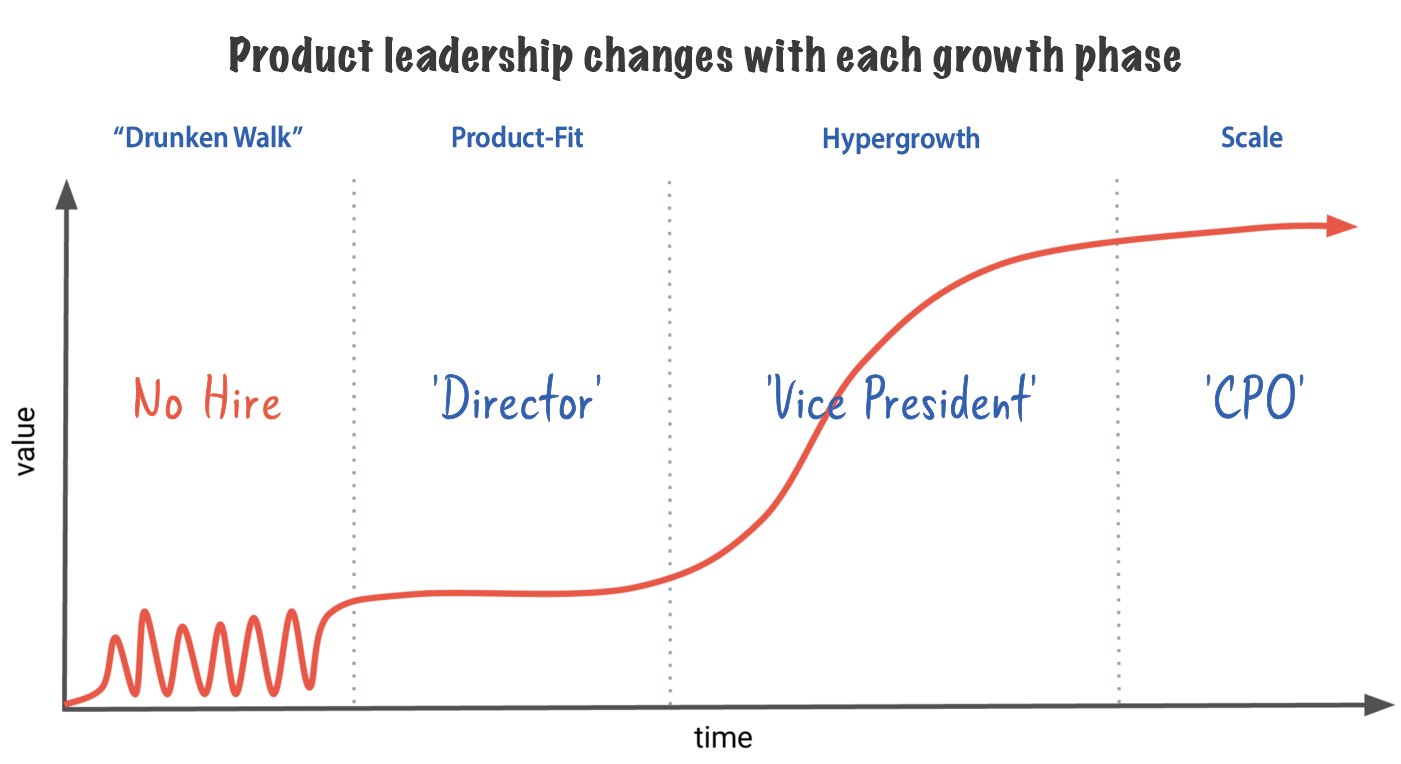
The toughest part of growing Segment from $0-200M+ ARR was letting go of product (which I understood) to focus on go-to-market (which I didn't). In 2017 I was really struggling with this. Five friends set me straight, a thread. 1/12 .@calvinfo @ivolo and I dropped out of MIT undergrad straight into Segment... and 6 years in we were now responsible for a growth stage startup with several hundred ppl. 2/12 I had no intuition for go-to-market strategy, systems, operations, recruiting... because I'd never seen it. I had never worked at another company! 3/12 At this point I remember thinking "Yeesh, it would be really useful to see inside another company or two right now." But I was too junior to get recruited to a board. What to do? 4/12 Eventually my coach @timporthouse had an awesome idea. 5/12 I should find some tech founders at a similar stage and do a peer board meeting: four of them in a single day, back to back, share all our board materials, financials and problems, and help each other. 6/12 Thanks to @rowghani at Y Combinator Growth, I'd met three of the world's finest French founders: @danielyanisse at Checkr, @collinmathilde at Front, and @dessaigne at Algolia. They all agreed to try this wild idea. 7/12 The peer board sessions were incredibly helpful, can't recommend enough. 8/12 One example: Segment had a developer-influenced enterprise software sale w/murky verticals. Algolia was more developer-led. But Checkr and Front were totally different: strong verticals and a very different sales motion. It was like I could see in color for the first time. 9/12 It was also an emotional support. 10/12 Like any human you get attached and loyal to your team. But sometimes it's not working out. I remember every one of us knew in heart of hearts we had to part ways with someone on our team... but we all needed the advice of the others to see it clearly and act. 11/12 Now in the midst COVID isolation it seems more important than ever to find peers to bond with, commiserate with, and learn from. Sorta awkward at first, but ultimately incredibly helpful. Thank you Ali, Tim, Nicolas, Mathilde and Daniel! 12/12
Jan 13, 2022After 10 years of building consumer social apps, I've decided to start exploring new areas. Building these products is an unforgiving grind—but I learned a lot along the way. For those embarking on this path, here's everything you need to know: TIME FOR A THREAD 👇 A reproducible testing process is more valuable than any one idea. Innovate here first. All things equal, a team with more shots at bat will win against a team with an audacious vision. Most product ideas are Dead On Arrival because the conditions to derive value are impossible to orchestrate. Getting 7 adult friends to install an app on a reproducible basis is non-trivial. If you can figure out how to do that, that's a bigger idea than your original concept. Don't be embarrassed to have a narrow target audience. All big things grow from small wedges in the market. If you need to launch nationwide to test your product, it's not a good test. You will prematurely exhaust your audience's attention and limit future shots. If your product works in one community (like a high school), it should work in all of them. If your products fails in three communities, it should fail in all of them. Nothing slows down teams more than inconclusive tests. If you're walking away from tests & saying "maybe we needed more downloads" or "people needed more friends"—then your biggest priority should be fixing your testing tactics so you can decide to pivot with conviction. The people and content on an app always trump slick design & novel interactions. So focus more on getting network effects and solving the "cold start." You should be filtering your product ideas by whether you have a distribution channel and if they can grow. Excessively long sign up flows are fine if it leads to higher activation rates. Most people don't bail after installing something. Habit formation requires recurring organic exposure on other networks. Said another way: after people install your app, they need to see your content elsewhere to remind them that your app exists (e.g., Instagram photos on Facebook, TikTok videos on Instagram). If you can't use your app from the toilet or while distracted—like driving—your users will have few opportunities to form a habit. There is a graveyard of live video apps that didn't make it because of the attention they require. People download apps to solve core human needs (1) finding love, (2) making or saving money, and (3) play. People rarely take time out of their day for anything else. Never build an app to "meetup with friends." The only way to push through the noise of the App Store is to be unapologetic about marketing to your first users. If your first users are Berkeley students, go ahead & call the app Berkeley Memes. It's hard enough to get the flywheel spinning without being obnoxiously relevant. Great products take off by targeting a specific life inflection point, when the urgency to solve a problem is most acute. Facebook ➝ Starting at a school Linkedin ➝ Getting your 1st job Slack ➝ Starting a company Audiences that exhibit obsessive behavior tend to be the best beachhead for new products—such as gamers, teens, and hobbyists. You need this obsessive engagement at the beginning to get the flywheel spinning. The number of social products that took off among older audiences can be counted on 1 finger. Our habits become immutable as we exit our formative years. Don't worry about Facebook: incumbent advantage is frequently overstated. Well-crafted products that harness unique distribution channels can take the world by storm—sometimes in a matter of days. And if the product is retentive, investors will line up to bankroll your growth. Positive feedback loops are necessary to reach "escape velocity." One heuristic I've aimed for is for each app session to trigger 7 new people to open your app. The engagement loops on Tinder and Snapchat demonstrate how these loops can create explosive engagement. If your product offends someone, it's probably one version away from something special. If it's been 6 months and you still haven't tested on an external audience yet, you're probably in for a rude awakening. If your product requires a "partnership", run. Every blockbuster product is an outlier, breaks the rules and may have been the result of luck or timing. So all you can do is get to know your user better than anyone else and trust your instincts. Very few people in this industry have have seen the inflection point of product-market fit first hand. Even for the founders who have seen it, take their advice with caution—including all the suggestions in this list.
Jan 12, 2022@Justin_Digs threw down this poll on LinkedIn and I thought I’d add my elaborated thoughts based on my experience building the #Product Led Growth (PLG) engine at @MongoDB 🧵 1/ My comment on the post was: “Depends on how you define active. If active means using the product, then none of the above. Not all active users are customers and a common mistake is attributing $ to “customer”… 2/ Each organization is different but understanding an “activation” point is critical to categorizing paying users as “customers”.” 3/ To be clear, I owned both full cycle sales teams and with @Justin_Digs help, built the PLG team; in building this org we observed insights that ultimately created sales motions, new ways to sell professional services, visibility into customer journey and 7-figure customers. 4/ In traditional commerce if someone pays for goods, they are by definition a customer as they’ve exchanged money for product. And if you want to stand behind the register counting your cash, you’re more than welcome. But in SaaS it’s about sustainability and LTV. 5/ Traditional software sales classifies “customer” as in contract via order form or PO at the end of a sales process. Then if they don’t renew their contract after 12 months, it’s defined as churn. 6/ PLG flipped this on it’s head. Prospects go from exploration, to free tier, to paid on their own; then (hopefully) to a commercial agreement. The ebbs and flows of usage based pricing also means there is likely periodic churn throughout the lifecycle of a customer spend. 7/ Does your house gas bill constantly go up MoM indefinitely, or does it drop in the summer and increase in the winter? I’ll save measuring, forecasting and building commission plans around UBP for another day but this metaphor is similar for consumption based SaaS products. 8/ The point is, slight churn is constant and natural, but the overall trend should be up and to the right. 📈 9/ In PLG, at any given point a customer can go from paying to churn. This is obviously true generally in SaaS, but in PLG the guaranteed $ from one day to another isn’t a given. 10/ Because of this, a prospect paying money may simply be testing paid features, clicked on the wrong button or at Mongo, required a higher tier of Atlas to test larger infrastructure before committing to the platform. 11/ You sit down at a bar to have a drink to meet a friend. Buy 1 cocktail, receive poor service or aren’t pleased w/ the menu; you decide to have dinner elsewhere and never come back. 12/ This metaphor is similar to PLG. Payment ≠ customer. Or at least customer revenue you can count on beyond a short time period. To build a sustainable business you need prospects to buy dinner and come back over and over, and bring their friends. 13/ Most all SaaS products have a point in the customer journey, regardless of how much a prospect is paying for the product, that defines when they decide to use the product in production. This is what we called “activated” 14/ So regardless of using a free tier, or paying, until a customer decides to use the product in production, I wouldn’t recommend classifying someone as a “customer”. 15/ While you build a modern GTM, if you have a PLG funnel, you may want to reconsider classifying customers by spend as spend isn’t always an indicator of absolute decision. Perhaps consider understanding at a deeper level your evaluators, “decided” & maybe even self education 16/ How we differentiated from traditional PLG companies is we implemented proven Enterprise sales and qualification criteria to a frictionless onboarding process. This helped strengthen our new logo acquisition and derisk our prospects that “decided” to use us in production 17/ This is the future of SaaS and what we are building at @starburstdata 💫 End/
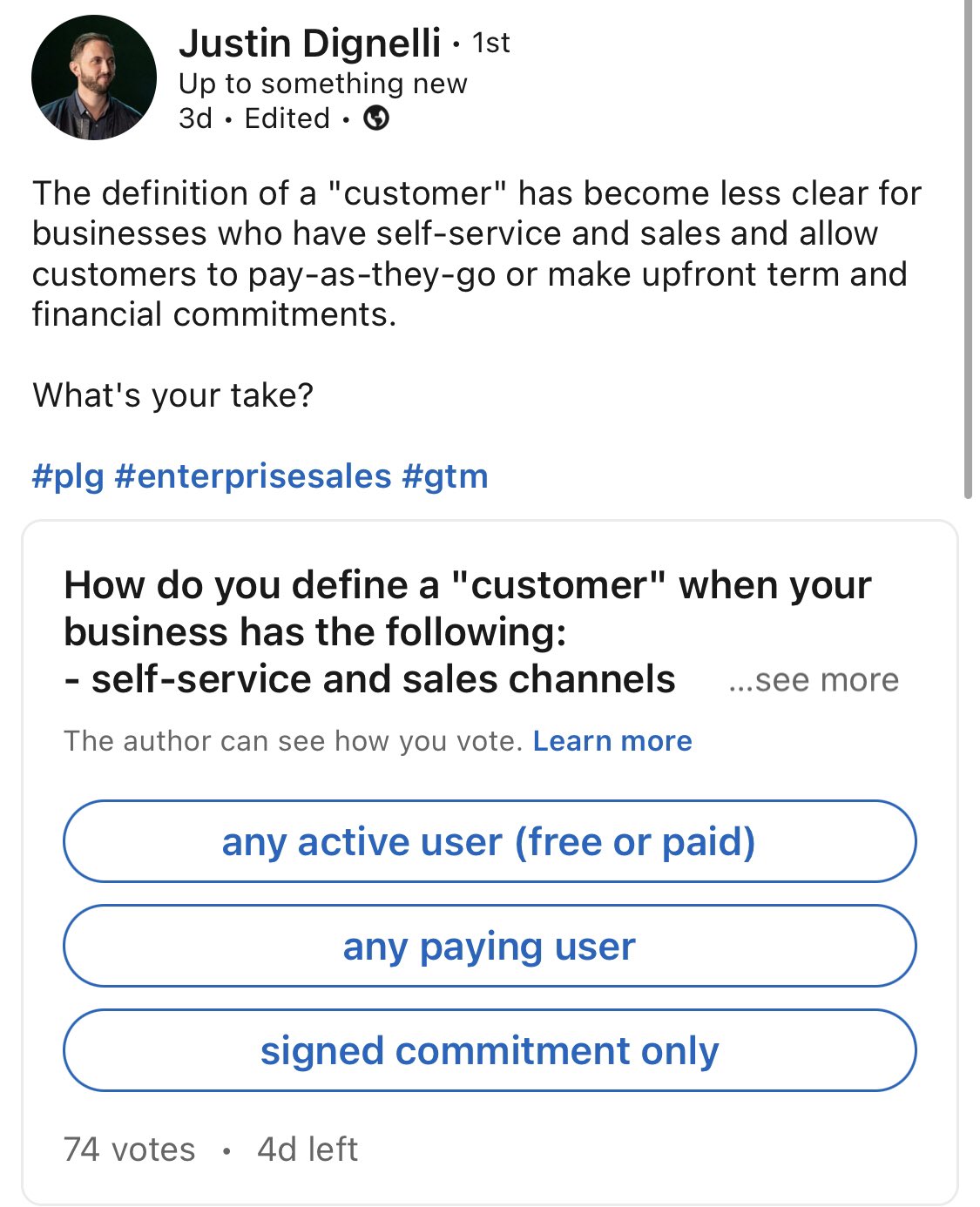
Everyone is in sales. Few do it well. 10 secrets to better selling: 🧵 We're All In Sales: Stop denying it. Whether you are: - Running a company or a household - Raising money or raising children - Writing a novel or a resume You are selling. Every day. You can't sell effectively without adopting this mindset. Accept your role. Sales Is Not A Trait: The traditional view of sales is personality-driven. Salesperson = BIG personality I have tons of charisma...and failed. That's because people buy from people they trust and are comfortable with. Adaptability > Charm Listening > Talking People Buy Emotionally: Buying is not a rational exercise. As humans, we don't like to admit this. It makes us sound intellectually weak. So we feign objectivity. It's a ruse. Don't fall for it. Stop selling features, benefits, and technical details. Start selling feelings. Questions > Answers: You want to prove your credibility to a prospect. So, you start talking. You just lost the sale. People are buying your ears not your mouth. Instead of talking, listen. Ask questions. Let the prospect talk. Show how smart you are by shutting up. Once You Find Pain, Stop Selling: 2 things motivate people to buy: pleasure and pain. Pain is more powerful. Ask questions to uncover pain. When you find it, stop selling anything else. Focus on relieving that pain. People buy their pain and your confidence you can fix it. Go For No: People don't like being pitched. There's a natural distrust, a fear that they're getting taken advantage of. Want the immediate trust of a prospect? Tell them why it's not a fit. Let them tell you why it is. Your "No" = Their "Yes" Always Have A Goal: Most people wing it when they sell. Never pick up the phone, send an email, or start a conversation without a clear goal. And your goal should rarely be closing a sale. Instead, script incremental wins at each step of the sales process. Build momentum. Focus On The Experience, Not The Sale: My team won a big sale last year with a new customer. The story: - Great meeting with a prospect - Prospect didn't buy (not a fit) - Told a friend about the experience - Friend called and bought Bad experiences are just as powerful. Get Out Of The Way: No one responds well to pressure. If you're trying to pull someone toward buying, you're literally standing between the prospect and the sale. The single most powerful thing you can do is get out of the way. Depressurize. Make it okay to say "no." Manage The Internal Noise: Your most difficult customer is always the one inside of you. Self-doubt and imposter syndrome are real. Their voice says: - I'm a bother - They don't like me - They don't need what I'm selling Ask: What if the opposite were true? We all sell. Let's do it better. - Accept your role - Focus on skills, not personality - Tap into emotions - Shut up and listen - Sell pain relief - Go for no - Script incremental wins - Provide a great experience - Don't block the way - Silence the voice of self-doubt Thanks for investing your time in my thread. If it helped you, I'd be grateful if you'd: •Retweet the first tweet so others find it too •Follow me @wdmorrisjr ⏤ it encourages me to keep writing!
Jan 9, 2022Last week I listened to the audiobook Creativity, Inc.: Overcoming the Unseen Forces That Stand in the Way of True Inspiration written by Ed Catmull, one of the founders of Pixar. Some thoughts and things I learned >> 1) First, what is the book? https://t.co/PFxfSXXoug 2) I was excited to dig into this one, because I had previously listened to Bob Iger's audiobook which talked a fair bit about the acquisition of Pixar and the integration. https://t.co/VvCpfo0OsX 3) Let's dig in. Ed Catmull had an engr background & had wanted to be an animator. He says his art skills were not good, so he was unable to become a Disney animator. Disney offered him a job in Imagineering (which many incl myself would've loved) but he turned it down. 4) With his CS chops, after his PhD, he set out to become an animator via computer graphics and he set up a computer graphics studio to attempt animation. A rich benefactor funded all of this research. 5) Eventually he found a job at Lucasfilm to do the same thing. But George Lucas eventually had to make budget cuts and decided CG animation wasn't a priority so he shopped that dept around looking for a buyer. 6) No banker or VC was interested in buying this studio. Except eventually Steve Jobs personally took an interest in this. He paid Lucasfilm $5m for the rights and injected $5m into Pixar company to be spun out as an independent entity and he owned 70% of the business. 7) Although this sounds like an amazing investment in retrospect, Pixar was floundering. They were trying to sell hardware - machines that other ppl could use to make animations and then could later make their own movies. But there was no product-market fit. 8) Eventually they signed a contract with Disney to make Toy Story. As the release of Toy Story was approaching, Ed praises Steve Jobs for encouraging them to go IPO right after the movie launch. 9) Steve believed that the hype from the amazing movie would be beneficial to an IPO road show, and that would help them raise a lot of money so they could a) have more leverage in negotiations with Disney and b) have more buffer in such a capital intensive endeavor 10) In fact, beyond the initial $5m investment into the company, Steve had to inject a lot more capital into Pixar before Toy Story just to keep it alive. That is amazing faith from an investor. 11) Going IPO was the right business move, because they negotiated hard with Disney after Toy Story. Disney inevitably wanted to work with Pixar again, but this time Pixar could demand a lot more. 12) Despite this interesting history, a lot of the book talks about setting up company culture and learnings along the way. Eventually, we all know that Disney later came back and bought Pixar & the book talks about culture, M&A, and leadership. 13) Some interesting tidbits -- in doing Toy Story 2, the story wasn't quite right, and they only realized this once a lot of the movie had been created. With that lesson, they create braintrust who would work with each movie to provide their critiques. 14) As such, Ed talks a lot about giving feedback. They train their people to embrace feedback and emphasize that feedback is about the product not about the person. This is obviously a hard thing to engrain in company culture but impt. Every startup should do this too. 15) The braintrust at Pixar also doesn't offer solutions. They just provide feedback on how they feel about the work. It is up to the respective movie teams to fix it. In some cases, fixes were very minor but in other cases, fixes could involve changing a story almost entirely. 16) For Monsters Inc, for example, they changed the premise for why monsters scared ppl. They changed Boo several times from an older kid to an adult back to a little girl. Stories could go through large changes. 17) As such, their workflow is to have many storylines in the works because it's unclear if/when any of them will get to production. 18) For Toy Story 2, when they started over, they made their team give up their lives to make this movie so that it could make the release deadline. After that, the braintrust became impt to create quicker / tighter feedback loops so they wouldn't have thrash in redoing a movie 19) Ed talks about how when he was tasked with helping Disney animation around (post-acquisition of Pixar), he realized that there were many things about their culture that had prevented them from creating stand out movies the last decade. 20) Disney animators were not rewarded for taking risk or speaking up unlike at Pixar where direct feedback from anyone was impt. Ed didn't want to make Disney animation like Pixar, but that was an impt part to change so that Disney animation could come back. 21) On the whole, the Pixar story is such a fun one for me. Great lessons in this book about: -creating a culture of feedback and risk-taking -mgmt lessons -the Pixar-Disney story
Jan 8, 2022In 2006 I was meeting with Jeff Bezos to discuss acquiring Audible when he described their founder Don Katz as “a missionary, not a mercenary.” I later learned Jeff got this framing from John Doerr, and it struck me as a good distinction when evaluating people. Here's a 🧵: Most great founders are missionaries. Starting a company requires a level of commitment that lends itself to missionary zeal. Of course some founders are primarily motivated by money, but mercenary founders tend not to build lasting companies, opting instead for a quicker exit. Missionary founders also care about making money, but they are primarily motivated by a higher calling. The mission of the company means something to them in their bones. They truly believe in serving their customers, improving people's lives, putting a "dent in the universe." I remember my new hire orientation at Amazon in 1999. They shared a letter from a customer living in a rural village in Eastern Europe who was grateful to have access to books. We left with stickers that read “Work hard. Have fun. Make history.” I remember thinking, Let’s Go! Chris Cox delivered a new hire orientation speech at Facebook religiously every Monday talking about the evolution of communications from the printing press to the internet and social media. Cox’s missionary speech left everyone in the room with that same feeling, Let’s Go! But you don’t even have to believe in the mission of the company to be a missionary. Early in my career I joked that I could be happy selling widgets because my higher calling was to lead people by giving them a sense of purpose and being part of something bigger than themselves. My mission was to be a leader, and I was open-minded to the shape it might take (I almost started a log furniture company before coming to my senses). I wasn’t talented enough to play pro sports or be in a rock band, but in business I could inspire teams to achieve greatness. I also bring a missionary zeal to deal-making. Mercenary negotiators try to grab every last bit of value leaving the other party with as little as possible. I intentionally leave value on the table to build lasting partnerships (Zuck was more amenable to this approach than Bezos) Missionaries take the long view. When you expect to work for a company for a decade or more, or you’re negotiating a partnership that is designed to be durable, it frees you up to optimize for long-term value creation over short-term value extraction. Bezos once explained why all employees got stock options. When he was young his parents owned a rental home, and one Xmas the tenants nailed their tree to the hard wood floors. “An owner would never do that to their house, and I want everyone who works at Amazon to be an owner.” He also defended Amazon's stingy compensation (compared to Silicon Valley) by explaining the reason to work there wasn’t because you might get rich, but because you had the opportunity to build something. He created a culture and org structure that attracted missionary builders. Mercenaries put their own interests ahead of everything else. They will optimize for their own success even if it’s worse for their team, their company, etc. They view everything as a zero sum battle to extract the most value. They are short-term greedy, not long-term greedy. Yet mercenaries can be very effective at their jobs. Money is a strong motivator, and a talented mercenary can produce great results. But they aren’t as much fun to work with, they are always transactional, and they don't engender deep loyalty. An executive who worked for me at Facebook felt he deserved to be included in the company's inner circle but was being left out. In one of our performance reviews he told me he viewed himself as a “hired gun.” He quit a year later and only lasted 3 years at the company. If you look around your organization, you’ll be able to distinguish the missionaries from the mercenaries. It’s fine to have talented mercenaries on the team, they will work hard when properly motivated. But when building a leadership team, always hire and promote missionaries.
Jan 2, 2022How do you become a great board member? It's a question I've been pondering. Here's 5 tips from a great book I just finished "Boards that Excel" - a 🧵 1 - Show up and do the work. Was surprising how often in the interviews in the book, the 1 advice was make sure you actually do the readings, understand the business, show up at the meetings. Do the work of a board meeting. Didn't realize that wasn't table stakes. 2 - Boards govern - managers manage. A common mistake is board members get too into the weeds and into the actual management and operations. Boards govern & give advice and input. But in the end, management do the work & make the calls. 3 - Most important job is hiring & developing the CEO & aligning their incentives. 4 - A key part of the value of the board is just forcing the cadence function around monthly reviews, quarterly board meetings, & annual budget planning. Majority of the value of the work is in the preparation of the work for the board (not the board's feedback on it) 5 - Focus on the "vital few" versus "trivial many" - as board members you are there to provide input on the vital few decision (key hires, strategic decisions, dealing with crises) but not in the many items that pop up constantly in operating. P.S. The author B. Joseph White is pretty fascinating as he has been on Fortune 500 boards, large private boards, university boards, & non-profit boards P.P.S. - it's a great read - check it out - https://t.co/VLI3ZsbSOB
Dec 20, 2021(1/10) There’s a lot of focus on high-level financial metrics in SaaS right now I want to zoom in on the unit economics and the go-to-market strategy that I look for in a SaaS investments. Those don’t get discussed enough. Let’s talk about “bimodal go-to-markets” (2/10) A Bimodal Go-To-Market strategy is when a business runs both a freemium and an enterprise GTM strategy at the same time. This is hard to do, because they are two entirely different “muscles.” But if you can get these both humming, if you can thread this needle…look out (3/10) On one end, Enterprise sales is a people-heavy endeavor with incredibly high Customer Acquisition Cost (CAC), but high Life Time Value (LTV) b/c the accounts are bigger Freemium, is a product-led motion, with low CAC and…here’s the kicker, potential for high LTV (4/10) Freemium products are simple in functionality to facilitate low-friction adoption The Q, then, is how do you move people up to enterprise? If you can pull that off, you’ll have low CAC and high LTV You can put a dollar into the machine and get 8 out. Pretty legit. (5/10) With no Enterprise tier though, you’re stuck in a purely scale strategy. Acquiring millions of cheap users with no way to monetize them like DropBox. The key is the have both, the Freemium door in, and the Enterprise hook. (6/10) There are two types of Freemium, rivers and pools. Rivers are a flow through of users you hope to monetize with Premium. Pools are Freemium users who you can monetize in their own right, with premium as a cherry on top. Classic example is Pandora vs Spotify (7/10) The reason pools are better than rivers is that pools keep users around, where as river users churn - up or out, so to speak. Pools can be monetized, and the company has an incentive to continue improving the product instead of gating features to drive upgrades. (8/10) Another benefit of having both Freemium and Enterprise is that you can defend against disruption on the low end. All of those VC funded start-up are going to try to eat your lunch, and Freemium allows you to provide a simple, easy-to-adopt, offering to the market. (9/10) The way to make this work is the build Enterprise features that are differentiated and worth paying for. As they become commoditized by the market, treadmill them down into the Freemium tier. And from the bottom, build strong product and human motions to upgrade. (10/10) TL;DR Bimodal GTM creates low CAC, high LTV, high retention, expansion opps, defense against disruption, and more. Basically the holy grail. But it’s really fucking hard. Two separate competencies. Two different motions with different unit economics. Divided focus.
Dec 18, 2021 Original deleted — preserved here99% of PLG companies, from 1999 to 2022: Year 1: "We'll never have a sales team at all!" Year 7: "How quickly can we scale an enterprise sales team" @patrickmoran @Calendly
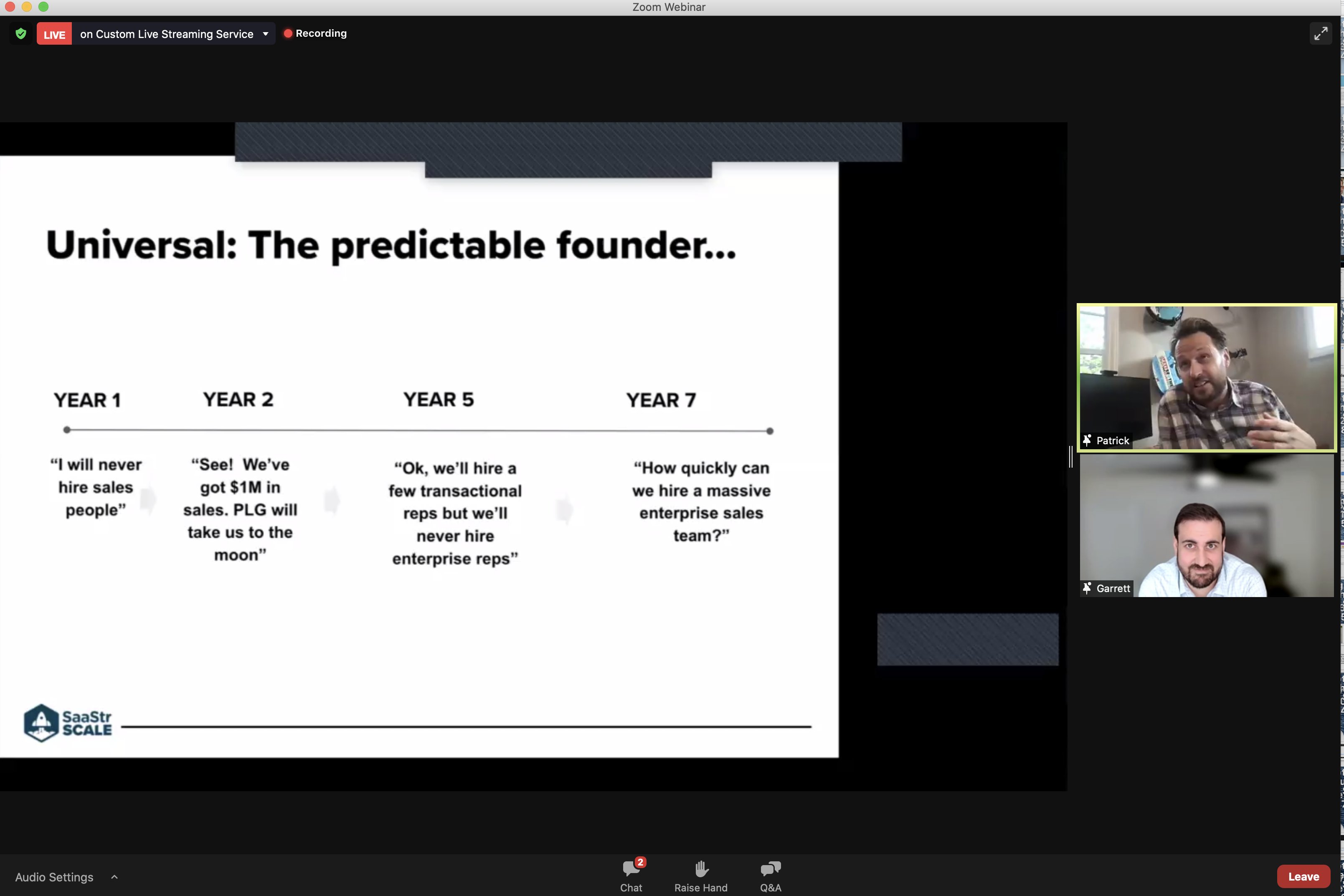
I’ve hired 100+ people in the last 3 years. It’s f***ing hard. In the process I’ve spent 2,000+ hours, traveled to 20+ cities, and had multiple executives back out after verbal commitments and signed offer letters. 👇 Here’s 5 lessons I wish I knew when I started 👇 1) The Profile - 'Nothing More, Nothing Less' ⬆️↔️⬇️ Look for people who've already accomplished what you’re trying to achieve in the next 24 months - nothing more, nothing less. Nothing more—Folks who've achieved a much greater scale have a hard time remembering what it took at this juncture. Nothing less—You want people who've already seen your next chapter. Someone going down this path for the 1st time adds a learning curve you don’t have time for. 2) Work with recruiters 🔍🔎 To hire great people, you need someone who can spend the time needed sourcing for the role. The fees suck. It doesn’t feel right initially. But a great recruiter will earn the $$ and significantly cut down the time it takes to find someone great. 3) Follow a Process 🔄🎢 Here’s mine: 1. Intro + Vision - you selling them 2. Domain Expert Evaluation 3. Product Demo 4. Peer Interviews - 1-2 other peers 5. Board Blitz - strong board members call them & share their excitement 6.Get on a plane & close them 4) References are stupid. Don’t ask for them. 🙃🙄 Backchannel their abilities instead. Ask to speak directly to their manager, peer, & direct report from their last 2 companies. By identifying on LinkedIn who EXACTLY you need to speak to, and asking the candidate to connect them with you, you will understand how good they really are. This eliminates noise. 5) Offer & Close 🚀📈 Get on a plane and go see them to present the offer. Explain how them joining the company will result in a billion $ opportunity. Make sure they leave thinking, “I will regret this the rest of my life if I don’t do this, won’t I?” Thanks for reading 🙏 If you enjoyed and found this helpful please like/rt so others can learn from it as well. Also, I constantly write about things like this -- for more, drop a follow @lukesophinos
Dec 14, 2021It’s day 1001 at @tryramp. In 1000 days, Ramp became the fastest growing corporate card in America (and the first to try to help customers spend less), scaled to nearly 9 figures in revenue, and did so at sustained hypergrowth (20%+ MoM growth). What was our playbook? 👇 1. Count the days. In our first board mtg w/ @rabois, we put the day since founding. It became core to our culture. It’s scary to measure days, but when you ask hard questions ("How will we do more these next 60 days than the last?"), you grow. Time moves, make each day count. 2. Hire for potential. My cofounder @karimatiyeh says “We hire for potential and growth trajectory, slope over intercept. We make bets on people. The goal is not zero defects, but 10x potential.” Find up & comers like Samay https://t.co/SmfsrPfl0v & Pavel https://t.co/pO5D5niz1M 3. Seek rising stars. Today @packyM is one of the internet’s favorite writers. But did you know that @tryramp was one of the first to sponsor @notboringclub? When you find someone great, try to partner. They might blow you away: https://t.co/jzZjfegz6J, https://t.co/fRiGMAblQb. 4. Bet on partners; let them bet on you. Don't build it all inhouse. Bet on partners; help each other win. These are some favorites: https://t.co/MD85QwMdRT. It's why @tryramp became @stripe's largest investment and Marqeta granted us stock. Our approach: https://t.co/dbBpl0NPBv 5. Dashboarding and data analysis needs to be a core competency of leaders. The playing field evolves so rapidly that it is impossible to steer the ship without a working compass. Qualitative hunches are often wrong. Follow the data. https://t.co/FfWtmr6UoT 6. Actually care about your customers. Many competitors rely on outsmarting customers. The card industry incentivizes customers to spend more than planned (to earn points), and then quietly devalues points. Ramp stood out doing what others never did - help customers spend less. 7. Be kind. I look for two things when hiring: determination and kindness. Most companies fail. You want a team determined to make each day count. But determined people dont always approach problems identically. Find kind ones - they resolve conflict by uplifting not outsmarting 8. Unlock your team’s potential. 1000 days ago I was 33% of headcount. I'm 0.4% today, and dwindling by the week. A CEO’s job is like a coach - hire well and unlock your team’s potential. I've loved reading Frank Slootman (https://t.co/IbpmhpwabY), Bill Walsh and John Wooden. 9. Send updates to investors and customers regularly. They put trust in you, empower them with information. Take time to help others feel connected and many may try to help you succeed. A group empowered with context, real asks and consistency can snowball. Here’s an example. 10. Have fun. We're a hybrid company. At the start of the pandemic, we were 16 people. Today we’re 225. Work happens online and we invest in community, friendships, and offsites to make this an incredible shared experience. I can't wait for the next 1000 days with this team.
Dec 13, 2021In today's market capital is no longer a moat. You can raise a billion and your competitor will also raise hundreds of millions. Don't assume for a second capital is going to give you an edge! There are WAY MORE investors than there are companies to be funded DoorDash had way less capital than Uber for a very long time and every year many investors assumed Uber was going to take it all Having less cash made DoorDash excellent at operational execution and turns out that is a significant and enduring competitive advantage to this day and for years to come Today there is no question they are the market leader And yet we continue to have articles that think capital is the warning shot https://t.co/p4rH6wz9lv
Dec 11, 2021Fast-growing SaaS companies add more new revenue in current year than all the years prior put together Hard to be 100% prepared for that
Dec 8, 2021Steve Jobs killed BlackBerry. By creating a cult and inventing new rules Here's the breakdown and why it matters👇 In January 2007, Mike Lazaridis and Jim Balsille are probably sippin a coffee sitting in their frosted glass office when they see IT. IT is the moment Steve Jobs reveals the iPhone to the world. Mike and Jim don't know yet... But the BlackBerry is doomed. Apple's "Jesus Phone" would soon take over the world. Mike and Jim are the co-CEOs of BlackBerry at the time. And they initially aren't worried about the iPhone. Here's why👇 There was "no threat to the core business" Because BlackBerry prided itself on 3 things: - Security - Efficiency - Functionality the iPhone had none of these. Instead, the iPhone was beautiful. Jobs didn't care that the battery drained in 8 hours. He didn't care that it was slow. Or that it crashed the wireless networks. And people may have hated it. Early on Jobs even shows a reporter the iPhone's touch-screen keyboard. Reporter: “It doesn’t work" Jobs stops. The reporter kept making typos and said the keys were too small for his thumbs. Jobs smiles and replies: “Your thumbs will learn” But instead a cult is born. And Apple sells 1 million phones during the summer of 2007. Here are 3 reasons why the iPhone takes off while the BlackBerry fails👇 1) The Infrastructure Problem When the iPhone launches, Apple teams up with AT&T. And cuts a special deal. At the time, BlackBerry couldn't stream videos or surf the internet because it was slow and expensive. And carriers like AT&T and Verizon wouldn't allow it. But Jobs does it anyway: "There was a point where AT&T by changing the rules, forced all other carriers to change too. Apple reset expectations. Conservation didn’t matter. Battery life didn’t matter. Cost didn’t matter. That’s their genius." - Mike Lazaridis, BlackBerry 2) Functional vs. Viral Beauty A BlackBerry was secure, efficient, and functional. But will you tell everyone you know about secure and functional? Nope. No one brags about boring. Instead, the iPhone was beautiful and magical. It looked like the aliens of 2100 came back from the future. An iPhone made you feel like you were part of a club no one else knew about. And when you join the cool club, you want to tell everyone you know. Virality is beauty's cousin. They are related but aren't quite the same. 3) A Crappy Counterpunch So BlackBerry is in panic mode. They team up with Verizon and launch an iPhone competitor called Storm. The original timeline to launch is 9 months. at 15 months, they finally ship it. And the product sucks. It is slow. It is glitchy. And Verizon demands $500 million to cover their losses. This marks the beginning of the end for BlackBerry. The Takeaway: Apple surprises BlackBerry with the iPhone by doing the opposite. A BlackBerry is functional → an iPhone is beautiful A BlackBerry is efficient → an iPhone is extra A BlackBerry saves battery → an iPhone wastes it So what can we learn? The opposite of a successful product isn't failure. It may just change the world. If you learned something new, retweet the 1st tweet to share with a friend! https://t.co/vN8KIIOieI Follow me @chrishlad for frameworks, systems and business breakdowns. Also join 5,000+ others that get threads like this via email 1x per week! Subscribe for free in 3 seconds here: https://t.co/Zr6gAK3oP0
Dec 7, 2021[new post] I wrote about how marketplaces can determine what take rates they can set and sustain https://t.co/00WRQqrzor
Dec 7, 2021Is that new sales rep going to make it? It can be so hard to tell for sure during an interview process In the early days, until you have a great VP of Sales, it's your job to figure that out Here are 8 Signs of a Sales Rep That Isn't Going to Make It: 8⃣⬇️⬇️ 1/ Immediate, massive discounting Mediocre and failing sales reps do this because they have no other idea how to close a deal or create urgency. Discounts don't create urgency, they create agency. They get the deal from the red zone to the end zone. 2/ Don't truly understand the product. Way too many AEs don’t even really understand, let alone use, the product they are selling. They don't know how to tweak it, configure it, sell to different personas, and more. Early reps have to be product gurus. And evangelists. 3/ Fear of the competition. This is different than respect. The best salespeople deeply respect the competition ... and see it as a challenge and game to beat them. Especially to beat them when sometimes maybe they’d otherwise deserve to lose. 4/ Blame others. Sales is hard. It's a lot of No's and a lot of pressure. So failing reps, when they come up short, they blame marketing, or the leads, or the lack of support. It’s usually all true in part ... but still a sign when it's too much blame. 5/ No updates, or the same update again and again and again. A terrible or even mediocre salesperson just plain has no updates to share. They're quiet in team meetings and deal reviews. 6/ Bad mouths their boss. This accomplishes nothing. It’s really another type of excuse. 7/ Doesn’t know a lot about their top deals. A bad salesperson doesn’t know who their key buyer is in a big deal. Or who the other stakeholders are. Or how far along the deal is. Or if or when it will close. This is more common than you'd think. Ask. 8/ Doesn’t believe. It’s really hard to sell a product you don’t believe in. Sales is hard enough as it is. And the competitor is always better somewhere. It can be easy to stop believing. But a rep that doesn't believe, can't sell. A bit more here: https://t.co/XvAT9L3hWp
Dec 6, 2021We started Laskie by sending 150 DMs to hiring managers on Twitter. 110 of you responded and had conversations with us. Many became pilot customers. A couple months after launch, we're doing $10m GMV + $2m revenue. Twitter is amazing. https://t.co/H3TZEvdvP8
Dec 3, 2021My life strategy: + Have a clear vision and objectives. + Develop strong feedback systems to self-correct. + Run as many radical experiments as possible. Outlier ideas are more likely to yield outlier outcomes. + Have no fear. Society’s change antibodies attack outlier ideas.
Dec 1, 2021 Original deleted — preserved hereI’ve interviewed and managed over 2,000 people. Here are my 55 contrarian observations about humans. A thread... (1/x) After about 3-hours socially (18 holes of golf; an NBA game) of 1-1 time with you, people will feel they know you well enough to trust you with money. Some people will tell you they want to be entrepreneurs but never will be. They never get past the perceived risk. People who choose distorted self-portraits for their social media profiles always have distorted worldviews. Companies perform better when they have an enemy, real or imagined. If your company doesn’t have one, you need to invent one. When firing/breaking up with someone, they never hear anything after "We're firing you." It takes a follow-up meeting to have them retain any details. (Though any firing that's a surprise means you screwed up as a boss.) Body language is too often ignored. Someone walk hunched over? They likely have low self-confidence. Someone have shifty eye movements? They’re probably shifty. Most people asking for advice really don’t want to have their mind changed. (If you find the person who started telling entrepreneurs to “ask for advice when you want money”, please connect me because I want to beat their ass.) People way overestimate the accuracy of their memory. If you run into confusing behavior, look first for an evolutionary explanation (procreation, safety, etc). Everyone sees the world as the director+star of their own film. Explains a ton of self-centric behavior. To understand people, you must understand their “lens” to perceive the world (micro vs macro, past vs future, creativity vs rules). If you listen closely, they tell you through their speech and thought patterns. People are either mercenaries or missionaries. You get to decide which you to recruit. Unethical and evil people also think they’re right and justified. That’s what makes them so dangerous. Most people go through life sadly unaware they get to control their own thoughts and their reactions to them. You should be vigilant about cutting negative/stupid people out of your life. No reason to feel bad about it. Life is too short to deal with assholes or people that are frustrating. Consumers will lie to you about what they want. You have to pay attention to their actions to get the truth. Using psychological tricks for positive aims is entirely acceptable. Using it for evil is not. (See Cialdini: Persuasion) Becoming a student of human nature is the highest ROI business activity you can do in business and life. All starts with asking "why?" someone did something you don't understand. Associate with introspective people. They grow their decision-making ability all the time. This means they have high potential. A segment of the population is wired to think you’re scamming them no matter what you do. People will usually overcompensate the opposite direction for their parents' shortcomings. Ex: Dad was volatile? The kid will be a peaceful dad. People naturally teach the way they learn. So, watching someone teach a skill can tell you how to teach them. People need 10 compliments to offset each criticism. People naturally assume everyone shares their values. You can tell mature people because they've learned it’s better to just let other people be wrong. People overestimate the accuracy of their memory. Vast majority of people function best when organized in a hierarchy. Most people just want to be told what to do when big decisions come around. This also just looks like them following the herd. People are lumpy in terms of strengths. Your mission to help people align their roles with their super powers. Oppositely, every human is bad at some things. Your must identify your weaknesses and craft a life/role that minimizes dependency on them. Most people are blissfully unaware they are entirely empowered to control their thoughts and how they react to them. Peoples perception of “an acceptably long time” increases as you get older. 5 years to a 20-something is big. Nothing to a 50-year old. In an interview situation talking about their experience, no person can keep up a line of bullshit for more than 2 hours of questions. They always slip up. Adults make new friends through shared activities, interests, or beliefs. If you don't have any of those in common, find another candidate. Middle age is when you know what things are truly uninteresting to you. And you can double down on the interesting stuff. 60-something men are the hardest group to change their worldview. Better off not trying. To predict a person's chances of future success, look at their track record. The group most likely to be lazy are those that got big inheritances. No group is more risk averse than 70+ year old female widowers. Behind every CEO spending a ton of time in public, there exists a quiet executive COO getting stuff done. We all end up as some variation of our parents and grandparents. We are a Frankenstein-like creation made of their good and bad characteristics. We are all playing "characters" on Twitter. Nobody here is their real self. (Especially the people who are going to reply "Yes this is the real me!") The saying "opposites attract" is true for marriages that last. (This is also why two celebrity marriages almost always fail. You can't have two narcissists in a marriage that works!) Dad jokes serve an evolutionary purpose. They teach kids how to speak concisely and how to identify BS. People overestimate the fungibility of intelligence. Being smart in one thing doesn’t mean you’re smart in other things. Bad reputations are usually justified. Of course, don't be prejudicial. But, if someone has a bad reputation, there's often a reason you should find out before trusting them. Great CEOs set high standards to develop high-performing teams. Humans adapt more often than not to them. In knowledge work (as defined by Drucker), workers make decisions all day long. Good judgement requires intelligence. Any hiring process should have an intelligence measurement in it. People overweight grit to predict success in business. It's essential for high performance, but grit without smarts and skills goes nowhere. People undervalue the importance of appearance for success. The highest ROI thing you can do for your kid's future? Braces. People love to overcomplicate things. It’s a self-defense mechanism to make yourself valuable in a social group. It usually ends up poorly. People are wired to find religion whether God is involved or not. If you spend time with those with faith in Tesla, crypto, eth, bitcoin or Elon -- it's immediately clear that religion hasn't actually gone anywhere. Magic happens when you can pay people for *results* and not time. People will naturally hire people who think like themselves. As a leader, you have to encourage leaders to create diverse teams in terms of strengths, weaknesses and viewpoints. Or it won't happen. If you want to save more, remove all of money but the minimum from your checking account. This trick will unconsciously make you spend less. You can give out business secrets and tricks like crazy on twitter with no concerns. 99% of readers will think you’re full of it. And keep doing things like they always have. That's it. 46 years of being a student of human nature in one thread! What did I miss? Also if you think others should see this, RTs if the first post are appreciated! Wow this thread went viral, eh? If you liked this thread, you’ll love this thread about my biggest life mistakes. https://t.co/VWKYgxFNjV (Also, give me a follow @girdley to see more like this!)
Nov 26, 2021After more than 1,000 board meetings at Microsoft, Airbnb, LinkedIn, PayPal, and more... I've learned that effective boards don't happen by accident. Here are 8 rituals of the world's best boards: 👇 1. Be inclusive. Many board meetings are dominated by one or two board members. The best boards seek out the opinions of everyone in the room, not just the loudest. 2. Fundraise proactively. Most boards reactively raise money when the company runs out of cash. The best boards proactively plan for fundraising opportunities like market shifts and inbound offers. 3. Advise, don't pilot. The worst boards can break a company by dictating priorities. The best boards take a hippocratic oath of "do no harm". They aren't pilots. They're front-seat advisors. https://t.co/qdCXZT16qB 4. Hire for cofounder mindsets. The best boards understand this secret to hiring great executives. People with a cofounder mindset are willing to take risks when success isn't guaranteed. 5. Invest in relationships. Hollywood idolizes board meetings as the place where crucial decisions are made. The truth is the best ideas, collaboration, and feedback happen outside the boardroom in informal 1:1 meetings. 6. Tap into individual superpowers. Everyone has a superpower — a unique combination of skills, experiences, strengths, and networks. The best boards leverage the superpowers of individual board members, to help the company navigate threats and unlock opportunities. 7. Send personal emails. How would you feel if you got a personal email from someone on the board of your favorite company? The best boards send personal emails to help the company sell, hire, and raise money. 8. Think big. The best boards are the CEO's biggest cheerleader. They inspire the company to stretch the limits of what's possible. Airbnb famously did this by designing an 11-star experience for guests. https://t.co/RwZSl6vETW You don't have to wait until your company is as large as Microsoft or as ubiquitous as Airbnb to create a world-class board of directors. Start today. I’ve turned these 8 rituals of great boards into a set of tools you can copy and use. https://t.co/3hXb8HBobT
Nov 18, 2021How do we get all the ambitious college grads going into consulting/wall street to go into tech instead? It's perplexing they don't, given tech is often more creative, impactful, & it competes financially. What should an initiative aiming to re-route all that talent look like?
Nov 14, 202112 months ago, @MentorPass asked if I would take $1,000 per hour to talk with founders who want to pick my brain. Today, I've done 100+ hours of paid calls with founders and marketing teams, around the world. Here are 8 common revenue-generating tactics that brands miss: Drive traffic to landing pages, instead of your homepage. Prospecting traffic to your homepage does nothing to educate a customer on WHY you're worth trying/buying. Send traffic to landing pages where you can educate and leverage social proof. https://t.co/f3dQQYFGIp Stop selling, start storytelling. When advertising, don't sell "WHAT" you're selling... sell "WHY" Use your copy and creative to explain how your product will benefit the end consumer. @hint is not flavored water. It's a solution to your diet soda addiction. Collect reviews & ratings properly. If you're selling, at all, you should have a reviews widget like @GetOkendo live on your site to collect feedback. Then leverage it properly across Facebook, Google Search/Shopping, and anywhere you're searching for customers. Optimize your website conversion rate. Whether you built a $100,000 custom site, or you're using a free @Shopify theme, minimize the clicks it takes to convert, while increasing education along the way. More clicks = lower conversion rate. https://t.co/5mJ4ctDdd6 Start using TikTok. TikTok isn't just for the kids! It's a source of insane traffic when you nail it. Whether you post videos that go viral, or you seed product to 60 creators and 8 go viral, it's easy to acquire customers through the channel. Oh, and TikTok is free. Use the right DTC tech stack. There are so many options for what to use when it comes to any kind of software, many of which will rip you off. Using the right software can look good on your balance sheet, but also make your performance dollars work harder for you. Run customer surveys. When you don't know what product to launch next, how to message different use cases for your items, or why churn is sky high, ask your customers! You can use tools like surveys or go barebones and use the Q&A or polls feature on Instagram stories. Sign up for my weekly newsletter. Every Sunday I send an email breaking down new tactics, going over case studies, dissecting things that worked/failed. It's read by some iconic brands & only takes 5 minutes to read. Oh, it's also free. Sign up: https://t.co/1Csy9kspNd If you like straightforward and easy-to-implement eCommerce tips, tricks, and hacks, you're in the right spot. Give me a follow for more content like this: @mrsharma If you found this thread helpful, please give me a retweet 👇 https://t.co/ZwZAo5oiNQ
Nov 13, 2021In the past month I've had 4 founders tell me they wish they had a Board or wish they had a stronger Board to push them & feel like their companies suffered bc they didn't. 2 of them are unicorn companies where the founder has multiple seats + 1 investor director 1 of these is a very strong series D founder- didn't realize the company wasn't growing enough / growing margins fast enough to raise a Series E; rounds B-D came easy (compelling narrative), and company was hot enough that they only had 1 board member. Founder wishes that he had more people on the board to keep him in check. Another example from above is a seed co that raised a party round; the founder feels like there wasn't anyone who actually cared enough to push the founder in the right ways & company has stagnated More companies than ever are raising from hedge funds, other founders or other non-VC entities, even at later stages. There are some obvious advantages (faster decisions, less dilution, etc.) but also downsides (less time to help, less guidance on what is market, etc) The power shift from investors to founders is mostly good there are some not-so-good implications too... if you're a founder, be sure that you have people keeping you in check. It doesn't have to be at the board level but I've found it most effective there.
Nov 12, 2021SCOOP: @expensify's IPO could make nearly all 140 employees paper millionaires, after the company surprised them with a 10% stock grant on listing day. "I think I'll just hold on to it," one employee told me. https://t.co/AIelvRNLMW The announcement came just weeks after a revolt at Mailchimp, where most employees had no equity in the company when its founders made billions in a megasale to Intuit. via @thebenbergman https://t.co/dQzW922lex
Nov 11, 2021"There's a mythology that exists in people's heads when they join an organization that tells them it was built by smarter, better people in the past. To that, I say, “Are you kidding me? You're way fucking smarter than the first ten people we hired.”" https://t.co/O7ov627RmS
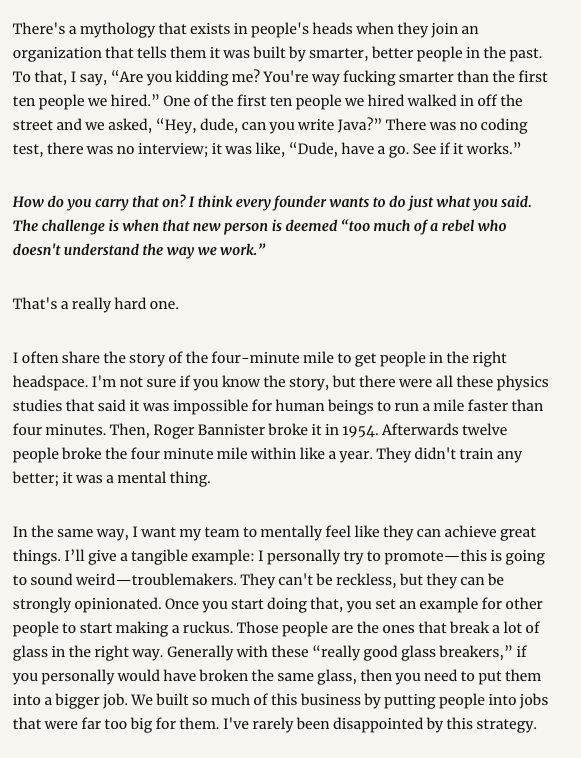
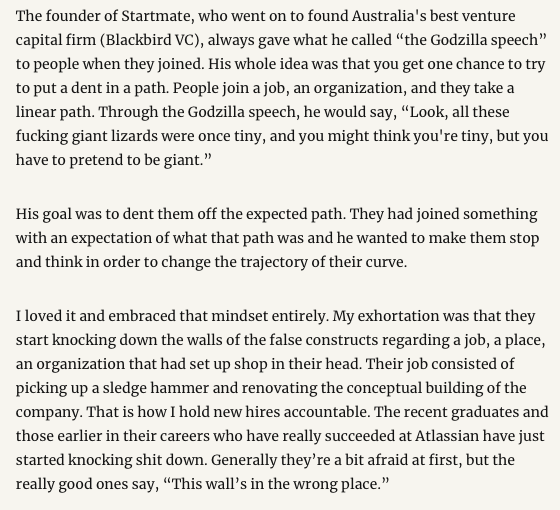
John Doerr on importance of learning sales: "my mentor advised me, “John ... you’re going to succeed or fail based on your ability to motivate others to get sales" "Consultative selling, solving real technical problems is a very high calling. https://t.co/ub7Dl0hGx5 One of the entrepreneurs I work with, Jini Kim at Nuna, says, she reminded me, “John, when you’re backing the leader of an enterprise software company, be sure that leader loves enterprise selling, because it sets the tone for the entire rest of the organization.”
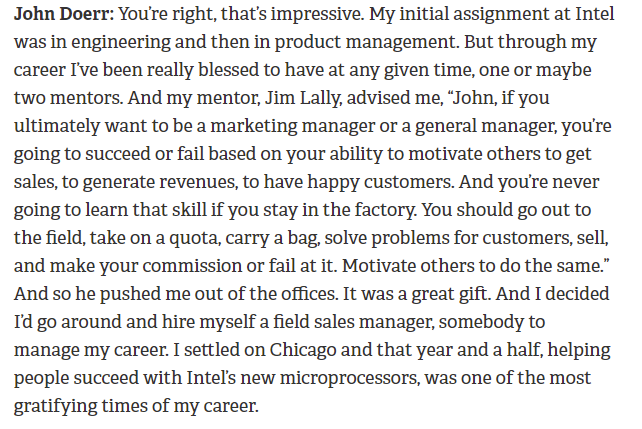
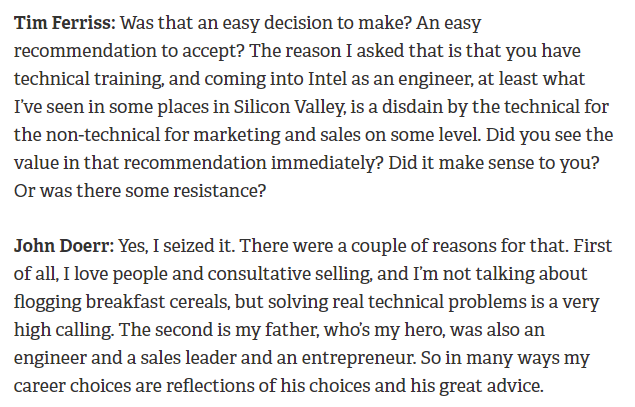
I keep a list of everyone I've ever worked with in my career who I want to work with again: previous employees, co-workers, investors, contractors. 50% of our team came from this list. Our lead investors came from this list. 15 names down, 70+ to go. Play the long game.
Oct 22, 2021The tool I’m most impressed by lately is @NotionHQ. They get funding and just continue to build awesome features, making it a knowledge work powerhouse. Compare this with companies that see VC money as a way to fund their decade-long vision without shipping in the meantime. https://t.co/uTtKtU4BfJ
Oct 19, 2021A mental model I stole from someone for thinking about products that have a service/human element to them: Does this get better or worse as more people use it? Better? You're building a product. Worse? You're building a service. I think about that almost every day now.
Oct 6, 2021How to identify the best B2B software? Investors must separate the wheat from the chaff. Who is in the know? Developers with firsthand experience! Here's a list of tools I use 🧵⬇️ 1) Gartner Gartner Peer Insights provides firsthand experiences to help purchase decisions. You can select companies based on size, industry, or geography. Below is an example with $TWLO in the Communications Platform as a Service Market. Gartner Magic Quadrant positions players within a specific market, using a uniform set of criteria. 🟦 Leaders: Great execution and vision 🟦 Visionaries: Great vision but still behind 🟦 Niche Players: Small or behind peers 🟦 Challengers: Great execution but may lack vision Below are examples of the Gartner Magic Quadrant. Highest ability to execute: 🟦 Ad Tech: $GOOG $TTD $AMZN 🟦 Digital Commerce: $SHOP $ADBE $CRM 2) Forrester Wave A guide for buyers considering their purchasing options in a technology marketplace. Participants: 🟦 Analyst. 🟦 Research associate. 🟦 Customer references. 🟦 Vendor response team. Below is an example with Cognitive Search, showing $ESTC, $GOOG, and $MSFT. 3) G2 Crowd G2 is a marketplace that helps businesses choose software. It provides a grid similar to Gartner for each category. Below is the G2 grid for Marketing Automation with $HUBS as a leader. A quick look at a company profile on G2 Crowd can provide context on how popular a product is. Below is an example with Project Management software that includes $ASAN, $SMAR, and $MDNY among others. 4) PEAK Matrix Assessment Everest Group offers a similar grid. It breaks down: 🟦 Aspirants. 🟦 Major Contenders. 🟦 Leaders (and Star Players ⭐️). Below is the matrix for Robotic Process Automation with $PATH and $MSFT. 5) DB-Engines Rankings The DB-Engines Rankings rank database management systems according to their popularity. The charts are updated monthly with trend analysis. Below is the top 10 that includes $ORCL, $MSFT, $MDB, $IBM and $ESTC. 6) Trust Radius TrustRadius is a review site for business technology. TrustMaps are 2-dimensional charts based on: 🟦 Review score. 🟦 Research frequency by prospective buyers. Below is an example for Collaboration Tools with $MNDY, $MSFT, $GOOG and $CRM Slack. 7) Capterra Capterra helps businesses choose software. They offer a buyer's guide with features, trends, and price range. They offer shortlists of top tools by category. Below is an example with Digital Signature software with $DOCU as a leader.
Oct 6, 2021If you’re a SaaS marketer, you need to study Airtable. The SEO & growth strategies they used become a $5B startup and reach 1M users are so impressive. Here's a few things you can learn from them 🧵 Every month, an estimated 10-15M visits hit their Airtable's website from various sources. Organically (SEO) more than 245k people reach the site through search. That’s a lot of people. One of the major attraction spots on Airtable’s website is the templates landing page: Here's some key metrics: The templates rank for 16.4K organic keywords Attracts over 9500 visitors each month The organic traffic value is $42,000 Meaning... You would have to pay Google $504,000 to capture that much traffic through PPC a year. This is why SEO is important. 1) EMBRACE SEO DRIVEN TEMPLATES Airtable recognized that templates are highly valued, especially in B2B, so they created a bunch of them. I always say: "People love templates. It’s a cheat code to adulting." And Airtable's been able to leverage this to perfection. Riches are in the niches and the sale is in the long tail. Airtable has templates for long tail phrases like: > Social Media Calendar > Job Search Template > Recipe Database > Book Database > Personal CRM > Lease Tracker > Trip Calendar This drives a ton of long tail traffic. 2) SPEAK DIRECT TO YOUR AUDIENCE Another thing Airtable does right is creating audience oriented landing pages. Visitors can self-identify with the niche and industry that they’re working in. Talking about someone’s industry is the B2B equivalent of saying someone’s name. 4) EMBRACE VIDEO FOR SEARCH Google is the most popular search engine in the world. The second most popular is YouTube. Some people learn by reading. Some people learn by watching. Airtable's YouTube is filled with product demos, API walkthroughs and product marketing assets. Airtable's YouTube channel is estimated to generate about 44,000 views per month and is growing by +800 new subscribers per month. Not all Airtable's videos are found via YouTube though. People are finding these videos directly from Google. 5) INJECT SOCIAL PROOF ON YOUR SITE Got traction? Good. Tell people about it. Scream and yell at the rooftops how your product helps Netflix, Expedia, Medium and more. People want to be in good company so showcase the brands you work with to build trust. 6) CREATE CASE STUDIES THAT AREN'T BORING One of the biggest mistakes SaaS companies make is creating case studies that aren't written with a story. Whether it's a TV series on Netflix or a case study - People resonate with stories. Airtable does this well. 7) INVEST IN CREATING BACKLINK DRIVEN CONTENT Backlinks are still important. No, you're not going to rank for high value keywords after buying 500 links on Fiverr. But if you can create content worth linking & do content distribution. The returns will be significant. If you enjoyed this thread subscribe to my newsletter where I share stuff like this weekly: https://t.co/2eHHwOI2Vn And follow @TheCoolestCool + @FoundationIncCo for in-depth breakdowns like this. If you’re a SaaS marketer: You should study Monday dot com. The SEO, brand & growth strategies they used achieve a $5.7B market cap and reach 152k customers is so impressive. It's a masterclass really. Here's a few things you can learn from them 🧵 Every month, an estimated 18-22M visits hit their Mondays website from various sources. Organically (SEO) more than 525,000 people reach the site through search. That’s a lot of people. One of the major attraction spots on Monday website is their blog. It gets 140K+ visits. Monday embraces the 3Es. Content that educates, engages & entertains. They: - Educate you on using their product, being a better project manager and so much more - Engage you with unique creative, stories and design - Entertain you with humor and inspiration It's everywhere. The blog is a collection ranking for ridiculously valuable keywords. Here's some of them: > Project Management > Content Calendar > KPI Meaning > Project Plan > Gantt Chart > Raci Chart You would have to spend over $500k in PPC per month to capture the traffic they get via SEO. The blog post ranking for 60+ keywords associated with 'project management' is SEO excellence. Here's what they do right: > Aligns well with search intent > Keywords in the right places > It's a true guide on the topic > High density of keywords > It's over 4000 words The Monday team knows conversions matter so they include CTAs throughout the blog post to drive sign ups. Let's do an exercise: Average contract is $2k. Assume .5% of all visitors convert. This blog post gets 9,500 visits a month. That's 47 new customers = $94,000/mos in rev. The Monday dot com YouTube channel has more than 96 million total views on their video library. Content that educates, engages & entertains. The account has: 49.9K subscribers 96M views And is in the top 10k YouTube accounts for views. Amazing right? Most SaaS brands still rely JUST on blog posts to educate their customers on how to use their features. Monday leans heavily into YouTube videos and is seeing some great ROI on the back of it. This quick tutorial on project management in Monday has over 120k views. The key to a great product-driven SEO strategy: - Help your ideal customers solve problems - Include time stamps when appropriate - Create content that is educational - Add chapters to youtube videos - Create eye catching thumbnails - Catch attention quickly - Add the keywords The constant growth of internet advertising has put significant pressure on traditional advertising. This is where opportunity can be found. And Monday is capitalizing. They've ran bus, transit and billboards all to drive brand. This year they even ran a Super Bowl ad. It doesn't end here though: The content marketing masterclass carries over into their intentional effort of driving ROI through comparison pages that go after competitors. Monday vs. Asana for example is a search term that has a $23 cost per click and 1,900/mos searches. Monday capitalizes on bottom of the funnel traffic by creating blog posts that target competitors and optimizing their presence on sites like Capterra. The result? It's estimated that nearly 10% of all referral traffic to Monday comes from Capterra. The Yelpification of B2B is very real. Sites like G2, Capterra and TrustRadius have captured enough value in the Google SERP to force organizations like Monday to pay attention and encourage their users to give them reviews on their platforms. https://t.co/nRZMRRPXeH I'm convinced that the growth that Monday has had over the years is related to their marketing work. Their growth in the enterprise is a SaaS marketers dream. And I've gotta say it: This is what happens when: Great branding meets a good product. Brand is underrated in SaaS. Want more insights like these? Want more strategy tear downs? Subscribe to the @FoundationIncCo newsletter. We deliver content just like this and more: https://t.co/dS2jQw5wPW
Oct 5, 2021Sam Walton, the hedgehog founder: Including kids and employees in the compounding: How Walton broke the first invisible asymptote. He figured out the price volume virtuous cycle, while having no serious competition. Big moats are built in absence of competitors taking you seriously: Willing to cannibalize and reinvent:
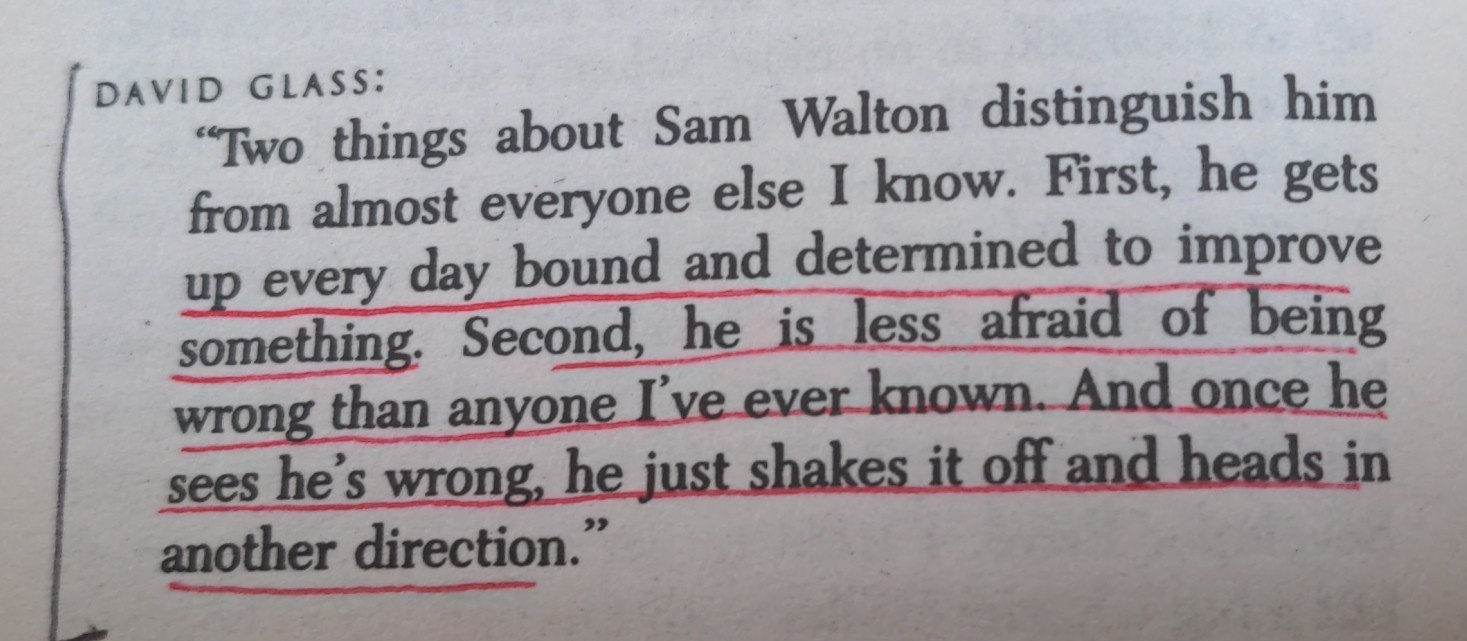
The biggest lesson I’ve learned in building a $4B company: It’s all about the people. I’m thrilled to announce today that Bolt is the first tech unicorn to officially shift to a 4 day work week. Here’s why we did it and how we came to the decision 👇👇👇 @naval has a philosophy on work that describes it best - Work like a lion, not a cow. What does that mean? Cows graze all day - slow pace, same activity, day in and day out. This is how most jobs are set up. But what if we worked like lions? Short bursts of energy, high intensity and then rest and recover for the next sprint. High performance isn’t about how much you put in; it’s how much you get out. Cue: the 4 day work week. At Bolt, we fundamentally believe that we can get MORE work done at a HIGHER quality in a 4 day week. Here were the 5 main principles that guided our decision: Principle #1: Increased Balance Leads to Increased Output The biggest problem with remote work wasn’t people working less. It was people working WAY too much. We flipped the script. Why? Because when your team is healthy, your organization is healthy. Principle #2: Clear Minds Lead to Better Decisions A company is nothing more than a sum of its parts. The bigger you get, the more parts you have. When you have more parts, it becomes even more important to take care of each part. Let’s take a puzzle as an example. Think about a puzzle with 1000 pieces and each piece has a tiny chip. Doesn’t look like a big deal, until you put the whole thing together - it’s a disaster. Each teammate has to be taken care of so they can play their part in the bigger mission. Principle #3: Increase the Intensity Just like a clear mind leads to better decisions, so does a focused mind. With a four day work week, we can feel confident going ALL IN on those four days. We can truly give it our all. It’s so energizing to work when everyone is all-in. When making this decision, we asked ourselves a simple question: What if we made every week like our annual Bolt Lightning Week? This is our highest functioning week out of the year. The team got *chills* thinking about what we could accomplish. Principle #4: Tired Kills Creativity Think about what happens when you’re tired. Most people say: “your standards go down.” True, but I think something more dangerous happens: you look for the path of least resistance. Creativity is a linchpin of what has allowed us to grow 18x in 18 months. It’s an internal force multiplier. The 4 day work week allows us to keep that coefficient high. Principle #5: Interesting People Make a Stronger Team A 5 day work week barely allows enough time to take care of the necessities. An extra day gives our team more time for their interests. These experiences and perspectives will flow through the collective Bolt heartbeat. I believe a 4 day work week isn’t an “if” for most companies, it’s a “when.” In true Bolt spirit, we didn’t wait around to follow others - we put our money where our mouth is. I’m honored to lead the company this way and can’t wait to share the results along the way. To learn more about Bolt’s Conscious Culture, follow @consciousorg. If you enjoyed this tweet, give me a follow @ryantakesoff. I tweet about lessons learned fundraising, building and operating a $4B+ business. Let’s take off together! A Conscious Culture is all about keeping standards of execution high, while still putting the team’s health and well-being first. Now the hard work begins. Successfully scaling with a 4 day work week. I’m confident we can do it. https://t.co/74rWyDpX9c
Sep 23, 2021Think you don't need an enterprise sales team for developer-led growth? Sales headcounts/% of total... Snyk: 141/23% Databricks: 437/20% Twilio: 874/18% Segment: 167/27% AWS: 9,898/12% Stripe: 355/9% A sales team is like sunscreen -- you need it even when you think you don't.🏆 Still not convinced? Auth0: 244/25% HashiCorp: 288/22% Confluent: 313/19% LaunchDarkly: 65/24% GitLab: 289/21% Elastic: 323/15% MongoDB: 673/23% GitHub: 237/8% (not including any of MSFT's 18.5k sellers) ... so start investing in your sales org early. Not sure where to start? I got you. 🙌 https://t.co/k84iWvwN5k
Jun 7, 2021I feel like every time a business quotes their customer acquisition cost... they are pretty much making it up. Lots of creative cost allocation. True or false? Thanks for all the thoughtful response. Fund managers, shit posters, private investors and practitioners. Many thanks and lots to chew on
Jun 5, 2021I'm often asked how a big company might crush a startup. Well it's quite simple really, but few know the process: 1/ The bottoms-up While waiting for a latte at a BigCo cafe, a PM reads a @JoshConstine post of how a startup just raised $2B in a hot space. The PM writes a 6-pager on why this is a $10B opportunity and has coffee with other product teams to get buy-in. This leads to... 2/ The OKR 3 months and 100 coffees later, it's finally time for quarterly planning. Everyone reads the 6-pager and asks: "How will this move my metric?" "Sorry, I have 5 A/B tests to run this quarter." "This is XXXL, have you seen our tech debt?" This leads to... 3/ The moonshot "F*** it" the PM decides. "We'll just build a separate app." The team rebrands as the Moonshot org and ships the app in record time. Sadly, the app fails as none of the teams working on the main app prioritize helping it get discovered. This leads to... 4/ The re-org The PM has coffee with the CEO, who has been reading @PackyM articles about the same trend. The CEO is convinced and decides to re-org five product teams into one just to get this project done. The startup is really screwed now. This leads to... 5/ The copycat The new org ships an exact copycat of the startup's product from 6 months ago. It launches a 7th tab in the main app just to show how serious it is. Unfortunately, the same app is also trying to tackle ten other use cases. Users are confused. This leads to... 6/ The acqui-hire The new org gets disbanded, and the BigCo pays $10B to buy the startup. The founder joins thinking: "Now we can finally scale this to billions of users!" Plot twist - the founder is the PM at the beginning of this story. Such is the circle of life. 7/ Thanks for reading my dystopia BigCo fan-fiction. Follow me and subscribe to my newsletter to see more serious content like this. https://t.co/yz9xcswujF
Jun 4, 2021Jeff Bezos, Barack Obama — and very few others — designed their organizations to get them maximum Return on Attention I knew about Bezos’ silent meetings. 💕 to @samhinkie for showing me Obama’s multiple-choice presidential briefs 10/10 EXCEPTIONAL INFORMATION DESIGN
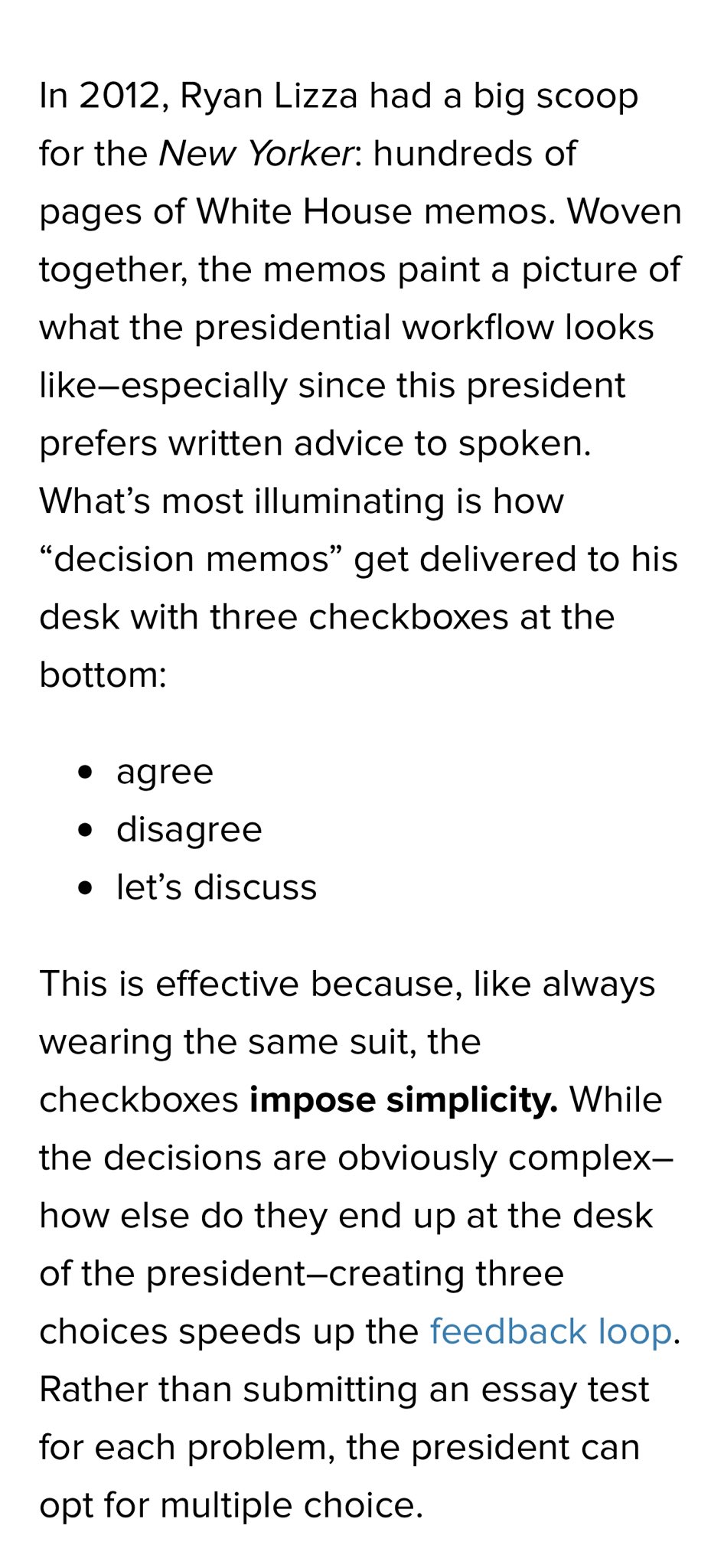
As a founder, here's how I see the pillars + examples 1. Good advice: they bring experience to the table and can help the team get unstuck. Can be generically about the art of company building (@bgurley @bhorowitz), some of it is vertical expertise (@jasonlk @balajis) https://t.co/HqfxEiZmJU 2. Brand halo: they have a good brand that rubs off on yours (@foundersfund @sequoia @a16z etc) 3. Capital scale: for later stage cos, they can mobilize massive resources, fast (@softbank @coatue TGM) 4. Strong connections: they can make strong and hard-to-get intros to customers in your industry, key decision-makers, or key regulators (vertical VCs like @tuskventures) 5. Distribution: they can get you in front of their customers or audience (YC, corporate VC, @a16z, solo influencer GPs) 6. Community: they make the founder journey less lonely by connecting you with others (@firstround @ycombinator @villageglobal) 7. Recruiting support: they are a magnet for talent and they are good at sending it your way (@ycombinator @a16z @SignalFire) 8. Trust: you like them and trust them. You feel like you can go to them when things are tough and get a good perspective. (@TheHouseVC @fubini) From my perspective, any specific type of content, legal support, or software is a dubious differentiator for a VC. Discrete, scalable offerings like this can almost always be purchased using dollars, not equity. From this vantage point, the only VCs that have a uniquely differentiated advantage are either: 1. A massive global brand 2. Super niched down and relatively small Which is to say, VC mirrors pretty much every professional service vertical on planet earth.
May 27, 2021Apple has done 100 acquisitions over the last 6 years. - typically small deals / acquihires to close gaps in specific tech areas - done by internal M&A team, no bankers used - acquihires often priced at ~$3M/eng Good piece on their approach: https://t.co/Bls3WQFo3X
May 26, 2021Definitely agree but this feels like a nuanced topic. Sometimes I see a BigCo enter a market, I see “the chart” and it feels like game over. But it usually isn’t. @TurnerNovak proved me wrong with Snap What are examples of a BigCo launching a new product and killing a startup? https://t.co/SIZO8oLX7g
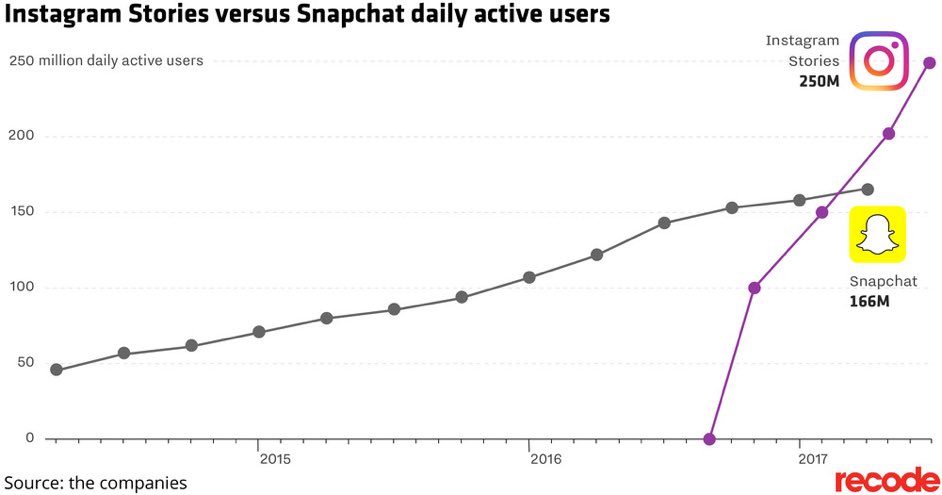
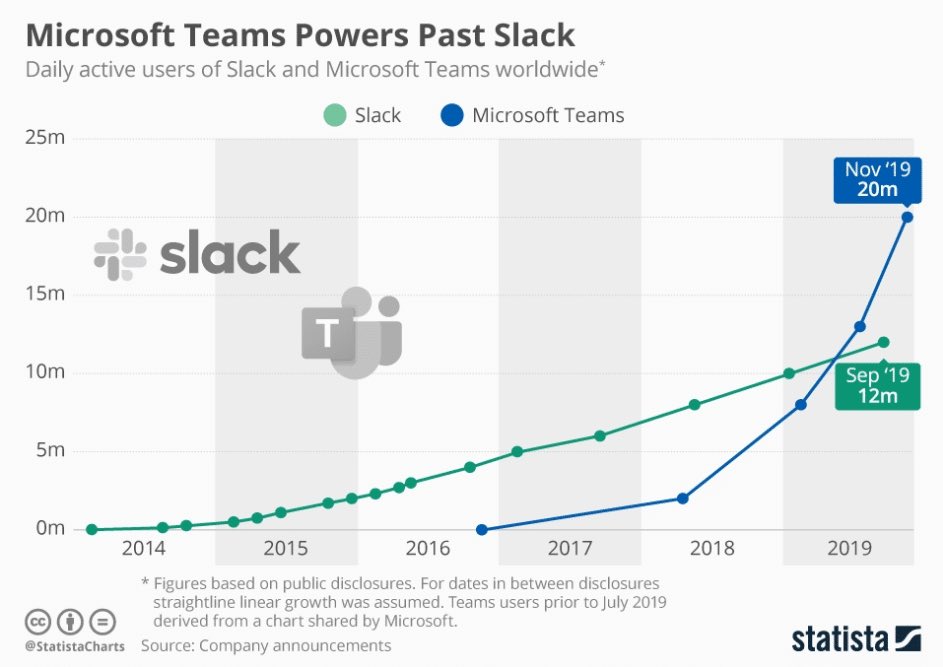
The Irish Pub Company is one of my favorite companies. They charge $1-4m for an “Irish bar in a box.” They’ve sold over 2,000 kits in 6 styles to pub owners in over 53 countries. It includes tables, old Guinness signs, tap handles, etc. shipped in a cargo container.


I recently made a deck on "Sales Management's Moneyball Moment" for an @atriumhq partner event. It was a ton of fun to put together since I love sports analytics and data-driven sales management. Sales nerd chocolate and peanut butter. 🧵👇 In short, sales management is currently at the same shape as baseball management pre-Moneyball era. Very little data-based reasoning to inform changes in team and rep behavior. But there's lots to learn from how analytics and data-driven coaching permeated high end athletics. The Oakland As are a great example, first using data to pick up cheap players who were high performing but undervalued by the market. Well, actually, the degenerate gamblers in Vegas figured it out first to make disproportionate earnings based on better analysis - but the teams eventually got on the data-driven train. Lol. Advanced analytics started in baseball because the data sets were available. Baseball is a slow enough game that it can be "hand scored". There are also 162 games in a season. So that's a ton of data to analyze. When motion-capture cameras made their way to basketball, the data was now available to be analyzed. And the first insight was that 3-point shots were historically undervalued. It turns out that there are some spots where shooting beyond the three-point arc is just as likely to be made as inside the arc. So...maybe we should shoot more of those? When you add in the fact those shots are worth 50% more...your points per shot end up actually being HIGHER beyond the arc with the exception of right under the basket. So...let's rain threes, right? The first team to figure this out and exploit it was the Warriors, of course. But it's not just "Oh, they had Steph Curry." They lined up the whole team around it. Run more plays for more threes. Recruit more players like that. The insight pervaded the entire operating rhythm. And good things happened. They went from a mediocre regional team to a nationally recognized powerhouse. (Turns out, data-based changes can be very good for the success of your team.) Well, eventually others got on the train too. (Well, the coaches and GMs who didn't got fired, and replaced by coaches who did get it.) You can see the acceleration happen in '15 and '16, and then take off. But motion capture technology analysis for game play modifications wasn't just applicable to basketball. It impacted baseball as well (where analytics had initial adoption in the early 2000s via recruiting). Primarily in fielding shifts. It turns out some players love to hit ground balls in the same place all the time (you know this is you visually record and analyze all their hits, season over season via motion capture tech). Soooo...why don't we put all the infielders exactly where those particularly predictable players are going to hit it? Great idea! The teams that had their analytics game tight got on that as an exploit. And not surprisingly, there were a number of folks who couldn't adapt to the new world order and faded away. Whether players who couldn't adapt, or coaches who didn't adopt the new technology and process. Importantly, being data-driven is a muscle that become an ongoing source of advantage. The Oakland As, who pioneered analytical rigor in baseball, are some of the biggest adopters of defensive shifts. OK, well, if the jocks can join the 21st century, I think we in sales land can too, don't you think? Like excellence in athletic coaching, excellent sales management is the primary way of driving high performance. So maybe we should make sales management data-driven?

How Zapier growth hacked SEO The strategies used to grow from 0-600K users in 3 years A thread👇👇 1) Zapier, founded in 2011 by CEO Wade Foster, lets you connect different web applications to perform certain actions without the need of a human (with automation) 2) Strategy 1: Observe Customer Hangouts Foster interacted in product forums. Companies like Dropbox, Evernote, all had forums where customers could make product requests. Foster joined forums and found posts like “I love Evernote, but it would be great if it worked with Dropbox” 3) He would respond with solutions through available API’s or inform them that he’s working on a project to make integrations for their feedback, sending a link to find out more. He got about 20 visitors per link, but had a 50% conversion rate saying they wanted his product. 4) When he had a functioning prototype, Foster Skyped with people, asked what products they wanted to integrate, and he would do it for them. He provided the desired result (what people cared about) while also realizing people were looking for specific integrations 5) Strategy 2: Landing Page Hack Rather than pitching users on the value of integration tools, they decided to leverage their app partners in their integration ecosystem, piggybacking their brands. This became the focal point of their marketing success 6) They did this by creating 3 tiers of landing pages for every app they integrated: 1. A landing page for the app itself 2. A separate landing page for each app to app integration (ex: how gmail connected with Trello) 3. A landing page for the workflow from each app to another 7) If the user was looking for information on the app itself, how to integrate 2 specific apps, or learn more about each app to app use case, Zapier had a landing page ready to capture their intent. This led to a TON of landing pages. 25K pages ranking in the top 100 on Google 8) This formed an SEO machine that was the biggest lever for their early organic growth. Today these landing pages account for half of all search traffic to their main website. They leveraged existing brands and executed a massive SEO strategy at scale 9) Strategy 3: Scaling Content Instead of writing all landing page content themselves, Zapier created a playbook for onboarding and launching new app partners. Part of this process was getting their partner apps to write the landing page content for them. 10) The pages had a template, but the description and summaries of each integration were all unique. Zapier knew each page having unique content would benefit SEO rankings. They created a general template but needed unique content for SEO to work as well as possible 11) This freed up time (heaviest SEO investment) and generated the best content from people who have the best understanding of each apps use case (the creators). Part of the playbook involved app partners writing a post on their blog which helped build backlinks, optimizing SEO 12) Strategy 4: Content Marketing 2 years later, they prioritized content marketing. Partnerships/SEO strategy were working, but Zapier was still fairly unknown. To gain brand awareness they created content around apps, tools, productivity (what their audience was interested in) 13) The first 6 months showed littles results, the next 6 months were a bit better, and a year later great results showed Once the effects of content marketing begin to compound the rewards will be worth it Content marketing was a worthy investment for Zapier 14) Zapier today: - $5bn valuation - 100k customers - $140M revenue in 2021 Key to growth success: - One to one customer relationships - Solid understanding of SEO - Smart systems thinking - Understanding of high leverage If you enjoyed this thread: 1. Subscribe to my SubStack for a more in depth breakdown of Zapiers growth strategy https://t.co/ZmIRez6hGD 2. Follow me @growth_student for a new growth thread like this every week!
May 14, 2021Have you ever been asked a brainteaser in a job interview? That’s a big ⚠️ Research at Google found that brainteasers were in no way predictive of job performance. Worse, this paper finds that "narcissism & sadism explained the likelihood of using brainteasers in an interview.” https://t.co/y1s4eiWqee This paper by @zdon89 finds that oddball questions (What would you do if you found a penguin in the freezer?) are also useless, but that candidates sometimes find them mildly amusing. So, would you rather fight 1 horse-sized duck or 100 duck- sized horses? https://t.co/KNfInz8ItM https://t.co/PWAus2xQ5j If you get asked a brainteaser in an interview, you should demand they answer one in return. I suggest this, which is quite likely the hardest brainteaser in the world. Can you solve it? (No. You cannot.) So if you want to fake it, here is the answer: https://t.co/lNHLHH3EkI https://t.co/ORLuJbBonP
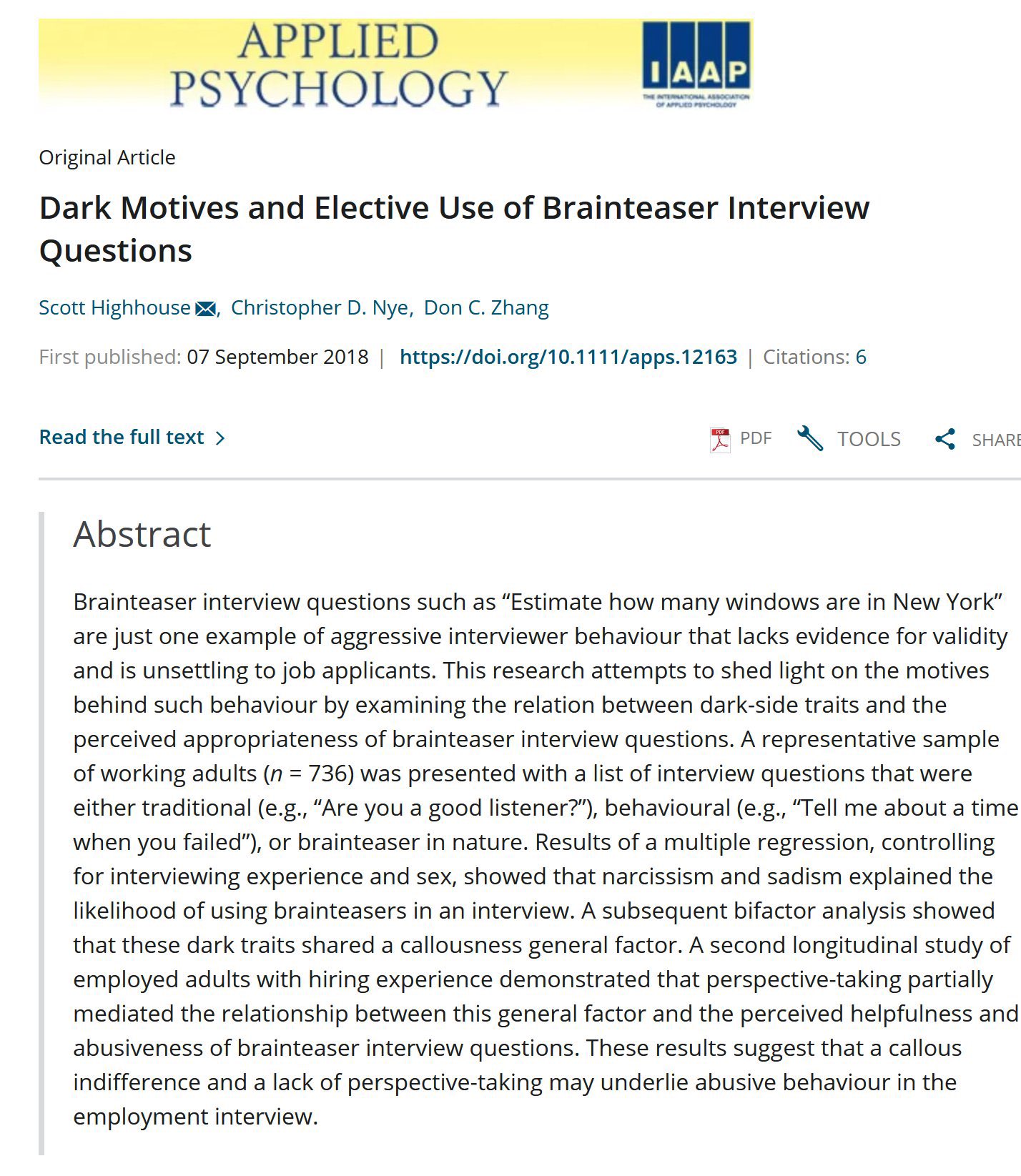
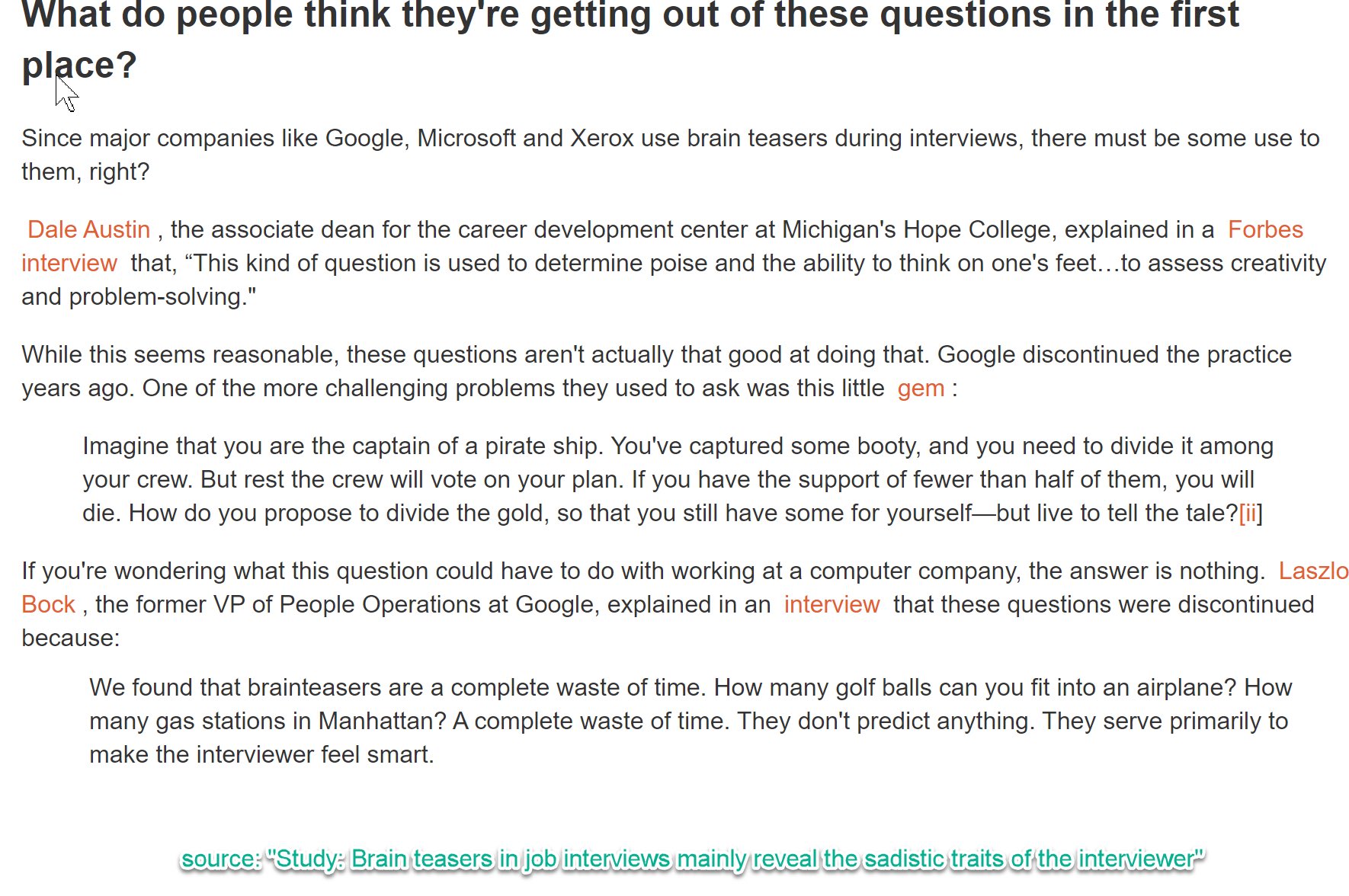
Ever heard of the PayPal Mafia? It's a team of former PayPal employees so prolific that Business Insider labeled them "The Richest Group Of Men In Silicon Valley." After leaving PayPal, many of them went on to build some of the largest companies we now know. Here's the list 🧵 https://t.co/KYNxzfTJS8 1. @peterthiel Peter Thiel was the co-founder and CEO of PayPal. He was referred to as the "Don" of the PayPal Mafia. He earned $55m after selling PayPal to eBay. His net worth is now over $2B. 2. @mlevchin Max Levchin was also the co-founder of PayPal and the CTO. He was called the "consigliere" of the PayPal Mafia. Levchin made $34m from the sale to eBay and then founded Slide. He sold Slide to Google in 2010 for $180m. His net worth is $300m+. 3. @elonmusk Elon Musk was the founder of https://t.co/ko4ymHGK2V PayPal merged with https://t.co/ko4ymHGK2V which made Elon the largest shareholder of PayPal. He made $165m after the sale. He now runs: 1. Tesla 2. SpaceX 3. The Boring Company Net worth: $160B+ 4. @DavidSacks After leaving McKinsey & Company, David joined PayPal as their COO. After PayPal David: - produced 'Thank You For Smoking' - founded https://t.co/5tWufANSzr - social network Yammer - threw a 40th bday that cost over $1m Microsoft acquired Yammer in for $1.2b 5. @stevechen Steve Chen moved to SV to join PayPal as a top engineer. There he met Jawed Karim and Chad Hurley and later founded Youtube. He joined Google Ventures in 2014. In March 2019 he became an advisor to Theta. His estimated net worth is $300m+. 6. @reidhoffman Reid first joined PayPal as their COO and after the sale to eBay he became the VP. He later co-founded LinkedIn in 2002. His shares in LinkedIn are worth well over $2b. Reid has also been an angel investor in over 80 companies. His net worth is $4b+. 7. @KenHowery Ken was a co-founder and COO for PayPal from 1998 - 2002. He started Founders Fund less than 12 months later with "pals" Thiel and Nosek. His net worth is $1.5b+. 8. @Chad_Hurley Chad Hurley joined the PayPal team as their web designer. After PayPal, Chad, Steve, and Jawed founded Youtube in 2005. They sold Youtube to Google in 2006 for $1.6b. His net worth is $350m+. 9. @ericmjackson Eric was the marketing executive at PayPal who went on to write the book "The PayPal Wars." After PayPal, he became chief executive officer of WND Books and co-founded CapLinked. His net worth is unknown. 10. Jawed Karim Jawed joined PayPal as an engineer. He created their anti-fraud system. After the sale, he joined forces with @Chad_Hurley and @stevechen to launch Youtube. Karim launched Youniversity Ventures in 2008 to help students develop business ideas. Net worth = $140m 11. Jared Kopf Jared was Peter Thiel's executive assistant. After leaving PayPal, Jared co-founded Slide, HomeRun, and NextRoll. He has made over 60 investments and now serves as Chairman of AdRoll. His net worth is unknown. 11. @JTLonsdale Joe started as a finance intern at PayPal before moving into venture capital. Since PayPal, he's worked at VC firms Clarium Capital, Formation 8, and 8VC. Lonsdale also co-founded Palantir. His net worth is $400m+. 12. @davemcclure Dave McClure was PayPal's director of marketing for 4 years. He left PayPal in 2004. After PayPal, he had a small run at Founders Fund before launching 500 Startups. He's invested in 500+ startups. His net worth is $5m+. 13. @andrewjmack Andrew joined PayPal in 2001. He worked closely as Peter Thiel's assistant as they prepped to IPO. After Paypal, he helped launch hedge fund company Clarium Capital. He and Peter Thiel founded Valar Ventures together. 14. Luke Nosek Luke PayPal co-founded PayPal and was the former vice president of marketing and strategy. After PayPal, he became a partner at Founders Fund with Peter Thiel and Ken Howery. His net worth is unknown. 15. Keith Rabos Keith was a former executive at PayPal. He later worked at: 1.LinkedIn 2. Slide 3.Square, 4. Khosla Ventures His estimated net worth is $1b+. 16. Russel Simmons Russel was PayPal's Lead Software Architect. After PayPal, he joined forces with Jeremy Stoppelman to co-found Yelp. His net worth is unknown. 17. Jeremy Stoppelman Jeremy joined PayPal as an engineer while it was still known as https://t.co/ko4ymHGK2V. Jeremy eventually became the Vice President of Engineering. After the eBay sale, Jeremy joined Russel Simmons to launch Yelp. His net worth is $150m+. 18. Yishan Wong Yishan was the former engineering manager at PayPal. In 2005, he joined Facebook as a director of engineering. After leaving Facebook, he became the CEO of Reddit. Want more breakdowns and how-tos on your feed? Then make sure to follow @alexgarcia_atx because I'm writing a marketing thread for the next 31 days. (sorry this one wasn't a marketing thread) If you rather get it in your inbox, then 👇 https://t.co/Dazbpj3SEI What an epic photo (missing some) https://t.co/qBlm2zET0b The only team that can compare? The 1992 USA Basketball Dream Team
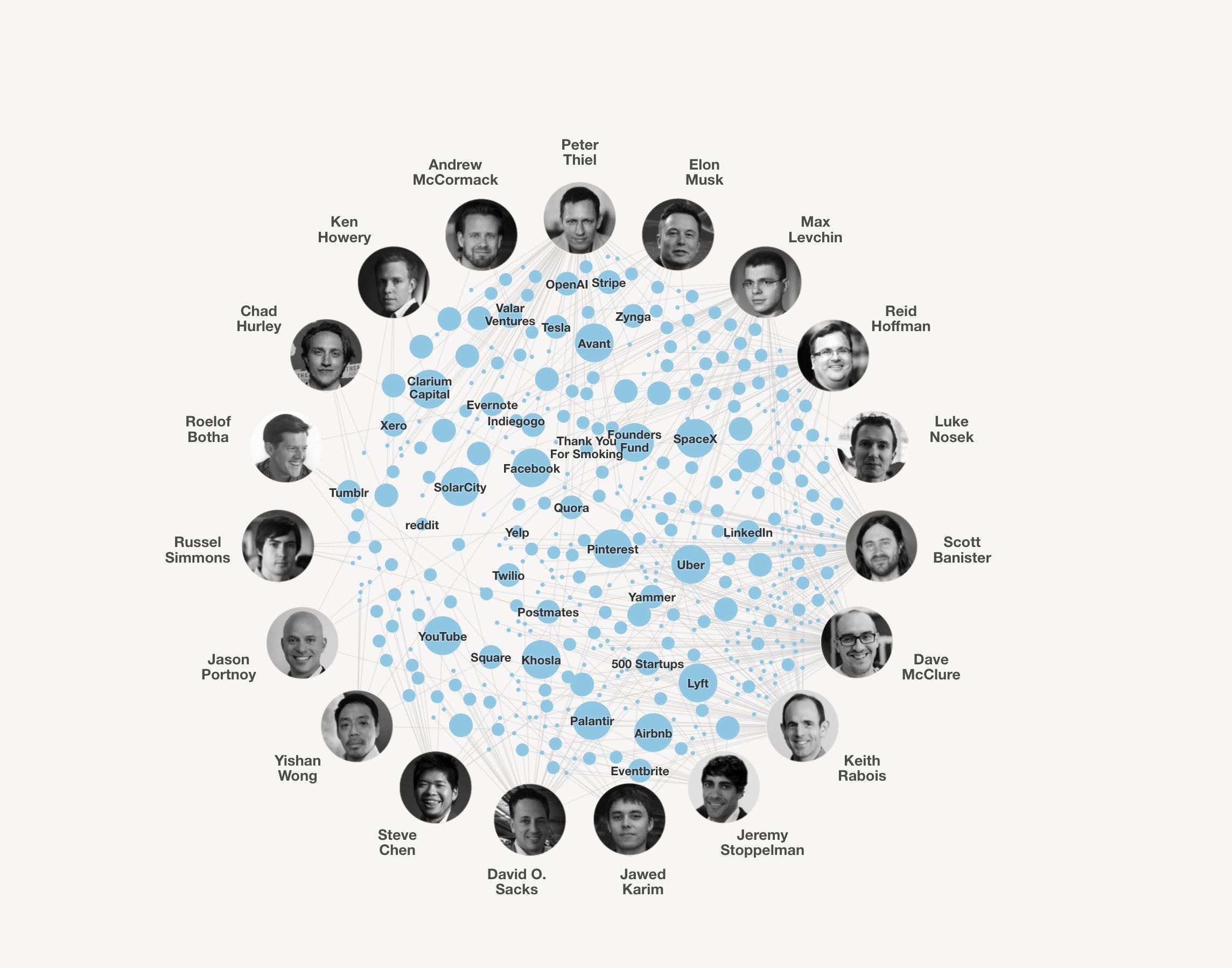
If you're looking for SaaS ideas, I think there's a ton of opportunity in "unbundling" Zapier: Create a single-purpose SaaS app that does the same thing as a Zap. As popular as Zapier is, the vast majority of people have never heard of Zapier. There's also an intimidation factor with using Zapier for the first time. For someone without a tech background, setting up a Zap can seem like a daunting task. If you can make a simple, user-friendly alternative to a specific Zap AND figure out a marketing channel, I think you could build a $10k+ MRR product
Apr 5, 2021Elon Musk personally met with the first 3,000 people that Space X hired to make sure the company was hiring the right people Here's the source, which I found via @tylercowen https://t.co/INWAy5STFg
Apr 1, 2021An underappreciated benefit of working at a large company: Access to a ton of product strategy memos, to help you build your own strategic thinking muscle. There are very few examples of great public product strategy docs (because obviously they include sensitive information)
Mar 29, 2021A B2B Product Management Story: on discovering problems that customers actually care about Very visual story thread👇🏾 https://t.co/SQKpmLtBGC Our story starts with a new product idea PM diligently talks to customers about whether this product will solve their problems https://t.co/fY1ZOmVLWd Customers say yes! https://t.co/5f2d2Q5zQN PM reports findings to the executive team There's excitement Staffing obtained 🙌🏾 https://t.co/33PWKRyz3P Hardly any customer adopts it https://t.co/78aC5l9CBP At the next product review: PM directs attention towards positives: “Here’s what we’ve learnt” Learnings usually include: “Our MVP isn’t sufficient. We need to make it easier to implement & adopt. We need features X, Y, Z” https://t.co/H1iGLPDz6U PM gets mandate to build said features https://t.co/llAVPvroOe Adoption is still anemic😐 https://t.co/WfTzN02TfK At next product review: Sales & Marketing start getting implicated PM says: “We know from talking to customers that we have the right product. We just need to improve our Go-To-Market strategy.” https://t.co/1vpOgz0PY1 Executives & the PM are “pot-committed” at this point. Ideas about how to better sell the product are discussed: reduce prices, cross-sell, bundle, email campaigns, re-organize the Sales team, etc. Changes are made. https://t.co/FGexmnoJns Still no growth😟 https://t.co/ZIddFOqgcL By this time, original PM has left the team A new PM joins. Starts with a “customer listening tour” in first 90 days Identifies some additional issues Presents new findings & recommendations to the executive team Gets mandate to execute on revised plan https://t.co/gmzZaLJCSv Now what? Go back a few tweets Repeat the steps a couple more times https://t.co/vzrnB57hAJ More things shipped Still no growth And then... https://t.co/IeRu3uqET4 Ultimately: Executive team decides to sunset the product Learnings are captured and shared widely in the org "We haven't failed, we have learnt" Of course, Edison is quoted at some point https://t.co/lMnQdw3hqA So, what really happened here? Many possible reasons for this saga, but the most common ones: (A) The product should not have been built in the first place (B) The original product was ill-conceived & the later pivots had to inherit this original error Let's look at (A)👇🏾 https://t.co/NheEGM4MoO The product solved *a* problem But not *the* problem https://t.co/4zzChwg54p Often, product teams want to be in the top right quadrant https://t.co/YgQgxUN1QV But, there's more to the puzzle https://t.co/YnMVJbyo8l We need to understand this And remember it https://t.co/QNqK1Nu3WG Daniel Kahneman said: “Nothing in life is as important as you think it is, while you are thinking about it” This is the Focusing Illusion. https://t.co/xOAA0RD08Z The Focusing Illusion, in business: “Nothing in business is as important as it actually is, while you are talking about it.” https://t.co/2zL1F84iuR When you talk to a customer about a specific problem, they will naturally “focus” on that problem, at the exclusion of other problems they (or their business overall) is facing. With this focus comes a disproportionate emphasis on solving THAT specific problem. https://t.co/qzkedsdcOe A good solution here: Customer Problems Stack Rank (CPSR) Ask the customer to stack rank the problem vs. the other problems they are trying to solve for their business & org. Also get the CPSR from other personas involved: VP Support, VP Mktg... You are now closer to truth. https://t.co/NTCF6KIXM8 The lesson https://t.co/Q4QH9qCacc Huge thanks to @shaunemiller for collaboration on this thread. The excellent visuals are all Shaun. Any mistakes are entirely mine. Consider following Shaun at: @shaunemiller https://t.co/GQ6Jz252KS B2B Product Management Story, in 1 tweet https://t.co/UanC9FeUNa Back to the top of this thread: https://t.co/HIAu8K8IxE
1/ This is the clearest articulation I've ever seen of the purpose of "superapps": "When your app offers more services, customer acquisition cost (CAC) per service goes down, and CAC is the most important cost for Internet businesses." https://t.co/2dzmhUjxEs 2/ "Bike sharing doesn't make much money... But for Meituan, it is a business to acquire users, so the acquisition of Mobike is to acquire their customers. When an entire industry becomes a means of acquiring users for another industry, can you still expect it to be profitable?" 3/ Anyways, this is from a 12-part collection of translated articles from Meituan cofounder Wang Huiwen's PM course at Tsinghua https://t.co/m6xGI0xUqe Net net, one of the clearest and most comprehensive discussions of the tech business that I've ever read
Mar 27, 2021My dad led an organization of over 300,000 employees. When I took on my biggest marketing & events team to date (35 employees) I asked him how the *heck* he did it. Here's what he said and what helped me every day. 🧵 Remember you're leading all the employees under you, but you're not *managing* them all. You're managing your direct reports, which should be 5-7 individuals max. Focus on them. When you interact with the employees you don't manage directly, get to know them as people first, that'll be the most valuable information in leading them. Remembering everything you learn about them is hard, but doing so will make you a superhero. If you're not going to empower the managers under you, why do you have them? If you see room for improvement, let the manager know and let them make the change on their teams and come to you with questions/concerns. This will save you SO much time. If you're the smartest person in any room - you're doing it wrong. As a leader, your job is bringing together the best people to get the job done - your skillset is identifying those people, not being one of them. The quickest way to build loyalty with those you lead is to take all of the blame and none of the credit. Publicly share what you could have done to prevent mistakes made by your team. Privately, help them learn from those mistakes. Loudly promote their individual success. Get rid of "I" and "you" in your vocabulary and replace it with "We" as often as possible. This is one of the easiest tactics that has an incredible impact on how people view themselves as part of a team. You *will* have to make decisions that are unfair and you *will* have to communicate decisions you disagree with. Guaranteed. The sooner you accept that and expect it, the better you'll deal with it when the time comes. What would you add? Or if you haven’t managed or been in a leadership position yet, what questions do you have? #MarketingTwitter #eventprofs
Mar 26, 2021.@zapier built a $140M ARR business on $1.4M in VC that has become the logic layer of the no-code industry. But it has the potential to be something even bigger: the Netflix of productivity. Our report and a thread 👉 https://t.co/0uYru7oEOS We believe @seqouia and @steadfast got a good deal buying into Zapier at $5B. We value Zapier at $7B based on: - 30-50% YoY growth over the next five years - Zapier’s monopoly status in the solopreneur/SMB market - 30-40% YoY growth of no-code TAM No-code is huge and growing, but as @edavidpeterson has written, no-code is about more than tools: it’s about a philosophy that emphasizes interoperability and customizing your software to your needs. https://t.co/UJY6BRtXwl https://t.co/dqcPYLun2Q .@zapier enabled interoperability by building a solution to one of the intractable problems in SaaS: APIs that don’t talk to each other. The product took off and hit $100M ARR in just 9 years, comparable to companies that have raised 100x as much money. https://t.co/0Thk42eRpJ https://t.co/dTnqvSpO3P Zapier was riding an explosion in APIs that started the same year they were founded—2011. Suddenly, every SaaS business wanted to offer its users extensibility, but not spend time figuring out what integrations to build or building them. That’s where Zapier came in handy. https://t.co/YwOmyO13cy With Zapier, companies could write a few simple integrations and immediately be paired up with hundreds, then thousands of other apps. For them, integrating with Zapier delivered value to their users, but it also provided a new distribution channel. https://t.co/DPgiFFxXRJ There’s a parallel here between how companies thought about Zapier and how studios thought about @netflix. Studios thought Netflix was just another distribution channel. All the while, it was becoming a hugely influential platform of its own. https://t.co/ei4FUKxsg4 Like Netflix, Zapier built a growth engine based on content—specifically, programmatically generated, SEO-optimized landing pages for each new integration on the platform. Today, Zapier gets 6M+ site visits per month, more than @Deadspin, @TeenVogue or @Gothamist. https://t.co/tyScq6Gyr7 To the chagrin of some of Zapier’s partners, Zapier advertises their competitors on those same pages. Rather than simply a utility to connect two products, Zapier has become an ecosystem unto itself—a marketplace for applications driving discoverability and setting standards. https://t.co/R2mL84Xa4q One of Zapier's big challenges is the rise of native integrations, with companies bringing their integrations in-house via tools like @trayio and @useparagon to improve the user experience. (See: studios like @Disney building apps like @disneyplus) For SaaS companies, sending customers away to Zapier to wire up their own integrations is bad UX. There’s a world where companies, optimizing for activation, build the handful of native integrations that are most valuable in-house and outsource the rest. https://t.co/YwmX7BuhP7 In some verticals, companies are taking on Zapier by building automation solutions that do a better job with the JTBD in a specific market, like @AlloyAutomation or @parabolahq in ecommerce, @LevityAI in machine learning, and other “Zapier for X” companies. Then there’s @airtable, which announced last year that it was building out its own integration platform in a shot across the bow. It turns out the whole “AWZ stack” is an unstable triad, with all three players converging on each other, directly or indirectly. https://t.co/V6ScxvRkrB But Zapier has a secret weapon—a huge audience for whom they are the #1 destination not just for finding integrations but for insights into productivity and lists of the best tools. https://t.co/1mLu4WPGBt If Zapier flipped Airtable’s strategy around, and built a Zapier-native data store to eat Airtable, they would have a huge preloaded customer base and the ability to enable far more powerful and robust workflows from right within Zapier. This would be Zapier’s “Netflix” move. Netflix changed the content game by modularizing TV and movies and getting closer to viewers, and doing so gave them the data they needed to become an original content powerhouse. Zapier has commoditized its partners. The data they get from them on how their products are used is without parallel. They've started building their own version of original content in Zapier native actions. https://t.co/zIYulk3Br9 Now, Zapier has the opportunity to not just pipe its customers’ data around, but own it, and become a productivity super aggregator. https://t.co/LhZvFZFPU4 We go into far more depth in our full report where we break down Zapier’s growth engine, their bear/base/bull cases and the whole competitive landscape for no-code and automation. Check it out here 👉 https://t.co/0uYru7oEOS
Mar 24, 2021Shopify vs Amazon: “There’s a famous story that when Drew Houston was working on Dropbox, everyone he showed it to said ‘There are hundreds of these!’ and he always said ‘yes, but which one do you use?” https://t.co/a5c0txuVXg “Shopify isn’t doing what Amazon does - it isn’t competing directly and it wouldn’t fit inside a competition lawyer’s market definition.... But it challenges Amazon at a very basic point of leverage by doing something different, but relevant.” $SHOPB $AMZN “Amazon is pursuing customers and bringing suppliers and merchants onto its platform on its own terms; Shopify is giving merchants an opportunity to differentiate themselves while bearing no risk if they fail.” https://t.co/gJzcT2jpf5 https://t.co/cyWuIVbAT3
Mar 13, 2021So MongoDB is perhaps the great "commercial" open source success story of all It's now at $700m ARR, growing almost 40% a year! Stunning! 55m downloaded its core software for >free< last year 5 Interesting Learnings: ⬇️⬇️⬇️⬇️⬇️ #1. 2,800 of its 25,000 customers are “direct sales”. The rest (88%) are self-serve The long tail of MongoDB’s customers serve themselves (as one might expect), and sales really only comes into about 10% of deals MongoDB looks for signals for when sales should jump in #2. But when sales does come into a deal -- it comes in big. Mongo now has 98 $1M+ ACV deals, up from 62 a year ago It' mid-market ($100k) customers interestingly haven't grown as fast, perhaps b/c sales doesn't push as hard here #3. Downloads of core free MongoDB >vastly< accelerated in past 12 months. Vastly. Of the 130m total downloads, 55m are in last year alone Cloud is accelerating at a rate none of us predicted #4. Multi-cloud is one of their top accelerants There is a lot of talk of multi-cloud, but how important is it really? Mongo shows very. Mongo expects 98% of its enterprises to be multi-cloud by 2024. #5. 120% NRR. World-class, but a bit lower than some other developer-focused leaders Perhaps a reminder that not everyone needs the 160%+ of a Snowflake or Twilio 120% is a great yardstick if you are like Mongo And a few bonus notes: #6. Not pushing annual contracts so much helped As Mongo scaled up its sales team, at first it had an incentive program that heavily pushed annual deals. It created a lot of friction They stopped having sales pushing annual deals ... and sales went up #7. Professional services is a small percent of their revenue (and are gross margin negative). MongoDB like Salesforce, Hubspot and others has its partners do most of its implementation services. Services are only at about a $28m run rate, and are shrinking. #8. Metrics are back to pre-Covid levels Mongo saw customers belt-tighten after Covid, especially with a slowdown in account expansion. Churn didn’t go up, but there was less account expansion Cohort behavior and dynamics are now back to pre-Covid levels #9. Mongo plans to go back to the office! Mongo feels more junior employees will benefit the most from working together in-person, but isn’t going to force anyone to come back They, like others, will re-imagine the office so some can come to the office a few days a week Wow, what an incredible story 13 years in for MongoDB. And growing 40% at $700m ARR is just incredible. More here: https://t.co/Py8QyTAyM9
Mar 13, 2021Calixa raises $4.25M seed to manage 'bottom up' sales approach https://t.co/7ynzq8qyuB Go @thomasschiavone and team!! Segment users can start using Calixa with just two clicks. Best part? You can replay your historical data too! #BuiltOnSegment https://t.co/8PsqoiOpVk Love it when users see instant value :) @thomasschiavone https://t.co/WOxsaQjf8V
Mar 9, 2021I bought a micro SaaS from @microacquire last year. I started implementing tactics used at my previous SaaS. We're growing, but it's not systemized yet. So, I'm systemizing and building a playbook you can apply to grow any low-touch SaaS. Who wants the playbook? I'll share the process in this thread and wrap it all up in a video course and @NotionHQ template. Here's more context. How do you grow a low-touch SaaS product from scratch without spinning your wheels? Here's some of what I'll cover... https://t.co/txl24qlaQz Like @dvassallo, I will timebox this project to a couple of weeks and build it in public. I love how @JanelSGM organized Podcast/Newsletter OS and will follow a similar format to keep things organized in @NotionHQ. Then, I'll create a video for each section to walk through and apply the steps. https://t.co/cl8nwXt2Ea
Mar 2, 2021Our most direct competitors are Roblox and Minecraft. Few understand this.
Feb 17, 2021The 1 hiring mistake founders make after $1M ARR: A manager instead of a VP of Marketing A manager instead of a VP of Product A manager instead of a VP of Customer Success A player-coach instead of a true VP of Sales A product manager for now, not a VP of Engineering First, the junior hire costs >more< They aren't accretive. They don't pay for themselves. They don't generate more leads. Close more deals. Ship more features. A true VP is accretive. Second, you get burned out A true VP takes 80%-100% of the function off your plate Vs. a junior hire just helps you implement stuff Do not confuse the two This is 1 and #2 of the Top 12 things you'll look back on ... and regret: https://t.co/cZCHsz6kte
Jan 30, 2021Jeffrey Katzenberg is insane (-ly driven) Who Makes Disney Run? (1988) https://t.co/iMJt2GWFe6 Instead of camp, a teenage Katzenberg was learning from NYC politicians ''He was always there, at 2 in the morning, eating everything up, swallowing everything. You couldn't satisfy his intense desire to know every scheme, leadership trick, management technique and strategy.'' https://t.co/wZg4HvCOp9 ''I have rhino skin,'' he says. ''Rejection is part of the process. If I took it personally, I wouldn't know how to get up in the morning. I am so used to rejection that I'm shocked when someone says 'yes.' https://t.co/DD9p37YqVZ "nicknamed Spiderman and the Golden Retriever, because he would bring his masters at Paramount every new script almost as soon as the writer had photocopied the first draft and before any other studio knew about it" "created all-important relationships by having two breakfasts, one lunch and two dinners a day with writers, agents and directors; how, on a four-day vacation in Hawaii, he read 14 script" "If Jeffrey were any more aggressive, he'd be in jail" 600 2-minute calls a week?! "more like 40 seconds" Ted Danson: "His energy is so frightening at first. He's such a little ball of efficiency and energy that you don't want to keep him on the phone." https://t.co/DqezlNIpcM "their stinginess cannot be exaggerated" "emphasis on crafting scripts, passionate attention to detail, seducing young writers into long-term contracts by promising them a chance to produce or direct, ability to cajole or bully actors and directors into taking less money" https://t.co/3ZLsd0gLi2 "All our pictures have a very strong and original idea at the center" "And our pictures buck the trends. We started with adult comedies because no one else was making them."
Jan 27, 2021A thread of 7 things you already know about discovering, testing, and shipping products (but tend to forget at times) 👇🏾 1/ Spending some time upstream to properly understand the problem & the domain will save you from spending a lot of time downstream wondering why people aren’t buying your product. You can’t learn everything upfront, but you can learn many things upfront. 2/ If you are talking to customers with a certain product idea already in your mind, you will usually manage to find great reasons why it makes sense to build that idea. Starting with a blank slate keeps a product manager’s biggest enemy—confirmation bias—at bay. 3/ When you are running an experiment, you need to specify your objectives, success/failure criteria, and decision tree upfront. Without these things, it becomes a Validation, not an Experiment. 4/ If you have just shipped a product, but don’t yet have a way of getting usage data for the product, you have not really shipped the product. You have just shipped functionality. Shipping a product requires shipping a way to understand how people are using it. 5/ For a self-respecting product person, very few feelings are as embarrassing as the feeling of having to tell a reasonable customer that the product does not yet support their perfectly reasonable need. That’s why face-time with customers can be so motivating. 6/ The best way to figure out what’s wrong with your product is to have the people working on the product use the product regularly. Try to get as close as possible to how your users use it. No amount of user empathy can eclipse our self-empathy. 7/ Sometimes, despite rigorous strategy & relentless execution, our product will fail. The failure won’t define us & won’t matter in the long run. But what we choose to learn from it will define us & will matter in the long run. Learn a lot, share a lot & you will succeed a lot Back to the top of this thread: https://t.co/sLc49INmR4
Jan 23, 2021Audience Building 101 Every company in the world is an audience company. Whether it's a Media, VC, or DTC business, if you're not building audience Day 1, you're not prioritizing the right things. Here's my framework for thinking about & building a killer audience 👇 I call it the Audience Funnel. The concept is simple, but it allows you to... 1) Think strategically about building your own audience 2) Analyze the relative strength of other companies' audiences 3) Understand the similarities & differences of different audience channels The Audience Funnel is divided into three tiers, which include: 1) Rented Audience 2) Owned Audience 3) Monetized Audience https://t.co/6WG3tHSoAa Tier 1: Rented Audience 𝗪𝗵𝗮𝘁: This is your top of funnel. It allows you to build mass awareness & is key for developing a relationship with your audience. 𝗣𝗿𝗼𝘀: High shareability, high discoverability 𝗖𝗼𝗻𝘀: You don't own your audience https://t.co/MZQzptDVjl Examples of Rented Audiences - Social networks (IG, FB, Twitter, TikTok) - Video platforms (Twitch, YouTube) - Search engines (Web content) Examples of Businesses with Big Rented Audiences - @BuzzFeed (Instagram) - @GoPro (YouTube) - @charlidamelio (TikTok) https://t.co/BcLry4yeKV Tier 2: Owned Audience 𝗪𝗵𝗮𝘁: This is your opt-in audience. It allows you to build a deeper, more intimate relationship. 𝗣𝗿𝗼𝘀: You own the relationship with your audience. 𝗖𝗼𝗻𝘀: Low shareability, Low discoverability https://t.co/iP2JBUjGAX Examples of Owned Audiences - Free newsletters - Free podcasts - Virtual events Examples of Businesses with Big Owned Audiences - @MorningBrew (Newsletter) - @tferriss (Podcast) - @salesforce (Event) https://t.co/Gk0rl3Tjeg Tier 3: Monetized Audience 𝗪𝗵𝗮𝘁: This is your highest intent audience. This allows you to extract value from your audience directly. 𝗣𝗿𝗼𝘀: Extends LTV of best customers 𝗖𝗼𝗻𝘀: Difficult to pull off, must be done with existing owned or rented audience https://t.co/cRXRVcot7C Examples of Monetized Audiences - Paid newsletter - Paid web subscription - Membership - Commerce Examples of Businesses with Big Monetized Audiences - @something_navy (Apparel) - @nytimes (Subscription) - @MrBeastYT (Burgers) https://t.co/frhrOR2prq That's the Audience Funnel... Now, here's how to think about it with your own audience: 1) Rented Audiences aren't inherently bad. You must leverage them responsibly. Use the power of platforms (size, shareability, discovery) to kick-off a relationship with your audience. 2) But never put all your eggs in Rented Audiences. Remember, you don't own the relationship. A platform, network, search engine does. You must become great at building large, rented audience & moving that audience down the funnel. 3) Owned Audiences take a while to grow, but when done properly they create immense value. Just look at @MorningBrew. We built an owned audience from scratch. 2.6 million email addresses later, we have the privilege of building up audience elsewhere. 4) It's not just about Renting or Owning an audience. It's about serving great content that solves a problem or fuels a passion. While technically an Owned Audience, an email list with a 5% open rate will do little to help you achieve your ultimate business goals. That's all for now! I hope you've enjoyed my framework for understanding & building audiences on the internet. For more threads related to business-building, media, and marketing, shoot me a follow!
Jan 21, 20210/ Who’s out there building Lambda School for BizOps? I’m super interested in funding the right team to solve this problem. We have ISA schools / online courses for Eng, Product, Sales, Design, but I haven’t seen anything on BizOps. This is a big big big opportunity [THREAD] 1/ First, what is BizOps? BizOps is one of the most critical functions in a fast growing startup. 3 big objectives: 1. Tie the glue together between departments 2. Define and monitor a clear set of universal metrics 3. Tease out the natural tension that sits between teams 2/ But here's the problem. Right now, EVERY BizOps job posting finishes with “Prefer 2-4 years of experience in Investment Banking or Consulting.” Ok, so what do you do if you weren't an ex-banker or consultant? And why did we decide that that background makes the most sense? 3/ There’s some validity to the banker/consultant train. But if we’re being honest, the biggest reason those backgrounds are sought after is because it’s an easy/lazy filtering mechanism. Why do you hire the Harvard grad? Same reason you hire the candidate from McKinsey. 4/ But every year, those backgrounds are getting further and further removed from the ops of high growth startups. You don’t learn the language, the tools or the metrics by being a consultant or banker. The faster you get into the guts of a startup, the faster you learn. 5/ So what’s the implication? SUPPLY SIDE - If you want to hire a BizOps person, you’ve got a small and shrinking pool (ex-bankers and consultants who are not in tune with your needs) DEMAND SIDE - If you want to get into BizOps, you have 0 entry ramp into the role. 6/ On the DEMAND side, you might be thinking - well how many people “want to get into BizOps.” Not many if you ask it that way. The right question is not “how many people want to get into BizOps”, it’s “how many would try to get into BizOps if presented the opportunity.” 7/ Imagine how high impact this company would be. If every kid going into a dead end liberal arts degree harnessed that curiosity and paired it with something tangible (because let’s face it, not everyone will be an engineer), the intangible benefits to society would be 🚀🚀🚀 8/ This has N-of-1 potential (h/t @arjunsethi for the concept). Unlike BizOps, Engineering lends itself to be 1-of-N. What does that mean? You can be the single credential for BizOps; harder to do that in Engineering - think about how many credentials are already out there. 9/ Someone’s going to make a lot of money and drive a lot of impact building in this space. Who’s building Lambda for BizOps? Let’s replace “2 years of Consulting Experience” on every BizOps JD with the name of your company. This is long overdue.
Jan 18, 2021I meet a lot of founders who either don't charge, wait too long too charge, or don't charge enough for their products, so here's what I usually discuss with them and how I think about pricing: 1/ Don't be afraid of charging early. It's common to think "the product is early, it's not ready" but if your product provides value, you can and should charge for it. + your earliest, loyal customers are more likely to support you than you'd think. 2/ Early on you should be experimenting and pressure testing different amounts and pricing models. I try to find the right mix between "is this too expensive?" and "how many people are dropping off?" 3/ Some ideas for early stage pricing: - Discounted pricing during "pilot" or "beta" period - Locked in lifetime pricing - Non-discounted pricing with refundable guarantee - Deposit on the full plan with months free until pricing rolls out 4/ With all of those, the goal is to figure out what's the max people are willing to pay and complain for your product. People will always complain, that's why I find it's never too early to start charging. Pricing will also change as your core customer base changes 5/ Waiting too long to charge also runs the risk of not collecting good enough feedback to actually build the right product. I met with a co recently that had very high churn but couldn't figure out why - none of their free users had enough "skin in the game" to give feedback 6/ In my experience, paying customers expect and demand more but will tell you exactly what they want. They will always want more so the goal is to get to them to pay and complain with low churn and high net revenue retention 7/ A smart strategy is to have a more expensive product for your hardcore, early power users, get to a default-alive state and have enough resources to build more mass-market, less pricey products. Tesla started with the Roadster -> Model S -> Model X -> Models 3/Y 8/ If you are charging, you're probably not charging enough :) Especially with business software, you'd be surprised what people can expense without approval. An extra $5-$50/mo is negligible for companies spending 10000x that on salaries 9/ My gripe with "free" version is that many cos have free products that are "too good." Meaning, your customers will gamify the free tier as long as possible and never convert into paid. I can think of a dozen products I've never covered too because the free plan worked. 10/ The other nice thing about charging early is you can experiment with referral mechanisms based on the value of your product. Refer someone and get a month free, added storage, more time in trial, etc. 11/ And if you're charging you can start experimenting with paid sources of acquisition and payback periods. Hard to know how long it will be to make your money back on an acquired customer if you don't know how much they're going to pay. 12/ I made the mistake with my first company of trying to always keep our app free and make money through an affiliate model. We never experimented with charging our customers so it was a hard lesson learned. So now I tell everyone to charge and charge a lot :)
Jan 2, 2021I ran a bootstrapped product studio for the past 12 months. We released 10 products. One worked well. Here's the rundown of what I built. To frame my mental state, this came at the heels of a 6yr startup cycle — 3 building @Cluster/@LaunchKit and 3 as a post-acquisition @Google PM working on @Firebase & @GoogleWorkspace. I was excited to go 0→1 again. I wanted to do it over & over. The studio model felt perfect. So, I left Google and immediately started building. My approach: 1. Build tiny things that can go from idea→launch very quickly 2. Avoid any big/complex problems 3. Simple, simple, simple My goal was to start flexing the builder muscle again, which had atrophied a bit @ BigCo. I spent the first month prototyping but didn’t launch anything. So I forced my own hand. I picked a (very stupid) project and committed on twitter to launch it within 24 hours. This added constraints and public pressure to launch *something*. https://t.co/ZG3vkToiRZ 24 hours later, I launched Humblebrag (1), a really simple product for investors to build their own portfolio sites. Silly, but it cleared the cobwebs and started oiling the engine a bit again. It felt so good, even though the product was stupid. https://t.co/MC122K94J6 I then tinkered for another month, playing around with some CRM/payment ideas and building out the FE/BE framework I’d use for prototyping going forward. I also took time off, going to @KAABOOSANDIEGO and taking my mom to @YosemiteNPS. September is California at its best. Early Oct arrived with no more launches, so I forced my hand again. 7 years prior, I’d built a travel guide product called @Tiplist. It no longer worked, and I gave myself 24 hours to totally rewrite it. This also tested my prototyping framework. https://t.co/s09M3UcmZo The next day I relaunched a significantly simpler, better, improved design for Tiplist (#2). Like the original, mild traction, but travel is hard and no scale. I still love it, and it gets infrequent usage. https://t.co/KvVwMnC2GS A few weeks later, I invited people to try a new prototype. I’d dug into the personal CRM space and found that while people claimed to want an off-the-shelf personal CRM, the “personal” aspect made it near-impossible to build a product for everyone. https://t.co/PYx3gvZ5gp So, I built one for a single user: me. Hundreds of people tried Kit (#3), and as expected, it wasn’t for the majority of them. I used it constantly though. https://t.co/ahoJIgkAcq The next project was one I thought would be a smash. There was an extremely popular blog post going around about @Superhuman's product market fit techniques , but actually doing the surveys was a pain in the ass. https://t.co/1MLTQMfWse So, I built a product that did it all for you. I remember the day I posted Pulse (#4) to Twitter, I was almost sure this thing would go wild. I braced for impact. Instead: crickets. I never even opened up signups. Swing and a miss. https://t.co/emQJk1RGfG This whole time, I’d been building other products in the background, again mostly to solve my own problems. One thing I loved doing at the time was mood tracking. Once a day, I’d record how I was feeling, and then look at patterns that evolved. https://t.co/u9KRqiRAyL So, in January, I launched Reflect (#5), a product that did just that. This was never intended to be a big one. Really more of a pet project. It’s still semi-live, and people use it daily, though I think it's buggy now. https://t.co/6hEykBaCqV With all these products, I’d built a mini-feedback engine that emailed users a couple days after they signed up for my thing asking for a basic rating. Think new-user-NPS score. "What do you think" type questions. I ended up externalizing that tool as well, called Gutcheck (#6) It did well, but I didn’t really want to run a developer tool/SDK product. It got a small set of beta testers, who I never charged, but overall stopped pursuing it. https://t.co/ITwj9yGFhm It was around this time that I quietly launched Podpage (#7). I started with non-scalable growth tactics (mostly 1:1 discussions through twitter DMs). I also had a friend using it. In March, without me knowing, he posted it publicly. Forced launch. https://t.co/fglmYKSmwT Then, the pandemic starting getting bad. I decided to: (a) Take on some consulting work to make sure my family could ride it out. I started helping @segment 3 days/week. (b) Use the other 2 days to try to help with Covid relief. I did that in three ways with three products. First, and most significant, was joining @frankba and @rsarver to scale @FrontlineFoods. They’d started developing the concept, and I built the web product (#8) to scale the team/information. The effort raised over $10m and is now part of @WCKitchen. https://t.co/TzzUV4HXl2 Second, I took a payments-related project I’d been developing and repurposed it for restaurants. Rapid (#9) helped a lot of restaurants take donations at the beginning of the pandemic. Over time, I moved them over to better platforms. Mine was a stopgap. https://t.co/2liQSByMTD Third, as restaurants started re-opening, touchless transactions were critical. So I built a small tool to help digitize menus and enable access via QR code. Rapid Menus (#10) helped a lot of restaurants, but Square/Toast built more integrated solutions. https://t.co/niW7FFiso5 And that was the last fully launched product. As the year went on, the positive returns (both emotional and financial) on the time spent on Podpage outweighed other efforts. I also took on more PM coaching clients (more tomorrow on that) and some larger consulting projects. So, the ending tally was: 1. Humblebrag - Investor websites 2. Tiplist - Travel guides 3. Kit - Personal CRM 4. Pulse - Product-market fit 5. Reflect - Daily mood journal 6. Gutcheck - New user feedback ... 7. Podpage - Podcast websites 8. Frontline Foods (web portal) - Covid relief 9. Rapid - Restaurant fundraising 10. RapidMenu - Digital, QR Menus There were also about 5 more non-launched prototypes that I never made public (3 payments related, restaurant software, mailing list). Everything above was primarily designed/built by me. I have a small contracting team on call for eng, marketing, and support. But I honestly did most of it. It was… a lot. I'll do another mini-thread later (I'm at the limit) about my learnings. Sorry this thread is huge.
Dec 29, 2020Below are a few of the most interesting takeaways from my survey to ~1,000 product managers across ~600 companies: 1. The amount of influence you have as a PM varies widely, from @Zynga at one end of the spectrum, to @Apple at the other *Read on* https://t.co/INwrAN7bwY 2. The top three skills companies prioritize when hiring an individual contributor PM: Communication, Execution, Product sense https://t.co/ZuCTra6M0y 3. This however varies widely by company: • Companies who prioritize Collaboration: @Atlassian, @box @servicenow, @Spotify, @Twitter • Companies who prioritize Raw intelligence: @Coinbase, @RobinhoodApp • Companies who prioritize Empathy: @HubSpot, @intercom https://t.co/xEdMU9HrDe 4. To get promoted as an IC PM, broadly what matters most: 1. Showing significant impact and hitting your team goals 2. Keeping stakeholders on board 3. Shipping great product https://t.co/ZcPZux2VZ3 5. This also varies widely by company: • Shipping great product: @Adobe, @HubSpot, @intercom, @RobinhoodApp, @stripe, @WhatsApp • Making their manager happy: @Apple, @IBM, @Oracle • Keeping stakeholders onboard: @Atlassian, @Booking, @IBM, @VMware, @Wayfair, @Zillow https://t.co/l3j2IFydTN 6. Which companies prioritize Heart (i.e. empathy) vs. Hands (i.e. execution) vs. Head (i.e. intelligence): • Heart: @Asana, @Spotify, @WhatsApp • Hands: @Flipkart, @Okta, @PayPal, @Quora, @Tesla, @Wayfair, @Yelp • Head: @Coinbase, @Uber, @YouTube, @Zynga https://t.co/A8koMmEsr3 7. And finally, PMs think they run the show a lot more than their peers think they do https://t.co/UM9tYELfUN 8. A huge thank you to everyone who participated in this survey, and who helped amplify and review the final results. If you have any additional feedback, insights, or questions, please DM me. You can find the full post here 👇 https://t.co/4A8cPOYt7Z
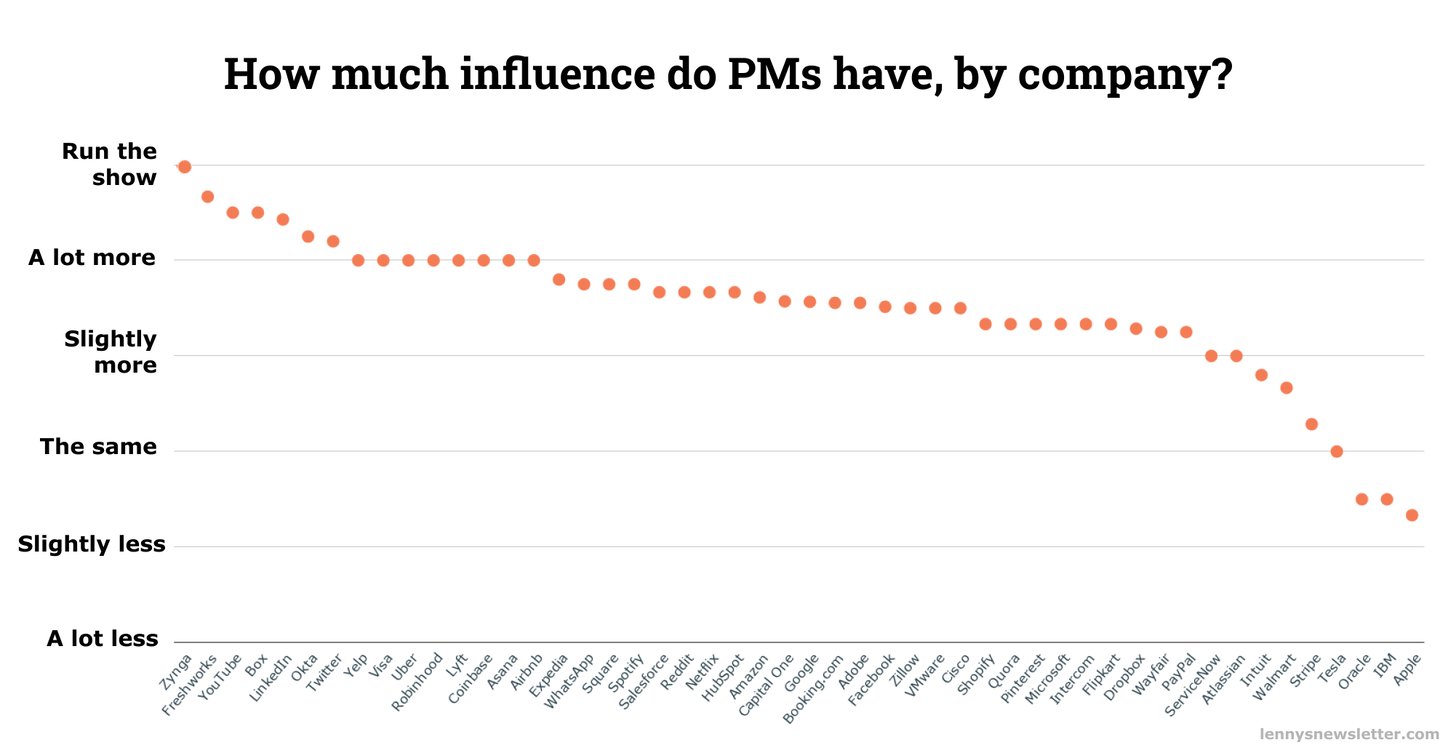
New Substack Post: The Ultimate Guide to Unbundling Reddit A framework & guide for how you can make millions off Reddit niches https://t.co/YAISeGltDu Start small to go big
Dec 21, 2020Just finished Invest & Wander, a collection of Bezos' writing. His vision: Focus on delighting endlessly unsatisfied customers. Hard to bring that insight to the RE GP game, though: We have at least two groups of customers (tenants & LPs) whose interests are often opposed. *Having to mediate between the interests of tenants & owners is what makes residential property management so hard. ** It's "Invent & Wander"
Dec 20, 2020Not sure who needs to hear this but here you go No-code startup studios are the future of 2020-30
Dec 17, 2020I had a December tradition at Facebook of delivering a one-hour "end of year talk" to my org. The topics changed each year but the common thread was a reflection on life and work outside of our day-to-day. Here's a high-level summary of some of the themes I shared in those talks: One of my favorite books is Flow: The Psychology of Optimal Experience. We all have activities where we are in a flow state. For me it's surfing - when I see a wave on the horizon coming towards me and suddenly I'm lifted up - I'm not thinking of anything else in that moment. When we close our eyes and imagine our flow state activities, most of us picture things we do in our free time - cooking, rock climbing, music, writing, etc. But when we evaluate our waking time, most hours are spent at work. What would it look like to experience flow at work? When I'm on the cusp of closing a big deal, it feels like I'm watching that wave on the horizon coming towards me. Calm and focused, I lose all sense of space and time. Engineers describe similar feelings after a really good uninterrupted coding session, like making music. I’m also in flow when I feel connected to my co-workers, when we trust and respect each other to the point of finishing each other’s sentences. In that state, a productive strategy brainstorm can feel like you're in a band where everyone is “in the pocket” jamming together. We tend to feel closest to people when we’re able to be vulnerable. I learned this lesson in my first job after college when I worked for a personal growth seminar company called Life Mastery. 15 years later, I started integrating those insights into a corporate context. As I’ve shared here before, my first performance review at FB was brutally tough, my team and peers unanimously said they didn't trust me. I shared that feedback with the people around me and eventually regained their trust. This woke me up to being vulnerable at work. As my role shifted from manager to executive, I thought my job was to stand on stage and rally the troops. Later I got feedback that I had a “leadership gap.” Next time I got on stage, I shared this feedback with my entire org and people rallied around me like never before. I could sense that I was onto something, and I leaned into it. I started delivering my end of year talks, and I pushed myself each year to be open and share stories. I wasn’t a natural story teller back then, I preferred abstract strategy talk. But I was learning to lead. I spoke openly about mental health, something that members of my family had personally battled along with so many others. For years after that talk, people reached out to me for help and advice when members of their own family struggled with similar challenges. I talked about my mom’s ongoing battle with Parkinson's disease. When she was first diagnosed 25 years ago, my dad promised himself to make every day count. *Make every day count* I showed Steve Jobs' Stanford commencement speech, and the final birthday speech in Meet Joe Black. And shared poignant books written by people who knew they were dying: Being Mortal, When Breath Becomes Air, Not Fade Away. The holidays are a good time to reflect on what we have. I leaned into vulnerable leadership because I saw the impact it had on my relationships at work. Our teams stayed together longer, had more fun and got more done. People felt more connected, happy and productive. We all started spending more time in a flow state. I created a leadership program called Flow. We took groups of 10 managers through a 2-day offsite where they had a chance to reflect on themselves as leaders, co-workers and humans. I opened each session, and I was rewarded with beautiful thank you notes and hallway hugs. Being vulnerable is stressful. You need a safe space with people you trust. Each year as my org grew bigger I thought about abandoning my end of year talk. But then someone would come up to me and tell me how much they were looking forward to it, and I knew I had to keep going. Earlier this year I decided to start sharing my stories broadly. It began as an experiment (like those end of year talks) and gained momentum as people encouraged me to keep going. Your feedback has been one of the great joys for me in 2020. Thanks for listening. Happy holidays.
Dec 13, 2020I think product studios are the future of startups Here's why: https://t.co/kbR2Nbdo3A The difference between startups and studios: Startups = go from Charmander to Squirtle to Bulbasaur Studios = go from Charmander to Charmeleon to Charizard
Dec 11, 2020New podcast episode today 🚨 Drawing on her experiences @stripe and now @NotionHQ, @cjc stops by to share her playbook for a startup's first partnerships hire. Listen for actionable tactics on crafting win-win deals & building out this oft-overlooked org. https://t.co/pqWRQrSYCR https://t.co/1DYivYKjkq Listen to a snippet of @cjc’s advice for partnerships folks (thanks to our friends @getshuffleapp) Check out the full episode on your favorite podcast app here: https://t.co/Ugjw1lKgnY https://t.co/yi3iIW4mfQ
As someone who spent years as a missionary I found this notion fascinating, and spent a lot of the night reading about it. Peloton literally and explicitly set out to create an experience to replicate some aspects of religion. Thread: https://t.co/pUEqDAyg4l This 15 minute video is a must watch. Foley (Peloton founder) delves briefly into ways fitness classes look like a modern-day religion. From the community to the lighting. https://t.co/ijGXk6hDY1 In this post the SVP of Member Experience (note that they have an SVP of Member Experience) lays out how Peloton intentionally and explicitly sets out to “cultivate emotional loyalty.” https://t.co/LWIB4CpPwd https://t.co/T9Gh6URHDI This post makes a bunch of interesting comparisons between Peloton and a megachurch, also delving into Peloton’s very much intentionally advertising Peloton as “for the rich and ripped” (eat your heart out Girard) https://t.co/680rUb0H57 https://t.co/wjCkOIsCL9
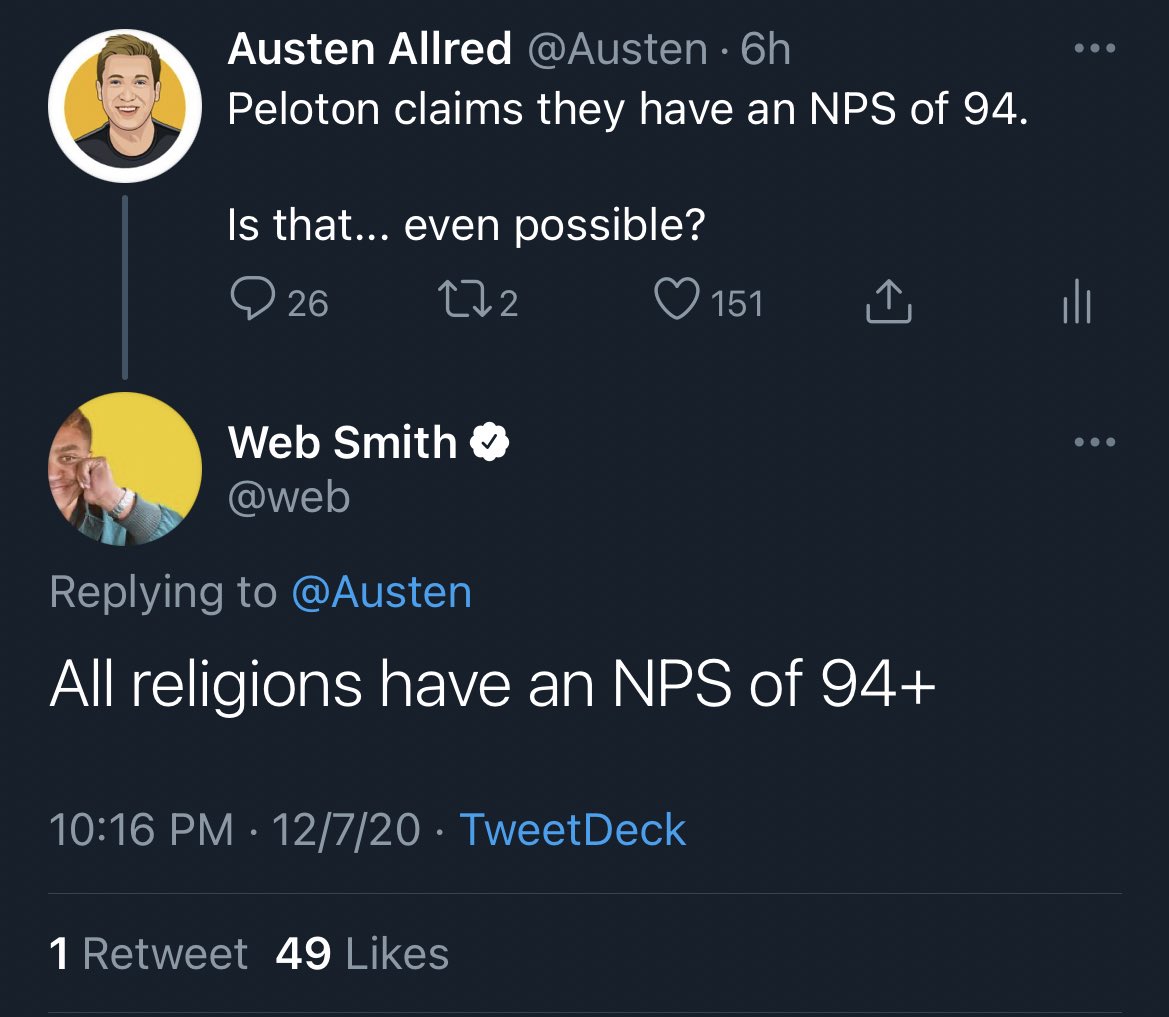
👇🏼 🎧 Must listen Frank Slootman @SnowflakeDB on @WhatGotYouThere @SeanDeLaney23 - absolute legend, healthy paranoia, value of intellectual honesty + not using same playbook Culture: ⬆️ velocity, raise standards - drivers vs. passengers, narrow focus https://t.co/MtLLJAEIAG Are we doing enough? (54 sec audio clip) @AirrAudio https://t.co/ofrPa3NPAM
Dec 6, 2020product studios are the future for top technical talent pretty soon, top tech employees will work more like Hollywood actors (contract-based, guilds, focus on branding and building equity) instead of like factory workers working on an essay that dives into this https://t.co/y4h6F03ccr .@drorpoleg wrote a great article discussing some of these trends https://t.co/0cV27gkHzR
Dec 5, 2020 Original deleted — preserved here✨ Dusting off my old blog with some fresh new long form content: "The Founder's Guide to Actually Understanding Users" https://t.co/Q7hMhy17X6 Big thx to @beh_zod and @robfitz for their contributions. A quick thread of highlights below 👇: "Get out of the building" and "Talk to your users" are the most common pieces of start-up advice. To be clear, it's good advice. But I've learned from failures just how hard it is to ACTUALLY understand our users. Because they lie. But it's not their fault. It's your fault. Recently chatted with @robfitz (author of The Mom Test) and he shared an updated model of 3 ways where users will lie to you if you're not careful: 1. Asking the wrong questions 2. Remembering the wrong thing 3. Making the wrong decision "justified" by what you think you heard https://t.co/rf6Vw71Z8N Gain early conviction from your interviews & then conduct eVALUEative testing. Build a light-weight prototype to solicit feedback from prospective users. Goal: see if they'd actually VALUE the product over alternatives. Don't tell them it's your product, they'll be more honest Next up: usability testing. You've got to make sure users can actually figure out HOW to use the product. @beh_zod created a framework for conducting usability testing interviews where he recommends asking the participant the following: https://t.co/dhQZCcf8Kx In a recent call with Behzod, he told me how at Slack he'd turn moment of user struggle during usability tests into video highlights he would share. This helped his team form a shared understanding of the problem and gain alignment around solutions that will actually work. https://t.co/wZy9MjWRGH You need to continuously discover and repeat these steps, you're never "done" understanding. Truths of product building according to @cagan: Truth #1: At least half of our ideas are just not going to work Truth #2: Even the good ideas take several iterations to become viable. You're never done. This is why you should be asking to record EVERY SINGLE customer facing interaction. There is gold in there, you just need to mine & share it. At @GrainHQ we use Grain to turn every customer convo into 2-3 highlights we post into #voiceoftheuser in @SlackHQ https://t.co/qcWto4V6Ai Discussion on Hacker News (currently #8): https://t.co/5i6f5Ywzik
Dec 2, 2020A fair amount of founders ask me about "how to do GTM strategy." I've created an overview guide about how to think about it. I hope it's useful! https://t.co/aROqQsEsVh If you don't want to scan all 50 slides, here's also a summary blog post as well: https://t.co/4dQx44cPO8 In there, there are logic flows about what to think about and when. I also demystify terms such as buyer personas, pricing schema, freemium, etc. Feel free to copy or use the slides for your team!
Dec 1, 2020We believe 💯 in the power of community as a competitive advantage We’re thrilled to launch the Community Playbook for Founders It’s a detailed guide for entrepreneurs + has insights from @jonobacon @baileyelaine + more RT if you're community-driven https://t.co/DtFRMt42jE
Dec 1, 2020I'm not sure why more people aren't starting product studios: Why start a studio: - Very creative to work on multiple projects - No-code enables easy experiments - COVID created many startup opportunities - Diversification derisks Product studios is the model we need right now What founders are doing the most interesting product studios/holding companies? I'll start @awilkinson from Tiny Capital And @gabriel_whaley from @mschf
Nov 30, 2020Add these 10 biases to your product team's shared vocabulary 1–Confirmation Bias 2–Fundamental Attribution Error 3–Availability Heuristic 4–Plan Continuation Bias 5–Law of Triviality 6–Curse of Knowledge 7–Law of the Instrument 8–OutcomeBias 9–Bandwagon Effect 10–Bias Blind Spot The benefits of deeply understanding these biases & creating psychological safety for surfacing them: - Better product decisions - Better execution - Happier teams Learn more about them here: https://t.co/XDPjaon0Fm
Nov 23, 2020Little teaser from my book - how leaders encourage independence of thought: https://t.co/oAyUJDyThY "Effective leaders manage the potential to infect others with their beliefs through their orchestration of meetings. First, they allow the most junior or least informed team member to go first. "Second, they steer the conversation away from more charismatic extroverts in the group, enabling introverts to have equal participation." "Third, they withhold their view until others in the group have an opportunity to weigh in." "Fourth, they communicate in probabilities to express uncertainty and invite input." "Lastly, they use a ballot voting system to avoid social proof when it comes time to weigh in on a decision." Pre-orders now available. https://t.co/oAyUJDyThY
Nov 20, 2020New post: 𝗖𝗵𝗶𝗲𝗳 𝗡𝗼𝘁𝗶𝗼𝗻 𝗢𝗳𝗳𝗶𝗰𝗲𝗿 📃 I wrote about corporate knowledge management systems; why companies should hire librarians, and Slack as a search engine. ↓ https://t.co/atc3O8K7mh
Nov 20, 2020"But what’s really bad for the competition is that the Times is specifically kicking ass by refusing to be disrupted." - @mattyglesias Very interesting breakdown of why the NYT fails to be disrupted. https://t.co/t4YACE4psE Link here https://t.co/C5TQv8CFL7
There’s a lot of content on what happens pre-investment in VC but not a ton on post. Platform is support/resources for startups post-investment so they can grow. Platform includes: 🤝network 💫events 👨👩👧👧 talent 📱marketing 🧩partnerships 💛 brand What else?
Nov 11, 20201/ There are certain universal skills that apply across almost every business. @BrentBeshore calls it the "everything tastes like chicken" layer of business. The broad strokes that apply in most places... Some of my favorites: 2/ How to read financial statements https://t.co/4aUESEkL0L How to write compelling copy https://t.co/dFcSDAKNzS 3/ How to delegate and build systems https://t.co/yrwNnbGYDF Sales/marketing best practices https://t.co/GRs7gDJmUc 4/ How to structure incentives and motivate people https://t.co/yYVdPfxsuM https://t.co/7cIOsg9zsN Basic business school concepts https://t.co/dqgW8dEElB 5/ You can apply any of these skills to almost any business. Even if you haven't started your first business, learning this stuff will pay off at some point.
Nov 5, 2020Just shared a playbook with an older owner of a nat gas and water parts distributor in NY Similar to one I used to grow cash, increase our multiple, and find a great buyer for 2 previous smbs here is what I shared with him for his business 👇🏼 (As long as its typed, ill paste) 1. Write down how to do everything you do, knowledge-based or not. Write them using instructions as if you were delegating to someone with no experience. This will help us bring new people as we grow. Scale with fewer errors. Package the business up for a buyer in 36 months. 2. repeat our model in more territories that are underserved. These are easy to identify, and our service model will attract customers, with higher than industry retention. 3. Automate the things that can be automated: a. emails with supplier invoices are auto processed and paid b. when jobs are completed, customer is auto invoiced c. sales, quoting, and basic followups are auto built in d. inventory monitoring e. fulfillment of lower service items 4. Between training and documenting, the business will need you less and less. That is good. We make this business run with or without you. We systemize everything you currently do - even your problem-solving techniques and solution arrivals. 5. Use some simple inventory optimization techniques to lower your onhand and buying strategies to free up NWC without affecting service levels. We have 5 years of history making this easy. 6. Create and document a repeatable sales funnel. You currently do things that help. Its not consistent, but can be. Parts can be automated, parts can be augmented, all of it needs to be repeatable and trainable, and it all will be a completed system when we are done. 7. Work on putting digital ads where your clients are. There is currently little to no marketing down. This is a place for some quick wins once we nail the right copy. 8. Take the small app we are using for customer management, and build it out to a full portal for the customers, interactions, service delivery, etc. Most of the infrastructure is there.. so we just need to structure it, add permissions, and flip the switch. 9. Create an online pricing / quoting tool. 30% of your time is looking up prices on a price sheet and emailing people back. There are other, less time-intensive ways to deliver this information in a quick and accurate way. Online, SMS, no-code mobile app etc. 10. Create an online order system. (store, payment, shipping) Currently receive and entering orders using the accounting system. We'll create an "eCommerce" setup to receive the orders where they know what they need based on job specs. 11. Possibly outsource fulfillment. Lots of the work is 1. knowing what the customer needs for the job, 2. installing it. No need to keep our own warehouse, and daily ship this stuff. Might make sense to outsource fulfillment. Every #SMB is a little different, but there some basic principles. Whether you want more cash, more sales, or more value... the steps are the same - selling or not: Grow cash, increase cash growth rate, increase the multiple someone will pay for that cash and growth.
Nov 4, 2020💥 New post 💥 How to Price Your SaaS Product, by @Patticus Inside: ✔️ The 2 foundational elements of pricing strategy ✔️ Determining what axis to price on ✔️ Plug-and-play templates ✔️ Tons of examples ✔️ Bonus advice Summary in thread below 👇 https://t.co/aMkvejAZKf 1/ Last month I asked y'all who the smartest person on pricing is https://t.co/OS2yYSKHxp 2/ Many suggestions came though but one name came up again and again: @Patticus With the slightest of prods, Patrick agreed to write a guest post answering a question I've received almost more than any other: How do I price my SaaS product? What follows is Patrick's advice 🙌 https://t.co/jBqv2VueG3 3/ In the beginning, the actual number you're charging isn't that important. There are some exceptions, but for the most part, you should first be figuring out the range you're in: a $10 product, $100 product, $1k product, etc. Don't waste time debating $500 vs. $505. 4/ What matters much more is two foundational elements: 1. Your value metric 2. Your ideal customer profiles and segments With these, you can begin to experiment with your pricing. 5/ Step 1: Determine your value metric A “value metric” is essentially what you charge for. For example: per seat, per 1,000 visits, per CPA, per transaction, etc. If you get everything else wrong in pricing, but you get your value metric right you'll do ok. It's that important. 6/ Pricing based on a value metric (vs. a tiered monthly fee) is important because it allows you to make sure you're not charging a large customer the same as you'd charge a small customer. https://t.co/0Qhm1DLqyF 7/ How to determine your value metric: Think about the ideal essence of value for your product — what value are you directly providing your customer? In B2B, it's likely going to be money saved, revenue gained, time saved, etc. In DTC, it may be the joy you bring them, ... 8/ fitness achieved, increased efficiency, etc. Obviously, we can't measure all of these, but if you can, and your customer trusts your measurement (meaning you say you saved them $100 and they agree you saved them $100), that’s your value metric. 9/ As an example, the perfect value metric for ProfitWell Retain (our churn recovery product) is how much churn we recover for you. We can measure this, and our customers agree to the measurement, so we can charge on that axis. Other pure value metric products include... https://t.co/3uijHYFjR7 10/ Most of you won't have a pure value metric, so the next step is to find a proxy for that metric. To find the right proxy metric, you want to come up with 5-10 proxies and then talk to your customers and prospects. You’ll typically find 1-2 of these pricing metrics... 11/ will be most preferred amongst your target customers. You then want to make sure those 1-2 also make sense from a growth perspective. Your larger customers should be using/getting more of the metric, whereas your smaller customers should be using/getting less of the metric. 12/ Step 2: Determine your customer profiles and segments Most personas are useless because they aren’t quantitative enough. When used properly, quantified personas and segments are beautiful tools. The information needs to go beyond just cute names like “Startup Steve," with... 13/ a cute avatar, and cute meetings where people tell you their targeting "developers". To get quantified personas, you need to pull out a spreadsheet. Here’s a template you can use. https://t.co/ZFqNSyhps2 14/ Columns: Customer profiles you're targeting These can take many forms, but the ultimate goal is to be as specific as possible so that you not only know who you’re targeting but how to monetize and retain them. https://t.co/wEco3t11d6 15/ Rows: Characteristics of each profile to help you differentiate between them https://t.co/FkJNTg3ltC 16/ If you don't know who your key roles/segments are, there's no way in hell you’ll set up an efficient growth flywheel, let alone an optimized pricing strategy. Personas act as a constitution within your business to centralize your focus and arguments about direction. 17/ Step 3: User research + experimentation Beyond your value metric and core segments, the monetization game becomes extremely tactical and research-based. Figuring out your price point involves researching those segments and then making decisions in the field. 18/ Practically this is why you should be experimenting with your monetization every quarter. Here’s a good prioritization list of what you should attack in optimizing your monetization strategy once you have your core segments and value metric figured out: https://t.co/ekV7RSn3gc 19/ Bonus: Rapid-fire advice 1. You should localize your pricing to the currency and willingness to pay of the prospect's region 2. Freemium is an acquisition model, not a part of pricing 3. Value propositions matter oh so much 4. Don't discount over 20% 20/ 5. For upgrades to annual discounts don't use percentages and try offers 6. Should you end your price in 9s or 0s? Depends on your price point 7. You should experiment with your pricing in some manner every quarter 8. Case studies boost willingness to pay quite a bit 21/ 9. Design helps boost willingness to pay by 20% 10. Integrations boost retention and willingness to pay 22/ For much much more, don't miss the full post below. ALSO, @Patticus will be doing an AMA in our subscriber-only Slack community at 5pm PT today. Come by to ask Patrick any question you have about pricing your product. https://t.co/aMkvejAZKf
Oct 27, 2020We all know about the Paypal Mafia, but why don’t we talk more about Apple Alumni? They include amazing investors, builders, execs, and even royalty: @reidhoffman @futurejurvetson @tfadell @benioff @ddubinsky @jimihendrixlive @arubin Trip Hawkins Alan Kay Queen Raina of Jordan
Oct 26, 2020On marketing and movements: "People will naturally be suspicious of any claims that you make. Your message will be most credible coming from others.” – @DavidSacks https://t.co/jMIHxzceEb
Oct 25, 2020A short tour of the VV community: Not pictured: - 30+ hours of presentations - 2,200+ member slack community - Content strategy tools Price goes up when @visualizevalue hits 100,000. https://t.co/cBcAVz3t6R https://t.co/6IZwknIdDA
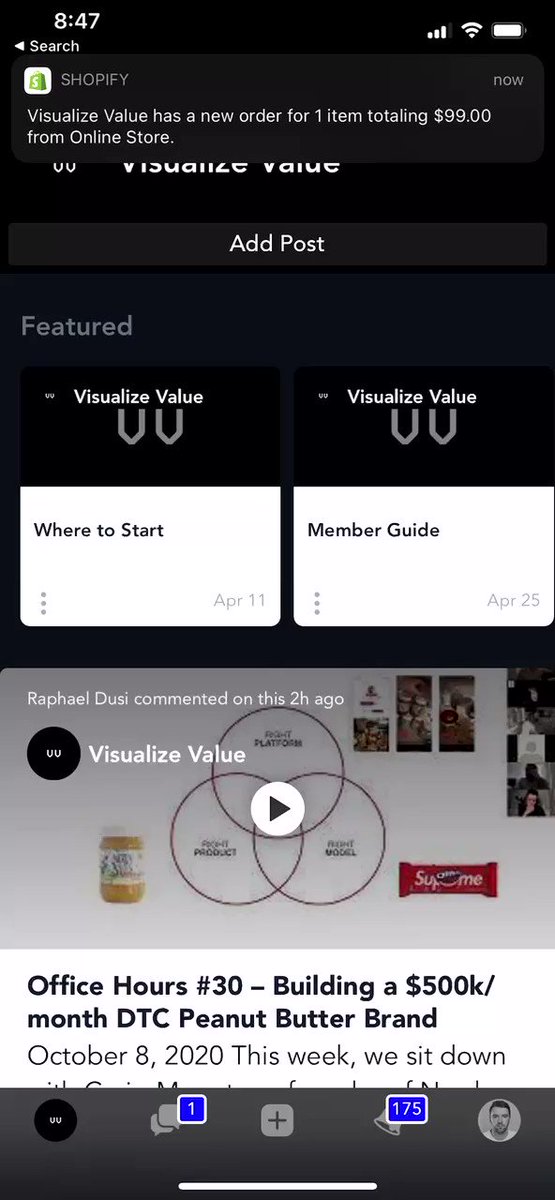
Amazon has quietly created one of the most successful franchises of all time in 2 years. https://t.co/YHWIWtnL6M ▫️$10k startup cost ▫️1,300 franchisees ▫️85,000 employees ▫️40,000 Amazon-branded vans on the road ▫️$1.4m - $4.5m revenue for franchisees operating 20-40 vans
Oct 24, 20206 Lessons I Learned from Nathan Latka (@NathanLatka) a thread 🧵 https://t.co/MN44Ebaolm Lessons 1. Build the attention first, the product second. After he sold his first company, he decided that it makes more sense to build the distribution channel first and pump the product later through it. He successfully did this by starting a podcast. https://t.co/zUAyprcHas Lesson 2. Anything is hackable. Nathan is a hacker in the purest sense of the word. He always starts by studying what the most successful players are doing and all the implicit rules people follow, so that he can then break them systematically to achieve his goals. A great example is that he called his podcast "The Top Entrepreneur Podcast" simply because lots of people search for this term. Here's a great guide he wrote on how he hacked the podcasting game. https://t.co/eLkxzioay3 Lesson 3. Leverage everything you have. He looks at all of his channels (podcast, magazine, book, Instragam) as something to barter with. For example, he trades Instagram posts for free hotel stays or rental cars and appearances in his podcast for keynotes at the events. https://t.co/F7vT67cb1V He leverages the podcast not just for distribution but also for product creation. For example, he simply created a spreadsheet with data points his podcast guests gave him and then sells it (https://t.co/3psNJtd0wO). And exactly the same data is used to fill pages in his magazine Nathan also makes extensive of use software, virtual assistants, and systems he developed to leverage his own time as much as possible. (More on that below.) Lesson 4. Give yourself permission to dream big. Sounds cheesy but is completely underutilized. Most people are afraid to dream big. And those few who dare to dream, do it in private. But not Nathan. He loves to set big, audacious goals and tell other people about them. https://t.co/ifuKKPJga4 For example, before he had a book deal, he told the CEOs on his email list that it’ll be a massive bestseller. This way, he was able to convince some of them that an appearance in it was valuable and used this, as described below, to pre-sell his first copies. Lesson 5. Understand and leverage emotional triggers. Nathan loves to use curiosity gaps in his articles, videos and podcast episodes. For example, he started a recent article on Indie Hackers with: “Even my mom laughed at me. More on her in a second.” His focus on curiosity is also visible in his products. For example, his latest product, Founderpath calculates a “SaaS Credit Score” for founders who sign up. It seems like a safe bet that people will be curious to know what their personal score is. https://t.co/cfH9hu9fih Another emotional trigger that Nathan loves is people’s ego. He pre-sold copies of his book by offering that if the CEO committed to spending $5,000 on copies, he’ll feature them in his book. He was able to leverage these pre-sales a lucrative book deal with Penguin Random House Similarly, when we launched his magazine, he offered to all CEOs that he had interviewed on the podcast that the first of them who buys a copy will get featured on its cover. Lesson 6. Hustle, but do it as efficient as possible. Nathan works hard and is not ashamed to admit it. But he always tries to be as effective as possible and does not work just for the sake of it. For example, he might record 20+ podcast episodes in a single day. But he only does this because he believes in time-boxing. He has two days each months that are solely dedicated to recording podcast episodes and records no episodes on other days. https://t.co/ruZDdeSM1H Additionally, he works with an army of contractors that help him get the most out of his recordings. Among others, they reach out to potential podcast interview partners, arrange the dates, send them reminders, and edit the podcast episodes afterwards. You can find an expanded version of this thread on my site. https://t.co/09gZjoeAkb
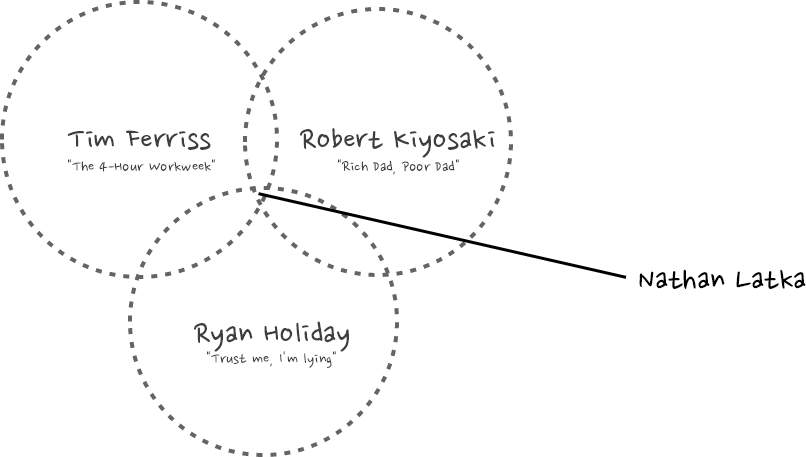
Entrepreneurship culture in America is all messed up and it’s a shame. TechCrunch. Product Hunt. Shark Tank. It’s all about new ideas. Changing the world. Innovation. 0 to 1. Blue ocean. Venture capital and exits and scalability. And ITS ALL A LIE. You ask the average american who a real entrepreneur is they’ll say Jobs, Musk or Zuck. We read their books and idolize them and hang on their every word. So the brightest among us think they need a moat. A new idea. Something revolutionary. Were setting them up for FAILURE. I took an entrepreneurship course at Cornell in 2011. 24 kids with new ideas. Big plans. Pitch decks looking for series As. I was #25 with a regular old-fashioned business. When professors asked me what my differentiator was I didn’t have an answer. I saw a company out there doing sweaty, non scalable work. They were terrible at it. I started by trading my time for money. Bought a $1500 cargo van. Used the things I had in my life to make some profit. I wasn’t trying to educate a customer base. I wasn’t following my passion. I didn’t need funding or a network. I wasn’t competing against brilliant folks from Stanford. I want trying to prove a concept. I wasn’t emotionally attached to anything except adding value. My customers and my competitors existed. I could study them interacting with each other. I made decisions with my brain, not my heart. I was competing against folks with fax machines, clipboards and paper ledgers. And the best part... WE WERE PROFITABLE FROM DAY ONE. None of those 24 folks in my class succeeded. They all went and got jobs. Their new ideas didn’t catch on. They all had dreams of millions of users and an exit. Scalable models that could work anywhere from a computer. But 90% failed to make a single dollar. So who are the real entrepreneurs? Who are the wealthiest people you know? I’m not talking about money. I’m talking about the people who do what they want to do when they want to do it. Who are they? Now hear comes the hard truth. I know a lot of wealthy emtrepreneurs. None of them had new ideas. None of them raised VC money. None of them were on shark tank. They all did common things uncommonly well. Regular old businesses just a little better. Most of them have a few things in common: They worked really hard doing something not fun for 5+ years. Many times 20+ yrs. They started out trading their time for money. They did things that weren’t scalable. Many of them offered services. They all had to talk to people. Most of the time face to face. They had to sell themselves and their ideas. They didn’t take a lot of risk. Most of them hired coders but few of them were coders. Stop buying into the hype. The click bait. The sexy stories of overnight success and mega riches. Entrepreneurship isn’t that complicated. Do something with good odds, low risk and moderate rewards. Don’t master your craft, master leading other people. Think with your head, not your heart. It’s not about you and what YOU love or what YOU want to be doing. And lastly.. Start SMALL. Biz is about momentum. I started 10 yrs ago carrying boxes up spiral staircases. Now I’m buying millions worth of real estate. And the best part. When you’re successful, experienced, wealthy and you have a killer network... It’s time to change the world with something BIG. Also - I’m just talking my book here. I could be very wrong. Luckily there are thousands of ways to win at this game. Feel free to disregard, challenge me or move right along! Also, if you’re looking for an opportunity check out this list and take your pick: https://t.co/xjB9BEIoC5 The sweatier the better!
Oct 19, 2020Sometimes an email can change your life. This intro to @jordancooper is a big reason why I landed @LererHippeau nearly a decade ago. Don't underestimate the power of building relationships. Plant seeds today. You'll never know what may emerge. https://t.co/MmKybel19p
We are in the unbundling phase of the internet Everything is getting unbundled Etsy Reddit YouTube Amazon Spotify Udemy What a wonderful time to be building a startup
Oct 13, 2020Struggling to come up with an idea? Start by searching wildly popular Hacker News + Product Hunt launches and look for projects that have since gone dark. There was something there at one point... I wrote about how to find these ideas: https://t.co/4MHKma1VIO
Oct 9, 2020Turns out the majority of startups use Google Sheets (not a dashboard) to track KPIs. Would love to see more examples KPI spreadsheets (redacted of course). I’ll share back the full collection https://t.co/GinKLQ1w31
Oct 3, 2020Now over 60 Airbnb alumni founded companies, that I'm aware of ### Quoting himself · May 9, 2020 We're now up to 45 Airbnb alumni founded companies (that I'm aware of) *Quoted post: [x.com/lennysan/status/1259208024264019968](https://x.com/lennysan/status/1259208024264019968)*
Sep 16, 2020Delegation is the single most impactful skill you can learn as an entrepreneur. But it’s SO hard... Who wants to delegate something and have their customer get subpar product or service? It’s brutal at first 😭 Inevitably, when you delegate any new task, you get let down.
Sep 9, 2020🔥 A Guide to Fundraising – A Megathread 🔥 1. Preparation 2. Outreach 3. Navigating the process 4. Partner meetings + closing Below you'll find a tweet-sized summary of @mccabe's incredible guest post from last week, with templates, references, and timelines. 👇 Read on 👇
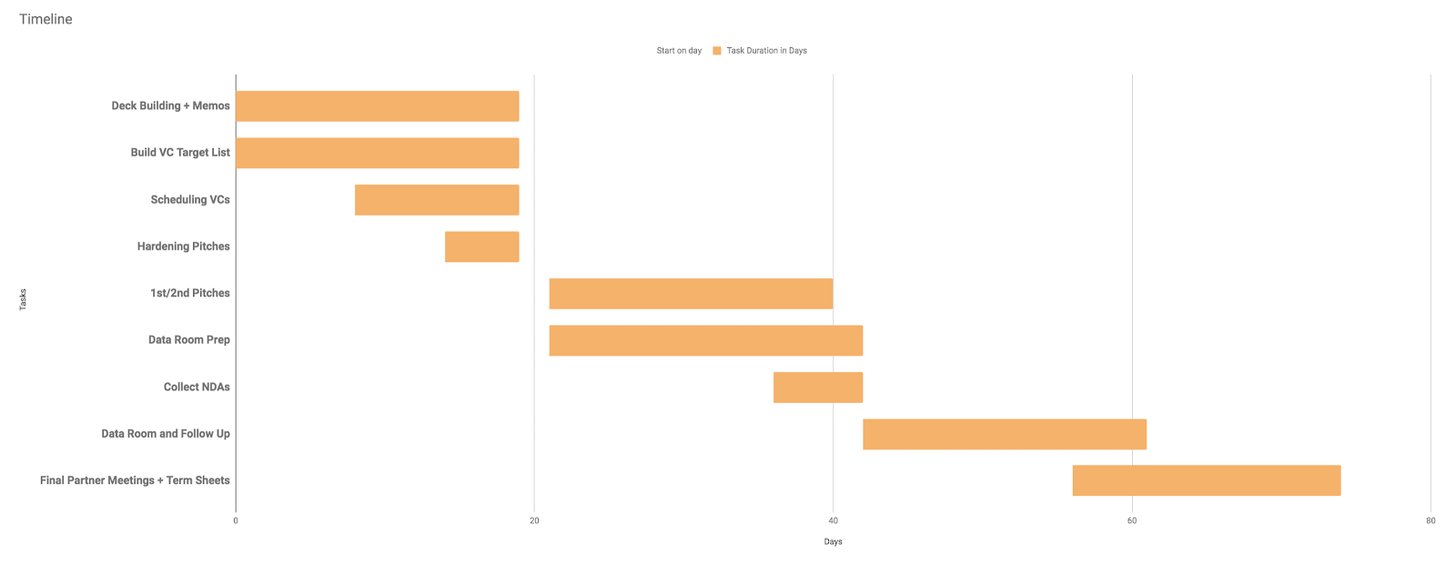
How to set bottom-up pricing: Survey current + prospective customers on how much they can expense (without additional approvals) for your industry. If you find that your avg. customer can spend $75/mo on a SaaS tool without approvals, make your pricing $75/mo. Hotels are experts at this: Up until March I traveled to Austin every month for work. Apple, FB, IBM, Indeed, Expedia, etc. all had large offices there. Our expense policy was up to $300/night, so most hotels were $275-$299/night. Not a coincidence.
Aug 21, 2020Many of the most successful companies – despite being closely watched – remain understudied. Following the "what" is easy but internalizing the "why" and implementing the "how" is where it falls down. This from @asymco rings very true 7 years later. https://t.co/fl3XRDJLD3 https://t.co/lz99UGg7HR **Links in this post** (t.co shortlinks resolved 2026-09-29): - `https://t.co/fl3XRDJLD3` → https://www.asymco.com/2013/02/19/why-doesnt-anybody-copy-apple/ - `https://t.co/lz99UGg7HR` → https://x.com/brettbivens/status/1296190828864573441
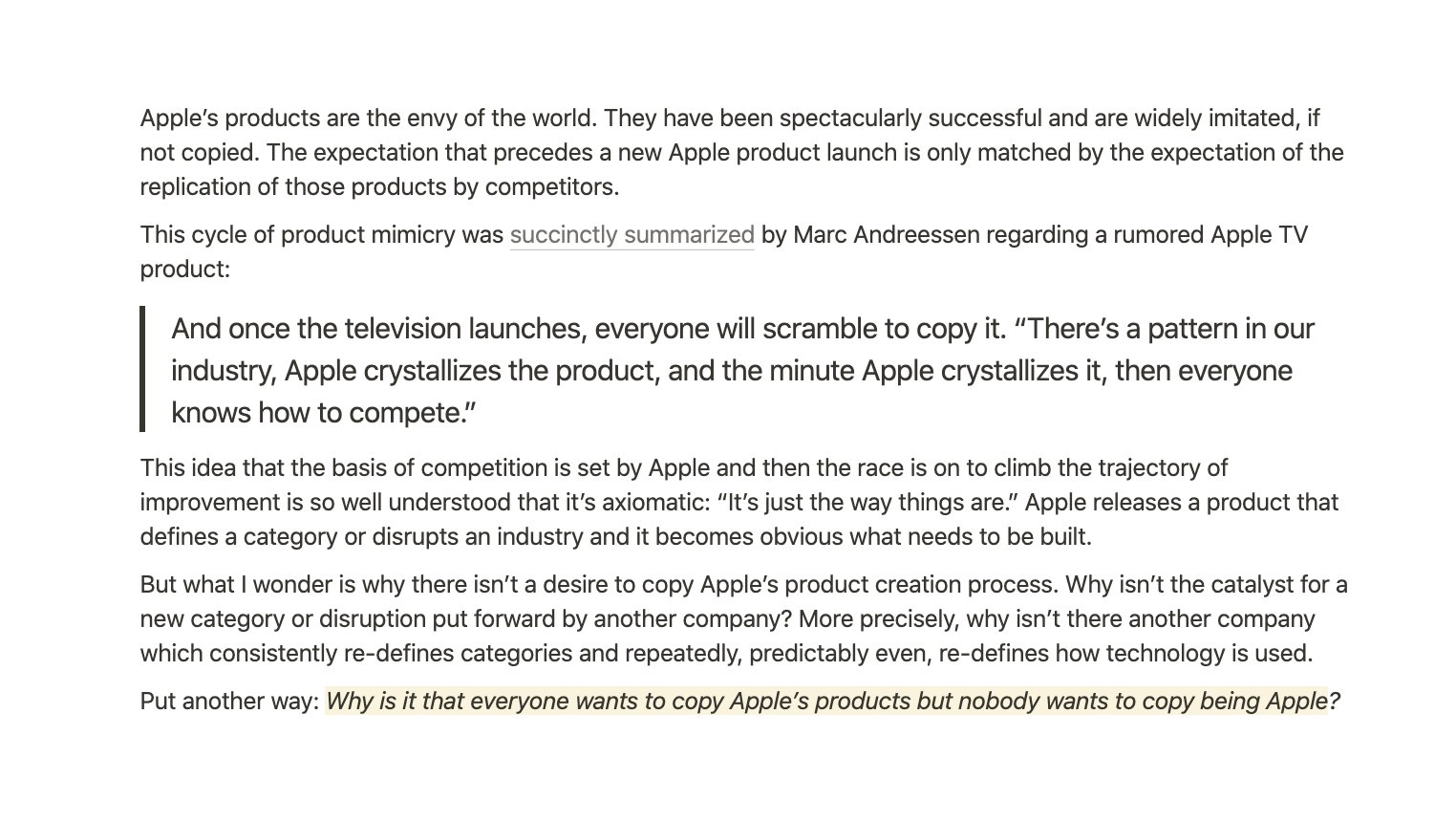
I have a little bit of a thing for VPs of Finance, don't @ me They're the one senior leader most startups wait too long to hire HIRE YOUR VP OF FINANCE EARLY! New quick post to explain why 👀👀👀 https://t.co/1eriM3DCx6
Aug 2, 2020A thread of my biggest surprises and takeaways from researching successful early B2B growth strategy Read on 👇
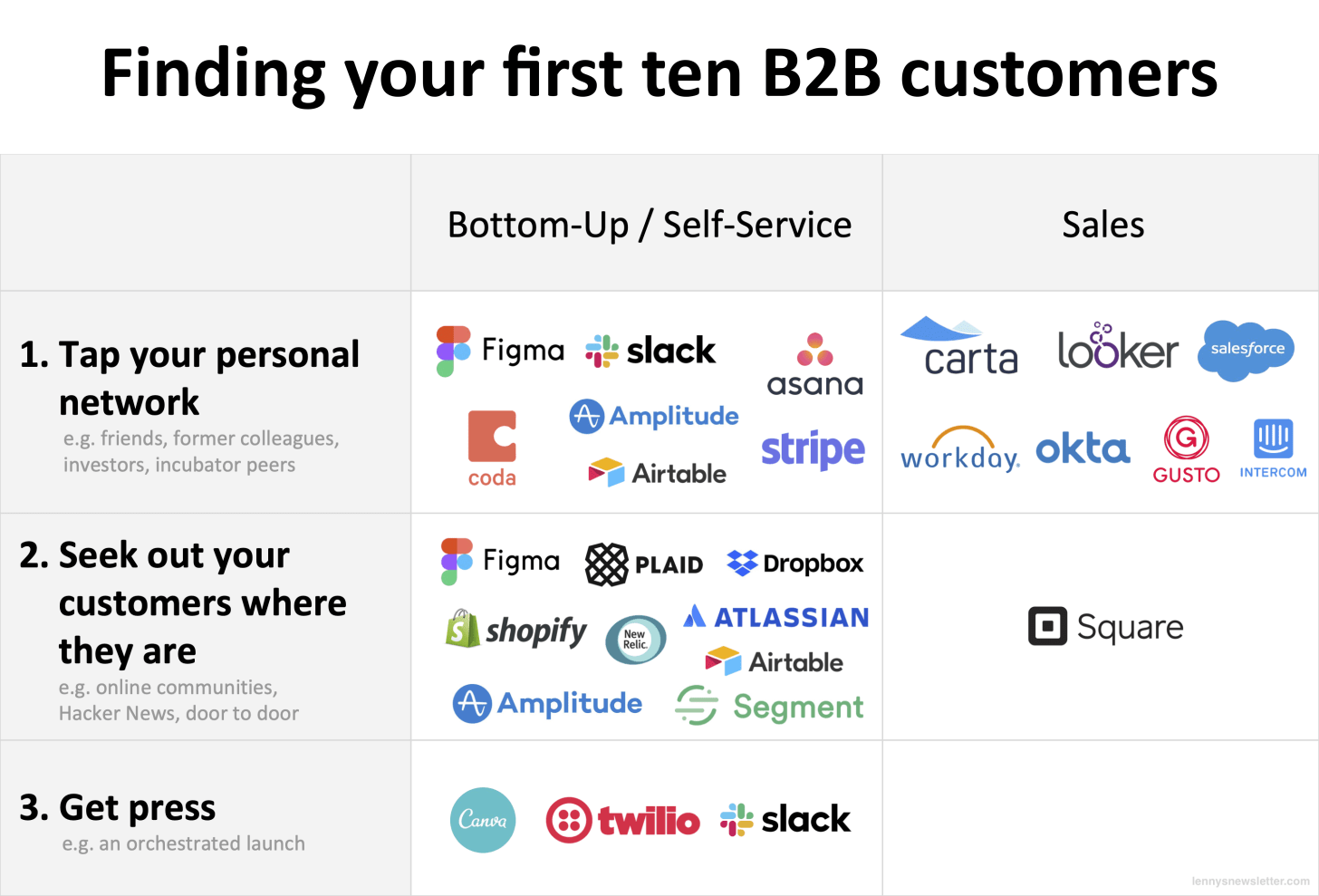
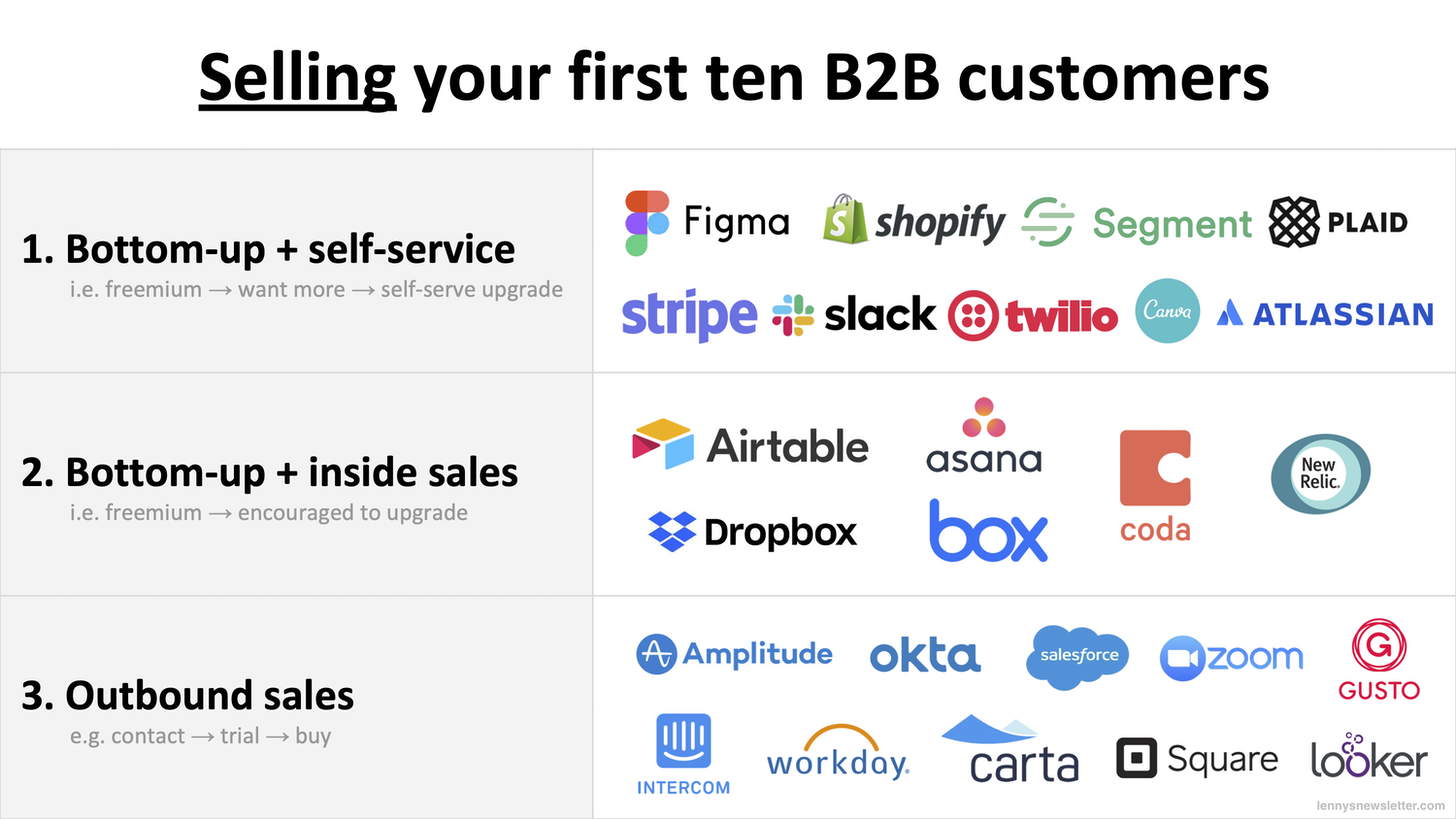
This week on Pipeline: A new "mafia"? Mapping the alumni of Square Plus, get to know @a16z's @illscience who really misses the cassette tape and had my editor saying "This is fascinating!" multiple times in the comments. https://t.co/7ks07pQiQK Creating a mafia network is "extraordinarily rare," @rabois told me. "It's about once in a decade that you see a substantial network, a so-called 'mafia,' that turns into a second- and third-generation successful founder network." https://t.co/DPozFjLxdH Startup mafias aren't necessarily correlated to company outcomes, but more to the people they hire and early culture they foster. Square taught founders to question the financial system & break rules — a lot of the emerging companies are twists on fintech https://t.co/DPozFjLxdH The big mafia companies are names like Opendoor, Faire and (arguably) DoorDash. Plus there's a whole emerging list: https://t.co/DPozFjLxdH To capitalize on the new network, I also heard about an investment syndicate being pulled together by a trio of current and former employees. (tip @techmeme) https://t.co/DPozFjLxdH
Aug 1, 2020This = MASTER CLASS. A must-read (or hear if you wait until tomorrow when Bezos reads it to Congress) in entrepreneurship, leadership, value-creation, invention, immigration, philanthropy, environmental stewardship. The team alongside Jeff Bezos writing this is 💯 LETS DIG IN https://t.co/wNuxDsbJuT **Links in this post** (t.co shortlinks resolved 2026-09-29): - `https://t.co/wNuxDsbJuT` → https://twitter.com/wolfejosh/status/1288317508819312640/photo/1
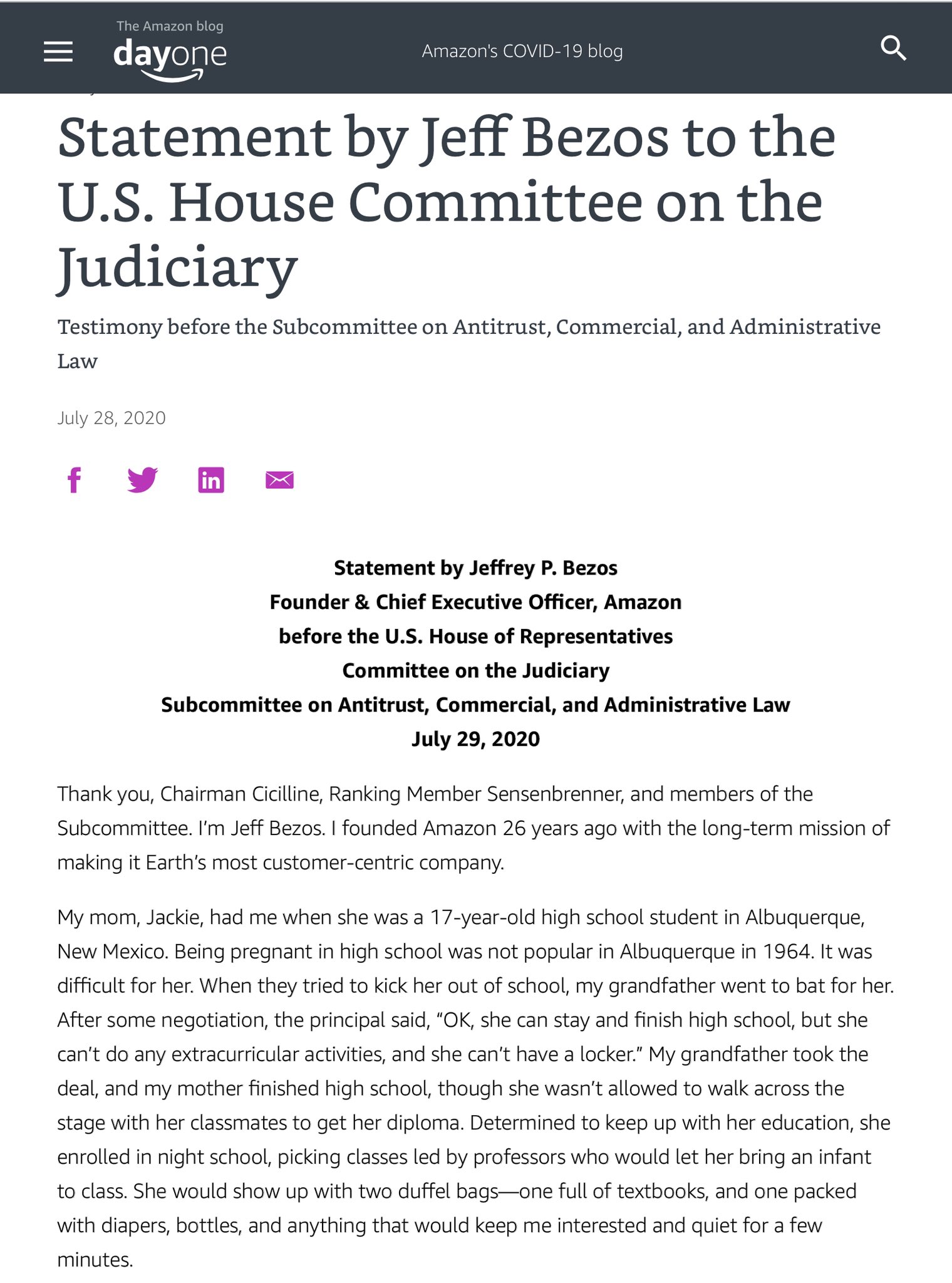
A book I wish existed: A huge collection of 2-3 page summaries of now large company's initial go to market strategies, across as many industries as possible. Ditto for many spectacular failures. A good example: https://t.co/Z7zYn3NQdB https://t.co/KKoLniHHYs
Jul 24, 20201/ Thinking about this "shared playbook" concept via @collision in the context of this hire (https://www.reuters.com/article/us-kkr-moves-daniel/kkr-hires-ex-danaher-executive-for-industrial-deals-idUSKBN2472QQ) "one of the things that is probably under discussed, the notion that there is a common playbook that goes from company to company in people’s heads" https://t.co/FkYOQk6yzX 2/ Here's an old interview with Larry Culp (https://scribd.com/document/434684549/Larry-Culp-Interview-pdf) where he talks about Danaher being a recruiting target as the #1 thing that keeps him up at night, but then again you can't copy culture. 3/ More from Culp: DBS is highly relevant in almost any industry - "The key is not necessarily the application of any one tool at a particular point in time but the sustained application of these tools, cemented into the culture, over a long period of time." 4/ Last one from Culp: "The DBS is the most valuable asset we have, even though it doesn't appear on the balance sheet." An aside, these old letters (https://ip-capitalpartners.com/relatorio/2015_06_RG_Global_Offshore.pdf & https://ip-capitalpartners.com/relatorio/2017_04Tri_RG_Participacoes_Eng.pdf) are great reading on Danaher and DBS. 5/ Curious to see just how replicable playbooks are inside of different orgs/platforms/cultures as more and more shared playbooks change hands across all industries. **Links in the tweet:** `https://t.co/fmHv2GS5w3` → https://www.reuters.com/article/us-kkr-moves-daniel/kkr-hires-ex-danaher-executive-for-industrial-deals-idUSKBN2472QQ **Notable replies:** - **@brettbivens** — A great example that goes back decades is the "Templeton Compression". Developed in the Dot-com era and now the status quo playbook, tacitly if not explicitly…
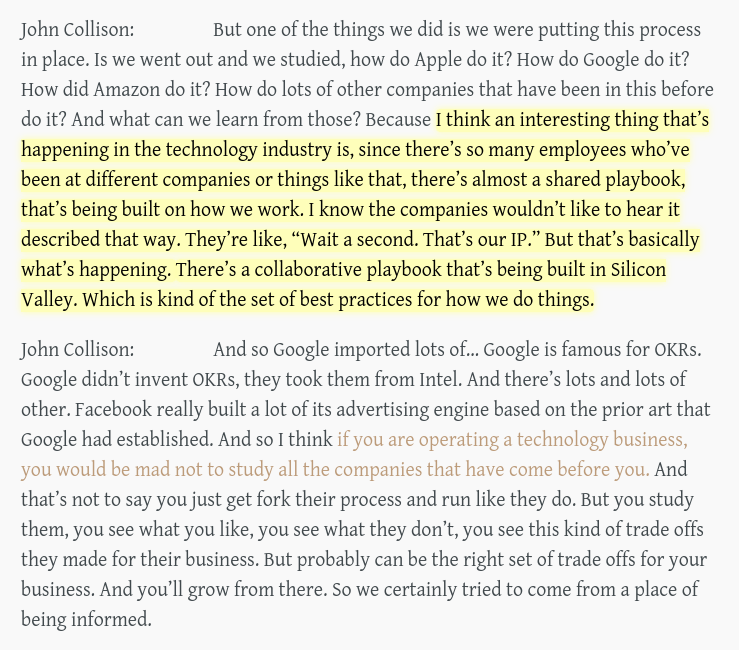
Every company has a story. The question "what does Company XYZ do" when you're diving down a rabbit hole doesn't cut it. There is never a satisfying Wikipedia article on a company Anyone who has worked in a company knows it has more character than can easily be captured. Listening to @chetanp and @patrick_oshag talk about the history of MongoDB, Veeva, etc. and you catch a sense of the story of these companies. http://investorfieldguide.com/chetan/
Jul 7, 2020Love reading “The Rise of Company X” analyses. A few favorites: Softbank — https://t.co/avwYICSNUw Discord — https://t.co/ODYndAqdlO Figma — https://t.co/mdxq2stzaN Supercell — https://t.co/HcNBEKRl6t Pinduoduo — https://t.co/fh2FUtl3Hp ByteDance — https://t.co/EjsYE3Lyqg
Jul 7, 2020💥 New deep-dive 💥 How today's fastest growing B2B businesses found their first 10 customers tl;dr 1. 👋 Tap personal network 2. 🧗♀️ Seek out your customers where they are 3. 🗞 Get press Stories from 20+ companies. Takeaways in thread below 👇 https://t.co/Wfc4O5NoiQ
Jul 7, 20201/ To build something new... Look beyond what’s immediately around you. When building the altMBA, Seth and I didn’t look at edtech. That was too narrow. We studied what makes ppl feel *zealous, committed & becomes part of their identity* Here are groups I analyzed (THREAD) 2/ Religion External signals of group belonging: - Dress codes - Can’t eat certain foods - Religious holidays - Church on Sundays All great ways to bring up your religion w/ outsiders. “Do you have kosher options?” Inspired reasons for students to mention altMBA w/coworkers 3/ Military - Easily identifiable: haircut, uniforms, internal lingo - Strict process, no exceptions - Basic training is grueling on purpose Breaks then rebuilds you. Struggle leads to transformation. Inspired the altMBA challenge coin, grueling projects, mandatory schedule 4/ CrossFit Opposite of Fight Club: The first rule of CrossFit is always talk about CrossFit. Builds word of mouth & brand awareness. “Paleo this, paleo that...” “Ppl like us work out until we puke. We don’t need a fancy gym.” Inspired ways to increase altMBA’s word of mouth 5/ Tough Mudder Anyone who’s done ToughMudder started telling their coworkers 6 months before actual event. Intentional extreme factor: mini electric shocks while crawling in mud. Creates conversation topic in the kitchenette. Makes participant look hardcore, elevates status 6/ Danceathons Popular in the US in the 1920s & 1930s. Concentrated endurance contests, gathered community in one spot for an intense sprint. Some for 100+ hours straight. Attracted people who were slightly masochistic. Inspired altMBA workshop structure of intense sprinting 7/ Cults [Analyzed using an ethical lens.] Love bombing to overwhelm a student with support if they’re feeling down. Inspired leaning into the altMBA’s internal language: - what is it for - who is it for - people like us - ruckusmaker - shipping - tension/fear - change - leap 8/ Startup Weekend A 54 hour weekend event, during which groups form teams w/strangers and develop a working prototype to present by Sunday evening. Inspired the intense deadlines of shipping a project within a day with your altMBA learning group of the week. 9/ Landmark - Social pressure to conform (i.e. everyone is raising their hand so you raise yours too) - Crying bc tears bond ppl [Check out The Book of Est by George Cockcroft. I attended an actual Landmark course for research but the book describes most of the experience.] 10/ Fraternities - Shared struggle results in social bonding, cohesion, solidarity - Cognitive dissonance kicks in (“if I scarified I must want this”) - Status of pledges vs actives altMBA students feel closest w/learning groups from their first week https://t.co/Zy6NosGm3J 11/ Harvard - Prestige, affiliation - Harvard’s site doesn’t look like a Udemy course landing page - Not optimizing for direct response or immediate conversion Inspired picking long game of building a respected institution, website aesthetic w/good taste, application process 12/ Alcoholics Anonymous [This one gets multiple tweets bc it was a big influence on my thinking] - Physical tokens are symbols - You stay forever. This means current members find new recruits and never “graduate” or leave - Members stay connected to community 13/ AA: Controlled anarchy Each AA group could set its own rules as long as they didn’t conflict with the traditions or the steps. Inspired deliberate looseness and ambiguity in certain parts of the altMBA. Posture of co-creation with students 14/ AA: Group = key AA’s effectiveness may have nothing to do w/ actual steps. Stanford research showed “members develop close bonds w/other members & are deeply influenced by their acceptance and feedback.” Inspired ways to normalize positive, generous behavior in students 15/ AA: Driven by peers AA meetings aren’t led by professionals so fosters sense of intimacy btwn members. Participation is associated w/ increased sense of security, comfort, mutuality in close relationships. Inspired peer-driven stucture of altMBA and psychological closeness 16/ AA: Idea of fragile sobriety Fragile newfound affinity for freedom versus cage. Could relapse though. Create need to being around like-minded alumni to continue shipping creative work and keep up momentum 17/ AA: Rituals and routines Frequent meetings were important for AA. If meetings were only offered once a while, it would be too easy to lose the habit. Inspired various rituals, habits, and routines for students during 4 week workshop & after as alumni 18/ To build something new, find new sources of inspiration. Analyze examples then make it your own. If you liked this thread you’ll like my newsletter: https://t.co/Xm8vqaevAF
Jun 24, 2020Somebody's going to make a fortune building a "Zoom for education." Here's where you should start: ∙ Rooms where students can "hang out" ∙ Embed the curriculum in the app ∙ Constant feedback from students to teachers ∙ All-class note-taking ∙ Automatic assignment tracking
Jun 22, 2020I’ve interviewed hundreds of people for numerous companies over the past 20 years of building businesses. I’ve experimented with many interview questions and most are only semi useful, but one, above all, has been the most useful. A thread...
Jun 17, 2020I don't know @ikirigin and i mean no disrespect, but this thread and the subsequent response from the #RoamCult has gotten me thinking about building product communities and "raining on other people's hustle." A THREAD 1/
Jun 11, 2020How do you bootstrap a $20mn+ 💰 business in 10 years? Without any VC/angel funding. (A thread on how @vwo's evolution) 1/ We celebrated @VWO's 10th birthday last week. In 2010, VWO was launched as the world’s first A/B testing tool with the now industry-standard visual editor for making website variations. Here's a story of how that happened. 2/ Not may know, but the reason my company's name is @wingify (which is different than the product name VWO) is because the first product was actually called Wingify. It looked like this (2009 screenshot) [IMG:https://pbs.twimg.com/media/EaEgnDCXgAUGPgn.jpg] (https://pbs.twimg.com/media/EaEgnDCXgAUGPgn.jpg) 3/ It was the year 2009 and I was fresh out of college. Having attempted several startups during my undergraduate days and seeing all of them flop, I had come to realize the value of marketing and started learning about it. 4/ However, the more I read about marketing, the more I fell in love with it. After a while, it dawned on me that perhaps my next startup should be about marketing. And that is how Wingify was born. 5/ I launched Wingify on @newsycombinator from where we got initial 15-20 users. The feedback I got from those users was overwhelmingly clear: I was trying to do too many things in one product and it was damn confusing. Here's the show HN thread (2009): https://news.ycombinator.com/item?id=876141 6/ So, acting on this feedback, I decided to focus on one feature of the product (A/B testing) and do it really well. That's how "Visual Website Optimizer" (aka VWO) was born and the very first version (in 2010) looked like this. Notice the cute panda! 7/ Somehow people loved it! I'm forever in gratitude towards @patio11 who not only gave crucial early feedback but also devoted an entire blog post on VWO titled "Bringing A/B Testing To The Fortune 5 Million": https://www.kalzumeus.com/2009/12/09/bringing-ab-testing-to-the-fortune-5-million/ Thanks @patio11! [IMG:https://pbs.twimg.com/media/EaEiIxEWoAEFOCI.jpg] (https://pbs.twimg.com/media/EaEiIxEWoAEFOCI.jpg) 8/ THE FIRST CUSTOMER The initial users for VWO were the same people who had tried the previous Wingify version of the product. In contrast to how they felt about Wingify, since the very beginning people loved the simplicity and speed that VWO afforded them for A/B testing. 9/ @sparshgupta and I remembered that our goal in 2010 was to make $1000 dollars in the first month and when we launched paid plans, within the first week we were half way to our goal. Here's the chat log of us celebrating our fifth customer, for a total revenue of $555 :) [IMG:https://pbs.twimg.com/media/EaEiuwHWAAEKq3f.jpg] (https://pbs.twimg.com/media/EaEiuwHWAAEKq3f.jpg) 10/ In fact, we did 4x of our goal and ended making $4000 in the first month. Each month after that, we kept growing and within 8 months of launching paid plans, we were doing >$25,000 monthly revenue. A snippet from a very early deck. [IMG:https://pbs.twimg.com/media/EaEjNAEWsAAT2Be.jpg] (https://pbs.twimg.com/media/EaEjNAEWsAAT2Be.jpg) 11/ THE FIRST HIRE We were growing fast and the support load was getting too much for the two of us, in early 2011 we decided to hire our first hire and shift to an office. (Until then, I was working from my home in Delhi and Sparsh was contributing remotely from London). [IMG:https://pbs.twimg.com/media/EaEjl14WoAAv9_G.jpg] (https://pbs.twimg.com/media/EaEjl14WoAAv9_G.jpg) 12/ Quickly within a year, our team grew from 3 to 7 and @ankneo (who heads @wingify_engg now) joined the team. Here's a pic of us writing cards to our customers. Physically emailing 900+ cards was quite an ordeal. [IMG:https://pbs.twimg.com/media/EaEj-YEWAAgbwjo.jpg] (https://pbs.twimg.com/media/EaEj-YEWAAgbwjo.jpg) 13/ The VWO team has continued expanding ever since then. In the pic, you can see @chinchang457, @SiddharthDeswal, @sparshgupta, @ankneo and other early employees. (If I'm not mistaken, @sia_steel is taking the picture!) [IMG:https://pbs.twimg.com/media/EaEknT9WoAE7k1M.jpg] (https://pbs.twimg.com/media/EaEknT9WoAE7k1M.jpg) 14/ Now, @VWO is 250+ people. It’s incredible to see more and more people in our team photos each passing year. This photo is from our #million2billion party in 2016 to celebrate us hitting a million dollars monthly revenue. [IMG:https://pbs.twimg.com/media/EaEk2DJXgAEQQPW.jpg] (https://pbs.twimg.com/media/EaEk2DJXgAEQQPW.jpg) 15/ Along the way, we evolved the VWO product. Here's v2.0 of the product with a new design (and without the panda of v1.0) 16/ But because we were (and still are) bootstrapped, we retained our goofiness. Instead of panda, we now had a hamster. If you were an early VWO user, you'd remember it spinning while your page loaded in the editor. [IMG:https://pbs.twimg.com/media/EaEliDiXkAAx52V.jpg] (https://pbs.twimg.com/media/EaEliDiXkAAx52V.jpg) 17/ Nobody asked us to do so, but we collaborated with @sumitdrew for making an interactive comics to explain what A/B testing is. Check it out here: https://vwo.com/comics-guide-to-ab-testing/ [IMG:https://pbs.twimg.com/media/EaElzJQXQAABkVl.jpg] (https://pbs.twimg.com/media/EaElzJQXQAABkVl.jpg) 18/ Along the way, we realized that successful A/B testing isn’t just a matter of creating two versions of it and hoping one of them works out. It requires a prioritized pipeline of user research-backed hypotheses. So we acquired @Navilytics to expand our suite. 19/ Today, VWO offers all that it takes to do successful A/B testing. It's the world’s only platform for end-to-end conversion rate optimization. [IMG:https://pbs.twimg.com/media/EaEmoTGWsAIfsF_.jpg] (https://pbs.twimg.com/media/EaEmoTGWsAIfsF_.jpg) 20/ WHAT LIES NEXT FOR VWO? Honestly, I feel like we’re just getting started. I'm asking: what if we’re starting a new company today and then given the people, financial, technology and brand resources we have now, what opportunity can we address in the next 10 years? 21/ We keep debating how will experimentation happen in next ten years and why can’t we be the ones who make it possible. Needless to say, I’m as stoked today as I was ten years ago. 22/ Hopefully, instead of being 20 year olds discovering the ways of the world, the now 30 year old something I can much more confidently and decisively lead VWO into creating the future of experimentation. Stay tuned for our next 10 years! 23/ The blog version of this tweet is here: https://vwo.com/blog/vwo-evolution-10-years/ Hope you like our journey :) Tag your founder / entrepreneur friends who may also enjoy reading this story of a bootstrapped business. 24/ Also, thanks @paulg -- your essays inspired me to get into startups and your creation (@newsycombinator) help launch my business. Your impact goes far and wide!
Jun 9, 2020> **Andrew Wilkinson** (@awilkinson) > Most companies aren’t venture scale and are ill suited to raise venture (can’t grow at 100%+ per year). > > Yet most people starting tech companies think they need to raise venture. **Kyle's filing:** `https://twitter.com/awilkinson/status/1265316815028121600?s=21 - #[[Tiny Capital]]`
Jun 2020Adjusting salary based on where you choose to live is such a crazy idea. You're paying people to do work, not to live in SF. If they want to blow their salary on a $3,000/mo studio that's their dumb choice, why subsidize it. > **Quoting:** > > How should companies pay fully remote employees doing the same job in different locations?
2020-05-22If you run a company and want to outsource a skill, read this from @ZackKanter. Three principles: 1) Everything your business does should constantly improve. 2) Have a bias for primitives, not all-in-one offerings. 3) Smart outsourcing gives you a free "shadow workforce." https://t.co/9mVLwVj5mn
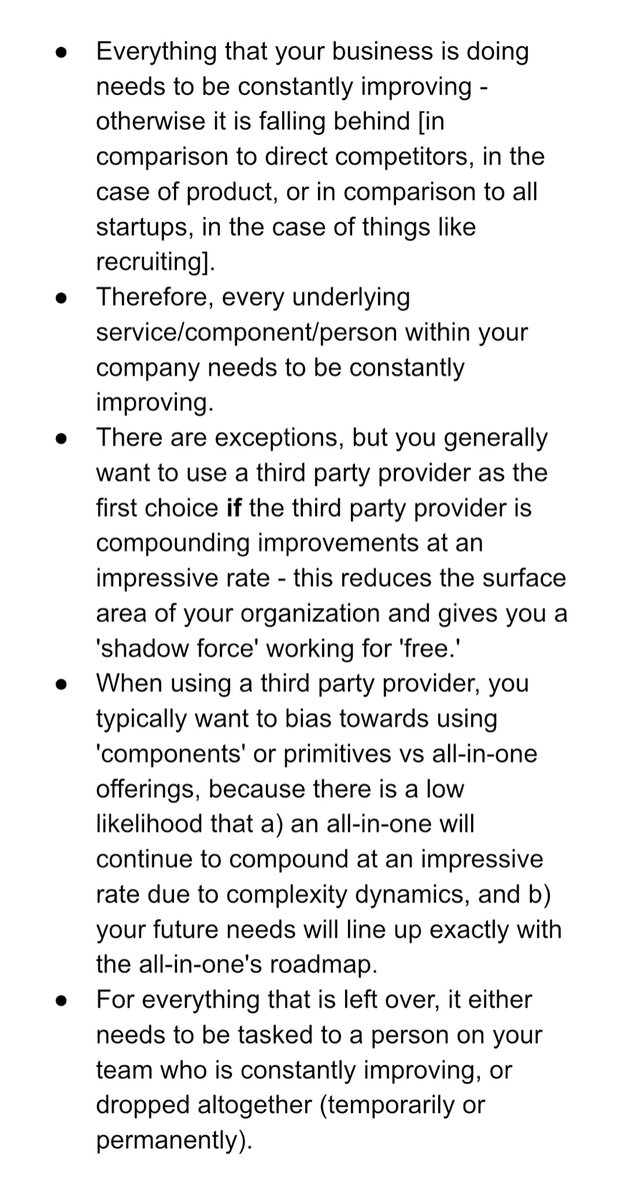
1/ Most entrepreneurs start with one goal in mind: FREEDOM. If you truly value freedom, you should have one goal for your first company: Something that can produce $100-$200k of personal income. It can be boring and doesn't have to scale.
2020-05-181/ A thread on fandom: I've been thinking a lot about this lately. 2/ This applies to so many things: music, games, (e)sports, brands, film + tv, creators, writers, artists. 3/ Legacy fandom (dad's music taste, mom's favorite team) is incredibly common. 4/ Sometimes you've been around something for a long time, and never really "get" it. 5/ I knew of the @GratefulDead for a long time, but it wasn't until a few experiences strung together converged to make me a fan. 6/ I always liked The Beatles, but I took a class on the band in college and aced the semester despite taking the class pass/fail. By the end of the semester, I knew a lot of semantic details and weird stories, but my obsession had made them my favorite band. <div id="tweet_7" data-screenname="jacksondahl" data-tweet="1261795875535286272" 7/ The @Angels won the World Series in 2002 (I was 8, and I became a die-hard Angels fan for nearly a decade (alas, moving to LA has made me an undevoted and oft-frustrated @Dodgers fan). 8/ In fact, few things I love were instant matches. Obviously, sometimes you just discover something and know it was made for you. 9/ This all contributes to why I take so much pride in my recommendations. 10/ I think a huge part of fandom and sharing what you l love is identity. 11/ Is this not what an "influencer" is? To create a community that loves what you love and wants to appreciate it with you? 12/ I'm part of building something I hope will create many long-term, die-hard fans in @100Thieves, so it's funny that I rarely think about the mechanics and psychology of what's happening here. 13/ Of course, most great brand-builders, celebrities, and successful artists get this, whether implicitly or explicitly. 14/ Experiencing great things is a delight, but why do we feel the need to become "fans?" Would that happen in social isolation?
May 16, 2020> New post 🔥 An investigation into how the biggest consumer apps got their first 1,000 users. Tons of learnings, including that just 7 strategies account for every big consumer apps' early growth. Highlights in thread below 👇 https://t.co/CL7l3ZMdnF > > — **Lenny Rachitsky** (@lennysan), 2020-05-12 <!-- The saved tweet is part of a 7-tweet thread. The syndication endpoint returns only the head tweet and clips it at ~280 characters, so the full thread was unrolled from threadreaderapp.com and read through the rendered page rather than scraped — the raw HTML there also carries the author's *other* threads, which a regex pass silently mixed in. -->
2020-05-12How to Kickstart and Scale a Marketplace, now in a deck https://t.co/5939WZpD1E **Links in this post** (t.co shortlinks resolved 2026-09-28): - `https://t.co/5939WZpD1E` → https://docs.google.com/presentation/d/1J9_kL-mTANwFjv4QB-8e-0Rkh4aIGRLdmLef7S7pp6k/edit
May 7, 2020I've been focused on getting Buffer through this period as unscathed as possible. One debt I believe is building in companies right now is burnout. To lessen that impact at Buffer, we'll try a 4-day workweek (at full pay) for May.
Apr 30, 2020Founders worry too much about highly funded competitors. Usually funding matters less than the founders' ability. In the short term, a highly funded competitor can hurt you by e.g. lowering prices. But if you survive long enough, it will ultimately become a test of ability. There have been cases where a highly funded startup used the money to kill off all its competitors. But not that many. And the highly funded startup often had the more able founders. There are few cases of highly funded mediocre founders beating underfunded great ones. So in one sentence, the strategy for dealing with highly funded competitors is: survive long enough to make it a test of ability. (This advice applies to more than startups.)
Apr 26, 2020LEADERSHIP: Marriott CEO, battling pancreatic cancer, addresses 150K+ global employees. Announces he is taking no salary and cutting exec pay by 50%. Expresses vulnerability & genuine care for every employee and their mission. Who wouldn't run through a wall for this guy? ### Quoting [[Marriott]] (@MarriottIntl) · Mar 19, 2020 A message to Marriott International associates from President and CEO Arne Sorenson. [▶ video — Arne Sorenson's message to associates](/images/tweets/hoff_1241011247249649664_qv1.mp4) *Quoted post: [x.com/MarriottIntl/status/1240639160148529160](https://x.com/MarriottIntl/status/1240639160148529160)*

One of the most challenging exercises for early stage companies is defining your initial GTM strategy. Shares his playbook as the first Head of Sales & Customer Success at Typeform and Notion.
Feb 24, 2020*Full 13-part thread, captured via the Chrome extension — the syndication endpoint returns only the head tweet.* **0/** There is a dazzling amount of inconsistency in what GTM metrics are presented at board meetings of early stage b2b companies. Here is my hit list of the most important, and why: **1/** CARR - total contracted annual recurring revenue is the single best metric for the health of a business. It encapsulates new logo growth, expansion, and churn in a single number. If you only show one number, use this one. **2/** Live ARR - Some board members prefer LARR to CARR because it can take a long time to implement a deal. And some never make it. Both is best, but for early stage companies I prefer CARR as it signals the market. **3/** Net New ARR - includes $ bookings from new logos booked and expansion net of churn and downsells. This is the best leading indicator of market pull. **4/** Net Dollar Retention - lately economics of b2b companies are more driven by expansion than up front ACV. This is the best indicator of that motion. Remember it is net of churn and downsells. **5/** Gross Dollar Retention - Gross retention reflects your churn and downsell and is often an indicator of how mission critical your product is. **6/** net new logos - as my buddy @devdutt says, 'new logos are oxygen'. They're the foundation you'll have to expand in the future. **7/** new logo ACV - tracking “Annual Contract Value" of new logos and % growth over time helps you manage your GTM strategy. This is particularly important if you're trying to move upmarket. **8/** CAC payback - If you have a couple quarters of sales data, measuring CAC payback ( s&m / (net new ARR x % GM) ) gives you a read on sales efficiency. The average startup has a CAC payback of 12-18 mos. If you sell to large enterprises (18-24 mos) and SMBs (6-12 mos) **9/** quota attainment - what percent of reps hit quota. This generally sits between 70-100% (if it's >100% a lot, you need higher quotas) This is the anchor number for knowing whether to scale sales. Quota should be at least 3x OTE (hopefully more) for this to be meaningful. **10/** net burn - early sales really takes an entire company, so I'd rather see total burn than trying to break out GTM unit economics. Ultimately I like to look at cumulative burn and comparing it to how much dollars it's generated **11/** net new weighted pipeline - pipeline generated in the previous period less pipeline removed (sold or lost). Good indicator of market pull, and a leading indicator for scaling sales. Generally a bogus number early on, but good discipline to be in the habit of reporting. **12/** Some of these only really become relevant after a few years of selling. But presenting them early on creates a common framework to center board discussions. And there is a lot of value in that /fin *Closing credit tweet: "Many thanks to @peter_lauten @aleximm @kshenster and @sarahdingwang for help putting this together."* ### Notable replies - **Glenn Solomon:** another useful metric, especially for comparing companies, is new ARR generated / net burn per period — surprisingly consistent per company, so it helps map the future. - **Brian Halligan:** would add the number of fully productive sales reps, and sales-rep retention rate.
Feb 9, 2020Just published a (very) deep dive on Spotify. 2500+ words on: 1/ The rise of “Ambient Media” 2/ Competitive dynamics shaping the global audio market 3/ Spotify’s ladder Also, why acquiring The Ringer is wholly different than Spotify’s Gimlet buy. https://venturedesktop.substack.com/p/spotify-the-ambient-media-company 1/ The emergence of distributed, "eyes up" devices (ex. AirPods) directly benefits audio more than other categories & the winner in audio over the next decade will also need to own an outsize share of something much larger: Consumer Ambient Hours https://venturedesktop.substack.com/p/spotify-the-ambient-media-company 2/ Music streaming is now a "commoditize your complement" market w/ platform players happy to burn 💰 long term to create value for core businesses. This pushed Spotify into a strategic corner but their response created significant opportunity. Podcasts are just the start. Spotify's Ladder 1/ Discovery 2/ Vertical Depth 3/ Expanded Formats 4/ Social Everything hinges on Differentiated Discovery as a core operating principle. The Ringer is uniquely suited to help Spotify nail rungs 2 & 3. More on that in the post. 👇 https://venturedesktop.substack.com/p/spotify-the-ambient-media-company 4/ One fun example to illustrate format expansion opportunities (Rung #3 in Spotify's ladder) is Travel aka "Spotify Experiences" 🏝 5/ Spotify's Social progress has been disappointing, but shifting their "resource mix" allows for more aggressiveness. Success here is the next existential hurdle the company needs to clear. More insight from @cheriehu42, @DCoolican, & @Victor_Patru 👇 https://venturedesktop.substack.com/p/spotify-the-ambient-media-company **Links in the tweet:** `https://t.co/Vmm7VZ4oWe` → https://venturedesktop.substack.com/p/spotify-the-ambient-media-company **Notable replies:** - **@itsurboyevan** — When I was on Pandora's corporate strategy team both us and Spotify were focused on owning the whole music experience. Find new artists, buy their… - **@Oaktree_Dave** — I think this is your best work yet. Wow. Well done, Brett. This is fantastic. Love your rationale behind why a Ringer acquisition would probably make sense - **@smarshall575** — As an educator, I love the potential of this media to unlock learning for many students who may not have accessed it in the written word. Bigger companies such as Audible haven't been interested in pursuing or supporting an education model (ie reasonably priced & more accessible)
Jan 24, 2020“We expected that good-to-great leaders would begin by setting a new vision+strategy. We found instead that they 1st got the right people on the bus, the wrong people off the bus—& the right people in the right seats." "What can we create together?" Jim Collins (@level5leaders) https://t.co/StZLoO5x2B https://t.co/F0iXn7zDp9 [1] https://t.co/Ny7iExR0DQ [2] https://t.co/A4xX2OoOI2 [3] https://t.co/ASh37BwWgj [4] https://t.co/Tjxv22DsCL https://t.co/yhlgWn7Zbn [5] delegation https://t.co/9gmX7svoGF [6] delegation https://t.co/VA17tf9J4H [7] delegation a. https://t.co/ONVogD5uYB b. https://t.co/g5D6uYu0HA [8] https://t.co/I1FG7al6cc https://t.co/WeHn454a99 [9] team size https://t.co/Q9Jt2ZJD9Y [10] https://t.co/WqM6IU0lXS [11] https://t.co/VF9KGxNGiV [12] https://t.co/FXwX0nrU8T [13] https://t.co/OB0EPFK3SI
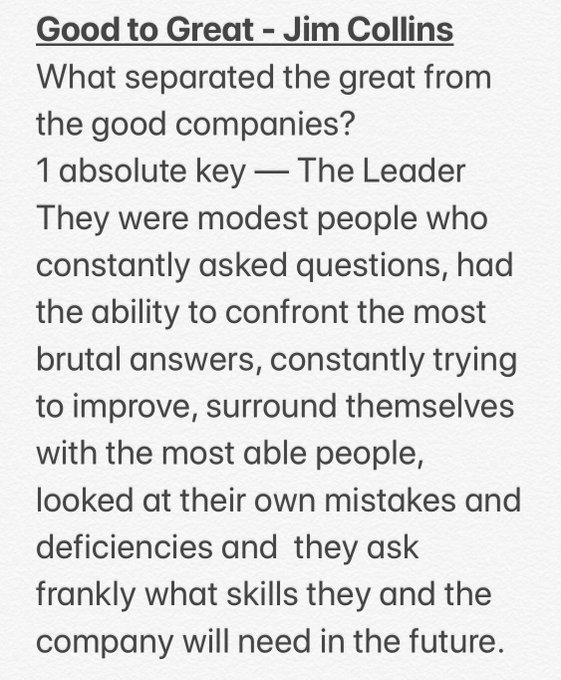

No coincidence that two of the world’s best companies — Stripe and Amazon — also have writing-heavy cultures. Writing forces rigorous thought. Here are some notes I’ve gathered from learning about @patrickc, the CEO of @Stripe. https://t.co/ysyLADEY5d
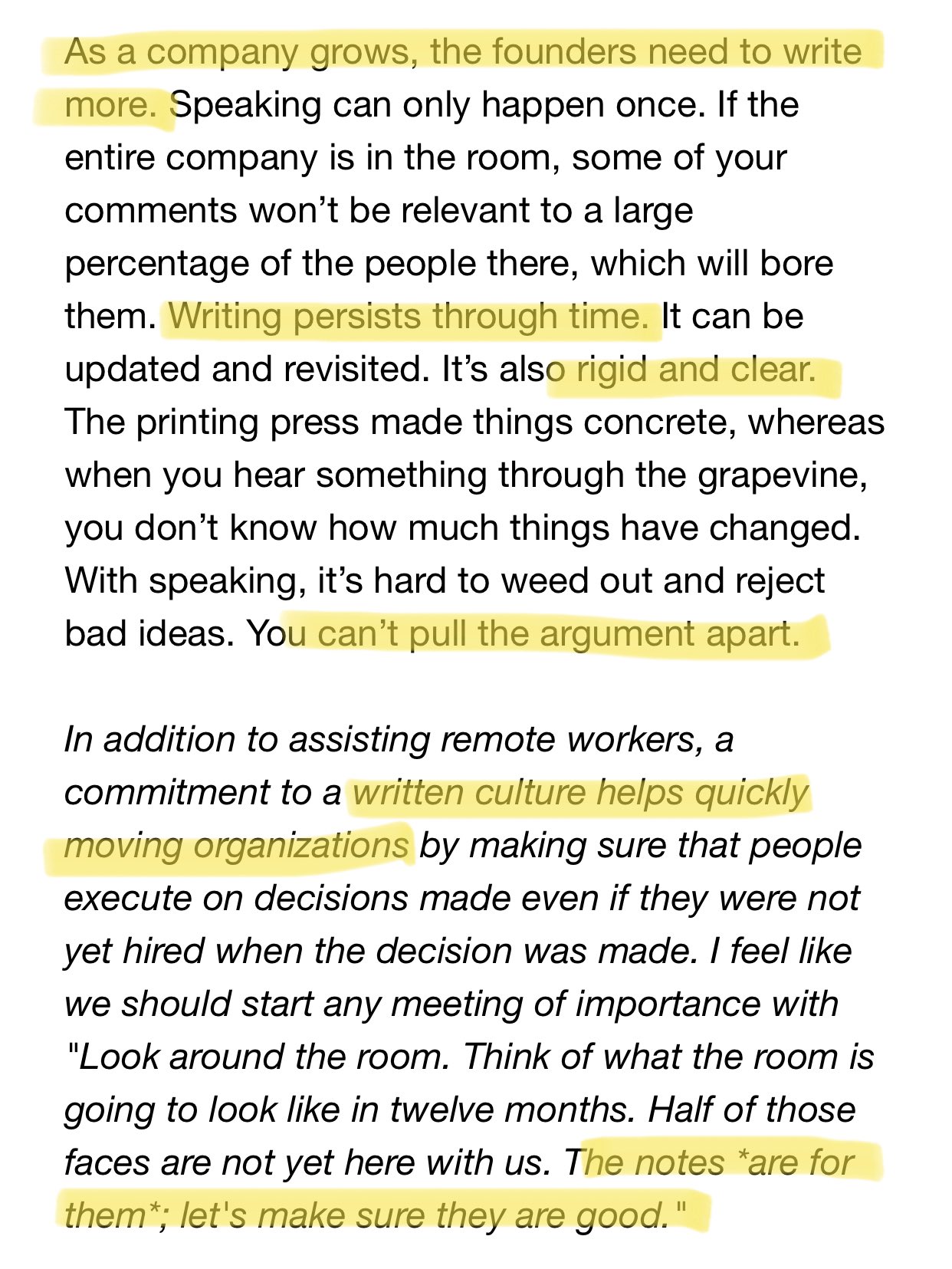
(1/11) Reflecting on Customer Support at @figmadesign this morning as our amazing CS leader @jscottpearson celebrates three years at Figma 💜 https://t.co/A6hXVeWWsr (2/11) I love the Support team at @figmadesign. The team is super smart, fun, positive and incredibly community minded. They stand up for our users and continually help shape the next chapter of our product. (3/11) And they are inclusive, welcoming the rest of the team into their work, serving as a bridge between our users / the rest of the company. (4/11) IMO a lot of companies misunderstand the role of CS. Support isn’t a cost center, but rather a key partner to marketing, product and engineering. (5/11) Marketing: great Support experiences breed customer evangelism. A strong product education effort equips users to teach their friends / coworkers, building the @figmadesign community. Meanwhile, past conversations help PMM’s find the right language to talk about product. (6/11) Product: How do you decide what to build? One of the key inputs should be a conversation with your product Support team. They are on the front lines every day and have their finger on the pulse of the customer. (7/11) When we think about building a new feature at Figma, we start by talking with Support and looking at tickets. As we go through the process of defining the feature, we often reach back out to customers that have written in to help us understand requirements / scope. (8/11) Finally, the relationships support creates with customers helps product validate that we have reached a solution that meets the customer’s needs. (9/11) Engineering: it’s popular to think of building software as a cold, logical process but sometimes it’s just plain messy. Whether it’s a weird, hard to reproduce bug or (G-d forbid) an outage, Support is our first line of defense. (10/11) They debug with customers and use judgement to decide when to escalate issues. When engineering is trying to get more data on a bug that only affects a small portion of our user population, support is a key partner. (11/11) Thank you to all of our amazing Support team members @figmadesign. And a huge thank you to @jscottpearson for your leadership, energy and friendship. We couldn’t build this company without all of you.
Dec 7, 2019Part 2 in my series on Marketplace Growth is now live: How do you decide whether to concentrate on supply vs. demand early on? 🧐 Learnings: 1. 80% focused on supply 2. Only Rover, TaskRabbit, and Zillow were demand constrained 3. Patreon 🤯 More 👇 https://t.co/8NTGSFzpzm
Nov 22, 2019After months of work, dozens of interviews, and countless hours – I'm very excited to release part one of a truly epic research project I've been quietly working on: "How to Kickstart and Scale a Marketplace Business" More context below (1/8) 👇 https://t.co/ghYCKOmrB5
Nov 20, 2019Moats are actually loops. Fun exercise—try to draw this for whatever business you work in or a company you love. From @maxolson https://substackcdn.com https://t.co/qznM8CIwBx
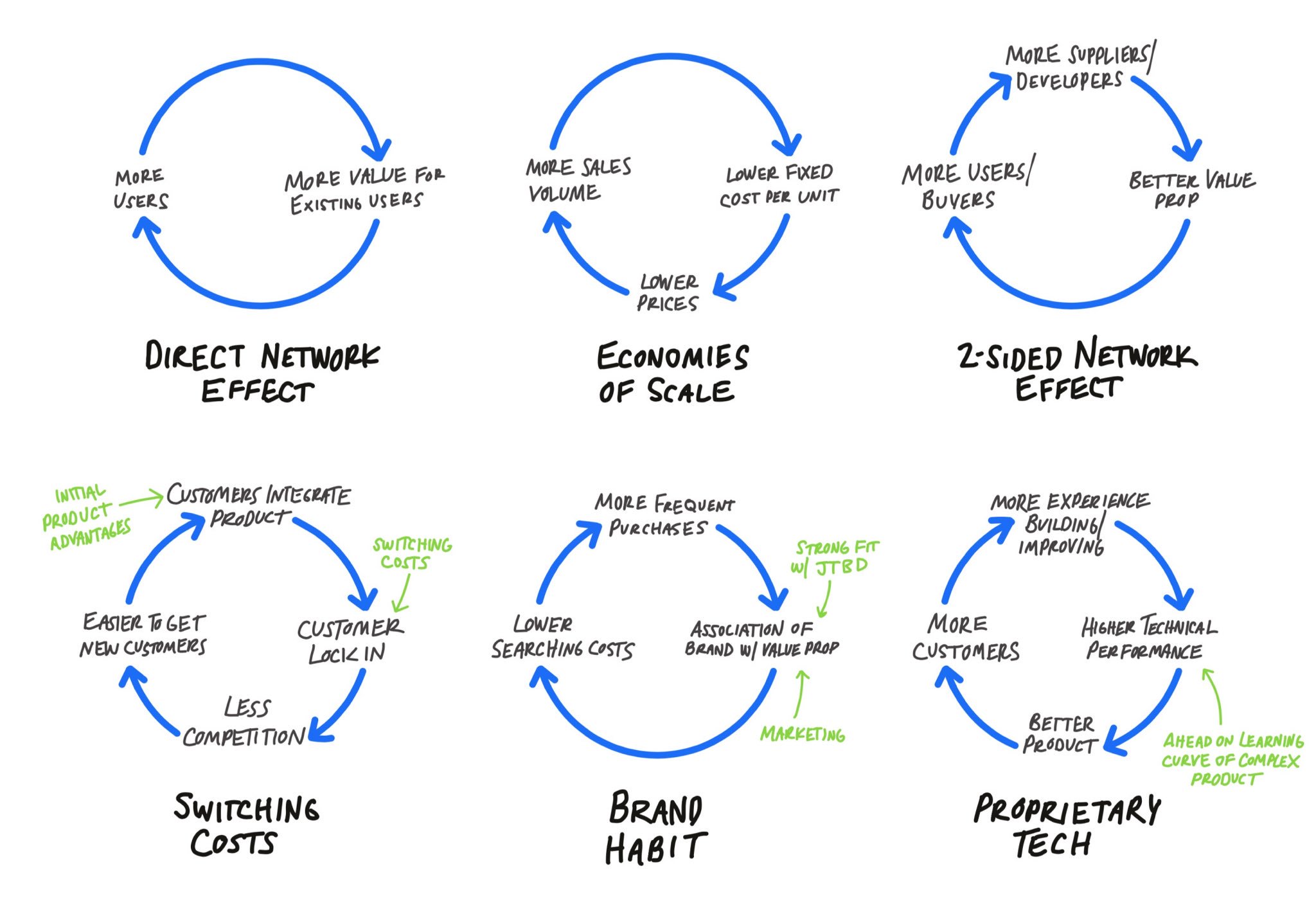
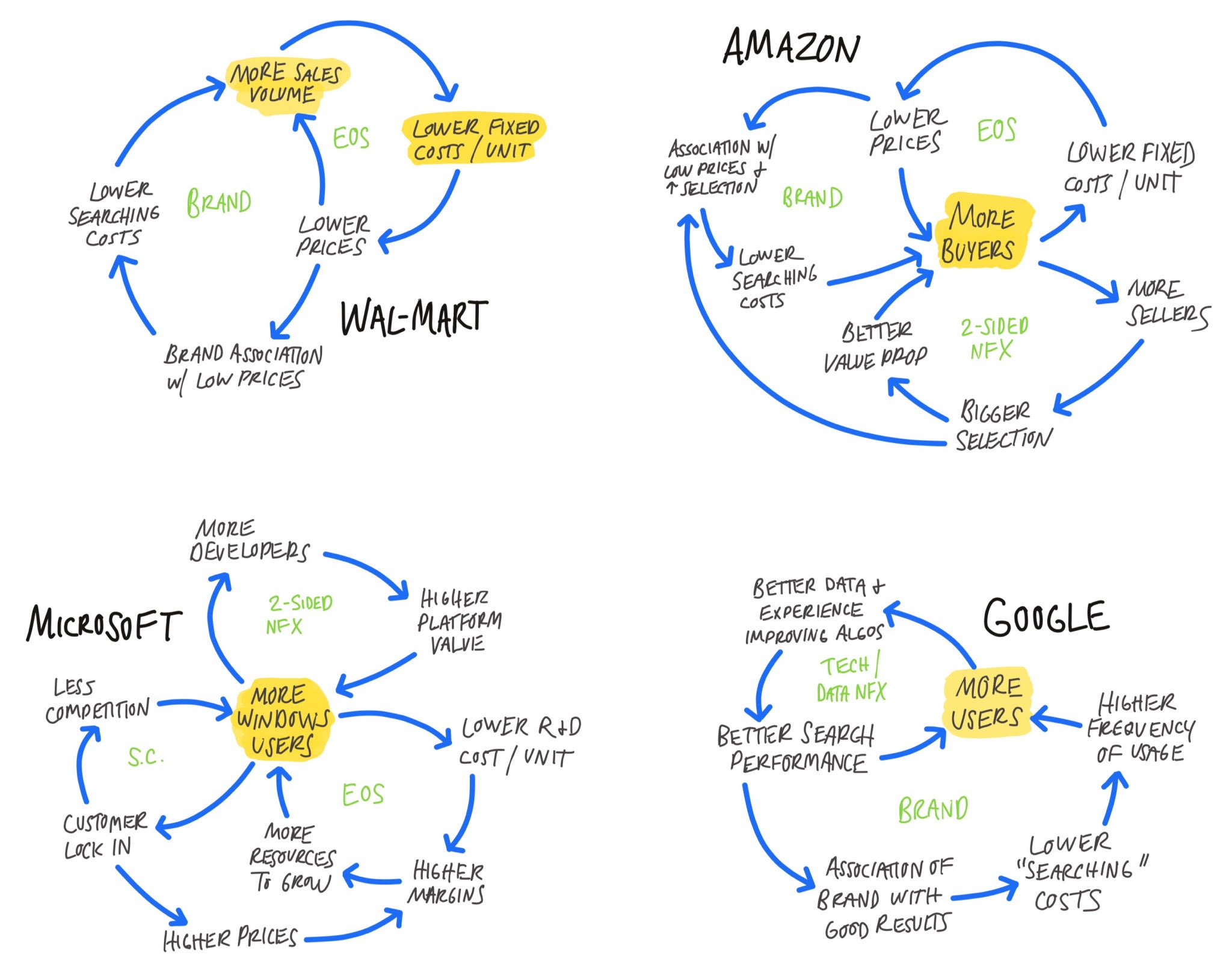
1/ Data businesses are generally misunderstood. DaaS has different metrics than SaaS. While there has been a lot written about SaaS businesses (how they operate, what metrics to watch, etc.), there has been surprisingly little written about data businesses. 2/ Great data companies look like the ugly child of a SaaS company (like Salesforce) and a compute service (like AWS). DaaS companies have their own unique lineage, lingo, operational cadence, and more. They are an odd duck in the tech pond. 3/ Data is ultimately a winner-takes-most market. As a data company starts to dominate its niche, it can lower its price and gain more market share and use those resources to invest more in the data … thereby gaining more market share (and the cycle continues). 4/ Data is a growing business due to: + growth in powerful software tools (like Snowflake, Looker, Tableau) + growth in # of data scientists + growth in the power of compute + massive decline in cost of compute 5/ DaaS is just about assembling verifiable facts. It is all about Veracity and TRUTH. Good framework is truth vs. religion. https://t.co/T1pMomSZhn 6/ Your data will be much more valuable if you enable it to be joined with other datasets (even if you make no money off the other datasets). This is the 1 thing that most people who work at data companies do not understand. Build join keys into the data: https://t.co/fD2i1U1fav 7/ DaaS margins look horrible at $10M ARR and look amazing at $100M ARR because the cost of data goes in COGS. “incremental margins eventually become extremely attractive at successful data businesses” - Michael Meltz, EVP of @Experian 8/ The goal of getting to market share dominance is NOT to increase prices. The goal is to lower your CACs so that you can LOWER prices for your customers. CACs go down because there is one dominant player. DaaS is like Amazon: “your margin is my opportunity” 9/ DaaS is growing. Just 5 yrs ago, only ~20 of the 11,000 hedge funds were using alternative data. Today it is still only about 100 funds. In five years it will be over 500 funds. And every other industry is buying data at the same rate as hedge funds. 10/ Good examples of data companies include: @accuweather @bomboradata @clearbit @TheCoStarGroup @DnBUS @liveramp @reonomy @verisk @WindfallData 11/ Read more about Everything you want to know about running DaaS companies (Data-As-A-Service Bible) at the @SafeGraph blog: https://t.co/tgrn8CVskL 12/ Data companies require humility -- your customers are the innovators and you are in a supporting role. https://t.co/T6Dw90Rvdg
Jun 18, 20191/ I really like the question @lpolovets . I'm struggling to answer only because I'm trying to figure out how to write it in a way that a) isn't weirdly showy, b) gives something so others can benefit c) I can share publicly. https://t.co/HUz9BUEYOU 2/ To be clear we have board members and investors that have done a TON to help the company beyond just writing very meaningful checks. They have done much more than what I will write below. 3/ But I’m trying identify things to communicate via a TweetTornado ™ that meet criteria in #1. Useful/valuable things board members have done: 4/ Intros: I’ve had the most luck with intros from the board to PR and other entrepreneurs. I’ve had the least luck w/ intros to capital and potential team members. (the later is particularly frustrating for me because it feels so easy) 5/ Having said that we met our largest $$ investor at a @canaan dinner – I think they sat me next to the investor on purpose which was awesome. That is super valuable. Big thank you to @dtcippy 6/ Steve/Ben at Clocktower has also been phenomenal at intros and just broad networking. Getting to certain people can take me 15 hours or can they can do it in an email. @kraneland and the entire @GVteam team has also been fantastic at introducing us to folks that matter. 7/ Fireside chats: Sounds small, I know. But the board members talking to the team helps to clarify and reinforce key strategic points. Shows support for the company. Connects the co. w/ the board in a meaningful way. It’s just helpful. 8/ Relationships w/ rest of team: I know not every investor or CEO shares my views here, but I love when our board develops relationships and gives feedback directly to our team. Helps with their development and I think it’s nice way to celebrate the work being done by the team. 9/ Earlier this year @aweissman had a call with a few team members and I literally didn’t even know about it. I LOVED it for them and was so grateful he was willing to do it. [@usv is our largest % investor] 10/ To clarify there is a time and place for that. That relationship has been created with those team members over years. It takes trust on all sides for it to be effective. Lobbing in a cold call w/o a strong relationship damages the trust. 11/ Shoulder to cry on: this is honestly a really brutal journey. Any founder/CEO that tells you it isn’t is lying and I don’t care what their performance is. If the investor doesn’t recognize it is brutal (despite the pretty graphs they see) that investor is out of touch. 12/ I feel very lucky that several of our investors/ board members (but not all) are able to let me have just really hard conversations. When we miss a goal, when something is just really hard for me personally- those people have a calm/steady hand. 13/ In particular Matt Christensen at Rose Park. Absolutely world class at keeping his calm when other investors might flip out. His zen gives me zen. 14/ We’ve had both- the investor(s) that can keep calm and those that will amplify a difficult situation 10x. To say the later is unproductive is generous. More accurate would be destructive. 15/ Strategic Insights: We’ve gotten good insights over the years from several investors/board members/advisers. Just really hard to call it out in this forum given necessary context. 16/ Community: I’ve mentioned before but @usv's email community for CEOs is just awesome. Creates as much value for us as anything. 17/ Straight talk: Board members and investors have to juggle a balancing act. When to support and cheer, vs. when to give the Straight Talk Express. @Levitan has been terrific at giving me a first class ticket on the Straight Talk Express over the past 7+ years. 18/ Feedback on a round: @jeff_jordan and @VCsurferDAD each gave really helpful feedback when they passed on our deal several years ago. I’ve since referred both of them deals. It made us better. They were clear and direct- didn’t play around. 19/ Since then I’ve referred more deals to both of them than to some of our investors not mentioned here. Dear all investors who think they should ghost away- please reread that sentence. You create SO much goodwill by just being upfront and direct. 20/ I was reminded of Good Board Member v. Bad Board Member TweetFury https://t.co/XwNgphoO5K 21/But these are still best thoughts I’ve read on being a great board member. https://t.co/oXPFw9zUJg
Mar 21, 2019End of every college/grad class I guest lecture, I say the same thing: "I'm happy to help if I can be helpful. Here's my email address. Reach out." Of last 4 classes, comprised of ~150 people, 5 people contacted me. 2 of them start jobs @adventur_es shortly. Basics matter.
Mar 13, 20181/ I’ve learned a lot about traits of a successful manager (i.e. CEO) after 42 months in this role. we’ve mapped 4 areas in a new framework. 2/ these 4 areas* include: A. Foundation B. Education C. Work Experience D. Personality *not all of these are created equally 3/ the “Foundation” area contains traits we see the best CEOs excel at: A. KPI discplined B. Fires well C. Self aware 4/ we found for best CEOs (in or outside SVC portfolio), having a college degree or attending a top 25 school didn’t impact velocity of co. 5/ the “Work Experience” area highlighted the importance of matching CEOs to their previous work domain 6/ the “Personality” area showed us traits that exceptional CEOs bear: A. They are decisive in decision making B. They are blunt 7/ entire template framework is open-sourced 👇🏻, where you can see each of these 4 areas and associated key traits https://t.co/gpA0F54A3I 8/ we’re inspired by our own lessons during the first few years of an investment fund but also lots of reading https://t.co/oLmwNBLt3L .@bhorowitz on why honesty and clear communication are important traits of great managers. a must read. https://t.co/ftUVaQVdoo this is such a great and iconic reading list for a general management course geared toward entrepreneurs https://t.co/VztCsOJERx .@eugenewei on a company culture that embraces KPIs and “radical transparency” around leading indicators to focus on https://t.co/Z3N31USr4M the “do-to-say” ratio in measuring an employee's ability to follow through on execution is a great, easy-to-quantify rubric https://t.co/FYLj4VokXP the most honest, forthcoming CEOs we know tend to be the better performing managers. don’t hide the bad and wait to share, confront it first and share a plan of how to improve. https://t.co/WGk9Vebx3a knowing when to “fire oneself” from your current role as a manager is often overlooked. @libovness says it well in his path from product to management, which may sound counterintuitive but so right. https://t.co/3pGODNgrlK one of the tweets that I often come back to around this topic, particularly around the evolution of a founder to manager to leader https://t.co/owp6m5brij "Great teams are made when things are hard...when you have to dig deep...when every single member knows where they’re going and will do anything to get there [and] are not created with incentives, procedures, and perks." - @pattymccord1 this is such an incredible few lines to grasp about the CEO of a company valued at $91b w. 70k employees and an investment team of 200 managing over $100b of assets. having a leader know and remember every working number of a complex biz is rare. https://t.co/89hVi9yjRl .@zebulgar w. tactical management insights after evaluating @rabois interview over 100 C-level execs. key candidate questions: 1. “What would you have done differently at your last company if you had been CEO?” 2. [Are you effective at recruiting?] https://t.co/NAvDyQOKai .@sama on observing managers (often first-time operators) via YC: "being a fast mover and being decisive - it is very hard to be successful and not have those traits as a founder" and the characteristic that strong founders are competitive (as athletes) https://t.co/1lZciepu7s "the spectral signatures of the best companies i've invested in are remarkably similar" - @sama on describing select characteristics on exceptional managers (founders) https://t.co/tuEFMdNZhg “What three things would you do to destroy the business as quickly as possible? Give yourself a one-year time frame.” “In which (single) area of life do you have the best taste? Do you work in that area? Why or why not?” select mgmt q’s via @LennyIce 👇🏻 https://t.co/jTC8epmrrI https://t.co/6OEPMD1TR3 what a great framework for (1) providing feedback and (2) improving feedback loops on decisions @justpw wrote this in response to how VCs say “no” but it’s applicable for any manager https://t.co/Ci0gtyytbj https://t.co/7Vlu431pSa I’ve been constantly reminded about the power of speed and adaptability across management teams, esp. as it relates to (1) headcount planning + (2) resource allocation some thoughts 👇🏻 TIL that @DeptVetAffairs has a set of personality based questions available for use in the public domain. after reviewing, these are incredible and applies to so much more than job interviewing. overview: https://t.co/9QVpHavScu questions: https://t.co/eLr7XoTu3W h/t @m_nooj .@GrahamDuncanNYC’s reference guide and sets of principles when beginning an interview process https://t.co/eoa82OX77M .@boztank on how the best management teams utilize change to their advantage, esp. when change is “chaotic” https://t.co/DDcSSieTCQ .@wileycerilli on management lessons for new CEOs, from starting his first company to selling after 2.5 years in 2013: “Your job is to create the best team. It’s not to execute.” “Hire those who say they can and have shown that they can.” https://t.co/BXefcUKpRY
May 16, 2017It is cheaper and easier than ever before to start a new business https://t.co/5oVCjQygkC and yet the reverse is happening. What is harder today is creating a new moat which allows the startup business to survive. https://t.co/dwA8M1huQ3 Charlie Munger: “We buy barriers [moat]. Building them is tough. Capitalism is a pretty brutal place." It is rough out there. Really. "One competitor is enough to ruin a business running on small margins." Charlie Munger “We have to have durable competitive advantage.”