In Defense of Disney
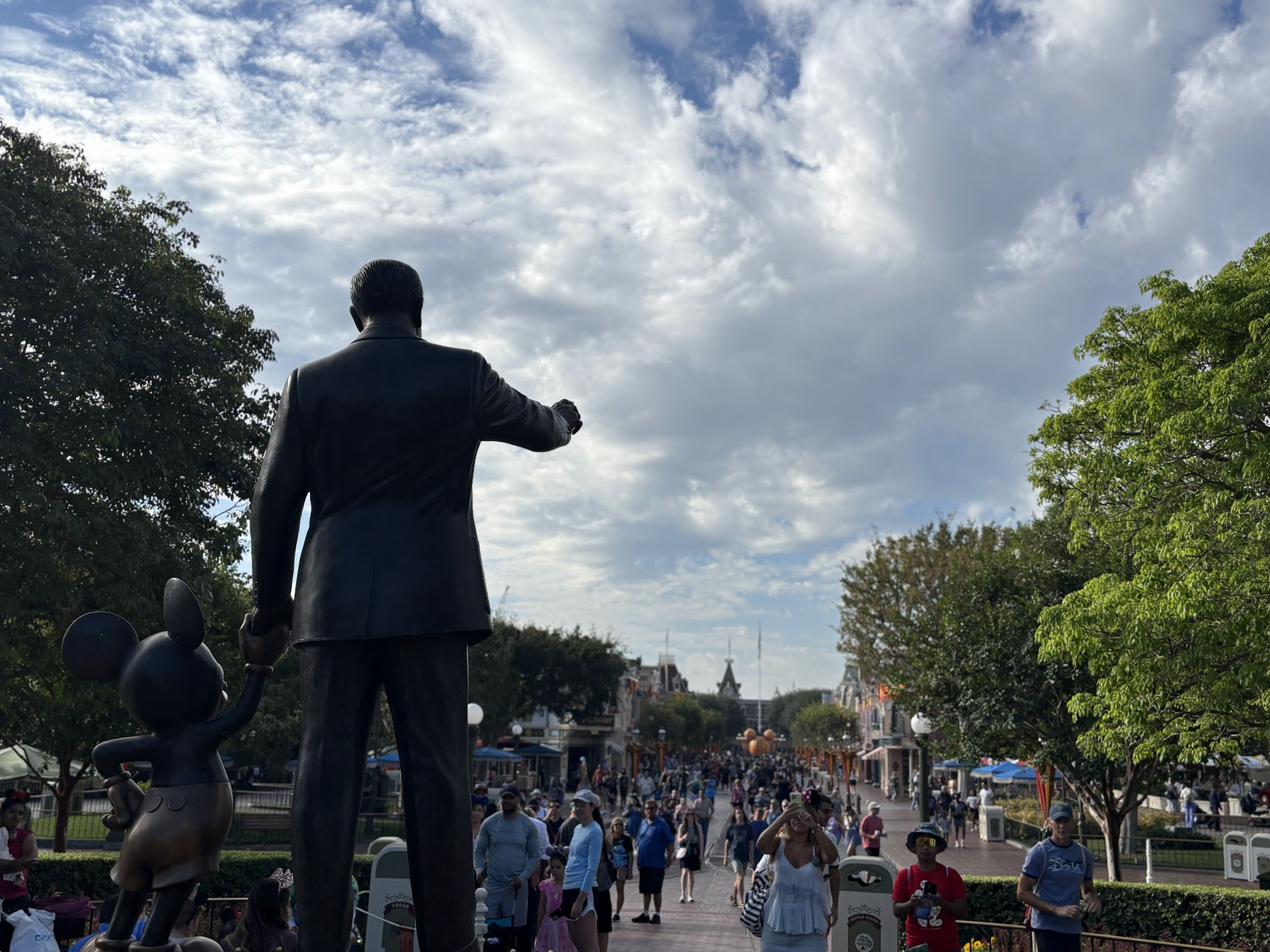
One of the things that happens when you’ve been writing consistently for a long time is that you start to revisit life experiences. I was writing when I had my third kid and my fourth kid. I’m later than usual this week because I spent Saturday driving back from a family trip to Disneyland. That same thing happened three years ago the last time I took my family to Disneyland.
Disneyland holds a special place in my heart because I feel a certain spiritual experience when I go. I perk up anytime I see anyone discussing it.
I perked up a few months ago when I saw Mike Solana write a Pirate Wires piece about Disney as a city builder. When I wrote my piece last time I went, I talked about the book I had read, Walt Disney and the Promise of Progress City; a great exploration of an element of Walt Disney that no one gives him enough credit for: a developer of the future. I’ll come back to that.
But not everyone’s experience with Disney parks is rooted in futuristic urban planning. In fact, not everyone even has a positive feeling about these parks. So, given 90% of my brain capacity ended up thinking about Disneyland this week, that’s where my writing has trended.
- (1) First, I want to reflect on some of the things I’ve seen about why people get annoyed at Disney.
- (2) Second, I wanted to articulate why I actually think revisiting what Walt Disney accomplished may be the most important thing any of us could possibly do.
- (3) Finally, I wanted to put into words what I want to learn from the way he operated.
It’s A Small (Awful?) World?
The same way I always do when someone mentions Disney, I perked up a few weeks ago when I saw Katherine Boyle tweet about disliking Disney because it had become optimized for adults. Someone else described it in no uncertain terms: “I can’t think of a more miserable experience than going to one of the Disney parks.” I felt immediate defensiveness of the parks when I saw those reactions.
Both tweets referenced a NYT OpEd called “Disney and the Decline of America’s Middle Class.” The piece describes how big companies have become more capable of monetizing the more affluent market as the middle class has disappeared. And that’s true. But the piece unfairly lays that injustice at the feet of Disney, while in the same breath admitting that, as rivals like Universal started to charge more to let people cut the lines, Disney held firm. They held firm for almost 20 years, before having to give in as basically every ticketed experience around did the same.
The story contrasts two experiences: one household that earns $80K a year (in line with median household income) and a “tech executive” (because of course they want to take a shot at tech). The wealthier exec was able to pay way more to do more rides, in half the time, and have a great day with limited wait times. Meanwhile, the poorer family struggled when their electric wheelchair broke down and they had to save for years for that trip.
I brought up this story to my father-in-law (while standing in line at California Adventure’s Grizzly River Run) and he made a good “and yet” point. Income inequality continues to further exacerbate the different economics behind the types of experiences we can each have. And yet, the Disney parks continue to be packed. Disneyland alone attracts ~30M people per year!
If it’s been completely optimized for adults or is, in fact “the most miserable experience” you can think of, why does it continue to attract so many people?
I found myself pondering this question while walking out of Tomorrowland as my family was deciding what to do next. “It’s A Small World?” someone suggested. I kind of groaned internally. What feels like the most basic and cliche ride; I wasn’t necessarily excited. But it was a 5 minute wait, so we went. And there, in the halls of a ride that premiered at the 1964 World’s Fair, I got my answer.
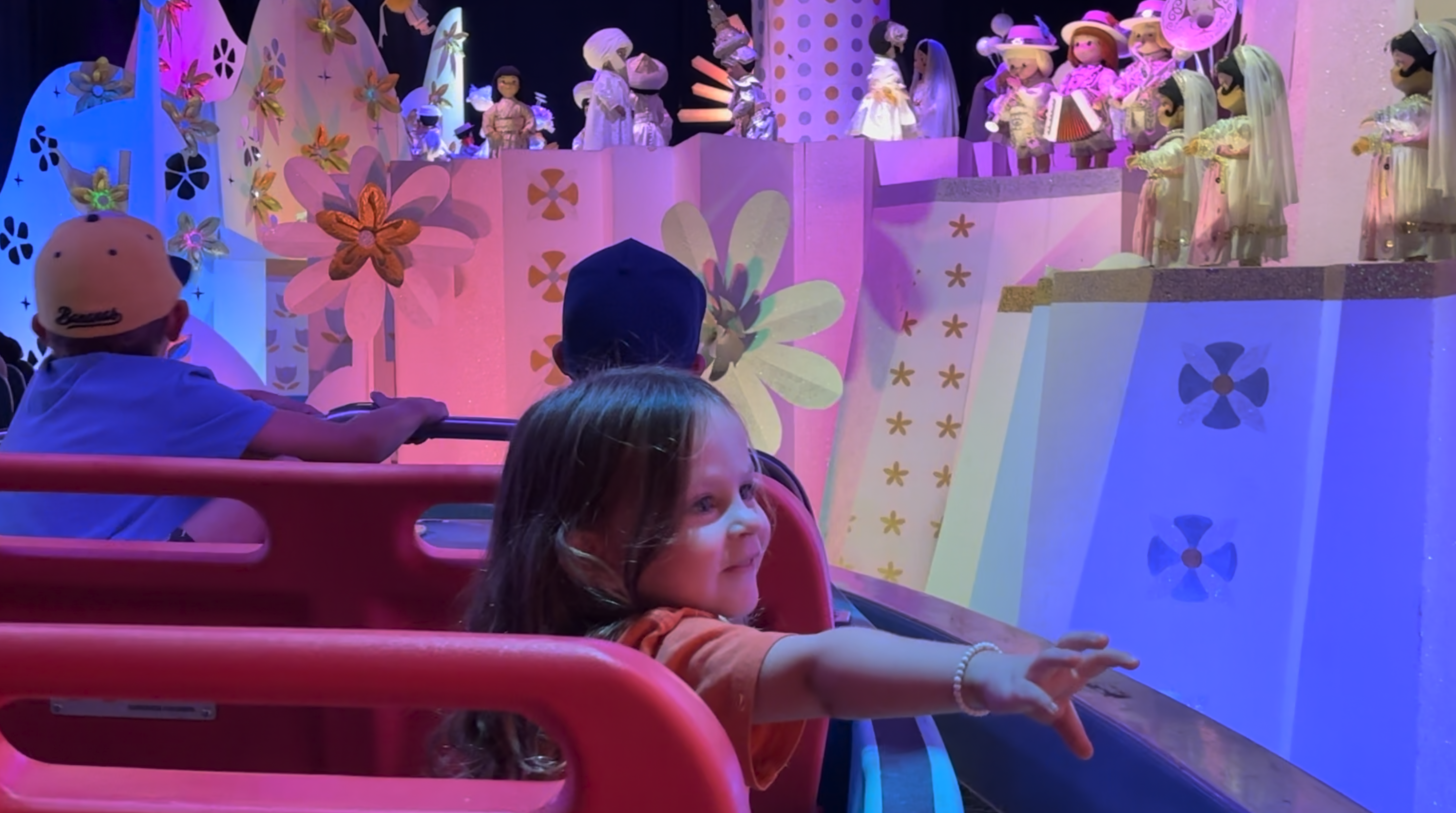
My three year old has probably never heard It’s A Small World. She didn’t see any recognizable IP she’s gotten exposed to during screen time. She wasn’t resonating with a story she had heard somewhere before. She was simply going through a well-designed experience with colors, dancing, animatronics, and a beautiful song that struck something human inside of her. And it brought joy.
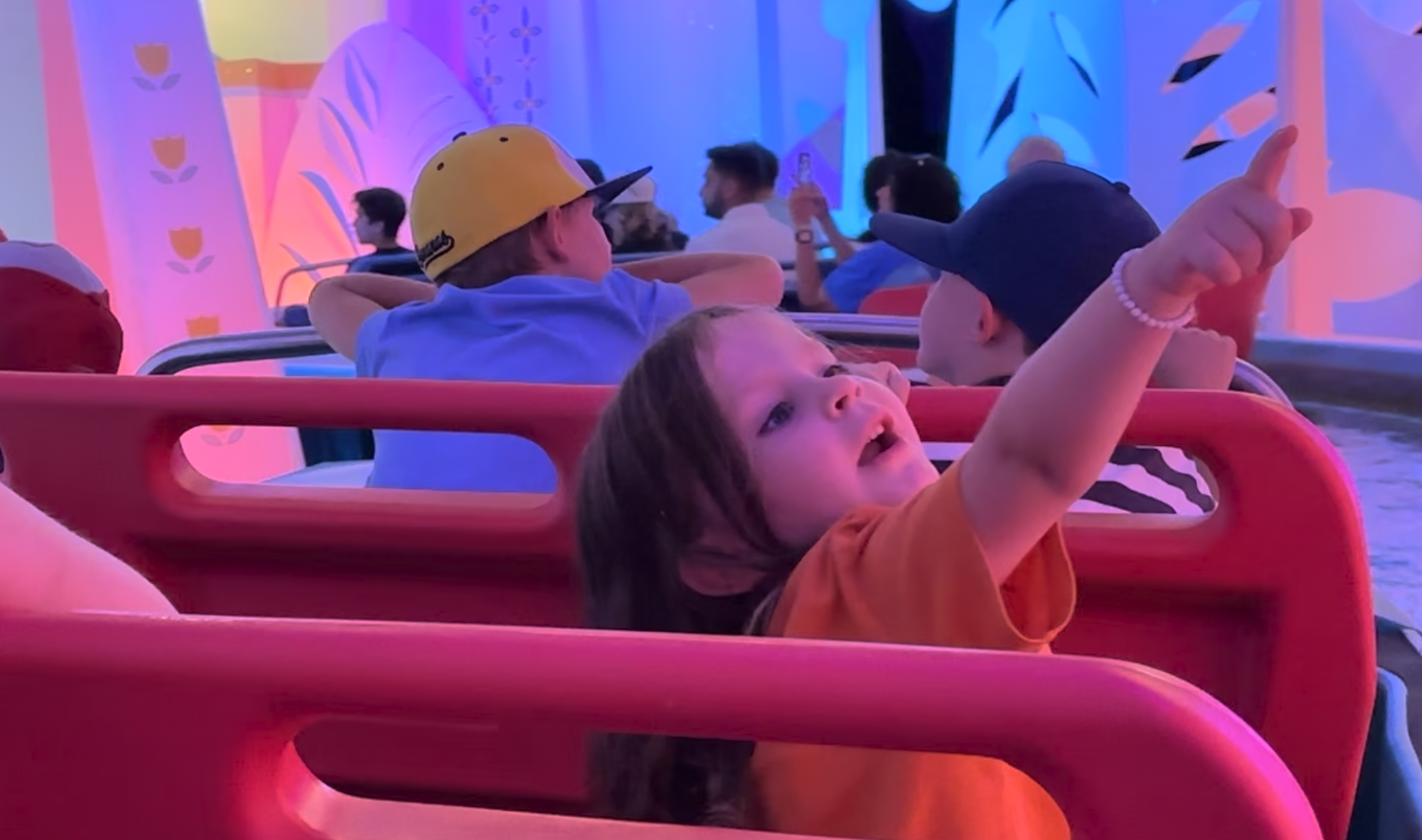
We went on over a dozen different rides over the course of several days. But laying in bed late at night with my wife the night before we went home, reflecting on the trip, I knew immediately that watching my daughter feel that special feeling was the absolute highlight of the trip.
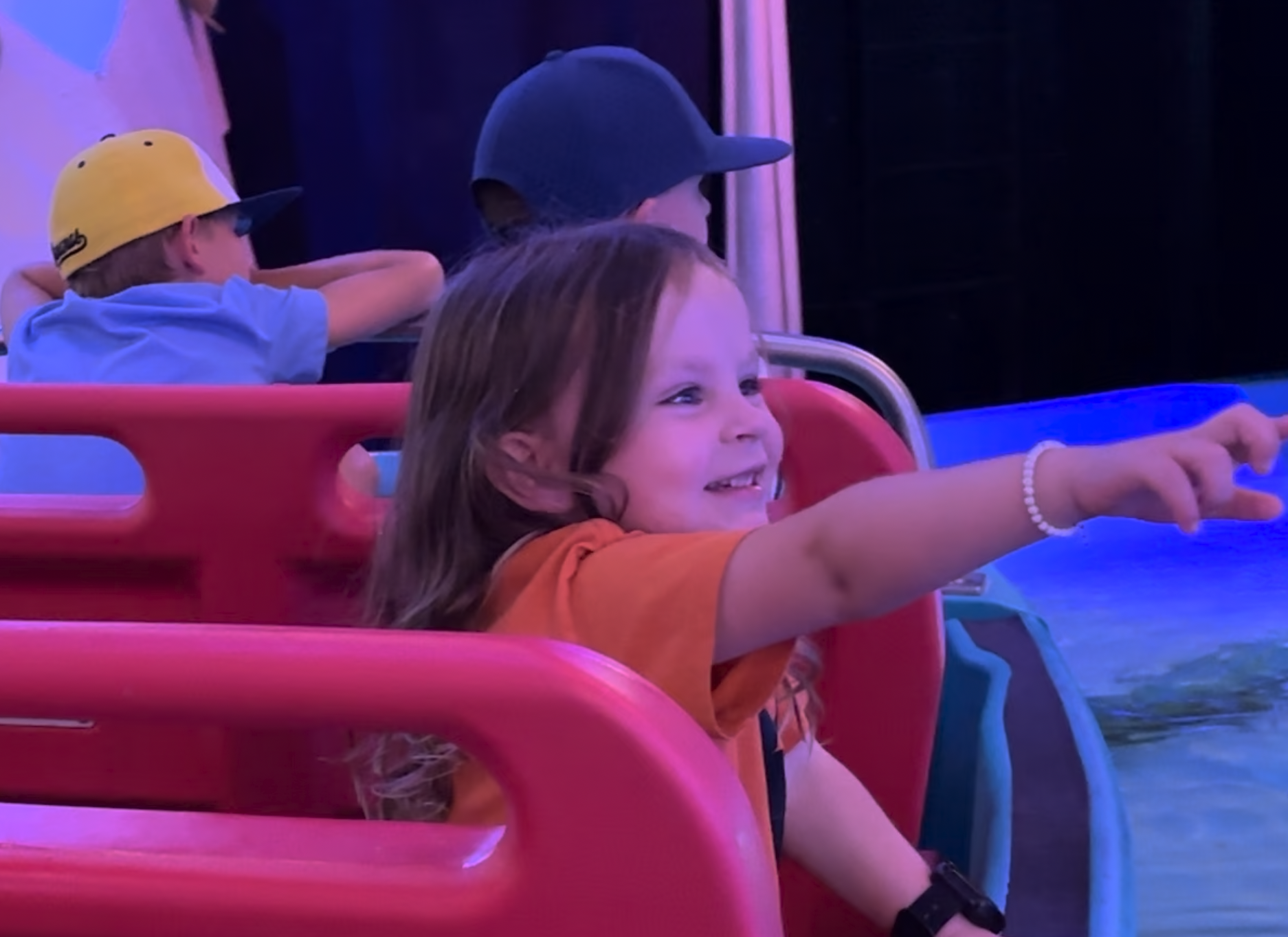
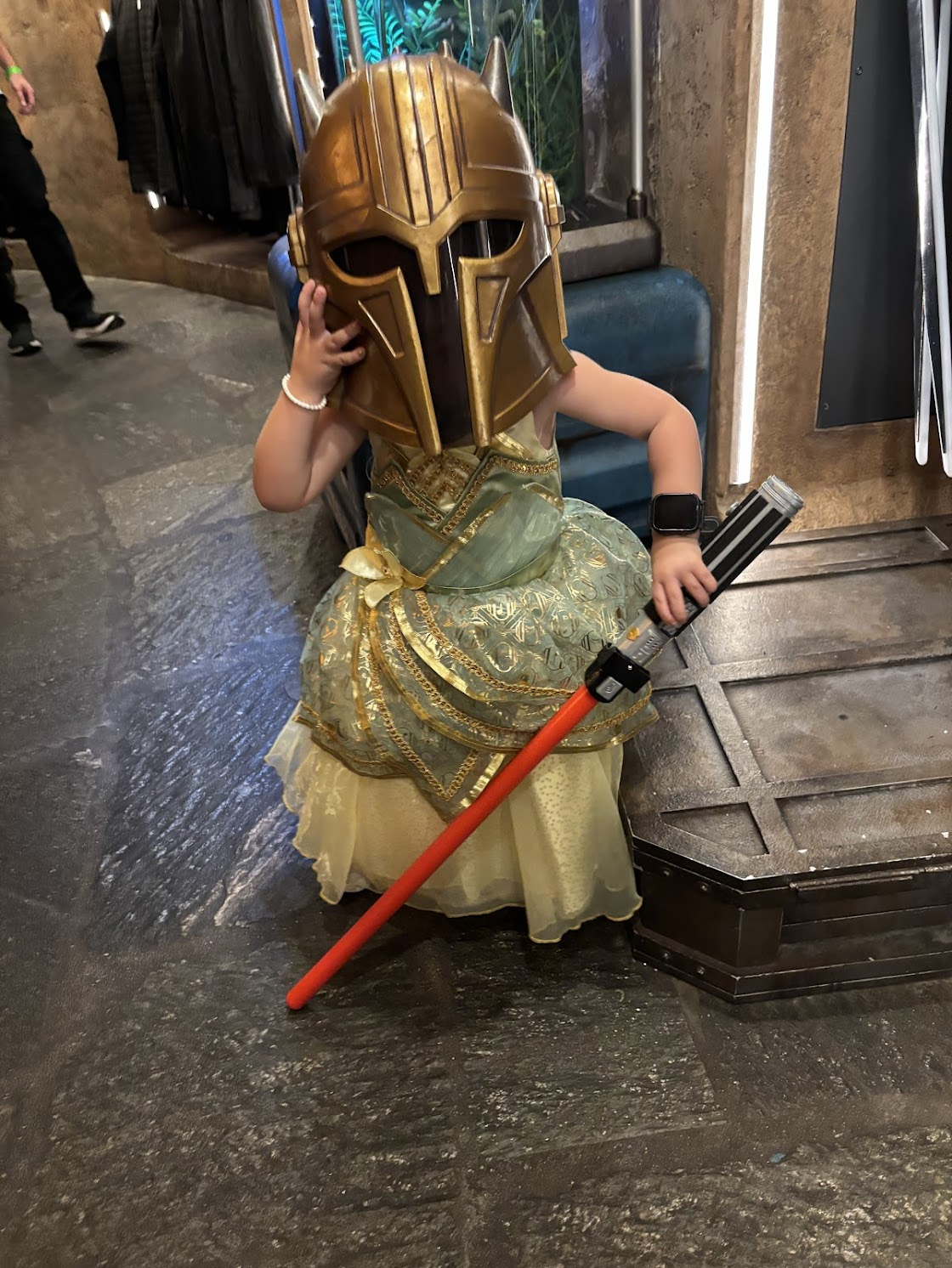
And, just like every other human being who has gone through that ride, that song was stuck in her head! Hours later when she was trying on Star Wars swag and trying to fight me with a lightsaber, she was still singing it under her breath.
A Universal Experience
One of the fundamental elements that Walt Disney, as a person, was so uniquely good at was tapping into a core shared human experience. Storytelling was the first medium he used to tap into that core something; amusement parks were the second. But he was always tapping into the same special something. In the Progress City book I mentioned, there is this great line comparing Walt’s special talent to some of the known practices of architecture:
“‘Human feeling is mostly the same in every person’. Some would argue that this could not be true as we are all individuals and we have different experiences, backgrounds, cultures, and education. ‘Each of us has our idiosyncrasies, our unique individual human character’ and ‘we often concentrate on… talking about feelings, and comparing feelings.’ [But one architect’s] forty-year research has shown that those individual qualities account for only 10 percent of human feelings. The other 90 percent are the ‘stuff in which we are all the same and we feel the same things’. One of Walt Disney’s greatest gifts was his ability to understand and tap into those universal feelings.”
It’s A Small World is just one small example, but its a perfect example. It reminds me of a story, though I’m not sure where I heard it (maybe Warren Buffet? Maybe a book on the history of journalism?) It’s about how one local newspaper managed to thrive for years after local print had largely declined because they followed a specific universal principle: people want to hear about themselves. So the paper measured success by mentions per column inch. The more mentions, the better. Get as many people involved and mentioned in the stories as we can.
The same is true of It’s A Small World. Everyone wants to see their culture represented. Because it is, in fact, a small world, after all. The lyrics represent that universality:
“It’s a world of laughter A world of tears It’s a world of hopes And a world of fears There’s so much that we share That it’s time we’re aware It’s a small world after all There is just one moon And one golden sun And a smile means Friendship to ev’ryone Though the mountains divide And the oceans are wide It’s a small world after all It’s a small, small world.”
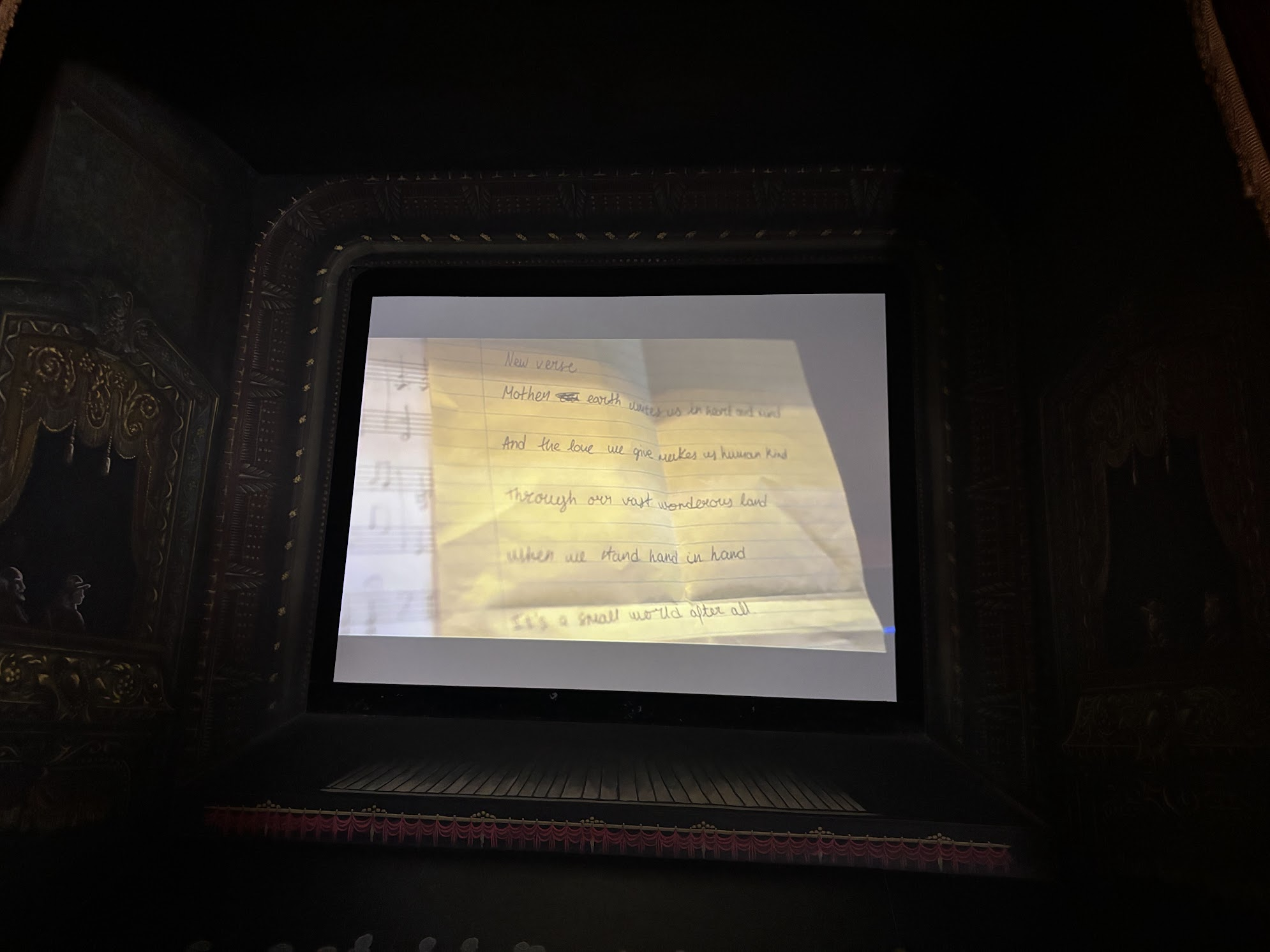
I was walking through Main Street in Disneyland as I was pushing my youngest in the stroller who was taking a nap, and I came across a documentary in one of the theaters that talked about It’s A Small World. It mentioned how, in 2023, the late Richard Sherman, one of the two brothers that wrote many of the iconic Disney songs (including Mary Poppins and It’s A Small World) wrote a new concluding verse to the song:
“Mother earth unites us in heart and mind And the love we give makes us humankind Through our vast wondrous land When we stand hand in hand It’s a small world after all.”
Talk about a universal experience to tap into. The propaganda Disney peddled was fundamentally about humanity. It wasn’t always ideal or the most thoughtful. But it was, and is, at its core: human.
Now, for me, that’s a good enough experience to close the book on “Disneyland sucks.” My response? You’re wrong.
Your ticket prices are too high? Your wait times are too long? So are mine. Lets find solutions that make things cheaper or reinvigorate the middle class. But don’t tell me the Disney park experience doesn’t offer joy. Because it does. Maybe not every aspect of it. Maybe not for every person or attitude. But it’s there.
But that’s just the beginning of why Walt Disney offers something worth studying. It doesn’t stop at shared human experience. It goes further into the throes of shared human progress.
The World of Yesterday, Tomorrow, & Fantasy
On one of our days walking into Disneyland, I noticed a plaque at the top of the arch just before you walk into Main Street that I had never noticed before:
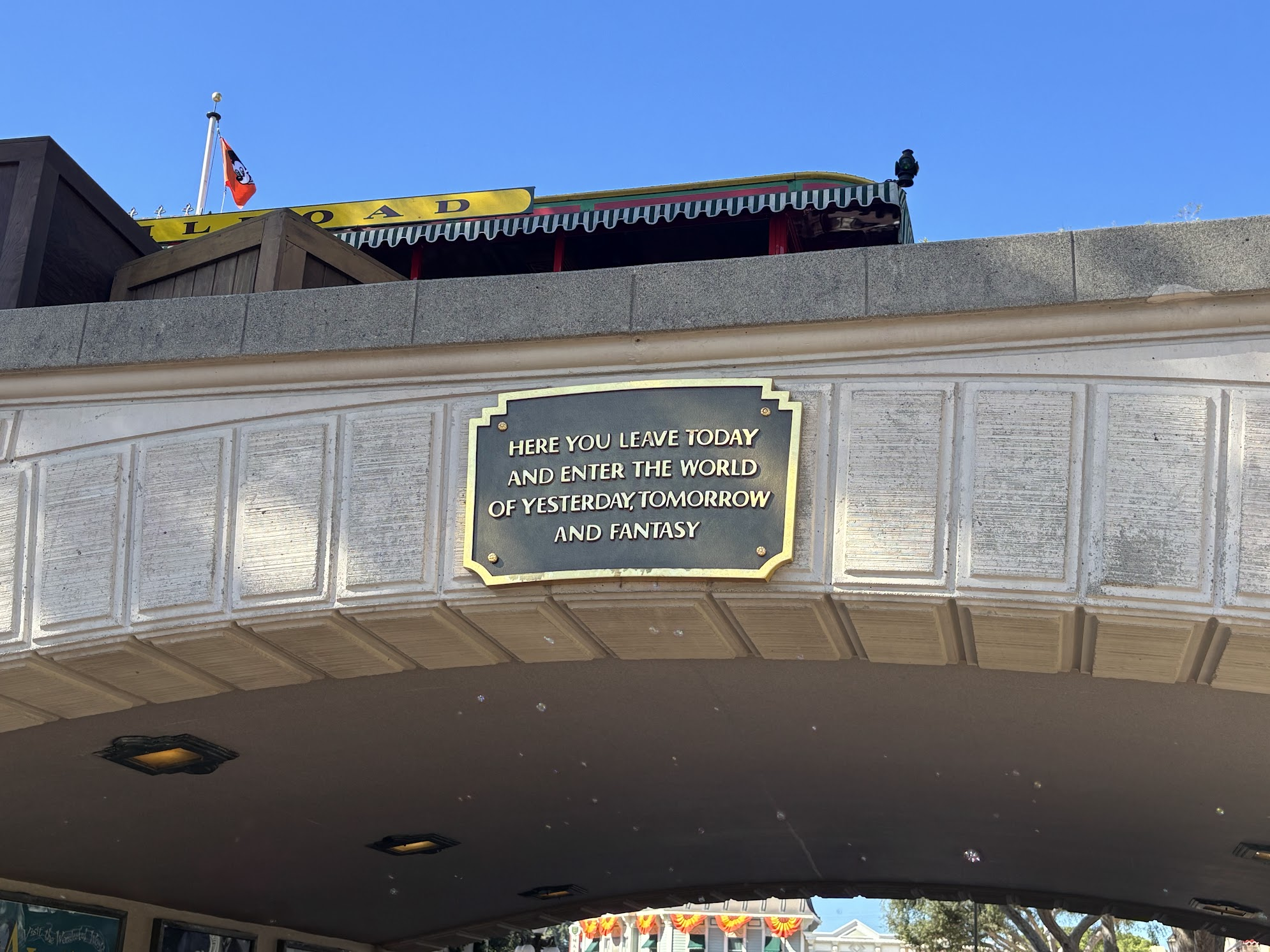
“We leave today.” Walt Disney was obsessed with offering something that took people out of the world they were living in. Like I mentioned before, his first medium for that was animation. His second was amusement parks. As the Progress City book puts it: “Timeless stories weren’t enough for Walt; he also wanted to create timeless places.”
The journey is the same across mediums; from stories to places, it was about revolutionizing the lived experience through whatever canvas was available to him.
Walt was obsessed with the stories and adventures of the past, but not always necessarily in raw, gritty reality. Many have accused the urban design principles of Disneyland as being disconnected from reality. But that was precisely the point. He didn’t want raw, crushing reality. He wanted to capture the idealistic dreaming of the past, bring it into the future, and fill in any remaining gaps with fantasy.
Yesterday’s Tomorrow
Take just one example. After we went on Autopia, one of my kids asked me why it was in Tomorrowland. In case you’re not familiar with the ride; you get in a little gas powered car and zip around tracks with no stoplights or intersections. “That’s just traffic,” one of my kids pondered out loud. And that struck me as a pretty good point. Maybe it was just where it fit? But it left me thinking about the history of the ride and I stumbled on something interesting.
Autopia was one of the original 12 rides that Disneyland opened with in 1955. Fun fact, the Federal-Aid Highway Act, which formally launched the construction of the 41K-mile Interstate System, wasn’t actually signed until June 1956. So in 1955, freeways didn’t really exist. Autopia WAS the tomorrow back then.
In fact, Walt Disney didn’t just build a ride and say “isn’t that neat” and then move on. Building a ride was just one aspect of propagandizing the future. In 1958, Disney aired an episode of The Magical World of Disney entitled “Magic Highway USA.” In it, Walt outlines some of the dreams motorists had for the future. From more compact cars that could fit together seamlessly, to a portable automobile.
One idea was a disposable highway vehicle (we’re getting closer to that one with Carvana).
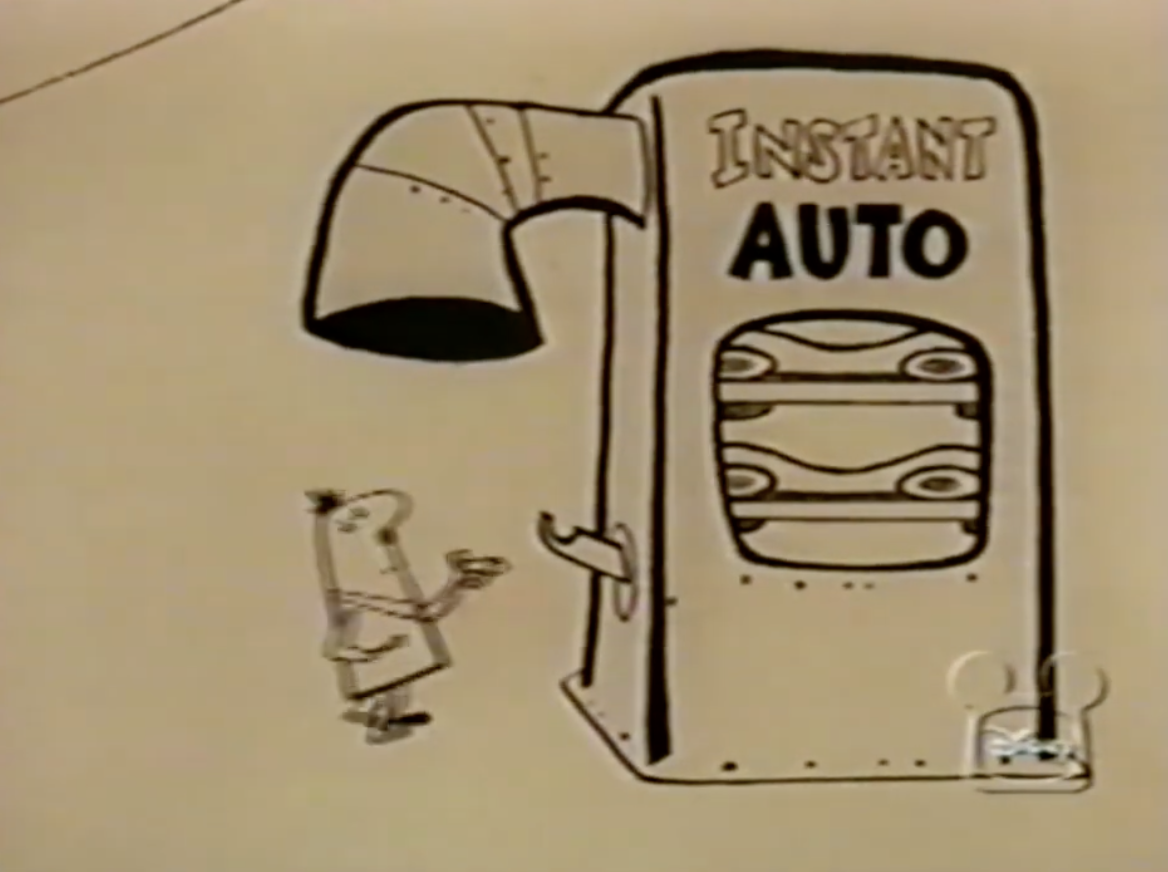
“Motion pictures while in motion” remind me of the size of the display screens on a Tesla.
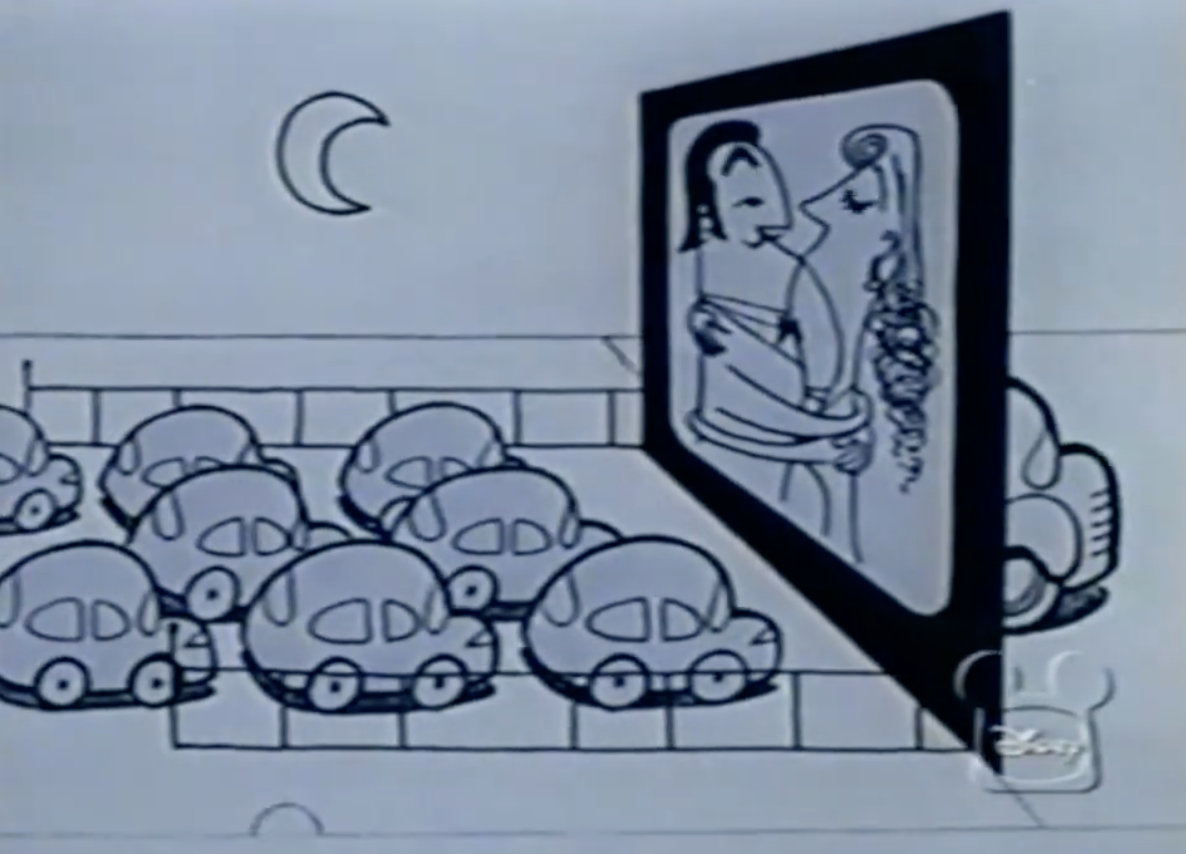
Walt Disney’s magic wasn’t making cartoons. Nor was it making amusement parks. It was the flywheel that he put in motion to explore the human experience. So many people see the famous Disney Flywheel as an exercise in IP development and monetization.
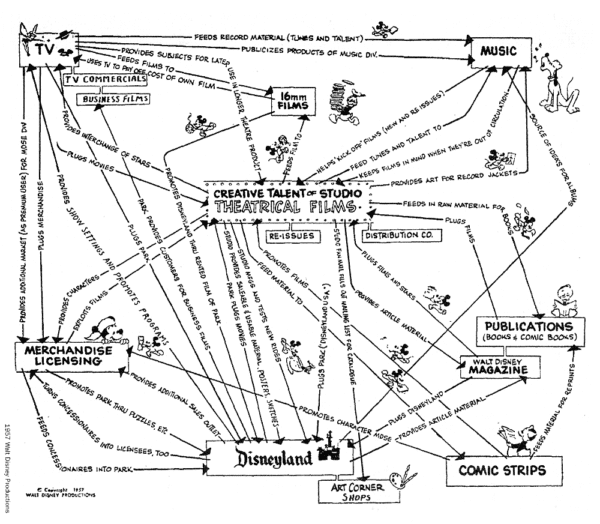
But the reality is so much more than that. What Walt Disney ultimately provided was a prototype for how we ought to seek to understand problems, dream up solutions, and then relentlessly execute to make those dreams into a reality.
A Prototype For Imagination
I could write a book on the library of problems and solutions that Walt Disney’s imagination tackled (and many people have written those books)! But the critical takeaway for my own life is not necessarily to chronicle each one, from transportation, to urban design, agriculture, car dependency, lack of civic engagement, and technological stagnation. He was a genuine Renaissance Man in the depth and breadth of problems he attempted to tackle in his much too short 65 years.
One biography of Walt Disney described his unique capability not as artistic genius, but rather “the exploration of technological innovation.” As the author of the Progress City book put it:
“We learn that every problem has a technological fix. When that fix creates new, unexpected problems, we will simply find another technological fix. That solution then leads to other problems, and the cycle continues. For better or for worse, this is the definition of American progress.”
The same is true of Walt Disney’s approach to imagination. In Magic Highway USA, Walt Disney declares a reality: “one of the many freedoms we enjoy today, yet often take for granted, is the freedom of the American Road. To come and go as we please in our pursuit of happiness.“
The technological solution? The automobile.
The problem? Getting around in a car through windy country roads takes too long.
The technological solution? Freeways, highways, the Interstate.
The problem? The ability to increase the volume of traffic leads to massive congestion.
The solution? Deemphasize cars in living spaces and optimize, instead, more modular transportation: People Movers.
Again. I could write a book about the dreamed, yet unfulfilled promises of EPCOT (and many people have). But I’ll leave that for another time.
Instead, my takeaway from all of this is that Walt Disney provided us with that fundamental definition of American progress through his WED Enterprises, which later became Walt Disney Imagineering:
“There’s really no secret about our approach. We keep moving forward – opening up new doors and doing new things – because we’re curious. And curiosity keeps leading us down new paths. We’re always exploring and experimenting. At WED, we call it Imagineering – the blending of creative imagination with technical know-how.”
THAT is the prototype for imagination. And we’ve become far too removed from it to the point where we can’t imagine much of anything anymore, let alone build it.
It’s not even that there aren’t attempts. From Starbase, TX to California Forever there are visions that, in different ways, share a common ancestry with the original vision for EPCOT. But instead of adhering to the “definition of American progress” and trusting in our ability to find technological fixes that lead to problems, and then solving those problems, we get bogged down in negativity and skepticism. We worry about conservation rather than progress and, in so doing, end up with (1) shutdown projects that would create jobs and usher in progress, for fear of the problems that it could bring about, and (2) allocating resources towards slop machines that don’t offend anyones sense of second order ripple effects until its too late and we’re addicted to the dopamine pipes in our pocket.
I’m not saying don’t worry about the problems. That’s not progress, that’s just reckless. But rather, its a willingness to trust in our ability to solve problems and then solve the second order problems that our first solutions kick up too. Palmer Luckey has said the same thing about climate change. It’s not that he doesn’t believe in it, but that he is willing to believe in our ability to solve problems rather than doomsday shutdown anything that contributes to the problem.
I think one of the reasons culture feels so repetitive and we’re drowning in reboots, remakes, sequels, and prequels is because we’ve lost hope for anything better than what we had. Unlike Walt’s ability to learn from the past by bringing its idealistic aura into the future, we pine for the yesterday’s today. “The way things used to be.” We wish for a world that was the way it used to be, rather than accepting the world as it is and trying to change it.
Alternatively we obsess with what we think the world should be, and we try and bully and shame and force the world to be the way we want it to be without actually acknowledging the work required to bring about the solutions that we want.
Moreover, a complete lack of imagination forces us to be stuck with worlds that we think we should want, regardless of the fact that we haven’t stopped to reckon with the consequences of that world. You see this in Europe. They THINK the world they want is one safe from “hate speech.” So they start arresting people for sharing memes, without having the imagination to stop and say, “is that a world I actually WANT to live in?” We just assume its what we’re supposed to want and move on.
A Commitment To Dreaming
When I was growing up in Albuquerque, New Mexico, my family would spend every Christmas Eve in Old Town.
We would have sopapillas at the same Mexican restaurant, then walk around looking at the luminarias and the Christmas tree in Old Town Plaza.

From its origins in the 1500s through to its height as the center of Albuquerque in the 1800s, Old Town was the bastion of civic, economic, and social life for Albuquerque for literally hundreds of years. But my family didn’t go because it was still the same functional urban hub that it once was. We go because it represents a historical and cultural homage to greatness.
The same is true of Disneyland and EPCOT. We’ve built monuments to a prototype of great thinking. But it’s just that: a prototype. We fail to revisit these in the right spirit as to inspire new dreams and new visions of the future. For many, its a passing fancy. Even for the observant, its an opportunity to pine for what could have been, rather than a clarifying call to what could still be.
And as we become increasingly insular and partisan, our ideas aren’t going to get any better.
We need a new commitment to “creative imagination with technical know-how.” A new commitment to Imagineering. A culture of people committed to planning for the future in a way that, rather than trying to force their worldview onto the world, they instead seek to understand the world as it actually is, and then shape the solutions that will work in that reality based on the data available to us.
Will that solve every problem and injustice? Absolutely not. But that is the definition of American progress. Solving problems with technological fixes, and then finding technological fixes for the new problems we’ve created.
Walt Disney provided a prototype for us that, I believe, could usher in the fundamentally transformative future many of us dream about all the time. If only we are willing to imagineer that future.
Referenced in
- Tourism note