Tell Better Stories
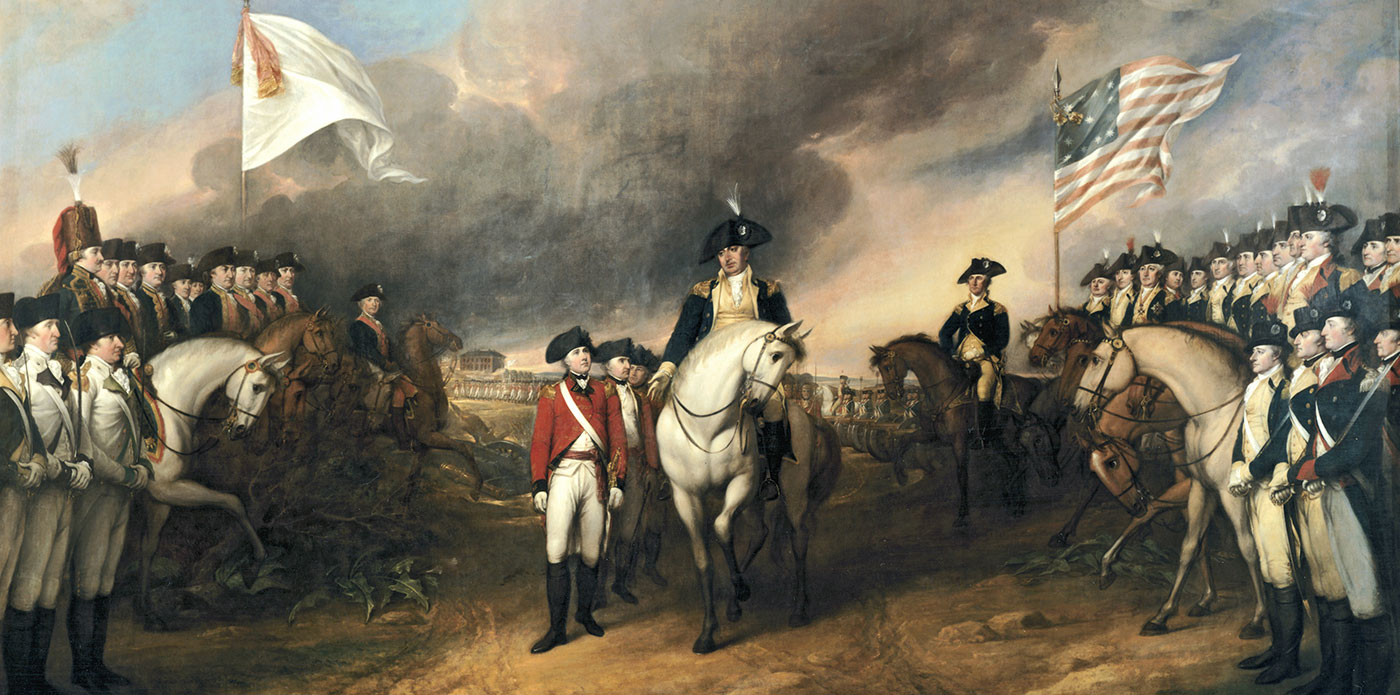
Like a lot of kids who grew up in the 90s, and went to public school where history teachers got “headaches” a lot, there were two staples of my early historical education. First? North & South, the Patrick Swayze mini-series about the Civil War, and the Ken Burns Civil War documentary. That was the extent of my exposure to Ken Burns. But then, he emerged from his 10 year work-trip, and released a new documentary: The American Revolution.
I’m only a few episodes in. In the classic Ken Burns tradition, it felt like something I wanted to watch with my Dad. But what struck me most as I reflected on it over Thanksgiving came more from some of the commentary I heard from Ken Burns directly in an interview with Hasan Minhaj. In it, he touched on several key things that reinforced some of the perspectives I’ve had on storytelling in general.
First? We can’t control the impact of the narratives we perpetuate, so we had better hope they’re true enough not just to inform choices, but consequences too
Second? A powerful story can shape identity for generations as an inherited narrative that defines who we are.
A Continuing Revolution
One of the things Ken Burns repeatedly returned to, unsurprisingly, was the Declaration of Independence; a document he said he reads to his family every Fourth of July. In it, one particular line stood out:
“…all experience hath shewn, that mankind are more disposed to suffer, while evils are sufferable, than to right themselves by abolishing the forms to which they are accustomed.”
Burns’ point in emphasizing that line was this idea that history shows us how much suffering and injustice people will put up with “if the trains are running on time, or if they’re just fearful of what the consequences are of rocking the boat.” In order for authoritarianism to reign, there is no need for truth. Only for the people to be superstitious peasants distracted by conspiracy theories, cakes, and circuses.
Despite any asterisks of character or faults of the founders, the primary virtue that they embodied was the willingness to “risk their lives and their fortunes and their sacred honor” in pursuit of a cause in which they believed.
But one of the things that is most powerful about that narrative that they unleashed is housed in the very first sentence of the second paragraph of the Declaration of Independence. A sentence that Walter Isaacson literally just wrote an entire book about, calling it “the greatest sentence ever written.”
“We hold these truths to be self-evident, that all men are created equal, that they are endowed by their Creator with certain unalienable Rights, that among these are Life, Liberty and the pursuit of Happiness.”
In the interview, Hasan asks Ken Burns if the groups of people obviously not included in that “all men” title, people like women and people of color, if they rolled their eyes at that sentiment. But Burns’ response was emphatic: Absolutely not!
“They’re going, ‘we want it too! You’ve opened the door!’ There’s a conservative scholar named Yuval Levin who said, ‘Once you say the word ‘all’, it’s done. It’s over. There’s no way you can take back the word ‘all.’’ So when on July 4th, 1776 these white men ratify ‘we hold these truths to be self-evident that all men are created equal,’ slavery is over. Even though it may take four score and nine years to make it so. Women are going to vote even though it took 144 years before that’s happening.”
When I was watching the interview with my wife, she called it the birth of a Continuing Revolution. The power of the idea would continue to inspire future generations of others seeking the same rights. As Burns’ says, “much of the foundation has already been laid and ironically, or perhaps magically, mysteriously, spiritually, laid by people who didn’t fully agree with the full interpretation of the words.”
That’s the power of an exceptional story. It can extend further than you could ever possibly imagine or even agree with.
Being An American
In Ken Burns’ documentary, George Washington is clearly the main character. And one of the most powerful capabilities that Burns emphasized for Washington was as a storyteller or sorts:
“[George Washington] was able to convince a Georgian and New Hampshirite that what they call their country, Georgia or New Hampshire, is actually a state in a new thing. And that you’re an American; that you share something in common.”
That sentiment has carried forward through several iterations of America as a concept. The famous farewell address of Ronald Reagan often gets shared on social media, with this line in particular:
“A man wrote me and said: “You can go to live in France, but you cannot become a Frenchman. You can go to live in Germany or Turkey or Japan, but you cannot become a German, a Turk, or a Japanese. But anyone, from any corner of the Earth, can come to live in America and become an American.”
That same sense of shared identity has lasted for generations. Reagan called it a “compact with our parents, our grandparents, and our ancestors.” We inherited that story. There are elements of being an American that don’t come from genetics. They’re passed down in the kinds of stories that Ken Burns has made a multi-decade career telling.
Tell Better Stories
In that interview with Hasan Minhaj, Ken Burns made the clear point that inspired my writing today. In his editing room, he has a large neon sign that reads: “It’s Complicated.” In other places, he refers to what he does as “calling balls and strikes.” Babe Ruth had exceptional home runs. But he also struck out. He wasn’t batting every time; there were other people on the team. The story is not the glory; its the complicated, messy narrative of all the details we can wrangle together. And being willing to embrace the mess is where exceptional storytelling really lies.
“The novelist Richard Powers said the best arguments in the world, and that’s all we do is argue, won’t change a single person’s point of view. The only thing that can do that is a good story. Why? Because a good story is not taking sides. It’s understanding that Achilles has his heel and his hubris to go along with his great strength.”
As we recover from a Turkey-fueled carbo-load, we can so easily relish the time off from work, codified by football and family time, without sitting back to appreciate the narrative we’ve inherited. Giving thanks for something; but for what? Thanksgiving is a uniquely American holiday, but like many holidays, its narrative has been dulled around the edges. The pilgrims. The first Thanksgiving. Similar to Christmas or Easter, it can be softened by candy and tradition without looking to the deeply enriched narrative at the center.
America is the same. In many ways, the narrative of America has been dulled as “bloodless, galant myth.” That softening of the true story behind the myth has left the door open to surprise and disappointment. Here we thought the founding fathers were God-like perfection incarnate; come to find out they owned slaves? And often thought lame things?” Ken Burns says that “we have been burdened by our lack of knowledge of the past, not by any kind of knowledge of it.” Harry Truman said it another way when he supposedly said “the only thing that’s really new is the history you don’t know.”
Our unwillingness to embrace America’s faults left it open to a new narrative. Where our ancestors wanted to portray unblemished Americanism, we now have a generation with many participants in the American Experiment that would rather see it burned to the ground. But, as with any story worth telling, the worthy pursuit comes in embracing the messy nuance.
We need better stories. We need things to believe in. But we need those things to be true; boldness and blemishes alike. And in a world of hyper-partisan pandemonium, we would do well to remember Ken Burns’ advice: “a good story is not taking sides.”