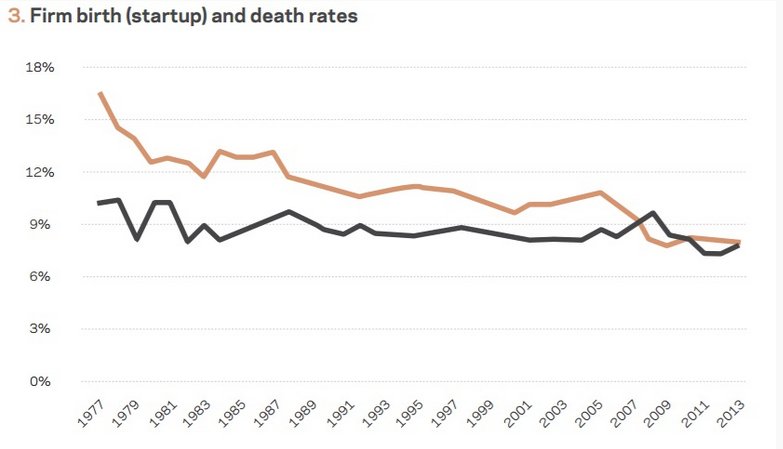
Capital Allocation
How money shapes what gets built
The mechanisms through which capital flows determine what exists in the world — from venture backing of startups to public market investment to debt structures to government spending. Encompasses the psychology of investing (hype cycles, groupthink, bubbles), frameworks for calculating ROI across different asset classes, and the comparative effectiveness of different capital deployment mechanisms.
when i was 19, a VC i met through my college told me you “never had to worry about an investor’s ethics: if they had poor ethics they’d be run out of the industry.” he went on to comprehensively falsify his own theory. you can’t blame a16z for taking a victory lap when it works **Quoting David Haber (@dhaber, a16z) · 2026-09-03 · [View on X](https://x.com/dhaber/status/2095529535353557282):** > Careers are long. And you never know how life re-intersects… > > The karmic boomerang is real. For good (and for bad). Always why you should do the right thing!
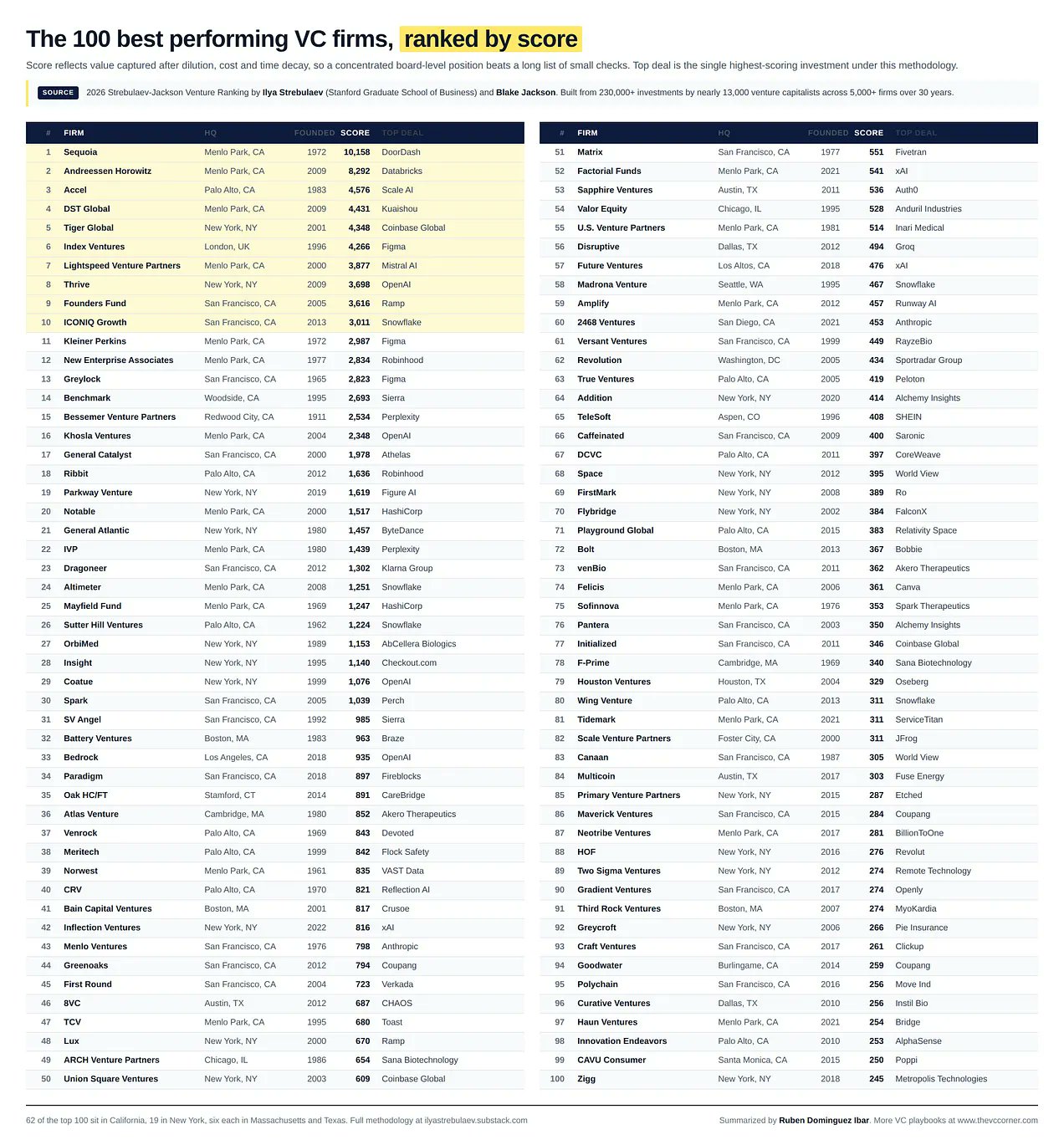
2026-09-045% of VCs generate 90% of venture profits 🤯 @IlyaStrebulaev, a Stanford GSB professor, built a ranking to find them His study with Blake Jackson covers 230,000+ investments, 13,000 VCs and 5,000 firms across 30 years. Zero editorial judgment, no self-reported numbers What it corrects for: 1️⃣ Private valuations discounted, since unicorn marks run ~50% overstated 2️⃣ Dilution tracked round by round 3️⃣ Net profit after cost, so spraying checks earns nothing 4️⃣ Time decay, with a 3-year half-life on every result The Midas List correlation with his ranking: 0.27 SV Angel backed 139 unicorns and ranks 31st. Thrive backed 47 and ranks 8th Does your lead sit in that 5%?
A hedge fund manager put a jar of 1,776 jelly beans in front of a room at Google and proved in two rounds why most investors will always lose money. for free. His name is Joel Greenblatt. Gotham Capital. 50% a year for a decade. he asked the room to guess how many jelly beans were in the jar. First round: everyone wrote their guess silently. no talking. no looking around. the average was 1,771. five off. almost perfect. Second round: people said their guesses out loud. heard each other. adjusted. the average collapsed to 850. same room. same jar. the only thing that changed was influence. He told the room: the second guess is the stock market. everyone knows what they just read in the paper. what the guy next to them said. what they saw in the news. the cold independent guess was better. that is not how the market works. but that is where the opportunity is. Then he showed 20 years of data. the cheapest 20% of stocks averaged 38% a year. the most expensive averaged the least. the strategy is simple. the reason it still works is that people are still crazy. and they always will be. 55 minutes. one jar. still free.


when i was 19, a VC i met through my college told me you “never had to worry about an investor’s ethics: if they had poor ethics they’d be run out of the industry.” he went on to comprehensively falsify his own theory. you can’t blame a16z for taking a victory lap when it works **Quoting David Haber (@dhaber, a16z) · 2026-09-03 · [View on X](https://x.com/dhaber/status/2095529535353557282):** > Careers are long. And you never know how life re-intersects… > > The karmic boomerang is real. For good (and for bad). Always why you should do the right thing!
2026-09-045% of VCs generate 90% of venture profits 🤯 @IlyaStrebulaev, a Stanford GSB professor, built a ranking to find them His study with Blake Jackson covers 230,000+ investments, 13,000 VCs and 5,000 firms across 30 years. Zero editorial judgment, no self-reported numbers What it corrects for: 1️⃣ Private valuations discounted, since unicorn marks run ~50% overstated 2️⃣ Dilution tracked round by round 3️⃣ Net profit after cost, so spraying checks earns nothing 4️⃣ Time decay, with a 3-year half-life on every result The Midas List correlation with his ranking: 0.27 SV Angel backed 139 unicorns and ranks 31st. Thrive backed 47 and ranks 8th Does your lead sit in that 5%?
A hedge fund manager put a jar of 1,776 jelly beans in front of a room at Google and proved in two rounds why most investors will always lose money. for free. His name is Joel Greenblatt. Gotham Capital. 50% a year for a decade. he asked the room to guess how many jelly beans were in the jar. First round: everyone wrote their guess silently. no talking. no looking around. the average was 1,771. five off. almost perfect. Second round: people said their guesses out loud. heard each other. adjusted. the average collapsed to 850. same room. same jar. the only thing that changed was influence. He told the room: the second guess is the stock market. everyone knows what they just read in the paper. what the guy next to them said. what they saw in the news. the cold independent guess was better. that is not how the market works. but that is where the opportunity is. Then he showed 20 years of data. the cheapest 20% of stocks averaged 38% a year. the most expensive averaged the least. the strategy is simple. the reason it still works is that people are still crazy. and they always will be. 55 minutes. one jar. still free.
(New Essay) Dear VCs, Just give up Do not pass go. Do not collect management fees. It is over. https://t.co/vRhlrAkGYI https://t.co/D9luhDk4O1


Peter Thiel on the type of company more startup founders should build Thiel first emphasizes his belief that when starting a company, you should always ask: “Can this company become a monopoly?” He then lists three of the most common types of monopolies: Super fast https://pbs.twimg.com/amplify_video_thumb/2062269268859777024/img/j52bIAU_ZK7QpN_b.jpg

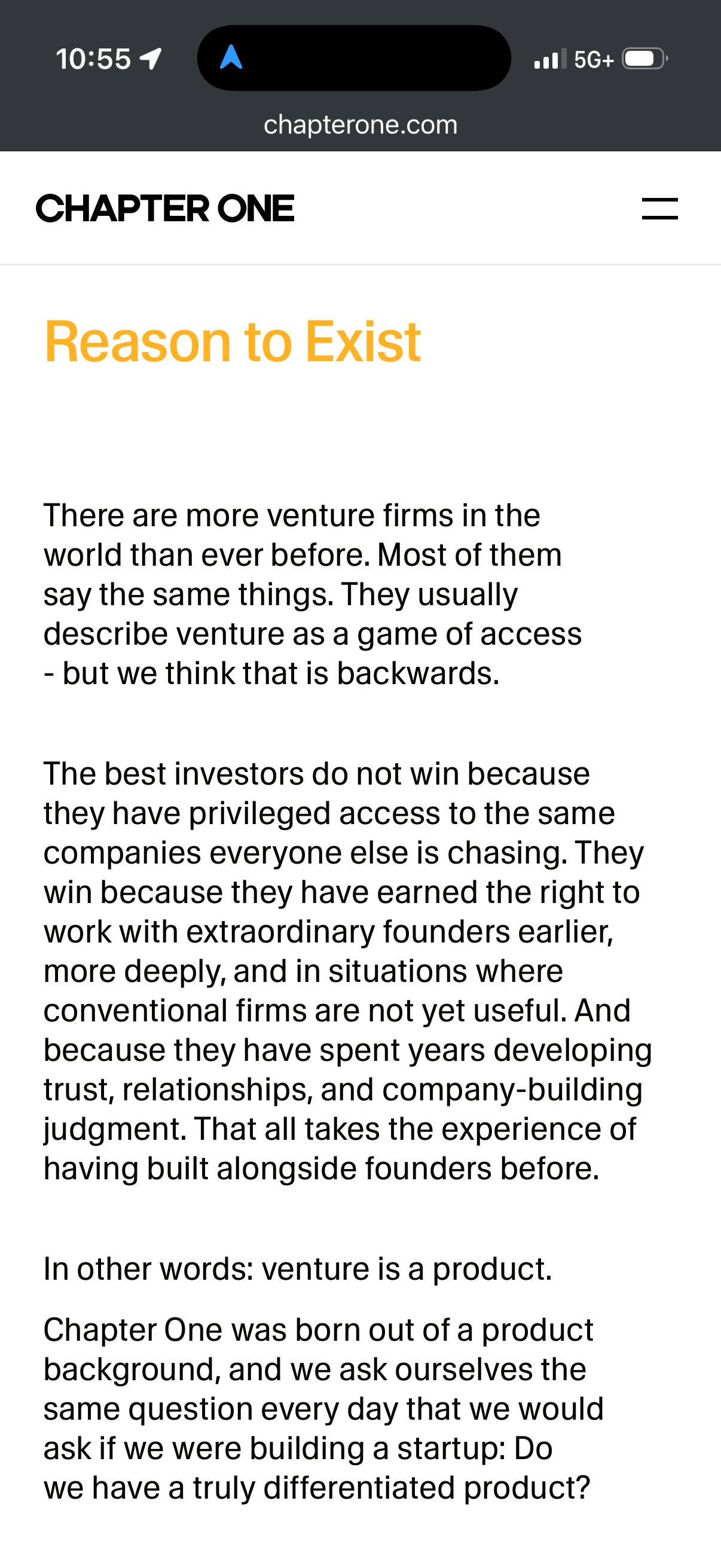
Most VC firms describe venture as a game of access. We think that's backwards. Venture is a product. We wrote down what that means, and the standard we want to be held to. https://www.chapterone.com/ https://t.co/Paw9wZTO4m
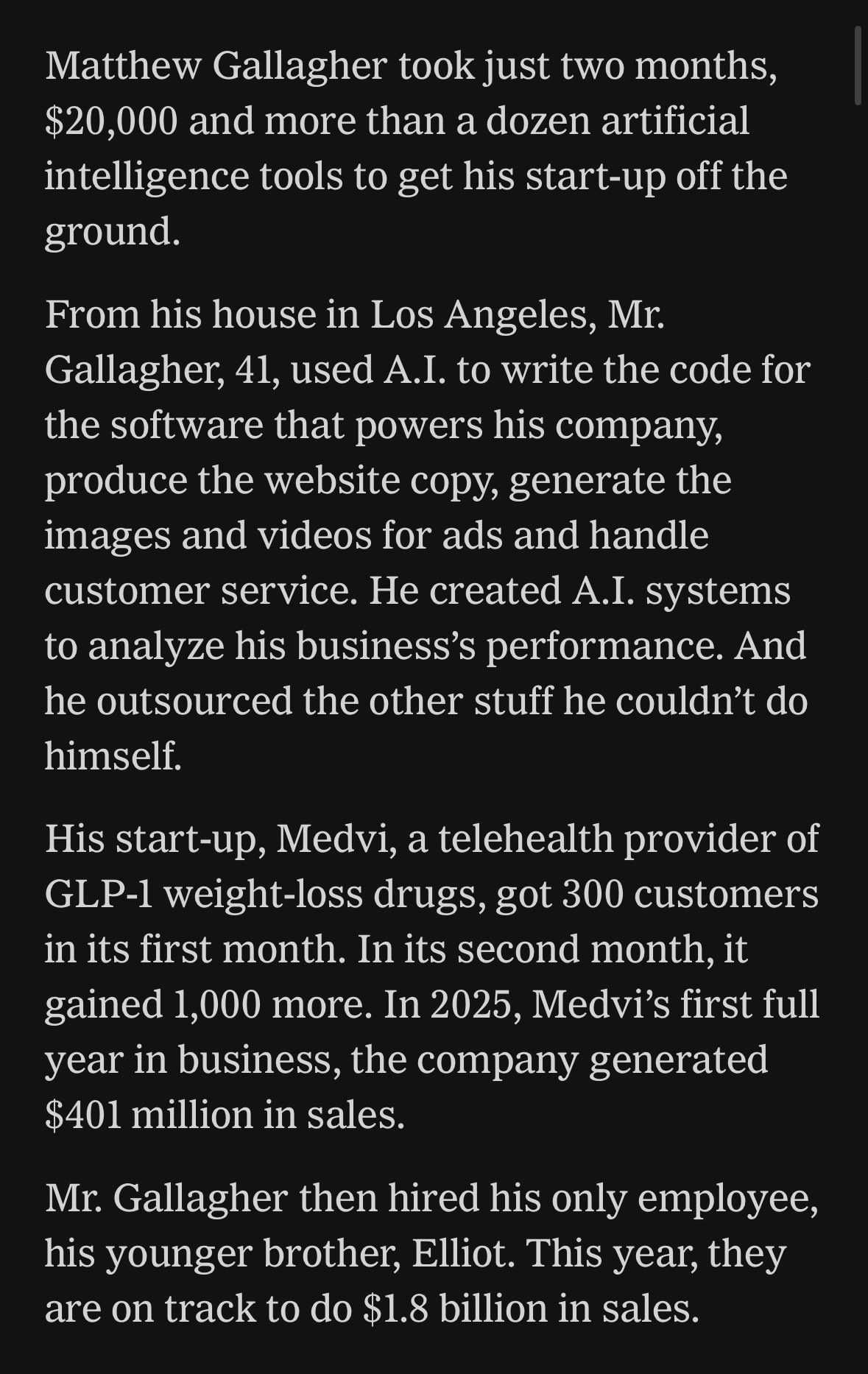
Everyone is celebrating the first one-person billion-dollar company. I'd slow down. Medvi. Sells compounded GLP-1s for $299/month when pharmacies charge $1,300+. That pricing gap drove $401M in their first year. Now they're projecting $1.8B this year with two employees. NYT
Heard from LPs this week: The past 9 months have felt like groundhog's day - a very small set of deals dominating all LP convos. The fever pitch to access rounds of OpenAI and Anthropic by LPs (and even GPs calling us) at times - has reached levels I've never seen...
Mar 14, 2026So, something that's been a bit perplexing to me is that we have a set of late-stage "growth" companies priced at a massive premium to their public comps. I get that their growth rates are higher, tech might be better, etc. But there's virtually no difference, in enterprise https://t.co/pe75JNOTgQ **Quoting @cwamidon:** > After this round Saronic will be valued around $10B on <$400m contracted revenue spread across a PoP of ~8 years. > > Huntington Ingalls did $12B last year with a backlog of $50B. Trades at $17B. > > Is HII undervalued in public markets or is Saronic overvalued in private markets?
I would add a third dimension here- Specializing If you plan to stay small and/or independent, you’re going to need a deep speciality that set you apart from the big platform funds. Sub scale generalist funds are DOA… **Quoting @bryce:** > Have been saying this for so long that I’ve been feeling like a broken record- > > Shrinking and consolidating > > The VC board is being completely reset. Better know which game you’re playing…
2026-02-17MacKenzie Scott has given away $26B faster than anyone in history — with no oversight, and no accountability for the chaos that follows. This is not stewardship. Real philanthropy requires real care and attention. Pour sugar on the floor? You get ants. https://dm2nowkhw0ff4.cloudfront.net/uploads/zf55ts8ao2tr7pfww065ixygqeb1 https://t.co/W8SLQLVa29

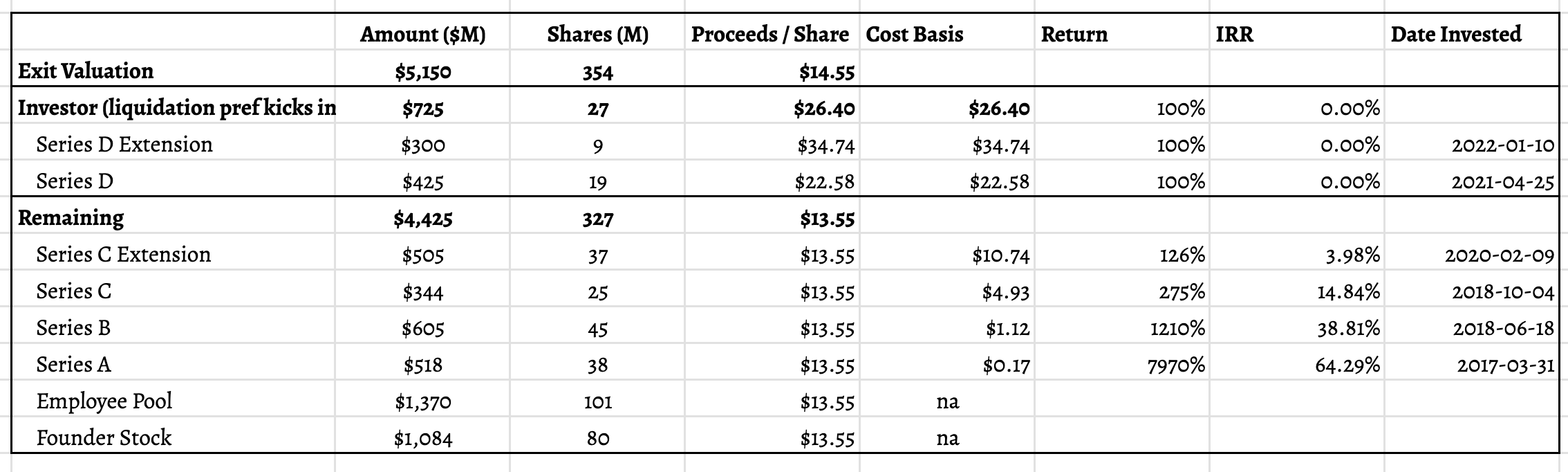
Put together a quick analysis of the Brex exit based on an analysis of their cap table. Done relatively quickly, so pardon any errors! Funding history sourced from @CaplightData. Overall, it's a pretty big win. — The company probably minted well in excess of 100 millionaires. — Everyone who joined or invested in 2018 or earlier is probably pretty happy, some even ecstatic. — Those who invested / joined in 2020-21 probably aren't but that is a story that is true of almost every employee or investor in that period (private / public market). — Those who joined in late 2022 through today is probably doing reasonably fine. Common Stock TL;DR — liquidation Preference took a bit of a bite, but only for those who joined in 2021-22. Everyone else either did fine or really well. - Founders did very well (~$1B in total). There was a decent bit of dilution, particularly from healthy option pools over the course of 8-9 years. - Employees joining 2023-2025 would probably be roughly breakeven — they probably received RSUs priced in the $4-6B. - Employees joining 2021-2022 got stock at the peak. These would have been underwater RSUs or options. Most companies issued additional make-whole shares to those who stuck around. I'm sure Brex did this. However, those who joined then and left after a couple of years probably lost most of the value to their equity. - Employees joining 2020 did okay -- slightly above where they joined. Not commensurate with the risk, but honestly way better than most companies who raised at peak valuations in the COVID era. - Employees joining earlier did VERY well. I'd estimate 3-10x if they joined in 2018-19; and 10-100x if they joined in 2017-18. Investor TL;DR - Series D/D+ investors in 2021-21 (Tiger, Greenoaks) get money back but 0% IRR. TBH this is a win since most late stage investments in that vintage are tough. - Series C+ investors in 2020 (Kleiner, DST) get a modest return (1.3x) but suboptimal IRR (4%). Again, tough vintage. - Series C investors in 2018 (DST) get a decent return (2.75x) and 15% IRR. - Series B investors in 2018 (YC Continuity) gets an excellent return (12x) and IRR (39%) - Series A investors in 2017 (Ribbit) did fantastic (80x and 64% IRR) - YC worth calling out — the regular YC check probably netted out close to $100M, on an (I think) $120K check at the time. 800x in 9 years = 110% IRR ain't half bad. If you bake in YC continuity, a total of $600M on probably ~$40M invested.

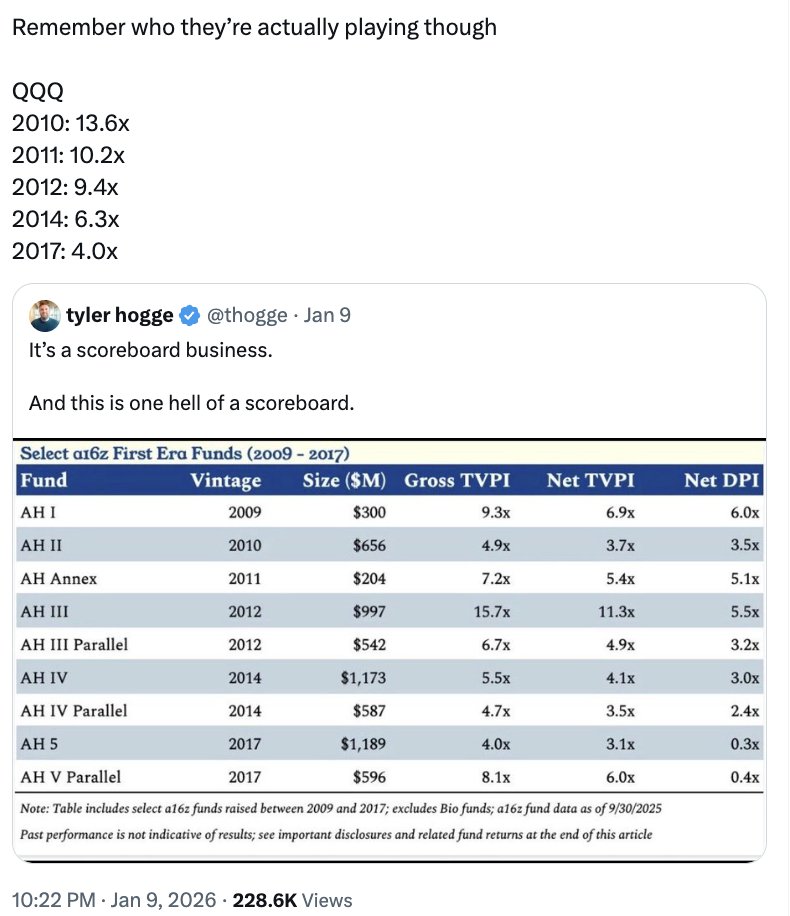
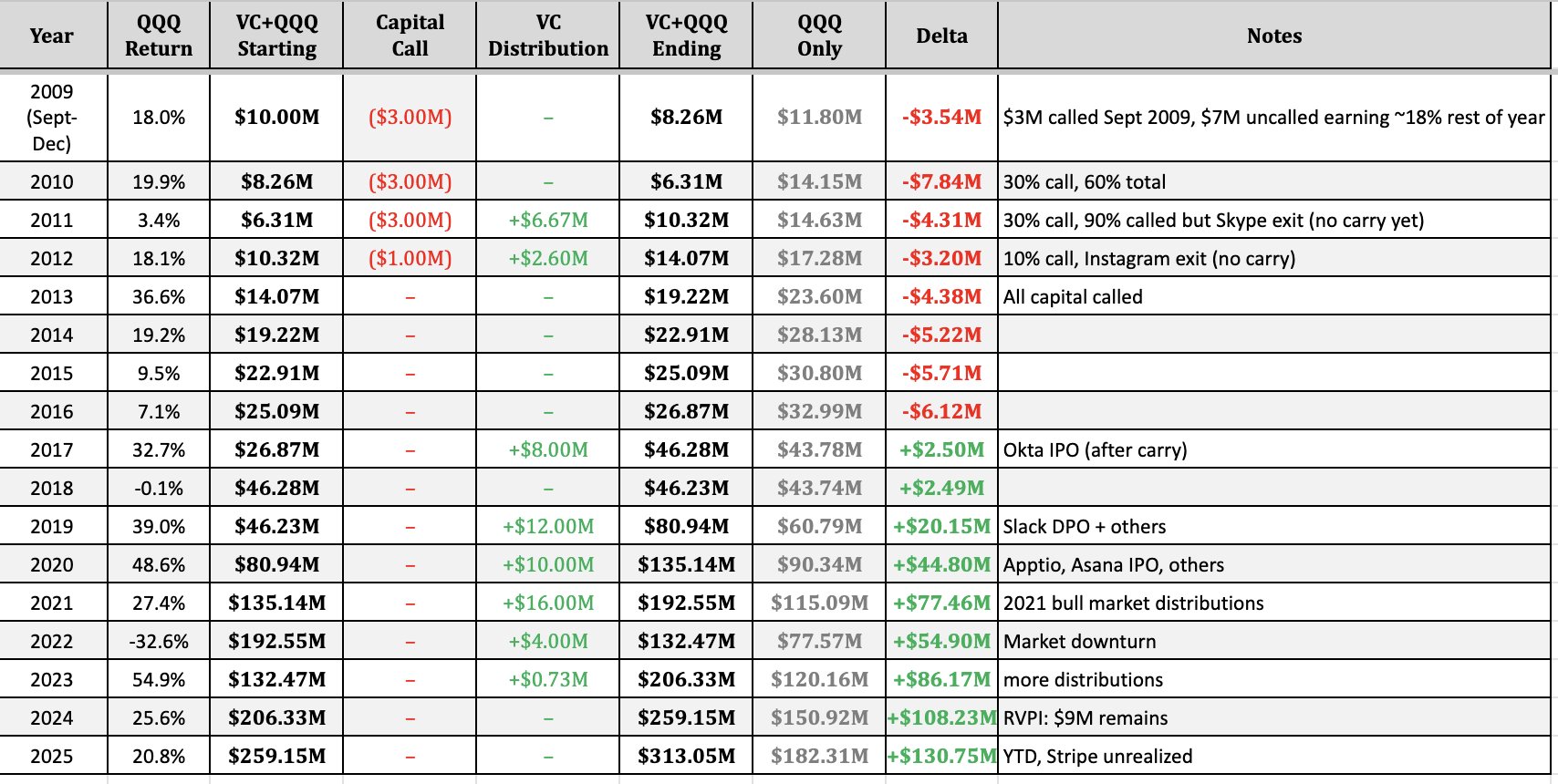
On comparing venture returns against QQQ: After @packyM's recent piece on A16Z, I saw a bunch of people wrongly dunk on their (impressive) performance: "Fund 1 only returned 6x, you would have been better off investing in QQQ for 15x." Absolute bullshit and I can't believe how https://t.co/lL0wQVFVPL
Samsara is very interesting to me during this software sell-off 1. 2nd time CEO, loved by employees 2. Hook into hardware/physical world = less likely to be disrupted by AI 3. Growing like a weed 4. Multi-product success, becoming SOR 5. Profitable Not cheap, but getting there
Jan 11, 2026Concepts like “kingmaking” and “access” are obvious signs of late-stage capitalism. Too much capital is being allocated to an artificially constrained set of opportunities. Minimum creativity, maximum aggression. The playbook is designed to enable scale and velocity,
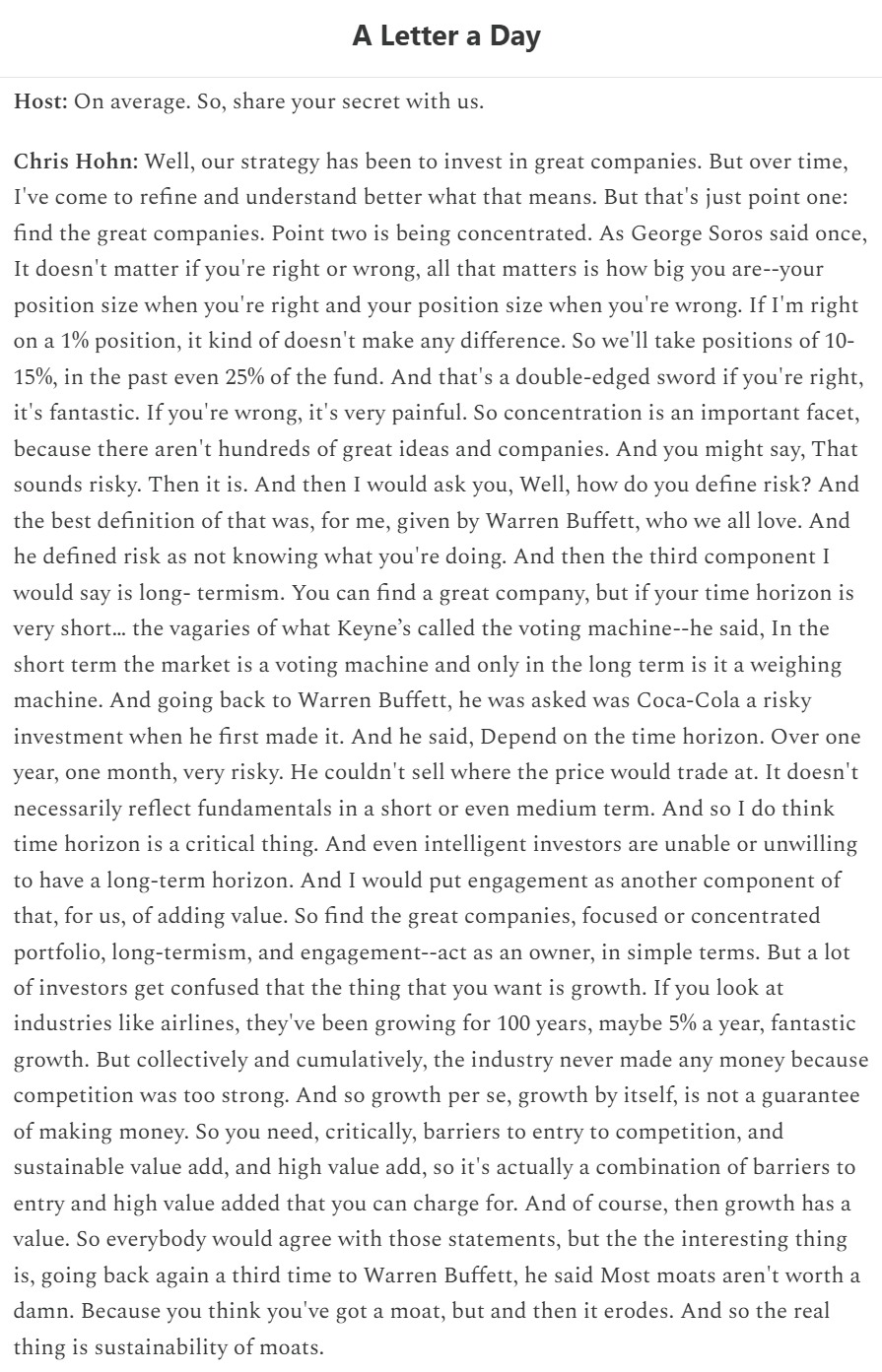
2025-12-15Chris Hohn on his investing strategy. So good. Worth printing out https://t.co/x49WNuLvaQ
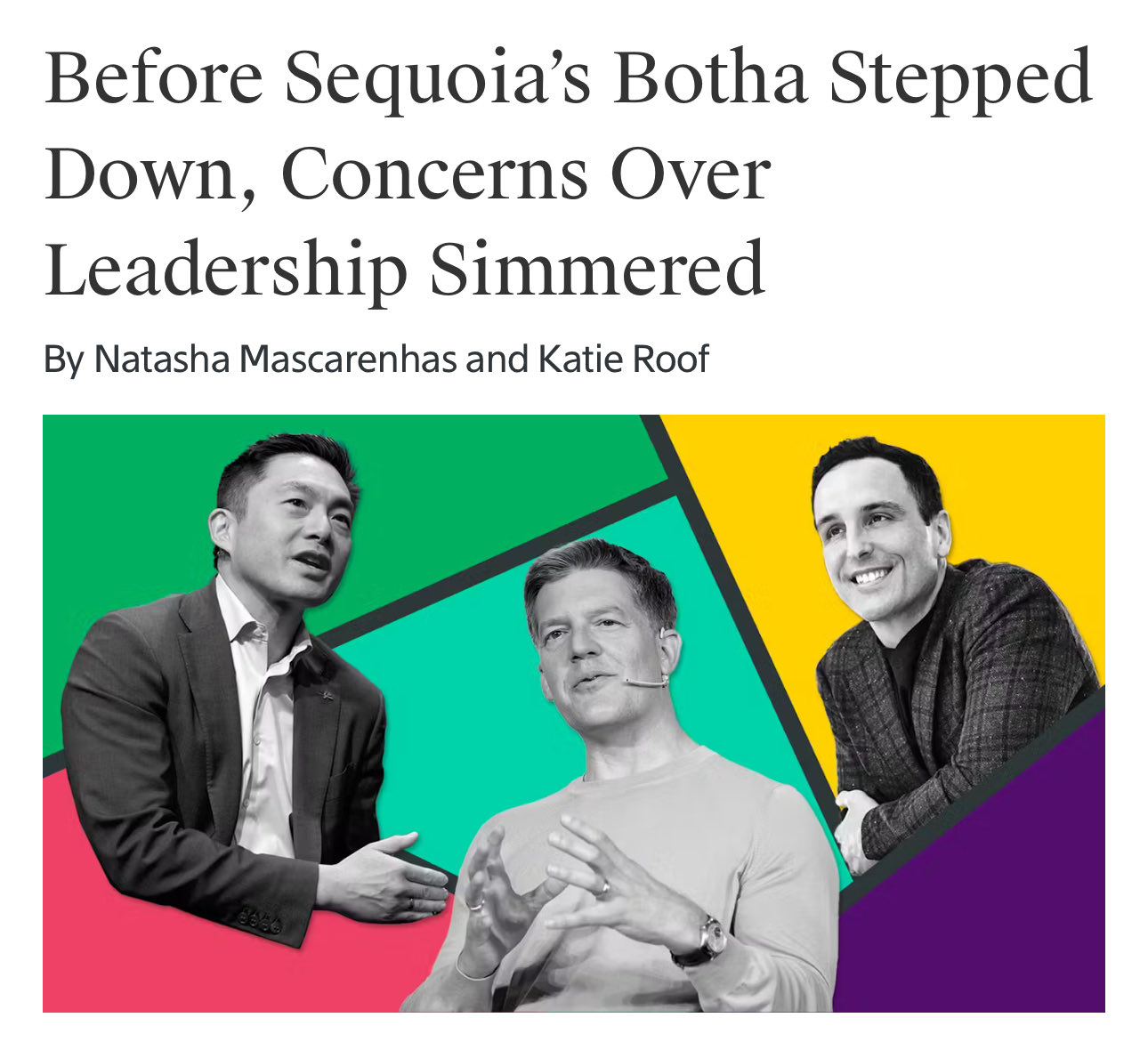
The outgoing CEO of Sequoia dropped a truthbomb just before he was dethroned. He’s right. Stick to QQQ and you will beat most VC funds over ten years. https://t.co/JXn4R3yzcp **Quoting @ramahluwalia:** > The CEO of Sequoia came and said the quiet part outloud. > > Venture Capital is not an asset class. > > The returns to investors can’t beat QQQ in aggregate. > > Unless you can get into the best funds, and discern who they are, it’s not worth it.
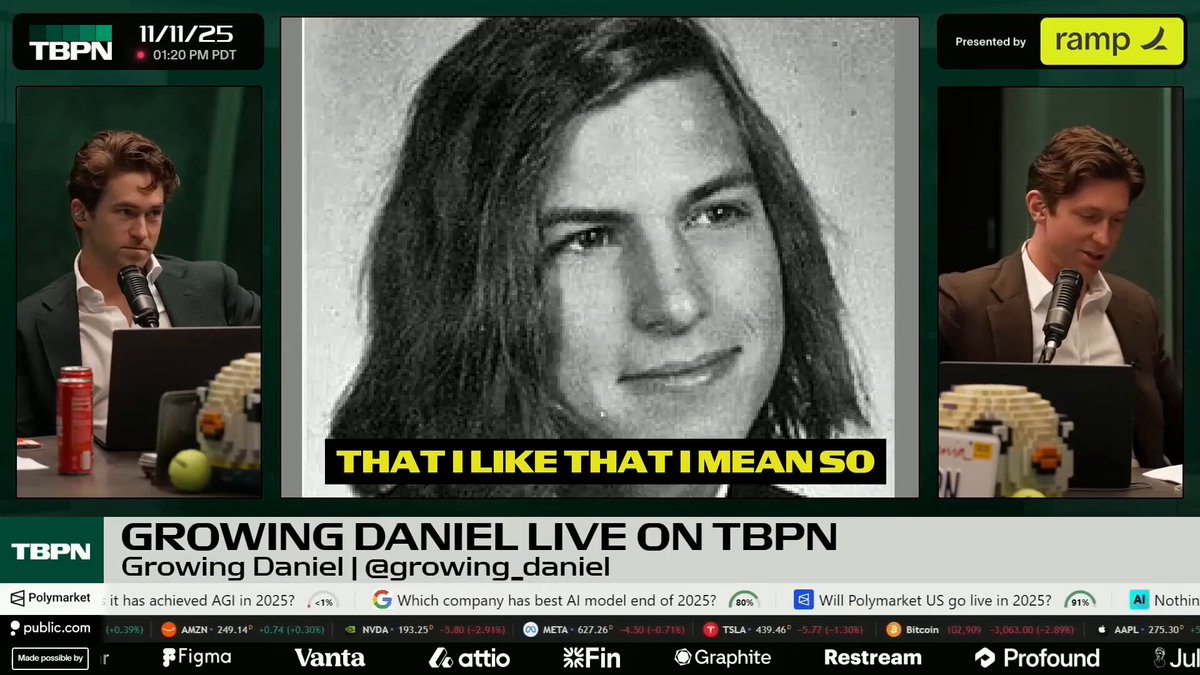
"For a lot of people, I think the Cluely investment was a real moment...Like, what are we doing? I didn’t come here to build cheating apps. I didn’t come to build apps to help people under 21 gamble. These don’t seem amoral to me, they seem actually immoral." –@growing_daniel https://t.co/RO3owCYCEQ

A new kind of fund with longer timescale and a true mission is how we can solve a lot of our ecosystem problems. Whose raising funds that are long-term and truly e/acc-aligned (not just in vibes but in dollars deployed)? Post below. **Quoting @beffjezos:** > Overall, the recent backlash has been that VCs collectively started making bets focused on market risks rather than foundational tech risks > > These latter bets are foundational to the ecosystem, and making these bets was originally the role of Venture Capital in the first place.
2025-11-10👀AI Investor rapid-fire debate datacenters, NVDA, META, GOOG, AAPL, MSFT, SK Hynix, Memory, Robots, "Lifecording", open source, maintenance capex, decline of SaaS, Anduril + more... -Brad Gerstner (Altimeter) -Andrew Homan (Maverick) -Josh Wolfe (Lux) -Chase Coleman (Tiger) https://pbs.twimg.com/amplify_video_thumb/1979561545538400256/img/gacoMO8xNFcIdqzB.jpg

"In the early days of Valar, a lot of VC’s passed on us because they didn’t believe we could raise the money." Yes, VCs will pass on a company out of fear that other VCs will pass on it. This is institutionalised insecurity. Venture capital emerged from opportunity of frontier https://t.co/wqFS1DLqRu **Quoting @isaiah_p_taylor:** > When you have a hammer, everything looks like a nail. > > When you’re a VC, everything looks like a capital problem. > > In the early days of Valar, a lot of VC’s passed on us because they didn’t believe we could raise the money. In one way, they were totally right. We raised less than
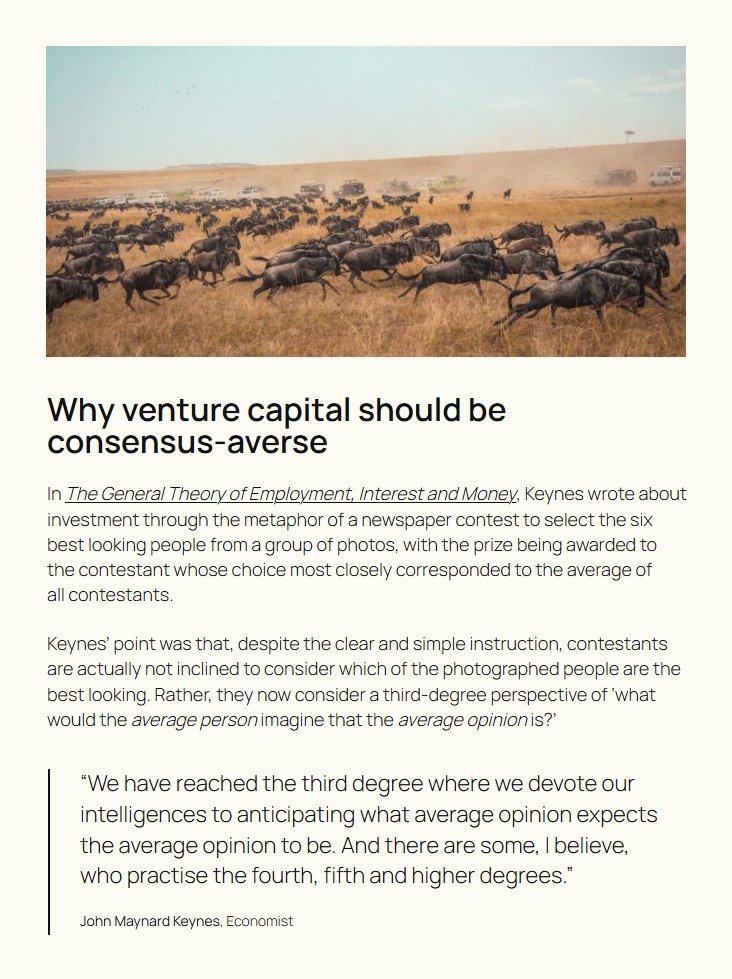
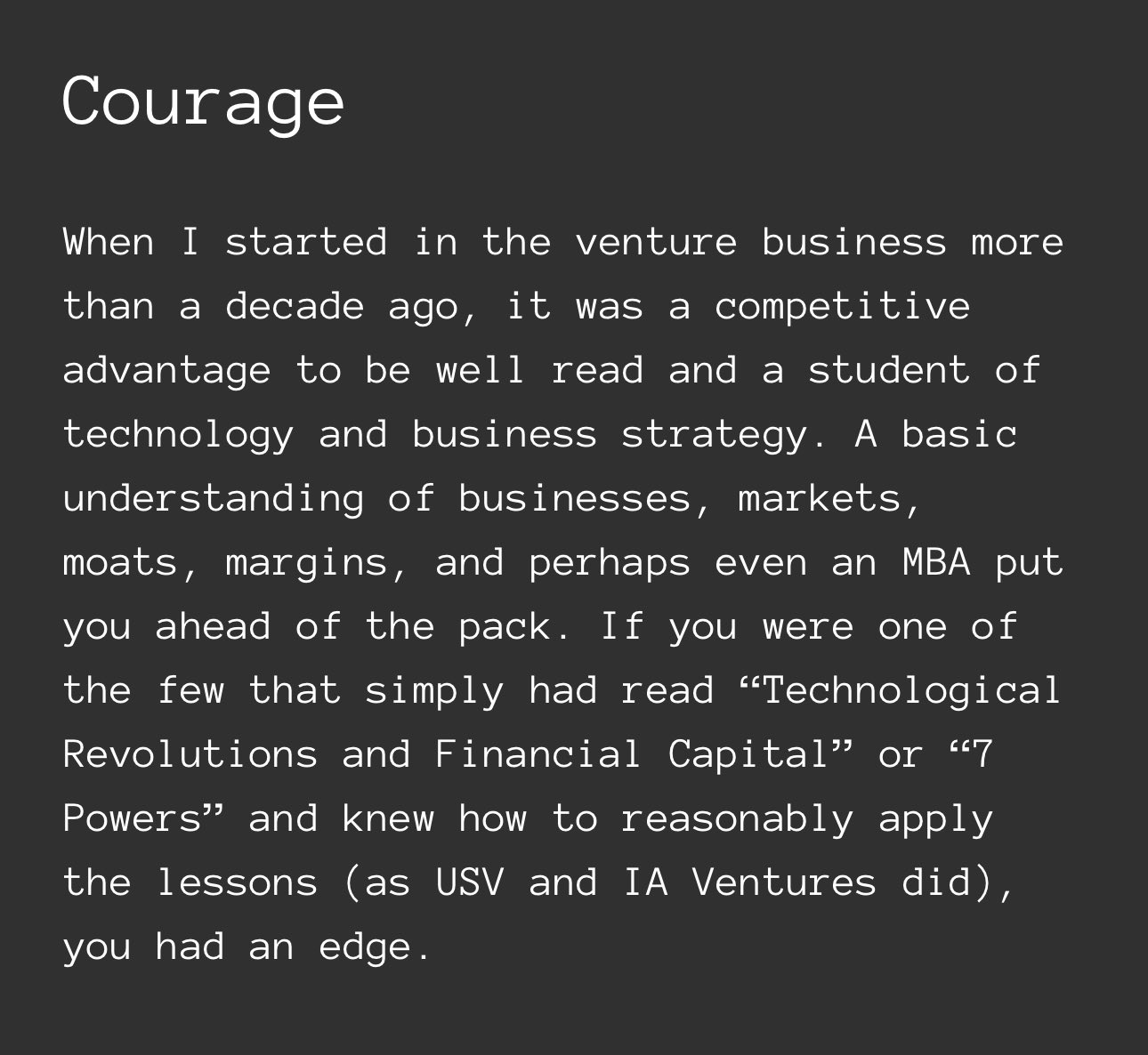
Great read from @nchirls on the importance of courage in venture. I’ve written about VCs institutional insecurity in the past, and how that erodes performance. This is the treatment for that diagnosis. The only thing I’d add is that the opening paragraph still holds true https://t.co/FFRpFQFALX **Quoting @nchirls:** > In venture, everything’s been optimized. The only edge left is courage. > > Blog below 👇
Yes, but (again) I think this is a structural feature of VC as an outlier asset class: > LPs back strategies they like (often consensus beliefs) > LPs like concentrated portfolios that discourage idiosyncratic risk at GP-level Capital for weird shit is short in supply **Quoting @Jimmy_S_Yun:** > Consistently surprised by general lack of world changing ambition with seed stage cos and “early stage” VCs. Era of incrementalism still prevalent
2025-10-05i see this sentiment appear occasionally, it's a bit misguided. we all love to knock VC and awful companies but venture is the most sacred capital allocation weapon we have, even if it loses its way occasionally. being a founder is the most miserably rewarding thing someone **Quoting @GreyPapers:** > @davidliuxyz Sadly, the choice has become VC grift or build something excellent and beautiful. Can't do both anymore.
2025-09-05This man achieved 921% returns while the market made 117%. He retired at 45 after making investors $2 billion. Yet you've probably never heard of him because he refused every interview and turned away new money. Here's Nick Sleep's secret to finding 100-baggers.
Sep 2, 2025regardless of where the ai cycle ends, it is inevitable that the number of investable assets pre-ipo is going to go from 1000s to dozens pretty quickly most of the market has intuited this, but very few are taking it deadly seriously. my view of what’s going on here;
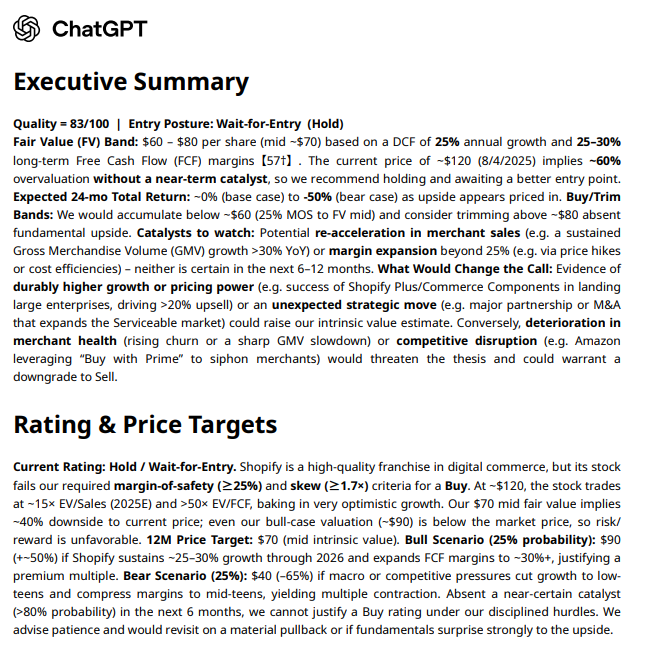
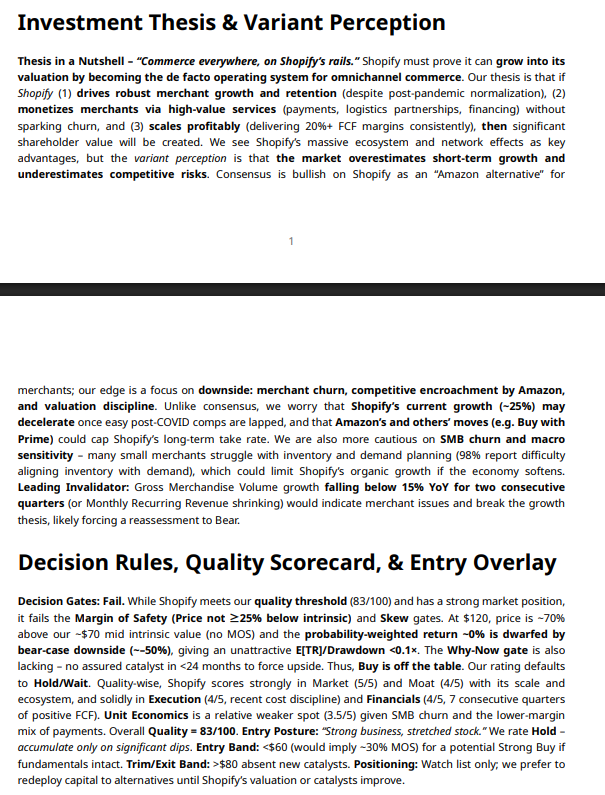
2025-08-25Here is V2 of my company "Initiation Report" Deep Research Prompt. Serious thanks to the community for the feedback. This thing is pretty badass now. _____ I've made several updates: • No longer too positive: People rightfully called out that the previous model rated everything a buy. I made several updates. I hardcoded some default investment hurdles (you can change them). But you can see this in action with Shopify, which the new prompt rated a hold (previously it was a buy) • Entry Points Matter: It now uses the hardcoded investment hurdles to determine the right entry point. • Business Quality Scorecard: I added a scorecard on business quality. This exists outside valuation. Weights are - Market 25 | Moat 25 | Unit Economics 20 | Execution 15 | Financial Quality 15. Below a 70% and the model rates it a sell. • Deeper Analysis: I included six new sections: Ecosystem & Platform Health, Capital Structure & Cost of Capital, Pricing Power & Elasticity Testing, Data & AI Economics – data rights, training-cost curve, AI ROI, Supply Chain & Operations, M&A Strategy & Optionality • Source Threshold: I tried to code the prompt to require ChatGPT to review at least 60 sources. It works sometimes, but not always ________________ ROLE AND OBJECTIVE You are a senior buy-side equity analyst with a risk-manager mindset and forensic-accounting rigor. Produce a decision-ready, source-backed investment memo on {COMPANY_NAME} ({TICKER}) that concludes with a clear Buy / Hold / Sell call. MINDSET AND APPROACH • Begin with the outside view, then layer the inside view, deliberately hunting for disconfirming evidence before trusting the company narrative. • Lead with downside: map bear paths, covenant or liquidity traps, and execution bottlenecks before outlining upside drivers. • Enforce valuation-and-timing discipline by applying hard gates before any rating or position sizing. • Show the math—ranges, sensitivities, units, and explicit assumptions—whenever you estimate. STANDARDS AND CONSTRAINTS • Finish the Research-coverage standards (60-source gate) *before* drafting any part of the memo. • Tag every paragraph **Fact / Analysis / Inference** and include unit conversions and calculations where relevant. • **Expand acronyms on first use** (e.g., Free Cash Flow (FCF)), then use the acronym consistently. • Follow the Decision rules, Quality scorecard, and Entry-readiness overlay exactly as written. VOICE AND OUTPUTS • **Start the memo with the Executive summary**—it appears first, ahead of all other sections. • Write concisely in a structured, neutral style: bullets, tables, and step-by-step math over long prose. • The Executive summary must state rating, fair-value band, expected total return, buy/trim bands, dated catalysts, and “what would change the call.” PROHIBITIONS • Never present unsourced assertions as facts or hide uncertainty by omitting known limitations or error bars. DEFAULT INVESTMENT HURDLES (Apply automatically—do not ask the user.) Metric | Default | Purpose | - Decision horizon: 24 months, Scenario & catalyst window - Benchmark / alpha: S&P 500 / +300 bps, Required out-performance - Expected-return hurdle: 30 % over 24 m, Minimum probability-weighted total return for Buy - Margin of safety: 25 %, Required discount to mid fair value - Return ÷ bear-drawdown skew: ≥ 1.7×, Pay-off asymmetry gate - Quality pass / sell floor: 70 / 60, Weighted business-quality score RULES FOR RESEARCH AND WRITING • Use verifiable sources; date every non-obvious claim so provenance is clear. • Label paragraphs Fact / Analysis / Inference. • Use exact calendar dates—avoid “recently” or “last quarter.” • Quantify material statements; show math and units. • Highlight missing data and state explicit assumptions. RESEARCH-COVERAGE & CITATION STANDARDS (single-run workflow) 1. Internally gather sources; build the Coverage log & Coverage validator. 2. When **all validator lines are PASS**, draft the memo immediately and append the Coverage log + validator at the end. • *Coverage log* columns: Title | Link | Date | Source type (filing / earnings-IR / industry-trade / high-quality media / competitor-primary / academic-expert) | Region | Domain | Section | Note | Recency Yes/No. • Count uniqueness by **domain + document title**. • *PASS thresholds*: ≥ 60 unique sources, ≥ 10 HQ media, ≥ 5 competitor-primary, ≥ 5 academic/expert, ≥ 60 % dated within 24 months, ≤ 10 % from any one domain. • Mark *Recency Yes* for each time-sensitive metric; print its date; update if newer data exist or justify retention. • If any validator line is FAIL, keep researching silently until all PASS; **never prompt the user after validation**. DECISION RULES FOR RATING AND ENTRY (single source of truth) 1. Compute expected total return E[TR] = p_bull·R_bull + p_base·R_base + p_bear·R_bear (dividends + buybacks). 2. Quantify downside: bear-case total return, expected shortfall, maximum adverse excursion. 3. **Margin-of-safety gate:** Price ≥ {MOS_%} below intrinsic value **unless** a near-certain ≤ 6-month catalyst with quantified impact and ≥ 80 % probability (cited) offsets it. 4. **Skew gate:** E[TR] ÷ |bear-drawdown| ≥ {SKEW_X}. 5. **Why-now gate:** Require a dated catalyst or re-rating trigger inside {HORIZON}; else Hold / Wait-for-entry. 6. Provide buy / hold / trim bands around fair value and explicit add/reduce rules. 7. If any gate fails → rating cannot be **Buy**; assign Hold, Wait-for-entry, or Sell. QUALITY SCORECARD • Weights: Market 25 | Moat 25 | Unit Economics 20 | Execution 15 | Financial Quality 15. • Score each 0–5 (evidence for >3); weighted total = Quality score. • Buy if Quality ≥ {QUALITY_PASS} **and** all gates pass; Sell if Quality < {QUALITY_SELL}. • Output the five subscores and the total. ENTRY READINESS OVERLAY • Derive posture (Strong Buy / Buy / Watch / Trim) from Decision-rule outputs; header: “Quality = XX/100 | Entry = …”. DELIVERABLES (order) 1. Executive summary (first) 2. Full memo (Sections 1–21) 3. Coverage log + Coverage validator 4. Appendix (model, data tables, assumptions) OUTPUT SEQUENCE Executive summary → Rating & price targets → Investment thesis & variant perception → Decision rules / Quality scorecard / Entry overlay → Sections 1–21 → Coverage log + validator → Appendix. SECTIONS 1 – 21 (fully descriptive one-sentence bullets) 1) THESIS FRAMING (purpose – define what must be true to create value) • Summarize in one crisp question the value-creation hurdle the investment must clear. • State 3–5 thesis pillars, each as a concrete “if-then” condition linking business drivers to shareholder value. • List the specific facts that would disprove each pillar so falsification is easy. • Give a dated, single-sentence “why-now” catalyst that explains timing. • Explain the variant perception—the edge versus consensus and why the market misses it. • Name the leading metric and break-point threshold that would invalidate the thesis within two quarters. 2) MARKET STRUCTURE AND SIZE (purpose – size the prize and trajectory) • Quantify Total, Serviceable, and Share-of-Market by product line, customer band, industry, and geography so upside is tangible. • Tie each major growth driver (regulation, refresh cycles, macro, tech adoption) to a quantifiable lift in demand. • Benchmark current penetration versus peer adoption curves to measure runway. • Spell out scenarios that could shrink Serviceable TAM in the next 24 months. • State clearly whether demand or supply is the binding constraint today and cite evidence. 3) CUSTOMER SEGMENTS AND JOBS (purpose – map who buys and why) • Break down the customer mix by size band and industry and name buyer roles and budget owners. • Map core workflows, pain points, and mission-criticality to show value dependency. • Quantify switching costs for each segment to gauge durability. • Estimate do-nothing/internal-build prevalence and why customers still convert. • Identify the main procurement blocker and the proof required to unlock purchase. 4) PRODUCT AND ROADMAP (purpose – evaluate product-market fit and durability) • List core modules and adjacencies and tie differentiators to measurable user outcomes. • Compare depth versus breadth against best-of-breed point solutions to highlight edge. • State typical implementation time, integrations required, configurability, and time-to-value. • Provide quality signals—uptime %, incident frequency, mobile performance—benchmarking peers. • Score roadmap credibility by matching stated milestones to historical delivery. • Highlight the hardest-to-copy capability and the moat protecting it (IP, data, process). • Flag technical debt that limits scale, reliability, or unit cost within two years. 5) COMPETITIVE LANDSCAPE (purpose – position the company) • Chart direct and indirect competitors by segment and size to show buyer choice set. • Compare pricing, packaging, and feature gaps, including switching friction and contract terms. • Summarize win/loss reasons from reviews, case studies, and disclosed data to evidence edge. • Anticipate competitor responses and what could neutralize current advantages. • Flag segments won mainly via channel or regulation rather than product and assess durability. 6) ECOSYSTEM AND PLATFORM HEALTH (purpose – flywheel durability) • Report API call volume, active developers/apps, SDK adoption, deprecation cadence, and backward-compatibility discipline to gauge platform vitality. • Quantify marketplace economics—GMV, take-rate, rev-share, partner attach, concentration, leakage control—to show ecosystem value capture. • Rate partner quality through certifications, pipeline influence, co-sell productivity, and retention or satisfaction scores. • Detail governance and trust mechanics: listing standards, review SLAs, enforcement, data sharing, dispute resolution—showing rule-of-law strength. • Evaluate developer experience via docs quality, sandbox speed, time-to-first-call, and frequency of breaking changes. • Define a minimum-viable ecosystem health metric and describe its failure modes. • State ecosystem-mediated revenue share and any top-partner concentration risk. 7) GO-TO-MARKET AND DISTRIBUTION (purpose – scalability of new-logo engine) • Break down demand sources (inbound, outbound, partner referral, marketplaces) and show historical mix shift. • Quantify sales productivity—ramp duration, quota attainment %, conversion rates—and link to disclosed or inferred data. • Explain channel and partnership roles (integrations, OEM, platform embeds) in extending reach. • Describe services and customer-success motions and how training/community become moat. • Name the single biggest funnel bottleneck and the lowest-CAC play to clear it. • Specify what doubling pipeline without doubling opex would require in headcount, spend, or tooling. 8) RETENTION AND EXPANSION (purpose – revenue durability) • Report gross and net dollar retention by cohort and segment or provide transparent estimation math. • Diagnose logo churn drivers and timing; visualise a churn curve if shape matters. • List expansion vectors—seat growth, module attach, usage add-ons—and rank by revenue impact. • Detail contract length, renewal mechanics, and price-increase policies to gauge stickiness. • Synthesize reference-call insights or credible reviews to validate retention claims. • Identify a leading churn indicator 60–90 days ahead and show how it triggers action. • Split expansion into true usage growth versus price/packaging uplift by cohort. 9) MONETIZATION MODEL AND REVENUE QUALITY (purpose – value capture → durable revenue) • Map revenue architecture by model (subscription, license, usage, transaction, hardware, services, advertising, marketplace) and state the revenue *unit* for each line. • Identify price meters and prove they correlate with delivered customer value. • Show gross and contribution margin by line and sensitivity to mix shift. • Describe revenue recognition policy, seasonality patterns, and the roles of bookings, backlog, and Remaining Performance Obligations (RPO). • Quantify visibility—contracted, recurring, re-occurring, non-recurring—and concentration by customer, product, channel, geography. • Explain external demand drivers (macro cycles, ad markets, commodity inputs, interest-rate sensitivity, regulatory constraints) that can swing volumes. • List 2–3 leading KPIs per model that predict revenue one to two quarters ahead and show empirical lead-lag. • If payments/credit apply, add activity levels, take rate, cost stack, loss rates, and who bears credit/fraud risk. • Identify the price meter best aligned with value that can scale 10× without raising churn. • Flag any revenue line that carries negative optionality or cannibalizes a higher-margin line. 10) PRICING POWER AND ELASTICITY TESTING (purpose – value capture) • Document pricing governance—list vs realized price history, discount band discipline, approval thresholds, and price fences. • Present elasticity evidence from controlled price tests, cohort outcomes, win/loss data, and cross-price effects. • Summarize willingness-to-pay research (conjoint or van Westendorp), key buyer value drivers, and sensitivity by industry/size. • Explain packaging strategy—good-better-best tiers, bundle attach, usage/overage meters—and leakage guardrails. • Provide a monetization-change log of pricing/packaging/metering moves and realized impact. • State reference price and switching cost (dollars/hours) by segment to ground barriers. • Estimate ARPU ceiling before churn inflects and cite supporting evidence. 11) UNIT ECONOMICS AND EFFICIENCY (purpose – profitable scalability) • Report CAC, payback period, magic number, and LTV/CAC by segment—stated or transparently inferred. • Show contribution margin by line (software, usage, services) to reveal variable profit. • Track cohort profitability and cumulative cash contribution over time to evidence unit-level returns. • Quantify implementation, onboarding, and support cost over lifetime to fully load economics. • Identify structurally unprofitable cohorts and whether strategy is fix or exit. • Name the main constraint blocking a 20–30 % payback improvement and the remedy. 12) FINANCIAL PROFILE (purpose – operations → financial outcomes) • Break down revenue mix and growth by component and gross margin by line, then show the operating-leverage path. • Present Rule-of-40 score and a GAAP-to-cash-flow bridge to reconcile accounting with liquidity. • Highlight leading indicators (billings, RPO, backlog) that foreshadow revenue. • Detail stock-based-compensation, dilution, and share-count trajectory. • Explain liquidity needs, working-capital profile, and path to FCF breakeven and target margin. • State operational milestones required to hit target FCF margin and timeline. • Flag accounting judgments that could swing EBIT by > 200 bps and show sensitivity. • Compute the FCF/share CAGR needed to reach mid fair value and assess feasibility. 13) CAPITAL STRUCTURE AND COST OF CAPITAL (purpose – funding flexibility and risk) • Detail the debt stack—instrument types, fixed/floating mix, hedges, covenants, collateral, maturities, amortization, prepay terms—to surface refinancing risk. • Quantify leverage and coverage (gross/net, interest-coverage, Debt/EBITDA vs covenant headroom) and stress for higher rates and lower EBITDA. • Estimate WACC—capital-structure weights, risk-free rate, beta, equity risk premium, credit spread—and show sensitivities. • Summarize rating-agency posture and triggers and compare to management targets. • Map equity plumbing—authorized vs issued, converts, buybacks, dividend policy, ATM, option/RSU overhang—to project dilution. • Identify funding shock or rate level that forces a strategy shift or covenant breach and outline the contingency plan. • State headroom to fund growth at target leverage while preserving ratings. • Define liquidity runway and covenant headroom thresholds that force Sell or Wait. 14) MOAT AND DATA ADVANTAGE (purpose – defensibility) • Explain workflow depth and proprietary data that create lock-in. • Analyze network or ecosystem effects, showing how value strengthens with scale. • Demonstrate measurable analytics or AI advantages that translate to outcomes. • Map integration footprint and practical switching costs across adjacent systems. • Provide evidence the moat is deepening over time, not static or eroding. • Identify the event most likely to collapse the moat within two years and estimate its probability. 15) DATA AND ARTIFICIAL-INTELLIGENCE ECONOMICS (purpose – margin drivers) • Describe data sources, ownership rights, exclusivity, consent provenance, refresh cadence, and quality controls that underpin AI. • Quantify labeling/curation costs, model-training compute, per-inference cost, and unit-cost decline roadmap. • Assess vendor and IP risk—model or infrastructure dependencies, portability, open-/closed-source posture, patent coverage, and freedom-to-operate. • Outline evaluation framework—offline/online tests, attributable KPIs, guardrails, drift-detection, rollback policies—to ensure model quality. • Evaluate data-moat mechanics—uniqueness, scale, timeliness, feedback loops—separate from general network effects. • Describe the self-reinforcing data loop and contractual protection for rights/consent/exclusivity. • Estimate marginal ROI of each AI feature versus a non-AI baseline and how ROI scales. 16) EXECUTION QUALITY AND ORGANIZATION (purpose – operating cadence) • Summarize leadership track record, stability, organizational design, and succession readiness. • Report engineering velocity—release cadence, defect and incident rates—where data exist. • Triangulate customer sentiment using CSAT, NPS, peer reviews, and community signals. • Flag a single leadership gap that is existential within 12–24 months and outline the succession or hire plan. • Name the operating-cadence metric that best predicts misses and describe how it triggers action. 17) SUPPLY CHAIN AND OPERATIONS (purpose – fulfilment and cost risk; include if hardware/services heavy) • List critical suppliers, single-source exposures, top-5 concentration, capacity commitments, lead times, yields, and quality escapes. • Provide field performance—warranty accruals vs claims, RMA rates/roots, refurbishment recovery, inventory turns, aging, and obsolescence reserves. • Describe logistics/continuity—key lanes, 3PL dependencies, regional diversification, tariff/export-control exposure, dual-sourcing and disaster-recovery plans. • Explain manufacturing economics—make-vs-buy logic, contract-manufacturer terms, learning-curve slope, utilization breakevens. • If services are material, show staffing levels, utilization, backlog, SLA attainment, and margin by tier. • Identify the single point of failure and quantify time/cost to dual-source it. • Compare cost-curve and yield learning rate versus peers and note what would change the slope. 18) RISK INVENTORY AND MITIGANTS (purpose – make downside explicit) • Prioritize macro, regulatory, competitive, operational, and concentration risks with plain impact descriptions. • Include payments, credit, or compliance risks if the model warrants. • Highlight implementation complexity and time-to-value risk with realistic timelines. • Lead with indicators and mitigations; cross-reference covenant/liquidity metrics (Section 13) and supply-chain continuity (Section 17). • Name the top 12-month risk, quantify P&L impact, and outline a recovery playbook. • Define an objective stop-loss or escalation trigger that forces capital preservation. 19) MERGERS AND ACQUISITIONS STRATEGY AND OPTIONALITY (purpose – non-organic growth) • Review past deals versus plan—revenue, margin, cash-flow, synergy capture, post-merger churn, integration cost. • Apply a build-buy-partner framework to close roadmap gaps with evidence. • Assess integration muscle—playbooks, platform convergence, leadership retention, cultural integration, systems/process harmonization. • Summarize financing mix, valuation discipline versus comps, earn-outs/contingent consideration, and impairment history. • Describe M&A pipeline, regulatory environment, and how acquisitions shift competitive dynamics and thesis risk. • Identify capability gaps that cannot be built organically in time and why acquisition is needed. 20) VALUATION FRAMEWORK (purpose – value with cross-checks) • Establish an outside-view baseline using peer medians/IQR for growth, margins, reinvestment, and valuation; justify deviations. • Present a public-comps table—growth, gross margin, operating margin, Rule-of-40, EV/Revenue, EV/Gross Profit—normalized for disclosure quirks. • Build a discounted-cash-flow (DCF) with explicit drivers and sensitivity bands to show value swing. • Run a reverse-DCF to surface market-implied growth, margins, reinvestment and explain where you disagree. • Output a fair-value band (low/mid/high) and required {MOS_%} margin-of-safety to act. • Benchmark current multiple versus 5-year peer percentile and only recommend Buy if a credible re-rating path exists. • Cross-check value with cohort NPV math, adoption S-curves, and unit-economics-to-EV sanity checks. • For private names, triangulate valuation using last-round terms, secondary indications, and revenue multiples. • State market-implied expectations from the reverse-DCF and the single variable explaining most dispersion. 21) SCENARIOS, CATALYSTS, AND MONITORING PLAN (purpose – expectations and triggers) • Build 12–24 month bear, base, and bull cases—NRR, new-logo adds, pricing/take rate, margins, SBC, share count—with probabilities summing to 100 %. • Compute probability-weighted E[TR] and block Buy if below {HURDLE_TR_%}. • Lead with bear path: bear price/drawdown, recovery path, and time to recoup. • Perform a reverse stress test with hard triggers, a stress price band, and pre-committed downgrade/re-entry rules. • List near-term catalysts with firm dates and quantified impact on key numbers or multiple. • Provide an entry plan with buy/add/trim/exit bands tied to price and thesis-break metrics. • Monitor early warnings—small-cohort churn spikes, backlog slippage, uptime incidents, pricing pushback—with clear symptom → action mapping. • Define stop/review levels when metrics breach or price hits bear band without catalyst progress. • Rank expected return per unit downside versus two realistic alternatives to surface opportunity cost. • End with three positive and three negative “change-my-mind” triggers that would flip the rating. MODELING INSTRUCTIONS (simple but defensible) • Build revenue by segment/product; if usage-based, include volume & take-rate drivers. • Estimate gross margin by line; set operating-expense ratios and SBC; output free-cash-flow. • Provide share-count & dilution schedule for the next eight quarters (public names). • Include two-way sensitivity tables on the two most material drivers. • Reconcile GAAP operating loss to FCF with a clear bridge. RATING LOGIC — assign Buy / Hold / Wait-for-entry / Sell strictly per Decision rules. QUALITY BAR — back key statements with numbers & citations; label speculation **Inference**; prefer bullets & tables; keep prose tight.
In 2018 Figma did $4M ARR. Soon after I had a VC job interview where I did a Figma case study. I built a model with Figma becoming a $19B company in 2025. I didn't get the job. They said my analysis was "unrealistic." Thoughts on how the best companies compound unexpectedly...
Jul 31, 2025feeling like that time in the cycle to remind ourselves wow this is starting to get nuts - yeah, the opportunity ahead is HUGE but also we need to keep our wits Who better to remind us than Gordon Gekko from Wall Street fame who defined an era of excess during the 80s Now with https://pbs.twimg.com/amplify_video_thumb/1945815715526660096/img/wL0l8blKHDyZaV4i.jpg

pondering Nick's tweet and it's poignancy in the current environment yesterday playing the 'game on the field' a sure fire way to end up at the median but world class skills in monopoly won't help you if you're actually playing chess so wrote a thing https://finnmurphy.xyz/assets/built/screen.css?v=-1DQxvqFx2KeTFh1 https://t.co/JFf71dZ0h2 **Quoting @nchirls:** > I hear / see lots of folks in venture doing things because “they’re playing the game on the field.” > > I’ve never understood this. Feels like a justification for mediocrity.

“we all know the end is coming, we just can’t be sure what it is” private markets for the past two decades, have been a positive sum repeated game. all players have been incentivized to cooperate, and have been punished for betraying a set of extralegal social norms that **Quoting @WillManidis:** > the reason tech has been able to grow so quickly and create so much wealth is that it ritualized a set of norms around corporate governance that are very distinct from what the law actually requires. > > the second someone defects, the whole ship goes down.
2025-07-14There are two main types of risk in venture capital: - Idiosyncratic Risk (investment risk) - Systematic Risk (market risk) The goal is to embrace idiosyncratic risk (the source of alpha), and limit exposure to systematic risk (a reflection of beta). However, systematic risk https://t.co/hGpBjALkjn
Going back to a statement made by @rodriscoll: “We are at a stage in the venture cycle where we are all being forced up the risk curve”. Evidence of this. **Quoting @modestproposal1:** > Borrowing $10B against chips you are renting to Microsoft is one thing. Borrowing $10B against chips you are renting to Mistral and Black Forest Labs seems like something else. https://t.co/9JlPGZRRv1
2025-07-11The quote below, from @WillManidis, is worth the consideration of every venture investor, GP and LP. (It's also core to the mission of @equidam: making idiosyncratic ideas more legible for finance.) As a product of incentives, capital in VC has gravity. It is inclined to https://t.co/ex1LCb0AWb **Quoting @Beezer232:** > What if the next great venture firm doesn’t look like a VC fund at all? > > On Origins, @WillManidis makes the case for a return to merchant banking: long-dated capital, tighter alignment, and radically new return curves. > > Will is full of bold takes – give the pod a listen and let
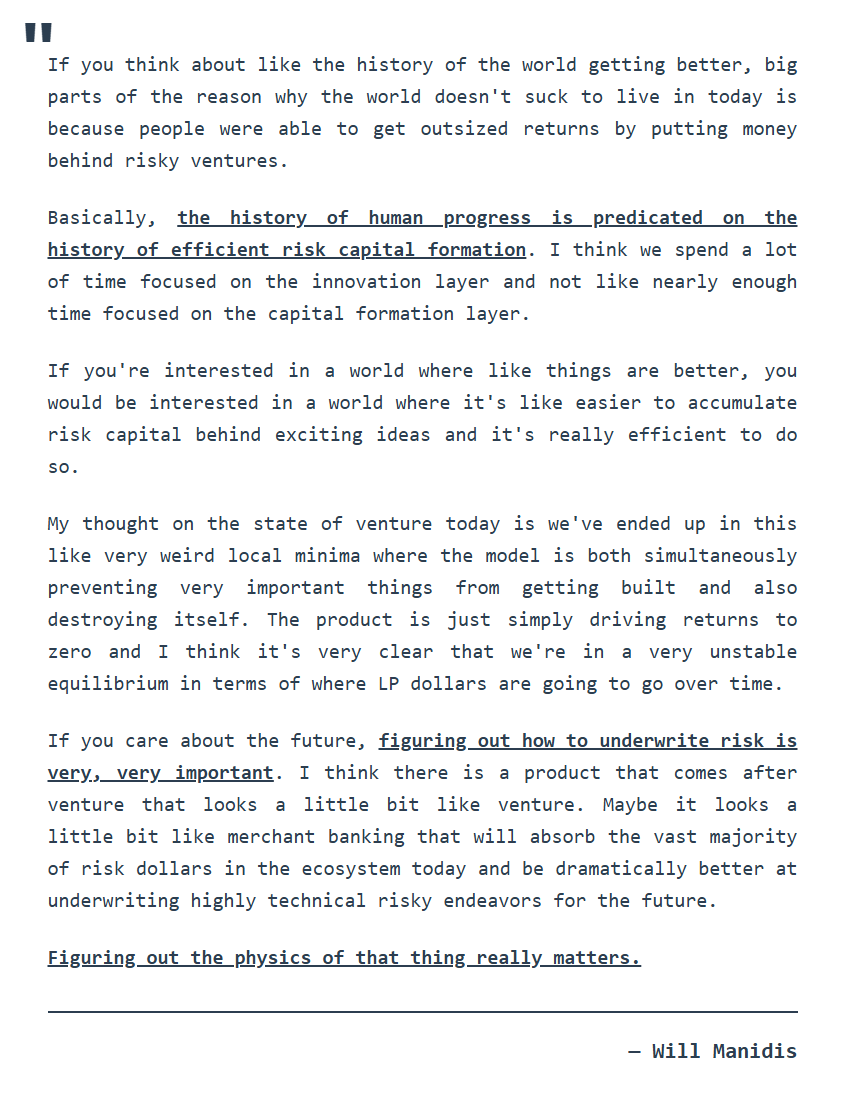
Venture capital in the 90s was wild Good funds had triple digit IRRs https://t.co/zlZ9qhDIg3
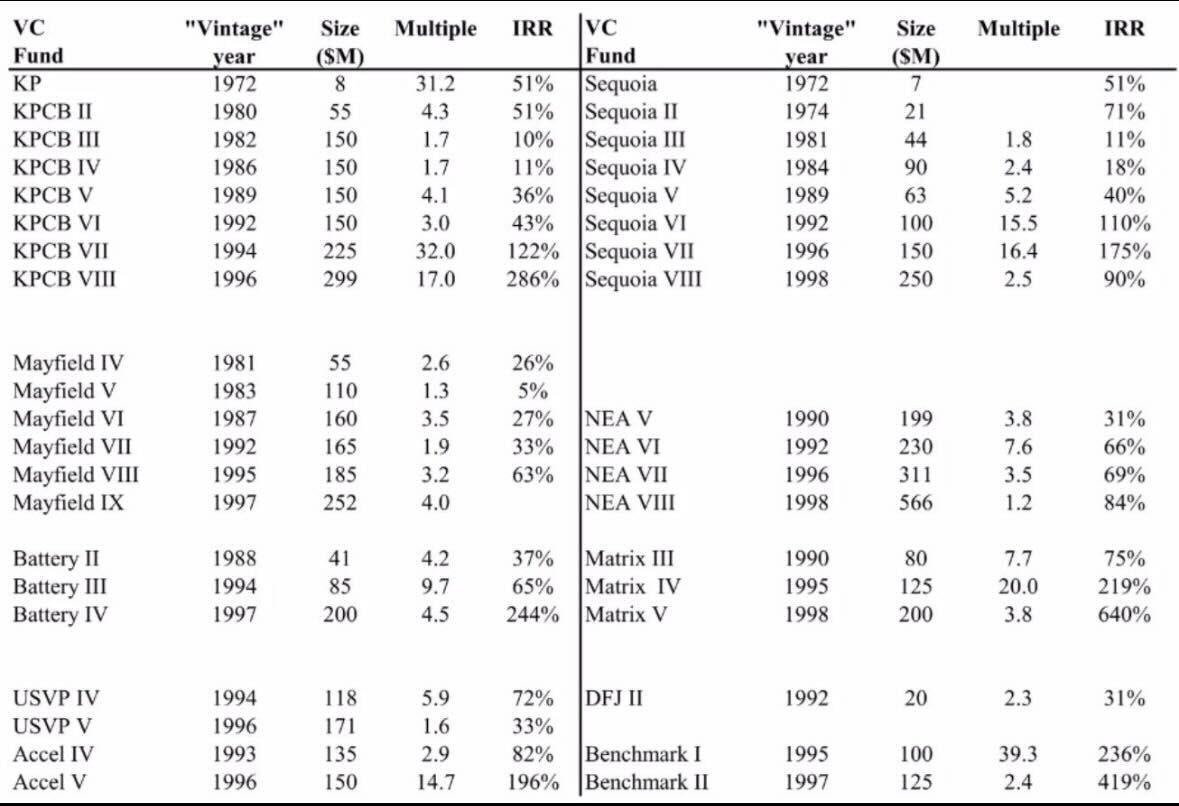
Some fascinating math from the Wiz acquisition- Insight invested in their Series A and several follow on rounds. Turning $213M into $2.6B. Pretty good, right?!? The biggest software M&A transaction in history didn’t event return a third of their $9.5B fund… https://t.co/2RScL6wT7m
It’s crazy how many employees these tech companies have: Microsoft has 228,000 employees Google has 180,000 Salesforce? 76,000! All waiting to be harvested for earnings if needed during a downturn
Mar 19, 2025There’s a few studies on this phenomenon: how investors weaken startups’ future potential through overcapitalisation. It’s especially problematic in hot markets, where investors are most prone to ‘human capital bias’ (pedigree, background, etc) to justify writing the earliest https://t.co/PYh9n50gj1 **Quoting @johncoogan:** > Kamikaze Round is a better name for this. Please refer to it as a kamikaze round from now on. Credit to @traestephens for upgrading the coinage.
When @vkhosla and I visited White House together last year we talked AI, Energy + Open Source v. Closed I said: "Where you stand on the issues depends on where you sit on the cap table" Lux is big believer in open source + @huggingface AND my friend @JoshuaKushner is correct https://x.com/JoshuaKushner/status/1883881986173084132
Jan 27, 2025"I heard stories that last year, end of 2022, when the auditors were getting involved, they were telling GPs to talk to each other to try to figure out how to value things." (source: Beezer Clarkson of Sapphire Partners) 2022 was the year that pissed-off LPs put a spotlight on https://pbs.twimg.com/tweet_video_thumb/Gh018dXWUAAQqI8.jpg
everyone in tech 100x underestimates how important efficient capital formation is for building the future inventing the safe and making it so you could sell equity with a one page agreement probably created >100b in equity value. there's dozens of these unlocks left to discover
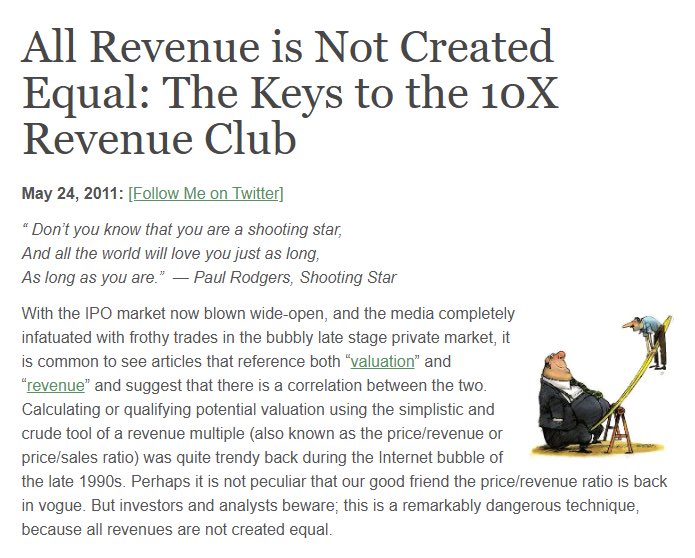
2025-01-10One of the reasons that performance persistence is so weak in VC, and the cycles so agonising, is simply that knowledge doesn’t get passed on. We can look back at 2011 and see experienced investors like @bgurley talking about the danger of crude pricing in frothy markets, much https://t.co/p7eMJmgOea **Quoting @trengriffin:** > Bill Gurley: "When I first arrived at Benchmark, it was like, ‘Nothing can go wrong.’ There was an IPO every week. And then, wham! Man, the door came down hard.” https://t.co/8uAxb7BQsG
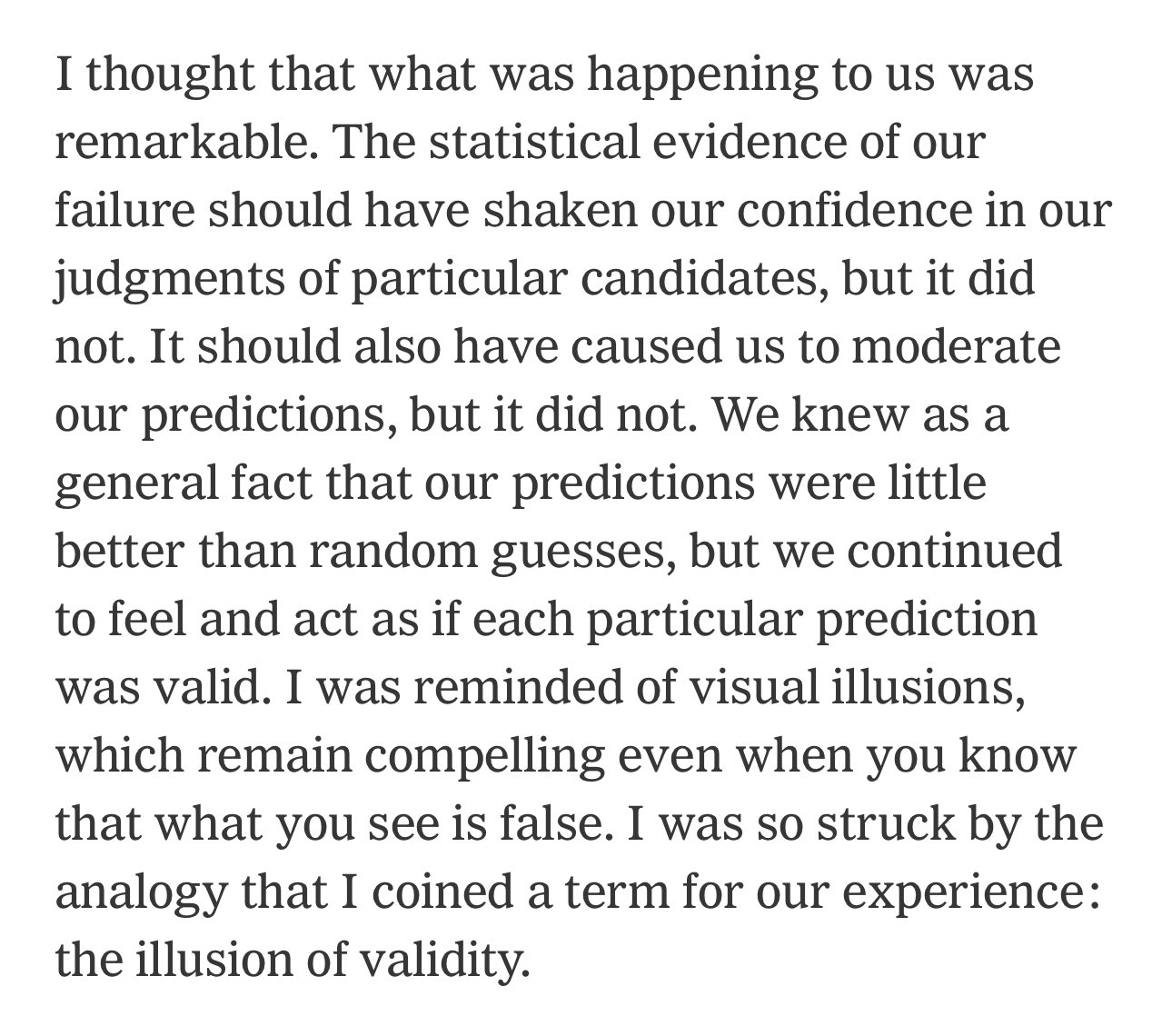
The passage below, from @kahneman_daniel’s article “Don’t Blink! the Hazards of Confidence”, should connect with anyone in VC. Kahneman’s work on how bias and ego influence decision making — particularly in investment — provide a solid foundation for a hypothetical VC https://t.co/wl76DAjr9A
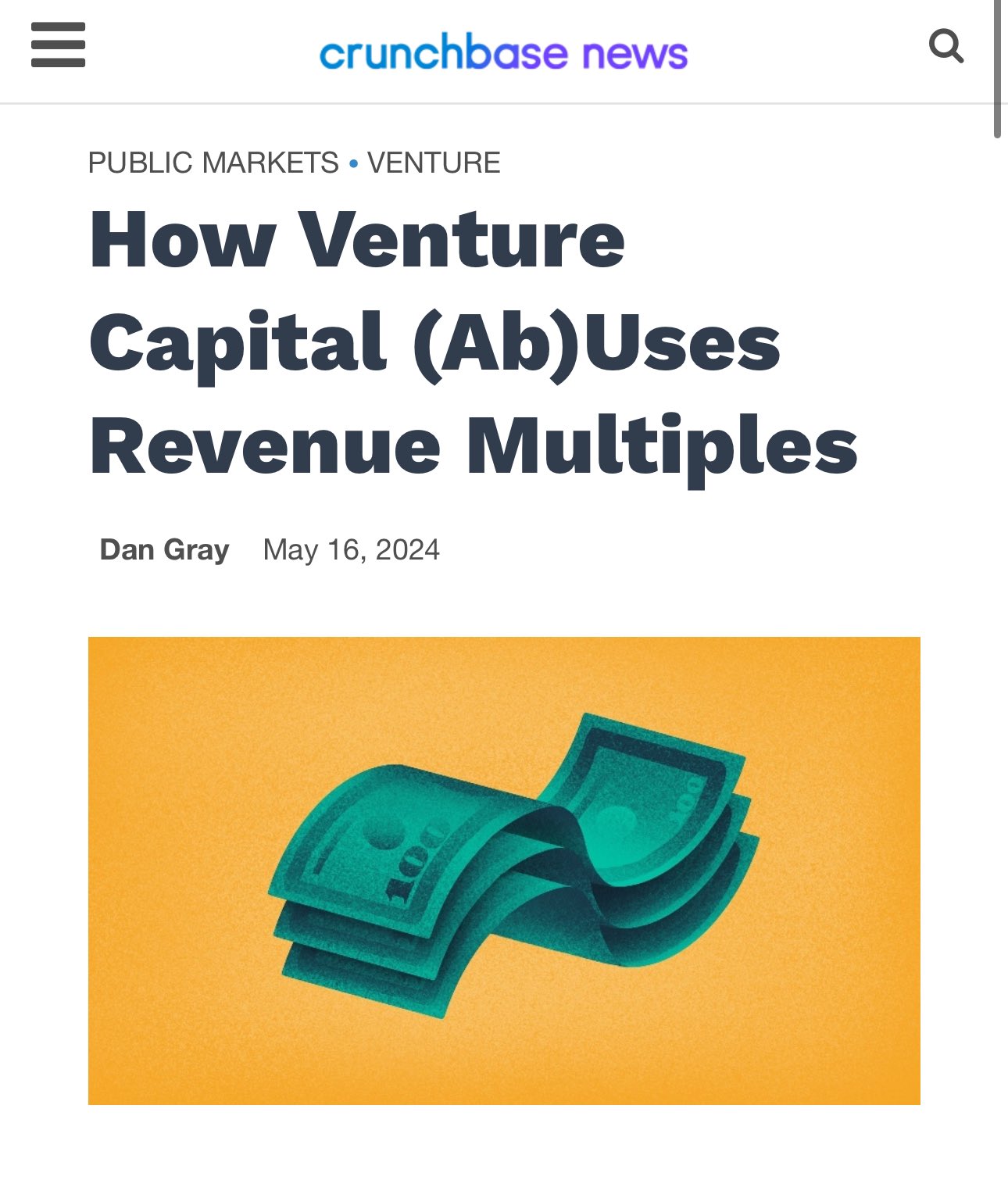
Revenue multiples will be looked back on as the weak-link in venture capital practices across ZIRP (and for some time after). Not only are they crude and procyclical, they favour companies with poor financial health — and occasionally outright fraud. Cook your books to add an https://t.co/u9FanMWxcJ
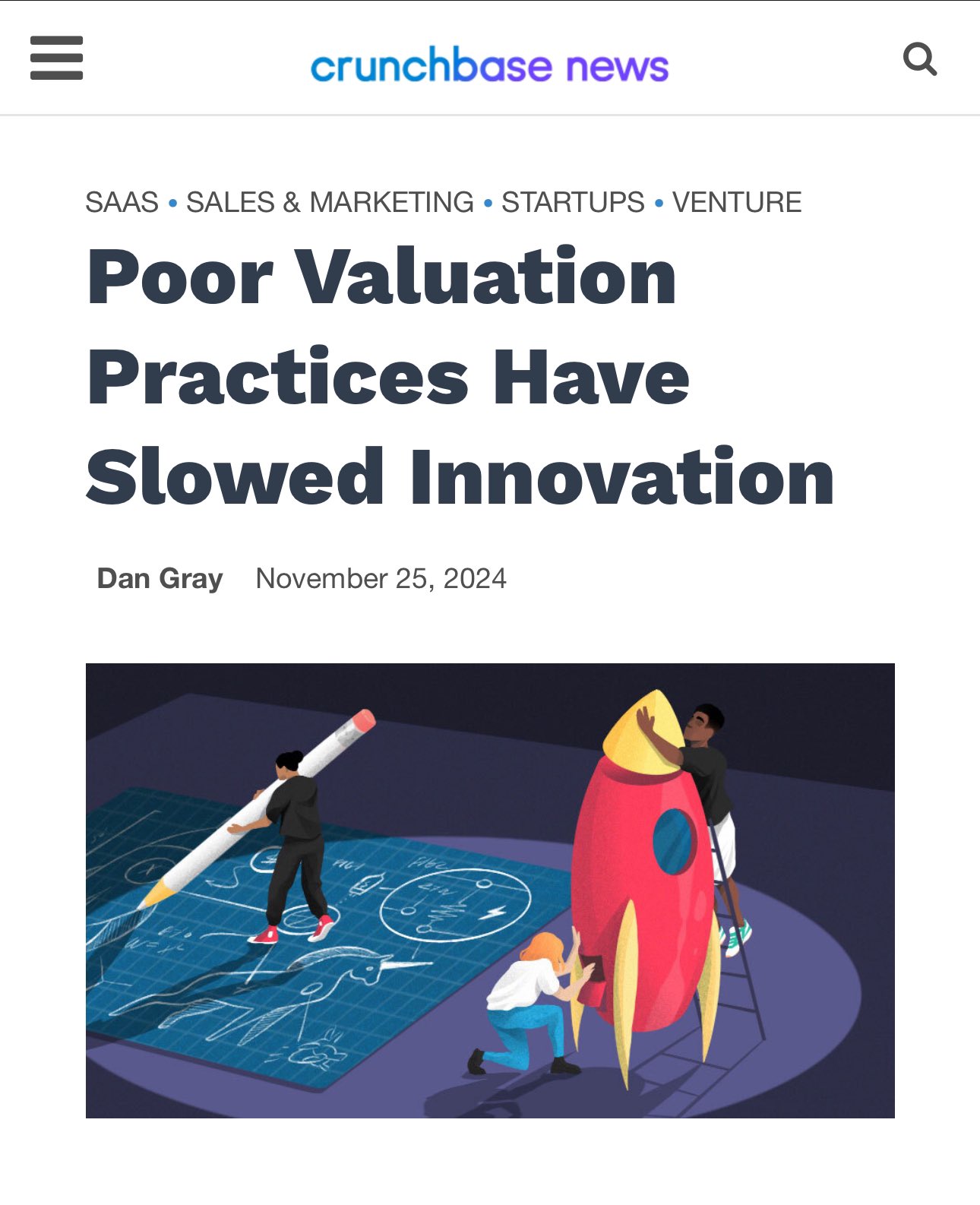
the question of how to most efficiently route capital to early stage ideas is the most important things to solve to accelerate human flourishing the limited liability corporation lifted billions out of poverty alone and fixing the venture capital model will lift billions more
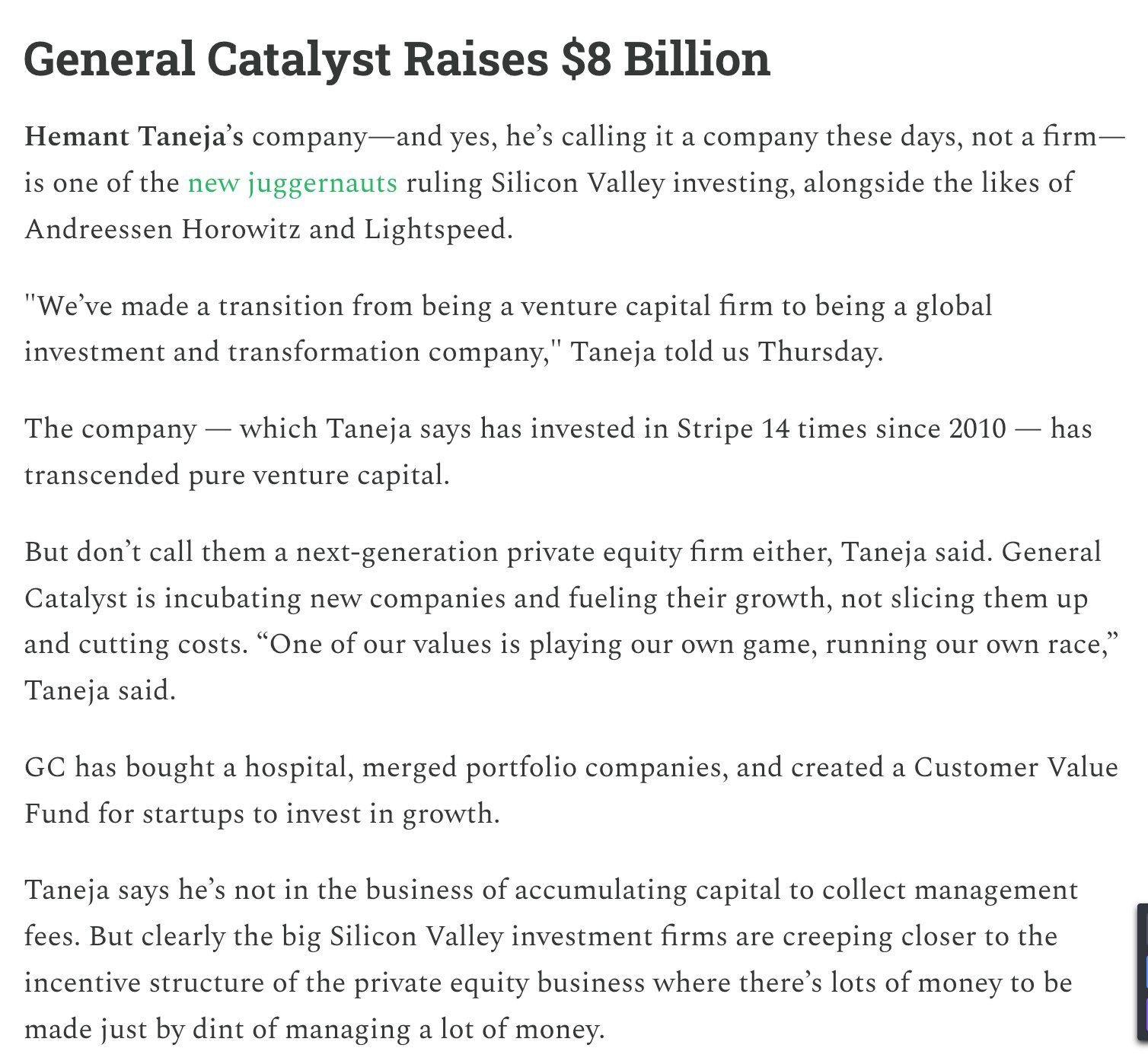
2024-11-08lesson of private equity would be that many big VCs should become AUM machines. and that would appear to be what they are doing. of course no one wants to say that's what they're doing. General Catalyst doesn't see itself as a pure venture capital firm anymore though -- but https://t.co/iYZoaqeCup
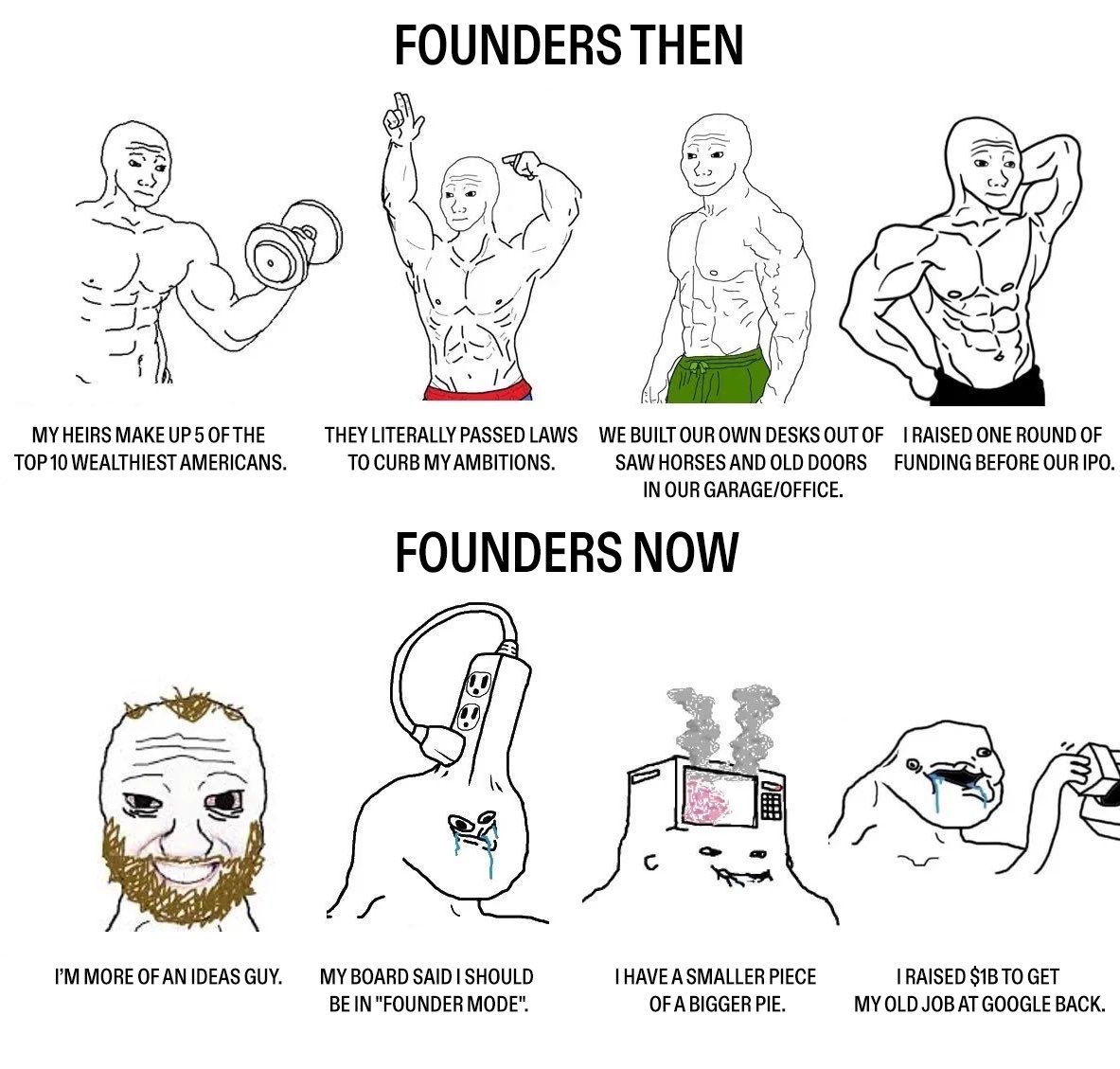
Related- https://t.co/rrNMMLTuWl **Quoting @jasonlk:** > A big generational change: > > When I raised venture capital, I viewed it as a do-or-die commitment to making them money, building something great or going down trying > > Fast forward to today, founders are happy to just quit having raised $2m, $20, $200m, $2000m in venture capital
Most football players don't want their kids playing football. Most VCs wouldn't raise venture capital for their own companies. Ponder accordingly.
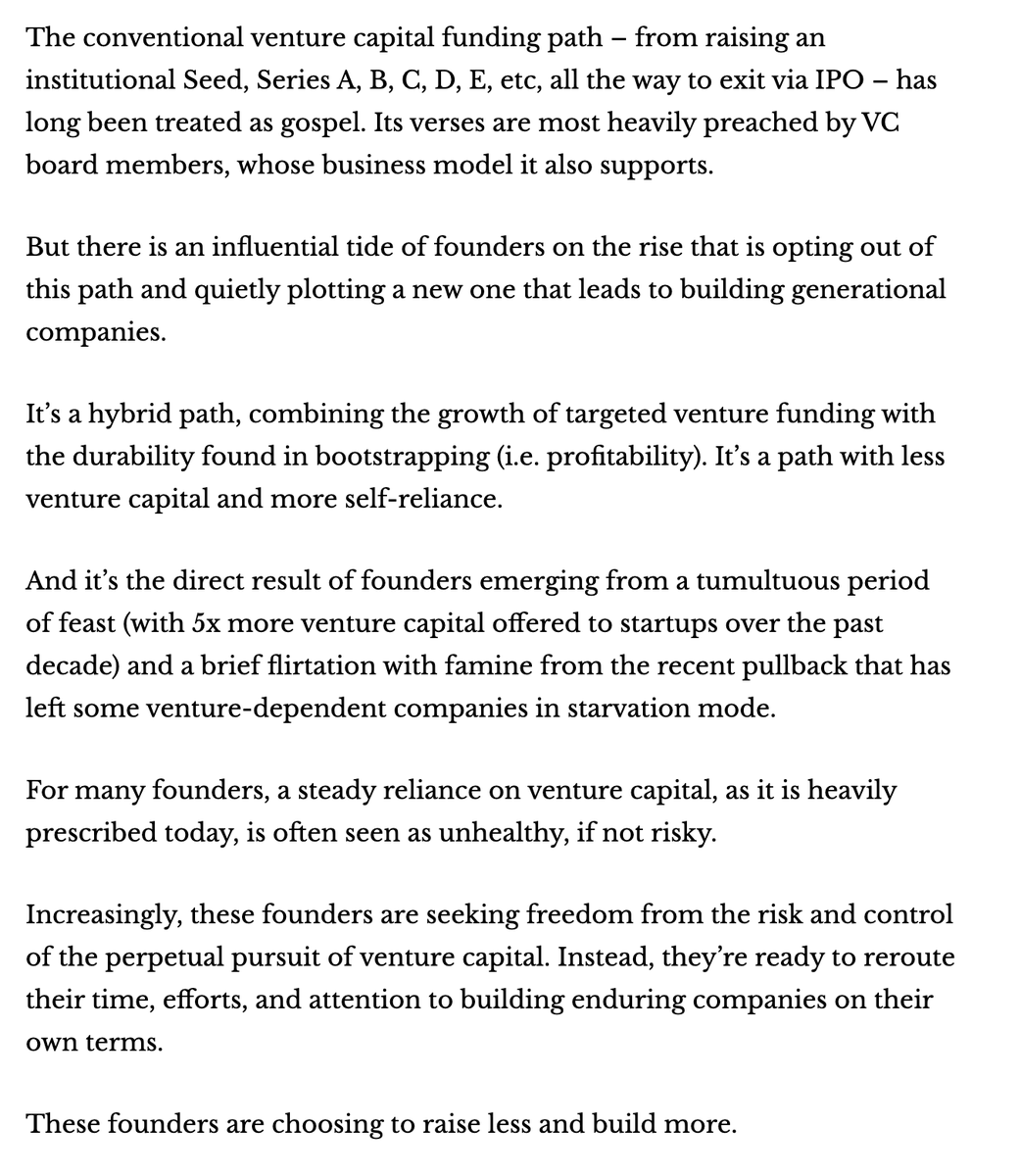
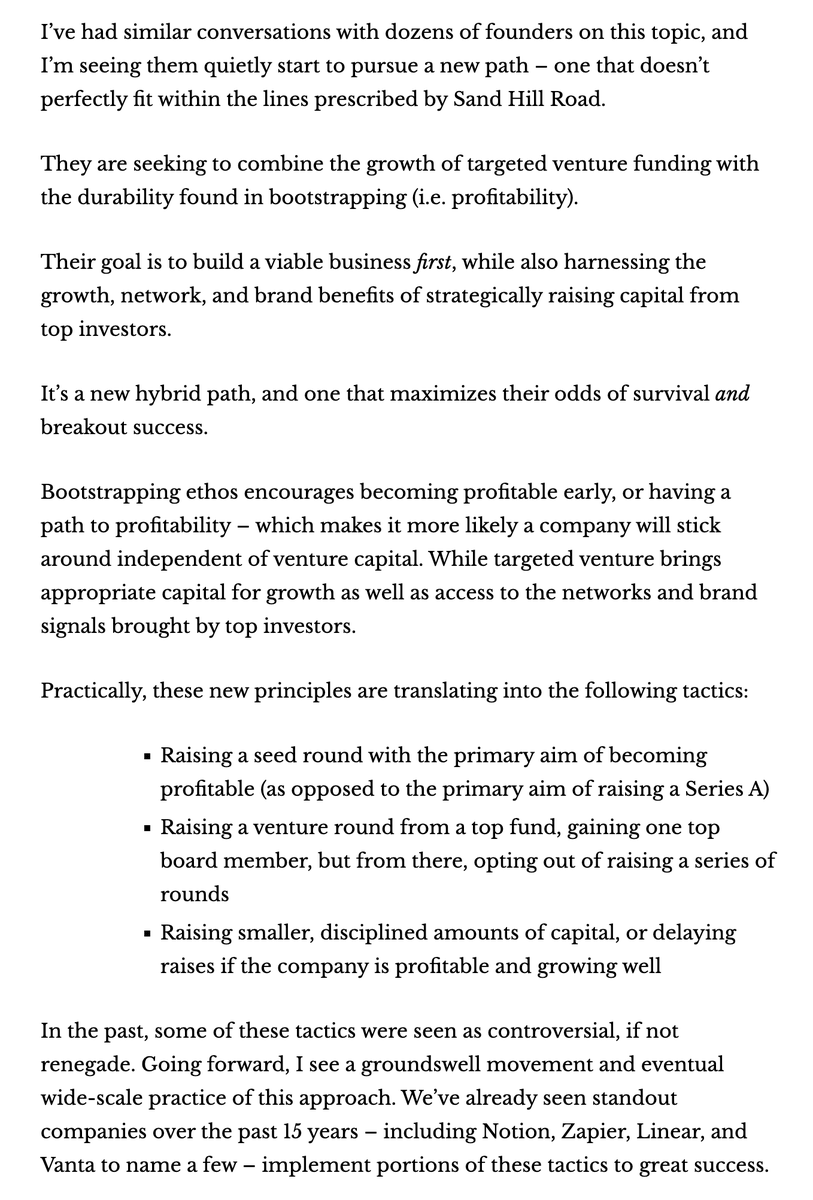
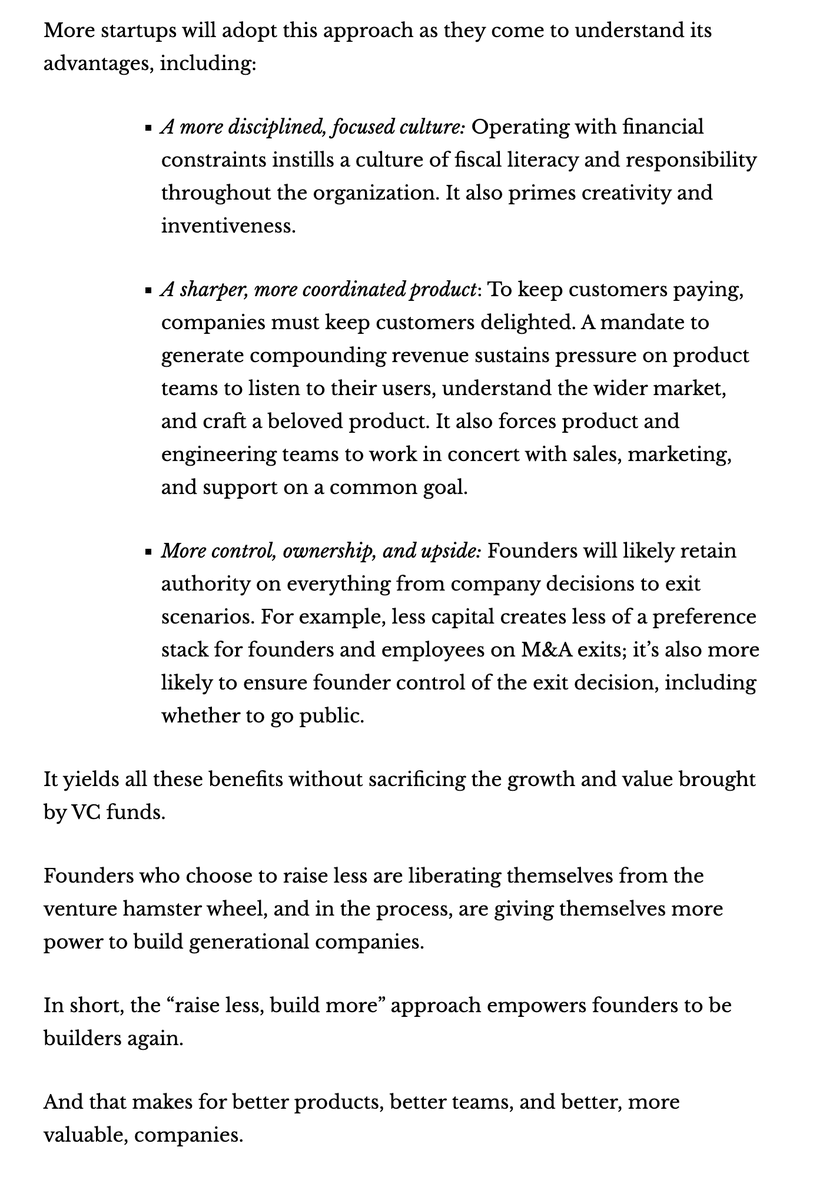
Oct 22, 2024Timely repost, "Raise less, build more" http://gmpg.org/xfn/11 Why VC funds offer founders huge checks. Why VC raise huge funds. Why giving startups huge checks isn’t empirically better. How certain companies like Notion, Vanta, Linear and Zapier are paving a new way. https://t.co/0wcJY1VbqH
Peak XV (fka Sequoia India) is decreasing its fund size, releasing $465M of obligations from LPs in their $2.85B 2022 set of funds. There has been a lot of apprehension about venture-scale opportunities in India and Peak XV is doing its part to right-size https://t.co/LjPaFpj0f7
Never forget that the hucksters will feel zero remorse for taking you for a ride, or passing you their bag. No one is on your side. You just happen to be their exit liquidity. https://t.co/hjZIixMFEK
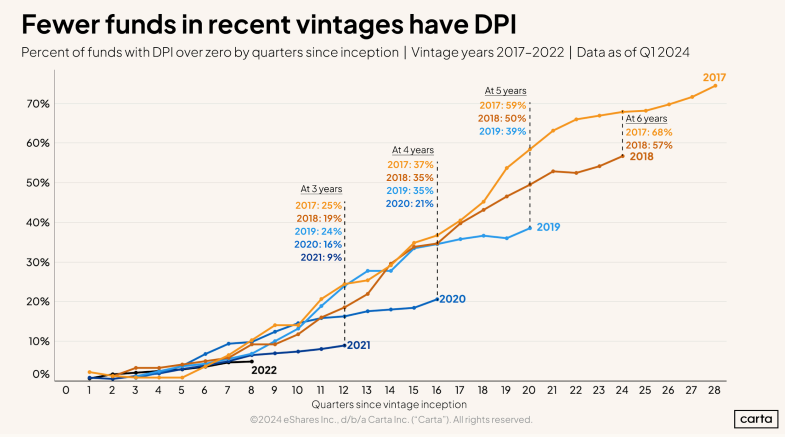
**1/** So we quickly looked at our data to see if DPI in year 5 is a good predictor of final performance. We analysed 71 funds from vintage years 2005-2008. The correlation between year 5 DPI and current DPI was just 0.22. **2/** The best-performing fund in the sample has a DPI of 12.3x. In year 5 its DPI was zero. Conversely, the best-performing fund after 5 years had a DPI of 1.28x. It's now at 2.55x. **3/** Admitedly, this is a bit rough and ready and it would be good to have more data in the sample. But early indications are that there is no positive correlation between early DPI and final performance. **5/** DPIs - it takes 10-12 years for a company to go from being founded to IPO. Don't expect much DPI in the first 5 years of an early-stage fund's life. Also, liquidity in VC comes in waves. 2021 was one of these waves. So, no surprise later vintages are lagging on DPI. <!-- Post 4/ of the thread was not served to a logged-out session on 2026-09-24 and is not captured here. Posts 1/, 2/, 3/ and 5/ are verbatim. threadreaderapp has no unroll for this thread. --> **Reply from Jason Lemkin (@jasonlk), Aug 21 2024:** > What about TVPI at Year 5? Many these days complain both that there isn't enough DPI, and TYPI is too inflated by unicorn valuations, etc. I suspect the correlation is pretty high to terminal DPI but maybe I'm wrong
Joel Greenblatt compounded at 49% (!) from 1985 to 2005. And the best thing, he taught a Columbia Class on how to do it. Here are 6 Investing Gems from his Columbia Classnotes (+Free PDF)👇🏼 1. Don‘t do Portfolio Management If you think like a portfolio manager, you cannot simultaneously behave like an owner. But portfolio managers research stocks. Owners research businesses. And that’s what we try to do. Research and buy businesses. 2. Management vs. Incentives For 90% of investors, getting a genuine and honest picture of the management is impossible. Instead, look at the incentive structure for the management. Are they incentivized to add value to the company? If so, they will. If not, they won’t… 3. All about Valuation In the end, it’s all about valuation. Do good valuation work, and you’ll make good investments. There’s lots of noise in finance and investing. But that’s not what causes superior returns. Find the context/story others cannot see, and you’ll do good. 4. Leverage & Patience If you own a concentrated portfolio, leverage is far more dangerous. It’ll wipe you out in downturns that ALWAYS occur sooner or later. Have patience and trust in your decisions, and there’s no need for leverage. 5. What’s your limit? Most investors fail to see their boundaries. There are so many names and “opportunities” thrown at you that it’s tempting to fall for them. But what companies do you actually understand? For most of us, that will be a very limited amount. 6. What’s a good Business It’s always: “Buy a good business at a fair price.” But what is a good business? This is Greenblatt’s criteria: You can get the PDF of all Class Notes here: https://t.co/ccHq7Eo4Bz Before you go there, please Like and Retweet this Thread. Thanks a lot! Ohh and for more daily Tweets on Investing, follow me [MnkeDaniel](https://twitter.com/MnkeDaniel) 😁
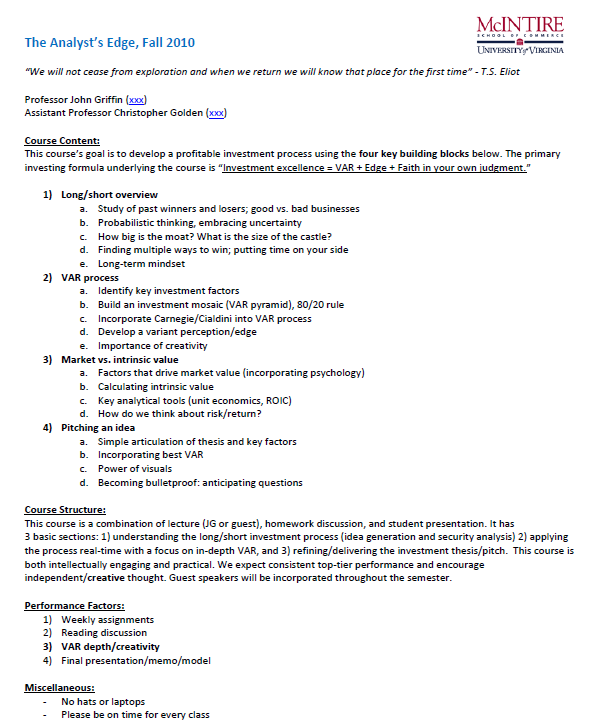
Here is John's 1-page syllabus from the Analyst's Edge. When I was at a Tiger Cub participating in the hiring process in 2010, I interviewed a couple of John's students. They blew me away with their level of preparation. It's not an exaggeration to say I wouldn't be doing what https://pbs.twimg.com/ext_tw_video_thumb/1741974883335024640/pu/img/TV1vTUh0dtvFimgm.jpg **Quoting @realLigerCub:** > John Griffin, ex right-hand man to Julian Robertson and founder of the now-closed Blue Ridge Capital, taught several classes at UVa and Columbia: The Analyst’s Edge, The Investor’s Edge, Seminar in Advanced Investment Research, and Securities Analysis and Idea Generation.
@EricJorgenson The relationship between societal evolution and capital / regulation is dramatically under-discussed. I liked USVs recent investment thesis post about focusing on societal, rather than technological change. I think societal changes will eventually try and rip innovation in
2024-01-27Pitch (a PPT alternative) had raised ~$138M, creating high growth expectations that they didn't live up to; is now reducing the team by 2/3rds, aiming for profitability Wonder what "resetting our company and cap table" looks like; would be great to share, many in the same boat. **Quoting @christianreber:** > Today was my last day at @Pitch as CEO. I’ve given my absolute best to the company, and after 6 years, many highs, and some painful lows, I need a break. I’m incredibly proud that my co-founder and CTO of Pitch, @adamrenklint, will step in and take over the CEO role from now on.
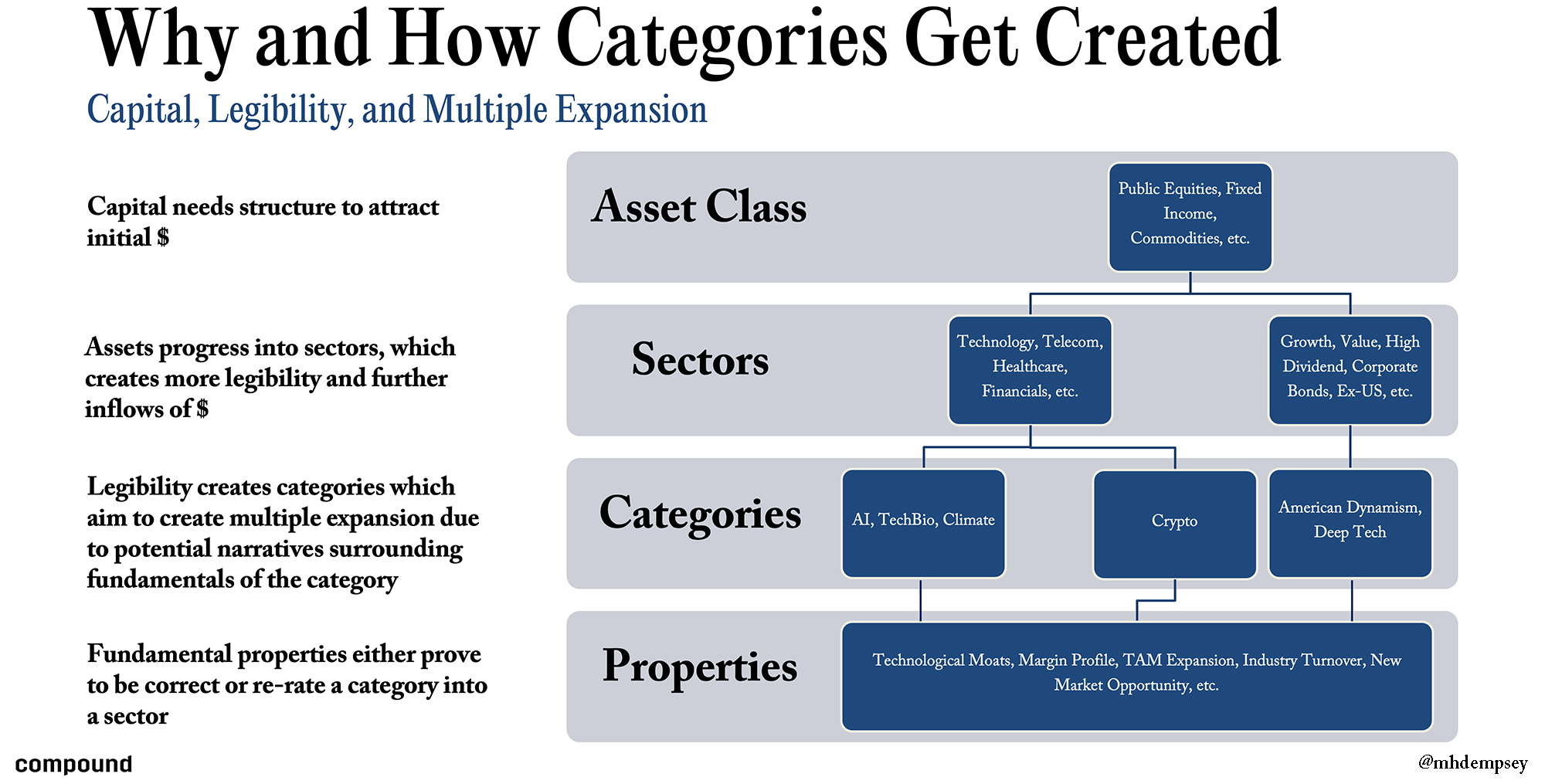
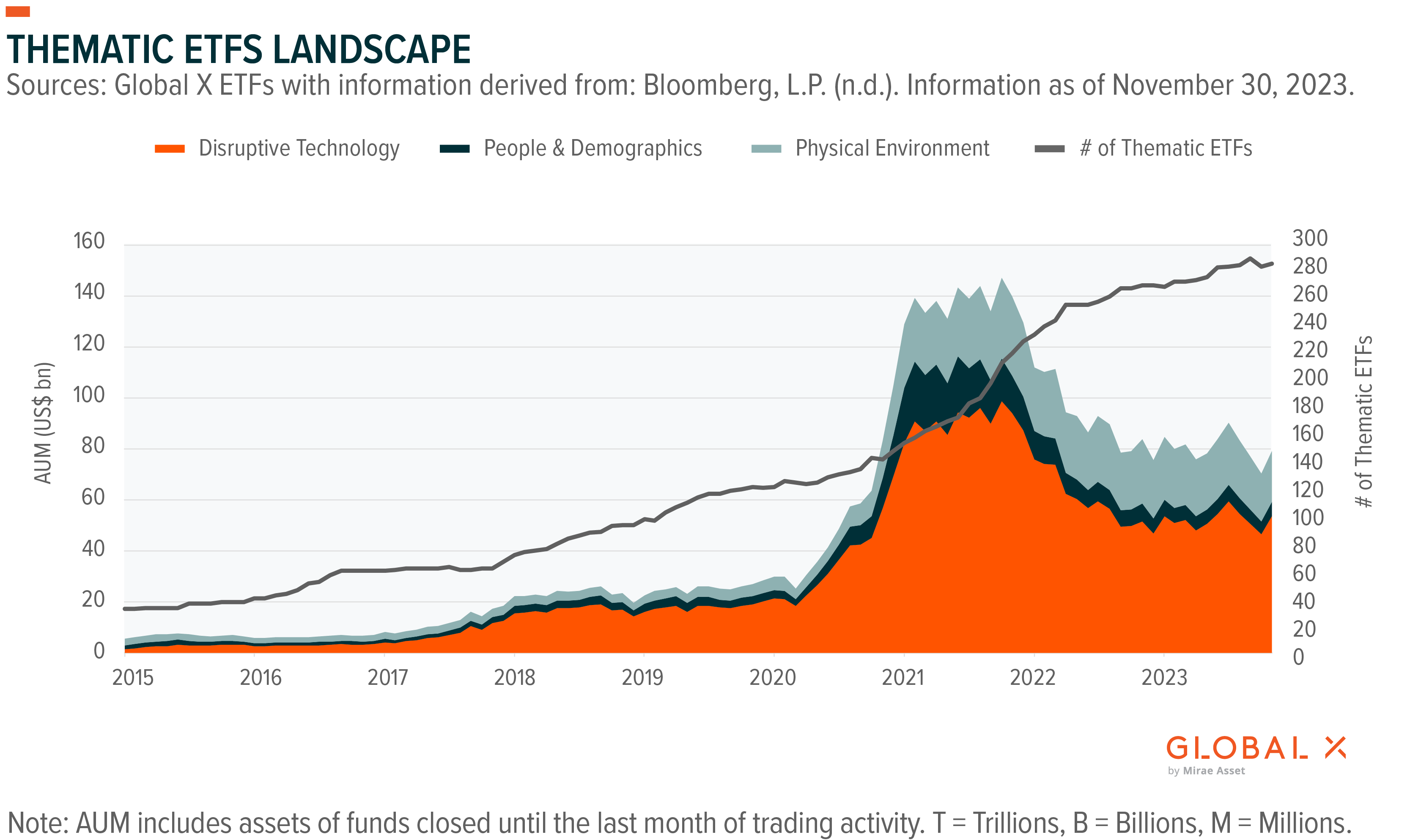
2024-01-08(New Post) Category Creation & Capital in Technology An analysis on how capital flows through technology, why we continually create new categories and naming conventions for areas within tech, and how this can signal market tops. https://t.co/WrRwvWEaBh
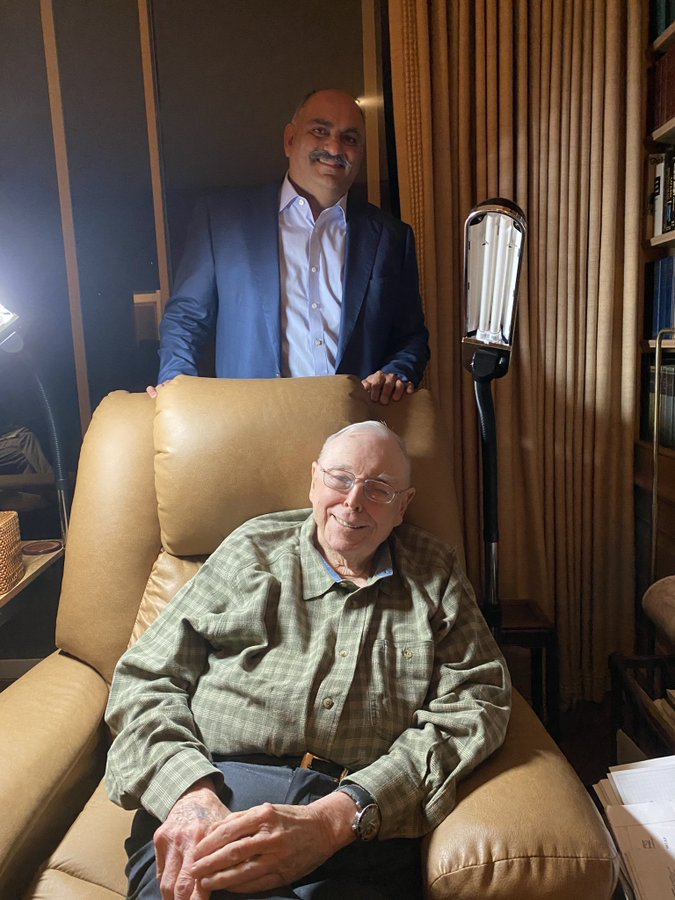
I think the original terms for venture summon the ethos my guest @EricJorgenson would like to see reemerge: "Liberation Capital" "Adventure Capital" Listen in to find out why 👇🏻 **Quoting @InfiniteL88ps:** > @EricJorgenson explains why venture capital has "lost its way” 👇👇 https://t.co/t681dVROez
2023-12-24Many great investors are self-taught. They studied investing through books. Mohnish Pabrai is one of them. And he published a list of books that helped him the most. Here are 6 books he studied to learn Investing👇🏼 1. Damn Right! Behind the Scenes with Charlie Munger One of the things I admire most about Munger is that he lives the life lessons he preaches. This wonderfully written biography illuminates these lessons and gets you as close to Munger as possible. 2. Deep Value Investing: Finding bargain shares with big potential A 200-pager explaining how to find bargain-priced stocks of high-quality businesses. A great book for everyone who wants to understand the fundamentals of smart investing. 3. Common Stocks and Uncommon Profits Phil Fisher is a legendary investor and even a role model to Warren Buffett. This book is one of the first to explore how the value investing philosophy can be applied to growth companies. A must-read for every aspiring investor. 4. 100 to 1 in the Stock Market Thomas Phelps explained the path to one hundredfold one's wealth. This book focuses on long-term investing and the so-called “Buy and Hold” strategy. He analyzed the great compounders of the past to find out what makes them special. 5. Excess Returns: A comparative study of the methods of the world's greatest investors This book analyzes the most successful investors in the world. It is packed with learnings, lessons, and strategies that outperformed over time and all essentials an investor needs. 6. Against the Gods - The Remarkable Story of Risk Peter L. Bernstein is a successful investor and one of the greatest thinkers on the topic of risk. This book is a must-read and gives a comprehensive history and overview of risk and probability. Here's a booklist that I put together covering the recommendations of dozens of Investors: https://t.co/qHKJT99L5q Here's Pabrai's Bookshelf: https://t.co/psJBliDA1e That's it for today! If you enjoyed it, please Like and Retweet this Thread so more people can see it! Follow me <a href="https://twitter.com/MnkeDaniel">@MnkeDaniel</a> to learn more about Investing. Have a great day! If you want to learn more about Investing, check out my Website! You get: - In-depth articles - An Archive of Investing Resources (1000s of free pages of investing wisdom) - The Best Book Recommendations - Company Research https://t.co/kHuD1X8iC2
I get quite a few dms from mostly younger guys who in one way or another are looking for a formula when it comes to analysing investments. I’m mostly very flattered. The good news (or bad depending on your POV) is that there is no formula. Modelling is all well and good, but it won’t get you to the promised land. The problem with modelling is that you might become too attached to it. Business is messy, and often complicated - even in the most predictable businesses, you’ll often be wrong in your assumptions. This is a journalistic process, not an exercise in excel. Most of the best investors I know begin, and end their process with the story - complete and accurate information that explains what’s happening with the numbers.
Oct 23, 2023Having worked for a few of these incredibly successful individuals and having been a (mediocre) PM at a few large hedge funds myself, I’ll tell you what I observed about motivations. Past a certain level, money and social status no longer become the primary sustaining motivation. This should be obvious. To me it’s the same reason that Phil Ivey and Phil Helmuth keep playing poker, and why Tom Brady would never retire. They have a skillset that allows them to win a competitive game, and the dopamine hit of winning is like nothing else that exists. Markets are just a giant game of poker, yet the outcomes are magnified 1000x. Winning that game also requires a level of engagement with the world (understanding macro, technology, trajectory of industries & companies) that is really intoxicating and satisfying. The moments when you feel like your research & connections help you see and monetize the evolution of the future - is there any more powerful feeling in the world? I’m not sure there is. Chasing that high, that dopamine hit, that becomes the obsession more than the Hamptons house or private jet. I remember a successful PM one time telling me how he loved the feeling of Japan opening on Sunday night. The adrenaline coursing through his veins. It must be the same feeling Tom Brady felt lacing them up for another season - an incredible high, and one that is damn hard to kick. It’s a drug. I was a mediocre PM and I’ve been retired for 2 years. But damn I still miss it sometimes. I have an incredible life, but the highs of the nailed trades or the moment you are really locked in and seeing the ball clearly. It’s like you are walking on air. That feeling is what drives these people.
Oct 10, 2023Startup Founders — This Week is a Wakeup Call — Demand To Know The LPs of Your VCs; Do Not Find Yourself Accidentally Delivering Returns for People Who Spend it To Murder Civilians. https://t.co/ZZtjfhiWQx
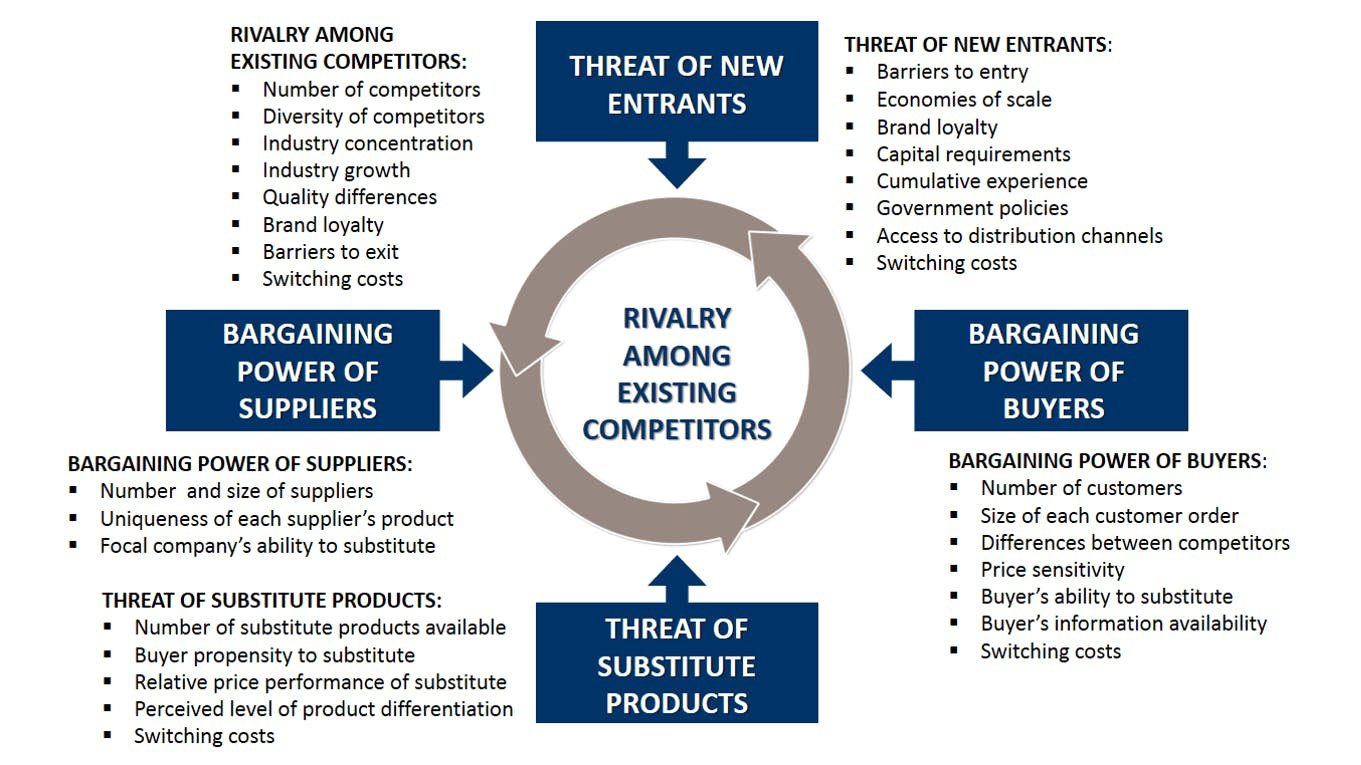
At Atlasview Equity, we love using the Porter's Five Forces framework. It might seem cliché…but I honestly believe it’s an effective way to quickly (and objectively) assess a business. Here is a breakdown of how we approach each of the five forces 👇 1/ Rivalry Among Existing Competitors In winner-take-all industries (horizontal software), unless we're looking at the champ, it’s a hard pass. We ask: • Why isn't a competitor snatching this biz? • How much $ have rivals raised? • Market fragmentation & active consolidators? 2/ Threat of New Entrants We want to know how difficult it is for a new upstart to launch and take market share. We ask: • VC interest and funding for industry newcomers? • Sales process complexity and distribution channels? • Niche fit of software/service? 3/ Bargaining Power of Suppliers Hosting providers and platforms are key partners for our businesses. We want to know the strength of the partnership, and whether the business is at the complete mercy of the platform. We ask: • Platform's cut and recent changes? • Alternative partnerships and direct customer access? • Platform's commitment to the partner ecosystem? 4/ Threat of Substitute Products We want to know what alternatives are to using the biz software and service. We ask: • Is the product need-to-have or nice-to-have? • Can customers survive without it? • Is it economical for customers to build their own tailored version in-house? 5/ Bargaining Power of Buyers: We want a business that has many customers, as the more spread out the revenue is among them, the less power customers have over the business. We ask: • Revenue distribution among top 5 customers? • Switching costs and customer risks? • Pricing dynamics and recent changes? You can score each section out of 10 or something to get a (somewhat) objective measure of the opportunity at hand. But even just using this as a general guide will help you streamline your discovery process when presented with a business that you’re unfamiliar with. Become a better capital allocator and deal maker with my weekly newsletter! Join 3,000+ like-minded investors and receive insights and expert tips on making smarter investment decisions – all for free! https://t.co/DczN7OCNGv
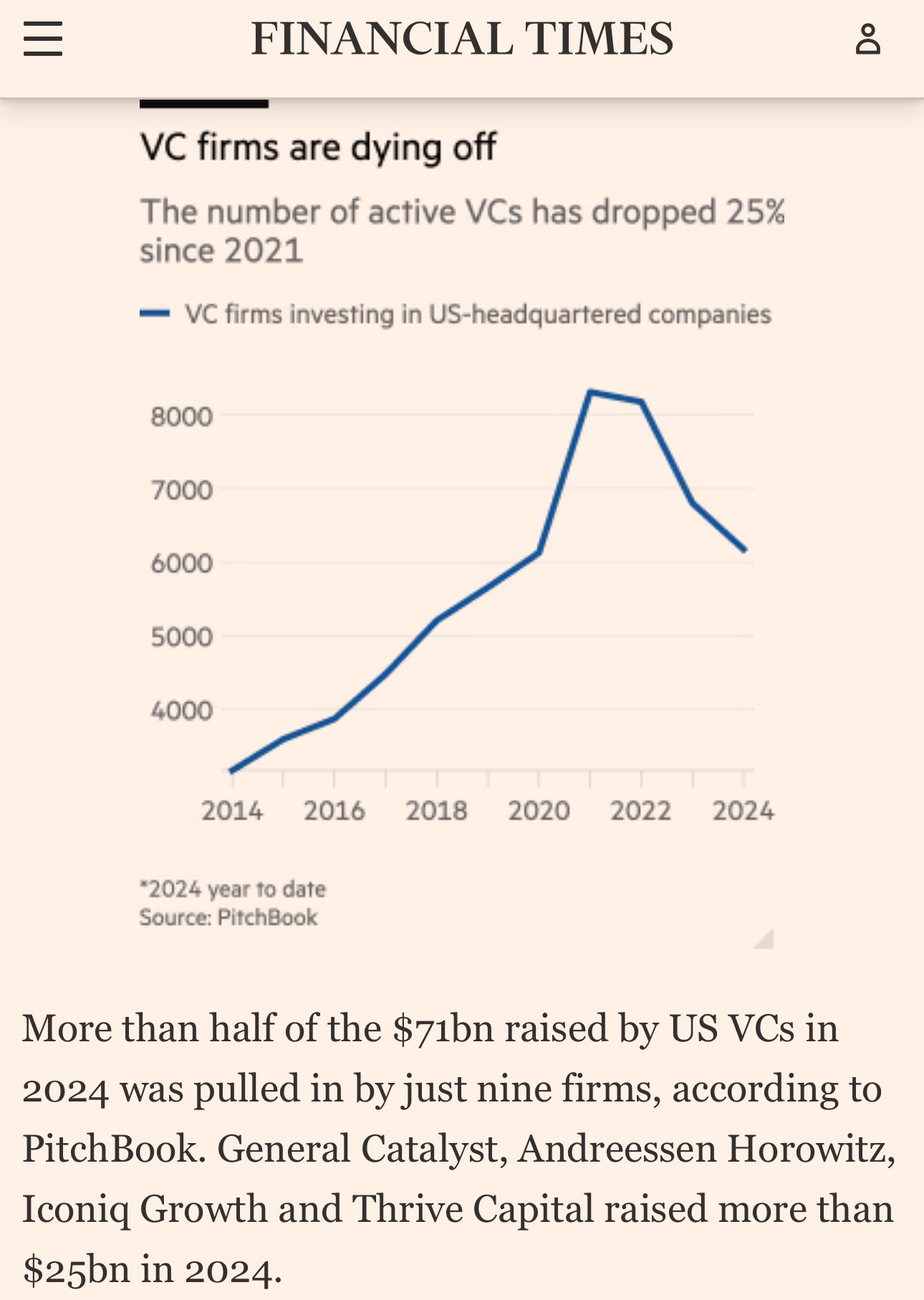
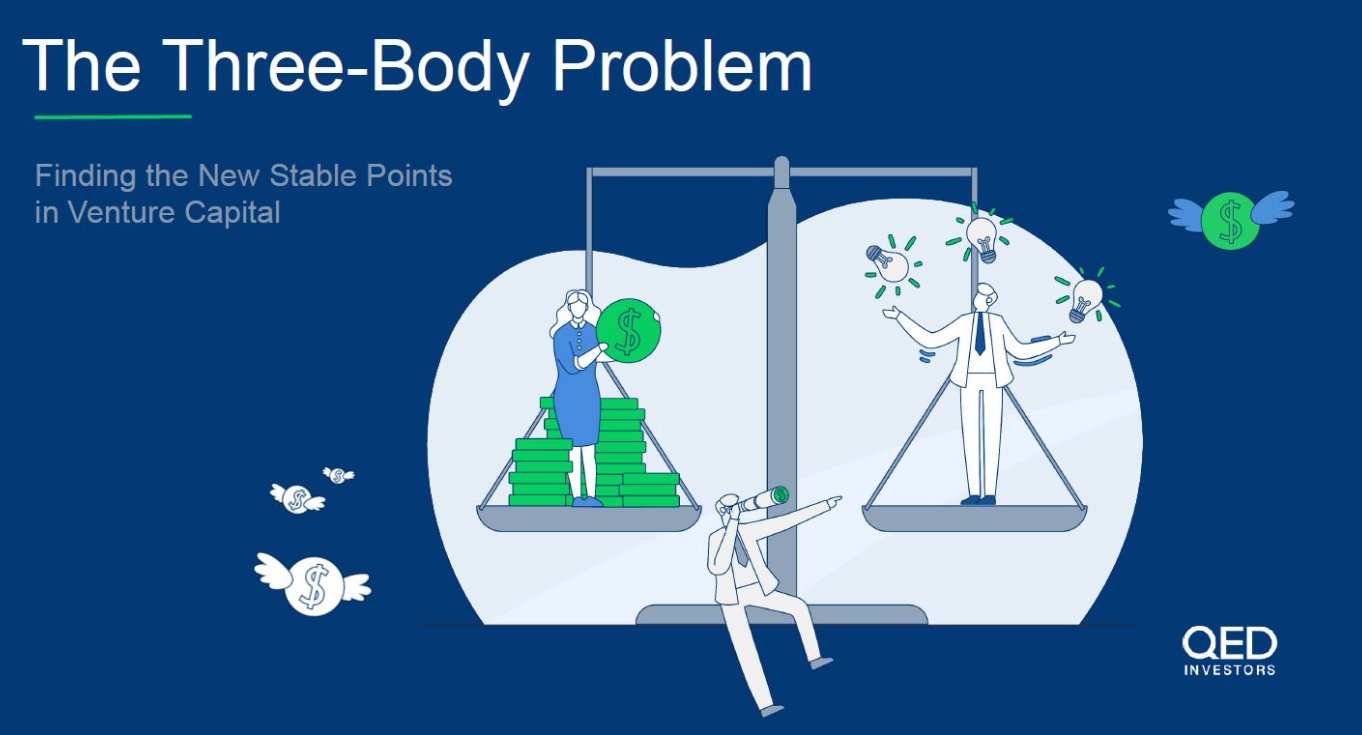
Just over a year ago I published a presentation about how most VCs would need to rethink their value propositions or risk extinction. What's happening in today's market confirms the thesis. Let me know what you think! https://gmpg.org/xfn/11 https://t.co/HklloadrIE
I mention this book in my latest talk. It is a VERY important book for risk-takers. Discusses the biology of risk-taking in trading/investing but I think applies to management, coaching, and the military. @GrahamDuncanNYC that got me to read it years ago. https://t.co/aqfaYv8tMg Here is the clip from the presentation. It's one of my favorite quotes I use as a reminder, especially when we have large positions on or when we are going through good or bad performance. https://t.co/62WqSvI8mg Investing is a tough business emotionally. It can also have vast negative consequences for an individual's personal and professional ecosystem. We tend to not see the small/middling failures in our business because of survivorship bias. I've seen/heard real horror stories over… https://t.co/xjBWBXhVBj We see the big failures though. And still. We also rarely see the personal side of the big failures. This is a very tough business. There's a tendency on wall street for guys to walk around like they are alpha males but inside they are really still the kid that got shoved into a… https://t.co/srEtaDJZ6I One of my favorite PMs to learn from has a principle: you are never as good as you think you are when you are doing well, nor are you as bad as you feel when you are not. Its a great principle. Worth journaling on. This thread on how to deal with stress and declines in performance is useful. https://t.co/L5w2TUcTWh Thanks to @costanzodr for reminding me of the book!
Jun 22, 2023"They should take their own medicine: Venture firms shouldn’t be ashamed to raise funds that more accurately represent the opportunities in front of them." The End of Megafunds - @KateClarkTweets https://t.co/Ge5HUjySc4 https://t.co/1qy6IocERO
General Catalyst pre-funds a company’s S&M budget. GC is entitled only to the customer value created by that spend and capped at a fixed amount. After GC reaches that fixed amount, the remaining lifetime value of the customers is the company’s to keep. https://t.co/hDndsyAWeh **Links in the tweet** (resolved 2026-09-29): - `https://t.co/hDndsyAWeh` → https://www.generalcatalyst.com/perspectives/the-unbundling-of-growth-equity#:~:text=This%20strategy%20seeks%20to%20give,build%20a%20fortress%20balance%20sheet
Jun 13, 2023"Don't break into VC, break it." - @DelJohnsonVC Check out these game changing people and funds who are disrupting Venture Capital. 🔥 [Thread 👇🏾] Rolling Funds: In August 2020, @shl launched a rolling fund. Unlike traditional venture funds, Investors (LPs) contribute to the fund on a quarterly subscription basis rather than a one-time commitment. https://t.co/zc4mHBPFTl Fund Structure: @ArlanWasHere allowed non-accredited investors to get into the VC game by doing an equity crowdfunding campaign on @joinrepublic that raised $5M for 10% of future earnings of @Backstage_Cap (~10% carried interest & 10% management fees). https://t.co/IVbaPhDYzZ Investment Models: @collab_capital gives flexibility to the companies they invest in by doing a profit-share to gain returns from portfolio company's that are profitable but have slower growth compared to typical venture-backed startups. https://t.co/RTGLLQojGR
May 24, 2023 Original deleted — preserved here** MEGA THREAD ON INVESTING ** I was thinking about what kind of resources I'd want to have if someone has to start learning investing right now, the ones I wish I had two three years back. This thread is a compilation of the best resources I have come across. 👇👇👇 Let's start with ** BOOKS ** 1) The Intelligent Investor - Ben Graham : Classic book, suggested by investors all over the world. Start with this book. 2) One up on Wall Street Peter Lynch covers his strategies to find 10 baggers, and describes how an average Joe can do as well as the pros with simple methods and rock solid discipline and consistency backing it. 3) Common Stocks Uncommon Profits This is a Phil Fisher classic. It's on the other end of the spectrum as the book dives into a deep qualitative approach in value investing rather than being fully quantitative like Ben Graham's. 4) Security Analysis Another book by Ben Graham that dives deep into analysing and understanding the valuations of any company you pick up to study. 5) The most important thing This is one of the best investment books, coming from Howard Marks who has made his career making billions for his investors by trying to be slightly better than the average, and following timeless investing wisdom. This book covers the role of economic cycles in the markets and how you can position yourself with that knowledge in the world of investing. 6) The Essays of Warren Buffett : Lessons for Corporate America - All of Warren's essays compiled together in a sequential fashion. This is a treasuretrove of wisdom, as you get to see how Warren has progressed over years and his wisdom transcending generations of investors. 7) Howard Marks Memos : For years, Howard Marks has been putting out quality advice through his Oaktree Capital investor memos. These combined with Warren's annual letters form an amazing combination of getting into the headspace of two brilliant investors of our generation. 8) The little book that beats the market: This book by Joel Greenblatt is quite small, a no-nonsense book that really distills investing down to the barebone essentials and this method has worked (continues to work) in the stock markets. I can keep adding several more books to this list. But I believe that these eight are enough for you to learn investing theoretically and practically, and the best thing to do after reading these is to start applying what you learnt, in your analysis and research. Moving on, the following are the best ** YOUTUBE CHANNELS ** related to investing and personal finance. 1) [Preston Pysh](https://t.co/DQIIP7TMj9) Started the We Study Billionaires podcast, and covers Buffett style investing and Graham & Doddsville investors. 2) [Option Alpha](https://t.co/Iz5qsDqiwL) This is the Option Alpha channel - focuses predominantly on Options. As investors, it's a very valuable skill to have, to know the ins and outs of options so that you can protect your portfolio come hell or high water. 3) [The Swedish Investor](https://t.co/YEu1u4elZy) This channel covers takeaways from investing books, and profiles several legendary investors. 4) [Graham Stephan](https://t.co/7FJmcWpjZx) This is one of my favorites. He's a damn good, level headed, sensible guy who talks common sense investing and diversification. My favorite because he mixes humor in most of his commentaries and explanations about things. 5) [PPFAS Fund Channel](https://t.co/d5Ul2S1TMO) This is very underrated. Mr. Parikh's legacy is in this channel. PPFAS annual meetings and regular investor meetings are uploaded here. 6) [Mohnish Pabrai](https://t.co/TcQEXkgl7p) Mohnish is absolutely one of my favorite investors from India. He rarely posts, but when he does post, it's usually one of his lectures or discussions with someone, and there's a lot of wisdom to take from them. 7) [Ivey Business School](https://t.co/Ppy9zLVEye) The keynote lectures and annual conferences posted here are worth their time in gold for those interested in value investing. 8) [Aswath Damodaran](https://t.co/E8etj6uSlB) Famously called the Dean of Valuation, he's hands down the best guy you should learn Valuation and Corporate Finance from. He's made his NYU class lectures available along with homework, assignments, etc., on his youtube channel. 9) [Whiteboard Finance](https://t.co/W0Ifrfb4fb) Common sense personal finance videos is this guy's forte. 10) [UKSpreadBetting](https://t.co/lrX2C4PQwQ) This one is not about investing, but about trading for most part, but one of the best channels to also learn about the other side of the coin. I have seen several investing and personal finance related channels and the ones listed above are my personal best recommendations. Moving on, let's look at some of the best and most useful websites for investors. 1) [Warren Buffett Archive](https://t.co/TzFvLOJWIB) This is truly an archive of Warren Buffett's work over the years. From videos, clips of him spitting timeless advice, to his speeches, his annual letters, you can find everything there. 2) [Safal Niveshak](https://t.co/zRCUL99sED) One of the best website hands down for beginners to go through and devour, when you start in the field of investing. Concepts are made into simple digestible chunks and it's a breeze to learn from. 3) [Value Pickr](https://t.co/BwqDyxUVCo) This is an incrediby useful forum for investing, with a strong community around it. I picked up a lot of insights about companies I was researching on, from this website's discussion forum. 4) [Howard Marks Memos](https://t.co/DG6bh431er) This is a collection of all the memos that Howard Marks has written since the early 1990s. 5) [Reddit Investing Community](https://t.co/edvdASaX5V) This is not WallStreetBets. This is a community where serious investing discussions take place. Lot of times, you can find some very good information about companies you're researching on, here. 6) [Seeking Alpha](https://t.co/SzqIQmAXGk) This is a damn good blog on investing and trading altogether. I personally love this website and the opinion pieces they write, and their pieces on market updates. Truly one of the best blogs to follow. 7) [AlphaIdeas](https://t.co/0w4VBaVyoJ) An Indian blog, curating the best of financial market updates from all over the world, focused more towards the Indian market. I have learnt so much from this blog and the brilliant curation that's being done in it. Bookmark worthy! 8) [StockTwits](https://t.co/27rEmLzdZF) This is a social media for investing. You can see updates about stocks in Facebook feed style from different investors around the world. You get to receive information first hand as a participant in this social media-ish website. 9) Morningstar India (https://t.co/pDJiak6imE) - This website, combined with [ValueResearchOnline](https://t.co/oqakyn0pN9) are both very good sources of fundamental information and market updates. Way better than moneycontrol any day. Now, the list would be incomplete without talking about few twitter profiles that contribute to the investor community so much. 1) @10kDiver - His deep dives on investing related topics is brilliant. It's a crime not to follow him. 2) @borrowed_ideas - Fundamentals guy, does a deep dive on one company per month, and it's very thorough and neat. 3) @sweatystartup - Lots to take away from this guy in terms of wisdom regarding the market, business, life. 4) @dollarsanddata - Data backed insights in the world of personal finance and investments. 5) @Post_Market - Level headed investment insights and psychology. 6) @iancassel - Everything small and microcap investing. 7) @Gautam_Baid - his book is damn good, and he consistently tweets investing wisdom (and some times ideas also). 8) @mjmauboussin - Very good account for tweets on behavioral aspect of investing and on mental models. 9) @FreeFinCal - Data driven insights on stocks, mutual funds, etc. 10) @IndiaETFs - Neatly compiled data on Indian ETFs, Index Funds, and Mutual Funds. Check their pinned tweet for more details. 11) @varinder_bansal - Purely indian market focused, consistently tweets out very good information on stocks, sectoral analysis, cyclicals, etc. 12) @nishkumar1977 - The only technical analyst I follow. Somehow he gets the exact levels, exact timing, exact points of breakouts, reversals, market pauses, etc., and I don't even know how. This guy is a technical analyst I'd suggest as a **MUST-FOLLOW** account. Finally, to end this thread, I'll share some of the best stock market screeners I have found/use. These screeners are the best of all screeners and fundamental information platforms available on the web. 1) https://t.co/UTnEIdUOln - the one that we all know. It has data of almost all the currently listed companies for the last 10 to 12 years, with filtering/querying capabilities. Good user experience, minimal and no-nonsense platform. 2) https://t.co/FBDtxH5wGT This is a less known, but very well designed screener - that contains not only Indian market data, but also data from several other stock exchanges around the world. 3) https://t.co/isZ47BqzUn This is my personal favorite and it dives deep into fundamental information, stock holdings, changes in ownership, and also incorporates a lot of technical screening abilities as well. This is a well rounded screener for Indian market in my opinion. 4) https://t.co/aeQgFO0jsG - this is one of the best out there integrating screening, news, technicals, live price updates, etc., all in one place. I use this to follow energy markets on mobile whenever I am on the move and they have a damn good mobile app as well. They have data on equity stocks of different countries, commodities, metals, energy, and currency markets as well. This is my go to website for most of the things in the international markets space. One can consider this a poor man's Reuters terminal. 5) https://t.co/VTMFzxQolY - this website is a treasure for fundamental investors. Everything you need to know about a company, including past conference calls, transcripts, management interviews, investor presentations, etc., are present here. 6) https://t.co/Yk6isyjS7s - most popularly used by the US investing community, this is a free stock screener and fundamentals data based website, and it has a massive data base of everything you can think of. News, portfolio changes, insider trading, commodities, crypto, you name it. This is the best website you can use to watch the market at a global level. These are the best resources and honestly, the only resources you'll need to get a headstart in the world of investing and personal finance. If you have a recommendation for all these categories that you think is awesome, but isn't listed here, feel free to leave a comment.
May 24, 2023 Original deleted — preserved hereI wish a handful of top venture firms did retrospective essays on themes they moved aggressively on but were very off on No incentive to tell the world how wrong you were, of course. But, it could be a helpful service for the broader ecosystem.
May 16, 2023Q: Sell-side Software Analyst: “You’ve laid off 30% of the workforce - how much did that impact your CPaaS growth rate?” A: $TWLO Executive: “Literally zero. No impact… “…actually, if I’m being honest, the client experience has improved.” @Compound248: 😳😬 https://pbs.twimg.com/amplify_video_thumb/1656327086531833857/img/4MZd5m5KMfCTf-cJ.jpg
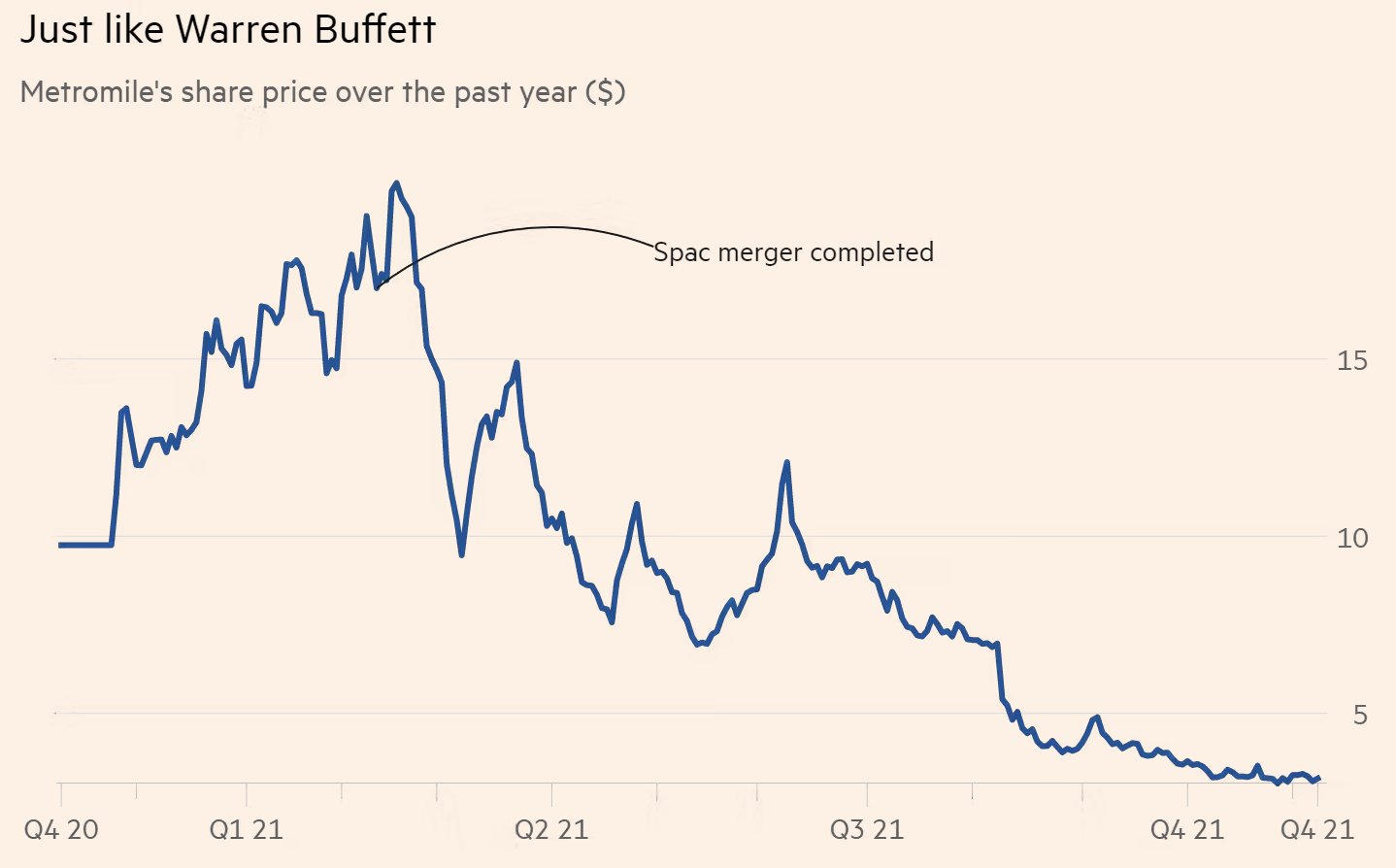
Buffett chose GEICO. Chamath chose Metromile. From 2021 to 2022, Metromile went from $1B market cap to $137M before getting acquired by Lemonade. Meanwhile, GEICO generated $25B in revenue. 🧐 https://t.co/L6BAINl6ZS
Really good. Directly investing in Generative AI at the foundation model layer, especially in venture, is unlikely to be a winning proposition. We are going back to the 1990s. “Picks and shovels.” https://t.co/j5UOGJhem4 **Links in the tweet** (resolved 2026-09-29): - `https://t.co/j5UOGJhem4` → https://www.semianalysis.com/p/google-we-have-no-moat-and-neither
May 4, 2023➡️ New essay on The Unbundling Fallacy In which I argue that the expectation of mass unbundling of platforms like Reddit and LinkedIn was largely a zero interest rate phenomenon. And how to predict the few that will break out and become category-defining businesses Link below The Unbundling Fallacy: https://t.co/SO7wzi1ykV Thank you to @onecaseman, @forr_funn, @lennysan, and @zgrannis for reading drafts of this post to help sharpen my thinking
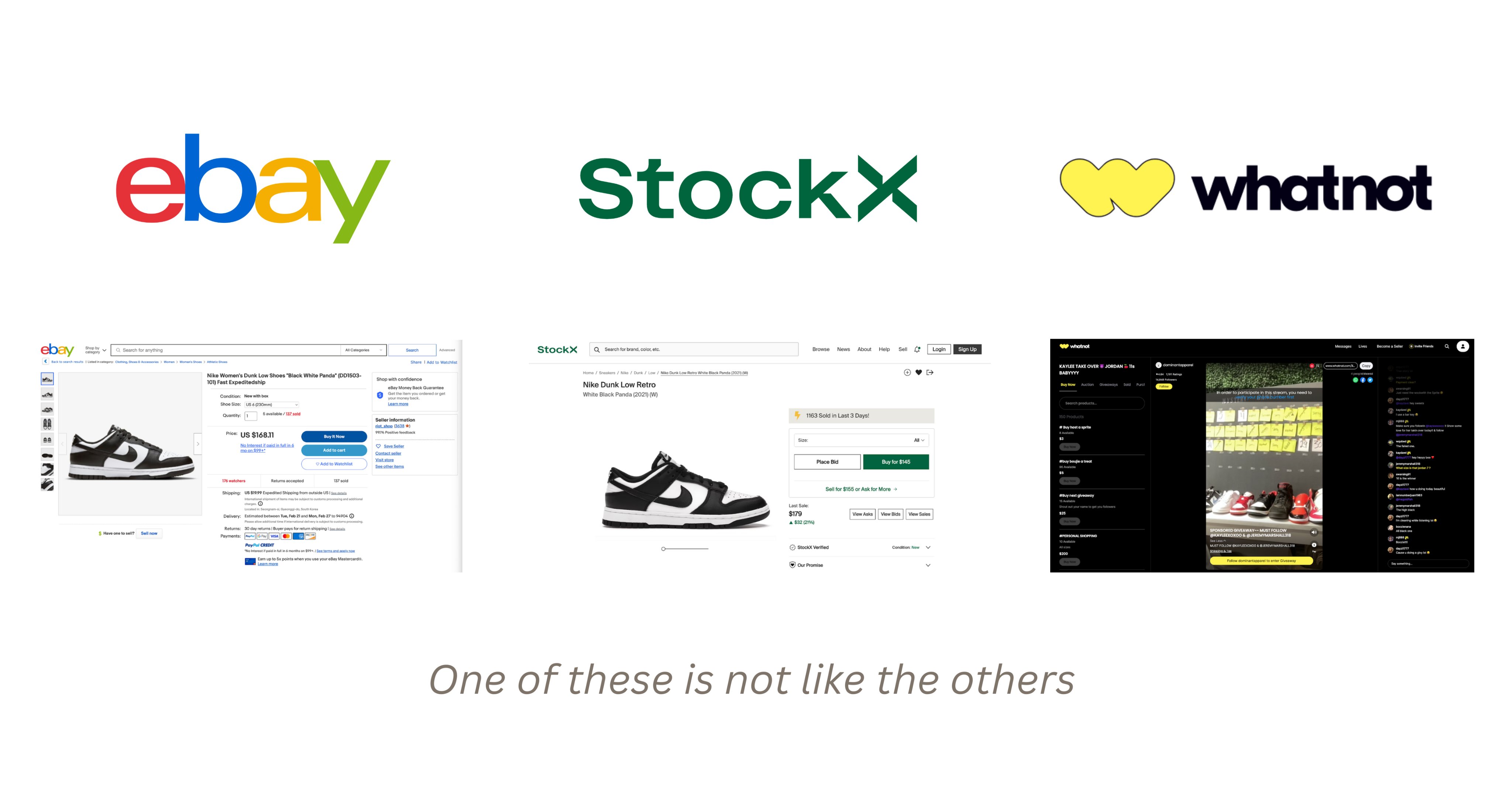
People ask: "Why underwrite over 5 years. Isn't it difficult to predict the future." Predictions are useful within the context of the competitive intensity of the prediction. 5 years is a time horizon against which most market participants don't engage "It's much easier to get the next quarter, and the current FY right though." Sure, but there are ~30 analysts all publishing forecasts covering the next 2 years. With that N, the average of expert predictions will almost certainly be better than any individual expert. Conflated by the fact that on a year's time horizon there is one group (management) with better information by which to form a forecast. Competing on a quarterly or FY basis you have to spend all your energy trying to compile information that one market participant already knows AND you have to always be paranoid that information has leaked out from the participant with more perfect knowledge. Much of the work of forecasting short term consists of looking at other short-term forecasts searching for tell-tales that you yourself might have missed. Over longer time horizons, however, you work in whitespace. You are more likely to find optionality that management hasn't recognized (or that management hasn't been asked to detail by investors) and your forecast is more likely to be differentiated. A differentiated forecast is the basis by which to identify mis-priced assets. On short time horizons a differentiated forecast is more likely to be worse than the average forecast; not a great strategy. On longer time horizons the differentiated forecast is more likely to reflect a future reality that simply hasn't been successfully underwritten into asset prices.
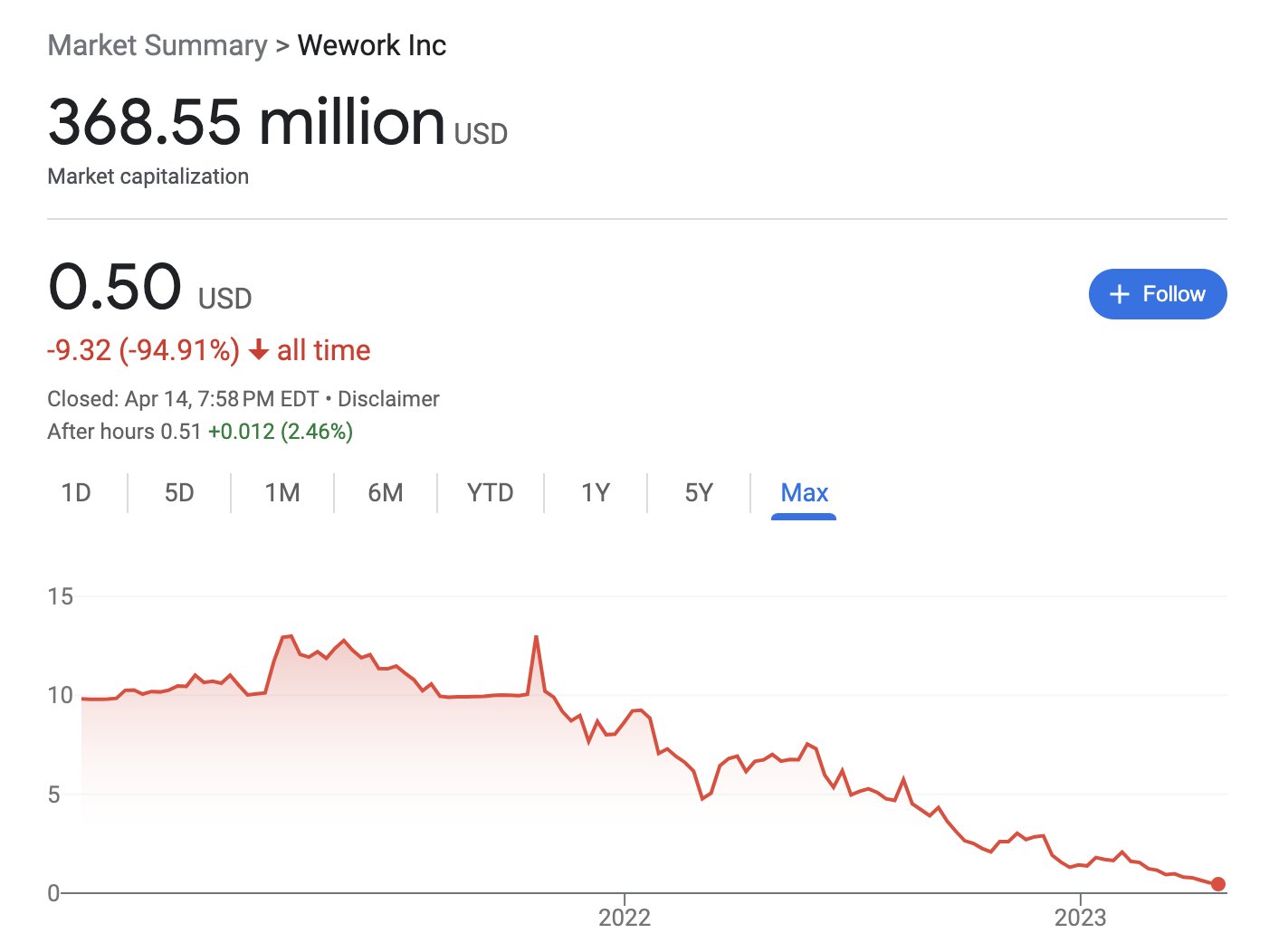
Apr 24, 2023Here's your frequent reminder that WeWork raised $20B in funding, hit an all-time-high valuation of $47B and has a market cap of *checks notes* $368M... https://t.co/cNuRNYA4I1
About 2 years ago, when a private equity firm bought StackOverflow for $1.8B, I was unsure if this would be a good exit. 'Surely StackOverflow should be worth more?' I thought. However, knowing what we know now: it looks like the perfectly timed exit. https://t.co/q4dNmV817z
Apr 10, 2023OpenAI is an incredible company doing incredible things. But thinking about what they’re doing as similar to the accomplishments of any other great startup (Stripe, Rippling, etc) is inaccurate OpenAI is more akin to a MSFT subsidiary. Still impressive, but apples and oranges
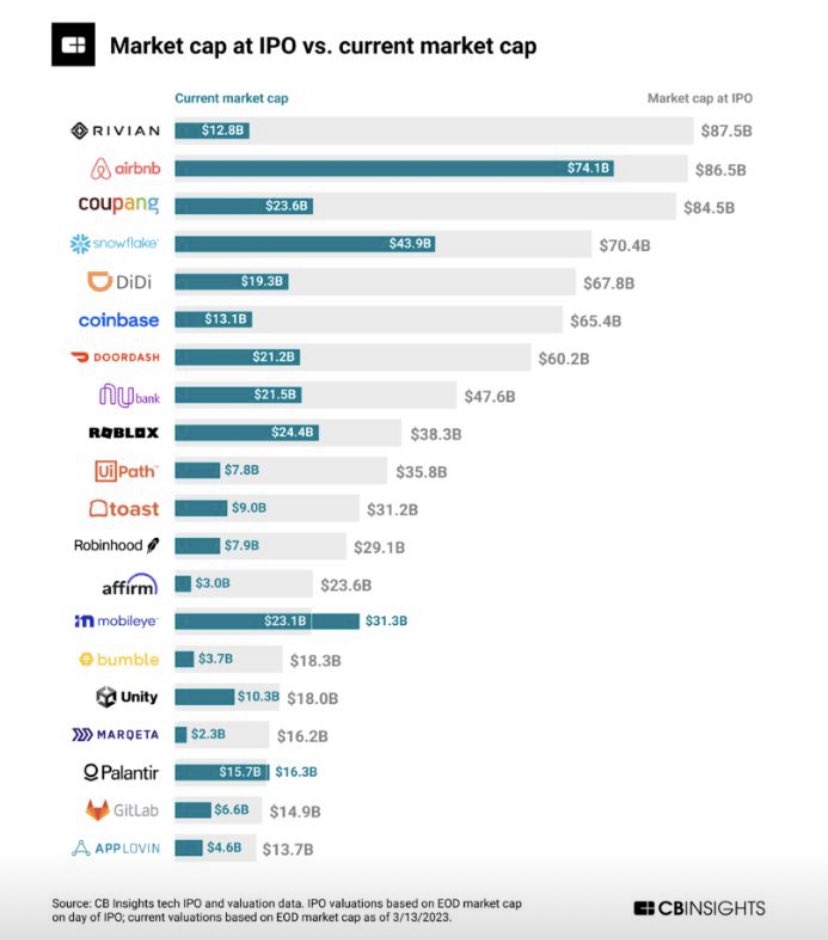
Mar 24, 2023Fintech has gotten smashed. Impressive how well Airbnb has held up. Stripe getting cut by 50% isn’t a painful exception, it’s the rule. Every highly valued tech company will have to make a reckoning with this new norm for valuation expectations. https://t.co/MflVhkcg92
1/ Vista has been in the market for ~1 year for their $20bn Fund 8. Based on press reports, the fund is only ~50% of the way to its target. A few slides from the fundraising deck below. 2/ Unsurprisingly the focus is software. More specifically, enterprise software bc they have low churn. And Vista loves low-churn businesses. However, the NRR across the portfolio doesn't scream "best-in-class" but not that surprising for those familiar with their logos. 3/ High flyers and high NRR is not the business they're in primarily because they care more about the predictability of cash flows so they can lever the business. 4/ The fund's operational playbook: a. Make the biz more predictable (+ NRR and RR mix) b. Optimize gross margins c. Marginally increase revenue growth Vista accomplishes (a) with SaaS transitions and pushing up-market and (b) with SaaS trans. and discipline on prov. services 5/ As of Q4 '22, Vista believes there are 55 (!) public companies that are potential targets. Probably much higher now. And Vista's take-out opportunity in the private market is 2x the public market opportunity. This is to primarily justify the $20bn raise i.e., 46x coverage 6/ Interesting to see how absolute and relative performance has degraded as the fund sizes have increased. Early funds were focused on mid-cap buyouts but Vista is increasingly writing checks for EVs >$1.5bn. Obviously different game/value prop now (i.e. dollars put to work). Data from Hamilton Lane report h/t @SaaSletter and @CapMarketKGB (who has a plethora of these on their feed)
Feb 11, 2023 Original deleted — preserved hereUnderfunding a startup is risky because downstream capital might not be there if the startup hasn’t made material progress. It’s a terrible idea to fund a plan that only gets a startup 80% of the way to Mars! Here's why:🧵👇 https://t.co/qoB7EKCUKW

Marc Andreessen has grown a16z from their first fund of $300M in 2009 to over $25B+ in AUM as of 2022. His framework for understanding any business is simple. It comes down to unpacking what he calls "the onion theory of risk." Here's what he means...
Jan 25, 2023had a fun chat with a VC friend this week we talked about how hard it is to find a VC's website that doesn't say "help" or "value" underscores the importance of having true differentiation in market
Jan 22, 2023Soros: "When I see a bubble forming I rush in to buy, adding fuel to the fire. That is not irrational. That is why we need regulators when a bubble is threatening to grow too big. We cannot rely on market participants, however well informed and rational they are." https://t.co/ugeGART6HG

Talk of "DRY POWDER"... ...in VC is at worst a lie––and at best naivety. Most of the past raised funds are "WET "––already soaked + spoken for by inside rounds + recaps even if not yet realized by less experienced VCs not been thru cycles before...
"In his [2011] commentary Andreessen discussed 17 then or-since listed digital disruptors, more than 1/3 of which have subsequently declined in market value...he also referenced 10 old-economy laggards, all of which have delivered positive real returns." https://t.co/BiImnl1MHx
2023 will be worse than 2022 in terms of layoffs, difficulties raising capital, and company performance In 2022, most people had enough cash to hold their breath hoping the ship wasn't actually sinking. They kicked the can In 2023, the ship has sunk and everyone has to react.
Jan 9, 2023@sethbannon I think your spiritedly arguing about something that is semantics. At its core VC is asset management with fiduciary responsibilities to offer attractive investment products to LPs How do you do that? Be obsessed with your founders, do everything to support them, etc.
Dec 31, 2022Warren Buffett said that great CEOs must MASTER capital allocation. He also said, most are TERRIBLE at it. Here’s how to allocate capital like a BOSS: 👇👇👇 https://t.co/QECrpsR73M First of all. This is a sister thread. To this one on Maintainable Free Cashflow. That’s right, this is MFCF ‘The Sequel’ baby 😏 https://t.co/WEQkdCU3TQ First principles. If you are the CEO of a business, you are acting as an agent on behalf of shareholders. Allocating capital into the business on their behalf. You have a fiduciary duty to treat that capital only in ways that are in the best interests of the shareholders. If as CEO you also own 100% of the stock , this doesn’t need as much thought. By definition you are acting in your own best interests. But in any other situation this needs to be a conscious choice. Why is this important? Well it tells you the start point… The capital belongs to the shareholders. Your plans must deliver a return that is better than the shareholders could achieve elsewhere. Otherwise, you need to give them their money back. Put another way… The default position is that any surplus capital should be returned to shareholders. The burden is on management to prove they can better use the funds in the business. Any capital allocation must be through that lense. So, what are the options for using capital inside a business? There are three: 1. Strengthen Balance Sheet 2. Grow The Business 3. Returning Capital to Shareholders. Let’s dive into each… 1/ Strengthen Balance Sheet 1a/ Reduce Debt I’m going to assume you understand the role leverage plays in a business. I.e. By using debt you make equity capital work harder. But you also take more risk to the downside if future cash flows don’t come through as planned. If you have more debt than you would like, then paying down debt should be your priority. Especially in this environment with debt becoming more expensive. You may even be able to buy fixed rate debt out below par. Lenders will want capital back, to lend out at higher rates. 1b/ Hold More Cash This is a cousin of 1a. These are volatile times. That means the bell curve of outcomes for your MFCF generation got wider and flatter. Fancy way of saying, you’ve got no f*cking idea what’s going to happen. Uncertainty in your outcomes goes up? The level of rainy day cash you hold should go up too. Your defensive warchest. The nice thing with this option? It’s not a one way street. If in 3 months time, you decide you don’t need as much, you can still choose to pay off debt, invest in growth, or pay dividends. 2/ Grow The Business 2a/ Growth Capex Quick recap on how to categorise capex. Maintenance capex: any capex needed to maintain the current earnings of the business. This sits ABOVE the line in MFCF. It is part of capital generation, and so is NOT a capital allocation decision. Growth Capex: any capex that expands the cash generation of the business. This sits BELOW the line in MFCF, it’s a capital allocation decision. For example: - new machinery to increase capacity - more stores to increase revenue - new capability development to add new products Growth capex is discretionary. Growth capex is about taking your core competence and supercharging it with investment. The benefit being, more scale. A bigger moat, and more future profit. There should be a clear and direct payback / return calculation against each project. 2b/ Discretionary Opex This is like growth capex, but is opex in nature rather than capex. Marketing investment, R&D investment, etc These, often, are not thought of as capital allocation decisions. But they ARE. They are investments designed to generate future return. So that return MUST be better for the shareholders than giving them their money back. Or you shouldn’t sanction the investment. Tech businesses have over-invested here over the last decade. Often to great success. But tech has failed to read the tea leaves over the last 2 years, and now is having to make deep cuts. Discretionary opex must be justified to the same standard as any capital allocation decision. 2c/ M&A If you have decided to allocate capital to growing the business, then you should consider M&A. M&A opportunities should get evaluated against other investments in growth (2a and 2b). It can be a more efficient access to growth whilst keeping market capacity tight. 3/ Return to Shareholders 3a/ Pay Dividends Dividends are the way of returning profits generated to shareholders. The rate of reinvestment determines how much of the generated profits are retained in the business for growth vs returns to shareholders. A company that makes $500m and pays $200m in dividends has a 60% reinvestment ratio. This is the proportion of profits that the Board believe should get reinvested in the business This should default to 0% unless there are better uses of capital inside the business. 3b/ Buybacks This is another way of returning capital to shareholders Buybacks come into their own when the stock price is low. Buyback are a big win for all shareholders. The shareholders selling out get their money back at a price they are happy with. But the real winners? The remaining shareholders. They believe that the business is worth more than the buy back price (otherwise they would have sold). And now that future upside will get divided by a smaller number of shares, pushing the stock price up. Many of the most successful CEOs in history used buybacks. Creating extraordinary long term returns for the shareholders that remained. Those are the capital allocation options. In most large businesses, we will find some mix of all of the above. And it can get more complicated… There is also the option to raise capital (debt, equity or hybrid) to fund growth projects. This is where ‘financial policy’ is important. Financial policy should set out: - what the optimal debt level is - returns hurdle for investment projects - minimum level of cash on hand needed - Etc Based on relative returns of each option for shareholders, vs risk profile A financial policy must adjust as conditions change Rapid changes in interest rates (and wider economic volatility) are shifting the return hurdles upwards. This makes debt reduction, and cash buffers more attractive. And return generating projects less attractive. Money today, is more valuable than money tomorrow. And this is much more true now, than it was a year ago. Or any time in the last 15 years. The market is taking a grim view of anyone that doesn’t respond to this. This is why Meta’s investment in the metaverse has been so controversial. Investors have entrusted Zuck with $$$ on the basis he will invest it in cashflow generating monsters. Facebook, Insta , etc. They have hand selected that risk and return profile. But what is he doing with their money? Committing to one of the biggest capex invesment programmes in history. But not in growing his proven core business. Instead he is ploughing it into unrelated R&D for the metaverse. (Remember that?). So what did investors do? They had a piss fit. And crashed the stock price by 24% overnight. Ouch. It wasn’t that they didn’t like the idea of the metaverse. But if they want that sort of venture style gamble in their portfolio. They can invest in one directly through a VC. They felt he abused his position as CEO to redirect THEIR capital into an unrelated project. It’s OK if he owned 100% of Meta. But he doesn’t. Biggest shareholder != Only shareholder From my experience many CEOs (and management teams) are bad capital allocators. Their hubris leads them to direct capital to growth (and sometime vanity) projects more than they should. If you look at the most extraordinary CEOs of all time (measured by total shareholder returns). Their disciplines on capital allocation are what make them stand out. For more insights on how to think like the CFO of a billion dollar business, I have a newsletter launching soon. https://t.co/57gbChetRu If you enjoyed this thread: 1. Follow me @SecretCFO for more of these 2. RT the tweet below to share this thread with your audience https://t.co/p4xcofsg5A

read about Andreessen Horowitz's wealth management ambitions, management fee stacking, JP Morgan envy, and more in this piece i co-published with @FortuneMagazine https://t.co/g5NvmJNKUS @FortuneMagazine kudos to @ajs for the awesome idea to collaborate, @jessicakmathews for being a great co-writer, and @lexnfx for reminding me of the value of editors! here's the piece on fortune's website https://t.co/lVj5d29B0b
Nov 23, 2022VC / Founder dynamic is often unfair - VCs know what they are looking for and what questions to ask. Founders should know what to LOOK FOR IN VCs. This is a long / multi-year relationship, like picking a partner. Here the qualities of the best VCs. 👇🧵 1. HIGH CONVICTION Startups, especially early stage, are leaps of faith. Founders take that leap and so do best VCs who get to high conviction despite all the obstacles. That BELIEF in the founders and the business is 🔑 👇 2. LEADING THE DEAL Once VC is has conviction they should lead the deal. Waiting for someone else to put the term sheet and to get there isn’t what VCs who believe do. VCs who truly belief - LEAD Even better, like @2048vc, they wire the money and don’t wait for others. 👇 3. REPUTATION Like any great product or service, great VCs come with a great reputation. Founders should always speak with other founders before accepting VC check. Founders will rave about working with the truly best ones in the business. 👇 4. NETWORK The best VCs are natural attractors and natural networkers. They are magnets for founders, vendors, contacts & other VCs. This network - formed over the years - is EXCEPTIONALLY VALUABLE. Founders who get backed get instant access to this network & go faster. 👇 5. EMPATHY Best VCs have empathy for the founders. Startup journeys are long and super hard. Best VCs understand the challenges founders are facing. Often they’ve been in their shoes. Empathy combined with belief goes a long way! 👇 6. EXPERIENCE Best VCs have experience. The reality is venture takes a long time to lean but also having operating experience is really valuable. Best VCs have either or both - operating and venture experience. 👇 7. HONESTY The best VCs never sugar coat things and don’t lie to the founders. If they see the business not going well - they tell the founders so. Honesty is the foundation of trust, which is the foundation of success. 👇 8. LEAN IN The best investors roll up their sleeves when the founders need them. They help with advice, hiring, introductions, strategy and whatever else it takes. They act as a true partner. 👇 9. LEAN OUT The best VCs also know when not to annoy and stay out of the way. They don’t bug founders and don’t waste their time. They show up when needed and stay out of the way otherwise. 👇 SUMMARY Getting an investment is complicated and vetting investors is a must. Founders should always diligence investors and make sure the process is a two way street. ✌️
Nov 22, 2022The truth is, even in SaaS, folks just wanted the easy money In SaaS, I had leading VCs issue term sheets to my top portfolio companies with only the most token diligence Why? They’d done >enough< diligence Enough to know another 2x+ round was coming soon enough
Nov 16, 2022It’s crazy that Sequoia lost $213.5 million on FTX. But it’s crazier that when you realize they have $85B under management that position is .25% of their investments. On an individual investment basis: huge miss. From a portfolio standpoint: doesn’t matter one bit.
Nov 10, 2022Opendoor has $8B in revenue. Their market cap has dropped from $19B at their peak to $1B today Bird dropped from $2.4B to $115M Twilio has ~$3.6B in revenue; they dropped from $70B to ~$8B Here's why gross margins can kill a business... https://t.co/kCH2rBGnZz
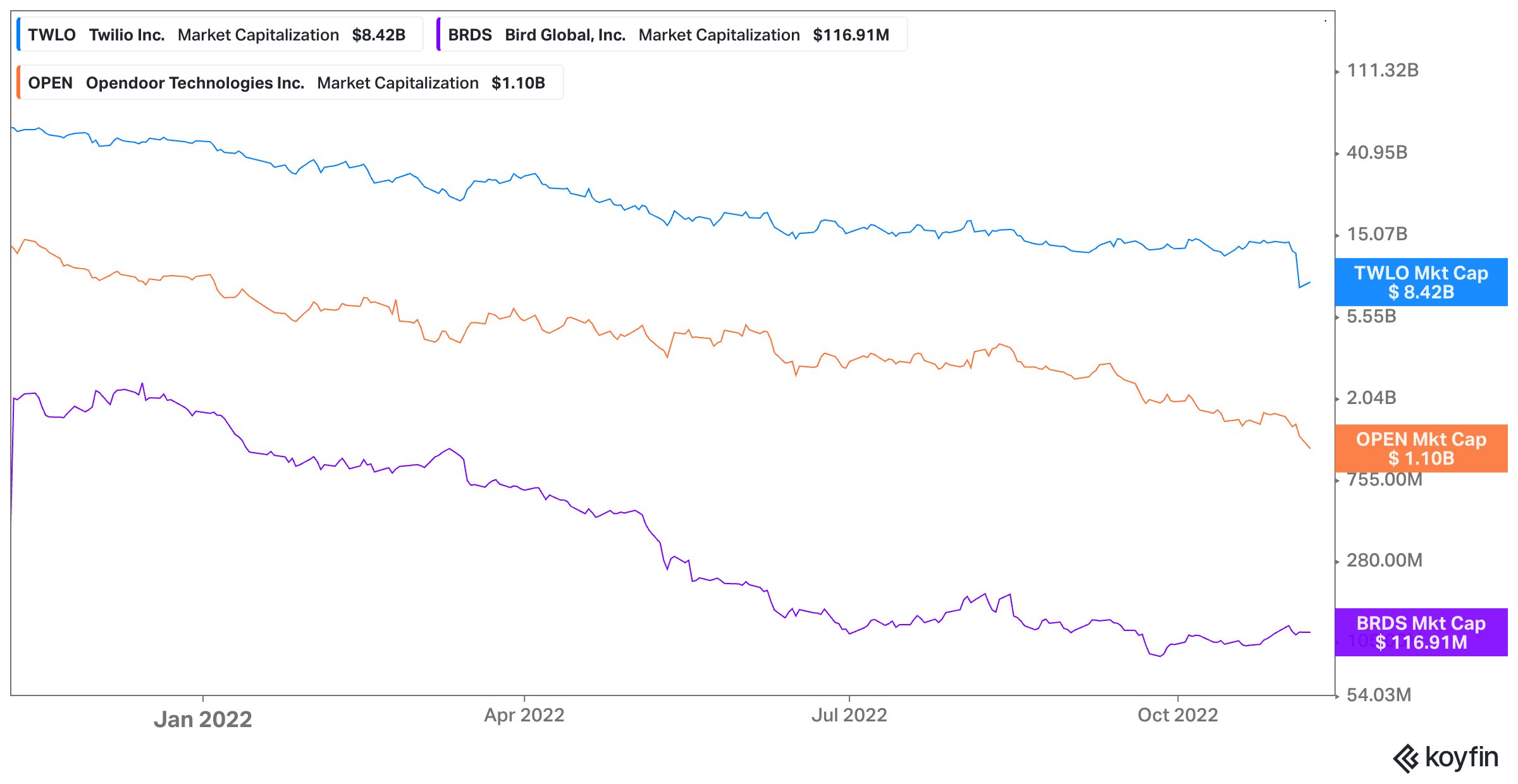
1999-2000: Lots of public companies with no revenues. 2021-22: Lots of private companies with $50M+ cash in the bank but no product-market fit.
Nov 6, 2022Private markets are in la la land I mean, this chart was published a few weeks ago and it’s already out of date the EV/NTM multiples for the Top 5 Cloud cos went from 15x to 11x JUST LAST WEEK h/t @jaminball @edsim https://t.co/IY6BQj6YvT
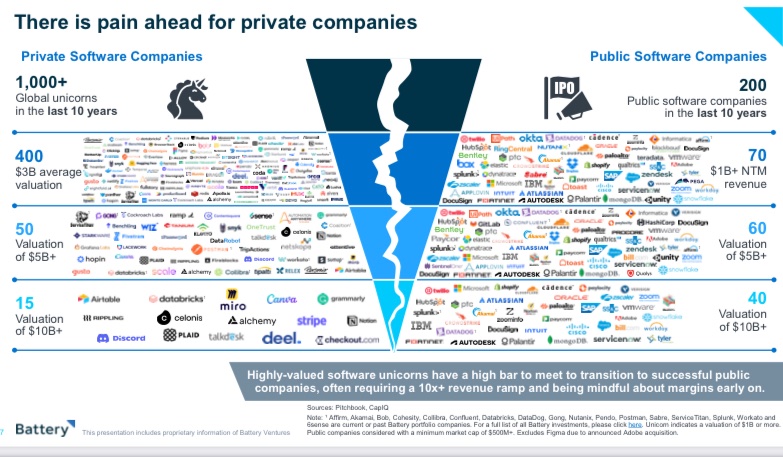
My summary of Venture Markets in Nov 2022: Series B and later even worse than looks in data: 85%+ of investing here has simply ceased Seed and Early Series A: Deals take longer but off about 40%. Some have slowed down but most vets don't care too much about today's macros.
Nov 2, 2022Peter Thiel: "We’re a macro fund paid to identify markets that are enormously mispriced. Almost every MBA I talk to simply doesn’t have an answer. It’s always intelligent, well-thought-out stuff, but there are no strongly held views." https://t.co/qlTdUxtL7j
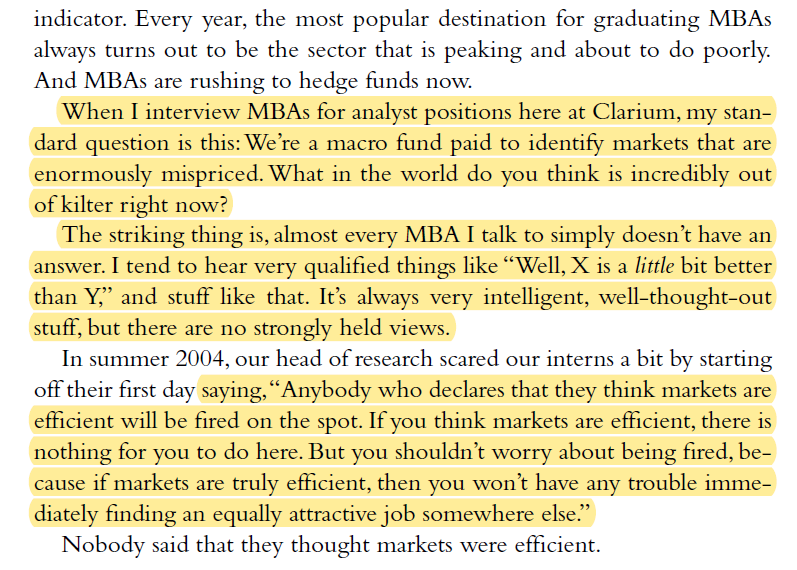
Buffett on moats in 2000: "If you are evaluating a business, the number one question you want to ask yourself is whether the competitive advantage has been made stronger and more durable. That’s more important than the P&L for a given year." On Porter's 5 Forces: "I’ve never really read Porter. I’ve read enough about him to know that we think alike, in a general way. I think he talks about durable or sustainable competitive advantage and that is exactly the way we think" "The best way to do it is study the people that have achieved that and ask yourself how they did it and why they did it." "What it is that gives you that moat around the razor blade business? Here’s a worldwide business and yet people don’t go into it. Why was State Farm successful against people that had lots of capital? We like to ask ourselves questions like that." "Study things like Mrs. B out at the Nebraska Furniture Mart, who takes $500 and turns it into the largest home furnishing store in the world. There has to be some lessons in things like that. What gives you that kind of a result and that kind of competitive advantage over time?" "That is the key to investing. If you can spot it when others don’t spot it so well, you will do very well. And we focus on that."

“I’ve seen this so many times, again and again. The “model” having its inputs manipulated by a very smart ex-banker/consultant/VC analyst to produce a desired outcome. Be wary.” Ops Folks Build Smart Financial Models. But They Are Often Dangerous. https://t.co/Bh0mtV9JdC
Oct 31, 2022Excellent by @DKThomp on how probably good INTENTIONS to PREDICT +use INFORMATION has definitely skewed INCENTIVES + made stuff more PREDICTABLE + less INTERESTING From baseball to movies https://t.co/2hRWs0WZ9e
Oct 30, 2022Interesting article on multi strat funds How do allocators truly understand the risk of multi strat funds? Covariance of strategies, incentives etc seem v diff to understand from outside https://t.co/MbagorNOJL
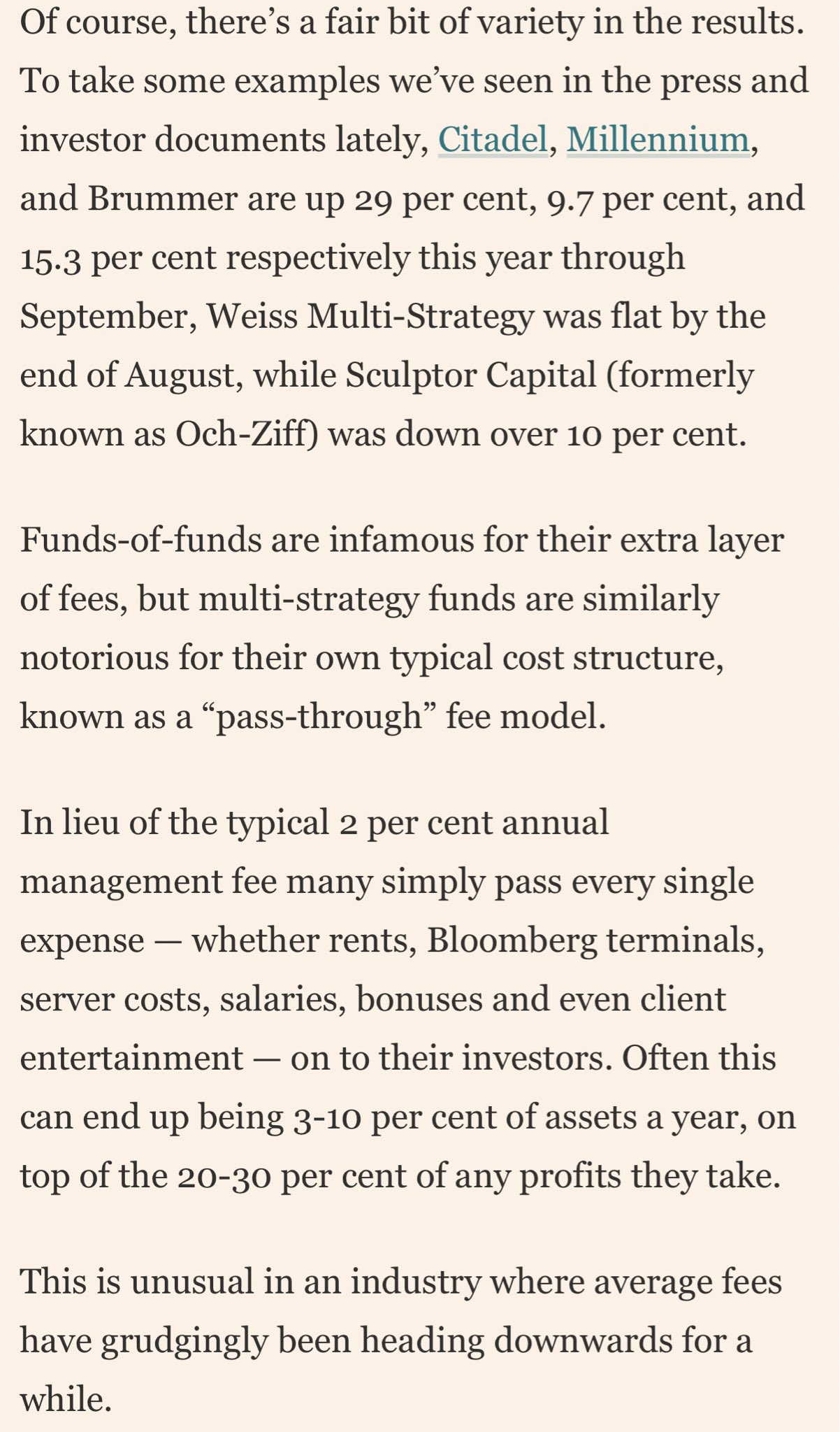
Thinking this through a bit more - While consumption models are first to be cut, customers probably don’t cut them entirely. Price-to-value is fairly explicit. And if there’s a low minimum spend, the companies might even continue to land new accounts. https://t.co/4cWKCi2sOZ This is in contrast to pure subscription models, which could decelerate far more sharply if the downturn persists. So, once expectations are reset, don’t you buy these things? They should become relative outperformers as belt tightening drags on. You still won’t have great visibility, but you never do with consumption models… If you can back the market long term + back the company’s ability to maintain / gain share… you ought to be able to look to the other side of the slowdown. Can draw a comparison to online advertising in past downturns. GOOG slows, but nobody is worried about it losing share to linear TV. You know it will be fine. So if Azure / AWS are slow next quarter, I don’t think people freak out. Think the above reasoning applies to these consumption SaaS models too. You are confident in the growth of [observability / NoSQL databases / data clouds]? And that the company’s competitive position is stable or improving? And that you aren’t overpaying? Ok - chill out a bit. Like maybe you can short into the quarter... but everyone is also already there. Like expectations definitely came down last week. So ymmv. But then you probably flip long? Especially on a relative basis.
Oct 29, 20221) “Moats” are a term thrown around a lot in startup circles In reality, companies don’t build moats, they build "CAPABILITIES" that yield them We’ve created a simplified, but exhaustive framework for capabilities that create company defining moats https://t.co/f1YESxshUk 2) We've written in the past that moats aren't some squishy subjective quality, they're quantitatively demonstrated measure of competitive advantages Your "moat" is the result of the competitive advantage, not what creates it Capabilities create them https://t.co/KFvYumox6H 3) With that, we sought to define what capabilities create moats, borrowing inspiration from Bruce Greenwald's notion of captivity Bruce is one of Buffet's greatest influences and his book Competition Demystified may be the best business book of all time https://t.co/8KKDnmbovq 4) The bedrock of this framework is captivity and Bruce breaks into 2 camps - Customer Captivity and Resource Captivity At the heart of this are power dynamics. If you have power over the customer or resource that enables you to return above market returns, you have captivity. 5) Much of Competition Demystified focuses on captivity yielded from scale (i.e. economies of scale), we expand upon this with a more digital oriented framework that incorporates network effects and organizational design as ways to establish captivity. 6) Scale capabilities are ones where your economic returns increase with the size of your operations. These are largely resource driven, but can exist on the demand side as well. This has been the primary engine of economic activity for the industrial age. Examples below 7) Network effects are largely the opposite, leveraging networks of customers/users, data and development partners to establish captivity. These have been the driver for many of the modern internet giants. Examples below 8) Organizational design capabilities are largely yielded by your business model and positioning in market. Helmer's 7 Powers dives deeper into some of these and we think these are powerful as digital companies begin to operate in analog spaces. Examples below: 9) As we advise the companies we work with, we focus LESS on REVENUE and MORE on CAPABILITY building Lots of people can sell a dollar for 99 cents, but capabilities enable you to accrue highly margin accretive business That's what we focus on, how can you create a FCF monster 10) Our job is to prove that we can establish a moat trajectory and that is ALL THAT MATTERS If we see a viable path toward a moat we want to prove that before the Series A, knowing that if we accomplish that, we've won Focus on building the capability, it's ALL THAT MATTERS 11) And as always, many thanks to @mjmauboussin, who's research has served as a constant source of inspiration for how we define our point of view on competitive advantage in the digital age
Oct 23, 2022@honam @HarryStebbings @kwharrison13 @contrarycapital @infoarbitrage @m2jr I can’t see the future as an investor but i could when i was a founder What I do think you can do as an investor is invest in founders that can see the future
Oct 22, 2022As I take some time off and think through what I'll be doing next, I'm leaning towards building a Personal Holding Company (PHC). Multiple businesses. No outside capital. Build and buy companies. Cashflow reinvested. Me plus a very small team. Here's how I'm thinking about it: #1: Will start off creating content on Twitter, YouTube, Podcast, etc. It'll be fun to build an audience. Any revenue generated from content will be reinvested into creating more content. Will help with dealflow and recruiting. 2. Continue to *passively* invest in stocks, crypto, alts, and startups. Write angel checks into tech startups that are solving hard technical problems. 3. I *might* consult/coach other founders/creators to give back while I have some free time to stay engaged. 4. For *active* equity building, it will be broken into cashflow, moonshots, or somewhere in the middle. Then will be either incubating or buying. If buying, it needs to be generating at least $1M and software based. But will most likely be building/incubating as I love the 0 to 1 phase. The plan is to do one of these a year. Outside of that, I have zero ideas of what I'll be doing here. Strategy is for the businesses that generate cashflow to roll up to the HoldCo. Then reinvested into other businesses. Ideally long-term equity by incubating, investing, or buying companies. Flywheel keeps spinning faster from there to get to $100M+ in total revenue. If any of the businesses hit escape velocity, easy to spin them out and raise capital. But I also have no idea what will actually take off so this doesn't force anything that shouldn't be growing. Allows me to build a portfolio of companies similar to a VC but my own ideas. Follow me @mikekarnj as I write about my journey building a PHC. You can also subscribe to my monthly newsletter here: https://t.co/CDQH2zhlZT
Oct 22, 2022 Original deleted — preserved hereToday is @algolia’s 10 year anniversary I was lucky enough to lead U.S. Seed in 2014, and then proud to double down: Super pro rata in Series A Invested big in Series B First check into Series C Invested at $12k MRR, today at hundreds of millions ARR Some learnings: https://t.co/hb8VCXQ5LQ

Fintwit loves Tepper so much so we call him the🐐 Fintwit loves nuclear power so much we call it Elemental Power h/t @wolfejosh . A thread about a new 10% position for Tepper which is also the largest and best operator of nuclear in the US. Constellation Energy $CEG 👇 David Tepper initiated a new position in CEG Q2/22 and didn't pull any punches making it a 10% position (it's up 50% since then) Constellation Engergy $CEG is a recent spin-off from Excelon $EXC that began trading Jan/22. CEG is the largest supplier of carbon free electricity in the US, supplying 12% of the nation's carbon-free electricity. CEG capacity breakdown: 20 GW nuclear, 3 GW solar & wind & hydro, 9 GW combustion turbine (gas/oil). Nuclear is 63% of capacity but 86% of generation. There is currently about 100 GW of nuclear capacity in the US. 40% of which is owned by merchant unregulated IPPs. CEG is the largest operator of nuclear in the US with 20% of the total market and more than 50% of the merchant capacity. CEG is the best nuclear operator in the country with a CF ~4% better than the industry average. CEG has one LNG facility, Everett LNG, which is the longest-operating liquefied natural gas (LNG) import facility of its kind in the United States. This asset was purchased in 2018 for $2B. With regards to valuation, you all are smart enough to throw an EBITDA multiple on this and compare it to other IPPs like $NRG or $VST. I think that's a mistake because it undervalues CEG's crown jewel, its nuclear fleet. Irreplaceable, non-commoditized, essential US infrastructure should be valued as a function of replacement cost since that is the cost of the marginal supply. The EIA lists the following capital costs and earliest in service dates. CEG replacement cost analysis: - 19.3 GW nuclear = $135B - 1.65 GW hydro = $5B - 0.375 GW wind = $0.64B - 0.275 GW solar = $0.36B - 8800 GW combustion turbine = $8.8B - Everett LNG = $2B This gives us a total replacement cost of $152B vs EV of $32B today. If nuclear: - Is going to have a renaissance - Is critical to a carbon-free future - Has large barriers to entry - Has an earliest ISD of 2027 Perhaps CEG, operator of the largest nuclear fleet in the US at 20% of replacement cost is something worth considering.
Wrote about the Musk texts. What I found illuminating about the messages is just how unimpressive, unimaginative, and sycophantic the powerful men in Musk’s contacts appear to be. Just overconfident dudes winging it https://t.co/a4N4t4Je9q step 1: solve free speech Most of the plans Musk and his SMS reply guys giddily cooked up for Twitter looked *extremely shallow* and, honestly they all basically behaved the same way they do on Twitter (not a compliment!). The eagerness to pony up for Musk and the lazy quality of this dealmaking reveal something deeper about the brokenness of this investment ecosystem and the ways that it is driven more by vibes and grievances than due diligence But, even if you think this is an extremely uncharitable read...what seems undeniable is that this has all been a HUGE drain on Musk's time (which, if you admired him, I imagine you'd think of as valuable). He hints at that himself: https://t.co/vEMgRhzXZq
Sep 30, 2022So what's the takeaway? "Every company will crush it and deserves a 'crazy' multiple along the way?" No. There is a concept of financial gravity. It is REALLY difficult for companies to continue to grow at exponential rates. Eventually, financial gravity slows them down.
Sep 19, 2022The rule of thumb for revenue growth is for a good company to triple-triple-double-double-double in revenue over the course of ~5 years. Based on Figma's trajectory, that would get them to ~$135M ARR by 2022. My estimate? $200M ARR. I felt pretty dumb when they pointed that out. https://t.co/tw0fUsQ8kk
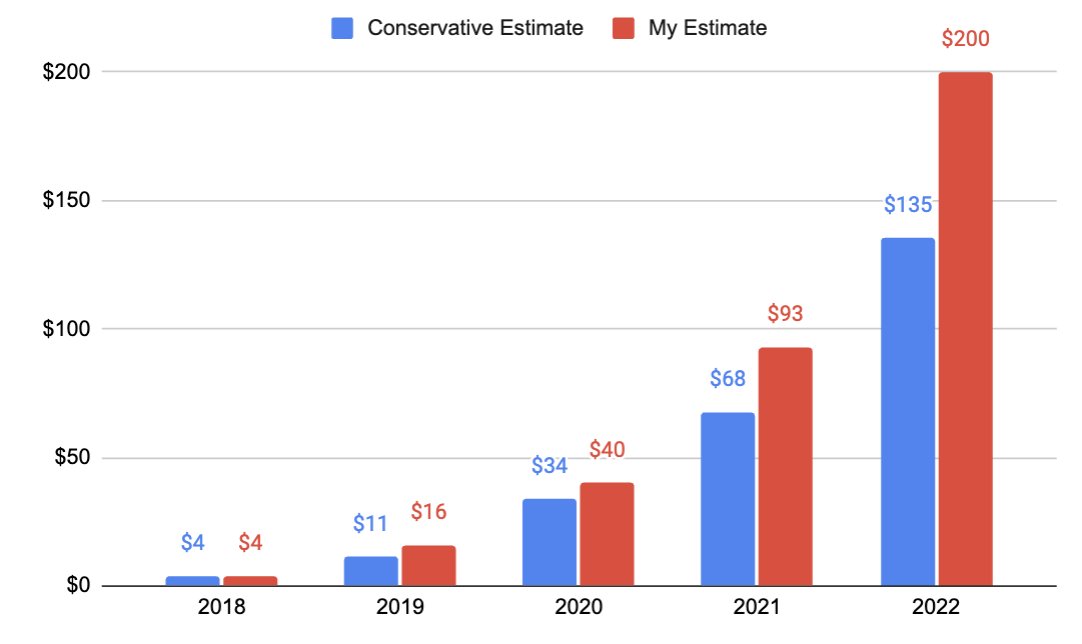
You see this underestimation with public companies too. When Crowdstrike ($CRWD) went public in 2019 they had ~$250M of revenue The consensus then was that their 2022 revenue would be under $1B. Today? On track to surpass $2B. https://t.co/cgve3UmgqJ
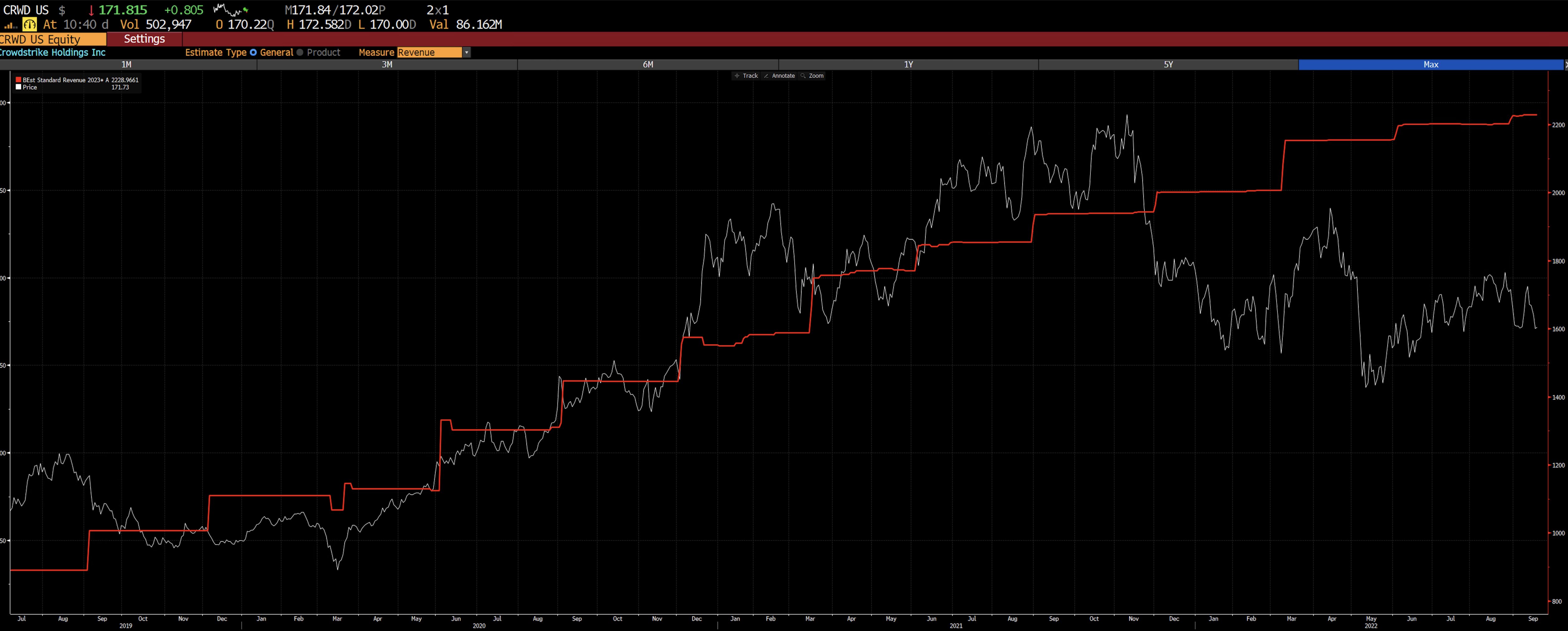
1/ Bigger ≠ Better in VC Large funds, >$250m, struggled to generate attractive returns, with only 3% returning at least 3x while smaller funds, $50-250m, did much better with 22% able to return at least 3x. In addition, the gap was consistent across all measures of return. 2/ Also, the risk of getting < 1x return was lower among small funds. Why? “As the managers of such funds earn relatively less from management fees, they have a stronger incentive to focus on portfolio performance in order to generate wealth through carried interest.”
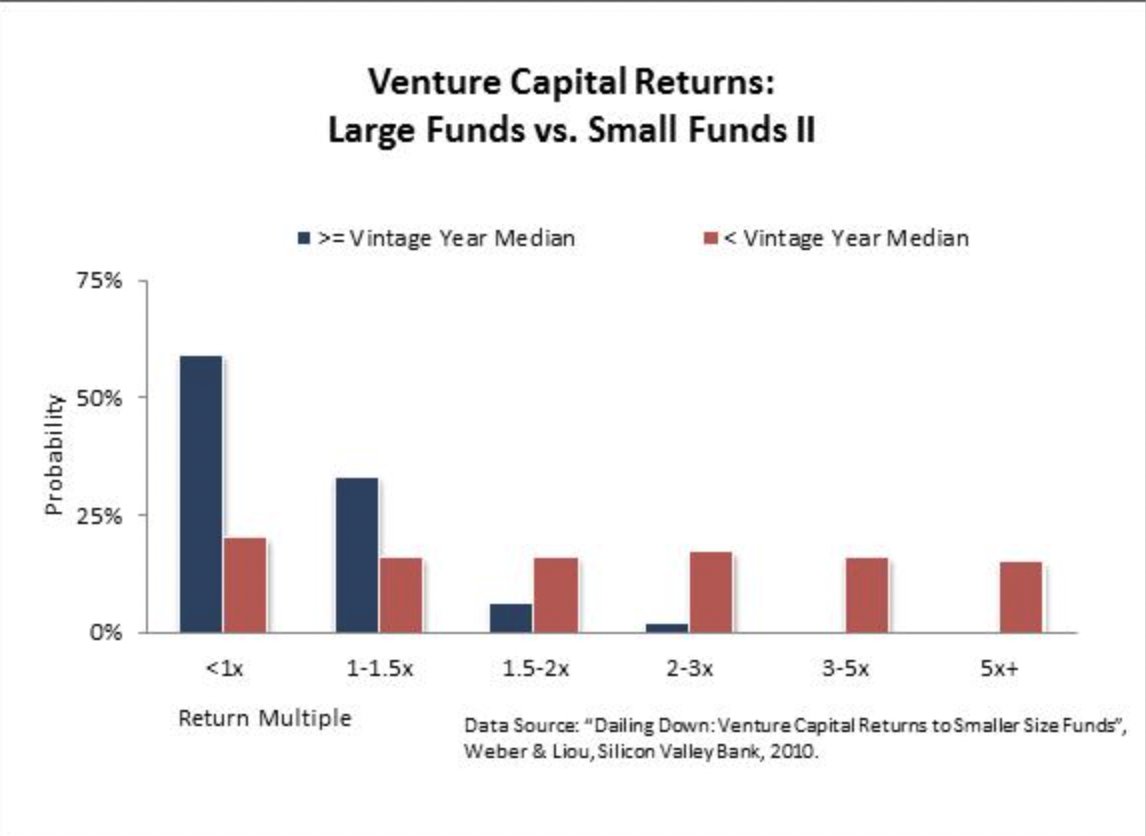
Teaching at Tiger via @alixpasquet “If you were a young analyst, you went up to Andreas Halvorsen and said, Hey, I want to pitch it to Julian. Andreas would say, let's work on it together. I'll help you shape the idea. Once you're ready, go and pitch it to Julian. "And that analysts would go and pitch to Julian and Julian wouldn't even have a clue that Andreas had pushed this guy forward." "The other guy would speak to Julian and say, you know, so and so has an idea. I'm going to help them fine tune it. That young analyst never really got the full credit from Julian. Guess which guy is actually the wealthiest and most successful fund manager today?" from 'Learning for Analysts and Future Portfolio Managers' https://t.co/5UuhSwQqQT
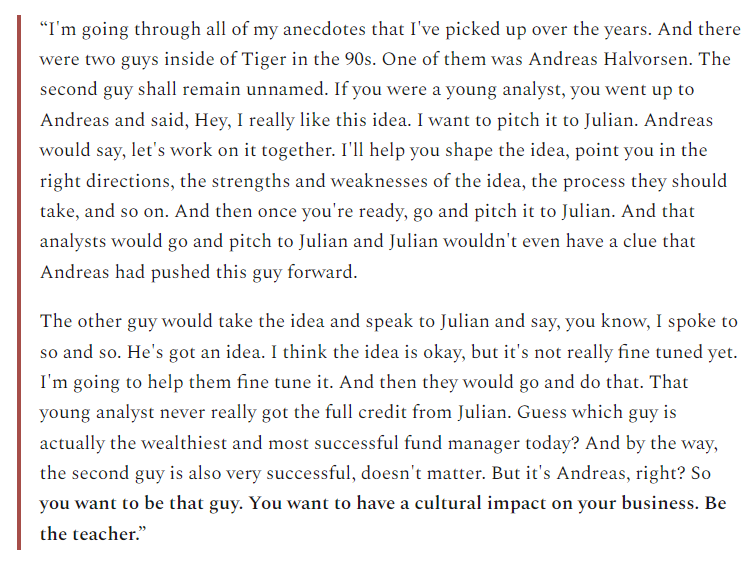
What are the best articulations of an investment philosophy or framework produced by investors who are still active? Many of these are not publicly available so DMs are open…
Sep 5, 2022Do you believe investing should be fun? I don’t believe investing (successfully) and fun are mutually exclusive. But then what do I know, i’m a tadpole. Seems consensus is that the decision making should be void of emotion. I agree. However, the research process can be fun at times. Stimulating maybe a better word.
Aug 30, 2022 Original deleted — preserved herei'm teaching a class and it will deal with this central tension—when is finance fiction or when is it the truth? answering this question allows operators to get all the capital they can desire from investors so i wrote more about it https://t.co/bVSajeZ0yK
Aug 25, 2022"A GP fundamentally needs to do eight things: -Source -Pick -Win access -Value -Construct a portfolio -King-make -Raise capital -Sell It is a rare VC who can do all eight exceptionally" https://t.co/CudAMX73fr
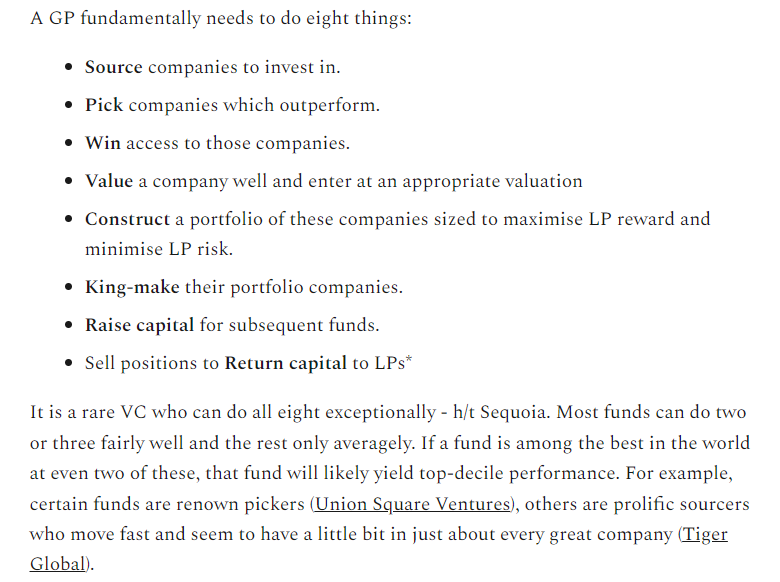
It is nearly impossible to convince a VC of a thesis they don’t already believe, so the key in fundraising is to ‘discover’ the right partners, not try to educate and convince…
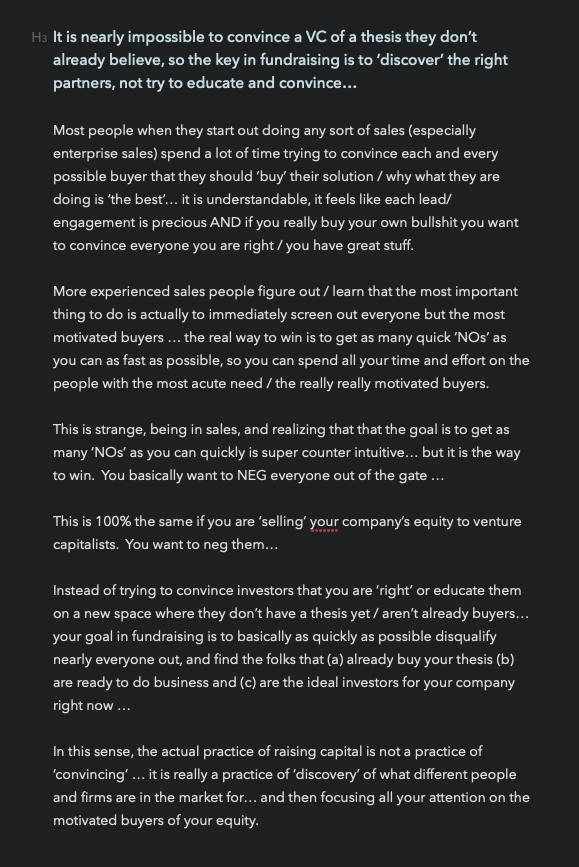
This is some incredible reading for all you investing junkies! 181 pages of Peter Lynch's investing articles for Worth Magazine from 1993-1999 https://t.co/vMY0nzeUkw h/t @DividendGrowth
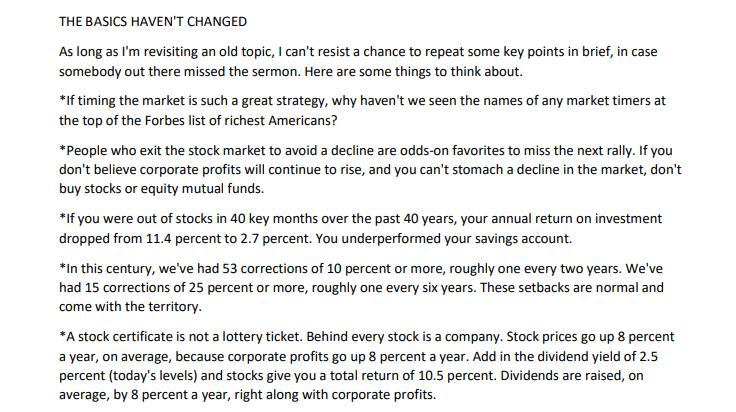
IMO @jason has the best answer to the argument that companies like Uber can’t make money. In an environment where stock investors were only rewarding top line growth (basically up until November 2021) why would anyone have expected them to? $UBER https://t.co/Gx7JfODy6Z This has been a big theme in the oil convo. Executives optimize for what the stock market is looking for. Pre-crisis, oil cos. were rewarded for volume production. Now they’re rewarded for cash flow. So the companies have changed accordingly. No reason can’t be the same in tech. Obviously it may be the case that $UBER can’t pull it off. But the fact that they weren’t profitable during a period where investors didn’t care about profits is per se damning. I’m definitely a believer in the SMH (the Stocks Matter Hypothesis)
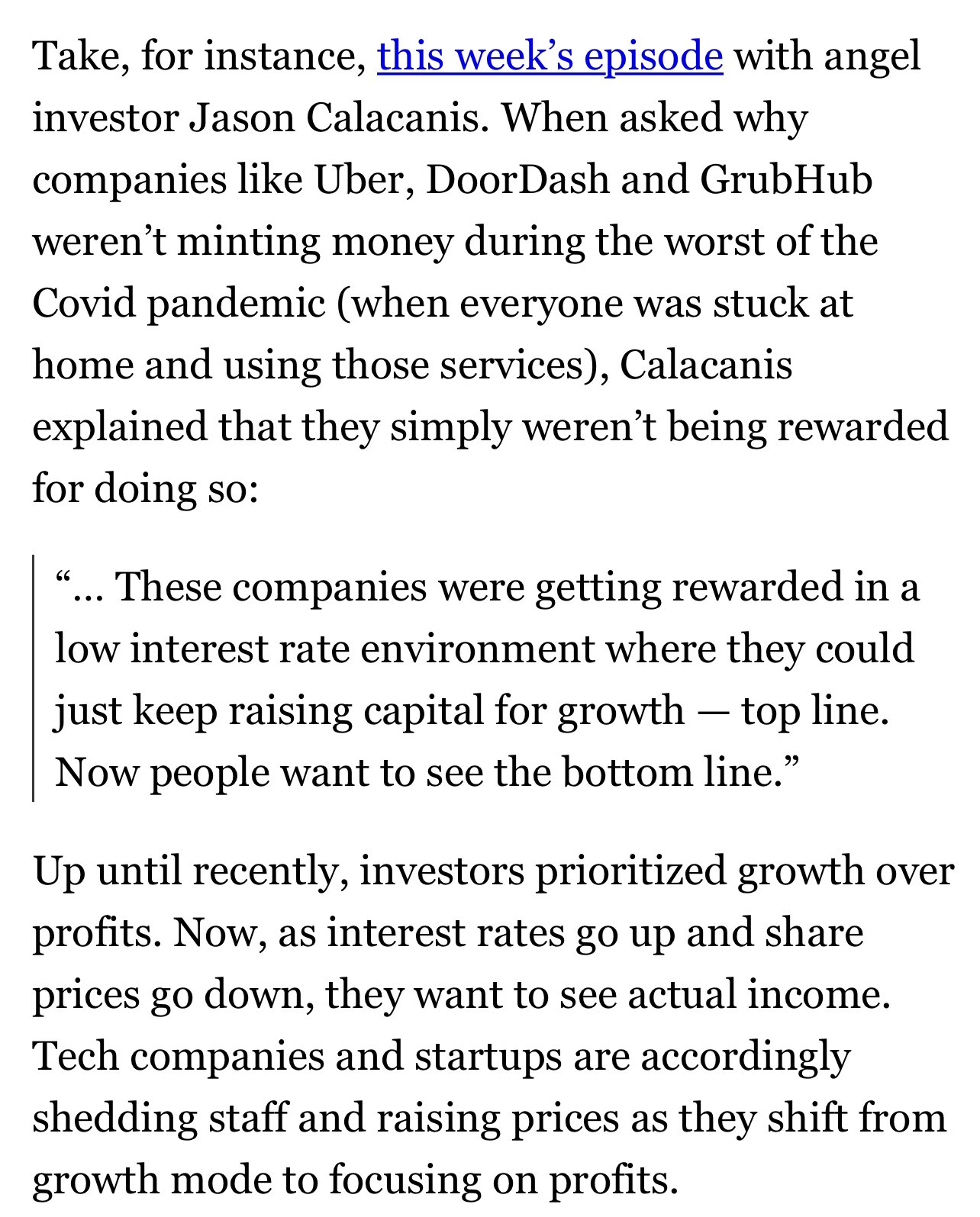
Maybe unpopular opinion: Founders should assume that investors are going to contribute exactly zero to the success of your start-up (beyond capital) (1/x) This isn't to say they won't. Lots of VCs/angel are well intentioned and very helpful. (Unfortunately many aren't 🤷♂️) But if the success of your company is predicated on an investor moving the needle, you are putting the company at large & unnecessary risk. (2/x) If it's mission critical to your business (recruiting, sales, fundraising, etc) you need to be able to (1) do it yourself, (2) figure it out with your team, or (3) hire someone to help you And then anything investors deliver is a bonus. (3/x) I'm not saying it's "right" or "wrong", but it's reality. And as a founder you have to deal with the world as it is, not as you'd like it to be. An investor might be able to *help* your company, they're unlikely to be able *save* it. (4/x) And, ironically, the more you operate like this, the more you'll be able to attract investors that are actually valuable and helpful. Go figure. (5/x) h/t @rkhazzam for sparking this
Jul 12, 2022I am so excited to introduce Generalist Capital. It's been a long-time coming! We're a $12.25M fund designed to help a small number of epic startups maximize the power of storytelling. Here's what you need to know 👇🗻 1. We're focused on narrative power Stories rule the world. For startups, a great story can help attract capital, talent, and customers. Our mission is to help epic founders create and capitalize on this power. 2. We've assembled a super-team of LPs We've brought together some of the greatest builders, investors, and thinkers of our era. Look at this squad! I'm so grateful to each and every one of them, as well as the many great folks not mentioned. 3. We're taking a concentrated approach We plan to invest in approximately 20 companies over the next 18 months. We want to build close relationships with founders that last for years to come. 4. We're focusing on crypto, fintech, emerging markets Naturally, we're a generalist fund 🙃 But, I'm going to be spending a lot of time in those spaces — crypto, in particular. 5. Here's my (early) track-record As a scout and angel investor, I've backed 17 startups. Here's a sample of those I can share publicly. I feel super lucky to have worked with these amazing companies. Here's the full story. If you're a founder embarking on an epic adventure, I'd love to hear from you. And if you'd like to join as an LP, you'll find an application in the piece below. https://t.co/nekEUi5avt

Andy Rachleff on generating high returns in venture: Most VC funds want high returns without risk It doesn't exist You make big money are on things that most people think are crazy, but you have to be BOTH right and non-consensus Source @arachleff @Wealthfront @benchmark https://t.co/FK0iugRKo5 https://t.co/r5D4AydJZW
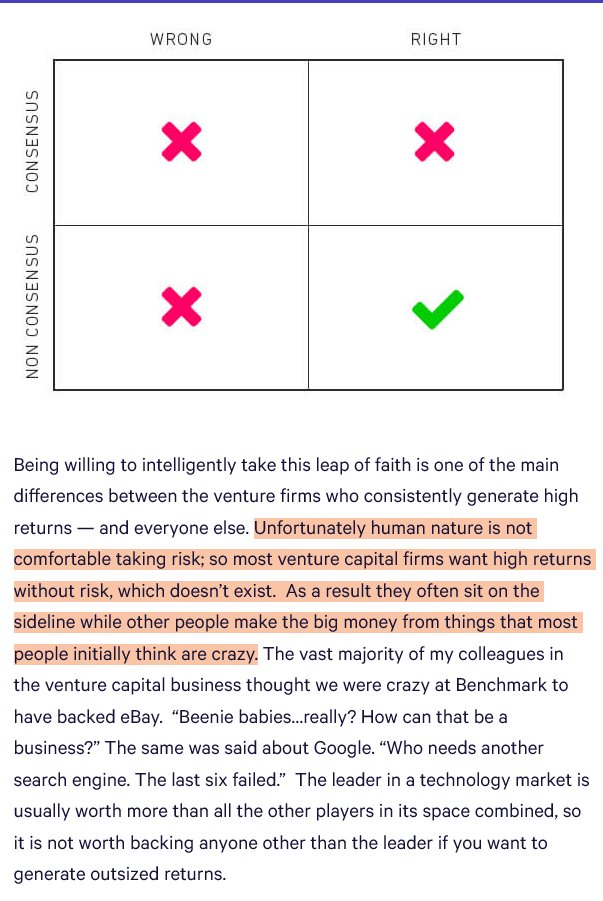
Citi says oil will collapse to $65 per barrel. JPM says oil could go up to $380 per barrel. I think that's everything you need to know about market forecasting. Well this tweet has legs. I usually tweet about private markets, digital media, and off the beaten track biz. Some public investing as well Follow me to get more about that. For longer form content and exclusive stuff subscribe to the newsletter: https://t.co/4148S0O7OB
Jul 5, 2022Startups used to be about venturing into the unknown, where no one even knew the chances of success. Now, it's an institutionalized, standardized ecosystem. https://t.co/m0twEbZqNg
Jul 5, 2022Good post on fund partnerships but I have 2 questions: 1/ almost every successful org in the world has 1 person at the top (ie CEO), what’s unique about investing/VC that makes 2-4+ co-CEOs better? 2/ how do you make non-consensus bets if you need a consensus of partners? https://t.co/hESfeVXJ7C
Jun 13, 2022Professional athletes are becoming billionaires. But up to 94% of that net worth comes from off the court earnings. Here are how their incomes break down: Michael Jordan - 6X NBA Champ Net Worth: $1.7 Billion On Court Earnings: ~$94 Million ~94% of wealth made from ancillary investments such as: • The Jordan Brand • The Charlotte Hornets Magic Johnson (@MagicJohnson) - 5X NBA Champ Net Worth: ~$600 Million On Court Earnings: ~$40 Million ~93% of wealth made from Cashflow Investments such as: • 125 Starbucks locations • 31 Burger King locations @MagicJohnson LeBron James (@KingJames) - 4X NBA Champ Net Worth: $1.2 Billion On Court Earnings: ~$385 Million ~68% of wealth made from Cashflow Investments such as: • 19 Blaze Pizza locations • Fenway Sports Group @MagicJohnson @KingJames Shaq (@SHAQ) - 4X NBA Champ Net Worth: $400 Million On Court Earnings: ~$292 Million ~27% of wealth made from Cashflow Investments such as: • 150 Car Washes • 17 Auntie Anne's • 40 - 24 Hour Fitness Centers @MagicJohnson @KingJames @SHAQ *Bonus Two NFL Super Bowl QB Champions are also making wealth with Cashflow Investments: @drewbrees • 69 Dunkin' locations • 9 Jimmy John's locations @PatrickMahomes • 30 Whataburger locations • Ownership stake in MLB's KC Royals @MagicJohnson @KingJames @SHAQ @drewbrees @PatrickMahomes And if you're not already following @NdamukongSuh He has become a bud and he has holdings in: - Investor @Mercury @Genies @ouraring - 30+ more real estate and small businesses deals @MagicJohnson @KingJames @SHAQ @drewbrees @PatrickMahomes @NdamukongSuh @mercury @genies @ouraring TL;DR 1. Athletes are making billions off the court 2. Largely achieved through 'boring businesses' that cashflow Don't confuse getting famous with getting rich.
Jun 5, 2022As a VC you have a real competitive advantage: If you are willing to turn over another card more easily on a business than other investors. Most businesses are complex and investors look for reasons to say no fast. If you are willing to look for the beauty in chaos 💥
May 30, 2022Day in the Life of a Hedge Fund Analyst Few live to tell the tale. "Was it like Billions?" "Describe ur investment process?" "What did u learn?" I get these questions all the time, but for a while I was afraid of answering publicly. No more! Hedge fund story time. 👇 🧵/ 1/ ⏰ 6AM Pre-Market Review Wake up thinking about ur overnight positions. What happened during London/Asia trading? Scan the major news on ur way to office. 🏢🚕🚶♀️ Think about how ur getting screwed by beta (general macro, FOMC, inflation, etc.) cuz ur net long (or net short). 2/ 7AM Portfolio Review U'll typically have ~250 names in the portfolio "universe" (stocks w/ active positions & those on watchlist but already modeled). Review each thesis vis-a-vis new market conditions. Anything changed? Should u downside/upsize any? New trade opportunities? Here's a checklist of top items to check per company: - Any earnings calls this week? - Any product releases? - Any new sell-side reports? Downgrades/Upgrades? - Any M&A rumors in the space? - Any management change announcements? - Any guidance revisions? - Any legal happenings? 3/ 8AM Plan out your daily/weekly agenda Major types of events that'll populate ur calendar: - Investor day at XYZ - Q1-Q4 earnings call - XYZ road show - Dinner event w/ IR (investor relations) at XYZ - Private buy-side bus trip (w/ mgmt @ XYZ) arranged by GS - JPM conference 4/ 9AM Team meeting just before markets open Discuss w/ ur PM: - whether overnight news impacts/changes ur thesis on each open position - prep work & questions u compiled for XYZ upcoming event later in the day - pre-mortem on some new positions ur considering adding to the book 5/ 10AM Listen to XYZ earnings call Every day a subset of the ~250 companies in ur universe will have earnings calls. When start: pre-market, during, or post-market Structure: - first CEO gives his spiel - then CFO gives his spiel - then sell-side analysts ask dumb questions 6/ 11AM - 3PM: Read/make/revise financial models This is the crux of ur job. So lemme describe what exactly this entails. A "financial model" is just 3 accounting statements stacked on top of each other in Excel: - income stmt (IS) - cash flow stmt (CFS) - balance sheet (BS) Why & how to "link" the 3 statements: The reason why analysts stack all 3 on top of each other is cuz all interwoven: - net profit: flows from bottom of IS to retained earnings in BS & first line of CFS - working capital: from CFS, is the diff btw current assets & liabilities Where do you get financial models from? Typically, u buy from sell-side & modify as necessary. Historical statements are found in all 10K/Qs. Easy to verify. But what u really want to modify are the projections of FUTURE metrics. After all this is the fundamental analyst alpha. 7/ 4pm Coffee & gossip Markets just closed. Your PM is doing some intense clean-up/post-mortem or squeezing in post-market adjustments. You get coffee, run into other analyst, & complain/brag about headcount at other teams, who's allocations getting slashed, who's doubled, etc. 8/ 4:30pm Post-Mortem Markets just closed, so u got some reflecting to do: Any major gains? Any major losses? Why did the moves happen? Did u anticipate them? How can u better anticipate & respond going forward? See 🧵 below on how to do a post-mortem: https://t.co/G3jzYCb6Qf 9/ 7pm-9pm [--- Insert Boring Mandatory Dinner Event ---] U tell ur boss ur there for info gathering. U tell urself ur there to hobnob in case book blows up tomorrow 'n u gotta jump ship to Millennium. Ur really there to stuff ur face w/ schnapps & salmon heuer d'oeuvres. https://t.co/337mRtvYjx 10/ 9:30pm Asian markets open I will not check markets. I will not check markets. I will n--- HOLY SHIT! BABA DOWN 9% ALREADY?!?! WTF tere's like no news. Damn retail stocks! U whip out ur laptop & start planning how u'll respond tomorrow. More post-mortems in the queue...🤦♀️ 11/ 12AM Existential Musings Wonder if ur life would've turned out easier if u'd taken that Google software engineering internship instead of GS banking internship sophomore year in school. JK. Life is way more exciting now & u'll never regret it.
May 28, 2022I've been meaning to do this for a while, so here's a non-exhaustive list of books I recommend about various industries 1/ Skunk Works about Lockheed Martin specifically, and useful for the defense industry in general https://t.co/Bs1ebbu6hq 2/ Riding the Rails about Bob Krebs's time at Santa Fe railroad both pre- and post de-regulation and the birth of intermodal https://t.co/ZAO7UoFoXQ 3/ The Men Who Loved Trains is useful in detailing how crappy rails were pre de-regulation, focusing on the Penn Central collapse, the creation of Amtrak, and NSC / CSX fighting over Conrail https://t.co/eNpM7Jxwau 4/ The Prize, a masterpiece about the history of the oil & gas industry. Perhaps the single greatest history of any industry https://t.co/pjSprJhByL 5/ Yergin's The New Map is also very good in terms of understanding the energy realities of the modern world and understanding the upfront costs of any energy transition https://t.co/Szy2IbZfmv 6/ For grocery stores, The Great A&P is awesome in its depth on the history of retail, groceries, brands, and everything else related https://t.co/XSuNgF9mbe 7/ on the same topic, Grocery is also useful on the economics of a modern grocery store https://t.co/keZjEWHFaK 8/ Uncommon Grounds is a fantastic overview of coffee, the industry's history, its economics, etc https://t.co/YSCNDCZVxJ 9/ on tobacco you've got to read @a_hoots history of RJ Reynolds https://t.co/Qgl0qNYMmf 10/ Joe Cullman's autobiography is also a great read on the early history of the various tobacco companies pre WW2 and the rise of Philip Morris https://t.co/ZIW4WSrORT 11/ If the money management industry counts then The Money Game is essential https://t.co/BruCgrxRkE
May 21, 2022VCs are also going to want larger ownership stakes now Goes together with smaller projected outcomes For a long time, when even a $1B valuation post-IPO was pretty impressive, most VCs insisted on 15%-20% ownership stakes Why? Imagine a $250m fund In a $1B IPO, 15% ownership = $150m That doesn’t even 1x the fund And the goal is each top investment can 1x the fund or more This wasn’t that long ago. Shopify and HubSpot both IPO’d at a $1B valuation, as did many others. Fast forward to the Age of the Decacorn (2H’20-2H’21), and the math changed Even 5% of a $10B-$20B IPO could return $500m-$1B to the fund And 2x-5x a medium-sized fund Today, with even the very very best in SaaS and Cloud often worth $2B-$5B, a medium-sized fund really needs at least 10% at IPO to return the fund And that’s if you build a GitLab, Confluent or Elastic (!!) Maybe 15%-20% if you model a $2B IPO Net net, VCs got comfortable sometimes buying stakes half or less than before, even less in super hot startups To some extent, that will be here to stay, with demand still exceeding supply for best startups But in general, more VCs will “pass” on deals with low ownership
May 21, 2022Long before this market crash I said this a lot. In the real world (outside of areas with too much VC $) people agree that a business is supposed to make money (if you don’t make $ you go out of business). It’s just common sense. Shouldn’t be viewed as refreshing or contrarian. The advice shouldn’t change. Should’ve been trying to build companies based on solid fundamentals. During the GFC, our advice didn’t change. For the strongest companies, maybe advice should be to press harder while others pull back. It’s a good time to build and gain market share For companies with strong balance sheets and profitable business models, things get easier during crashes. Flight to quality. Easier to hire and retain top talent. The tourists go home. Less dumb money flying around funding irrational competitors. Easier to get new office space (used to be difficult pre-Covid). Easier to make acquisitions at sensible prices. Easier to get shelf space, advertising space, gain mind share. So many things get easier for companies standing on solid ground. It’s your time to shine. Maybe during a crash your stock price goes down? If you have cash it’s like a gift. Buy back shares if it’s under valued. Interesting fact - during Henry Singleton’s 27 year tenure as CEO, Teledyne bought back 90% of FDSO by aggressively buying back shares when deeply undervalued While I emphasized “making money” at the beginning of this thread, I should clarify that the purpose of business is not to maximize a profit. The profit allows the company to have integrity - to be able to control its own destiny in order to fulfill its mission. Buffett likes to say that he doesn’t like to depend on the kindness of strangers. Then adds that he doesn’t want depend on the kindness of friends either. Key is to be able to control your own destiny, especially if you’re a mission driven company. So while I criticize the record number of money losing unicorns around the world, an even greater pet peeve is seeing profitable companies with strong balance sheets do mass layoffs because they need to maintain profit margins, please Wall Street, etc. That’s just wrong. The purpose of business is not to maximize profits. It’s to serve. All stakeholders not just shareholders. If you serve customers, create great jobs, be a good partner in the community, be a trusted corporate citizen, the shareholders will do well over time. There was a book that said Leaders eat last. In the business world, it’s important to remember that shareholders eat last. The obligations to debt holders, employees, customers and other stakeholders must be taken care of before shareholders get their share.
May 18, 2022People seem genuinely surprised that SMB ownership is a path to wealth. https://t.co/dqmrQ6xLgo @PermanentEquity partners with these types of owners. To those surprised, here's some background and nuance around who these people are, what they did, and what they actually make. Let’s cover the basics. Profit = Revenue - Costs Owners get to keep what’s left over after everyone else gets paid (profit). For most small business owners, there's no profit or very little after they get paid. They own a job, and a crappy and risky one at that. But if you can grow the business and keep costs under control (operating leverage), then there is more left over, and often far more than the increase in revenue. Said differently, if you run more revenue through a relatively similar cost structure, profits happen. Easy, right? Step 1: Create a “beverage distributor” Step 2: Buy beverages from manufacturers for less than you can sell them Step 3: Sells lots of beverages to businesses that sell beverages to consumers and keep costs low Step 4: Make boy band (now, SMB) money Not quite… Startup Time! Beverage distributors need a temperature controlled warehouse and office space for the team and big trucks to transport the cold drinks. Who finds the beverages to sell? Who negotiates the contracts? Why aren’t those awesome, in-demand beverages already being sold? Why wouldn’t the manufacturer sell them through established distribution? Who sells to the bars, restaurants, etc.? Who drives the trucks? Where does the money to do all this come from? Banks don’t lend to startups, so it’s coming from savings, friends, family, or fools. And let’s talk about potential. According to this article, which sounds reasonable to me based on what we’ve seen, the beer industry had an average profit margin of 2.7%, a 4.1% profit margin for wholesalers, and a 6% profit margin for bars and nightclubs. https://t.co/8l0HTPKOtw You’ve persevered the first two years and have been successful with $2M of revenue! Congrats. Your gross profit (revenue - cost of goods sold), or the amount you can pay salaries, rent, etc. with, is probably around $500,000 (25% GM). The problem is your costs are far higher. So you’re not only working for free, but in essence subsidizing all your customers and their customers. But, that’s the risk for the down-the-road reward, hopefully. You take on more capital to cover your losses and keep selling. Over the next 5 years, you finally get to breakeven and then slowly over the following 5 years you start to pay yourself a modest salary. Later, you start doing well and even make $2M of profit in your 17th year in business. That’s a feat and now you’re amongst the top earners. But, it doesn’t feel like it. All the profits go to paying down debt accrued during the early years. And, because it was so risky, you also had to take on equity capital, giving up some of the ownership. Let’s say you paid off the debt and own 65% of the company in year 20. Now the company is doing great, making $5M/year in income. Your 65% is now netting you $3.25M/year. And yet, you still don’t feel wealthy, why? Working capital: As companies grow, you need more inventory and your customers typically pay more slowly than you have to pay vendors. Re-investment: You need to replace trucks and build more warehouse space and invest more into sales training. And, as any owner knows, the unexpected happens often. You get sued, fined, and bad bounces. 45% of your $3.25M in income goes to taxes, leaving you with $1.79M. Of that remainder, 75% is retained in the business to cover needs. All said and done, you get a check for $447,000 from the business that made $5M and you showed $3.25M in income. Great, but not boy band money. This is not to say that SMBs aren't a path to wealth. They are. But, while the hills have gold, you must finance your shovels, brave the elements, and go digging...for decades. Many don't make it, but you don't hear about it. The NYT talks about the rich beverage distributor.
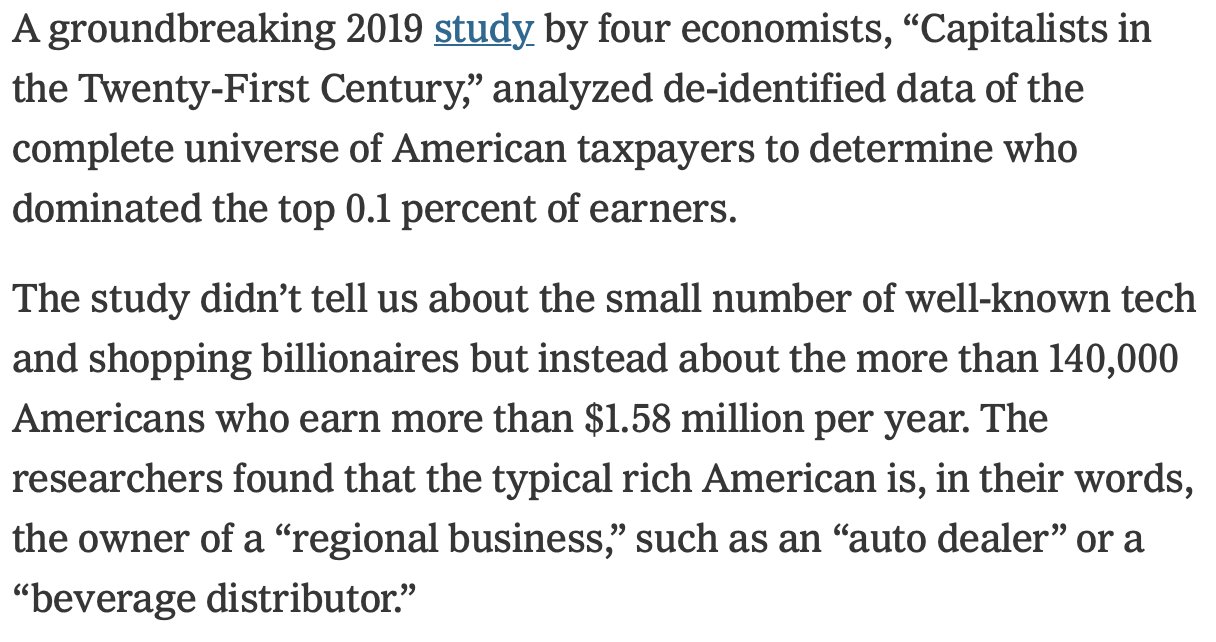
Many will disagree with me on this. I’ve said that VC is not an asset class. It’s not investing (it’s a great discovery mechanism. At later stages, with more data, it's investing. So some have described VC portfolio as basket of options. Have some thoughts on this… I dislike this way of thinking about venture backed companies (as options). They are real co’s with dedicated people working so hard to make it work (turn it into a real business that has real value). But before they create value, are they just options? Options can pay off or they can expire worthless. IMO, this way of thinking is what leads to so many problems in the venture business (what I jokingly called Venture Lotto back in 2006. https://t.co/jvVeCIVzKY) VC investments that pay off in a big way may look like lottery tickets that paid off. But the reality is that it takes decades to build massive value and most people fail to realize it because so few hold stocks for decades, except maybe a few founders. In my first VC job 30+ years ago, our best company at the time was $SBUX. Quick 15x in less than 3 years and distributed or sold all stock in 1991, shortly after lock up expired. Starbucks had less than 200 stores. Missed the next 300x in gains. Where the mental model of options that pay off in a big way is apt is when describing a big strategic exit or a well orchestrated pump and dump. If the company is great (which is so rare), then the last thing you’d want to do is exit. Some ask, what about LPs who need a return? You all have to cash out at some point don’t you? Well, actually NO. Why not? Because if you have a great company, you can get liquidity in many ways. Let me count the ways… Everyone knows this about public companies but even privates can pay dividends and do buybacks (via tender offer). Can also sell via secondary (if the biz is great, people line up to buy). There are always ways to get liquidity without exiting the entire business. The key is to build real value. Then you can always choose to get partial or full liquidity at anytime you need the money. The goal should be to create and build enduring (and compounding) value, not to exit. That said, if you do own an amazing business and you do want to exit, retire and do something else with life, go for it. Just be mindful that the great businesses are truly rare. In our experience, the truly great companies are built by people whose life’s mission and work revolves around their company. Some do it to the very end (like Sam Walton or Steve Jobs) others do it for a few decades. Either way, we call them hedgehogs. https://t.co/33x4subJ1z
May 17, 2022"Bets on growth that don’t pan out are always termed 'Ponzis' by journalists and other professional critics who never actually built anything." @jofo_real aka Recovering TradFi Chad From: https://t.co/1q5mHKigco
May 15, 2022I’ve been in SaaS from ‘05-‘22 From ‘05-‘20, it was clear as a VC, you could only truly make money from the very, very, very best investments Then in 2H’20-‘21 it seemed like everyone could be a unicorn, and somehow, the rules had changed Now we know the rules didn’t change Back in the day, even leaders like HubSpot and Shopify IPO’d at a $1B valuation If you owned 15% of either IPO, and had a $200m, fund, that wouldn’t even return 1x Venture was very hard But at $10B? It got almost easy From ‘05-‘20, you’d be lucky in SaaS to have one “fund returner” per fund Then, for about 20 months, everyone had 3 or 4 or 6 fund returners almost overnight At least on paper That massively disrupted venture — for a while Having said all this, I’d say even today, venture is 2x as “easy” as ‘12-‘18 E.g., HubSpot IPO’d at $100m+ ARR, growing 50%, and landed at $1B post-IPO. That was epic Today, leaders will hit $200m+ ARR at IPO, and grow even faster That’s 2x higher returns right there A related post here: https://t.co/tESjEC5kKj
May 14, 2022The only way to truly understand risk in an investing context is to have taken several risks along one’s own path. Understanding risk correctly — and pricing risk fairly — is all that matters for investors over the next several years. Sidebar: most “investors” have no first-principles-anchored understanding of risk. “Investing” extends beyond the monetary — e.g. how you invest your time. If you don’t feel you instinctually and intimately understand risk, it is best to avoid investing in new things or endeavors for now.
May 14, 2022Tiger's fees on this fund are quite something. The firm's management fees are on net asset value. So inflated valuations mean more management fees. And Tiger gets carry on private investments deal by deal so there's a strong incentive to find winners and shrug off losers More on Tiger Global here https://t.co/6eEglngFNc I don't know the extent to which Tiger's fees for this smaller crossover fund reflect its fees for its much larger funds As someone points out to me, the deal-by-deal carry here may be restricted to limited partners who close out their stakes.
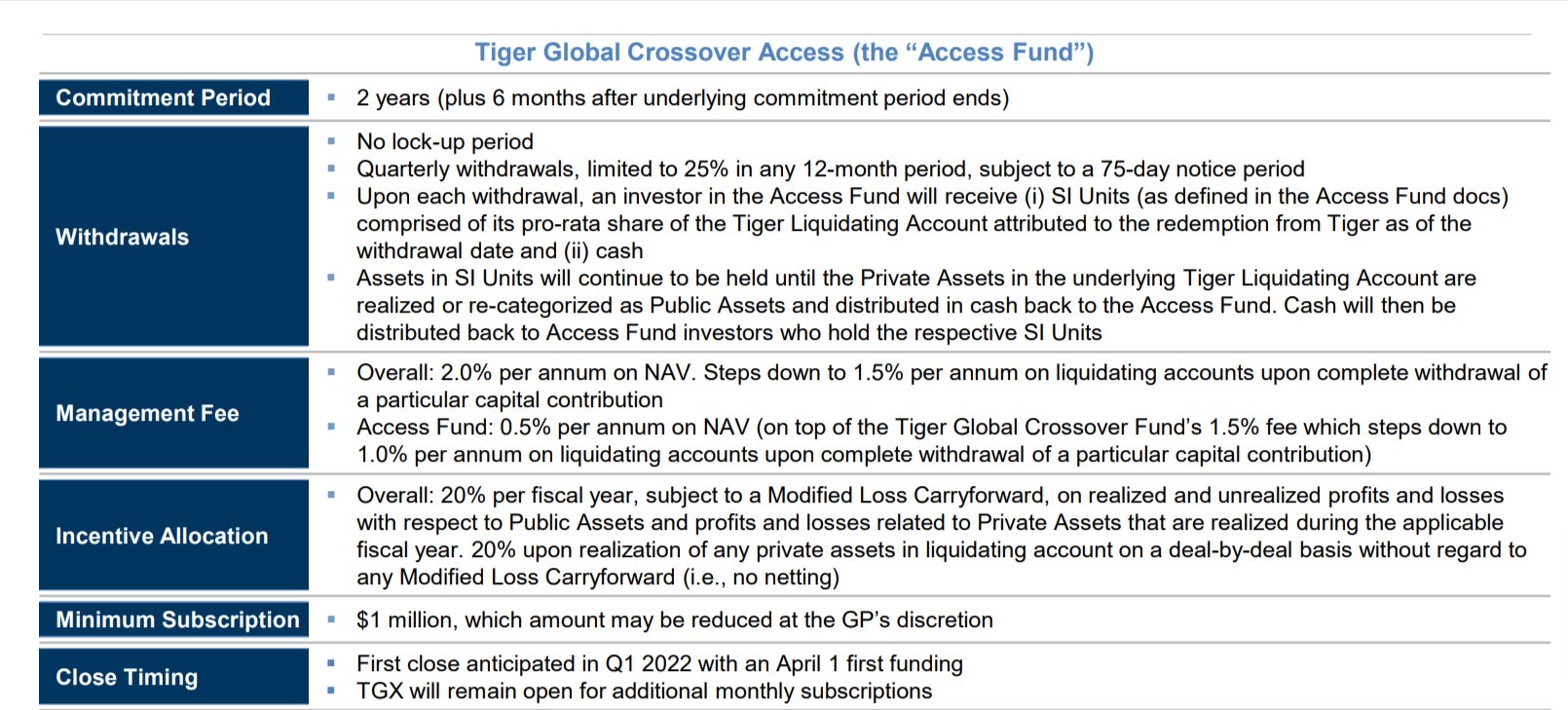
The Market That Was vs The Market That Is Here’s how we’ve been working w/ founders to adjust as the market changes @a16z 👇🧵 https://t.co/sHwe2JaGoi 1/ How has your valuation changed? Public markets are where to look here: 2/ How do you recalibrate goals in this new environment? One way is to figure out what revenue you need to get back to your last round valuation and plan accordingly. 3/ If you raised at 100x revenue and you think you’re now worth 20x, you need 5x more revenue to get back to your valuation. Can you build a plan to get there with 12 months of runway, even if it takes you longer? 4/ Burn rates are the best measure of efficient growth. We benchmarked them by company stage: 5/ How do you know if and when to make changes? We advise planning for 3 scenarios – base, best and worst -- and outlining expense plans around each. Track where you are and be ready to adjust from one plan to another if trajectory changes: 6/ See our full piece for more. And remember, downturns come with a silver lining. Some of the strongest companies are forged in the toughest times! 7/ Link here! https://t.co/sHwe2JaGoi
May 13, 20221/ I'm older than 35 and this isn't my first rodeo. "More cash" ceases to be a possible solution to problems... "If you’re 35 or under in tech, you’ve probably never seen a down market. What you’re accustomed to is up and to the right your entire career.”https://t.co/aMxeSNty8c 2/ "At least 55 tech companies have announced layoffs or shut down since the beginning of the year, compared with 25 this time last year. The daily drumbeat of bad news after the dotcom and telecom bubbles was: https://t.co/ThHWmURTYc Now it is: https://t.co/0p4s1ZhATa 3/ The critical factor to watch for is whether phenomena are feeding back on themselves. Humans don't make decisions independently. For example, one investor who turns down the funding dial or one CEO who reduces their businesses burn rate may cause others to do so [repeats].
May 12, 2022Josh: "You had something like 900 venture firms that ballooned to 2,000. Any prediction, 10% get killed?" Scott: "I bet it's closer to 50%. Trying to predict is a fool's game. But there'll be a lot of firms that don't make it."😬 https://t.co/zqhmiR5f4G


So I’ve seen this tweet & thread going around, and debated whether or not to weigh in on this (as I am of course biased). But I think it’s worth a discussion, as the nature & purpose of the sell-side job is frequently misunderstood, by retail investors and (it seems) CEOs alike https://t.co/vsDopXu1PB (For many of you here on fintwit the following will be obvious and basic, for which I apologize) First, to answer the question of “Is there a place where financial analysts track records are kept?” Yes, of course there are, as has been answered many times in the original thread (Bloomberg, Tipranks, etc all provide an accounting). And yes, the act of providing financial estimates, ratings, and target prices makes up the most publicly visible part of the sell-side financial analyst’s job. But it is only a part of the job, and arguably not anywhere near the most important part of it. Institutional clients of the sell-side use analysts in many ways. They use them to get deeper, more concentrated knowledge on a company or industry. They use them for data and analysis. They use them for corporate access. They use them simply to talk through things. Clients will be interested in a sell-side analyst’s estimates and ratings. But in general they are not basing their own investment decisions on these very much (they have their own estimates, as I’ll get to in a moment). At most, they may look at sell-side numbers as an indicator of an analysts conviction perhaps. But picking stocks to buy or sell is the (buy-side) investors’ job. But yes, when a company reports you will see results compared to “consensus,” which is an average of the various publicly-available sell sell-side estimates as aggregated by the likes of Bloomberg, Factset etc. And often the stock will react in line with how actual results and guidance compare to these estimates. But not always. In fact, quite often you will see a stock go up on a “miss” or go down on a “beat.” This is because the stock is not reacting all that much to how results compare to sell-side consensus; rather it is more a reflection of how results compare to BUY SIDE consensus (which is not a publicly reported number). In fact, quite often a large part of the sell-side job is to understand what “buy-side consensus” actually is (the individual buy-side investors may not know either!) https://t.co/SpucuLGTc4 As far as the "accuracy" of the estimates themselves goes, you have to remember that sell-side incentives and buy-side incentives on that front are NOT the same Buy side investors are incentivized to make sure their numbers reflect their absolute best view, as the stock will rise or fall (and they will make or lose money) based on how accurately they predict how the company will do relative to everyone else’s buy-side expectations. The sell side is different, and (for better or worse) is often not incentivized to have the most accurate estimates. Note that I am not defending this, but it needs to be understood. Sell side estimates are public, hence there is a fair amount of crowding (if you’re wrong, but everyone else is also wrong, it feels safer). Often there is a narrative that is being pushed, which can shape the estimates. Remember, the job of a sell side analyst is to be interesting, not necessarily right! https://t.co/tmhdXp6Zoe Often analysts with a bone to pick will try to set estimates strategically, which can appear strange. For example, bullish analysts will want to leave room to take their numbers up over time as their narrative plays out. Bearish analysts will want to leave room to take their numbers down over time for the same reason. Hence bullish analysts often set their numbers low, while bearish analysts often set them high (the opposite of what you might think). Companies themselves get into the game. For example, were I to hypothetically decide to set an estimate next quarter well above a company’s guidance, I can almost guarantee I’ll get a call from IR asking me why the hell I'm doing that. These types of things can interfere with measurement of “accuracy” or “track records” on the sell side; in fact the entire concept of “success” as a sell side financial analyst does not necessarily correlate (at all!) with success at picking stocks or forecasting estimates. Hence, in some sense talk of analyst “track records” etc, sort of misses the point. While it is the most visible part of the job, it is not, in fact, the job, and there are a myriad number of ways that analysts add value to their clients that do drive “success.” Now as to myself, I wear every stock call on my sleeve. I do my best with them. But will I claim to have the most accurate estimates and greatest stock calls for all my companies? No, of course not. But do I try every day to add value to my clients, in ways that will help them with their own investment decisions. And THAT is ultimately the sell-side job. To help your investor clients make better decisions on what they ultimately choose to buy and sell. Hence "successful" sell-side analysts are the ones that help their clients be successful in forecasting estimates and picking stocks, in whatever ways they can to do that.
May 8, 20223/ The shift went from FOMO (fear of missing out) to SOBS (shame of being suckered) to POLL (pride of losing less) Failure comes from failure to imagine failure...
May 7, 2022Third Point Q1 2022 letter: "To be an investor is to live constantly at the intersection of story and uncertainty." "Our net exposure is lower and buying power higher than at any time during the last 10 years." (@DanielSLoeb1) "We added to our single name shorts during Q1, replacing ... market hedges." "We initiated positions in oil and gas as well as in materials ... the companies will return in excess of 20% of their market caps annually should strip prices remain close to current levels" "Even after dramatic declines, it is difficult to call a bottom in the high-growth, high-valuation end of the tech sector. Many of these companies relied on stock-based compensation ... may have retention difficulties, leading to increased dilution or increased cash wages" "We fear Soros’s theory of reflexivity will come into play should such a spiral ensue." "We build our mental models, frameworks, and processes to try to accurately price securities and overlay them with a story about the economic, geopolitical, and psychological factors. The key, of course, is to change your framework when the environment changes." "Since I started Third Point 27 years ago, I have seen many investors (including myself) stumble after years of success because they did not adapt their models as conditions shifted." "I have said before that they don’t ring a bell when the rules of the game are changing, but if you listen closely, you can hear a dog whistle. This seems to be such a time to listen for that high-pitched sound." Shell "We have added to our position in Shell ... at same deeply discounted multiple today ... due to a move up in commodity prices. Shell’s LNG business will play a critical role in energy security for Europe ... the value of this business has increased dramatically" Glencore "A diversified miner that supplies copper and nickel, two metals that will be critical inputs for the transition to renewable energy. New management team, improved ESG profile, strong cash returns, ... substantial 28% discount at which it trades to other global miners" Third Point First Quarter 2022 Investor Letter May 6, 2022 https://t.co/dt3abx9YcJ
May 7, 2022Growth/crossover stage shut because you can either own Ramp at $100M ARR and $8B or BILL at $600M and $16B. FRSH at $450M and $3.5B or rippling at <$100M and $6B. CFLT at $500M and $8B or CockroachDB at $80M and $5B. Notion at $150M and $10B vs Monday at $400M and $5B.
May 4, 2022I know it doesn’t feel like it right now but the next few years will be a fun time to work at a hedge fund. In the last 2 years there were 1,382 IPOs (more than the prior 7 years combined) Plenty of crap in there too but that’s what makes it fun. More surface area to dig into
May 4, 2022Investor sentiment in Silicon Valley is the most negative since the dot-com crash. Resource: https://t.co/jUKjdgS3BX Now let’s look at the public comps based on charts from our friend @altcap and his team at Altimeter. The SaaS Index has mean-reverted from over 16x ARR to about 7x ARR. The Internet Index has corrected even more: And FinTech has corrected the most (the hotter you are, the harder you fall): So what happened? $10 trillion of money printing in response to Covid caused an asset bubble and a spike in inflation. In response, the Fed turned hawkish, which caused rate expectations to rise. This has hammered growth stocks. Will there be a “bounce back”? There was. Over the last 6 months, the market bounced back to the historical mean on valuations. The anomaly was Covid. Not now. h/t @altcap
May 4, 2022So many of us have lost money during this downturn, and yet the most common thing we like to indulge is how others are stupid for losing money, and how little we spend time on looking at the mirror. If investing cannot humble us, I'm not optimistic that anything really can!
May 3, 2022Ok, now everyone else share (Also, so many learnings here on just how hard it is to do a 6x gross fund and to deliver 25%+ net IRR to LPs. New managers pay attn) A few things you can see from this for lay folks: 1. It takes a long time to make cash in venture, even if you are wildly successful Chamath has turned $2.2B into $7.8B (wow!) but only 1.3x of that is cash back after a decade. It will get there (liquid), but can sure take time
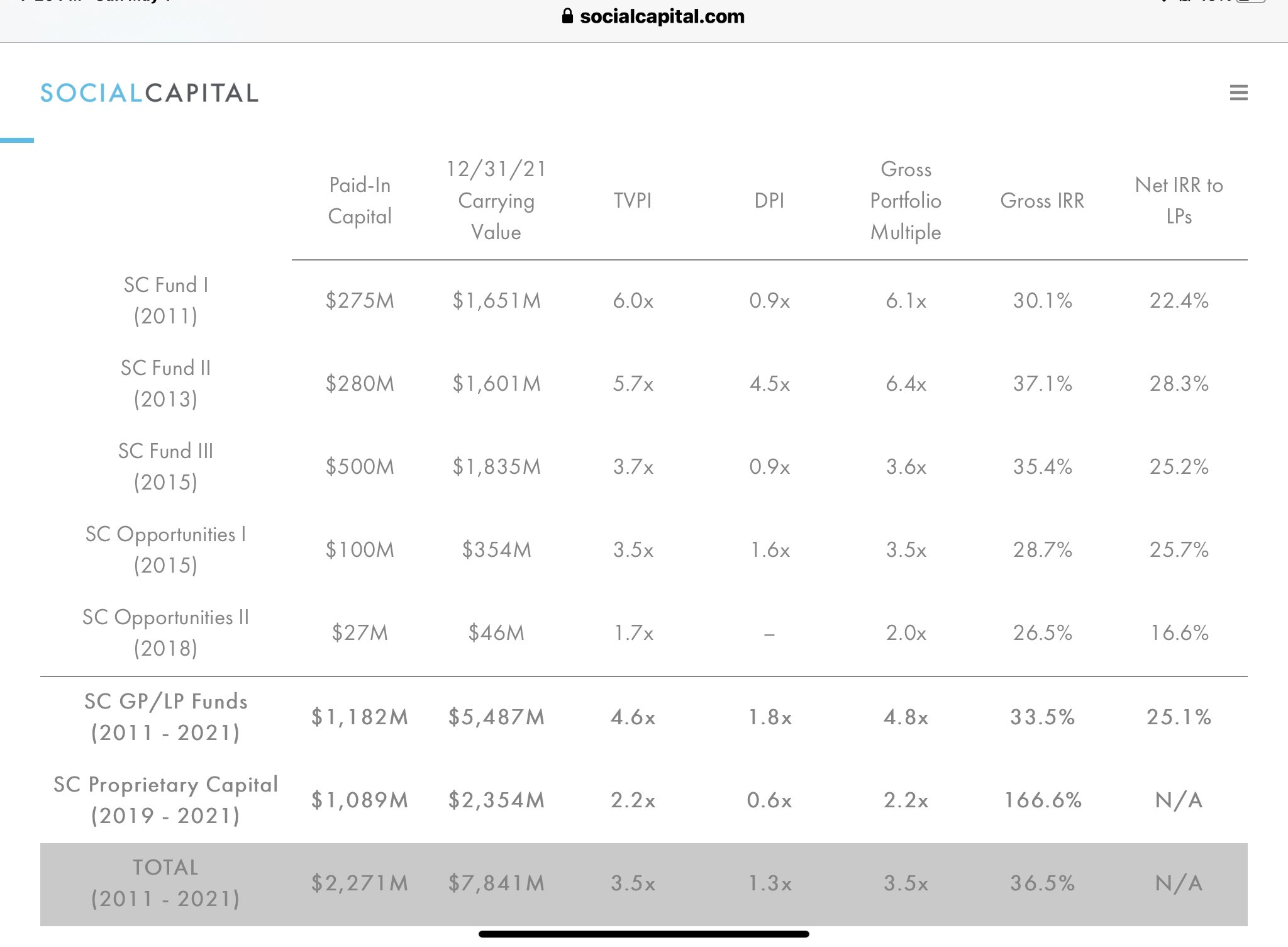
In 2018, Stanley Druckenmiller gave an hour-long interview to Bloomberg. "Bulls make more money than bears. Being an optimist about life is a great attribute as an investor. You just can't be starry-eyed and naive. You have to be a little skeptical, a bit of a contrarian." A big theme was listening to markets and whether they were still providing valuable signals. "One of the strengths of my investment returns over time was being open-minded. As my wife will tell you, he believes something on Monday and two weeks later he changes his mind." “The best economist I know is the inside of the stock market. I've used it every cycle. The market predicted 9 of the last 5 recessions. That's better than the Fed. They've gone 0 for 9." But things had changed: “A big part of my process is taking signals from markets. I’ve always believed markets are smarter than I am. They send out a message and if I listen to them properly, no matter how powerful my thesis, if they’re screaming something else... ... it’s telling me you’ve got to re-evaluate. If it’s still alright, fine. But you've got to be open-minded." "About 6-7 years ago, the combination of central banks cancelling the signals but, maybe more importantly, the algos coming in with very sophisticated models." "I grew up with: someone fundamentally likes a security and they buy it from somebody who fundamentally doesn't like a security. The invisible hand spit out a very good answer. It was predictive over time. I learned that when trends started, I'm supposed to pile in." "The algos, machines trading, they tend to have different motivations. They're not nearly as momentum oriented. It has severely inhibited my ability to read the signals." "My first mentor used to say: 100 million Frenchmen can't be wrong. It was his saying that the the voice of the market was always correct and I need to listen to it. If a company was reporting great earnings and the stock just didn't act well for three or four months... "...almost inevitably something happened that you didn't foresee six months down the road." "I'll never forget, 2-3 years ago, Facebook had reported great earnings. Stock was like 122, opens at 131 after hours, 3 days later it's at 116. The analysts come in... nothing's wrong. I said, No kid you're wrong something's going to come out you just don't know it yet." "Anyway a year later the stock was like 220. So that didn't mean anything." "The price signals I learned how to read are broken, they certainly don't work the way they used to. I still like price action versus news but it used to be a very very important part of my process." "I don't want to blame it on passive or algos but price action versus news, which was a big part of my process, doesn't work as well as it used to. I'm going to learn I have to do more fundamentals than I have historically." "I think the message over eight or nine months is still great. Like here I am telling you what the auto stocks are doing. I just think over a week or two you're getting noise that used to mean something and now it doesn't mean anything." You don't have to be a coder or quant, but: "You'd better know what they're doing because ... they influence markets and you have to know if a particular price move is is happening because of them or it's happening from more natural causes . Full interview: https://t.co/feT94N5Rg1
Apr 28, 2022One data set I am interested in seeing is how remote work impacts decision making quality in investing partnerships Trad logic is ofc that IRL matters. But remote may afford better decision settings for individuals, and may positively select for partnerships with deep experience (None of this was really the point of the article, which is by @morganhousel and is below, but the line about good decisions requiring time made me think of it) https://t.co/vTT2sB635I
“…a lot of people have very strong and definite plans…but we’re subject to a tremendous number of outside influences…so my idea is to stay flexible. My only plan is to keep coming to work every day.” -Henry Singleton, with the anti-McKinsey approach.

The product of venture capital firms? *Their decision making engine* Credit to @m2jr for framing this in my head. It’s profound and captures people, strategy and culture, as well as whether the group is asking the right questions.
Apr 6, 2022Some VC funds recently became RIA's (to invest in tokens, etc) & have to disclose AUM quarterly & they may be bigger than you think. Tiger Global: $124.7B Sequoia: $85.5B Coatue: $72.1B A16Z: $54.6B Paradigm: $13.2B https://www.newcomer.co/p/scoop-crypto-fund-paradigms-assets-423?s=r
Apr 5, 2022if i was an investor and could only invest in a single thesis for the rest of my career, this would be that thesis sorry if the single dimensional diagram that i’m using to explain the entirety of the software application universe doesn’t conform specifically to the manner in which you view software this isn't a tweet about productivity tools! unless you consider all business apps productivity tools. in which case then yes this is a tweet about productivity tools
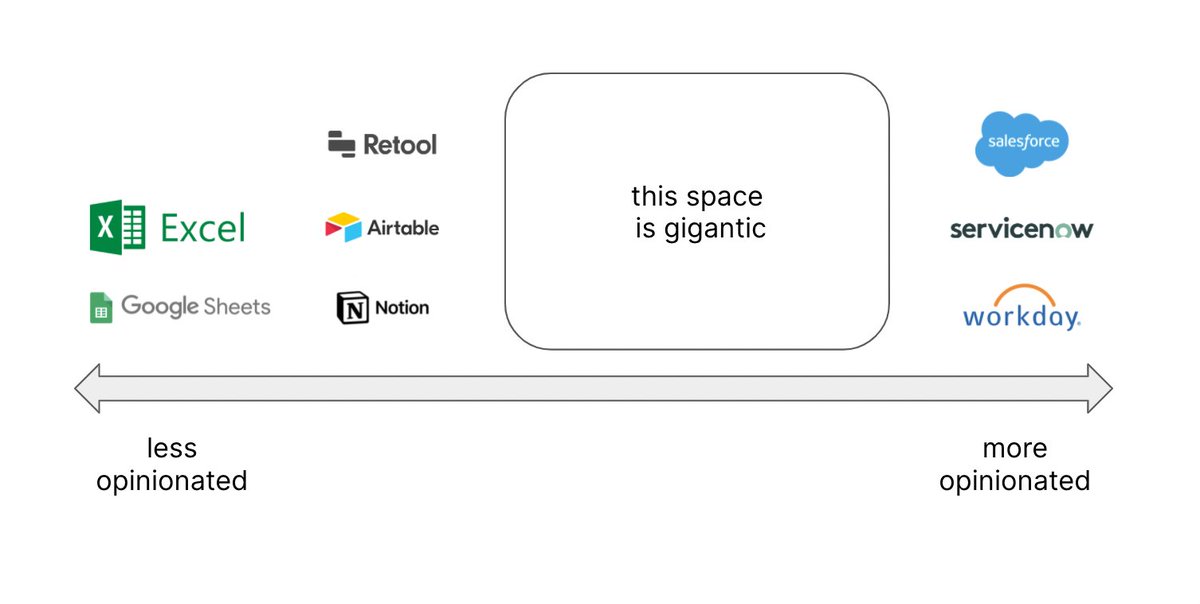
Interesting quote by Roelof. “The biggest threat I see right now is that there’s money that doesn’t come with advice, and I really worry what that does to companies” https://t.co/bUmlmxkDHQ I think Tiger Global guys would say that by not providing advice, they are better than most VCs. Vinod Khosla would agree (he claims most VCs add negative value). So perhaps the bigger worry should be $ with bad (and self serving) advice from VCs. The more I think about it, I think Roelof is right. It’s not just bad advice (which everyone would agree is harmful). Easy money (which does have strings attached) is going to cause harm. I’ll refer back to my Venture Lotto post from ‘06. https://t.co/jvVeCIVzKY
Apr 1, 2022Plenty of news about Fast, the startup which allegedly generated $600K revenue in 2021, burning through most of their ~$100M funding. I got a reach out to interview in 2020 but immediately passed. It's because I did my research on the founder CEO. Real shady actions in the past: 1. The CEO's real name is not "Domm". It's "Dominic". If you search for "Dominic Holland" you find articles of him and his last startup in Australia. It includes a $15M dispute, going bust, firing staff via text messages and lots of other shady stuff: https://t.co/ClHmZN2PMF 2. Dominic then started what would become Fast. He hired contractors remotely from Nigeria at ~$200/week. Once he raised funding off the back of what they built: he terminated everyone and never acknowledged their work. What a shitty attitude. https://t.co/OnXiGRaicS 3. I read these and decided that Dominic ("Domm") is a character I'd never work with. His actions show that he fundamentally doesn't care about employees (both firing staff over text & firing Nigerian contractors) Call me old school, but THIS is a dealbreaker for me in a CEO. 4. This year NPR wrote a profile on Domm: https://t.co/M1ZAv9SXge The curious thing is how he managed to pull many former colleagues of mine to work for him (many I know). I assume all knew the same background that would make me pass. Always do your due diligence on founders. I can foresee a lot of dunking happening on Fast: always a trendy thing to do. While I will absolutely judge a CEO based on past shitty actions - especially on the contractors in Nigeria - I am not judging any employees who joined Fast to do good work. Hope others won't either. Being in the business over 15 years, I see a pattern on people's past behaviors and their future ones. Once: a mistake. Twice: a pattern. A reason I try to stay well away from shady characters. Plenty of those people starting/started new ventures in the crypto space right now. When I say shitty behavior from Dominic, the founder of Fast, I mean it. In 2019 he is praising engineers in Africa and Nigeria who build the v1. Then he fires them without any justification. Because he's got the money to hire from SF. Someone always running from his past.
Apr 1, 2022Most private tech cos “overhired” in 2022. Most valuations in 2021 were “too high” for today’s mkt multiples. So - yes - we expect less hiring + some layoffs (already happening). Will see stronger, better run cos as a result. (Don’t shoot the messenger!) https://t.co/IGlQFimpRV Those of us who have been through a few market cycles know that choppy waters being out the best companies. Those with strong leadership and balance sheets will adjust, accelerate and take share. The end markets / TAMs are larger than ever ☁️ 🚀 ("bring" out the best companies) To my point, startups that powered through the GCF era (08/09+) - which was way worse than current environment IMHO - include Veeva, Uber, Asana, Twilio, Okta, Zendesk, Etsy, Workday, Shopify, Hubspot, Square, Palo Alto Networks and many, many, many more...
Mar 31, 2022Unpopular opinion: the future of VC is... more or less the historical model of VC * crossover investors will move on * solo GPs will become regular firms or disappear * web3 VCs will look suspiciously like regular VCs Lindy effect of current model is strong
Mar 31, 2022Athletes/celebrities have the ability to effectuate outcomes in a way most minority investors can’t. The social reach, and influence via self directed distribution channels are a scarce and differentiated resource. Activism next? (e.g. Lebron+Elliott take $UAA stake) https://t.co/JP2yWfMQs3 2/ https://t.co/ioiMLP5NYY 3/ “Today, DraftKings welcomed Michael Jordan as a special advisor to the company’s board. Jordan has agreed to take an equity interest in DraftKings in exchange for providing guidance and strategic advice to the BoD on key business initiatives https://t.co/blrpCc78hC 4/ Adding this one to the archives. Like it or not @LairdLife leveraged his celebrity to raise capital in the public markets at a $200M post. 🏄🏄🏄 https://t.co/qdlI9jNEx8
Mar 30, 2022 Original deleted — preserved hereIs early stage investing really all about the people? A quick thread: I've seen multiple tweets over the last few months that say something like this: When I started in VC, I thought it was all about the people. When I got experience, I focused on XYZ as well. But now that I am wise, I think it's all about the people. Huh? The conventional wisdom in VC is that it is all about the people. But new VC's quickly learn that this is a weak heuristic for them. This is because: 1. They don't know what good looks like 2. They don't see enough good founders 3. This is not the only ingredient First, great founders are not that easy to identify. LI resumes aren't that helpful. Impressions based on one coffee meeting are equally useless. The definition of "great" changes. And there is always the head fake of a great exec who is actually a weak founder. Knowing what great founders are like takes years of experience and pattern recognition. Or, sometimes, you know one because you've watched the movie unfold over years. In both cases, new VC's don't have a great frame of reference. Second, great founders are by definition resourceful. They know how to get to decision-makers at firms and world class investors. You just won't see as many of them as a new investor. But the more you see, the better your judgement will become. But in the meantime, new VC's try to find other things to focus on. Great markets, strong mega trends, super technical founders who just need a little business help, etc. They start to develop other frameworks to augment the fact that they don't see as many great founders yet. But in some cases, things will work out. They will find or back a rookie founder who proves to be amazing. Or, the sheer success of their business will make the founder look great. In either case, the investor gains in prominence and starts to see more great founders So from there, they start to realize "you know what, it really is all about the people!". But I think that's only 80% true. Many great founders become great because of the opportunities created by their company's success. As I always say, "traction creates opportunity". There is one household name in particular that I think of when I reflect on this. I won't share it publicly, but the dude was NOT a great founder, but became one through luck, circumstances, and of course, some legit raw ability. But the inverse is also true. Great founders very often fail. But they don't look nearly as great as the founders that succeed because it's very hard not to conflate outcomes with the quality of the founder. And great founders don't necessarily stay great. Maybe their motivations change, or their weaknesses (everyone has weaknesses) become more detrimental in a different context. Personally, I'm a big believer that people can change. Great founders aren't great permanently. They need to have a beginners mind to remain excellent. Conversely, one can develop into a great founder even if one isn't quite there yet. We are all on a journey.
Mar 24, 2022it's been about a year since I wrote about the two worlds of venture here’s the tl;dr update: ➡️ the funding gap has widened ➡️ becoming a VC is easier, but staying one is harder ➡️ everyone's fingers are in everyone's pies let's talk about it 👀 https://t.co/ENYFJ8aUkv this is a tough piece to tweet through, but I'll do my best to flag some highlights. particularly if you're a founder, emerging fund manager, or LP, I'd love your thoughts 🙏 1. The funding gap has widened. There has been a more extreme consolidation of capital at both the fund & startup level, as the increases in dollars allocated to funds and startups have outpaced the increases in the numbers of funds and deals. 2. Becoming a VC is easier, but staying one is harder. While the barrier to entry for first-time funds has never been lower, the institutionalization of new firms remains a challenge, as many established institutional LPs structurally lack the appetite to back new managers. 3. Everyone’s fingers are in everyone’s pies. (Yes, it's as gross as it sounds.) Emerging fund managers are increasingly raising capital from larger, more established venture funds, even in cases where the latter have directly competitive investment strategies themselves. Continued concentration of capital & increasing comingling of investment entities that should remain independent creates a perfect storm of conflicts of interest, misaligned incentives, missed opportunities, and compression of returns across the entire VC asset class. For founders, emerging fund managers, and LPs alike, this dynamic presents existential risk. At the same time, there is a wide open field for investors to win by averting this structural gridlock. The 2021 Q4 Venture Monitor report (Pitchbook, NVCA, Insperity) shows that dollars invested in startups is growing much faster than unique deal counts i.e. more capital deployed, larger rounds, but *fewer* companies funded The trend at the fund level is consistent with that at the startup level: while invested dollar amounts have grown, that growth is concentrated in later stages, larger funds, and, ultimately, fewer funds overall. In an industry premised on power laws, probabilistic models, and outlier outcomes, why aren’t we trending toward greater structural diversification? The answer lies in the financial structures and decision-making processes of funds and institutional LPs. VC fund managers face conflicting financial incentives and logistical constraints that ultimately trend toward bigger checks, higher valuations, more risk, less upside, and fewer companies funded. (More detail in screenshot) At the institutional LP level, the landscape is even more consolidated, and the constraints are often more extreme. These LPs have a structural preference for supporting managers already in their portfolio over funding new ones. So... ➡ LPs commit to funds expecting to write larger checks in the future ➡ VCs raise larger funds ➡ VCs write larger checks ➡ VCs raise even larger funds It's like a weird version of that Spiderman meme If you are in favor of innovation, free markets, and competition, this should be unsettling. Having fewer decision-makers means founders working on under-appreciated/unfamiliar ideas have lower odds of getting funded, resulting in a loss of both financial returns & innovation. Enmeshment is “a description of a relationship b/w two or more people in which personal boundaries are permeable and unclear”. This term is used mostly in psychology and interpersonal relationships, but it is also an apt descriptor for the financial entanglement in VC. We're increasingly seeing VC firms, particularly established franchises with $10B+ AUM, investing in smaller, newer firms as LPs. In many cases, the VC firms acting as LPs are executing on the same or similar investment strategies as the VC firms they invest in. There are honestly too many examples to list. Bain, Tiger, Sequoia, A16Z, Founders Fund, and Seven Seven Six are just a few that have made headlines recently Interestingly, in 2014, YC announced that to “reduc[e] conflicts”, they had ended all “LP and LP-like … relationships with several VC firms”. Not sure if YC’s LP base still excludes VCs, but this decision is one of few public acknowledgments of this inherent conflict. Hybrid investment strategies aren't new, but institutions typically don't directly compete against the funds they back. They also generally have clear policies on COIs, separate teams for fund investments vs directs, and limited influence on startup funding outcomes. New VCs' need for alternative capital sources is clear, and the benefits of this kind of arrangement are tempting: ⌚ faster time to market 💰 tangible value prop to founders 🌟 a coveted endorsement from an incumbent But for new fund managers looking to build a long-lasting firm, this type of relationship is akin to winning the battle but losing the war. Especially if decision-makers are not clearly delineated and conflicts of interest are not transparently addressed, there are many issues: 1. Strengthening incumbents' positions as arbiters of innovation capital. These large funds have a vested interest in controlling distribution, and favoring them distorts capital flows into the startup layer and risks emerging funds’ future market leadership potential. 2. Boosting the returns and accelerating the financial prominence of established VCs. Given they’re backing many managers, the returns can be meaningful in the aggregate. We still believe emerging funds have the potential to deliver 5-10x+ net to LPs, don’t we? 3. Compromising their own independence and their portfolio companies’ optionality, potentially to the detriment of returns. Whether agreements for "first looks", pro-rata rights, and follow-on rounds are formalized or not, both LPs and founders should be concerned This may be the most important point -- 4. Further choking out institutional appetite to allocate to emerging managers and reducing independent sources of capital for new funds in the future. I'm not saying this is a trap, but ... it's not NOT a trap. The notion that established venture capitalists could be reliable judges of future VC industry leaders under any circumstances is suspect, particularly given VCs' shortcomings and deeply entrenched biases. Diversity in funding outcomes is the canary in the coal mine: it doesn't guarantee optimal performance, but the homogeneity we've seen to date guarantees the lack thereof. Over-reliance on incumbents has resulted in broad financial inefficiency & also stunning lapses in judgment We saw LPs commit $300M to a new VC firm based on the partners’ Tier 1 track records & endorsements, only to discover that there were reports of sexual harassment allegations against one of the partners at 3 of his prior firms that no one told them about https://t.co/rJ30oPH24r We also saw LPs increase their commitment to a $5B+ Tier 1 VC firm with $560M of fresh capital for a new fund with no women or Black/Latinx investors on their 7-person investment team (yes, in 2022) https://t.co/vKFv7MR9v0 Even initiatives explicitly aiming to fix venture capital’s diversity issues, like Screendoor, rely on existing managers for new manager selection. Despite all these reservations, I'm willing to suspend my disbelief and entertain the idea that involving existing VCs in the selection process for new VCs could have any merit. In such a scenario, what would be the best practices for structuring these relationships at scale? What are the mechanisms for transparency, governance, and accountability that ensure that conflicts of interest are adequately mitigated, independence is maintained, and capital is deployed efficiently? The more time I spend peeling back the onion, the more questions I have ... If you are a founder: - Do you know who your investors' investors are? - Does decreasing competitiveness in VC concern you? - Are you concerned w/ information flows, signaling risk, and VCs' ability to provide objective guidance if they're financially entangled w other VCs? If you are an LP: - How do you account for the reduction in competitive forces and the impact on asset class-wide returns as the financial incentives of funds become increasingly co-dependent? and... (If you are an LP) How do you evaluate references from investors who are financially aligned with and potentially under non-disparagement agreements with one another? How does this enmeshment change your due diligence processes? and... (If you are an LP) Do you believe that fund managers who are either unknown to or perhaps even disfavored by incumbents have the potential to generate outsized returns? If not, why not? If so, what are your mechanisms for sourcing, evaluating, and selecting such managers? And if you are an aspiring VC fund manager: - How are you planning to build a sustainable capital base in what is largely a captive market? - Is independence important to you? - What do you know for certain about the venture capital industry, and what do you doubt? As a chunk of the existing market ends up stuck in this web, there’s a wide open field for anyone who sees the potential of bucking the trend. Building a new structure is the most exciting opportunity we have. Thoughts, feedback, ideas? I'm all ears 🙏 Big thank you to Doba, @____hka, Frank, @rcooksen, and my @LaconiaCapital team for all the feedback, and @DelJohnsonVC for countless convos on the topic. Can't wait to hear what I've gotten wrong or missed 😅
Mar 22, 2022Everyone wants to discover and invest in the "smartest" and "most driven" people 👀 I instinctively want to avoid anyone who makes it through such a filter Good thing this wasn't a popular strategy in my time, I'd never have survived to adulthood I've occasionally faked my way into rigged lists of "smartest" under test conditions, and occasionally managed to fake "driven" for several weeks in a row, but if anyone seriously tried to bet on me using such tests in hopes of returns, damn... I'd be a total shitcoin. No moon. If I had money to throw at such ideas, I'd probably go for random distribution. At most some testing of basic mental competence to handle money, and not being a known serial killer or something. And no return in an income share sense, just gently encourage a pay-it-forward norm Anyone who wants to create artificial selection pressures regimes to reproduce their notions of optimal human beings is typically trying to clone a self-congratulatory idea of themselves at scale It's not that it can't work in an investment sense. You'll almost certainly get a certain "yield" of stars, a bunch of mediocrities, and some dogs you quietly ignore. It's just a shitty way to think about human development in general. The kind of idea I really like is for systems that can take average mediocrities as input and produce interesting results and evolutions. College used to be that. Then it got to be an expensive form of generational wealth transfer and class boundary policing. My objection btw isn't about false positive or false negative errors, it's about the very idea of exceptionally privileging exceptionality at the expense of the ability of the ordinary to pursue completely ordinary lives for some reason people want to either drag everyone down to the same level (as in SF school district) OR ritually sacrifice the ordinary entirely, as in "shut down ordinary schools/colleges and only back the presciently picked winners"
Mar 21, 2022I launched an Income Share Agreement (ISA) company in 2019. Our company survived, but our use of ISAs did not. Overall, I think the ISA experiment has failed and is not the revolution we hoped would transform training and education. Here's what I learned 👇 ISAs tend to have significant adverse selection problems, stemming from two sources. First, the lack of skin in the game leads to very poor participant behavior. Participants haven't put anything down so it's easier to not complete the program. Also, participants judge educational success in many ways that don't trivially reduce to "make more money". Generally, ISAs narrowly align the organization with this one specific outcome. This new misalignment tends to cause problems for both the participant and the program. Second, credit scores were the most predictive variable of good participant behavior for us. But people with high credit scores tend to have better, cheaper options than ISAs. Also, using credit scores for ISAs is... largely missing the point. Furterhmore, consumers were consistently confused by ISAs and had a vague sense they were exploitative. I think ISAs are less complicated than debt, but consumers don't have experience with then. Educating the market on a new financial instrument is a big, expensive job. The lack of legal infrastructure around ISAs leads to difficult collections-related issues. You can't ding somebody's credit score and there aren't easy legal paths for collecting. Are you really prepared to go to small claims court? We weren't. On the regulatory side, there is currently a gap between the level of regulation for consumer debt & ISAs. It is easier to offer ISAs today. But there's no reason to believe regulators will (or should) treat ISAs any different than consumer debt. The regulatory arb will close. Largely due to the regulatory risk, there are not mature capital markets for ISA programs to tap. The large capital markets for credit & securitized debt packages drive costs down. But the small number of players interested in ISA assets results in _very_ high capital costs. Getting access to capital markets is very important to grow becuase ISA programs have an awful cash conversion cycle. You outlay a bunch of cash upfront and get paid back over time. If you are cash-poor like most startups, this is hard to make work without capital markets. To recap: 1. Consumers are confused by ISAs 2. And when they take the deal, they often behave poorly 3. And when they behave poorly, you don't have great recourse 4. And there's a looming regulatory threat 5. And the financial markets aren't supportive All of these things can be fixed. But in fixing them, we might as well just use debt instruments rather than a brand new thing. Better than an ISA is an income-dependent loan with some minimum amount that must be paid back regardless of the program outcome. With this setup: 1. You concede and comply with the existing regulation 2. You get access to the existing capital markets so financing costs come down 3. You can use credit reports as a way to enforce the contract so collection rates go up 4. Consumers already understand debt And, most importantly, the consumer gets a better deal than a classical loan. In sum, we can build better outcome alignment in our financial tools without totally throwing out the tools we already have. Of course, there will be >0 companies that succeed using ISAs. The model isn't hopeless. But providers of debt and fee-for-service education/training do not need to be worried about their future. ISAs aren't the revolution we thought they would be. @placement we wound up changing our business model completely, so none of this is really relevant to us today. I'm sharing my lessons here so future entrepreneurs can short-circuit their learning process. Good luck! BTW – we now offer 1:1 career, leadership, life, and job search coaching @placement. No ISAs because "success" looks totally different in 1:1 coaching. But our C-SAT is 99%, so it seems our customers are happy with their investment! Check us out: https://t.co/nkOL2QBz6i
Mar 21, 2022Post GFC Venture Capital as an industry has massively "over earned." The data below shows pooled IRRs by vintage from Hamilton Lane. And this performance is despite the fact that private multiples have historically always been higher than public multiples https://t.co/Bsos8scHEo As a venture capitalist we take bets that companies will be worth more in the future, despite a "premium" multiple paid in the early days. So yes, many private companies are "worth less" right after an investment if you applied a public multiple. But this phenomenon isn't new What is new is the magnitude of that premium. Private companies now are worth significantly more than if they were given a public multiple. But should this really be a surprise given the IRRs of venture capital over the last decade? Venture Capital has really been an inefficient, clubby, market Zoom's last private round was valued at ~$1B. Two years later it traded at ~$30B publicly (pre covid) Snowflake's last private round was valued at ~$12B. 7 months later it traded at $80B publicly (+ covid bump) These types of returns shouldn't be possible. Any asset class that spits off the IRRs that venture capital has over the last decade (again, see first image) will attract massive inflows of capital. LP demand for the asset class has gone up So back to my first point - VC as an industry has over earned. Of course private valuations are going up. Time will tell if we've overshot, and venture capital IRRs of the last few vintages will be lower than other asset classes. Undoubtedly, VC IRRs are coming down My entire investing career has been post GFC in a bull market with low rates. The threat of sustained inflation creates the potential for a sustained high rate environment. If this happens, the VC industry would need to adapt Follow up post on this tomorrow In a market where everything has been "up and to the right" for the last decade plus, it's easy to justify higher and higher entry valuations for private companies. The question I posed on sustained inflation / high rates is an important one because it could flip this trend
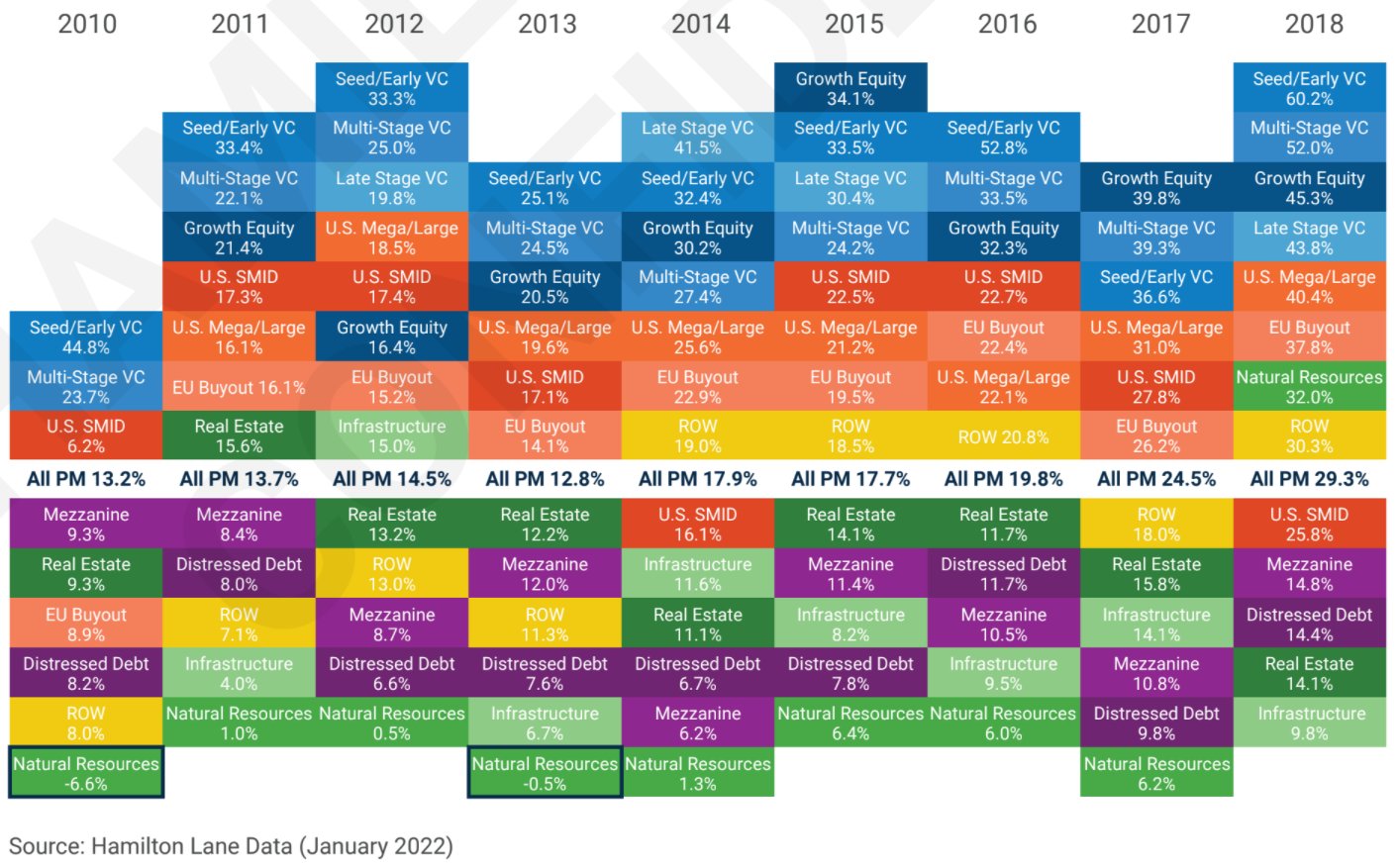
Investing has as much to do with behavioral factors (if not more) as it does with intellectual & analytical factors. Pretty good document on "Behaviors that can cause Investor Mistakes". Some of my fav ones in the pic below.⬇️ cc: @dmuthuk @Gautam__Baid https://t.co/oW1xl1lQ0C If the above link doesn't work, just google "Genesis Wealth Management Investor mistakes PDF".
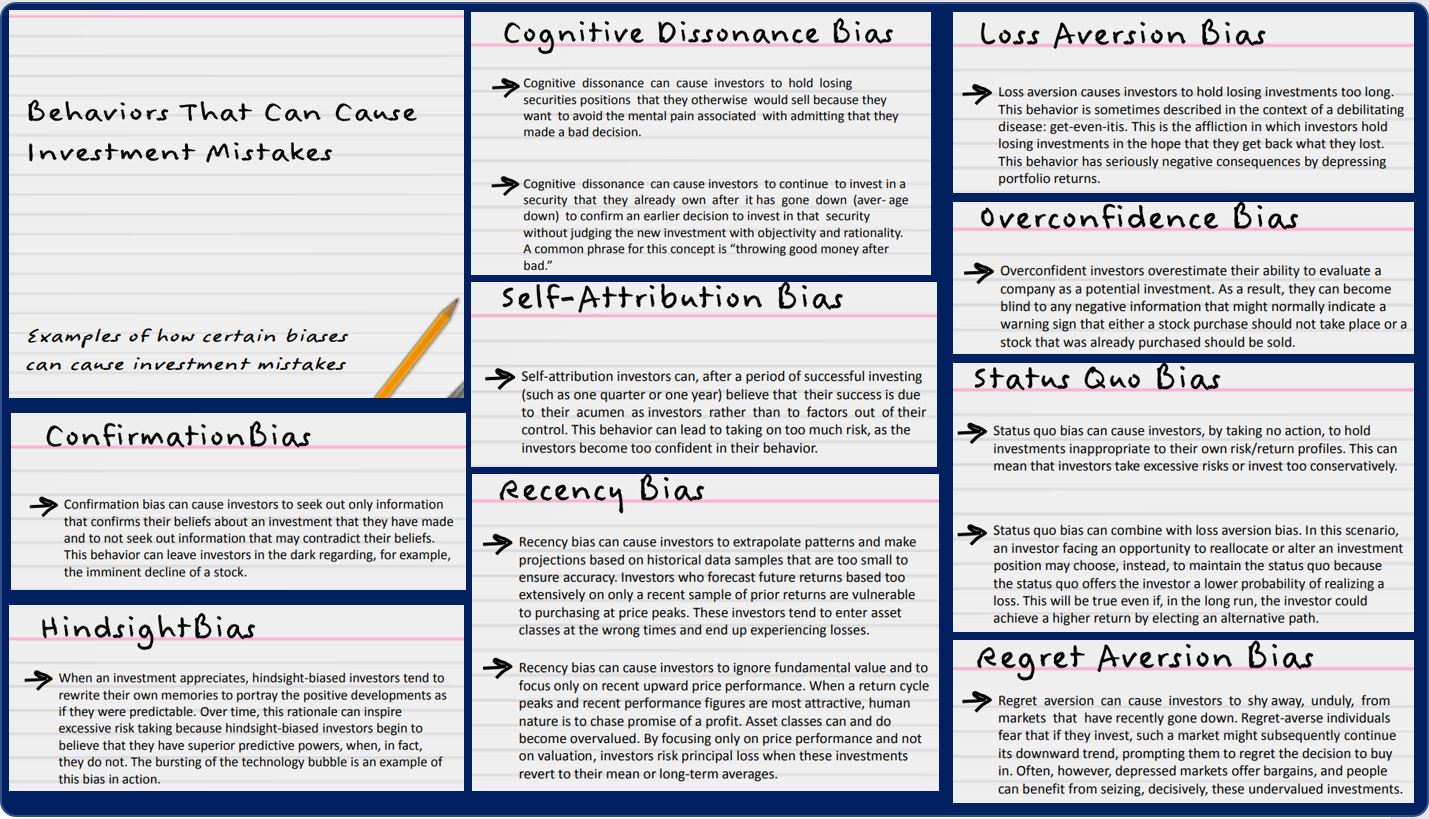
kinda jarring to hear a VC call a tech winter... Founder's Fund @rabois: i've been calling this a fully fledged dotcom crash for all of last year... there will be cuts and layoffs and companies are gonna fail https://t.co/ywcPMR4W3m
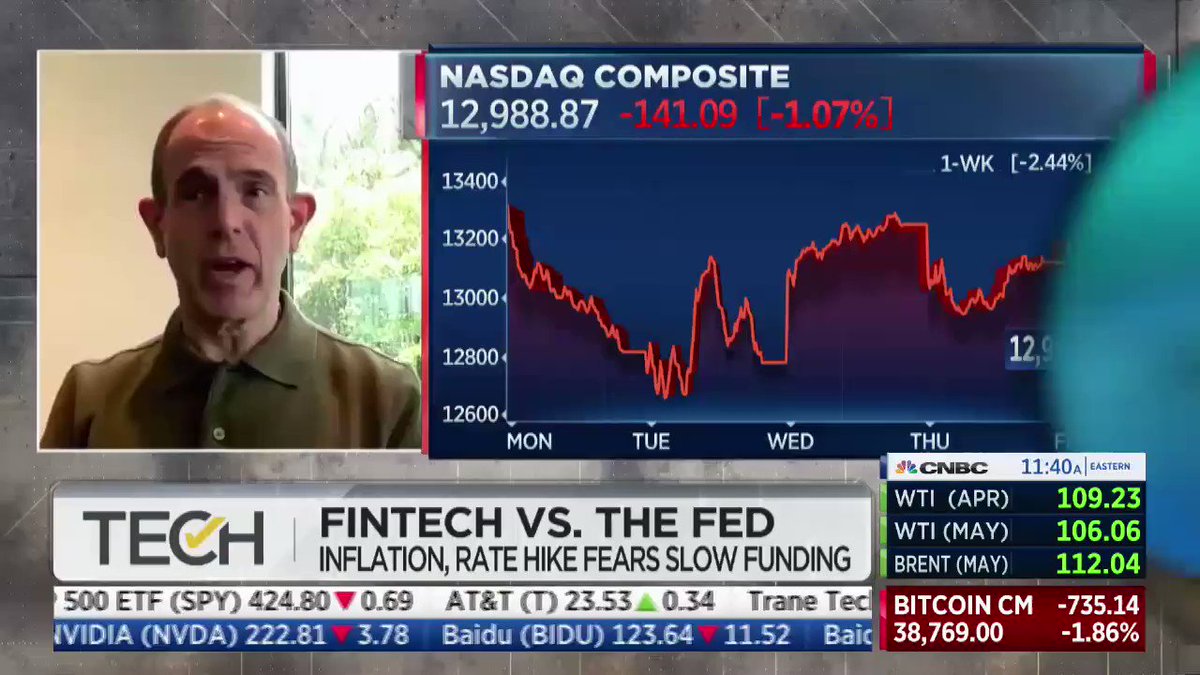
The absolute farce here is that everyone knows these valuations are still a joke. Only down -18%? Kiss my ass So nobody good, in their right mind, is going to join them until they’re marked appropriately. https://t.co/opYA4CU03x Good tweet from @daveambrose on how this dynamic impacts the talent market for privates https://t.co/tD9QSOZb2n I’m resting and vesting till these valuations come back to earth. So’s everyone else I talk to. All the upside is gone right now. Everyone knows the markdowns are coming, but people are dragging it out hoping things pop back up. No fuckin chance
Mar 11, 2022 Original deleted — preserved here“…many of these people who critique indexing have a very selfish reason for doing so – it’s taking away their living. And that’s for a very good reason, which is they’ve not been very good at what they do for a living and indexing has exposed that.” https://t.co/pdLbZvJOMF
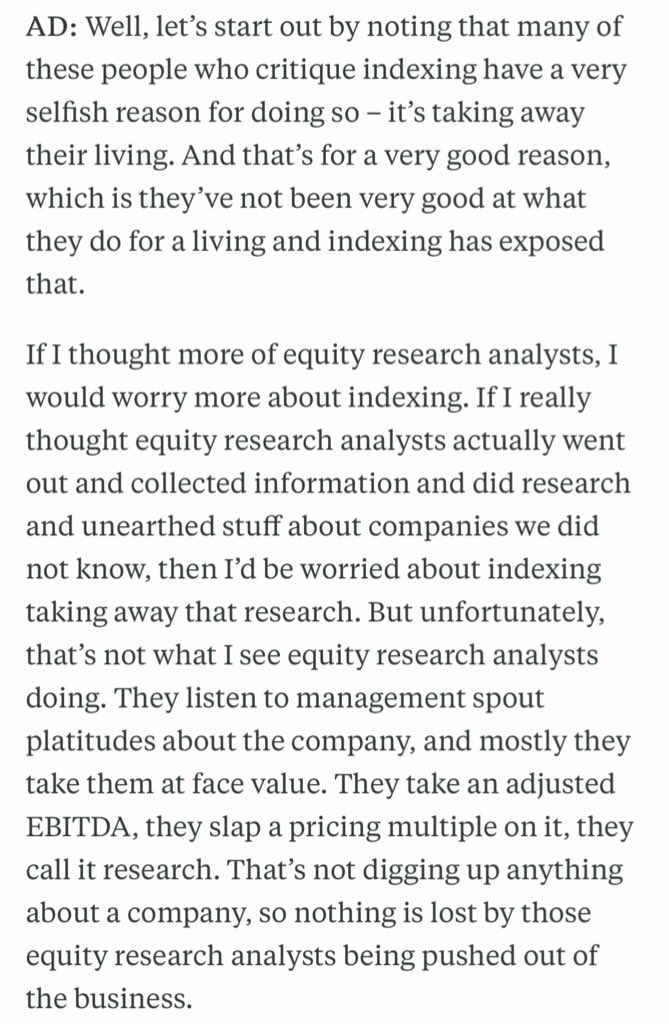
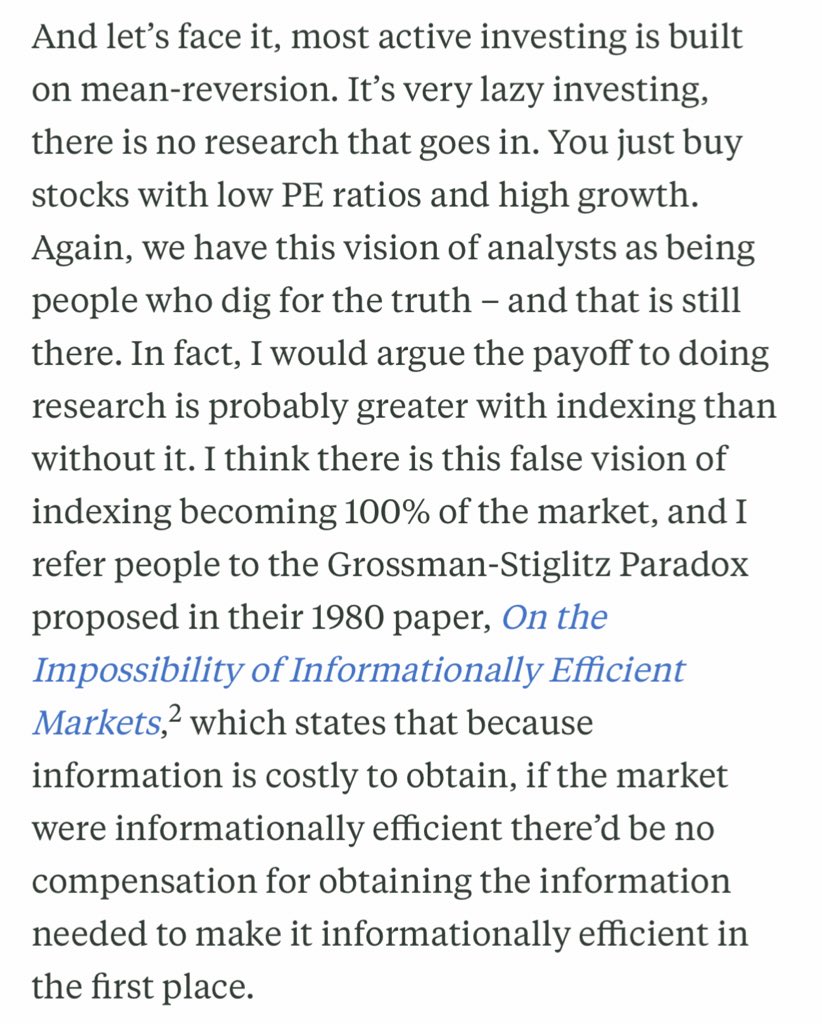
Today's thread is on valuations, the economy, and where I think things are headed for the rest of the year. Read on >> 1) First, a # of other VCs recently have been sending me their thoughts (emails / msgs / etc) on where they think the market is heading. And the # of ppl declaring the public markets are going to crash BIG time is accelerating. 2) Everyone's got a different reason for why this big crash is going to happen. I've heard every reason under the sun from oil prices & Russia to online ads no longer working. But the actual reason behind why a market crashes doesn't matter. 3) Markets crash when a lot of ppl get fearful and start pulling their money out. Even when there are solid companies in the public markets, their stock prices drop if investors lose faith -- for any reason that may have nothing to do with the specific companies. 4) So the acceleration of investors sending me these notes is a sign. A lot of investors are getting quite worried about the public markets. Who does this end up affecting the most? 5) I think it largely affects the public markets / companies wanting to go IPO. Valuations in these mkts have been crazy frothy in the last year. I think we'll see that frothiness come down and then some. It already has, but I think we'll see more public stock prices drop. 6) If you're a late stage co, does that mean you won't be able to raise? No. If you have product-market fit w/ $10m+ revenue / yr, then I think you'll be fine. But I think the days of 100x+ multiples on revenue are over -- for now for everyone. Even for the crypto mkts. :) 7) If you're an early stage co, I think this is the best place to be. In contrast, in 2008/2009, the public mkts crashed hard. And there was basically no capital to be found for most early stage startups. 8) But comparing today to 2008/2009, I think there are a lot of fundamental differences. 9) A) we now have a TON of angels and VCs. I suspect we have 100x-1000x more investors now than back then. Think about it -- there were 2 accelerators then. Now there are 1000x. ~50 major VCs. There are now 1000s or 10ks. And 100k+ angels. A lot has changed. 10) B) A lot of existing VCs have new funds they recently raised that they *have* to deploy in the next 2-3 yrs. This capital is locked-in. 11) C) Unlike in prior eras, many of the angels we see today are ppl who made their $$ in tech - from working at a big tech co or a startup. They believe in the asset class & also know that it takes 10+ yrs to build a large co. They have patience. 12) D) And, lastly, because of our high inflation, ppl know they cannot afford to hold cash or too much cash for too long. They must put their cash somewhere or it will literally become worthless. They must put it to work unlike in other eras. 13) So the conditions are different compared to 2008/2009. For us @HustleFundVC, we are opportunistic. We did *more* investments when the world felt like it was falling apart during 2020. And we may end up picking up the pace again as the year progresses. 14) Early stage investing is 1 of the best places to invest when there's high inflation & the public mkts crash. Markets generally don't affect the day-to-day of most startups. Even if 1/2 a TAM wipes out, going from 1 to 2 to 4 customers is still the main battle. 15) tl;dr - this year is and will be tumultuous in many sad respects. I think there will continue to be funding for great startups this year. You just may not get the juicy markups like last year. 16) Addendum / edit: in truth those juicy multiples were never available to everyone / most companies. But that was a *hope* that many had by reading tech news. That hope is not realistic for pretty much all companies now.
Mar 10, 2022Some perspective on fast growing developer first + infra startups Hashicorp once valued >$14B now $6.7B, ARR run rate $322M Gitlab once valued >$15B now $5.5B, ARR run rate $268M Founders, if u haven't adjusted valuation expectations, u better 100x NTM is over for 99% of cos As thus far less affected and Bs somewhat - will be interesting next few months as still so much private capital on sidelines where funds want to put 💰 to work, thus increasing round sizes and valuations For those founders who raised large preemptive rounds at super high prices, cash is king 👑, revisit your budget, make it last, will need even better performance to avoid down rounds due to multiple compression
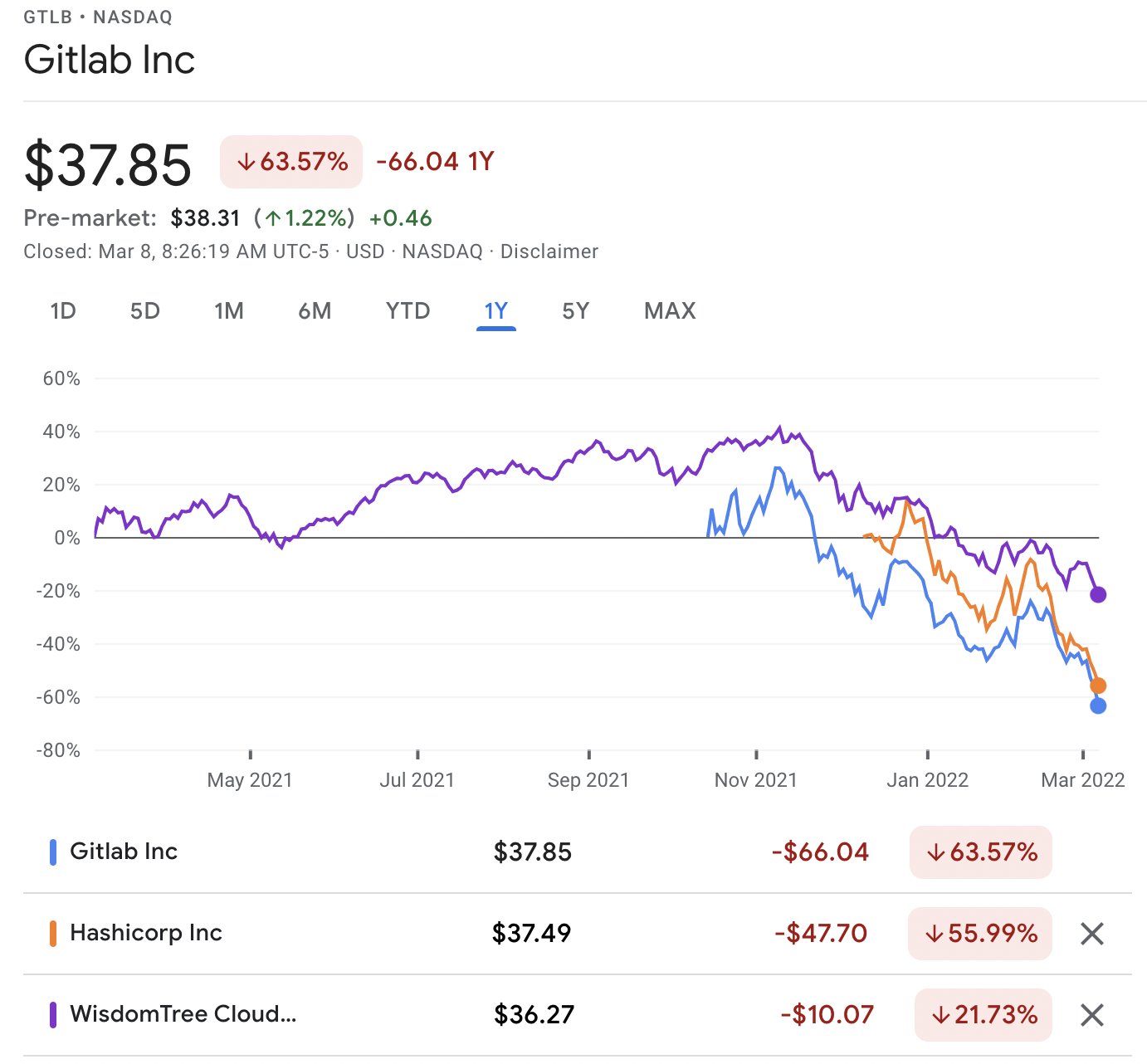
No facts are created equal! Some color on the interpretations of net $ retention and gross margin: https://t.co/9hXhDkokJf My partner @ericstromberg covers the nuance of Net $ Retention in this Temp Check, and in his previous screenshot essay: https://t.co/VcXFFsRn63 Gross margin is a metric investors rally around. But it's important to recognize the dynamic -- oftentimes in high retaining, durable revenue companies -- where GM is depressed by new customer, market, and product growth. Lower GM is sometimes optimal! Interpretations > Facts
Mar 4, 2022I’ve only been investing in startups for a few years, but 100% of my best investments fall into a category of, “I still have questions about x, but I would bet on this founder if they were starting a lemonade stand.” My investment in Owner fits this thesis exactly https://t.co/G6FkL3bM3e
Mar 3, 2022It’s difficult to build a successful startup but even more difficult if you make avoidable mistakes. Self-inflicted wounds are usually well-intentioned actions that end poorly: Champagne that ends with a hangover. Here are a few common errors startups should avoid: 🧵👇 Funding at too high a price Champagne: The press that surrounds an equity raise can feel really good. Big headline prices make Founders, Employees and Investors happy in the moment. Hangover: A Founder who funds his/her company based on a convincing Investors to “assume everything goes right” have put themselves and their teams in a pressure cooker situation. The day after money is wired Employees have to deliver against a Founder’s aggressive promises. Any market correction or miss in forecast makes the next funding round more difficult. And many Founders don’t realize that if the last round was funded at a really high valuation, their company could enter a “no bid situation”. Investors would rather say no than suggest a flat or down round to a Founder. Even pricing a company up by 20% is challenging because a new Investor will have to convince his/her Partnership about the company and a small markup implies that the company isn’t a rocket ship. Hiring people very quickly post fund raise Champagne: Startups love to hire people because it provides relief overworked teams ask for and it allows progress to be made on projects that are deemed critical to the startup’s roadmap. Hangover: If a startup hires too quickly it will inevitably make hiring mistakes and have to undo the damage. Onboarding talent is one of the most important drivers of a startup’s success, but it takes time and effort to recruit and train so this isn’t a tick-the-box exercise. The best judges of talent and fit within an organization are usually busy executing against the startup’s core mission. If they can carve out 25%+ of their time for recruiting and training, the rest of the team only has to spend 10% of its time managing mistakes. But the opposite is also true. If your best people only spend 10% of their time recruiting, it means the rest of the team will spend 50% of its time undoing the damage the “mistakes” end up making. There’s a governor on “good hiring” which shouldn’t be overlooked. Resourcing too many initiatives post fund raise Champagne: It feels great to accelerate a roadmap by resourcing major new initiatives. After a raise, a startup has money to fund new projects and is expected to accelerate growth, so on paper “doing more” is a good answer. Hangover: When a startup chases too many initiatives, it’s highly likely that at least one of them will turn into a dumpster fire that will require the entire company’s attention to put out. Fire fighting sucks time and energy from the team and consumes valuable resources. Dumpster fires also become anti-proof about a startup’s trajectory and operational competencies. Future Investors will look at how successful past decisions have been when evaluating a startup’s plans. Overcoming anti-proof isn’t easy and can set a startup back years. Assuming repeatability of results Champagne: It feels really good when a startup finds early PMF and figures out a go-to-market-motion that delivers double digit monthly growth. Doubling and tripling down on growth seems like an easy decision when things are working. Hangover: Turning up a growth machine too quickly increases the odds that something is going to break. Knowing what results are repeatable is important because putting on “bad growth” or “expensive growth” can be very damaging to a young startup. Scaling quickly can come with a deterioration in the efficacy of marketing dollars and many times brings in marginally worse customers (who might not stick around). Adding lots of bad customers is worse than slow and steady good customer growth when it’s time to raise capital. Founder led sales aren’t the same as sales made by a inside sales force. Doubling spend in a channel that’s working doesn’t mean the incremental spend will produce solid results. A company’s 10,000th customer might not perform like a company’s 1st customer. Falling in love with the solution instead of the problem Champagne: It feels good for a Founder to tell the world about how his/her startup has a magical solution to a profound problem. Storytelling is a tool that Founders use to help important stakeholders build conviction. Hangover: Falling in love with a problem is more important than falling in love with a solution because it might take a few tries to get the solution right. It’s a mistake for a Founder to stand behind their solution when the market tells them it isn’t right. This also means that overbuilding functionality before getting a market read can be dangerous. It’s a sign that a team believes they know what the market wants. In extreme cases it amounts to making a “bet your company bet” that your solution is right. Every day in denial is another day’s worth of work that might need to be undone as well as another day’s worth of money that’s been spent chasing the wrong solution. Founders should only tether themselves to their solution when it’s clearly working. Blindly Following Advice Champagne: It’s comforting for a Founder to act on advice when it comes from trusted Advisors. Founders have to make difficult decisions every day and Advisors can help them make good choices when faced with incomplete and imperfect data. Hangover: Advice isn’t 100% reliable and if followed blindly can end in tears. When it comes to solving a startup’s problems, a Founder needs to digest the recommendations coming from all directions and ultimately be his/her own Advisor. Great Advisors can provide valuable guidance when it comes to navigating tricky situations and/or making tough decisions. But they aren’t on the battlefield and they aren’t accountable for delivering results. Founders need to listen and digest but then choose their own path. TL;DR: We need to learn from mistakes and become smarter and wiser as a result. But why make avoidable mistakes when there are plenty of other mistakes you’ll end up making on your journey! “A person who never made a mistake never tried anything new” – Albert Einstein
Mar 2, 2022Pretty good Investing Checklist for beginners. h/t @jtkoster 👏 Simple but important points covering ✔️Downside risk ✔️Business ✔️Balance sheet ✔️Management ✔️Valuation ✔️Key Drivers https://t.co/JcnwsmNhzK Highlighted my fav parts.⬇️ A good checklist -that is not too long -covering the most important factors about the business/industry -customized a little based on your experience and past success/mistakes (adding checks to counteract your behavioral biases) -and done after the Fundamental analysis of the Companies within your circle of competence can be really useful in improving your overall investing process and also side step a lot of low quality Cos and value traps.
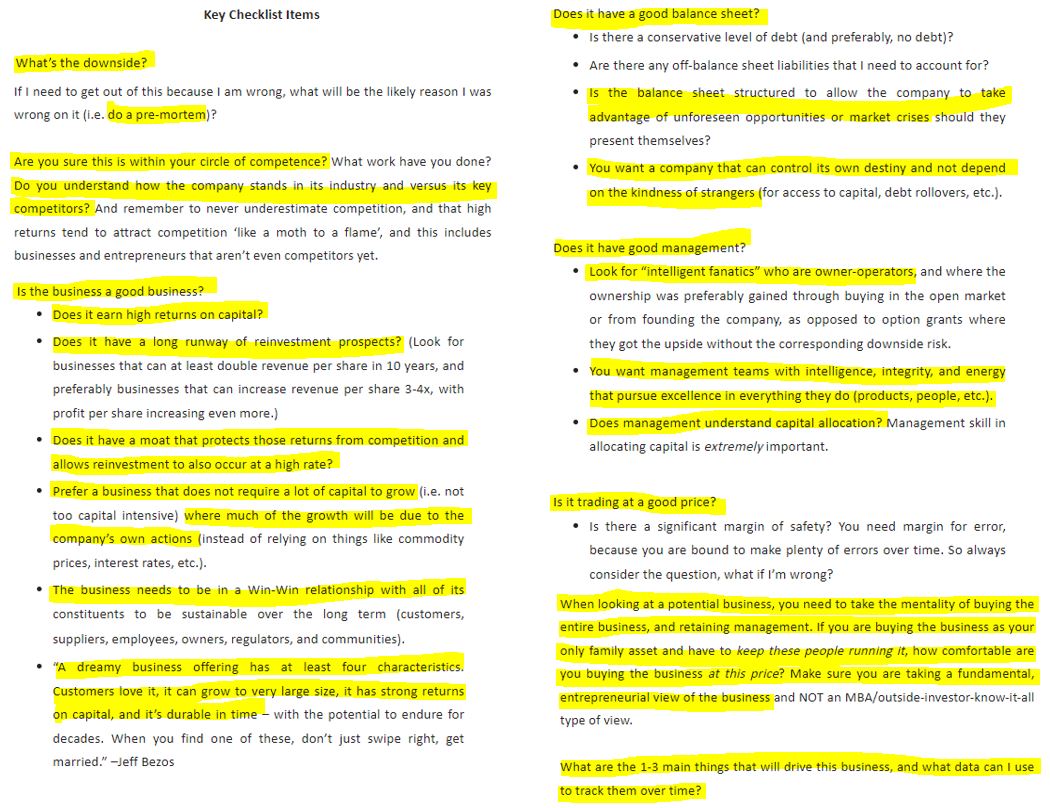
These Buffett passages from his 1992 letter captures the essence of the Altos strategy (a Buffett like investing approach to VC, which most people thought was a stupid idea for a long time. They still do). I’ll add to this later… https://t.co/6RCOF272xk Buffett writes that businesses “that over an extended period can employ large amounts of incremental captial at very high rates of return” are “very hard to find.” Why? Because they are extremely rare. They don’t need much $ to start and generate so much excess $ as they scale. Everyone in VC talks about the power law. So they should be focused on finding those extremely rare outliers. Why are they funding all of these value destroyers? Burning $ not only at the start but even more so as they grow? Conventional wisdom in VC has changed over time. It says it takes very little $ to start but it will take serious $ to grow. I’ve had the opposite experience. When a company beats plan, it burns less cash. Beat plan by enough and it starts to generate $ and then the $ pile grows. The cash pile grows so much that they have no choice but to give some of it back to shareholders via dividends or buybacks. Of course, if they can keep reinvesting it at high rates of returns that’s the best outcome. But it doesn’t go on forever. Impossible. One of the maxims we have at Altos (that we repeat often to our co’s) is that growth is a consequence. It happens as the outcome of doing the right things. Create real value/profit which comes from great products, customers/raving fans, hiring people who love your mission, etc. Why should growth be a goal? If it becomes THE goal, then of course you can generate growth. But at what expense? You often generate growth that not only destroys value but your culture. You may build a company that you no longer recognize or love. Most VC backed co’s want growth for 2 reasons. 1) it’s a lifeline. Without growth, they cannot raise another round and will run out of $. 2) Growth leads to higher multiples. It’s the path to max valuation at any given level of revenue. But how about an alternate path? How about being able to survive without counting on the kindness of strangers? Buffett doesn’t even want to depend on friends. Build a business that generates $. More importantly, why maximize valuation (due to fast growth => high multiple)? Is money the goal or a means to end? Obsession over growth leads to toxicity. Is the mission PR or reality? Your people will know. Great people have options. They will walk if it’s just a story. The mission has to be about more than $. Focus on the right things maybe both profits and growth will come. Take a chance. Bezos likes to say it’s always Day 1. Why? Because he’s trying to delay the beginning of the end. Following the same logic, I always like to delay the focus/obsession over growth. I’m willing to take a leap that growth will come if we can keep focused on the right things. I said I’m a broken record. We talked about all of this last year, triggered by the thread my @mastersinvest about the book on the fall of GE (which was great at hitting its numbers, for a while). https://t.co/VNiuoVNqoo Lived this! “Enterprises are best run by enthusiasts who pursue excellence in their speciality. Financial success then follows from this. But, if financial goals are instead made the primary objective, the business will then lose its vigour and may fail.” https://t.co/Ml9fWnDX4g No typo. Did not say loved. I lived through both failures caused by wanting more $ as well as success achieved while NOT trying to maximize $ (which paradoxically leads to more $). It’s not random/luck. Can see decisions flow through with compounding effects over time.
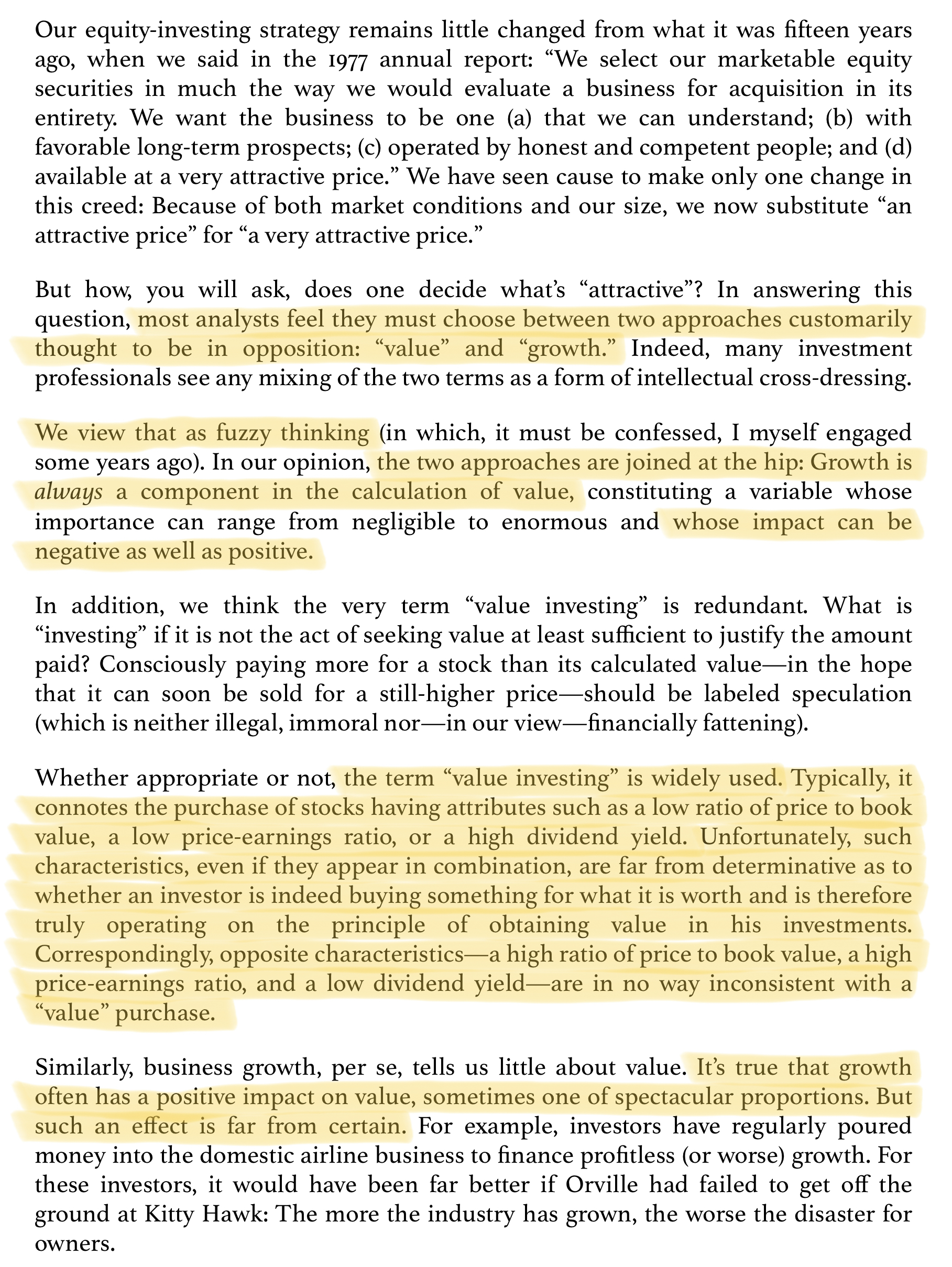
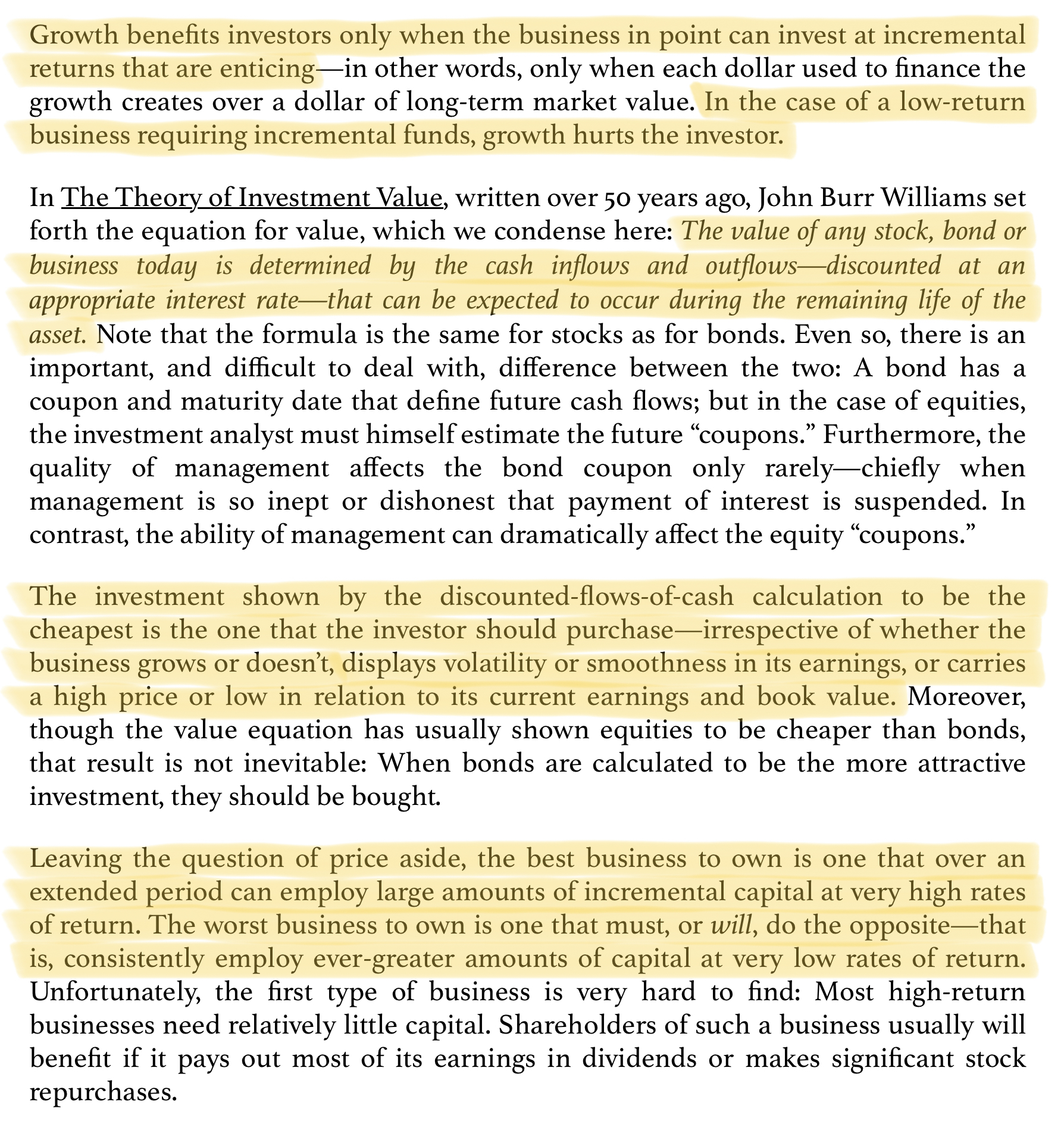
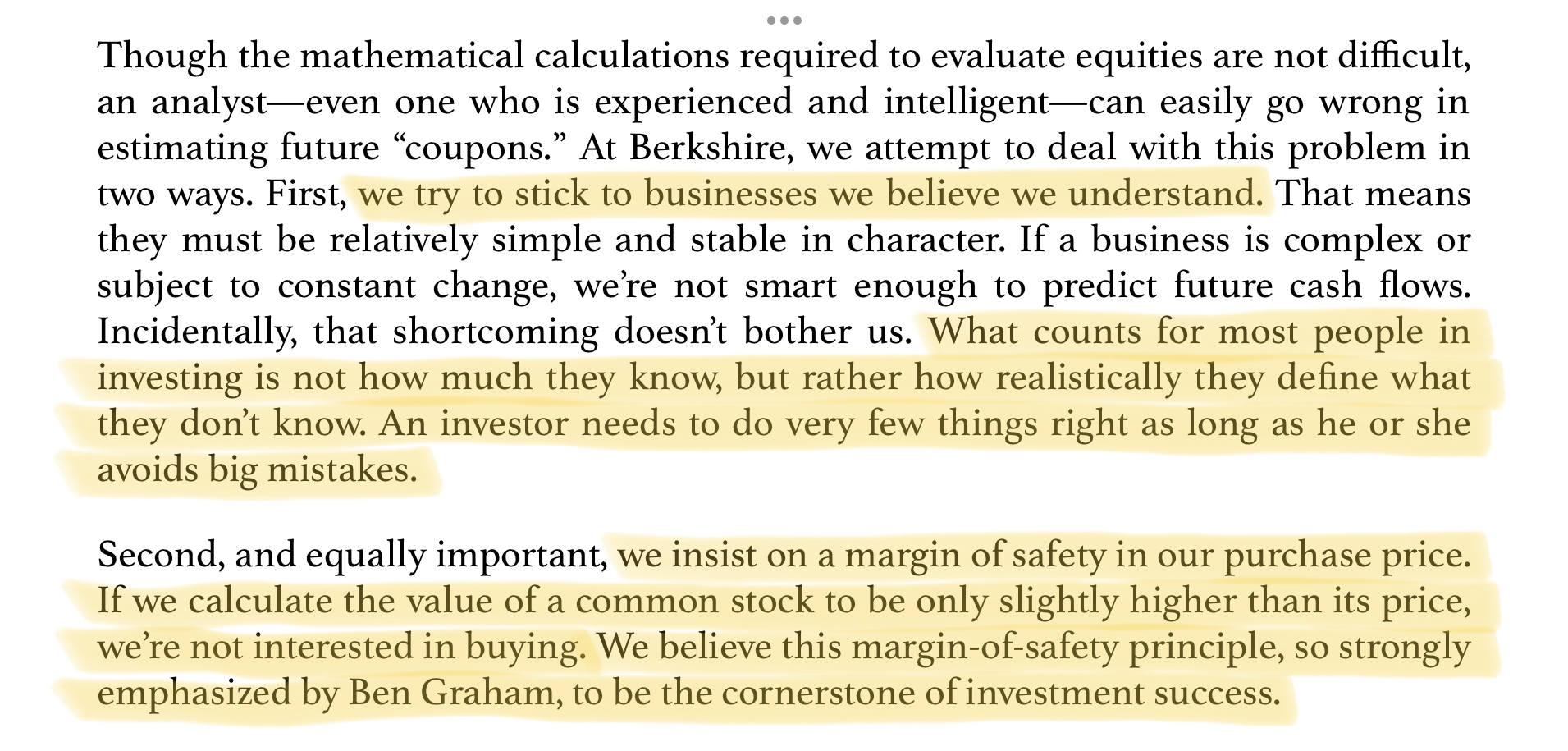
As my career progresses & I do more firm building, I've realized I love selling Ideas + Info & dislike the rest. Ideas + Info create mid-term moats. They decay (& take effort to get flywheel spinning) but are where alpha comes from that is sustainable across market conditions. https://t.co/BWcL1FpwaQ Money + The Firm create short-term & long-term moats. They allow you to amplify beta when markets rip (i.e. past few years) & have longer runway in downturns. This is why we see GPs stall intellectually and become wannabe thought leaders once they reach a level of AUM/scale.
Feb 28, 2022In software we often beat our chests to @pmarca’s “Software is eating the world”, but software is a tiny economic shift compared to climate change. 1/10 Almost everyone I know thinks working on climate is concessionary do-gooderism. But part of the reason the current climate boom feels different than the 2008-10 cleantech boom is that people have seen wind and solar succeed, and now see dollar signs. 2/10 This blog post from @fifthwallvc sums it up: “the enterprise software market is around $460B in total” but in the climate transition “$3-10 trillion in EBITDA is up for grabs”. The markets at play are 10x+ bigger than software. https://t.co/Vx33yjCPyo 3/10 Many people think of solar and wind as outstanding successes already, but they've barely gotten started from an economic perspective. Unit costs for new solar energy are finally cost competitive with fossil fuels and the actual transition is about to begin. 4/10 Sure, software will continue to grow as a category, but working on software now means missing out on the biggest economic opportunity of our lifetimes. This is a big shift from the past 20 years, when software was that opportunity. 5/10 Some of the climate-driven economic shift and opportunity will come from changes we all have top-of-mind like renewable electricity and electric vehicles. But that’s only ~30% of the problem! 6/10 https://t.co/skmFkDrZDm Another 60% or so will be decarbonizing buildings (concrete, steel and natural gas), industry (steel, ammonia, etc), livestock (eliminating methane burps, moving to alt proteins, etc), and a long tail of “niche” problems larger than all of software. 7/10 https://t.co/Dj4bFDV3ph The last 10% or so is carbon dioxide removal: cleaning up our historical emissions. @jkapsis has an excellent writeup on the state of play in this new industry: https://t.co/AhqpboZ43d 8/10 It’s awesome to see how folks with software backgrounds like @n2parko are starting to dig in and grapple with the scale of the challenge: 9/10 https://t.co/UN2ZA9Nhu8 You can take part and help drive this huge transition. There are now incredible podcasts, communities and programs like My Climate Journey, Climate Draft, ClimateBase, OnDeck Climate, https://t.co/gqz2cBc7eb and https://t.co/w6GF7AUKwo to help you. 10/10
Feb 28, 2022$CRWD revenue & EPS analyst estimates as of February 2020: 2022 -- $884M & $0.07 2023 -- $1.1B & $0.21 2024 -- $1.32B & $0.26 $CRWD revenue & EPS analyst estimates today: 2022 -- $1.43B & $0.58 2023 -- $2.01B & $0.94 2024 -- $2.67B & $1.42 Most of this improvement is organic. Note these are fiscal years & not calendar as $CRWD's fiscal year is a bit weird (one month off calendar). Fiscal years 2022-2024 above are much closer to calendar years 2021-2023 than calendar years 2022-2024.
Feb 27, 2022How to determine what a company is worth: 1/ About Value The first thing you need to understand about calculating the “value” of a company is: It’s more art than science If you’re looking for a bulletproof method or one number to tell you the valuation of a company, I’m sorry – it doesn’t exist 2/ The Art of Valuation Why is it art? Because the value of something is dependent on how much someone is willing to pay for it Let’s take a simple example: A bottle of water costs $1.00 at a convenience store But it costs $8.00 at a hot summer festival It’s the same bottle of water. Why the different prices? Because someone at a summer festival is willing to pay $8.00 because they really want that bottle of water Therefore, value is highly influenced by human behavior and context 3/ Three Methods There are 3 main valuation methods used to value a company (This list is by no means exhaustive) 1. Comparable companies 2. Precedent transactions 3. Discounted Cash Flows Before, we cover each valuation method, It’s important to understand one key aspect of deriving a valuation which is something called a “Valuation Multiple” 4/ What is a Valuation Multiple? Valuations Multiples are best understood by looking at an example: Let’s say ACME Inc.’s total company value is $200 million and its revenue for the past 12 months was $50 million To calculate the ACME Inc.’s Valuation Multiple based on revenue, You would divide the company’s Total Value by its Revenue: $200 million / $50 million = 4 This means the company is worth 4 times its revenue for the past 12 months Valuation multiples can be calculated for various measures of: • Revenue • EBITDA • Earnings, and • Operational metrics (ex. users) With that covered, let’s get back to the 3 valuation methods 5/ Comparable companies The comparable companies method of valuation is a “market based” approach for valuation In this method, you calculate the Valuation Multiple for companies that are: - in a similar industry to yours - serve similar customers, and - are of a similar size Let’s look at how this works via a simple example: Let’s assume, you’re trying to sell your house How do you know how much you should list it for? You would look at what prices houses similar to yours (in size and features) on your street are listed for Based on those prices, you would come up with a price for your house The comparable companies method of valuation works the same way You calculate the Valuation Multiples for companies that are similar to yours You do this by following these steps: 1. Find companies trading on the stock market similar to yours 2. Calculate their total value 3. Calculate their Valuation Multiples You then apply the Average or Median of these Valuation Multiples to: Your company's Revenue or Earnings This will give you a total value for your company 6/ Precedent Transactions This is another “market based” approach for valuation In this method, you calculate the valuation multiple for companies that have been ACQUIRED that are: - in a similar industry to yours - serve similar customers, and - are of a similar size If we go back to our real estate example, Let’s say you’re trying to sell your house How do you know how much you should list it for? You would look at what prices houses similar to yours on your street have been SOLD for (not listed) Based on those SOLD prices, you’ll come up with a price for your house The precedent transactions valuation method works the same way You calculate valuation multiples for companies that were SOLD You do this by following these steps: 1. Find companies that have been acquired/sold similar to yours 2. Determine how much they were sold for 3. Calculate their Valuation Multiples You then apply the Average or Median of these Valuation Multiples to: Your company's Revenue or Earnings This would give you a total value for your company If you're thinking that the Comparables Companies and Precedent Transactions methods of valuation are similar, You're right The key difference is: • Comparables companies: You look at the value of companies in the stock market • Precedent transactions: You look at the value of companies sold/acquired 7/ Discounted Cash Flow This method is not market-based and doesn’t use valuation multiples like the others do The discounted cash flow method of valuation is considered to be a calculation of the “intrinsic value” of a company This is because it’s based on calculating how much money a company will make over the course of its lifetime To calculate how much money a company will make over the course of its lifetime: 1) You will need to forecast the company’s free cash flow for a number of years, and 2) Then discount the future cash flows by a discount rate Future cash flows are discounted to account for (i) the risk that the future cash flows may not materialize, and (ii) to account for the fact that money today is worth more than money in the future This is why it’s called “Discounted cash flow” If we go back to our house example, A discounted cash flow of your home would be calculated by: Estimating how much cash your home could generate if it was rented Based on the cash flows earned from rent over the lifetime of your home, You would calculate its value using a discounted cash flow model A major advantage of the discounted cash flow method of valuation is: - it doesn’t rely on market valuation multiples This is an advantage because: Market multiples tend to swing too much on the high end or low end, based on movements in the stock market The one disadvantage of using a discounted cash flow model is: it’s based on a lot of assumptions and therefore prone to error TL;DR - Valuation is an art, not a science - Calculate Valuation Multiples - There are 2 market-based approaches - (1) Comparable Companies - (2) Precedent Transactions - One Intrinsic approach: - (1) Discounted Cash Flows (DCF)
Feb 27, 2022Paul Tudor Jones ( @ptj_official ) has amassed a wealth of over $5 Billion, making him one of the most successful traders of all time. Here are 10 lessons from #PTJ to help you grow & succeed in the market 💪 🧵 @ptj_official “I’m always thinking about losing money as opposed to making money. Don’t focus on making money, focus on protecting what you have.” When risk management is our main goal in the market, we can make it through any rough periods no matter what. @ptj_official “Don’t be a hero. Don’t have an ego. Always question yourself and your ability. Don’t ever feel that you are very good. The second you do, you are dead." Understanding that the market is always right will push you further along than 99% of participants. @ptj_official “And then at the end of the day, the most important thing is how good are you at risk control. Ninety-percent of any great trader is going to be the risk control.” It is not a coincidence that the most successful traders are focused on Risk Management. They keep what they make! @ptj_official “Don’t ever average losers. Decrease your trading volume when you are trading poorly; increase your volume when you are trading well. Never trade in situations where you don’t have control. @ptj_official For example, I don’t risk significant amounts of money in front of key reports, since that is gambling, not trading.” @ptj_official “First of all, never play macho man with the market. Second, never overtrade.” Overtrading is one of the easiest ways to slowly bleed out any gains you have in the market. Avoiding this bad habit will put you ahead of most. @ptj_official “It is not that we had any unfair knowledge that other people didn’t have, it is just that we did our homework. People just don’t want to believe that anyone can break away from the crowd and rise above mediocrity.” True success is built in the nitty gritty, everyday work. @ptj_official "You can not have significance in this life if it is all about you. You get your significance, you find your joy in life through service and sacrifice – it’s pure and simple.” @ptj_official “If life ever ceased to be an educational experience. I probably wouldn’t get out of bed in the morning.” Passion to learn is often times what separates the good from the great. @ptj_official "I think one of my strengths is that I view anything that has happened up to the present point in time as history. I really don’t care about the mistake I made three seconds ago in the market. @ptj_official What I care about is what I am going to do from the next moment on. I try to avoid any emotional attachment to a market.” @ptj_official The main takeaways from this thread should be that to succeed in the market, we need to manage risk first. Without risk control, we will not find consistent returns. @ptj_official If you found this thread to be helpful and would like to see more, follow @TraderLion_ Let us know what your favorite quote/concept from PTJ is and how you implement it in your trading/investing! 🔽
During a change in market regime it's not sufficient to imagine a new endgame. Timing and risk management are crucial. Ego can be deadly. In 1987, Paul Tudor Jones thought he had figured it all out. Bearish on bubbles in the US and Japan, he could have easily blown himself up. Jones started his career trading cotton in 1976. By 1980, he had his own firm Tudor Investment Corp. After the stagflation of the 70’s, Wall Street was booming. Fortunes could be made in buyouts and trading. "Remember there are no shortcuts, son. Quick buck artists come and go with every bull market. The steady players make it through the bear." Bud: “You're right, Lou. But you gotta make it to the big time first, then you can be a pillar and do good things.” https://t.co/rAuwJuyBvT Enter 1987. PTJ was profiled by Barron's in June. He was bearish and noted an exuberance in markets like fine art and luxury, a rapid rise in debt levels and bank leverage, stress in the oil patch and farm the farm patch, as well was low corporate liquidity. He also had an overlay chart comparing the 1920s and the 1980s and with “astonishingly robust” correlation. He noted how the Dow had started to deviate from its long-term trend. Prior spikes had occurred in 1836, 1929, and 1966 - all followed by bear markets. Granted, they had "fudged" the chart by "juggling the starting periods.” Nevertheless, Jones was ready. “I feel that you have to start getting short now because the panic will be so violent and sudden that the longs won’t be able to get out nor the shorts get aboard.” Funny sidebar: on the Friday before the crash, Druckenmiller went to see Soros who showed him Jones’s charts. Druck: “I was sick to my stomach when I went home that evening. I realized that I had blown it and that the market was about to crash.” Druckenmiller immediately blew out of his position that morning. Jones covered his short, went long bonds, expecting the Fed to ease. That month he made 62% and became a household name. "The week of the crash was one of the most exciting periods of my life." Now comes the hard part. Jones was in the public eye and joined the annual Barron's roundtable. And of course it seemed that the crash had confirmed his worries of a second great depression. But he immediately balanced his bearish macro view with a pragmatic tactical stance: A bounce before new lows. “Right now it’s sold out. You’ve got phenomenal insider buy/sell ratios, mutual-fund cash at extremes; all types of internal indicators that would indicate a rally” He also sat down with @jackschwager twice for the Market Wizards interview. Schwager noted that Jones was starting to change his mind. "Two weeks ago you were very bearish. What made you change your mind?" “The market didn’t go down." "The first thing I do is put my ear to the railroad tracks. I always believe that prices move first and fundamentals come second. When I trade, I don’t just use a price stop, I also use a time stop. If I think a market should break, and it doesn’t, I will often get out." Jones was also bearish on the world's biggest bubble: Japan. “Everyone is so worn out trying to sell Japan, and yet, ... and I hate to use the word – on a ‘fundamental’ basis, it has the greatest downside.” “Everything that is being sold on Wall Street today, whether it’s a company, a fund, everything ultimately comes back to the Japanese quotient. I refuse to believe they are not at the base of probably all the asset inflation we have seen.” But how to short a bubble? The Nikkei quickly made new highs. “Japan was, obviously, the best stock market in 1988. I was 100% wrong.” "Watching that market defy conventional logic was a lesson in humility for me" “Every time it breaks 5%, I will sell it. I will probably try to market-time it, and risk 2-3% of my portfolio. And it will probably cost me another 4-6%. But it is going to break. I will catch it, and I will get paid 25% or 30% or 35%.” Meanwhile, the US market was telling him he was wrong. And Jones was listening. "I still believe in the charts first." “My job is to get with the flow. I will make a forecast, but my job is simply to trade the range.” In Japan he kept close tabs on market structure and participants. When index futures were introduced, he visited and watched volumes surpass that of the US. “[Japan] went parabolic. Its rate of acceleration was as great as any other period in the history of the stock market.” “The fact that it has actually doubled without anything even approaching a 6% decline makes it all that much more of a candidate to ultimately burst.” “I started getting bearish around 24,000, and now it is 37,500. Even if it declined 40%, I'd still be completely wrong” In early 1990, the final pieces came together. The BOJ was raising rates. And institutions, closely watched by PTJ, were had an alternative to lock in their returns. They started selling the rips. "Every day the market does not advance, and particularly, every day that it declines, it becomes more compelling for a manager to shift his assets from stocks I posit that there’s probably the greatest opportunity for a reversal of that flow that has ever existed.” Jones was right. The Japanese bubble broke and his short finally paid off. And the US continued its epic bull market. Neither his fame, nor public commentary, nor ideas for a grand narrative had compelled him to be stubborn and fight the market. “I avoid letting my trading opinions be influenced by comments I may have made on the record about a market.” “The most important rule of trading is to play great defense.” “Ego is the single most destructive force you can confront in business. I treat every trade as a business decision. You have to be sure you have the discipline to get out of a losing trade.” His mentor, cotton trader Eli Tullis, said about Jones: "You could see him start the day a bull and finish it a bear." Another market observer noted: “Time and again I’ve heard traders say, ‘You can always see Jones coming, but you can never see him going.’” I wrote up the detailed story on my substack: https://t.co/zIX0139xnq H/T to @CapitalVoss for terrific pieces on the Japanese bubble https://t.co/QpTPeX0oGk
Lots of people can confidently make predictions. Very few can consistently get them right. I thought this reminder might be useful:
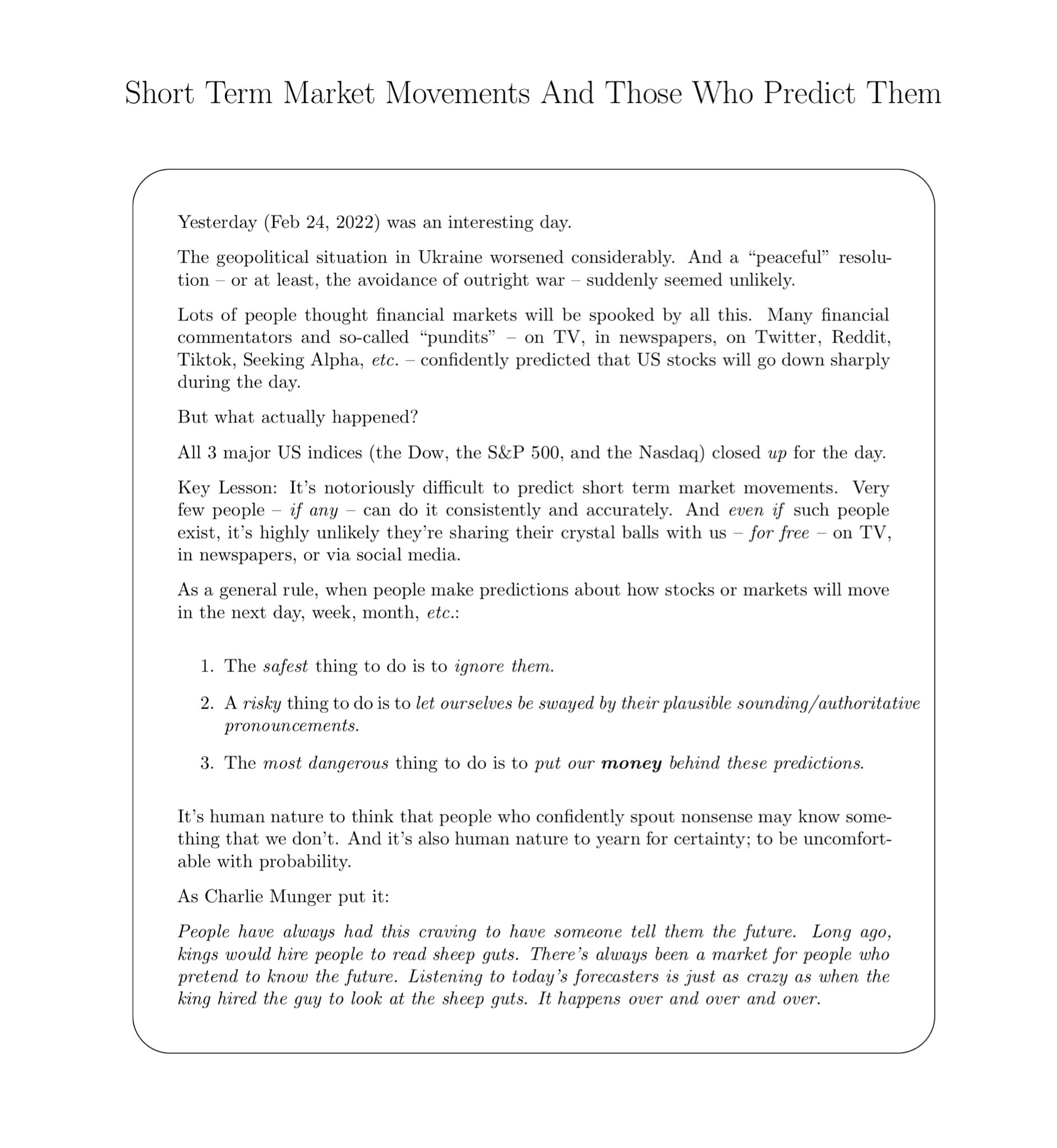
"Remember there are no shortcuts, son. Quick buck artists come and go with every bull market. The steady players make it through the bear." Bud: “You're right, Lou. But you gotta make it to the big time first, then you can be a pillar and do good things.” https://t.co/rAuwJuyBvT
Feb 25, 2022An interesting thought someone in Nairobi shared with me: In the US, in this tech generation, we've seen runaway successes like @Airbnb, @stripe, and @coinbase, which has conditioned us to always think of the potential upside of new opportunities. In most other countries, the lack of tangible and immediate tech startup successes leads people to mediate more evenly between upside and downside scenarios. Maybe something I've underappreciated.
Feb 24, 2022Not exactly a “hot take” but it’s time to break out “venture capital” into two asset categories, for tracking and asset allocation purposes. Last year “VC” funds raised $213B globally per PitchBook, and the majority of that will be in late-stage that looks more like LBO than VC. “VC” is now the second-biggest category in private funds, behind only “private equity” (ie: LBOs) and ahead of real estate, real assets, and private debt. This is a far cry from the pre-2000s VC model of funding early stage ventures with small rounds. I’m not putting any value judgement on this, btw. But for a while now it’s been obvious that tracking “venture dollars” into any sector doesn’t really do much other than track big growth-stage mega-financings. So if I’m an LP, I want to think about breaking out that from VC. And so it’s time for PitchBook et al to give the LPs what I’m sure they actually want, and start breaking “VC” into at least two categories.
Feb 24, 2022the level of cognitive dissonance in thinking im a useful investor but as a founder seeing how all investors are useless is off the charts level of dissonance
Feb 24, 2022A look at the recent activity of late-stage valuation step-up multiples ~work in progress~ ~thoughts/feedback/critique welcome~ Contrary to intuition (esp. from public market perspective), the median step-up multiple of late-stage rounds reached an all-time high in Feb'22 This thread will try to unpack the chart above and talk about public vs. private markets in recent weeks Step-up multiple: The increase in a company's valuation between two funding rounds. If a company raised its series C at $1B and 12 mo. later Series D at $2B -> 2x Criteria/methodology: - CrunchBase Data - Only companies that disclose valuation - Series C+ - Global - 2018-2022 (only 2020-2022 YTD presented) - Time between funding rounds <18 months -> 377 deals (2020: 102, 2021: 241, 2022: 34) More descriptive statistics coming below First: Why should an all-time high step-up multiple in February 2022 be counterintuitive? Because it appears to indicate that private market investors are still willing to value startups at a (record) premium relative to their valuation in their last funding round, while... ... there has been a massive tech sell-off and multiple compression in the public markets (which set exit multiples for late-stage startups) ... and reports over recent weeks indicated a slow-down & valuation compression in late-stage funding. See thread: https://t.co/DyLp1nCMPk Of course, one cannot directly infer a trx. multiple (e.g., price to sales or GP) from the step-up multiple -- A possible explanation could be that the startups are achieving extreme revenue growth that would justify the higher valuations even based on historic/lower multiples. We don't see the trx. multiples, only the step-up, however, this extreme revenue growth explanation seems unlikely/insufficient as public names also print 3-digit rev. growth and still have seen their multiples cut 50%+ and valuations slashed Let's look at 2 other explanations 1) Could the Feb'22 sample size distort the data? Not really: Feb'22 MTD (until 2/22) deals (14) are on pace to achieve Dec & Jan levels and even are above 2020 average -- should be statistically significant. 2) Could the time between funding rounds impact the step-up multiple? Longer time between fin. rounds theoretically justifies a higher valuation. And indeed, the median days between rounds for deals announced in Feb'22 was 307, the highest level seen since late 2020. However, with a R squared of 0.12, the correlation between the two variables step-up multiple and days in between funding rounds actually is not as strong as one would expect. Increased days between rounds likely can only explain a (small) portion of the record step-up multiple Talking about days between rounds, the number of days between late-stage funding rounds has been decreasing since 2020, although 2022 is above 2021 levels, as can be seen in the table below Meanwhile, the step-up multiple has been increasing 2022 standard deviation comes in below-2020 levels Could be explained be lower n (less possible outliers, although simply a 'flatter' distribution also can ⬆️std) But looking at the distribution below, 2022 seems to have found an 'equilibrium' step-up multiple range of 2-4x A look at each years' frequency distribution (first thought power law) seems to support this notion, the bins containing the largest no. of observations are 0.6-1.5 in '20, 1.7-2.4 in '21 and 2.26-3.46 in '22 - While median no. of days betw rounds in 2022 is 10% less than in 2020 Finishing up, could there be other explanations for the elevated step-up multiple in Jan/Feb22? Perhaps the most obvious would be that the rounds announced in 2022 actually were negotiated and closed in 2021, therefore they would not be representative of 2022 sentiment/multiples The increased number of days between rounds in 2022 data would speak for that. However, as we are moving more into February 2022, that dynamic should become less & less true -But it could still be an important explanatory (but publicly unknown) variable in a multivariate analysis For now -- Valuation step-up multiples peaked in Feb'22 while public markets sold off sharply and public multiples compressed None of several explored explanations were very convincing What's left: Private markets still seem to be valued at a significant premium to public It will be interesting if and when a step-up multiple compression and/or flat and down rounds will come in 2022. Many would argue that late-stage startups have raised too much capital at too high valuations in 2021 and will need to grow into valuations in 2022. Time will tell. Thoughts/comments/other explanations much appreciated
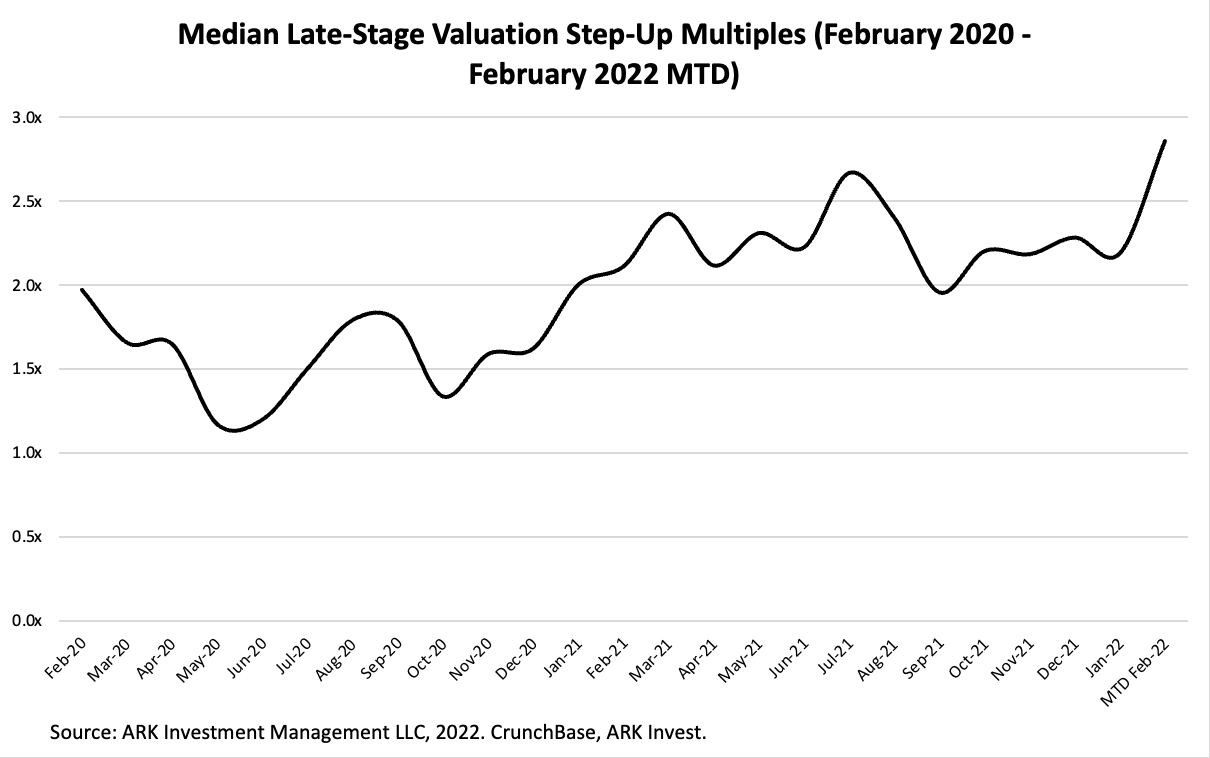
In Q3 Monday grew 95% (beat expectations by 11%) and guided to next quarter 74-75% growth Today Monday announced Q4. They grew 91% (beat expectations by 9%) and guided next quarter to growth of 70-73% Stock down 25% Market not forgiving these days about decel in guides $MNDY Yes, last Q stock was down 20% after earnings as well. But it was also up 25% in the couple days leading up to their Q3 report We'll find out in next couple quarters if growth in productivity software throughout covid was one time pull forward that's about to hit a wall
Feb 23, 2022People are curious how the “pandemic vintage” of startups is going to perform. Are returns going to collapse because entry points are 3-5X what they were years ago? Will the public markets correction crush returns? A 🧵about how "Opportunity = Value – Perception" Observation #1: VC returns are driven by investing in companies that aren’t fully de-risked that ultimately succeed because the risks never materialize. A lot of things can skink a startup, but the best dodge bullets, avoid landmines and ultimately create enterprise value. Investor interest varies because each investor evaluates the risk/return profile using its own methods. Consensus startups attract capital at higher prices than non-consensus startups because the investor community believes these startups will succeed with high probability. This leads to a critical VC truism that’s often overlooked: Opportunity = Value – Perception If every investor saw every investment opportunity the same way then returns would collapse to the risk adjusted cost of capital. There wouldn’t be “top quartile” managers anymore. Observation #2: Even with the correction in the public markets, the best VC backed companies have produced amazing outcomes for early stage Investors. Any early stage Investor who found at least one “right hand tail company” returned their fund many times over. This isn’t a new phenomenon. The “power law” can be trusted as a fundamental force of the universe with the same level of certainty that every morning the sun will rise in the East and every evening it will set in the West. Observation #3: The power law is used to justify lofty valuations. “You can’t pay too much for the best companies” is mostly true. It’s also true that building a portfolio made exclusively of “best companies” is a fantasy because they’re difficult to spot before they break out. Observation #4: Buying a winning lottery ticket isn’t the same as being a great investor. Both produce fantastic economic returns but only one is repeatable. Repeatability requires skill and discipline. Repeatability requires feedback and learning. Repeatability requires work. If you want to be a top decile investor, it’s important to do the work to understand the potential return of any investment. And potential returns aren’t only a function of the “exit valuation in a success scenario”. Only looking at a theoretical exit valuation is the equivalent to buying a lottery ticket without understanding the odds of winning. Many factors influence returns including a variety of exogenous factors. “Returns math” isn’t based on set-it-and-forget-it formulas. Buying one lottery ticket with your own money can be fun but assembling an investment portfolio with other people’s money is different. It kind-of-sort-of feels like you should know what the risk/return profile is of your investments. Your LPs probably care about this. So when answering the question: “How will a vintage of investments perform”, a good place to start is to examine the key drivers of return and how they’re moving. 10-year VC returns have been fantastic so another 10-year period of similar performance would be welcomed! Individual investments will follow their own paths but a “vintage” will succumb to the forces of the mega-trends. And because “Opportunity = Value – Perception”, top quartile managers will always outperform the “vintage” definitionally. The next step is to lay out the main drivers of returns and how they’re changing. A simple framework that I like to use collapses the drivers into four major categories: Entry valuation, Capital Efficiency, Exit Valuation and Probability of Success An oversimplified value formula: Return = (Exit Valuation/Entry Valuation - Dilution From New Shares Issued For Employees and Investors Between the Entry and Exit Period) * (Probability of Success) So what do we know about how the key drivers are changing? PROBABILITY OF SUCCESS Startups aren’t uniform beasts. Unseating an incumbent or creating a market the world hasn’t seen before isn’t easy, but the reality is that some spaces are easier to disrupt than others. Startups chances of success span the entire risk spectrum. What is true is that launching a startup is easier and less expensive than it’s been in the past. What is true is that capital availability has given startups more time to crack the code on their businesses than they’ve had in the past. What is true is that shipping code on time and budget is easier than it’s been in the past. What is true is that there are established “go to market” strategies that can help scale startups faster and with more certainty than in the past. Impact to early investors: Positive EXIT VALUATION VC backed companies are staying private longer than they did in the past which means that more enterprise value is accruing in the private markets. The best are staying private long enough to “price” at multi, deca and even centi-billion dollar valuations. Public investors have internalized how good well-run tech companies can be relative to the incumbents they’re attacking. Even with the recent correction in the public markets, exit valuations are very healthy from a historical standpoint. Impact to early investors: Positive CAPITAL EFFICIENCY There are many forces at play that impact how capital efficient a startup is. Generic trends can be examined, but dilution is more a function of “business model specific forces” than the other drivers. With this said, a few macro forces at work include: Startup tools It’s easier than ever to leverage existing infrastructure players to launch functionality. The impact is profound because most tech heavy startups live and die by how quickly they can ship code Impact to early investors: Positive Talent war The available talent pool hasn’t kept pace with the Cambrian explosion of well-funded startups. Hiring and retaining talent dilutes investor returns because it consumes cash and equity. Impact to early investors: Negative Late-stage multiples Early investors benefit from cheap downstream capital. Multiples have been high (cheap capital) but there are signs that this is changing as we speak given public market comps. Impact to early investors: Positive relative to historical norms but changing ENTRY VALUATIONS Since the magnitude of right-hand tail outcomes have increased dramatically, it’s logical that entry prices have also increased. But not all startups have the same potential which is where investor skill and insight come into play. Great investors know when to pay up for opportunities that are near-certain winners or opportunities that have outsized “if everything goes right” outcomes. Mediocre investors aren’t as discerning. Poor investors pay up for everything because it’s how they win deals. Getting this right is important because paying up for the wrong type of startup can crush returns. Entry valuations for “consensus” oriented investments have mooned in the past few years. And entry valuations for “serial Founders” reflect the belief that “winners win”. But if Opportunity = Value – Perception, then the way to produce outsized returns is to find non-consensus opportunities where the odds of success are greater than what the broad investor community believes. But non-consensus companies are risky because raising downstream capital can be tricky until they de-risk the business. And first time Founders are risky because they don’t have the same access to resources, capital and talent that will follow them to the ends of the Earth. Impact to early investors: Disciplined investors are paying up for businesses that have reduced odds of failure and truly massive potential outcomes And investors who are willing to do the work to find fantastic non-consensus opportunities should outperform the market handily. With this framework in mind, the question about whether the “pandemic vintage” will underperform can be diagnosed. We need to ask and answer the question: Is the “Opportunity = Value – Perception” equation stable, improving or declining? For the “pandemic vintage” as a whole, returns are likely to come in worse than the vintages generated in the 2010s. Entry valuations are up as are the probabilities of success. Capital efficiency is good but getting worse. Exit valuations are good but getting worse. But Top Tier VC firms that chased consensus investments during the pandemic should do well. The “opportunity” wasn’t generated by pricing deals carefully. It was generated by winning as much “right hand tail alpha” as possible. And great VC firms that looked for non-consensus alpha during the pandemic should also do well. Their “opportunity” was to find investments where their view of value was greater than the consensus perception of value. The losing strategy during the pandemic was to be a VC firm paying-up for consensus deals because they were losing to Top Tier VCs but felt the need to deploy capital. I wouldn’t want to be an LP in one of these funds because the results will probably make you cry.
Feb 23, 2022Excellent document dedicated to Phil Fisher, on his background, formative influences, investing Philosophy and more. 👏 https://t.co/uCJllBUUg4 Interpretation of his 15 points.⬇️ When things are going great in Markets and everyone's happy, I usually like to read more of Ben Graham, Seth Klarman and Howard Marks, to focus more on intrinsic value, downside risk and market psychology & cycles etc. When things are averse to individual stocks and growth Cos (like now), I like to read more Buffett, Phil Fisher and Peter Lynch, to focus more on long-term optimism, potential of good growth Cos and the upside possibilities when you stick to good Cos in what you know. You need a mix of both optimism and caution (applied at the right times) to survive the short term and thrive in the long term in Markets. /END
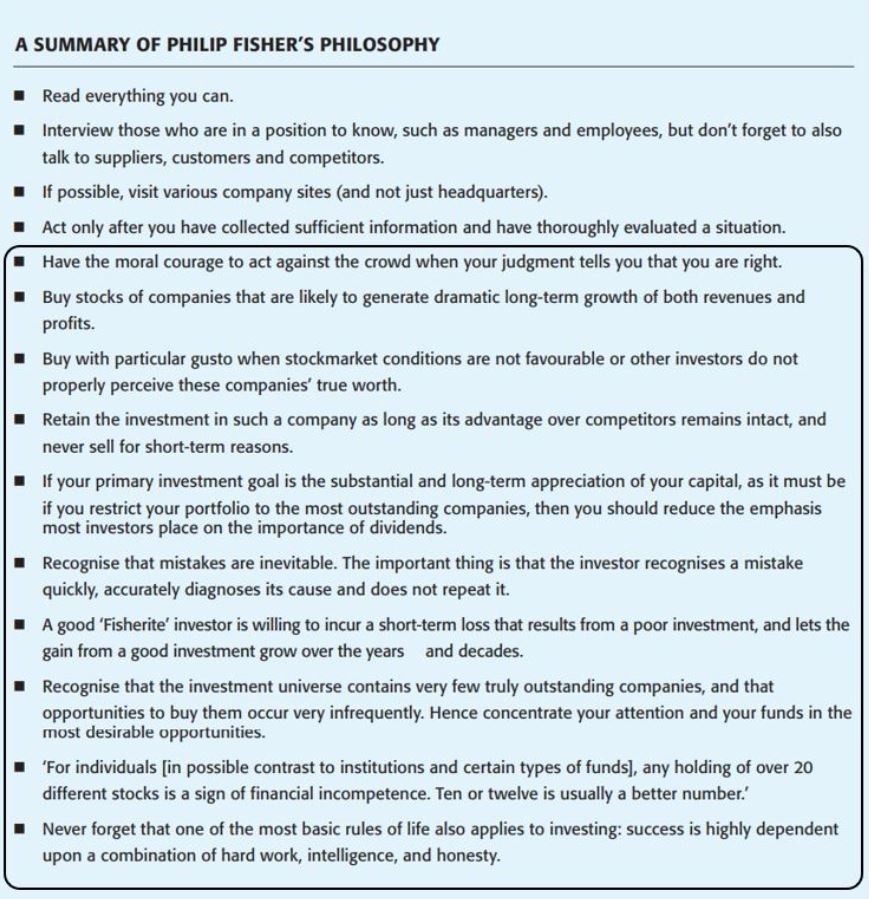
Reflecting on digital transformations vs pull forward for cloud software over the long weekend - I think we've largely seen 3 different ways cloud software was affected by Covid: 1) Fake TAM creation 2) One time pull forward 3) Durable pull forward I don't think any business was truly unaffected. Therefore, it's important to have a perspective on which bucket each company falls into when predicting what future growth will look like. This applies to both public and private businesses Bucket 1: Fake Tam Creation: This describes companies who acquired users / buyers of their software who never would have otherwise been users outside of Covid. The hard part about this bucket - post Covid churn is very high. Who might stick with new behavior vs revert? In hindsight it's easier to identify who falls into this bucket. In the moment it's always trickier. Zoom is probably the poster child for this bucket. Will the yoga studio continue broadcasting classes over the internet? Hard to say Bucket 2: One Time Pull Forward: I'm defining this bucket as companies that had a one-time shock of pull forward that only lasted ~1-2 years. Let's imagine a hypothetical company with 100 employees, with half using some sort of collaboration software Maybe it was understood that over the next 1-2 years everyone in the company would become a user. But there was no urgency, and the roll out would be a slow and steady 1-2 years. With Covid, instead of taking 1-2 years to roll out to everyone, it took 6 months The end state was the same - X users. But the time to get to X users happened much faster. Now apply this not to just 1 customer, but the collaboration software companies entire customer base. You get massive growth through Covid, and then a "slow down" as growth normalizes Bucket 3: Durable Pull Forward This bucket of companies are riding 5-10+ year trends. For the one time pull forward bucket I described an end state that would have taken 1-2 years to reach. For this bucket, we're taking about an end state that may take 10+ years to reach An example would be the move to cloud data infrastructure. I'd argue these cloud migrations are inevitable, however they take way more than 1-2 years for the industry. They will be ongoing for a decade plus. So what was Covid's impact? It's almost impossible to pull forward a trend that big into 1-2 years. There simply isn't enough time for the change management / procurement to happen. While there was clearly pull forward over the last 1-2 years, the question is - how long will this continue? My working assumption (like bucket 2) is that the pull forward will continue until we reach the natural end state. For the Durable Pull Forward bucket, this could still be for many years. Unlike bucket 2 which happened in 1-2 years, bucket 3 will take longer How much longer is a key question. Is there another 1, 2, 3, 4 or more years of "juice" left in the pull forward? What inspired me to think about these buckets was AWS growth. Just a few quarters ago AWS was growing 28%. It's now growing 40% at >$70B run rate If you stop and think about that, you'll realize how truly insane that acceleration is!! It shouldn't be possible!! Especially at that scale! There just had to be a real element of pull-forward to cause that shift in trajectory But again, the key question is how long will this last? For the trend that AWS is riding, I don't see how it could only be a few years. The market is just way too large to reach closer to "end state" in a few years, regardless of the pace of the pull forward. We're 2 years in Datadog is another example that comes to mind. They were growing 51% in Q1 '21. They just grew 84% in Q4 '21! Crazy! There are many companies that fall into bucket 3. However, the range of duration of pull forward for all companies in that bucket is quite different. Some might last only another year. Others may last another 3-5 years. Having a perspective is important Eventually we'll get back to "equilibrium." And at that point growth will follow more normal deceleration curves. And when that happens, multiples will fall. You want to get ahead of that! Look at Zoom's multiple mid pandemic vs now. When pull forward ends, growth / multiple fall In the same way it seemed inevitable that we'd leave a ZIRP environment and rates would rise pulling growth multiples down...but how many got in front of that shift, even though it felt inevitable? Now more than ever it feels imperative to have a point of view on whether companies fall into bucket 2 or 3. I think it's already clear who's in bucket 1 (Fake TAM Creation). Harder to discern between bucket 2 and 3 Without doing this, it's hard to handicap how much past growth is an indicator for future growth. This is very hard for me on the private side as well. Looking at companies around Series C, I have to have a POV on this. Let's take a hypothetical company that tripled ARR to $20M. Was that growth real? Or one-time pull forward? Are they riding a trend that will keep growth strong for the next 3-5 years, or peter out? With the massive valuations in private markets we have now you can't be wrong There's never been a more interesting time to be investing in public and private cloud software businesses. In general I'd bucket application software into bucket 2, and cloud infra software into bucket 3. But it's never that easy / straightforward. There are always exceptions Correctly identifying if businesses fall into bucket 2 (one time pull forward) vs bucket 3 (durable pull forward) will be the driving function between who does and doesn't generate returns. And it's hard! Rising tide of easy money from loose fiscal policy is over :) And part 2 of the important / hard decision - how much time is left of pull forward for companies in bucket 3
Feb 22, 2022Top 10 investing books of all time // THREAD 1. The Intelligent Investor Authored by Benjamin Graham and described by Warren buffet as 'by far the best book about investing ever written' It emphasizes safety instead of trying to make big gains in a short time. This book offers timeless wisdom for long-term investors. 2. 100 Baggers Stocks that return $100 for every $1 invested. That means a $10,000 investment becomes $1 million. Chris Mayer will help you find them. It sounds like an outrageous quest, but when Mayer studied 100-baggers of the past, definite patterns emerged. Unmissable. 3. Common Stocks And Uncommon Profits Philip Fisher argues that finding companies with strong competitive advantages will lead to better returns over time than just buying the stock market average He offers valuable insights into the most fundamental aspects of buying & selling 4. The Essays Of Warren Buffett... A collection of shareholder letters from one of Buffett’s most successful investors. They're not only insightful, they provide an inside look into Buffett’s investment philosophy and style, his thoughts on management, moats, & more. 5. Beating The Street Manager of the best performing mutual fund in history, Lynch shares how he found winning stocks through research and intuition about different businesses and industries Lynch believes there’s no reason an ordinary investor can’t beat the market 6. One Up On Wall Street Peter Lynch & John Rothchild explain how anyone can beat the stock market by looking at it from a new perspective They argue that the individual investor has a number of advantages over professionals & institutions when investing in stocks 7. Security Analysis First published in 1934 and another of Buffett's favourites. Graham used previous market crashes as well as the Great Depression to demonstrate how those events taught him how to look for stocks of companies with strong fundamentals. 8. The Warren Buffett Way Robert Hagstrom shares his lessons from studying Warren Buffett’s investment approach and applying it to your portfolio, identifying value, finding great businesses with strong competitive advantages, and owning them for long periods (even forever) 9. Reminiscences Of A Stock Operator Edwin Lefevre writes in the first person to make it seem like you are listening to a story that one of the stock traders once told. It quickly rose to fame when published in 1923 and remained one of the best investment books ever written. 10. The Little Book That Beats The Market This book is a great read for beginners interested in learning how to invest their money wisely. It’s filled with examples, practical advice, and timeless wisdom. It is perfect for small investors who are new to the market If you enjoyed this thread, please: - Retweet the original tweet - Follow @FiSavvy for more content to help you manage & invest your money to make your 9-5 optional

1/ Being on a board of directors with @wolfejosh has been an amazingly enjoyable and educational experience. He's always prepared, informed, contributes and has fun. Josh believes: "edge can derive from informational, analytical or behavioral sources." https://t.co/MbhlToYfzU 2/ If you work on a team that runs a business you can acquire an edge versus people who only invest and don't have your source of edge. "To make money, you must find something that nobody else knows, or do something that others won’t do." Peter Lynch https://t.co/Dg5b0C54Fs 3/ One of my sources of edge is the ability to value certain businesses by using DCF analysis. That's what anyone running a business learns to do. If you do this for decades you get better at it. Is it easy? No. Can I do every company? No. Do I have an edge in doing it? Yes. 4/ Anyone who says they've done a DCF for scores of stocks is fooling themselves or raising more money from investors. The greater your focus, the better your DCF. But it's hard to raise money by investing in just a few stocks. People can just copy your work without paying fees. 5/ An easier way to raise money is to have a portfolio of many stocks based on ratios which are a shortcut for a DCF (i.e., the assumptions are buried). Embrace complexity! People do trade stocks without valuing the business, but it's not a source of edge (or fun) for me. Pass! 6/ Almost everyone uses heuristics and investing is no exception. Some people drill down fundamentally on a small number of stocks after the rough heuristic-based sort is done. My drill down on fundamentals is DCF analysis. It's not the only way to invest, but it's my way. https://t.co/g9WrLe2wH1
Feb 20, 2022SaaS Checklist for shopping during drawdown: ✅ Aggressive on market share/biz model/hiring ✅ Leaders kept their heads screwed on last 2 yrs ✅ Forged by ‘08 ✅ Pricing power ✅ M&A muscle (nice to have) ✅ Cross-sell experience w/ big cust base ✅ Improving operating metrics You end up with companies like $ADBE, $TEAM, $NOW, $HUBS, $CRM (Bozos tho), $WDAY (Eh) Who else?
Feb 20, 2022 Original deleted — preserved here“Live in the Market, Not in the Spreadsheet” ~ Cheryl McKinnon H/T @hughcards
Feb 20, 2022"It's not the TAM you start with but the TAM you exit with" Excellent newsletter by @edsim (enjoy the public praise by me Ed won't happen frequently🤣) Talks about day one journey of @kustomer & @snyksec & the frameworks we use to evaluate the categories of startups we work w/ https://t.co/yjZc2QHzWc Barry McCarthy new CEO of Peloton and prev CFO at Spotify and Netflix seems to agree with all the above as well :) https://t.co/pqpqhUiEIz
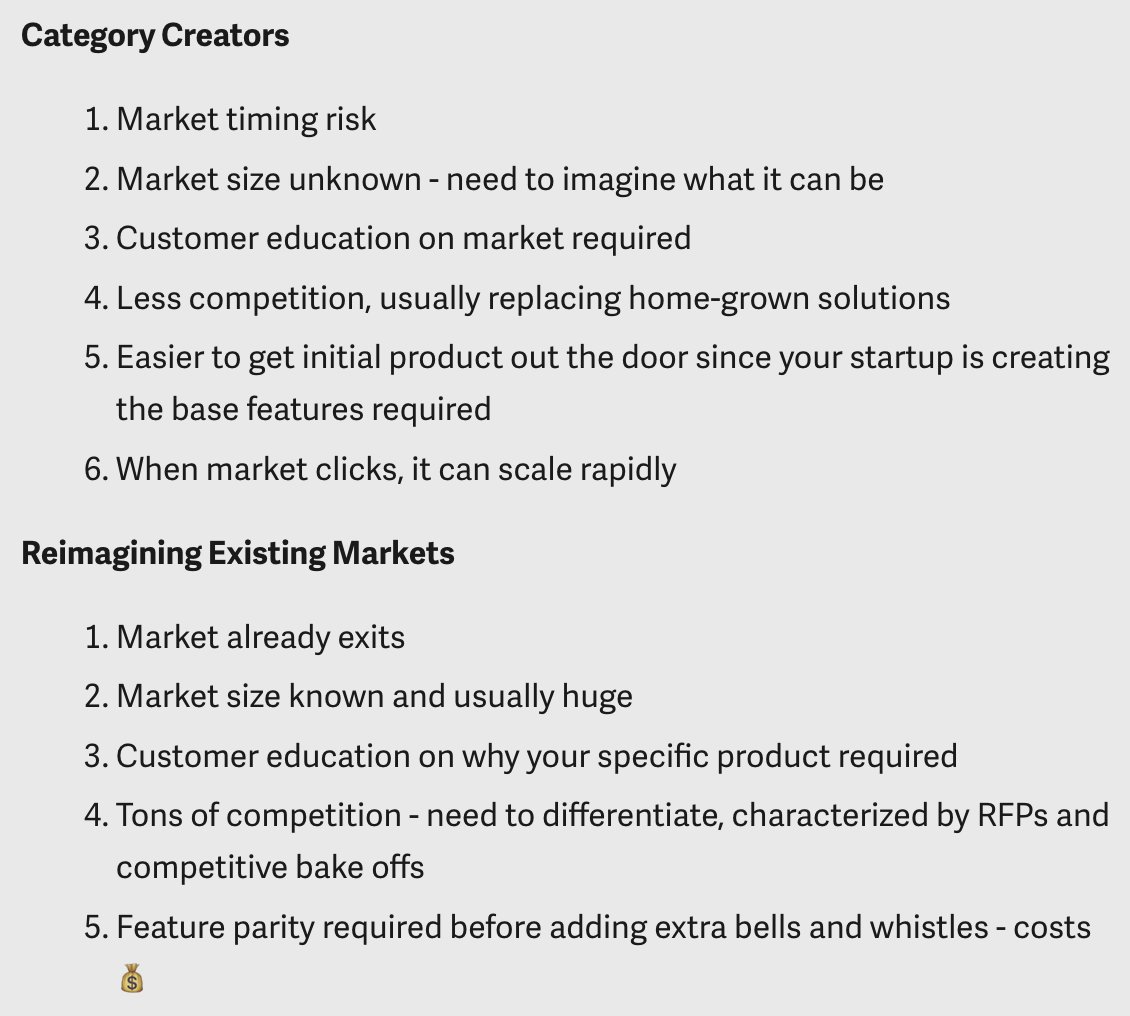
Want to build your own baby Berkshire? I recently lifted the curtain on our unique (but old school) structure at Enduring Ventures. Read on to learn how I plan to pay 0% cap gains, compound tax free for decades and give my investors and executives the same luxury. 👇🏻👇🏻👇🏻 As they say, good artists borrow, great artists steal. Most of this strategy was pioneered by Warren Buffett. Who, it is worth noting, is much richer than all the private equity guys who keep saying he is old school and had lost his touch. Five things you need to understand to build your tax efficient conglomerate: 1. QSBS 2. C Corp Dividend deduction. 3. C Corp redemptions 4. ESOPs 5. C Corp consolidation. Sound boring? What’s not boring is Buffett’s effective 1% tax rate. Here’s how he achieved it. 1. QSBS. If you purchase C Corp shares at “original issue” and hold them for 5 years, you pay no federal cap gains when you sell (up to first $10 million). You can have your spouse and kids buy shares, further increasing the tax shield. ($10 million each!) Google for details There’s also no limit. So your parent C Corp can create subsidiary C Corps. Execs and investors and buy into these shares. We have done two startups at Enduring Ventures. Our execs get QSBS, same as we do. So do early investors. #2 - C Corp dividend deduction. If one C Corp owns more than 80% of another, it can deduct the dividends received. This is how Buffett is able to move the cash from his subsidiaries to head office and reinvest it in his highest return opportunities. #3 C Corp Redemptions How do you offer returns to you investors who may not want to hold forever? Easy. Just have a structured share buyback program. Take 50% of free cash flow and repurchase shares at fair market value. #4 ESOPs Want to stay tax free above $10 million? Sell to your employees. If you sell more than 30% of your C Corp to employees, you can roll your proceeds into any public or private company’s stock (eg Berkshire) and defer cap gains indefinitely. #5 C Corp Consolidation If a C Corp owns more than 80% of any subsidiary, it can consolidate financials. So let’s say you have a profitable service business and a money losing startup. You can shield your profits by the startup losses. So to pull this all together: 1. Setup parent C Corp. Founders buy all common stock. 2. Sell preferred shares to investors to raise capital 3. Buy or start companies as C Corp subs. 4. Compound. 5. Buy back shares out of cash flow from investors. 6. Much compounding @SahilBloom , @Codie_Sanchez , @sulemanali , @ShaanVP , @theSamParr - would love your thoughts/additions.
Feb 19, 2022 Original deleted — preserved hereMy journey in venture Year 1: I'll "invest in people" since everyone says that Year 2-8: but what about product-market fit, the "why now", GTM motion, rep productivity, deal dynamics, network effects, TAM, moats, LTV/CAC, rule of 40, gross margin Year 8+: Invest in people
Feb 18, 2022This business $MQ went public 9 months ago, with the below numbers. it was worth around $15b throughout last year they pre-announced last quarters earnings, and they beat and raised. **the stock is worth ~$5b now.** with much better numbers than the below
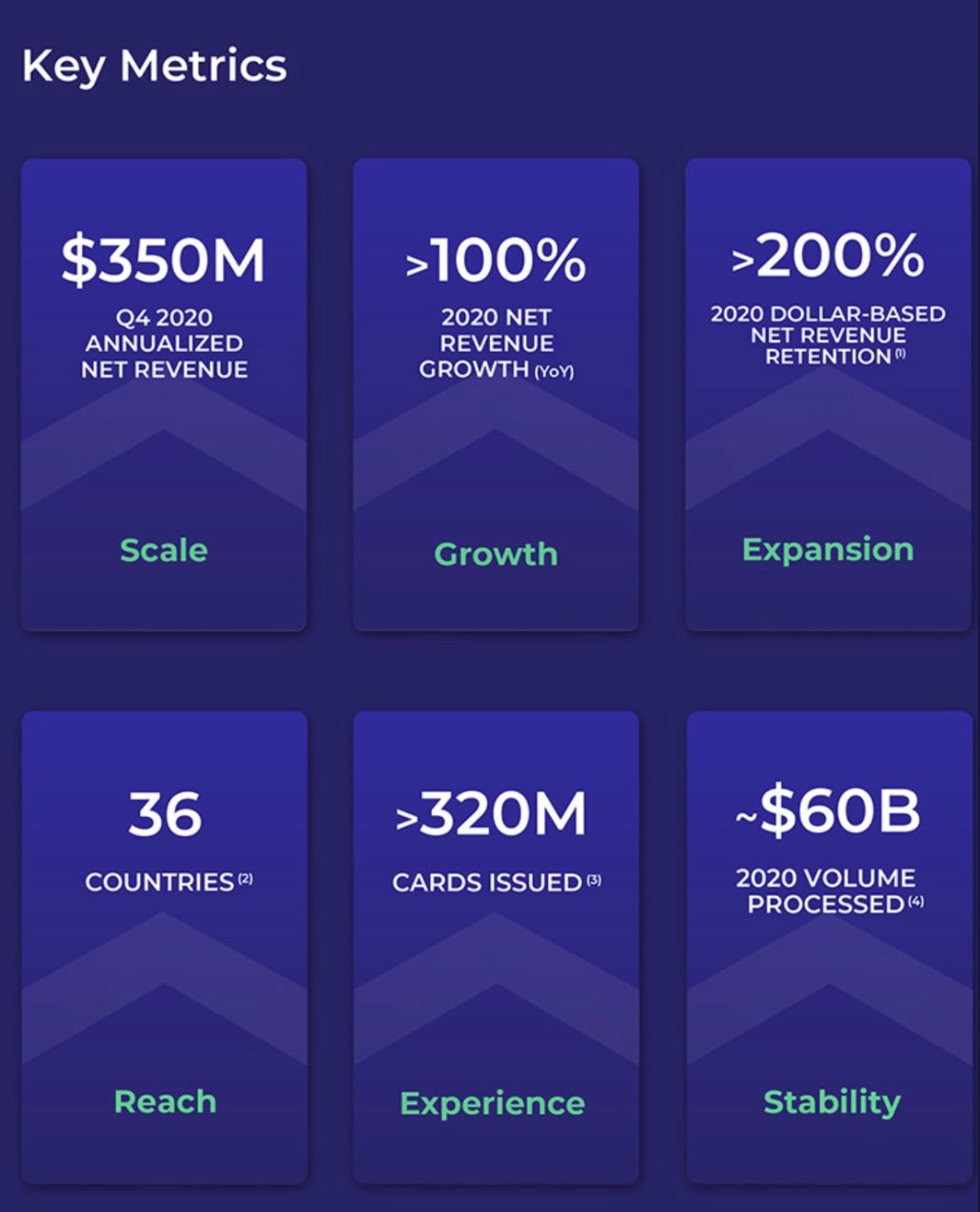
1. Shopify stock is down 50% over the past 12 months. Its mission may be to "arm the rebels," but it is giving us muskets in a war that is increasingly being fought with machine guns. 👇👇👇 2. Let me start by saying I own a lot of Shopify stock. I love the brand and want it to do better. Native Deodorant is on Shopify, as are other brands I own. I’m down 6 figures on today’s announcement alone. And I own more Shopify outside this account, so I'm probably down $200K 3. Everyone in e-commerce glorifies Shopify. They should because it is amazing. But it can also be sooo much better. Here is how: 4. Shopify has benefited from two tailwinds over the past few years: A. Outrageously cheap facebook ads that have made merchants more successful, and B. The growth of ecommerce (mobile, Amazon, COVID, etc.). 5. It has capitalized on that opportunity! So many brands built businesses on Shopify as a result of cheap facebook ads. Shopify took advantage of that by building so much infrastructure that it is *THE* place to start a new ecommerce company. 6. Shopify is cheap, reliable, and easy to use. Pretty awesome! That tailwind (cheap fb ads) is coming to an end however. Shopify is still benefiting from the growth of e-commerce, but that growth is now slowing too. 7. However, it has had 5 years to arm its rebels with more than muskets, and has failed to do so. Here’s what I mean: 8.1 Shopify Analytics suck. You can’t even do cohort analysis on Shopify. Can you believe that? So many brands try to raise money and say 30% of our customers repeat, when they mean that 30% of this month’s revenue came from returning customers. 8.2 Shopify Analytics suck. Why is this important? Cohorts helps merchants understand LTV. This will help merchants market more, and spend more wisely (and probably spend more on marketing overall) on facebook and other platforms. It should take an hour to build. WTF? 9.1 Shopify Subscriptions Shopify Subscriptions doesn’t exist. As a result, you have to deal with Recharge. Recharge is like driving on the autobahn in a Soviet-made car next to a bunch of ferraris. Recharge is overpriced and has awful support. It also has no analytics. 9.2 Shopify Subscriptions So many e-commerce businesses have subscription components. Why did Shopify get into logistics (physically shipping boxes out) instead of the most obvious opportunity in front of it that is software based? 9.3 Shopify Subscriptions Why is this important? Shopify subscription option would be much cheaper than ReCharge. It would also be better integrated and with better analytics, could help merchants grow a ton. 10.1 Audience Sharing Shopify could create an audience sharing system that would allow you to opt-in to a system where your store shares its customers via a facebook audience (so it is anonymous) with non-competing brands. This could reduce marketing costs for all Shopify brands 10.2 Audience Sharing Why is this important? This is like arming me with a nuclear weapon instead of a musket. 11.1 Scaling As you grow your brand, Shopify isn’t the solution it used to be. Instead, Shopify becomes the technical debt that you can’t get out of. Simply put, Shopify is awful for larger brands. And that is a major problem for SHOP, because those brands spend $$ on tech. 11.2 Scaling Shopify Plus was supposed to be the option for brands as they grew to scale. Instead, it is a joke. What does it get you? An account manager? More API calls? Hundreds if not thousands of e-commerce brands are outgrowing Shopify Plus. 11.3 Scaling This is why so many brands like Away Travel, Ritual, MVMT, and Manscaped have left Shopify. They need better solutions to get past $50, $100, or even $200M in sales. No doubt that FIGS has also thought about leaving. 11.4 Scaling Shopify should create a $10K/month subscription for larger brands and come up with real solutions. Subscriptions with great cancellation flows. Integrations with FB, Pinterest, Snap Ads. Analytics that match those that you can do with other platforms for years. 12.1 Product Conclusion Shopify is squandering an opportunity to build a platform that empowers merchants of all sizes. As the tailwinds that filled its sails fade, it needs to improve by building out more and better products. 12.2 Product Conclusion Shopify is in a unique spot - it can grow its own business by empowering its merchants, and giving them better tools and data to grow their own stores. But in order to do this, it requires foresight and a genuine understanding of what merchants needs. 12.3 Product Conclusion I think it may also require a change in culture to be even more software focused (ironic since it is led by a developer). 13.1 Shopify as a Business In any case, I think Shopify is a great business. If it fails to do what I recommend, it can just increase prices and grow its top line, since there aren't any other solutions right now. 13.2 Shopify as a Business One thing to note: I believe Shopify’s PE ratio isn’t 30X. It’s more than 100X. The 30X is a result of one-time investments like Affirm, Stripe.
Feb 16, 2022The most successful people in tech take the riskier option at any decision point Over time they learn to assess risk Most get this backwards They wait to take risks after learning how to assess Wrong Your risk appetitie will only decrease w/ age, need to take big risks early
Feb 16, 2022Every Venture Capitalist, investor should read this one... Great read...I feel this in my day job The Minsky Moment in Venture Capital https://t.co/sZm8AdyjpY thanks @athomasq now following ht @ameetshah
Feb 14, 2022I read 500+ pages of memos from billionaire investor Howard Marks. They contain so much wisdom on investing and life that Warren Buffett reads every one. Here are 8 lessons I learned: Information ≠ Knowledge "The fact that investors have data doesn't mean they understand its significance." The Modern Investor: “Knows the price of everything and the value of nothing.” 2000 The Hype Bubble of Doom "Watch which assets they're holding conferences for and how many people attend. Sold-out conferences are a danger sign." You want to be in auctions with only 1 or 2 buyers. You want to buy things before they are discovered. 1993 The Greatest Investing Mistakes • It’s Different This Time • Past Returns Are a Good Guide to Future Returns • It May Be Too Good to Be True, But I Don’t Want to Miss Out 2005 A Risky Lie "If you want to be in the top 5% of money managers, you have to be willing to be in the bottom 5%, too." No. • Seek above average in good times • Superior results in bad = Above average with downside protection "Swing for the fences" is for fools. 1990 The Silver Bullet Never Existed A silver bullet or perfect solution never exists. No strategy can produce high rates of return without risk. And nobody has all of the answers. "We’re all just human. Brilliance, like pride, often goes before the fall." 1998 3 stages of a Hot Market: • Far-sighted people believe that improvement is possible • Most people believe that improvement is underway • Everyone believes things will get better forever The party never lasts forever. 1998 Never a Free Lunch “If it seems too good to be true, it probably is." That free lunch you think you got? You will eventually pay much more in time or money than you ever thought. 1998 Poker Analogy and The Fish "In every game there's a fish. If you've played for 45 minutes and haven't figured out who the fish is, then it's you." The fish is the player who sucks and doesn't realize it yet. And they usually lose everything. 2001 If you picked up a new insight, retweet the 1st tweet to share with a friend! https://t.co/V8RJ4qWWJM Follow me @chrishlad for more frameworks, systems and crazy business stories. And join 9,300+ others and subscribe for free threads like this right to your inbox every week: https://t.co/Zr6gAK3oP0 Also if you want a deeper dive into @HowardMarksBook's memos, here's all 500 pages: https://t.co/BvPy6hIfsp
Feb 13, 2022If you invested $10,000 in Berkshire in 1965, it would be worth $109m by 2017. However, if Buffett charged a 2/20 fee structure, that $10,000 would be worth $8.9m. This is why fees matter over the long run, they muzzle the effects of compounding. If someone wants to do the math from 2017 to present, feel free to. Source: https://t.co/2MXDJLSyuc If you enjoyed this, subscribe to my mailing list so you get notified of my posts, updates, etc. I write about topics such as avoiding ridiculous fees to better compound wealth long-term. https://t.co/mOXoFiqNFj As @onveston pointed out, same concept applies to taxes. Here’s another Buffett reference to illustrate. Decades of no fees and no taxes (and of course shrewd capital allocation) made $BRK a compounding machine. https://t.co/vudyhO6xTo
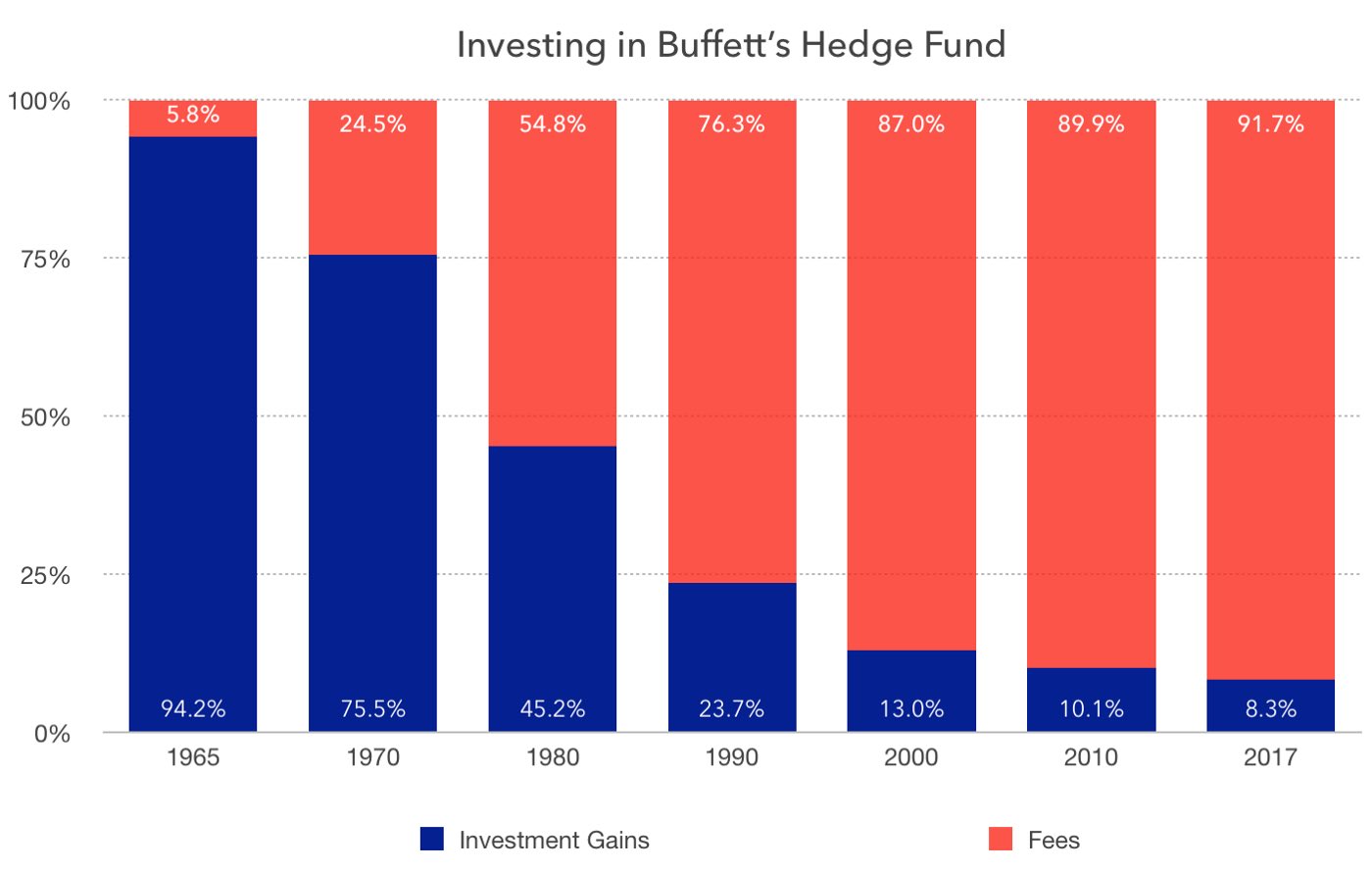
Someone asked in my DM how to pitch a stock in an interview. Sharing if anyone else may find it helpful/relevant.
"Over $2B in revs have been paid out to marketplace apps. Once Cloud is adopted, the stickiness for Atlassian products increases exponentially as they get embedded as a core system of record w/ multiple other apps being added." https://t.co/wz3EGsRij4 Nice quick write-up on $TEAM's cloud transition from @shomikghosh21. It's under-appreciated how much this cloud transition improves $TEAM's economics in almost every way. Acquisition. Retention. Upgrade.
Feb 8, 2022 Original deleted — preserved hereSequoia’s invisible hand: How @roelofbotha became one of the most powerful people in venture capital https://t.co/s4iX9fNpbW When the Sequoia Capital Fund announcement came out, Roelof Botha was on the byline — on behalf of Team Sequoia. I'll admit I realized then that I didn't know much about Botha. He's not the type to post salty memes on twitter or spout off on a podcast or really seek attention. What I did learn was fascinating: Botha’s own history, going from a tupperware salesman to a 28-year-old public company CFO to Sequoia partner, is one of a kind. Founders and friends laud his intellect, imagination and integrity. @annewoj23 even called him "Obama-like". But it wasn't always up and to the right. Roelof Botha went through his own "valley of despair" — a common stage for VCs a few years in. He almost quit VC entirely. He's relied on the counsel of others, and most important to him, his team at Sequoia. (Plus, some pesto!) Botha rarely takes direct credit: "It's very dangerous for us internally to attribute any activity we do to just one individual," he said. When Phil Libin said he considers him practically a co-founder of mmhmm, Botha appreciated the sentiment but would never use the label. It's an understated and quiet style of leadership with a true north of integrity that's made him so respected and so powerful within the venture community. I hope you'll read more and get to know Roelof: https://t.co/s4iX9fNpbW
Feb 8, 2022Ever since @nbt's piece I've been fascinated by the "solo capitalist" movement. How do 1-person investment teams manage more money than many funds? Why do they win? Who is backing them? I tried to go as deep as possible in this piece 👇 https://t.co/FWAFU1YORw @nbt Thank you to the many investors that shared their takes including @lennysan @IanRountree @soona @MoniqueWoodard @atShruti @neilswmurray @NikMilanovic @andreasklinger @fern_gouveia @Gfilche @litcapital @xuezhao @julian Ariana Thacker, and a few unnamed friends 😉
Feb 6, 2022Most successful funds operate like the 1991 Chicago Bulls. They'll win a championship largely on the backs of one or two players (i.e. Jordan and/or Pippen). I'm far more interested in the Bulls streak from '92-'98 after they learn to "Play the Triangle." https://t.co/TBVkTvBlRz Also - if you haven't watched "The Last Dance" you're really missing out. https://t.co/iSAOwXx1za
Feb 5, 2022This is so funny. It’s why I no longer try to change people’s minds. They know what I think and they make their own decisions and live their lives. The beauty of investing is results are crystal clear at the end. It’s their portfolio. Wish them the best. Focus on yours. https://t.co/KXsxh7DGe6
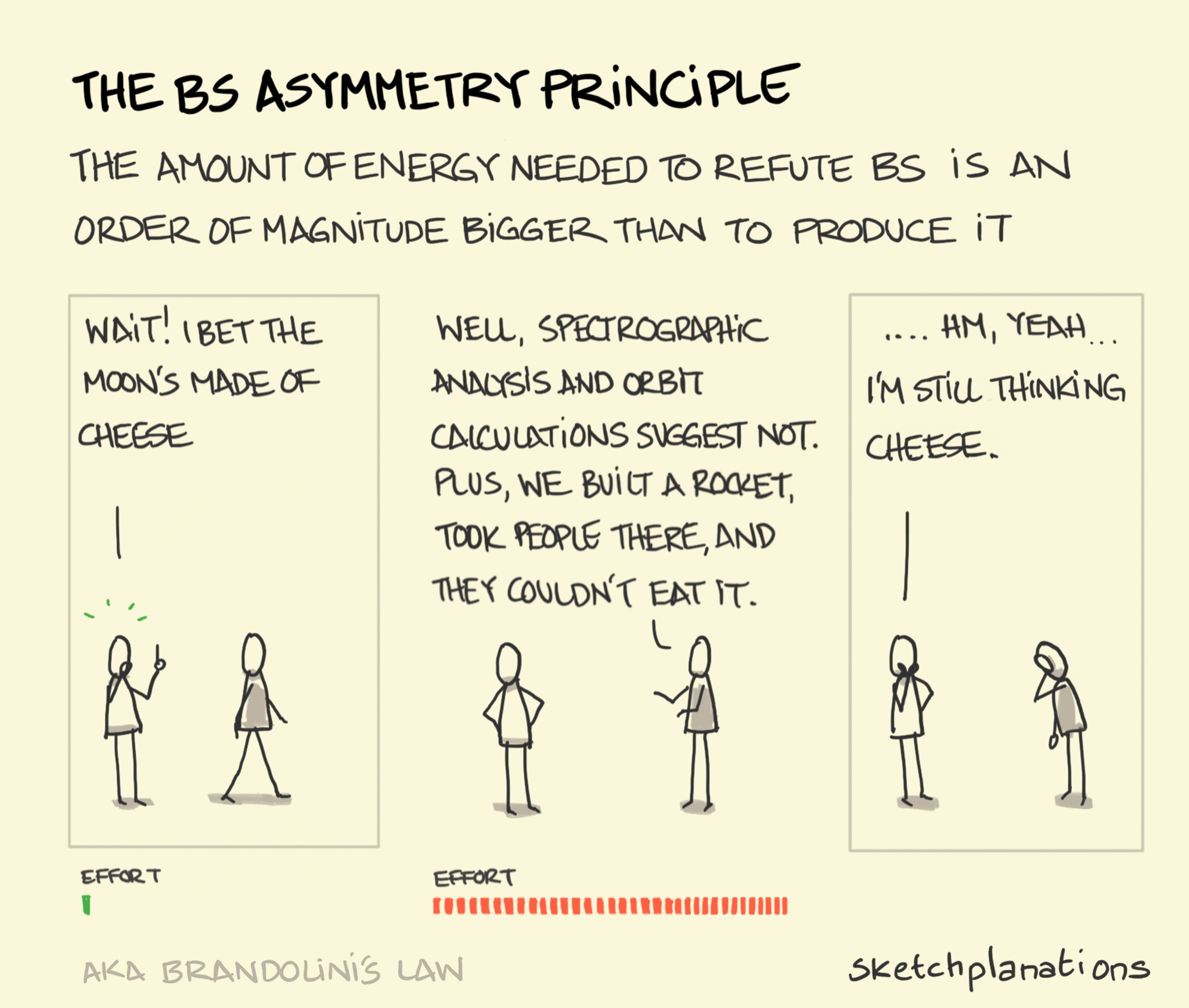
Geoffrey Moore on why investors persistently misprice technology winners “They're using arithmetic division, but should be using logarithmic. It's a power law relationship, not a linear one. But investors like lines better, they understand lines better than power laws.“
Feb 4, 2022 Original deleted — preserved hereThread: $AMZN just had an absolutely incredible quarter. Despite being a 27-year-old company, many still have no clue at all how to look at the company, here is how I think about the company, retweet if you enjoyed 🧵 AWS is the greatest business of all time. Period. I spend 99% of my time thinking about AWS mainly because it is the least understood and the most intellectually stimulating. To be clear, the retail side is an INCREDIBLE business but very easy to understand. For the retail biz you just assume some level of ecom penetration, assume some level of market share and slap terminal multiples on the biz from mature comps. The retail side and the prime flywheel is very well understood so I will spend 0 time on it. Back to AWS. First it's important to think about how to approach terminal multiple valuation: Most companies if they are lucky have terminal growth rates of CPI, which means to say for the total economic pie they maintain their share of spend. Some companies you can assume have terminal growth multiples CPI < growth < nominal GDP. Which means that as society gets richer they capture some of that incremental spend even in terminal state. Then there are a few very very special businesses which has a TERMINAL growth rate of nominal GDP. This is quite rare, absent disruption $V would be a good example (they won't last in their present form that's a whole different can of worms ;)). The thing about companies which have very high terminal growth rates and deep deep moats is they are perfect candidates for leveraged buybacks. You could easily see a situation where 50 years from now $AMZN is at terminal growth rate of say 5% and is still generating DD EPS for the foreseeable future by employing more long term fixed rate debt on their balance sheet. No need for me to b overly verbose on levered recaps. So what is a fair terminal multiple for AWS? Well, today AAA prime urban office space trades hands at a sub 2% cap rate. So that may be one way to look at it, I think ultra long dated bonds are how they will ultimately be priced, 30y bond yield is ~2% today. Let's think through AWS's moat to defend such a lofty valuation. The best argument is GCP, GCP is the third biggest player in the cloud space after AWS and Azure and after 14 years is STILL not profitable. $GOOG had serious doubts about their own cloud in 2018! To compete in the cloud you need A) 10s of Billions of dollars B) Ability to tolerate losses for a decade+ C) To some how catch up to companies building out their clouds for decades. There will not be another new cloud player which will compete on the same lvl, ever(ex china) Outside of cost there are other immense structural barriers to competition. The more your cloud is used, the more talent who gets trained to use your cloud's tools, the greater the incentive there is for a new enterprise to use the same cloud to recruit from the same talent pool. There is a lot of buzz about "multi-cloud" to avoid vendor lock in. Not going to happen. 90% of any one enterprises workload will be with on CSP, as someone who has seen from the field, multicloud is CTO buzz word to pretend like you have a choice. The truth is it is incredibly expensive and time consuming to train your workforce to work with a cloud, to secure a cloud, to build pipelines processes etc. Hence why 90% of the workloads will be with one cloud and 10% will be for niche use cases. Which means, if a cloud provider signs you and you start migrating...you're with them for life most likely. Moreover, as companies embrace PaaS and serverless offerings they become even deeper entrenched into a CSP's ecosystem. Working technology tends to stick around. Which is why Mainframes are still the core of the financial system. Ok, so we've touched upon competition, and moat. Now let's switch to the financials. Some are worried about what terminal operating margins look like "what if there is a price war" to that I say LOL. So let's look at margins, AWS has 30%ish operating margins, they lump all of their infra ecom operating expenses in that number so it's higher in reality. This is an operating margin which has trended UP significantly over the years as economies of scale kick in. I use 35% terminal operating margin to be conservative, it will probably be 40%+. *Side note for those wonder why folks move to the cloud when CSP's can get thick operating margins it's because they are way way way more efficient with how they use data centers The shared tenant/customer model also allows for much high utilization rates as use is avg'd over many customers and individual spikes are smoothed. Ok TAM: The TAM is impossibly large, it can not be quantified easily, we are in the 1st inning of the migration to the cloud. The TAM is not just all IT infrastructure spend BUT also all IT tool spend too. Here is an example, in the on-prem world you might use IT tools from many different vendors. Once you're in the cloud, the CSP can easily cross sell their own native tools. Take key management, on prem you would have had a vendor for key management, in the cloud you'll probably just use AWS Key Management Service. Keeping the TAM in mind, lets shift to growth rates. AWS just reported and they are growing 40% Y/Y at a 71B run rate! That is mind blowing growth. I suspect they will CAGR AWS growth in the low 20s over the next decade but nobody can know for sure. The interesting thing is, just looking at AWS today, with very reasonable exist multiples you can justify $AMZN's entire current valuation. This crude analysis looks at IRRs and excludes FCF generated along the way. Now let's focus on $AMZN's current financials "Their P/E is so high". $AMZN's true current period profitability is massively understanded by two factors 1) The rapid build out of their biz and 2) the enormous R&D spend. For "1)" you need to use look-through terminal operating margins "2)" is where things get REALLY interesting. What level of R&D does $AMZN need to spend to sustain their AWS growth rate? Well, $MSFT currently spends 22B on R&D during the TTM, $AMZN spends 51B!!. $MSFT's Azure is growing faster than $AMZN so for sure $AMZN would need to spend no more than 22B to sustain AWS's current 40% growth rate. So that leaves roughly 30B which $AMZN invests elsewhere!!! If they chose not to invest that $ elsewhere and instead dropped it to the bottom line, using the 16% effective tax rate they would have 58B in net income TTM vs reported 33B. Net of Cash that's a PE of 24 TODAY WHILE still maintaining growth rates. Ofc, instead of dropping the 30B in excess R&D to the bottom line $AMZN reinvests "spawning" new technologies and ventured creating whole new businesses. They could cut this cost any time they want and show great GAAP profitability. Then there is SG&A which is elevated and growing rapidly in order to market and sell AWS to enterprises, at maturity some portion of that goes away, ex that out and you're at an even lower adjusted p/e. So PE is depressed because of colossal R&D spend and expenses related to expansion. With a very easy conservative adjustment to R&D we are at a 24 TTM PE. How about FCF? FCF is also muddied because the company is spending GOBS on CAPEX. Interestingly on this call we learned how CAPEX is split out: 40% is infra for AWS (includes $Amzn ecom infra on AWS) 30% fulfillment 25% transportation capacity 5% offices, stores misc We also learned on the call that the massive fulfillment build out will ease this year and grow in-line with retail - this will start to make FCF more visible. Analysts have baked that in, $AMZN presently trades at 22x 2023 FCF, very cheap for such a dominant business I could go on for 100 more tweets but we will wrap here for now. In Summary: $AMZN is a generational buying opportunity, the current share price only reflects AWS you get the incredible retail/ads/subscription/venture biz for free. GAAP profitability and FCF don't reflect true underlying profitability due to massive R&D spend and capacity build out. AWS is the greatest business ever created.
Feb 4, 2022If you want to understand how venture capital works and the effect it has had on the US economy, this is the book to read. Lots of people talk about VC. Few of them understand it. But Mallaby does. https://t.co/2B0gfrxqJw
Feb 1, 2022Airbnb alumni syndicate and fund—a year in review: ▫️ 42 total investments in 2021 (33 fund, 9 syndicate) ▫️ Invested $7m ($5m fund, $2m syndicate) ▫️ A total of $8.5m invested since inception, currently valued at $50m (up 5.9x) ▫️ 2020 investments up 23x More stats: ▫️ We co-invested with nearly every top firm this year, including @sequoia @benchmark @a16z @Accel @craft_ventures @foundersfund @softbank @lightspeedvp @generalcatalyst @nea @ycombinator and Tiger Global ▫️ Raised our first fund ▫️ Doubled our syndicate backers ▫️ Invested across the US, Europe, Asia, and Africa ▫️ Found that companies most value the Airbnb alumni network for (1) our talent pool, (2) product+growth+fundraising advice, and (3) connections to companies they want to get intros to. Also, the Airbnb Diaspora is spreading far and wide https://t.co/hLuhBn93qy Thank you to the founders, LPs, friends, co-investors, and community members that make this all possible 💖 If you'd like to talk to us about your round, DMs are open.
For VCs, Your Thesis Is Your Portfolio Page, Everything Else is Just Hopes and Dreams https://t.co/fHtQZGqi8K
Jan 31, 2022 Original deleted — preserved hereThinking through the future of "solo capitalists." Who are the best representations of this movement? Those that come to mind... @packyM @lennysan @eladgil @lachygroom Also, if you haven't read @nbt's excellent piece coining the phrase (and describing the movement), I highly recommend: https://t.co/3pFdIHOwNr
Jan 31, 2022I’m currently doing a deep dive on Altos Ventures and @honam. I chanced upon this blog and slide share from 2008 - “RIP Good Times? A Different Perspective”. A part of the presentation headline is borrowed from Sequoia’s RIP Good Times Meeting. Sequoia was bidding goodbye 1/n based on whatever was happening around the world. It felt that the world and its economy would fall apart. That’s how most felt it would be. In hindsight it looks like part of the process, or even an aberration to some, but at that time it was serious enough to have even 2/n Sequoia running for cover. However @honam takes this contrarian approach saying there’s never been a better time to build - because if the business foundations are solid, because there was no other option at that time - you either generate cash or your burn yourself down 3/n it would only take the most prudent businesses and people (hedgehogs as Altos calls them) to survive or even thrive in this environment. 4/n There’s a striking sentence in the type pad that struck me the most “Remember, as an entrepreneur you have one company. You don’t have a portfolio of companies to pay lotto” 🤯🤯 Replace the word company with life and it does its job for anyone. 5/n Moving on to the actual slide deck itself, 5 starts off with an epic rendition about how entrepreneurs are beneficiaries of change. Come to think of it, stagnation never produces anything meaningful. It’s change, especially challenging ones that bring out the best. 6/n Then there’s this part about risk - contrary to common notion that an entrepreneur is taking a huge risk, it’s actually minimisation of risk that they’re looking at. It’s a fine line to tread on, but you always ensure you don’t tread on either side. 7/n Some excellent qs you can ask - whether you’re a founder/investor - is the product simple? - start small - keep taking those small hits to improve your average score. Attempts to only hit big shots don’t work. Ex: FB started with 1 uni. - if you don’t lead,someone else will 8/n This is perhaps the best of them all - concern yourself with what’s under your control and keep at if for extremely long periods of time. Let compounding do it’s job. Take the cards you’ve been dealt and play your hand. There is no other way to go about it. 9/n Here’s are the links: Typepad: https://t.co/piNLPS6heR Slideshare: https://t.co/TXaPhnr0dk Last but not the least, a big shoutout to @honam and Altos for these thoughts. 🙏🏻😇 10/n
Jan 30, 2022I’m going to share some $OPEN data most people don’t have access to. Q4 earnings are less than 3 weeks away, but as home transactions are public data, you can get a sneak peek (if you know where to look). Let’s dive in. After scouring the data, my revised estimates for $OPEN Q4 home sales range from 8.9 - 9.3k homes, corresponding to revenue of $3.4-3.7 B, growth of nearly 14X yoy. Gross profit estimates are in the range of 7.4 - 8.2%, above guidance, for a total gross profit of $277 million. Interestingly, the majority of revenue growth for $OPEN is coming from three markets, Phoenix, Dallas-Forth Worth, and Atlanta. $OPEN sold > 1,000 homes in each of these markets in Q4. At current run rate, these three markets are worth $2 Billion each in annual sales. There are 9 markets with a Q4 run rate of $0.5B. Half of these doubled in size in Q4. Although $OPEN launched in 23 cities in 2021, the lions share of transactions still happen in their original 21 markets. Only 110 homes were sold in new markets in Q3, for example. However, while $OPEN scaled dramatically in major markets in Q4, it also began to scale in newer markets, with 4X+ more sales here qoq. This follows Opendoor’s original investor presentation of new markets adding material revenue after a year of launch. Still it’s surprising that $OPEN doubled its market footprint in 2021 and destroyed its original guidance without help from these new markets. The seeds are planted for markets such as Miami, San Diego, and Kansas City to scale rapidly in 2022. Q4 profitability suffers from slowing HPA, and longer holding periods due to slower winter months. I calculate holding periods of 110-115 days, which needs to be better. Even still, I expect $OPEN to beat gross margin expectations in Q4. *Does not include ancillary services. Early Q1 2022 checks indicate an acceleration in listings and sales, as well as markedly better gross margins qoq (9+% range) for $OPEN. I expect full year 2022 guidance to be given on the Q4 earnings call. At a current market cap of $5B, Opendoor is remarkably undervalued. My 2022 projections for $OPEN: Revenue: $22.7B Gross Profits: $2B Net Income: $50 - 70 million That’s right. Profitable. We’ll see how my numbers stack up on February 24. Stay convicted. https://t.co/fYF79BafGa

A tale as old as time Whole never generation gonna learn Goofy ass private valuations downright stink for the employees. As @Post_Market is fond of saying, private markets are priced not valued. Private market I am coming for your employees on these down rounds
Jan 29, 2022 Original deleted — preserved hereWe've crunched the numbers. If 2021 felt like climate tech's breakout year, that's because... ⚠️ $40b of venture capital invested in 600+ #ClimateTech companies in 2021! ⚠️ https://t.co/Gl5xoGg7zu @climatetech_vc 💸 Compared to the same period in 2020, investment in 2H’21 doubled dollars deployed 📈 Up + to the right! Funding steadily rose ~20% sequentially for each Q of 2021 💼 ~1,400 investment firms joined at least 1 climate tech deal, with ~70 new climate VCs announced during 2021 🚚 Mobility deals maintained the largest median deal size (~$20m) & proportion of funding (~40%); Energy, Carbon + Climate sectors gained 🌱 Food & Water attracted the greatest diversity of investors; 3 sectors (F&W, Energy, Mobility) account for 2/3rd of VC’s climate activity Every week for the past 18 months, @climatetech_vc has tracked >900 deals and ~1,700 unique climate-curious investors. Our process is extremely bottoms up, and we categorize companies into 46 industry sub-sectors. More about methodology in the report. CTVC is entirely free. We know you'll have questions, so drop them in the comments or at climatetechvc@gmail.com 📩 Favorite feedback so far: "This was the proof point I needed to start a new chapter of my life and quit my tech job to work on climate! Now how do I find a climate job?!" 🌍🚀
Jan 28, 2022VC Exit Model🪄 I truly did not expect to get the response I did when I offered to send a VC exit model via DM Given demand is so high & there are too many of you to keep doing DMs, I'm choosing to make it public! Let me run you through how it works🧵 https://t.co/ZVS9kedvcn 1/ First, this is a VC exit model. It allows investors to see what their exit potential is at different check sizes. This is also helpful for founders to see when fundraising so they can understand the impact of dilution on current & future investors. 1/ Now, let's dive into the model! The assumptions box is what drives the rest of the model. This is where you will input VC funding round assumptions as well as exit assumptions. ONLY UPDATE THIS BOX! 2/ VC Funding Round Assumptions - Raise amount: Total capital raised in rd - Pre-Money Valn: Company valn NOT including the capital funded in that rd - Firm Check: $ check written by a VC firm or individual - Option Pool: Add'l shares issued in rd to give to future employees 3/ Exit Assumptions Exit Rev: Company rev at time of exit. Typically assumed to be a ~7 yr exit & pulled from a rev projection model Exit Mult: Multiplication factor on rev assumed at exit. Typically the avg of public comparable multiples in the space (Enterprise Value / Rev) 4/ Once you input funding rd & exit assumptions, the model automatically flows. Here you'll see how each rd shakes out: - Total ownership sold each rd - Firm rd ownership given $ invested - Total firm ownership w/ dilution from future rds - Total $ raised & total firm $ invested 5/ And FINALLY the output! This calculates the exit value using the rev & multiple you provided and then pulls the firm exit ownership calculated in my previous tweet to get to: ✨ Firm return & MOIC ✨ I understand this may seem complex at first so don't worry if it's not immediately clicking! I'm here to answer any questions you have👇🪄
Jan 26, 2022I’ve now angel invested in 140+ companies. Here's what's most surprised me about angel investing so far 🧵 First, a disclaimer: 1. I do this part-time, and I only vaguely know what I’m doing. 2. I’ve been investing through a bull market. Many people look smart. 3. This is only based on five years of data. 4. This is not investment advice. I’m just sharing my experience. How it's going so far: 12 of my angel investments have grown into unicorns, 10 more are on track to get there this year, and many more will get there over the years. @AngelList recently shared that I was one of the top 20 investors on their platform. https://t.co/vR4sYVCbga Surprise #1: I’m usually wrong about which investments will do best When I invest in a startup, I make sure to record how confident I am in that investment—OK, Good, or Great. Looking back, only a third of my best investments—the companies that are on track to drive... ... the biggest returns—I rated as Great at the time of investing. Meaning, if I invested only in companies I had Great confidence in, I’d have missed out on two-thirds of my biggest successes. I obviously thought they were a good enough bet to invest in, but I didn’t have 100% conviction in most of the companies I’ve invested in. And it turns out that’s the right move as an angel investor. "VCs like to pretend that they’re really smart, but ultimately it’s just math. A single 100x or 1,000x deal will return your fund. But it’s nearly impossible to know which deal that will be. The important thing is to invest in enough deals that could 100x+.” — @JuliaLipton AngelList also found that early-stage investors do best if they invest in every credible deal vs. trying to pick the few winners. This is also why the general advice is to invest the same check size into every deal. https://t.co/lNQOLVjwi8 Takeaway: If you see something special about the startup, and there’s a path to a 100x exit, consider investing even if you don’t have full conviction. 2/ Surprise #2: Most deal flow comes from other investors—not founders, friends, or colleagues Seven of my first 10 deals were in my friends’ companies. The other three came from other investors sharing a deal with me. As I’ve gotten more active, that ratio has reversed. Now the majority of investments I make come from other investors (mostly angels and solo capitalists). “You can’t be a great investor if you don’t see any deals. Being a friendly collaborator with other investors is one of the best ways to see more investment opportunities. You essentially multiply the surface area of what you see." — @djdan85 Takeaway: Increase your deal flow by building relationships with other active investors. The two best ways to build relationships are to: 1. Build a skill that is useful to startup founders, so that other investors benefit by introducing you to them 2. Share great deals with them Surprise #3: Great deals are currency among investors You build social capital with other investors by sharing great deals with them. The more great deals you share, the more deals they’ll share with you. This isn’t always the case due to status differentials (e.g. I share many deals with Sequoia and it has never once shared a deal with me, lol), but in general this holds true, especially with angels and solo capitalists (where most of your deals will likely come from). "It’s advantageous (and fun) to be collaborative as an angel investor. Sharing deals with other investors keeps you top of mind for when they’re investing in something. I personally try to only send deals when I’m investing so my ‘signal’ is strong." — @toddg777 Takeaway: Seek out three to five awesome angel-investor friends and share everything you see with them. Two tips: 1. Once you decide to invest in a startup, ask the founder if he or she is looking for more great angels. If yes, suggest your co-investors. 2. Send a weekly email to your angel friends sharing the deals you’re looking at. Share just the URLs and a short blurb, unless you have permission to share the deck. Once you decide to invest, tell them asap in case they also want to try to join the round. Surprise #4: Angel investing is more about access than picking There are three parts to angel investing: capital, access, and picking. Based on my experience, access is by far the most important part. If you have access, you can raise capital, and generally... ...the most popular deals (i.e. the ones already discovered) also end up doing well. So picking becomes secondary. "As an angel investor, it’s more important to be swimming in a pool of good potential investments than to be an exceptionally good picker. Obviously if you’re able to be both, it’s better :) but if you had to choose between being in a position to see great deals and picking... ... randomly, or coming across average deals and picking expertly, choose the former." — @jaltma Looking at my own data, over 2/3 of my biggest winners were “hot” deals at the time, and similarly, over two-thirds of the hot deals I’ve invested in have gone on to do very well. Not all investments in hot deals will do well, but broadly, getting access to hot deals is key. "There are so many incredible founders building great companies today that one of the hardest things to do is to stand above the noise. Even exceptional products need help telling their story and reaching customers and potential hires. Being able to bring that to the table... ...is a leveraged way to help: instead of recommending one hire, you can tell their story to an audience of hundreds of potential hires." — @packyM One way to track your “access” is: whenever you see a big fundraising round or great exit, to ask yourself—did I have a chance to invest in that company? All that being said, your picking skills are still important to build over time. A third of my best investments weren’t in hot rounds, and not all hot deals do well. Even top VCs often make terrible decisions. It’s wise to place a portion of your bets on under-the-radar deals... that you’re excited about. Especially if you have unique insight into the opportunity that other investors may be missing. Takeaway: Work on building your ability to get into hot deals, and don’t stress out about not being able to pick, especially early on. Surprise #5: It’s mostly about becoming someone founders want on their cap table To build on the above point, the best way to get access, and thus accelerate your angel investing career, is to become a person founders want on their cap table. There are four paths to this: 1. Useful knowledge: Become very smart about something founders will need help with, e.g. hiring, fundraising, growth strategy, product, marketing, scaling internationally, etc. "Money is cheap now, so you have to have something other than money to get access. The best thing to have is unique expertise that founders want access to. In my case, it’s my experiences and lessons learned from working on growth early on at companies like Twitch, Reddit,... ...Mercury, and Notion that founders tend to find worthwhile. It can be in any important area, though: sales, operations, people, engineering, marketing, etc." — @jamiequint 2. Audience: Build an audience that founders can someday rely on to amplify the startup’s story (e.g. @packyM, @HarryStebbings, @eriktorenberg, @SahilBloom). "Building an audience today is more crucial than ever. Why? In compressed fundraising timelines, content allows you to build a ‘pre-sales’ relationship with founders where they know you and how you think, well before meeting you in a raise." — @HarryStebbings 3. Signal: Build status as an investor such that your being on the cap table becomes a strong signal (e.g. @eladgil, @cyantist, @naval). 4. Reputation: Build an amazing reputation with founders, such that they tell all of their founder friends about you. "Founder NPS scores matter a lot. You may not see the value of being a service-oriented investor in the short run, but over the long run it compounds and the results show up in the most unexpected ways. And founders don’t forget." — @sriramkri Surprise #6: Follow high-signal leads. But not only. After seeing how professional VCs operate, particularly how much time they spend on due diligence, reference calls, market research, etc., I’ve come to realize that as an angel investor, I’ll never be as good at picking deals. I’ve found the best strategy as an angel is to try to get into deals led by top investors for the majority of your bets. It sounds obvious, but many angel investors try to find just the diamonds in the rough. I think that’s a losing strategy, especially if you do it part time. "For companies that get to the finish line, it’s not unusual for me to spend 2-3 weeks getting to know the founder and their business. Now, this is partially due to my strategy—only invest in 2-5 companies per year and spend a lot of time with them... ...I will look into a number of pieces around the business, including their investor updates (to assess how their thinking evolves) and the feature updates (to assess speed of building), and will spend a lot of time on core beliefs around their business (what they believe that... ...they are not willing to let go). I also spend time talking to customers if they have them and references for the founders." — @annimaniac Looking at my own data, over 80% of the investments I’ve made with high-signal investors are on track to become big successes. Unless you think you’re a uniquely talented picker you’re probably better off trying to get into high-signal deals vs. discovering hidden gems. Takeaway: As an angel, most of your investments should probably go into rounds led by top-tier funds. But place maybe 30% of your bets on low-signal startups that you’re very excited about or have unique insight into (e.g. the tech, the founders, the market). Surprise #7: Power laws are real 70% of my paper gains are currently from a one company (which includes three separate investments in subsequent rounds), and 80% are from just four companies. If I had missed these investments, my performance would have been incredibly average. But I didn’t, and that’s the key. You need to hit a few 100x to 1,000x returns in order for this whole endeavor to be worth your time. Which again comes back to the broad strategy of betting on many companies vs. trying to pick the few winners. "It’s not about all your deals being winners, but instead a few mega-winners that drive all the returns. Do you believe that these founders have the talent, the resources, the vision, and mostly the will to try and build not a $1b company but a $100b company?” — @louisberyl Takeaway: Optimize for not missing the 1,000x returns vs. avoiding losing bets. Which, coming back to the very first lesson, essentially means placing many bets. Budget to invest in 30 companies. Plan ahead. For much more, including how to get started in angel investing, what I look for in companies, and a TON of advice from many other angel investors, don't miss this week's post https://t.co/pyIgY50Fmh Big shout out to everyone who contributed their insights to this post (too many to list here), plus the @WeAreAirAngels crew 🧡
$NFLX is a broken story stock. They will eventually be sold for parts IMO Astute watchers have always seen a glaring discrepancy between EBIT/EBITDA and FCF. The delta is caused by how $NFLX treats costs related to content, "90% amortized within four years of release" The bull case has always been that with sufficient subscriber growth operating leverage would kick in and deliver economies of scale. The Q1 2022 guide was incredibly weak and has broken the narrative. Here we have a company which just announced price hikes into anemic sub growth in an increasingly competitive environment. With sub growth dead the only way to grow the top line is price hikes, exacerbating the sub growth problem... $NFLX just went ex-growth, has significant debt on the balance sheet, we have no clue what the media assets are actually worth, and importantly - unprofitable business model. I do not short stocks but all I can say is watch out, this should never have been a FAA'N'G stock. Pushback welcome.
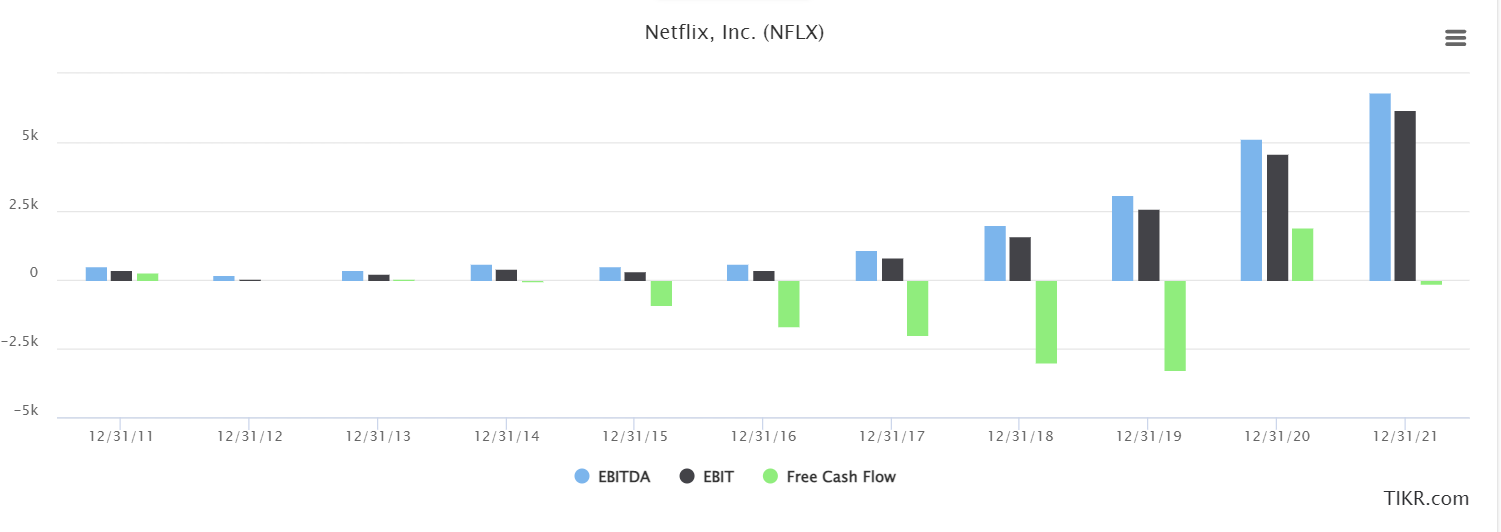
Excellent profile of @wolfejosh with lots of great quotes “Failure comes from a failure to imagine failure” https://t.co/TQVJFiEQC5
Jan 23, 2022Interesting responses to post about DropBox being dead $ for 8 years. Specifically, “Well, $DBX is a commodity product” Old enough to remember when they were the next MSFT! Narratives in tech move so fast they’ll snap your neck. Be careful out there https://t.co/apTLwpE9fe
Jan 23, 2022 Original deleted — preserved here“The nature of the private markets is that if nine smart investors pass, it only takes one relatively dumber investor, and suddenly we’re valued at $16 billion.” – Anonymous WeWork finance team member From Billion Dollar Loser: https://t.co/twz29kW7Rr
Jan 23, 2022In 2005, Joel Greenblatt taught a class at Columbia Business School. His friend Richard Pzena held a guest lecture. It’s one of the most accurate guides to successful investing I’ve ever read. Here’s an easy-to-understand breakdown 👇🏼 1. Reversion to the Mean Markets project current trends long into the future. That’s why fast-growing businesses are often overvalued. At the same time, businesses that stopped growing, for whatever reason, are getting sold off. This happens to the greatest businesses. In 2018, Apple shares dropped over 35%. Why? Because the market was uncertain about Apple’s future growth. Suddenly, the market couldn’t project big growth numbers into the future anymore. It overreacts and sells the business too cheap. And those are the opportunities for rational and patient investors. Stocks that grew extraordinarily fast will revert to their mean over time, resulting in less growth. Stocks that underperformed their potential will revert to their mean over time, resulting in more growth. 2. You got to invest in Nirvana “Once you can see a catalyst, you are late.” - Richard Pzena You can’t make money with information that everyone has. Let’s use the Apple example again. When Apple fell off their trend, you could’ve bought the business for 10x earnings. But this opportunity was based on uncertainty. If you wait for the next earnings call, and earnings are on trend again, the price will be too. Instead, evaluate the business right now. Would you buy Apple for 10x earnings even if growth slows down permanently? Buffett did. The next earnings call came, and Apple did get back on track. By now, the investment has returned over 300%. But the upside wasn’t the crucial factor here. It was the limited downside that made the investment so attractive. 3. Temporary or Permanent This way of investing relies on one thing. You find out whether the reason for the trend fall off is temporary or permanent. How do you do that? Again, focus on the downside risk. Every situation is different. Some are easier to evaluate than others. If it’s a complicated situation, you must assess the potential downside. Make the most conservative estimates possible and decide if you could still live with the estimated returns. If you do, your downside is capped, and surprises can only happen on the upside. I hope you enjoyed the learnings of Richard Pzena as much as I did. If so, I would appreciate your support by liking or retweeting this thread. I professionally research Spin-off Situations, if you’re interested in that, feel free to check it out: https://t.co/9mVbdoYSbw

Warren Buffett compounded at 22% from ‘68 to ‘12, but underperformed the S&P 500 one out of every three years during that run. The irony of outperformance is you have to have the constitution to stay the course even when you underperform 30+% of the time
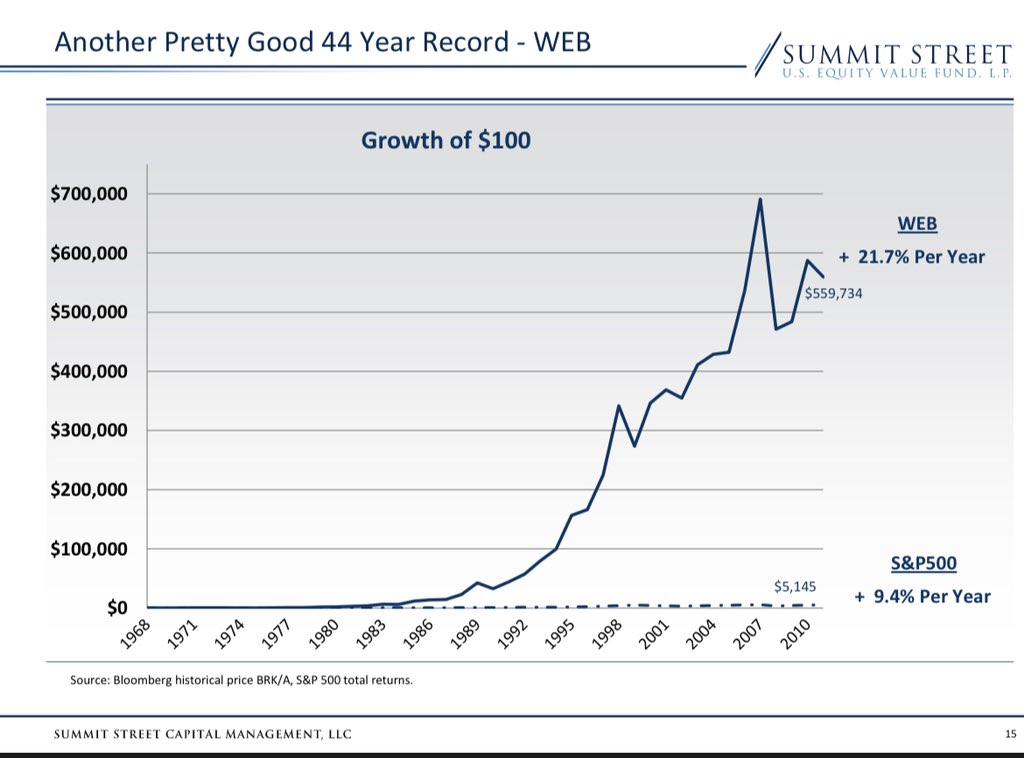
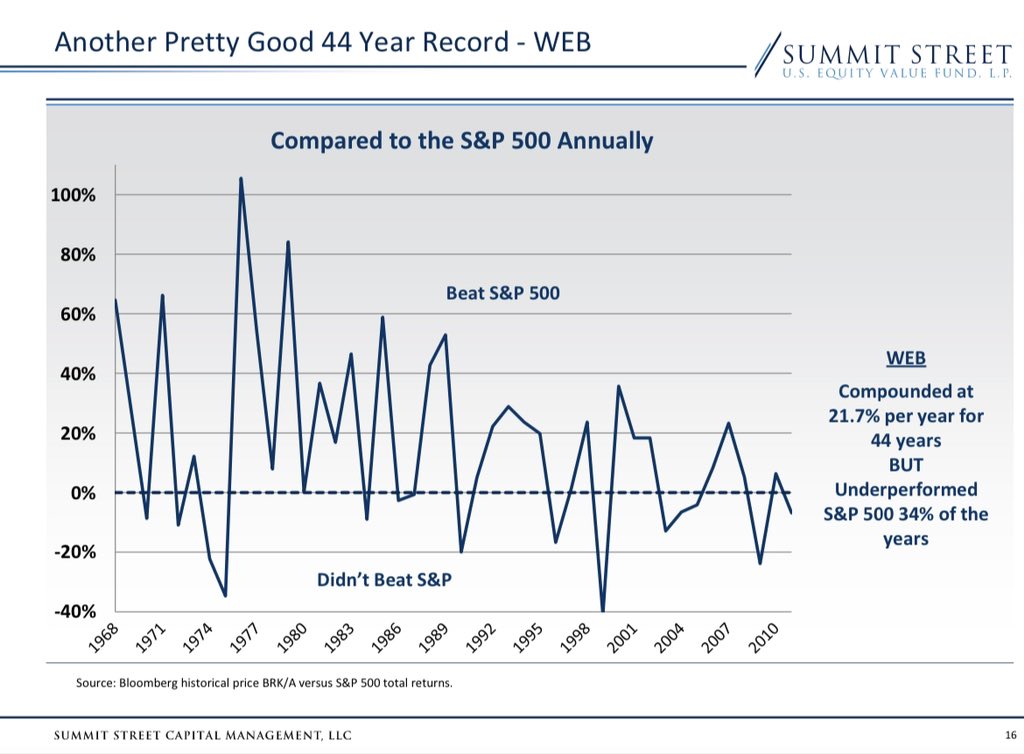
I would guess the median tenure of a partner at a VC firm is ten to twelve years I think this has always been true...I've thought about it for a while, ever since I wrote about Ben Rosen in Heat Death: the best VC of the 1980s, who retired from the firm he co-founded at his peak https://t.co/FPRFo6VbKT It seems, anecdotally, that this is a far shorter average tenure than for partners at other professional services firms My guess is that VC is, in a weird way, just unrewarding, not in terms of money, but in terms of frequency of positive reinforcement You can go a couple of years without anything good (that you get credit for) happening. Even if that good thing ends up being worth 1000x the everyday sort of good thing, it's still infrequent It would be like being an athlete that only ever competes in the Olympics. Even if you're world-class you might have a hard time staying motivated most of the time Anyway, just a theory
Jan 20, 2022 Original deleted — preserved hereI expect the following in private company financings: Strong teams + great spaces = financings continue at V high valuations Meh teams + great spaces = high valuations as most VCs make same sectoral bets Strong teams + UNCONVENTIONAL spaces = Golden opportunity for investors.
Jan 19, 2022You weren’t a genius when your stock pick was up 65% in an up-market You’re also not a genius for pointing out that someone else’s stock is down 65% in a down market Moral of the story: you’re probably not a genius
Jan 19, 2022As I have done before, here is a quick review of last year for the Uber alumni syndicate (aka Moving Capital). In 2021 we invested $40M across 77 deals - (35 of which were sourced by scouts), alongside folks like Craft, Kleiner, a16z, Index, Softbank, YC, Tiger, Battery https://t.co/grsrN4IIQm Greycroft, Greylock, NEA, Norwest, CRV, and many other top tier VCs & angels. @amralshihabi joined to run day to day operations - Amr was at Uber for six years working on two of Uber’s hardest problems; driver supply and driver safety. I think the stats speak for themselves with regards to his impact on the syndicate but it’s worth stating that it’s been wonderful having him involved. Thanks to Amr we’ve also helped fill dozens of roles at portfolio companies, made countless customer intros and helped source several term sheets for follow on rounds. Thank you to all the folks involved for making it so fun and my DMs are open if you'd like to learn more about the scout program.
Jan 18, 2022I asked, "What's the best book about investing?" I received 400+ responses. Here are 25 brilliant books that will make you a better investor: 1/ The Intelligent Investor by Benjamin Graham https://t.co/nbdAVzfuAu 2/ The Psychology of Money by @morganhousel https://t.co/Yl0DRMZo3n 3/ A Random Walk Down Wall Street by Burton G. Malkiel https://t.co/XYOk2rvQ7T 4/ How to Own the World by @andyroocraig https://t.co/A7yXAEFWF4 5/ The Automatic Millionaire by @AuthorDavidBach https://t.co/qyA9lI5Z8M 6/ Principles by @RayDalio https://t.co/RiUj5Zl8w3 7/ The Richest Man In Babylon by George Clason https://t.co/rfafIuEPLZ 8/ Rich Dad Poor Dad by @theRealKiyosaki https://t.co/GRnAvbkjhi 9/ Thinking in Bets by @AnnieDuke https://t.co/RY7PDcSJ20 10/ Richer, Wiser, Happier by @williamgreen72 https://t.co/7G8y6GNjrN 11/ 100 Baggers by Christopher Mayer https://t.co/6NHCgpjr6y 12/ The Joy of Compounding by Gautam Baid https://t.co/6N7kRd5IR6 13/ The Simple Path to Wealth by @JLCollinsNH https://t.co/eewDjhWgJM 14/ Your Money or Your Life by @vicki_robin https://t.co/KGZZTXgist 15/ How To Avoid Loss and Earn Consistently by Prasenjit Paul https://t.co/NmdXmPCBmG 16/ Seeking Wisdom by Peter Bevelin https://t.co/gj0pwwhu7u 17/ The Little Book of Common Sense Investing by John C. Bogle https://t.co/4B9CvN5rWW 18/ The Index Card by Melaine Olen & Harold Pollack https://t.co/GoBprSlIXZ 19/ Let's Talk Money by @monikahalan https://t.co/leHVyGPF9X 20/ The Millionaire Next Door by Thomas J. Stanley & William D. Danko https://t.co/VQOM92711N 21/ Market Wizards by Jack D. Schwager https://t.co/n3k1gokY9m 22/ The Warren Buffett Way Robert G. Hagstrom https://t.co/pax87d2S1S 23/ How to Make Money in Stocks by William O'Neil https://t.co/eKBORbw0g2 24/ Cashflow Quadrant by @theRealKiyosaki https://t.co/7ZQRfOlnsq 25/ Warren Buffett and the Interpretation of Financial Statements by Mary Buffett & David Clark https://t.co/pbuT920k2r PS: this thread uses amazon affiliate links so if you want to support A&B (and yourself), buy a book! And if you want more: -book recs -book reviews -reading tips Follow @AlexAndBooks_ 👈 Want a new book summary every week with actionable advice to improve your life? Then sign up for my free book newsletter: Join 12,000+ readers here: https://t.co/7lQSijvU59 Looking for even more awesome book recs? Check out this thread: https://t.co/FUmGVUkDQT
Jan 18, 2022If you’re young (or not) and thinking about where to focus your career, pick a market that’s growing over one that’s shrinking. You’ll have a lot more opportunities and get a lot farther with the same amount of effort.
Jan 18, 2022A different take on bifurcation in software: Everyone is destined for the red circle (historically normal range). The holdouts (blue circle) are the companies who are still accelerating growth (or low float). Eventually acceleration will stop. Everyone destined for red box? https://t.co/wV24oU0pBV Q4 earnings will be telling. Any company in the blue circle that shows even the slightest signs of slowing down will be punished. What will be interesting to watch is what happens to companies in the red circle who miss I do think there are a smaller number of exceptional software companies who are set up for long term durable growth riding long term secular trends. In my opinion the spread of these exceptional companies multiples to median multiples should be higher than it has historically Now, in one scenario the median multiple could drop lower than it has historically, and even with a higher spread between median and exceptional, the exceptional multiple could be lower than it has been historically. Time will tell! Bifurcation in software is good - everyone shouldn't be treated equally. We've had a rising tide of ZIRP the last 2 years. As that goes away, we should separate the wheat from the chaff. Only a small number of companies should be in the exceptional category
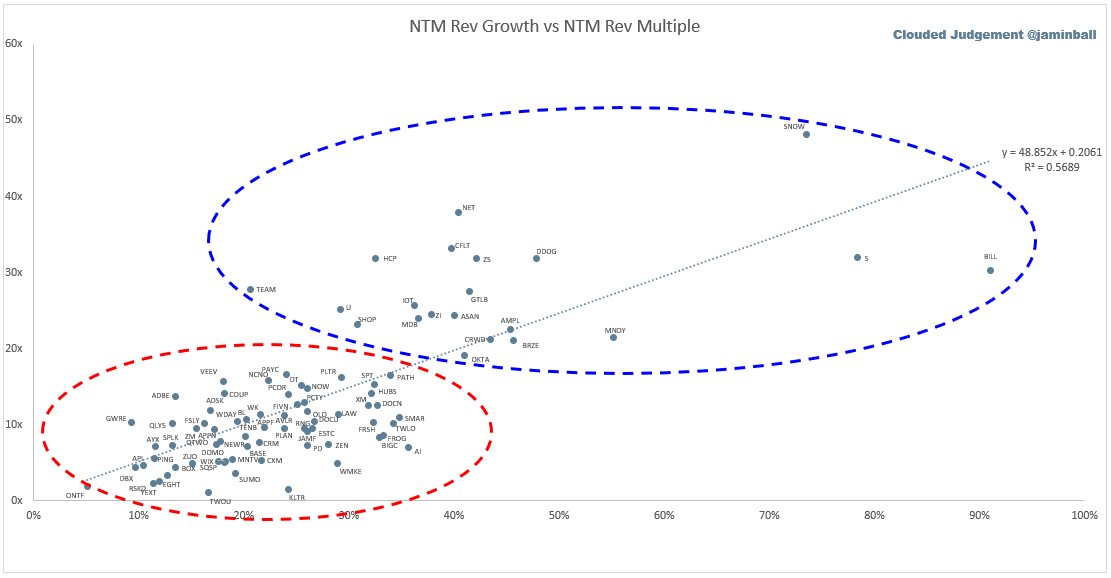
VC expectations at $100m ARR: 2012: 30%+ growth 2016: 50%+ growth 2022: 100%+ growth
Jan 13, 2022The two ways to make money in web2: bundling and unbundling The two ways to make money in web3: fractionalization (co-ownership) and composability (co-creation) h/t @divine_economy One of my new favorite writers @divine_economy https://t.co/7rGH3CBhXA
Dec 22, 2021 Original deleted — preserved hereA lot of older times in VC talk a lot about the incentives of “fees” in venture Why? Let’s take a look at the Old Days. Like, until 2019. 1/ Until 2019 or so, a “3x fund” — that tripled the LPs’ money was top tier. “2x” was not great, but good enough for another check. 2/ Today, the bar has gone way up. LPs want 4x net funds or better now, and may have multiple funds per cohort that are 5x-10x or more. 3/ Now, depending on the maths and fund structure, in a “2x net” fund, the partners might still make the majority of their money off fees — not “carry” from investing At “3x net”, the math would favor carry, but only many years down the road 4/. Now as you cross into 5x fund, the “carry” or profits from the investment simply dwarf the fees, at least on paper No one cares anymore what costs of deploying the capital are at that rate of return VCs can often even take 40% of profits if they’ve done this multiple times 5/ So net net, times are good for LPs and venture No one cares anymore if partners are making tons in “fees” for managing money if they can repeatedly deliver 4x+ net funds or better So the discussion about VCs being paid too much for mediocre returns has sort of faded For now
Dec 20, 2021Being a solo capitalist is not all it’s cracked up to be. Building a new investment firm is not THAT different from building a startup – it’s hard, it’s lonely, and if the goal is to scale, it’ll inevitably require addtl resources, esp in an increasingly competitive environment. Many from the 1st solo GP wave are adjusting the model - @Nivo0o0 brought on @MLifschitz32, @jmj is aggressively hiring, @ljin18 joined forces w/ @variantfund. Even the creator of the term “solo capitalist,” @nbt launched his firm @footworkvc with a partner (Mike Smith). Many emerging managers are now launching in pairs too, like @paigefinnn+@jslishi or @jasonoliver+@brianjcho Being single is better than being in a bad partnership, but a great partnership has so many adv when building for the LT (+ most institutionals won't invest in solo GPs)
Dec 17, 2021 Original deleted — preserved hereWho is building the “modern family office”? I’m thinking software for people that are below 40 and have $5M+. Basic wealth management doesn’t cut it. Should also solve for things like: - Estate Planning - Trusts - Tax Strategy - Charitable Contributions I want to fund this.
Dec 17, 2021Is the Future of VC ‘Solo Capitalists’?
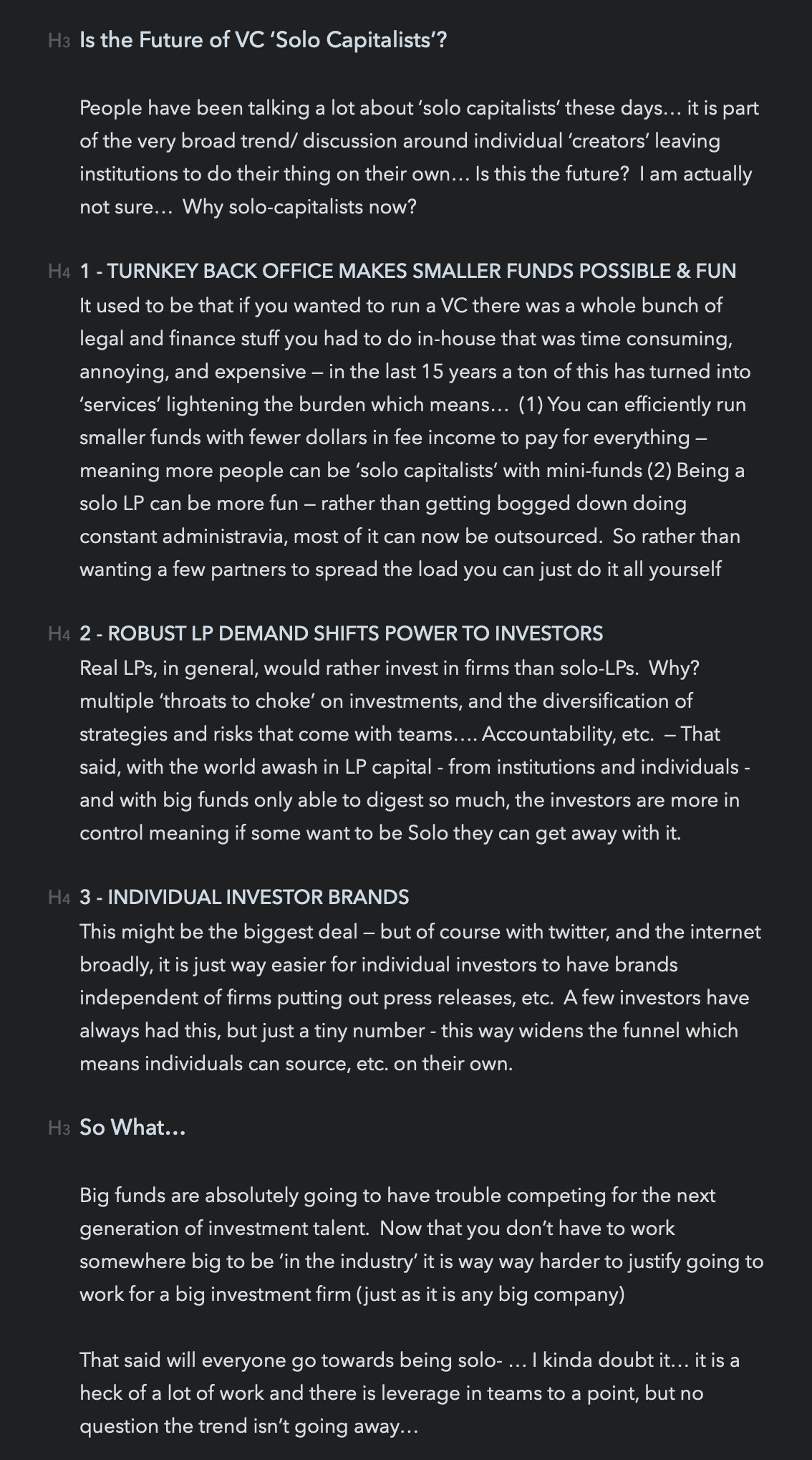
"If you find a useful idea, it’s probably worth it to work out all the second and third order implications before moving on." by @ejames_c https://t.co/7I0T9mh3Vj "Sleep and Zakaria imply that not all moats are created equally. It’s tempting to think that if a moat produces overwhelming pricing power, this results in unparalleled profits and therefore acts as an unalloyed good."
Dec 14, 2021(1/n) Started work on $PTON 2 months ago and came away impressed with the bizz. Surprised at how low expectations are at this price and wanted to put my $0.02 out there for feedback. Disclosure #1: I’m now a shareholder. Disclosure #2: this is a long-ass thread, but c’est la vie. (2/n) PTON strategy is simple: be CAC-neutral on hardware & generate all FCF from subscriptions. Subscription gross margins were 62% in FY21, but incremental gross margins were 75% in 1Q22 (see graph). As the sub base grows & biz matures, gross margins should approach 75%+. (3/n) Subscription revenue has increased from 15% of total in ’17 to 22% in ‘21. Even if new unit sales plateaued, or fell, subscription revenue would eventually eclipse hardware revenue (assuming churn doesn’t quadruple – I’ll get to that). (4/n) If sub. gross margins hit 75%, then sub. operating margins could be in the 50% range. If subscriptions end up generating 50% of revenue, that’s 25% operating margins on this business (0% for hardware). Not bad. (5/n) This isn’t a “money losing business”, just a fast growing one -> most of the growth capital is deployed on the income statement. The value proposition, strategy, and relative competitive position all seem sound. (6/n) Lots of great stuff to highlight, but let’s start with bear thesis, which seems to be: 1. CAC hasn’t improved from ‘17, so PTON isn’t CAC-neutral on hardware 2. Subscriber churn should increase A LOT 3. Unit sales should drop: COVID borrowed demand and PTON is a “fad” (7/n) On CAC -> the concern seems to be that it exploded in 1Q22. CAC tends to increase with launch of new products and geos (happening now with Australia & Tread). Tread recalls didn’t help, nor did supply chain issues (advertise but can’t move product). I think this will pass (8/n) Mgmt thinks Tread could be bigger than Bike. Unaided awareness for Tread is low, so makes sense that ad spend is high today. Seems odd to think that PTON’s CAC won’t improve over time with high NPS and growing brand awareness. Don’t know if Netflix is best analogue, but: (9/n) What’s the right long-term CAC number? I don’t know, but I’d comfortably take the under on $800 (particularly if growth slows). I’m also reasonably confident that PTON can (on average) be CAC-neutral on hardware in the future as hardware GP normalizes in a couple quarters. (10/n) For context, iFIT, PTONs largest competitor, spends substantially more on S&M to drive an incremental dollar of hardware sales (2-5x more, depending on period). If both businesses wanted to be CAC-neutral, PTON would end up having a hardware price advantage, all else equal (11/n) On churn, PTON consistently realized annual churn in the high single digits. iFIT churn is 2-3x higher - iFIT engagement is worse, & lots of subs came free (for 1 year) with equipment, so “intent” of an iFIT sub is different. Don’t think PTON churn will approach iFIT churn (12/n) @d_mccar did some work on PTON churn that puts some concerns to bed. Even still, I think there are good reasons churn can trend higher in the future, but I think “higher” might mean 10-12%, not 20%. https://t.co/G80vpypjIZ (13/n) If LT churn is low teens, implies a half-life for subs of 6ish years. Makes sense to me. This would be a notable step-up from realized historicals. Important to recognize that 1 sub supports on avg. >2.0 users (as long as 1 of those users is engaged, the sub persists). (14/n) On incremental hardware unit sales, ~5.0 mln home fitness equip. units are purchased in the U.S. every year (pre-COVID). Globally, it’s ~14 mln units. Historically most was non-interactive. Top 10 markets make up ~70% of those units, & PTON now in 5 of those markets (15/n) Despite having entered 5 of those markets, the U.S. still makes up 90% of PTON unit sales (even though U.S. represents just 35% of global industry unit sales). This tells me PTON is still significantly underpenetrated in existing international markets. (16/n) So even if bike unit sales fall in the U.S., incr. penetration in existing int’l markets should help offset. Expansion to new markets is another tailwind. Don’t need aggressive assumptions to model flattish agg. bike unit sales for PTON over next decade (from 2021). (17/n) Global treadmill market is 2-3x bigger than bike market. But let’s say Tread unit sales only match Bike/Bike+ unit sales. That’s prob another 1.0+ mln units/yr at scale. Sure, some won’t come with attached sub (1 sub covers multi units), but that’s lots of new sub growth. (18/n) We can all but ignore other hardware, and I think a compelling argument can be made that unit sales of bikes/treadmills could be 2.5+ mln units/yr once PTON is in the 10 mkts that matter and Tread matures (18-20% market share of home fitness equipment units). (19/n) It’s important to recognize that non-interactive home fitness equipment has been around for decades. Home fitness isn’t a fad. If nothing else, interactive fitness equipment should take share of this existing market -imo, the value proposition is orders of magnitude better (20/n) I recognize that interactive fitness equipment competition is increasing, but there are good reasons to believe PTON is competitively positioned (and could capture 18-20% market share of home fitness equipment). I think it comes down (mostly) to a combo of scale + brand. (21/n) Scale matters for a few reasons. PTONs sub base is so much larger than the #2 competitor that they can afford to spend orders of magnitude more on their content. In 2021, PTON spent more on payment processing fees than iFIT spent on their entire sub product. (22/n) Take it a step further. PTON’s R&D spend in 1Q22 ALONE was greater than iFIT’s spend over 3 YEARS, and spitting distance from what Nautilus (#3 in the space) spent over a DECADE. This supports the notion that PTON is likely to end up with better hardware/software. (23/n) PTON has like 5 SKUs, while iFIT/Nautilus have >30. PTON manufactures orders of magnitude more units/SKU than competitors. They also own significant % of their manuf. capacity while competitors outsource. Should result in better manuf. efficiencies. (24/n) Final half-baked thought on scale: PTON order density is obviously best in space. They deliver (through a 1st party network) and install their own equipment. With higher order density, the logistics/distribution cost should be lower/unit than comps. Helps they’re 100% DTC (25/n) Since PTON’s strategy is to be CAC-neutral on hardware, these scale benefits should = lower equipment prices over time (already happening). If you’re in the market for interactive fitness equipment, this contributes to the best VALUE to consumers. Scale economies shared. (26/n) If the scale economies shared strategy works, prices can come down further & that helps make the hardware more accessible. Even at premium to non-interactive equipment, the value prop still seems better. That explains why Nautilus (lots of non-int. equipment) lost share (27/n) On brand -> unaided awareness and NPS for PTON products is clearly much better than competitors. When’s the last time you heard someone say “hey, I can’t wait to buy that NordicTrack Commercial S22i Studio Cycle”? I’d bet the answer is “never”. (28/n) PTON’s FB group has >400k members and the reviews speak volumes. Instructors have near-celebrity status, and that keeps engagement high. Reviews are generally exceptional (see below). Forget about new entrants, existing competitors have a tough time competing for attention (29/n) Google trends data reflects this relative brand awareness/value. (30/n) I think PTON can compete effectively in existing market of home fitness equipment. I’d also argue that this market should grow in time as interest in fitness increases. If we use gym memberships as proxy for “interest in fitness” we see that this is a secular trend. (31/n) You don’t need to assume that PTON takes share from gyms to make the math work (just that the split between gym and at-home fitness remains constant), but there is some data to suggest that they probably will take share from gyms, even if only modestly. Evercore survey: (32/n) The current share price seems to assume that unit sales already peaked, subscriber churn goes to 15%, subscription margins never approach inc. margins from 1Q22, and CAC (@$800) is perpetually above hardware gross profit/unit. I feel pretty good betting against this (33/n) To back into current price, I need to assume total subs only reach 7.0-7.5 mln by 2030, and operating margins peak at 15-16%. That’s a 12% CAGR in subs, down from a >100% in every year since inception (or 8.5% CAGR from low-end of 22 guidance). Seems like a low bar. (34/n) The current price also seems to ignore the incremental value that could be generated from the apparel business, certified pre-owned programs, and commercial fitness markets. (35/n) Is there some stuff I don’t like? Sure. Is mgmt missing on guidance one of those things? Eh. Is overbuilding capacity in the near-term one of those things. Undecided. The last equity raise? Sure, didn’t love it. But overall, the good drastically outweighs the bad for me. (36/n) I can’t get every nuance of my view across in a thread (even a 35-tweet thread), but that’s the gist of the opportunity I see. Price seems to be driving narrative, and narrative has now gone to an extreme (the other way). (37/n) Insiders seem to directionally agree. Jay Hoag (TCV) participated in the raise, and bought more stock in the open market a few weeks back. @LongHillRoadCap highlights a bunch of other insider activities that are directionally positive. (38/n) I might be missing something, and welcome any thoughtful/constructive pushback (let’s try to avoid the visceral reactions that seem commonplace re: PTON). I’m open to changing my mind if a compelling case can be made! Otherwise, LETS GOOOOO! (39/n) As an aside, I’ve been using bike/trainer/Zwift for ~5 yrs. Don’t see that changing 5 years from now. The setup won’t end up as clothing rack. Sure, many people can’t stick to fitness goals, but many can, and if PTON works for those people, they’ll be subs for a long time. (40/n) As a final aside, I hate the “PeLoToN Is A $14 BlN mKt CaP bIkE wItH aN iPaD” comment. Shimano has a $25 bln market cap and mostly just makes this 1 component for high end bikes (only half joking):
Dec 13, 2021Some say founders pick @TigerGlobalFund because of high valuation, or because they are incredibly fast to hand out a TS. But I think it is something else. Here is a thread on how @TigerGlobalFund has created one of the most successful branding campaigns the VC-world has seen 👇 1/16. Let's start with the obvious: Money is a commodity. Despite Tiger Global having a lot of it (latest fund: 8.8 BUSD) there are others who also have plenty. You will not win deals only by writing the largest check. 2/16. Nor will you win only because you are the fastest. Yes fundraising is a very cumbersome process and getting to a TS quickly is a big relief. If time was the only factor all funders would stop fundraise after the first TS - which we know is not true. 3/16. Most founders (and investors) still care about brand. So how did Tiger Global build its very successful brand and why do people like it? 4/16. They did not build it here: 5/16. Nor here 6/16. I think you get the point... 7/16. So how did they do it? By shifting the VC lingo on its head. 8/16. The largest claim to fame for VCs out there is to be founder friendly. And some VCs do spend a lot of time with their portcos helping them grow, whilst other ghost. Ultimately the truth is that some live up to this promise and others don't - but the lingo stays the same. 9/16. Except for Tiger. They don't claim to be founder unfriendly, they just promise you nothing of their time after the wire and they stick to it. They also bring high valuations, and they are fast to TS. So all the things they promise holds true - a 100% no BS brand. 10/16. And they managed to convey this information with 0 effort. How? They made other VCs their most efficient ambassadors. If you are in VC you have spoken about them. Period. And the discussion trickles down to founders, who ultimately are the decision makers. 11/16. For example: Tracking Tiger Global by the excellent @modic123 https://t.co/IKuiF6zl5t 12/16. @paulbz capturing VC small talk perfectly https://t.co/TLXQEWweMa 13/16. (Or just the content of this post, guilty as charged) 14/16. So thanks to this ambassador campaign they are becoming the most well-know brand in venture. Without having spent any dollars on marketing and zero time on brand building. Intentional or not, what started as an investment thesis became a fantastic marketing flywheel. 15/16. So what does it all mean for other VC funds? There are equal amounts of opinions and this as there are VCs. Some advocate that all VC founds now need to go earlier, or that the standard VC model will die out, or that a higher degree of specialisation is needed. 16/16. At the end of the day what founders want is what matters. If founders want investors who role up their sleeves and help with the things VCs actually can do well, these funds will remain. But VC funds not walking the talk will be increasingly difficult.
Dec 10, 2021I saw this graphic shared on LinkedIn today. Of course this is ridiculous and flawed in many ways. But the scary thing is, many investors (LPs) new to the class believe these type of stats. If this was true, VC would have been doomed a LONG time ago.
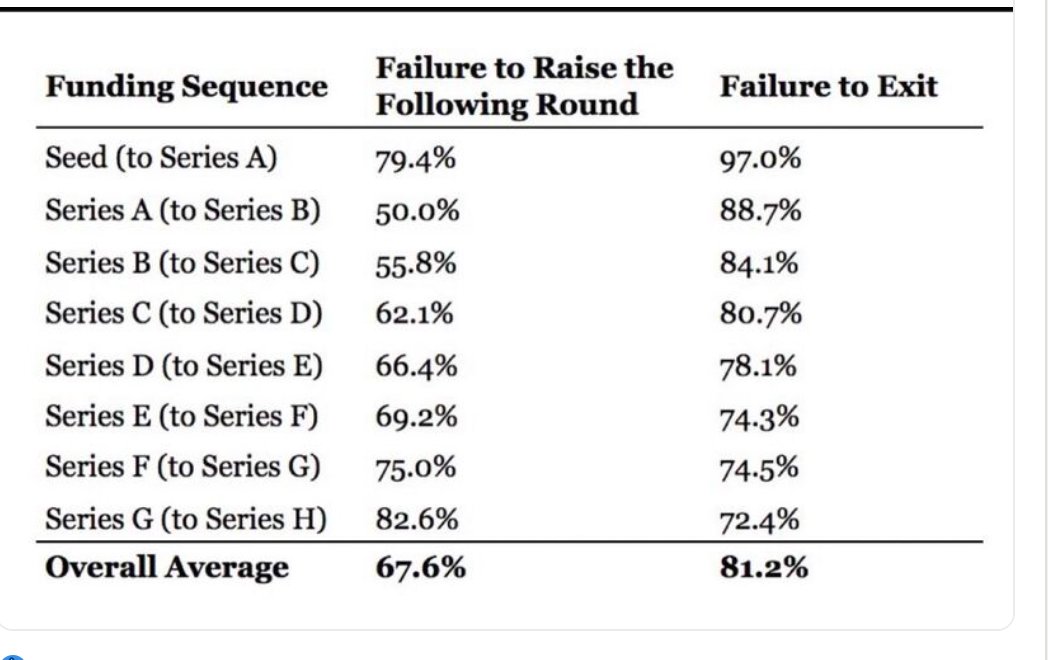
1) While there is tremendous hubris in moonshot climate technologies, at @EqualVentures we feel the greatest opportunity to impact our climate is digital transformation of the green workforce. Check out our article with @climatetech_vc to learn more. 🧵 https://t.co/wQ0HWaidNq 2) The problem is soft costs (labor, permitting, customer acquisition). Soft costs now account for 2/3 of development costs. 3) Software can go a long way in reducing many of these costs, however, and we’re seeing an incredible amount of companies attacking these line items (which is great!) 4) That said, nearly half the market for residential energy development is done by small businesses who can’t afford these solutions and/or lack the ability to integrate the myriad of different solutions together. 5) These SMB developers also lack the economies of scale of larger developers that give them lower cost to materials and lower cost of capital for these projects. 6) At @EqualVentures, we’ve seen tremendous success in providing SMBs with freemium vertical software solutions and leveraging third party means of monetization such as financing, procurement and insurance. We think the green workforce is ripe for this type of opportunity. 7) If you’re building a company in this space, PLEASE reach out to myself or @simrangsuri, as we’d love to meet you. 8) If you’re interested in seeing our full "prepared mind" report on "Business in a Box for Clean Energy Developers", please check it out here. As always, we love feedback! https://t.co/oJk3Cx5ICg
Dec 3, 2021When Slack rocketed to $100m faster than any SaaS company we’d seen, it seemed like an outlier, an anomaly Now we see Snowflake growing 110% at $1B, Datadog 70% at $1B, Okta 60% at $1B Now we see Slack wasn’t an outlier It was just early
Dec 2, 20211/ I'm a nobody, but here is a broken-down version of my research process - curious to hear how this compares to others' processes: 2/ So you found a company that seems interesting - cool. Try to forget about valuation and just focus on one question: how does this company generate revenue? How is it going to grow? More users? Upselling? Is it a subscription model? Who are its biggest customers? 3/ Understand the competition - at this point you're trying to understand the broader industry landscape. How and why is each company better/worse than each other? How do customers view each company? More importantly, how does each company view one another? 4/ Go through presentations, reports, transcripts, podcasts - any piece of information that gets you up to speed up to a point where you're able to have a somewhat fluent conversation with an industry expert. This is the longest stage of the process but it's the most valuable. 5/ How defendable is the product that is being sold? Can someone replicate the entire value proposition with $100m in seed money? Book: Competition Demystified by Greenwald. 6/ Ideally you're able to speak w management at some point. Try to understand their LT vision - not about the next quarter. Where are they going to spend money? How are they paid? Book: The Outsiders by Thorndike (I know it's beaten to death here but it is actually useful) 7/ Now you can start breaking down financials and being an excel monkey - I understand how some people hate modeling, but it forces me to understand each line item. Go back at least 3-5 years (broken down by quarter) and understand what drove trends and seasonality if any. 8a/ Do you have a FACT-BASED opinion that differs from the market? Compile sell-side reports (if available) - are you able to track the company's progress differently than they do? PS: This is part of the reason why I like microcaps more - the 'market' is often less informed. 8b/ Book on the last point: Best Practices for Equity Research by Valentine 9/ Understand the bear case for the company - if you can speak with bears even better. Think down, not up. Establish clear KPIs to track and measure reasonable downside and upside scenarios. Books on this: YCBASMG by Greenblatt, Margin of Safety by Klarman. 10/ Finally, know when you're wrong. Avoid thesis drift at all costs and cut losers if things aren't tracking to your liking. Have fun.
Dec 1, 2021 Original deleted — preserved hereIn my current role I’m a consumer VC, crypto investor, and LP all rolled into one (which in practice means that at any given moment I dunk on 2 of my 3 “work personalities”) It's a unique vantage point on the tension between trad VC & crypto and how crypto investing evolves 🍵 As everyone & their mom is raising a crypto fund (I have 6 in LP pipeline right now 👀) and trad VC firms race to hire crypto partners (y’all should see my DMs 👀), I’ve been trying to step back & reflect on a key Q: What are sources of comp adv in crypto investing? Who wins? First, let’s simplistically summarize the last 50 years of venture capital: funding big emerging technology bets (semis, Internet) evolved into funding application layer (consumer apps, Saas) evolved into funding incremental, relatively de-risked innovation In many ways funding aperture narrowed while more capital flowed into ecosystem (encouraged by big early winners) = more & more competition. As in any competitive space, branding was a key comp advantage. Then a16z has sprung onto the scene w/ new comp model: value-add services Basis of competition shifted and suddenly everyone was adding talent/ops/board/PR/what-have-you partners (competing down the impact of such services in the process). Services cost $ so funds also needed to grow AUM – 2% of $2B gives you a lot more play money than 2% of $200M. While big funds played branding/services/scale game (while suddenly also fighting off the ultimate scale & speed: Softbank & Tiger), barriers to entry in the general game increased, which opened market oppty for specialists, esp. driven by individuals w/ strong personal brand. At this point, there are seemingly 3 winning plays in the “my dollars are greener” race: 1. heavily-involved service platforms (a16zs & Sequoias), 2. heavily-specialized boutiques (industry/solo GPs/etc) 3. fast & furious IRR vs MoM players (Tiger) Everyone else is kinda f*cked Wait, but you were going to talk about crypto? Yup, now that we have the context, let’s get to it. Per the above, VCs try to differentiate their $ vs competition for market share but one thing remains true: startups need those $. Crypto startups… not so much. The best projects (except for earliest, earliest stages) can drop tokens/NFTs & fund that way: https://t.co/P7c6rsHJen If you are a VC, @BoredApeYC does not need your dollars, or your hiring, or your marketing/PR, or your fundraising help. They got it covered through their super-bought-in community. That removes the need for all traditional value-add services (for now*). https://t.co/LTw1ugpDHe …key word being “traditional” Value-add still matters but it’s crypto-specific value-add like research/tech (Paradigm’s spike) or legal/regulatory (a16z’s spikes)... which collapses the distinction between platform & specialist: to compete, u have to be crypto-native or u NGMI So, my conclusion no. 1: Crypto-native funds (esp w/ the amount of wealth in the crypto community sloshing around!) are better positioned to dominate crypto investing A trad VC playing the crypto game cannot match the sourcing network, diligence muscle, or value add, to compete BuT wHaT aBoUt a16z? They didn’t dip their toes – they nailed the crypto fund, both from the authenticity/network standpoint (hiring 726194 crypto ppl) & specific crypto value-add standpoint (plus they still have the entire trad value-add engine which is a nice cherry on top) Ok, how about basis of competition *among* crypto funds? Conclusion no. 2: Crypto will evolve the same way as general VC ecosystem (and IB before that) – the bifurcation between large crypto platforms and niche crypto plays (whether for crypto-specific tech, distribution, etc.) I’m obv biased (bc I play here) but I believe that one of the most imp "niche" plays is deep consumer crypto expertise – helping crypto-native startups position for mass market (need-based products, storytelling, GTM) AND helping great non-crypto-native founders w/ crypto strat It’s also the only area I see trad VCs well-positioned – for crypto founders who care about general market impact (not just pushing the tech frontier forward / serving crypto natives), great trad VCs can be valuable *complementary* co building partners (positioning & talent gaps) To recap my *current* thoughts: • Crypto-native funds will win vs trad VCs • Winning crypto-native funds will either be large platform plays or specialists • Consumer crypto is an imp “niche” investing play so that crypto can reach billions of ppl & not just the crypto OGs
Dec 1, 2021 Original deleted — preserved hereWrote a few follow-up thoughts and reflections about a recent Tweet of mine – $CSU.TO vs. $BRK I also explain why I don’t have investment heroes. A quick read, hope you enjoy. https://t.co/5QaCx9bRmx For those interested in learning more about Mark Leonard & $CSU.TO this thread has some resources. https://t.co/kZZk4ZTtGp
Nov 30, 2021I do not believe you learn more from failure than you do success. People just do not apply the same level of “post-mortem” analysis to their successes, hence attribute greater learnings to failure.
Nov 28, 2021Interesting raw founder feedback for all you young VCs out there: / VC Partners tend to display real interest in understanding the big picture and appreciative you are presenting your life work Vs / Typical VC Associate just nit picking on specific details of the business Just for context this team spoke to over 49 funds raising $8M late seed round and that was their most striking takeaway - constant across funds.
Nov 26, 2021It took me 15+ years to finally understand a VC's "portfolio construction" and how it affects their decision to invest. Founders, here's what you need to know. Warning: this is 400+ grad level stuff. Scroll to the end if you just want the TLDR. 1/ Background: I've founded 3 venture funded companies and raised many many rounds of capital. I've always struggled to understand how pro-rata decisions are made or how fund cycles affect a VC's process and speed. Here's the secret. 2/ Smart VC's all have a "Portfolio Construction Model". It's basically fancy math that lays out if I raise a fund that's X mil dollars, I think I should invest in Y seed cos, Z series A cos, do this many pro-ratas etc to generate the some expected return. 3/ After deciding num of co's and stage to invest in, fancy math has many key inputs to optimize returns, but the main ones are: - Round size and graduation rates per stage - How much to follow-on on each stage - Whether to recycle capital when co's exit 4/ The output of the model is something called "TVPI" or total value paid-in, which for simplicity is how much you return to investors from the money they give you. You can generally think of 3x as you've approximately tripled an LPs capital. 5/ Lets do examples. If I raise $10M to invest in seed stage companies. $150k each, I'll invest in ~50 companies. Assume some graduation rate (50% co's get to next stage, at $8M post, etc), the model expects a return of 7.11x TVPI. A "good" fund returns 3-5x. 5a/ It turns out the most sensitive part of the model is what your assumptions are about pre-seed, seed, A etc grad rates, valuations, exit rates, etc. This is why VC's pay lots to keep an eye on benchmarks on all these rounds in different geos, sectors, etc. 6/ The next big decision is how to much to allocate to follow-ons. These are called "reserves". In my example model. If I decide to exercise my pro-rata to keep my ownership on every round, my TVPI drops to 4.43x. Ouch. 6a/ If I exercise only 20% of the time (keep picking the best cos), then TVPI is 6.12x. What if I pick the best co's, but only in the subsequent 2 rounds, not all the way to IPO? 6.8x TVPI. You can see how this gets complicated fast. 7/ While reserves are interesting, picking ability actually matters more. So obvious in hindsight, but VCs need to pick good companies. In our example, if 75% of companies get follow-ons, you get the 7.11 TVPI. If 50% suddenly it drops to 3.71x. 8/ The last 'basic' idea then is recycling. If a company does really well (or really badly) and gives you back money within the first X years, do you put that back into more companies? Turns out recycling is generally very good. 8a/ In example above, if you recycle in the first 3 years up to 20% of the fund, you get 7.24x TVPI. Recycle for 5 years, you get 10.7x TVPI. This again assumes you keep picking the same quality companies. 9/ The biggest 'ah-ha' point here is Smart VC's will compare their initial models to how their portfolios are doing right now. They'll do this quarterly, and it's THIS that affects their 'mood' in how they invest. 9a/ ie. If I'm generating higher TVPI then I modeled because I had a great early exit, I might be subtly more lax in investing, maybe less aggressive, more focused on my next fund. If I'm behind, I'll be more aggressive. 9b/ Timing also matters a lot. If I'm early in my fund, I need to get companies under my belt, if I'm in the middle or late in the fund, I'm probably majority deployed. 9c/ The biggest "it depends" factor is actually the pro-rata reserve portion. It'll probably be hard to get a VC's pro-rata strategy from them without a very very good relationship, but you can at least ask how much reserves they have, what % deployed. 10/ So what should you really care about? As a founder, I really think the answer should be not much. Focus on a great product and making customers happy, and you'll get funded by the best VC's. 11/ But if you want to show off your mostly not very useful knowledge of portfolio construction to VCs, ask: - "How many companies do you do every year at our stage" - "How much have you reserved for follow ons" - "How far are you into this fund" 12/ That'll give you some indication of how aggressive they might be at making a term sheet and how much you can depend on them for future rounds. Bonus: If you're really confident, ask them "how's this fund doing? What's the TVPI?" :) Then DM me on twitter. Happy fundraising!
Nov 25, 2021The entire thread is great. This particular point is worth highlighting - a VC is more likely to be focused on the next fund rather than the current or last. Not focused on you (the entrepreneur). https://t.co/pAgbrqNSZX There’s is a conflict of interest between the VC (same applies to PE) and the entrepreneurs and LPs. Most prioritize the fund management business over all else. But don’t blame the GP. They are delivering what LPs want. LPs want a model. A formulae for success. Predictability, repeatability, consistency. Unfortunately the world doesn’t work that way. But that’s what they want (and need) so there will be people willing to try to deliver (for a hefty fee). The larger the fund management business the more the consistency becomes possible. So money flows to larger and larger funds with more formulaic approaches to investing which thinks of companies as deals as widgets being cracked out of a deal machine or factory. This will stomp out any potential for uniqueness or greatness. But people will settle for mediocrity all day for consistency and the LP and GP are both in on it. The loser is the founder who has a life’s mission that will span across many fund lives. Doesn’t fit the fund mandate. I’ve talked about this before and some people agree with my observations. https://t.co/JNRe0rJfbM What a great thread riffing off of mine. Worth reading. This problem spans far beyond the fund management world into corporate and elsewhere. I see this sort of problem in the world of education. It’s a shame. https://t.co/S63t3UTlSW
Nov 25, 2021Biggest difference across public and private tech is the gap between the very best companies and the average company The disconnect in chart one is (partly) due to the best businesses not looking like chart two Best: https://t.co/lOkWTvfv0G Average: https://t.co/ir9nA2SDLd https://t.co/uhn26q6CeI
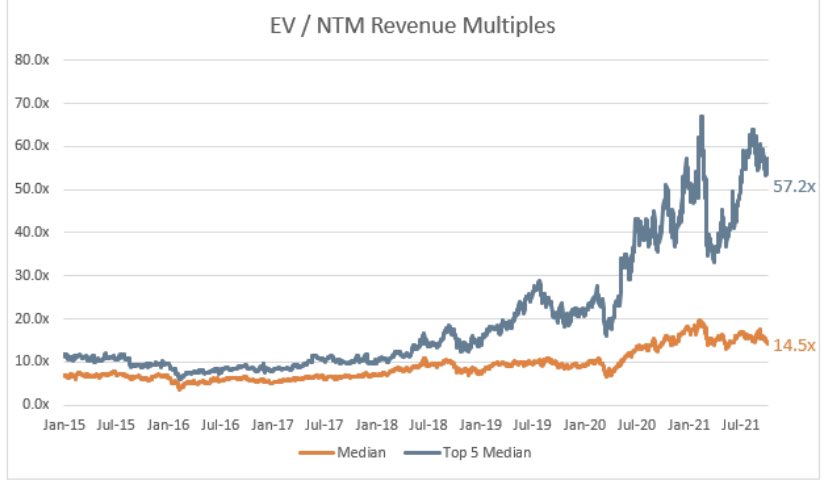
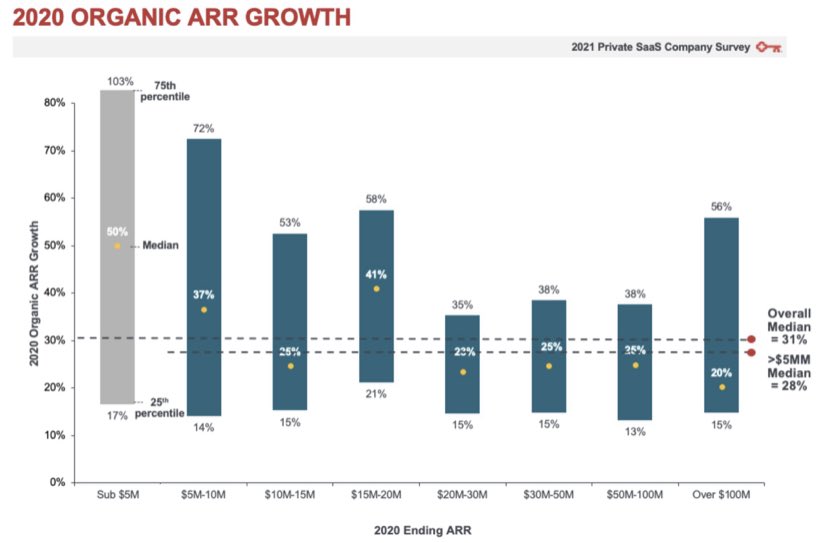
“Sometimes the competitive advantage of a hedge fund manager is precisely the ability to adapt. George Soros used to say, ‘I don't play the game. I look for changes in the rules of the game.’” https://t.co/HMqsi2WcjM
Nov 20, 2021Excited to share my conversation with @scmallaby who shared his research process and insights on legendary investors. “The key was to do an unreasonable amount of preparation work. It shows that you're serious and not wasting people's time by asking obvious questions.” “What you really want to know is their thought process around an important or interesting trade. How did they make the call? How did they develop conviction? How did they hold on during the inevitable hiccups and adversity? It's that reconstruction of the case study.” “I often show up with very detailed notes and a timeline. I'm able to say that, ‘I know from your letter that in this month you made a profit on dollar/yen. Dollar/yen had a big move on the 15th and 16th of that month. I really tried to kind of prompt them as much as possible.” Full conversation here: https://t.co/329mBgHCoW
Nov 19, 2021Charlie Munger's three rules for a great career: (1) Don't sell something you wouldn't buy (including ideas) (2) Don't work FOR people you don't respect/admire (3) Work only WITH people you enjoy 90% of the people I talk to can't check all three boxes. https://t.co/RTaaLQY6AZ
Nov 17, 2021i think one of the under appreciated parts of the Tiger model is that they have no desire to be a main character. IRR is their main character if you look at the "flying the plane while you build it" metaphor traditional VC is predicated on a walled garden of knowledge in company building. they have the blueprints for the plane tiger says you're building the plane regardless, so we'll just front you the parts traditional venture leans on brand, network, and company building know-how to win deals. which doesn't actually always map to having good IRR
Nov 15, 20211/ Releasing a redacted Lux quarterly letter to LPs. Some strong views of -a catalog of an excess of excesses -what catalysts cause the current market frenzy to end (preview: LP indigestion) -what we are advising our Lux family companies -much more… 2/-The importance of HEIGHTENED HUMILITY in times like these (where source of ‘success’ can be easily mistaken) -Telepresence helps us connect with far-flung founders but true presence (in person) helps our team connect like never before -Where a CONSENSUS of CONCERNS is CENTERED 3/ Time travel with us a year hence— reflecting back on the year that was. Which of the 2 paragraphs below do you expect to read in Q3 2022? 4/-Is now time for CAUTION or throwing CAUTION to the wind? -Valuations have risen diligence fallen & EXCESS is in EXCESS -Preparing for the turn—when it comes is wiser than predicting—when it may 5/ An excess of excesses—or what things wicked may this way come… As Fed + central banks dole out dramatic distortion of discount rates, duration and the “true” cost of capital into markets… A scene from ‘Deadwood’ comes to mind… 6/ -In just the last 12 weeks, startups raised more than the entire 99-00 .com boom/bust -Character is built thru hardship + steep slopes Yet today’s hero’s journey has given way to flattened slopes -Thus far all news has been good news—which to realists—portends bad news. 7/ Failures comes from a failure to imagine failure Good times let guards down making co’s vulnerable to the silent artillery of time LP’s whiteboard of GPs coming to market looks like A Beautiful Mind indigenstion of LPs + pace of new commitments cant match pace of new raises 8/…before continuing… ht @TheRealCarlChi1 for the image of investor swim lanes then + now 9/ The “Hemingway Hinge”… A few funds with AUM $50-100B taking page from Carlyle,Apollo, KKR + now TPG will… turn once cultivated intimate partnerships into calculated intentions to go public becoming institutional corporations, fully diversified supermarkets 10/ -We have benefited from unusual demand—just as we caution against its unlikely persistence in its current form. -we said 90% of SPACs would be CRAPs -Some deals will prove…less kosher than a kilebasa sausage smothered in swiss cheese -The Appointment in Samarra… 11/ Indefinitely Modified Paths—the wisdom of William James & Jurassic Park. “Life finds a way”… and so do incredible founders in every cutting-edge industry we find + fund… 12/ Space race is real—over 12 nations have astral aspirations took humanity til 1961 to launch 1st 👨🚀 in space last mo there were 14 in space @ same time Do wise things when others are doing provably foolish things And do what may appear to be foolish that’ll prove to be wise
A topic a smart journalist should pursue : Tiger is a case study in biz model innovation in venture. They changed the game in how they think about fixed and variable costs in a way no one else has at their scale. Being flexible on terms is a part of it but not full story.
Nov 12, 2021We are seeing creators in tech and finance become investors: @HarryStebbings and @patrick_oshag built podcasts into venture firms @ballmatthew has the $META ETF @packyM is working with @a16z @TurnerNovak turned memes into @BananaCap_ The scale is new but there is precedent: Alfred Winslow Jones started the first modern hedge fund after writing an assignment for Fortune about stock market forecasters. As @scmallaby pointed out, Jones didn't make enough money in journalism. So he used his knowledge and contacts to become a professional investor. Carl Icahn published the “Midweek Option Report” when he established himself as an options broker. Marty Zweig went from publishing a market newsletter to running a hedge fund. Bridgewater’s Ray Dalio started as a consultant selling writing extensive market research pieces. Michael Moritz was journalist covering Silicon Valley for Time. He profiled Steve Jobs and Arthur Rock and left Time to start a newsletter about technology and venture capital. In 1986, he joined Sequoia Capital. Michael Burry found backing for his fund after publishing his stock picks online and getting noticed by people at Joel Greenblatt’s Gotham Capital. These were one-off stories. But I expect more transitions from media to professional investing in the future for three reasons: - The ability amplify and shape the narrative is becoming more valuable and important. - A media business can create inbound deal flow. And lastly: learning in public and creating massive social proof is the perfect pre-sale for fundraising. I wrote about this trend in my latest piece: https://t.co/6fOOrpHNpt
Nov 12, 20211/ How investors justify high valuation multiples: "they will grow into their valuation" Pay it, and growth will come This rarely happens Companies don't catch up to their valuations; their valuations catch up to *them* 🤯 2/ Three drivers of rising multiples: * Rising growth expectations * Falling return expectations * (irrational) exuberance about future valuations Also called the Campbell-Shiller Decomposition 3/ Investors' subjective expectations about the future influence valuations today and those valuations also predict the objective future itself Subjective expectations eventually collide with objective reality => multiples eventually mean-revert 4/ Investors justify rising multiples with rosier expectations for future growth “one-year subjective earnings growth expectations account for virtually all (94%) price-earnings ratio movements.” https://t.co/zppCBinXn1 5/ Sell-side analysts, institutional investors, and corporate CFOs all agree: pay for it, and growth will come “both Wall Street and Main Street believe... the expected cash flow process is the main economic force driving asset price variations” https://t.co/ZI6c0CRCm8 6/ Does the growth ever materialize? Not really “Earnings growth expectations typically fail to predict the change in earnings during busts" "investors seem to overestimate how much cash flow variation contributes to the variation in asset prices" 7/ High multiples today nearly always predict poor returns tomorrow "The valuation ratio translates one to one to expected returns and doesn't forecast the cash flows or price change that we might have expected." -@JohnHCochrane https://t.co/SqopR2oYXO 8/ Investors are extremely stubborn about future return expectations, even as prices rise They expect the same return in all periods, so actual returns are much m ore volatile than expected returns (right-hand chart) 9/ The data is clear: valuations rise, returns fall Investors don't like to think this way and justify their stubbornness by convincing themselves that growth will save the day It typically does not 10/ We in the venture world get serious about the valuation craze Do we really think the future is so much brighter? Or are we merely accepting lower future returns? 11/ The burden is on VCs to prove there's something special about the asset class that will help it escape the fateful relationship between valuations and returns Until then, growth is just a cop out ✌️ https://t.co/lIa2M1YW9J
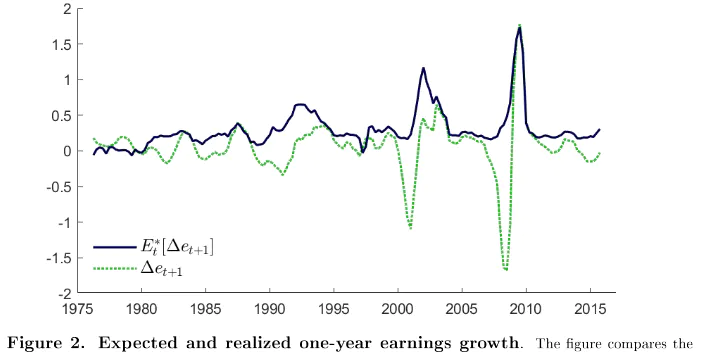
An inside view of one of the best performing VC funds of the last decade: Greenoaks Capital. Greenoaks has reportedly generated 50%+ returns annually after fees since inception! So how did they achieve this? In this thread, I’ll explain their investment strategy & process. 1/ Neil Mehta founded Greenoaks Capital in 2012 at ~27 years old. Prior to that he focused on global special situation investments for a D.E. Shaw affiliated fund called Orient Property Group. And before that he invested in private companies at Kayne Anderson Capital Advisors. 2/ Greenoaks was started with the view that the Internet, instead of being an industry in and of itself, is more of an “enabler of product/process/business-model innovations that allow companies to offer new and better value propositions to customers in a variety of sectors” 3/ Despite the significant innovation enabled by the internet, they believe that most of these companies will be quickly copied, resulting in very few companies that ever produce free cash flow (cash produced in excess of operational costs and capital expenditures) 4/ They aim to invest in the tiny subset of these companies that will be competitively advantaged & drive significant value creation long-term. They seek businesses that are capable of growing free cash flow at above market rates over long periods of time 5/ So how do they find these special companies? They focus on 5 main traits: 1. Exceptional management 2. Large addressable markets 3. Incredible customer experience 4. Attractive unit economics 5. Durable competitive advantages Let’s dive into each of these… 6/ Exceptional management: they define this as management having high energy, intellectual honesty, and extraordinary capabilities. This is similar to Warren Buffett’s framework for management: “integrity, intelligence, and energy” 7/ Greenoaks expands on their definition for “extraordinary capabilities.” They describe this as having “a strong grasp of operational details, demonstrated ability to build data-driven, systems-oriented organizations, and the ability to attract and retain high quality talent” 8/ Large addressable markets: they seek to invest in large markets where the business can create broad platforms & capture an expanding portion of customer spend over time. For example, they have made highly successful investments in e-commerce (see below on Coupang) 9/ Incredible customer experience: indicated by low customer acquisition cost, attractive customer acquisition payback periods, and sustained repeat customer behavior 10/ Attractive unit economics: it makes sense for a company to reinvest in growth & produce losses in the short-term, but there needs to be a clear path to profitability at scale for the company long-term 11/ Durable competitive advantages: prevent the natural erosion of margins due to competition As noted above, they believe that most companies & innovations can be easily copied, so there needs to be a powerful moat that allows the business to sustainably generate high returns 12/ Greenoaks also has a very unique investment process. It’s worth highlighting three attributes in particular: 1. Concentration 2. Deep fundamental research 3. Sourcing Approach 13/ Concentration: In general VCs tend to be heavily diversified given the risk of start-ups failing. Instead Greenoaks invests in just 10-12 companies per fund (<5 investments per year). 14/ Deep fundamental research: they protect their downside risk “through a deep understanding of the business & market dynamics, the compounding nature of the companies they invest in, and identification of a variant view which results in mispricing at their point of investment” 15/ Sourcing: data-driven approach to find companies with significant future FCF potential (e.g. monitoring credit card data, app usage, employee movement) Outbound effort driven by thematic research & inbound through their network They source months/years ahead of investment. 16/ Greenoaks reviews 1,200+ companies annually. This is quickly filtered down to ~100 companies based on their investment criteria. 2-3 team members do deeper diligence on these 100 companies, including customer cohort analysis, quantifying customer sentiment, TAM sizing, etc. 17/ For ~20 companies/year, the entire team dives in. Granular analysis occurs on unit economics, customer benchmarking, survey work, detailed reference calls & third-party audits. Greenoaks then divides its team into 2 on opposing sides of the investment & has an open debate. 18/ Ultimately the final investment decision lies with Neil Mehta & Benjamin Peretz who must unanimously agree on the <5 investments/year that they make. Greenoaks is able to maintain a rigorous investment research process given their high concentration! 19/ So how has Greenoaks done? Their returns have been astonishing! From 2012 - 2020, Greenoaks had generated 51% returns annually after fees. For comparison, an index of venture funds compiled by Cambridge Associates has generated ~16% annually over the past decade. 20/ They generally make $20-60mm investments at Series B or later with 50% NAM/50% ROW. They aim to invest in market leading businesses with the expectation for realizations via IPO in a 5-7 year timeframe 21/ Greenoaks still has meaningful unrealized gains but the recent IPO of Coupang was a big win. Neil joined Coupang’s Board in Dec 2010. By the time Coupang IPO’d, Greenoaks had amassed a $12 billion stake as of last reported holding date & $8bn at current prices @theTIKR 22/ Greenoaks has made investments in a number of high quality businesses. I'm sure we'll see many of these coming to the public markets over the next few years! End/ If you found this thread helpful, please do like and retweet the first tweet to help others find it. I’ll also be putting out more threads on investing, so be sure to follow me @skhetpal Sources: https://t.co/mPQq686Dge https://t.co/lRRKq3ITmz https://t.co/R1Lct2oTR6 TLDR/ The best summary of Greenoaks investment approach is the 2 quotes on their website: "We believe a small handful of companies define each generation. Our sole mission is to partner with these intensely focused teams for decades."
Nov 10, 2021 Original deleted — preserved hereTiger manages over 100 billion now per John Curtis in Afore’s pre seed summit Curtis says whenever he finds a company interesting, they immediately start doing customer calls with internal and external teams even before jumping on a call with the CEO “Hundreds of such projects going on at the same time” Curtis emphasizing diligence starts long before founder even hears from Tiger team. Mentions Apollo, Blackstone et al in terms of diligence rigor. Note he doesn’t bother talking about venture firms at all. “80% of dealfow is now warm intros….Less cold outbound at this point…It’s just a relationship biz” You all love them when they follow you and hate them when they compete with you “Hallmark of our approach is high level collaboration. There’s countless times we being in other investors…We are not super religious around check size and ownership percentage… We have led over 40 Series A last year.” There goes your dumb growth money narrative Curtius very deliberately trying to not associate Tiger with a growth fund. Mentions seed and As a lot more than growth stages. Talks like a classic VC without PE or hedge fund experience would. This is like a coming out party as multi stage firm from seed to IPO lol “We continue to maintain our focus around the world. We have a team in China. Everything outside of China is done by team in US. I moved to Miami…We are ramping up in LatAm. Longtime investors in India. I get sent 3-4 opps in Africa every week…I have 13 port cos in Tel Aviv.” Re value add, it’s clear Tiger would much rather throw top dollars at finding best in class firms that can work with their port cos for customers, execs, directors, research etc. It’s the a16z model but fully outsourced to specialists and keeping Tiger team focused on investing.
Nov 9, 2021Everyone knows about Dan Sundheim, who is among the best investors of the past 20 years. His fund D1 runs $30bn+ w/ stakes in Stripe, Ramp, etc What's less known is that Dan used to post his research on VIC in his early 20s ('02-'04) A few takeaways from those writeups below 👇 Young Sundheim was focused on small caps/microcaps. Many of the best investors start out this way. Simpler businesses to understand, less competition, higher likelihood of massive mispricing. He was not a "quality at any price" investor. Re-orgs, biz emerging from Chapter 11, etc. were common themes But the businesses were dirt cheap... As such, he wasn't going after compounders or looking to make multiples of money. He was looking for re-rates. But still... can you imagine finding a legit business in today's environment where you just need it to re-rate up to 4x EBITDA to make 50%? He was not focused on tech at all. His six VIC writeups are below. An Indian state-owned bank, a mortgage originator, a cafeteria operator, a retailer, a textbook publisher, and of course, his short on Orthodontic Centers of America (OCA) Vs. D1's public book today, in which the top positions are: Expedia, JD, Amazon, Microsoft, Datadog, Carvana, Snowflake, etc. Without getting into the details of his writeups, there are a few things that stick out to me: (1) Microcaps --> larger biz pathway; microcaps are a great learning ground. Buffett, Lynch, Greenblatt, etc. all started in microcaps (2) Flexibility --> good investors can go from paying 2.5x levered FCF for a so-so cafeteria operator to paying huge multiples for a biz like Ramp today They can precisely tailor the premium they're willing to pay to the quality of the biz, and evolve their style to the time Many of Sundheim's Tiger Cub peers like Chase Coleman and Philippe Laffont were tech guys all along: they only ever picked tech names. Unlike them, Sundheim pivoted into tech. This is important b/c unless you're Coleman or Laffont and started in tech right before a 20-year supercycle, you'll need to pivot your approach to have a great 20 year record. This is much easier said than done. (3) Value of sharing your work. Dan got his job at Viking as a result of his VIC short report on OCA. Ten years prior, when VIC didn't exist, this couldn't have happened. Great investing talent can come from anywhere, and the Internet is a great equalizer -- use it wisely. The writeups are available here: https://t.co/uLdh66i3dD I highly recommend reading. You don't often get to peer inside the mind of a great investor so early in their career.
Nov 8, 2021Okay I'm officially a Web3 skeptic sorry guys :( What are DAOs good for beyond pooling capital, how does ownership actually help form community, why would a chunk of the average community be valuable, isn't it just an extra infrastructure layer that makes community-forming harder not easier :( Won't the NFT art market just be driven by hype like the regular art market and not guarantee that artists in general are paid more :( NFTs can be cool fundraising/reward mechanisms but why are they better at being avatars/passwords/everything than the current average mechanism for doing that :( Do you think maybe your opinion of the whole thing is distorted by the 50K you made on flipping an NFT, or the social climate that means if you're a booster you might get access to some bizarre alpha :( Or to put it another way what would you think of EG a Cryptopunk if you saw it four years ago without context :( I've seen the claim made that collective ownership of like a Facebook or Twitter equivalent through a DAO would make it better, sorry I see no evidence that this is the case :( What does decentralized even mean at this point, do you just mean like the feds can't take it down easily, the web3 community already seems to have an aristocracy and power structure in place, what is the relevant part of decentralization here :( To be clear I'm not saying this has no value, you can absolutely do some cool things for a few use cases, it's just like everyone's like THIS IS A NEW FRONT IN CULTURE WE'RE GOING TO CHANGE THE WORLD, and, :( also to be clear if you made a pile of money on this stuff, awesome, if you're a weird artist that got paid, stupendous, legit happy for you, i'm just thinking that maybe you made out handsomely on tulips, not that like, this is the Beginning :(
Nov 6, 2021 Original deleted — preserved hereMain fund areas that are most interesting for LPs: - Small (alpha potential of 5X+). EM's - Focused niche/strong brand of various sizes (i.e.Ribbit, Goodwater, Emergence). - Multi-Stage behemoth brands (good return profile risk adjusted /qualified beta) A16z, Tiger, etc. Non niche generalist (at any size) harder especially without brand/capital moat/focus area
Nov 3, 2021VC funds need about $2B in “exits” for each $50m they raise Why? True average ownership of 10% fully-diluted x $2B = $200m. That’s 4x “gross” $50m or just about good enough today. So raise a $300m fund, you need about $12B in exits. Or better.
Nov 3, 2021Hey GPs - In the last few weeks I’ve had multiple asks about emerging manager benchmarks/what we are seeing for 2019 (and other recent) vintages. So here’s a quick 🧵 breaking down what we see in the case of 2019 venture funds and the greater LP context… #OpenLP Key point: 2019 funds, emerging or otherwise, are *really* new. Stating the obvious here, but it’s worth reiterating. In the olden days of venture, asking about benchmarks on funds <2 years old wasn’t a thing. Cambridge specifically caveats that “research shows that most funds take at least six years to settle into their final quartile ranking.” But what the heck...welcome to 2021! 😂 Why are folks asking? Many firms (emerging + established) who raised 2019 funds are back raising again. It seems the new 2 year fundraising cycle has mostly replaced the traditional 3-4 year fundraise time frame. Naturally people want to know how they stack up against other #VCs, as well as the context within which LPs are making decisions. Makes sense. Good news – Cambridge just came out with their latest benchmarks and offer us this to consider: - 2019 US VC top quartile TVPI is 1.56x, median is 1.26x, and top 5% is 2.12x - 2018 US VC top quartile TVPI is 1.87x, median is 1.59x and top 5% is 2.50x (all net to LPs) ⭐Important caveat⭐ Cambridge venture benchmarks pool funds ranging from early to growth (and everything btwn). The 2019 funds in their study can include growth investors w/ co's about to IPO... and pre-seed investments into co's that haven’t even launched a beta product yet. ✅ Also important – unless an LP is building a new portfolio from scratch or has a dedicated pool of $ set aside to make new emerging manager investments every year – new funds must compete against existing venture relationships. In this bonkers market where crypto is driving fast liquidity (like 2-3 years to return a fund fast) and other co's have raised multiple rounds in the last 12 months alone (pushing TVPI sky high even in funds with 100s of millions of dollars of AUM)... that can be a tall order... *Especially* when venture funds with strong returns are coming back faster and raising multiple (often stapled) funds at once. And for reasons I can never explain (but seems to be true every year), Q4 is always a very busy quarter for existing managers to raise funds. So the bummer news is... *particularly* right now (but also always), the competitive landscape for LP $ is fierce. It includes other emerging managers, existing funds, and the whole suite of what an LP’s mandate allows: hedge funds, PE, real estate, publics… the whole world of investable assets - including digital ones. That’s the ‘why it might be really hard to get an LP’s attention right now’. But on the other hand - not all TVPI and DPI are created equal... Read this great thread by @fintechjunkie ➡️ It shares the LP perspective on the durability of returns and how “all VCs should assume their LPs have great BS detectors. They want to back managers with repeatable strategies over lucky managers.” https://t.co/5buzBpGn2Q For these and other reasons (GP turnover at existing managers, the need for new perspectives/networks, and hustle... to name a few) despite some pretty crazy sounding returns from existing venture managers... ⭐LPs are open to adding some new names to their portfolios.⭐ So shout out to emerging managers. 😄 I just read a great post by @HunterWalk w/ very helpful guidance. My fave piece of advice: A VC’s first fund is about proving you can pick (aka ‘investment judgement’) and have access w/in your target investing area. https://t.co/198WgChlBe Here is another great tweet thread discussing what the most important metric for a Fund I is in the early years of the fund (year 3) ➡️ https://t.co/Qe9ewOXvLD And as always, check out the Emerging Manager section of #OpenLP for more awesome and useful content for the community, by the community. ✅ https://t.co/CRIt3UohA4
Nov 2, 2021Curious what LPs think of VC performance and the recent run-up in returns? Based on the conversations I've been having with LPs recently, this post from February is equally if not more relevant today. https://t.co/cjep0rfC6a

This was a really excellent piece by @NeckarValue. Oftentimes many of the important factors in an investment aren't in the public filings. You need to go out and talk to people that understand them! https://t.co/pl2brBMskZ I invested in $CSU.TO after a trip to the AGM a few years ago where I got to ask Mark Leonard like 15 questions about how competition works in small VMS companies. I don't understand everything but I have a good sense for the competitive positions of those businesses. Couldn't have figured that stuff out from the public materials.
Nov 1, 2021What makes Peloton special? They're like WWE, live theatre, church combined. I started buying positions since June 2020. But 99% of investors don't get it It's not about the digital subs or low churn. None. Here's 5 reasons why $PTON holds a special place in my portfolio: 1. Connection to instructors like Hollywood stars 2. Proven system for creating crowd pullers like WWE 3. Live theatre in disguise 4. It's all about the music 5. People work out to be entertained Here's a breakdown of each: 1. Connection to instructors like Hollywood stars Looking at their FB group... I was amazed to see the level of connection people had with specific instructors. You see users going gaga when they bump into instructors in NYC. This special connection people feel towards an instructor is hard to duplicate. It's not just the Peloton brand... It's with the specific instructors. Just look at Cody Rigsby performing on DWTS... Read the comments in the youtube video and you get the point: Kinda like how someone is a fan of Robert Downey Jr... and whether he's in Avengers or in Sherlock, you still watch him because you just love him. But this can also be a risk, given how much connection people have with specific instructors. Which brings me to reason #2... 2. Proven system for creating "crowd pullers" I'd be worried if they were only relying on just 2-3 star instructors. But as I dug deeper, I was impressed at their process. A lot of focus used to be on more OG instructors like Cody, Robin, Ally etc. But things have changed... Over the last 1 year, I've seen more instructors hit "stardom" level, and become crowd pullers themselves. This tells me one thing: Peloton has a proven system for making "stars" and "celebs". They know how to engineer a crowd puller. As I was digging deeper into them last year... I listened to several podcasts with some of their instructors (Cody, Jess King etc) That's when I learnt many of their instructors had little fitness background. They come from a different walk of life i.e. dance. Peloton looks for instructors with personality and showmanship. That's what makes them different. Peloton is not just in the fitness business. They are in the entertainment business. Look at the IG profiles of some instructors and you know it's well managed: Not the best example, but something I can think of to explain this would be: The wrestling business (WWE) back in the good ole days. I used to be a fan of some of the classic crowd pullers: The rock, stone cold, HHH etc. While I felt an emotional connection to 1-2 specific wrestlers... The WWE had many others in the Roster that were also crowd pullers. They had a reliable process to develop stars and create celebrities from nobodies. And that kept the audience coming back every week. This has changed a lot in the recent years, and you see WWE struggling. Thus that's a red flag I would look out for in my thesis. But as long as their system for creating stars remains intact, it still holds. This could be a risk. But for now, it's an advantage they have. 3. They are live theatre in disguise I recall digging deeper into the business, and learning that a handful of their classes were scripted. They had a full music and production crew on site. And the class flow was choreographed by directors beforehand. Instructors would be told to say certain things at a certain point in the class... To address a rider that day who lost her mum and say a certain line as the music shifted... It's an emotional experience. And people loved it. Having something scripted and planned out also tells me they have a process laid out. It's like making a movie. There is a formula. Kinda like the hero's journey and story arc. Once something works, they can keep repeating it. 4. It's all about the music Peloton does spend quite a fair bit on their music rights and licenses (from their 10K). And this is what makes them special. Being a fan of working out for the last 10 years, I know 1 thing to be true: Good music is crucial. A good playlist can make you work even harder... And yet NOT feel tired. Seeing Peloton offer themed rides (i.e. Britney spears, Beyonce) tells me they understand how to tap into this. This makes the ride fun and enjoyable. And if it's fun, the riders keep coming back 5. Users workout to fill their emotional and entertainment needs The traditional model: you workout and exercise to lose weight. It's a painful process. A means to an end. The Peloton model: you workout because it's fun and entertaining. The process itself is the reward. The gratification is instant. Using the product itself delivers happiness. People hop onto the bike because they just had a terrible day... And they need someone to make them laugh and cry. Read these comments from one of Cody Rigsby's rides: But it's not all laughs. People also hop onto the bike because they lost a loved one recently, and need some inspiration from the instructor. It's an all in one experience of: - workout - dance club - live theatre - church sermon - motivational seminar All combined into one. That's what makes them special. When customers are buying your product because they love USING it, they become sticky. It's not just a means to an end. That's why Peloton holds such a special place in my heart. And also my portfolio. I hope this has been helpful. I'm open to feedback and comments if any. Also follow me at @heymaxkoh I tweet about my journey of how I attained financial freedom before age 30... By investing in great businesses that excite me. Recap of what makes $PTON special: 1. Connection to instructors like Hollywood stars 2. Proven system for creating crowd pullers like WWE 3. Live theatre in disguise 4. It's all about the music 5. People work out to be entertained
Oct 30, 2021 Original deleted — preserved hereWhat the heck is going on in VC/early stage right now? My theory: Mega funds have found a new product for their LPs that allows them to invest in the same companies with an approach that is completely disrupting VC 🧵 The original "product" that VC funds were selling to their LPs (ie endowments, pension funds) was: relatively small funds shooting for huge outlier individual investments that translate into outlier fund returns. The "power law" you've heard so much about. The features of the product were (1) long-term illiquid investments were uncorrelated with the market and (2) if the funds hits a 5-10x+ grand slam it will move the needle for their LPs' overall returns with a relatively small investment But the market has changed radically—yields on safe assets are terrible, interest rates are zero, the market isn't pricing risk, capital is overflowing, everybody is YOLO'ing—which has *huge* pools of capital seeking desperately for any source of returns Megafunds like Tiger, Coatue, a16z, and recently Sequoia have figured out they can sell their LPs a new product: okay-ish returns (nothing like traditional VC targets) but in a way that can soak up billions in capital and still get a decent return. The primary motivation of these funds is to put 10s of millions into individual growth stage tech companies and get reasonable-ish returns, but in part because the people there are VCs, and in part because of formal/informal pro rata, they're doing early stage too But when they invest early stage they have entirely different motivations than the traditional seed stage VC (or angels for that matter) who are trying to get a home run return. They mostly view the $1m in a seed round for the option value of putting $50m+ into the Series B-D This means they can accept higher valuations and lower returns than investors who are actually trying to get their returns from the seed/Series A. Even if they aren't winning a deal, they're inflating valuations to a point that breaks the old VC model. I've been asking this question for a while now and the generally accepted answer is that seed VCs and angel have their head in the sand just plowing ahead with a model that's been broken by market conditions https://t.co/6ZDevsagsV Nobody is even bothering to articulate how you can invest in seed rounds at $30m+ pre and still generate competitive returns. Either "picking winners" is just insanely easy now or the distribution of outcomes has structurally 10x'd in a few years. Seed VCs will just say "shrug, $10B is the new $1B" without bothering to make the case that either change (in success % or total return) is actually true. It is *possible* but I don't see why we can just assume it is. The only reason this isn't a crisis right now is that enough early stage deals are getting paper markups when Tiger et al comes in a later round, making paper fund performance look great. But if tech companies don't start magically IPO'ing for 100x+ revenues, the actual cash distributions from these early stage investments are going to be terrible and many funds will evaporate (megafunds will still hit their much lower return targets). Overall I think this is a good thing. I've been arguing that small funds focused on one stage have hampered innovation and incentivize a herd mentality. https://t.co/zDc3z6jjgj And the two resolutions for these problems are (1) megafunds that can back companies from seed to IPO and (2) strategies that genuinely back different types of companies and aren't dependent on follow-on rounds https://t.co/rdllk0rOsO Our strategy at Calm Fund to adapt to this is to double down on funding companies outside the VC thesis, focused on niche markets, creating real revenue and value, that don't need to ever raise another round (and if they do it's on their terms).
Oct 29, 2021"....big hedge funds like Tiger Global Management and private equity firms should be nervous nonetheless. Because Sequoia not only now has the cash and flexibility, but it also has something they don’t: decades of relationships with founders in the Valley..." https://t.co/Ez9I40L8GU
Hedge funds became VCs VCs are becoming more like hedge funds Content creators are becoming VCs VCs became media companies It's all blending
Oct 26, 2021In line with Sequoia's news today, I'll re-bump my thoughts from our annual meeting last year that hypothesized institutional grade investors will increasingly need to think across multiple markets and types of liquidity. https://t.co/xqop4wgArs
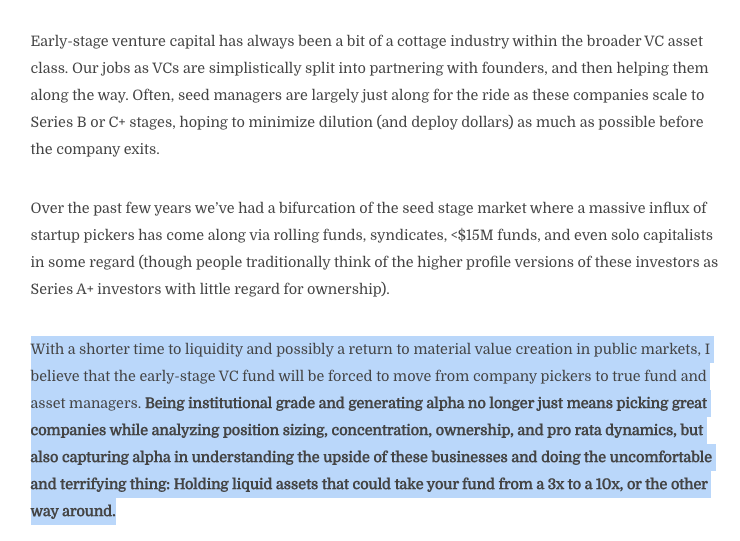
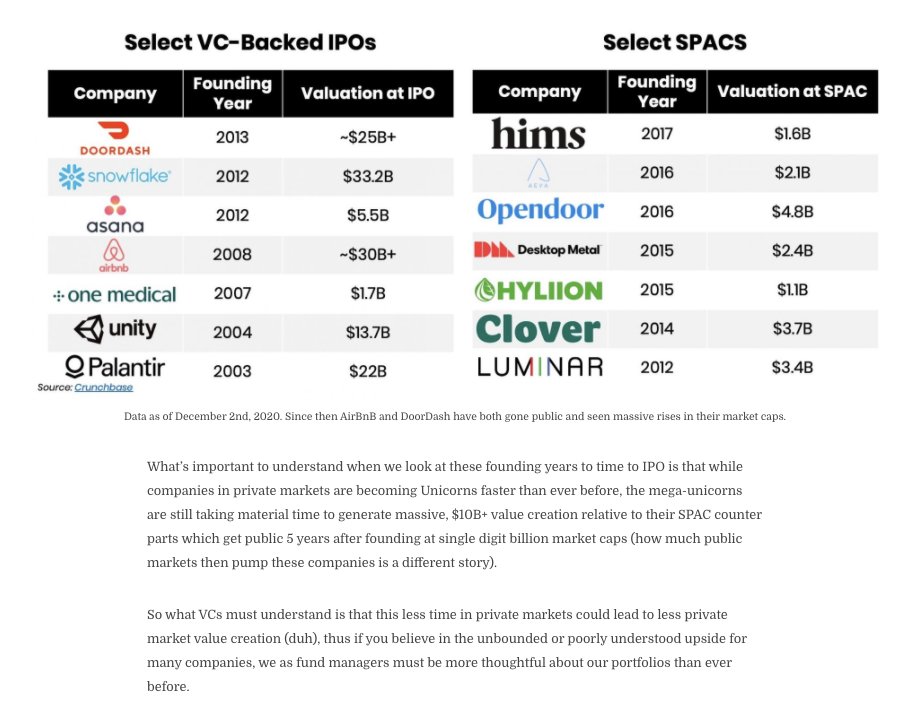
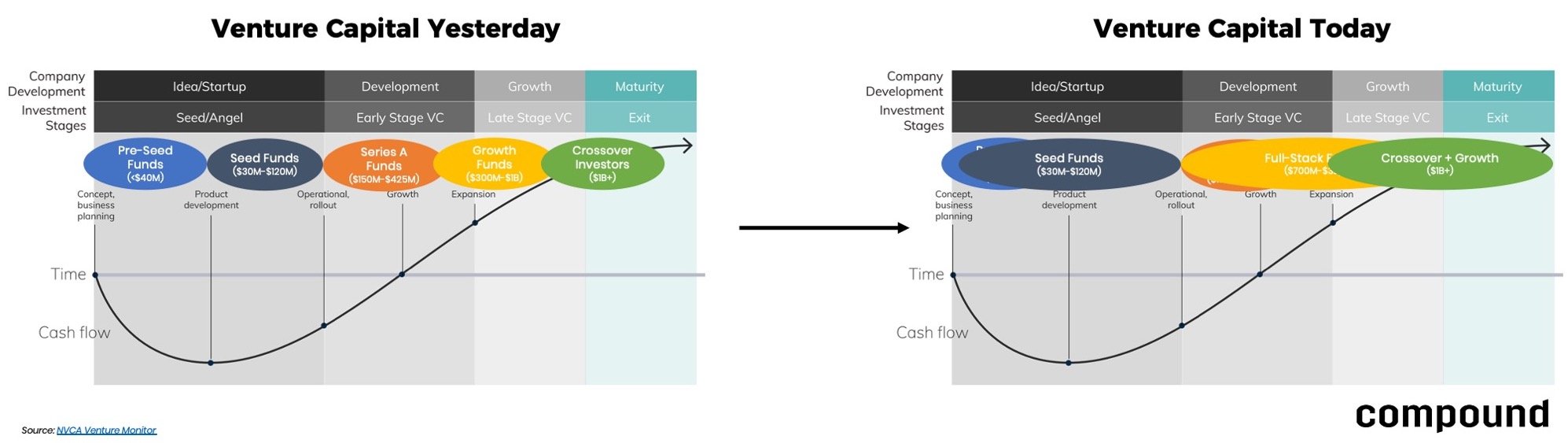
It’s laughable to think that Sequoia just blew up the VC fund model. The vast majority of VC funds don’t have tens of billions of profits tied up in public stocks (and they never have), so what Sequoia does here is not that relevant to the rest of the VC industry. https://t.co/53lJW3n506 Don’t get me wrong. I love the long their term approach. But VCs have a special role in the financial system - it’s to help create companies by partnering with founders. Some will endure for decades. But most of the hard work of a VC is not with those exceptional companies. The exceptional great companies pay off in such a huge way that it helps subsidize the work to help the little companies that don’t make it to tens of billions in market value. We (the VCs) still need to help all of those little guys. The hedge fund and PE guys won’t/can’t do it. I love rooting for the little guys. Not just founders but the little VCs and solo GPs that truly roll up their sleeves to help founders. They are toiling away in obscurity trying to create the next BIG one. But day to day it’s hard work with no rewards for super long periods. Most VCs do not become billionaires. Not even close. If you want to become a billionaire fund manager, apply to work for hedge funds or PE funds not VCs. Must love the game, not $ to be in VC. This is a good example. What Sequoia does with their newly formed public fund investing in their own VC funds is irrelevant to smaller, emerging VCs doing their thing - helping more and more founders create companies from scratch (of which extremely few will go public). https://t.co/kEhX7r5eZm While this move is not relevant to the rest of the VC industry, it is highly relevant to Sequoia GP and LP. Why? Because by providing liquidity option to LPs (after initial 2 year lock up during transition) sets up for a double dipping on carry every time carry is crystallized. In traditional venture fund, carry is crystallized toward the end of a fund life (once 1x the fund has been paid back). Many venture funds never even get into the carry so most people don’t know what happens afterwards. But in an evergreen structure, like a hedge fund for example, the carry is crystallized and paid out every year. There are other evergreen funds that crystallize carry every few years, like Sutter Hill Ventures, for example. When carry is crystallized the GP interest (from carry) becomes an LP interest in the fund going forward. Then on top of that, the GP can earn more carry on a go forward basis. That’s the double dip on carry. It’s getting carry on top of carry that’s already been paid out. Sophisticated LPs understand this dynamic which is why they do not like evergreen fund structures. Warren Buffett understood this in spades because as he rolled over his carry (during his early hedge fund days) his ownership of the overall fund kept increasing far beyond his 25% carry. So what he did after he shut down his fund is that he stopped taking any carry. He created 100% of his wealth since shutting down his fund in 1969 on a no fee, no carry basis. I doubt Sequoia will be so generous with future LPs. And over time, the GP should become majority owner. Becoming the majority owner of a fund that will grow far beyond $100B in value will prove to be quite lucrative to long time partners of Sequoia. Good for them, less good for their LPs. But the net benefit is interim liquidity options. Always trade offs. Get nothing for free.
Oct 26, 2021Search Funds are a hot topic across many business schools But you don't need to get your MBA to learn about them The Endurance and Pacific Lake websites can teach you just as much as any class...for free Links: https://t.co/0cRgkIgCof https://t.co/LiKOe33Dbm
Oct 26, 2021"Sequoia currently holds around $45 billion of U.S. and European public equities, on a cost basis of just $2 billion." "Sequoia also plans to become a registered investment advisor.." @danprimack scoop! https://t.co/2ywq8aXcTT
Oct 26, 2021Trend in cloud software: Growth Durability 📈📈 Historically, many people have overestimated how quickly software companies would decelerate growth. below chart shows rough Datadog quarterly growth expectations at IPO (orange) and actual (blue) Datadog has grown much faster (by a wide margin) than they were expected to at IPO The biggest effect of this? Compounding $$ growth At IPO (Sept '19) Datadog was projected to do ~$610M of revenue in 2021. Current projections? $1.3B! In just 2 years expectations have doubled🤯 For best in class cloud software businesses we're seeing growth rates prove extremely durable. Markets are much larger than expected, and high net retention rates (growth from existing customer base) is propping up overall growth rates If you knew Datadog would "outperform" expectations so wildly back in Sept '19, it's fair to say the stock would have looked extremely "cheap" back then. I think public markets are starting to price this in. One can definitely argue we've gone too far :) Crowdstrike is another example below. At the time of their IPO (June '19) they were projected to do $756M of revenue in 2021. Current estimate? $1.4B. Just staggering overperformance in 2 short years The broader market is appreciating what best in class software businesses are capable of. People EXPECT growth to be more durable in the future. Multiples have expanded However this rising tide (plus many other factors like low rates ) have propped up the entire industry Not all software companies are best in class. By definition there are only a few who deserve to be in that category And I try and stay sober - software multiples are way too high and due for a contraction to historical averages. It doesn't feel sustainable at all currently When multiples contract (which I believe they will), many average software companies will get thrown out with the bathwater But what happens to the elite? Will they get the (relative) same treatment? Multiples should come down across the board. But will they fall as hard for the best in class businesses, when there's now a broader appreciation for growth durability? Time will tell! What businesses today are we vastly underestimating growth durability for? If history repeats itself, there are companies who will do more than 2x the revenue in 2023 than what they're projected to do currently I've clearly cherry picked 2 amazing businesses. But there will certainly be more in the future
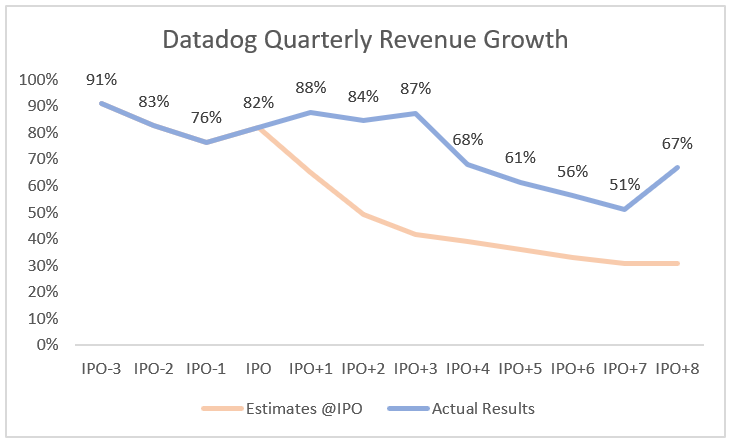
I've spent a lot of time talking to potential VC candidates over the past year. We screened 800+ for our investor hire in 2020 & have screened 400+ for our principal hire. One thing is clear, a huge % of applicants are indexing on deal making/trading. This disappoints me. Being obsessed with "deals" has been a dominant strategy over the past 5 years because of velocity of deals and GPs wanting to get $ out the door. The directive from GPs is often "make sure we see everything", "build a differentiated network", & "do work I don't want to do". The difficulty is having a passion for "doing deals" often means you are: 1) Aligning with investors (sharing deals) 2) Interacting with founders in a way that signals they should utilize you as largely just a capital source. 1) Aligning with investors will be more difficult as fund sizes grow & collaboration narrows, but it *will* matter in some form. 2) Being a capital source...well we know that's a commoditized position in this market. I'll again leave this here: https://t.co/fLWapGVAjV I probably just sound like an old man yelling at kids on lawn. But my view here is still, there is no wrong way to do venture. But when you think about why and how you want to be an investor, think about what time horizon you're working with, as the approach materially matters. The question I ask every candidate is "how do you want founders, investors, and operators to describe you as an investor?" The things you optimize for and the moats you build will be wildly different depending on your answer to this question. Make sure you are confident in that.
Oct 24, 2021A thread on how I bought a house for 350k in LA & turned it into an income producing multi family property worth 870k+, making 2k+ a month with all my money back + 100k in one year First: found a distressed single fam home that was only 650sq ft 1 bedroom. Found creative way to enclose front porch to make 2nd bdrm & vaulted the ceiling to convert attic to 3rd ”flex space” Took every single wall out & completely reconfigured to highlight views of downtown LA Best part about this property was the fact that it was on a hillside w/ backyard having a separate alley access & unpermitted 500sq foot basement. Fit perfectly in the Jr ADU requirements for Cali being <500sq ft + attached. Permitted into 1 bdrm apartment renting for 2k+month Got a hard money loan for 100% of the purchase price while fronting 100% of the construction costs, which ended up being 75k for the single family portion plus 25k for the basement apartment. Purchase 350k + 100k total renovation is 450k all in. Property recently appraised for 870k+ & will be doing a cash out refi for 75% of ARV. Will be putting 200k back into my pocket, 100k more than I originally put in. My mortgage is 2k+/ month and my total rents are $5,000/month Originally was going to build a large 2 bdrm ADU in backyard w/ separate alley access but w/ new SB 9 law passing in CA allowing lot splits, I will begin the process of subdividing property & building 2-3 freestanding units in backyard & will repeat process all over again This project was during covid & I just had a baby w/ no childcare because of lockdowns & I am the GC so I brought my baby to construction site every day for her 1st year of life & potty trained her on site. Love knowing I gave my blood sweat & tears so this will be hers one day


What I Tell All New VCs About Their First Funds No Need To “Grab a Coffee and Pick My Brain” Because Here’s What I’d Say… https://t.co/Qddlcky9ds
Oct 22, 2021 Original deleted — preserved hereInvestors love “pick and shovel” plays that simplify building and scaling businesses. They often forget the implication: Lower friction and start-up cost remove the barriers to entry, which increases competition and the amount of capital required to maintain market share.
Oct 21, 2021 Original deleted — preserved hereThere are just under 4,000 active vc firms. That means the top quartile is 1,000 firms. And PME of top quartile has been very strong for 30 years (a couple of vintages) The days of only a small group of firms being worthwhile to invest on are long gone.
Oct 21, 20211/ Excited to announce 🏖 Vibe Capital 🏖 We raised a $70M+ operator fund to invest in early-stage startups Why work with us? 🌎 We love investing internationally ⏰ We work at founder speed 💩 We hate B.S. And we're gonna have fun while we do it: https://t.co/sug3AEvDxw 2/ We are backed by 100+ amazing investors in the know that "get it" Instead of random family offices, we raised money from: - Founders of legit companies - Blue chip venture funds - Operators that are doing the work - Successful creators Here are some of them: 3/ I am yet to meet a founder that does not prefer raising money from other founders I sat down with the legend @HarryStebbings & shared more behind our approach and why I think this model is the future of venture: https://t.co/7gdDKs5Cu7 4/ We expect half our companies to be based in emerging markets Most operator funds are US focused and we see that as our opportunity Our first 10 investments include co.'s in India, Pakistan, Portugal, Chile, Canada, Kenya, Pakistan & Zambia https://t.co/z378zifakb 5/ There is also no B.S. in how we run our fund: - We charge 0 management fees (I don't know another fund our size that does this) - 1/3 of the fund is our own money - Our entire back office is powered by @AngelList - We will raise last 10% of the fund publicly 6/ Special shoutout to @nmasc_ at @TechCrunch for covering our launch here: https://t.co/4ZU3FGVcAk DM's always open
Oct 20, 2021"I met Peter Lynch for the first time in 1983. I went to see him at this office at Fidelity. Stacks of stuff all around. Peter said 'did you bring your portfolio.' He said 'this is a really good portfolio of banks and S&Ls and auto companies, so where's your Fannie Mae?" https://t.co/yhxqWdtc1O

90% of business acquisitions fail. But there are exceptions: Mark Leonard, Founder of Constellation Software $CSU, is one of them. He's acquired over 500 companies in the last 2 decades... Turning $25 Million into $32 Billion. Here's his "Growth by Acquisition" playbook: To put things in context: Every $1 you invested in Constellation Software in 2006... Would have turned into $120 in 2021. Over the last 15 years, its stock has compounded at over 35% a year. What's the secret? 5 lessons from Mark's "Growth by Acquisition" Playbook: 1. Focus on niche players 2. Focus on sticky softwares 3. Buy companies that are founder led 4. Decentralization 5. Keep teams small Lets go: 1. Focus on niche players Mark Leonard started constellation software in 1995... With the goal to assemble a portfolio of vertical market software (VMS) companies. Firstly, what is Vertical Market Software (VMS)? VMS are softwares created specifically to meet a need in a particular industry. For example: A scheduling software built specifically for gyms to schedule the training slots for clients. Or a software for restaurants to manage their inventory and orders. Because of how narrow focused these businesses are... They are not attractive to traditional VCs because of their small market. But Leonard loved it. He saw an untapped opportunity with little competition... Allowing him to buy them at low price multiples. 2. Focus on sticky software VMS has a number of benefits: a. Recurring revenues b. Cash collected upfront c. Mission critical. High switching costs d. Small share of wallet a. Recurring revenues because of subscription contracts Given how important these softwares are to the customers... The retention would be high. Customers would "stick" and continue paying for it year after year. b. Cash can be collected upfront Because some of these businesses sell annual contracts to their clients... And clients usually pay upfront before they're able to use the software. Hence it enjoys a strong cash fortress. c. They are mission critical to the customers. High switching costs. a gym cannot simply replace their scheduling software suddenly as all their staff use it daily. a restaurant cannot suddenly replace its ordering software because it's needed for smooth running everyday. d. Small share of wallet. Many of these softwares are also a small part of the customer's total expenses per year. So these businesses can gradually raise prices overtime, and customers would still accept it. Hence they enjoy huge pricing power. 3. Mark likes to buy founder led companies Because many of these companies are small in size... He finds that a founder's values would heavily influence the DNA and culture of their team. This makes it easier to steer the ship. From Mark's 2013 shareholder letter: “Our favourite and most frequent acquisitions are those we buy from founders. When a founder invests the better part of a lifetime building a business... A long term orientation tends to permeate all aspects of the enterprise" 4. Decentralization Constellation lets the existing founders of these companies manage the company... Rather than stepping in to cut costs or increase profits (think of 3G Capital). They allow that company to continue operating as if it had never been sold. They also push decisions down to the Business Unit (BU) level. The individual BUs are allowed to do M&A with deals up to $20 million. This is unlike Berkshire's playbook where all the cash is sent back to HQ and the main decisions are made by Buffett and his generals. Mark: “If we can train a couple of hundred BU managers to be competent part-time capital allocators and provide them with acquisition analysis and structuring support when they need it... Then I can foresee the day when we are doing 100 acquisitions per annum, instead of 30” 5. Keep teams small Mark organizes the company according to business units. Each BU serves a single specific industry (eg. education, fitness) And each BU has a manager that operates independently of other BU heads. So they have full autonomy over their own decision making When a BU gets too large (more than 100 people)... They will break it up into a new, separate BU. Mark has the belief that "size breeds complacency and bureaucracy". So by keeping teams small, he maintains the entrepreneurial spirit. Career progression: Having many different BUs also gives the employees in these companies more mobility. They can move across units if they want a change. And also enjoy better opportunities for career advancement. Mark: “Something wonderful happens when you spin off a new business unit... With a clean sheet of paper, the leader only takes those he needs. They set up in an open office with good communication and no overheads. They leave all the bureaucracy and the crap behind”. That's it! Thank you to Colin Keely. I learnt a ton about Constellation from both his blog article and podcast. Make sure you read it here: https://t.co/w3HgBJyMvO Also check out Eagle Point Capital's writeup. It's helped me to understand both Mark and Constellation better: https://t.co/dTwrOnDCLq Most importantly, read the actual set of Mark Leonard's shareholder letters here. They are a goldmine for any investor who wants to understand how to grow by acquisition: https://t.co/dP7zHg53Ef Recap of 5 lessons from Mark's "Growth by Acquisition" Playbook: 1. Focus on niche players 2. Focus on sticky softwares 3. Buy companies that are founder led 4. Decentralization 5. Keep teams small If you enjoyed this, then follow me here at @heymaxkoh I tweet about how I attained financial freedom before 30 through investing. Also check out my thread on this concept called ROIIC ROIIC is the metric that Mark Leonard evaluates his BU managers on: https://t.co/8AX3HbMSb0
Oct 19, 2021 Original deleted — preserved hereEverything you wanted to know about SBA loans, including some interesting history! Had no idea FedEx was started with an SBA loan. This episode was a great overview of SBA debt, hope you enjoy the conversation. https://t.co/6HDpnGNzCk
Oct 19, 2021My Monthly Learning Calendar for Investing.🗓️ If I had 1 hour per day (for non-Company related research), this is what I would do. Going thru specific topics on specific days should help streamline the reading/learning process w/o causing too much information overload. Investing in individual stocks is more than just company specific research. It's about having a broader perspective on many topics including Investing principles/philosophy/history, Industry trends/landscapes, and thoughts/deep dives from other reliable sources. I'm grateful to all these awesome folks that put out such quality content. Also separate h/t to all the folks I follow on Twitter (list always growing, albeit slowly). You posts diversify and enrich my feed & learning. Disclaimers : Below thread has the resources listed by topic (and not by calendar days). The below is NOT a ranking of resources. Just a listing of my current fav resources based on specific topics. Descriptions on why I like each resource is not listed here (due to the huge #). You can find that info for most of these resources in my current pinned tweet. The goal is not to drown myself in so much content, but selectively scanning and then diving into the specific posts that most relate to my investing process and current interests. Let's dive in. ⬇️⬇️ ✅Mondays : Investing Fundamentals Day 1 Ensemble Capital @IntrinsicInv @ToddWenning https://t.co/lQOBSNv1Nh John Huber @JohnHuber72 https://t.co/QslJlfCejm Day 8 Marcelo Lima @MarceloPLima https://t.co/mvGcx7KT6h Safal Niveshak @safalniveshak https://t.co/JrY6B8AUsa Day 15 These folks pack so much wisdom and learning in their Twitter Threads. Confession : I've only finished reading 25% of my bookmarked tweets from them. Time to make some time to finish the rest. @honam @10kdiver @SahilBloom Day 22 Focused Compounding @FocusedCompound https://t.co/BbFnuVkL1h Charlie Bilello @charliebilello https://t.co/qkPNUPBGOx Day 29 Gary Mishuris https://t.co/9CqfJDNJix Drew Dickson @AlbertBridgeCap https://t.co/Jzz1F2nyaI ✅ Tuesdays : Tech Day 2 Stratechery @stratechery https://t.co/VsNwRStY9C Baillie Gifford @BaillieGifford https://t.co/mWycSnTeoB Day 9 Software Stack Investing @StackInvesting https://t.co/WQ1yBYzT2m CB Insights @CBinsights https://t.co/gNbY55A7gn Day 16 Hhhypergrowth @hhhypergrowth https://t.co/kcLKITRLz1 Matthew Ball @ballmatthew https://t.co/b1Oa1Fz3QC
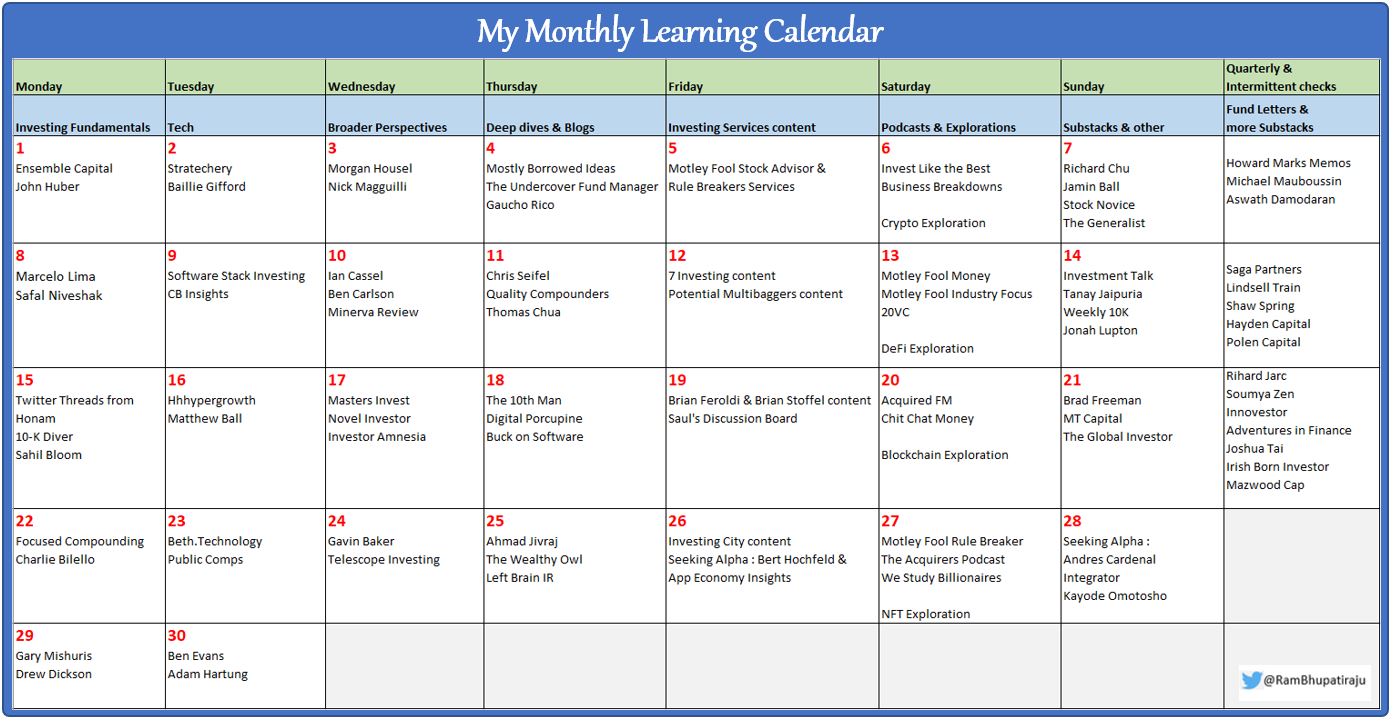
"The Investment Checklist" by Michael Shearn is an excellent book for individual investors. On a practicality & usefulness scale, it's right up there with Peter Lynch and Pat Dorsey's books imo. cc: @dmuthuk @Gautam__Baid @saxena_puru @BrianFeroldi Full checklist👇 Checklist based on ✔️The Basics ✔️Customer perspective ✔️Strengths & Weaknesses ✔️Operating & Financial Health ✔️Quality of Earnings ✔️Quality of Management : Background, Competence, Positive & Negative traits ✔️Growth Opportunities ✔️Mergers & Acquisitions The Summaries at the end of each chapter are highly useful reminders too. Few of my fav ones.⬇️ ✔️Understanding the Business from the Customer perspective ✔️Evaluating the Competitive advantages and weaknesses of the Business ✔️Evaluating the Quality of Earnings ✔️Evaluating the Growth opportunities The best part of the book is that it doesn't get much into any Quantitative & arbitrary numbers and ratios (w.r.t Financials and Valuation) that pretend to be universally relied upon for evaluating an investment. Those are obviously important but also highly dependent and influenced by the particular industry, growth stage of the company, Quality & competitive positioning, Market/Macro sentiment etc. So Fundamental and Qualitative research/analysis first, and then decide if the company is worth investing in, and if an action is warranted at the current prices (buy, hold, sell, add to watchlist etc....) Checklists as you know are very important to combat the hype, noise, personal biases and to ensure that all current/prospective investments are meeting the quality thresholds and Portfolio requirements... but they should be used after you do the overall analysis and due diligence of the Companies (within your circle of competence), and not as a quick task to finish off before you eagerly want to buy a stock. The free version of this book is available here, but totally worth buying the physical copy if you can afford. https://t.co/UQYvHGW2if
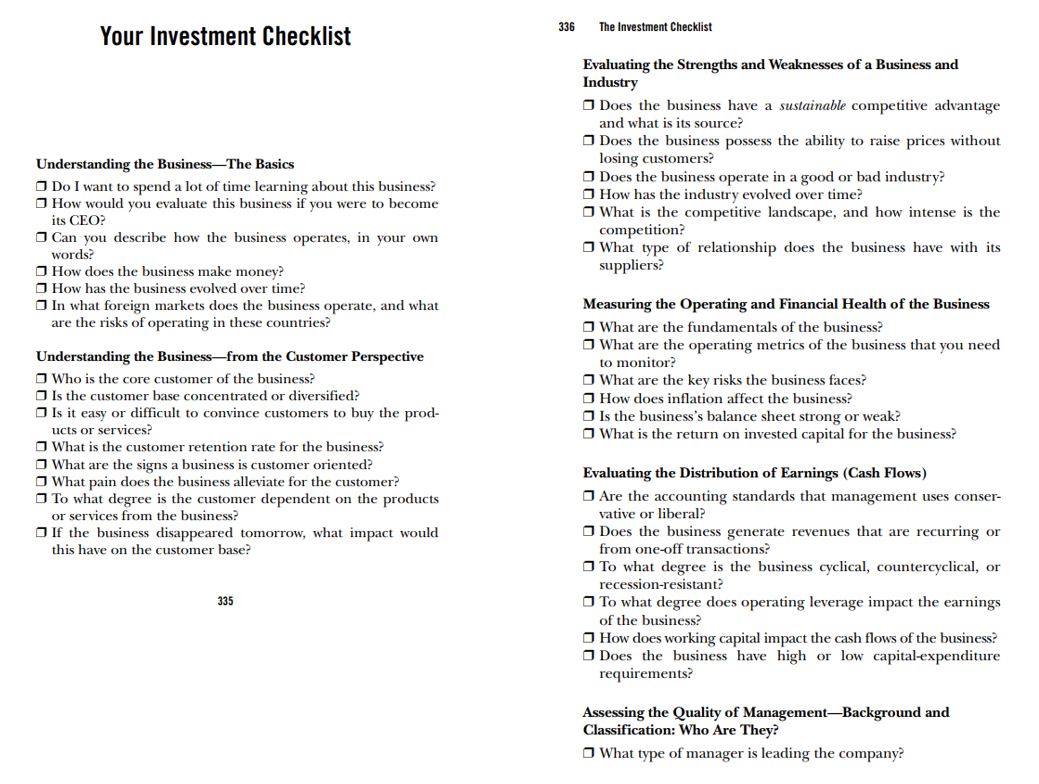
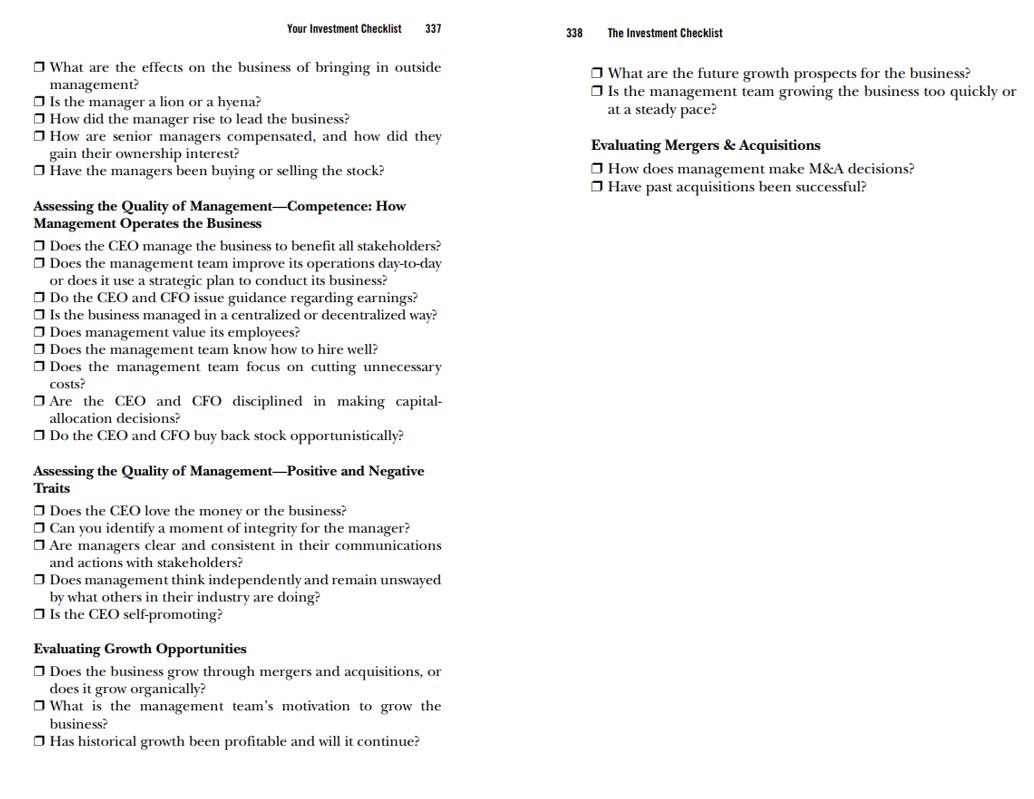
An inside view of a $30 billion hedge fund that you might not have even heard of: Select Equity In this thread I’ll go over the fund’s story, their investment strategy, historical returns, couple of their actual stock pitches, and the current holdings in their portfolio 👇 1/ George Loening was interested in investing at a young age and bought his first stock Mary Kay Cosmetics at the age of 12. In high school, he ran an equity market newsletter with more than 100 paying subscribers 2/ George founded Select Equity Group (SEG) in 1990 at the age of 23. His mother gave him the original $70,000 that got him started, and he further supported SEG in the early days by selling research on a small number of stocks that he knew well 3/ SEG’s research was well regarded and by 1995, 20 of the industry's largest 35 asset managers in the US were research clients! In 2000, they shut down the research business since it was no longer needed to support the asset management business 4/ So how has the asset management business done? Their original strategy from 1991 has compounded at 15.3% net returns annualized. This means that his mother’s original $75,000 investment has turned into $5.4 million (70x+ return)! 5/ So what has SEG's investment strategy been? There are 3 parts to their investment philosophy: 1. Great Businesses 2. Rigorous Research 3. Disciplined Investing Let's dive into each of these... 6/ SEG focuses on a small subset of great companies which they call “SEG Pedigree” businesses. They have a very useful framework for thinking about great businesses which they call the 5 Ps 1. Pie 2. Piece of the Pie 3. Pricing Power 4. Predictability 5. People 7/ SEG is unique for their research process, which isn’t surprising given how they got their start by selling research to other asset management firms. Some unique aspects: 1. Don’t read sell-side research 2. Don’t talk to other funds 3. Internal team of investigative journalists 8/ Here is an overview of their investment process 9/ And as promised, a few of their stock pitches! The first is Compass Group $CPG 10/ ASML Holding $ASML 11/Edendred $EDEN 12/ Here are SEG's latest reported holdings. You can easily track the holdings of 1000s of funds on @theTIKR. We go beyond just 13Fs and also track shareholder reports, UK registrars, Japanese filings, etc. to give you a much more holistic, global view of an investor’s holdings 13/ Definitely check out https://t.co/DycaaebC6t We built TIKR to empower individuals to make better investing decisions. We felt that it was unfair how large institutions could afford to pay $20k+/year for a Bloomberg Terminal while others were stuck using Yahoo Finance 14/ TIKR is a powerful investment research platform with coverage of 100,000+ stocks globally. We have detailed financials, estimates, valuation metrics, transcripts, filings, ownership, news, screener, and more! End/ If you found this thread helpful, please do like and retweet the first tweet to help others find it. I’ll also be putting out more threads on investing and entrepreneurship, so be sure to follow me @skhetpal
Oct 13, 2021Curious to learn about the inner workings of some of the most secretive private equity, venture capital, and hedge funds? A quick thread on one interesting method to get an inside view and a few examples: 1/ You can sometimes find helpful content on even the most secretive funds thanks to LP due diligence reports. Many of the cities’ retirement systems publish their diligence on funds publicly in an investment memo 2/ For example, some info on The Children’s Investment Fund (TCI). TCI had compounded at an annualized return of 18.2% since inception vs. 7.0% for the MSCI World Index as of the date of the memo. A nice summary of their investment strategy below too https://t.co/eU8TsT016c 3/ Here is one with $KKR Credit. This is also a nice research source for anyone investing in the alts. The KKR Credit team here goes into great detail about their investment process, competitive advantages, track record, case studies, etc. 4/ Here is $KKR Credit’s Investment Checklist (deck starts on p. 187) https://t.co/e9ECmAgJ2i 5/ Helpful research source for anyone investing in $BAM. Diligence on BSREP III: https://t.co/SDQVCw8y9G This is BAM's pitch deck to Plymouth County Retirement Association about their Brookfield Infrastructure Fund IV: https://t.co/Xhi9ETprS6 6/ Another example with some interesting tidbits on Vista Equity which is easily one of the best software PE investors. The below blurb is a nice summary of why enterprise software is such an attractive industry: https://t.co/H7H7f3hCKJ https://t.co/AeOqpo516e 7/ Vista has generated ~30% annualized returns. A big driver has been the implementation of their Vista Standard Operating Procedures (“VSOPs”) at acquired businesses. On average, they have increased recurring revenues by 1.5x and EBITDA by 2.8x 8/ There are tons more examples but I'll leave you with this for now: Dated but lots of hedge fund due diligence reports, including Viking, Third Point, Elliott and more https://t.co/eRt0T5nQVR Big deck with great info on the private equity industry https://t.co/D8eI8Tv8JD End/ If you found this thread helpful, please do like and retweet the first tweet to help others find it. I’ll also be putting out more threads on investing and entrepreneurship, so be sure to follow me @skhetpal Throwing a few more in here: Viking Global = https://t.co/YSds07jqtK Viking short strategy Elliott = https://t.co/N2w9mxLupA Elliott strategy overview with more detailed breakdown in the doc Coatue, Anchorage, HBK returns from 2013 to 2017 here https://t.co/jFXF25B0Ef
Oct 11, 2021This is the story of secretive billionaire Joe Liemandt He built a billion dollar empire twice First as a founder before the dot com crash Now as a PE blackhole - buying up software companies & turning them into cash machines w/ foreign contract engineers paid $15/hr Story👇 SCALE ESW has bought more than 100 companies, mostly in the US, with deal sizes ranging from less than a million dollars to at least $460 million. ESW has an army of 5,000+ workers in 131 countries from Ukraine to Pakistan to Egypt. They export 150 high-tech jobs every week. TRILOGY Joe Liemandt dropped out of Stanford to start Trilogy Software in 1990, at age 21, against his parents’ wishes. 6 years in sales were $120 million and Joe was the youngest self-made person on the Forbes 400, with a net worth of $500 million. BRO CULTURE At Trilogy programmers were paid like rock stars and partied like them. Trilogy became the hot place for young coders to land in the late 1990s on par with eBay and Microsoft. Steve Ballmer worried about losing employees to them. DOT COM BUST Joe wasn't able to IPO his flagship Trilogy before the internet bubble burst in early 2000. He dropped off The Forbes 400, stopped giving press interviews, outsourced Trilogy’s U.S. workforce, and took his public company private. PATENT TROLL In 2006 Trilogy bought Versata, a beaten-down data management software outfit, for $3.3 million. Joe used Versata to launch a flurry of patent lawsuits between 2006 and 2013. They won big on some like $391 million from SAP in 2011. ESW PLAYBOOK They ruthlessly cut costs, R&D, & employee benefits & then replace existing employees with overseas contractors. Innovation and growth take a back seat to sheer profitability You need a brilliant engineer to design a Ferrari, but only a mechanic to change it's oil RELOCATE HQ For virtually all of ESW’s acquisitions, the headquarters are promptly moved to ESW’s Austin offices & the CEO is replaced by one of Liemandt’s key lieutenants. Some CEOs like Andy Tryba are CEO of multiple companies. Tryba is the CEO of 12 of ESW’s companies. REMOTE TEAMS Their goal is for all engineers to be working at globally competitive rates within a year. Ex: $15/hour for C++ engineers They recruit people from countries like Ukraine and Venezuela, pay them hourly, and spy on them w/ WorkSmart productivity software. EXAMPLE After buying Jive for $462 million in 2017 when it had 250 employees, ESW closed Jive’s Portland office, and after buyouts, layoffs, and voluntary exits, nearly all of its 250 employees were gone in a year. Less than 12 remain as contract workers working from home. EXPENDABLE ESW’s hourly workforce is largely expendable, with it’s operation casting off and replacing workers on a routine basis. The average tenure is 370 days and only 35% of ESW’s workers leave voluntarily. TRACKING ESW's workers must agree to install spyware on their computers so ESW’s productivity team can track the number of times they click their mouse or stroke their keyboard. The tracking software takes screenshots every ten minutes & occasionally snaps photos from webcams. BANKRUPTCY ESW doesn’t just buy up bankrupt businesses’ assets, software, and patents. It acquires the entire company including the potential for tax breaks. They saved $150m in taxes on one $6m acquisition for example. I wrote an Operating Manual for Joe Liemandt of ESW Capital Joe built a multi-billion dollar fortune by buying software companies & turning them into cash machines by replacing employees w/ foreign engineers paid $15/hour They export 150 US jobs a week https://t.co/yAiVJDCETA Check out our podcast on Joe Liemandt for more https://t.co/8NRBzZ3u2t

An intro to angel investing in startups. Part 1: How do you find great deals to invest in? First, here's one way to sequence the investing process: 1. Sourcing 2. Picking 3. Winning 4. Adding value 5. Following-on (optional) Others have different approaches. Let's start at the top: sourcing deals. "Sourcing" means finding startups to invest in. A detriment to portfolio returns is "adverse selection," which I think of as lazily seeing deals only within arm’s reach. Therefore, you want distinct deal flow sources and you want to hunt for what *doesn't come your way.* To address that, I've set up multiple deal flow channels (portfolio founders, Twitter, accelerators, etc.) plus I do outbound: Like with outbound sales, I reach out cold to companies that are growing fast. I'll get back to this. Let's continue with the other steps: Also, before I continue: • There are different approaches to take • This is just what I do This thread contains opinions and is for information purposes only. It's not investment advice. Nothing here is necessarily complete nor accurate. Please do your own research :) 🚦 Step 2: "Picking" Picking refers to selecting which deals to invest in of those you sourced. You get good at picking by writing many (hopefully small) checks to build a big sample of learnings with full feedback loops. What does a full feedback loop mean? Paying attention to founders’ email updates, staying on top of the competitive landscape, and getting first-hand experience with the product. Why? Learn which of your initial investment hypotheses were ultimately true or false—and why. Build frameworks from the learnings and iterate. To do this, you need many data points: When starting out, someone suggested I review multiple 300+ YC batches to hone pattern-matching for promising startups. Very valuable. I needed that exposure. 🚦 Step 3: "Winning" Winning refers to getting into the deal. Meaning, the founder let you into their round and at the allocation (check size) you needed. In "hot" deals where founders don't need your capital, this may be hard. Winning is often a function of: 1. How valuable you appear to the founder 2. How much the founder needs capital Personally, to win deals, I help founders design their customer acquisition engine and build their growth teams. I explain how I deliver on this by running a community of 40,000 marketers, running growth for successful startups, and writing a widely-read marketing handbook. If founders don't already know you, I suggest you craft your valuable narrative and substantiate it (be genuinely useful and get social proof to back it up): Your value-add may be helping hire engineers, iterating on UX, navigating regulatory environments, client rolodexes... 🚦 Step 4: "Adding value" Now's when you help founders. There's a ton of memes about VCs offering to "add value"... This is outside the scope of this thread 😂 Anyway, if you're useful to founders, they're more inclined to let you proceed to the next step… 🚦 Step 5: "Following on" To “follow on” into a subsequent funding round means continuing to invest as the startup grows. It's not a given that you'll have access. You may have to earn it by being useful—if you can get in at all. Okay so that was a very incomplete "funnel" intro. Now let's back up. Part 2: How do you start angel investing in the first place? Personally, I began by paying attention to startup growth trends. And talking to a lot of founders about their growth problems. I've spent well over a thousand hours learning/testing how to acquire customers. That, along with pattern-matching YC companies, built a foundation to better identify potential winners. Then I began sourcing deal flow from multiple places: • AngelList • Twitter • Republic • Incubators • Portfolio founders • Many more When you find a startup you like, if you lack a warm intro to the founder, try reaching out via cold email or Twitter DM. If I invest, I ask if the founder wants me to share their startup with other investors. Some of those other investors then reciprocate by sending deals to me in the future. They often become your best source of deal flow. (I sent 40+ investors deals and I waited to see who reciprocated.) To find investors you can exchange deals with: • Perhaps ask founders for warm intros to their favorite angel investors. • Search your contacts on LinkedIn for "Investor" in their bio. • Use Crunchbase to see which investors invested in deals you wish you did. I'm skipping a lot of nuance here, but you get the idea. When I first started out, I experimented with self-imposed rules. First, I paired up with another experienced angel investor. It's not necessarily important that they agree with my decisions on startups I want to invest in. However, their value is in helping point out... ... things I'm critically overlooking—to break me out of distortion fields of wishful thinking. My next rule was to always write down my "success narratives" so I could revisit them and learn. Most investors do something like this—usually in the form of a memo. Meaning, when I write a check, I write down at least two things: 1. What I think must happen for this startup to succeed. Example: • "They just need to capture a small percentage of the market. (LTV is huge.) No extensive competition; sales alone will work fine. Needs to figure out moats over time. Not much else needs validation." I also write down why I think the startup's success is likely, e.g. • "Analogous to a successful product but for a new persona." • "Proven American unicorn business model adapted to [new region]." I later revisit these notes to see where I went wrong and why. Then I further refine my pattern-matching. (Notice a theme here...) If you want to invest in my rolling fund, this is it: https://t.co/qxtuo0Grsj For regulatory reasons, I'm limited to 99 investors 😔 You can apply for a spot if you're accredited. There's of course 10x more material to cover here. This was a very incomplete intro (!!) You should also learn how to construct your portfolio (e.g. number of bets, check sizing), etc. I have a backlog of frameworks from my investing that I'll turn into more threads soon 😊
Oct 10, 2021 Original deleted — preserved hereProbably one of the most important trends that will dictate a large chunk of VC returns. When you price every company as if it will be one of the 5 best companies ever you’re likely to be disappointed more often than not.
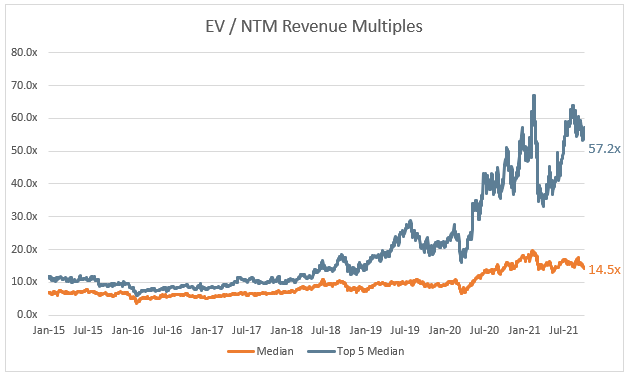
This is a comprehensive thread on the Buy-Now-Pay-Later Trend. Why have the World's Largest Retailers chosen Affirm's BNPL solution instead of building their solution in-house? This thread explores $AFRM's Competitive Advantage and the current Credit Card disruption: My Story with Affirm & BNPL started from tracking them on private Mkt's + Day 1 of the IPO: I started accumulating shares from IPO day as seen below: I have followed the story from the beginning, so I'm happy to share my journey/learnings: https://t.co/35CiMRh3JC 1/ Let's begin with First Principles: What is BNPL and how does a BNPL transaction work? Who are the key partners? Below is a great overview by my friend @mariogabriele. It breaks down all the key partners. BNPL is more complex under the surface, but this is a good starter: 2/Key BNPL Success Determinants: 1/ Frictionless POS payment/checkout solution 2/ Relationship w Merchants 3/ History, experience & knowledge w. Underwriting/Credit 4/ Trust: Do consumers know and trust your Brand. 5/ Access to Capital: due to the high-velocity biz. 3/ Fintech BNPL Landscape & Distribution Models: 1. Direct Merchants across 3-continents: $AFRM $APT Klarna 2. Networks: $MA, $V 3. Issuers: Chase 4. White-label: Limepay [H/t to @studios for the graphic] 4/ *My* personal Thesis is that Affirm could be a future leader and emerge into a larger Fintech. What moat do they have? It's important to understand the thesis & competitive advantage as primarily being the value for merchant and consumers. It's a 2-sided network Let's go! 5/ A) First-Mover Advantage in North America. $AFRM was first to begin within this industry back in 2013/14 within the US. They have a significant head start and 10-years of core competency before any of these recent current players that provides industry experience. 6/ Data, Data, and Data! A huge part of $AFRM is the data preservation on every transaction that helps make their a) AI risk models better. Data for underwriting is unique to AFRM's ecosystem b) Understand customer transactions c) better enables them to improved lead generation 7/ BNPL Economics:{H/t @arampell} $AFRM is working hard on building a ubiquitous parallel network for managing transactions for large retailers allowing product manufacturers avoid network rails like $V. One result of this is new MDR fees for AFRM https://t.co/mzVcqwEazg 8/Secondly, this is a core part of the moat. As a parallel network, there is much potential for many transactions and payments to happen on BNPL payment rails due to SKU level that BNPL receives - imagine what these 3-parties can create in the future! https://t.co/h6VUAGf9bH 9/This could be the reason why recently Walmart and Target recently updated their layaway services in-order for them to use adopt $AFRM's BNPL solution. h/t @Mayhem4Markets https://t.co/0sB0dfkPgK 10/ Tech & AI Competency: Also, this is why Max gave this definition of Affirm. $AFRM is NOT just a BNPL provider, but it is a much larger data ecosystem and data collector that can unlock value across commerce w/ their VA stack Listen.h/t @MarceloPLima https://t.co/ljzUCEALfd 11/ Efficient Underwriting: This blends from d earlier point, but as a result of having a significant head-start, experience, tons of data points. They have of the best underwriting for customer credit (More loans, Less default) which is crucial. This *debit* data is defensible. 12/ Risk Management & Capital market access: Over the past 10-years, they've built risk models that can withstand different economic environments. This is crucial for large partners like AMZN. In addition, they have an efficient capital market for managing liquidity risks. 13/ $AFRM has one of the best checkout conversion rates within the industry. This is the holy grail for merchants. Affirm has built a special speciality within the consumer payments points and checkout. Below are my notes. 14/ Brand & Consumer Cognitive referent (Kudos @DennisHong17) CC is the brand power that $ABNB, $UBER, hold. In N-America, $AFRM is the first cognitive referent that emerges for Gen X consumers when you mention BNPL. This is an underrated moat. Trust is important to consumers. 15/ Merchant Network Effects: $AFRM's base of merchants from t Peloton, Shopify to Walmart. The interesting thing is that each deal allows access to more consumers Every merchant will rather pick a BNPL provider that allows them to reach more consumers, strong N-effects. 16/ $AFRM's Bargaining power increases with each new major deal and stickiness As shown by the Cohort stickiness which is very hard to pull off in a transaction-based industry. As AFRM partnership grows with AMZN & SHOP, I expect their bargaining power to strengthen their Moat. 17/ Increasingly, BNPL like AFRM are helping Increase Lead Generation, Conversion & Brand Marketing for Merchants. Due to the data and parallel network that these BNPL platforms own, they've become good at driving traffic for businesses. An extra value-added to up MDR's 20/ Future TAM/Growth Opportunity: I don't believe in using TAM or neither do I believe in the $10T TAM. I just know that displacing even 20-30% of Credit Cards is a tremendous opportunity worth over 100B. 75% of US customers use BNPL products. A 4-horse race 21/ New products and new verticals could be a key catalyst leveraging both their existing merchant partnerships + Their Data Advantages https://t.co/VzPrSLQHrl 21/ The 2021 holidays are going to be huge! Recently, Walmart and Target stripping their solution to use Affirm's BNPL -- Together Affirm's Chart checkout solutions. The impact of the holidays would be huge - read their press release on their survey https://t.co/beUl697fg9 22/ Future Growth Estimates (h/t @Marlin_Capital) CS had a $26.5B GMV est in '24 for $AFRM without $AMZN GMV. $AMZN is expected to add $20B in GMV by '24 according to CS Investor Survey. That gets us to $46.5B in '24 GMV, good for a 77% CAGR https://t.co/c59MD3bdFL 23/Risk/Areas I am cautious: a) Competition has caught up. Klarna but especially SQ & APT have a dominant presence within Fashion and Retail Industry, Low AoV sectors. I will watch this metric as the effect of new partnerships take-hold: https://t.co/O5H0559jPJ 24/ Ops Leverage: I would expect to see some improvement to profitability, but I'm giving them a pass bcos this is a period they truly need to reinvest in Tech due to d opportunity as compared to other names like of mine like $CRWD who can afford too. https://t.co/ElBGhaOLV9 25/ The *Pedigree of the Founder: @mlevchin Despite da risks, I trust Max. A core part of my thesis. Ppl easily forget Max was da co-founder/CTO of PYPL. The key architect amongst a powerful group. Remarkable intelligent and knows how to build products! [h/t @mariogabriele] 26/ All the way back in May 2021 (nobody cared about AFRM): I mentioned and discussed why I was really bullish on $PLTR x $AFRM Founding Team below: https://t.co/38HhbGLFF3 27/ Max is also a people leader; Glassdoor Ratings 94%! Well respected by Peers, Founders in the Bay Area & Employees. It's exceptionally rare to see a technical + people leader (Top 1%) 28/ My AFRM stock story: Obviously I bought at IPO: 93 -> Trimmed @ 147 -> added @ 77 & 55. I reduced after Under-whelming results in March 2021 and downloads were weak. Some of my earlier work https://t.co/s6OM7c5i5g 29/ Below is a complete analysis of last quarter's earnings call. This industry is still significantly under-owned due to skeptics. Many of my past BNPL or $AFRM tweets were some lowest engaged, but I prefer it this way. https://t.co/IuZimmT0a3 30/ Back in April 2021, these Adobe external trends were pointing towards significant changes happening within BNPL. I rmbr this helped me continue to hold on to AFRM despite being almost down [-40%] Anyways, it has been an interesting journey with AFRM. https://t.co/BEYoLTAXyi 31/ If you are still struggling to understand the moat of this industry, please read @arampell's thread and follow his work on the Fintech & BNPL Industry See breakdown of the economics of the industry: https://t.co/DyuVChW2tG 32/ I've personally done lots of work on this industry: My previous write-up on BNPL & AMZN: https://t.co/ulH18Qh2S5 33/ Thread on my SQ & APT Thread: https://t.co/b5oXxSV5C9 34/ My Write-up on SQ & APT: https://t.co/MlKx4vRAx8. 35/ Final Words, Ultimately as $V, $MA, $AMEX conquered the credit card industry, I believe $AFRM, $APT x $SQ and Klarna can all have unbridled access to unbundling consumer credit. Below is a summary of this thread and my AFRM thesis : $AFRM = Tech + Risk + Talent + Data. 36/ This thread is super long, so I'll stop but I'll put a compilation of all my write-ups on the key catalysts and further discussions on the competitive moat. I will touch on more of the financial/valuation metrics which cant be all covered in a thread https://t.co/ZYS4m6Dz6F 37/ Anything to add or what I've I missed? @arampell Anyways, this is a thread of my journey (not advice). Tagging a few other $AFRM bulls to share ideas: @MarceloPLima @saxena_puru @masterly_in @BlaineCapital @dhaval_kotecha @Marlin_Capital @LuoshengPeng @MT_Capital1 38/ If you are still with me, thanks for reading! - If still was helpful, feel free to share. Most importantly, I'd love to get your feedback! Let me know your thoughts! Thank you and Stay Safe x @InvestiAnalyst

1/ We have officially closed on our newest acquisition. Before I get into that, let’s walk it back a bit Just over a year ago I put together a thesis about the landscaping industry and how there was massive opportunity in the category. Especially in Florida 2/ The top 100 US companies combined for ~ $15b in rev in 2020. The top 3 earned $1b+ each. 8 of the top 25 companies are HQ or have massive ops in Florida. But, that’s not where I saw the opportunity. I saw the fragmentation of the industry and knew that’s the play. 3/ Could I use my background and experience to take over smaller ($500k - $2.5m EBITDA) landscaping business that are owner-operated or owner dependent. Meaning the owner is a big piece of the Ops, but never delegated or never built a “business” rather built a great service 4/ if I could find them, I knew we could implement or enhance the strategies, structure, organization and add great value as their competition in local marks is likely to be even less advanced business wise. @sweatystartup “don’t compete v Stanford grads” theory 5/ BUT, instead of searching for 2 years. I knew I needed to prove my theory. I had believed in my background. State champion basketball coach (guiding a group of individuals to a common goal) Startup from 0 to successful exit COO of company w/ $800m in assets & 120 EE 6/ I found a much smaller landscaping company, top line was sub $1m. Brand and service were amazing. No business structure. Needed to raise funds for the acquisition (did not want SBA) I made a post on twitter about the deal, within 30 days closed the round and deal was in! 7/ The investor took an enormous bet on me (much more so than the industry/thesis I had) and I could not have asked for a better partner. Guided me when needed guidance Pushed when needed pushed Told me to 5x when I was talking 2x. It was great. Thanks @justindross 8/ Spoke about the raise, acquisition, and first few months of the business on @aebridgeman & @whentheresawill podcast Wrote a piece in @guessworkinvest newsletter about how it was going 6 months in 9/ We acquired the biz in Dec of 2020. Since then (9 months later). we grew the top line 30%, and we 6x the net profit Acquired biz ✅ Learned biz ✅ Turned biz around ✅ Now it’s time to kick start the thesis 10/ The thesis centers around growth through acquisition, so, I knew there needed to be more acquisitions. I was super active in trying to find another business to acquire. Had some good talks with owners/brokers but never went anywhere. 11/ Kept seeing this same company over and over in this really high end neighborhood. I started doing basic background on them. Website, state records, calls to their office. Followed trucks I called a broker I knew and said “call them and see what’s up” 12/ Turns out, they are in the top 3 of residential providers in Orlando. 🤯 They have a massive customer base in a very high end neighborhood. If we combined my business & theirs, we’d be the largest residential provider in Orlando But…no way they sell, right? 13/ After a few talks, broker was able to help. (Brokers can be great assets if used right!!) They were open to selling only if their price was met. It was extremely fair, so they set price, we set terms. LOI signed 14/ Ok. Now, need to raise again. @SamtLeslie had this idea about publishing open deals to people via an email blast Told him, hey, I have one…let’s test it The response was insane. A+ level investors with interest 15/ After learning/vetting potential partners (both ways, them to us and us to them), we committed to a partner. I was pretty clear with what I wanted as a partner. It wasn’t just funds for this deal. If that’s all I needed, I would’ve went SBA. 16/ We wanted a partner that 1) Knew what it was like to be an operator 2) Knew what it was like to scale a service business 3) Capital for the deal 4) Capital to execute the entire thesis 17/ While those 4 items are super important and equally critical. The first two items on that list are more important to me than the last two. Not even close. This only goes as good as our team, and our new partners are the perfect match with us. All the boxes are checked 18/ On Friday, We officially created our new HoldCo that will be used to continue the thesis Benchmark Group 19/ As a HoldCo, we have created Benchmark Landscaping. Which is a combination of our first acquisition (B&B), and our newest acquisition from last week (Justin’s) We will operate two locations in Orlando, with 55+ EEs 20/ Benchmark Landscaping is now the largest residential provider in Orlando. Super exited Hard work begins now!
New Blog Post ------------------ I Just Walked Away From My New Venture Fund. Here's Why. https://t.co/rIlZAp3OUQ Overall, I realized a core identity of mine (investor) had to step back to make room for a new one to take center stage (coach). I get energy by exchanging ideas, exploring alternative perspectives, and learning from others. I ultimately realized that I highly value having sparring partners and working towards a common goal with talented people who complement me. I’ve been in technology for two decades. It’s a big part of my identity. I love being in the ecosystem. However, over the past six months something shifted. When I opened Twitter, browsed Product Hunt or read the tech press, a rush of anxiety would wash over me. Everyone and their college roommate is a fund manager these days. Founders. Creators. Influencers. Athletes. Twenty somethings. The barriers to start a fund and deploy capital have (for many people, not for everyone) collapsed. Raising a seed fund is the consensus move these days. I began to wonder if now is the ideal time to start a fund given all the mania surrounding tech and venture. Every morning I’d review my calendar, see a wall of back to back to back meetings, and realize I wasn’t energized for the day ahead. Having fun is essential. We only hear stories of the founders who plow forward. Not enough people talk about those who arrive at the precipice, stare down into the void, take a deep breath, and courageously turn around at the sound of an inner knowing. I deeply believe in combining early stage capital and “holistic leadership development.”
Oct 2, 2021As more business schools teach Entrepreneurship through Acquisition, we get more case studies Here is a list of 87 for your reading pleasure Source (with links to the case studies) Pages 11 and 12 of How to Prepare for a Search Fund During Your MBA https://t.co/bvK9ZQ6PJC
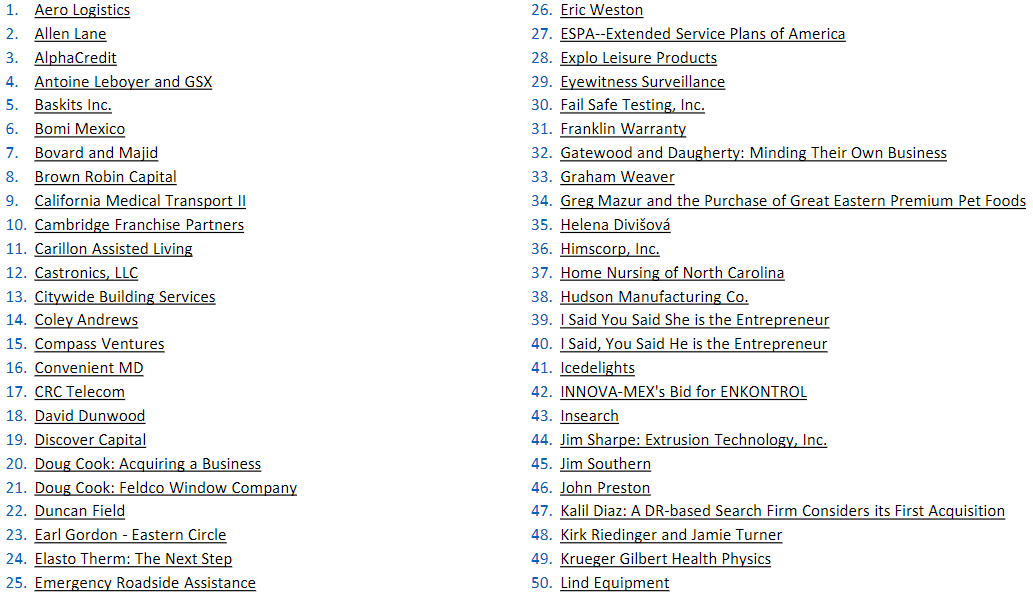
1/ I spent the past two days studying young Michael Burry. Not the older one. Here are some things young Michael Burry said about various subjects. 2/ Many people know Michael Burry as the hedge fund manager from “The Big Short” who infamously bet against mortgage securities before the 2008 crisis. Now he’s gaining exposure by warning everyone that today’s rampant market speculation will lead to the “mother of all crashes”. 3/ But not many people know of the young Michael Burry (or should I say Dr. Burry). A medical doctor by training, Dr. Burry was an individual (and very successful) investor firmly in the long deep value bucket of investing. 4/ This young Dr. Burry was a prolific participant on internet message boards, namely Silicon Investor and Value Investors Club. His posts on the latter were what prompted founder of the site, Joel Greenblatt, to seed him when starting his fund. 5/ It’s these early message boards posts that give us glimpses into how Michael Burry thought as a value investor. 6/ On buy-and-hold. 7/ On fundamentals. 8/ On strategy. 9/ On value investing. 10/ On the market. 11/ On diversification. 12/ On insider buying. 13/ On buybacks. 14/ On the internet. 15/ On bubbles. 16/ On Warren Buffett. 17/ On technical analysis. 18/ On investing as an art 19/ If you liked this thread, please consider liking, retweeting, following, and/or joining the Junto newsletter to get the best deep dives and investing insights: https://t.co/se4NYNlVde
Sep 30, 2021The current funding market is terrible for founders. Here's why it's damaging so many startups: 1/Normal market behavior is that seed companies are pre product market fit (PMF) and Series A companies have PMF. 2/These are not normal times. Series A valuations have skyrocketed and are largely pre-PMF now, pushed by hedge funds and other late stage investors making bets on anything with traction. 3/ With the current market, Series A+ investors are using a couple of strategies to compete which work to their favor but are not great for founders. One strategy is to move earlier and fund seed companies to give the venture fund optionality if the company achieves PMF. 4/The main problem with this is that venture investors know nothing about finding PMF unless the specific partners was a serial founder or has a lot of seed experience. They also have no time to spend with their seed bets, so the founder gets no help achieving PMF. 5/There is a much bigger problem though. Firms watch each other, and will sometimes pre-emptively fund a company's next round within a couple of months of the previous round. (momentum bets) 6/Now when you put together seed bets and momentum bets, crazy things happen. I’ve seen series B’s now of pre-PMF companies where a seed bet and two momentum bets have happened. These momentum bets are often made by junior partners trying to make a name. 7/One might think this is all good for founders because now you have $30m in the bank raised at a $200m valuation. What’s not to love? For serial founders, it's no problem. But our industry is built on new founders and junior venture partners. 8/For serial founders who have seen this before, it’s no problem at all. They stick to their founding team of 6–15, experimenting furiously until they find PMF and tell their investors to come back in a year. 9/But let's talk about new founders and junior venture partners. The place this all comes together is the monthly board meeting. Investors say ‘Tell us what you are going to do, and then exceed that’. 10/The problem is that pre-PMF founders making promises around timing is ludicrous. The best a founder can do is to identify a key metric and experiment around it. 11/This process is completely unpredictable, because almost all experiments fail (about 80%). So the best a founder can do is tell the board they are working on it and they may have results in a few months or never. 12/This kind of statement feels very very bad to venture partners who are used to PMF companies. Once a market is established, the founder has control of many more variables for success and the company turns into an execution play. 13/The above statement from a founder sounds like they have low expectations for their company or are trying to shirk accountability. So inevitably the young venture partner pressures the founder into promising something. And then you spin the roulette wheel. 14/If the founder does move that metric in the promised time, another promise needs to get made and the roulette wheel is spun again. As you can imagine, new founders in this situation fail repeatedly, demoralizing them and their team. 15/This is what leads to the death blow. Since venture investors deploy capital and new founders don’t understand how hard management is, both sides decide that adding headcount will help. The company gets a great SEO person to work on that, or buys a great PM from Airbnb. 16/The founder thinks they need more engineers so they can work harder and get more done. However as Fred Brooks famously wrote about engineering teams 50 years ago, the same is true for startups. https://t.co/bI8f9P9OiF 17/ Applying capital to early stage startups doesn’t work because finding PMF is an exercise for the founders. They have to hold the market in their head and develop enough of a map of their customer needs and emotions to experiment and continuously reposition what they do. 18/This takes a ton of time. If you hire people, then you have to spend your time managing. A two pizza team is the right pre-PMF trade off between managing and experimenting. 19/Is there a good solution to this? Probably not at a market level until hedge funds get out of the market. I don’t expect Series A funders to stop making seed bets for optionality or avoid momentum investing. 20/So the only solution is for founders to play the game on their own terms. That’s what serial founders do. They set expectations BEFORE THE ROUND IS RAISED about their process to find PMF and why it is a death blow to over-hire early. 21/I hope that this thread was useful to you in this momentum funding environment. If you can stick to your guns, it can all work out and you will have plenty of cash in the bank to ride out the next downturn. 22/If you liked this thread, please follow me @jwdanner 23/Here is the backing blog piece for this thread if you would like to refer to it later. https://t.co/ZY0sl0PEWC 24/Here is the doc I use with founders on PMF for reference:
Sep 30, 2021 Original deleted — preserved here1/ Thoughts on Research Process I was invited to present my research process at a college in the US. I am sharing all ten slides here. 2/ How to pick stocks 3/ What should we focus on? 4/ How do we understand "deep reality"? 5/ One Deep Dive every month 6/ How to understand the narrative 7/ Why I write Deep Dives 8/ How I value companies 9/ The uncomfortable truths 10/ How to "pitch" stocks End/ Almost all long-term alpha is NOT informational You can find all my twitter threads here: https://t.co/1s3G9QUnxP

Everyone knows the speed at which VC deals are being done has accelerated to a dizzying pace. While this can be good for some Founders, it’s magnifying a flaw in the VC ecosystem. A few thoughts on “Bad Pattern Recognition” and how it’s creating have and have-nots: 🧵👇 2/21: 14 years ago I hung up my operating hat to become a Venture Capitalist. Knowing nothing about investing, I sought out seasoned Investors so that I could learn from their experiences. Borrowing a degree sounded like a better strategy than earning one from scratch. 3/21: It shouldn't come as a surprise that much of the advice was generic and in the "no duh" camp. It started to feel like many Investors’ diligence processes consisted of evaluating startups on a laundry list of “generally true” criteria. Ticking the right boxes = Term Sheet. 4/21: Things I heard a lot: Focus on how big a business could be if everything goes right. Invest in serial Founders because they succeed more than first time Founders. Large TAM has to be present to generate large outcomes. Answer the question "is the market ready now?". 5/21: On and on and on the genericized list went. My conclusion at the time was that making good investment decisions collapsed to an exercise in Pattern Recognition and was told this explicitly by many successful Investors. Invest, analyze, learn, repeat. 6/21: Fast forward 14 years and 150+ funded companies firmwide and I have a very different perspective about what it takes to be a great Investor. One of the main pieces of advice I would give to the “younger me” is to do the necessary work to avoid bad pattern recognition. 7/21: While this sounds obvious, it's a concept that's worth internalizing. The key is to know when to trust previous patterns and when to ignore them which is anything but a simple task. Sometimes art needs to override science and intuition needs to override history. 8/21: I’ve backed many amazing companies over the past 14 years and can say with certainty that a few of the best suffered early on from bad pattern recognition. Funding became easier once they had enough evidence that their businesses were working, but this took time. 9/21: I’ve seen bad pattern recognition around “Location”: Some Investors won’t fund a company outside of a major tech hub based on the pattern recognition that hiring talent as a company scales is much more challenging in all but a few cities. 10/21: I’ve seen bad pattern recognition around “Team”: Some Investors won’t fund a first time Founder based on the pattern recognition that first time Founders have thin networks, they need help hiring talent and they don’t have experience raising capital. 11/21: I’ve seen bad pattern recognition around “Investor Signal”: Some Investors won’t fund a startup when there are other startups in the space that have top tier investors on their cap tables based on the pattern recognition that these institutions crown the winners. 12/21: I’ve seen bad pattern recognition around “Competition”: Some Investors won’t fund a startup when there are successful late-stage startups and incumbents in the space based on the pattern recognition that the opportunity is limited because momentum is real and winners win. 13/21: I’ve seen bad pattern recognition around “Failures”: Some Investors won’t fund a startup in a space that’s produced marginal outcomes in the past based on the pattern recognition that outcomes are commonly a result of an industry’s structure. 14/21: In today’s environment, bad pattern recognition is increasing in frequency because most VCs have an endless pipeline of deals to work through but limited time to evaluate them. Speed matters and relying on historical “successful norms” is where triage typically starts. 15/21: The net effect is a “two things can be true at the same time” environment where some Founders are finding it easy to raise capital while others are finding it nigh impossible. Fit the Pattern = Fast Process + Amazing Terms Don’t Fit the Pattern = Triage Casualty 16/21: The challenge for everyone in the ecosystem is that the industry’s typical triage process does accomplish two important things. It massively reduces the volume of companies to diligence and it shifts the distribution of outcomes favorably. 17/21: The overuse of pattern recognition helps reduce Type 1 error (i.e. – Funding a business that ultimately fails) but it comes at the expense of increasing Type 2 error (i.e. – Not funding a business that would ultimately succeed with capital). 18/21: Today’s environment feels like cruel and unusual punishment for the diamonds in the rough that have great ideas but don’t fit the normative patterns that survive the industry’s typical triage process. This sucks because every great opportunity deserves a shot. 19/21: There’s a similar situation unfolding in the public markets where 10 stocks have been responsible for ~25% of the current bull market’s return. It doesn’t mean there weren’t other stocks worth investing in. But finding them has been a challenging sorting exercise. 20/21: This leaves alpha on the table for investors who want to chase it. Figuring out how to spot great opportunities that depart from historical “successful norms” is one way that the next generation of investors will generate outsized returns. 21/21: Investors who do the work to understand opportunities holistically will have an edge because they’re playing a different game than everyone else. Finding great non-consensus opportunities is hard and takes differentiated skills, but it can produce great results.

Howard Marks Memos from 1990-1995 The Key Learnings Summarized in 1 to 2 Tweets each. Here we Go 👇🏼 1990 - Route to Performance The absence of disaster is the best foundation for above-average long term performance. Hence, aiming for “a little better” than average is more likely to succeed than aiming for top-decile returns. $10,000 invested for 20 years at a 10% interest rate would turn into $67,000 A 12% interest rate would turn the money into $97,000. And the longer the time horizon, the larger the gap. All you need, is a little better. 1991 - Memo to Clients Markets behave like a pendulum. The pendulum swings between euphoria and depression, overpriced and underpriced. But whenever the pendulum is at an extreme, it inevitably swings back. Sooner or later. Successful investors should be aware of where the pendulum is. Not to time the market, but to adjust their investing approach. Too much euphoria - more conservative positions Too much depression - more risk-taking Be aware of the market's mood and adjust appropriately. 1992 - Microeconomics 101 Two factors determine the outcome of your investment. Intrinsic Value and Price. Two obvious facts that still matter: It’s better to invest in a good company than a bad one. It’s better to pay less than more. When demand is low, prices will be too. That’s your chance to pay less for a good business. Moments of low demand: - Bad Press - Short term problems - Out of Favor - Bad Mood of the Market (Mr. Market) 1993 - The Value of Predictions The problem with forecasts is that even being right doesn’t guarantee superior performance. You need to be right and differ from the consensus. And that’s hard to do since most forecasts aren’t terrible, and the actual results fall near the consensus most of the time. Betting against the consensus and being wrong is also an expensive mistake. Result: Don’t forecast too much. Ignore macro until you’re very certain. 1994 - Identification of Investment Opportunities Demand drives stock prices. And demand is determined by how many people like a stock. That would mean that the most disliked stocks are the best investing opportunities. “The safest and most potentially profitable thing is to buy something when no one likes it.” Low risk of losing money because already at the bottom and lots of upside potential when the mood shifts. 1994 - How does an Inefficient Market get that Way? In an efficient market, assets are priced fairly, and no bargains exist. The only way to increase the expected return is to take on more risk. In an inefficient market, some assets become overpriced, others underpriced. Returns can be increased by skill, not only by taking on more risk. But how does a market get inefficient? There are many possible reasons. 1. Information is unevenly distributed 2. Underdeveloped Market-Infrastructure 3. Investors fail to act rationally In today’s markets, failing to act rationally is the main reason for our inefficient markets. An efficient market is unbiased. A market with human interaction never will be. 1995 - How the Game should be Played Oaktree’s (Howard Marks) way is never to tolerate poor performance as a side effect of “swinging for the fences.” The goal is to be slightly above average and not losing money. An investor should never interrupt the process of compounding. That’s why Warren Buffett says: There are two rules to investing: 1. Never lose Money! 2. Never forget Rule Number 1! Thanks for reading. I hope you learned something new today. If you enjoyed this little Rewind of Howard Marks Memos, I would appreciate your support by - Retweeting - Liking - Commenting This Thread. For more content about Investing, follow me @MnkeDaniel Tagging some people who I suspect to be as obsessed with Howard Marks as I am. @bkaellner @DennisHong17 @DividendGrowth @parkcassady @williamgreen72 @JoshuaTai0427 @daniel_toloko @austinschless @TreyLockerbie @10kdiver @soonervaluecap @yliownyc
Sep 21, 2021Over the last 12 months my team of 23 has sourced and acquired $30m+ worth of self storage (584k square feet) and raised ~$10m in investor capital. We have an ace up our sleeve: Operations. A thread on the most important part of running a real estate company: When you have an operational advantage you can make more money with the same property. Meaning the seller does $250k/yr in revenue and $100k/yr in expenses. Another buyer does $270k/yr and $100k/yr. We do $290k/yr and $90k/yr. Property is more valuable to me than anyone else. How? The normal blocking and tackling of running a business. Great marketing. Easy to rent 24/7 online. Fully remote management. Aggressive revenue management. A clean / well maintained property. The catch: This is totally different than running a real estate company. Real estate investors generally sit back and invest in real estate. They deploy capital. They structure deals and charge AUM fees and promotes on the deals they raise money for. Real estate operations is a different business. Dealing with customers, managing the property. The sweatier the business (and the more moving parts) the more opportunity to carve out a competitive advantage. A single family rental? Tough to carve out alpha. A 450 unit self storage facility with sub-market rents? An RV park? Cemetery? Prison? Marina? Now we're talking. When you increase net operating income (NOI), amazing things happen. The VALUE increases. Because commercial real estate is largely valued on a multiple of that NOI. Right now its 10-20x that NOI (depending on location, risk, asset class type, etc). A self storage facility for example. They trade around 14-20x NOI right now (5-7 cap). So that previous example where we took NOI from $150k a year to $200k a year? We buy it for $3m and its worth $4m when we're done. A lot of people think real estate is passive. Make an investment, sit back and cash checks. Not the good kind of real estate. Not the kind of real estate that you can add a lot of value to quickly. Its all operations heavy. So my advice? Learn business. Learn marketing. Hiring. Training. Customer service. Logistics. And then use that skill to carve out an operational advantage for yourself and your team. I released a podcast episode today on The Nick Huber Show that does a deep-dive on this topic (link in bio). Give it a listen and let me know what you think by commenting below!
Sep 20, 2021Real estate investing can be awesome, especially if you buy at the right time in the right place for the right price. We did all of that, and still lost millions of dollars. A 🧵 To make a long story short, I have a really good friend who worked as an investment banker in NYC. On the side, he started doing SFR (a few flips, some BRRRR’s, etc.). He was killing it, making 35% plus on everything he touched. He didn’t love his day job, and started thinking about making RE his full time gig. Did a bunch of research, attended conferences, chatted with pro’s in the field, etc (before RE Twit existed). His mentor approached him as they’d done a few of these RE deals, inquiring if he wanted to do this full time. Said if he would put together a biz plan, get more info on how it could scale, and get a few other investors, he’d put up seven figures to stake/pay him for 2 years Pitches me biz plan, tells me his deal w/ mentor (acquaintance of mine I have immense respect for), etc. Seems like a no brainer to me … the areas he was looking in, projects he had, how he was going to raise money, track record, etc … I’m in. Only issue? I wasn’t local. First few years, we are KILLING it. Quickly jumped into MFR where we’d rehab and sell for profit, then onto to MFR/rehab/hold for cash flow. Jumped from NYC to Charlotte to Atlanta chasing good deals. Built construction, PM and capital raise teams. Quickly amassed ~3500 doors. At this point probably 3-4x up on investment. But more investors required more deals, other people jumping into MFR, everything got more expensive, workers hard to find. Took on some riskier deals but still pretty good on paper, then some development deals outside of our core Around this same time the mentor gets a new CEO gig that eats up his time and I move away/buy SMB/get really busy. At the same time, my buddy who runs RE company finds out wife is pregnant. So RE company is most complex it’s been, and chaos has ensued for all of us. Quarterly board meetings start to get delayed and then skipped all together, financials are slow to get completed, calls and texts start falling off. At this point every alarm bell and warning should have been going off, but the mentor and I never hear a word and aren’t worried. Randomly ask my buddy a few times how things are going, “everything is fine” or some version. Finally, I come up for air ~2 years later and tell my buddy I’m coming to NYC, lets grab a drink. He says cool but lets meet alone first before dinner with the wives. Bro hugs, small chit chat, couple of cocktails, etc. Finally he says “I’m really glad you happened to be here, I get to tell you in person we’re moving out of the country”. Wait, WHAT?!? Dude, you’re running a sizable company. “Yeah, about that, we can’t pay the bills” I’m speechless. No idea how to respond. Just start stammering “what? Help me understand”. To quickly sum up the deals gone wrong … we made risky bets on MFR and then had some issues with contractors, weather, etc that dried up cash flow. Buddy then started pulling cash … from other projects to cover short falls. Started chasing even riskier deals to make up for it, and moved into some ground up development to hit a home run, which he knew nothing about. Got overextended. I finally ask “why didn’t you reach out (to mentor and I)?” And here is the kicker. He finally admitted he went through BRUTAL depression. We’re talking 16+ hours of sleep a day, couldn’t get off the couch, barely functioned. New dad messed w/ him & because he was proud/wanted to fix it b/c the two of us were busy, didn’t let wife tell us Had he raised his hand and asked for help even a year before then, we could have easily stepped in, stopped the bleeding, got it back on track, etc. But by then it was too far gone. In order to keep the outside investors from coming after my buddy … the mentor and I gave up all of our stakes, signed the properties over so they could be run/sold, etc. Just a massive logistical and legal headache the mentor and I had. Combined (paper) losses for us were in the millions. Worst part for me was my buddy contemplated suicide on a daily basis for months. Thankfully he didn’t and finally came to us before it got that drastic. I will happily take my buddy and not have the money, still wish he’d just asked for help :-) Lots of lessons learned for me (don’t do investments out of your core, don’t do investments when you can’t pay attention, etc.). But the biggest lesson is mental health is a real bitch and everyone in SMB needs to take it seriously. It’s why I tweet frequently about … making time for friends and family, lean on other people who have done this, and holy hell ask for help. This is money, this isn’t life and death. Worst case it blows up and your friends/family will be there. Need them to give you perspective. We can now joke about this, thankfully, as we’re all doing well and this was just a bump in the road. I told my buddy yesterday if I ever dip my toe in the RE water again, I’m sticking to the pro’s @moseskagan @seandsweeney @fortworthchris @sweatystartup etc. He agrees. 🤣😂😅 As always, hope this thread helps, DM’s are always open if I can help. Just to add to this based on some DM’s … all is well that ends well. My buddy is back to being his unreal successful self just like I expected him to (FinTech founder headed for an exit at some point). He takes a lot of hell (jokingly) for this and picks up a lot of checks
Sep 18, 2021B2B payments presents a $1T+ opportunity for startups, investors, and incumbents. Here’s a look into areas within B2B payments that excite me and a few early-stage companies to keep an eye on: 1/ To read my post in full, head over to @The_Takeoff’s Substack and consider subscribing if you haven't already... https://t.co/vtlNnAOvLf 2/ What makes the B2B payments space so exciting? 1) Existing payment flows & processes are vastly inefficient (and, largely, non-digital) 2) 40% of B2B payments happen via check 3) $120T+ in B2B payments volume today, rising to $200T by 2028. 4) ~5x the size of B2C payments! 3/ However, while B2B payments is a large and attractive market, B2B transactions have a number of complexities that can make “getting it right” difficult. What are some of these complexities… 4/ While nearly all B2C purchases are made via credit card or cash, B2B buyers pay for goods in a variety of ways. 5/ Large purchase amounts and high fees typically make the use of credit cards obsolete in B2B purchasing scenarios. 6/ And, while business buyers expect a B2C-like experience for B2B purchases, the many complexities inherent to B2B transactions mean that B2B payment solutions must take into account these numerous complexities and craft solutions accordingly. 7/ Amidst these complexities, most B2B invoices are still processed manually, leaving room for a significant amount of innovation and digitalization… 8/ Digitalizing B2B payments can significantly boost productivity and lower costs for sellers, while also turning payments “from a cost center to a revenue generator.” The B2B payments space is ripe for innovation from new entrants, existing startups, and legacy incumbents... 9/ While the entire B2B payments space excites me, I am currently focused on six main areas. 10/ B2B payments solutions for SMBs & mid-market companies. SMB solutions lose value as companies’ revenue reaches $50m. Enterprise solutions are often too much $ for smaller players. The result is that middle-market players are left unserved. SMBs face additional obstacles. 11/ Payment solutions for B2B marketplaces. We are likely to see an influx of B2B marketplaces over the next ~ decade. Associated with this rise is an increasing need for payments solutions catered specifically to these marketplaces. (@eriktorenberg) https://t.co/g9sel16HSW 12/ Virtual cards & spend / expense management platforms. As purchasing power within organizations becomes increasingly decentralized, there is a strong need for new solutions that help businesses better track spend and make payments. 13/ Unlocking working capital and cash flow for buyers and sellers, alike. Many SMBs find it challenges to maintain sufficient working capital. One potential solution here is buy now, pay later (BNPL) for B2B... 14/ @afterpay_au @Klarna @Affirm have already captured large shares of the B2C BNPL market. A number of other consumer-facing BNPL solutions have raised large funding rounds recently, too. However, the B2B BNPL space remains largely untapped. 15/ Vertically-focused payment processors and PayFacs. Workflows and payment processes vary greatly across different verticals. Vertically-focused fintechs / payment companies seem poised to drive value, efficiency, and cost savings moving forward. 16/ Cross-border payments. High costs and low speed are two of the many inefficiencies associated with cross-border B2B payments. Uruguayan fintech @dlocalpayments is one player here. The company went from founding to an $18b+ public co in <5 years. https://t.co/kvW7ZAtQ4q 17/ There is a massive opportunity to unlock significant value and efficiency for businesses via new and improved B2B payment offerings. Expect to see numerous multi-billion-dollar outcomes in the coming years. 18/ As per the exciting companies in the space, I put together a spreadsheet highlighting the 55 companies I discuss in the post. (Note: this list is far from exhaustive) https://t.co/4u0DOk3xCx 19/ If you’re building in the space, investing in payments and fintech companies, or just want to say hi, my DMs are open. Like / RT the whole thread to help spread the word about B2B payments!
It’s refreshing to see Tiger dominate with “We are pure financiers. We do our homework. We don’t believe we have any value to add besides our capital, speed and terms. Go do your thing” vibe in an era where investors constantly claim credit and claim to value add! In an environment where capital is abundant, the conventional wisdom has been differentiation comes from brand, services and storytelling by the firms. Tiger is showing being boring can be a winning recipe. It’s showing latent preferences of founders. 3 top dealmakers at Tiger are all traditional finance people. 2 of them are 20 year veterans of Tiger. None of them spent a day at startups (Neither have like more than half of Sequoia investors but that’s a different story). It’s just defying all the talking points of venture. If Softbank was MySpace, Tiger is the Facebook IMO
Jul 12, 2021I'm realizing now that this might be helpful to others. Part of a presentation I made about working in venture and at Compound specifically for new hires back in May 2020: https://t.co/th7PdxA7Mn If you want to see the other 40+ slides someday, apply to join our team now. https://t.co/bY2sGp4QmI
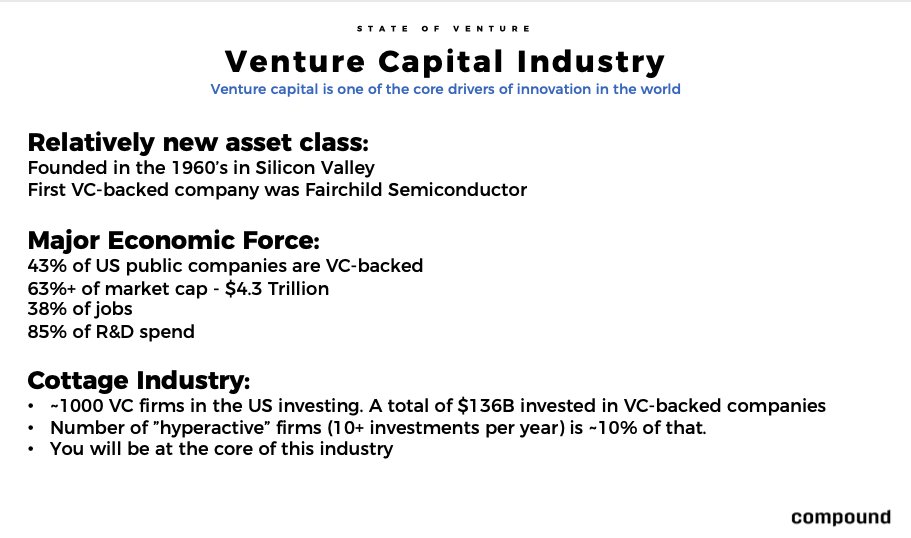
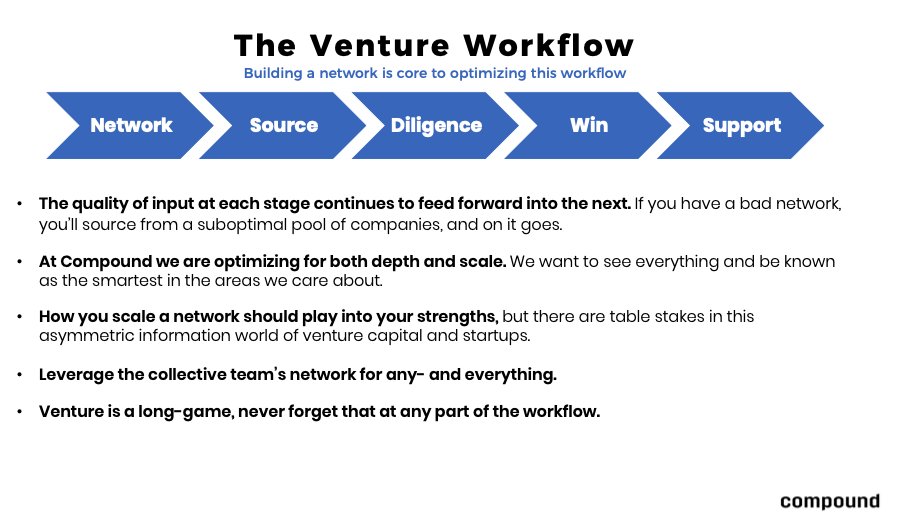
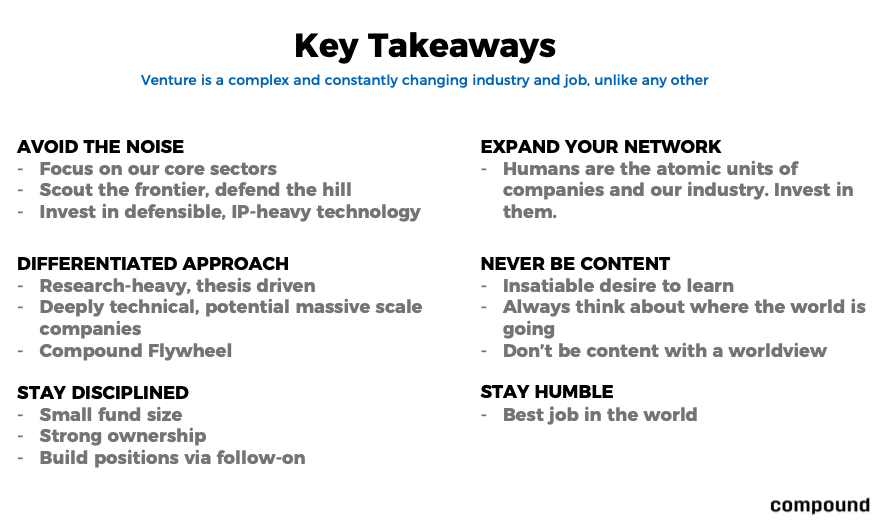
UI Path: A company on a mission to fully automate the modern enterprise and take away your jobs. This is a thread that breaks down everything about $PATH's business. What truly makes them unique? - I'll cover both the Bull and Bear Case and everything you need to know here: 1/ Introduction - Problem: In your workplace do you feel like you've got one or two mundane/repetitive tasks that bores you? Despite digital Innovation, today’s enterprise is filled with many mundane tasks that saps productivity. Some big examples include Email, fillings etc. 2/ Welcome to RPA: The problems highlighted above led to the rise of the RPA industry. RPA is basically the automation layer that sits on top of other software products that allows companies or workers to automate repetitive tasks by replicating the steps a knowledge worker. 3/ $PATH Overview: UI Path is an enterprise company that aims to use bots & robots that emulate humans to fully automate these mundane tasks in the enterprise. Eg. They automate logging into applications, extracting information from docs, moving folders, easy finance tasks etc 4/ How it works? You install a no-code bot on your desktop thru the workday that records all your tasks. The robot uses computer vision that can see and monitor all your tasks then learns it. Eventually when executed, this bot can click and move things like a human would do. 5/ $PATH 4-Product Types: i) Discover: When installed, it can help discover automation opportunities within your workday. ii) Build: Next, once a process is identified, business users can install UI Path to automate a manual process - through an unattended or attended robot 6/ iii) Run product: It can be executed across department and software systems iv) Manage: Automation deployed. Users can manage & track automation activities to ensure its going according to plan. There is a big integration across systems that UI Path utilizes and is a moat. : 7/ $PATH Marketplace v) Engage: They run a marketplace. Multiple users internal or external within an industry can access & collaborate on d platform. Eg. JPM can see a process used by Goldman and implement it internally. This marketplace presents a network effect & data moat 8/ Tech & Business Partners below: Consulting firms help organizations w. business process outsourcing. This involves assessing an org. system, processes to develop strategies to optimize efficiency. $PATH's uses tech partners for integrations and has a strong tech ecosystem. 9/ $PATH Clients - Let's look at Customers (a): 80% of Fortune 10 70% of Fortune 100 60% of Fortune 500. They dominate Corporate America across multiple industries and sectors. Just the widespread applicability across multiple verticals of their software is a major strength. 10/ Customers (b) In general, they have: + Total Customers- 8500+ + Customers w. ARR > 100K, at 1104! + Customers w. ARR > $1M, at 104! And, + They have a DB-Net Retention rate at 145% ! In general, they have a highly diversified base with happy customers who keep using it. 11/ Financials - Top-line: + 79% YoY CAGR In AR-Revenue (ARR is a big way they measure the business due to their contract agreements) + 80% YoY CAGR in Revenue Growth and recently 65% YoY. There is a slow-down this year, but they overall, $PATH is rapidly growing! 12/ Financials - Bottom-line: + 88% Gross Margins (!!) + Signs of operating leverage + GAAP Profitable, but IPO SBC expenses changed things + N-GAAP Ops Margin: 9% + EBITDA: Improved in 2020 but going high due to S&M / R&D (which is ok IMO) + FCF: -11% + No debt + Cash: $1.9B 13/ Market Leader on Industry Product Reviews: Forrester ranks UI Path as 1st: Let's look at their journey + Among 14 vendors, $PATH earned the highest rank in Current Offering, Strategy, & Market Presence + Highest scores in product vision, performance & partner ecosystem. 14/ Gartner Reviews also ranks them 1st and the leader in the space. Another 1st on Tues. this week -> https://t.co/U8I6xkgomM I could continue on and on, but its clear UI Path is the leader of the RPA space and its not close yet This point is crucial for my next point.. TAM. 15/ TAM: TAM can be vague, but the potential to automate a TON of manual tasks is huge! They have expanded the TAM from $7B to $60B. They did it with their new SaaS, AI product offerings and some acquisitions. Now consider a 60B+ TAM + Being the industry leader = POTENTIAL! 16/ Let talk Risks: a) The big risk to UI Path is not valuation, but the transition to the cloud by corporations. UI Path's product was built to work very well in a company with legacy systems like SAP, Oracle etc. To mitigate it, they have expanded their SaaS offerings below: 17/ Risks-b: Competitors: i) Automation Anywhere(Strong) ii) Blue Prism (Weak) Path is differentiated on: a) Vast marketplace data b) Most comprehensive product suite in RPA c) Product Tech is better as ranked by Gartner & Customer reviews d) $PATH growth metrics > Competitors 18/ Risks: c) Microsoft: Recently $MSFT launched some cheap RPA tools on the market. This may pose pricing pressure. Based on product offerings, $MSFT RPA tools cover more niche automation tools. However, PATH has a more comprehensive product that covers advanced RPA areas now. 19/ d) Potential Disruptors: Upcoming start-ups focused on very niche and vertical areas of the RPA market like Olive AI for healthcare. But, $PATH is the leader on every level and based on their cash (1.9B) and access to Fortune 500, they are positioned to control the market. 20/ Mgmt Team: Daniel Dines, Founder. Romanian w. a great American dream story. After watching multiple of his interviews, he is not your typical silicon valley CEO. A very interesting techie at heart. In 2019, they had a mgmt revamp w. new execs. Culture preaches humility. 21/ Dan went thru ALOT of struggles for over 10-years since he founded DeskOver in 2005 (turned into UI Path). The big turning point came in 2015 w. Funding + Product pivot He is a CEO who is 'results' driven and doesn't mess around. I actually like that! The results are proof! END/ 22/ My Investing Process: Many have wondered why I invested into $PATH despite on its valuation. I started a small position & plan to DCA overtime. But, this is a 5-star business that meets all metrics on Tech, GTM and Financials. Rare breed that will always be expensive. 23/ Let me summarize this thread in conclusion: I'll start w. risks to continue monitor: i) Revenue vs Costs as they ramp up their Cloud & AI offerings ii) Maybe a continued revenue deceleration? iii) Competitive landscape to see if they can maintain leadership in new RPA areas 24/ Summary: i) Comprehensive product suite across d. entire RPA ecosystem ii) Diversified & large Market share amongst Fortune 500 iii) Customers love the product, Proof is record DBNER iv) High switching costs, best tech combined w. best ease of use leading to high stickiness 25/ v) 1st Class Financials- Both on top & bottom line (Top 1% in SaaS) vi) Clear market leader by market share & as ranked by Industry Research like Gartner. Hence, Market Leadership + TAM >> positions them to capture a large piece of the 60B+ TAM = long-run growth potential. 26/ This pre Q1 earnings data by @publiccomps summarizes my investing decision and why I believe $PATH will not be 'cheap' I believe w. the rise of new SaaS B-Models since 2009 like $SNOW etc. Traditional valuation metric will not be as effective as they have been in the past. : 27/ And let's be honest. The future of work for the enterprise is moving towards automating tedious/manual tasks. This will allow for more productivity. UI Path is currently well positioned to capture this opportunity. This explains some of the reason for its premium valuation. 28/28 This thread is v. long, so I'm hoping to put everything in a cohesive format into my newsletter (and some highlights from Snowflake) by next week https://t.co/ZYS4m6Dz6F This is my longest thread. If you are still with me, hope this was helpful! Thank you! @InvestiAnalyst In the spirit of transparency, I will add this bearish Analyst note released y-day on $PATH. I don't have the strength to refute everything, but there is like 50% truth on the competitive landscape, but I don't agree with the rest. Anyways, thought I'll share it for everyone.

I'm not a particularly good investor at the series A stage. I'm too optimistic. Few grasp how different seed investing is from VC. It requires a different type of person. (I don't mind when people call me a VC, but it's definitely a signal that they're not people from the startup world.)
Jun 6, 2021I recently learned that a diverse group of angel investors that I am a part of had an opportunity to invest in an attractive growth stage deal... and the lead investor pushed them out (yes, they can do that). 2/How are we supposed to increase diversity on cap tables if we can't join the cap tables, even when the founder wants us there?? 3/I'm curious if this is something that happens regularly in VC or if this was a rare occurrence? Have others experienced this as well? And what can/should be done to change it? 4/One thought... get rid of the covenant that gives lead investors the right to veto other investors. How does this serve the founder/company anyway? (serious question) 5/We are currently in a hot funding market where founders have some leverage to choose their lead. I appreciate that this is a luxury that not all founders have, but if you do, and you value diversity please make sure that your lead investor(s) are aligned with you on this.
Jun 4, 2021<Thread> Founders over optimize for valuation or fund brand name, under optimize for the partner they will work with for the next 10 years. With the exception of the cofounder you pick, this is one of the most important decisions, especially in the early stage! My learnings: 1) Be a shock absorber in bad times Every company goes through bad times. Will the board member absorb the shock or amplify the shock? This is the MOST important quality of a board member. A board member who amplifies shocks ends up being net negative. 1 (a) How to test: Ask the potential partner to connect you to the founders of companies that didn’t go well and they wish they had done things differently - what happened, what did they learn? 2) Make intros to strategic hires, investors, customers, partners The goal of a great board is to be force multipliers! Help the company make an exec hire or bring on that moonshot partner. 2 (a) How to test: Ask “Who do you think are the most strategic people you’d involve in this startup?”, “Who are the top people you’ve personally recruited into your portfolio?”, “Who are some of the customers and partners you have in mind to introduce us to?” 3) Help define metrics to help you (the management) steer the company How to test: Ask “What metrics do you think we should be tracking, and what should we shoot for over the next 12-24 months?”, “Can you tell me how you've helped your portcos define the right metrics?" 4) Brainstorm on strategic questions like GTM strategy Here, the intent of the board is to help open up the CEOs mind: What are you missing? What do you need to build? What problems are you not foreseeing? Does your board member know your space well enough to ask the right Qs? 4 (a) How to test: “How have you helped / coached other founders? What specific areas?”, “What do you think are your superpowers on the board?”, “What can I lean on you for? 5) Finally, Ref check, Ref Check, Ref Check. Research every single company that your board member has sat on. Reach out to founders on LinkedIn. You’d be surprised at how many ppl respond! Specifically look for companies with moderate or bad outcomes. 6) When you speak to founders, ask them specific questions, not generic ones: When did you disagree with your board member? Would you work with this person again? What advice do you have for me, if I was to work with this person? 7) At the end of collecting all the data and signals you can, look inward. Do you feel like you can trust this person? Do you like their negotiation style? Do you feel like they’ll be a confidante in the bad times? Is this a person you could spend a night stuck in an airport at? Last: Trust your intuition. </thread>
May 28, 2021Which VC firms have a real, differentiated "product" to sell entrepreneurs? So many funds.
May 27, 20211/9 Thread: Retention rate illusions With the rise of SaaS businesses, retention rate is often discussed and followed by investors. Here are some of the notes I took from an academic paper discussing illusions/misconceptions when it comes to retention rates. 2/9 Issue #1: Reported retention rate may not be indicative of realized renewal rate. Let me give an example. Let’s say a business reports retention rate is 95% which is, of course, awesome. What is less discussed, however, is the duration of the customer contracts. 3/9 To illustrate why it is important, imagine Company A, B, and C all report 95% retention rates, but customers only renew the contracts in every 1, 3, and 5 year respectively. Here’s how the reported and underlying retention rate differs for these companies. 4/9 “without knowing the duration of the contract, it is very hard to indicate whether these high retention rates are the result of a high renewal rate or driven by the inability of customers to cancel their contract.” 5/9 Issue #2: Companies can *temporarily* increase retention rates by providing discounts If a business has high customer retention rates but low revenue retention rates, it may be indicative of steep discount the company is providing its customers to window dress. 6/9 Issue #3: If customers are not homogenous, historical retention rate may not be indicative of future retention rate. Retention rate is likely to be different when you acquire customers organically vs advertisement or promotional offers. 7/9 Issue #4: When a company takes an ecosystem/platform approach and creates a diversified product portfolio, switching cost can incrementally increase. In this case, future retention rate can be higher than historical one. 8/9 Issue #5: Important to understand whether retention rate is reported on an annual basis or monthly basis. When a company reports 90% retention, if they report annual retention, it means 10% churn, but if it means monthly retention, it may mean 72% churn on an annual basis! 9/9 Link to the academic paper: https://t.co/9afc2ACQiQ All my twitter threads: https://t.co/1s3G9QCMGh
May 26, 2021it makes me laugh to think that there’s an entire industry where buyside people do expert calls with dubiously qualified but bored middle managers, asking questions about technology with almost no ability to comprehend the answers, or to maintain a dialogue beyond their script https://t.co/CfNAgiRiOc $1500 an hour conversation that’s like 1: “do you use cloud or self managed?” 2: “we manage it, at aws” 1: “oh so it’s cloud” 2: “it’s in the cloud but we manage it” 1: [six second pause then an exasperated deep breath]
May 24, 2021One nice thing about being SaaS investor, you can just invest in the Same Old Category for like decades, just find the new winners every decade or so: - call center - contact center - CRM - vertical CRM - sales enablement - marketing automation - billing - accounting - finance A related post here: https://t.co/IxBGBL1Ys1
May 23, 2021Seeing a lot of startups closing big rounds in the pre-B stage which is great for the startup ecosystem but it seems to be getting very frothy and I wanted to share my experience from raising way too much capital for my previous company Shyp prior to finding product market fit. For starters it's really hard as a founder to see your peers or competitors raising massive rounds and not to do it yourself. I got caught up in this trap and looked at funding rounds as a gauge of success. This is a trap unless you have product market fit. Taking on lots of capital at big valuations puts so much pressure on yourself & raises expectations for everyone involved in your company. It forces you to hire faster, spend more on S&M, build more product features etc. If you haven't validated you have something your customers love and you can scale to produce the expected venture return this can be (and was for me) one of the nails in your coffin. Without having product / market fit extra capital forces you to scale something that is not yet working. Constraints are one of the main advantages a startup has. Stay as small and scrappy for as long as it takes to find that fit. A startup can do this when an incumbent can't. After shutting down Shyp and starting @AirhouseHQ we had the opportunity to raise a $10M "seed" but chose not to because that would have forced us to scale up the team way too fast and limit the customer / product discovery even though we had a pretty good idea of what to build. Turns out that was the right choice. We raised our "seed" w/ a fair valuation in small chunks based on what we needed for the next year+. It allowed us to keep expectations with our investors and our team low until we found our fit (which we now have and are scaling up). This seems counter intuitive for founders who have not experienced prematurely scaling themselves. Just look at this list of failed startups which mostly failed because they raised too much capital before PMF https://t.co/LNzte51Pzi @justinkan has a great video of his experience at Atrium. https://t.co/XKuYdF9S4T Stay safe out there and remember you can say no when someone offers you capital. You know your business better than anyone else and it's important you are honest with yourself at which stage you are at.
May 20, 2021M&A-focused strategies are all the rage, from FBA roll-ups like @thrasio to holdcos like Tiny to the rise of facilitators like @microacquire. But do they work? I looked into the history of conglomerates, why non-U.S. conglomerates perform better, and new types of conglomerates🧵 Let’s start out with some history: people point to the rise of General Motors and DuPont in the 1920s as the first examples of “M-form” organizations - multidivisional companies with business lines spanning disparate industries. For years, there weren’t many of them, until… The 1960s happened. While Tim Leary evangelized, people flocked to Woodstock, and the U.S. landed people on the moon, antitrust laws made it nearly impossible to make acquisitions within the same industry. So, companies started looking further afield. Companies started buying other companies in completely unrelated spaces. And shareholders rewarded them: sending stock prices soaring for companies who diversified through acquisitions while punishing those who stuck to their knitting. But this couldn’t last forever. As these conglomerates became increasingly impossible to understand, let alone manage, two men swaggered onto the scene that spelled the end for most of the mighty conglomerates: Ronald Reagan and Michael Milken. Reagan and his administration made antitrust policy more permissive, paving the way for more mergers within industries. Meanwhile, Milliken and LBO titans fueled a new wave of megamergers through junk bonds and hostile takeovers. But which had a more positive economic impact, the merger wave or the bust-up counter-wave? Hard to say for sure, but critics of M&A point to the fact that that most acquiring companies don’t actually end up increasing profits or efficiency for the companies that they acquire. However, international conglomerates seem to have figured out something that U.S. conglomerates haven't. Many South Korean chaebols, Indian business houses, and Latin American grupos economicos outperform their peers and have been successfully operating since the 1800s. How? Among other reasons, international conglomerates often give much more autonomy to each of their businesses, running them as distinct legal entities with separate boards and the ability to raise money independently. The formal management layer of a “group center” helps companies in their group with strategy (often pushing a long time horizon), clarifies identity (unifying branding, values, and more), and encourages collaboration between different business units. What’s the result? Well, in India, business groups tend to deliver better performance (measured by return on assets) than other publicly traded companies or standalone businesses in similar industries. So where do conglomerates stand now? At a crossroads. In my view, there are five categories of conglomerates operating successfully right now. I’ll go briefly into the five here 👇 1⃣ Megacap tech conglomerates. These are the Facebooks, Alphabets, and Amazons that have launched or acquired their way into multiple multibillion $ business lines. These seem well-positioned to continue their winning streaks, unless the government decides to break 'em up. 2⃣ Diversified conglomerates. Think Liberty Media or IAC. Often (but not always) in the media space, these can fly a bit under the radar (outside of fintwit). 3⃣ Concentrated conglomerates. Traditional roll-ups belong here, as do companies like Constellation Software. Next gen roll-ups like @thrasio and @WaveTV have a lot of potential. There will be more of these in different digital asset classes. 4⃣ Microconglomerates. Aided by online brokers and sites like @microacquire, individuals who want to own and operate multiple companies have the means to buy multiple businesses and operate them. See @mariodgabriele's briefing on the state of Micro PE https://t.co/HYU2l0gSAb 5⃣ Creator conglomerates. Leveraging their audience, creators can build up multiple business lines can evolve into standalone businesses with a team around them to manage. In other words, @charlidamelio could be the next Jack Welch. I’ll leave it here for today, but would love for anyone else to chime in - lots more to unpack here.
May 17, 2021Loved re-reading this piece on "Customer Retention" - one piece that is noted is different businesses naturally have tailwinds for 100%+ Net Revenue Retention. Example Thread 🧵 1 - Marketo / Pardot / Mailchimp - Charges by individuals in your database. Naturally companies marketing database grows every year 2 - Salesforce by user license - most companies using Salesforce are growing their employees each year. Thus buying more naturally than last. 3 - Usage-based storage - Document Management or even Database storage (AWS / Azure) - over time you are managing more information and will pay more 4 - On the reverse - some business are capped. Sell software to agencies by city population - little changes in population. Take % of revenue for service business - constrained by capacity of service business. Original read of fully Yale Case on "Customer Retention" - https://t.co/un8bBN7DS2
May 16, 2021🪞How Hedge Funds Do Post-Mortems🪞 "Pain+Reflection=Progress" ~Ray Dalio The post-mortem is the hedge fund PM's leg day: can't skip. Done right, it's a systematic exercise that mega boosts performance. Yet ppl never explain how to do one. So @SeifelCapital(CS) & I teamed up 👇 0/ Start with "pre-mortem" Think back to when u entered the trade. 1. What asymmetric risk-reward opportunity did you see? 2. What catalysts would drive results in ur favor? 3. What risks were u wary of? We'll do a 2nd follow-up🧵to focus on pre-mortem but here's a sneak peak: 1/ PnL Results Fast-forward back to today. The catalyst you'd been playing for just happened (e.g. earnings, demo day, FOMC) Your brokerage acct says +8%. "So my thesis was correct!" you think. Not quite. CS explains "Look at both absolute return & risk adjusted return." What goes into "risk adjusted"? Doesn't matter whether Sharpe or Treynor. The building blocks are the same. A) normalize out beta e.g. I went long $RBLX into Q1 '21; raw PnL is red. But green after subtracting % loss of equities selloff B) correlation C) std deviation of returns 2/ Compare actual vs expected fundamental results There's a difference btw making $ and being right. Just b/c your PnL is up, doesn't mean your underlying thesis was right. Winning over time means improving accuracy of fundamental theses. But how do u assess thesis accuracy? Start by calculating % surprise btw reported & expected KPIs. Assess if u were in the ballpark. e.g. $RBLX revenue grew +140% YoY in Q1. Beat my base forecast +100% and was just shy of my bullish forecast +150% Did the market react as expected? Yes. But then CPI had to happen😢 Revenue is the most common KPI driving stock prices, but not the only. Others: - EPS - ROIC - MAUs/DAUs (apps) -GMV (exchanges, e-commerce) CS: "If there's a material surprise, ask yourself: a. What drove the discrepancies? b. What was the resulting impact on value?" 3/ Assessing Thesis Accuracy: Know thy opponent When the market doesn't react as expected (e.g. $GME same store sales tank but the stock pops), ask yourself "Was I right abt the marginal buyer/seller?" i.e. Who's trading against you? What metrics/trends does ur opponent track? Here's some advice for fundamentalists: If your trade touches meme-stonk vicinity (data warehouses, exercise bikes, contains the word zoom), retail volume has flooded in. Go read r/wallstreetbets. If you're trading against AQR, go read their whitepapers on factor analysis. 4/ Assessing Thesis Accuracy: Correct Catalyst Top catalyst examples: - earnings - product launch (tech) - crude inventories (for energy) - FDA approval (for biotech) There's 2 ways to get the catalyst "wrong" 1. Nobody cared 2. A stronger catalyst knocked yours out of da park 5/ Assessing Thesis Accuracy: Assumptions When investors say "think back to first principals" they mean "question your ex-ante assumptions." So far, we've reflected on the who, what, and when, but not why. Maybe you mis-predicted EPS. Why? What assumptions drove you off? There are 3 types of assumptions: 1. accurate assumptions (e.g. cooping kids @ home means growth spurt for RBLX) 2. false assumptions (e.g. GME trades on fundamentals) 3. omitted assumptions (e.g. SPAC frenzy means D&O insurance 🚀🚀... too bad i didn't think of this earlier) 6/ Blind-Spots Speaking of omitted... There are 3 types of blind-spots: 1. known unknowns (e.g. probability Biden's tax absurdity passes) 2. unknown knowns (e.g. literally u were myopic & forgot about some key factor) 3. unknown unknowns (totally left-field 6σ shit like COVID) 7/ Meta-reflection Your investment process itself-- ideation framework, due diligence, post-mortem framework--needs periodic fine-tuning. CS says, "Ask yourself: How can i improve visibility on risks? What fundamental/technical factors did I miss that I can add to my framework?" 8/ Time to grab a beer. Post-mortems are a hard workout on the brain. Reward yourself when done so as to give the lizard brain some Pavlovian incentivization for next time! https://t.co/cPC2Fu1bFQ
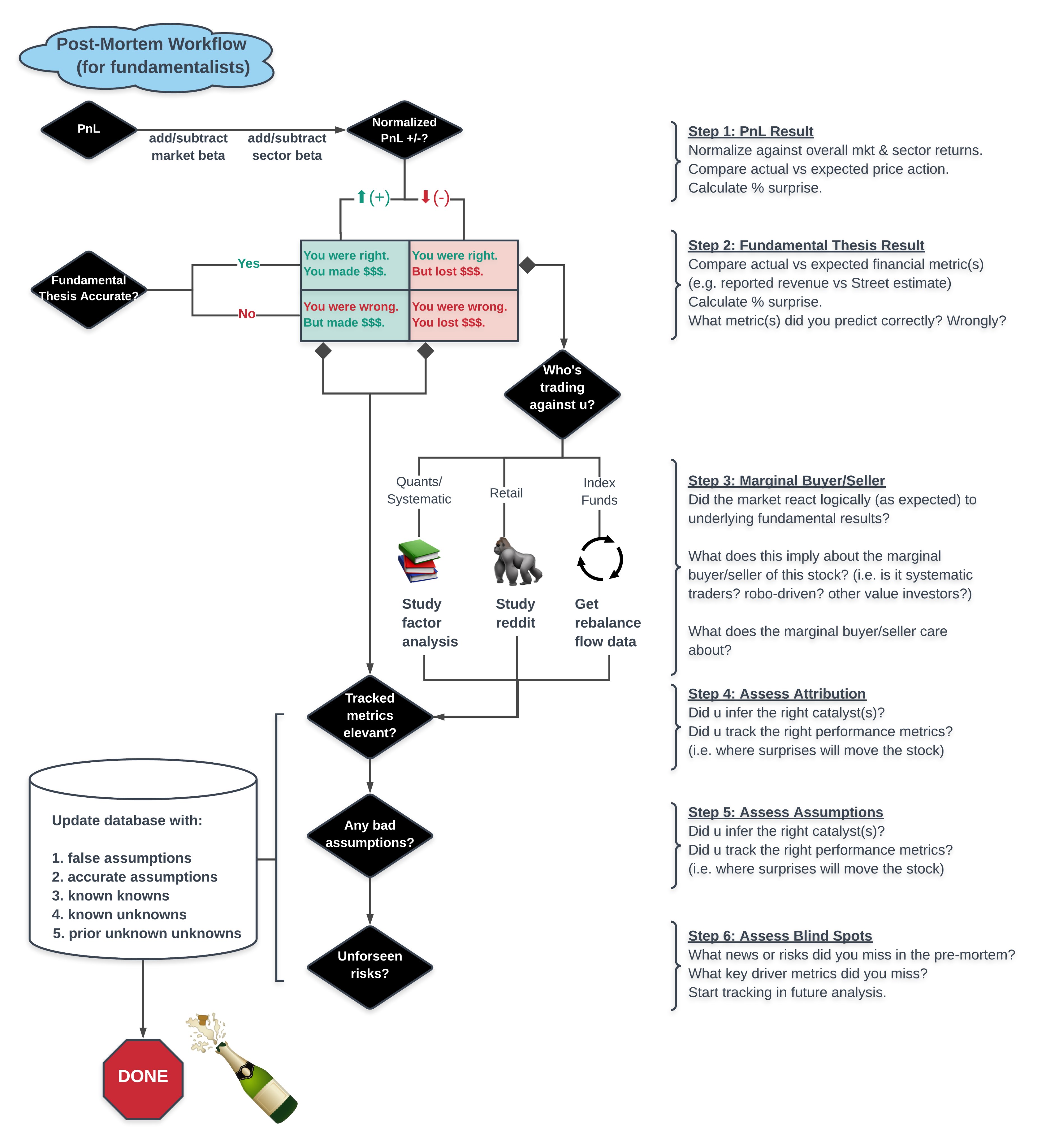
frameworks are really helpful in evaluating decisions, esp. in the investment role but there’s also drawbacks, i.e. that you stick to coming to a deterministic output by running a framework + become too rigid in thought I think @GrahamDuncanNYC explains this best https://t.co/ABDF9MHT7v
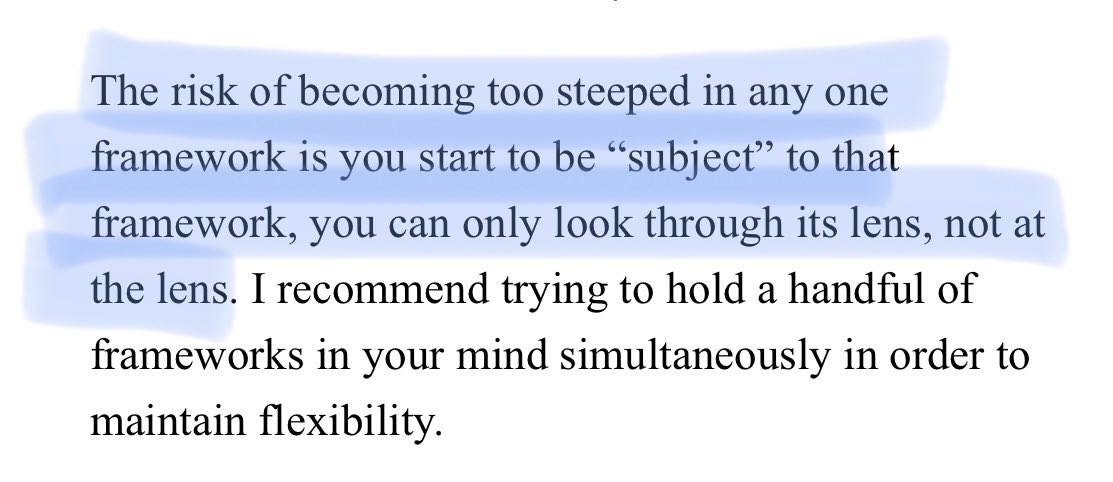
How To Analytically Assess An Earnings Report. Outline of this Thread - What To Do: • Pre & Post Earnings • During the Earnings Call • Key Metrics to track • The Psychology Earning can be a merging of multiple expectations (h/t @jackbutcher) A Comprehensive guide below:🧵 https://t.co/01iWdvNCkQ 2/ Why should you care: • Earnings report (ER) are crucial times • *Many* Institutions have their expectations & are ready to increase/Initiate/Decrease position which lead to big stock movements • It determines future of a stock Chart by @jaminball - show how stocks react: https://t.co/UPKG0qcpzK 3/ First; what defines an excellent earnings: Formula: Actual - Expectation = The % of Surprise ... Determine big stock movements. Factors: 1⃣ How much a company beats the Analysts estimates on Earnings, Revenue & Guidance 2⃣ Customer acceleration 3⃣ New product launch/ M&A 4/ Pre-Earnings: How To Prepare: • Know the analyst estimates for earnings & revenue! • Review previous ER & know the past guidance • Importantly, develop your own model of what you expect from the company metrics! • Position size Prepare mentally for a 50-50% scenario! https://t.co/GGhlHzjIzJ 4i/ Actual ER - On Revenues: • Separate btw organic & acquisition rev growth eg. $TDOC • Be aware of easy comps/extraneous factors (seasonal adjusted) • Comparing year-over-year revenue growth is great. However, sequential QoQ growth is more important. Ideally this ⬇️ https://t.co/L4IMDgqL0W ii) On EPS: • Review the estimates and % beat rates. • Are earnings improving or is there a good reason why it is decreasing? • Knw GAAP v Non-GAAP Phenomenal companies produce something like this eg. $NET $CRWD They do big beat on expectations and EPS are revised higher. https://t.co/R1TCMfm4Pc iii) Metrics to watch - Revenue metrics are good, but bottom-line metrics are more important: Evaluate: ✔️Evaluate Costs ✔️Examine Operating Leverage, Margins, FCF, N.I. ✔️Customer growth: (track paying members, DAU's) & watch QoQ growth ✔️Net retention ($) Eg. $DOCU is a🌟 https://t.co/agGYyxsXre 4/ The Earnings Call: • Be familiar with past ER Call and did Mgmt make a promise? Watch for consistency! • Mgmt always present the "nice" information on the press release and during the call. Dig deeper • However, pay closer attention to the analyst questions and MDA Notes https://t.co/gwIRFgWUSS 5/ Post-Earnings Call: • Decide what you'll do! • Be prepared for 50-50 situations • Stock reaction especially by market 3-5 days after an ER is a signal. Its a combination of smart institutions • Don't focus on Analyst price target, watch d. change in estimate revisions https://t.co/c1AnaocahG 6/ Psychological emotions: Quarterly earnings bring the biggest moves. If a company produces an excellent report & it moves up like 10% - Don't be afraid to buy. It's important to avoid price anchoring b'cos generally institutions will buy post ER, if its A+ report Eg. $ZM https://t.co/paMNjoIBXh 7/ Opposite: Great report, but gap-down ($PINS) Sometime institutions have reasons for selling.. This is important. As a long-term investor, if the company achieves all your metrics but gaps-down. Also, sometimes it may turn out like $CELH⬇️, it retraces by 50% up Be Patient! https://t.co/fc33tVwum5 8/ Factors to watch: ✔️GAAP vs Non-GAAP Earnings can be confusing based on the way companies report their results. For example: Inconsistent Stock-based compensation, adjusted earnings etc. ✔️🧶I will highly recommend reading @MrBuyside note here https://t.co/v00JtdDJjo 9/ If you want to deep deeper, it's important to have a basic understanding of financial reports ✔️If you are a new investor struggling to interpret Financial Statements. I suggest visiting @RamBhupatiraju thread on Fin statements. https://t.co/GLMAxGMhUK 10i/ Best Application Resources for Earnings Season: 1⃣ - Estimize - Accuracy on earnings estimate 2⃣ - TipRanks - Analyst notes and commentary 3⃣ - Koyfin (Seeking Alpha) - Earnings call transcript // Earnings & Revenue estimates 4⃣ - Earnings Whisper - Comprehensive dates 10ii) @dhaval_kotecha shared two key resources this week to improve productivity: @QuartrSE - They help break down Conference call presentation, earnings and transcript PDF's are available. See below He also shared a Spreadsheet format that helps breakdow reports. https://t.co/uaxeGDCLDI 10iii/ Best Newsletter to sign-up to see examples: 1⃣ Weekly: - Sign up for @eWhispers & @jaminball 2⃣ Monthly: @StockNovice writes a detailed monthly recap. 3⃣ Quarterly: a) @adventuresinfi b) @jaminball provide phenomenal detailed quarterly SaaS recap. Check their bios. 11/ To wrap up: Know the Lifecycle of a company: ✅As a company evolves, there are different metrics to gauge a business true momentum on Earnings ✅As a company evolves, more emphasis should be placed on bottom-line metrics. and vice-versa. The chart below should very useful https://t.co/gj0sjVKZZF 12/ Other factors play a role: - The stage of the market cycle - Market Conditions - Easy comps - Institutional Investors have different goals Over the long-term, companies that consistently beat those metrics above always win. 13/ Generally, 🚩Set red flags or be skeptical about companies that show may show great YoY growth, But sequentially, company shows a high fluctuation, inconsistent variations in ✔️ Lumpy QoQ growth ✔️ Rising Cost ✔️ Bumpy Customer acceleration ✔️ Inconsistency with Mgmt https://t.co/SViezE9nPo 14/ Bottom-line ✅Know ER dates ✅Keep clean notes and a record ✅Be prepared by knowing analyst expectations ✅Biggest ER factors: Earnings, % Surprises & Guidance ✅Prepared mentally (and realize even after a good ER, stocks gap down.) Business Momentum is key! https://t.co/sij1a0ZwdD 15/15 END: Always zoom out If you have a long-term horizon: ✅Quarterly reports are like days. They are short-term and either help build conviction or not ✅People have sold multi-baggers on one poor earnings report or captured a golden gem from one Maintain perspective! https://t.co/AAhhMRsWcf These folks share great insights on earnings: @investing_city @StockNovice @RamBhupatiraju @adventuresinfi @Soumyazen and weekly, @StockMarketNerd @richard_chu97 What metrics do you guys watch for? Through experience, what have I missed out that new investors need to know? I'll recommend following cc' @HenryChien4 - Henry has 10-years experience on Wall Street as an Investment banker and research analyst at the big banks. He knows the ins and outs. Kindly share your thoughts. Most charts h/t @jackbutcher. Thank you everyone. I will compile all the insights, feedback and incorporate them back into this thread. The goal is to help many new investors who may struggle interpreting Earnings Report especially this season. Open to feedback

I'm often asked about my experience as a CXO at a Vista Equity-backed company. Lots of mystery around their unique playbook, large AUM ($75B AUM) and charismatic (and controversial) founder Robert F. Smith. Here's my 5 lessons from my time at Vista on why they win 🧵⬇️ 0 - Andreesen says "Software is eating the world." Robert Smith says "All software tastes like chicken. They’re selling different products, but 80% of what they do is pretty much the same." And that's how they approach the world. 1 - System over Individuals. I always say Vista is the "Alabama" football of PE. They have a clear system of how to play the game and it's system over individuals. Less of a focus on the star players and catering to them. 2 - There's little debate over the plays. Too often in companies there's debate on X vs Y (on which IT software to use, how to measure X) that just wastes time. Vista says this is the way we measure across all companies. No debate. 3 - They have a style. On the investment side, it is well-known that most of their investors wear 3-piece suits emulating the founder Robert F. Smith. When they roll in, you know who is coming and it's time for business. It's pro ball. 4 - Connecting the Peers. Vista spends a lot of time and money getting together the execs (and upper-middle) of Vista companies. This is especially helpful since everyone is running the same plays (#2). You have "seniors" teaching the "freshman" tips on running the plays. 5 - Clear goal. Alabama has a clear goal - national title. Vista like most PE has a clear target - 3X cash on cash returns - in a clear time hold time. All parties know what they are running at. WSJ has the best article I've seen on Vista = https://t.co/aFo6ixaUR5 P.S. That's not to say everything is perfect at Vista or with Robert Smith. Plenty of those articles online & on Glassdoor. But you don't get to their scale, their IRR, & evolution (from lower-middle market software to take private buyouts) without doing something right. P.P.S. Want to learn more? Give me a follow or sign-up for my newsletter on SMB, software, entrepreneurship through acquisition - https://t.co/f1aQWhF5hU
May 2, 2021Maybe the best investing talk I've read. "Trying Too Hard" Dean Williams, 1981 https://t.co/0GEgxhxocj
May 2, 2021I just joined @WeCommerce_co 🥳🥰😜 Why I am a 12 out of 10 on the happiness spectrum joining the company of my dreams... 1. WeCommerce supports bootstrapped founders 🥾. As a bootstrapped founder myself, I know how challenging it is to grow a business from zero. WC gives founders an opportunity to exit without giving away equity. 2. WeCommerce is rethinking private equity 💰. With WC, founders can get a full or partial cash out, can get cash up front and do not have to give up control of their business. Yes, you can cash out and continue to grow your co! And all within 30 days (not multiple years!) 3. @awilkinson @_Sparling_ @PerssonAC are all absolute legends 🚀. They are master operators and world class investors. Plus, they are mission driven. They've achieved the unachievable- 10X-ing businesses without venture. They're basically magicians. 4. Commerce is growing at a crazy clip (particularly in the Shopify ecosystem) 📈. Last year, Shopify merchant revenue grew by 86%. This is just the beginning of the commerce movement. 5. WeCommerce holds healthy, profitable businesses. As a longtime Buffet & Munger fan, I have always been inspired by the strategy to build smart businesses with good people for longtime, profitable growth. At WeCommerce, we are building a healthy ecosystem of companies that allow commerce merchants to grow. We are here to empower the founder and support the merchant. If you know anyone in commerce software I should talk to, DM me. Super excited to be here 😊
Apr 26, 2021Capital is a commodity. Choose investors on the basis of their distribution. That can be consumer distribution in the form of social media & brand halo, or enterprise distribution in the form of business relationships & actual distribution deals (if the investor is a strategic), or both. But that’s now what distinguishes investors: their distribution. This is a way to reconcile the points by @nikitabier & @josephflaherty. Nikita was arguing that investors should have consumer distribution (eg social media). Joseph said that they should have enterprise distribution (eg M&A help). Both are right. But both are more than money. https://t.co/U0ajVQS9Bh The reason this is important is that most investors have not really thought through the world of Republic, AngelList, and especially crypto. Founders have more leverage than ever before - fast commodity capital is now on tap from a retail audience. So, pros need something else. https://t.co/0UyaLXQe4m If you have many small investors, like users of @joinrepublic or holders of a crypto protocol, your communication with them is more like a customer interface than a board meeting. And that’s often much faster & easier than raising from traditional VCs. Who now need to adapt. By the way, of course you also want to choose investors on the basis of their values & character. This is more related to their distribution than their capital. For example, if they come back with good references, they are more likely to have good enterprise distribution.
Apr 22, 2021Phenomenal Investment Checklist and blog by @the10thman1 👏. Thanks to @richard_chu97 for putting this on my radar this week.👍 https://t.co/1xP8CAY3Oh Checklist Categories ⬇️ ✔️Value Proposition & Customer ✔️Competitive Advantage ✔️Industry ✔️Strategy ✔️Performance ✔️Financial Position ✔️Management & Governance ✔️Valuation My favorite part 👇 https://t.co/waeNqMdjwD Individual investors might not have access/info/time for doing an exhaustive research on some of the categories (Industry, Strategy..) for every Company they're interested in, but I find it extremely useful to spend time studying.. ✔️The actual product/services ✔️Customer value proposition ✔️Revenue nature/composition ✔️Growth drivers (including tailwinds from major trends) ✔️Competitive advantages. That will help in separating the Quality/durable companies from the weaker ones. Once you have the big picture details in the background, then filled with qualitative/quantitative research for the Co, have a thesis & a decent purchase price & long-term holding mindset (as long as thesis holds/improves), ignoring short term price fluctuations becomes easier. Looking forward to reading some of these deep dives on the blog. ✔️ $SHOP https://t.co/zs5dAZxi87 $BKNG https://t.co/wCI3yYO5MW Video Game Industry https://t.co/p1vU1npgmF
Apr 17, 2021Looking for something to read this weekend? Here are my top 3 📘 picks from last year: 1) The Man Who Solved The Market The unbelievable story of Jim Simons, one of the greatest money makers in modern finance. A mathematician by trade generated a $23bn net worth as an investor. Jim pioneered quant trading and to say that he mastered it would be an understatement. https://t.co/GyRKZMglXv Why did I like this book? • It details Jim's incredible perseverance and many failures before he struck gold • It reveals just how important Jim's team was to the success of Rennaisance • Get an inside view of the most unique hedge fund in the world and how it operates https://t.co/cgZ7Yl4VpU 2) The Outsiders This book is a staple for investors and I am surprised it took me this long to come around to reading it. It details 8 different “outsider” capital allocators, who are non-traditional leaders of organizations that have had an incredibly successful track record. https://t.co/HTfjeqChWR Why did I like this book? • Great job of proving that capital allocators/investors make great (if not the best) CEOs • It details the non-traditional paths of these outsiders • Fantastic job of summarizing each of their key decision-making criterias. All substance, no fluff. https://t.co/oosmIADFTi The Gambler Kirk Kerkorian was perhaps the greatest but least-known deal maker in the history of capitalism. This bio takes us deep inside the world of an aviator, movie mogul, risk-taker, & business tycoon who transformed Las Vegas & Hollywood by taking extremely bold bets. https://t.co/W4OfmFdWiw Why did I like this book? • Who doesn't love a great rags-to-riches story? • The author does great investigate work uncovering the inner workings of a super secretive deal-maker • I actually enjoyed this book so much I have an entire blog post on it: https://t.co/SOQsep8SGM For more details on each of these books, check out my blog post: (there's a link in there to my full reading list too if you want more book ideas) https://t.co/41haaucgmw
Apr 16, 2021"I need to do a few years of investment banking before I get into investing" = "I need to do a few years of ditch digging before I become a civil engineer"
Apr 15, 2021This is a good post. You can take it further. Many VC rituals (warm intros, endless diligence, board seats) may not be necessary to achieve the best returns, as crypto proves. The world is getting rewired to make private markets more like public ones: just buy the asset. https://t.co/5H5iGDxSqH Speed of fundraise trumps everything for a busy founder. I expect more founders to just set up on https://t.co/Hh8Ya7hn7i for a startup raise, CoinList for a protocol raise, AngelList for a rolling fund raise, etc. Then just post the link. Same diligence & terms for all. That’s not to say there aren’t great investors who add value with knowledge, distribution, and relationships. There are. But that’s really a totally different category than commodity money. The real test is whether you’d give them advisor shares. If not, might as well crowdfund.
Apr 12, 2021Constellation Software is an anomaly. - Valued at $40 billion - Manages +500 software businesses - Stock up 7,000% since IPO ...and yet still feels undervalued? A few thoughts 👇 https://t.co/qQ3weyITam 1/ The Constellation story begins with Mark Leonard. He's a mysterious, private figure. A colleague called him: "Probably the most intensely private individual in IT." https://t.co/VuXaBxod3B 2/ Here's what we know: - From England (or South Africa?) - Emigrated to Canada and got a BSc and MBA - Worked as a *grave-digger* - Pivoted into VC ?! Quite the move. https://t.co/q2lNOKVBqf 3/ Leonard worked in VC for 11 years. But it annoyed him. In particular, he found it frustrating that he had to ignore good companies with small TAMs. He also disliked the pressure to exit positions. 4/ The more he thought about it, the more Leonard thought there was an opportunity focusing on *small* companies. In particular, he liked Vertical Market Software (VMS). Essentially, software for *niche* markets like libraries or marinas. https://t.co/ckjTGi2jUt 5/ Why did Leonard like these businesses? VMS companies tended to have some favorable traits: - Few competitors - Weak competitors - Sticky (low churn) - High margins Sure they were small. But what if you bought a bunch of them? 6/ In 1995, Leonard started Constellation Software with $25 million from OMERS and some of his old VC colleagues. The goal? Be the best buyer of VMS companies in the world. https://t.co/nzmsvn3Sww 7/ It's worked. Today, Constellation owns +500 VMS companies and has had one of the most remarkable runs of all time. Since IPO in 2006, $CSU has gone from a $70 million → $40 *billion* valuation. EBITDA, EPS and more have compounded 30% a year. https://t.co/0gJ65nuTl5 8/ How does Constellation do that? By buying growth. Because VMS companies spit off cash, CSU has an amazing amount of free cash flow to buy *more* VMS businesses! This creates a virtuous cycle, where each new acquisition gives CSU *more* money to make the next one. https://t.co/7Ig5pzOhsp 9/ This comes with its fair share of complexity though. How does CSU manage more than 500 businesses? It splits them up into six "mini-Constellations." 1. Volaris 2. Harris 3. Jonas 4. Vela 5. Perseus 6. Topicus https://t.co/3eORC53wXS 10/ These 6 groups operate effectively independently. Unlike other conglomerates, CSU doesn't try and harness a bunch of synergies between companies. Instead, it sits back and lets great managers get to work. 11/ That's part of what makes CSU so special: its culture. (This is somewhat ironic as Leonard is very skeptical of "corporate culture"). 1. Lots of autonomy 2. Focused on long-term results 3. Highly meritocratic https://t.co/GGhkwrPJQc 12/ That is a key strength as CSU tries to evolve. While its current strategy has worked incredibly well, it's hit a wall in terms of the amount of cash it can deploy. It's a true "champagne problem" — CSU has more money than it can effectively invest. https://t.co/u7YcMVxbJt 13/ To try and address that issue, CSU is trying three new things: 1. Lower its hurdle rate 2. Make bigger investments 3. Move beyond VMS (!) What does that mean? 14/ Basically, CSU is loosening its investment parameters. Now, it'll consider companies that don't meet its traditional criteria either in terms of return profile, size, or sector. That's a pretty big change. 15/ Everyone should do their own investing research. But a few things make me bullish about CSU's future despite this uncertainty. 1. Best in class management 2. Proven investing record 3. Still lots of VMS companies to buy 4. VMS space growing rapidly 16/ What does that mean? Ultimately, I think CSU can continue to grow within the VMS space. And given the impressiveness of management, I think there's every chance they could develop a new sectoral competence. That could unlock an entirely new wave of growth. 17/ There were some much brighter folks I spoke to as part of this research. (Or read their work). H/t @shomikghosh21 @kylerhasson @NeckarValue @PythiaR @ErnestWongBWM @LockStockBarrl @CJOppel @the10thman1 https://t.co/B3Ns5IVLkw https://t.co/6A003xooEI 18/ If you're interested in companies like Constellation, I'd love for you join me at The Generalist. +32,000 readers rely on it to gain an edge. https://t.co/qQ3weyITam
Apr 11, 2021This is a great and under-appreciated book By the late 1970’s, Andrew Lanyi grew tired of Wall Street Research “most Wall Street research shoots for mediocrity and never quite makes it.” He wanted to find tomorrows blue chips today 👇 👇 Lanyi would become a very successful broker and set up his own division at Ladenburg Thalmann, and later with Oppenheimer & Co. He and his team of 28 analysts and salesman would do deep research into micro-smallcap securities.
Apr 10, 2021When younger and more self-assured I thought investing was about analyzing a situation, being “right” and waiting for the market to come around. Time taught me it’s about reading expectations and finding big waves to ride for a long time. This is a lot more profitable, and fun.
Apr 10, 20211/22: The inflows of new participants to the stock market is impressive. Trading volumes are up and the % of everyday people holding stocks is on the rise. But there are signs that these new investors have non-traditional views about what owning a share of stock represents.👇 https://t.co/kZjhGlHrgs 2/22: Instead of immediately delivering the punchline (which I’ll get to), here are two charts that when combined define the crux of the mental shift. The first is a chart that shows the correlation of share price to earnings per share (Source: @awealthofcs): https://t.co/Nn3XcewEme 3/22: This chart is strong proof that over time there’s a near perfect correlation between stock prices and earnings. Stock prices go up when earnings go up. Therefore, the enterprise value of a company ultimately collapses to a function of how much money it makes. 4/22: The second is a chart of the average hold periods for stocks over the past 9 decades (Source: @reuters article): https://t.co/NDhYp5g8B5 5/22: Unpacking this chart isn’t straightforward, but it shows that the turnover of positions for the typical investor has collapsed from years to months. The most recent data point represents an all-time low of 5.5 months and I bet an update would show it’s even lower today. 6/22: And if the data were unpacked more, it’s a near certainty that the decline in hold times would be even more pronounced if you removed index/mutual funds that have extremely long hold periods and old school investors who buy and hold certain stocks forever. 7/22: So if there’s a clear correlation between earnings and stock price, does this mean that stock investors are generating additional signal about future earnings with a similar cadence to their trade velocity. Herein lies the divergence in philosophy. 8/22: The value of a company is a function of the quality, quantum and durability of its current earnings machine plus a discounted view of the projected quality, quantum and durability of its ability to earn money in the future. 9/22: But the way the market works, the vast majority of information about how a company is performing is released every three months in an earnings announcement. Occasionally there are in-period announcements that matter and other external data sources that can provide context. 10/22: And typically this new information is wrapped in a narrative constructed by Management that guides investors and analysts about what the company is doing well, where it’s facing challenges, and how the future is likely to unfold. 11/22: So someone can buy a stock with the intent of analyzing all relevant information to determine if the financials and Management’s narrative justify staying the course. Staying implies that analysis concludes that the current and future earnings profile looks attractive. 12/22: For these investors, when they buy a share of stock they believe they’re buying rights to a share of the future cash flows of the company. Good management teams will invest in activities that produce even more cash in the future. This is what an investor is buying. 13/22: But “investing” can be looked at through another lens. To invest means owning an asset with the goal of generating income from the investment OR THE APPRECIATION OF THE VALUE OF THE ASSET OVER A PERIOD OF TIME (Sorry for yelling but Twitter doesn’t allow underlining). 14/22: Because the friction on trading stocks has been reduced to zero, many next-gen investors think of buying a share of stock as owning a tangible asset that moves up and down in value and can be unwound at any time. 15/22: So while the movement in a stock might be due to new information on a company’s performance being shared with the public, many next-gen investors look to buy stocks that have polarized investor communities that systemically create volatility intra-news-period. 16/22: Why? Volatility creates opportunities to produce outsized returns. Earning a steady 5-6% a year (or even 10%) doesn’t interest investors who aren’t starting with a lot of money in their accounts. It takes doubling up over and over to build something worth protecting. 17/22: A more accurate definition of this behavior would be speculation, which in simple terms is the forming of a theory without firm evidence. In the markets, speculation involves trading high risk instruments with the expectation of significant returns. 18/22: And it’s even more complex when you add in the other “benefits” of speculation. Finding polarizing investment opportunities allows an individual to join a movement. And taking a strong position creates opportunities to build social cred and one’s personal identity. 19/22: This framework also explains why options have gained in popularity. If volatility creates alpha, the leverage associated with options magnifies the alpha. This also magnifies polarized positions and magnifies social cred. Go big or go home. 20/22: But it’s difficult to consistently generate winning positions when you’re effectively buying a slice of a company with an expiration date attached to it. Winning requires getting the entry price, the direction of the stock movement, and the timing all right. 21/22: Stories are easy to find about active traders who have 3Xed, 5Xed or 10Xed their money in weeks. More common but less shared are stories of people who bought options and lost everything. A commonly sited stat is that 80% of day traders lose money over the course of a year. 22/22: TL;DR: There isn’t a single way to earn money in the stock market but an investor shouldn’t confuse “Investing” with “Speculation”. One is based on analyzing the future cash flows of a company and the other is based on chasing volatility. Best of luck to all!

1/Mark Leonard who is arguably one of the greatest CEOs of all-time AND also notoriously press shy did a podcast....and almost nobody has listened to it! Below are some of the highlights $CSU.TO 2/ Fun fact: $10,000 invested in $CSU.TO at their 2006 IPO would be worth nearly $1 Million today. 3/ In the podcast, Mark discusses some of his habits. These habit and nuances are characteristics we’ve found in other great investors. 4/ Morning routine: “I tend to wake up between 4 and 5, and have the same breakfast and read two or three newspapers... The Globe and Mail... The Financial Times, and if I’ve gotten through those two I’ll make my way into the Wall Street Journal.” 5/ Leonard studied science in college, and while he believes “there’s always something that you take from what you study… memories and knowledge have a half-life, so the stuff we learned forty years ago, very little of it is being used by us today.” 6/ More importantly, “You’ve got to be a lifetime learner, you’ve got to keep filling your mind with new ideas and knowledge and the old stuff becomes increasingly less relevant.” 7/ “A well understood human frailty – it’s called confirmation bias. If you give people ten pieces of data they will look for the one that confirms what they want to believe. Even if the other nine say that they’re wrong.” 8/ The book that Leonard recommends most to those inside $CNSWF and their investors, is on human biases: https://t.co/E34fhhpwNk 9/ After his MBA, he wanted a job in VC but there was nothing available in Canada. So he “papered the inboxes of the whole venture community in Canada, got to know all the key people, went to their conferences paying for it out of pocket” until he got a VC job. 10/ Why did he leave VC? “It was absolutely fascinating, but after a while, you want to succeed with these things not just sort of stumble along. The need for mastery and focus and becoming really good at something drove me towards what ended up being Constellation… 11/ … a permanent capital vehicle for the vertical market software industry, where you didn’t have to buy and sell the businesses. You could keep them forever, you could build relationships that lasted a lifetime... 12/ How he got into the vertical market software industry: “It wasn’t because of any particularly fascinating technology. It was because of a high quality business model. And what led me to thinking about high quality business models was one particular individual.” 13/ That individual was Steve Scotchmer (who has served on the $CSU.TO board since 2000). Scotchmer had a high bar for quality, and taught Leonard the ideas of Buffett, Munger, and other great investors. 14/ “I had started off as a venture capitalist that was very tech oriented, very much into science, and suddenly the person who has become the most important mentor in my life has hauled me over to starting to think about really great business models and investing.” 15/ Leonard’s only advice to anyone going public is “to pick your shareholders if you can, and to work at attracting those shareholders that you think you’d like to be associated with for the long term.” 16/ On hiring: “I'd rather hire quality talent with a long runway and develop them internally, than try to go outside and bring in people who are ready to slot into a relatively senior role. That’s partly because I think what we do is different. I think we’re very unusual.” 17/ “One of the things that I believe is that ideas and practices travel in people, absolutely. And so new people can bring new ideas. But I also believe that there’s a group of people who are natural consumers and adopters and observers of new ideas… 18/ … and if you have enough of those, you don’t need to bring in people from the outside. Now, I have no objection to bringing people in from the outside, but I prefer to bring in doers as oppose to managers. People who install processes or help those things happen.” 19/ On experimenting: “We’re always in a position where, if it works, we’re all going to know. That experimental approach to life is one that makes for a much healthier whole. If you’re not experimenting, we aren’t going to discover the right way forward.” 20/ Leonard has done plenty of research on high performance conglomerates, even those that aren’t in vertical market software. “The reason to study them is to try and figure out how we at Constellation are going to evolve.” 21/ What has he found? “[Reversion to the mean] is a concept people talk about all the time – whenever you get exceptional performance, it tends to diminish over time towards mean performance. We certainly saw that in all of the high performance conglomerates.” 22/ Why does Leonard believe organic growth is the toughest management challenge in software? “It started with my experience in the venture business. It proved incredibly difficult… 23/ “[According to Philip Tetlock’s research] there are a tiny group of people who are capable of good forecasts. There are no super forecasters who can forecast five years and ten years. So unless you have the ability to see the future, how do you make long term investments?” 24/ “The most obvious way you can do it is by listening really closely to your customers. You let your customers be your co-developers. It’s one of the ways that we’ve been able to improve on the initiative side.” 25/ These are just some notes from Leonard’s interview. Make sure to sign up for our Value Links newsletter, where we will include the link to the full interview later today, plus insights from other great investors. https://t.co/TIneRVNfeH
Apr 5, 2021Nice write-up by @WSJ on family offices vs. traditional private equity. 6 months ago I was expecting to join a UMM PE fund after a crazy recruiting process. I joined a family office instead. My PE recruiting story & "why" family offices in 🧵below: https://t.co/Le2ni282gH Firstly, private equity recruiting is nuts & a lose-lose for everyone. To give context, they basically only recruit kids from investment banks on Wall Street, who are fresh out of college. Those youngsters barely have any work experience & don't know what they're doing or why. This was me a little under 2 years ago. I had joined an M&A bank (that I interned w/ in college), largely because everyone told me that's what I should do if I wanted to go on to be an investor. "Go cut your teeth on Wall Street" So I went. I had not even finished training for my investment banking role, when our analyst class started getting headhunter notes in July 2019. 2 months later, I found myself signing a contract w/ a PE firm in Midtown at 2AM to start in Aug. 2021. If it sounds ridiculous, it is because it is. PE recruiting happens in one night, when the first group decides to kick it off. You have ~5 interviews, & if you're lucky, you leave w/ a signed contract (that would expire if you didn't sign it that night). I was a lucky one. A PE job w/ a notable firm in NYC, what I always wanted! (what everyone else told me to want) Fast forward a year. Post-pandemic - I'd moved back home to Ohio & had much time to think. I found myself unexcited about going back to NYC or even a shiny new private equity job. I wasn't excited, because it was just another stepping stone. College got me to IB, IB was to go to PE, PE was to get to HBS, HBS was to go back to PE... and then what? Figure life out? I needed something where I was aligned for long-term & w/ great people w/ similar values. I was fortunate that an opportunity came up at Talisman Capital Partners to work alongside a great mentor (@LongvueMatt) & to build great businesses. + be based in Columbus, OH... just 50 miles from where I grew up. The family office & permanent capital model just made much more sense to me. Based on the @WSJ article, evidently many others feel the same as well. Culture, work-life balance, etc. are great... but there is more that's inherent in the model. What stuck out to me about family offices: 1. You get to play long-term games, with long-term people. 2. You get flexibility & permission to be creative & pull on interesting threads. 3. You're highly aligned with the mission, vision, & values of the GP & partner businesses. This isn't to say the above can't be achieved in traditional PE, but its tougher given some explicit differences in the models. Primarily: 1. Forced return of capital to shareholders (exits due to fund life) 2. Management fee often over-incentives AUM growth When you must return capital & sell out of great businesses early, you lose out on the compounding of returns, experience & relationships. This is what's great about permanent capital, HoldCos, & most family offices. You get to play the long game. I still have much to experience & learn, but 2 months into my role, I'm confident that this was a great decision. I'm excited about the opportunity to build great businesses beside great people for the long-term. It makes sense & is what I've always wanted to do.
Apr 2, 2021There’s a huge opportunity to create detailed content for those who’ve recently become wealthy There’s a “dark arts” feel to the trust, estate, tax, and investing advantages available to wealthiest Should be accessible to all. Starts with education What’d be on the curriculum? If you want to partner with us to create this, DM me. One simple thing: I don’t think most understand how central lending is to how wealthy manage cash and taxes. the JPM/MS/GS of the world can use balance sheets so effectively for wealth clients. Someone should set up lending/balance sheet as a service. Give us an API! cc @joincolossus https://t.co/Yln1NNeEHp
Mar 28, 20211/ Everyone in and around venture land is saying or hearing the same thing: "The market is totally bananas / makes no sense / [insert some similar description]" I am not so sure. When viewed from the POV of most funds, it actually makes a lot of sense... 2/ There are 4 core questions in / around tech investing (probably in investing in general right now): How much tech related market cap will be created in the next 10-20 years? What is going to happen to the cost of capital? What is opportunity cost of not being in tech? 3/ And, perhaps most importantly, how sure are you of pervasive access to $$$? Every investor needs to internalize and decide just how much faith they have in each of these pillars... 4/ First, how much software-related market cap is going to be created in the next 10-20 years? Tech still touches a small % of overall GDP and there is ~$5T of market cap that has been created in software-related companies to date. 5/ It's hard to believe anything other than more and more of the world's GDP will be facilitated, or least enabled, by software - which would mean a multiple on the trillions created to date (H/T to DST who I think was the first to commit to this thesis) 6/ Secondly, where is the cost of capital going - are low interest rates structural or temporal? 7/ No VC or growth equity investor WANTS to have a view on where interest rates are headed or admit that they have an impact, but at these extremes it's impossible to ignore given the impact it ultimately has on valuation multiples. 8/ [Side note for those who weren't once investing banking analysts: The interest rates offered on US debt is used by the markets as a base rate of return, since it's viewed as the least risky return you can get (a topic to which there are entire fields of study). 9/ As they go down, the value of other options that can provide more upside goes up and up...] 10/ Third, what is the opportunity cost of not being in tech assets? What's the price at which companies tied to the legacy economy are more attractive? For the last 12 months the answer has largely been "even lower". 11/ The market is just not excited about the long term prospects for the large portion of the economy that isn't embracing https://t.co/jqsmIBo9vo and tech-related companies seem to have 'securitized hope' (h/t @lessin) in period where that was desperately sought. 12/ The $$$ question is whether 'hope' will continue to trade at a premium as things open up? 13/ Any one of these 3 levers being true offers a good return for tech investors, but the combination of all 3 being true (or at least consensus in the market) creates the perfect storm that have driving valuations and returns over the last few quarters. 14/ The upside of those themes continuing to be true, even partially, is massive. Tens of trillions of dollars of value would be the output. 15/ I'm no historian, but if true it would probably be the largest amount of wealth - relative or absolute - ever created over such a short time period. 16/ "But this all feels soooo unsustainable, how can it continue?" This is where the 4th question comes in: How are investors thinking about their own opportunity cost (or maybe replacement cost?)... 17/ If you are a fund with a long term, amazing track record, I imagine it can feel as if you have unlimited access to capital. It would take LONG periods of under / poor performance to not be able to raise more capital to invest. 18/ There is almost no cost to you believing that the recent past is prescient is true and this will all persist in some format. And the upside is huge. So... BUY. 19/ If you're an emerging fund / new to the market, you have likely sold your investors that these things are true - and furthermore, you need to put up performance in order to raise the next fund. You cannot afford to sit out and wait. 20/ There is little opportunity cost for these funds as well, and we all know the upside is huge, so... BUY. 21/ At this point, I would guess these two buckets covers 80% of market participants - and probably a higher percentage of capital. Which explains why we are seeing what we are seeing. 22/ So when does the music stop, or at least change? When funds get overwhelming evidence that one of these 4 things is just not true. When will that be? If I knew well enough to harbor an educated guess, I'd have another job…
Mar 24, 20211/ Is being good for society, good for the environment actually good for a businesses bottom line? @kirstenagreen and I were asking each other these questions endlessly - so we got together a bunch of people way smarter than us to see if we could get answers. 2/ Here’s our collaborative take on what we learned… 3/ Consumers care now more than ever, but not more than they care about price and quality. If you nail the last two AND align your values with your consumers it creates major leverage in both customer acquisition costs and retention. 4/ But as @bianca and @danatelsey emphasized – you can't fake it. It has to be a core, central part of the product and brand. Consumers are looking for authenticity, and are really good at sniffing out inauthenticity. 5/ We had theorized that an ESG advantage may provide the most leverage on the employee side. Being mission driven could likely lead to more candidates, easier conversion, and more retention. 6/ @laina and @Neervi seemed to think this was true, but not nearly as much as we had guessed. Similar to consumers, price (salary and wages) and quality (work environment) remain paramount. 7/ Employees are also more likely to see profit and purpose in conflict, which can turn some candidates off on both sides of the aisle. 8/ When it comes to actually measuring the impact on earning power, cost of capital, and ultimately valuation the answer is a definitive yes. 9/ The capital markets are increasingly being driven by what @lessin compares most closely to 'cults' – groups that align the financial and social capital with certain narratives, and will pay a premium to do so. ESG definitely falls into this camp. 10/ More tactically, initiatives that are talked about as a double bottom line are actually just good for the bottom line, period. 11/ As @LTwolfe states – whether that is prioritizing the health of employees, increased action on D&I, or finding more sustainable environmental practices, the data consistently shows that this leads to more revenue, more margin, higher multiples and lower cost of capital. 12/ Not every tactic can be employed by every business, but most companies can harness ESG initiatives to build value… there is $ value in values :-)
Mar 18, 2021Know a great M&A advisor? Building a directory for startups in need of "light" M&A advice when getting acquired, minus the 15% fees. If you know anyone or if this sounds interesting to you, here's a quick form: https://t.co/RZevMAsF1A Let's build the Zillow of M&A! 🤘 https://t.co/OJzb0H2GYj

1/7 Thread: The ruse of a bull market One of the challenges I feel is to figure out what I believe on investing in my veins i.e. to what extent my portfolio is basically just the product of what has worked in the last few years vs what my investing philosophy truly is. 2/7 Once you read a few investing books and/or work in the investment management industry, you have a decent idea what people want to hear. Yes, the Overton window can evolve in terms of what is acceptable or what people want to hear, but we rarely push the window. 3/7 I suspect most young investors, including me (in early 30s), who basically never experienced any sustained recession cultivate an investing philosophy that is derived from mimetic desire and involves a lot of self-deception. 4/7 We are enamored by technology stocks and we never want to sell them. We love compounders which we feel are perennially misunderstood. But what happens when these truisms don’t work in the market for 5 years? 10 years? 5/7 How many of us will continue to believe what we believe today about ourselves as investors? Of course, there is another tension about sticking to your philosophy vs having a Bayesian mindset and be willing to evolve as an investor. 6/7 It is perhaps impossible not to feel like a genius in a bull market. Whether we indeed are and what our philosophy is perhaps going to be revealed when our portfolio goes down by 40-50%. 7/7 We will have a much better idea what we believe in when we experience that, especially if it takes years to get back to even. Till then, this deep sense of discomfort from not knowing who I am as an investor will probably persist.
Mar 14, 2021VCs today do not remember Arthur Rock. He was almost worshiped by the early partners of Kleiner Perkins and Sequoia. It’s important to have the right role models. And if you want to be like Arthur Rock, you need to find your Intel, where he was on the board for 30+ years. Along the way, he had others (like Apple) but there is usually only ONE in a great career. That’s enough but more would be a blessing. Be grateful to have a chance. Others from the Arthur Rock school of VC include Georges Doriot (DEC), Don Lucas (Oracle), Tom Perkins (Genentech), Pitch Johnson (Amgen), Don Valentine (Cisco), Arnold Silverman (Business Objects), Mike Speiser (Snowflake). “In the mid-seventies a telephone call from Arthur Rock was viewed by other venture capitalists, underwriters, commercial bankers, and stockbrokers as the financial equivalent of white smoke emerging from a Vatican Chimney.” - Mike Moritz, @sequoia In the non tech world, Jeff Brotman stands out (Costco, Starbucks). It’s not just the ROI that is spectacular. These “deals” were labors of love leading to lifelong friendships and relationships. Legacy. Another remarkable investor/company combination is Irv Grousbeck and Asurion (he might shoot me for even mentioning his name). Returns and spectacular track record have nothing to do with fame. Article from 1995 about how VC is becoming a mega fund game to gather AUM and mgmt fees streams. Things are far worse 25+ yrs later but there are still great old school VC practitioners in the game. Grateful. Always looking to find more like minded people https://t.co/OPaWDnTtzl Another stunning investor/company combination that people should study is Ben Graham and Geico. That ONE growth stock made more than all of his cigar butts combined over 20 years of running his fund. Also led Buffett/Berkshire to eventually buy all of Geico. I mentioned a lot of individuals and their best investments. But the greatest investor/investment combo of all time is Naspers/Tencent. Absolutely stunning $275B+ in gains so far ($10B realized). Forget about “as if held” values. What BS. Their current position is > $265B Tencent has taken the Naspers playbook to another level. They buy and hold forever. Incredible portfolio that will exceed Berkshire’s someday. Buy or build to keep rather than buy or build to flip!
Mar 6, 2021If you were building a school which only taught investing, what courses would you include? 101 through graduate level ideas welcome. (we may build this someday so your ideas may come to life!)
Feb 15, 2021Shopify is a $1T (5.5x) company in the next 10 yrs if any combo of the below work in its favor: 1/ Ecomm penetration continues to grow 2/ Global churn increase/US DTC model becomes viable 3/ Brand discovery (key!) 4/ Larger cut of each transaction A thread: 1/ Doesn't require much explanation - the more things people buy online, the more $ Shopify makes. 2 things in Shop's favor here: Can Shopify make ppl buy more things? *Did I really need that 5th pair of Allbirds?* What other retail categories will move more online? 2/ *Heinz going DTC seems silly and doesnt move the needle for them rn, but why can't every small restaurant order their condiments DTC in the future? *DTC of wholesale makes a ton of sense.* Ecom goes way beyond DTC (Shopify's current bread & butter)-Shopify can, and should... 3/ start to take on the Squarespaces, Wix, Weebly's of the world. If you monetize online, Shopify should be your first stop. Not to mention, overtime, Shopify will eat traditional competitors at the top (Oracle/SAP) and similar competitors will die out (Woo, Big, ect ect) 4/ High churn is a good thing for Shopify (ht @benthompson) The more people trying and failing on Shopify, also increase the probability of a major winner. Marginal costs of failures < marginal gains of big winners. Globally, Shopify needs to reduce the pain of failure. 5/ Shopify can reduce pain through making it super easy to set up a Shop/finance initial POs/make upfront costs ~$0. Globally, tho, pain of failure comes from economic development and safety nets that encourage entrepreneurship. 6/ Domestically: a) Business model needs to become more viable b) We need to start to see some real winners 7a/ Will get into this more later -- but DTC, for vast majority, is either a labor of love / or shitty business...because the economics simply don't work for the amount of work it requires. Running a $10M biz w 5 ppl is a tough life. Running a $10M biz with 30 isnt possible. 8b) For DTCs at scale, we need to start to see good some outcomes - rising tides lifts all boats. This will encourage more entrepreneurship from more serious people. Would be great to see a company like @Allbirds become a public, lasting brand that sits right btw Nike & Lulu. 9) Shopify needs to work on brand discovery/marketing tools. Shop App was a first good step, but this needs to be a full funnel effort... to start: 1. Shop/FB need to play nicer/better. Two companies are highly dependent on each other for growth...pls fix IG browser! 10/ 2. Shop needs to get discounts across all ad platforms. Snap give 10% off to Shop merchants or we'll take our biz to FB, ect ect. 3. Build better native ESPs/SMS/CDPs 4. Give people a reason to use Shop App beyond...consolidated tracking #s... 11/ Conservatively, Shopify brands spend 30% of NR across prospecting platforms and retention tools. Shopify needs to start dipping in here -- oppty is in hundreds of billions. Shopify knows this...and I'm sure we'll see alot of innovation on this front. 12/ Shopify needs to take a larger cut of each transaction and lower total fees for merchants. a) Processing fees b) Fulfillment fees c) Shipping fees 13/ Hey, we all love @stripe, and its so cute how nicely Shopify and Stripe play together. I often daydream of Tobi & the Collisons talking strategy...but Shopify needs to start taking a cut of that sweet, sweet transaction tax. 14/ Shop Pay is great for many reasons...but if the team can figure out how to circumvent the 2.9%+$0.30 paid to Stripe/card providers, then thats the big win. Not a payments genius, but feel like ACH could be facilitated through Shop Pay pretty elegantly w much lower fees 15/ I go back and forth on the Fulfillment/Shipping play for Shopify. Should they fully vertical integrate (ie Amazon), be merely the software layer (seems to be current strat), or just negotiate bulk discounts with 3PLs and take vig on every transaction. IDK! 16/ Other tools - lending, banking, financing, payroll, data & analytics, corp cards, B2B payments, the list goes on and on. They do some of these currently, but I should be able to run my entire Shopify business in Shopify (esp. in early stages --> eventually at SMB/enterprise) 17/ The opportunity for Shopify is huge here. Currently about 10% of Amazon market cap, with tailwinds in its favor. Or of course, every DTC company loses its shirt in the next 3-5 yrs, and the Shopify promises gets washed away with it.
Feb 14, 2021(1/10) I think it has been long enough that I can share a fun, interesting part of HashiCorp's history: In 2013, Armon and I were offered $50 million for HashiCorp. Note this is pre-Vault, pre-Terraform, and we still owned 80% of the company at this point. We said no. Read on! (2/10) This seems like an easy yes. $50 million is a flabbergasting amount of money (we were 23 and 21 years old at the time). And we genuinely liked the company that approached us. My immediate internal reaction was: hell yes. 🤑 💰 (3/10) The more time we thought about it, the more torn we felt about it. We had much bigger hopes and goals for HashiCorp as a company, but especially with the products. We hadn't even built Terraform or Vault yet and we already knew we wanted to. (4/10) At the same time, it felt irresponsible to say no to... the money. I called it "the dream crusher" because it felt like we were selling out on our dreams. The company assured us we'd be free to do what we wanted, but we were more free without the patronage of an owner. (5/10) Armon and I asked ourselves: would we regret it more if we weren't able to fulfill the ambitions we had for HashiCorp? Or would we regret it more if HashiCorp failed and we said no to this sum of money? What was our "regret minimization" decision? (6/10) After many, many weeks talking with each other, loved ones, and advisors, we decided jointly that the vision we had for HashiCorp was more important to us than immediate wealth. We'd risk it. We'd say no and continue the company. Continue building. (7/10) In terms of "regret minimization", we asked for more money (a lot more). We came up with a number that we'd sell out at, but it was completely outrageous. In some sense I think we wanted THEM to walk away to make us feel better. And they did, they said no. (8/10) This was a rough decision. But we got to build out more of our vision: Terraform was made, Vault was made, then we continued with Nomad and more. We still have more to build to this day and we are more confident than ever in what we're doing. (9/10) I wanted to share this because "behind the curtain" history is always interesting I think (I love reading stuff like this by others) and because I think it really shows the commitment and passion Armon and I have for what we're doing at HashiCorp. (10/10) And finally, if you're a founder, its also totally okay to just say yes to the money. I don't want this thread to come off as me looking down on anyone who takes the money and runs. I get it and I 100% respect that decision, too. (11/10 🤪) I'll probably write a longer form blog post one day with more details about how this all went down, including stories from "the other side" I learned about years later. Today y'all just get the cliff notes.
Feb 4, 2021DoorDash is quietly expanding its ghost kitchen footprint by leasing vacant kitchen space in both coasts. This marks a departure from the Redwood City facility it built-out in 2019. Unlike CloudKitchens, this move is to help drive customer acquisition vs. better logistics. 1/ https://t.co/QqgOBSVkQM DD signs leases and has a rev share w/ each brand in exchange for exclusivity. In NYC it leased space in Nimbus Kitchens to bring Brooklyn pizzeria Roberta's to the city. In LA, it leased space inside Amped and Colony Kitchens to help expand Urban Plates' delivery radius. 2/ https://t.co/jYf43BUH7z But unlike CloudKitchens' 30-kitchen warehouses found across the US, DD is currently testing the waters with 1-4 kitchens inside each facility scattered across LA, Denver, SF, and NYC. The idea that batching can drive lower last mile costs w/n ghost kitchens is somewhat lost. 3/ To prove this point, I signed up to become a DD driver, finding that my hourly earnings increased by 30% when picking up two orders from CloudKitchens vs. doing point-to-point deliveries from brick and mortars. 4/ https://t.co/57vykAHxhH In many cases, DD even paid me an extra ~$5 per outing to make sure I maintained a minimum level of earnings while drastically lowering its profitability on those few orders. 5/ https://t.co/XY1ecQzxwt Meanwhile, mall operators are scrambling to cobble together their own de-facto virtual food halls, aggregating their restaurant tenants onto direct delivery/pickup platforms like Zuul OS or Kitchen United Mix. 6/ https://t.co/u0ttlnxOBX Operators are beginning to understand the benefits of higher AOVs from multi-tenant ordering and the lower last-mile costs of batching from these larger food halls. It remains to be seen whether DD can fully participate in this trend. Full story on HNGRY: https://t.co/m61eNcDfAz

Here are the files mentioned in yesterday's thread: https://t.co/97vukIrOxq https://t.co/cVbER4Pfz4 All errors, typos, etc. are mine. I put this together when I was young, dumb, and naive (that was the point!), so be nice. @Prashanth_Krish @Sg423Sg @kgao1412 @ROIChristie 1/ @Prashanth_Krish @Sg423Sg @kgao1412 @ROIChristie These aren't much updated, and they're about a decade old. They're also not user-friendly at all. Sorry. I also want to make a comment on the usefulness of this. 2/ I made these documents when I was new to the industry, fresh out of the school, and trying to read all the “great books” in the field. Every time I read something new I’d add it to the collection. 3/ I think there is a ton of value in taking notes while I read. These documents didn’t turn into anything applicable on a day-to-day basis, but the process definitely helped me internalize the concepts. 4/ And that’s where some problems can creep in. It's easy to trick yourself into believing that soundbites, pithy quotations, or checklists are the material itself. It’s similar to the confusion between pricing and valuation. Price multiples and quotations are just shorthand. 5/ I also don’t think pure “cloning” is a great idea. Seek what others sought. Simply copying others’ actions – especially in investing – can lead to a lot of mistakes. All companies/investments hit rough patches, and if you don’t own the process you won’t know how to react. 6/ Anyway, have at it. Hopefully there are bits of information here that will prove useful. Do your own homework. (And a friendly reminder that there is no investment advice in any of this.) 7/7
Feb 4, 2021Key takeaways from Speiser's playbook 1️⃣ Importance of focus + time 2️⃣ By not focusing on high volume sourcing, Speiser is able to focus on talking to customers and cofounders 3️⃣ Go all in (e.g cloud dw and flash storage not hybrid) 👉 https://t.co/7KYuO7ZI2X 1/ The implication for investors is needing to assess what one wants to dedicate time and focus on vs doing whatever another investor is doing. Chasing the hot deal is likely tough if Sequoia, A16z, Benchmark, Accel are going to win 2/ One potential approach is being market-driven (e.g focusing on payments or marketplaces) and meeting every founder, operator, and customer in the space. And then leveraging learnings for others. @chetanp does this exceptionally well with companies selling to developers 3/ Would personally love to read more thoughts on how venture funds think about their comparative advantages and their strategies to win. Greatly enjoyed @kevinakwok's piece and I'm sure its prompting thinking by other funds 4/ Last thought is the notion of "value over replacement" VC. Have heard from some founders, VC pitches are just screens on Zoom and price/speed/terms/brand are what matter. Relationships matter too but harder over Zoom. Does value simply accrue to name brand? Or specialist?
Jan 24, 2021"The steeper the up round, the greater the undervaluation." https://t.co/QkSg81qHie Correct. The argument for overvaluation seems to be varients of, "the valuation is highly irregular!" Forget valuation—the much larger irregularity is the explosive growth of the app and enormous potential for monetization (for platform and creators). https://t.co/pI857qIPi4
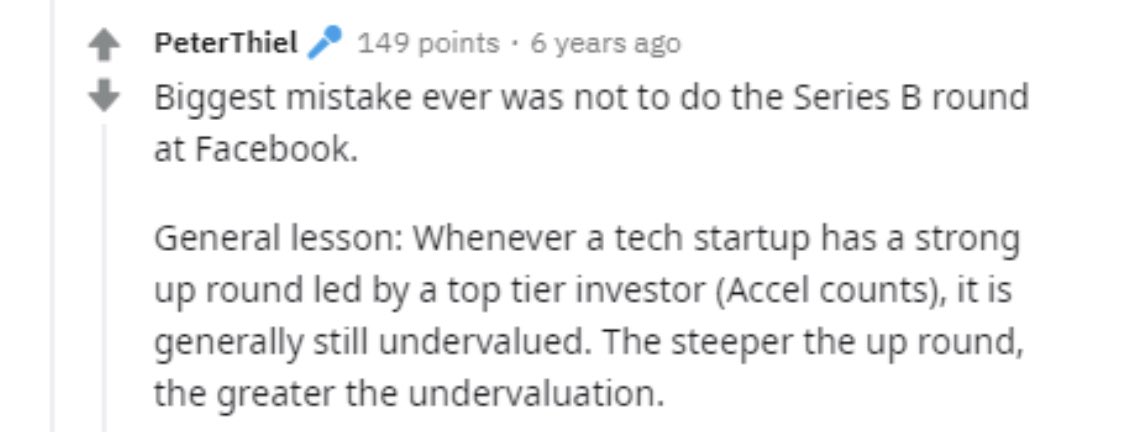
George Soros: "My record predicting markets is less than impressive. All my forecasts are extremely tentative and subject to constant revision in the light of market developments. My approach works not by making valid predictions but by allowing me to correct false ones."
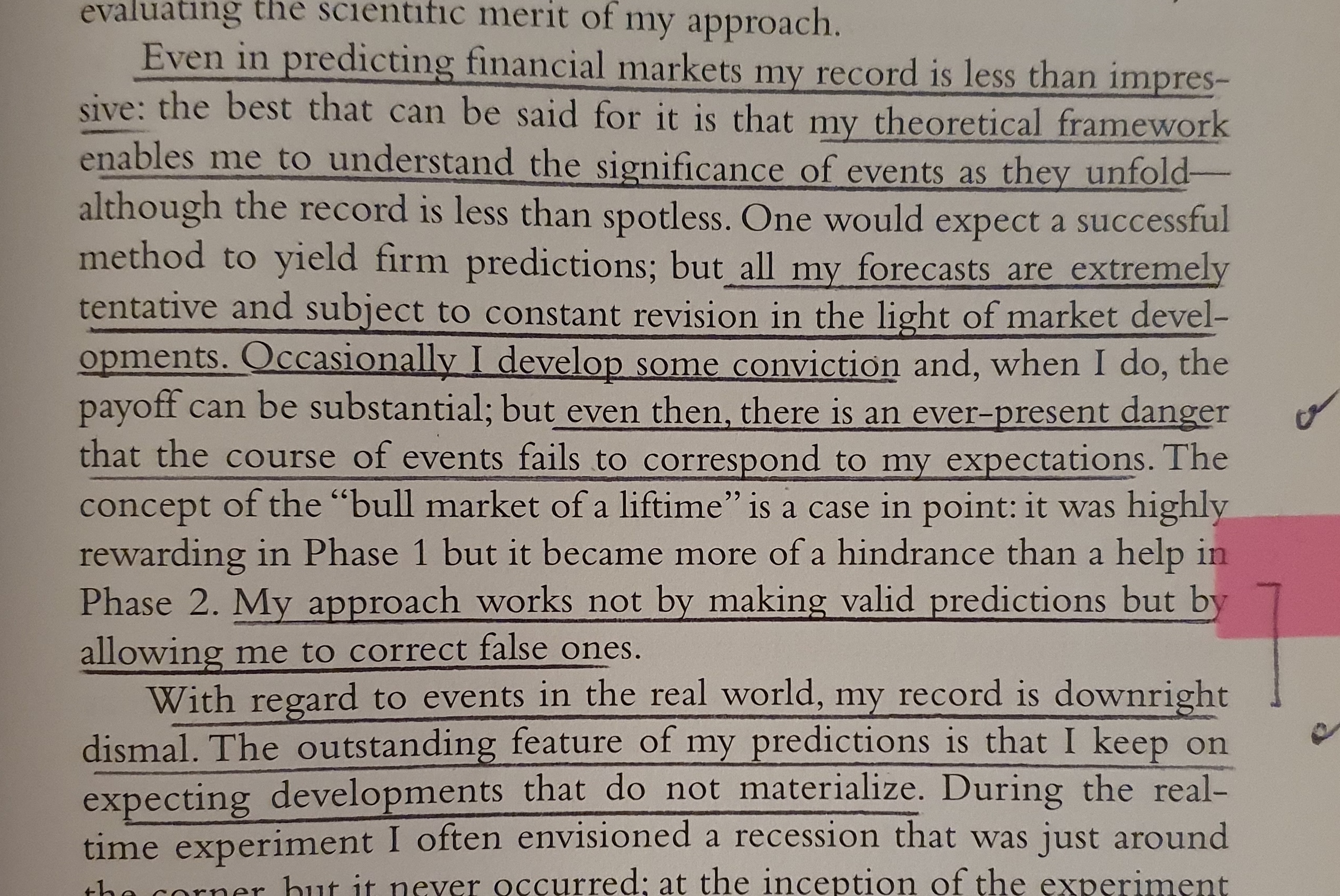
Ok, here's my thread on How to Become an Angel Investor if You Don't Have Much Money or at least, how I did it...your mileage may vary obviously feel free to AMA here or in DMs https://t.co/WNfhk0nnlg 2012-2015: really wanted to start investing, but had zero cash to do it and didn't really know how to change that. Then this HN comment from @sama got the wheels spinning in my mind. I texted my brother @stuartdsmith and we started talking about how we could do this. so, we formed @CoughdropCap started making $10K investments. I literally didn't have a 401K or an IRA (still don't, actually), so while these investments are "small" in startupland, they were a big deal personally. but we really wanted to make this happen we averaged one deal per year for the first several years. going back to that HN comment -- we were ok with moving very slowly and our stated goal was to build the track record we'd need to eventually invest with OPM (other people's money) October 2015: our very first investment was in Lattice. @stuartdsmith had been working with @jaltma and convinced me that this was an absolute no-brainer. A few texts from that: November 2016: then, a year later, both of us had become power users of Superhuman, so I sent this text to @stuartdsmith which eventually led to us begging @rahulvohra to let us invest so, this really was a long, slow process. and we definitely have been lucky in the trajectory of those first investments. But, there were hundreds of companies we could have invested in during that time so that luck was absolutely paired with a ton of deliberation ok, so fast forward to the end of 2018. Lattice has billboards all over San Francisco, Superhuman had just gotten a huge NYT story. @stuartdsmith suggested we finally see if we can wrangle some OPM. We did not have huge ambitions: we decided to do it. turned out that $100K was too small to make sense given the setup costs. We raised $750K (incl. our contributions of around 10%) it wasn't easy. We had to talk to a TON of people, got turned down by most, but eventually assembled a wonderful group of LPs. Our fund is quite a bit smaller than all the hot rolling funds you see out there, but it feels like the right size for us. our intention was never to accelerate as fast as possible, but instead to crawl -> walk -> run when we were just getting started (2015), it seemed like EVERYONE was an angel investor, and it also seemed like a long, slow process might cause us to miss the boat. but it didn't also, @naval/@angellist has made all of this 100x easier than it would've been it has been such a joy. it's like paying for a front row seat to watch awesome people do their thing. it seemed so out of reach, but now we have this amazing list of portfolio companies! so if you want to repeat this process, you're gonna need some luck and you're gonna need to risk some cash, but it's entirely doable. financially, we had no business becoming angel investors, but we carved a path and when you see people who seem to have just snapped their fingers to make it happen...remember 2 things: 1. If they had a trust fund...it's entirely unproductive to be bitter about that 2. if they didn't, it was probably a FUCKTON more work than it looks like from the outside
Jan 17, 2021Take rates across different platforms https://t.co/WZm91w0ByC what marketplaces am I missing here which are public / have transparent pricing so I can estimate their take rate?
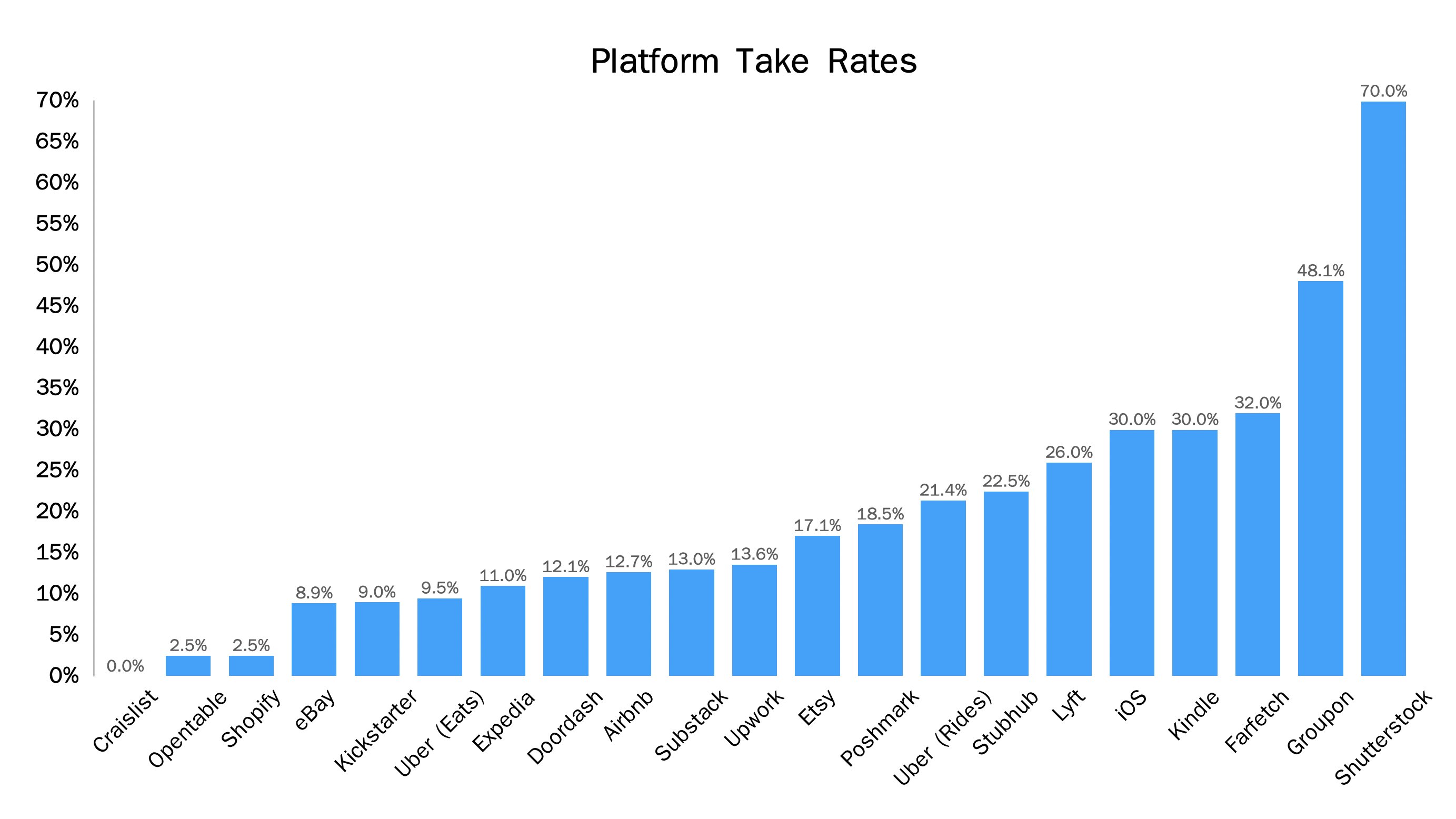
Creator management companies of today, will be the venture capital firms of tomorrow. Assumption: Attention and trusted distribution are the most valuable commodity for startups. No one has this commodity more than creators. Based on that assumption, top deal flow will go through creator management firms. As a founder Would you rather take... just capital or capital plus attention/distribution.
Jan 16, 2021🚨 THREAD M&A 101: M&A is such a crucial part of startups, yet it is so taboo to talk bout the ins and outs of this process Sharing some lessons I’ve learned here selling multiple companies Let’s talk M&A! 1/ It’s never too early to start building relationships with people who might buy your company The rule of 21: Have a spreadsheet of the 7 companies that might buy your company and the 3 people who could make that decision 7 x 3 = get to know those 21 people 2/ Founders, we have the responsibility to our investors and employees to at least take the meeting if there is inbound interest in an acquisition You never know what kind of offer you’ll get 🙃 3/ Every transaction is rocky so find your backchannelers To stay sane and to stay the course, you’ll need multiple people who at the acquirer who can backchannel for you Key: find those people early and often 4/ Your lawyer will be your best friend and in the trenches with you. Make sure it’s someone you can really trust Top dollar lawyers don’t necessarily mean top value. There are some great small/medium size M&A lawyers 5/ Don’t take no for an answer If one product lead/corp dev person says they aren’t interested, that means very little. It’s just one data point! I’ve had 7 product leads tell me they aren’t interested, and the 8th one was. That led to a term sheet Have faith 6/ Run a real “process” Once you’ve decided you want to sell your company, set expectations and reach out to the top buyers in your space all at the same time Crucial: pit them against each other 7/ Keep your investors engaged in this process Deals fall through allllllllll the time when founders do not get the buy in from investors Have calls with your major investors and get their perspective on the deal 8/ When a deal is imminent, keep your team engaged in the loop! After all, they’ve scarified tremendously for you to get to this point You owe it to them 9/ M&A is SEVERELY taxing on your mental health So, have fun with the process! Treat it like a fun game Remember: self-care is 1 priority and especially important during these uncertain times 10/ a deal isn't done until it is done It's cliche to say but It is so true I've got horror stories, but that's something I can share in the DMs or another time :) Key: deals are always falling apart 11/ if you found value in this thread 1. Follow me on Twitter @gregisenberg 2. RT this thread 3. Sign up to my substack for startup insights at https://t.co/o2YiBTeG4v
Jan 9, 2021Finally finished reading Nick Sleep's Nomad Investment Partnership letters, all 245 pages. Wow, what a read! I've picked out my 35 favourite extracts which I've organised into 10 key themes. I will present each theme as a separate thread over the coming weeks. Today's thread is.. …on the value of patience and long term thinking: "The trick to being a good investor, over the long-term, is to maintain your long-term oriented discipline." "Active fund managers have to look active. One way to do this is to sell Wal-Mart, which appeared expensive (but actually wasn’t), to buy something that appeared cheaper (but err, also wasn’t); investors are not long-term and did not look further than the next few years or.... …more recently, few quarters. Evidence for this can be gleaned from the average holding periods for shares which stands at just a few months; fund managers wish to keep their jobs and espousing a ten-year view on a firm risks being a hostage to fortune" "We can all do momentum investing, but it is emotional investing and I just don’t think it is that intelligent, or profitable." "Good investing is a minority sport, which means that in order to earn returns better than everyone else we need to be doing things different to the crowd. And one of the things the crowd is not, is patient." "Business outcomes can be more predictable several years out than they are in the near term. For example we have no idea where the market will end this year but, given corporate strategies, capital allocation and starting valuations, I think we have some idea of how... …our companies will evolve over the next few years. In other words (at this point economics students may wish to cover their ears) the return from investing in shares can be both increased and de-risked by time." "Our peers are trading shares at the short end of the equity yield curve where the competition is the greatest, and we are investing at the long end where competition is the least. We respond to completely different stimuli." The complete letters of Nomad Investment Partnership are available here https://t.co/DVbJvrVx9p I'd also strongly recommend this blog from @mastersinvest on 'Learning from Nicholas Sleep' https://t.co/kCOEL7S4lK
Jan 8, 2021 Original deleted — preserved hereCircle of Competence 101 Warren Buffett and Charlie Munger often reference the importance of knowing the boundaries of your circle of competence. But what is a Circle of Competence and how does it work? Here's Circle of Competence 101! https://t.co/KCLwyczlx8 1/ First, a few definitions. A Circle of Competence is the set of topic areas that align with a person's expertise. If the entire world of information were to be expressed in a circle, an individual's Circle of Competence is the small sub-circle that represents their expertise. https://t.co/YwnxvR3gAZ 2/ The idea surfaced in the 1996 BH annual letter. "You don’t have to be an expert on every company...you only have to be able to evaluate companies within your circle of competence. The size of that circle is not very important; knowing its boundaries, however, is vital." https://t.co/t2TUkbECZl 3/ A Circle of Competence is built over time. It is built through experience, reading, dedicated study, and effort. It is dynamic, not static. It can expand as you deepen your knowledge in new areas. It can contract if you fail to nurture your existing areas of expertise. 4/ To engage this mental model in your life, there are two key processes to go through: (1) Identify what falls within your circle (2) Identify the boundaries of your circle (1) is all about figuring out what you know, while (2) is about humbly admitting what you don’t. 5/ Let’s look at a few examples of where we see the Circle of Competence in action and how it can help you win. In investing? Berkshire Hathaway provides the classic example of investing success from sticking within the boundaries of your Circle of Competence. https://t.co/gNbqbv8iG9 6/ Warren Buffett and Charlie Munger have consistently passed on investment opportunities that fell outside of their respective Circles of Competence. At times, it has led to what might look like big misses, including failing to see the potential and invest in Google and Amazon. https://t.co/FfsbgDImFL 7/ But while you hear about these misses (“the anti-portfolio”), you don’t read about all of the bad decisions it saved them from making. As Munger once said, you can become a consistent winner by “trying to be consistently not stupid, instead of trying to be very intelligent." 8/ In business? The best operators know their core competencies and are honest about their incompetencies. The visionary CEOs hire field general, execution-focused COOs. The field general CEOs hire visionary product leaders. Own your competencies, outsource the rest. 9/ So how can you implement the Circle of Competence model into your life? First, identify your circle and its boundaries. What topics do you know more about than most people? What topics do others look to you on? What are you constantly excited by and learning more about? 10/ Next, be ruthlessly honest with yourself about that circle and its boundaries. Build checks into your decision process that pressure test whether you are remaining true to your Circle of Competence. Consistently sticking to your circle will lead to good long-term outcomes. 11/ Finally, keep expanding and deepening your Circle of Competence. Embrace intellectual curiosity! Is there a new topic you are excited about? Read everything you can get your hands on. We live in an unprecedented era of access to information. 12/ You no longer need to pay a big tuition bill to learn something new. You can seek out thought leaders, ask them questions, read their articles, listen to them speak. It is truly remarkable. Take advantage! You may just find that your Circle of Competence begins to grow. 13/ So that is Circle of Competence 101. This one sits alongside First Principles Thinking and Second-Order Thinking for me in the realm of foundational topics. For more, check out the resources below: https://t.co/ONfwxuZQDd https://t.co/l5U0yI2gmx https://t.co/3GgWBNiwyb 14/ As you continue to build your Circle of Competence, I highly recommend checking out @ShaneAParrish and @farnamstreet for high-signal content that has been critical in my development. You can subscribe to their weekly newsletter below. https://t.co/OkTeX0rMej! 15/ And for more educational threads on business, money, finance, and economics, check out my meta-thread below. Turn on post notifications so you never miss a thread! https://t.co/53UhhfzIcp

“...venture capitalists hire people with operating backgrounds, people think that that means that they value the operating skill. That's not it at all. It's the network that came from success in an operating role...” - Founder of Benchmark https://t.co/t13EpWVPOl
Jan 6, 2021What's the most valuable Picks & Shovel software company you can think of? Public or Private. Atlassian - $57bn Twilio - $51bn Docusign - $45bn Hashicorp - ?? https://t.co/gNBF7nzoQL
Jan 5, 2021 Original deleted — preserved here🔟Investing concepts that blew my mind🤯when I read them, and greatly helped my investing journey. Would love to know about some of yours. @saxena_puru @BrianFeroldi @GavinSBaker @7Innovator @dhaval_kotecha @Gautam__Baid @richard_chu97 @10kdiver @FromValue @investing_city https://t.co/Nc3y9WGxB3 Below thread has the references to each of these 10 concepts. Note : Many of these are my past Tweets related to these topics. Not trying to self promote them. Adding them only because they have the original links, added context and my highlights & fav pts. Let's dive in. ⬇️⬇️ 1⃣ Benjamin Graham's Mr. Market analogy. An extremely useful concept, especially when Market is panicking (& throwing out good Co's at bargain prices) & when Market is too complacent (& awarding high valuations to hype and stories) https://t.co/XAkkh9vjcJ 2⃣ Philip Fisher's hyper-focus on growth stocks (written 60 years ago). Very useful and mostly still applicable stuff on how to deeply analyze Growth Co's (except Stock based Compensation & Adjusted EBITDA of course😄) https://t.co/zzVIlrHzAI 3⃣ Peter Lynch’s empowering writing on the edge of the individual investor when they invest in what they know (or can learn). https://t.co/ynvAoRPjWf https://t.co/eOW3XgquX9 4⃣ Warren Buffet's & Pat Dorsey's explanations of Economic Moats. https://t.co/MMagWHbn8z 5⃣ Seth Klarman's 2007 speech to MIT grads - about Investor psychology & Housing crisis (Speech given 11 days before the Market topped in ’07). I read this in early Sep 2008, which clearly explained what was going on even as the events were unfolding. https://t.co/wFsahESzX5 6⃣ Clayton Christensen's writing on Disruptive Innovation (the focus of Innovators & the constraints of incumbents). Excellent Summary ⬇️ https://t.co/5i9c4OJupT 7⃣ Brian Arthur's 1996 article "Increasing Returns and the New World of Business". An extremely prescient writing on how things actually turned out in Tech in the next two decades. https://t.co/RVEcJtN28P 8⃣ Bill Gurley's "Above the Crowd" posts from early 2000s on Software & Marketplaces. https://t.co/JiKnJfgAfu https://t.co/avMZ8BdB5e 9⃣ Adam Hartung’s writing on Trends & disruptive companies. His writing helped me to observe and give more importance to strong/sustainable ongoing trends, and in identifying/analyzing the Winners. https://t.co/IOE1pmkqbi 🔟 Ben Thompson's Aggregation Theory & Platform companies. Helped me truly understand the power of Digital & how these Winners are different from past. Defining Aggregators https://t.co/BhHTvYHIxO Moat Map https://t.co/Ay8qZmfCgH Aggregation Theory https://t.co/iS1oLiS4Hn Good returns are what we're after (in the end) but investing is much more fun when you learn the best concepts out there (from the great investors & business thinkers), blend them in to your own process to make it better. Strong basics/concepts, pattern recognition and keeping your process updated is the recipe for good and sustainable results. Anyway, this is a thread I enjoyed thinking about the putting together. Hope some people find it useful. /END.
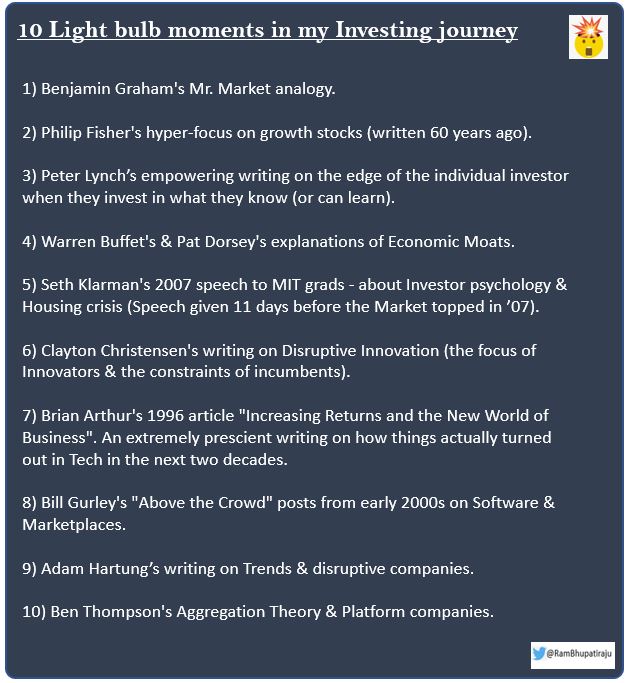
1/ One of the models I use most in business analysis is tech stack trees 🌳 Every product is built on and enabled by 1 or more technologies. Understanding where a product fits on its higher-level tech stack is an important part of any long-term strategy or investment thesis. 2/ A tech stack "tree" is higher-level version of a traditional tech stack. It shows not only the tech something is built on, but what's built on it. A typical stack tree looks something like this: https://t.co/om67eoKhSr 3/ Here's a few examples of stack trees from the tech industry, although they can be drawn out for products *any* industry. #AMZN #NVDA #TWLO https://t.co/kAoElr8Z0P 4/ Modeling a stack can lead to insights into where value flows, who captures it, and potential opportunities to expand the business. 5/ Amazon is an amazing case study in stack traversal & expanding into adjacent technologies. They started as an online marketplace with some fulfillment operations, and over time have expanded in all directions. 6/ When considering stack traversal, you have to ask ?s like: 1) Does current tech give us an advantage here? 2) How much value does layer capture? 3) Are there barriers to entry? 4) Will expansion endanger relationships with current partners or customers? 7/7 I wrote this up in a more detailed post here, including a short case study using food delivery apps as the tech in focus. https://t.co/c7vUDaCGW7 Also, thanks to @lpolovets and @jakesing_ for their feedback on this, and @MarceloPLima for some inspiration on the TWLO stack.
Dec 29, 2020📚 1/ Aspiring operator-investor VCs: a friend, who also wants to become an operator-investor, asked me a series of qs. I share her Qs + my As below. ✨ My goal: help you on your VC path bc I want to see more of our community in the industry creating generational wealth. 2/ How do you split your time? Assuming nights/weekends? Yes. I work evenings and weekends on the fund. More on how I split my time by area of focus 👇🏽 https://t.co/SETytYycHa 3/ How do LPs respond to VCs being not full-time investors? Haven't had an issue, in particular, because my LPs/@flybridge believe in the value of operator-investors and have invested in operator-investor funds previously. https://t.co/YNHLg7VQle 4/ How does being an operator affect your deal flow? It's added to it because founders appreciate empathetic investors who are on the front line, building a company. https://t.co/PMFdnxTIXd 5/ How does being an operator affect the cos you attract? It expands the # of cos we attract bc we have a community of operator-investors in different industries/functions that can support on many levels. https://t.co/5boMgTdn3h 6/ How has producing content/Lolita-as-a-Service extended your ability to serve founders? Providing scalable value to founders pre/post-investment has led to my 1-to-many products/services. These reach/support thousands + founders tell me they like it. https://t.co/HUPzyUr7uj 7/ How do you balance deal flow among the firms you work with (community/light speed)? I separate them by thesis (@thecommunityvc, @lightspeedvp + https://t.co/3YJvRtfc47 look for different kinds of co investments) and leverage the notion page below. https://t.co/cmGCoe8OBC 8/ What would you tell yourself when you were 1st fundraising? Have a clear thesis, sourcing/selection/stewardship process, differentiated deal flow access, a superpower (for me it's B2B GTM/sales) + build relationships. Here's @thecommunityvc thesis 👇🏽 https://t.co/6Ptya4lKCm 9/ What did the process of fundraising look like? Are your LPs mostly operators as well? Here's the whole story 👇🏽 https://t.co/EtcDOYrbuW 10/ BTW, @thecommunityvc will be recruiting operator-investment partners in 2021. And I'll aim to bring on partners from our community who want to build their track record + their own fund in the future! To stay in the loop, subscribe to our newsletter: https://t.co/nvGeaAoT7D
Dec 29, 2020Some notes on 'Framework for Investing in Enterprise Software' https://t.co/HUhmac2kYr h/t @LennyIce A company's CAC and sales velocity have to match the steady state retention they're pursuing. ex: ServiceNow has only 1-3% gross churn, large multi-year deals & high contract values so it makes sense to maintain large sales & marketing spend. https://t.co/v91qv3rIph Compare ServiceNow to Twilio, which has much lower contract values (8.6K$ vs 1.7M$ for ServiceNow). Their gross churn is also higher, at 5%. Twilio spends much less on CAC (Sales & marketing) than ServiceNow as a result. Neither model is superior, both work. Modern SaaS switching costs aren't just difficulty in ripping out the software, or data housed, but have to do with customer love, ease of use and integrations. They allow customers to do something quicker and easier to ingrain in the customer workflow. https://t.co/JYvrL6ij8B Distribution is very important for software. ex: Salesforce might not be the best CRM, but there are entire consulting biz around helping customers set up their customized Salesforce. They also leverage their channel partner ecosystem and direct salesforce to get sales.
Dec 28, 2020ExxonMobil does ~$250B in revenue. Shopify will generate ~$3B in revenue. Comparing apples to oranges, but the relative mindshare in our little corner of the internet is striking. What would it be like if Exxon had a CEO with the storytelling capabilities of Tobi or Elon? Going to get dragged by the Aubrey McClendon crowd here... Deservedly so.
Dec 27, 2020 Original deleted — preserved hereEarly stage investing / VC is notorious for having exactly no on-ramps to becoming an actual *investor* with check-writing authority. Here's a roadmap for how you can become an investor at @earnestcapital https://t.co/ck74dZ6yXs Our high level thesis is on building the new default form of funding for modern entrepreneurs. This expands way beyond my personal circle of competence, the obvious answer is to build a process for empowering more investors with complimentary skills and experience. The only way I can figure out how to hire folks for this role is to see them Do The Work™️ of sourcing, vetting, and recommending investments. So our super-charged scout program will require a deep level of analysis, offer substantial upside, and be an on-ramp to investing. This is still a work in progress, so in our standard build in public style, this is where we are and what we don't know yet. Feedback would be very much appreciated. The call to action is to sign up for our investor-focused mailing list where we'll be sending updates on this process over the coming months https://t.co/dUUxWN0WtU
Dec 18, 2020🔢 Have been digging into economics of @AngelList Rolling Funds (modeling investable capital & management fees). I bugged @CindyBiSV @shl @ShaanVP @immad @zachcoelius @sunrock @tomwilliams @sunilpai @bentossell @APompliano and then built this model: https://t.co/aRhuvZ9R7A Insights: * @AngelList’s biz (row 4) is the real biz 🙃 * Investable Capital and Mgmt Fees become significant * VC is a LONG game Open Qs (@avlok?): * Fee recycling? * Expected churn? * Reasonable growth? Reference - this was hard to find but helpful: https://t.co/rZ4hUX6HHd Lmk if you have any questions or if there's any holes in my model. Happy to chat more with anyone who's interested in this stuff 🤓
Dec 15, 2020✨Finally took some time to write down my journey into venture✨ Incredibly fortunate every step of the way and want to share my story to show other aspiring VCs that they can do it from scratch too! 🧵 https://t.co/ib6jn1X5Aw 🌟Highlights🌟 🇮🇳 grew up in India - no clue what VC is 🎓Studied Biz+CS @FandMCollege 📧Cold emailed CEOs @AngelList 🎤Start pitch contest+workshops ☎️Talked to VC alums &💡 📝Wrote own job description, pitched it to VCs 1⃣ accepted @lgb1 & @LondonStein Now🌱@BIPCapital https://t.co/5iGmibGLHe 2020 VC playbook (via my story + friends') ✍️Write publicly 💖Passion for helping founders. VC = services biz 🏠Build an asset 🕸️Become super connector 🐦Tweet on this bird app 📒Build pretend VC portfolio (learn from the best @TurnerNovak) https://t.co/xmedZvJmxC 🔬Few VC Resources 👑@meaganloyst GenZ VC Slack 📰@venturetwins @readaccelerated ✍️@johnmgannon VC Blog 📃@paigefinnn VC Resources Notion doc 🗞️@StrictlyVC & Term Sheet https://t.co/rFxDAbYl61
Dec 14, 20201/ How I prioritize my stock research list (thread) I'm lucky I get asked about tons of stocks that I don't know all the time Here are the shortcuts that I use to prioritize my research ⬇️⬇️⬇️⬇️⬇️ 2/ First, create a big list of tickers TONS of places to find them ✅ Motley Fool ✅ Twitter ✅ ETFs ✅ SEC filings etc.... This recent thread is a good place to start https://t.co/GMOqgATjFf 3/ Put each ticker into @ycharts Has it: 1⃣Beaten the S&P 500 since IPO? 2⃣Beaten the S&P 500 in last 5 years? Winners keep on winning Losers keep on losing Yes = prioritize No = de-prioritize 3A/ Long-term data doesn't exist for SPACs / IPOs, so this is FAR from perfect Also, hard to judge yes/no if a company has only been public for a few months If good data doesn't exist, I look to see if other investors that I respect like/own it 3B/Here are a few popular stocks from the list 5-year vs. $SPY: $NNDM - big loser $USAT - big winner $CLPT - big loser https://t.co/2lWGU6Uhzb 3C/ $USAT since IPO doesn't look good..... https://t.co/SKUjFRAeRi 3D/ None are disqualified And I've gotten lots of requests to cover them, so I will Still, would have much more interest in covering them if they outperformed on both time frames 4/ Check revenue Ideal: Consistently up and to the right Bad: Volatile Terrible: No revenue Looking better for all 3 https://t.co/yAuLaHS9Yh 5/ FinTwit If people I respect on #FinTwit own/like it, I bump it up $NNDM seems to get a ton of love and has been pitched to me A LOT $OZON seems to get a lot of recent love, hence why its top of list $QS is newly public and has @jbstraubel on Board - a good start! 6/ Repeat Consistently refine list Take top ideas and run them through my checklist in detail https://t.co/GTP6B0zKy4 7/ If the company is awesome, or has the potential to become awesome, add it to my watchlist, and maybe buy it. If I don't think its awesome, or its way too risky for my taste, or I don't like the industry/business model, I ignore it and move on 8/ Other shorthand tests that you can just to quickly judge if a company is worth your time: https://t.co/FL22heXnx2 9/ Obviously, this system isn't perfect Companies change over time, and this punishes long-term underperformers, which may be great buys Every system has flaws, but, more often than not, I think this system produces a high-quality research list with minimal effort What short-cuts do you use? How can my system get better? I'm always open to hearing ideas!
Dec 6, 2020For the last year at @OSAMResearch, we’ve been building. Excited to share this new post that shares the lessons we've learned. We now believe the future of asset management will be defined by a new category: "custom indexing." More in this thread... https://t.co/c3kWcuCkA5 @OSAMResearch When we launched Canvas (https://t.co/JTyjBsTKix), we followed the advice of @chetanp to find a small, great set of partners and then stop taking new ones for a long time. A year ago we did so, partnering with 9 RIA firms, and building out the platform based on their needs... @OSAMResearch @chetanp This "go slow to go fast" mentality has paid off. We had a theory that people would want deeply tailored strategies for individual clients. Yesterday, we opened our 500th account. 70% of them are totally unique in their settings. @OSAMResearch @chetanp We are more confident than ever that if you squint and look out 5 years, EVERYONE will manage their index strategies this way: customized for the needs, circumstances, and preferences of the individual. I think often of what @wolfejosh calls "directional arrows of progress"... @OSAMResearch @chetanp @wolfejosh Just like commission costs for trading marched towards zero, indexing is marching towards custom indexing: owning your own securities directly, rebalanced following a ruleset that adjusts for your individual tax situation, income needs, risk preferences, and so on. @OSAMResearch @chetanp @wolfejosh A key insight is that custom indexing is fundamentally a TECHNOLOGY story. It must be delivered via cutting edge, web-based software. And it relies on other technology (like zero trading costs, the advance of fractional share trading, and so on). @OSAMResearch @chetanp @wolfejosh We've been amazed at the use cases. Tax customization is near the top, including managing around concentrated stock positions. Factors of all types (include income focus) are used in many ways ESG is deeply personal and often customized for specific issues... @OSAMResearch @chetanp @wolfejosh Indexing history could be summed up as four steps: 1. Costs matter (Bogle, index funds) 2. Taxes matter (direct indexing) 3. Factors matter (Smart Beta) 4. Investors are not homogenous, and they matter (custom indexing). We are excited to lead the way in this new category. https://t.co/2Rod6YM6Jb
Dec 4, 2020Last week I reflected on my career. I’m thankful for so many people and opportunities I have received. I didn’t have a traditional path into venture. People often ask me how one gets into venture capital. I’m sharing a long and detailed thread on how I became a VC from nothing https://t.co/wbOcHjtDgz I immigrated from a very large city Mumbai to a small town in upstate NY, Poughkeepsie. I didn’t know anyone there (just some extended family). I needed money to go to college. Advice I got was to get skills that would make me employable so I taught myself to type & code. I found work a computing lab at a local college, @Marist. (also at a department store) My work in the lab convinced them to accept me without SATs. Worked hard to graduate early to save cost of an extra year. I fit in piano and ballet tho! I graduated in recession of 2002. Some professors (my clients at computing lab) took interest in me & employed me at @IBM so now at 19 I had a 40 hour job as an engineer while in college. I was recognized as one of the best QA testers. I was one of the rare hires during that recession for that i’m thankful. I rose up the ranks @IBM. Managers, mentors recognized my efforts & hustle. Gave me the platform to learn biz communication, people, & writing skills. They sent me to many exec programs meant to groom ‘the rising stars’. As an immigrant getting this training was a dream. I wanted to expand my tech skills so while working fulltime I decided to go to CS grad school @Columbia with focus on data & analytics. It was a golden opportunity to expand my network so I met everyone I could. Head of CS dept is a technical mentor. Met my startup cofounder here Back at IBM I was working with some high profile teams & projects in the CEO office. @HarvardBiz has written case studies on these groups. The senior exec & the team who took a chance on me are still my friends @amyhermes from that team just invited me on panel @AWSreInvent I wanted to start a company and go to business school. These friends, bosses, & mentors I had made over 10 years helped me achieve my dreams. They opened up their networks for me. I’ll be forever grateful. I wouldn’t have gotten into @ChicagoBooth without them. At @ChicagoBooth I met my best friends and professors. Many of these professors are LPs in my funds. I’m especially grateful they had faith in me considering they meet 800+ students a year for last 25-30 years. https://t.co/Nn1JqXSpAX After my startup, I decided to reverse engineer VC. I worked at a few funds during business school. Created a thesis on big opportunities in Big Data, SaaS, and Cloud. I shared my thesis with VCs along with some good potential investments. One of my professors advised me to join @KauffmanFellows and through that network I ended up as one of the founding investors of @SamsungNEXT Fund & only partners with many early exits to @Apple @SamsungUS @McGrawHillK12 I was lucky to join startups boards & learn from other VCs. I started @arrayvc in 2015 with operating & VC experience. Many of my early investors were founders, bosses, professors who I had met over 15 years. Founders encouraged me to start Array bcz they like working with technical investor with engineering, operator, & VC experience. Array invests first checks in enterprise deeptech companies and we add value on GTM which often means a good path to customers and customer development. Often founders have been amazed by our network and help. We are in it with you! Now we are on our 2nd fund (3rd coming soon), 45 investments in companies like @productivai @MozartData @OpenpriseTech @blumira @Placer_ai @BureauOne_US @superindexing @SafeGraph @catchandrelease @UniformDev @AlmanacDocs @goodtimeio and many more! We’ve had some good early exits as well @simility acq by @PayPal, @PassageAI acq by @servicenow, Hivy / @managedbyq by @WeWork https://t.co/CBMyq49aGb We are just getting started! Any founders starting enterprise companies should reach out to us. If you want to invest in Array then there might be an opportunity there as well! I’ve had an exciting 2 decades across 3 different careers and can’t wait to build the next 15 years in venture! Ask me anything!
Dec 1, 2020Today we launch our first company coverage on @FrontApp! We aggregated public data, built a revenue model, confirmed our numbers through backchannels, and then built a framework to help secondary investors and employees understand what Front is worth 👇 https://t.co/8xjXhzy4IQ 🏷 Our model gives @FrontApp a valuation of $1.3B with a price per share around $11 and ARR of $38M. That's up about 40% from their Series C when they were valued at $920M ($7.70~ pps) on $26M ARR—a 35x~ multiple. https://t.co/GVa4izx71r 💱 On @Forge_Global, Front is trading in a range between $7.25 and $9.00 per share. To understand potential returns, we modeled 5-year IRR for three scenarios. At our number of $11 per share, IRR is: 🐻 Bear: 9% 📈 Base: 30% 🚀 Bull: 95% https://t.co/nrnrzQBkDv 💬 You can understand Front as Slack with email for context. It's a multiplayer tool that lets teams not just collaborate on email but orchestrate the entire workflow around how they communicate externally. https://t.co/dY9oayhXzl 💻 Front's engagement numbers are on par with elite consumer apps, from their 72% DAU/MAU ratio (WhatsApp was at 70% pre-FB) to their 148 minutes of average active daily usage (compare to Slack at 90 minutes). https://t.co/d84cVt0wYg 🤑 Meanwhile, their 137% net dollar retention (down from 150% at Series A) demonstrates that they are landing and expanding with an extremely efficient bottom-up model (compare to 143% for Slack at IPO and 140% for Zoom at IPO). https://t.co/wT0skRBEvE https://t.co/0wGPKaJMQs 🏦 Those numbers have earned Front some big name backers, from @Sequoia and @AlexisOhanian to SaaS operators like @RyanSmith, @EricSYuan, @FKerrest, and @JaySimons. https://t.co/KDfZffLcCt 🪝 Competitively, Zendesk and Intercom pose a threat: Zendesk through their hundreds of thousands of teams and Intercom through how they physically embed into websites. But per @immad, it's hard for them to escape their niches. https://t.co/fyjQG57uiY 👩💻 Front, on the other hand, has a high engagement platform that makes them inherently attractive to third-party developers. There's a virtuous circle here: more 3rd-party integrations means Front can address more new use cases, which expands Front's base and widens their moat. https://t.co/SmioMCkAHt 🚀 Those integrations conceal an opportunity to back into $66B worth of adjacent markets. And @collinmathilde and @l_perrin have put together a strong team to make it happen: from @Intercom's Laurabeth Harvey and @Atlassian's Jenny Decker to @akennada. https://t.co/YZsvdyt0cU https://t.co/Da01L7iWwJ 🦑 Getting into vertical solutions puts Front on a collision course with Salesforce/Microsoft/Google. But Front's ability to build a product people want to use also makes them an acquisition target for those companies, as @alexrkonrad reported in March: https://t.co/Ho0rzL5ffz https://t.co/1cC6vwPhbd 💣 Ultimately, it's Front’s combo of consumer-grade engagement and ability to achieve organization-wide adoption that makes them so dangerous in the productivity space. https://t.co/gKrxyhjdXG 🤫 Slack still gets all the headlines, but what @FrontApp has quietly been building may have the potential to be even bigger. Read our report and buy the full data set and model here: https://t.co/VdbClGMJtd
Dec 1, 2020This chart will be used a lot in next few yrs by VCs. The oft-repeated LP view is that vast majority (~90%) of exits are <$300M thus concentration/ownership & fund size matter. As narrative has risen that TAM of tech is larger than appreciated, GPs will aim to blow that POV up. https://t.co/843KLFezUo
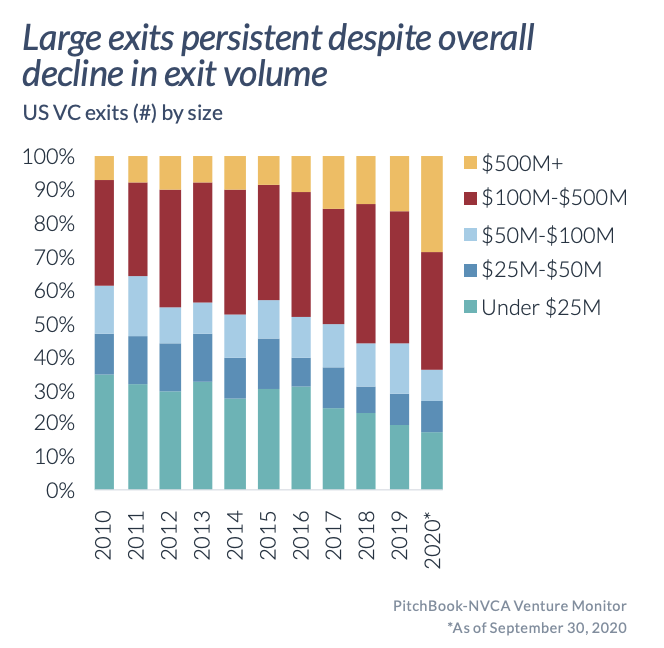
Why do people read HBR? Every once in a while there's a valuable article. For example: "What Is Strategy?" by Michael E. Porter. I don't consider this a "business article". It is about business strategy. The phrase "all the evidence" makes me giggle.https://t.co/le4t9QKiJJ https://t.co/8I4qS0ypgS Charlie Munger: "In 50 years of reading Barron's I found one investment opportunity on which I made about $400 million. For almost no risk. I didn’t have a lot of ideas. I didn’t find it that easily, but I did pounce on one." 2017 Daily Journal Shareholder Meeting "By regularly reading business newspaper and magazines I am exposed to an enormous amount of material at the micro level. I find that what I see going on there pretty much informs me about what’s happening at the macro level.” Charlie Munger https://t.co/Wdr1tKKE7D
Nov 29, 2020Adding a thread to touch on each "alternative" here. Happy to answer questions on any given model or send links to relevant material. https://t.co/Uvk6XNioBa Traditional Search Model. Generally pursued by recent MBA graduates, but open to anyone. Searchers raise a pool of capital ($400-$600k) to fund a ~2 year search and then investors have a ROFR on the acquisition found by the searcher. https://t.co/Vy4FjgmYJk Self-Funded (a): Searcher uses their personal capital to both find and acquire a business. Generally these searchers pursue smaller acquisitions ($500k - $1M of EBITDA) and use an SBA loan to help finance the acquisition https://t.co/kTvXhcTQeN Self-Funded (b): Searcher uses personal $ to find a business to acquire, but then raises outside $ (potentially from traditional search investors) to finance the acquisition. This allows more freedom when selecting investors/terms at the time of the acquisition. Solo Sponsored – Accelerator: Searchers work with one firm that has expertise in searching for, acquiring and operating small businesses. The “accelerator” provides 100% of the capital for both the search and the acquisition and will take a board seat at the acquired business. Solo Sponsored – Single Investor: Generally similar to the traditional search model, but with only one investor (traditional search generally has 10+). Best for searchers with great alignment with one investor they know well. Link: https://t.co/m3RQPZYqgN Geographic Based: A sub-set of all the above, but with a focus on a particular geography. Best for searchers with geographic constraints. Increasingly popular, but still not preferred among some investors as it can be viewed as constraining the number of acquisition opportunities Greenfield: Raising search capital similar to a traditional model and then starting a business. Most greenfield approaches I have seen started as a traditional search and then morphed into starting a business when the searcher had a strong industry thesis, but no acquisition. Roll Up: Searching for a business to acquire with the intention of making many more acquisitions in the same sector in order to build greater scale. This can be funded as a traditional, self-funded or solo sponsored. Example: https://t.co/cIRH0cQeL8 Apprenticeship: Working with a business owner to learn the business and eventually work your way into ownership. This thread by @joelrandyblake is the best resource I have found: https://t.co/F5zSKnXK3w Holding Company: Highly flexible structure that allows for multiple acquisitions, an indefinite time horizon and varying amounts of operational involvement. Capital can be raised deal by deal or up front. (full disclosure, we approached EtA using a holding company)
Nov 28, 2020Q: Is it possible to recreate the Tiger Cub model for emerging fund managers? A: (my thoughts shared in a community organized by @patrick_oshag and @BrentBeshore) https://t.co/pGC0XYXox5 it’s also interesting to think about how crossover funds have been structured over the last decade https://t.co/q7dBJQPo2l
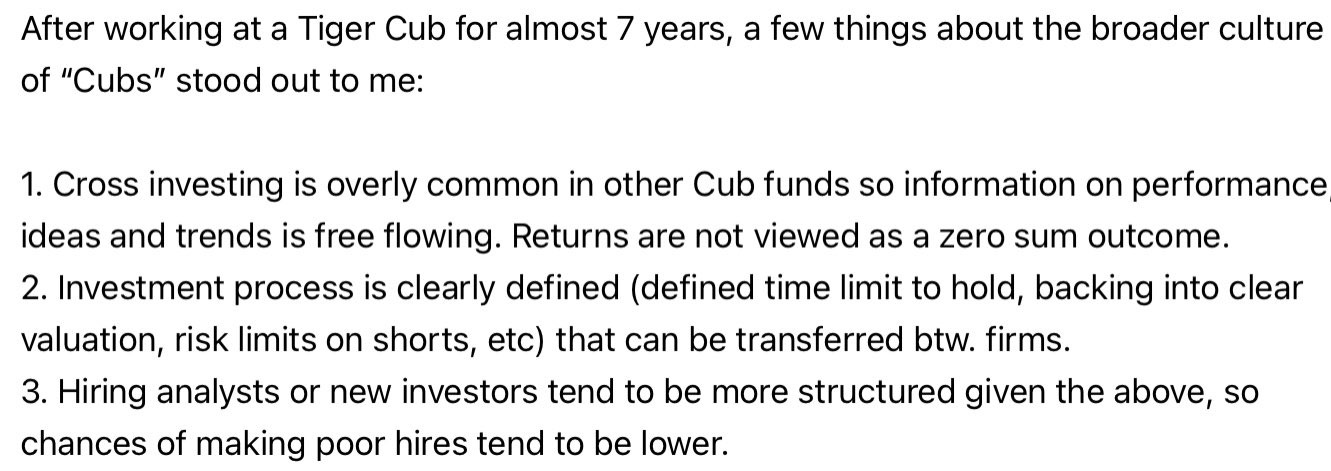
1/ The version of the future that @QuaestorTech is building reminds me of my all-time favorite line: “Companies that can get their protocols designed into the very standards of the market have enormous influence over the future direction of that market.” https://t.co/vch9iWPtCU 2/ After spending the better part of the last year exploring the blurring boundaries between private and public markets, I continued to be confused by the lack of innovation around Investor Relations. As companies and markets evolved rapidly, this function remained static… 3/ Looking for examples of unique approaches to Investor Relations became a bit of an obsession... https://t.co/BwSoF2akQO 4/ There are quantitative elements of Investor Relations, i.e. how you tell your story with numbers... https://t.co/dWlcv4xPke 5/ And there are qualitative elements of Investor Relations, i.e. how you tell the rest of your story. This storytelling component continued to fascinate me... https://t.co/f8q0b7yYHM 6/ As I attempted to envision what Investor Relations re-imagined might look like, I was lucky to meet the @QuaestorTech team and @jmelaskyriazi who were in the early stages of building https://t.co/c4VDvG5oCN 7/ Their vision to rebuild Investor Relations from the ground up will put them in position to get their “protocol” designed into the standards of the private market as they introduce a modern Investor Relations function into the DNA of companies at Day 1. 8/ The line between private and public markets will continue to blur and I remain incredibly excited about companies that have the opportunity to not just adopt practices from the other side of the line, but re-imagine them from first principles. End/ This is an incredibly exciting start. https://t.co/vch9iWPtCU
Nov 25, 2020Investors on how they analyze company management (thread): Thomas Russo https://t.co/QBgzgFGgPv David Winters https://t.co/wXRTWbQ0GV Mohnish Pabrai https://t.co/1DKwVj4rzQ Bruce Berkowitz https://t.co/CpuFF0qO3U Mason Hawkins https://t.co/DgNd6luRl0 Julian Robertson https://t.co/VJPUnhquQt Preston Athey https://t.co/5pt5kLL7y0 Li Lu https://t.co/doGxaTORgq Lee Ainslie https://t.co/pHDhDldIxm Eric Rosenfeld https://t.co/LccALb7Clr Wally Weitz https://t.co/NWQpLvKyDX Bill Ackman https://t.co/l7pop9Ea8O
Nov 22, 2020I updated my "Do I Invest?" framework to include $SNOW, $LMND, $FSLY, $ADSK, $ETSY, $ZS, $NNOX https://t.co/n5CQukS8AZ I make exceptions on occasion I own $NNOX, for example
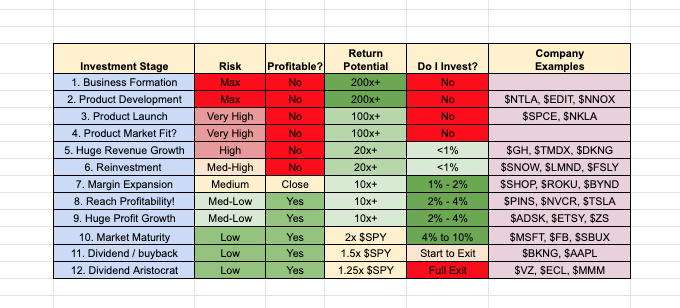
1/ VC efforts to build internal technology products continue to grow since I tweeted this in 2018. Most of those efforts are to influence perception of LPs or potential portfolio companies. Some are having impact. Here is my evaluation framework. https://t.co/EOwkvvleYE 2/ First focus on the problem that is being solved by the data. Investing into tech for tech sake is dumb (that’s a real term). Let’s debundle the VC/PE process to identify what the job is, then evaluate where data/tech is likely to help: 3/ -Raising money -Sourcing companies -Evaluating companies -Winning deals -Post-close (waves hands) https://t.co/F3nGbybkwG 4/ The most common misstep I hear, even from top tier GPs & LPs, is lack of clarity around what problem the tech is solving. I typically hear excitement around a slick demo or impressive backgrounds. 5/ But there is often a lack of the product management work that is critical when building technology: *what problem are we solving*. 6/ That shouldn’t be surprising. Typically VCs hire an engineer or data scientist with an impressive background, but PMing is done by a GP (or more likely an Associate thrust into the job). In most cases the person has no PM experience and is doing it off the side of their desk. 7/ Result? The technology being built is naively expected by all stakeholders to solve all problems. Sourcing, execution, post close. With a typical team of 1-4 eng/data scientists, that’s a hopelessly complex rats nest of problems to be solved. 8/ Those (few) VCs that have demonstrated some success w/ these in-house technology efforts have narrowed the problems to be solved to a much more limited set, and are tracking the impact of the efforts. Here are some of the questions I would ask if I were evaluating the impact: 9/ Sourcing: -what portion of the deals done in your space were proactively ‘Tracked’ by the technology [6] months ahead of time? (a pseudo measure of recall) 10/ -what portion of the deals that are ‘Flagged’ by the tech are ‘Interesting’? (trying to get at precision) T, F&I need to be defined. https://t.co/C5GeznpBNH. 11/ For those with longitudinal sourcing data to feed into the tech: -what portion of companies acquired/IPOed or other breakout measure were Tracked/Flagged [3-4] years in advance Don’t let them wow you with billions of data points millions of co's - what matters is impact. 12/ Evaluation: (warning- this is mushier) -What is performance of deals where tech was intimately involved in evaluation vs. those where it wasn’t? -What is performance of deals where tech said to invest (TI) vs. humans said to invest (HI) vs. both said to invest (BI). 13/ Post-close: (the most mushiest) -can you point to tangible impact at portfolio companies where the tech had impact? New hires, new distribution, product launches, changes in strategy. https://t.co/8Czvt5Nn6v 14/ Look at the tech. Roll up your sleeves and play around with it. Don’t just accept the slick demo. Poke and prod. Demos can be fancy- but that doesnt mean the tech has impact on the VC/PE firm’s performance. 15/ If you’re being told the VC firm has an information advantage from in-house tech, focus on where the data comes from. If the GP is talking about LinkedIn, website traffic and credit card data….that data has become commoditized. Revert to asking about impact. 16/ Also recognize that in-house tech efforts aren’t the only answer to leveraging tech to enhance the effectiveness of the GP. The VC can outsource a lot very intelligently, particularly related to CRM (seperate from proactive identification of prospects), internal comms, etc. 17/ Also interesting to dig into is GP’s willingness to pay. In PE (more than VC) investors will spend $X00k on a 4 wk consulting project to diligence but struggle to find budget for 6-fig annual data contract. If the problem they are solving is around sourcing.. this must change 18/ They are often willing to pay more for that consulting project because they can expense it directly to a deal. Whereas the annual data contract gets paid for by the GP. That's a good indication of how much the GP believes in the impact of the data (or tech if relevant). 19/ To be clear, some GPs think in-house tech investment doesn't make sense . That’s their view. But those that are investing, and touting their efforts, should be prepared to talk about the actual impact in detail. Including what problems the tech is solving.
Nov 16, 2020A discounted cash flow model would have told you to avoid: $AMZN $FSLY $NFLX $MELI $MKTX $SHOP $TDOC $TSLA $ZM And LOTS of other great stocks DCFs can be useful, but you must know when they are useful and when they are useless
Nov 14, 2020📚 Emerging fund managers who are fundraising: @oper8rio @wsculley @wintmead wrote an awesome post on reasons why LPs invest. Reasons include 💰Returns ✨Deal flow 🔓Access 🔍 Insights https://t.co/p8rLKkmXC8
Nov 11, 2020Today, we are launching a new effort, SC Emerging Managers, for people who want to become investors. We want smart learners especially from diverse, nontraditional backgrounds. We will give you money, training and a community around you to become successful. Learn more... One of the hardest problems for new investors is getting started – how to establish a capital base without a track record, how to build out all the expensive infrastructure that’s required at scale, and how to pay the rent when you aren’t initially drawing fees. Beyond the practical challenges, it’s even more difficult doing this on your own. Having a sounding board for new ideas, support in down markets, and mastering the mental side of investing are all crucial – and dramatically more difficult by yourself. Social Capital is relentlessly bullish on talented people willing to back themselves, which is why we are building a new kind of platform to identify and stake the best emerging investors, wherever they are. We are seeking new investors, of all backgrounds, who believe they can develop differentiated strategies to generate outsized returns on an initial capital base of millions of dollars, which can scale much larger over time to tens and hundreds of millions. We will initially focus on US Public Equities but over time will expand our Emerging Managers program to include: 1. Worldwide Public Equities 2. Crypto 3. Venture Capital / Private Equity 4. Trading Cards 5. Art 6. Lending/Debt 7. Other (Shoes, Wine, Real Estate) If selected you will come work with me and my partners, as part of Social Capital for a minimum of three years, and join a community of other investors to collaborate, share knowledge and expertise, help one another, and grow together. If this is you, discuss your background, strategy, and approach to generating outsized returns trading US equities (fundamental, momentum, quant etc) in three pages or less by December 15th to em@socialcapital.com A successful application could touch on best ideas, example trades or theses, backtests of ideas, thoughts on portfolio construction and risk management, or analysis you’ve done publicly or on social media, though no specific template is necessary or required. Pitch us. Our standard deal for managers and the formal announcement letter are attached. We will pick ten managers to be among the first cohort and begin trading in Q1 2021. Good luck! https://t.co/5wYwJA4KFI
Nov 10, 2020Every public company in the world writes annual shareholder letters that walk through the year’s results, strategies, and struggles 📝 I recently got in the habit of printing out 20-30 years worth of annual letters from companies I admire, then reading chronologically.... It’s a wonderful way to learn about a company without hindsight bias 🔮 Each year, you get a snapshot of how the leadership is thinking and where the company is at. You see their fears, what does and doesn’t end up coming to fruition, and what is unforeseen... Currently working my way through top conglomerates: - Interactive Corp - Constellation Software - Fairfax - Danaher - Roper Technologies Who else should I read?
Nov 8, 20205 great books for advanced stock pickers 1⃣Margin of Safety by Seth Klarman 2⃣How to read a financial report by John Tracy 3⃣You Can Be a Stock Market Genius by Joel Greenblatt 4⃣100 Baggers by @chriswmayer 5⃣Quality of Earnings by Thornton O'glove Margin of safety PDF https://t.co/lv1Gj0KptV How to read a financial report PDF https://t.co/CuD8gk87io
Nov 1, 2020hey aspiring vcs 👋 we're going to explore venture capital scout programs: what they are, why they exist, and how to pick and join one...[a thread] 1/ for context - historically, people who would have deal flow to invest in early stage companies would be the ones with capital. as the internet democratizes access to founders all over the world, there’s a growing gap between capital and access. (graphic from @Mat_Sherman) https://t.co/PETb99ZKR4 2/ scout programs provide a mutually beneficial solution to this widening gap of capital and access. we'll explore the benefits from two points of view: the scout and the venture firm 3/ many young people have networks of founders building exciting venture-scale companies, but don’t have access to capital to invest in them. they either don’t want to or don’t have the access to become investors full time, but want to learn more about investing in a hands-on way 4/ for scouts, scouting provides them an avenue to learn the ropes of investing while exploring other avenues, even founding their own companies. they may be also be rewarded with compensation of cash or carried interest(carry). 5/ on the other hand, venture funds recognize that scout programs can help them expand their reach within networks of aspiring investors and founders, expose them to competitive deals, and build a legacy beyond their full-time investors. 6/ big firms, like @sequoia, also perceive scout programs as an efficient way of scanning seed stage flow to feed their main Series A or Series B business. source: https://t.co/Ypg7zfQfhi 7/ "Most great scouts — most great angels in general, I’d argue — are not doing it for the money. They’re doing it for the love of the game. Making money is a happy coincidence if you find yourself in luck’s way." - @bencasnocha 8/ 11 years ago, Sequoia Capital began quietly encouraging portco founders to consider which of their founder friends they might like to get behind financially. @sequoia would let them write checks to those companies, and it would share with them any later rewards. 9/ as a leader in a growing ecosystem of scout programs, sequoia is now in the middle of its fifth batch of scouts, that it chooses two “classes” of scouts for each separate scout fund, and there have been three to date, including a $180 million fund it closed last year. 10/ jason(@Jason), one of sequoia’s first scouts, mentioned “they’ll never get enough credit for this, but Sequoia used scouts to radically increase the diversity in the industry...they opened the aperture to get more women and underrepresented investors” https://t.co/FkpQr9yoBN 11/ after Sequoia rolled out their scout programs, many firms followed in their footsteps. scout programs have become an important, although under the radar, part of the venture ecosystem. they’ve helped many aspiring investors get their foot in the door & widened firms' networks 12/ so how do you pick a scout program? scout programs are architected in different ways, and so provide differing amounts of capital, community, credibility, curriculum, and scout terms. based on the firm's investment thesis, they'll also have a focus sector and stage. 13/ just like a founder must pick the firm that’s right for them, individuals must pick the scout program that aligns with their values and interests. before picking a scout program, you should consider your sectors of interest & where you value these aspects: https://t.co/ZTIzGgvQQe 14/ my definitions: community: level of partnership with other scouts, partners, program advisors capital: amount of capital you can deploy credibility: how well known a fund is scout conditions: compensation/exclusivity curriculum: education provided by the scout program 15/ if you’re new to investing & have great access to deals and want to learn about how to evaluate companies from an investor perspective, you might choose a scout program that offers a structured curriculum and strong community to learn more, and won’t prioritize compensation. 16/ if you’re an informed investor looking to one day start your own fund, you’ll prioritize finding a scout program that resonates with your personal investing thesis, a strong community, and one that holds credibility, and won’t prioritize compensation/curriculum. 17/ if you’re busy and an experienced investor but don’t have the capital to keep up with what can be a very expensive hobby, you might chose a firm that gives you the biggest cut - either cash or carry(carried interest) of the deal - and not worry as much about everything else. 18/ how do you join a scout program? first, don’t expect anything. many scout programs aren't open to the public, so start by building relationships with people at firms who’s sector and stage you’re interested in and introduce them to relevant founders you meet. 19/ sometimes, you’ll be met with radio silence; sometimes you’ll be met with an email offering carry in a deal! as you continue making introductions, it might blossom into a more formal scout partnership. other scout programs offer open application processes! 20/ if you're interested in exploring scout programs, here's a great thread to check out: https://t.co/P2sgX6XwcR 21/ and if you're interested in learning more about VC as a whole, I have an extensive(and free!) notion doc I put together to help you learn: https://t.co/HyHjlc6T0z
Oct 28, 2020Final Search Fund Advice Megathread In my search fund survey I asked searchers what they wish they knew prior to searching. Here are 26 answers from the survey. For the full compilation and more, visit my search fund page here: https://t.co/cxDZOYnBsY 1. Everything! How to use CRM, convince owners/brokers, screen/structure deals, write legal documents, operate companies, etc. Search is a learning experience. I'm having a blast because I don't know everything. 2. Not to waste too much time finding the perfect tech tools while also being cheap. Pick some and go with it. 3. Legal templates, how to source advisors that are trustworthy and cost-efficient. 4. How hard sourcing would be. Difference between broker released financials and financials after diligence. 5. How slow it can be at times. 6. You will review a lot of deals before finding any "great" ones. Don't be afraid to pull the trigger. 7. Most brokers have proven to not add much value. 8. Not a specific piece of information, but I wish I would have interned for a searcher and/or search fund acquired business. It's hard to know if you'll like the search process, types of businesses, management challenges, etc. until you're in it. 9. Think I was well informed but has been even harder than expected. 10. It is hard, but so worth it. 11. I kind of knew what I was getting into from talking to lots of people beforehand, but you don't really internalize how hard it can be at times until you're actually in it. 12a. It is ok to look at smaller businesses. Traditional search investors have little to no overlap with self funded investors because the terms and types of deals looked at are way different... 12b. ...Do not spend much time chatting with traditional investors as a self funded, other than if you just want to do general networking or learn about industry trends. 13. I dug into the model for several years before actually embarking on my search, so I was fairly well-prepared. 14. Just start. 15. There will be many slow days! That's okay… There will be many deals you get your heart set on. That's also okay. 16a. I floundered for the better part of a year in my search because I wasn't clear on my objectives and the why behind the search. I think it's so important to take the time and hammer out why you're doing this and what exactly you're looking for in a business. 16b. This saves a ton of time and energy because now you know what to say "no" to. I spent a lot of time going down rabbit trails on businesses because they looked interesting, when I should have passed on them immediately. 17. The highs & lows are more intense than I would have thought, even though I expected them. 18. How long it would take and not to be afraid to wait for the right opportunity. 19. Covid. 20. Self-funded acquisition capital structures with investor partners. What does that look like? 21. Top industries for growth. 22. Start earlier, why wait? 23. You aren't going to be great at it week 1. It is a learning process! 24. So far nothing unexpected. 25. More investors and family offices. I've met many over the years, and should've stayed in touch. 26. How time flies by during search, even though at times it feels eternal.
Oct 27, 2020Growth Investing Resource List: I often get asked about this, so I’d thought I’d share some that have helped me. When you’re starting out, it’s important to find the RIGHT mentors to learn from and develop your own investment philosophy. Never follow anyone blindly. [THREAD] 1) Before diving into qualitative analysis, I screen companies based on high revenue growth, high gross margins, and progress towards profitability. Although I can have a very bullish opinion of a company, it has to reflect in its financials first Screening for companies: -Finviz is an awesome free tool. You can set filters on a range of fundamental and technical metrics -IBD MarketSmith is paid but has a number of professionally curated screens on growth stocks as well as access to metrics like Relative Strength and A/D -@ycharts, @public_comps, and @KoyfinCharts are some excellent screening tools that allow you to quickly visualize and compare companies’ fundamentals -I also like StockCharts and @TrendSpider for technical analysis -I look forward to reviewing 13Fs every quarter for ideas as well from top funds I follow like Abdiel, Coatue, WhaleRock, Lightstreet, Dragoneer, Center Lake, and Tiger Global to name a few @HedgeMind, Fintel, and Whale Wisdom are all excellent sites for this I also get ideas from other talented investors. Here are some services I recommend for growth investing: -Motley Fool Rulebreakers is great for beginners with monthly stock picks -@7investing is excellent too with monthly market updates, 7 stock picks, and investing insights -CML Pro offers concentrated top picks, ranked by conviction, on category leaders positioned to take advantage of massive secular tailwinds. Ophir also offers timely follow-ups, management interviews, and a quarter webinar for questions -@Beth_Kindig's premium service offers excellent in-depth write-ups on her top picks in tech complete with technical analysis by @knoxridley3 There is also a forum where members can ask questions. Check out her free blog https://t.co/asaA2cPVCx to gain a sense of her expertise FinTwit itself is a great community, here are some people that bring value to my feed: -@saxena_puru generously gives insights into his investment philosophy from his years of industry experience and constant updates on his portfolio of top growth stocks -@adventuresinfi is a top investor and holds a concentrated SaaS portfolio. He is very consistent with providing updates on these companies and the market -@StockNovice is also a very talented investor and his monthly portfolio updates are a must-read for any SaaS investor -@cperruna has a great eye for picking the top growth stocks with his “Stocks to Watch” series and incorporates a good mix of technical and fundamental analysis -@RamBhupatiraju always shares excellent investing resources. Every investor should be reading as much as they can -I also appreciate thoughts on investing and tech from @GavinSBaker, @borrowed_ideas, @shivsharma_5, @BrianFeroldi, @iancassel, @7Innovator, @Matt_Cochrane7, and @7AustinL -I love @investing_city and @patrick_oshag’s podcasts and they’ve done interviews with people mentioned -@dhaval_kotecha, @InvestmentTalkk, @reshoftc, @MST401k, @KermitCapital, @trevmuchedzi, @james_carter89, @humour_humourrr, @paul_essen and @BornInvestor all post monthly portfolio updates and have a mix of investing styles, but each is great at explaining their thought processes -@afc’s posts on https://t.co/gYJVDgnLoj and @jaminball’s posts on https://t.co/ptkcPW3CNC are both must-reads for any SaaS investor -Some of my favourite books for technology investing include 7 Powers, Zero to One, Homo Deus, The Gorilla Game, and The Innovator’s Dilemma 2) Once I discover an intriguing idea, I dive into qualitative analysis and look at the TAM (total addressable market) and factors that determine the sustainability of the company’s moat. See my investment checklist for a full breakdown: https://t.co/5htp5yziTe -I have a Seeking Alpha subscription, which is great for access to research on stocks I find in my screening process. I’d recommend following Bert Hochfield (also check out https://t.co/Plwlq22Y9b), @andrescardenal, Richard Durant, Niki Schranz, and @FromValue to name a few -Saul’s Investing Discussions is an excellent forum for SaaS investors but please make sure to read the board rules, I post there as 'digized' -@hhhypergrowth (CMF_muji) is one of the top contributors there and he recently started his own blog to compile his SaaS deep-dives -@StackInvesting is an incredible free blog on SaaS stocks. Peter has deep experience in tech and it shows in his detailed write-ups with timely earnings updates -@albertwang23 is also a must-follow and consistently posts high-quality deep-dives on top software stocks 3) Once an idea passes my due diligence process, I use technical analysis to determine entry points. Here are some traders that have helped me: Twitter: @MartyChargin, @TMLTrader, @patternprofits, and @MadMraket Stocktwits: @aboutheoptions, @lcc007, @surinotes, @tpurgacz I’m sure I missed a lot so feel free to comment below with people or resources that have helped you become a better investor. As Stock Novice beautifully quoted, “None of us is as smart as all of us” – Kenneth Blanchard
Oct 26, 2020 Original deleted — preserved hereSoftware is eating the markets. COVID brought more consumer investors into the market, moving spend from things to assets, and consumers expect different things than pros. New platforms and asset classes blur the lines between consumption, experience, and investment. https://t.co/vdIvG9ITQ4 Read the full essay here: https://t.co/eJdP60sGhO Audio version is now LIVE, get your listen on: https://t.co/BoQPxH2T4X
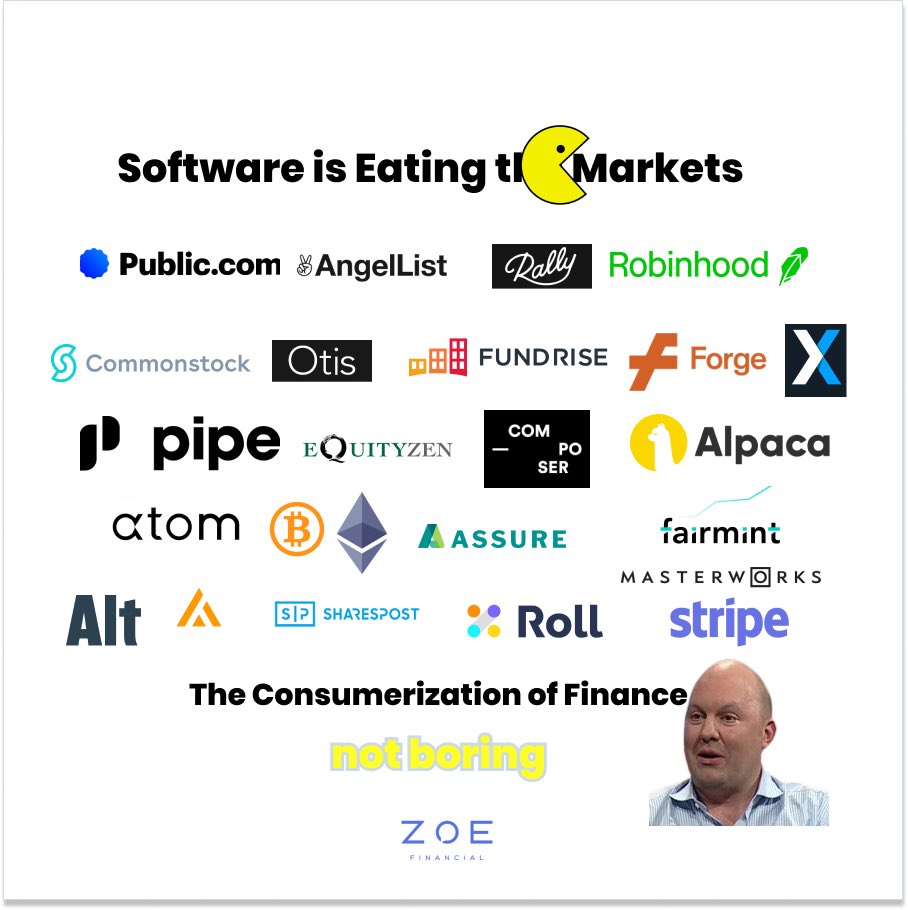
In investing, so many people seem to have “the solution” but they are incapable of profiting from it themselves so they convince you to pay them fees and carried interest to do it with your money. This is the principal/agent conflict with most funds. A few questions you should always ask: 1) How much of the investment/fund is your own capital? 2) How much above the minimum in your LP Agreement is your capital commitment? 3) Over the past 5, 10 years, what percentage of your comp were fees vs carried interest? Whether you’re an entrepreneur raising money from a GP or a prospective LP investing in a fund (of any kind), the funds/GPs with the most skin in the game will act like a principal and be aligned with you and will seek to make money only when you do. Everyone else is just renting your money and making you pay them a fee to do it.
Oct 25, 2020Many of the most interesting investment firms are “crossover” investors, allocating to private and public. I think most would balk at the term and say they are just “investors” backing best businesses Examples: Altimeter, D-1, Dragoneer, Atreides, Durable, Coatue... Who else?
Oct 25, 20201/ Young investors must walk uphill in deep snow to get to a work investing in markets every single day. Charlie Munger: "We had idiot competition when we were young. Now we’ve got tough competition scrounging every area and little niche. It's way harder."https://t.co/C6iNKGmayL 2/ Munger: "It’s gotten hard to find easy value investments because the world is so competitive. That accounts for a buying securities like Apple that we wouldn’t have bought in the old days when we had more mundane things that were serving us very well." https://t.co/xCtFy3KtAS 3/ Michael Mauboussin: "An absolute improvement in skill, when combined with a relative decline in the range of skill, means that luck is more important than ever. This concept is called the “paradox of skill.” https://t.co/BbcYexOqps https://t.co/76JyMbfM1n
Oct 24, 2020"Buy good companies. Don’t overpay. Do nothing." Terry Smith's new book .. https://t.co/tl2vOs85eh https://t.co/zivlcFneAS
Equity Research in Tweet format - First up, $ROKU Equity research is generally written by analysts on Wall Street who look at all sorts of technical numbers and predict returns on stocks. What's interesting to me as a self-taught investor, is that often the predictions are often incredibly wrong. I look at Products, People & Growth when deciding to invest in companies. Then, I try to invest for the long term & let my winners run. One stock I recently bought a position is is @Roku. Why? First of all, from personal experience we recently bought 2 new TVs & made sure they were set up with Roku so that my aunt could easily use them. Then, we didn't need to buy a Chromecast or set up streaming separately. Second, the Roku app is performing incredibly well on iOS. It's currently the #31 app on the Apple App Store & is #7 in Entertainment. Third, search interest in Roku continues to grow. https://t.co/I0R25uBmkX Fourth, streaming continues to be a high-growth industry & Roku has multiple revenue streams that are benefiting as a result. They have rev share for distribution (with companies such as Disney) & also advertising revenue is accelerating. https://t.co/EB6Oj00B0B Fifth, Roku has a proven history of YoY revenue growth. https://t.co/4ASvDZYlty These are a few qualitative & quantitive factors I use to evaluate potential investments. I look at my personal experiences, the quality of the products, company execution, and overall market segment growth to find stocks I consider to be Strong Buys. Thanks for reading!
Oct 24, 2020Ok I’ll just share the most important tip for getting LPs as a new fund manager: silence on their part means absolutely nothing. https://t.co/nbE86ppp7X I have current LPs that I sent various helpful emails and updates to for over **a year** with no response who will come out of the blue with “I’ve read every one these, great stuff, I’m in!”
Oct 24, 2020Sound frustrating? It is but we’ve adapted a model that works better for both parties 1/ tons of content on our thesis https://t.co/mcd6gSluwn 2/ delivered to potential LPs in email sequence https://t.co/dUUxWN0WtU 3/ invest in any quarter https://t.co/enjpUVHSU1 https://t.co/GFz5YjPAJT The upshot is >50% of our current LPs have never had a conversation with me. They will but it isn’t a blocking step to getting started investing. Total game-changer for GP focus and time allocation.
Oct 24, 2020🔟 Common rookie investor mistakes: 1⃣Only looking at share price 2⃣Only buying hype stocks 3⃣Only looking at dividend yield 4⃣Selling after the first drop 5⃣Going all-in on 1 "can't miss" stock 6⃣Listening to market forecasts 7⃣Only looking at p/e ratio 8⃣Trying to time the market 9⃣Thinking they are investing when they are actually trading 🔟 Don't use investing journals or checklists
Oct 24, 2020Not VC, but we love getting cold emails/DMs/calls from owners interested in finding a long-term home for their business. We try to make it easy with an auto-sign NDA and request only basic information: https://t.co/vFttqCsF1i Here's our Pledge: https://t.co/3odkey3vMb https://t.co/ewjYM4WnPT
Oct 23, 2020a friend recently asked about crossover investing structures (i.e. public/private) and how funds have navigated these types of "platform" approaches some takeaways after having exposure to this model for ~7 years + case studies from other firms option A (starting small): 1. public funds can invest "up to X%" of their AUM (assets under management) in privates, defined in the LPA (limited partnership agreement) 2. ability to deploy capital from existing AUM to build a track record 3. no need to raise outside capital option B (creating a fund entity): 1. a dedicated team (investment professionals) needed to run the strategy 2. likely starter capital from fund partners/employees but does requires outside capital 3. compensation incentives (carried interest) to be defined for dedicated team Tiger Global's entry into privates started in Option A (Chase Coleman, the firm's founder, was investing his own capital into privates to determine if there were returns to be found - there was!) over time, the firm evolved into Option B once privates became core to the strategy other "Tiger Cubs" would approach the crossover strategy in different manners Coatue would raise dedicated funds for different strategies (early and late stage) while Light Street would fund from their existing AUM network of Tiger Cubs (via 2017 from @novuspartners) 👇🏻 https://t.co/fvg7N9wG0x A friend recently asked for my list of "canonical silicon valley blog posts." It was hard to pick, but here are my top 12 👇 1. Why Software is Eating the World (2011) @pmarca lays out why software will disrupt every industry. https://t.co/c2QQYJ8RKU 2. Aggregation Theory (2015) @benthompson explains how winning companies operate differently in the internet age. https://t.co/2tXUS9qkwT 3. Do things that don't scale (2013) @paulg articulates the mindset startups need to acquire early customers. https://t.co/3cg0tXxEdn 4. How Superhuman Built an Engine to Find Product/Market Fit (2018) @rahulvohra demonstrates how silicon valley's engineering mindset can be applied building early traction. (@firstround also deserves credit for prolific production of good content) https://t.co/xknQcTr3lv 5. Welcome To The Unicorn Club: Learning From Billion-Dollar Startups (2013) @aileenlee coins the canonical term for successful startups. https://t.co/S7WodDZNZP 6. All Revenue is Not Created Equal: The Keys to the 10X Revenue Club (2011) @bgurley enumerates the factors of a business that drive lasting equity value. https://t.co/StSlQ14lFb 7. The Struggle (2012) Silicon Valley isn't all about growth and success. There's plenty of failure and struggle, which @bhorowitz articulates nicely here. https://t.co/bTOxeD9RQN 8. The Network Effects Bible (2018) @JamesCurrier explains the concept that's driven many of the Valley's most successful companies. https://t.co/5gzHlrObAV 9. 1000 True Fans (2008) @kevin2kelly defines the mindset behind the creator economy. https://t.co/xD0qAJpcPO 10. The Passion Economy and the Future of Work (2019) @ljin18 legitimizes Silicon Valley's obsession with audience building. https://t.co/VAGXNlD9rV 11. Status as a Service (2019) @eugenewei reminds the tech industry that humans are just a bunch of status-seeking monkeys. https://t.co/NUcqYl5z56 12. It's Time to Build (2020) @pmarca articulates the best of the Silicon Valley mindset. https://t.co/hw8CMjsJBX Those are my top 12! Obviously, left off a lot of good ones. Would love to hear what I omitted that should be on the list.
Oct 21, 2020woahh Perch raises $123.5m to roll up Amazon FBA businesses 40% of the team is tech, to build a platform that "is used to help run analytics on sales, determine pricing and ad strategy, and inventory positioning and other marketing decisions." https://t.co/mH738rQMrI https://t.co/SS35V07PPN
Oct 21, 202010 Reasons Why You Have An Edge Over Professional Money Managers 1⃣High fees: Management fees act as a drag on returns 👇👇👇 2⃣Incentives: Money managers are paid to acquire assets, not outperform (usually) A $1 billion AUM fund makes 100x more $10 million AUM fund So, managers spend most of their time...acquiring assets Outperforming helps to acquire asset, but doesn't make them more directly 3⃣Size: Get too big and you move the market when you buy/sell This eventually limits your investable universe 4⃣Shortened time horizon: If your investors are focused on next week, month, or quarter...so are you Lots of clients demand short-term performance Short-term underperformance = withdraw assets = less money for you Managers can't think/act for the long-term 5⃣Window Dressing: Some fund managers buy recent winners right before the quarter ends Makes them look good to their clients, even if they didn’t benefit at all from the recent appreciation 6⃣ Closet Indexing: Some fund managers closely match the holdings of index funds to minimize alpha in both directions It lowers the risk of underperforming It also kills the ability to outperform 7⃣Taxes: Who pays them? Investors! Not the fund managers There is no incentive to optimize for taxes Would you buy/sell differently if there were no tax consequences? 8⃣Career risk: If you lose money on $AAPL, investors are understanding If you lose money on a small company no one has ever heard of its much harder to explain yourself Makes it hard to invest in small, little-known companies 9⃣ Forced selling: Clients pull their money after big market declines, forcing managers to sell great stocks at the worst possible time Some keep cash on the side to help buffer this, which drags down returns 🔟 Forced buying: New money flows in after rallies, forcing buying of appreciated stocks If you love a stock at $50, it doesn't mean you love that same stock 3 months later at $100! All of these factors combine to make it incredibly challenging for money managers to outperform I KNOW that I couldn't outperform by managing other people's money I would act differently since I would constantly have to explain myself to others Even with these factors, some fund managers STILL outperform, which is incredible The greats you know: @WarrenBuffett Pat Dorsey Terry Smith - @FundsmithLLP Cathie Wood - @CathieDWood Bill Miller - @B3_MillerValue Polen Capital Chuck Akre A few others great follows from Twitterverse: @GreenhavenRoad @ritholtz @BarrySchwartzBW @UpslopeCapital @IntrinsicInv @GerberKawasaki @HaydenCapital @altcap @AltaFoxCapital Non-Twitter: Michael Shearn 1MainCapital Connor Haley Frank Sands Mark Dow Joel Tillinghast Henry Ellenbogen John Huber Scott Miller Steven S Wymer David R. Giroux Will Danoff Kathy Xu "If professional money managers can't beat the market, what chance do I have?" You have 1⃣Permanent capital 2⃣No career risk 3⃣Aligned incentives 4⃣Ability to think/act in the long-term These are MASSIVE advantages Don't waste them by trading!
Oct 20, 2020Interested to see which PE shops embrace this. Imagine Apollo or KKR launched a "Remote transformation fund", and become best in the world at transitioning businesses from in-person to remote first. That would drastically change many IRR calcs. https://t.co/yxwRst6SIq @awilkinson/@BrentBeshore thoughts?
Oct 18, 2020The best financial models can be done by hand on a napkin. It should be so staggeringly obvious that it slaps you in the face.
Oct 18, 2020Have seen a few public VC thesis/decks and all are pretty weak sauce IMO (“we plan to do generic VC stuff + the partners are cool and well-connected”) Are there any impressively well thought out ones public? Note: not really a critique per se. I’m fine with folks doing the minimum work necessary to close the fund. More just curious for high bar examples.
Oct 16, 2020 Original deleted — preserved here“We search for niches, not dominance, on the theory that the world can tolerate many mice but few elephants.” –Ian Cumming, Leucadia National
Oct 16, 2020How Emerging Venture Capital Fund Managers Should Think About Their LP Fundraising Strategies. Thoughts? #[[Venture Capital]]twitter #emergingfundleaders #[[Venture Capital]] #protips https://t.co/TnG7lC2Jcc What would you guys add? @justanotherjai @OfficialBBrooks @CindyBiSV @vc @darkgaro @dunkhippo33 @ericbahn @marianogonvas @MyDailyPosts @salred3 @MacConwell @DelJohnsonVC @karensalay @atShruti @adblanche @Superseed_VC How Emerging Venture Capital Fund Managers Should Think About Their LP Fundraising Strategies. Thoughts? #vctwitter #emergingfundleaders #vc #protips https://t.co/TnG7lC2Jcc
Oct 14, 2020Want to become a Real estate investor? A framework for people who are serious and committed ... 1) Go work for someone you admire. Minimum 18 months. Do as much as possible for them. Structure compensation 100% based on performance. Dedicate next 18 months solely to this. 2) Write weekly about everything you’re doing / learning. Write questions and ideas you have to clarify thinking. 3) meet anyone and everyone. Brokers, owners, investors, prop tech founders, property managers, etc. 4) after 18 months use connections to do your first deal. If you did steps 1 - 3 correctly then the person you worked for is going to be your first LP. 5) Repeat steps 2-3 for years. 6) as my crypto friends like to say ... LAMBO.
Oct 14, 2020 Original deleted — preserved here🚨 130% NET EXPANSION RATE 🚨 Sales grew by 44% YoY 📈 It got 630 customers with ACV over $ 100K 💸 This company provides the SEARCH ENGINE 🔍 company needs 💻 Here is an EASY thread on a HARD TO UNDERSTAND business 👇 https://t.co/R04acE093Z $ESTC Elasticsearch is an open source analytics and full-text search engine 🔍 It was released in 2010 & authored by Shay Banon 👤 (Current CEO) Elastic NV was incorporated in 2012 to provide commercial services 🛍 and products around the software 💻 It went public in 2018 ✅ https://t.co/9gFBdExjTT But what is a SEARCH ENGINE 🔍 Let’s say you are building your #E-Commerce website 🛍 You add products to it, host it and bring it live ✅ 1️⃣ Users will start going through your products 👀 Of course, some users will want to look for something specific 2️⃣ What can they do? Well, they can use filters to eliminate unwanted items 3️⃣ Or they can go even further 👉 Directly type what they want in a search bar on YOUR website Doesn’t sound TOO difficult right 🤯 Indeed, this can be seen as the internal “Google” of websites 👉 Do companies develop this feature from the ground up? Or do they rely on a third party? 👨💻 ☎️ If you want to add messaging to your app 📱There is little chance your start developing the whole infrastructure on your own ✅ Just use $TWLO 💡 it will save your developers 👨💻 lots of time and be a more robust solution to what you could implement on your own in most cases 🔍 You want to add a robust, efficient and quick search engine to your website? ✅ Just use $ESTC and customise it to your needs But… ⁉️ A search engine is something basic right ❇️ You just type in some keywords and get back the ones that match ✅ ‼️ Well, there is more to a search engine than keyword-matching 👇 $ESTC provides one of the best search engines available, when you type and search, it does the following 👇 ✅ Auto-completion, correcting typos, fuzzy matching, synonyms matching 📝 ✅ Normalising tokens 🧽 (e.g. remove punctuation from words) and reduce words to their root form (e.g. “foxes” become “fox”) ✅ Control for relevance, similarity and popularity 🎉 in order to provide the best match for the user’s query https://t.co/ayFKZ2o51S Is it important to provide a solid search engine ⁉️ Look at HappyFresh’s story 1️⃣ HappyFresh is a leading grocery shopping 🛍 and delivery platform in South East Asia 🌏 2️⃣ Customers were not completing orders 🛒 as the search results were taking too long to appear 🤯 https://t.co/IeqK0Pn8aA 3️⃣ HappyFresh switched to App Search on Elastic Cloud 🌐 and enabled it to support 10 times the search volume 2 times faster 🚀 Not convinced yet? Here are $ESTC customer stories 👥 https://t.co/Zl4eUV5hUo Is that all? $ESTC is a powerful search engine and that’s it? On top of searching through full-text data 📄 $ESTC enables you to search structured data such as numbers and aggregate data 🧮 ✅ $ESTC can then be used as an analytics platform 👨💻 You can then write queries in order to aggregate the data you retrieved 📊 And then even visualise the data in the form of graphs https://t.co/XgpEY11he5 And it doesn’t stop here 🚦 $ESTC is a good at analysing full-text data 👉 What could it be used for as well? 📈 Application Performance Management (APM) by aggregating the logs (information on warnings, errors, events recorded by an application) 🗒 from different applications 📟 These logs can then be analysed 🔍 and translated into useful insights 💡 for companies https://t.co/KAjZbBusvu 🛡Security is another area where $ESTC shines by 👇 1️⃣ Analysing authentication logs 🗝 from different sources 2️⃣ Reviewing vast volumes of DNS 🌐 data in an efficient way 3️⃣ Monitoring endpoint activity 💻 to find uncommon processes and anomalies https://t.co/aAuH0ULEbQ Ok 👉 By now what $ESTC does should be clear 💡 ✅ Given their lead in full-text analysis 👉 Their product has many use cases and helps companies deliver better search results, monitor events and improve security ⁉️ Why can $ESTC win in this market? How is the market evolving? Let’s first take a look at how $ESTC is doing on https://t.co/Eh1Y572UjB ✅ $ESTC search engine leads 🚀 the pack with a popularity score of 153 vs. 89 for next-BEST (Apache Solr) 🚀 https://t.co/kG0i6VCEjp ✅ $ESTC has over 47k questions on https://t.co/N0cLoXm4GM while Apache Solr 19.4k, Algolia 1.3k and $AMZN Cloudsearch 331 Remember when we were saying that $ESTC is an internal Google 🧭 They have become the de facto standard - or “Google” - for enterprise search 🏢 How is the market evolving? 🚀 1️⃣ According to 360 ResearchReports 👇 💻 Enterprise Search market is set to grow from $ 3.2B in 2019 to $ 9B by 2026 (CAGR of 13%) ➡️ Proliferation of data and increased requirements from users drive the demand for enterprise search ➡️ Certainly as customers increasingly rely on online means in order to access information (at banks, online shops) 2️⃣ According to Markets And Markets 👇 📟 IT Operations Market is set to reach $ 45B by 2025 - up from $ 9B in 2020 (CAGR of 37%) ➡️ Driven by wider adoption of cloud services ☁️ and the need for companies to get a holistic / 360 degrees 🌐 view of their IT operations 📟 ➡️ This encompasses the log management 📟 network and security management and anomaly detection 🛡 So $ESTC is a leader in Search 🔍 and also offers IT Operations Monitoring 📟 and Security tools 🛡 What can be said about these? Here is what Forbes has to say 👇 “Elastic’s APM product has matured enough that it’s only missing some minor features. The company sees the observability market trending toward a convergence of logging, metrics, uptime monitoring and APM... ...Elastic’s go-to-market message emphasizes that the company provides all four of those offerings across a unified pricing model and user interface” And on Security 🛡 $ESTC is securing its own part of the pie in Security Information and Event Management (SIEM) 👇 “Elastic CEO Shay Banon thinks the endpoint and SIEM markets can converge over time. With Endgame added to the Elastic Stack,... ...users will gain access to a whole new level of security analytics to help provide better attack protection” Read the full take here 👇 https://t.co/dVMsxRzC2z Summarized 👉 The CEO Shay Banon 👤 is betting on the fact that enterprises want a unified offering for Search 🔍 IT Operations Monitoring 📟 and Security Information and Event Management 🛡 🚀 This is working and further supported by $ESTC impressive 130% Net Expansion Rate ☎️ If you are not convinced yet, here is an extract for the earnings call (08-26-20) 👇 ⁉️ Question: “Are you starting to see more evidence of as you put the convergence of buying centers into big suites or suite purchases?” ✅ Shay Banon (CEO): “Yes, definitely the simplification of into three concrete solutions has helped especially when we go and talk to our customers […] and see all the features that are within […] the three of them we just released our major milestone in a preview release... ...of our single agent, and now, literally, endpoint protection is a click away for all of our observability users” Financials check ✅ 📈 Sales at $ 129m up from $ 89m a year earlier (44% growth) ⚙️ Gross margins of 73% 📈 Up from 71% in previous quarters 🏢 Operating loss of $ 29m 📉 OpEx as % of Sales at 96% down from 100% a quarter earlier 💵 Cash flow from operating activities at $ 22m 💰 Current assets of $ 497m vs current liabilities of $ 317m 👇 THE BOTTOM LINE 👇 ✅ $ESTC has become the leader in Search 🔍 As it outranks competition in features and usage ✅ Shay Banon is rightly betting on the convergence of services at corporates and increasingly positions $ESTC as a Search, APM and Security solution ✅ This translates into a Net Expansion Rate of 130% and a growth rate of 44% on $ 129m of sales ✅ By expanding the market it targets, $ESTC is able to escape its niche by applying its core capabilities to areas these are best used for 🚦 Market for IT Operations Monitoring 📟 and Security Information and Event Management 🛡 is crowded with alternatives 👉 $ESTC excellence in Search and laser focussed expansion in areas it can win into create confidence - We have started a medium position 🍊 $LMND is on our watchlist 👉 To Be Reviewed SOON 🍊 ‼️ Please note that this is not a recommendation to buy - You are responsible for conducting your own research ‼️ Disclaimer - This is not investment advice in any form and investors are responsible for conducting their own research before investing. Sources ✑ Investor presentation ✑ Company website ✑ DBEngines ✑ Forbes ✑ Nexthink ✑ StackShare ✑ MarketsAndMarkets ✑ 360 ResearchReports Hope you liked this thread! ✅ For more content, follow us on Twitter 🔥 ✅ Want to get UNDER HYPED companies delivered straight to your inbox 📩 Don’t MISS IT 👇 https://t.co/lQ6ay1zmm2
Oct 14, 2020 Original deleted — preserved here1/ I have no idea if the current zeitgeist lasts 2 days, 2 weeks, 2 months or 2 years. I can argue the case for lasting longer than anyone thinks it ought––and why it may run shorter. For why longer: Record inflows from retail––“across the board”––in US, Europe, Asia... https://t.co/V00JyalKdH 2/ Beyond RobinHood or TradeRepublic or TikTok fast-money option speculators––with 0% rates–––“GROWTH” is what is demanded. And -with SPACs able to give proforma ‘forward guidance’ in ways IPOs couldnt -and a dollar in 2025+ = to a dollar TODAY Valuations continue to rise... 3/ SPACs themselves may be akin to late 1980s Junk Bonds when Milken took a once backwater asset and legitimized them through combo of academic + portfolio theory–– unleashing vast capital formation + wealth creation––until like all good things––it was taken to excess.... 4/ The DIFFERENCE then was that many of those businesses generated high returns on internally generated capital–– whereas many SPAC targets have high topline growth but may not have high ROIC BUT––SPACs will have a lot of cash, equity value (as currency to consoldiate)... 5/ ...and the relative to historic elevated valuations + cash and first-mover advantage in consolidation (and competitive destruction) may also force the hand of otherwise conservative M&A decisions... 6/ Boards are right to roll eyes at rising multiples––until they see targets they’d have bought at LOWER prices–––go public or get acq. by public competitors at even HIGHER prices. This then becomes strategic game theory where error of omission may be more costly than comission— 7/ That is the BULL case for why “this” goes on for longer. Remember Alan Greenspan noted “Irrational Exuberance”...in 1996. It took nearly 4 years for the market to crash. The BEAR case is beyond valuations... 8/ There are two main pillars: -spiking rates -spiking crap Rates spike risk is more complicated––but it won’t come from the FED but from the MARKET (some group of players selling > forcing further attempts at yield curve control––and larger futilits bets ala Soros vs dollar)– 9/ The 2nd pillar is ‘spiking crap’ Given Sturgeon’s Law that 90% of all stuff is crap (books, music, athletes, companies, stocks) 90% of the SPACs that go public will be CRAP Some of that crap will contain fraud and the fraud when revealed will shake + shame investors... 10/ But the PARADOX of the existence of CRAP from Sturgeon’s Law is that it further exacerbates the likelihood that it creates MORE new funds whose raison d’etre is to pitch public market investors on discriminating/selecting the 10% of good co’s–– 11/ And small inferior pools of capital that form will provoke larger more reputable pools of capital which then create further demand for new issues (or increasing demand for existing new issues)...
A FO we do a lot of business w. just tried to directly run a reno on a large apt complex outside our target area. Has been rough sledding, in nearly every way. There is an enormous amnt of knowledge, skill, relationship capital, etc. involved in doing what we do. https://t.co/cWNVoyz7fM
Oct 6, 20201/5 VCs get excited talking about mafias, figure a quick thread on the Trammell Crow mafia might be of interest, lots of orgs have spun out of Crow and many major players have done stints there, lots of MF RE intro calls start with a Trammell version of the Kevin Bacon game https://t.co/b9mniVJYiE 2/5 Greystar https://t.co/nx0vdIWPnk & Starwood too if you ask Bob Faith Spieker https://t.co/6ciw4WV0KQ Zell paid $7B+ in '01 for Ned's publicly traded REIT Pope & Land https://t.co/WpGf6QGSxo Hamilton Partners https://t.co/LxBfPkQ4Id Lincoln Prop https://t.co/VUsZyYtNvR 3/5 More Companies with direct ties: Mill Creek https://t.co/E2t65HZdLT Alliance https://t.co/oPVeb5IBFd Holland Partners https://t.co/LiYiRueFiU Transwestern https://t.co/5ZZ8uURUxV Wood Partners https://t.co/4DFlQ3McDO 4/5 A few more complicated examples by way of acquisition / spin out: Clarion x 2 (Crow Holdings Industrial & Gables) Avalon Bay Essex via BRE TCC, TCR, & Crow Holdings are all active, there are also many high quality geo focused firms that can trace a line back to Crow 5/5 So many ties back to one org across asset type & geography both on LP side and GP side is interesting, my experience is mostly in MF, so if anyone wants to add other obvious examples please do @fortworthchris, @EllliotttB @negative_IRR @Keith_Wasserman @EstateRanger
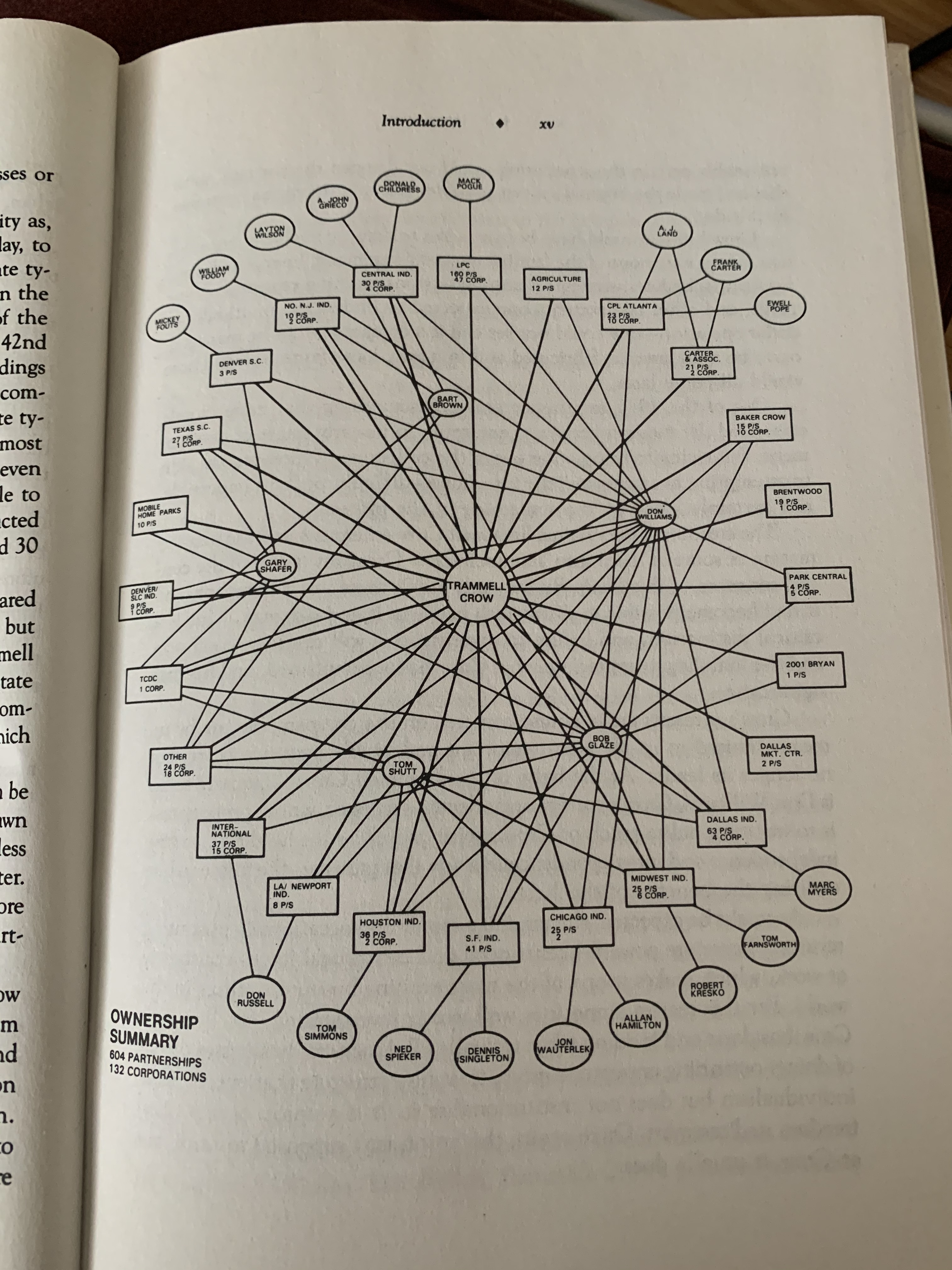
I spent about 6 years working in real estate before becoming an investor/owner of small companies. I've been asked which I liked more and, for me, the answer is small company ownership, but not because it is more lucrative or a better path to wealth. Let's compare the two... /1 Liquidity: - both asset classes are illiquid, but the edge goes to RE - I don't have data to support this, but I believe there are many more real estate transactions done every year than there are biz buyouts and the process in RE is more standardized and streamlined/easier Leverage: - Again, edge goes to RE - RE loans are more available and leverage levels are typically higher (70-80% LTV vs 50% or less for senior debt, outside of SBA). Also more likely to get non-recourse financing in RE than in SMB buyouts and this downside protection is vital. Ability to use other people's money/fundraising: - RE wins again - In my experience, RE fundraising is much easier than raising equity for a buyout. RE is familiar to more people, has more tax benefits, and often provides greater near-term yield Value Creation Potential: - Buyouts have the advantage - Even compared to value-add RE projects, most SMBs offer more opportunities to create value (scope, svcs, etc). In RE, once the biz plan is executed (rehab, entitle, etc.), the asset is stabilized and further growth is hard Complexity: - RE, while not simple, is usually less complex from an owner perspective (they don't call it mailbox $ for nothing) - The necessity of people in companies, as well as all of the other systems and functions necessary for success, outweigh the demands of most RE assets So, for most people, if wealth creation is the goal, RE is a better asset class in which to invest time, effort, and capital. For me, however, I just really like business and seeing teams come together & thrive and having the constant challenge of staying competitive. /end
Oct 3, 2020The PROCESS of taking a company through my quality checklist is much more valuable than the final result Checklists force consistency and rigor Use them
Oct 2, 20201/ I've pulled together some insights from my 1st year in seed investing at @floodgatefund, written in a two-part essay series 🤓 Part 1 here. Wanted to pay it forward to aspiring VCs and start with thoughts on internal dynamics at venture funds 🤠 https://t.co/HnI3jy2YZr 2/ Venture is an apprenticeship business. Optimize for the best sensei over titles and pay 🎓 Most funds don't return 1X. Only 5% return 3X 😱 Learn from folks who have repeatably backed great startups, and find mentors who want to see you succeed 🥇 h/t @phineasb and @joshk 3/ Your partners will be different 🤨 Each partner will have distinctly different tastes in startups based on thesis, stage, price, etc 😲 A startup that one partner would vigorously decline might be one that another partner is eager to pursue! 🤯 Take time to calibrate. 4/ Decision culture determines how you should approach deals 👀 @floodgatefund opts for a veto-proof model where any partner can pound the table. You = art curator 🎨 @firstround and @DormRoomFund is a consensus majority model. You = preacher 💒 5/ Don't lose sight of the fact that it's still your job to bring forward the most compelling companies 😃 If it's outside the interest areas or circles of competence of your partnership, but it's still exciting to you, it's on you to educate 💻 S/o to @m2jr for this reminder 6/ Investor judgement is more important than sourcing volume. Do the right deals not the most deals 🧐 Eg @annimaniac didn't invest in a single company for the first 9 months after founding Floodgate. However, when she did, she put a check into @TaskRabbit 🤩 7/ Silicon Valley thrives on serendipity 🎲 Luck is just where preparation meets opportunity. Generate your own strategic luck by building a great platform 💪 Eg set up our https://t.co/EjwzUIFL22 initiative to build a community of the best startup execs. 8/ Your north star is partner satisfaction. Build trust so that they'll vouch for you to founders & co-investors one day ❤️ Best way to maximize Partner NPS is by playing the long game. Your reputation will follow the legitimate value creation you’ve enabled 🕰️ 9/ Can't say thank you enough to @m2jr @annimaniac @donutsdidthis @acvox for taking a chance on me 1 year ago! 🙏 Plus @jameswkennedy @JuliaLipton @lmushin for your example 😍 Y'all level me up every day. More to learn!!! 10/ Stay tuned for Part 2, which will cover what I've been trained to look for in breakthrough startups and how to find them in the first place.
Sep 30, 2020Online teachers will become investors. Teachers will break even on education, and make money by investing in their pipeline of students who want to start companies. Teaching a course is a fantastic way to evaluate potential founders. Your sample size numbers the hundreds and for the small number of teachers with the right mix of people in their courses, it’s pretty easy to identify students with the most potential. (h/t @justGLew)
Sep 30, 2020Today, we launch @sacrainc's first research product: "The Privately-Traded Company". At 70K+ words and featuring 7+ hours of expert interviews, we think it's the most comprehensive report out there on the burgeoning market for private market liquidity. https://t.co/ZRd54TWHe3 The privately-traded company (h/t @ManuKumar) stands in contrast to both the publicly-traded and privately-held company. It's not hyper-liquid like a public company, but nor is it completely illiquid like private companies usually are. Being privately-traded has a lot to recommend it: 1) It allows companies' early investors and employees a chance to get liquidity, reducing IPO pressure and letting companies go public on their own timeline. https://t.co/0pVpZrqIJE 2) When those early investors and employees sell, it brings about an opportunity to re-align the cap table and the company. Your ex-employees and angel/seed investors can make room for more long-term investors—no dilution required. https://t.co/jrSUqoKkQd Lastly: 3) Floating shares on the private markets gives companies a chance to get real price discovery going. That can help them make better acquisitions, raise capital, and to go public—whether that’s through a traditional IPO or not. https://t.co/rXfKvhEJKl Becoming "privately-traded", in other words, can be a powerful bridge to the public markets—and one that can solve a few of the core issues with going public that exist today. https://t.co/XQTs8BiNkS There's been a big debate over the last few months about IPO pricing. The reality is that many of the issues with going public today—and the reasons entrepreneurs are turning to hacks like SPACs—really have to do with the liquidity gap. When there’s no middle ground between the private markets and public markets—no intermediate stage—there’s no opportunity for private companies to get the market’s input into pricing and little way to introduce potential long-term public investors to the business. No middle ground also breeds a huge imbalance between supply and demand of stock—another core symptom of the problem with IPOs. Having exclusive supply of their stock can be a huge benefit for startups, but at IPO, an imbalance of supply/ demand breeds volatility. More secondary market trading—regularly recurring sales, and not just to existing investors—would seem to be a solution. More liquidity = less exclusive supply, also more price discovery https://t.co/mWS17TEMj9 But it's not just theoretical. This is how Spotify prepared for its direct listing: they spent 2 years+ allowing employees and investors to freely sell their stock in the private markets prior to their public offering. https://t.co/tjgKNOQhrH The critics said the lack of lock-up would send the stock plummeting. $SPOT wound up rising 30% over its first 4 months. Employees had already had ample opportunity to sell any shares they wanted to sell! https://t.co/v4LYrhwPb3 Mis-pricing and pops come about in large part because of how wide the liquidity gap has become over the last few decades. Amazon went public at a $438M market cap—today, companies wait much longer to IPO, which exacerbates the issues of supply/demand and lack of pricing. By opting to become "privately-traded", companies can bridge that gap, slowly dial up their liquidity, and gradually transition into the public markets. If that's their choice—and if not, there are plenty of other reasons to go privately-traded. If you're a founder, investor, or just want to learn more about this new and emergent corporate form, our report goes into much, much more detail. Check it out! If you do, let us know what you thought, via Twitter DM or email at founders@sacra.com. 🙌 https://t.co/ZRd54TWHe3
Sep 29, 2020which VCs run the best scout/fellowship programs? I’m going to be doing a deep dive over the next couple weeks on this for my tech & VC resource guide. who should I talk to? things I’m thinking about: 1) larger scale community oriented programs 2) closer apprenticeships with 1-3 scouts 3) the in between ✨ ALSO compensation, is it 1) cash? 2) carry? 3) a mix of both? 4)✨experience✨
Sep 29, 20201/10 *OWNING A HOUSE * Having a self owned home is a dream come true for the majority of us . We still equate it with prosperity & being settled . But with the alarming cost of reality (especially in Metro's) when does this make sense? My viewpoint on the same. + 2/10 (So called)Pro's : *Having your own place - Pride of possession. *An investment . *Having liberty to decorate as per choice { provided the wife permits 😉 } *No need to shift often. *Loan available at low interest rate. Easy way to #leverage in markets (Common blunder!) 3/10 Are these really as good as they sound? *The pride of owning a house comes with buckets of stress ,for most of the properties are purchased taking huge #loans spread across 2-3 decades of repayment. So are we actually owning a house or is the bank possessing us ? 🤔 4/10 Another point : A huge loan makes us #RiskAverse. Instead of improving skillsets we end up bound to the same job out of fear. Sure, increments shall happen but what about opportunity cost? Focus should be on career & if needed one must be ready to move as per opportunity. 5/10 *No shifting of houses* Very subjective. What is the point of travelling hrs each day to reach work ? Half the life is spent such with no time for anything else!! Buying your dream house only to stay in it on a Sunday too exhausted to do anything! 🤷 6/10 * Decorate the house * Many claim this to be important! I really think this is just emotions. A house becomes a home when people residing in it are happy & stress free. Even rental places can be done up nicely !! 🤷 Financially feasible & better. 7/10 Using #leverage & investing loan amt in equities whilst extending tenure of home loan can backfire big time . An acquaintance lost most of his capital trading whilst sitting on a loan as well. What if something happens to us meanwhile ? RISK REWARD ratio seems skewed . 8/10 To sum it up. *Purchasing a house is ONE of the MOST important financial decisions. MUST be done PRACTICALLY. *Stay WITHIN MEANS .Don't get carried away to own that DREAM property shown by the realtor for the cost paid for such dreams can BURN your pockets completely ! 8/10 * Take a #TERMLOAN while purchasing the property to ensure nothing untoward happens to the house in the event of untimely death . *Save up 60-70% atleast towards down payment. Take min loan & plan repayment in a short duration. (Calculate beforehand) . 9/ 10 *#JointLoan helps immensely. Both for tax benefits & the burden becomes considerably less. *Stay WELL WITHIN MEANS while purchasing first property. One can always buy a BIGGER,BETTER one if earnings improve drastically! *Stay on #rent as per HRA & claim tax exemption. 10/10 Let's not over estimate our income /under estimate our expenses in the quest to own our home & pile up #debt upon us in the quest to wow the society . LET PRACTICALITY PRECEED EMOTIONS. @dmuthuk based on your tweet today. @position_trader @RichifyMeClub @safalniveshak
Sep 28, 2020Search Fund Advice Megathread: In my searcher survey I asked searchers for their one piece of advice to prospective searchers. This thread is 29 pieces of advice current searchers and operators shared and I hope you find immense value in their perspectives. Enjoy below 👇🏻 1. I don't have advice, just my opinion: I try to take alignment over convenience. 2. It's hard but rewarding. Make sure your family understands the project. 3. Figure out what you want to get out of the process and which model best suits you (Self funded vs. traditional, etc.), spend a little time figuring out your process then just start doing it and fix it as you go. 4. Focus your search on specific industries. Otherwise, can spend too much time outside your wheelhouse and too difficult to get up to speed on competitive dynamics. 5. Do it full time. 6. Really understand what it means to bring ok investors. 7. Patience. Also connections are key to identifying promising opportunities. 8. I have grown to have conviction that self-funded search has significant benefits. 9a. If it was easy, more people would do it. There are fewer active searchers than pro baseball players. I'm sure many (if not all) MLB players had people discourage them from their dream due to long odds of success - the ones who make it are the ones that didn't listen. 9b. Search odds are actually pretty good. Assuming you can raise the capital, your odds of becoming a CEO are better than a coin toss. Keep pushing! 10. Do an industry focused search. The momentum you get once you get beyond surface level knowledge of a niche is a big advantage. 11. Search is a great way to be an entrepreneur and the learning that is available through search is higher than I could have ever imagined. I love it. 12. Think long and hard about why you want to do it and make sure you are in it for the right reasons. 13a. Every searcher does things a little bit different, because no two searchers are searching under the same conditions. It is important for you to find what works for you, what are your goals, skills and adjust your process for that. 13b. The traditional MBA programs will have you think that any business under $1M EBITDA is not worth buying, but then I have seen many examples of successful acquisitions with much smaller businesses. 14a. Speak with as many other searchers as possible. At every stage. Have a list of questions you ask everyone, then adjust them as you learn more. Keep in touch with them as you progress. 14b. It's a small community and in my experience almost everyone is willing to take 15 mins to chat and help you out. 15. Just start. 16. You're committing 5-10 precious years of your life to this. You have agency. Choose an industry, geography, and company that'll be worthy of the best years of your career — make sure you love it. 17. I'm a self-funded searcher on no real timeline. So take this advice for what it's worth. I think if you enjoy talking to business owners and take a genuine interest in them and their business, you'll eventually find something. At least I hope so. :) 18. Most people seem to focus on quantity over quality (in terms of reviewing businesses for sale), but I'm focusing on the reverse. 19a. Don't do it immediately after your MBA. Go work for your ideal search target company for 2 years. Learn the industry and the head and heart of the ownership. It will make sure you really love that industry. It will help you better sell to an owner when you do search. 19b. And it will make you a better CEO after having worked in the company in a non-CEO role. And if you're really, really lucky, you can buy that company! 20. It's like a sales process....it takes 100 at bats to get 1-2 very good opportunities. 21. Luck may play a bigger role than you'd like. 22. Save a lot more than you plan if going down the self funded path. 23. Good businesses move quickly so get into contract ASAP to weed out your competition, and then start your diligence. (with clauses in your LOI to allow you to back out, of course, if you are not satisfied with the diligence) 24. Hang in there! 25. Go for it. 26. Understand why you are doing what you are doing. It's not easy or simple - but knowing this will keep you focused and moving towards your goal. 27. Get creative. 28. Find a niche, it's getting competitive. Going with a partner makes it much less lonely. 29. Understand what it is you are getting yourself into... searching isn't for everybody. For the full thread in article format, visit my Search Funds page and check out this compilation among a few others from the survey. https://www.alexbridgeman.com/search-funds https://www.alexbridgeman.com/searcher-advice-compilation
Sep 28, 2020🤔 Founders: when you think of the characteristics you want your investors to have, what’s most important to you? Interesting read by @mariodgabriele on the topic: https://t.co/GoTdhAnRKs
Sep 27, 2020The 5 "Technical Analysis" Charts I use every day ⬇️⬇️⬇️⬇️⬇️⬇️⬇️⬇️⬇️⬇️⬇️⬇️⬇️⬇️⬇️⬇️ 1) 5-Year Performance vs. $SPY Winners keep on winning It's a great sign if a stock has beaten the market over the last 5 years It's a warning sign if it has lost badly $MKTX ✅ $MNKD 🚫 https://t.co/ji5KvgrbER 2) Long-term Revenue Growth Recurring revenue is the gift that keeps on giving Consistent revenue growth -- especially through recessions -- indicates greatness Inconsistent revenue growth = avoid $MA ✅ $XOM 🚫 https://t.co/8QOyWx2RNe 3) Margins Ideal: Gross / Operating / Net Margin all consistent/expanding over time Avoid: Gross / Operating / Net Margin all declining over time $VEEV ✅ $GME 🚫 https://t.co/lRm7mVxiCq 4) Returns on capital Great businesses create value by investing at high rates of return Bad businesses destroy value by investing at low or negative rates of return I check ROE, ROA, ROIC Ideal: Double-digit and expanding Bad: Negative and declining $FB ✅ $UA 🚫 https://t.co/7taF3b93ZG 5) Dilution Shares outstanding rising through stock-based comp = bad Shares declining because of stock-buybacks = good I'm OK with <3% dilution per year if growth is high >5%/year is bad $VRSN ✅ $CRM 🚫 https://t.co/5fdGAQtoxX Bad performance in any of these categories doesn't exclude investment Lots of great companies have negative returns on capital and high share dilution in the beginning Still, always worth looking at All data from @ycharts
Sep 25, 20201) My investment philosophy + Disclaimer - I'm a full-time investor and my concentrated portfolio is comprised of (primarily founder-led) high growth companies with large addressable markets. I usually look for dominant businesses with a special sauce (moat) which allows.. 2)...them to compound their revenues, cash flows and earnings for an extended period of time (multiple years). Usually (but not always), such disruptive businesses operate in the technology sector and they are led by visionary founders with skin in the game. When I invest,... 3)...it is always with the intention of holding indefinitely but the business world is unforgiving and capitalism is brutal; so in reality, my average holding period is a few years. So, when do I sell? (i) When a company's rev. growth < 15% pa (ii) When the mgt. deteriorates 4)...(iii) When the 'moat' has been invaded (iv) When I spot a new opportunity + need cash Apart from the above scenarios, I remain invested in the companies and allow them to compound over time. On macro, market timing, forecasts - I started investing in the late 90s... 5)...and have yet to come across an individual who has accurately and consistently timed the economy and/or the stock market. Not one! Over the years, many have tried to predict the future and plenty of well meaning people still try, but I've realised that... 6)...this is an impossible task, which is why I don't waste my energy on such issues any longer. What I do know is that the investment business is cyclical; markets go up AND they go down. Fortunately, with the way the system is set up (monetary inflation, productivity... 7)...innovation, human spirit, abundance of capital, population growth etc), the stock market goes up over time and the upswings are usually longer than the downtrends/contractions. This is why I remain invested in my portfolio companies and no matter how scary the situation... 8)...becomes, I hold on to my shares; knowing that over time, quality businesses always bounce back. How I handle volatility - In order to reduce the drawdowns of my high-beta, growth portfolio, I hedge my book by shorting various ETFs to offset my geographical exposure... 9)...For example, to hedge my US/int'l exposure, I may short $IWO and to hedge my China exposure, I may short a Chinese ETF. Such hedging marginally reduces my returns during strong uptrends but it provides me cash and a good night's sleep during severe bear-markets... 10)...It is worth mentioning that hedging doesn't always work; especially if only the high-growth/high-beta stocks are under pressure. When this happens, I just grit my teeth and endure the big drawdown! On stock selection - When selecting any potential stock, I evaluate... 11)...the underlying business, the competitive landscape, quality of the management, optionality and the size of the total addressable market. Put simply, fundamental analysis is my main weapon but I also enjoy reviewing price charts! IMHO the chart is the juice of all... 12)...known information and reflects the true supply/demand for any company's shares. Often, I add to my positions on breakouts or channel breaks. I run this twitter account to interact with other investors/traders and to post interesting information about my companies... 13)...And in order to make it fun, I also post my holdings and monthly performance summaries at the end of each month. Please note that I'm now retired from the investment business and not in a position to offer anybody any investment advice... 14)...My Tweets are not and should not be construed as investment advice/recommendations or a solicitation to buy or sell any securities. Investment involves risk and can result in big losses. Therefore, please consult your financial adviser and trade/invest at your own risk. 15) A few have asked which inv. books had the biggest impact on me; so here you go - 'Common stocks and Uncommon Profits" - Phil Fisher "Beating the Street" - Peter Lynch "Poor Charlie's Almanac" by C. Munger "Warren Buffet & Interpretation of Fin. Statements" - Mary Buffett 16) Finally, like every other investor, I make plenty of mistakes but nowadays, I don't stay wrong. Put simply, "When in doubt, I get the hell out"! My only loyalty lies with my capital and if a company or its mgt. misbehaves, I sell and move on. Hope this has been helpful. 17) Some more info - Q) On why I sit through drawdowns and not trade stocks? A) One summer, I did extensive backtesting on Wealth-Lab Developer software and ran multiple technical indicators on all the $NDX and $SPX components (stocks). I tested RSI, MACD, Bollinger... 18) Bands breakouts, Keltner Bands, stochastics and a variety of moving averages (price vs. sma, price vs. ema and dual sma and ema crossovers - both short and long-term) and realised that none of these technical timing indicators came close to Buy&Hold on the vast majority of... 19)...the stocks! Not even close. Sure, some indicators outperformed Buy & Hold occasionally, but by and large, they lagged by a wide margin. Notable that my backtests didn't even account for trading costs or taxes involved in trading. The results surprised me but right... 20)...there and then, the penny dropped and ever since, I have been a long-term investor in great businesses! Now, I am NOT claiming that discretionary trading doesn't work - there are many great traders (some of them on FinTwit) who have done extremely well but... 21)...since I am not a discretionary trader and couldn't find any consistent outperformance from any technical indicator, I decided to go with the long-term investment route. Hedging - Q) How do I hedge and what indicators do I use? A) I hedge to reduce my portfolio's... 22)...volatility and drawdowns, especially during severe stock market downtrends. For my US/Int'l stocks, I short $IWO (Russell 2000 Growth ETF) to offset my long exposure (ex - if my long exposure in US/int'l stocks is $100, then I sell short $100 worth of $IWO)... 23) In terms of indicators, I only hedge when $IWO closes below its 150day ema AND its 5day ema is also < 10day ema. As long as $IWO is below the 150day ema, I keep hedging/covering on 5/10ema crosses. When $IWO closes above the 150day ema, I remove the hedges and ignore the... 24)...the 5/10ema cross. For my China exposure, I short either $KWEB or $CWEB and here, I put on the hedge when the 5day ema is < 7day ema and I cover when 5day ema > 7day ema. The key to successful hedging lies in taking every signal and this allows me to ignore all noise. 25) Slight change in hedging strategy - In order to enhance the correlation of my hedges, henceforth, I'll short Brazil's ETF - $EWZ to hedge my S. American stocks. So, going forwards, I'll short $IWO for my US exposure, $KWEB or $CWEB for China and $EWZ for S. America.
Sep 22, 2020 Original deleted — preserved hereFarming was the 1800s. Manufacturing was the 1900s. Counterintuitively, could investing become the most common "job" of the 2000s? Reason: crypto and fintech are turning everyone into an investor, just like the internet turned everyone into publishers. How far does that go? One way of measuring this: what percentage of income do people derive from investments vs wage labor? We think of wage labor for a salary as the default today, but the transition from farming to manufacturing was a big change. An improvement in some respects, and not in others. Many bemoan the financialization of the economy. But perhaps we lean into that. Perhaps investing is what people do in a robotic economy if they don't want to be founders. Investing is similar to consumption. Just click to buy. Picking is hard. But you can join a rolling fund... In this hypothetical world: - everyone is micro-investing, every day - the $10000 micro-exit is kind of like the viral tweet - what would have been "college money" seeds your fund - picking a fund manager is like picking an employer - robotics gives a low-scarcity basic lifestyle One response is "someone still has to do the jobs." But the share of farming jobs crashed even as the population rose, because we got really efficient. Perhaps robotics similarly reduces manufacturing share. And then perhaps investing becomes the main post-manufacturing thing. https://t.co/hrLm1cvPJa Also: we know that millions of new people are becoming investors. Crypto & Robinhood make that obvious. The main q is whether this stays a part-time hobby, or becomes a more common full-time job. Social is about 10 years ahead of fintech/crypto, and gives something of a clue... https://t.co/EGd0gZs0eh
Sep 22, 2020Investing 101: Risk management is poorly understood and even more poorly applied. Here’s a simple framework I use to manage risk. Imagine a barbell - weights at either end with a thin bar in the middle. In my opinion, risk is best managed in this way. For me, early stage risk is at one end of the barbell and liquid, public market risk is at the other. In the middle are growth rounds, converts, PIPEs etc. ie anything that isn’t the other two. For every $100, I divide it into a 45/10/45 allocation in the barbell. Now here is the hard part...in the early stage bucket, I divide the $45 into 10 years because that’s how long it takes for an early stage deal to get liquid. I also need to hold back 1/3 for reserves (investing your pro rata in future rounds). This leaves me with $3 to invest every year. At the early stage, there is a lot of failure - the loss rate is high so I would probably target 20 deals a year or a deal every two-three weeks or $0.15/deal. At this point it‘s clear: I need to have a bias to ACTION. If the team is good or the idea is good or both, I quickly rip the money in. I don’t overthink it because I have created a framework to manage the risk and allow myself to be lucky/right. At the other end of the barbell, however, I try to do 5 deals with a <=3 yr payback. This means $9 per deal. Wow that’s a lot which then makes the opposite obvious: I need to have a bias to INACTION. The bigger the check, the longer I take and the less prone I am to do anything. The rest is opportunistic. How can you apply this framework for yourself? Start by figuring out what your liquidity needs are and what sits on either end of the barbell. Eg my barbell is based on stage. Yours may be based on sector (healthcare vs tech vs crypto) or instrument (Credit vs equity). No matter what it is, it’s not reasonable to invest without one. Doesn’t mean you won’t have losses or that the markets always go up, but there should be a spreadsheet somewhere with allocations and a plan... Good luck!🍀
Sep 21, 20201)capital allocation 101 - founder edition: A company is: - a pool of capital that is - invested across categories of spend (COR, S&M, R&D, G&A) - to generate cash flows from customers 2)This is the golden equation: Return on investment/spend across categories > Cost of Capital 3)lets dive in: Return on investment/spend across categories Cost of Revenue (COR) - this is easy to understand, you need it to generate revenue eg: $0.2 of every $1 made is sent to Uncle Bezos, you can’t make revenue without AWS 4)S&M - most good founders will understand their return on S&M eg: every $1 spent on S&M generates $2 in 36-month ltv (this implies 25-30% return). great founders will understand their return down to the specific S&M channel so they can allocate spend accordingly 5)R&D/G&A - these are harder to calculate return for because they are longer term investments and often generate outsized returns if they work but often also go to zero eg: a new product or a new internal ERP system. Still important to have a directional sense of return 6)cost of capital - this part of the equation is over looked by founders. The million dollars you are using to generate returns on your spend comes at a cost. Your investors want more than a million dollars back 7)If your cost of capital is greater than the returns your spend generates -> you are destroying equity value. There is only one way to describe this -> stupidity, but surprising how common it is 8)Two obvious options for capital that exist today: Equity - this is giving up a portion of your company forever. Very expensive; can often cost over 40%. Also acts like debt in downside cases due to liquidation prefs 9)Debt - cheaper, but limited in amount of capital and lack of flexibility + encumbers the business with risk (if business deteriorates, still have to pay it back) 10)You have different return profiles on different categories of your spend and they should be financed accordingly, not all with just equity. In fact, equity should be a last resort, given how expensive it is 11)Building new product that may 5x revenue? Could make sense to use equity Spending more on growth that is working? Not sure you want to use equity Raising $ when “didn’t need the capital” to sit idle in your bank and get a TechCrunch article? Fire yourself if you use equity. 12)Raising equity is not a cause for celebration, it’s actually a cause for mourning. You had to give up a piece of your life’s work because you had no other alternative. The entire venture charade is designed to make you feel otherwise 13/F) Equity raises are a direct transfer of wealth from founders to equity investors Eventually, no one will remember the TechCrunch article naming you a unicorn. You will be judged on the returns on equity you generated. Nothing else.
Sep 20, 2020 Original deleted — preserved hereHow to find a small business to buy, the best listings, and what its going to take to execute it. Since I seem to be deeply entrenched in Micro PE twitter now, and keep seeing this question. Here you go. First off, the best way to locate a small business to buy, is to get off smb twitter, and stay away from "buyer meetups". As @mgirdley put it: https://t.co/593LjkNj7x Listing agencies can help, but most likely won't. Your best strategy there is to set filters for industry and location for daily emails for all the major buy/sell business listing sites. If something is added in your realm, you'll see it and can email/call. The next basic play is to reach out to all local business brokers, and national industry-focused business brokers in your realm and send them 2 things. A personal finance sheet (proves serious and ready), an email on what you are looking for and why you are looking for it. Next, and my favorite, go to all industry association sites and look at businesses in your area of expertise, or locale and start to get contact info from their websites. If you want to buy industrial, go to manufacturing associations, etc. Use Linkedin and Google to find emails. Add further to this list by checking convention attendee lists. These aren't great since most smaller businesses won't be attending, but still can be a great resource. Add those emails to your list. You can use corporate databases such as DB, Hoovers, or a number of newer lead lists as well. These can be expensive to access. However, @tsludwig has an excellent hack for this, reach out to someone on Upwork or similar that has access, and have them run the filter. $100 $5000 Now you have a massive email list of potential companies. Use an extremely short email that does NOT talk about yourself, but simply says "I am interested in... on these terms... not sure if you have every thought about selling... if so call..." One last great idea from @tsludwig is to feed this into an auto emailer/responder. Setup a classic 5 email system. Intro, 3 follow-ups, a break-up email. Keep them short and sweet. Finally, understand what you are about to get into. The top reads on this are going to be from @BrentBeshore @jeff05251. Order their books and start reading today. If you are new to business, you may also want @ScalingUp. a bit too corporate, but good distillation Finally, I have been through this process on the sell side, have done due diligence, and have some minor buy-side experience. Reach out if I can help! Other great follows on this are @joelrandyblake @mgirdley @emilyleldridge @tsludwig @MatthewGHinson @rudman_ben This more ideas and sources, and so wanted to make this part of the official thread. Thanks @swilera https://t.co/ohRctgkUyo
Sep 11, 2020Lots of new funds Few quick predictions 1) Startups and VCs will switch roles VCs are now newbies Founders are the kings VCs pitch now founders VCs panic while they look for product-market fit 2) Funds have hundreds of LPs We will see information leaks and similar problems Small funds will be seen as not worth the risk Most funds will start to report no valuations, no business economics, no nothing unless founders ask for it or it's public 3) Audience = Fund Every large newsletter host, every podcast host about startups (or related - eg gaming) will have a fund Influencers and investors roles will merge early-stage I expect the first VC fund by a livestreamer by November. 4) Get a stick or try dying Each fund will need a specific focus, brand or value add. Expect multiple tools/communities and knowledgebases that help with distribution, hiring, or leadership. Expect people to have niche focuses. Even crazy stuff like remote work. Crazy i know… 5) Several funds – especially the ones run by audience influencers will be extremely transparent. Expect people doing investment decisions live on camera. Expect being added to LP updates even if you are not a LP 6) Startups will launch ecosystem funds after Series A Small funds that invest in companies that relate to a startup's business/scene, build on top of their platform or support it. @Commsor is the first of the new generation of startups doing this. 7) Startups will raise their early-stage valuations. Most of the new LPs *need* to collect "stickers" to proof quick wins and show that they can get into deals Most LPs don't understand the dynamics or reasonable prices but are amazed by the brand names. Raise your valuations 8) Fund manager will see investing is fun Give your opinion, hear how great it is, don't stick around to see your idea fail But people doing funds will also realize it's a timesink with no upper limit. It becomes either a fulltime job or you are barely able to do it properly. 9) More alternative models will start to be able to get out of overpriced seed rounds Expect funding-ATMs that give you $25k investment within 24hours Expect weekend hackathons with investment prices Expect twitch live-streams ala Sharktank Expect "quit your job" checks 10) Avg check-sizes will move to 100k, then to 250k Solo GPs will get much more competitive towards each other Solo GPs will start to switch to even larger checks - eg taking whole $1M-2M rounds - last but not least to be able to flex-tweet about it 11) Later stage investors need to find a solution for the new decentralized early-stage investment scene. The best new models will be along the lines of spearhead but for microfund owners. Learn, get money, invest, get more money if you are good. Gamedynamics meets moneyball. What else? What am i missing? “We’d love to see a bit more fund traction over time before we can commit” https://t.co/49BVQ6ylcK
Sep 11, 2020Many of you are interested in angel investing. It's definitely described as fun by many. See this 👇 thread to learn how to angel invest responsibly! Subscribe to the Startup Investing Newsletter to read subsequent posts on this topic. https://t.co/JCTyH0MnAK 1) Think about how much capital you want to allocate to this asset class 2) How many companies will you invest in and over how many years? 3) When do you expect to see returns? 4) What is your end goal? Returns or learning? Can it be one or the other if not both? 5) What do you bring to the table? 6) Most importantly, how do you plan on finding the best deals? Do you think you will have good access to good founders? Subscribe and read more here: https://t.co/JCTyH0MnAK
Sep 10, 2020> **Chamath Palihapitiya** (@chamath) > Investing 101: Successful investing is all about behavior and psychology. > > You can have the best model or analysis in the world but if you panic, you lose. > > Said differently, everybody has a plan until they get punched in the face. > > Let's begin... **Kyle's filing:** `https://twitter.com/chamath/status/1305550186341564417?s=21 - #[[Investing 101 2.0]] #[[Investing 101 2.0 Wiki]]`
Sep 2020The idea of "buy and never sell" has been experiencing a real moment, especially after 20+ years of PE paying Peter to markup Paul. Reading "On the Nature of Long-Term Holds" from Yale and seeing some fascinating ideas. cc: @axpence for the rec https://som.yale.edu/sites/default/files/On-the-nature-of-long-term-holds.pdf Right out of the gate the focus is on compounding. Have a system that works well enough to let you stay in the game. Reminded me of @morganhousel and @david_perell talking about the real trick behind folks like Buffett, Marks, etc. The key is TRUST. Get your investors to trust you long enough to stay in the game. https://www.perell.com/blog/morgan-housel Wealth is most often created by (1) owning real estate, and (2) owning a business. I had a call recently with someone who left public accounting and bought a business and some adjacent real estate. In 3 years he's making more money than he ever has in his life. [On compounding and hindsight] Amazon's actual growth would have looked crazy if you'd tried to model it up front — the whole point of compounding is that it doesn't look believable until it's already happened.
My partner @AldaLeuDennis has been a key part of @initialized building a world-class roster of limited partners. With her LP fundraising tips, you too might raise a VC fund with "one close, over-subscribed with top LPs!" 🚀 https://t.co/MdqUClpBEa **Links in this post** (t.co shortlinks resolved 2026-09-30): - `https://t.co/MdqUClpBEa` → https://medium.com/initialized-capital/how-to-raise-a-venture-fund-735647ca90aa
Aug 20, 2020OK let's do another boring, private business profile: C&S Wholesale Grocers Why it's interesting: - Over $30b in annual revenue - 100% family-owned for 100 years - VERY secretive. In fact, hard to find photos of owner! - Owner worth $11b plus Story 👇🏻 https://t.co/CeY3KFR5Jn


> **Sam Parr** (@thesamparr) · Aug 18, 2020 > I LOVE boring non-Silicon Valley, family-owned businesses. > > This one's a good one: ABC Supply, a roofing material business. 1 of the largest private companies in America with $10billion in revenue. > > The founders are Ken, Diane Hendricks, worth $8 billion. > > Here's there story 👇🏻 **On the 👇 in the post:** the story is the attached image. A scan of the following 59 post ids through X's syndication endpoint (2026-09-17) found no further posts by this author, and Thread Reader has no unroll for it, so this is the whole capture. **Kyle's filing:** saved to Quick Capture and tagged #The Profile but for companies — the idea of a profile-style publication about companies rather than people.

OH: “OMG, that firm paid 100x revenue for [hot startup] - what could they be thinking?” Founders & investors can obsess over near-term revenue multiples, but here’s when valuation multiples don’t matter in growth tech markets w/ @DavidGeorge83 👇 https://a16z.com/2020/08/17/role-of-entry-multiples-in-valuations/ <!-- Fetched 2026-09-15 via X's keyless syndication endpoint (cdn.syndication.twimg.com). --> **Links in the tweet:** `https://t.co/1mPWR3ZNUP` → https://a16z.com/2020/08/17/role-of-entry-multiples-in-valuations/ **Roam filing:** #Valuation
Aug 17, 2020Fun idea: Pensions make very little sense for 24-year-old with large risk appetite & very low burn rate. Would love for someone to bundle a pension product and continuously invest & re-invest across number of rolling funds. Would cause seismic shift in capital inflows to VC.
Aug 16, 2020What are some examples of companies who have thrived in public equities over 20+ yrs as buyers or consolidators (ie not product companies) where decision making WAS NOT concentrated in one person over that entire period. Ie opposite of Buffet, Malone etc... One decision maker... But was the decision making distributed? **Notable replies:** - **@BillAckman** — Danaher - **@shomikghosh21** — Constellation software and no one else is even close, institutionalized decentralized M&A pushing down to business units and even smaller units than that. Mark Leonard is 👇🏾 - **@goodalexander** — Rollins. Absurd amount of m&a as they consolidated low multiple pest exterminators. So many acquisitions they had multiple teams pulling the trigger. Second example, Fiserv. Less clear cut re: product as multiple products. - **@WolfofMStreet** — Danaher $DHR - **@alex2023allez** — Danaher Corporation $DHR buys relatively unloved businesses and then applies its Danaher Business System, in order to increase their return on capital. Danaher has bought more than 400 companies. - **@NMPCap** — Constellation software. Several M&A leads over different divisions, but you already know it. - **@JSCCapital** — Consolidators split b/w personalities (e.g. Bradley Jacobs XPO, URI, Martin Franklin JAH, Malone, Barry Diller IAC) or industries (e.g. industrials, telco, insurance, cable, oil & gas, banking, pharma, IT services w/ GE, DHR, BLL, T, CMCSA, ACN, IT, JKHY, FIS, JPM, AGN, etc...) - **@emmetlsavage** — Euronext Exchange Group. (Euronext N.V.) - **@VijarKohli** — Cisco meets this criteria - **@austinbishop** — Marshall Wace. Hands down - **@kevg1412** — Maybe @netflix?
Aug 16, 2020With the meteoric rise of the athlete-investor, folks often ask me WHAT professional athletes are investing in... But we don't often talk about WHY they are investing or HOW so many have the capital to invest today. Let's fix that with a Thread 🧵👇🏾👇🏾 1/ It's no secret that private capital into startups & technology businesses has grown rapidly over the past decade Alongside this rise, we've also witnessed the growing visibility and coverage of the biggest stars in Sport becoming active angel investors & VCs with their money 2/ This, to be sure, is a relatively recent phenomenon. Historically, even the biggest stars in their respective Sports had more limited career earnings, compared to counterparts today. To me, that's still what makes breakouts like Magic, Junior, Roger and Arnold so special 3/ But the 80s & 90s era of athlete-backed steakhouses has given way to a new generation of Sports stars who (among other assets classes) eagerly invest in Tech The first WHY is pretty simple: They grew up with it! The athlete-tech investor started first as an athlete-tech user 4/ While important, it doesn't exactly answer the HOW behind the WHY To know this, we need to appreciate one of the single biggest structural changes to happen to traditional media in our lifetimes: The absolute necessity of broadcasters to own rights to Tier 1 sports content. 5/ In an asynchronous digital streaming world, there's few shared viewing experiences left. Vast majority of these are live sporting events. Recognizing value in their content, Leagues have commanded increasingly higher premiums for the rights-- leading to massive revenue growth 6/ Alongside making billionaire owners even richer, this growth in media rights value has minted many more millionaire players Thanks to strong negotiation of league minimums, even non-star players now have some investable capital -- something historical counterparts never did 7/ But putting it all on media rights would be shortsighted After all, to build longevity as an investor you need both CAPITAL + ACCESS to deal flow. That's where savvy athletes took to social media to build their audiences. For some, those audiences incl. founders & Tier 1 VCs 8/ That last piece re: ACCESS can't be stressed enough. It's what separates an athlete's family office from an 'Athlete VC' Plus, it answers the question some might have about WHY athletes don't just stay as passive LPs Why pay Mgmt Fees when you've got both capital & access? 9/ In fact, this isn't a trend restricted to just athletes. All family offices are evaluating how they can invest more directly Sure they check sizes may be lower but over 76% of family offices invest directly into VC deals, so why should athlete family offices be any different? 10/ Lastly, and I hear it consistently from athletes that join me on @thegameplanshow WHY athletes invest directly in technology entrepreneurs comes from their clear focus on the impact Backing women, underrepresented minorities, ESG, etc Things most VC funds don't do enough. Hope you enjoyed learning about the WHY behind the rise of the athlete investor. If this topic interests you, please consider subscribing to The Game Plan, a weekly podcast where we interview top athletes about their very own WHYs 28 episodes & counting! https://t.co/g1tVxSyubt
Aug 16, 2020We interviewed @eriktorenberg so job seekers know how venture capital is relevant to your job search 10x career moves require being a VC with your time Startups are hiring when they raise money & they raise money every day 🔊 https://t.co/ItGxcvdxL9 📺 https://t.co/4UD8ibFf4W https://t.co/zRalRpuCxD **Links in this post** (t.co shortlinks resolved 2026-09-28): - `https://t.co/ItGxcvdxL9` → [unresolved: HTTP 404] - `https://t.co/4UD8ibFf4W` → https://www.youtube.com/watch?t=5&v=5_LwjVV_vew&feature=youtu.be - `https://t.co/zRalRpuCxD` → https://x.com/rubenharris/status/1294380383585202176

Idea for micro fund that no one has done super well. Verticalised SaaS fund around very specific roles. For example: Fund focused on helping startups with sales ops. Get leading 30 Head of Sales Ops as LPs. They become customers & advisors. You will win those deals. ;)
Aug 12, 2020@SuperMugatu Regardless of where a given early stage venture fund makes investments, the data shows that a small number of investments will determine the financial outcome. ~50% strikeouts. ~30% singles or doubles. ~ 20% home runs. 0 to 5% grand slams. There are exceptions though.
Aug 10, 2020Book notes from Thomas Piketty's "Capital in the 21st Century" — Curious to hear critiques & responses to the book. Normal economic growth has been between 1-1.5% annually. When it's higher than that it's for 3 reasons: 1- high population growth 2- temporary bubbles 3- "catch up growth" (e.g. Germany & Japan after WWII) Piketty's main focus is the growing inequality between capital & labor. A rentier is a person who lives off the interest on savings instead of working (e.g trust-fund kids, landlords) Inequality grows when r > g – the rate of return from capital is greater than the growth rate. Laborers largely live pay-check to pay-check. So their income grows at the level of GDP per capita. Rentiers live of interest of their principal, so their income largely grows on rate of return on capital (one check on this is pop growth) When the rate of return on capital exceeds the growth rate of the economy (as it did through much of history until the 19th century and as is likely to be the case again in the 21st century), then it logically follows that inherited wealth grows faster than output and income. In normal times, the rate of return on capital averages about 4% – 5% per year, and the GDP per capita growth rate averages about 1% to 1.5% per year. So in normal times, rentiers’ yearly incomes should be growing more than laborers’, which would increase inequality During wars & crises however, rentiers are worse off than laborers relatively. Hyper inflation, asset destruction, gov't interference, wealth taxes, are all likely to hit rentiers the hardest. 1914-1945 was an example of this. Piketty references Jane Austen novels which show how much time money matters take up. Even with someone who has 5x average income, it was necessary to spend most of one’s time attending to the needs of daily life. Grateful for economic growth that has changed that for many. Contrary to the popular consensus today, the American Dream was very real for most of America’s history. This was due to the fact that America (as a new country) had less time to accumulate a rentier class, which takes a couple generations for the fortunes to really multiply. Rentier class used to be top 1%. Now it's top 0.1%. Why? - Have a bunch of super laborers who make money both on labor & on their principal (e.g CEOs). Fewer rich bums these days. :) - Capital is disproportionately tied up in institutions (endowments, sovereign wealth funds) There's growing income in equality among labor. The share of top 10% (top 1% in particular) has been growing for decades. CEO salary has been rising steadily. Why? - Maybe it's just the market - Maybe it's low taxes relative to 1980s - Maybe it's corporate governance The Rich get richer faster than others. People like Bill Gates grow their fortune at 8-10% a year, double Piketty's 4-5% return on capital. The richest endowments grow at 10% yearly as well. Medium rich endowments grow at 7-8%. Avg person saving for retirement is 4-5%. All of this suggests increasing global inequality. Which is why Piketty suggests a global tax on wealth. Maybe fixing housing would help here, as that transfers wealth from laborers to rentiers. Or fixing colleges, which also puts laborers in debt. Or increasing birth rates. Personally, I am more excited about fixing wealth inequality by enabling people to have equity in companies (perhaps by a token-like mechanism), such that people are directly and legibly aligned with economic growth. Share the pie as you expand it. This was a great book review that inspired these notes as well: https://slatestarcodex.com/2018/06/24/book-review-capital-in-the-twenty-first-century/
Aug 9, 2020If you’re in the wealth accumulation phase of your life, I think buying a home is a terrible decision (in most cases). Prove me wrong. Seriously. I’m not being rhetorical. I want to see if there’s math that says otherwise.
Aug 8, 2020Pretty bullish long-term thesis on $SPOT for anyone interested (from Coho Capital's 2020-Q2 letter). Great overview of the Music Industry landscape, Spotify's moves & many other in-depth observations. cc : @TMFJMo @7AustinL @richard_chu97 @saxena_puru https://t.co/eICTtDIS6i **Links in this post** (t.co shortlinks resolved 2026-09-28): - `https://t.co/eICTtDIS6i` → https://uc94e5d685632e6b532351b9c237.dl.dropboxusercontent.com/cd/0/inline2/DJBtPhkx92q5NiuXVrAOcV9ewnSaYxw_MotLDn04Pn2o69ZGb2fnTxWanMH5JCFMFKFbOy15zikl-TK7f_5kUkS4C5xBkY4nM4x635v55niul5JNsOh0I3CWnVQleodBPInja0uUTAp57io7WKHCKDMfyto4gs8Pz4QM_Rj278hp0SSjKJJ7a7CtQGN0VdQ0kQtU9ZFBLILiKfwmRS6OViub1SbAWosv4RvfqgHeOkXzZDPdlwjLrxbogd7WLWVIGSIUXDi1fwzUml5TfbwmyKmS-r70VKOgNLoNvoA4BrfuLjqi83VmjedT1blKjUIdJ7vwRSAzeMPF1LYtBf3Q6Pt9rvRscZ-aXZVqvXvzfQNcIXPIUYWzKkHxjrlKDkiLuvE/file
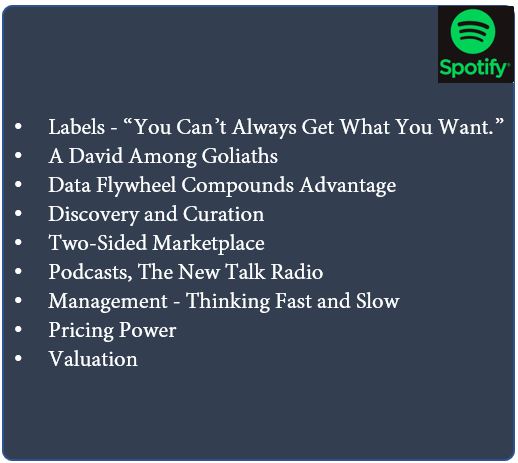
This new Michael Mauboussin report is a gold mine of data. For example: "One important feature of venture capital is the persistence of returns. [In contrast] we saw that the persistence of returns for top-performing buyout funds waned in the 2000s versus prior decades." https://t.co/6aOUd61poE
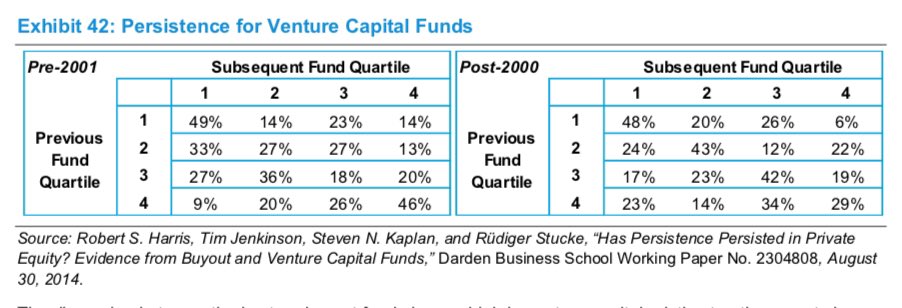
SPACs: A 5 Min Overview A number of investors have raised SPACs to take late stage private tech companies public. Post includes: -Taking a company public via SPAC -Economic incentives of people with SPACs -SPAC timelines -Future SPAC evolution https://t.co/lmWYlbiPmx **Links in this post** (t.co shortlinks resolved 2026-09-28): - `https://t.co/lmWYlbiPmx` → https://blog.eladgil.com/p/spacs-brief-overview
Aug 3, 2020Constellation Software gets executive incentives right in so many ways. Execs are required to invest 75% of their after-tax incentive bonus into Common Shares which are held in escrow for a minimum period of 4 years. Show me the incentive and I'll show you the outcome: https://t.co/6XaUWo3RGL **Links in this post** (t.co shortlinks resolved 2026-09-29): - `https://t.co/6XaUWo3RGL` → https://twitter.com/ChrisJBakke/status/1288874018682986498/photo/1
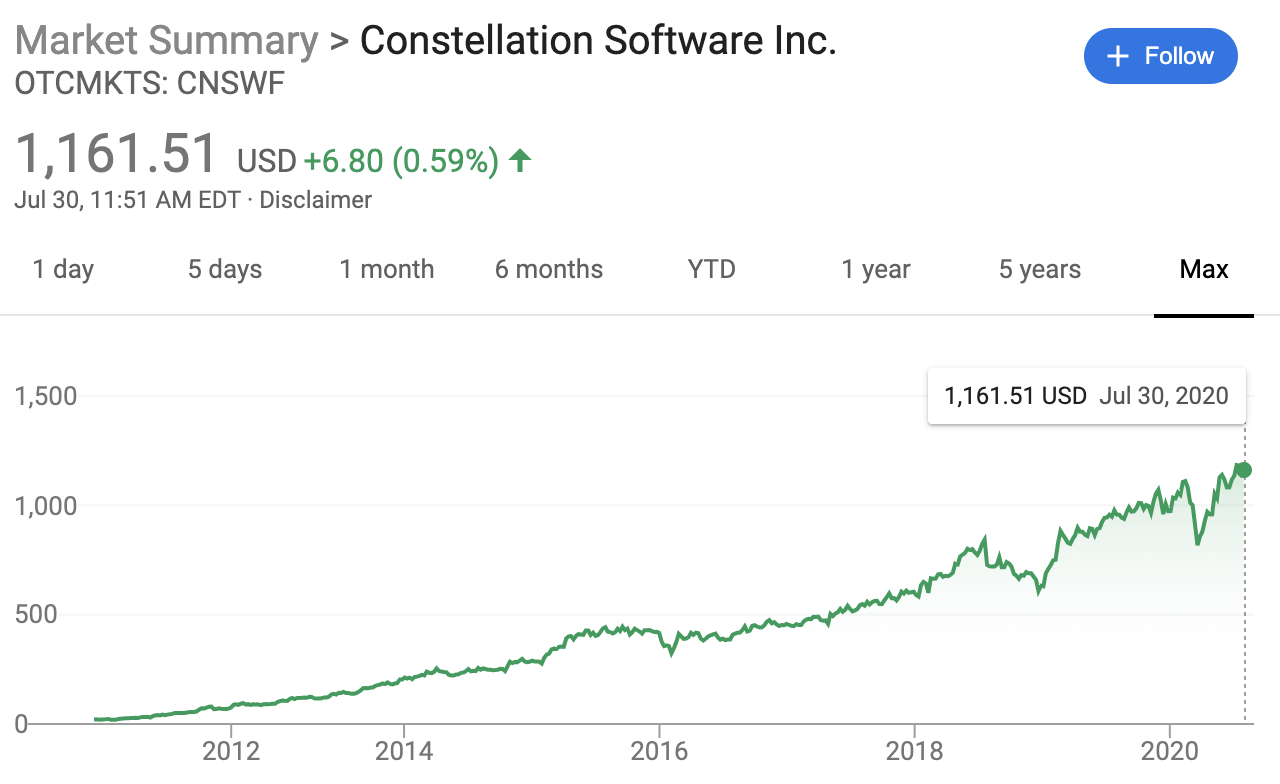
If you were trying to understand a new business for the first time, and had to do so by reading a series of summaries about on 5 fixed topic areas, what topics would you choose? Straw man: -product -distribution -industry map -sources of power/moat -financial statement snapshot
Jul 30, 2020hey emerging fund managers & aspiring VC general partners (esp underrepresented people) 👋 tonight, I have special thread for you on how to form a VC firm - inspired by @ChrisHarveyEsq (who also gave me suggestions on my pinned term sheet thread)...[a thread] first, legally, anybody can be a venture capitalist. there are minor exceptions (e.g., underage, certain felons, bad actors) but you don’t need to be licensed or even ~accredited~ investors to issue interests out of your own fund. and yet, only 13% of vc firms have a womxn partner. only 3.22% of vc firms have a Latinx womxn partner. only .67% of vc firms have a Black womxn partner. if almost anyone can be a VC, why are these demographics SO skewed? as @km explains, venture capital is a capacity constrained industry. all vc $$ is sourced from a select group of limited partners(family offices, pension funds, university endowments, and hnw individuals) that allocate a small % of their overall wealth to VCs. so, as an aspiring fund manager - what does setting up a VC firm cost, actually? according to Chris, avg cost to form a vc fund is $222,000. there's two options: hire a law firm if you're planning on accepting institutional funds(50-250K) or use a third party(5-10K+1.5-5% of $) these third party providers have recently allowed a lot of people who don't want huge upfront legal bills to start vc investing faster. some examples include @AngelList syndicates & rolling venture funds(like @shl's), http://Assure.co, and @cartainc's SPV formation. to get started, you'll file administrative paperwork like Form ADV for Exempt Reporting Advisers, and certain disclosure docs: Form Ds & Blue Sky filings. vcs have often been formed as limited partnerships, but now are increasingly being structured as series LLC/LPs. most common legal requirements of a fund concern the regulatory issues of its investors. for ex: all LPs must be considered accredited investors(nw 1m+ or a 200k income). additionally, vc funds over $10m are limited to 100 investors, while funds under $10m are limited to 250. for more info, check out @ChrisHarveyEsq's wonderful article "Three Ways to Launch a Venture Capital Fund" or DM him directly. I'm rooting for y'all!! https://lawofvc.com/2020/07/28/three-ways-to-form-a-venture-capital-fund/ **Her follow-up reply to Noah Sobel-Pressman,** who noted many aspiring GPs lack the savings for the 1–2% GP commitment: > @NSobelPressman @ChrisHarveyEsq ohhh yes, i learned a lot about this from @tylertringas's thread on GP commitments: https://x.com/tylertringas/status/1268743729084542983?s=20
Jul 30, 2020"The search for the next Chris Sacca” by @paul_d_andersen https://t.co/IyecJ1rqWa https://t.co/5AZJL7X0fz **Links in this post** (t.co shortlinks resolved 2026-09-29): - `https://t.co/IyecJ1rqWa` → https://thecuriousinvestor.substack.com/p/the-hunt-for-the-next-chris-sacca - `https://t.co/5AZJL7X0fz` → https://twitter.com/rrhoover/status/1287838207908839424/photo/1
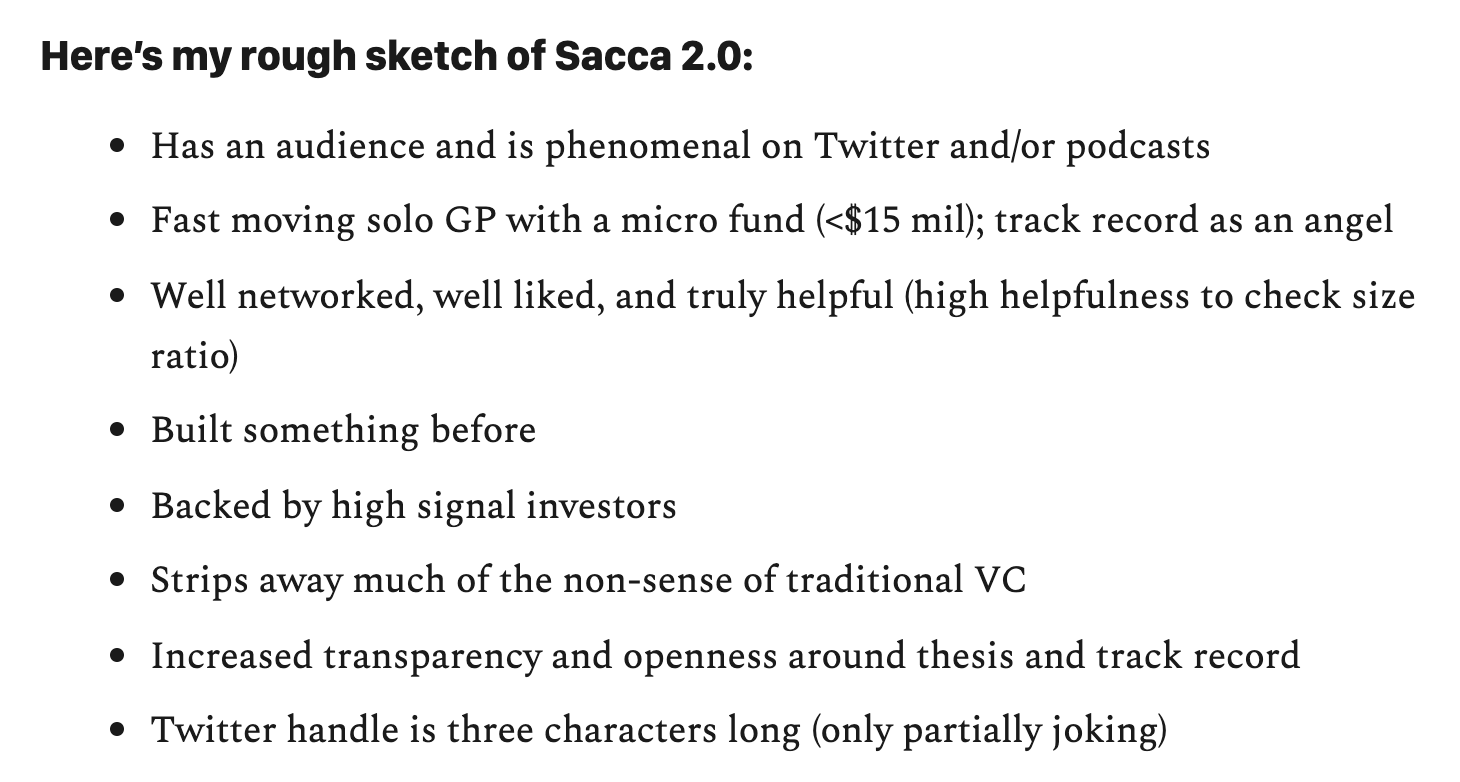
1/ Get a cup of coffee. In this thread, I'll help you work out how much money you need to retire. 2/ The goal is simple. You want to accumulate a *large* portfolio of assets. How large? Well, you should be able to quit your job. And you and your family should be able to live comfortably for decades -- just off of the income generated by this portfolio. 3/ This is the crux of the "FIRE" movement. FIRE stands for "Financially Independent, Retired Early". The basic philosophy is: keep your spending needs low. Save a large portion of your income. Invest these savings. With luck, you'll be able to retire early. 4/ FIRE advocates have a rule they love to cite: the 4% rule. The 4% rule says: your annual expenses in retirement should not exceed 4% of your portfolio. You can use this rule to calculate how large a portfolio you need to accumulate before you can quit your job and retire. https://t.co/0ty3PkruEE 5/ For example, suppose you and your family need $40K/year to live comfortably in retirement. Then you need to accumulate a portfolio that's at least $1M. Another way to say this is: your portfolio should be at least 25 times your annual expenses in retirement. https://t.co/hDBhKXirMk 6/ Here's the simple logic behind the 4% rule. Suppose your retirement portfolio is a well-diversified basket of stocks, like the S&P 500. Historically, such a basket of stocks has returned ~7% per year, plus ~2% in dividends. This is a total return of ~9%. 7/ Assuming your annual expenses grow at ~2% per year (roughly the rate of inflation), your portfolio -- which is growing much faster at ~9% per year -- should have no trouble financing your expenses in perpetuity. This means you'll never run out of money. 8/ Let's flesh this out in some detail. Say you retire on Dec 31 2020. Your annual expenses are $40K. Following the 4% rule, you've amassed a $1M portfolio. On Dec 31 2020, say you withdraw from your portfolio the entire $40K you need for 2021. Your portfolio is now $960K. 9/ Fast forward 1 year. It's Dec 31 2021. Your $960K portfolio has grown by 7%. It's now worth $1,027,200. In addition, you have $19,200 cash in your brokerage account: the 2% dividend your $960K has earned in 2021. So your total portfolio worth is $1,046,400. 10/ Assuming ~2% inflation, your expenses for 2022 will be $40,800, which again you withdraw from your portfolio. But note this: the second withdrawal is *not* 4% of your portfolio any more. It's only ~3.9%. 11/ That's the best case scenario for the 4% rule: over time, your withdrawals become smaller and smaller fractions of your portfolio. And it's exactly what happens if your stocks grow at a steady 7% while giving you a steady 2% dividend yield, and inflation is contained at 2%. 12/ Here's a simulation of the first 20 years of your retirement under the "7% growth, 2% dividend, 2% inflation" scenario. As you can see, everything is hunky dory. By 2040, your withdrawals are just 1.96% of your portfolio. And your portfolio itself has grown to nearly $3M! https://t.co/YnaOCqAzTP 13/ And here's a plot showing the first 50 years of your retirement in this scenario. The plot has 1 bar for each year. The orange portion of each bar (which you can hardly see) is your annual withdrawal. The blue portion is your portfolio's worth after this withdrawal. https://t.co/o4gvaC2JHr 14/ So it's settled then? You just have to follow the 4% rule. Just accumulate a portfolio that's 25 times your annual expenses. And you can retire on it. Right? Not so fast. 15/ Returns from stocks are anything but steady. Dividend yields are anything but steady. Inflation is anything but steady. We can't make a major retirement decision based on assuming a steady (7%, 2%, 2%) for these parameters. That would be foolhardy. 16/ Luckily for us, we have Prof. Robert Shiller (@RobertJShiller). Prof. Shiller has painstakingly accumulated historical data on US stock market returns, dividends, and inflation -- going back all the way to 1871! And he's made it freely available: https://t.co/c5QJv7RJgc 17/ With this data, we can "backtest" the 4% rule. Imagine a guy named Joe who retired at the end of 1969 -- about 50 years ago. Joe's annual expenses at the time were about $5,870. This is the equivalent of $40K now. 18/ Following the 4% rule, Joe saved up a stock portfolio worth ~$147K in 1969. He then quit his job and retired. Since 1969, at the end of each year, Joe would estimate his expenses for the next year (which would invariably be higher than the previous year due to inflation). 19/ Joe would then withdraw this sum from his portfolio, leaving the rest to earn dividends and appreciate over time. Some years, stocks would go up -- taking Joe's portfolio higher. Other years they would go down. But Joe kept his entire portfolio in stocks the entire time. 20/ The question is: how did Joe's retirement portfolio do over time? Did he ever come close to running out of money? Here's a simulation of Joe's portfolio over time. As you can see, in 50 years of retirement, he never once came close to running out of money. https://t.co/yPzeLSMYnx 21/ So that settles it, right? The FIRE people are advocating for the 4% rule. Our own simulations -- both the steady (7%, 2%, 2%) scenario and the historical backtest since 1969 -- seem to agree. So we can conclude that the 4% rule works, right? Again, not so fast. 22/ What if Joe had retired in 1972 instead of 1969? In this case, I'm sorry to say: the 4% rule would have failed Joe. He would have run out of money in 2008. https://t.co/BijqXK1Qvx 23/ In fact, I ran simulations going all the way back to 1871. I found 13 instances where the 4% rule would have failed Joe: https://t.co/orUH5cGFCi 24/ Key lesson: The early years of retirement are crucial. A combination of high inflation and poor portfolio performance in the early years can really hurt you and cause you to run out of money later on. 25/ For example, when Joe retired in 1972, he did not know that a big stock market crash was coming in 1973 and 1974. This crash, combined with inflation, caused Joe's withdrawals to creep up to higher and higher fractions of his portfolio -- until he was eventually bankrupted. 26/ Given that the 4% rule fails sometimes, what's the solution? Well, there's the 3% rule: you save up enough so that your annual expenses are just 3% of your portfolio. This is clearly more conservative than the 4% rule. Or you can go for the 2% rule. Or 1%. Or 0.5%. https://t.co/XNVgzLT09l 27/ When I backtested Joe's retirement using the rules above, I found zero instances where a 3% or better rule would have failed Joe. For example, here's the backtest for Joe's 1972 retirement following the 3% rule -- a case where the 4% rule would have failed him. https://t.co/1Rwg8b8J2j 28/ This is not to say that a 3% or better rule can never fail. It's just never failed in the past (or at least, as far as we backtested). But of course, when we look to retire, we're planning for the *future*. Not the past. So how do *we* decide which rule to follow? 29/ One approach is to run a "stress test". This is an application of Charlie Munger's recommendation to "invert, always invert". We figure out under what conditions we can run out of money in retirement. And then, which rule will not fail us even under those conditions. 30/ We already know that the early years are crucial to retirement portfolios. So we'll assume that stocks will do really badly in the early years of our retirement. What's the worst that stocks have done in the past? Here's a table: https://t.co/ODKcOsKUVE 31/ For our stress test, we'll assume that in our first year of retirement, stocks will deliver the worst 1-year return in history. And in our first 2 years of retirement, they'll deliver the worst 2-year return in history. And so on, for the first 20 years. 32/ After 20 years, let's assume 7% steady returns (although we can be more conservative here as well). And we'll assume a 2% dividend yield throughout. Also, we know that the Fed wants to keep inflation at 2%. So we'll be conservative and assume that inflation will be 4%. 33/ How well do our rules serve us in this stress test? Well, the 4% rule runs out of money in 10 years. The 3% rule runs out in 13 years. The 2% rule runs out in 20 years. The 1% rule never runs out. https://t.co/hKA1Bn1CbV 34/ I'm a conservative person. So I like the 1% rule. This is also backed by our simple stress test. But I do understand that the 1% rule is not easy: it requires saving up 4 times as much as the 4% rule advocates. This is a $4M portfolio for $40K in annual expenses. 35/ But when it comes to retirement, it's far better to overshoot than undershoot. You do not want to run out of money in old age. And even if it turns out you've been too conservative, that's not so bad. You get to do more charity, leave more money to your kids, etc. 36/ I'll leave you with some useful resources. For anything related to the FIRE movement, @mrmoneymustache and @RootofGoodBlog are good accounts to follow. I also like @rationalwalk, who sometimes posts about the pitfalls of the 4% rule. 37/ @RobertJShiller has done a lot of great work on historical stock market performance, inflation, etc. It's his data I used for running the backtests in this thread. His book, Irrational Exuberance, is particularly good: https://t.co/AOd805hJQb 38/ And you can't beat Charlie Munger for general investing wisdom, weathering the volatility of stocks, the "invert" principle, and a very practical "bag of tricks", as he calls it in this Feb 2020 video (~1 hr, 12 mins): https://t.co/AvBf3EX1YV 39/ Thanks for reading. Enjoy your weekend! And all the very best for a wonderful retirement, free of financial worry. /End
Jul 25, 2020The potential power of adopting a cross customer perspective via @ericvishria https://t.co/0NL9NGzvvQ This commentary is in regards to SaaS, but it's equally as interesting (IMO) if you imagine the same framework but think of VCs as the vendor and startups as the customer... https://t.co/MBmACq3dDj **Links in this post** (t.co shortlinks resolved 2026-09-29): - `https://t.co/0NL9NGzvvQ` → https://investorfieldguide.com/eric-vishria-the-past-present-and-future-of-saas-software/ - `https://t.co/MBmACq3dDj` → https://twitter.com/LennyIce/status/1287102702061850624/photo/1
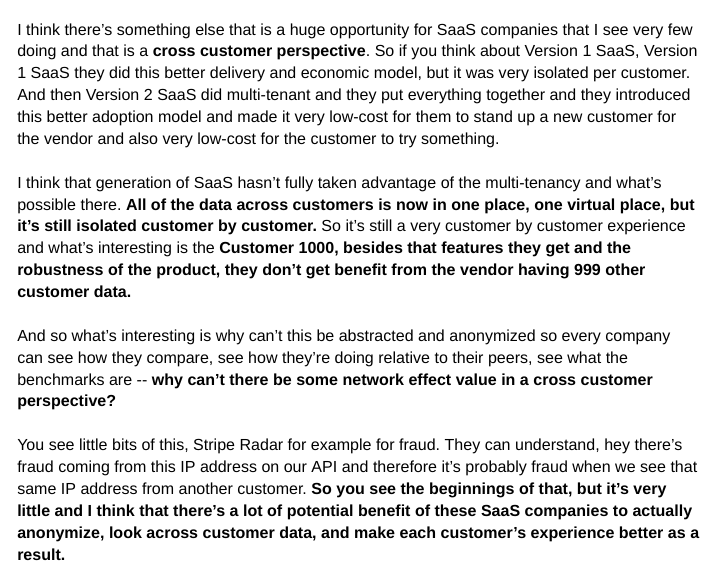
last year, a founder told me that there were two main ways to get into VC: 1. be an entrepreneur and have a successful exit. 2. go to harvard/stanford, do investment banking, then private equity, then VC. he paused and said, there's one more option: crawl through a window.
Jul 23, 2020Like 2 yrs ago, I pitched @patrick_oshag on appearing on his show. He declined, bc, he said: What you're doing is a biz, but it's not investing. 100% true. What we have is a repeatable process for deploying $ in LA multifam at ⬆️ levered yields. LPs are the investors, not us.
Jul 22, 2020When raising capital you want to find investors who believe in your investment methodolgy. The last thing you want is an investor who does not agree with how you invest their money.
Jul 21, 20201/ Been reflecting on 10+ years on the buy side. A few observations.... 2/ Institutional investors spend as much time managing people/the team as they do money. Not surprisingly some of the best all-time track records come from solo investors 3/ Constraints decrease returns. Investing in a vacuum is doable. Restricting number of holdings, position size, market cap, geography, “style” and liquidity all reduce returns. 4/ There are a lot of people to please - clients, potential clients, bosses, consultants, sell-side research firms expecting commissions - and they all have different motivations/expectations. This makes it incredibly difficult to focus. 5/ Portfolio managers spend a lot more time than I expected staring at a Factset screen with their live portfolio performance and asking junior folks questions about why a stock is moving up/down that day. 6/ Companies that are large index weights and performing well are incredibly seductive. I frequently saw PMs “neutral weight” these stocks just to stop the pain from watching them outperform every day. 7/ The pressure to “do something”, especially when behind the performance eight-ball, was also immense. 8/ Technical analysis was used far more than people would admit publicly. 9/ Hardly anyone read SEC filings. Info in the 10k, q’s, proxy statements was assumed to be well-known. Ironic. 10/ Performance was generally measured on a calendar year basis b/c this is what comp came back to. 11/ Incentives drive behavior. Full-stop. The risk PMs most worry about is career risk. 12/ The best investors asked the best questions. Often after not saying a word for the first 55 minutes of an hour-long meeting. 13/ It is easy to overestimate the amount of knowledge a person can have about a firm when looking from the outside in. Every interaction with investor relations, expert networks and executives is choreographed and provides a false sense of obtaining unique perspective. 14/ A favorite metric is expense ratio / active share. This simple yet powerful number helps investors determine how much they are paying for potential alpha. 15/ Time horizons shrink under stress which is precisely when one can get paid for extending them. 16/ The biggest mistake was investors not differentiating between fundamentals and expectations. Mauboussin has written about this extensively. 17/ end. ✌️
Jul 19, 2020Last week @theSamParr shared Gymshark's financials. They're very impressive, but what stood out the most to me was the £53m cash pile. How could a bootstrapped eComm company w/ rapid growth have this much cash? Answer: a negative cash conversion cycle. Here's how it works 👇 Cash conversion cycle (CCC) is a measure of how many days it takes for a biz to turn invested cash (usually purchased inventory) back into cash in its bank account. The formula is: Days Inventory + Days AR - Days AP Gymshark's CCC is -101 days. $AMZN = -21 days $WMT = 2 days A negative CCC means that your vendors finance your operations & no extra cash needs to be invested as you grow. But most eComm businesses have CCC's between 40 to 100 days. If you sell $3k/day, that means $120k-300k cash is stuck in operations, instead of in your bank account. Optimizing your CCC is the difference between your growing eComm business being cash-rich vs. cash-poor. There are 3 levers you can pull to improve CCC: 1) Increase accounts payable 2) Reduce accounts receivable 3) Reduce inventory Increase accounts payable Most eCommerce businesses have 30 days or less to pay their vendors. Don't settle for that, constantly ask for better terms/more credit. Gymshark’s days payable is 163, which means that on average their vendors give them 163 days to pay their bills! Reduce accounts receivable eComm businesses typically don't have AR (your paid upfront). But's its possible to have negative AR by: 1) Taking preorders for new product 2) Batch ordering/dropshipping product only after receiving customer orders 3) Annual memberships sold upfront Reduce inventory Biggest source of cash drain for an eComm biz. You want to sell ordered inventory before your vendor bill is due (thats how you get a negative CCC). 1) Reduce # of SKUs you hold 2) Ask vendors to set inventory aside for you to order frequently (batch ordering). Many people see Gymshark as a company with amazing marketing and great leadership. But after seeing their financials, it’s obvious that they’re also a company with incredible financial management. More on CCC here (including formulas/calculators): https://t.co/CKbyit2of7 A lot of comments here: “vendor debt is still debt” Yes that’s true, but I’d take vendor debt over traditional debt any day (esp as a small biz owner). -no personal guarantee -no interest -no assets collateralized -flexible as a grow -much easier to negotiate Another common Q: “if you have the cash, why not just pay the vendor debts?” Cash gives you options, and vendor debt is very borrower-friendly. Why aren’t $AMZN (CCC -21 days) and $AAPL (CCC -48 days) paying down theirs? It’s not like they don’t have the cash. Common Q: “how can I implement this asap?” Sorry, I didn’t mean to make it sound easy to achieve neg CCC (my eCom biz isn’t there). It’s really hard and takes a lot of time and effort. But you should always be working towards it. Your business needs to be the linchpin in your supply chain. You need to have influence over your customers/suppliers in order to dictate terms. Customer influence - Tesla mass pre-orders, Supreme selling drops asap Supplier influence - Walmart/Amazon manhandling their vendors Common Q: “how do I get my vendor to extend terms?” You need to treat your vendor like an investor, because you’re basically asking them to invest in your biz. -Pitch them on your vision -Show them your plan for rapid growth -Show them potential sales -Develop the relationship
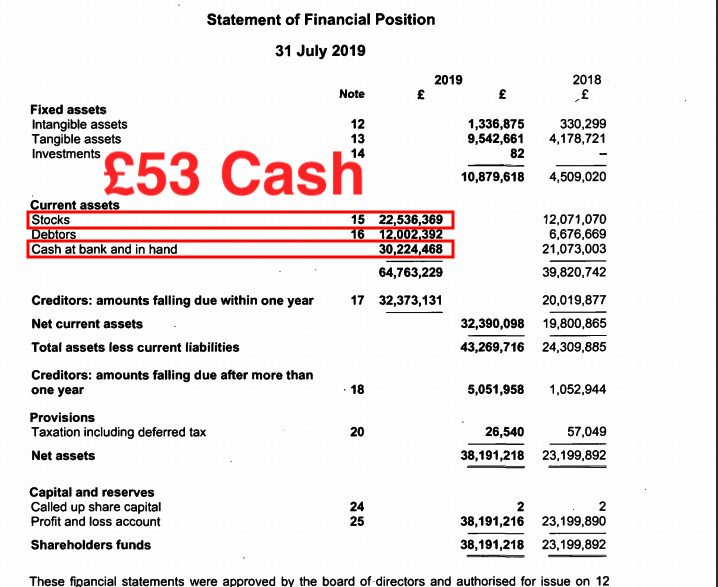
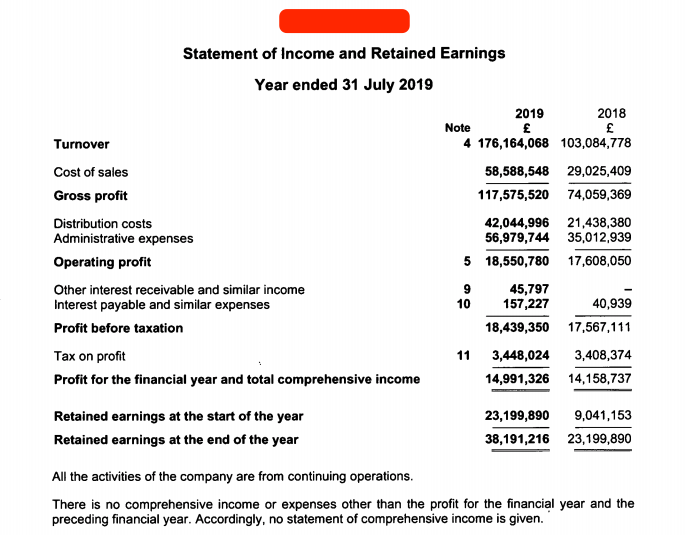
Firmly believe the most certain path to building a high net worth ($10M plus) is buying a small business at a relatively young age. Here’s a model: Find a small company to acquire before you turn 40 (ideally way before but honestly way after is fine too...who really cares?). Key is to look at opportunities under ~$7M in total capitalization. Why? SBA loans are the govt’s gift to individuals that can endure a paperwork decathalon and stomach a few years of a PG. Said loans have a $5M limit but w/ equity and seller paper, $7M deal (or more) is doable. For argument’s sake, let’s consider a $4M deal (can scale this down to a more comfortable size if desired). Assuming a bargain is foolish so let’s say you pay 5x ebitda for a good business that includes plenty of working capital. You are the proud new owner of a company earning $800k before debt service. What does the financing look like? You will borrow 70-90% for your SBA lender, 5-25% from the exiting owner, and kick in 5-10% yourself. But I don’t have $200-400k to kick in so this isn’t for me? 😢 Not true, you can easily raise this from investors and retain majority ownership in the business. 😍 Let’s assume you only need $200k (5%). You should be able to part with 15% or less of the equity depending on structure. To recap, you’re out of pocket $0 and own 85%+ of a pretty legit small company (with lots of leverage...there’s no totally free lunch). Between salary and cash flow, you should pull down $250k+/year in personal earnings depending on terms with your equity investor. The terms on your SBA note and seller note will be relatively similar on a monthly basis (maturities might vary). Generally, 10 year am at 6%. So, ~$500k in total debt service with $800k in EBITDA. What does it look like in 10 years? No growth and your 85% is $3.4M, keep up with inflation - $4.5M, double the company - $6.8M. The scenarios here are fairly endless but all good as long as you slog through the 10 years of SBA pay down. Those 10 years are still at a pretty damn good pay for the record. 💰 At that point, take the $500k in annual savings and afford yourself a little lifestyle inflation (meaning $500k+ per year for lifestyle) and invest the rest in more conservative things so your business could die and it wouldn’t crush your net worth. At $300k per year in outside investing, you’ll build a quite significant nest egg beyond your business in 10-15 years. Start to finish on whole plan? 20+ years. So, best to start before 40 (or as early as possible). However, someone as old as 55 or 60 could do this on an accelerated basis and still have enough time to enjoy the spoils. I think $10M is actually a pretty low estimate of the net worth one can build through this strategy if pursued relatively young. I’m practicing what I preach - my wife and I both run small companies we purchased essentially as outlined above (one started a bit smaller and has no investors).
Jul 13, 2020Fundraising tip for emerging VCs: LPs want differentiation, but not TOO much differentiation. Too many moving parts that are foreign in a story almost always impede securing allocations. Differentiate, but focus on 1-2 things that you well and that matter.
Jul 10, 2020Hard to look at these numbers and not conclude: 1/ Turnover in/out of "top quartile" justifies treating VC as an asset class 2/ As an asset class, it provides unacceptable risk-adjusted returns LPs should demand a serious re-think in the way we fund technology entrepreneurs.
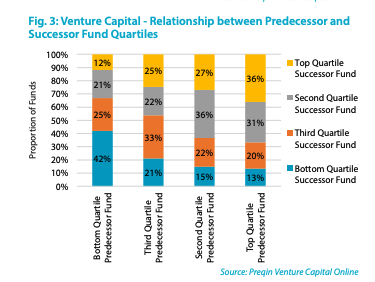
(Lots of new followers, so:) I run Adaptive Realty, which buys, renovates and manages apt buildings in Los Angeles. Have done ~100 buildings in last 10 yrs. Now have ~$110MM AUM. We're weird: - Total transformations (not lipstick on pigs) - Use v little debt - Hold permanently
Jul 3, 2020If 2010 decade was about rise of new/seed VC funds - Felicis, Initialized, Costanoa, Uncork, Freestyle, etc. (too many to list, don't @ me!) - then this forthcoming decade may be about LPs backing individuals w/ huge funds who compete directly w/ traditional VC firms @ A/B stage.
Jul 2, 2020In my experience, many family offices believe they need to worry more about vetting ideas instead of finding ideas. They would probably be better at diligence and have a better feel for good deals if they put more resources into finding potential investments and partners.
Jul 1, 2020Teledyne was one of the OGs to use scouts 😎 Closest today I can think of is run by @BrentBeshore at @PermanentEquity @sequoia was the first in the venture space (h/t @Jason + @roelofbotha) Who else? Side note: would love to see Sequoia’s portcos as branches on a Sequoia 🤣 https://t.co/thVow7SivM
Jun 28, 20201/ Thread: The Wisdom of Crowd In 2007, @mjmauboussin wrote a paper on the wisdom of crowd, and showed with simple maths and experiments why the crowd can trump individuals. Some of the takeaways were VERY counterintuitive and it materially influenced my thinking. 2/ In the game show “Who wants to be a Millionaire”, contestants can choose to see audience poll or consult with an expert if he/she is unsure on a question. Audience was right 90% of the time. The expert?~67%. 3/ Even if a very small number of individuals know the answer, the crowd will lean to the correct answer. Why? Scott Page in his book “The Difference” explains the rationale with a very simple example. 4/ Imagine this question was asked to a random crowd: Which person from the following list was not a member of the Monkees (a 1960s pop band)? (A) Peter Tork (B) Davy Jones (C) Roger Noll (D) Michael Nesmith The answer is Roger Noll. 5/ Now imagine a crowd of 100 with knowledge distributed as follows: 7 know all 3 of the Monkees 10 know 2 of the Monkees 15 know 1 of the Monkees 68 have no clue So <10% knows the answer, and over 2/3rd have no idea on the topic. Assume those who have no clue pick randomly. 6/ So what happens in this experiment? 7 who know all the Monkees vote Noll 5/10 who know 2 of the Monkees will vote Noll 5/15 who know 1 of the Monkees will vote Noll 17/68 clueless will vote Noll The correct answer will get 34 votes whereas the other choices will get 22 each. 7/ But not all problems/questions fit this type. There are mostly three kinds of problems: I. Some people in the crowd know the answer while many, if not most, don’t. II. The second is a state estimation problem, where one person knows the answer but the group does not... 8/ III. There is a prediction problem, where the answer has yet to be revealed. The first example addresses the first type of problem just discussed. Let’s discuss the other two now. 9/ Experiment 2: You fill a jar with jellybeans and ask a group of people to guess how many jellybeans there is. Mauboussin did this experiment a number of times at Columbia. He shared the 2007 results and mentioned the result is remarkably consistent every year. 10/ The avg. guess of the class was 1,151. The actual number was 1,116, so avg guess was ~3% shy of the actual. Here’s what truly shocked me: Only 2 out of 73 people guessed better than average. 11/ This can be so counterintuitive that you may want to spend the next minute looking at the table. Just understand the simple math behind it. 12/ Three big takeaways from this: I. Diverse crowd will always predict more accurately than the average individual. So the crowd predicts better than the people in it. Not sometimes. ALWAYS. 13/ II. Collective predictive ability is equal parts accuracy and diversity. You can reduce collective error by either increasing accuracy by a unit or by increasing diversity by a unit. Both are essential. 14/ III. The collective is often better than even the best of the individuals. So a diverse collective always beats the average individual, and frequently beats everyone. If it’s still counterintuitive, spend another minute on that table. 15/ Experiment 3: See the image for the rules of this experiment. The consensus got 11/12 right. 2 students got 9/12 (best performance). The avg student got 5/12. 16/ Again, the crowd was much wiser than everyone else! This was sort of a combination of experiment 1+2. Some people have better knowledge on pop-culture, and greater diversity of the crowd led to the correct prediction at a higher rate than anyone else. 17/ One caveat about diversity: While we mostly focus on social diversity (race, gender etc.) and there is indeed high correlation between social identity diversity and cognitive diversity, the actual benefit of diversity stems from cognitive diversity. End/ Mauboussin also noted that it’s a complicated topic and we certainly don’t understand all aspects of the wisdom of the market. It is a fascinating read nonetheless. Happy weekend! Link: https://t.co/t3iLMiy7yp
Jun 26, 2020~ New Essay ~ How to Identify Underrated Markets ① Audience skews “young” ② Engagement <> monetization gap ③ Artificial barriers to scale Why video games, micromobility, & creators are underrated + lessons from Howard Marks & Facebook's Series D. https://t.co/FglVu6GJU6 How to identify underrated market opportunities: ① Audience skews "young", flaky, and cheap in markets so small they look like "toys". ↳ Snap's confounding UX ↳ Slack, Stripe, and Carta scaling alongside startup customers https://t.co/FglVu6GJU6 How to identify underrated market opportunities: ② Engagement <> monetization gap as companies seek scale before monetization or b/c early adopters aren't "traditionally" valuable. ↳ DST's "Secret Spreadsheet" on Facebook. Incredible story! https://t.co/FglVu6GJU6 How to identify underrated market opportunities: ③ Artificial barriers to scale rooted in compounding "accumulated accidents" that lock in suboptimal market dynamics and customer misalignment. ↳ Video Games ↳ Micromobility ↳ Creator Economy ↳ Audio https://t.co/FglVu6GJU6
Jun 25, 2020**1/** Over the past few years, Holly and I have been trying to figure out how to do philanthropy effectively. We've made donations to various charities, but been frustrated by an inability to point at any tangible results from our donations. It just kind of....goes into the abyss... **2/** We know it probably helped somebody, but it kind of feels like a drop in the bucket. We want our philanthropy to have a sense of purpose and to be able to know with confidence we are making tangible change. Who'd have thought giving money away would be hard? **3/** Generally, the options are: 1. Donate to large charities (no sense that you really made an impact, no way to point to any specific results). 2. Do it yourself and hire a team to vet individual opportunities (which is expensive and eats into amount you can give). **4/** We figured screw it, we'll do it our way, and started our own foundation. We call it The Tiny Foundation :-) **5/** Holly and I care about a lot of different topics. A few that are top of mind include funding science, journalism, social justice, and child protection. We realize that hiring experts in all those areas to ensure we were giving money away effectively would cost a fortune... **6/** And we want the maximum amount to go to the causes themselves. So, we decided to do something really simple: Just give money to people we admired and let them decide. **7/** Each year The Tiny Foundation will give sizeable grants ($50k-$1MM) to people whose work we admire and ask them to fund something important. It could be their own project. A colleague's. Something random they think is important. Anything that does good. It's that simple. **8/** For example: Our friend Dr. Rhonda Patrick (@foundmyfitness) is an accomplished scientist and educator (and one of the smartest people we know). We literally just texted her and said "Hey, we want to give you $100,000 to donate. You can fund anything you want." That's it. **9/** She knows better than we ever will what will make an impact in her space and who needs the money most. So, now we're funding a really cool study at UCSF by @DrAshleyMason around using whole body hyperthermia (using sauna) to treat clinical depression. **10/** We never would have thought of that, but it's amazing research. While most of our grants will be one-time donations to universities, researchers, and individuals causes and charities, we will also be making investments in for-profit entities that sustainably promote social good. **11/** Our first of these initiatives is our Tiny Journalism Fund, where we will be helping foster independent journalism in Canada. **12/** We think a strong independent press—especially doing investigative work—is key to the future of Canada. But we also worry that a donor model will result in organizations that are reliant on constant inflows from wealthy philanthropists like us. **13/** Ultimately, we believe that, given the incredible new slate of tools at their disposal (web, podcasting, newsletters, etc), independent journalism is financially viable again. Most just don't realize it yet. So we want to build some examples for everyone to look to... **14/** We want to invest in the best independent news organizations in Canada, get them to profitability, then reinvest any profits we earn into funding more and more great journalism. Our goal is to support 20+ independent Canadian news organizations over the next decade. **15/** Of course, we do not (and cannot) personally profit from this in any way. We also get zero influence over the organizations we invest in (non-voting shares, no editorial influence). **16/** So, on that note... I'm excited to announce that the Tiny Journalism Fund just made its first investment of $1,000,000 into @Canadaland. **17/** Canadaland is doing important work. Since 2013 they have been covering the Canadian media with a critical eye and broken many national stories. Most impressively: they have done it on a shoe-string budget, profitably supported by advertising and audience support. **18/** We are huge fans of Thunder Bay, their podcast series which investigated the deaths of seven youths in Thunder Bay, Ontario, revealing shoddy police investigations, and systemic racism, facing Indigenous youth, their families, and communities. **19/** Over the next three years, our investment will enable them to fund season 2 of Thunder Bay and significantly increase their budget for original reporting. We could not be more excited to help @CANADALAND get to the next level and give Canadian journalism a badly needed boost. **20/** Is there somebody who you think we should fund? Here's a few areas we are focused on: - Independent Journalism (especially in Canada) - Social Justice - Child Protection - Medical Research But open to anything. Learn more at https://tiny.foundation
2020-06-22Speaking of weekend builds... here’s one of my favorite passages from @moritzKBE on @sequoia’s best investments —they almost always started off as passion projects (Is this still true? @andrew__reed @stephzhan) @Mazzeo @bhwags @roadtrip_fm y’all are in some amazing company ✨ https://t.co/dpIeQ8AIR5 **Links in this post** (t.co shortlinks resolved 2026-09-26): - `https://t.co/dpIeQ8AIR5` → https://x.com/kevg1412/status/1274484624714940416
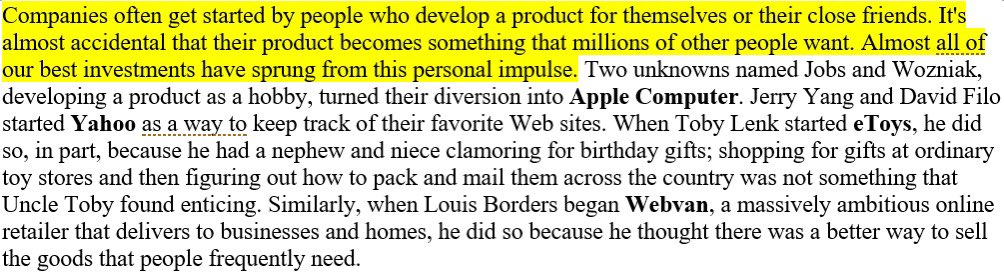
I really love reading through investment memos. - Ethan Kurzweil's Memo for Twitch & Periscope (seed stage) https://t.co/5aS8cAo0zk - Roelof Botha's Memo for YouTube (seed stage) https://t.co/CiXoxclF6e Those are the two most famous ones that I know of. Any others?
Jun 15, 2020Very cool. Here’s how top-tier VCs think through an investment. Screenshots from an Airbnb-related email exchange between @paulg and @fredwilson. -@david_perell https://t.co/EfjVHbzOGl
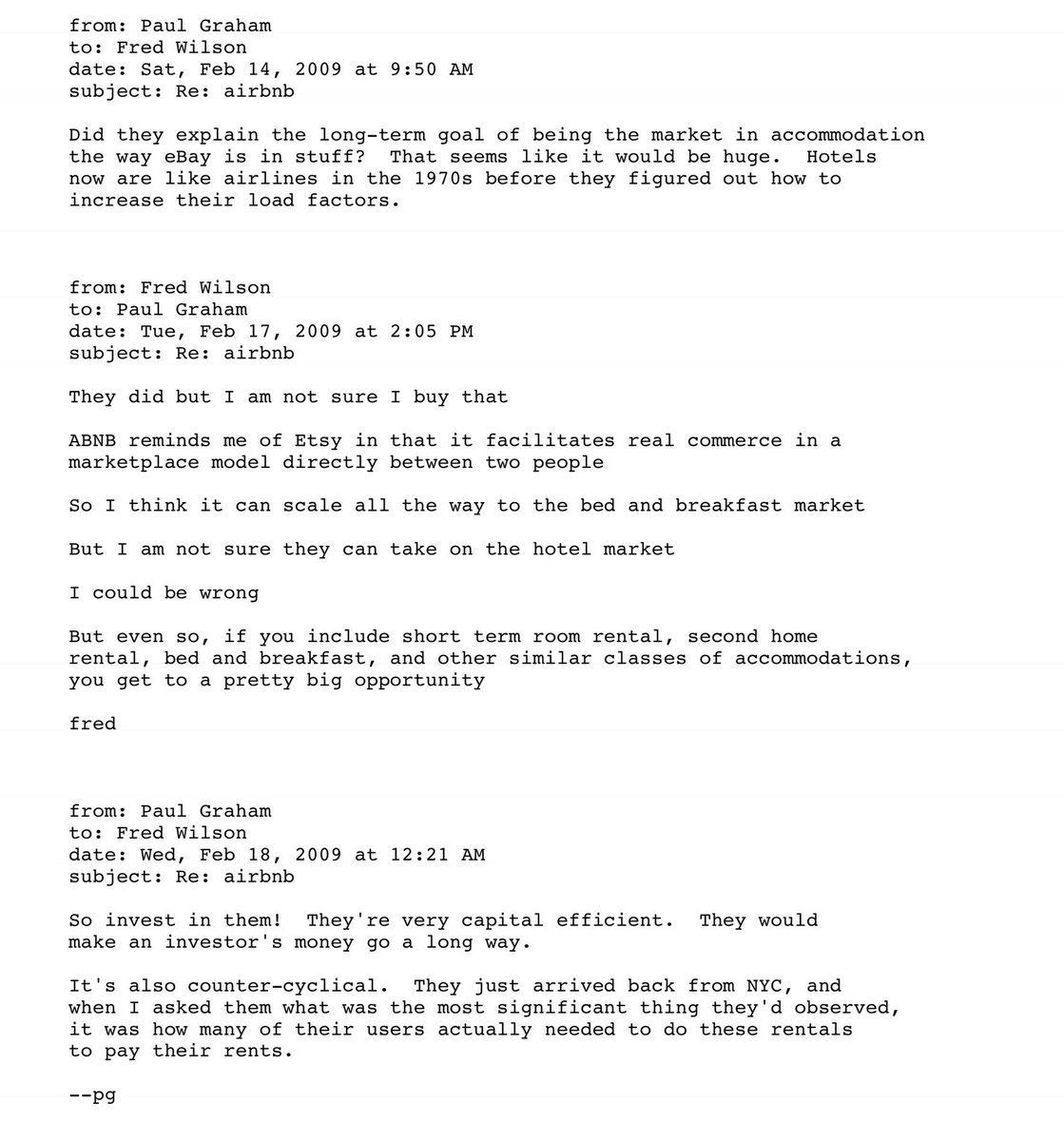

0/ Collection of long form writing on bundling, unbundling & rebundling 1/ Why is YouTube not as unbundled and verticalized as much as craigslist or lately zoom? https://t.co/hqA7R7HNXI 2/ Just as natural forces reshape landscapes over time, verticalization and unbundling are natural processes that have been observed whenever any business dominates a horizontal market by @OslundJJ https://t.co/e0bWHPb2Qx 3/ Evolution of utility tools; static & bundled > collaborative & unbundled > new paradigm & rebundled. What's the name for the 'new paradigm'? by @nbt https://t.co/F4S4ctvnQp 4/ Evolution of media industry; https://t.co/AHX2z43aoc 5/ The Spawn of craigslist; Andrew Parker's defining post about the "unbundling" of Craigslist where he outlined the opportunity to carve out niche products from broad horizontal networks like Craigslist https://t.co/gc4Ksbvxdu 6/ The Great Unbundling of Reddit; There is too much surface area for Reddit to possibly cover within constraints of subreddits. Major social platforms today are noisy. People have found refuge in groups by @gregisenberg https://t.co/rzhpmDQ8Zn 7/ Four myths of bundling; This doc represents a new framework for thinking about bundling. It is presented as a series of four "myths", each one followed by a new "thesis" statement @shishirmehrotra https://t.co/b82tOn2yfF Infrastructure APIs have made it easier for developers to design new video chat applications. The endpoint for verticalization of Zoom will be a no-code tool that gives users the power to design highly custom video apps for their use cases by @OslundJJ https://t.co/vodmjBAo0H 9/ thought from @benedictevans https://t.co/x9vP1pT79N 10/ unbundling of university @eriktorenberg https://t.co/r9Xye76EGh https://t.co/v8Dwg18Hze from the examples, looks like; - centralization/bundling around few players of fragmented market happens during disruption phase - verticalization/unbundling across multiple players around market themes happens during new normal phase https://t.co/6wrDLxXZtk 12/ the unbundling of the firm - the rise of One Person Companies (an underrated market) after outsourcing, cloud computing & mobile - allowing for more asset-light business models by @brettbivens https://t.co/2MLcBkw0BL 13/ everything bundle - an experimental curation by individual writers on substack > trying to outwork subscription fatigue - bundle and unbundle, bundle and unbundle, bundle and unbundle – but then generate profits on both @2PMinc https://t.co/XYgriCnwuU 14/ unbundling and re-bundling of work enabled by platforms and marketplaces > creating a sustainable self-employment ecosystem by @ljin18 https://t.co/hjqfTh98vr 14/ unbundling education - 1.0: learn by seeing > udemy, coursera - 2.0: learn by doing > codeacademy - 3.0: learn together > makerpad, superhi by @gregisenberg https://t.co/zNyeSyw7vH 15/ unbundling of traditional vc - syndicates, solo-capitalists, rolling funds - Investing is a sell-side product > Capital is a commodity - a term sheet is that you think the founder’s equity is worth more than your dollars by @marvinliao https://t.co/pZYIAz2xn9 16/ bundle economics can reduce deadweight loss via 'price discriminate' - benefit of decrease in demand variance - if 0 demand for most things, it’s a bad idea to force a bundle - information costs to figuring out > don't bundle disparate goods @nbashaw https://t.co/FP9O0TtFr0 17/ great unbundling of tv jobs; - once TV is broken up into the different “jobs” it has traditionally done for viewers different internet media players are unbundling it now (information, story telling, education, sports, escapism, ads) via @stratechery https://t.co/u46TmjLpru 18/ bundling impacts on demand curve - flatter demand curve lets sellers charge prices that capture larger areas under the curve (otherwise deadweight loss) and pass more surplus back to consumers @cdixon https://t.co/pHbT6ki92U 19/ at what point do the price & convenience of a horizontal company overpower the value of a vertical company? - unbundlers often fall into 'tam trap' - LinkedIn: unbundlers offering more tailored & valuable solns for learning & discovery by @rex_woodbury https://t.co/ayWBg3yugj YouTube: unbundlers monestized via subscription vs YT's ads - eBay: vertical commerce w/ valueadds like cus. service, status, personalization - chances are netflix unbundlers & work productivity apps will rebundle (stay organized, remove the noise) 20/ 'Retroactively bundling' a utility as close as possible to its functional use will make it more frequently used - apple maps on ios - ie on windows - payments on wechat by @gerstenzang https://t.co/yvMnlRA6pw 21/ Bundling Information Goods: Pricing, Profits, and Efficiency https://t.co/6KNdJpCRxW https://t.co/dSl86y1SWC Fintech hasn’t unbundled banking, it has "atomized" banking > the endgame of this atomization is to reduce every financial services function down to their most elementary version by @AlexH_Johnson https://t.co/4kf3r3mPK8 23/ BNPL > unbundling credit cards - transx networks vs retail-native product centered around e-commerce - intersection of payments business, merchant marketing & unsecured consumer lending - hybrid of credit (spending) & debit card (budgeting) @nansterio https://t.co/5ZXW1sbOvJ unbundling of college - an uncoupling of learning and community by @rex_woodbury https://t.co/uNQn38dBFi 25/ Magna Carta Moment in VC The influence within venture has progressively decentralized away from the core brand into renegades leveraging the power of their own brand by @kwharrison13 https://t.co/bz9WKs9B3p
Jun 8, 2020I recently had a lot of fun doing a Zoom interview with the @CSIMA_CBS at Columbia Business School. We discussed investing, Summer vs. Winter CEOs, “A Wizard of Earthsea,” lots more. Here is the video for anyone who is interested. https://t.co/VMyCTSdTX1
May 17, 2020> And it’s sadly not that uncommon... I just heard two similar stories last month. Over the past 10 years, we’ve lost LITERAL YEARS of productivity engaging with PE firms and tire kicking corp dev teams. The process has to change: https://t.co/QYp32oES1y > > — **Andrew Wilkinson** (@awilkinson), 2020-05-11 <!-- The saved tweet is part of a 7-tweet thread. The syndication endpoint returns only the head tweet and clips it at ~280 characters, so the full thread was unrolled from threadreaderapp.com and read through the rendered page rather than scraped — the raw HTML there also carries the author's *other* threads, which a regex pass silently mixed in. -->
2020-05-111/Getting inst. LP capital for an emerging VC firm is often a really hard hurdle. Those that do usually raise more $, have more stability in their LP base across funds (thus higher % more time w/founders vs. always needed to backfill LPs). But there is a major issue/ 2/ Inst. LPs typically back first time funds whose managers came from institutional shops. Understandably, but what's the problem? 3/ We talk about diversity of thought and diversity in general (POC, gender, etc.) but many inst. firms have just started actively hiring those with diff backgrounds. 4/The problem is there are only so many @chudson @aileenlee who have track records, meaning that many that POC and female VCs are left out in the cold with inst. investors for 3-6 years (and in this frigid environment, it's even harder). 5/If we truly believe venture requires diversity of thought to achieve great returns, than why aren't enough inst. investors taking the appropriate flyers on those entering the space that don't look/feel like the old archetype? 6/I get frustrated because I see some many talented female and POC investors that can't get inst. capital,but really have a unique lens. This is not to take away from others, but if we are really about returns and building(like @pmarca wrote about), we need inst. cap behind this 7/For those inst. investors that are willing to back first time managers that are diverse, I want to hear from you. DM me so we can help bridge this problem. My father was a 1st gen indian immigrant that started his own co in an industry that had no diversity. 8/Someone took a flyer and funded him, and was handsomely rewarded because brought a different view, absent of normal biases that existed in the business. This is important, and critical to our industry!
Apr 19, 20206/ Failure comes from a failure to imagine failure. More things can happen than will. “Yale & Yule”— a metaphor for the coveted but not copyable endowment model and the propensity for the rich to get richer... https://t.co/wQbqlti5oE
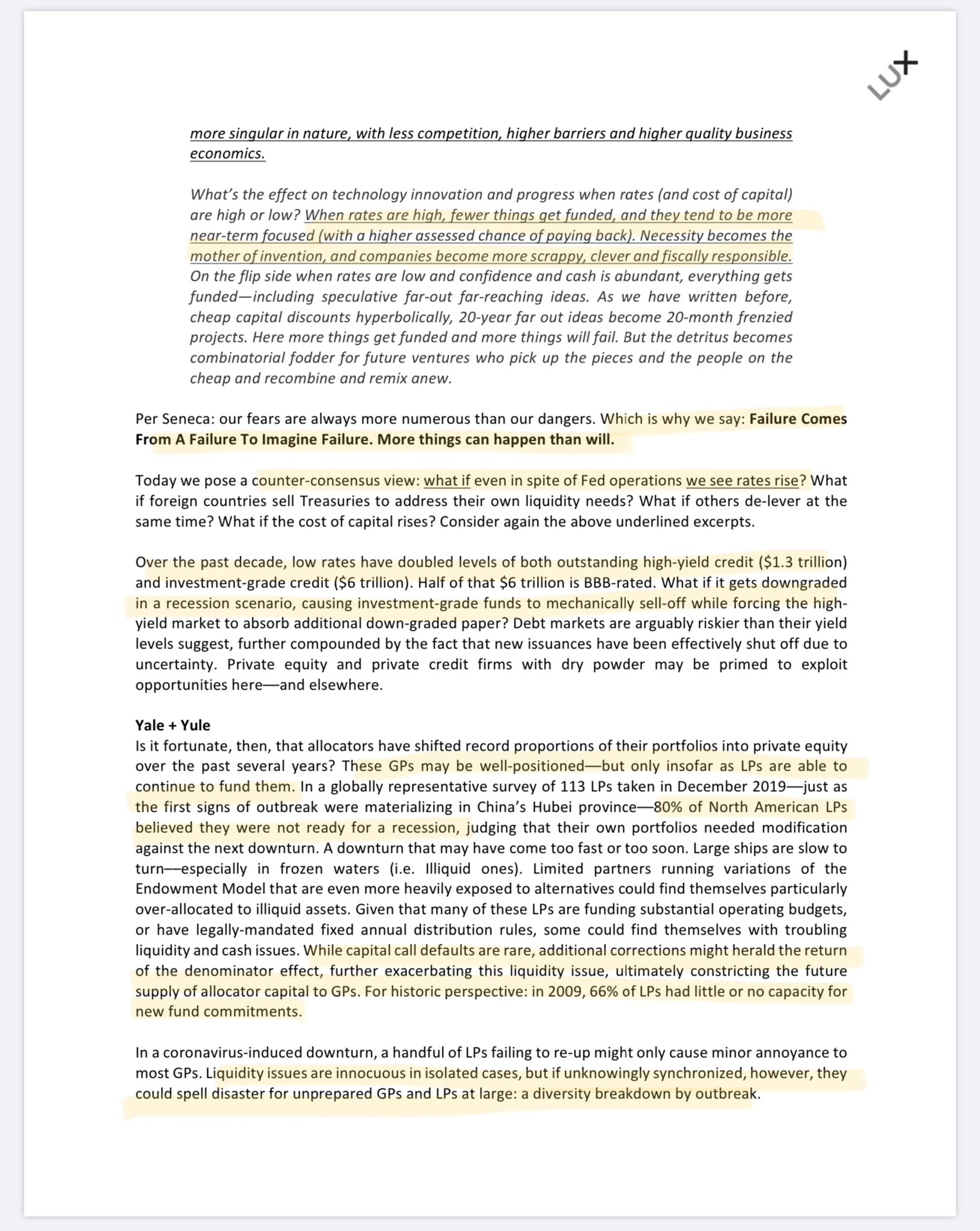
So many operators have told me they want to "build the next IAC" in the past year. They usually talk about buying small cash flowing SaaS companies & creating a shared services layer. None have been able to pull this off in a meaningful way yet. Very tough to execute.
Mar 3, 2020ROIC is one of the most important concepts in Investing. Excellent article with a deep dive on that topic with couple of examples, and also some terrific links at the end.
Feb 24, 2020Building a private equity biz is like running a 2-sided marketplace: - finding interesting deals (supply); and - cultivating capital from existing and new partners (demand) Build capacity on both sides, roughly evenly, in order to progress. Neglect either, and growth stalls. @emilyleldridge points out that none of this means anything if you don't execute. That was implicit in my tweet, but should have been explicit. So, again: Deliver the results you promise, or none of this stuff matters.
Feb 12, 2020This is why I’ve been seriously considering distributing my work—Never working for just one fund. The institutional model seems to be crashing down, and individuals can more quickly and freely respond to market needs. VC is unbundling. https://t.co/Nw7C7jXP4e
Feb 4, 2020This will be one of the most important Real Estate threads I do: It seems like no one understands how taxes work when you sell a cash flow property Although this is a very important thread I doubt it gets that much engagement So make sure to like this shit Let's get into it: https://t.co/enoC7OaT0i Introduction: Before you buy a building you must always look at your exit strategy. If you are buying to hold for 15 plus years than this thread is not very relevant to you. If you are looking to sell then listen up because taxes on your sale price can make or break a deal. Next, we must look at if you are doing a 1031 exchange or just selling the building. If you are doing a 1031 exchange you do not need to worry about recapture and capital gains instead you will just transfer your basis. The other option is a normal sale: In a normal sale, there are two main types of taxes: Capital Gains Recapture taxes Capital Gains Tax: This is a common tax structure that most understand. When you sell a building for a profit one must pay a tax on their gain. If held for under a year one must pay normal income tax. If held for over a year it is usually about 15-28%. Recapture Tax: Unfortunately, most investors don't understand this crucial tax step. A depreciation recapture tax is a tax meant to capture deductions made on income from depreciation. When you own a commercial building or residential building a common tax write off is to straight-line depreciate your building every year. Doing this reduces your taxable income and thus the amount you pay in taxes. But when you make a sale you must pay a recapture tax Example: I buy a building for 1M. 10 years later I want to sell and have collected 200K of depreciation write off. Now my basis is 800k (Simple example) Now I sell for 2M my taxable gain is 1.2M. One would assume that 1.2M is taxed at cap gains rate. Wrong! The 200k of depreciation you have written off would be charged at the recapture rate of 25%. Now, where it really starts to count is when you sell a property and your gain is less than your depreciation write off. Let's say I sell a building for a gain of 200K and I have written 500K off in depreciation. This means I would not be taxed at the capital gains rate but rather the entire gain would be taxed at the recapture rate. Ouch! The only scenario this does not apply is if there is no gain on your property. The last scenario happens when people hold for a long time and don't realize they are lowering their basis. Then they go to sell they end up paying a significant premium in taxes. Conclusion: Please consult a tax professional before you sell and before you buy your building. You will need some help in calculating your cost basis if you're new. Please like this tweet to help spread awareness and save some people money.

Founding a funded startup which doesn’t work out largely does not and should not irreversibly damage the founders’ finances. We should stop implying this is routine and stop valorizing courses of action which increase likelihood of it happening, like not taking salary. There exists a culture of “burn all your ships” bravado which does not do us favors. Many who “burn ships” have a high-quality backup plan; the perceived necessity of “burning ships” chases away people who do not. “What happens if your startup goes bankrupt?” It sucks. Royally. But you do not do not do not backstop its debts with your own money. You spend the last (paid!) month or so of your employment making sure your employees land as best as you can and directing advisors to wind down. Then you do whatever comes next, which is possibly a breather (at your option), possibly immediately doing another thing, or possibly getting a job. The direct economic consequences are within normal tolerances for the gainfully employed professional you have been since taking $. “Is this different for bootstrappers?” Complicated, but very important to realize that when you sold 10%+ of your future outcomes to professional investors one of the things they were very explicitly buying was 100% of the downside risk.
Aug 25, 2019Weekly, someone reaches out to me asking for career advice on the decision to go from being an operator to a VC. Thought I’d memorialize it here in case others are curious: It’s a big transition. I spent 6 years in VC before joining Pinterest, so when I left Pinterest to join Greylock, I thought it would be like getting back on a bike. Instead, it felt like getting a train back on the tracks one wheel at a time. Three big reasons: First, when you’re operating, particularly in a product function, you are always making tangible progress from “Point A” to “Point B”. For example, releasing a new feature. Every day you make progress towards that goal. E.g., You worked through a big decision with your eng lead, got an experiment out, got a green light in your product review, etc. Yes, sometimes there are setbacks and frustrations, but you are always making progress towards that tangible Point B, and when you get there, you have the satisfaction of “shipping”. In venture, you are at Point A, and Point B is this intangible “I want to make a great investment”. You don’t know how you’ll find it, you don’t know if you’ll know it when you see it, and it will take years to really confirm it ("ship"). One of the wheels you need to get on the track: you need to shift your focus to your process and inputs, not the outcome. It’s more like the uncertainty and unpredictability of gardening than building a house brick-by-brick. Many operators make too many investments their 1st yr bc they are (a) not calibrated, & (b) used to achieving outcomes & therefore focus on the tangible outcome “making an investment”. It takes a while to internalize that the true outcome for VCs is "return capital to your LPs.” This is part of what makes VC easy to “do” (make investments), and really freaking hard to be great at (generate great returns). So mentally prepare yourself for months of activity and no tangible evidence, and a looooong feedback cycle. Second, in venture, you make basically ten big decisions a year – ~8 companies that you really dug in on and ultimately passed (or lost), ~2 that you say yes to and invest in. Those decisions are big one-way door decisions. Once you say yay or nay, there is no going back. And then of course, the feedback cycle on those decisions are YEARS. YEARS! With plenty of ups and downs in between. At Pinterest, I’d ship an experiment and three days later have a good sense for whether the experiment was going to be good or bad. It’s a crazy transition. Operating, you’re making dozens of two-way door decisions every day. The one-way door decisions are exceedingly rare. The adjustment is another wheel you must get on the tracks. Lastly, when you’re operating, you feel the stress of execution. As a VC, you trade that stress for anxiety: You have the anxiety of making one-way door decisions on a potential investment, and the anxiety of influencing but not controlling the outcome after you invest. It’s impt to internalize this last point. Too many operators think they’ll transition to VC and “scratch their operating itch” by working with their companies. NO! That’s a delusion & unhealthy for companies. You’ll need to find other outlets (tweet storms!) to scratch that itch. So again, it’s a big transition. But once you get that train on the tracks, if you’re someone who loves to learn, is endlessly curious, gets energized by working with & supporting founders, is inclined as an investor, loves to sell, & is competitive: I can’t imagine a better job.
May 19, 2019a founder in a very competitive, VC-backed marekt stopped by today to give an update on her business. she’s been building the co. for a few years. her update stressed a few themes that I keep thinking about about the oddities of venture capital, so sharing them in this thread. her competitors raised ~$100m+ from VCs but she struggled to raise ~$4m. she struggled because: 1. the co. wasn’t a “perceived” leader by investors, so raising was hard. 2. investors believed the market was “winner take all” and only wanted to make positions in a “leader”. she had either a choice to give up and sunset the company or build something that was sustainable. she chose the latter. getting to profitability forced her to: 1. focus 2. constrain 3. do one thing well, i.e. deliver revenue while she was acquiring paying customers, her competitors continued to raise capital to gain market share. by market share, these were customers who were not paying but on trials. interesting "breaks" started to occur for her. these competitors started to take action that's required (often) by VC-backed + perceived "winner take all" markets. 1. competitors ramped sales people so quickly that customer churn occurred. 2. market share != always mean great unit economics 3. valuations didn't match metrics so, now around 1.5-2 years passed and she's still growing her company profitably by 80% YoY (not 200% YoY like her competitors were doing when they raised VC). she's starting to notice competitors are laying off talent and now struggle to raise. what was interesting now, after a few years since she started and making the "hard" decision to become profitable, was that her business started to look like it was really ready for funding: 1. she had repeatable sales 2. positive unit economics 3. great, growing customer base in something she didn't expect (and when she shared this, I just 😀): "we had to make these hard decisions to stay alive and funny enough, and I guess that's how timing works, we're now inundated w. VCs wanting to write 8-figure checks because we outlasted." sharing this story because I think it's just so easy for either a VC or an entrepreneur to be measured (or focused) on growing at all costs, to gain market share or to win "mega" rounds. that's not winning. winning is become durable and sustainable, delivering customer value.
Aug 16, 2018I WANT Tesla to succeed. I want management to stop lying + misleading. The bears are bearish not because they don’t think its a worthy endeavor—but because the tactics border on fraud. I find short sellers to be more like scientists unearthing truth + defrocking hucksters. https://t.co/6LiwhqNNmt
Jun 16, 2018John Train lists "six qualities" that Buffett thinks one needs to succeed as an investor (patience, independent thought, controlled greed, etc.) Then Train adds a few more items.. "genius of sorts" "do nothing else" "perfect intellectual honesty" "work for world's best investor"
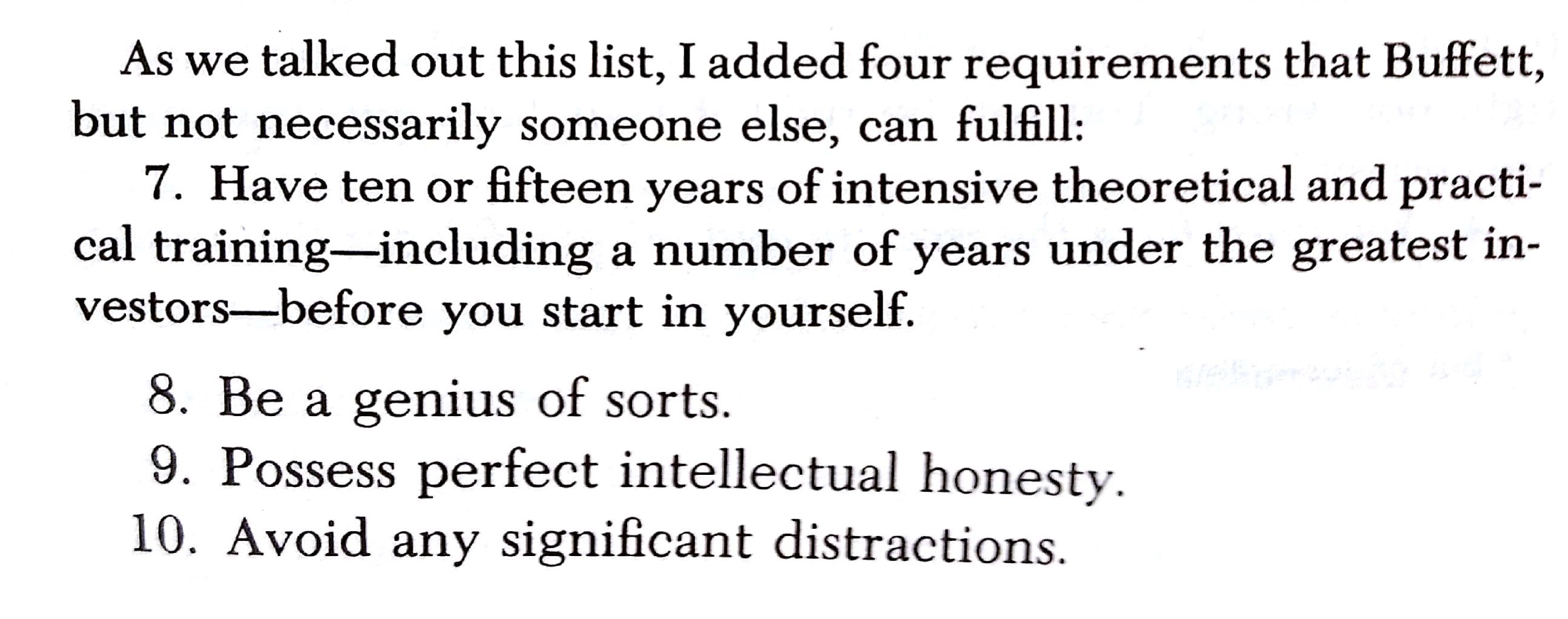
It is cheaper and easier than ever before to start a new business https://t.co/5oVCjQygkC and yet the reverse is happening. What is harder today is creating a new moat which allows the startup business to survive. https://t.co/dwA8M1huQ3 Charlie Munger: “We buy barriers [moat]. Building them is tough. Capitalism is a pretty brutal place." It is rough out there. Really. "One competitor is enough to ruin a business running on small margins." Charlie Munger “We have to have durable competitive advantage.”