The Burden of Proof

Every once in a while I have a conversation that causes my ears to perk up. I hear something that I either strongly disagree with or strongly agree with and I have a visceral reaction. I feel obligated to respond. To come to blows with the voices I disagree with or go to bat for the ideas I agree with.
I’ve written over and over again about the idea of storytelling and how its leveraged to reinforce in-group thinking. When I wrote about Intellectual Seat Belts I made the point that “people use establishment or in-group thinking as their ‘intellectual seat-belt,’ which makes them feel safe enough to just believe something without evaluating it themselves, leaving them to think less carefully.”
Then, when I wrote about the Groucho Marx Mandate, I went a step further, making the argument that people don’t just stop at believing the things that follow the path of least resistance, but that they’ll start to put it into action within their worldview: “The stronger a group of people believe something, and the bigger that group of people is, the more likely that thing is going to start getting reflected in reality.”
More and more, I’ve noticed that people tend to just default to beliefs that align with their in-group and then make that their reality. Leveraging a short-hand like in-group-think means that the burden of proof is on the group for holding the belief in the first place rather than on the person who is deciding whether or not to hold that view themselves.
Don’t get me wrong. I’m not impervious to it, either. That verbal trigger of in-group thinking got set off for me this week when I heard an opinion that I immediately and viscerally disagreed with. The topic of conversation? Telepathy.
The Telepathy Tapes
I’m currently on a trip with a group of friends and I overhead a conversation between my wife and a friend of ours. Our friend mentioned a podcast she had recently stumbled upon and it had left her convinced that many non-verbal autistic kids are communicating with their caregivers and each other telepathically.
Again, going back to this idea of ideological heuristics; I am an immediate skeptic of anything that strikes me as lacking a healthy dose of critical thinking. Might seem surprising coming from someone who believes God talks to prophets and revealed a new book of scripture to a farm boy in upstate New York in the early 1800s, but here we are.
The podcast in question? The Telepathy Tapes. In it, documentary filmmaker Ky Dickens explores the stories of non-verbal autistics who are, reportedly, communicating telepathically.
Talking to my friend, she felt wholeheartedly convinced. The story was too compelling to not be believed, regardless of how fantastic it seemed.
But my response? “Absolutely that cannot be true.”
She pushed me to, at least, listen to the podcast before I passed judgement. So I did. At least the first four episodes.
And I admit, at first I was very quickly caught up.
Emotional Resonance, Like Any Good Cause
First, its obviously a discussion topic riddled with emotional resonance. These are parents who are dealing with incredibly difficult situations with their children. These are children that are subject to a disease that we know very little about. It makes perfect sense that these parents would be desperate to communicate with their kids.
The stories are also incredibly compelling. The podcast shares stories of an autistic child sitting with an iPad that can communicate numbers and letters, and showing their parent a randomly generated number, only for the child to then tap out the number having seemingly never seen the number itself. The conclusion of the podcast was that this was clear evidence that the autistic children were receiving the information telepathically from their caregiver.
The Study of The Non-Physical
Second, towards the end of episode two, she hooked me with a framework that I’ve felt partial too myself. Magic is just science that we don’t understand yet.
She shared the story of the poet John Keats saying that Isaac Newton was destroying the poetry and wonder of the rainbow by reducing it to just being a prism of colors.
She shared other examples of scientific breakthroughs that are first met with skepticism. Galileo and the sun as the center of the solar system. Gregor Mendel and the theory of genetics.
As the host of the podcast declared, “Many scientific breakthroughs that are rejected or ignored by academics and the public when introduced eventually become accepted as empirical truths about our world.”
She reinforced the potential viability of the seemingly mystical element of telepathy amongst autistics with a Nikola Tesla quote that played right into my biased inclination towards the pursuit of the non-physical as it relates to my own spirituality. According to Dickens, Tesla reportedly said:
“The day science begins to study non-physical phenomena It will make more progress in one decade than in all the previous centuries of its existence.”
I got excited. I took some notes and made plans to explore further. But that’s where things broke down. I started to investigate more about the podcast, trying to apply my own logical lens of question asking, critical thinking, and truth-seeking.
The Case Against Telepathy
What I found that turned my perspective away from the podcast was a few things:
The Body of Contra-Evidence
Right from the jump when I started reading about telepathy in autistic kids, I came across a rich history of scientific studies discrediting the practices I was hearing about called Facilitated Communication (FC) and Rapid Prompting Method (RPM). Not only did I not hear about the work that has been done to cast doubt on these methods, I didn’t even get a good description in the early episodes of exactly what these methods actually looked like.
Facilitated Communication, for example, is a parent holding up a letter board and having the kids point at the letters to spell out the answer.
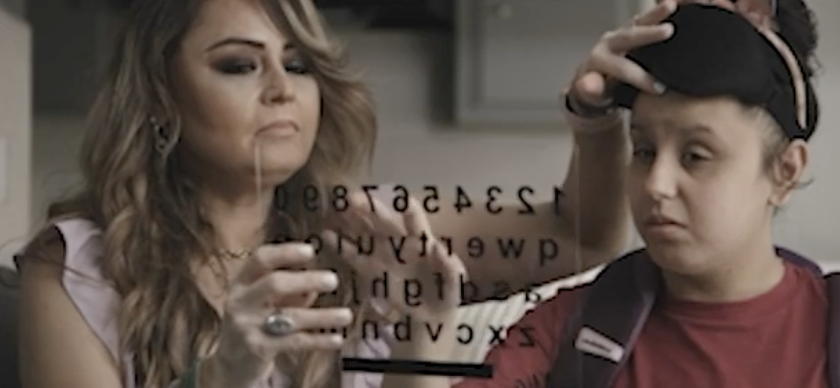
Studies into these phenomenon with non-verbal autistics dates back to the 1990s. Researchers have described an effect that is similar to how Ouija boards work. The ideomotor effect can cause small, unconscious motor movements based on what the adult is thinking. The child, especially if they’ve been trained to respond to subtle prompts, may then type or point at the “correct” answer. The parent may swear up and down that they’re not influencing the placement of the board, but a number of studies have shown that, even if unconsciously, they are.
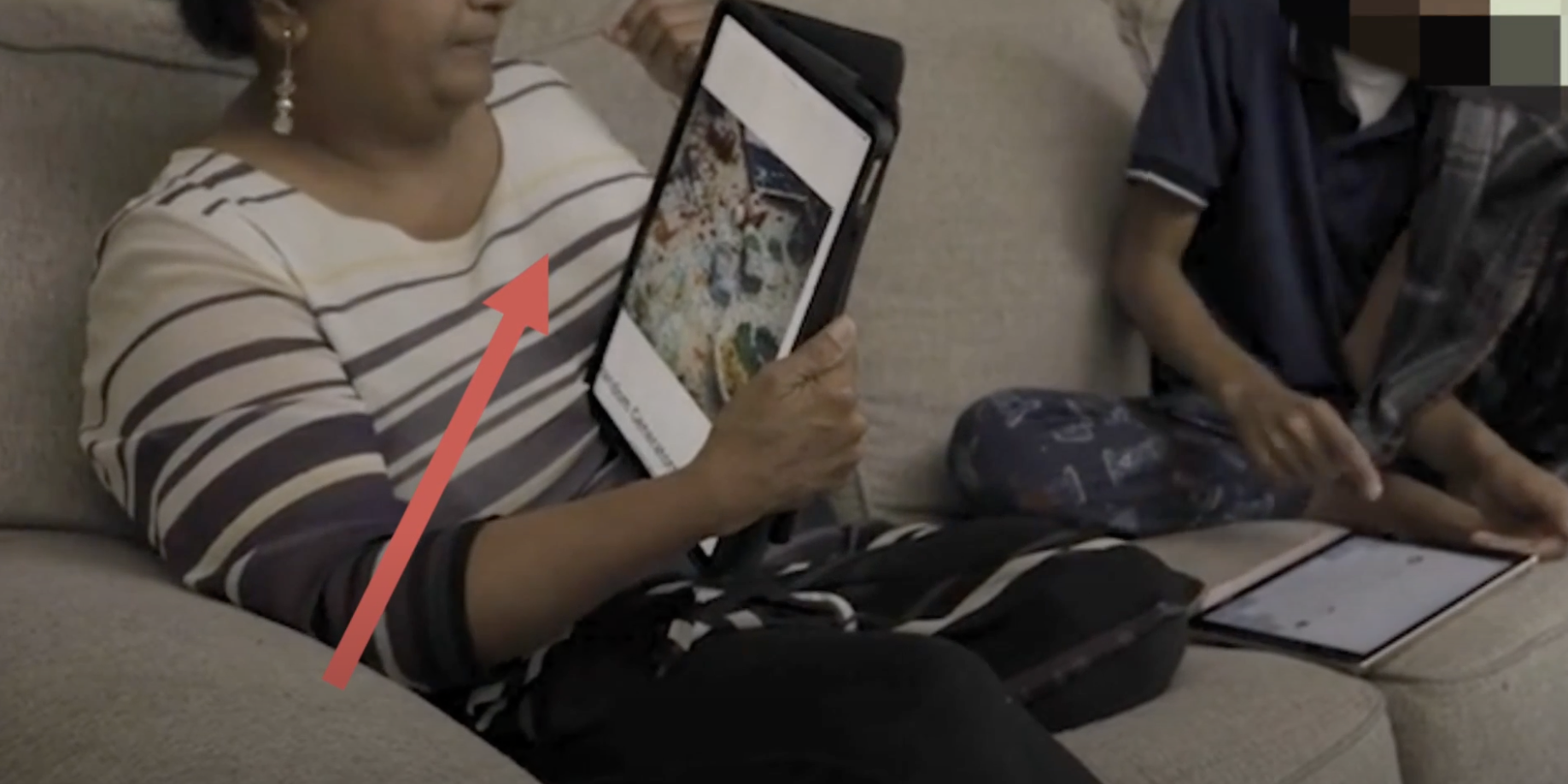
Another story that struck me was a boy who could type his supposedly telepathically received information on an iPad without any assistance from the parent. But when you see the video of those interactions, you see what seem like clear micro-influence from the parent. One critic pointed out that if you watch the Mom’s hand, its almost like there is a string attached from her hand to the boys. That could easily be the boys learned ability to pay hyper-attention to the Mom’s movements.
The Lack of Skeptical Perspectives
One piece that I read made the point that the most skeptical perspective presented in the podcast is the camera man who self-identifies as a “huge skeptic” and a “materialist,” but by the end of episode one he calls himself a “believer.” The show doesn’t address any perspective from noted critics of these practices, or mention things like the $500K reward offered by the Center For Inquiry “for anyone who can demonstrate paranormal abilities under scientific test conditions.”
So, if The Telepathy Tapes are filled with demonstrations of these skills, what is the “scientific test conditions” that are missing? Put the parent in another room. As far as I can tell, the only way these telepathic abilities are demonstrable are if the child and the parent are in separate rooms while the child is offering up communication.
The Credibility of the Creators
The final nail in the coffin was the behavior and reputation of many of the key voices in the podcast. The creators of the show were actively pursuing take-down actions on small YouTube channels with ~500 subscribers, attempting to demonstrate some of the well-worn arguments against FC that are present in the Telepathy Tapes videos, despite those channels being well with their fair-use rights.
What’s more, the primary scientists involved in the tests pursued on the show include Diane Hennacy Powell who previously lost her medical license, is an active anti-vaxxer, and hasn’t published any empirical studies or peer-reviewed research, and one of her only academic roles is as the Director of Research for an institute named for a famous proponent of alien abductions.
The podcast clearly frames the status quo as perversely established to refuse the work people like Dr. Powell are doing, saying:
“Most scientists have been brought up on materialism … The influence of this materialist dogmatism is very strong, and what they try to do is say that any educated person would agree with them. Anyone who doesn’t agree with them is stupid, uneducated, ignorant, superstitious.”
But the first two points are damning in terms of the credibility of the creators. They can frame the status quo as deliberately opposed to progress in this field, but the failure of the show’s creators to engage with the body of work that has been done among skeptical voices is a failing.
What’s more, the podcast creator’s relationship with research and accuracy seem tenuous to say the least, even in the most mundane categories, like casual quotes they include.
Remember the Nikola Tesla quote about the study of the non-physical pushing forward dramatic progress? Instead of an interesting Nikola Tesla quote, it is an often misattributed quote that likely originated from New Age or pseudoscientific literature, which has a tendency to use Tesla’s name to add credibility to speculative or mystical ideas, especially in the realm of “energy”, “vibration”, and “non-physical consciousness.”
Sigh.
Skeptical of The Source, Not The Subject
Here’s an important caveat. I am not convinced that there aren’t some kids that may be demonstrating some kind of telepathic-adjacent capabilities.
Anecdotally, some of the examples that the Telepathy Tapes described were harder to explain than others. Stories from these parents included non-verbal autistic kids that were communicating with each other from across different zip codes. Others included stories of a Mom watching a movie and then going upstairs to discuss it with her son, only to find out that the child already knew the major plot points, having supposedly received it telepathically from that same parent.
There is still some healthy critical thinking I can apply to this. There’s the possibility that the parents are lying because they want people to believe them about their kids. Or there is the possibility that the same influenced communications occurring through FC on camera is happening in private as well.
But there could still be something unique and special here.
The biggest issue, instead of making me a non-believer, is that I am absolutely a non-believer of this podcast as a source.
Maybe there are interesting examples of harder-to-explain incidents. Maybe there are reasons why the “scientific test conditions” from the Center For Inquiry are unreasonable. Maybe there is a case to be made here using brain scans, more rigorous testing, etc.
But I do not trust The Telepathy Tapes to make that case.
When In Doubt
So other than being an interesting experience I had this week, what does this have to do with investing? The desire to believe things or not believe things based on emotional responses or default in-group beliefs is dangerous. It is how people make the wrong decisions in what they build, fund, believe, or fight for.
The lack of critical thinking leads to the death of nuance.
I’ve written about nuance before, pointing out that “any staunch beliefs, one way or another, have messy middles filled with nuance that are probably closer to reality.” But heuristics that reinforce in-group adherence and deprioritize critical thinking will fail to appreciate that nuance.
I don’t want to be an idealistic doe-eyed hippie optimist any more than I want to be a dead-inside tortured realist. I don’t want to be a red-pilled tech-only “move fast and break things” disciple any more than I want to be a doomer Luddite anti-accelerationist.
The best ideas, the most creativity, the strongest companies, the smartest people, the most effective solutions — all of these RARELY if ever come out of dogmatic adherence to the party line. The best ideas come from the messy middle of nuance that has been evaluated via critical thinking and pressure tested against evidence and data.
As I wrote about in Oh Say, What is Truth:
“The only thing that can save us now, across almost every aspect of our lives, is a renaissance of truth seekers.”
Truth seeking is not consensus seeking. Truth seeking is not confirmation bias. Truth seeking is not easy. But truth seeking is worth it.
I would LOVE to seek the truth of the non-physical, almost spiritual, existence of telepathy-adjacenet capabilities among non-verbal autists. The problem with Ky Dickens’ approach is that she is more interested in seeking the validation of this community of believers than she is about seeking truth.
The same is true of a vast swath of companies, VCs, operators, angels, etc. They’re not seeking truth. They’re seeking what other people think is interesting. The Value Chain of Capital keeps people in narrative check. Because, ultimately, your in-group will not be responsible for the beliefs you hold. You will be.
But much more interesting answers, outcomes, and projects await for those who have eyes to see and ears to hear.