Kyle Harrison
← Bookshelf 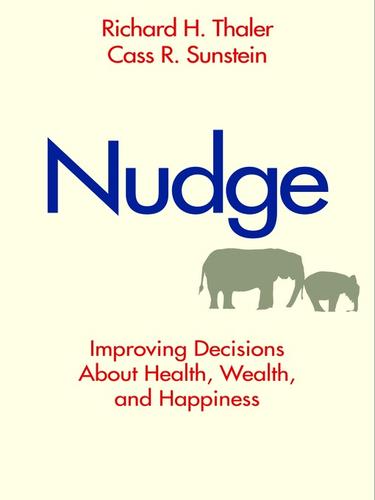
Nudge
Related from this site
Key Takeaways
Kyle, in 2017 in Books: After a brief hiatus from behavioral economics, I was right back on the horse. More so than any of the books I’d read, I felt like Nudge did a particularly good job of being focused on practical, actionable takeaways.
Think about technology that augments humanity rather than profiting from attention — “For all their virtues, markets often give companies strong incentive to cater to (and profit from) human frailties, rather than try to eradicate them or to minimize their effects.”
Connections
- Blink — adjacent reading in the behavioral-science genre: both books excavate how humans actually make decisions versus the rational-actor model.
- Predictably Irrational — Dan Ariely’s parallel argument that decision-making is systematically irrational; together these form Kyle’s behavioral-economics reading cluster.
- Richard Thaler · Behavioral Economics · Incentives — the intellectual spine: Thaler’s work on choice architecture argues that how options are presented shapes decisions as powerfully as the options themselves.
Highlights
- “A choice architect has the responsibility for organizing the context in which people make decisions.”
- “Libertarian paternalists want to make it easy for people to go their own way; they do not want to burden those who want to exercise their freedom.”
- “By properly deploying both incentives and nudges, we can improve our ability to improve people’s lives, and help solve many of society’s major problems. And we can do so while still insisting on everyone’s freedom to choose.”
- “[People’s] perceptions can affect policy, because governments are likely to allocate their resources in ways that fits with people’s fears rather than in response to the most likely danger.”
- “Our goal…has been to offer a brief glimpse at human fallibility. The picture that emerges is one of busy people trying to cope in a complex world in which they cannot afford to think deeply about every choice they have to make.”
- Think about technology that augments humanity rather than profiting from attention — “For all their virtues, markets often give companies strong incentive to cater to (and profit from) human frailties, rather than try to eradicate them or to minimize their effects.”