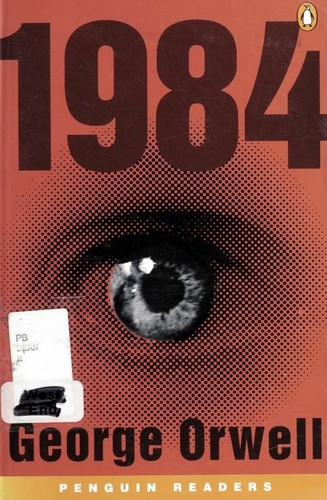
1984
Key Takeaways
Kyle, in 2017 in Books: I have a lot of super pessimistic friends. They kept telling me I needed to read 1984, cause…ya know. Trump. I guess. I don’t think he’s coordinated enough to pull off “Big Brother,” but I hadn’t read it before so I figured I’d give it a shot. Amazon gave me a deal, two Orwell books for the price of one. So I read Animal Farm too. Turns out, it’s 1984 with animals.
You might read Animal Farm and think it’s pretty aggressive. But it’s the children’s version compared to 1984. More than anything, I was struck with how much I can’t fathom this reality. I can’t see people behaving this way. But maybe that’s the rub, we’re consistently reassured as we’re led carefully down to hell. The party slogan, I think, is the crux of the thing:
George Orwell on the machinery of a total state. Kyle’s highlights concentrate on epistemology and the political economy of scarcity, not the surveillance imagery:
- Truth as an administrative output. “Whatever the Party holds to be truth is truth” — against Winston’s holdout position, “there was truth and there was untruth, and if you clung to the truth even against the whole world, you were not mad.”
- The vertigo. “How do we know that two and two make four? Or that the force of gravity works? Or that the past is unchangeable?” — and the sharper fear that if the Party controls the record, “it might all be true.”
- Where knowledge lives. “But where did that knowledge exist? Only in his own consciousness, which in any case must soon be annihilated.”
- The consciousness trap. “Until they become conscious they will never rebel, and until after they have rebelled they cannot become conscious.”
- Why the state manufactures scarcity. The most economically interesting passage: in a world where everyone “worked short hours, had enough to eat,” hierarchy could not survive — so “the essential act of war is destruction… of the products of human labor. War is a way of shattering to pieces” the surplus that would otherwise make people ungovernable.
- Distraction as policy. Heavy work, “petty quarrels with neighbors, films, football, beer, and above all, gambling.”
- The limit of argument. “What can you do against the lunatic who is more intelligent than yourself, who gives your arguments a fair hearing and then simply persists in his lunacy?”
- Kyle’s own cross-reference: Chernow’s Alexander Hamilton makes a comparable point to “no one ever seizes power with the intention of relinquishing it.”
Connections
Books: Brave New World · Brave New World Revisited — the other half of the dystopia pair Kyle reads them against. Alexander Hamilton — his own noted cross-reference on seizing power. The Screwtape Letters on gradualism.
Concepts: Language of Discourse — Newspeak is the origin case. Historical Futurism · Propaganda · Truth.
People: George Orwell.
- The Invention of Russia — Ostrovsky reads Putin’s and Trump’s “truth is lies, war is peace” media regime straight out of Oceania; 1984 topped bestseller lists in both Putin’s Russia and Trump’s America.
Highlights
- “How could you make appeal to the future when not a trace of you, not even an anonymous word scribbled on a piece of paper, could physically survive?”
- “The frightening thing was that it might all be true. If the Party could thrust its hand into the past and say of this or that event, it never happened — that, surely, was more terrifying than mere torture and death.”
- “But where did that knowledge exist? Only in his own consciousness, which in any case must soon be annihilated.”
- “Until they become conscious they will never rebel, and until after they have rebelled they cannot become conscious.”
- “Heavy physical work, the care of home and children, petty quarrels with neighbors, films, football, beer, and above all, gambling, filled up the horizon of their minds. To keep them in control was not difficult.”
- “For, after all, how do we know that two and two make four? Or that the force of gravity works? Or that the past is unchangeable? If both the past and the external world exist only in the mind, and if the mind itself is controllable — what then?”
- “Science and technology were developing at a prodigious speed, and it seemed natural to assume that they would go on developing. This failed to happen, partly because of the impoverishment caused by a long series of wars and revolutions, partly because scientific and technical progress depended on the empirical habit of thought, which could not survive in a strictly regimented society. As a whole the world is more primitive today than it was fifty years ago.”
- “In a world in which everyone worked short hours, had enough to eat, lived in a house with a bathroom and a refrigerator, and possessed a motorcar or even an airplane, the most obvious and perhaps the most important form of inequality would already have disappeared. If it once became general, wealth would confer no distinction. It was possible, no doubt, to imagine a society in which wealth, in the sense of personal possessions and luxuries, should be evenly distributed, while power remained in the hands of a small privileged caste. But in practice such a society could not long remain stable. For if leisure and security were enjoyed by all alike, the great mass of human beings who are normally stupefied by poverty would become literate and would learn to think for themselves; and when once they had done this, they would sooner or later realize that the privileged minority had no function, and they would sweep it away.”
- “The essential act of war is destruction, not necessarily of human lives, but of the products of human labor. War is a way of shattering to pieces, or pouring into the stratosphere, or sinking in the depths of the sea, materials which might otherwise be used to make the masses too comfortable, and hence, in the long run, too intelligent.”
Kyle: Referring to the Proles — “They can be granted intellectual liberty because they have no intellect.”
- “There was truth and there was untruth, and if you clung to the truth even against the whole world, you were not mad.”
- “Whatever the Party holds to be truth is truth.”
- “What can you do, thought Winston, against the lunatic who is more intelligent than yourself, who gives your arguments a fair hearing and then simply persists in his lunacy?”
- “We know that no one ever seizes power with the intention of relinquishing it.” — Side note, Chernow’s Alexander Hamilton made a counterpoint to this about George Washington, who gave up unimaginable power in an era when everyone was scrambling for more of it.
Referenced in
- Aldous Huxley note
- Amusing Ourselves To Death book
- Animal Farm book
- Anthem book
- Atlas Shrugged note
- Ayn Rand note
- Brave New World book
- Brave New World Revisited book
- Collectivism note
- Dystopia note
- Employees Wanted, The Educated Need Not Apply essay
- H. G. Wells note
- How To Read a Book book
- Jeff Fencl note
- Literature note
- Metamorphosis book
- Science Fiction's Dueling Fates essay
- Speculative Fiction note
- The Assault on Reason book
- The Black Swan book
- The Invention of Russia book
- The Time Machine book
- Totalitarianism note