Religious Intellectualism
Faith, reason, and the search for ultimate meaning
The pursuit of religious truth through rigorous intellectual inquiry, including Mormon apologetics and philosophy, Christian apologetics more broadly, and the reconciliation of faith and science. The core interest is treating religious questions with the same intellectual seriousness as any other domain — not faith vs. reason, but faith through reason.
When I publicly testify of the heavenly truth of the Book of Mormon: Another Testament of Jesus Christ, the devils on this platform rage, howl, protest, and foam at the mouth like the Gadarene demoniac. Like absolute clockwork. *(Photo: the navy cover of the Book of Mormon, "Another Testament of Jesus Christ." 166 replies · 52 reposts · 1K likes · 15K views.)* ### Replies shown in the screenshot > **Red Lands (@Red_Devastator)** · Oct 19, 2025 · replying to @ldslaw > > Your heavenly truth is based on feelings you have by indoctrination. "I know this church is true, the Book of Mormon is another testament of Jesus Christ, and Joseph Smith was a true prophet," are taught from primary up. A feeling is not the spirit of truth. Jer 17:9, Acts 5:29 > **Red Lands (@Red_Devastator)** · Oct 19, 2025 · replying to @Red_Devastator and @ldslaw > > If your an actual lawyer then follow the evidence: cesletter.org/CES-Letter.pdf
Oct 19, 2025I loved Dan Brown's new book, The Secret of Secrets. It's maybe the most accessible overview of the work around non-local consciousness out there, even if it's a bit thrillerized. It felt like asking an advanced AI that knows how to write something readable to "take all of the https://t.co/nTpaHxE5iY

The Univ. of Vermont offered a graduate-level course on the Book of Mormon. Neither the professor nor the students were Latter-day Saints. No one approached the book as scripture, yet they took it seriously and recognized its richness and depth. The class was a hit. Details:
Jun 6, 2025When I publicly testify of the heavenly truth of the Book of Mormon: Another Testament of Jesus Christ, the devils on this platform rage, howl, protest, and foam at the mouth like the Gadarene demoniac. Like absolute clockwork. *(Photo: the navy cover of the Book of Mormon, "Another Testament of Jesus Christ." 166 replies · 52 reposts · 1K likes · 15K views.)* ### Replies shown in the screenshot > **Red Lands (@Red_Devastator)** · Oct 19, 2025 · replying to @ldslaw > > Your heavenly truth is based on feelings you have by indoctrination. "I know this church is true, the Book of Mormon is another testament of Jesus Christ, and Joseph Smith was a true prophet," are taught from primary up. A feeling is not the spirit of truth. Jer 17:9, Acts 5:29 > **Red Lands (@Red_Devastator)** · Oct 19, 2025 · replying to @Red_Devastator and @ldslaw > > If your an actual lawyer then follow the evidence: cesletter.org/CES-Letter.pdf
Oct 19, 2025I loved Dan Brown's new book, The Secret of Secrets. It's maybe the most accessible overview of the work around non-local consciousness out there, even if it's a bit thrillerized. It felt like asking an advanced AI that knows how to write something readable to "take all of the https://t.co/nTpaHxE5iY
The Univ. of Vermont offered a graduate-level course on the Book of Mormon. Neither the professor nor the students were Latter-day Saints. No one approached the book as scripture, yet they took it seriously and recognized its richness and depth. The class was a hit. Details:
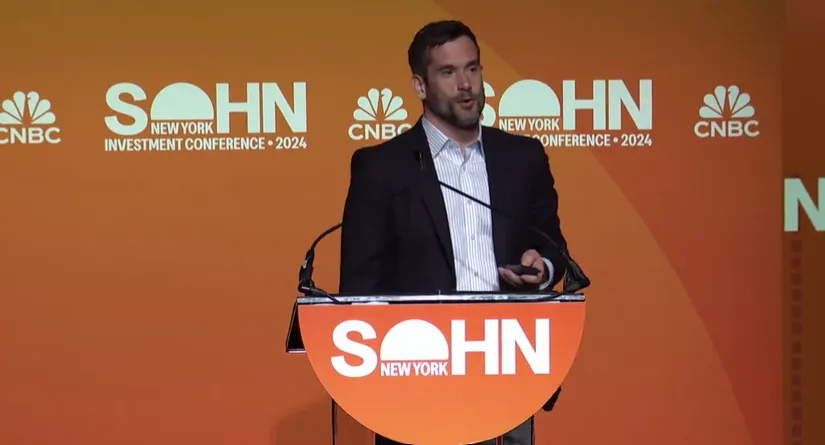
Jun 6, 2025Strongly recommend. Faggin designed the first commercial microprocessor — the Intel 4004 — and has spent the last decade+ studying and funding research into consciousness. The more I read, the more I think the materialist paradigm is on its last legs. Bring back the magic. https://t.co/ZI5MvbbELo
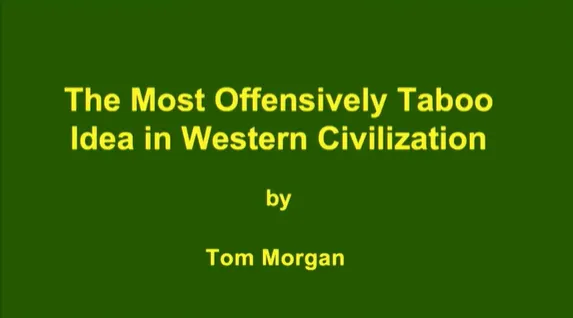
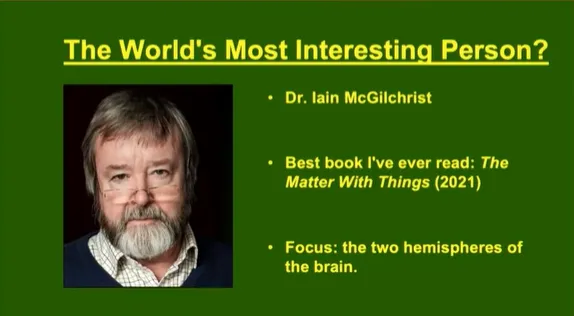
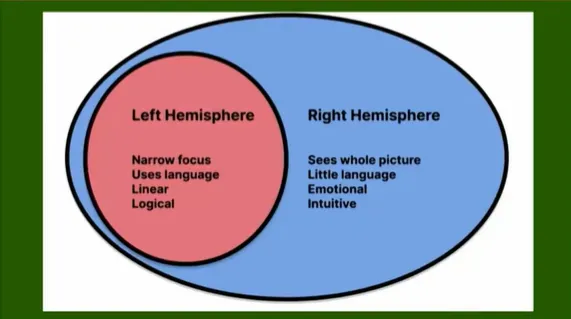
⬇️ Full Transcript with Slides below ⬇️ 1/ On April 3, 2024, Sapient Capital's Tom Morgan gave a presentation at the Sohn Conference titled "The Most Offensively Taboo Idea in Western Civilization" where he distilled 10 years of curiosity research into a 5 minute talk. I found this presentation to be one of the tightest, information-dense, and thought provoking talks I've listened to. I wanted to be able to refer back to it easily, so I transcribed the talk and screengrabbed the slides. I shared the transcript in A Letter a Day (link in bio), but people enjoyed when I shared my transcript of Bill Gurley's "2,851 Miles" presentation on X, so I thought I would share this one here too. ⬇️ Full Transcript with Slides below ⬇️ 2/ So I'm not going to talk about a stock today. Instead, I'm going to talk about the most offensively taboo idea in western civilization. 3/ This is Dr. Ian McGilchrist. He wrote, probably the most interesting book I've ever read, The Matter with Things. His focus of his very long career has been the two hemispheres of the brain. Now, you're probably thinking this brain hemispheres stuff has been debunked. It hasn't. It's just nuanced. 4/ The brain's left hemisphere is narrowly focused. It uses language, it is linear, and it is logical. The brain’s right hemisphere, it sees the whole picture. But it has very little use of language. It is emotional, and intuitive. 5/ I like to think of the left hemisphere as like a junior analyst. Amazing modeling, but lives in the model. The right hemisphere is the intuitive Druck, Soros type that makes these amazing, instinctive decisions, but can't always explain why. 6/ Now, you need both of them--but you don't let the junior analyst run the hedge fund; he will burn it down. 7/ Which is unfortunate. Because McGilchrist's diagnosis is the world is imbalanced towards the brain's left hemisphere. The brain's left hemisphere deals in abstractions. And there's nothing wrong with that. That's why you're all sitting here today. 8/ But taken to an extreme, abstraction leads to disconnection. Disconnection from our environment, our bodies, and each other. And frankly, when I look at the world and its various problems, I can see almost no crisis that isn't being caused, in some part, by disconnection. 9/ How does this happen? 10/ Well, if you experimentally suppress the brain's left hemisphere for 10 to 15 minutes, people start to see things they would ordinarily see as dead as alive. So the sun going across the sky giving you energy, the world becomes more animate. But if you experimentally suppress the brain's right hemisphere for 10 to 15 minutes, people start to see living things as dead. So other human beings become like zombies, or machinery, or furniture. 11/ The implication, if we're already too far over on the left, is that the world is more alive, and we are more connected to it, than we typically think. 12/ And so the taboo. There might, might, be an intelligent, benign force guiding our attention. 13/ Why is this so offensively taboo? Well, we reject any external challenges to our intellect. The left hemisphere by nature, is competitive. It lies, and it denies the existence of anything more intelligent than itself. I think we all know those people. 14/ But there is a problem. Which is our intellect alone cannot navigate the world. 15/ The world is what's called combinatorial explosive, which just means too many choices, too little time. Rational trial and error cannot have worked. If we weighed up the pros and cons of every decision in high stakes environments, the tiger would have beaten us. 16/ The analyst knows all the numbers, but the PM knows what's relevant. But how do we know what's relevant all the time? Our environment helps signal it to us. What we are attracted to narrows our options. We all intuitively understand this in romantic relationships, but I believe the same applies to information. 17/ Evolution's solution to combinatorial explosiveness is curiosity. Now, the dictionary definition of curiosity is: "a strong desire to know or learn something." A definition that I find rubbish. Doesn't tell you anything. "A strong desire." Where does it come from? "To learn something." To learn what? 18/ Question: please ask yourself, and I do mean, please ask yourself--this is not a rhetorical device. Can you force yourself to be interested in something? Can you force yourself to be interested in something? 19/ Wine tasting. Accountancy. Cricket. The Real Housewives of New Jersey. The fact is, is that everything we're interested in and passionate about exists upon a continuum, but we're not in full control of that. 20/ If you don't fully control your interests, what does? 21/ I believe that curiosity is a relational, a two way force between you and your environment. 22/ Evolution, in the form of curiosity, helps guide you into a unique niche. It's why you don't have full control of it, and why pursuing it feels good. 23/ Curiosity is a right hemispheric impulse. It connects you to the world. It is emotional, it is non logical, it is intuitive. But it also sees the whole picture. 24/ In fact, McGilchrist's conclusion: the right hemisphere is responsible for, in every case, the more important part of our ability to come to an understanding of the world. 25/ But don't forget: the left hemisphere always denigrates the contributions of the right. Particularly as they're fuzzy, emotional, nonverbal. So following your curiosity requires faith. 26/ But I will leave you with probably my most heretical belief: curiosity may also be mysteriously rewarded by your environment. The favorite quote of my life is from the great mythologist Joseph Campbell: "Follow your bliss and doors will open where they were only wolves." 27/ I can't prove anything in five minutes, but I hope you might now take your curiosity more seriously. Thank you. End/ If you'd prefer to read this in blog/newsletter form, you can find the full transcript and slides in the link in my bio. If you'd prefer to watch it, you can do so here: https://x.com/tomowenmorgan/status/1775957154521821593 PS 1/ And see here for my previous transcript on Bill Gurley's talk on regulatory capture: https://x.com/kevg1412/status/1710055330434949580
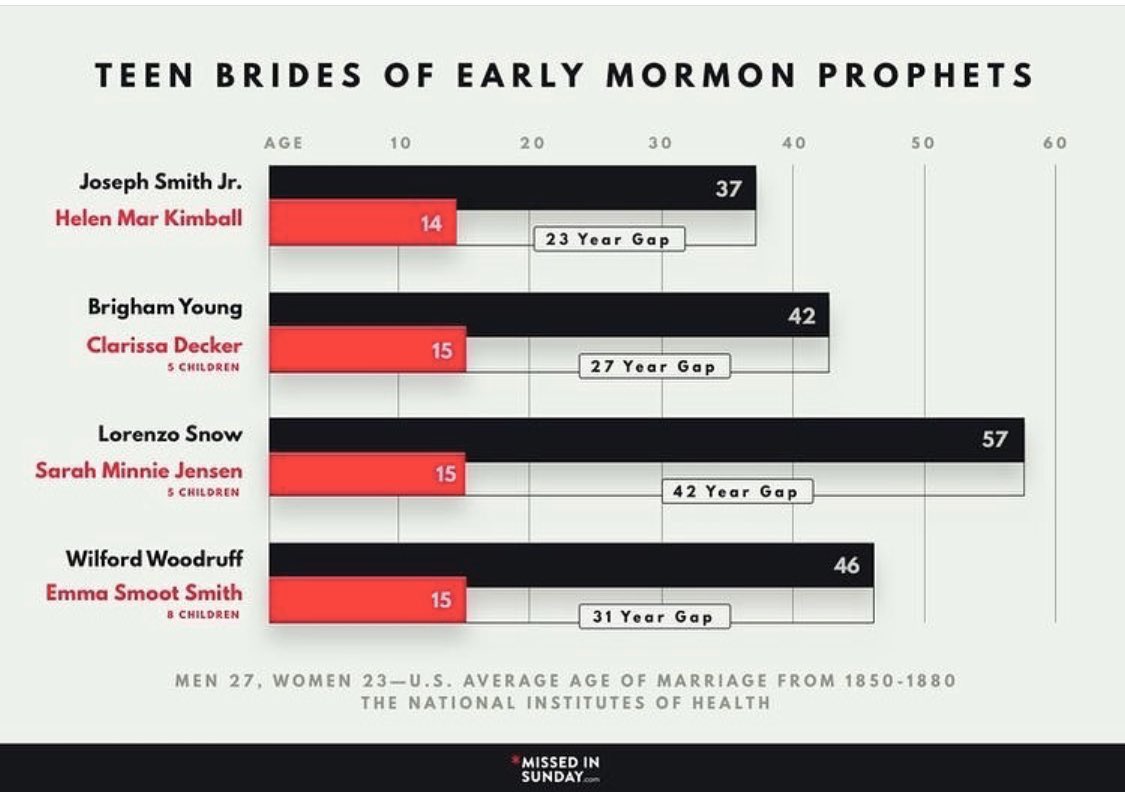
Polygamy is a tougher topic because we weren’t there 180 years ago and don’t know all the details. When they pull a graphic like this on you, it’s for shock value and can be misleading. Here are some facts: Helen Mar Kimball. Indicated it was an “eternity only marriage.” Zero children with Joseph Smith. Married her husband at 16 and had 11 children. Brigham Young and Clarissa Decker. Betrothal culture. Didn't have her first child until she was 21. Lorenzo Snow and Sarah Minnie Jensen. Betrothal culture. Didn't have her first child until she was 20. Wilford Woodruff and Emma Smoot Smith. Betrothal culture. Didn't have her first child until she was 20. Being married to a prophet was probably the most prestigious marriage attainable within that society and era. Prestigious arrangements and alliances were highly sought after. Nonetheless, there is a clear pattern of a betrothal culture and a delay of consummation and child-bearing. People want to judge culture from 200 years ago with norms from 2023. It’s called presentism. Presentism: uncritical adherence to present-day attitudes, especially the tendency to interpret past events in terms of modern values and concepts. Uncritical of their own present norms and concepts, while critical of concepts and norms of times past. Think of all the crazy, unhinged stuff going on today. Polygamy is a cakewalk compared to the average number of sex partners people have now and the socially acceptable age of losing one’s virginity. Adulterous affairs are pretty much stratus quo. For the youth, they pass out condoms in high school and sex is almost expected as experimental. Virginity is often seen as lesser. Truth is, we’ll be judged harshly 200 years from now. What was the value and concept of the marriage age in the 1800’s? "Marriages between a girl under 18 and an adult man weren't unusual in the early United States. In an era when most people didn't know their exact birth date in the first place, most states went by British common law, which allowed girls to marry at 12 and boys at 14." (Until 1885) <Some other examples of polygamy - it’s a cultural and social system that’s been around many centuries.> Examples of polygamy today: US has approximately 50,000 evangelical Christian polygamists today. (http://TruthBearer.org) Historical examples: "Martin Luther taught that polygamy was allowed in Scripture, citing positive examples of it from the biblical patriarchs." “From sixteenth-century events in the German city of Münster to a range of tracts by authors, including Martin Luther and John Milton, to eighteenth-century British treatises by Methodist minister Martin Madan to American Jacob Cochran and his ideas of “spiritual wifery” in the nineteenth century, there have been a range of Protestant defenses of polygamy over the centuries.” “Many women and men across the Atlantic world (and beyond) lived in polygamous or bigamous situations, for historically specific reasons…At the same time, from the earliest years of the Protestant Reformation, there had been a radical Protestant endorsement, or at least tolerance, of polygamy in certain circumstances…Polygamy thus also became associated with religious reform and political subversion. (Note: Martin Madan’s pro-polygamy treatise in England in 1780.) Polygamy also formed a significant aspect of Enlightenment thinking, especially about gender and the position of women, the nature of religious and political authority, population growth, and the variety of human experiences around the globe.” "Scots-Irish settlers, and some Welsh emigrants, carried long-standing multiple partner traditions from Europe to the Americas. Utopian and communal groups which were established during the mid-1800's had varying marriage systems, including group marriage and polygyny. There is also some evidence for the existence of multiple marriage partners in the American South, particularly after the Civil War." Biblical examples are multiple and well-established. While polygamy makes us more unique in America which is about 300 or so years old, it is not unique or original around the world nor throughout world history.
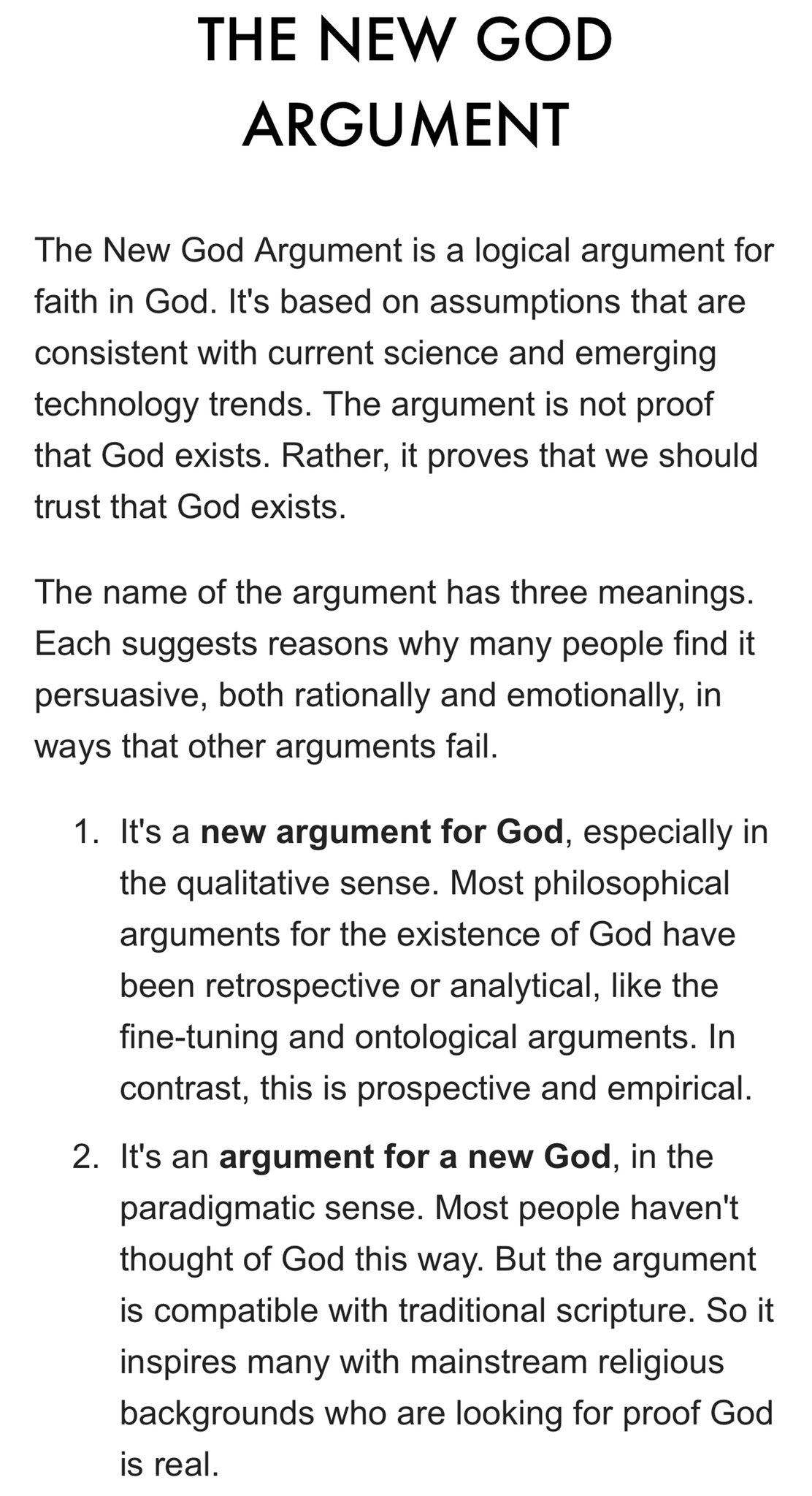
My latest for Pull Request: On why you are religious (though perhaps unconsciously), and why none of us--even the most empirically inclined--can escape the metaphysical trap of religious practice and belief. https://t.co/pDiirWneqR One of the advantages of a religious education is recognizing the echoes of religion in our purportedly secular thought. Our world is absolutely awash in magical thinking, and that's not (necessarily) a bad thing. https://t.co/54qNGxTM0Z All the driving elements of Judeo-Christian religious thought are as active as ever, down to secular versions of historical heresies we see repeated again and again. Even the definitional notion of religion against which atheists rebel is itself fundamentally Christian. https://t.co/hRZBMuaxMB The metaphysical bind--answering the 'why?' to our lives--is one even secular moderns can't escape; in fact, my overriding argument here is that the more we deny the question's existence, the more poorly (and insanely) we'll answer it. https://t.co/t3szYMYM0W But answer it we must, especially given the bleakness of the modern condition. None among us can actually live inside this existential abyss for very long. https://t.co/di64p6BIyy Lastly, I end with a metaphor suggested by @rabbidan and based on the Second Temple period. The most sacred spot in Judaism, the sanctuary for the divine presence on Earth...was empty. Modern seculars are in a similar position of filling an empty sanctuary with the sacred. https://t.co/Vh1oYlEI2A Thanks to @sriramk and @zeynep for reading this for style (and cancelation risk). And thanks to @Mottel for providing his 'nihil obstat' (to use a crossed religious reference).
May 18, 2023 Original deleted — preserved hereThe Bible helps Peter Thiel find secrets. It's taught him to look for the kinds of world-changing ideas that've made him one of the world's most successful investors. Here's how you can also find secrets: Thiel's definition of secrets isn't the one you grew up with. He’s not talking about spreading gossip or talking behind people’s backs. Rather, he's talking about important truths about the world that other people don't realize. Thiel's obsession with secrets is famous in this interview question: What important truth do very few people agree with you on?” The answers are keys into hidden chambers of knowledge, free from the distortions of lies and propaganda. https://t.co/csvYtijdOU Where does Thiel's obsession with secrets come from? It partially comes from the New Testament. Specifically, Proverbs 25:2 says: "It is the glory of God to conceal a matter; to search out a matter is the glory of kings.” That search is defined by the quest for secrets. Why will secrets always exist? I like to imagine that every person has their own map of the way the world works. Everybody’s map is incomplete, either because they lack information or are blinded by dogma — just think of your family members who still don’t understand Bitcoin. Thiel capitalizes on secrets by investing in startups. He writes: "Every great business is built around a secret that’s hidden from the outside. A great company is a conspiracy to change the world; when you share your secret, the recipient becomes a fellow conspirator.” To find secrets, be skeptical of consensus. In the Bible, every time people unanimously agree on something, they are wrong. Remember the Tower of Babel? Likewise, in Ancient Jewish law, if a suspect on trial was unanimously found guilty by all judges, the suspect was acquitted. Skeptical of consensus, Thiel says: “We always think that democracy is a good thing and in a Democracy, the majority is more right than wrong. 51% is more right than 49%. 70% is even more right. But if you get to 99.9%, maybe that’s totally right. Or maybe you’re in North Korea.” https://t.co/vauTuMRjyi How can you find secrets? Interrogate dogma. Surround yourself with independent thinkers. Look for patterns that cause humanity’s sense-making apparatus to malfunction, and live in search of the truth. The juiciest secret of all is that there are many secrets left to find. I wrote extensively about secrets in this article. My favorite example of a secret comes from the smartphone battle between Nokia and Apple, which I discuss in the article. Nokia fell off the map. Apple became the most valuable company in the world. https://t.co/FGvMCQRBbR
Dec 18, 2021i mean at the end of the day any civilization capable of boundless technological progress would inevitably invent the ability to imperceptibly reach back through time and save every person who ever lived. so either you believe in god or you don’t believe in people? get in, losers, we’re living forever lmao now realizing you’re all stuck with my tweets literally for eternity
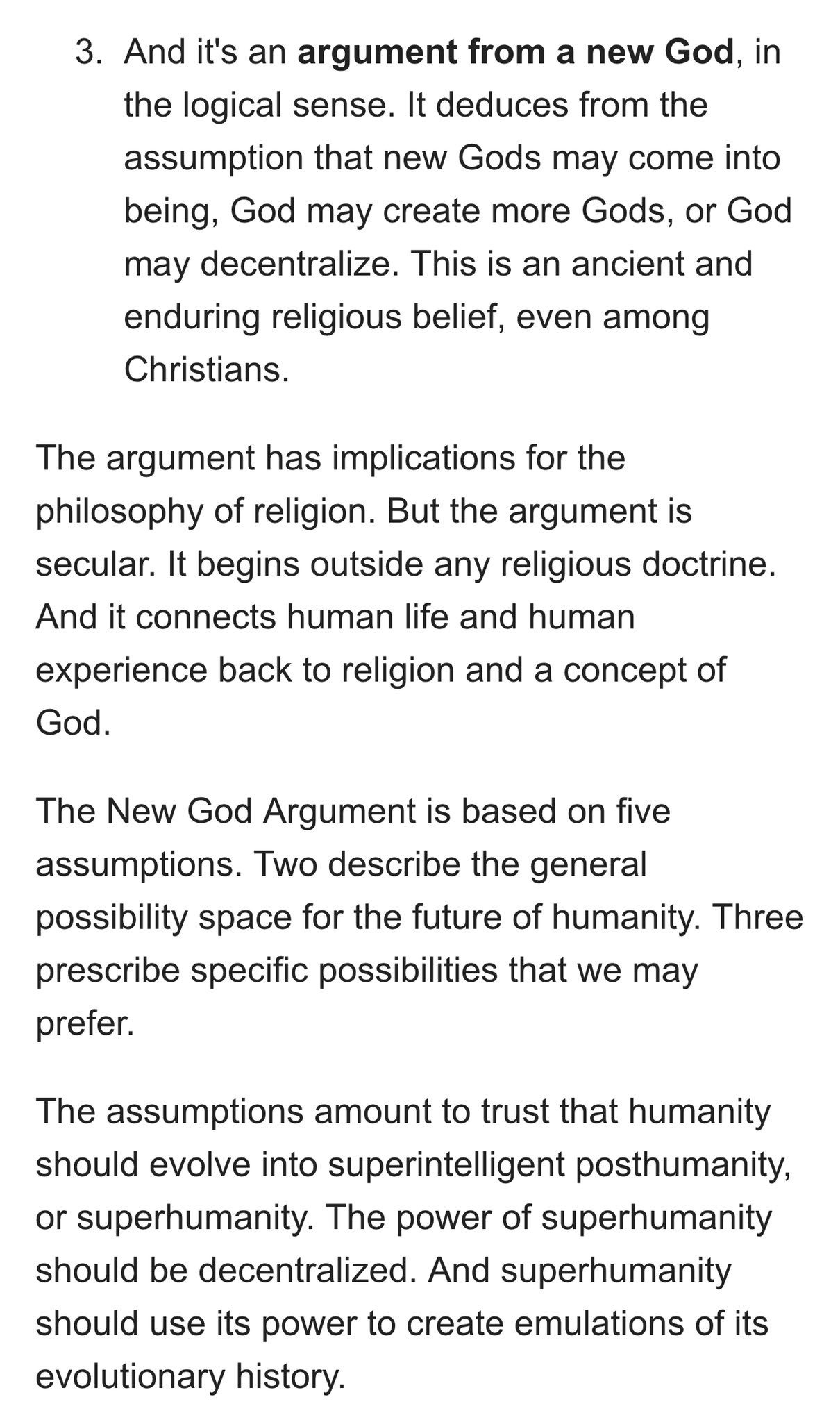
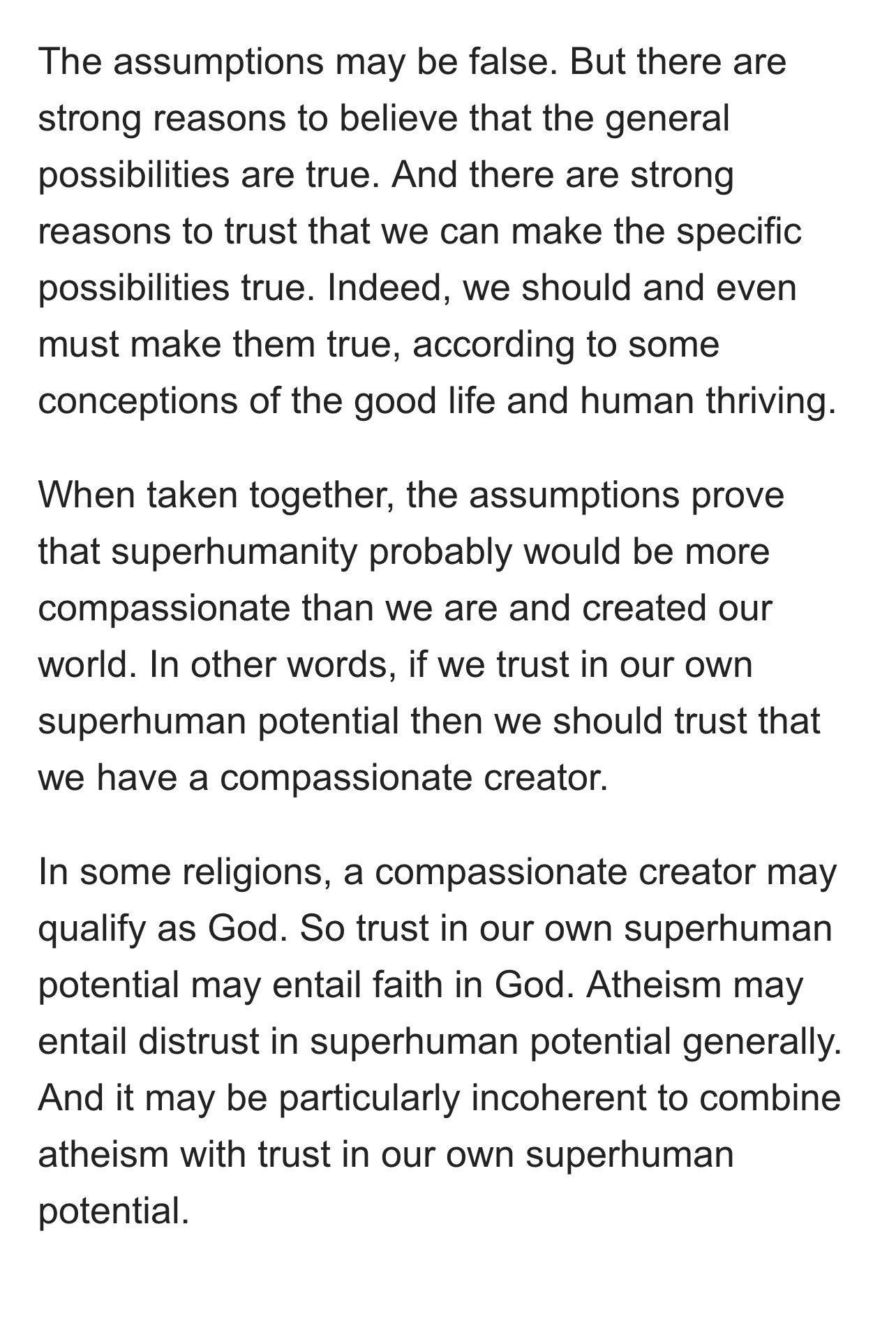
@Conaw Some pretty interesting narrative similarities in Islam and Mormonism. The Doctrine & Covenants is very similar to the Quran in structure and history. “We believe in all truth, no matter to what subject it may refer." https://t.co/QOPspB8GDo https://t.co/DayeOPmYZJ
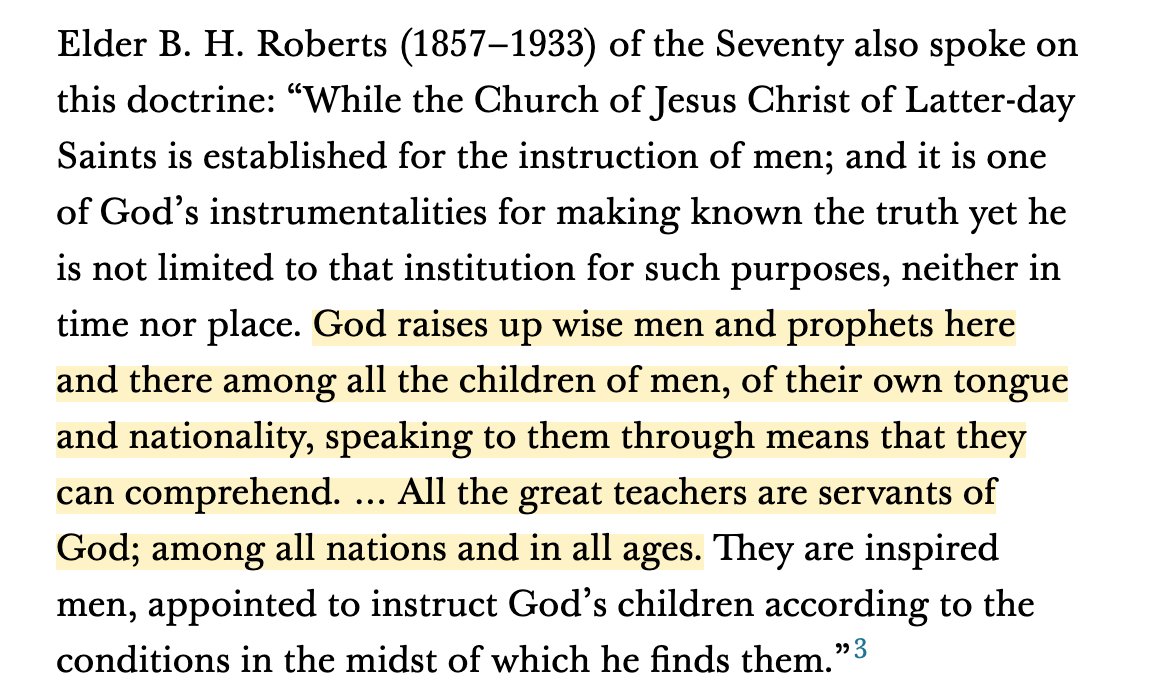
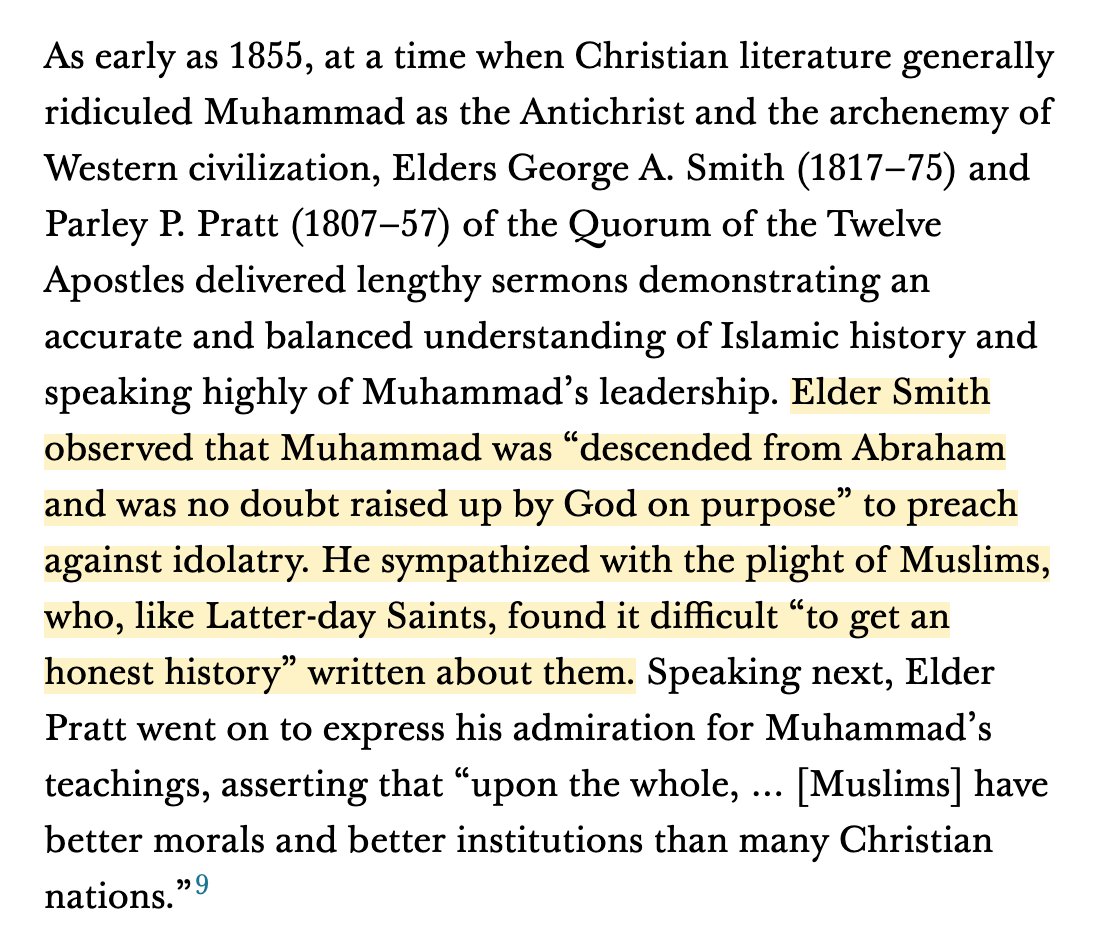
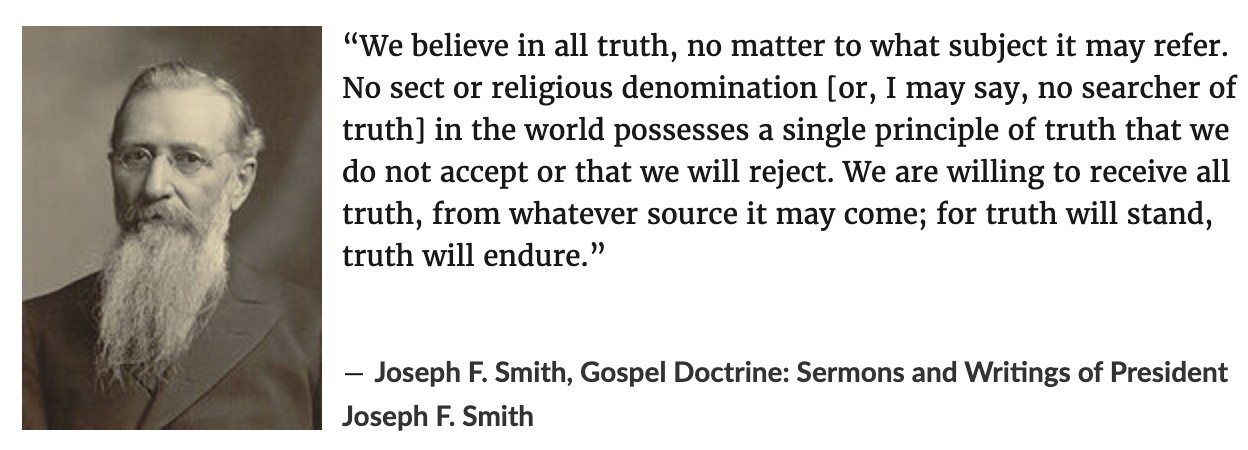
Through hypocrisy religion has become meaningless. Through ideology science has become meaningless. Ironically both sides of the political spectrum fails to see themselves as religious zealots bound to ideals. The cure: a humble willingness to change one’s mind.
Jul 30, 2020Everybody worships. If you absorb this paragraph — and I mean really absorb it — your life will never be the same. Wise words from David Foster Wallace. -@david_perell https://t.co/UUuVV0wo2Q **Links in this post** (t.co shortlinks resolved 2026-09-26): - `https://t.co/UUuVV0wo2Q` → https://x.com/the_perell_bot/status/1274334684617625600
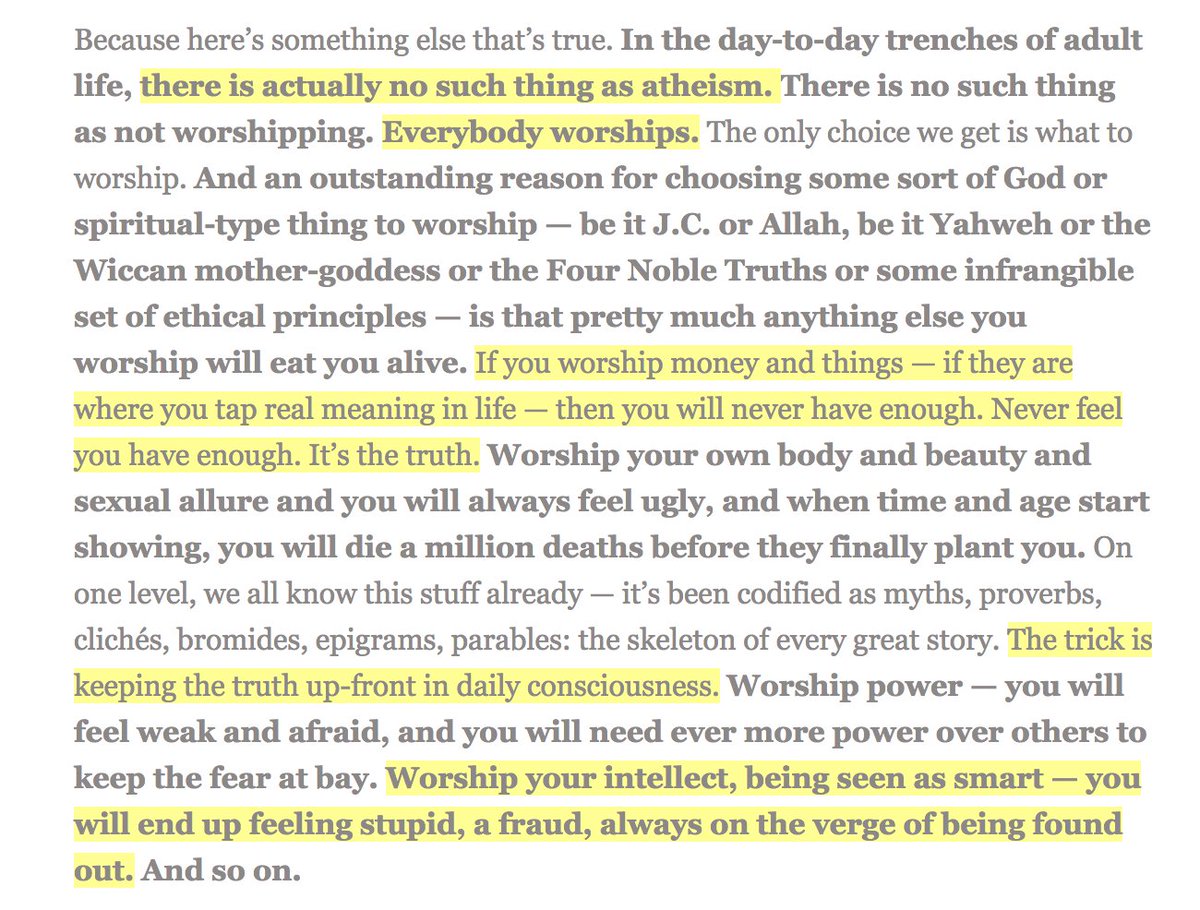
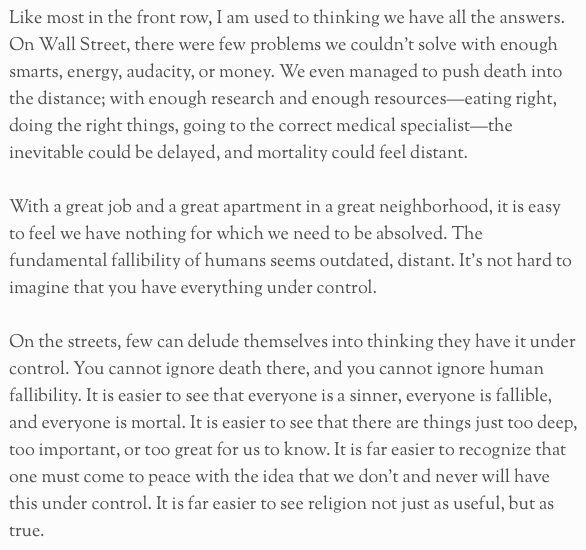
Incredible read about humility, empathy, faith, forgiveness, and intellectual honesty. "When I walked into the Bronx I was an atheist. It was something I was sure about. After years of traveling America, I wasn’t so sure." https://t.co/OfwxFUdaBU