Kyle Harrison
← Bookshelf 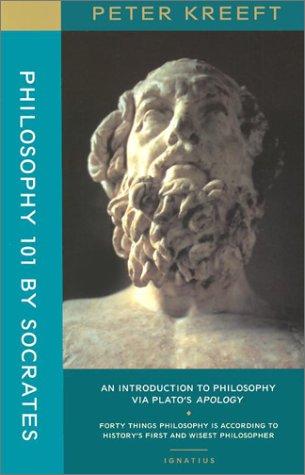
Philosophy 101 By Socrates
Related from this site
Key Takeaways
Kyle, in 2017 in Books: I thought that I might like Philosophy. I thought this was a good way to get a good taste. This was an effective summary that left me wanting more. Many thanks to Powell’s City of Books in Portland for exposing me to it.
Peter Kreeft’s introduction to philosophy teaches the discipline through the example of Socrates — primarily the figure of the Apology and the trial that ended his life. The highlighted quotes all circle one idea: that integrity and virtue are worth more than self-preservation, reputation, or money.
- Being right is more costly than being wrong. “People will often forgive you for being wrong where they are right; they will seldom forgive you for being right when you are wrong.” The Socratic stance toward truth-telling carries a social price.
- The good cannot be harmed by the wicked. Socrates’ claim that “no evil can happen to a good man” reframes death and persecution as injuries the persecutor inflicts on himself, not the victim — virtue is its own protection.
- Virtue over money, as a standard for one’s children. His parting request — to “punish my sons” if they care for money or anything before virtue — turns his own indictment into a model of parenting (#Parenting): the thing to fear is not poverty but misplaced values.
Connections
- Socrates — the book is built around his method and his death; the highlights are drawn from his trial and final words via the Apology of Socrates.
- Virtue — the book’s core argument (via Socrates): integrity and virtue are worth more than self-preservation, reputation, or money.
- Parenting — Socrates’ parting request to “punish my sons if they care for money or anything before virtue” is flagged as a parenting principle.
- Powell’s — the book was recommended by Powell’s (noted in the source).
Highlights
- “People will often forgive you for being wrong where they are right; they will seldom forgive you for being right when you are wrong.”
- “No evil can happen to a good man… living or dead. Be sure of this, that if you put me to death, being such as I am, you will not hurt me so much as yourselves…for I think the eternal law forbids a better man to be hurt by a worse.”
- “One thing I ask… punish my sons, gentlemen, when they grow up; give them this same pain I gave you, if you think they care for money or anything before virtue.” Parenting
Referenced in
- Apology of Socrates note
- Peter Kreeft note
- Powell's note