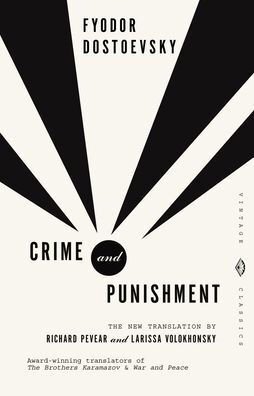
Crime & Punishment
Key Takeaways
Kyle, in 2025 in Books: I’m a big fan of Crime & Punishment. In fact, Russian literature in general has been a big part of my fiction repertoire. In particular, the books concept of an “extraordinary man” has always resonated with me in trying to determine one’s worth. Ultimately, the book ends where it ought to. Not in a meritocratic weighing of worth, but in turning to Christ.
Kyle’s Roam capture of Dostoevsky’s novel is a single note rather than a highlight set — a summary of the book’s opening move: Raskolnikov’s inner conflict resolving into a utilitarian-altruistic justification for the murder he is contemplating. That is the hinge the whole novel then dismantles: the arithmetic that one worthless life traded for many good deeds is a net gain, and the discovery that a conscience does not do arithmetic.
Connections
Books: The Brothers Karamazov — the same moral problem at greater length. No Country For Old Men — “the accounting is scrupulous” is the same idea in a different register.
Concepts: Human Nature · Utilitarianism · Moral Philosophy.
People: Fyodor Dostoevsky.
Essays: discussed in What Is An Extraordinary Man, On Writing, and Why Bother; its extraordinary-man question also runs through The Moral Edifice of Meritocracy and The Crucible of Doubt.
Highlights
- “Raskolnikov’s inner conflict in the opening section of the novel results in a utilitarian-altruistic justification for the proposed crime: why not kill a wretched and “useless” old moneylender to alleviate the human misery? Dostoevsky wants to show that this utilitarian style of reasoning had become widespread and commonplace; it was by no means the solitary invention of Raskolnikov’s tormented and disordered mind. Such radical and utilitarian ideas act to reinforce the innate egoism of Raskolnikov’s character, and help justify his contempt for humanity’s lower qualities and ideals. He even becomes fascinated with the majestic image of a Napoleonic personality who, in the interests of a higher social good, believes that he possesses a moral right to kill. Indeed, his “Napoleon-like” plan impels him toward a well-calculated murder, the ultimate conclusion of his self-deception with utilitarianism.” From Wikipedia
Referenced in
- 2025 in Books essay
- Charlie Munger: The Psychology of Human Misjudgment note
- Dostoevsky note
- Fyodor Dostoevsky note
- Moral Licensing note
- Moral Philosophy note
- No Country For Old Men book
- The Brothers Karamazov note
- The Crucible of Doubt book
- What Is An Extraordinary Man? essay
- Why Bother? essay