Kyle Harrison
← Bookshelf 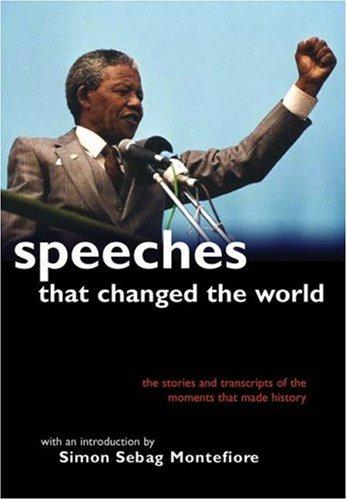
Speeches That Changed The World
Related from this site
Key Takeaways
Kyle, in 2017 in Books: I read these words by great dreamers, Martin Luther King Jr., John F. Kennedy, others, and I wonder what happened? Did we achieve the greatness we were promised? Or do we still fight the same fights as they did?
Patrick Henry, addressing the Continental Congress, said “I know of no other way of judging the future but by the past.” So what is our past, and what insight does it offer us into our future?
- The past is the only instrument for reading the future. The collection opens, in Kyle’s highlights, on Patrick Henry’s line to the Continental Congress — “I know of no other way of judging the future but by the past.” It’s a fitting epigraph for an anthology of history-making speeches: the value of preserving great oratory is precisely that it gives later generations a past to judge by.
- Hard things, chosen deliberately, organize a people. John F. Kennedy’s moon address is the book’s purest statement of ambition as a forcing function — “not because they are easy, but because they are hard, because that goal will serve to organize and measure the best of our energies and skills.” Kyle tags the passage hard work; it’s the civic-scale version of the same virtue he tracks across Driven and John Quincy Adams.
- Technology has no conscience of its own. Kennedy frames space science, like nuclear science, as morally neutral — “whether it will become a force for good or ill depends on man.” The speech’s optimism is conditional: pre-eminence is what lets a nation steer the “new ocean” toward peace rather than “a new terrifying theatre of war.”
- The deepest damage of tyranny is moral, not material. Václav Havel’s 1990 New Year’s address names the real wound of the totalitarian years — “a contaminated moral environment,” the habit of “saying something different from what we thought,” of learning “not to believe in anything.” It is the Totalitarianism entry in the collection read as a story about conscience rather than politics.
Connections
- Great Speeches — this anthology is the print companion to the running collection of speeches Kyle returns to; the Chaplin/Holland/Scott trio on that page and Montefiore’s curated set are the same impulse to keep great oratory close.
- Rhetoric — a book of speeches is a book of rhetoric in practice; pairs with Kyle’s We Need a Renaissance of Rhetoric argument that the persuasive arts are a lost inheritance worth recovering.
- John F. Kennedy — the moon speech here and the “ask not what your country can do for you” line Kyle quotes in The Magic of Learning are two faces of the same civic-summons oratory.
- Hard Work — Kyle’s own tag on the moon passage; “because they are hard” is hard work scaled from the individual to the nation.
Highlights
- Patrick Henry, addressing the Continental Congress, said “I know of no other way of judging the future but by the past.” So what is our past, and what insight does it offer us into our future?
- “For space science, like nuclear science and all technology, has no conscience of its own. Whether it will become a force for good or ill depends on man, and only if the United States occupies a position of pre-eminence can we help decide whether this new ocean will be a sea of peace or a new terrifying theatre of war.” — John F. Kennedy
- “We choose to go to the moon. We choose to go to the moon in this decade and do the other things, not because they are easy, but because they are hard, because that goal will serve to organize and measure the best of our energies and skills, because that challenge is one that we are willing to accept, one we are unwilling to postpone, and one which we intend to win, and the others, too.” — John F. Kennedy Hard Work
- “The worst thing is that we live in a contaminated moral environment. We fell morally ill because we became used to saying something different from what we thought. We learned not to believe in anything, to ignore each other, to care only about ourselves.” — Václav Havel
Referenced in
- John F. Kennedy note
- Language of Discourse note
- Patrick Henry note
- Rhetoric note
- Simon Sebag Montefiore note
- Totalitarianism note
- Václav Havel note