We Need a Renaissance of Rhetoric
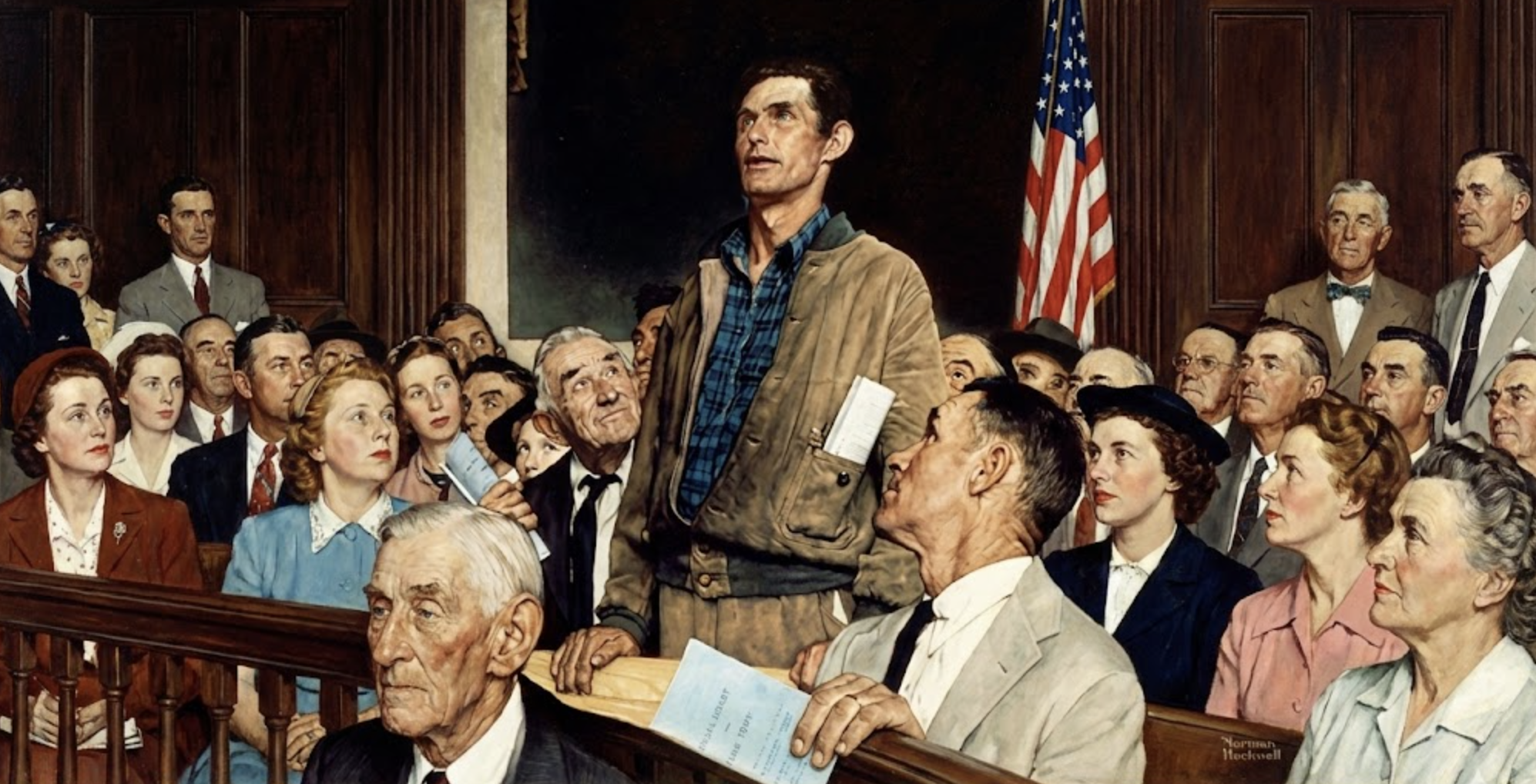
Almost a decade ago I wrote a piece about “the responsibility of knowledge in an information age.” In it, I shared a story from an experience I had with the art of debate:
*“I was [once] having lunch with a smart young woman. She had attended a few semesters at Stanford and we were talking about Japan. In one of my classes, I had heard that the birth rate in Japan was dangerously low. I mentioned this to her and she said, “Yes, but the abstinence rates of Japan aren’t going up. So people are still having sex, they’re just not having children.”
My initial reaction was, “…how could you possibly know that that’s true?” But then I realized…how did I know that what I had said was true? I had just heard it in a class, I hadn’t checked into it. So I mumbled, “you’re probably right.” And we moved on. After all, she had gone to Stanford, what did I know? Well, I decided to look further into the question. Turns out, she was totally wrong. In fact, 59% of Japanese women have “no interest in sex.”
That experience has always stuck with me. As a smart, well-spoken person, she had taken advantage of my ignorance on that topic to say something that wasn’t true. And that’s not inherently evil, she’s a good person. But at a time when we have direct access to the knowledge of all mankind via the internet, we have a responsibility to understand and support what is observably true and to try and become educated as to what is and isn’t real.”*
The reality of that responsibility is dramatically more true today, as steeped as we are with AI-enabled super information. Our relationship with information has never been more important. With narrative. With rhetoric. The lost art of rhetoric is leaving us all exposed amidst our slow descent into an intellectual acid bath of digital dopamine.
The opportunity lies in retraining a generation of people (ourselves included) how to better engage with ideas worth being convinced of.
The Art of Rhetoric
As a venture capitalist, I invest primarily in new companies. New companies are, more often than not, started by new people. So I interact with a lot of young people. No sentence has ever made me feel more ancient. But being 10+ years out of college does represent a prerequisite for elderliness. As a parent, interacting with sharp young people is incredibly insightful as I start to help shape my own children’s lives and interests.
My oldest son, Dax, is 9 years old. One of the extracurriculars recommended by some sharp youths I interacted with recently that surprised me was Speech & Debate. I never really did it growing up, but they made the point that it is an exceptional exercise, both for reinforcing structured thinking and endowing the participant with a confidence in speaking and engaging with conflict.
So I sought out a program for my kids. On Friday, Dax had his first speech class. The very first lesson got to the heart of classical rhetoric: ethos, pathos, and logos. His first debate? Pro vs. anti homework.
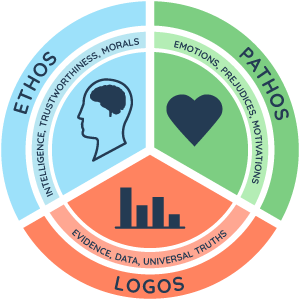
Rhetoric strikes me as a singularly powerful mechanism. In fact, all that I’ve written about my love for storytelling really, at its core, stems more from a sense of awe for the power of rhetoric more than just characters and narratives. I’ve written before about rhetoric. One of, if not my most impactful, “Quake Books“ is a biography of John Quincy Adams. In one chapter, it talks about how much Adams loved the art of rhetoric, and even became a professor of it at Harvard:
*“Rhetoric, in Adams’ day, meant classical rhetoric—the study of the means by which the classic authors deployed the arts of persuasion. Adams knew very well that for many of his students “rhetoric” described a set of hurdles and obstacles and obscure regulations designed to limit the torrent of writing and speech to an orderly stream. Adams intended to rescue this ancient art from its modern slumber.
For the ancients, of course, “the talent of public speaking was the key to the highest dignities.” That was no longer true, not because eloquence was a form of decoration with which moderns could dispense, but because moderns, unlike the citizens of Rome and Athens, no longer governed themselves through the kinds of “deliberative assembles” in which the gifted orator could shape the destiny of a nation. Since America was the one nation in which a vestige of those republics survived, it needed eloquent men as no other, lesser nation did.”*
Rhetoric. Eloquence. The power of persuasion. That was the intellectual recipe that enabled the American experiment to spring up in the first place. I would go as far as to say that rhetoric is not only at the core of storytelling, but also the core ingredient behind clarity of thought.
The idea of American republicanism and representation was particularly dependent on a fundamental idea of people willing to be convinced by convincing arguments worth being convinced of. A paraphrased idea attributed to Thomas Jefferson was that “an educated citizenry is a vital requisite for our survival as a free people.” The more educated you are, the more capable you are of engaging in rhetoric unto salvation.
The problem? Rhetoric is dying. Or rather, it is being co-opted.
Consumption-obsessed pocket addictors have leveraged the collective capability of the world’s greatest minds of the last 20+ years to lock us into a dopamine-fueled Pathos incinerator.
The death of expertise. Fake news. Momentum is the moat. Do your own research. My truth vs. your truth.
The entire information apparatus has become a hurricane of low-agency, high group-think stand offs. On all sides of every issue. Politics, religion, ethics, economics, technology. It’s not a right vs. left debate. Its a battle between nuance and narrative. And nuance is losing.
Unfortunately, the “powers that be” seem to be more aimed at further disabling our rhetorical capabilities than pushing for a renaissance any time soon.
Your Language is Your World
A few years ago I wrote a deep dive called “The Openness of AI.” In it, I tackled what felt like a far-fetched idea: that AI systems wouldn’t just prove useful tools, but would actually transform modern language. I believe that is proving demonstrably true. In that piece, there is a section of Censorship. In effect, the ability to control the information people are exposed to impacts how people actually begin to think about the world.
“The principle of linguistic relativity, also known as whorfianism, presents the hypothesis that the structure of a language influences or even determines the way individuals perceive and think about the world… As AI systems become inclusive of the majority of our data, the output of those same systems will start to shape people’s framing for reality.
Several prominent philosophers have remarked on this intimate relationship between language, understanding, and power. French theorists Gilles Deleuze and Felix Guattari wrote in their book, A Thousand Plateaus that “there is no mother tongue, only a power takeover by a dominant language within a political multiplicity.” German philosopher Ludwig Wittgenstein put it more bluntly, saying “the limits of your language are the limits of your world.”
I love that line. “The limits of your language are the limits of your world.” Multiple people, including Karl Kraus, have said “language is the mother, not the handmaiden, of thought.” Supposedly, the mid-20th century poet W.H. Auden said, “Words will tell you things you never thought or felt before.” For those of you who have read my writing for a while, you’ll see how this slots perfectly into my modus operandi: “I write because I don’t know what I think until I read what I say.”
Language creates thinking. Your thinking is your world-view. Rhetoric is meant to be the battleground mechanism where language is sharpened into perspective. We decide what we believe because we’ve been convinced.
But, seemingly due to the deluge of noise around us, people seem to increasingly be in pursuit of a way to off-load their thinking. Their perspective forming. Maybe its falling in-line with the party’s perspectives. Maybe its letting ChatGPT determine what you think. But whether you cede your language to AI or a political party, the end result is the same. You lose your worldview. Your perspective softens beyond recognition.
Rarely is any one place proffered more time to the shaping of worldviews than school. By age 18, kids have spent 10% of their waking hours in the classroom.
Let The Children Think
There are multiple pieces exploring how AI has ushered in an age of AI cheating that spells the doom of education as we know it. Tyler Cowen makes the point that education was already in a “profound crisis — the result of ideological capture, political monoculture, and extreme conformism.” I see these not as separate issues, but very much linked.
Already, education was warping around the lowest common denominator. What Cowen describes as a system that “evolved in the 20th century around what it is possible to teach, measure, and test with ease.” We sanded off the rough edges of learning to the point of codifiability. Then we’re surprised that this factory-farmed program for idea dissemination becomes co-opted by those with ideological axes to grind? Where else would bad ideas go other than into the path of least resistance?
And that trend isn’t slowing down. We’re seeing multiple arguments for how the evolution in education results in a “younger generation [finding] itself in a state of moral and intellectual disorientation.”
Now, AI is proving quite capable of that system for lowest common denominator thinking. Surprise! A mass replicable education is mass replicable!
Packy McCormick makes the exact right point when he reacted to this existential threat to education from AI, saying: “The entire academic project needs unraveling if it can’t survive a tool that can help people learn better. Less focus on the means, more focus on the meaning.”
I absolutely agree with the sentiment. Another way I’ve heard it said comes from P.C. Hodgell’s novel Seeker’s Mask:
“That which can be destroyed by the truth, should be.”
There is another idea I touched on in my Openness of AI deep dive about different kinds of truth that also rears its ugly head sometimes in this discussion:
*“In the broader context of disinformation, a new term has emerged. Malinformation, a combination of “malware” and “disinformation.” One definition of the term: “‘malinformation is classified as both intentional and harmful to others’—while being truthful.” In a piece in Discourse Magazine, it discusses the public debate on COVID, vaccines, and the way government, media, and large tech companies like Twitter attempted to control the spread of misinformation:
“Describing true information as ‘malicious’ already falls into a gray area of regulating public speech. This assumes that the public is gullible and susceptible to harm from words, which necessitates authoritative oversight and filtering of intentionally harmful facts… It does not include intent or harm in the definition of malinformation at all. Rather, ‘malicious’ is truthful information that is simply undesired and “misleading” from the point of view of those who lead the public somewhere. In other words, malinformation is the wrong truth.”*
Does anyone else read that and immediately shout Newspeak or thoughtcrimes?
This idea of the “wrong truth” strikes at the core of what is wrong with the rhetoric behind the debates we’re having. Wrong ideas imply a judge. Who’s to say what ideas are wrong or right? Typically, its those overarching systems I mentioned earlier that many people are increasingly tempted to cede their thinking to. Political parties, group-think, cultural warriors.
We’ll come back to AI as a thinking machine, but as a perspective machine or information interpreter, AI is often just a reflection of its makers. Why is OpenAI more woke than Grok? Look to their creators.
Peter Thiel made the point that, often, these “off limits” parameters around certain ideas can frequently speak to their truth:
“If you have ideas that are taboo, that you’re not allowed to discuss. My shortcut is to suspect they’re simply correct. The example I like to give is Professor Bob Laughlin, who’s a Stanford physics professor, around 1998 he gets a Nobel Prize in physics. And he suffers from the extreme delusion that now that he has a Nobel Prize he finally has academic freedom and can talk about whatever he would like to talk about. There are all sorts of areas that are very taboo in the sciences. Questioning Darwinism, stem cell research, climate change; these are very dangerous areas. But he picked one even more dangerous than any of those three. He believed that most so-called scientists were basically stealing money from the government, engaging in borderline fraudulent science. Or that was incrementalist, and not worth much. His area of focus was high temperature superconductivity. He told me, at one, point there were maybe 50,000 papers written in that area and maybe 25 out of 50,000 had actually advanced the science at all. I don’t even need to tell you how that movie ended. He promptly got defunded, his students couldn’t get PhDs anymore. So my hermeneutic suspicion is if you have an idea like stagnation in science, which immediately gets you deplatformed, that’s an idea we should take very seriously.”
All of this is to say that the fear over AI’s impact on education has, at first, more to do with the hollowing out of quality education in favor of codified ideological babysitting. There are two arguments in response to this, other than just wanting to ban AI to keep education’s frailties in the “taboo” category: (1) education should be more focused on skills, or (2) the entire purpose of education should be reevaluated.
What Use Are Skills To a Soul?
Skills is where Tyler Cowen lands. In his piece on AI cheating in education he concludes that its a good thing because AI is an important skill to have:
“I have, at times, proposed that we devote one-third of the college curriculum to teaching students about AI and how to use it. Imagine what could be taught. What are the strengths and weaknesses of the various models? How do you spot and also minimize AI hallucinations? What makes for a good prompt? How can you check the work of your AI agents? How can you use multiple AI models to get a better answer yet? And so on. After all, those are the skills that will be required for the jobs of the future, or in some cases the jobs of the present.“
And that’s a very valid point. Plenty of education struggles because it has become divorced from practicality. It has more to do with indoctrination than education. More skills would certainly do no harm to anyone, and would counteract a lot of the hollow value of a typical education.
But the power of rhetoric is not simply a question of marketable skills. Formulating expertise can enable some appeal to ethos, but it doesn’t shape the entire convincing capability than a thriving culture should wield. I’m reminded of the scene in Dead Poet’s Society:
“Words and language. No matter what anybody tells, you words and ideas can change the world. We don’t read and write poetry because it’s cute. We read and write poetry because we are members of the human race. And the human race is filled with passion. Medicine, law, business, engineering — these are noble pursuits. Necessary to sustain life. But poetry, beauty, romance, love — these are what we stay alive for.”
Words and language. The forces that change the world. Rhetoric. The delivery mechanism for that change. Even if the only part of the world you change is your own mind; that is a force of nature that can shape worlds.
If the limit of our language is the limit of our world then we are limited by the command of language to which we attain. And, as I’ve pointed out, many of the most powerful forces of our lives are offering us a chance to cede our thinking to their forces of programmability, be it the Gentle Throng of Our Large Language Masters or the Teethless Debates of Politics. To withstand that siren’s song we have to first understand what about them is so appealing, and then what is to be done to regain our own renaissance of rhetoric.
Gentle Throng Of Our Large Language Masters
In many ways, LLMs are just like any other chat-enabled consumer application you’re currently addicted to. They’re built with maximum engagement in mind; that’s why sycophancy is so common. Complimentary reinforcement keeps you coming back for more.
The difference is that Google never assumed it was responsible for the philosophical debate behind pagerank. For the most part, it was a simple algorithm. AI, on the other hand, is believed by its creators to be capable of eventual superintelligence. And they’re doing their darnedest to step into that role of rhetorical reasoning on your behalf.
In 2023, there was a piece about how AI companies were hiring poets, novelists, and writers to feed their AI models. Why? Because textual autocomplete isn’t enough. As one academic put it; “replicating classical language forms is a way of looking prestigious.”
This programmatic improvement is both in-line with traditional consumer addiction plays while lending itself uniquely to LLM’s influence over human language. The more capable ChatGPT is of sounding like a well-reasoned, fully-balanced English speaker and, dare I say, rhetorician, the easier it is to cede your thinking to that system.
Another example of the AI’s relentless pursuit of its own intellectual replacement theory is how companies like Anthropic hire philosophers on-staff. What do they do you might ask? Anthropic’s philosopher describes her role as evaluating the “behavior and character” of models in nuanced situations. At one point, she describes training a model as “less like arguing about utilitarianism and more like ‘how do you raise a child,’ where uncertainty, context, and tradeoffs matter. This is not the process you leverage for casual tool improvement; it’s how you build an intellectual alternative entirely.
The better these tools get, the more enticing it will be to offer up our thinking engines to their capable hands.
For those whose temperament doesn’t lend themselves to technological overthrow, don’t fret. There is also hyper-emotional political overthrow.
Teethless Debates of Politics
For most people, when you think of “debate,” you may think of Presidential debates. Unfortunately, Presidential debates have become a farce in political theater. Can you imagine Donald Trump with a pencil at a lectern, noting key points in his opponents argument to be sure to address?
Even in more idealistic renditions of political debate, with shows like The West Wing, there is still a lot of theater. My family and I joke that, whenever the President’s staff in that show are losing an argument they just grandstand about how their opponent referred to their boss as “Bartlett” instead of President Bartlett.
Every few months I’ll see a video from bygone eras of things like President Bush Sr. answering a question about immigration incredibly sensitively and humanely. Or John McCain refusing to platform radical perspectives about Obama. Or President Obama and Mitt Romney making gentle jokes about having a presidential debate on Obama’s anniversary. That behavior is very out of vogue now.
So what kind of debates do we have today?
Debate In The Wild
There are countless examples of “debate” playing out in the modern public sphere.
Elon Musk has had a number of rhetoric-driven showdowns with reporters, whether about hate speech on Twitter or slavery and reparations.
The video of Pierre Poilievre chomping an apple and refusing the premise of a series of questions about whether he’s “taking a page out of Donald Trump’s book.”
A series of videos of Gavin Newsom talking to Sean Hannity trying to unpack a number of complex issues and speak to data.
Dave Smith and Douglas Murphy debating the Israel-Hamas War on Joe Rogan.
Dozens of debate clips from the Oxford Student Union, or Jubilee YouTube videos of “one vs. many” debates, or countless “professional pundits” arguing different points.
On the one hand, many of these arguments can be exposed as shallow upon closer inspection because of lack of “walking the walk” in the face of talking the talk. Gavin Newsom can be very convincing but his actions undermine his character. Elon Musk can make the point that we shouldn’t make race the central focus of our lives and just move on, but then retweet white supremacy hot takes.
This is, in fact, one of the core aspects of political debate that makes it “teethless.” It’s raw emotional intrigue, but ultimately we know that political leaders will do whatever they want, regardless of any data or debate.
My takeaway from the onslaught of the debates we do see is that most have devolved into almost exclusively pathos constructs. Emotional manipulation is the primary playbook.
The Age of Pathos
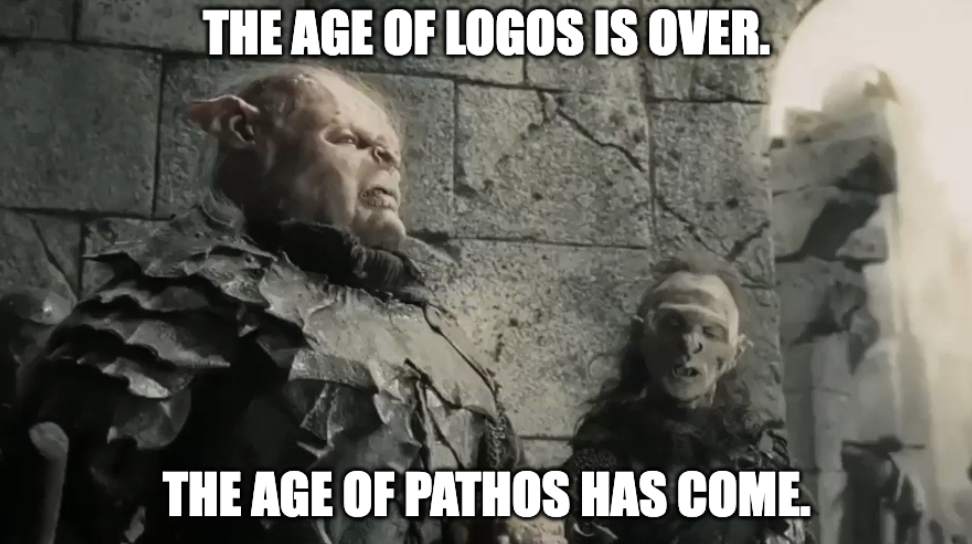
Political rhetoric has become incredibly exhausting and incredibly effective for the same reason. It’s highly emotional.
Debating the merits of immigration is valid. Scaring people with horrifying stories of violent immigrants not at all representative of the data is not. Cultural sensitivity is a valuable lesson to learn and valid contribution to society. Scaring people into compliance by threatening their livelihood is not.
What is most surprising to me is people’s seeming inability to recognize the mechanisms that are being intellectually weaponized against them to hijack their perspectives. We’re actively being manipulated and we love it.
If we’re to have any hope of not falling victims to the paternalistic inclinations of our technology or political affiliations or whatever other “power that be,” we have to reclaim rhetorical capabilities. Recognize the mechanisms that are being used and see past the smokescreens to the substance (or lack thereof.)
Rekindle The Flame
Most people may be sheep at the mercy of the conviction-fueled few. But they are not, by default, sheep to a stupid shepherd, despite what many manipulators of man would have you believe. There is plentiful evidence that people can, and want to be, persuaded by rational arguments.
Research on “epistemic vigilance” shows that people are naturally skeptical. They don’t want to follow shallow missions or poor-faith arguments. But the preachers of sub-par missions and misleading arguments have become incredibly effective rhetoricians. The only antidote is for broad swaths of people to regain the lost art of rhetoric and understand the devices being used against them.
I’ve focused on the Socratic Rhetorical Triangle. But Plato generally argued against the kind of rhetoric encapsulated by ethos, pathos, and logos. He saw rhetoric as a professional weapon that was capable of being wielded for one’s aims, regardless of truth. Now, I’m not deep enough in ancient Greek philosophy to argue the specific ideological back and forth. But another intellectual trio comes from the Platonic tripartite conception of the soul as defined in The Republic: spiritedness (thymos), reason (logos), and desire (eros).
In Byrne Hobart’s book “Boom: Bubbles and the end of Stagnation“ he explains how one of these ancient Greek elements actually drives technological innovation:
“Technological innovation is more driven by excess, exuberance, and irrationality than by cost-benefit analyses, rational calculation, and careful and deliberate planning. Reality-bending delusions are underrated drivers of techno-economic progress. In other words, a necessary enabling condition for technological progress, which ultimately fuels human flourishing, is what the Ancient Greeks called thymos, which often gets translated as “spiritedness”—a relentless drive to transcend the limitations of a listless present.”
In other words, rhetoric may be the “how” but thymos is the “why.” Weak rhetoric in support of weak thymos doesn’t make it out of the gate. Meanwhile, we’re drowning in an ocean of strong rhetoric in favor of poisonous thymos. What we need is reinvigorated rhetoric in support of worthy thymos — spirited pursuit of a grander good.
The good news is the spark is already lit. I saw multiple instances recently of Kai Cenat, a famous streamer, making commitments to read out loud for 20 minutes a day or looking up words he didn’t know as he was reading. It inspired another popular streamer, Rakai, to do the same.
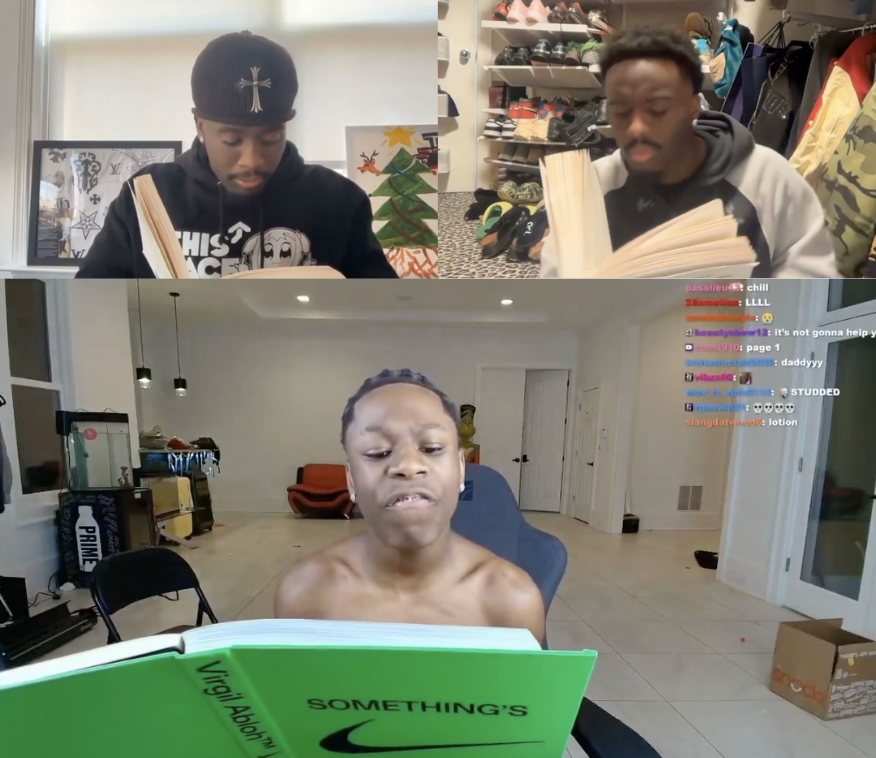
Another, similarly surprising, spark of intellectual discourse is the fact that Dua Lipa actually has one of the best book club podcasts around.
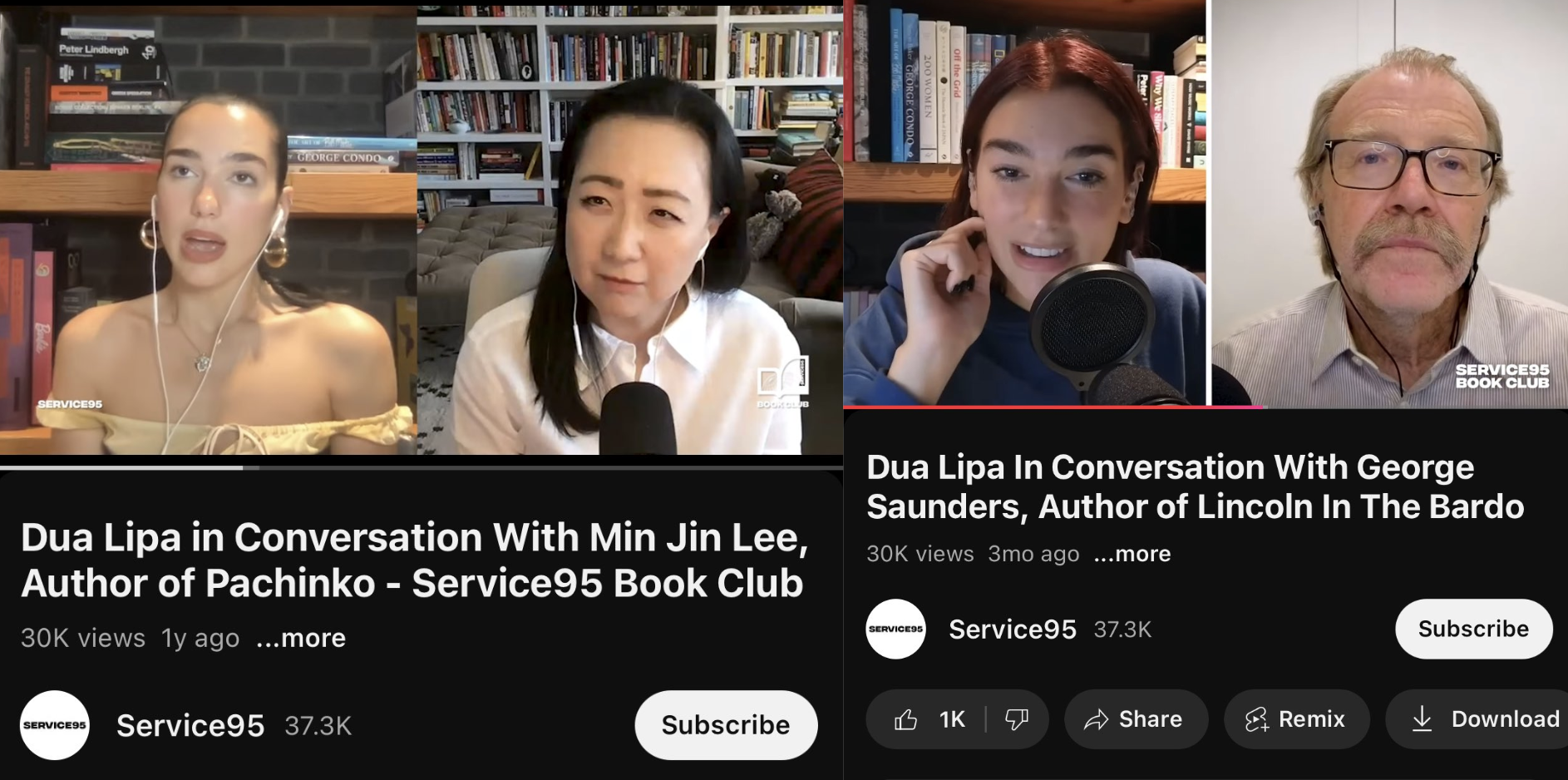
This is a powerful component of a movement to rekindle the most basic tenants of rhetoric — education. And I’m not talking about the hollowed-out factory-farmed ideologue assembly line I talked about earlier. I mean education in its purest form. Personal education. Less than half of Americans read even a single book in the last 12 months. Seeing more mainstream influencers embracing the need for intellectual enrichment may be just the fan this flame needs.
T.S. Eliot wrote that “We know too much, and are convinced of too little. Our literature is a substitute for religion, and so is our religion.” The spring wells of our convictions have run dry. Life has become too loud; too complicated. The masses are desperate to offload the accountability of intellectual rigor. To stem the stampede we need to return to the core of what used to spark our spirits. Our thymos. God, family, freedom, peace.
We need a renaissance of rhetoric. We need a rekindling of thymos. We need to be better at convincing each other of things worth being convinced of. Because before conviction comes convincing.
Referenced in
- AI Cheating in Education note
- Byrne Hobart note
- Ethos, Pathos, Logos note
- Flynn Effect note
- Linguistic Relativity note
- Persuasion note
- Rhetoric note
- Speeches That Changed The World book
- Thymos note
- Tyler Cowen note
- W.H. Auden note