Open-Source Knowledge
Ideas as infrastructure, not artifacts
The belief that knowledge should be treated like open-source software — living, interconnected, forkable, and in continuous development — rather than static publications that slowly decay. This encompasses the study and construction of knowledge management systems, collaborative knowledge platforms, and the philosophy that ideas compound fastest when they're publicly legible, modular, and built to be extended by others.
On cognitive decline, information overload, and the death of reading: @patrickc linked a really good article on the implications of the death of reading as a culture (and also how TV actually started this trend, not phones and social media, though now doomscrolling has kicked it into overdrive). I'm acutely aware of the adverse effects of extended social media usage in my own life. I've told myself that social media, and Twitter in particular, is "useful" for work as a VC (which it is, to an extent), and certainly I've had to maintain an active social presence to market a book. But the constant access to "the feed" is, without a doubt, a cognitive drain. You start reading a difficult paper, researching a new market, looking into a new company, etc, and it's quite literally "too easy" to "check Twitter" (or your inbox, etc) when the knowledge work is being done on the same device where you access the dopamine factory. Throw in Slack, Teams, imessage, etc, and the problem compounds. Too many distractions from deep thinking. This is also a limiting factor for LLMs as a "knowledge factory." LLMs are a godsend for an aspiring autodidact, but when you're using ChatGPT or Claude, you still face the cognitive load issue of social media existing on the same machine. Even if you don't succumb to it, or if you use app and social media blockers, there's a cognitive load involved in resisting the dopamine. This also highlights an emerging value prop of books as a form factor: Books, of course, aren't the most efficient way to retrieve data, LLMs are better (and they're trained on basically every book). But books are a much better harness for "learning" than any online format, because they give the reader a distraction-free medium for gaining knowledge. Yes, in an ideal world, an "isolated LLM" could be used as an "everything tutor," but the temptation of the internet will limit the ability to "think deeply" when working on a laptop. Books (and e-readers without other internet access) remove that distraction, and they allow you to really "sit with the words," whether you're reading a memoir that really draws you into the author's world, or you're working through McKinsey's Valuation book and struggling to understand DCFs and cost of debt. I think you can "create" environments to better digest digital content as well though. Something I've started doing to get "more" out of my reading is bookmarking everything with @wwwsublimeapp, then using Sublime's MCP to push all of my bookmarks to my personal website library. I have an iPad with no social media or imessage, and its only email address is a separate inbox I use to subscribe to all of my newsletters. On weekends, I'll read through the bookmarked library on the iPad with my phone and laptop put away. Much better experience.
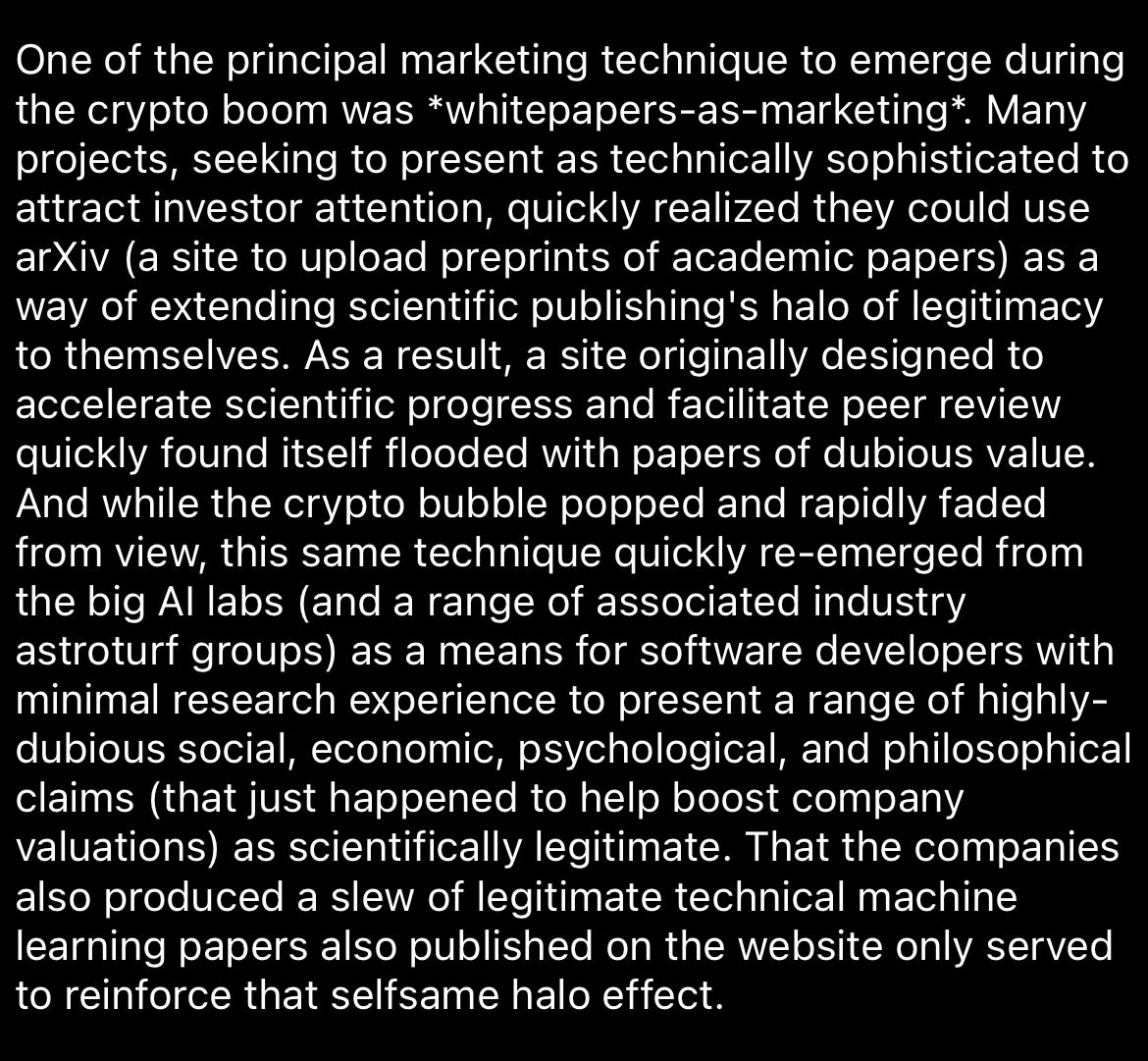
2026-09-06Really happy to see people finally talking about how academic signals and traditional sources of scientific truth have been fundamentally compromised in unprecedented ways to launder shoddy ideas and boost corporate valuations. An excerpt from something I’ve been writing — https://t.co/gZQn6tbgjl **Quoting @bayesianboy:** > Have been thinking a lot about when scientific concepts become propagandized. > > Paper exemplifies “corporate capture of concepts from academic research on AI and society” framing them “as solvable problems whose solution is the right tech integrated in the right way.”
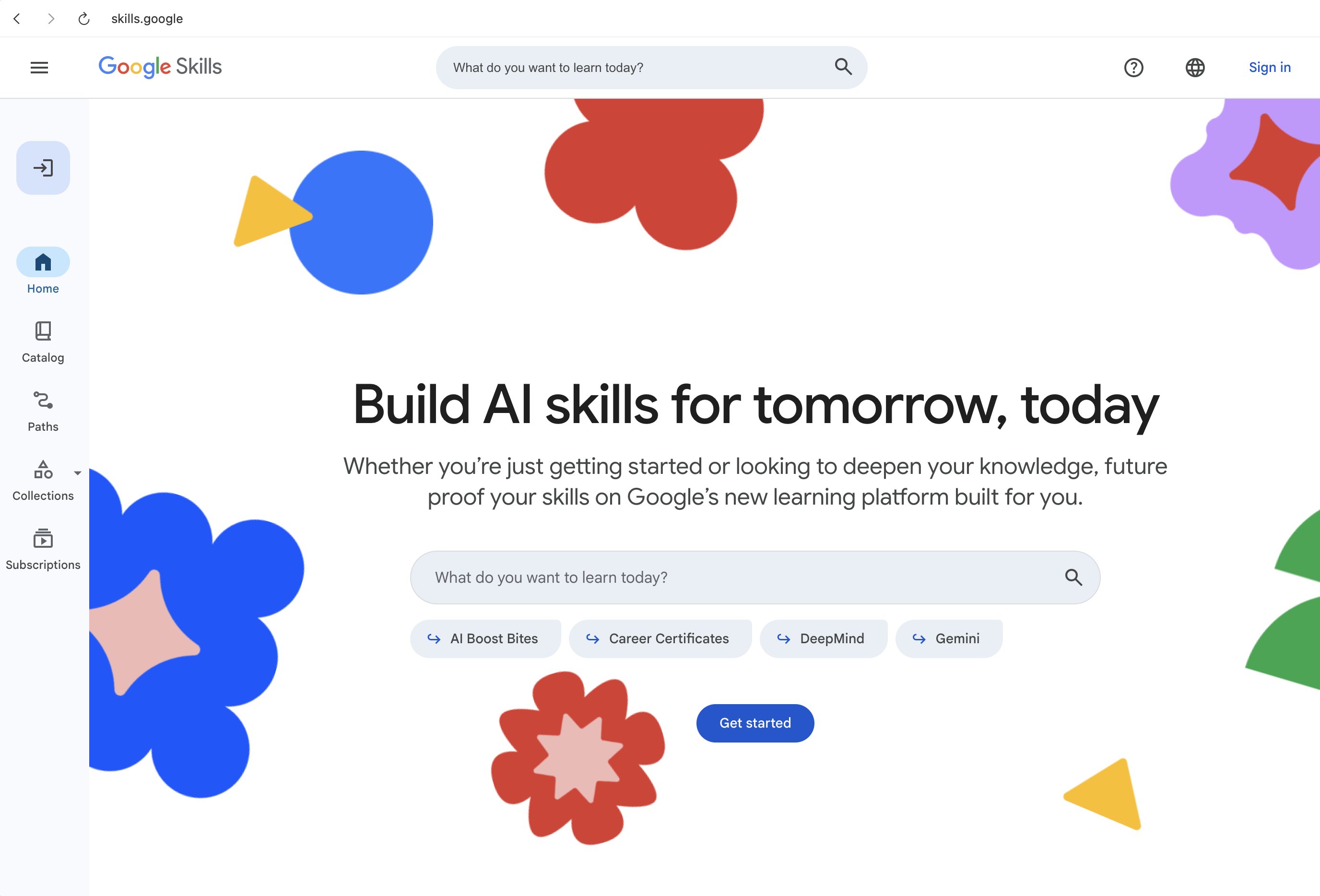
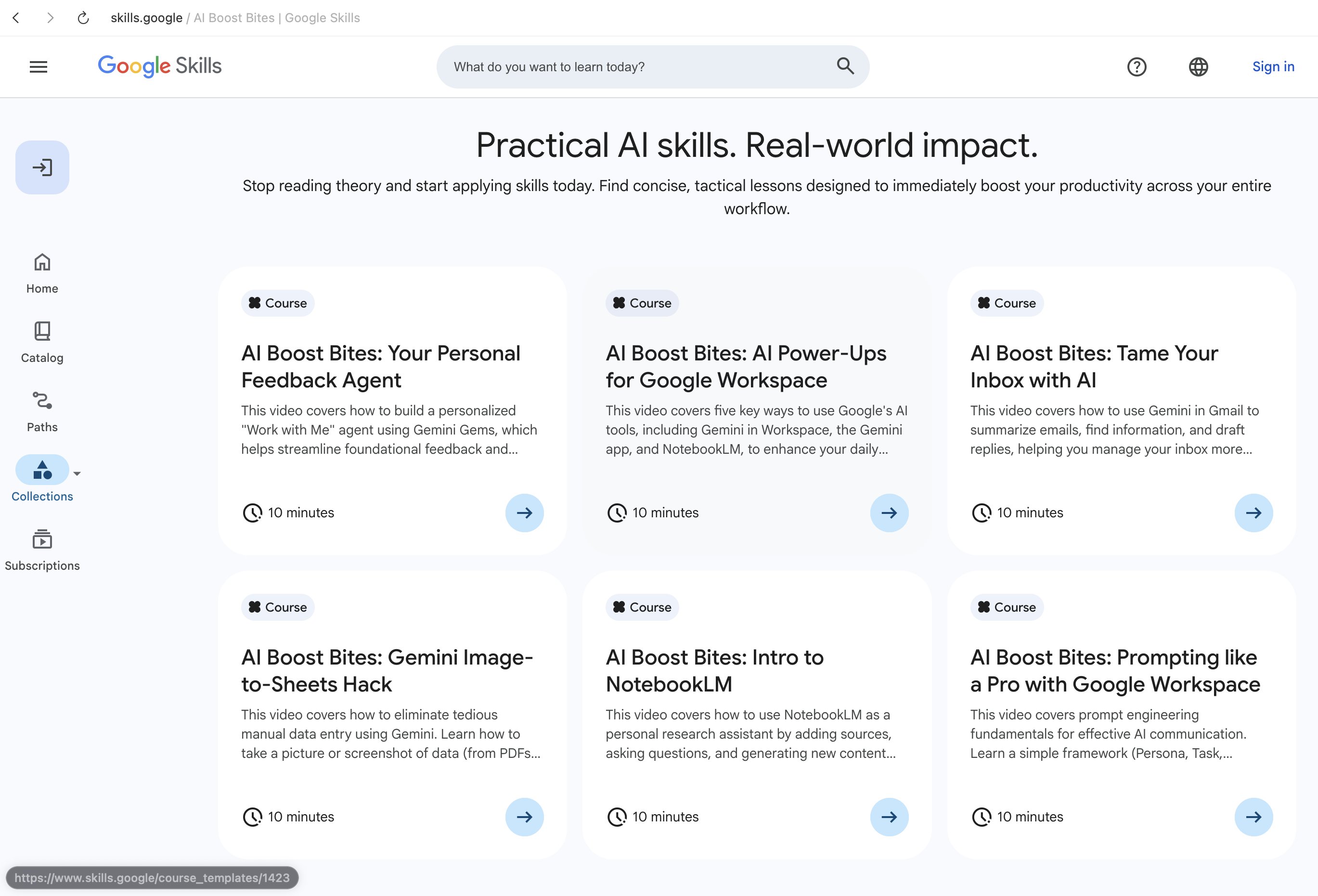
Google just made a $2,000 AI education free (and most people will still choose to stay illiterate). They quietly launched Google Skills, a hub with 3,000 technical modules that replaces "prompting" fluff with actual DeepMind research workflows. You can now access the exact https://t.co/n38Ag0b1ea
On cognitive decline, information overload, and the death of reading: @patrickc linked a really good article on the implications of the death of reading as a culture (and also how TV actually started this trend, not phones and social media, though now doomscrolling has kicked it into overdrive). I'm acutely aware of the adverse effects of extended social media usage in my own life. I've told myself that social media, and Twitter in particular, is "useful" for work as a VC (which it is, to an extent), and certainly I've had to maintain an active social presence to market a book. But the constant access to "the feed" is, without a doubt, a cognitive drain. You start reading a difficult paper, researching a new market, looking into a new company, etc, and it's quite literally "too easy" to "check Twitter" (or your inbox, etc) when the knowledge work is being done on the same device where you access the dopamine factory. Throw in Slack, Teams, imessage, etc, and the problem compounds. Too many distractions from deep thinking. This is also a limiting factor for LLMs as a "knowledge factory." LLMs are a godsend for an aspiring autodidact, but when you're using ChatGPT or Claude, you still face the cognitive load issue of social media existing on the same machine. Even if you don't succumb to it, or if you use app and social media blockers, there's a cognitive load involved in resisting the dopamine. This also highlights an emerging value prop of books as a form factor: Books, of course, aren't the most efficient way to retrieve data, LLMs are better (and they're trained on basically every book). But books are a much better harness for "learning" than any online format, because they give the reader a distraction-free medium for gaining knowledge. Yes, in an ideal world, an "isolated LLM" could be used as an "everything tutor," but the temptation of the internet will limit the ability to "think deeply" when working on a laptop. Books (and e-readers without other internet access) remove that distraction, and they allow you to really "sit with the words," whether you're reading a memoir that really draws you into the author's world, or you're working through McKinsey's Valuation book and struggling to understand DCFs and cost of debt. I think you can "create" environments to better digest digital content as well though. Something I've started doing to get "more" out of my reading is bookmarking everything with @wwwsublimeapp, then using Sublime's MCP to push all of my bookmarks to my personal website library. I have an iPad with no social media or imessage, and its only email address is a separate inbox I use to subscribe to all of my newsletters. On weekends, I'll read through the bookmarked library on the iPad with my phone and laptop put away. Much better experience.
2026-09-06Really happy to see people finally talking about how academic signals and traditional sources of scientific truth have been fundamentally compromised in unprecedented ways to launder shoddy ideas and boost corporate valuations. An excerpt from something I’ve been writing — https://t.co/gZQn6tbgjl **Quoting @bayesianboy:** > Have been thinking a lot about when scientific concepts become propagandized. > > Paper exemplifies “corporate capture of concepts from academic research on AI and society” framing them “as solvable problems whose solution is the right tech integrated in the right way.”
Google just made a $2,000 AI education free (and most people will still choose to stay illiterate). They quietly launched Google Skills, a hub with 3,000 technical modules that replaces "prompting" fluff with actual DeepMind research workflows. You can now access the exact https://t.co/n38Ag0b1ea
"I wrote a piece about this a couple years back it was called "Against the Matrix Theory of the Mind." I think I used to conceptualize knowledge the way you see it in "The Matrix" where it's like I wanted the port in the back of my mind that the little needle would go into. I
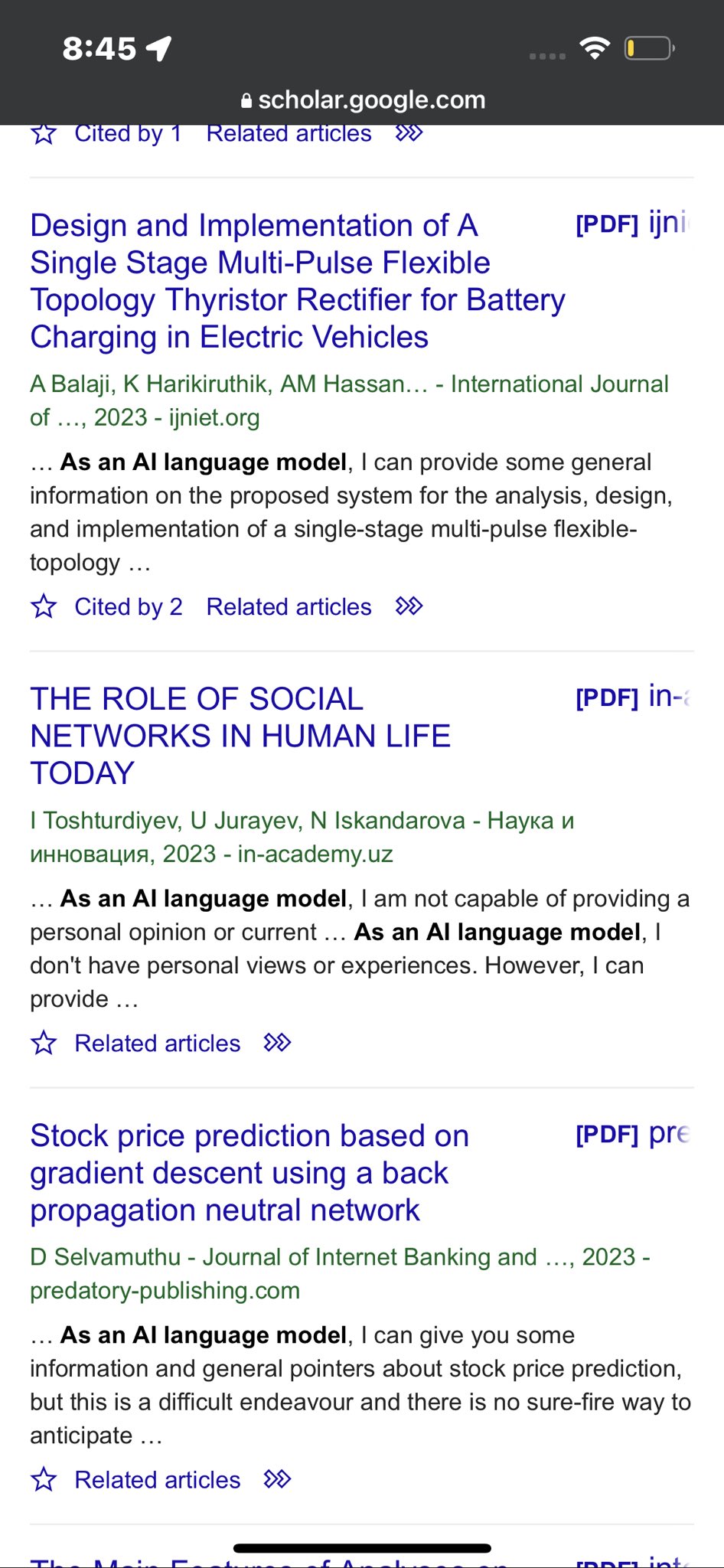
May 28, 2025Go to Google Scholar and look up ‘As an AI language model” -“ChatGPT”’ A thread: https://t.co/r7HdNvQHHU A BOOK about Libya #AI Generated! Follow for AI tutorials and DIY projects! My email is gaodrew [at] stanford [dot] edu for journalists interested guess we got Google to take down these articles? moves very fast! Direct link to the Scholar results: https://t.co/gGAReOM4Ii UPDATE: it's not just trash journals. also in #elsevier, #ieee https://t.co/0FrGXHIOfN PART TWO is CRAZIER: https://t.co/0FrGXHIOfN
Everything the early open internet hackers were worried about turned out to be true If you can’t have your own local copy of something, it can be disappeared. Any corporate online platform can become a walled garden overnight & your content taken away. Only Wikipedia will endure GPL and its descendants remain as subversive now as ever. https://t.co/9zzhoWwKtJ The Internet Archive. Project Gutenberg. All of the tools of the free internet are decades old. That philosophy can still be renewed. People were genuinely motivated by the idea of open information. In my research I found people decided not to commercialize huge opportunities (like the first iPhone apps) because doing so would contradict their philosophy. @klakhani found similar attitudes among early hackers. Convenience comes at a cost, and all companies eventually disappear or change their policies. I am learning this with my thousands of Twitter bookmarks that can not be easily downloaded.

“I for one was prepared to defend Reddit’s position, and to make the point that open APIs were arguably a zero interest rate phenomenon.” 🎯 Sucks for devs & customers impacted but suppliers in every market got to make money https://t.co/FXXSLOeGRo
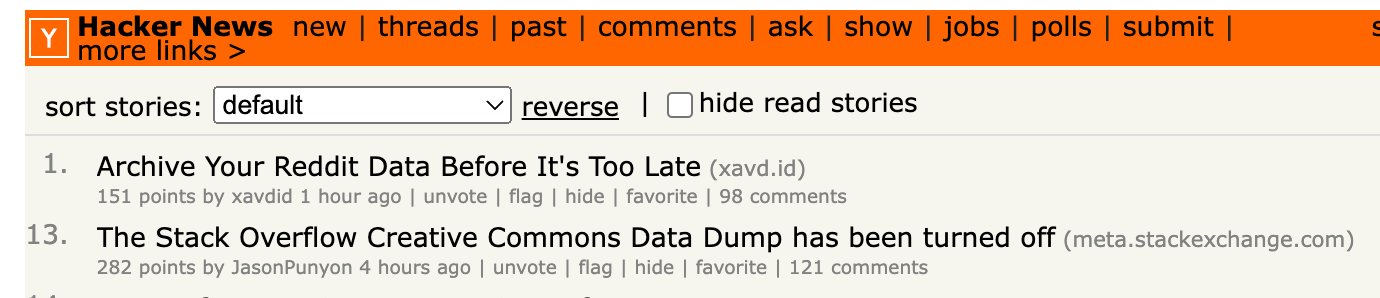
Jun 12, 2023"AI enters the Dark Ages" two of the top stories on HN today are related to UGC co's (Reddit, Stackoverflow) shuttering their data pipes. Red carpet to give us your data, but pay us if you want it back. Unless you are googlebot ofc. I keep thinking about something @jefrankle https://t.co/yRNpMKWNN6
In 2017, an anon Wikipedia editor changed the Vatican City flag colors from the top (correct) to the bottom (wrong). It stayed incorrect until '22. Many used the Wiki svg as a source of truth, so now physical flags and emojis are wrong all over the place. https://t.co/AHGZD5gSkA https://t.co/DEsrBWmrFt

So I am going to watch this but I have some trepidation because this was exactly the thesis I was advancing in 2014/2015 (see for example "The Garden and the Stream: a Technopastoral") right down to targeting the news feed as the start of it all https://t.co/k75qRUxWN4 They were big influential essays too -- dozens of them. Inspired the "digital gardens" movement. Part of the inspiration of creators @RoamResearch and @NotionHQ . I just don't want to be written out of the history of an idea I worked so hard on and was unique at the time. OK, I'm going to hit play now. Oh, crap. I'm a minute in and I don't know if I can finish. This is looking like it's exactly my 2015 argument. Like exactly. Right down to the "web as topology" vs. "web as events" distinction. And to be clear, I'm not saying I wrote a thing in 2015 that no one noticed and was ahead of its time. I'm saying I wrote several dozen things in 2014/15 that were incredibly influential among a small set of people who then propagated the ideas into the mainstream. Ok, pressing play again. "The Garden and the Stream" is literally the visual and narrative metaphor for the entire thing. And again, I'm not saying the filmmaker knows this. I'm saying the idea has moved into the common understanding now. And every point made here, right down to how 2006 was year zero for this, was part of that analysis. And again, these essays helped inspire new products and community practices and vocabularies. They weren't a footnote. I should be really happy that this is mainstream thinking now, putting the Garden/Stream issue at the center of our discussions. And I will be. But I've always been in this weird place, not really an academic building up an academic record, not really a person with a traditional media platform building up a record that way. And it sucks sometimes b/c your ideas go from weird to common w/o getting attached to you. I should say too that others -- like @tomcritchlow and @Mappletons and @Conaw so many others advancing that work over the past few years -- deserve recognition too. I just don't think people realize what a weird idea this was when we all started. (And of course @WardCunningham, grandfather of this all!) Oh and @BillSeitz and so many others, please don't be offended if I didn't name you here, I just have to get started with my work day. But reply in the comments with other names I haven't mentioned. Also one of the reasons this matters is I didn't just identify the problem back then. I worked with an entire community of people coming up with solutions - ways we could use @WardCunningham's work & conceptualize what mixing "the web as topology" with community would look like. OK, done now maybe.
May 24, 2023 Original deleted — preserved hereTwo short, supremely useful pieces on meta-reading: 'How to Read a Book' by Paul Edwards - https://t.co/tVbCJQn0dw 'How to read a (good) book in one hour' by Chris Kelty - https://t.co/wIpcxfmILA Only applies to non-fiction for research. Great when paired with anti-libraries.
May 23, 2023 Original deleted — preserved hereStackOverflow and Reddit want to charge for their UGC content Quora wants to own the consumer interface by working with multiple model providers https://t.co/jz5u7ILINf
Apr 20, 2023It is done Nine years of combing the Internet, spanning 330 BC to 2023—the ultimate reading list for the aspiring writer or polymath For those who hate clicking through, I’ve compiled 200 of the greatest books in thread-form below 20 genres. Find yours https://t.co/breXpMjB50 1. Academia & Science 2. Art & Aesthetics “Good art theory must smell of the studio” (Rudolf Arnheim). 3. Comedy & Affect 4. Composition & Craft “The dignity of movement of an ice-berg is due to only one-eighth of it being above water. A writer who omits things because he does not know them only makes hollow places in his writing” (Ernest Hemingway). 5. Creativity & Invention 6. Culture & Civilization “One admires a genius because one has the imagination to see that there is no ‘mechanism’ in him or his work, nothing that can be analyzed and rationalized” (Jacques Barzun). 7. Language & Meaning 8. Literature & Criticism “The artist, as John Stuart Mill saw in a wonderful flash of critical insight, is not heard but overheard” (Northrop Frye). 9. Nature & Mind 10. New Media & Technology “Just as the biosphere stands above the world of nonliving matter, so an ‘abstract kingdom’ rises above the biosphere. The denizens of this kingdom? Ideas” (James Gleick). 11. Nonfiction & Text 12. Philosophy & Miscellanea “The brain is rational; the mind may not be” (Douglas Hofstadter). 13. Poetry & Lyric “In one creative thought a thousand forgotten nights of love revive and lend it grandeur and height” (Rainer Maria Rilke). 14. Publishing & Print 15. Reading & Design “It is said that Machiavelli would sometimes prepare to read by dressing up in the period of the writer he was reading and then setting a table for the two of them” (Maryanne Wolf). 16. Rhetoric & Speech “Coleridge defined prose as ‘words in their best order’ and poetry as ‘the best words in the best order’” (Sister Miriam Joseph). 17. Screenwriting & Drama 18. Story & Fiction “Knowing ‘why’ the rules are the rules means we know ‘how’ to break them intelligently and successfully” (@wstorr). 19. Style & Prose 20. Syntax & Grammar “Our literary history shows that most great stylists of English—Shakespeare, Bacon, Donne, Milton, Jefferson, Churchill—learned to create good sentences by imitating examples from earlier literary masters” (Marie Waddell, Robert Esch & Roberta Walker). Hope you found the Muse, or vice versa. For the true gangsters, I’ve compiled a companion thread of the 200 greatest articles, papers and essays. But even if you’ve done enough reading for today, check out the @Essayful page. https://t.co/9DzTkSGwjK
Feb 22, 2023"Only one of Einstein’s papers was ever peer-reviewed ... and he was so surprised and upset that he published his paper in a different journal instead." https://t.co/qYxjnUfhvZ
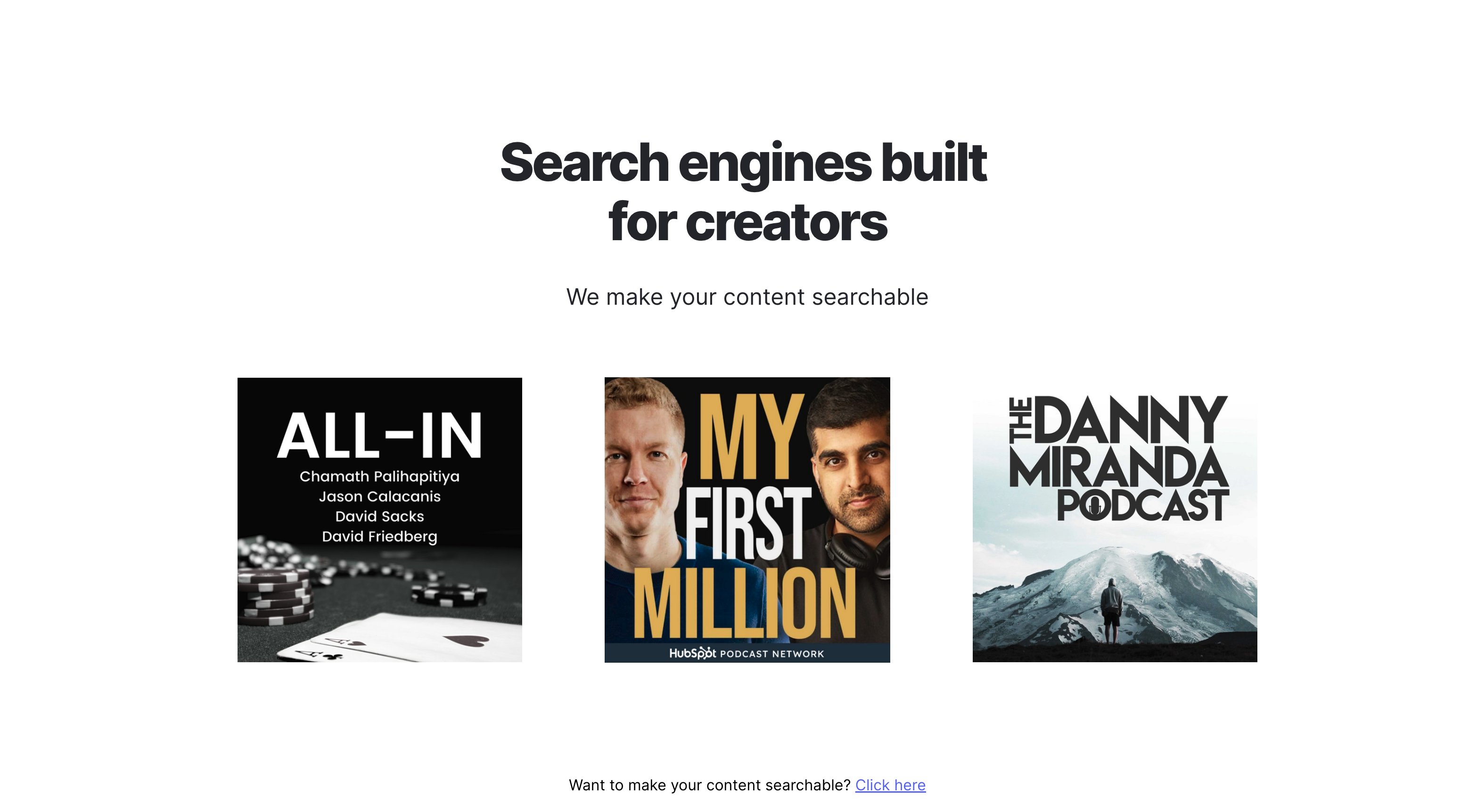
Dec 28, 2022✨ Introducing https://t.co/NM4QWfD0j1 A semantic search engine for your YouTube/Podcast cont. Search for a phrase/idea/question & get the exact timestamp & videos where this is mentioned. Lightning fast. @theallinpod @myfirstmilpod @heydannymiranda https://t.co/8fehxWTeQq The search allows you to browse across all episodes while understanding the semantics. It uses an AI transformer model to create the text semantics & Whisper for the transcription. Built it with @PraneetKedari @safwaankay @aribk24 How it started: https://t.co/BRv0jXWR5x If you want us to add any of your podcasts or YouTube channels, please DM us! We would love to hear from you :) Thx @Jason @ShaanVP @thesamparr @heydannymiranda for the support on this! Demo: https://t.co/7pHX8bwr8X
Every company has a story. But a lot of those stories are hard to find, and even harder to understand. Today we're excited to launch Contrary Research (@Contrary_Res) to better help tell those stories 👇 https://t.co/Ts0MzOHA6M

Understanding private tech companies can be a lot of work. To get to a baseline understanding you might have to read countless press releases, product white papers, listen to podcasts—hours of work to get a fundamental understanding of a business. There's a better way to start.
Sep 14, 2022The most powerful feature that Twitter has: Advanced search Until recently I hadn't even heard of it, but now I use it all the time. Here are 6 twitter advanced search features that will revolutionise the way you search for what to read: 🧵👇 Before we get started, you might be wondering why you need advanced search? Your main feed just shows what's being posted NOW. But there's absolute gold in the old tweets from experts you love + big accounts you follow. Lots of learning just waiting there for us. Here's how: 1. Find tweets from a particular person. Want to see what @Liz_ORiordan's been tweeting about? Just type in the search bar: from:Liz_ORiordan Want to see tweets to @LondonAllergy? to:londonallergy Combine these to see their interactions: from:Liz_ORiordan to:londonallergy 2. Find tweets on a specific topic. Keywords will keep your search results on topic. Want to find what @kathevans2 has been saying about vaccinations? from:kathevans2 vaccinations But what if you want to exclude tweets about measles? Just add - to the search term: -measles 3. Find tweets that are popular. You can set a minimum number of retweets, faves, or replies: min_retweets: x min_faves: x min_replies: x @OrthopodReg has been paving the way for culture change, but what if we want his most popular tweets? from:orthopodreg min_faves:1000 4. Filter by a specific type of tweet Sometimes you might want only tweets with images or links in them: filter:links filter: images filter:media Want to find that graphic by @DrLindaDykes on DNACPR? from:drlindadykes dnacpr filter:images 5. Find tweets from a particular time period. Add a date filter: since: until: Do you remember @doc_bipolar sharing about her new blog but can't find the link? from:doc_biopolar since:2022-03-01 until:2022-04-08 filter:links Remember to use the format YYYY-MM-DD 6. Find tweets by location. Add a city and a distance if you want local info. near:X within:10mi If you want to hear more from Glaswegians then you just add the location tag into the search. near:Glasgow wellington The TL;DR of how you can search: • from:twittername • keyword1 OR keyword2 • min_faves:2000 • min_retweets:2000 • filter:links • filter:images • until:YYYY-MM-DD • since:YYYY-MM-DD • near:location within:15mi That's it! If you enjoyed this then: 1. Follow me at @TessaRDavis 2. Retweet the first tweet of this thread: https://t.co/jVHZOqaCmo
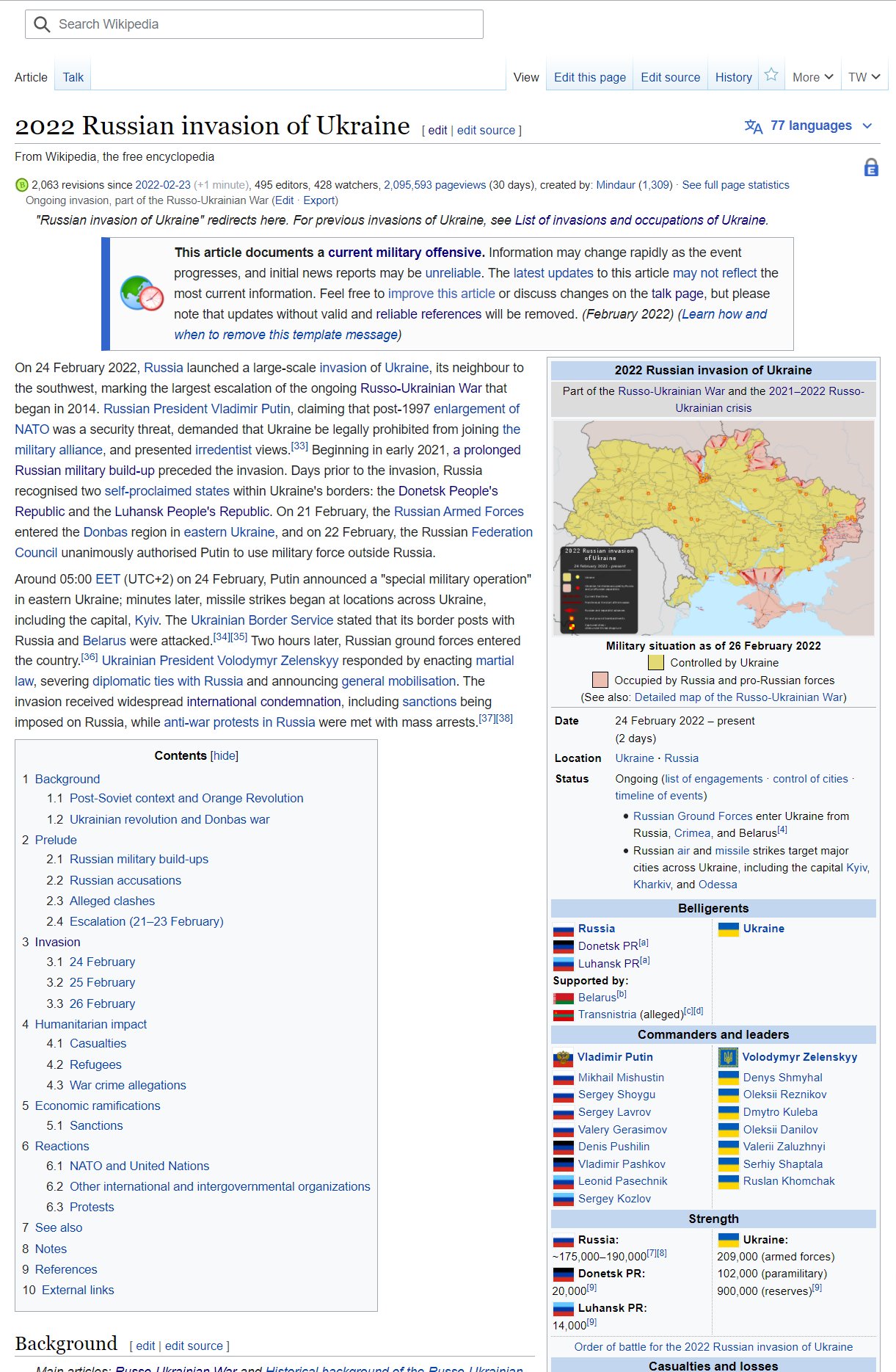
Apr 8, 2022Volunteer editors on #Wikipedia have been documenting the Russian invasion of #Ukraine as it unfolds. A look behind the scenes of breaking news editing: 🧵 On Feb. 21, as tensions rose, editors began a discussion at the talk page of the preexisting "2021–2022 Russo-Ukrainian crisis" article about whether to split off a separate article for an invasion should one occur. https://t.co/WpG7zKLZHx Wikipedia uses a consensus model but gives editors wide latitude to act boldly. On Feb. 23 at 17:12 UTC, one went ahead and created the invasion article. Over the next several hours, a brief edit war ensued as several editors alternately removed and restored the page. At 03:07 UTC. Feb 24, minutes after Putin's speech, an editor restored the article and others immediately flocked to it. Then 1800 words long with 113 references, it consisted almost entirely of background information: https://t.co/RpxU8JxC7g Over the next 3 hours, the article was edited 178 times, once every minute on average. At 04:10 UTC, an admin restricted edits from new users to prevent vandalism. Another admin later raised the protection further to "extended-confirmed" level. Discussions about improving the article also immediately began on the talk page. To date, there have been 116 threads with 297 participants, seeking consensus on issues like which parties to list as belligerents in the infobox. https://t.co/42tln7Qp1C As the invasion progressed, further spinoff articles were created, such as one on the international reaction (at 18:38 UTC Feb. 24). There are now 28 such articles: https://t.co/BAmyfQ7aUi Wikipedia editors have searched for images and videos depicting the invasion. This is difficult due to strict licensing requirements, but freely licensed videos from @VOANews have been particularly helpful. https://t.co/jvhy7G2ib8 The present article has been edited 2100+ times by 500+ editors. It's over 7000+ words long, with 340+ references. Editions exist in 77 other languages. It's received 2 million pageviews, making it currently the most popular article on the site. https://t.co/3ahfEnuygg Every Wikipedia article is a remarkable act of collaboration. As a tertiary source, the encyclopedia's coverage is built directly on the news reports coming out of Ukraine from journalists risking their lives to bring us this moment in history in real time. The article will continue to evolve as the invasion unfolds and is ultimately written into history. For another account of breaking news editing, see @molly0xFFF's excellent thread on @Wikipedia's coverage of the January 6 attack on the U.S. Capitol. /🧵 https://t.co/fA85pbhFx3
💥ATTN PEEPS WANTING TO BREAK INTO VC 💥 I made a Notion page outlining my process as well as resources I have used on my journey into VC! Breaking into venture is tough, but hopefully this helps direct your hustle 🚀 https://t.co/aHh5ldIvq6 Spread the word! @MacConwell @galeforceVC @OfficialBBrooks @myfriendjanine @packyM @7flashgordon @vivek_pandit11 @ArielRahamim @aaron_farr @leopoldcitron @JustinAWexler @justingordon212 @RMB2 @Alex_Suprise @alex @bayareawriter @nmasc_
Feb 23, 20221/ Let's talk about how note taking can help you accelerate expertise. Yes, I know how that sounds like. No, this isn't hype. There's some solid cognitive science here, and it has FASCINATING things to say about the nature of learning in messy, real world domains. 2/ The theory I'm going to talk about is Cognitive Flexibility Theory, originally published by Spiro, Coulson, Feltovich and Anderson in a 1988 paper. The theory has 30 years of ACTUAL system implementations. We're going to talk about those in a sec. https://t.co/NYpZpKqTRE 3/ What is CFT? CFT is a theory that asks: "how do experts deal with novelty?" Some domains are well-structured, like chess. But other domains, like business or medicine, are ill-structured. CFT is a theory about this second type of domain. It comes from medical education. 4/ CFT has four big ideas. Two of them are the central claims of the theory. Before we get to those, we need to do some setup. There are two big ideas that we have to look at first. Then we'll talk about the claims, and then note-taking. 😉 5/ Idea one: CFT is interested in ill-structured domains. What is an ill-structured domain? An ill-structured domain is a domain where there are concepts, but the way these concepts show up in reality are HUGELY variable. 6/ Think about a heart attack. A heart attack is a concept. You can study it in a medical textbook. But the WAY a heart attack instantiates in the real world is hugely variable. Some heart attacks start out as indigestion; others can last DAYS. 7/ Or think about business. Scale economies is a type of competitive advantage, yes? But the way scale economies show up is HUGELY dependent on the context of the business! Some businesses enjoy 'simple' unit cost reductions due to scale, others have learning curve effects. 8/ The proper definition for ill-structured is "concept instantiation is highly variable for cases of the same nominal type." Most fields are a mix of both well-structured and ill-structured. In software, computer programming is the former; software project mgmt the latter. 9/ This leads us to Idea Two: in ill-structured domains, cases are AS if not MORE important than concepts. This is a tricky idea, so let's slow down a bit. I think most of us are taught to think that concepts are important, and cases are 'just' examples. 10/ Usually we say something like "it's the PRINCIPLES that are important!" How did we get here? I think we got here because we are taught to think like this. In math class, for instance, we are given 1-2 examples but we know it is the formula that is important. 11/ Yes, I know that certain schools teach from cases, not concepts alone. But if you are trained to think that 'first principles' are important, you will think that the cases are so that you can extract generalised, abstract principles, and that THOSE are primary. 12/ So what does CFT tell us? CFT tells us that in ill-structured domains, concepts are hugely variable so reasoning from concepts are insanely hard. In fact, extracting generalisable principles from case studies is close to impossible! 13/ It turns out that experts in ill-structured domains DON'T reason from first principles as much. They tend to reason from past cases instead! (Sure, they may TALK about concepts and principles, but the concepts are clusters of cases in their heads.) Read: 14/ As a programmer, I find this difficult to accept. Isn't reasoning by analogy lousier than reasoning from first principles? But it DOES resolve a question I've always had. Which is this: why is it that Charlie Munger reasons so much from analogy? https://t.co/gwuBsP6dUt 15/ This brings us to Ideas 3 and 4 of CFT, which happen to be the two central claims of the theory. Recall: the question that CFT attempts to answer is "how are experts able to perform under conditions of novelty?" We know now that ill-structured domains have a lot of novelty. 16/ CFT tells us that experts do two things: 1. They construct temporary schemas by combining FRAGMENTS of prior cases. 2. They have something called an 'adaptive worldview', which means they do NOT think there is one root cause or framework or model for any event. 17/ So this explains why Munger, like expert doctors, reason a lot by analogy to prior cases. After all, if businesses are always the result of context-dependent events and factors, then you CAN'T reduce case history into simple principles. It's just too complex. 18/ Instead, the researchers say that experts do the following (read): 19/ What does this have to do with note-taking? Well, now that we have the four big ideas, we can invert CFT's claims to get the pedagogical recommendations: 1. Expand the cases you know, so you have a larger set of fragments to draw from. 2. Inculcate the adaptive worldview. 20/ And how do the researchers recommend doing this? The researchers note that you cannot reduce cases, and real world cases tend to be rich with many concepts. So ... the researchers recommend using a hypermedia system to store cases. That is: a backlinked note taking system! 21/ Here's what you do: you get the student to store cases, and highlight concepts within the text of each case. Concepts are backlinked. They go to other cases. There are many variations. Some systems come preloaded with cases, marked up by expert practitioners. 22/ The initial presentation to the student is also chosen carefully. When presenting a concept for the first time, you want to give a student a case, and then give them a different case that is VERY different from the first. So the student internalises that cases are variable! 23/ Eventually, as the student does concept searches in the CFT system, they begin to overlearn the 'crossroad' cases — that is, the central cases that are the most conceptually rich and therefore the most connected. These cases begin to be evoked from even small fragments. 24/ Once this happens, the student enters something called 'epitome mode', where case comparisons happen at the speed of thought. In other words, they have a set of representative cases in their heads, available for on-the-fly schema assembly in the real world. 25/ Ok, I'll wrap up. A couple of days ago, I said that it's probably worth it to dig for cognitive science results in the tools for thought space. CFT is an example of what I was talking about. https://t.co/L8AXaFWZiA 26/ If you enjoyed this thread, you should read the full essay, which goes into way more detail on how to create a CFT system for yourself: https://t.co/Idq9RjKVYy 27/ I also write a newsletter: https://t.co/cavY6nZeXK where you can subscribe for updates on essays like this. I mostly write about better business and career decision making. 28/ Finally, you can follow me on Twitter, where I write about expertise acceleration from time to time. Here's a thread on that: https://t.co/9pOXovsa8K Thank you for reading! 🙇♂️
Feb 9, 2022this rotunda overhead library lives rent-free in my head ft. the writing studio for National Geographic Society's Explorer-in-Residence Wade Davis 📚


Finally wrote down how I capture and synthesize everything I read and do during the day - from books to articles to podcasts and even daily meetings. It's taken me years to perfect but I kind of love it. My Second Brain Stack: https://t.co/toZZfrfMaA
Jan 18, 20221/ Prestigious scientific journals are the gatekeepers of #scientific legitimacy. But is the process of getting accepted in a top journal really the same thing as doing good #science? Here is our analysis of the status quo and how #web3 could help... https://t.co/TZHsnRWR6K 2/ In the current paradigm of #science production, #scientists are evaluated based on how many peer-reviewed publications they produce and whether or not they're featured in top journals. 3/ The #PeerReview system is central to what gets published, but it is a flawed system. 4/ Peer reviews are: - Typically inaccessible, intransparent, unaccountable, and subject to turf wars - Relying on free labor - Slow & widely varying in quality - Full of arbitrary submission requirements https://t.co/eDuOTRsjUm 5/ Journals also operate on business models that either create #paywalls around publicly financed #science, making it inaccessible to most people around the globe, including many scientists. 6/ Or, they charge high publication fees that create financial #Incentives for publishers to emphasize quantity over quality. 7/ Then there's the issue of how "top" journals achieve prestige. The most popular proxy for the importance and quality of a scientific publication is the number of citations it receives. 8/ This skews scientists' incentives to increase their citations as an end in itself. But getting a lot of citations is not synonymous with conducting good science. 9/ What's more, scientific work often takes time to disseminate and accrue #citations; on average, scientific papers reach citation peaks 2-5 years after being published. 10/ Since institutions often have to make funding decisions prior to the completion of a particular discovery's citation life cycle, they often resort to using the prestige of the journal the paper has been published in as a heuristic for its quality and importance. 11/ The most salient proxy for a journal's prestige is its #ImpactFactor, which measures the yearly average number of citations that the articles it published in the last two years have accrued. 12/ But this is a highly skewed metric; about half the citable papers in a journal tend to account for 85% of a journals' citations, meaning there are dramatic differences in the citation patterns of articles published in the same journal. 13/ Compounding the problem is the fact that when a metric is optimized for as a target (number of #citations), it ceases to be a good metric of what you really want to measure (i.e. the quality and importance of scientific publications). 14/ Prestigious journals have learned to manage their article submissions like a stock portfolio; choosing articles based on their expected number of future citations. 15/ But they don't just place bets, they're also market movers. Articles published in prestigious journals are more likely to garner citations regardless of quality, creating a flywheel effect that further skews the usefulness of the #ImpactFactor. 16/ An additional problem is that studies are more likely to attract attention (and therefore citations) based on their novelty and surprisingness, whereas the #replicability of a study doesn't drive nearly as much #attention. 17/ For example, only 3% of all #psychology journals explicitly encourage the submission of #replication studies, while many journals don't publish replication studies at all. 18/ Novel, surprising, and provocative results are simply more likely to receive attention, even though they are by definition less likely to be true. 19/ The purpose of science is to produce reliable explanations of the world that can be replicated by independent experiments. This is fundamentally at odds with the incentive to compete in the attention economy that the current system is based on. 20/ Yet the #attentioneconomy drives incentives for journals and #scientists. Thus there has been a vast decoupling of replicability from commonly-used scientific performance indicators, contributing to a raging #replication crisis in many fields of science. 21/ Recent large-scale replication studies of high-impact papers in the social sciences, for example, found that only ~60% of the original results could be replicated. 22/ Meanwhile, more than 70% of researchers have tried and failed to reproduce other scientists' experiments, and more than half fail to replicate their *own* experiments. 23/ This means widely circulated results are about as likely to be right as wrong. To make matters worse, non-replicable studies tend to be cited more than replicable studies. https://t.co/Zf40Z0k9TC 24/ Publishers rely on unpaid labour to conduct peer reviews. This boosts profits for #publishing houses, while #Scientists are not rewarded for performing high-quality referee work. This amounts to scientists donating billions of $ to the scientific publishing industry. 25/ #Science is therefore at a moment of crisis. Legacy institutions like the impact-factor-driven scientific journals have created skewed incentives that don't align with good science. 26/ Technological innovation is offering one promising path: #web3 technology. This is for several reasons. 27/ 2. #web3 offers a way to enable new modes of cooperation around engineered incentive systems that could better align incentives with replicability and good #science. 28/ 3. The possibility of pseudonymous identities tied to scientific reputation offers a way to keep referee identities protected while still contributing to the scientific endeavour in a tamper-proof and auditable way. 29/ By creating a "proof-of-skill" system using #web3 for how science is incentivized, evaluated, and distributed, the possibility for a new scientific ecosystem emerges... 30/ One which promotes open access and debate, reduces bias and improves replicability, fairness, as well as efficiency of the scientific enterprise. 31/ Several exciting experiments of combing #web3 with #science are already under way, including @OpenAccessDAO @ResearchHub @vita_dao @OpenAccessDAO @ResearchHub @vita_dao 32/ We've started the #DeSci Foundation to bridge the worlds of #science and #web3 and to support high-quality science with these new, exciting technologies. More on the #DeSci Foundation soon...
Dec 3, 2021Is there a hyper-performant version of Notion? Specifically for managing, cataloguing organizational knowledge.
Nov 24, 2021We live in the age of binge-reading. People listen to podcasts, articles, and audiobooks at 3x speed. But this speed consumption strategy is based on a flawed model of learning. Turns out, there's a more effective way to learn. 🧵 Binge consumers follow a "Water in a Cup" theory of learning. They assume that knowledge is like a liquid they can pour into their minds. It's simple: The more information they consume, the more they'll learn, right? Not necessarily. In school information is shared through lectures, which focus on well-packaged ideas that are easy to memorize. But thinking you know something because you can memorize a teacher's words is like calling yourself a chef because you can follow Blue Apron recipes. The average classroom is set up for passive listening. It’s geared towards consuming knowledge, not integrating it. Desks are lined up in punitive rows that are designed to limit interaction between students. Subliminally, they say: “Shut up and listen to your teacher.” But if "Water in a Cup" learning isn't optimal, why does the education system revolve around it? Because the water in a cup method is easy to deliver and scale. Schools assume that learning is inevitable if students read enough books and spend enough time in the classroom. Systems are easy to scale when they use this reductive, cookie-cutter mindset. But knowing the name of something without also understanding the context behind it isn’t knowledge. It’s trivia — and trivia is an ignorant person’s idea of what knowledge looks like. How should you learn instead? Focus less on consuming as much information as possible and more on cultivating the deepest possible understanding of the ideas that resonate with you most. Writing is the simplest way to do that because it forces deep understanding. Writing is spaced repetition for the mind. The research on spaced repetition implies that listening to audiobooks at 3x speed is an ineffective way to learn. In fact, anxiety-inspired binge consuming is the opposite of what you should do. Spaced repetition yields exponential benefits for increased effort. Your ability to remember something improves every time you review it, and the more you do it, the less time it takes. Thus, racing through new ideas at 3x speed is the opposite of how you should learn. Basically, humans have two kinds of memory: short-term and long-term. When you read books at 3x speed, you make it hard for your mind to transfer knowledge to long-term memory, which is more stable and lasting than short-term memory. When you write, you have to put ideas into your own words which helps you understand them. Rather than memorizing disparate ideas, writing helps you synthesize them into a coherent whole. And the process of brainstorming, typing, and editing our words is like spaced repetition. Like studying a language, learning also happens faster when you get out into the real world. You can pick up trivial knowledge by banging your head against a classroom wall for 10 years. Or, you can immerse yourself in a foreign country for a year and walk away fluent. The lesson: We're humans, not computers. We need time to digest what we read and transfer knowledge from short-term to long-term memory. Instead of binge-consuming audiobooks, we spend more time integrating our knowledge by writing and taking action. https://t.co/02NdprukGf
Nov 20, 2021Research is simply a continuation of something we already naturally do: learning Learning happens when you understand something that someone else already understands. Research happens when you understand something that nobody else understands yet - @kanjun https://t.co/anW3uEo8ou
Oct 22, 2021My first full week with #Logseq as an alternative to #roam and #RoamCult is over. Results? TLDR: Not great, however, not bad either! For the majority of users, it is a viable option. I have also realized that one week is quite short for such a test ... /c @TfTHacker @rroudt so I will give it a little bit longer time - probably two or so weeks. Now details: Good 🎉: - local storage (I can finally use private assets) - PDF annotation tool! - namespaces for pages (incl. "hierarchy" - really good!) - some of the plugins (tabs!) - good copy tool /c Bad: - could be quicker (generally better than Roam but sometimes it freezes) - less configurability than in Roam - I miss SmartBlocks :( - Roam has better Excalidraw Ugly: - sometimes it crushes - sometimes weird graphical bugs - having thousands of small files ... /c on computer is not the best thing - this means, e.g., that downloading my database from Dropbox into a new computer takes a lot of time... /end
Oct 6, 2021 Original deleted — preserved hereThis week I took a hard decision: I quit my long-time job to work more on #clojure OSS. I wouldn't have done this without @RoamResearch, @cognitect, @usenextjournal, @AdGojiDSP, @health_samurai, @pitch and I hope you or your #clojure company will follow! https://t.co/CbN58KXrVO https://t.co/tnPaUvMrJS Special dedicated tweet to @cljtogether! They probably were final push I needed. ❤️ Another special tweet for @usenextjournal who are letting me contract with them in a flexible manner which sustains the part my OSS-workweek that isn't fully funded yet. 🙏
Oct 1, 2021We hate being wrong. But those who embrace it end up changing the world. Here's why👇 So we've all been there. We have a belief. • "Networking is a waste of time." • "College is a waste of money." • "Getting good grades is the best way to succeed in life." Are these right? Maybe. Maybe not. But the point is that when you have a strong opinion, Your opinion becomes part of your identity. And this identity makes you part of a tribe. These beliefs and opinions drive • who we spend time with • what we do with our lives • and how we view the world But what if we are wrong? Changing your mind is opposing your tribe. And that is really hard. So what do we do? We refuse to change our opinion when information changes. We would rather bury our head in the sand than change what we think. Because being wrong is less painful than being right. But here is a secret: If you're reading this, you are 1 step ahead. And you can act on it by asking yourself some questions: When you have a strong opinion, ask: 1) What if I'm wrong? 2) What would that mean? 3) How would the world change? This takes humility. But it also gives you freedom. The freedom to think differently. When you stop blindly following a tribe, you may just change the world. If you liked this, retweet the 1st tweet to give a friend the power to question their own beliefs: https://t.co/8ILCKQNa6L Follow me @chrishlad for more top secret insights. I share threads every week on frameworks, systems, and epic business stories. You can also join 4,500 others who gets threads like this via email 1x per week! Subscribe here for free in 8 seconds: https://t.co/Zr6gAK3oP0
Sep 26, 2021My peoples, the time has come for a MEGATHREAD. In 40 tweets I will explain another 40 concepts you should know. Strap in. Here we go: Abstraction: There are scales of explanation. A human can be considered a person, mammal, collection of cells, collection of stardust. Sometimes the reason people can't see eye to eye is that they're unwittingly considering things at different levels of abstraction. Scope Neglect: We evolved for the small scale of tribal life, so we can't comprehend the big numbers that recently entered human life. We can appreciate the difference between 50 and 100, but not a million and a billion. It's why we often treat geopolitics like family politics. The Law of Very Large Numbers: Given a wide enough dataset, any pattern can be observed. A million to one odds happen 8 times a day in NYC (population 8 million). The world hasn't become crazier, we're just seeing more of everything. Benford's Law: Numbers in natural sets of data are not uniformly distributed (e.g. 30% of numbers have 1 as their first digit). Used by the IRS and other tax agencies to determine if you've lied about your finances. Brandolini's Law (aka the Bullshit Asymmetry Principle): It takes a lot more energy to refute bullshit than to produce it. Hence, the world is full of unrefuted bullshit. The Toxoplasma of Rage: The ideas that spread most are not those everyone agrees with, but those that divide people most, because people see them as causes to attack or defend in order to signal their commitment to a tribe. h/t: @slatestarcodex Network Effect: The more people using a network, the more useful it becomes. A phone gains utility as more people use phones because more people can be called with it. It's why Twitter & Facebook are so dominant; we're stuck on these platforms because everyone else is. Paradox of Abundance: Easy availability of food led to obesity for the masses but good health for the few who used the increased choice to avoid the mass-produced junk. Equally, you can avoid intellectual diabetes by ignoring junk info like gossip & clickbait. h/t: @david_perell Parkinson's Law: Work expands to fill the time allotted for it. No matter the size of the task, it will often take precisely the amount of time you set aside to do it, because more time means more deliberation & procrastination. Flow States: You're in flow when you're so engrossed in a task that the world vanishes and the work seems to do itself. Flow is automatic, and it makes work much easier than you imagined. All you have to do is overcome the initial hurdle of beginning a task; flow does the rest. The Curse of Knowledge: The more familiar you become with an idea the worse you become at explaining it to others, because you forget what it's like to not know it, and therefore what needs to be explained to understand it. Makes it hard to write threads like this! Status Quo Bias: Those who were unfazed by Covid because it had a ~1% fatality rate were suddenly concerned about vaccines when they yielded a 1 in a ~million fatality rate. People see the risks of doing something but not the risks of doing nothing. Semmelweis Reflex: People tend to reject evidence that doesn't fit the established worldview. Named for Ignaz Semmelweis, a surgeon who, before the discovery of germs, claimed washing hands could help prevent patient infections. He was ridiculed and locked away in a mental asylum Planck's Principle: "Science progresses one funeral at a time." Scientists, being human, don't easily change their views, so science advances not when scientists win or lose arguments, but when they die so that younger scientists with more refined views can take their place. Bias Against Null Results: Studies that find something surprising are more interesting than studies that don't, so they're more likely to be published. This creates the impression the world is more surprising than it actually is. Also applies to news, Twitter. p-hacking: "If you torture the data for long enough, it'll confess to anything." Academics get around the Bias Against Null Results by performing many statistical tests on data until a significant result is found then recording only this. p-hacking is largely why we have a... Replication Crisis: A large proportion of scientific findings have been found to be impossible to replicate, with successive tests often yielding wildly different results. Too many studies are bunk to take any of them at face value. Luxury Beliefs: Cultural elites often adopt views that signal status for them but hurt the less fortunate. E.g. Those who claim that concern about Islamism is Islamophobic appear open-minded but in fact dismiss the (usually Muslim) victims of such extremism. h/t: @robkhenderson Bulverism: Instead of assessing what a debate opponent has said on its own merits, we assume they're wrong and then try to retroactively justify our assumption, usually by appealing to the person's character or motives. Explains 99% of Twitter debates. Scout Mindset: We tend to approach discourse with a "soldier mindset"; an intention to defend our own beliefs and defeat opponents'. A more useful approach is to adopt a "scout mindset"; an intention to explore and gather information. h/t: @JuliaGalef Operation Mindfuck: A conspiracy theory that can protect you from conspiracy theories. The Operation is being conducted by persons unknown, and is a plot to make you believe lies. Whenever you receive information, ask yourself, is this part of Operation Mindfuck? Hitchens' Razor: What can be asserted without evidence can be dismissed without evidence. If you make a claim, it's up to you to prove it, not to me to disprove it. Decision Fatigue: The more decisions you make in a day, the worse your decisions get, so rid your life of trivial choices. Steve Jobs, Barack Obama & Mark Zuckerberg have been known to wear only 1 or 2 outfits to work so they don't have to choose each day. Cumulative Culture: Humanity's success is due not to our individual IQs but to our culture, which stockpiles our best ideas for posterity so they compound across generations. The ideas we adopt from society are often far older than us, and far wiser. h/t: @SteveStewartWilliams Chesterton's Fence: If an old law or tradition seems so irrational that you want to scrap it, then you shouldn't scrap it. The fact it's survived the ages despite seeming irrational means it must have a purpose. Before acting, understand that purpose. An argument for conservatism The Veil of Ignorance : Create a constitution for a country as though you could wake up tomorrow in the body of any citizen, of any race, religion, or gender, and be forced to live as them in the society you've created. A central idea behind liberalism. Tragedy of the Commons: The Rapa Nui people of Easter Island felled trees for wood until there were not enough trees to provide food, causing mass starvation. Everyone acting in their own interests can create outcomes against everyone's interests. Common argument for regulation. Purposeful Stupidity: Common argument against regulation. In 1944, the OSS (now known as the CIA) published a field manual laying out strategies to subtly sabotage a society from within. The tactics described are eerily similar to what passes for normality today. Mediocracy: Democracy works not because it picks the best leaders, but because it picks the most average leaders. The purpose of democracy is not so much progress as preservation. h/t: @Mmay3r The Messiah Effect (my term): most people don't believe in ideals, but in people who believe in ideals. Hence why successful religions tend to have human prophets or messiahs, and why when a demagogue changes his beliefs, the beliefs of his followers often change accordingly. Futarchy: What if people voted not for political parties, but for metrics that society should seek to maximize (e.g. median household income, average life expectancy) and then betting markets determined the policy that would maximize the metric best? h/t: @robinhanson Network States: Due to the web, place of birth no longer determines your community. Future nations may consist not of people who were born near each other, but of online subcultures using collective bargaining to crowdsource micronations of like-minded people. h/t: @balajis The Immortality Project: Civilization is an elaborate attempt to distract ourselves from the fact that we're all going to die. We do this by trying to become symbolic beings rather than physical ones. Hence, the endless search for meaning. Mimetic Desire: We learn much of our behavior by copying others. In societies, we often don't know what to desire, so we begin to desire what others desire. This leads to simulated pursuits and simulated conflicts over simulated desiderata. Hedonic Treadmill: Once we've obtained what we desire, our happiness quickly returns to its baseline level, and we begin to desire something else. Whatever happens, good or bad, we get used to it. As such, the most fortunate of us are seldom much happier than the least. Boltzmann Brain: Your brain is far simpler than the rest of the universe (which includes every other brain), so, rather than the universe emerging from the void, it's more feasible that your brain emerged from the void, and everything else is just in your head. Simulation Hypothesis: Assuming computing power reaches the point that consciousness can be simulated en masse, the scenarios in which you are such a simulation vastly outnumber the scenarios in which you are real. Ergo, you are likely a simulation. The Great Temptation: What if we haven't found aliens because civilizations create mesmerizing amusements (like simulations) before they learn interstellar travel? What if all advanced civilizations eventually lose themselves in virtual worlds, and we're next? h/t: @primalpoly Hypernovelty: Technology builds on technology, so it's advancing at an exponential rate. Progress is accelerating. The world is now changing faster than we can adapt to it, leaving us permanently maladjusted. Life is becoming a blur. h/t: @bretweinstein & @HeatherEHeying The Hinge of History: We may be living at the most influential point in human history. The decisions we face - regarding AI, internet, climate change, gene editing, space travel - will likely affect humanity far into the future. What we do now could echo across the aeons. And that's your lesson for today. As usual, don't assume these concepts are all necessarily true; they were chosen not for their accuracy but because they provoke curiosity. Thanks for reading, and may the things you learned here help you navigate the labyrinth of possibility.
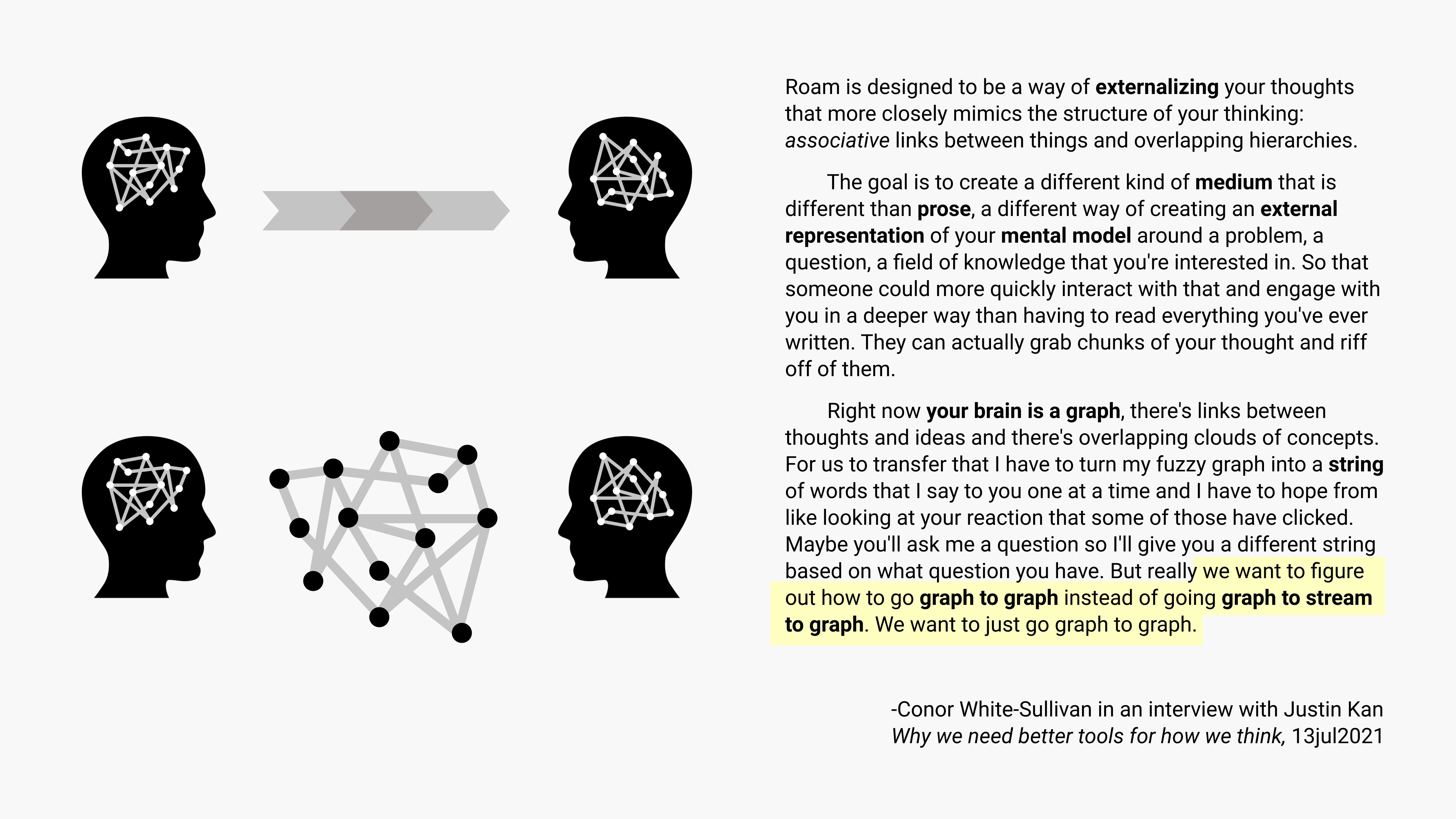
Sep 17, 2021“We want to go graph to graph instead of graph to stream to graph,” said @Conaw to @JustinKan in a recent interview: https://t.co/afShwHECVS I want to elaborate on this dream, contrasting examples from @RoamResearch, @Jack's @Twitter & @IvanZhao's @NotionHQ to ground ourselves. Wait, this is the web, we have links, isn’t it a graph already? Yes, but a painfully limited one. Here are 3 directions to realize the potential of graphs: 1 Make links ⇄ 2-way (←backlinks!). #2 Break down ↓ pages into smaller pieces. #3 Glue up ↑ those pieces in new ways. I'll go through each in turn, but first, what do we mean by GRAPH? Just organization by free linking. References, thesauri, & book indices are early graphs on paper, cute but painfully static. It took the automated symbolic-manipulation of computers for graphs to come alive! Our minds feel graph-like enough because of how associative memory & thought are. Other possible ways of organizing are rankings, listings, nestings, tablings... What do we mean by STREAM? The simplest organization: by sequence, one thing after another. Each "linked" only to what goes before & after. SPEECH is like that: we speak ONE quickly-fading phoneme at a time. You can't jump back or ahead —except in imagination. Writing down streams we discovered PROSE, which is long speech that no longer needs the tickle of rhyme & prosody to maintain cohesion. In practice most written streams are random-access only compared to speech: a wall of text's meaning is impenetrable until you plod through it. But written streams CAN be made 2D, parallel & scannable: think of tables, of newspapers's columns & headlines! Using space to escape sequence is to this day still the most impactful use of computation we've found: spreadsheets! cc @hjalli & @DanB https://t.co/f2SRuEE2yX And so we still talk & think a lot through written & spoken streams. Graphs over streams is a vision of our newest, most flexible way of organizing knowledge gaining ground on our oldest one. I want this future but it has many challenges. Let's get back to our 3 directions: #1. Make all links 2-way: I wrote a long thread on this back in April https://t.co/R8VqeyJglF Now I'll just point out Notion got backlinks last year but hides them by default. Twitter has long had backlinks for tweet URLs, though also click-to-expand (unless you use @TwemexApp!) A big problem with graphs is they're confusing to navigate. The back button was THE usability innovation that made the web possible. TweetDeck used to have nested threadviews a la Finder's columns. No longer & Twitter's against client experimentation :( https://t.co/bCa2A0a5E7 I think of Notion's sidebar, its breadcrumbs & specially how it opens a database-page in-place, with its context low-lighted, as more or less successful attempts to help user navigation. Roam's big breakthrough here was its right sidebar of course, a stash of temporary context. #2. Break down pages into smaller pieces: With more standalone & focused targets, links get more useful. The pioneer here was Twitter, with units of 140 chars (now 280). Roam excels here: every new line a directly-linkable, nestable block. Pages are mostly just groups of blocks. There's a smaller unit though at which Roam struggles: ATTRIBUTES (= PROPERTIES in Notion). They remain an experimental feature but are meant for key-value pairs that describe a block. Notion has blocks too but linking to them only highlights them within their page. Notion opts for a delighful mess between pages & databases. Is Notion's basic unit the page or the database? Both! Notion's pages can be big enough to contain databases (inline or linked) but databases are made of pages too! A DB's columns otoh are its row-page's properties. 🤯 #3. Glue up those pieces in new ways: Here the pioneer's again Twitter, building on user innovation. Threads of tweets have custom if lackluster UI (see @typefullyapp for what's possible). Some like @pmarca or @visakanv take threading to an art form. https://t.co/ZFxncjwFzl A tweet URL inside a tweet gets auto-expanded to look almost like a full tweet —a kind of transclusion! So manual threads of threads work reasonably well. Otoh, threads branching with comments & subthreads quickly get painful to read: https://t.co/HuvAepE3L0 The other groupings in Twitter are automatically populated: Following Feed, User Feeds, List Feeds & Search. Search in particular is remarkably bad and feeds are inflexible & getting worse. @TwemexApp's Highlight Sort of User Feeds shows what's possible. https://t.co/r06EQ7SyFZ Threads of threads are like the TRAILS Vannevar Bush described in the 1945 essay that inspired @TheTedNelson's hypertext. https://t.co/C2DjkkD7Az It's the meta-step of making new units purely from transcluding old ones —manually or automatically, throwaway or permanent. Here Roam has sophisticated block-refs for manual trailing but rather clunky queries for automatic trailing. Notion added underwhelming synced blocks a few months ago but its automatic trailings are fascinating, one of the product's core strengths. A way to think of Notion's databases is as generators/groups of automatic page trails (= feeds = queries), which Notion calls views. There are 6 polished kinds of view available but most importantly a view is an object that can be named, duplicated, customized & even linked at. Notion's "linked databases" are transclusions: you don't just get a pointer, you get an editable & live view of the DB that can show you all its row-pages. The magical touch is how a new DB-page will inherit its filter properties. It makes these portals into in/out trays! /FIN
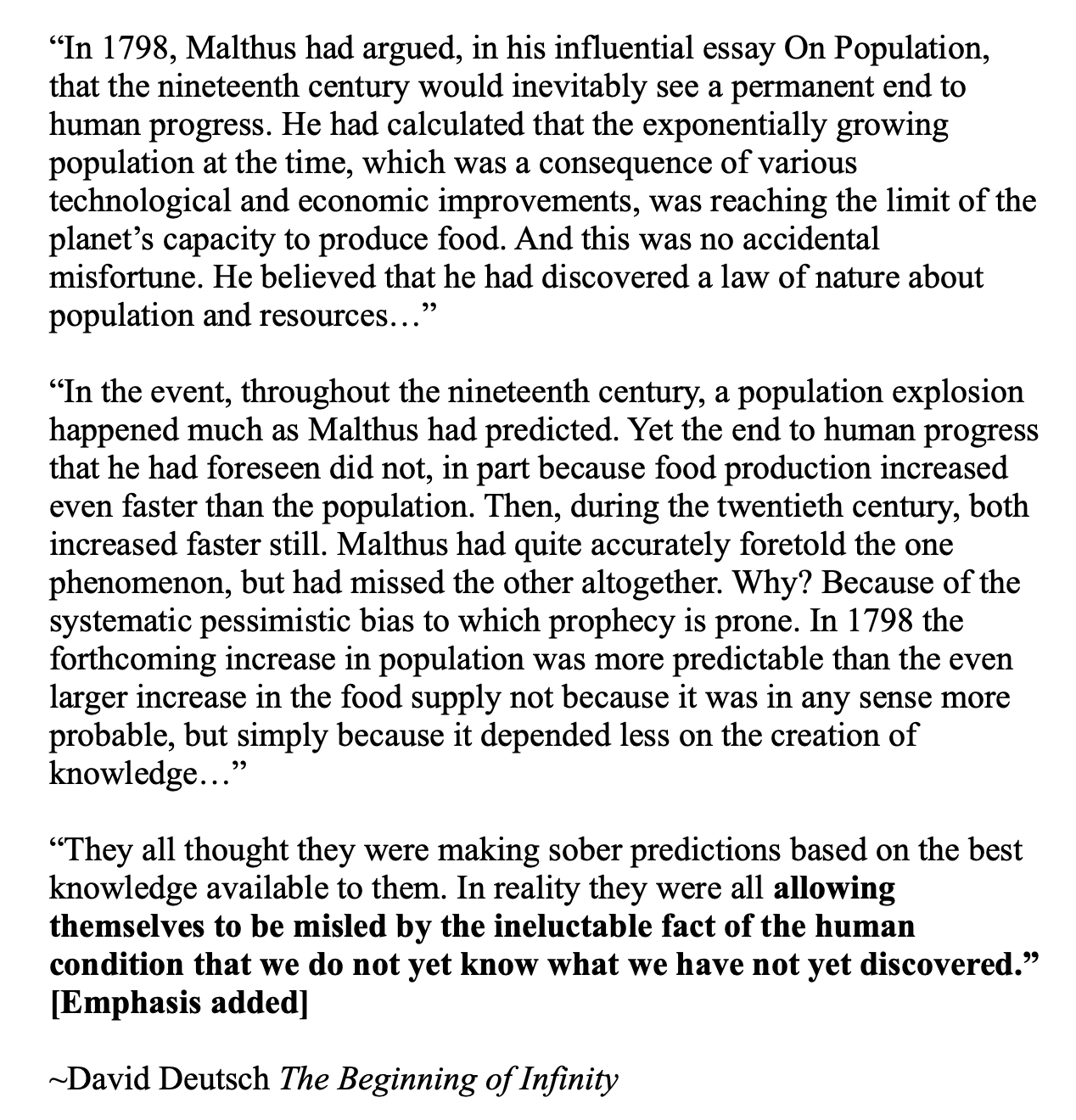
“The most important of all limitations on knowledge-creation is that we cannot prophesy: we cannot predict the content of ideas yet to be created, or their effects.” ~@DavidDeutschOxf
For most queries, Google Search is pretty underwhelming these days. The top results are filled with ads and low-quality results. Appending queries with specific terms like: 'reddit,' 'wiki,' 'substack,' etc. dramatically increases the quality of search results. If Reddit invested more into their search product + a new landing page, I think that would become my default search engine.
Jun 13, 2021Over two months ago I released workBench (wB), part of roam42, now maintained by @dvargas92495. A while back I promised @cortexfutura that I would explain a little of my motivation behind it. It is an amazing tool to help you work with your graph as it grows. https://t.co/gErwGLaziH *(quotes his April 1, 2021 announcement: https://x.com/TfTHacker/status/1377599690468904965)* workBench is complex since it is keyboard driven. We learn quicker when something visual & we use the mouse. But it is more about working with the unseen than the seen. I can’t emphasize enough that if you spend a few hours with it, it will benefit you. https://t.co/AoRvQlPIek *(video: "Control Roam with workBench (wB)", https://youtu.be/GX90lyDW7H0)* In summary, wB allows you to work with parts of your graph that are not currently visible. Example 1: you are working on a block & want to move it or block ref it to another point of your graph not currently visible. Without leaving your current context, wB allows you to do this. Example 2: You know in another part of your graph, not visible currently, you have data you want to move to the current location, wB lets you do this. The goal is to prevent changing the context of your current work. Context shifting creates mental friction. Mental friction is a negative: it distracts you from what is important, it can cause you to lose your place, or worse: the thought of friction can prevent you from doing something you know you should do, but mentally the thought exhausts you. wB reduces/eliminates mental friction Brains are amazing, remember more than we realize. As graphs grow, deep structure forms. So without even looking, we know that there is info in other parts of our graph that we need in this context or we know from this context we want to push into other parts of our graph. Example: in my graph I have 10 active projects. I have a template for projects so they follow a general structure. If I want to add a task to a project, why should I have to stop working on what I am working on? No, I just create the task in a block and push it to the project. Another benefit of wB is it keeps your fingers on the keyboard. If you are a keyboard guru, wB is like a Ginsu knife, sharply cutting in and reshaping your graph. https://t.co/Eazp2ORk3Z [▶ video](/images/tweets/tfthacker_1403309109181550594_v1.mp4) What can you manipulate with wB? + Move blocks (refs) + Pull blocks (refs) + Jump to blocks + Interact with DNP via NLP + Sidebar interactions + Delete pages (even when not on the page) + Call SmartBlocks (global SmartBlock as well) + Define Inbox (Specialized entry points) workBench is context sensitive and adjusts its behavior based on your context... it knows if you are in a block, have multi-blocks selected or nothing selected. workBench even has its own API, so developers can quickly add new commands. In conclusion, wB is an advanced tool, but as your graph grows, this is a tool that will help you reduce mental friction and maintain flow. Invest in yourself and take the time to learn this tool. It will pay off.


Lesson from chess legend Magnus Carlsen: ✨ Learn, don't idolize ✨ "It's never really been my style to idolize players, to try to copy them. I just try to learn and get the best from the great masters, contemporary and from the past." https://t.co/W9VFxmqiRd Learning allows you to understand the strengths and the weaknesses of a player while forming your own original style. Idolizing forces you into blindly worshipping imperfect humans. Learning, on the other hand, allows you to observe, synthesize, & pave your own imperfect path
Jun 5, 2021Tools like Roam and Obsidian are exciting because they facilitate so many different types of text-based workflows. However, I frequently see people comparing apples and oranges when trying to discuss which tools and workflows are "better." https://t.co/eCYFj9JucR Let's say we care most about non-fiction, argument based writing. I argue that creative outputs in this genre are composed of six different processes, each with "flagship" workflows. These processes facilitate the ultimate goal of writing: creation. The key processes of non-fiction writing include: 1. learning (spaced repetition) 2. distilling (progressive summarization) 3. connecting (zettelkasten) 4. thinking (journaling) 5. synthesizing (evergreen notes) 6. creating (constraints) Let's start with learning. When encountering new information, we need to understand it before we can use that information to create novel insights. There are a lot of ways to learn things; the most popular technique I see discussed in the PKM space is spaced repetition. But learning is also facilitated by every other process as well (e.g. connecting what you've learned to other material helps with recall and can develop deeper insights for synthesis). Tools for spaced repetition include: Flashcards (yes, paper!), @AnkiApp,@Rem_Note, @NeuraCache, roam/sr. General spaced repetition references: https://t.co/wh04GlcOz6, https://t.co/pAsAr0tyqA (h/t @roamhacker), https://t.co/elCBoG62hu Distillation is about identifying the most important components of what you have read. The most popular technique of doing this is called progressive summarization (a technique developed by Tiago Forte @fortelabs and taught in his course Building a Second Brain). Progressive summarization involves taking multiple passes (hence the "progressive" part) to succinctly describe the key points of a text. https://t.co/gMIqWpGaKK I see distillation as distinct from other processes like learning and synthesis. Many critiques of progressive summarization are based not on its ability to distill, but are because it isn't facilitating learning. I don't think that is the primary goal of the process. Connecting is about relating what you know with other things you know. This is helpful to generate new ideas, leading to synthesis and creation, and also to reinforce learning and to help with distillation. However, again, it is distinct. The most commonly discussed method for connecting ideas is the zettelkasten, but other techniques such as mind maps can also be helpful. Resources for zettelkasten: https://t.co/8y7elt4Inv, How to Take Smart Notes by @soenke_ahrens, @beauhaan's work with @RoamBookClub, https://t.co/HLde44lhrK Tools for mind mapping: @figjam, @scappleapp, @mindnode, @ConceptsApp (used also to brainstorm this post!) Now let's talk about thinking. While we might think of many of the other processes I'm discussing as "thinking," in this case I am describing thinking specifically as the meta work of processing inputs and getting "unstuck." It helps facilitate the other writing processes. One of the best ways to think is through journaling. Journaling is beneficial for everything from processing emotions to "flushing the pipes" when beginning a writing session to project management. Resources for journaling: https://t.co/gcblNZnQid, The Artist's Way Morning Pages, @tracyplaces and https://t.co/Cju6uxaWXe, https://t.co/sKIBEz1GAV Synthesizing is about bringing together disparate sources and/or ideas to create new insights. It can be enabled by other methods, such as connections in a zettelkasten, but it "sits on top" of those connections. When I think of synthesis I think of synthesis notes (@joelchan86) and Evergreen Notes (@andy_matuschak). Synthesis is about describing a clear idea that can be represented in a (atomic) succinct note, with supporting evidence as applicable. Resources for synthesis: https://t.co/89FAaGcxB3, https://t.co/cNIOmEb3Lm Finally we have what people probably think about most when we talk about writing: creating. Creating is about using what you've learned, distilled, connected, thought, and synthesized and bringing something new into the world, whether it be a journal article or a tweetstorm. One of the best ways to facilitate creation is through careful use of constraints. This could be something like publishing regularly to build a writing habit to submitting to a journal with a set of editorial standards. https://t.co/rR81diplkx Resources for creating: https://t.co/9108LUGPqt, @NaNoWriMo, #ship30for30, #1000wordsofsummer Understanding the distinct processes involved in writing helps us figure out how to get the most from our tools and workflows. These processes need to be employed to help you reach your own goals, whatever they may be. For example, people who want to "learn in public" are focusing on learning and creating to facilitate deeper understanding and connect with others. Creation is essential for publishing academic articles, but other processes like connection and synthesis (and even learning) facilitate better insights for that work. Too much focus on connection and synthesis might be procrastination, but not enough can also be detrimental. Understanding processes means evaluating them based on their affordances, and not comparing e.g. zettelkasten and spaced repetition. One emphasizes connecting and the other is mostly about learning. They both make sense in different contexts. The beauty of tools facilitating multiple of these processes at once is that they make the different parts of the writing process explicit, but that doesn't mean that they all need to be deployed all the time. When working on a project in my core discipline, I probably don't need to spend a lot of time reviewing flashcards about common terms. However, I might need to focus more on learning when working in a new field. Ultimately, it's up to you the user to think about how to best employ these different processes. And maybe try some journaling if you're stuck 😉 In addition to all those cited above, thanks also to @cicatriz, @rossopeter_, @wm_dima, and Isaac Mathew for discussions that inspired this post. found you Isaac, thanks @pinkrhinonet :)
Jun 5, 2021A Brief History of Digital Gardens: https://x.com/Mappletons/status/1398333237945147399 Digital gardens help us move away from dopamine fueled algo feed addiction, back to contextual knowledge spaces. Maggie chronicles their 20-plus year history, and lists 6 patterns that set them apart from normal blogs. **Quoting** Maggie Appleton (@Mappletons) · May 28, 2021 · [View on X](https://x.com/Mappletons/status/1398333237945147399): > I’ve been tended a long post on the history of “Digital Gardening” over the last year. From @holden's original essay to the recent explosion of community experiments. > > 🌿 https://maggieappleton.com/garden-history > > Included six design patterns I see as unifying qualities across gardens:

I’ve been tended a long post on the history of “Digital Gardening” over the last year. From @holden's original essay to the recent explosion of community experiments. 🌿 https://t.co/zvViVfKIe5 Included six design patterns I see as unifying qualities across gardens: 1. Topography over timelines Gardens are organised around contextual relationships and associative links; the concepts and themes within each note determine how it's connected to others. 2. Continuous growth Gardens are never finished, they're constantly growing, evolving, and changing. What you publish is always open to revision and expansion. It's designed to evolve alongside your thoughts. 3. Imperfection & learning in public Gardens are imperfect by design. They don't hide their rough edges or claim to be a permanent source of truth. They're more coherent than chat feeds, but less polished than a blog post – in between chaos streams and cultivated performance 4. Playful, personal, and experimental Gardens are non-homogenous by nature. You can plant the same seeds as your neighbour, but you'll always end up with a different arrangement of plants. No two gardens are alike, and we should treat them as a personal, experimental play space 5. Intercropping and content diversity Gardens are not just a collection of interlinked words. Podcasts, videos, diagrams, illustrations, interactive web animations, academic papers, tweets, rough sketches, and code snippets should all live and grow in the garden. 6. Independent ownership Gardening is about claiming a small patch of the web for yourself, one you fully own and control It shouldn't live on the servers of Twitter, Facebook, or Medium. None of these platforms are designed to help you slowly build and weave personal knowledge

Well, this tweet stirred the pot more than I had hoped. So why did I publish it? And why am I going against some people in the replies? Because it's about practices, not necessarily tools or their features. Some thoughts below 🧵 https://t.co/x1CRnVRLbn When I read an article like the one @hstagner wrote, I get the uneasy feeling that it's all about features. That's why I called tiny tool syndrome, as focusing on features is the most sure-fire way to switch tools. Well, switching thinking tools is costly, so this is important. Writing and note-taking has saved my life. Literally. Starting out on paper, I finally got to see my own bullshit excuses. No longer could I hide. I can't count the times I've been journaling and gotten a head red like a tomato because I was so ashamed of my past self. Beating addictions to food and alcohol, writing helped me to stay on track and reason with myself. But memory fades quickly. As I have ADHD, out of sight is very much out of mind. I could reread my notebook, but how likely would I read what I needed in that moment? Enter @RoamResearch. In the beginning, I didn't get the tool. I hated the buzz. I was focusing on features. Then I started to use it every day. Without preconceived notions of how to use it, I was actually roaming my previous experiences instead of storing them to wither away. So why am I such a @RoamResearch fanboy? It's not the features per se; it's the practice is has helped me cultivate. Is Roam perfect? Fuck no. There's so much "wrong" with it; speed, trust, security are all valid concerns. But, they don't help me transform as a person. My frustration in the replies is about the endless lists of features, as if that's what counts But what if you have all the bells and whistles while not producing shit? Then features are useless. I want to produce change in myself, and my thinking tools must facilitate that. My frustration with focus on features stems from my work with @RoamStack members. When all focus is on features and not the practice, people don't get jack shit done. They're always tinkering, always switching workflows and tools—not doing actual work. Result: frustration. A word on the so-called elitism in the @RoamResearch community. Could some of the Roam employees use a lesson in common decency? Absolutely. But the passion is real, and it's coming from somewhere. Plus, if you want to get triggered, you can always find a reason. The @RoamResearch team works toward a vision which isn't clear to everyone yet. That's difficult. It's easier to build on top of existing standards and focusing on obvious features. That doesn't make a tool bad, it just means it's less likely to revolutionize people's thinking. So when you hear or read people who are passionate about @RoamResearch, ask yourself: why so? Is it because they get hard because of some feature, or because it has utterly transformed their thinking and behavior? Most likely the latter—I know it is in my case. By all means let's continue this "tools for thought war," but PLEASE stop beating the dead horse of features. Tell me how your *practice* has helped transform you, then tell how exactly you used the tool to get there. It'll be a much more enlightening discussion, me thinks.
May 21, 20211/ "the mere copying of quotes almost always changes their meaning by stripping them out of context, even though the words aren’t changed." From How To Take Smart Notes, which I'm reading in the @RoamBookClub with @beauhaan I'm going to riff on how profound this is below. 2/ An idea sits within a wider context. A sentence within a paragraph, a paragraph within a page, a page within a chapter, a chapter within a book, a book within a body of work, a body of work within a life of knowledge, experiences, memories and beliefs. They are inseparable. 3/ What would it mean to separate them, to strip an idea of its context? Such a thing cannot exist. It would lose its 'suchness' and become something else. Invoking Watts: a bird is not just the physical bird. The bird is really the whole bird-environment system. As are we. 4/ We are not just people placed upon the Earth, separate of it. We are the result of the Earth doing what it does — 'peopling'. So back to ideas and their context. Ideas need context in order to exist as ideas. When we copy them verbatim we strip them of that. 5/ That means we have to give each idea a new context — ours. This is what a 'literature note' is. It's not merely a summary, it's an "in our words" version of the original. And "in our words" means bringing to bear all of our knowledge, experiences, memories and beliefs. 6/ This process necessarily makes ideas our own, because they sit in our context. Before, it was the 'idea + author context' system. After, it becomes the 'idea + my context' system. These two things are fundamentally not the same, in the same way two birds are not the same. 7/ This is why it's vital not to just copy and paste, bold and highlight the original source text. This is an act of conceptual violence akin to trying to forcing light to exist without dark. If 'creativity is a remix' means anything, this is surely what it must mean. 8/ By the way, this thread came from my fleeting notes while reading the book as part of @RoamBookClub Day 19 I think I'm getting what the Zettelkasten could be... and god damn this is one of the most intellectually trippy experiences I've had Gonna tag @soenke_ahrens to say thanks for writing the book that gave me this insight This is what this looks like in Roam now it is a permanent note https://t.co/9oJzuuff5q
May 6, 2021Are mental models bullshit? Do they really improve our thinking? Or do we just use them to make our decisions sound fancy? @danshipper interviewed the mental model master @ShaneAParrish to learn how to stop LARPing and start using models for real 👉 https://t.co/I1ClBgF4ss https://t.co/GgEltaLI9T
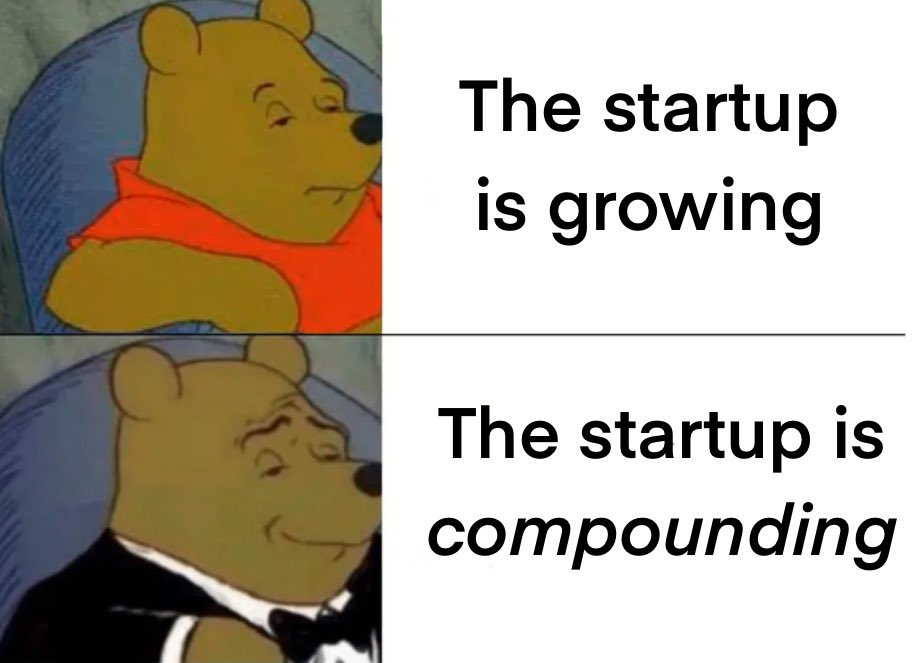
1/ You can't consume information on autopilot. You need filters in your mind to pull unique insights Munger said “The only way to win is to work, work, work, work, and hope to have a few insights” @wolfejosh has a great framework for this called Fitzgerald-Twain-Schopenhauer 👇 2/ “The test of a first-rate intelligence is the ability to hold two opposing ideas in mind at the same time and still retain the ability to function" - Scott Fitzgerald Most of what you read in the WSJ, FT, etc. will be 'Scott Fitzgerald situations' 3/ "A smart individual says gold/silver is just a shiny piece of metal, & then there’s also a smart person saying it’s a great store of value" 4/ It ain’t what you don’t know that kills you, it’s what you know for sure that just ain’t so” - Mark Twain "What is the thing that everybody is predicting linearly is going to continue? And then boom, there's an informational surprise?" 5/ What do people know for sure, that might be wrong? Look for the non-obvious, low probability thing "Informational surprise when people are predicting a linear continuation of some trend, & then it surprises to the downside, shocks the heck out of people" 6/ “Talent can hit a target that nobody else can hit, and genius can hit a target that nobody else can see” -Arthur Schopenhauer This is total asymmetric information A secret that nobody else knows Being non-consensus and right 7/ "We’re trying to find something that we think nobody else has discovered or found….and we want people to agree with us, just at a later time I encourage you to listen to Josh's podcast with @ShaneAParrish here: https://t.co/4QASLE1eZg He talks about this at 21:00 So good
May 4, 2021Fun to imagine Wikipedia and investopedia, but where instead of a text based, broad entry, there is instead a detailed, high quality conversation between experts. I look forward to helping bring that reality into existence.
May 3, 20211/ My thesis that by externalizing our thoughts by writing them out, we: ~Understand if we understand or not (writing is a forcing mechanism); ~Quickly see holes or problems in our ideas that we wouldn't grasp if they just remained in our thoughts; 2/ ~Externalize our thinking in time such that our minds can't helpfully "update" our memories to make them consistent with what we know and think now (hindsight bias); ~Help us understand WHY we were thinking things at the time and remind us that our "memories" are unreliable 3/ narrators. There's nothing quite as shocking as truly thinking you thought something during some event and then being called a liar in your own handwriting. This is vital for correcting our errors and updating our mental models. I simply can't think of any other easy activity 4/ that has a higher ROI than this in terms of upgrading and learning from your mistakes. I'm pretty sure if I hadn't been doing this all of my adult life, it wouldn't have been nearly as easy to write this: https://t.co/aKOkxgOSCS 5/ And here's a longer thread on why I think documenting your thinking is something that gives you a huge advantage over those who don't: https://t.co/LGgoYIH5ib
Apr 10, 20211/ Over a year ago I tried out Obsidian. At the time I found it to just be another Markdown editor. I was actually frustrated with the @obsdmd devs because it seemed like a shift from @DynalistHQ which is a fabulous product, but needing love. Well I was wrong, they were right 2/ In recent months I have seen many dear friends move to @obsdmd from @NotionHQ, @RoamResearch and other such tools. I honestly thought they are crazy (Ok they are and they know it.) But they are so happy with Obsidian and brag about it like teenagers in love, it is irritating. 3/ But I have to say, these friends, some former Roamans, are really good, smart, hard working and caring people. I told myself, there must be something to @obsidian if these individuals are so happy. They know me, I know them. They would not waste my time. 4/ With that in mind I have been giving Obsidian a spin. Which is a shock for me, I am a "one note app type of guy". But out of respect for these dear ones, I wanted to see what excited them and I have to say so far I am surprisingly impressed. 5/ Many try to sell you on @obsidian with its strong plugin community (163 available inside product). There are some very good ones. Lots of overlap with Roam42 and tools from De' Vargas (that's his french name.) But I spent most of my few days without plugins. Virgin Obsidian. 6/ After this brief test I have concluded Obsidian is now a tool in my toolbox, at least for a few aspects of my work, not for everything, but in some key areas. If this interests you, read further. If not, thanks for sticking with me to this point & I wish you a pleasant weekend 7/ With Obsidian it is possible for full ownership of your data. The idea is TNO (Trust no one Security. more info here: https://t.co/Z2p4WvdBPJ Trusting our data to cloud services is based on trusting them. TNO says you have some things in life that you can't trust with anyone. 8/ This usually means that you personally encrypt your data, it leaves your system encrypted, is stored in cloud encrypted and returns to you encrypted. With TNO, no one except you can unlock the bits. With Obsidian it is possible to do this kind of encryption with little effort. 9/ Some data I work with cannot be shared publicly due to legal reasons and of course personal reasons. So TNO is a big deal and a very nice option. Therefore, for some of the data in my life, it will live in Obsidian in a TNO vault. 10/ To make this super easy, Obsidian offers a sync service for 40 USD a year, with e2e encryption, but also one step further, you can encrypt the data before its encrypted for wire transfer. 40 for TNO. Not TNT as in dynamite security, rather "Trust No One" security & privacy. 11/ Another reasons is they have a great mobile app that also allows for desktop and mobile sync. I have Obsidian on my Windows PC, Mac, Chromebook, iPad and iPhone. All synced together. Sync happens in just a few seconds between devices. I hear Android is just as reliable. 12/ Since obsidian in an application, it leverages the local power of your CPU, memory & SSD. Its lightening fast. It has a powerful search engine that can traverse large note collection quickly. You can save your searches. Searches can be embedded as queries inside your notes 13/ The mobile app is in beta. While it doesn't do everything the desktop app can do, it does almost everything & way more than I expected. Their mobile app isn't some crippled notepad. It is a 1st class citizen in their product line, with strong feature parity with the desktop. 14/ Mobile loads fast. Search is fast. A fellow Roaman told me they recently started to exclusively do their mobile notes on Obsidian because of speed. I think he is on too something. With the sync I have these notes everywhere & can import them into Roam, if its necessary. 15/ For the record, this is how mobile apps should be done. Almost full feature parity with the desktop (including plugins). It's a joy to use on the iPad and iPhone. Their last update added some nice "mobile" like gestures for navigating the richness of their feature set. 16/ The sync is not perfect, but close. Also their sync services includes full version control (every change saved for up to a year). So even if something goes bonkers, you dont lose anything. 17/ By the way, for this test, I dug out of sorage some old hardware, 6 year old laptop, with windows 10, i5 processor, 4GB memory and SSD. My iPad is 2 years old. Everything fast fast fast. Did I mention fast? I forgot fast is a feature. 18/ I decided, for confidential data, I will use Obsidian. (TNO BABY). Also using Obsidian for mobile "on-the-go". I also have a project I have wanted to do for a year (large data set ) that Roam can't handle yet until their DB upgrade, so will probably give it a try in Obsidian. 19/ One other thing I like about Obsidian is its development possibilities. I am not just talking plugins, I am talking about an API that allows you to manage data, query data, modify the UI, talk to the editing layer. Powerful possibilities for a programmable tool of thought. 20/ The pricing model is good. Its free, with some inexpensive services (sync & publishing). For some of my work with students and non-profits, this is a good fit, no friction due to pricing. I would say they are too cheap. It takes money to grow, add staff, and equipment. 21/ Their community is probably the biggest star of the show. They have a solid strategy for community interactions via Discord and Discourse. Clear message of where to report bugs and feature requests. Like Roam community, always ready to help, but organized so more effective. 22/ In recent days I spoke with the owners/engineers at Obsidian about technical stuff. They are always kind, helpful & even show respect for me. Remember: at least for now, I am RoamHacker, potential enemy in their backyard. They also use cute & cuddly gravatars. 23/ So what don't I like???? DISCLAIMER: I hope people don't get offended, this is just my opinion and I am allowed that. So don't yell at me. If you don't like criticism, stop reading and go here for some inner peace: https://t.co/3mfeEaAT0V 24/ I am an outlining type of guy. This is a Markdown editor and I miss true outlining. Lovely lovely bullets and indenting. However, you can emulate this experience and many Obsidianatics claim you will come to love this in time. We will see. But it works sufficiently. 24/ They have no web client. But it is built on Electron, html, css & JS. Truly it can adapted to web. Rumor has it this is on the roadmap (oh yeah, they have one of those too, probably a sign of unavoidable doom). If they add a web client.... not good for competitors. hah.. that was 25 26/ The app has a "programmers" feel to it. Some new users might struggle to be at home in the beginning. But I think there are simpler tools for those not wanting advanced functionality. Obsidian is kind of like VSCODE made babies with Apple notes. 27/ They are not a graph database. I know Markdown offers many benefits (i am a software engineer with database background), so you don't need to explain it to me. Files and folders are not the future, they are so 1990s. But in the present its might a more realistic architecture 28/ Having poked around in their global memory in the dev console, seems they are generating database of sorts from MD. Everything needs to be a DB in the end. So possibly the best of both worlds: human readable files with a meta db floating on top. 29/ so I Obsidian is now in my world. I encourage you to explore it as a tool to your existing code base. If you are a note taking Jedi master, not afraid of advanced editing tools, you will be intrigued by Obsidian. THE END ... start credits... I started writing this tweet storm in Obsidian on my PC, continued on my iPhone, then on iPad, finished on ChromeBook, all via SYNC. Smooth.
Apr 9, 20211/ My latest thoughts on one of the most common questions I receive about building a Second Brain: How and when do I *retrieve* all the knowledge I've saved in my second brain? 👇👇👇👇👇👇 2/ Retrieval is a trickier question than it seems on the surface, because it's not inherently desirable If you never encounter a situation where a given note is relevant, than the ideal amount of retrieval is exactly zero 3/ Because retrieval takes work and energy, we want to minimize it unless we know it will be worth it As with so many things in productivity, our motto should be "as much as necessary, as little as possible" 4/ Retrieval is really a matching problem: We are trying to match a note captured sometime in the past, with a problem (or challenge, or opportunity, or constraint) that arises some time in the future 5/ We have a good answer for the first part: the best time to take a note is when you're consuming it Especially with modern capture tools where it takes barely an extra moment to highlight, save, or bookmark a piece of content 6/ So we're back at the original problem: when to call up a note saved in the past Because we don't know *when* that will happen, the critical factor is that retrieval methods have to take as absolutely little human attention as possible 7/ It might be worth tagging, linking, sorting, filing, graphing, etc. if I know a note will be relevant in the next 3 weeks But if that time horizon is extended to 3 months or 3 years, and I have no way of knowing when, then even a tiny amount of effort becomes too expensive 8/ There's another important factor: there is no single perfect retrieval system Different retrieval systems are needed in different situations 9/ For example, search is probably the single most powerful one in modern times It takes no human effort besides creating the content in the first place, is almost instantaneous, perfectly thorough, completely random access, and searches can be iterated rapidly 10/ Yet studies have shown that search tops out at a certain percentage, no matter how fast and accurate it gets This paper shows that some people some of the time prefer "orienteering," retrieving information in steps, like navigating a physical space https://t.co/ckBeWPEbgU 11/ Other technology-based retrieval methods ppl use, all of which can be manual or automatic: -Filing into folders -Linking -Tagging -Visualizing (like in a graph) -Sorting -Special syntax for searches -Annotating All of these have their uses 12/ There's many other retrieval methods that aren't tech-centric, but probably the most powerful of all: -Relying on one's social network -Leaving physical artifacts in sight -Making collages or arrangements -Discussion and debate -Setting up certain physical environments 13/ The problem is always how to enable or support as many of these retrieval methods as possible while spending as little energy as possible I've settled on a few principles to do that in a way that is also platform-agnostic 14/ There are principles at each stage of my CODE framework – Capture, Organize, Distill, Express We are taking each of these steps with ultimate retrievability in mind 15/ Capture: Save things sparingly – only the best, most interesting, most relevant things that are least likely to be easily found through search, and that others are least likely to have access to 16/ Organize: Take a single action to move (or tag) a note according to the most concrete, most short term way it's likely to be used (which is usually a project) More than one action would take too much time/energy 17/ Distill: Later, when preparing to put a note into action, identify the main points so that 1) You are familiar with their contents, 2) You can pick them up and move them easily, 3) You can minimize your switching costs from one idea to another 18/ Express: Share your thoughts/ideas/knowledge as early, often, and widely as possible The collective social brain is so much more powerful than even the smartest person, all you have to do is build your own Second Brain just enough to gain access to it 19/ The feedback, reactions, and contributions that come back to you from that shared knowledge gets captured back as fuel to start the process anew Over time an increasing percentage of the knowledge you acquire comes through the collective hivemind, which is ideal 20/ So back to our original question: The "how and when" of retrievability depends on the situation, so your goal should be to have as many retrieval methods at your disposal, not specialize in just one or a few 21/ Ppl naturally do this: They start with a Google search, pivot to visual scanning of the search results, click one and do another search for a specific term, copy the link and send to a friend to discuss, share it on Twitter, save it to their notes & add annotations... 22/ I think ppl tend to think this approach is inefficient or wrong, and force themselves to follow some rigid retrieval routine This might work in the short term, or for very specialized fields, but it's incredibly fragile and will break sooner or later 23/ This is why it's so important to have tech-agnostic methods for managing knowledge. Every time I've relied on a specific functionality I've been burned Companies get acquired, features get discontinued, technology advances and replaces human effort with automation 24/ And most importantly of all, the specialized retrieval features work much better if you've done some pre-curation They are complementary to each other 25/ Every year a task that I previously had to do manually gets automated But since I'm always just reading and highlighting and creating what I would have anyway, I'm pleasantly surprised instead of devastated to see all my previous effort gone to waste 26/ So to answer the original question, imagine multiple retrieval methods like overlapping circles in a Venn diagram: 1. Search 2. Sorting (by title, date created, etc.) 3. Filing (usually by project) 4. Scanning (titles, images, headings) 5. Summarizing (within a note) 27/ Your job is to use as many of these as you need, pivot between them fluidly, and avoid or postpone as much heavy lifting as possible You search your Second Brain much like you search Google search results, but now you know everything is curated by you 28/ To be concrete, you might start by looking through a project folder (or tag), you see an interesting term, pivot to searching for that term, move all the notes that contain it to a new page or folder, summarize all of them, extract the main points into a new note 29/ That process describes how I start creating anything, from a blog post to a new course to planning our wedding to buying a car to getting health insurance It is an informal, iterative, improvisational, hacker way of assembling packets of knowledge just in time 30/ Ironically, it is also how I observe people working with information anyway. Finding shortcuts, going around problems, taking the path of least resistance They think there's some other, more efficient, structured way of doing it, and there isn't The natural way is the best
Mar 20, 2021In celebration of both my 1-year @RoamResearch anniversary and my 100th #RoamTour I've put together some thoughts on my two favorite topics: Investing + Roam. I wanted to reflect on the things I've learned and appreciated: 1/8 https://investing1012dot0.substack.com/p/roam-investing 2/ I started using Roam almost exactly a year ago! Both Roam and twitter are post-COVID discoveries for me, and they've changed the way I think about my own knowledge gathering. 3/ I recently had the honor of hosting my 100th #RoamTour with @LaurenBerson and @Claire Biggest takeaway from all these conversations? Self-improvement is a universal language. Very different people can be brought together by a desire to improve themselves and the systems they use to live their lives 4/ These kinds of nerd sessions are some of the most sincere networking I've ever experienced. Folks like @_ram_ @ryan_caldbeck @samhinkie @kgao1412 @DavidMcDoughnut @shomikghosh21 @LennyIce @ChrisHarveyEsq @BillBrewsterSCG @meliarobin and tons of others have made it special 5/ This article was a lot of fun to put together. I interviewed over 30 different investors (huge thanks to all of them) and was blown away by the quality of thinking across a wide variety of investment types. https://twitter.com/kwharrison13/status/1331331411043762176 6/ A lot of these conversations led to interest in more resources. If you'd be interested in a course for things like this let me know here: https://docs.google.com/forms/d/e/1FAIpQLSe26D_6GPNqVUQPQbrsjVKRZCPV8eWSQ1e2ViLuyJBuTPpcRA/viewform https://twitter.com/kwharrison13/status/1345536731932549120 7/ For me this has been more than just loving a note taking app. This is a challenge for me to think more deeply about how I learn and develop as an investor. In the future I want to continue to capture more of these observations as part of "Investing 101 2.0." 8/ Follow along Substack: https://investing1012dot0.substack.com/ Tools and templates for Roam nerds: https://roamresearch.com/#/app/Investing-101-2dot0/page/EkUj334LX Wiki to capture learning: https://investing1012dot0.com/
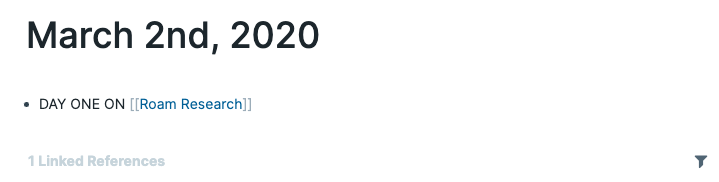
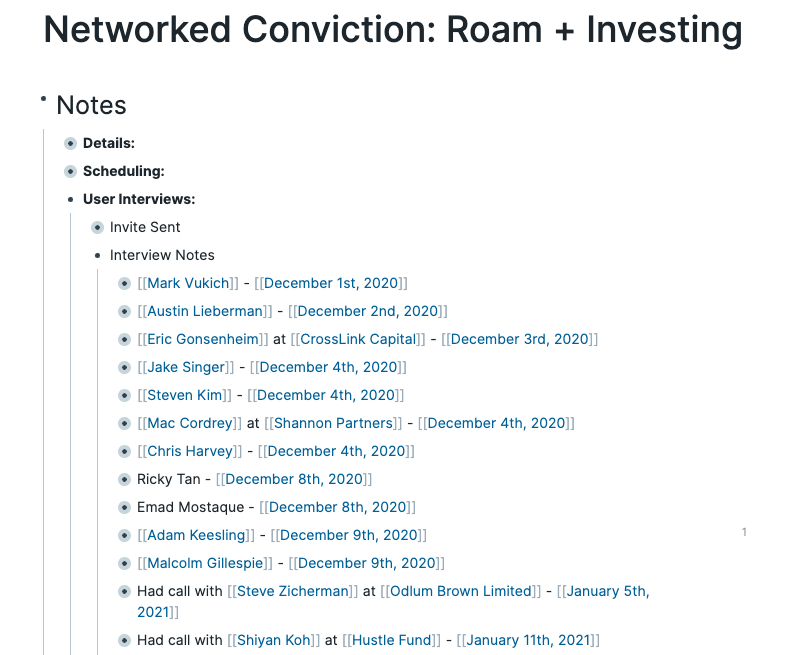
One of the biggest issues with most books, podcasts, and online learning platforms is much of the content is either static or ephemeral: If I wanted to learn about a particular topic (i.e. climate change) I wouldn't be able to find a single source of truth that contains both the: 1) Historical context 2) And the most up-to-date information with interactive data Wikipedia comes closest to solving this, but lacks a lot of the visual elements and interactiveness that we seek when we're learning something for the first time.
Mar 16, 2021Soon, I expect we will see the creation and rise of the Information Dietician. The role is one part psychologist, one part data analyst. Their goal is to recommend changes in the information you put into your brain in order to improve your happiness and productivity. The ideas we have, both about ourselves and the world, are the byproduct of the information we feed into our brains. Human minds are creative, but it’s a constrained creativity. We can color outside the lines. But ignoring the lines altogether is the definition of insanity. Just like with food, what you consume yourself plays an outsized role in how you feel. The mechanism of action is different between food and information but the outcome is the same: Consume unhealthy things, experience unhealthy outcomes. More so than with food, reasoning about your own information diet is tremendously hard. Your perspective is enmeshed within your information diet, so rational, unbiased self-assessment here is... unlikely. Enter the Information Dietician! The majority of the information we consume leaves a trail of breadcrumbs that can be analyzed by your Information Dietician. Of course they wouldn’t have access to everything, but they would have access to enough. They need to see the forest, not the trees. In order to help you achieve your goals, they might examine the information you consume on dimensions like: 1. Emotive strength 2. Topic concentration 3. Factual content Based on their analysis, they would recommend an Information Diet aimed at improving your wellbeing. Much like a food diet, the Information Diet would involve some level of: 1. Abstinence from certain information sources or topics 2. Reductions in consumption of various forms 3. Additions of new information types And it’s unlikely there is a one-size-fits all diet. Wouldn’t it be interesting to experiment with how the information we consume makes us feel? To what extent might mindfulness of our information diet help address widespread social issues like depression, anxiety, outrage, and loneliness? We are making huge progress on understanding how to have a healthy relationships with food and exercise. We should strive to make similar advancements around how to have a healthy relationship with information. May a thousand Information Dieticians bloom!
Mar 13, 2021Alright, I made a thing. Thought I'd share. It's an attempt to reclaim my attention by repurposing my Twitter feed with Roam. cc #RoamCult @RoamResearch @Conaw Since I mindlessly scroll on Twitter a bunch already, wouldn't it be great if I could inject things I actually care about into my Twitter feed? Think: your TODOs, spaced repetition cards, links to topics you actually care about rather than ones the Twitter algorithm picks... Well, I already have all those things in my Roam database. So, I made a little system for myself to take them from my Roam and put them in my Twitter. The how is a little bit interesting: You might expect it to be a chrome extension that injects content between the tweets. Simpler than that though -- I made a private twitter account that only I can follow, and tweet the Roam things programmatically from there. Wrote about it here: https://t.co/xeftLxhTp4 Maybe fits some future #RoamGames prompt, so let's add that tag too 🤷♂️
Feb 9, 2021I realized that the main reason I don't publish as much content online is that I prefer to iterate my thinking continuously, making the bar to "publish" something extraordinarily high. A workaround is shipping an "alpha" version of a thought. Here is an experimental alpha version of my frameworks, lessons learned, pattern matching, aphorisms, theories, and general worldview with respect to venture capital. It's only a start, but I hope to update it over time as my own thinking improves and I challenge my assumptions. Frameworks v0.1 https://t.co/9Qa1Wan3tf
Jan 30, 2021Don’t start from the outside in: here’s all the content I want to consume, how can I fit it into my day? Start from the inside out: how much time am I willing to dedicate to consuming content? What’s the very best thing to start with? The failure mode of the first one is “get overwhelmed and let things fall through the cracks” The failure mode of the second one is “used up my time budget, I guess everything I didn’t get to didn’t make the cut” Which is the same as the success mode
Dec 30, 2020News is like carbs. Something that’s extremely bad for you that corporations have marketed as extremely good for you. The food pyramid recommended scads of grains. The information pyramid recommends reams of news. What does a better information diet look like? https://t.co/Y7ts9jkZ3n
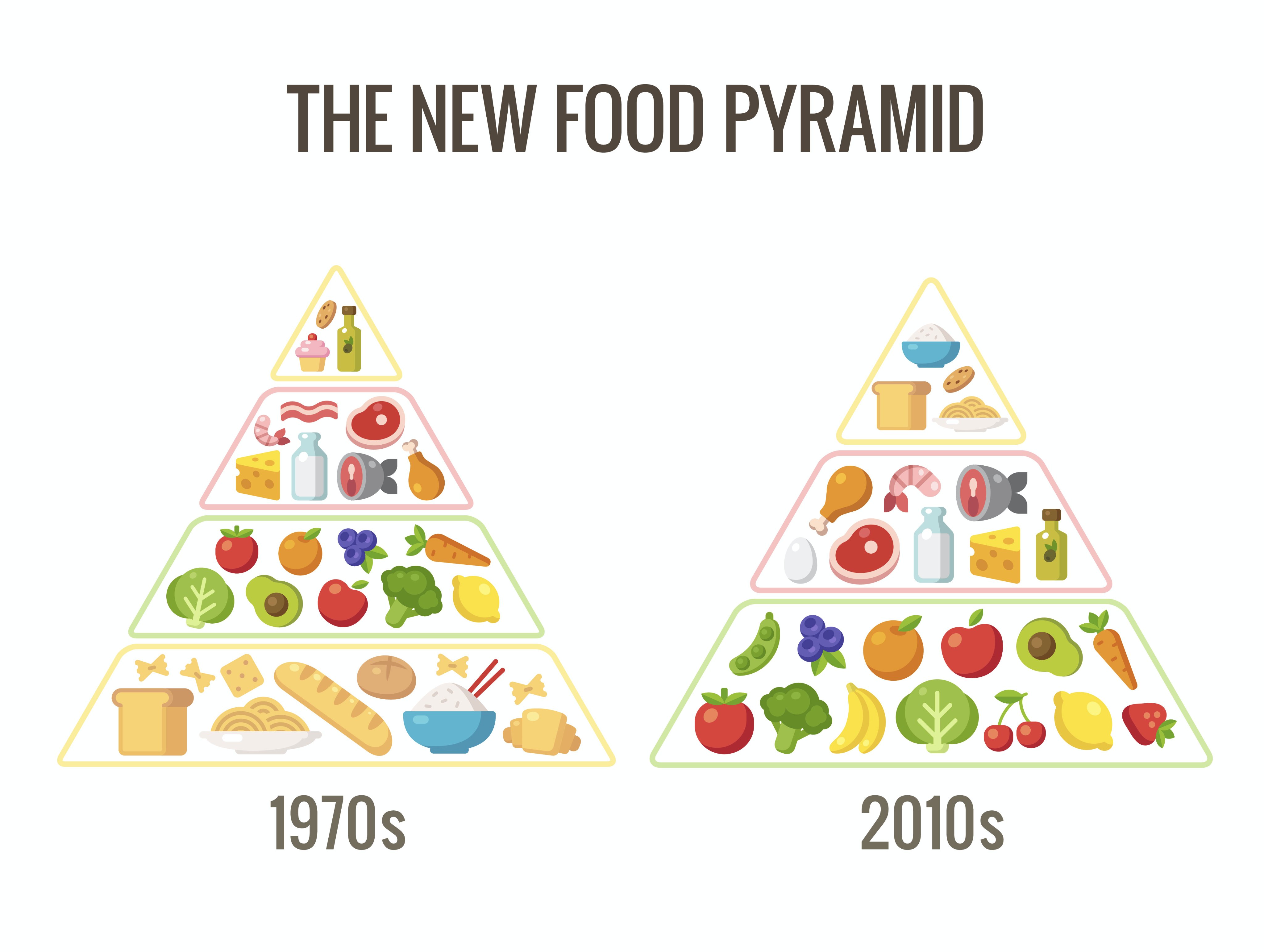
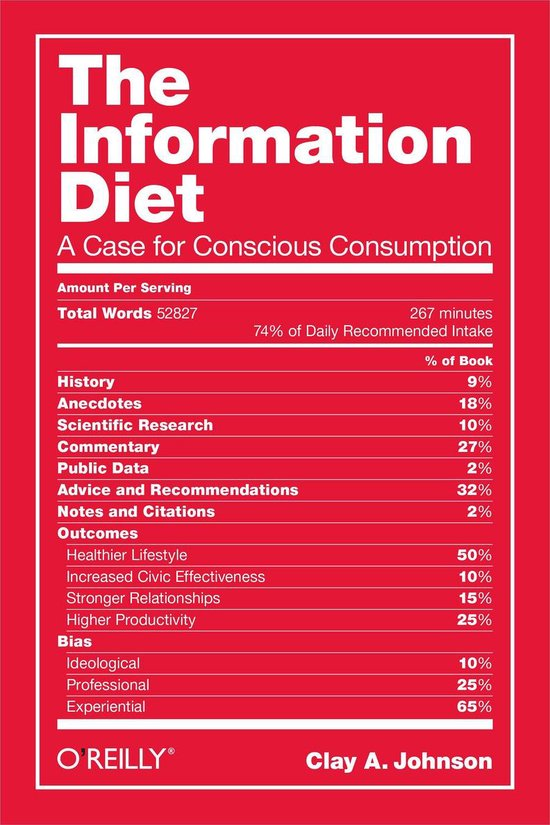
One of the most impressive things about Wikipedia is that it repeatedly produces clear writing. Their editing guidelines double as excellent writing advice: 1) Don’t argue from authority 2) Avoid acronyms 3) Consider the inverted pyramid strategy https://t.co/fYy3x53SUf You rarely go on Wikipedia and say “I didn’t understand the article because it was so poorly written,” but that’s the base case for Reading academic papers. Wikipedia is proof that complex ideas can be explained without a complex writing style. Open moderation guidelines are another thing we should celebrate about Wikipedia. Their governance standards are free for anybody to review, in contrast to Google and social media platforms which are a black box.
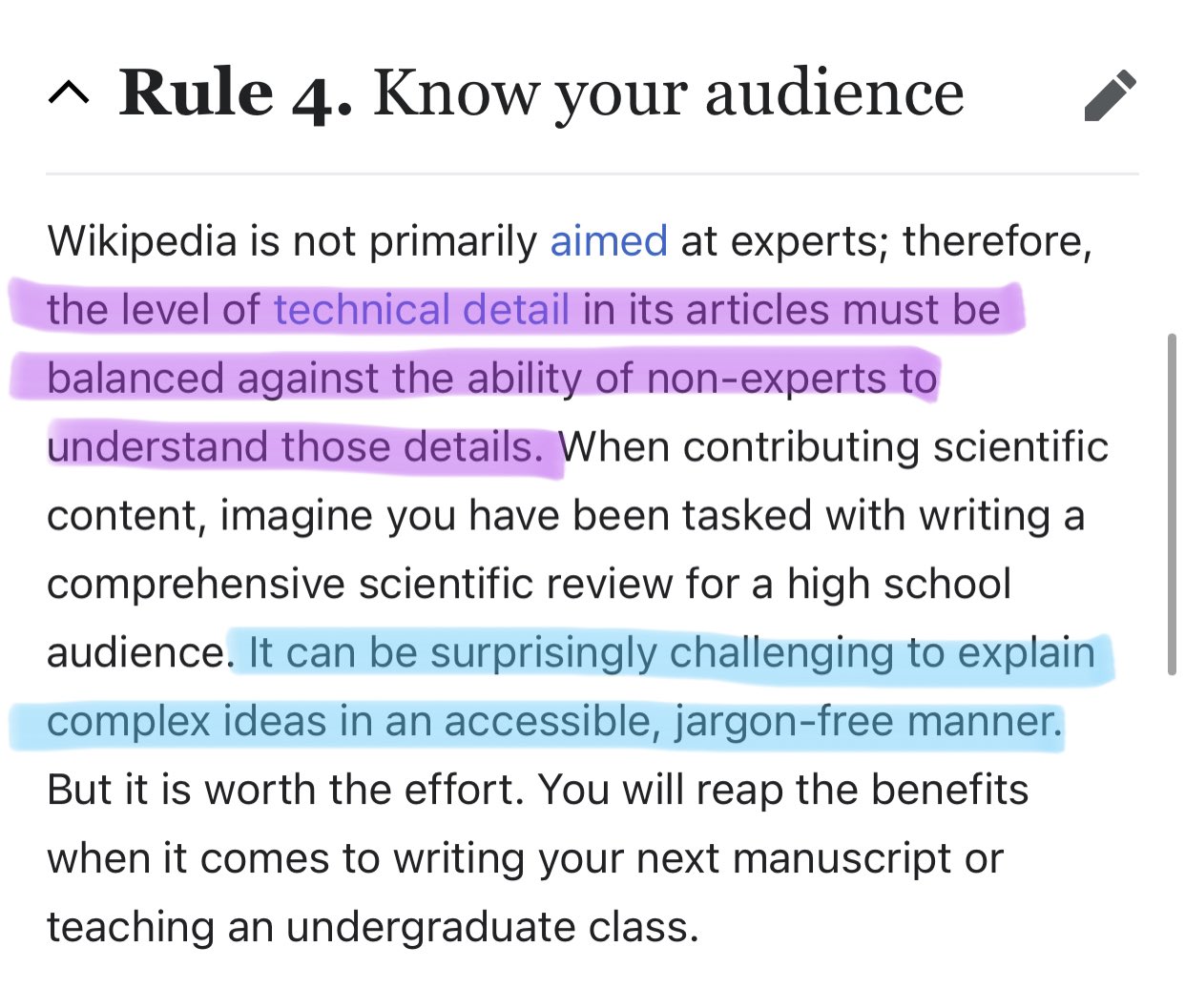
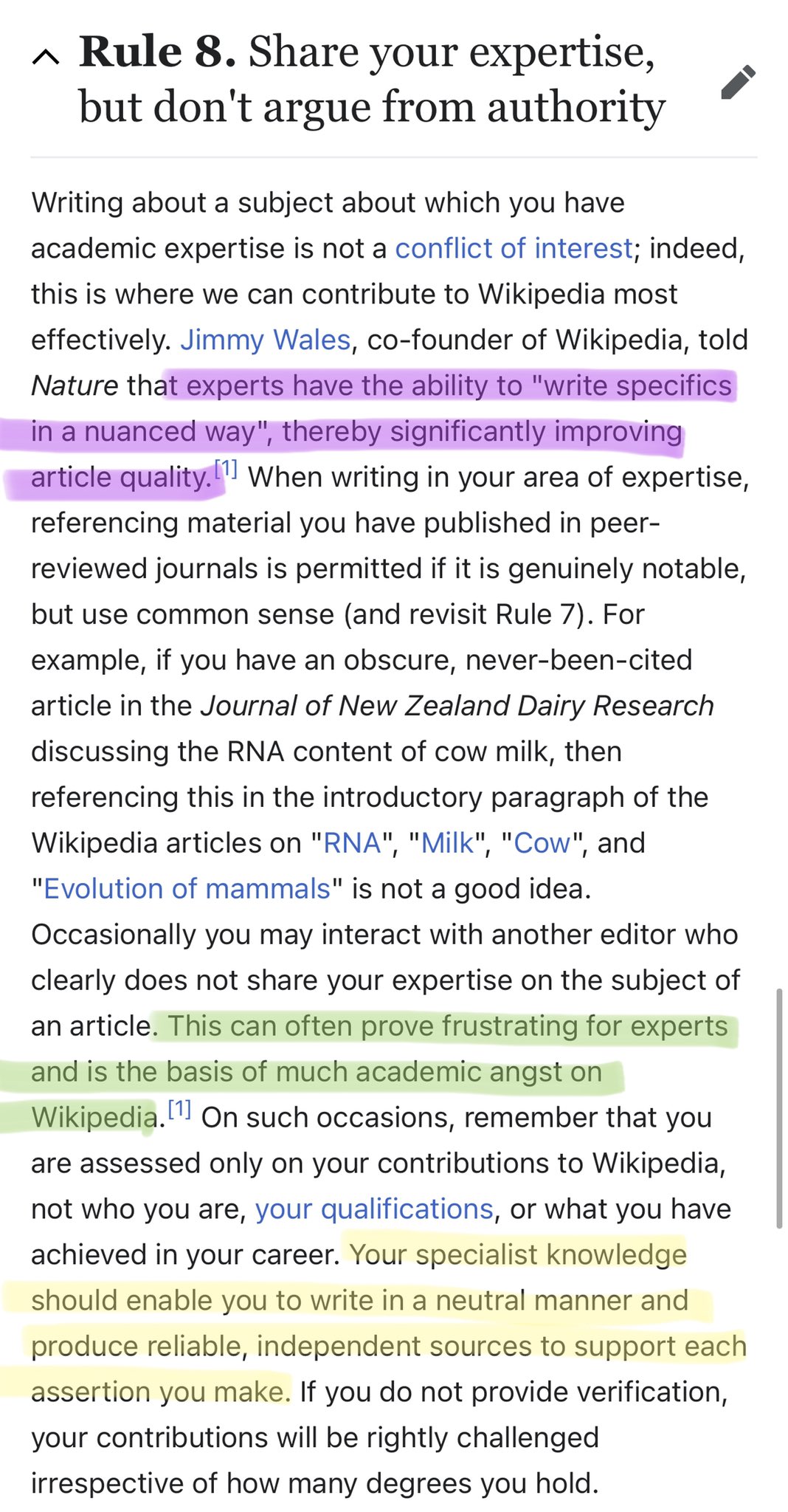
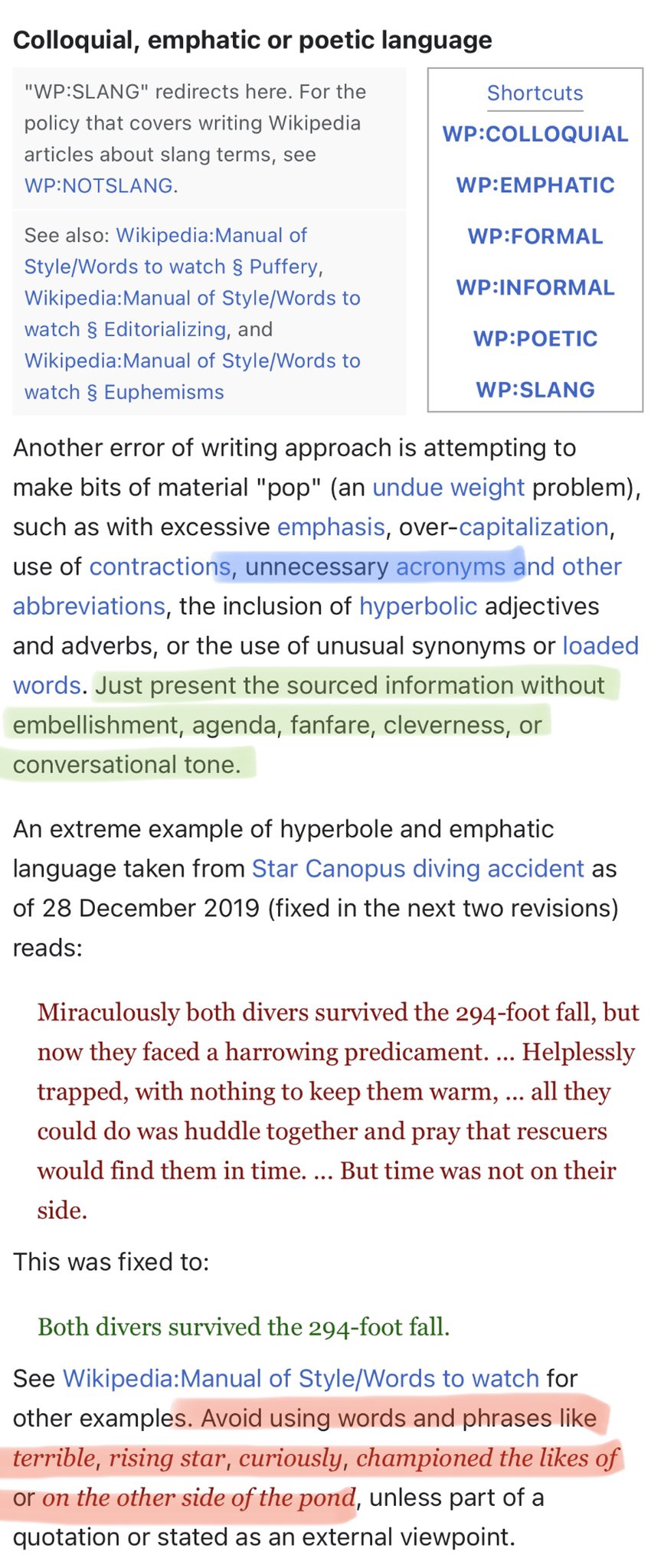
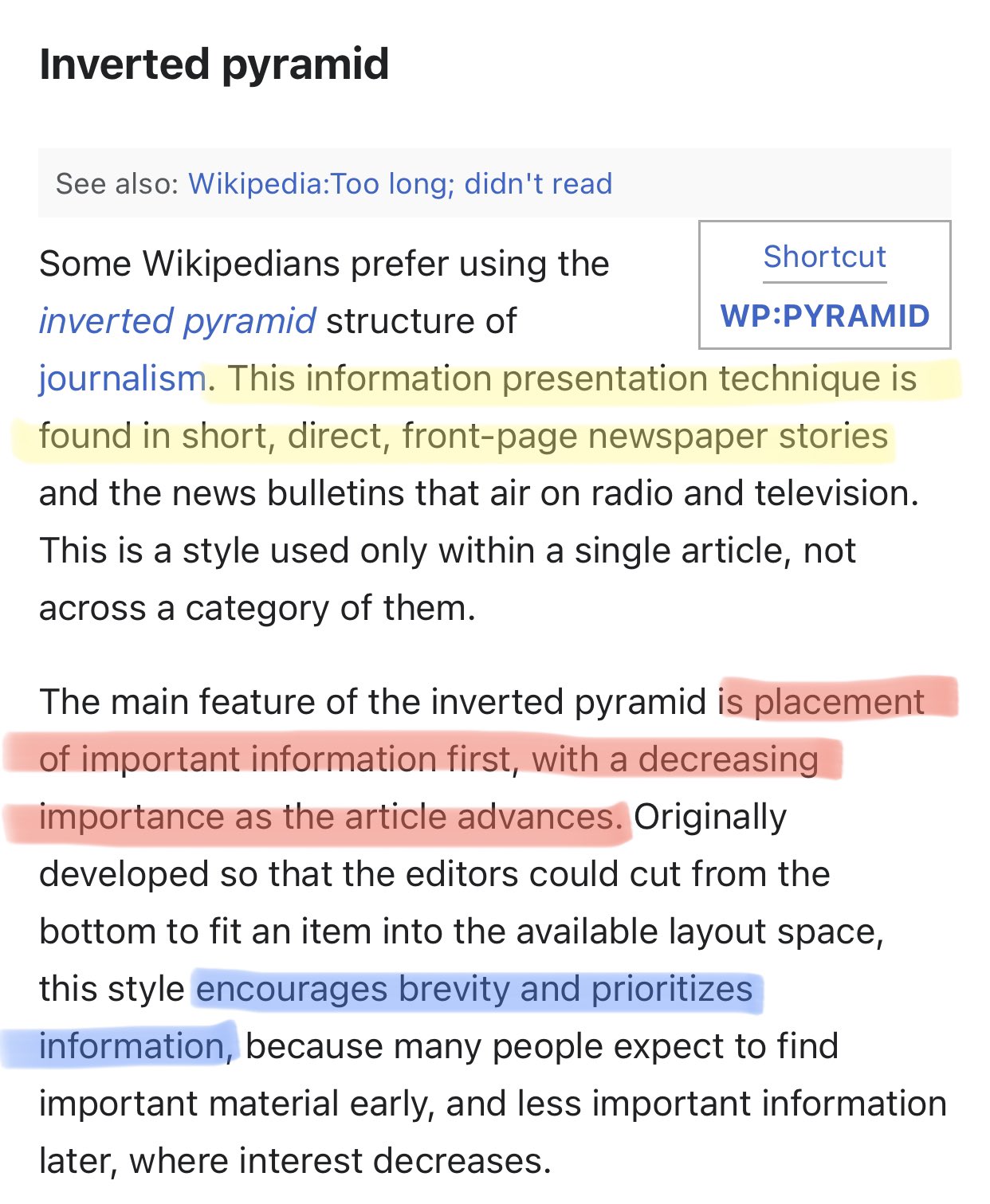
Remember when I wrote three long articles on my Information OS in @RoamResearch? You can now enjoy it in a much shorter video form! In this video, you'll learn how to annotate what you read online with @instapaper how to collect, resurface, and transform your notes for Roam with @readwiseio and how to extract everything you can from your notes in Roam in order to grow inspirations into projects, highlights into literature notes, and lit notes into evergreen notes (h/t @andy_matuschak) Anyways, check out the video here: https://t.co/uxMjMvlvrd
Nov 28, 2020 Original deleted — preserved here#RoamCult assemble! I use @RoamResearch heavily in my writing process. As I write The Flywheel, I am building a repository of company, business model, and related data. I believe this could become a general resource for business thinking. Let's collaborate, a thread👇🏼 https://t.co/JOYNQFsZIp My vision is to build a deep, valuable, standalone repository of business, strategy, and investing knowledge. But it's a total experiment. The first step was to move it out of my personal DB to its own DB. After an hour, this is what I've got. Let's explore👇🏼 https://t.co/V2oPpIDqBX What goes into the DB? I've started slow and will expand over time. First is a copy of each article: https://t.co/IofDHmaNx5 Each article is tagged with associated data. The possibilities are endless, but here are a couple of examples. 1) companies: https://t.co/3wzY1OZm7g 2) key people: https://t.co/4RVDL0W321 Over time I plan to add much, much more. Finding commonalities among business models, identifying investing ideas, and stuff I haven't thought of yet. The idea is that this will help me get better at understanding companies, making investing decisions, and writing articles. And since it's me, we can visualize this in a Flywheel. The thing is, the 'more & better articles' don't have to be just mine. If I could team up with a small number of other writers, this thing could accelerate massively in unpredictable ways. https://t.co/40lMRPsopS To that end, I'm looking for a small number of folks who want to help me build this out. I can imagine this becoming a valuable product over time, and there are lots of ways to build it. I don't want to do it alone, and more importantly it will be better if I don't! If you write about business and/or tech, are part of #RoamCult, and read the Flywheel, then you're perfect. https://t.co/QwMHT4dYf0 But even if you don't fit that perfectly, reach out if this interests you and you want to help me work towards the vision I described above. If you want to help me shape that vision, even better! /thread adding @Conaw to help me find the right people! To answer some FAQs: 1) Yes, I know this is just scratching the surface! Point was to ship this thing quickly and see if I could attract some like minded folks who could help me shape its direction. 2) Yes, @eriktorenberg has his own page. https://t.co/QOPTgag60A
Nov 26, 2020 Original deleted — preserved hereSince I've started to use Roam, my writing process has become a breeze. My database is my conversation partner, and by combining my notes, I feel more like a curator. This process is influenced by @fortelabs and @soenke_ahrens. 🧵 A thread on how I write articles end-to-end. Why use @RoamResearch to draft articles? While many people use Roam to do their research and organize their notes, few write entire articles in it. I believe Roam's block-based architecture makes it the perfect end-to-end writing tool. Editing becomes a breeze! My writing process has 10 (small) steps: 1. Read. 2. Link. 3. Progressive summarization. 4. Collect blocks. 5. Group and summarize. 6. Create headings. 7. Sequence blocks. 8. Draft based on summaries. 9. Leave, then reread and rearrange. 10. Proofread and ship. 1/ Writing starts with reading. I don't brainstorm a topic; I start by searching my notes. If I don't have enough notes, I read widely within the topic—highlighting and taking notes. Only when I feel I have enough input, do I start the rest of the collection process. 2/ Link new knowledge to what I already know. By bringing my highlights and notes to Roam (via @readwiseio), I can link new concepts to existing knowledge in my database. Translating terminology is partly a synoptic process. https://t.co/v0fvQByklk 3/ Progressively summarize notes as I revisit them (often combined with step 4). I make my notes glanceable as I can understand the gist by only reading the bolded parts. There can be a long period between linking and progressively summarizing notes, and that's fine. https://t.co/XR5KOzBTJX 4/ Collect blocks to get a sense of what I'll write about. I often have a vague sense of what I want to communicate without knowing how. My notes kickstart this clarification process. I collect blocks (refs) that resonate with me and keep them close to my future outline. https://t.co/XvrvKNquRS 5/ Group related blocks and summarize them. By collecting the blocks the resonate with me, I start to get a sense of the article I'm going to write. To start my outline, I group related blocks and write a summary for each, thinking about how they support my message. https://t.co/a9RJNLrozm 6/ Create headings for my note summaries. The article now starts to take shape. I think of the logical progression in the argument and create headings that best support this development. I like to work with questions or statements and answer/support them with my notes. https://t.co/ZgTRsolU2r 7/ Sequence blocks in my outline in a logical order. With the block references (notes), summaries, and headings, the outline starts to get some meat. Now it's time to put things in logical order so I can rely on the outline when drafting the piece. 8/ Now the easy part: drafting the article. By now, I have a logically ordered sequence of short paragraphs (summaries) based on my notes (block references). All I have to do now is rewrite the summaries, so they become a coherent piece. 9/ Leave the article for a while. I have a walk, eat a meal, or sleep for a night before returning to the piece. Then, I reread, delete, and move around paragraphs as I see fit. Finally, I tighten it up and remove fluff. 10/ Proofread and ship. I proofread the piece (and optionally have it proofread by someone else after). Often, I remove some sentences or even entire paragraphs to make the writing punchier. Then, it's off to Grammarly for a final check before I publish the article. These are my 10 steps for writing articles using Roam. I use the same approach to write proposals, report on research, and write my personal newsletter. While I still refine parts of the system, I've grown very comfortable with it. No more heavy lifts; slow burns only.
Nov 24, 2020First Principles 101 Many of the world's greatest thinkers and doers - from @naval and @elonmusk to @nntaleb and @chamath - tout the importance of first principles thinking. But what is "first principles thinking" and how does it work? Here's First Principles 101! 👇👇👇 https://t.co/WCAQzSFyn4 1/ First, a few definitions. A "first principle" is a foundational assumption or proposition - it is foundational in that it cannot be deduced from other assumptions or propositions. Think of a first principle like an element. It cannot be broken down further. It is pure. 2/ "First principles thinking" (or "reasoning from first principles") is a problem-solving technique that requires you to break down a complex problem into its most basic, foundational elements. The idea: to ground yourself in the foundational truths and build up from there. 3/ When we encounter difficult problems, our tendency is to rely on base level assumptions we have been told are true (or believe to be true). It's quick and easy to do so. But it also leads to unimaginative, linear solutions that closely resemble all that has been done before. 4/ This is called "reasoning by analogy" - it leads to solutions that are like something else. It can be a useful heuristic when speed is required and novel solutions are not the goal. But it falls short when dealing with complex problems in need of imaginative solutions. 5/ Imagine the solution to a problem as a house. The foundation is the assumptions upon which the solution rests. If the foundation is shoddy, the house will collapse. If the foundation is sturdy, the house will hold up. First principles form a sturdy foundation for the house. 6/ To illustrate the flow of first principles thinking, let's look at a classic example. The case of @ElonMusk and his original @SpaceX rocket. The complex problem? Sending a rocket to Mars. The logical first step: to obtain a rocket. https://t.co/GZi3Zgeca5 7/ Musk discovered the cost of buying a rocket was otherworldly (sorry, couldn't resist!). Buying a rocket for $65 million was not only untenable, it was also grounded in assumptions of how rockets have always been built and what they should cost. He turned to first principles. 8/ He asked and answered basic, foundational questions. What is a rocket made of? Aerospace-grade aluminum alloys, titanium, copper, and carbon fiber. What is the value of those materials on the open market? Just ~2% of the typical rocket price. So he decided to build his own. 9/ Rather than accepting the "truths" he had been told about the cost of a rocket, Musk grounded his problem solving in first principles. Today, @SpaceX rockets are safely delivering humans to space and the dreams of a Mars voyage are alive. Score one for first principles! https://t.co/38EWzN2ClX 10/ There is no set way to establish first principles. "Socratic questioning" - a technique where you use systematic questioning to drill-down to fundamental truths - is one method. @FarnamStreet has a great primer on this in their article below. https://t.co/i6pCcR36fs 11/ Some questions you might ask... Why do I believe this to be true? How do I know this is true? How can I support this belief? What alternative viewpoints might exist? In short, become an endlessly curious child again! Question anything and everything. Ask why! https://t.co/nnDijOARz7 12/ The world is filled with unimaginative, copycat solutions to problems. These (predictably) lead to linear outcomes. Leveraging first principles thinking is difficult and time consuming, but it is also a pathway to devising creative solutions that lead to non-linear outcomes. 13/ Aristotle defined a first principle as, "the first basis from which a thing is known." The greatest thinkers and problem solvers agree: when solving a complex problem, ground yourself in first principles and build your solution up from there. It will not lead you astray. 14/ So that was First Principles 101! I hope it was a helpful primer on the topic. For more on this topic, I highly recommend checking out @FarnamStreet (@ShaneAParrish) and the below piece by the great @JamesClear. https://t.co/fDnEF70dbj 15/ If you're interested in learning more on the amazing story of @SpaceX and how @ElonMusk has implemented first principles thinking into almost everything he does, check out the fantastic book by @valleyhack. https://t.co/EBdCxj34sa 16/ And for more educational threads on money, finance, business, and economics, check out my meta-thread below. Turn on post notifications so you never miss a thread! https://t.co/JyqunaYxDe

Everything I do is built off the back of my note-taking system. To be a better creator of any medium, note-taking will be your accelerator. - A Thread of 10 Lessons to make you a better note-taker- https://t.co/LjwQPturqK 1. Reduce, friction! Like your physical environment, make your digital processes smooth. Install Instapaper, Pocket or the browser plug-in of your note-taking app of choice. Whenever you see something interesting, save it without second thought. https://t.co/HtVsLyorub 2. Highlights + Active Reading In your read-it-later app of choice (Instapaper recommended), now go through the saved articles and decide which are high priority. Delete the others to keep a clean inbox. Make highlights w/ Instapaper while commenting your thoughts 3. Readwise This is the superpower behind the thread. Readwise collects my highlights from: - Instapaper (All blogs and articles) - Medium - Kindle (All Books) - Airr (All Podcast Transcript highlights) and syncs it to Roamresearch w/ automatic tags. https://t.co/fw1YBLv4h2 4. Summarization All items coming through Readwise are tagged with "Inbox" Twice a week, I go through, add more detailed tags, add relevant bidirectional links, and most importantly, add my own thoughts to each point. These actions allow for info to be resurfaced. 5. CRM Notes from each article/podcast will be associated with an author. When I want to bring them on as a guest, I go to Roam and find all their information in the linked references. The work is already 50% done for me. Again, friction reduced. Here's @nateliason https://t.co/mkLZBa2hCZ 6. Evergreen Notes An episode with @juvoni resurfaced this idea for me. Take notes based on questions people ask or topics people commonly talk about. Build common segments that are relevant to your interest. These ideas will be relevant for years. Lindy-esque https://t.co/wf1BT6K066 7. Idea Sex The ultimate goal of your notes is for them to improve your thinking. That happens best when they are connecting with one another. Find ways that resurface similar ideas, remix them and form new ones https://t.co/wke7UrFw8g 8. Don't make the process hard You want to make sure note-taking works for you. If it's unenjoyable, look for the points where there is a pain point. Each person has different styles, try handwriting notes or not worrying about tags. Make sure it's something you return to. 9. Publishing Mindset Publishing gives you a reason to check your notes. This takes the form of my weekly newsletter: https://t.co/zDIWhBn6xb It forces you to engage with what you have read and improve your system. What made it easier to write? Optimize constantly. 10. Prune your notes Don't hoard notes. Your note-taking system is an extension of your mind. You never want your mind to be cluttered. Do not clutter your notes as well.

We are living through the emergence of a new business category which I believe will become an important part of our digital lives: community-curated knowledge networks (a thread on why) https://t.co/ZNg3FHiGUD 1/ The Internet put thousands of years of human thought at our fingertips. While this presents enormous opportunities, our brains are not equipped to deal with this abundance. 2/ Curation is a potential solution - we’ll pay people with good taste to help us sort through the abundance. But there’s a few problems 👇🏽 3/ We seem to have accepted the job of the curator as providing a list of links with some commentary on an organized schedule. But this format is subject to the same accidental property of social media; ephemerality. 4/ The conversation around curation has focused too much on reducing the amount of information, and too little on what other architectures might be possible outside of the feeds or newsletters we’ve grown accustomed to 5/ Our feed-based information architecture has made us obsessive consumers of the present, yet largely indifferent to the archives of the past. 6/ We have forgotten that the goal is not to read more. The goal is to think better, so we can achieve our goals. 7/ The Internet offers us the first major opportunity to introduce new, digitally-native information architectures that improve our understanding of the world through added context and relation 👇🏽 https://t.co/3Xnz4yy3LL 8/ The past few years have seen the rise of many knowledge management tools, online communities, and curation businesses. But what’s interesting is how these categories are remixing into new combinations of content, community, and software. 9/ We need curation to help us filter what we consume We need knowledge management to add structure, memory, and goal-orientation to our information stream We need community to tap into networked knowledge 10/ The intersection of all three: community-curated knowledge networks 👀 this space. 11/ There are reasons to be optimistic; the economic feasibility of paid communities, a renewed interest in curation, a slow move away from big social, and an improved understanding of platform incentives. You can read the full post here: https://t.co/WLrvQQ2dt1 Thank you to @_brandswell @MarieDOLLE @tobyshorin @prakharshivam @wacko_gabriel @Jad_AE for reading drafts of this post 👊🏽 One last thing: I’m working on something in this space. Subscribe to my newsletter to be the first to know 👇🏽 https://t.co/dQ02IsLAC0
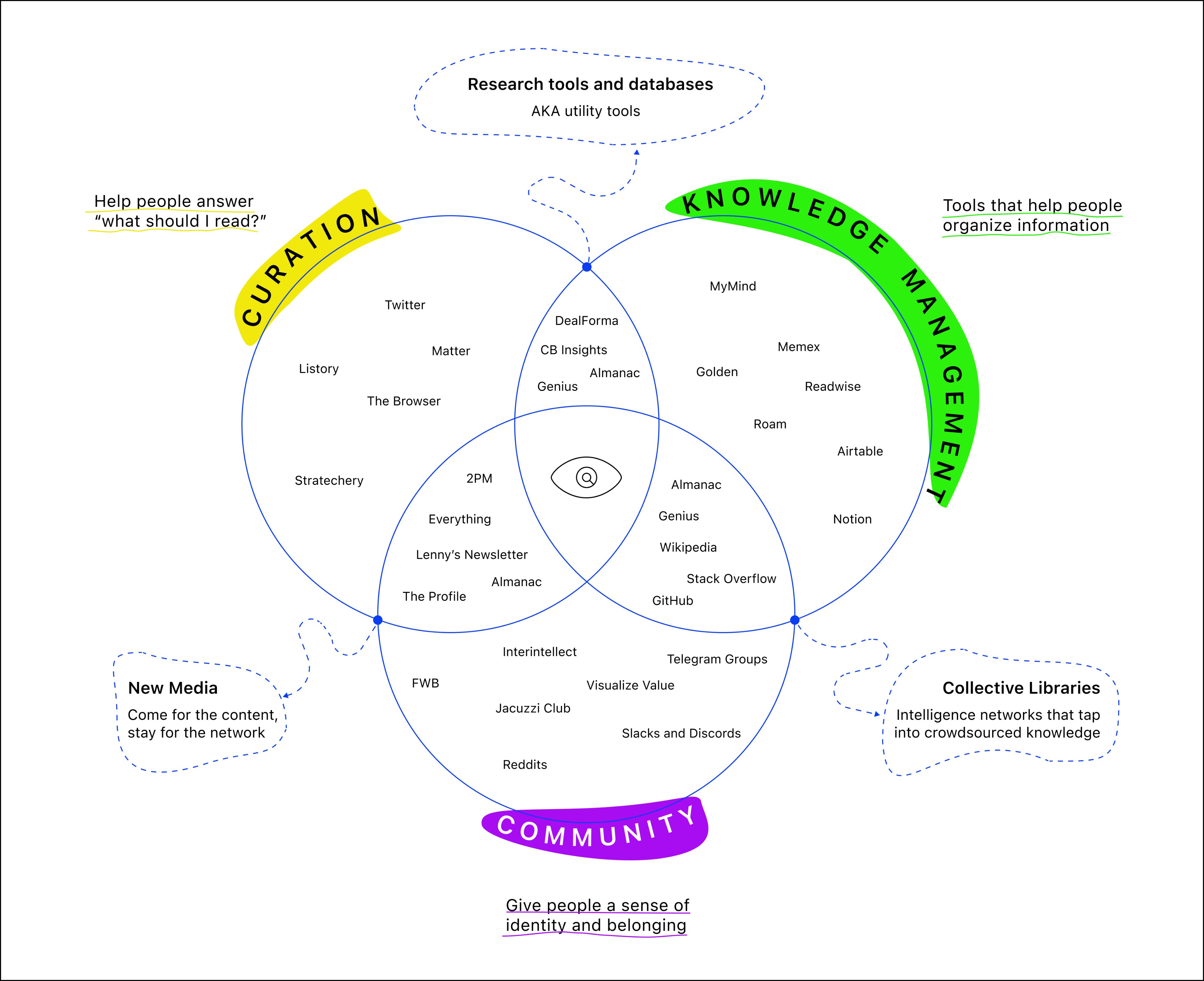
I've written another Tiny Textbook on Development Studies. It discusses key challenges (poverty, inequality, & violence); organising, insurgencies, right-wing populism; global supply chains; & the impacts of COVID. Reading suggestions are very welcome! https://t.co/xZ3QkCszVw https://t.co/M28Mu6aHQh It's an Introduction to Development Studies, for all the first years. Draws on economics, political science, anthropology, geography, and sociology. I wrote it in 48 hours, please let me know if you see an tragically embarrassing faux pas. Now sleepy! Good night! 🥱 The other textbook is more advanced, written for my second year course https://t.co/vCQmhmRNGY
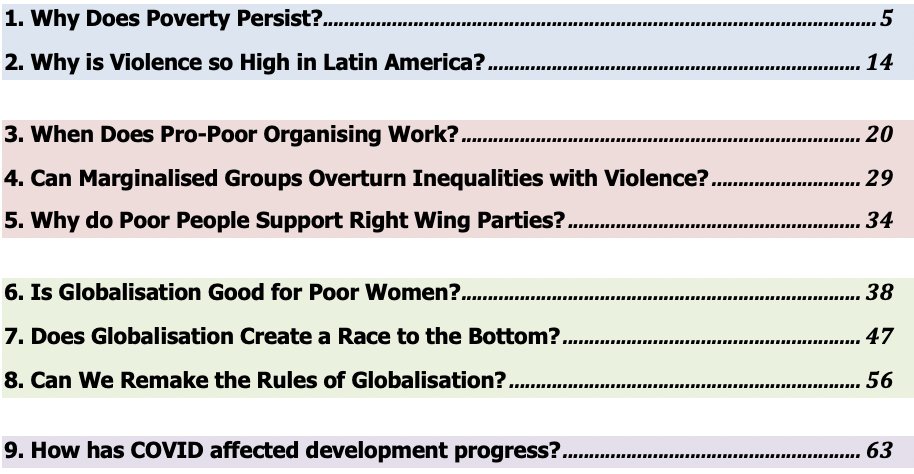
When teaching, it feels natural to center on powerful ideas or techniques. But it’s usually better to center on *questions*—ideas and techniques can follow. Ideally, they’re deep, meaningful questions with no “right” answer, an active object for experts in the discipline. e.g. If you're studying history, details are important, but usually in service of broad, enduring questions like "when and how do individuals make a difference?" Wiggins & McTighe call these "essential questions" in Understanding by Design, a great text on instructional design. I love this idea but often forget it when I'm writing or giving a talk. Institutionalized education sets a bad cultural norm: a teacher's supposed to know the answers and tell them to you… not ask impossible questions! Obviously, I don't *believe* this, but it sneakily seeps in. This thread was prompted this sweng syllabus: https://t.co/Nw6WkGWGmj, which asks great questions: When and how much to design? How can we design security into a system? When is a program good enough to ship? I've been coding 20+ years, and I'm still answering these questions! This list has many good questions across domains: https://t.co/OUYbqsbEEJ. e.g. When is the restriction of freedom a good thing? How does culture/society shape our concept of happiness? Some of them are weak. It's a good exercise to try to sharpen them up! Instructional philosophy aside, q's are often just a more striking way to communicate. That sweng syllabus opens with strong (non-essential) questions: What can we learn from the Boeing 737 disaster? How did Twitter eradicate the Fail Whale? And what does it have to do with Ruby? A fun prompt: what are some essential questions in/around your field, open enough to be a focus for you but studied enough to meaningfully discuss in a course? Here's one from my field: "What are the physical and practical limits to human cognition, and how can they be altered?"
Oct 31, 2020Knowledge is associative. For a given "kernel" of information, there are other kernels that it can be associated with. By associating a kernel of information with other kernels, our understanding of that initial kernel is strengthened 1/11 On a more macro level, we know that linear thinking doesn't work well in real life. Everything is part of some system (systems thinking). Linear thinking is narrow, ignores the outsized impact some random variable may have. 2/11 The best thinkers I know are intuitively systems thinkers (ex. @jacksonjhin) Look at the pandemic, the rise of startup valuations during the pandemic, or the mental health crisis; none of these can easily be explained by 1 variable causing the other. It's a system. 3/11 When trying to train a machine learning model with a lot of input variables, ML engineers often run up against the "curse of dimensionality". Simply, the more inputs you have -> the larger the dimensions of the feature space -> the harder it becomes to learn that space 4/11 Therefore, it becomes desirable to do something called "dimensionality reduction". How can we reduce the dimensions (or number of inputs) such that it retains the key information needed to do the task effectively. https://t.co/eKcXzMyAmI 5/11 Essentially, how can we take 40 inputs and reduce them to 10 inputs that retain the key information we need to learn a task well. This is a hard problem but we know that it can be massively beneficial in learning a given topic. 6/11 On a podcast, Kanye is asked about how he thinks why he rambles. He brings up that he thinks in symphonies. The host mentions that Kanye seems to be a thorough thinker. We know that knowledge is associative, that our world operates in systems. 7/11 So when tasked with explaining something via speech, we're probably doing some dimensionality reduction in the brain. Take a high dimensional mental representation of some topic and convert it to some lower dimensional representation that can be conveyed via speech. 8/11 A quick Google Search and it looks like our brains do this all the time!! "storing information from 100 million photoreceptors in 1 million optic nerve fibers, or resulting in a 10 – 10, 000 fold convergence from cortex to the basal ganglia" https://t.co/RBEdbFPb6x 9/11 I also think this is why so many people have proclaimed that @RoamResearch "just works better". Knowledge is associative, our world is compromised of complex systems and we're left with speech and linear writing as the best way to convey our thoughts. 10/11 I'm curious (and excited) to see what new HCI tools exist to support these ideas. Can we teach the best ways to reduce dimensionality in our thoughts? What new formats could exist to make this sorta thread way easier to consume? 11/11 cc some smart ppl in this space @Conaw @tylerangert @andy_matuschak @michael_nielsen @jborichevskiy @michellehuang42 @KHPavle
Oct 27, 2020My creativity stack: @RoamResearch - journal @RoamResearch - diagrams @RoamResearch - morning pages @RoamResearch - meditation @RoamResearch - scripture study @RoamResearch - bookmarking @RoamResearch - newsletter reading https://t.co/ZI7LJBfNgz
Oct 26, 2020The internet is extraordinary. When I was in high school, I had to get my brother to send me his college textbooks to learn his courses. Now it is almost all online. Incredible. A Master List of 1,500 Free Courses From Top Universities https://t.co/zExVRnGPjH The academic achievement I’m most proud of isn’t graduating with highest honors from university or getting a Rhodes scholarship. It was learning on my own from my brother’s textbooks and taking 10 Advanced Placement tests to become an AP Scholar with Distinction. “Every man can become the sculptor of his own mind if he sets himself the task.” — Santiago Ramon y Cajal And some background on the quote https://t.co/6r2m5QSISc
Oct 24, 2020 Original deleted — preserved hereAn unintuitive secret of reading books on computers: reading PDFs with original typesetting is much better than reading ebooks, which treat text like a 4chan shitposter and have impoverished reading software. But… where to get the PDFs?! A survey & suggestions for future work: https://t.co/7EtHp8zkRz Google Play: 👍 ~smooth workflow; clean pages 👎 PDFs lack text layer, so they're not searchable or selectable; only recent books available in PDF https://t.co/GScKN1eIZ9: 👍 has many older books Play lacks; includes OCR'd text layer 👎 OCR errors; photo noise; clunkier workflow Z-Library: 👍 occasionally has clean PDFs for books which others lack 👎 PDFs are often EPUB->PDF conversions (the worst!); more illegal One fun project idea: maybe you could improve upon the poor text layers in Play / https://t.co/GScKN1eIZ9's PDFs by building a tool which combines EPUBs and PDFs by aligning the EPUB's original text onto the PDF pages via OCR. Maybe you could improve the EPUB reading experience by extracting text block layout parameters from the PDFs through computer vision: ie. try to estimate the text block width/height, line height, and font size in the original typesetting. Similar technique could map page numbers. Related: while e-book reading software are truly impoverished, PDF software is also almost universally unimaginative and unserious for the task of reading. Would love to see more work there…
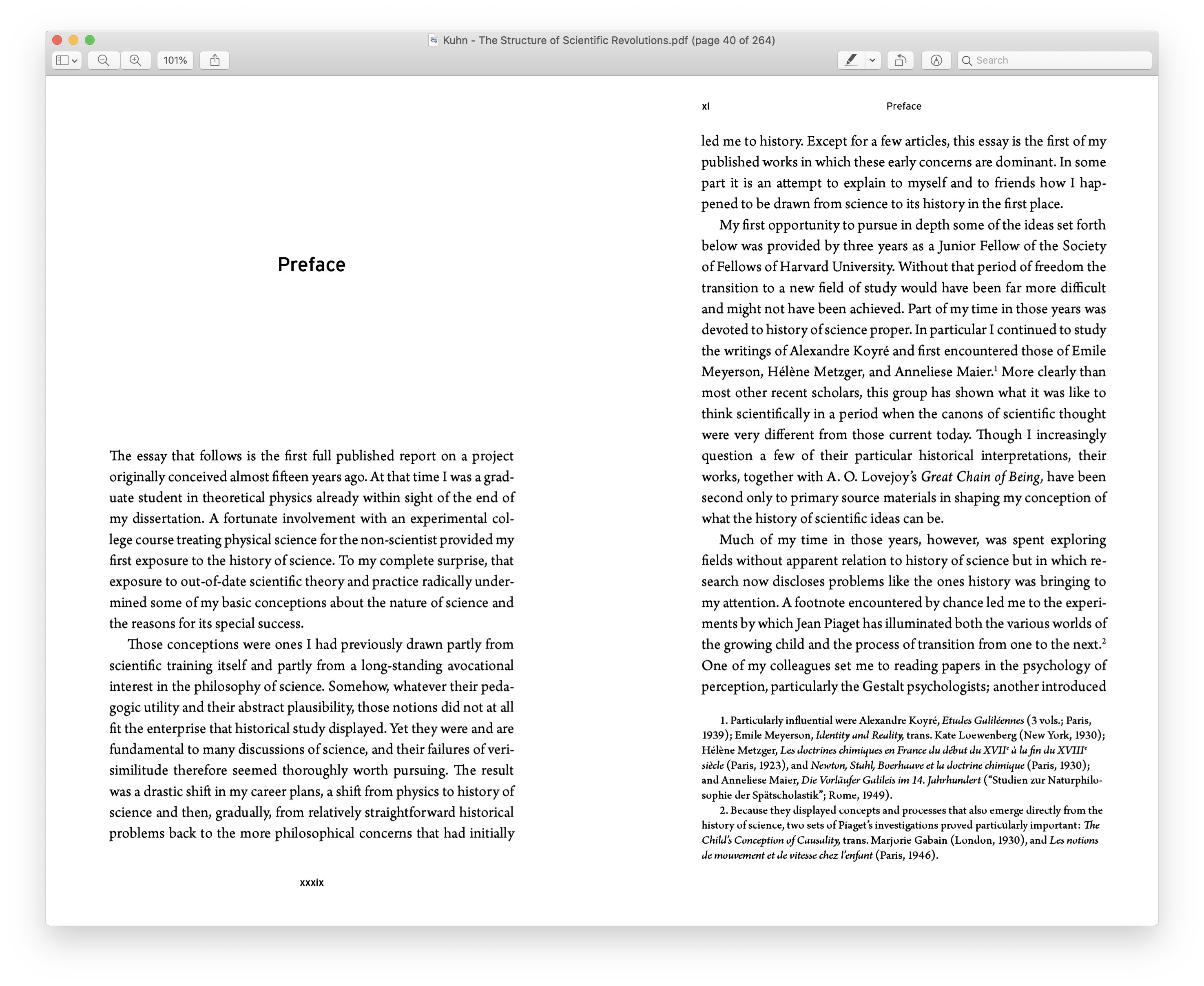
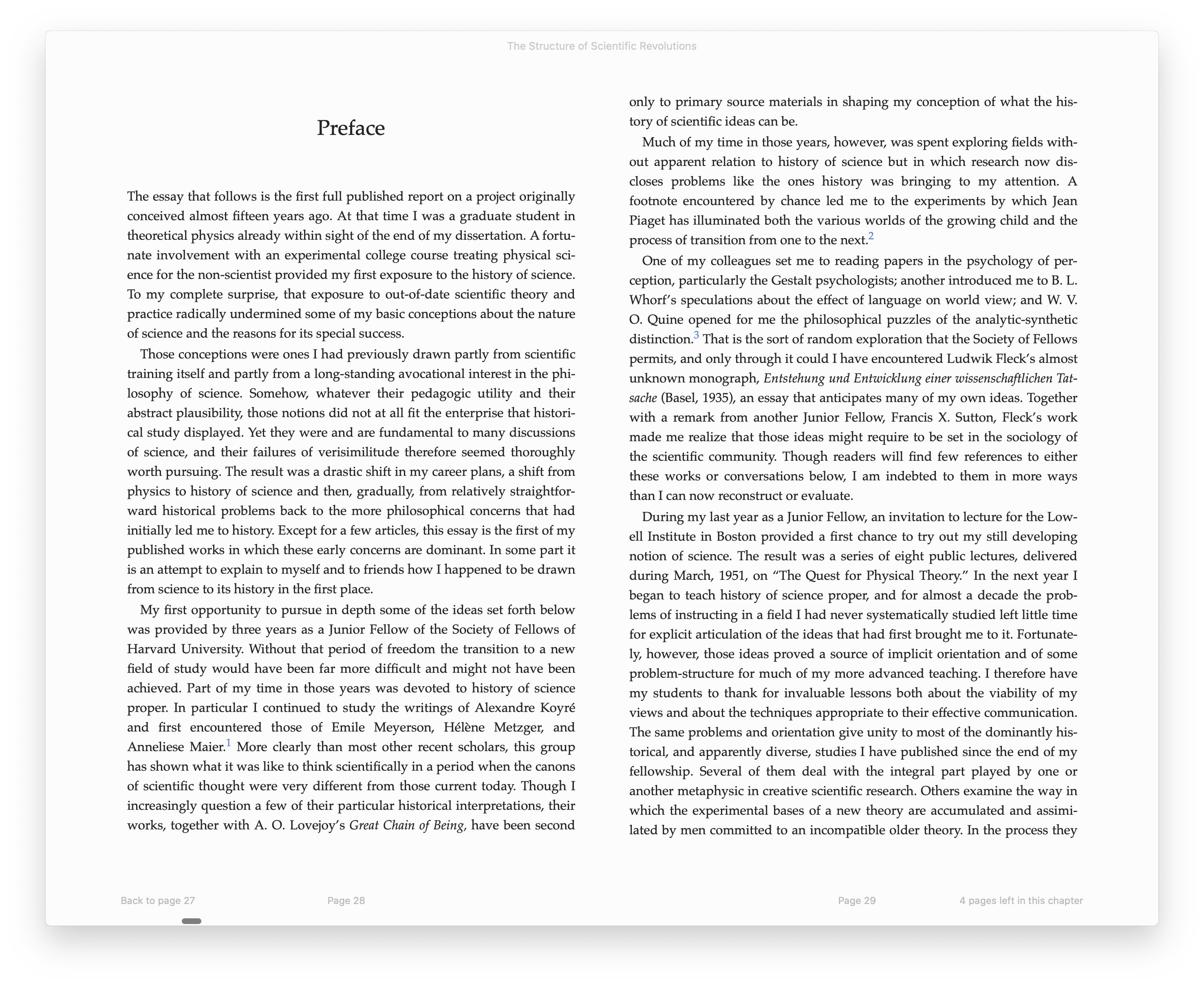
"The fastest way to improve is to learn from others. - Read good books - Talk to people who have done it - Soak up the lessons of the past Learn from the experiments history has already run and you can start the race halfway finished." –@JamesClear
Oct 15, 2020Issue #9 of the RoamBrain newsletter came out yesterday. Topics featured include: - @kwharrison13's article on building the global knowledge graph - and @Neats29's article on using Roam to get the most out of online courses. 1/ https://t.co/xZMIOFCFZx Other topics: - @andrewcyu's article on how product managers can use Roam - @conaw's brilliantly simple advice on how to start learning to use @RoamResearch - a new Roam search Chrome extension from @DharamKapila - two new Roam courses from @tracyplaces & @rjnestor 2/ - the development of the functionality to put a paywall on your Roam database by @onlygraphs1 - and @DellAnnaLuca's decision to publish his new book as a Roam database in addition to more conventional formats. 3/
Oct 13, 2020Professional athletes review tapes of their gameplay, so why don’t knowledge workers do the same? there's gotta be twitch streamers who just code right?
Oct 11, 2020when i discovered the https://t.co/cmbqgd9BHv #Productivity newsletter, i found each issue dense with tools, tactics & recs, so i got an idea to organize the info i cold emailed @danshipper, and a few months later, a gorgeous @NotionHQ wiki was born: https://t.co/ZxMdHQxF7o ✨ https://t.co/8CNvvfzeTZ it's a meticulously indexed notion workspace that captures 1) every interview (adding the latest two with @AliAbdaal, @AmandaMGoetz ) https://t.co/FOil1KMBzI 2) every guest/interviewee with their pro pic, bio, and twitter https://t.co/ez7sk5shIB 3) every tool/software with logo and website https://t.co/3inozPKvCJ 4) every function/use case of a particular software https://t.co/dKJK5oQCMv 5) every recommended book https://t.co/T0JJUJLX6B originally, i made an airtable base, which was not visitor friendly at all. later, without permission, i turned into a notion website with the help of @vemcroberts and @CBlanchod 👏 soon, i'm launching a service where we build notion websites, job boards, wikis, and portfolio: $500-$1000 built within a week. DM if you want to place a discounted order ✉️
"A successful framework distills the complex, and in that synthesis, gets to a timeless insight." -@sarahtavel What are your non-obvious, but go-to frameworks? https://t.co/p5QrWCOGAQ
Oct 5, 2020A simple guide to taking notes while reading. (thread) 🧵 0) Things you’ll need: • Book • Pen • Highlighter https://t.co/CGmDlp6NLJ 1) Write your name & the date on the inside of the front cover. If you ever forget or mix up books, you’ll know which is yours. The date serves as a type of journal entry in your life and can tell you how long it took to read the book. https://t.co/pIWYt0WtA4 2) As you read, highlight passages that resonate with you This could be text you want to review later, include in future articles, makes you stop to think, etc. (PS: I recommend the clear Sharpie highlighter, it’s wide so it gets the whole line & it’s comfortable to hold) https://t.co/tciNzAUmli 3) Write in the margins & star important text Remember that this is your book and you’re allowed to write in it. When a text is super important, highlight it & add a star next to it. https://t.co/S4vhgcWz9o 4) Create your own table of contents Once you highlight a passage, go back to the inside of the front cover and jot the page # and a few words describing the text. If you put a star next to a highlighted passage, put a star next to it in your table of contents as well. https://t.co/NuIAiq1IrQ 5) At the end of every chapter write down 2-3 key takeaways This way you aren’t just reading & highlighting passages, but rather you’re actively recalling what you’ve learned. These takeaways will come in handy later as well. https://t.co/A9nBVvPDBB 6) Review before reading Let’s say it’s the next day. Before you start reading again, take a few minutes to remember what you learned from your last reading session. If you’re having trouble, review your highlights & chapter takeaways. (tip from “Limitless” by @jimkwik) https://t.co/ILvVv8nF8e 7) Repeat steps 2-6 until you finish the book Once done you’re done with the book, your table of contents will look something like this. https://t.co/UcgCxMJqcE 8) Date, signed, rated On the inside of the back cover, write the date you finished the book, sign your name, & give it a rating. https://t.co/RMiyGFEIAg 9) Final Key Takeaways Use the left side of the back cover to write down the overall key takeaways of the book. Go back to the chapter takeaways you wrote & pick out the ones most insightful to you. https://t.co/pZzMehOOgU 10) Actionable Advice Knowledge is only potential power. You need to make it actionable to make a difference. Think of ways you can apply the lessons and knowledge you learned by turning it into actionable advice on the inside of the back cover. https://t.co/z9Wqk0THOb And that’s a simple guide to taking notes while reading. There’s a more detailed version to come but in terms of the 80/20 rule, this 20% of work will give you 80% of the results. What’s your reading & note taking process? PS: On the off chance this goes viral, the working title is A.N.T.S: • Alex’s Note-Taking Strategy PPS: Every week I write a free newsletter where I share: • The book I’m reading • Actionable advice from it • Reading tips & podcast updates Consider joining 2,000+ readers here: https://t.co/7lQSijvU59
Sep 28, 2020Open source business models. Consulting (v1): open source the code, sell consulting Cloud (v2): open source some code, but sell a closed source cloud complement Community (v3): open source all code, and issue a token or charge for access to the community The consulting model didn't scale because you had to keep finding great engineers and selling their time by the hour. Hard to do that endlessly. The community model does scale because essentially each community member is buying time from each other. You're just the moderator. Thesis: many SaaS companies will eventually issue a karma token (or be outcompeted by one that does). They set up a developer marketplace / StackOverflow equivalent where experts earn and charge crypto karma for advice. Would work for Figma, Mixpanel, etc. https://t.co/mj55LUgLwo Note: you can do this without putting any price on the token. No ICO. Just issue it to users like a social reward, similar to karma or likes or badges. If the community puts a price on the token or NFT, that's then an emergent property. Organic decentralization? Rough analogy: Twitter issues usernames when people sign up. Usernames are valuable & there is a decentralized marketplace in names. But Twitter didn't set the price. Similarly, issuing karma (tokens), badges (NFTs), or usernames (ENS) to users might result in organic value.
Sep 27, 2020This is 100% Roam Vision Starting to think we could get first one within 12 months. If you want to work on this hmu. https://t.co/ErAGLSExWZ @Conaw Oh my god @RoamResearch is eventually going to turn into this. A giant corpus of interconnected interactive explanations. You’ll be able to actually work through everything you learn instead of having to parse a wall of jargon https://t.co/WU2a25tyt2
Sep 27, 2020I've added a new page on my site called "Search Funds" where I've released the results of 30 surveys, compilations of answers, and frequently mentioned resources by searchers. This is a living page and I'm adding new surveys every day. https://t.co/Svk5pC5egx https://t.co/JFDvW6jAZ4 My goal number is 50 surveys as that seems to be the magic number of searchers most MBA programs tell prospects to talk to. Almost there! There's still great value in talking with searchers, but now prospective searchers can get up to speed faster than ever.
Sep 25, 20207 Reading tips from @JamesClear (thread) 🧵 1. Quit More Books • Life is too short to waste it on average books. • Quit books quickly and without guilt or shame. • The opportunity cost is too high. There are so many amazing things to read. 2. Choose Books You Can Use Instantly • Choosing a book that you can use provides a strong incentive to pay attention and remember the material. • Putting the ideas you read into action is one of the best ways to secure them in your mind. 3. Create Searchable Notes • Keep notes on what you read. • But here's the real key: store your notes in a searchable format. • Keeping searchable notes is essential for returning to ideas easily. An idea is only useful if you can find it when you need it. 4. Combine Knowledge Trees • When you read something that reminds you of another topic or immediately sparks a connection or idea, don’t allow that thought to come and go without notice. • Write about what you’ve learned and how it connects to other ideas. 5. Write a Short Summary • Write the name of the book at the top of a blank sheet of paper, then write down how you’d explain the book to someone. • Almost nothing reveals gaps in my thinking better than writing about an idea as if I am explaining it to a beginner. 6. Surround the Topic • Read a variety of books on the same topic. • Dig in from different angles, look at the same problem through the eyes of various authors, and try to transcend the boundary of your own experience. 7. Read It Twice • Read the great books twice. • When you read a book twice maybe you'll catch some stuff you missed the first time around, but it's more likely that new passages and ideas will be relevant to you. "One book will rarely change your life, even if it does deliver a lightbulb moment of insight. The key is to get a little wiser each day." –James Clear Source: https://t.co/2lFXQwWdYk
Sep 22, 2020Idea: the next Google Books 1) Take a collection of books from Project Gutenberg or Google Books on a given time period 2) Apply Named Entity Recognition to build a cross-book NLP index 3) Load this into a public Roam graph 4) View what N books have to say about a given event https://t.co/3T96BqVBR9 You want to do this for one time period to debug the NER and demonstrate the value proposition. As you add genres, you'll need to address new difficulties (eg Unicode). Once it works for all old books...then extend to Sci-Hub & Kindle? See related tweet: https://t.co/app5rnxUcm If this adds enough value, perhaps the next generation of authors will open source their books, load them into Roam, encourage annotation/updates/interaction, and monetize by charging for the community rather than the content.
Sep 20, 2020SUNDAY SUPER NERD NOTE-TAKING (Zettelkasten) Came across excellent presentation by @soenke_ahrens on smart notes. True Nerd & Geek level stuff here. Not safe for note-taking wimps & wannabes. My nerd notes follow @RoamResearch #RoamCult #Zettelkasten https://t.co/Lh4YFdqrcJ https://t.co/d38KWfSbu9 Notes are not records of our thinking, but we THINK in our notes. Note sequences are about developing ideas, not just about storing data Your system is Investing in yourself with compound interests as notes begin to mingle with one another & form new ideas (Believer program?) Good note taking system allows us to move freely between tasks & develop our thinking long-term, NOT contained in just one project. Our notes: we are building over time & to have an external space to think in. Is #Zettelkasten a wiki? NO! In a wiki all links are equal & is more about storing info rather than developing thoughts. Wiki doesn't have note sequence which creates branches of thought. Roam is not just links - rather endless connections chained together through block refs. Zettelkasten is bottom up, not top down. Don't worry about outcome, focus on process. Outcome focus makes you disappointed with yourself each day. Process keeps you moving forward & outcome will come. Roam: structure without structure. Don't be weighed down by too much structure. Externalization allows the brain to do what it does best: making comparisons and associations. We think with the tools we use and have to externalize our thoughts - note taking becomes one of the most IMPORTANT SKILL for those developing thought Is #Zettelkasten like MindMapping? No. MindMap is about visualizing connections, puts you in a perspective of trying to get an overview of parts, where as Zettlekessen draws you in without an overview - like wondering around in your brain. Serendipity. Real learning comes from: 1) Spacing 2) Interleaving 3) Connecting 4) Self-testing 5) Elaboration Luhmann said: time consuming thing is not writing, but finding the right order from your notes. Two books worth reading: https://t.co/HiTdzvpY8n https://t.co/2NswFjm4vZ
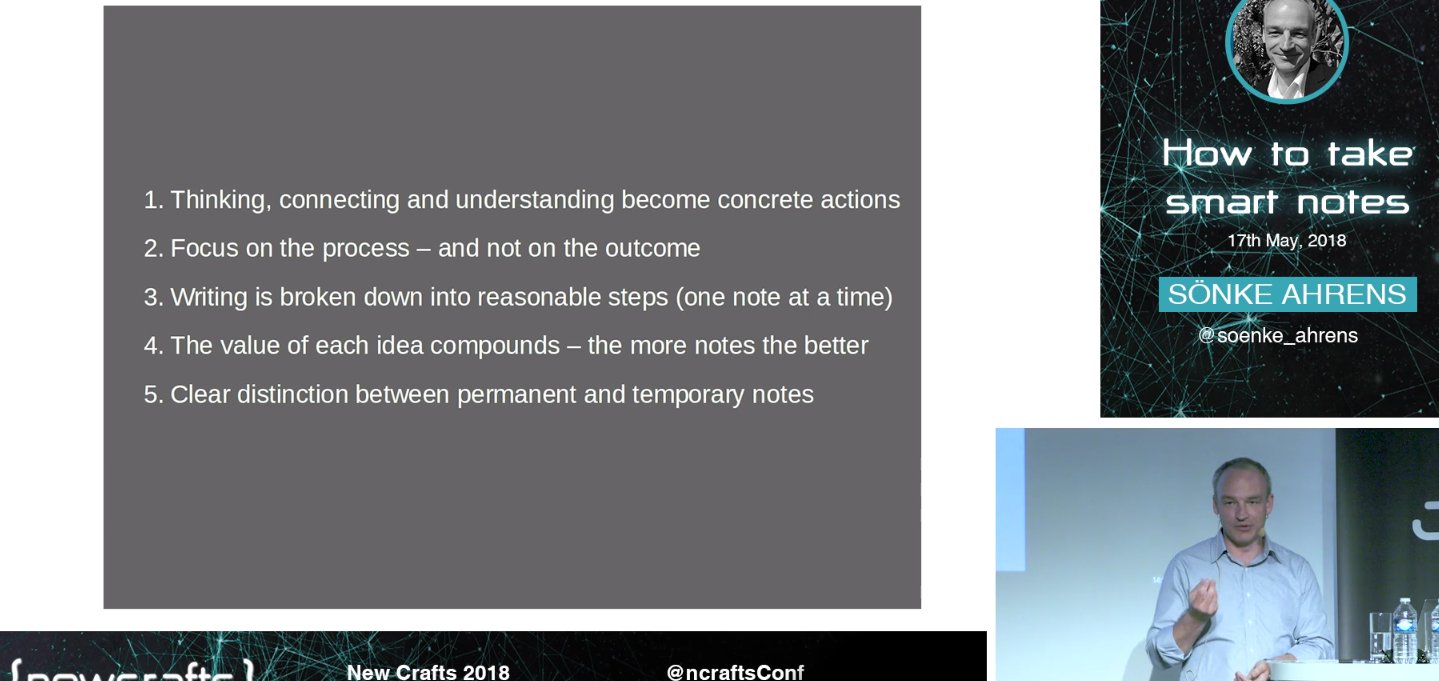
Why weren't bidirectional links part of the original web? Because you need global shared state. If A links to B at time t, how does B know about it? A could message B. Or A and B can both be indexed by C. C was Google. Now it's also Roam et al. Eventually it will be on-chain. A fundamental new primitive that blockchains offer for protocol design is tamper-resistant global shared state.
Sep 19, 2020@Roamfu @RoamResearch @TINARIWEN I think it's very @RoamResearch related. @Conaw talks about the dream being people anywhere able to learn anything. When you see talented people learning things in spite of any obstacles you start a catch a glimpse of the global knowledge graph vision. https://t.co/0yKUAjIqQS
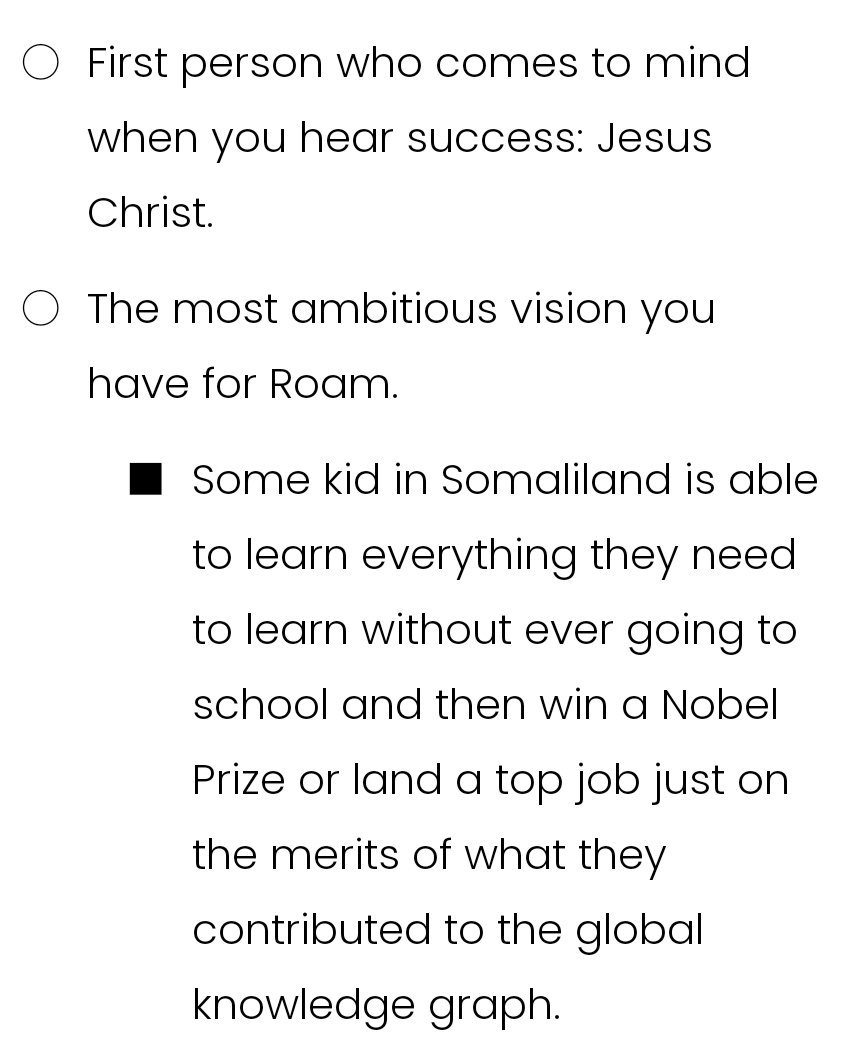
Doing a lot of experimenting today given the new features coming out of @RoamResearch . So here is my new Project Management dashboard. Not finished, but beginning to draw together my workflow. #RoamCult Again, I feel the need to share. Many people argue managing tasks is rudimentary in @RoamResearch. I would argue against that. It is better to think of it like a bullet journal than an @OmniFocus. Been playing around a bit more: #RoamCult (thread) After Evening Review the day before, assign action tag to tasks which need to be completed/started the following day. Minimal query and query filter to keep things clean. Subtasks indicates there are subtasks to complete. Open the disclosure triangle on a parent task to expand hidden (by default) subtasks. 2 things here: 1) Action tags, more visual than functional, but helps me distinguish effort and action 2) Hiding task metadata with @CatoMinor3 's hide tags CSS trick. #RoamCult Upon mouse hover, reveal metadata: action tag brings it to the list. subtask indicates it is a subtask, Subtasks indicate Completion workflow adds some elements. Tasks are completed as DONE but adds completed date and time (please someone with JS experience help me automate the input of this). Useful strikethrough and deemphasis added through css and roam/js. Query of completed tasks in Evening Pages to judge progress for the day - which will ultimately roll up into 🌀 Weekly Review, processed and summarized to be rolled up into 🌀 Monthly Review Will share the code/workflow in more detail when I have time and clean everything up. Most of this is my modification of #RoamCult genius with my workflow from OmniFocus. Thoughts? Improvements?
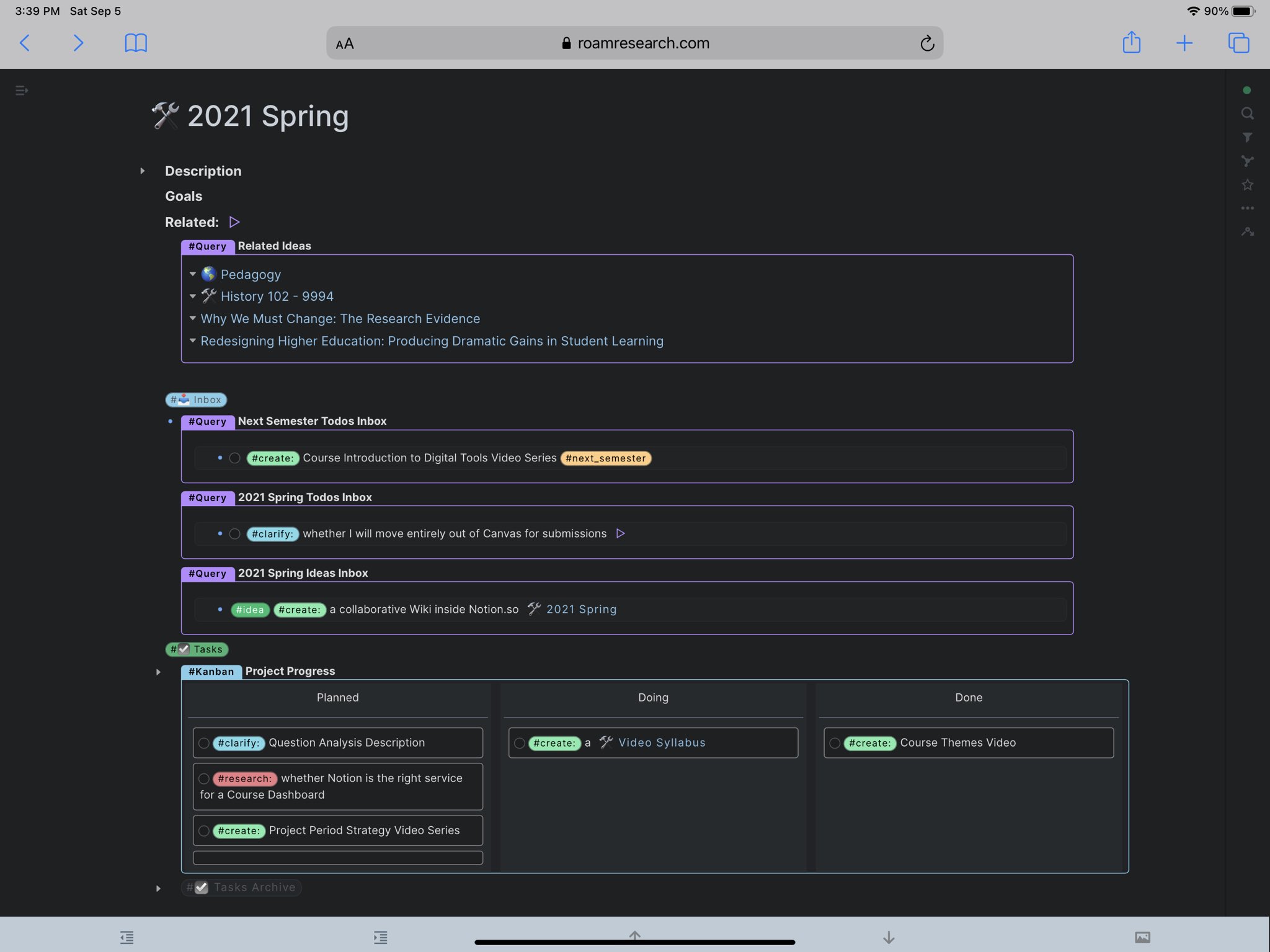
New post on @danshipper's Superorganizers blog: How I've taken 250+ book notes in @RoamResearch 😱 It's a great intro to personal knowledge management for anyone who doesn't already get hot & bothered about good note taking tools: https://t.co/yP6ngboTvB
Sep 2, 20201/ block references. They're gonna be big. The atomic unit of Roam is blocks. Every bullet point represents an isolated nugget of truth. Your job is to find the relationships between those nuggets. https://t.co/1mXPphCfI8
Aug 29, 202010/ Last one. I always like to end with @RoamPublic @RoamBrain And then I take a step into the future. Global public graphs of knowledge. We can plug right into the roam graph for all US Case law. All equity research. Everything. https://t.co/2bqhLpJR9h
Aug 29, 2020I've had over 25 Roam Tour's in the last 3 months. Not because I'm good at using Roam, but because I'm bad at it. There are the apostles of Roam who lift our vision for what we can be. I'm here to show you what a 2 / 10 can do with something as powerful as Roam. #RoamTour https://www.loom.com/share/9303c21ab9924fc4a6ee8902c19a9f04 A #RoamTour is a 30-60 minute conversation in groups ranging from 2 to 16 people (thus far) We walk through the kinds of things I cover in the video. But it's after the basics that the magic begins Here are some of the moments where I get audible gasps in my Roam tours 1/ block references. They're gonna be big. The atomic unit of Roam is blocks. Every bullet point represents an isolated nugget of truth. Your job is to find the relationships between those nuggets. https://twitter.com/kwharrison13/status/1269072694722494466 2/ especially in-line block reference search. When you type "((" in a block and start typing, you're literally sifting through every node in your brain. What lost nuggets could you rediscover? https://twitter.com/kwharrison13/status/1269072518817525760 3/ Tweet drafts. Every thread I write in twitter I now first draft in Roam Not sure why the character-count isn't a shortcut anymore but it still works; what should I be using instead @conaw? https://twitter.com/rroudt/status/1256381271493816322 4/ project management in Roam. I actually first met @anbuteau through a Roam tour and was blown away by his way of creating to do lists. https://twitter.com/anbuteau/status/1281771705871015936 5/ project management in Roam continued. If you love Todoist or some other interface, I think you can even get the UI in your Roam. I haven't tried this yet but it's on my list. https://twitter.com/blakesamic/status/1272310925098278913 6/ Taking notes with podcasts. Made the solo 18 hour drive to Portland and back a transformational experience for me. https://twitter.com/houshuang/status/1247165721190100992 7/ notes on podcasts continued. I'm excited to learn more about using @AirrAudio as well but @otter_ai has been awesome https://twitter.com/_SimonLau/status/1292518109933264901 8/ My trusty friend @jeremyqho and the ever beautiful Eloquent Chrome extension. It was like redesigning the front door to my brain. https://twitter.com/jeremyqho/status/1285644242182955008 9/ Just learned this one today; how to add audio recordings to Roam https://www.reddit.com/r/RoamResearch/comments/hjvla4/embedding_audio_files/ Thanks @laj2100 10/ Last one. I always like to end with @RoamPublic @RoamBrain And then I take a step into the future. Global public graphs of knowledge. We can plug right into the roam graph for all US Case law. All equity research. Everything. https://www.roampublic.com/directory/ And my workflow is constantly evolving. Just today during @nateliason demonstration with @tiagoforte I started rethinking my whole process for how I read and highlight articles https://twitter.com/nateliason/status/1297626731759771649 Remember, I'm nowhere close to a power user. The people you should really be learning from are the apostles of Roam and pouring over #RoamCult and @RoamResearch mentions. And trusting in folks like https://twitter.com/kwharrison13/status/1271228715104481280
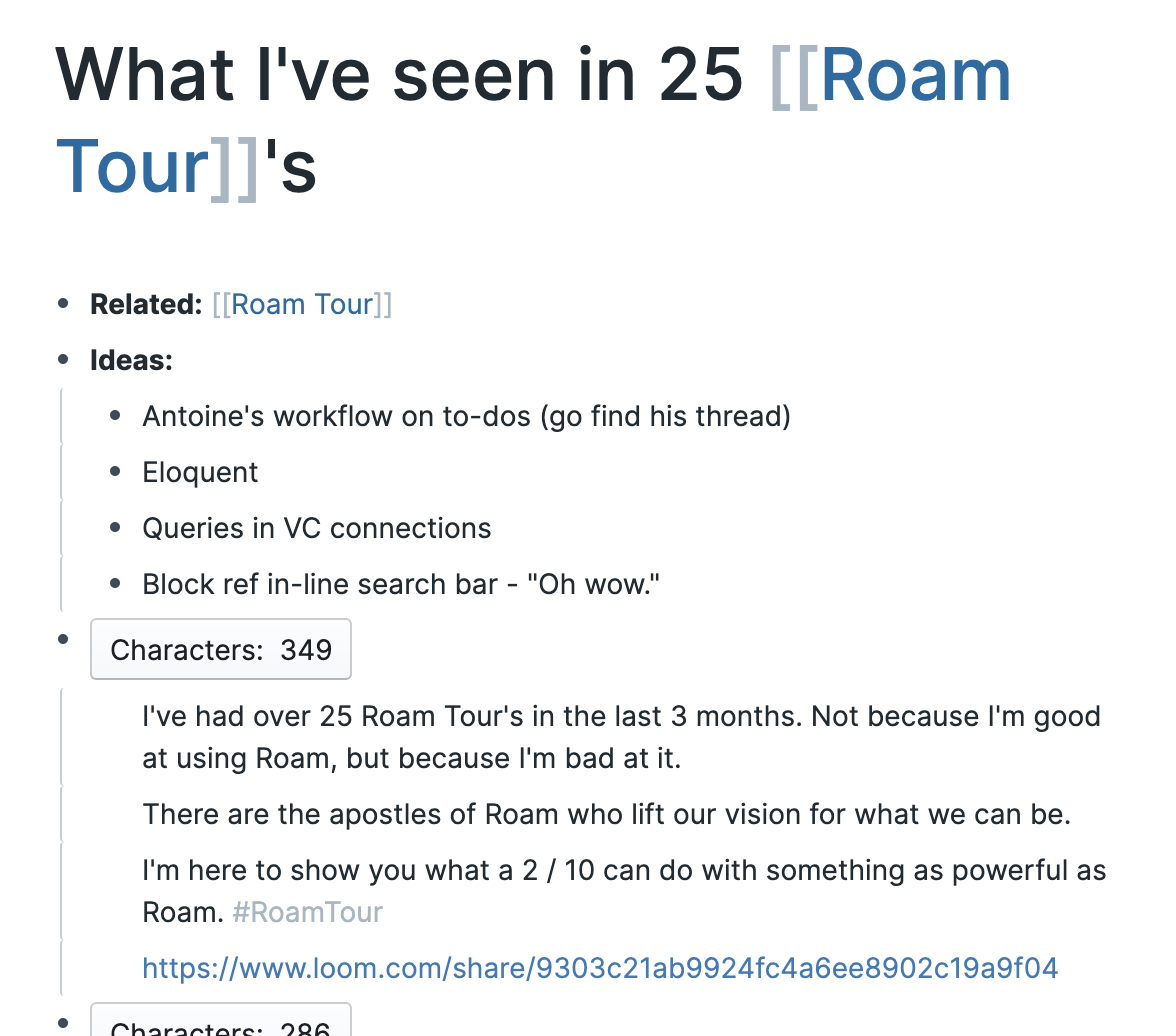
Creative Commons is like copyleft for content. It’s done well, with 1B+ uses, but it may still be underutilized. I’ve been thinking for some time that you might use it as the basis of a new open source media ecosystem, where all content was free and you monetized the community. https://t.co/o3inw6D3gR
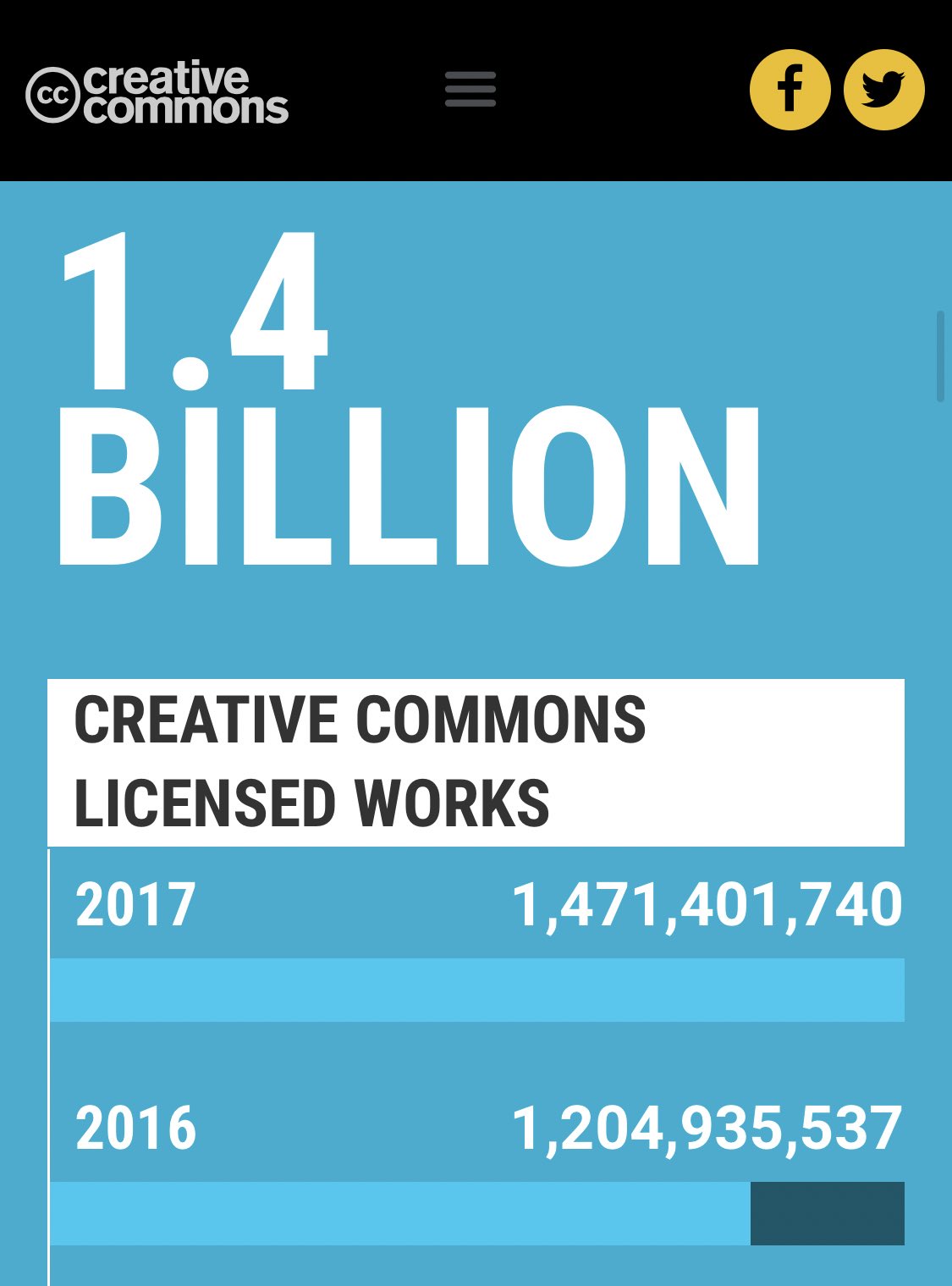
Josh Waitzkin might be the most INTERESTING person alive. He doesn't have Twitter. And he barely uses the internet. I've compiled my favorite 5 MENTAL MODELS of his below.
Aug 8, 2020I love this concept of research phases for "learning in public." I've had a few public research phases (gaming, esports, content creators, new media, etc) My hope (and goal) is to accumulate deep domain knowledge across a wide range of topics and industries https://t.co/PZyaZMMXCt **Links in this post** (t.co shortlinks resolved 2026-09-28): - `https://t.co/PZyaZMMXCt` → https://x.com/nayafia/status/1260406942557548545
Aug 4, 2020People should do deep dives more often. I track them as “portfolio ideas” and I build them up over time. Some snapshots from my portfolio: billboards, historical futurists, digital family history vaults. What’s in your portfolio?
Jul 29, 2020The amount of quality free learning materials online is staggering. Take this Youtube channel by @_Brian_Johnson for example; 390+(!) summaries of powerful non-fiction books. https://t.co/dOcYp4J3uh
Jul 10, 2020Discovered a great idea from @harry_sudock yesterday where he pastes the full text from an article into @RoamResearch to take notes as he reads it using block references. Brilliant! So I made an iOS shortcut to import & format articles. Will share soon, but here’s how it works: https://t.co/bZHjXVwf1D Here is the link to get this shortcut: https://t.co/2pgU16YvQD Please let me know if you run into any issues and I’ll update it.
In a true meta-note-nerd move, I illustrated summary notes on @andy_matuschak 's Evergreen notes concept. https://t.co/XWbOru1Ugz They're similar to the concept of Zettles, but Andy's horticultural metaphor made it click for me As usual, I'm just here for the metaphors 🌱 https://t.co/Xphp3Mu8ZK
Jun 28, 2020So @SpringerNature is offering FREE access (PDF & EPUB) to some of their essential textbooks across disciplines (STEM, law, humanities & more). We have categorized them across topics and created a collection for easy browsing/discovery. https://learnawesome.org/users/8a16a2e4-dcb7-4167-a2a2-51d3af9d1613/collections/6f9b4ec2-9968-432b-86f6-f4c0b66542b3 Grab these now! https://t.co/PHxyTsnS1e <!-- Fetched 2026-09-15 via X's keyless syndication endpoint (cdn.syndication.twimg.com). --> **Links in the tweet:** `https://t.co/JG4vC2LoJj` → https://learnawesome.org/users/8a16a2e4-dcb7-4167-a2a2-51d3af9d1613/collections/6f9b4ec2-9968-432b-86f6-f4c0b66542b3 **Roam filing:** #[[Big Important Ideas]]
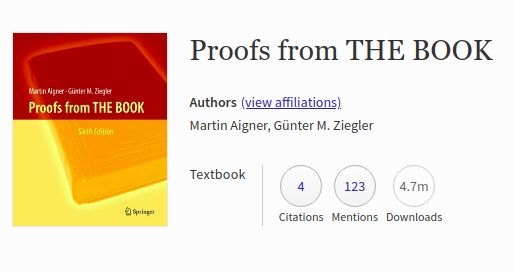
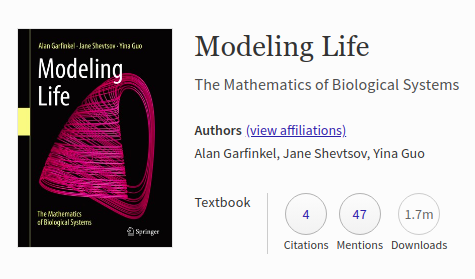
“Roam is just another note-taking app.” No, @RoamResearch is a programming environment for your thoughts. It may not be for everyone, but this tool is as powerful for text as Excel is for numbers. @azlenelza you’re a wiz! Time to brush up my CSS skills to see what’s possible.
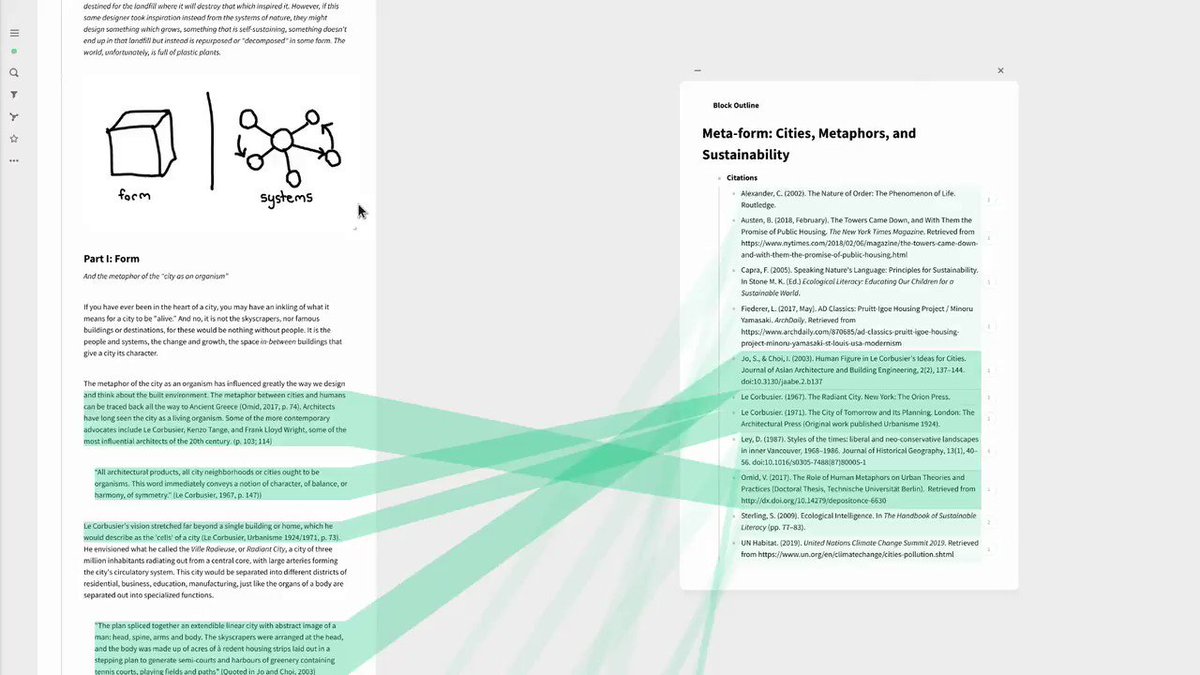

Interesting approach to reading books from @benkaluza - he finds multiple book notes from other people, extract what he finds most interesting, then uses that as an index to look at specific topics in the ebook, before he decides good enough/read 1/2 chapters/read whole book https://youtube.com/watch?v=gC4ZsfaMYEc I'm not sure about this, but it's a very interesting approach, and I really appreciate learning about it. Might try it sometime. We definitively need a "How to read a book" for the 21st Century, so much potential to do better. **Notable replies:** - **@krishkhubchand** — Mcluhan did something similar (only read the right page of a book) — openculture.com/2015/04/marshall-mcluhan... - **@theresiatanzil** — Wow, I do a similar approach 😄 proses.id/reading-nonfiction...
Jun 10, 20206/9 "I want to be able to release my knowledge graph to somebody else so that they can traverse it and take my building blocks and remix it." @Conaw https://t.co/4QIBIhhC6t
Jun 6, 2020College in 2000: Take notes in class, use them to pass the test, then throw them away at the end of the semester. College in 2030: Students graduate with a note-taking system, so they never lose their best ideas.
Jun 5, 2020Advice: find someone whose work you admire and who has shared a lot of free content Go back to the point in time when they were where you are now Consume their content in chronological order from this point forward and watch their evolution in hyperspeed I’m doing this with @PatFlynn circa 2016 when he published his book. It’s a fascinating experience
May 21, 2020So many people on this network spend their time convincing you that you'll level up if you just buy the thing they're selling. The best information is free. Learn in public. Write in public. Collaborate with others. Don't buy someone else's story of success. Make your own.
2020-05-21Where's the Sci-Hub for corporate docs? We could all learn so much from a database of company internal memos, email transcripts, investor reports, etc. We don't even have Fermat's Library for SEC filings yet. This needs to be built
May 17, 2020Substack, Medium and Twitter are becoming to investing - and many other professions - what Github is to programmers. The easiest way to interview someone is to just read their publicly available work.
May 9, 2020Even more than before, WFH has turned me into a word ingestion machine. I sometimes feel like a switch board operator ingesting inputs of words and exporting outputs of words. In through a article, out through an email. Some thoughts on making it stick. 1/10 Our day consists of 174 newspapers worth of information consumed on average per day (11.8 hours, 113K words) cc: @fortelabs 2/10 https://www.youtube.com/watch?v=SjZSy8s2VEE How often have you had the experience of thinking "I just read xyz" but can't find it across email, slack, instapaper, twitter, google docs? 3/10 People have been asking for ways to better search through everything they've read for a long time and instead what we've gotten is more places to put things. 4/10 Sort of nerding out over the time @patrickc requested @roamresearch in Jan 2018 - credit: @riserup for digging up this old tweet 5/10 https://twitter.com/patrickc/status/953011978217205760 Granted, @RoamResearch doesn't capture everything you read all day on any screen, but you can see a world in which it gets close right? I already capture tweets and PDFs, eventually they'll be OCR / searchable. Even links could be crawled eventually. 6/10 What if in the future you could embed a YouTube video and the transcription is searchable via @RoamResearch bar? As long as your knowledge capture is source referenced, you don't have to dilute your notes by over-capturing, you can get recall from full text and summary notes 7/10 "Recall" is the crux. We're to a point where there is too much information to remember it all. "He is wise who knows the source of knowledge—who knows who has written and where it is to be found." (A.A. Hodge) 8/10 https://twitter.com/arohner/status/953012307478679553 Even the quote in this thread about reading 113K words per day from @fortelabs - knew I'd heard it before, couldn't remember where. Searched my OneNote, google drive, and text messages (did @cah242 send it to me?) How did I find it? @RoamResearch note from watching the video 9/10 10/10 [screenshot of my Roam notes from the Forte Labs video]
May 5, 2020Love this quote from @naval: “The genuine love for reading itself, when cultivated, is a superpower...The means of learning are abundant—it’s the desire to learn that’s scarce.” https://t.co/YgDri8dcKd **Links in this post** (t.co shortlinks resolved 2026-09-28): - `https://t.co/YgDri8dcKd` → https://x.com/AlexAndBooks_/status/1257674618107723776
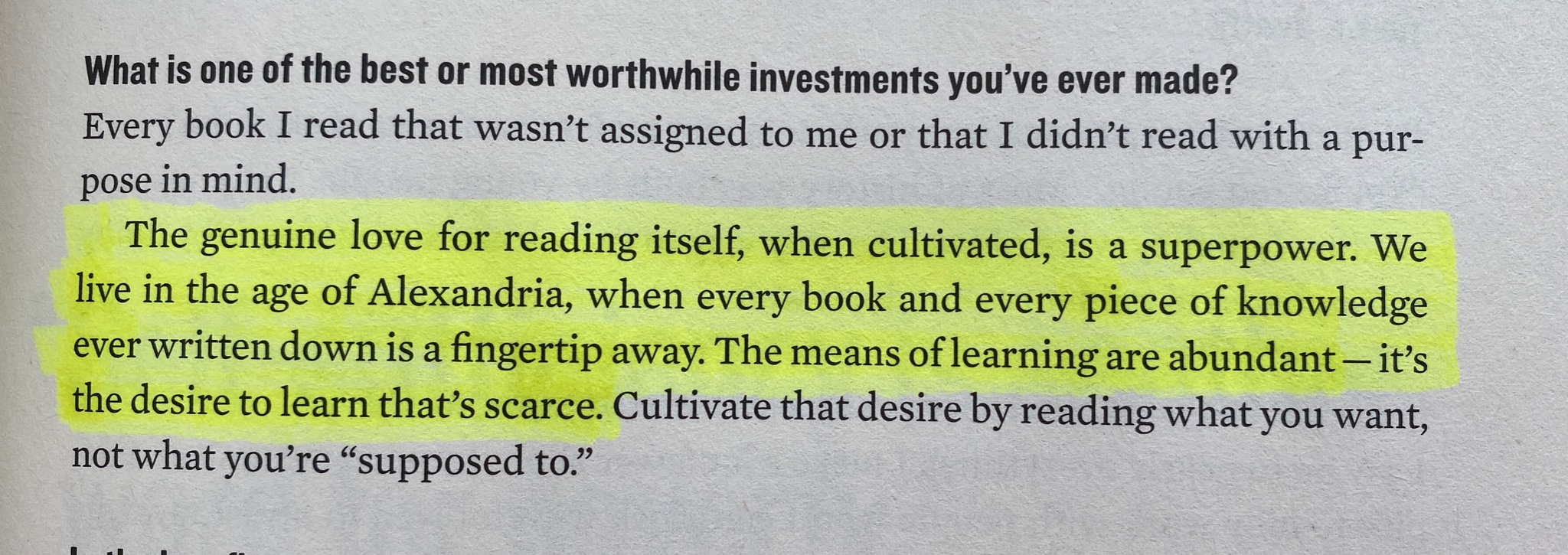
Fun inversion from Thorndike (1921). The normal angle is: "Why are some people so much better at some things? What are the limits of expertise?" He reframes to: "Why do most people remain so mediocre at things they spend their whole lives doing?" https://t.co/EHAHoPyeqy (p. 178) You can tell he's kind of mad about it (particularly see the following page here). I find this a bit odd. In many of the more mundane cases he cites (e.g. handwriting) it probably is sensible to reach some threshold and just stay there! But he also cites decision-making as a common "plateau" skill. That's probably worth improving at for many people! It makes me want to add an entry to his list of possible explanations: it may not be obvious that radical improvement is possible. You know what virtuosic pianists sound like, so when you play, you'll naturally compare to those mental recordings (and feel painfully how much improvement is possible)! Military officers are trained to make strategic and decisive decisions, but that’s much less salient! OK, Silicon Valley types often read The Art of War etc. Not sure to what extent that approximates officer training! But if you're a small business owner, I suspect that Decision-Making, as an abstract skill, wouldn’t normally appear on the “skill weightlifting” menu. So to create opportunities for expert action, it's necessary not only to enable higher levels of performance, but also to increase the salience that radical improvement is possible/desirable. It may also be necessary to structure new contexts which demand that level of expertise!
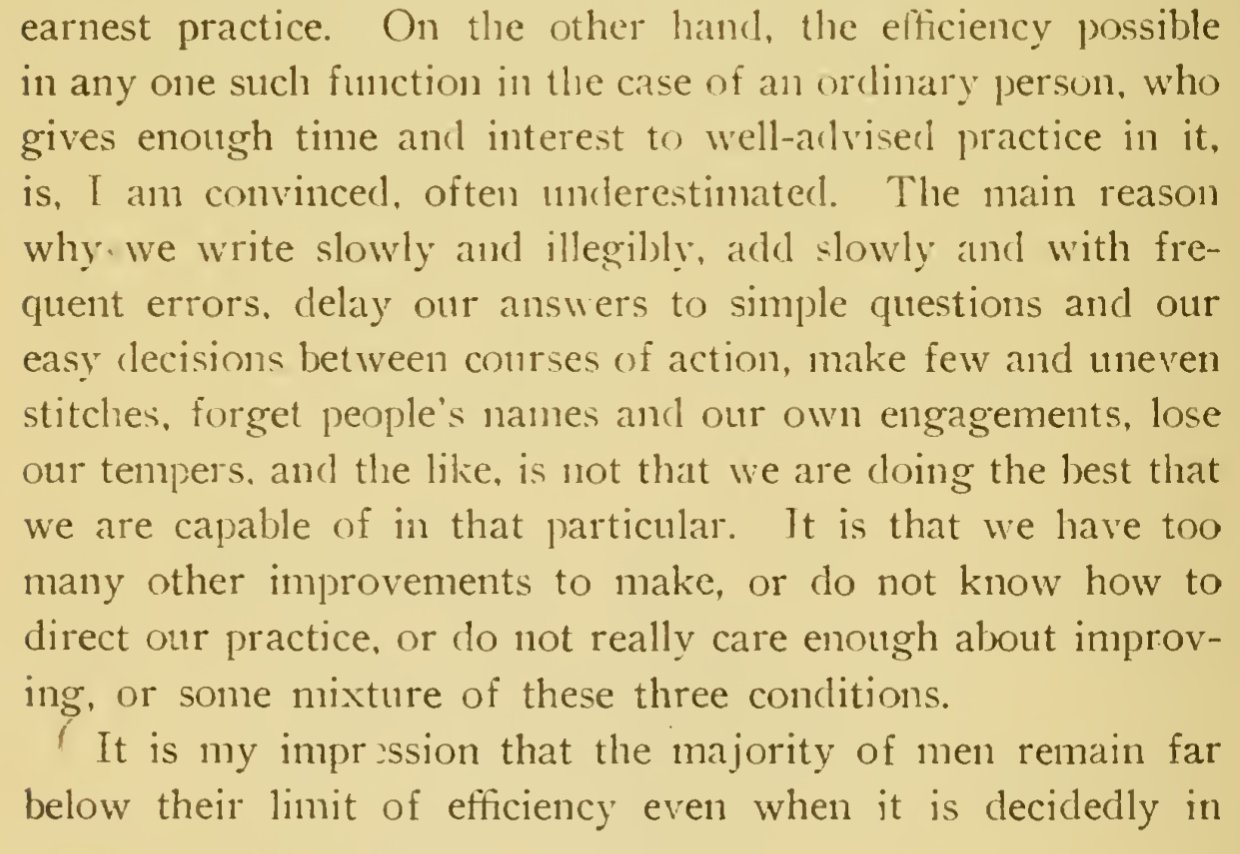
This! Google set out to map the world's knowledge - but the real mission has become map knowledge about a user to display the perfect ad. Incentives matter. What pushes the flywheel matters.
Apr 23, 2020In today's live session of @fortelabs' Building a Second Brain, we focused on the knowledge capturing process. To do creative work, we need a strategic and consistent capture process. Write from abundance. Below a thread with my takeaways. Here my notes: https://t.co/oxlNyehUCR **Links in this post** (t.co shortlinks resolved 2026-09-28): - `https://t.co/oxlNyehUCR` → https://roamresearch.com/#/app/rroudt-public/page/u6u5PNBWR
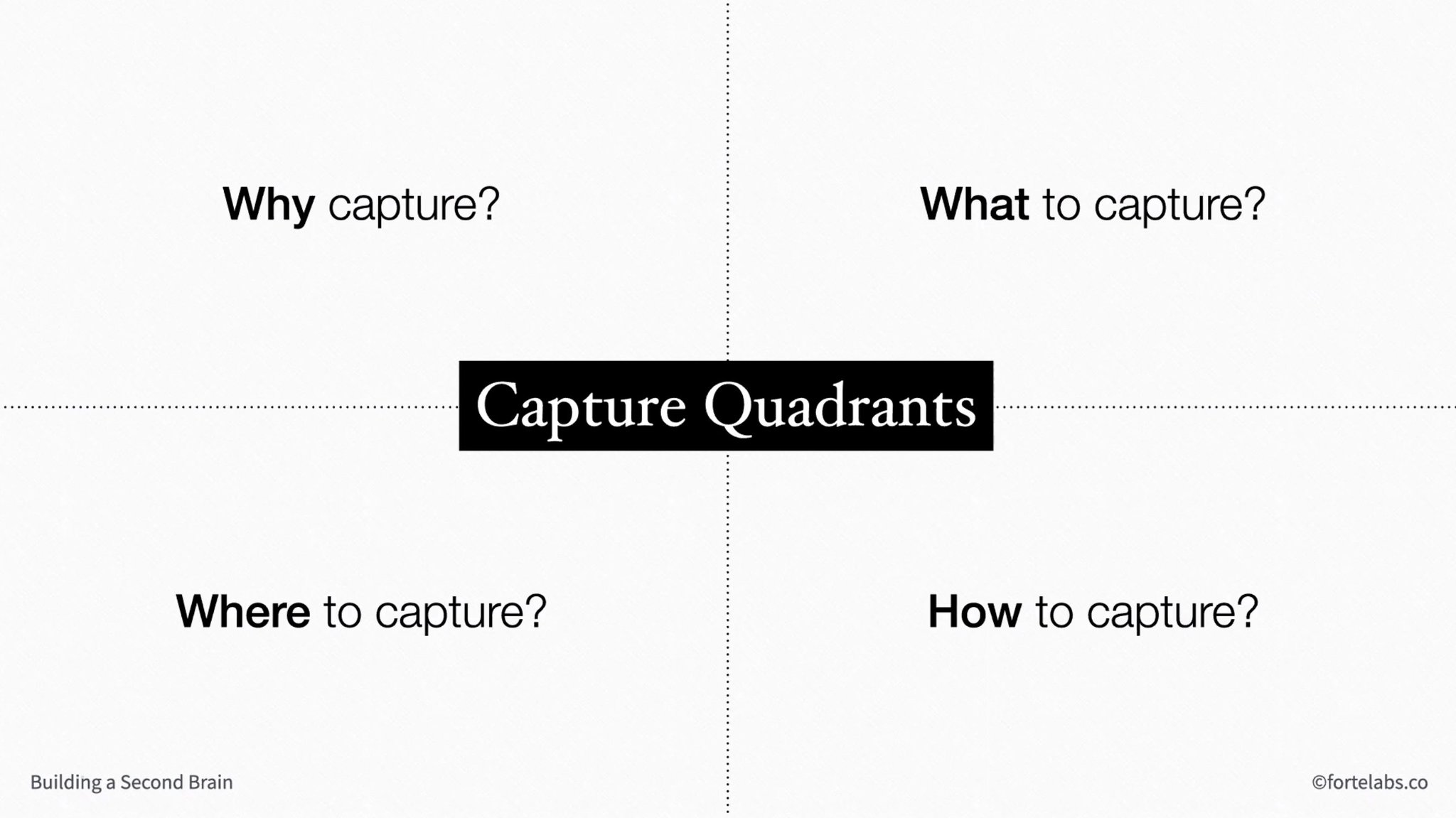
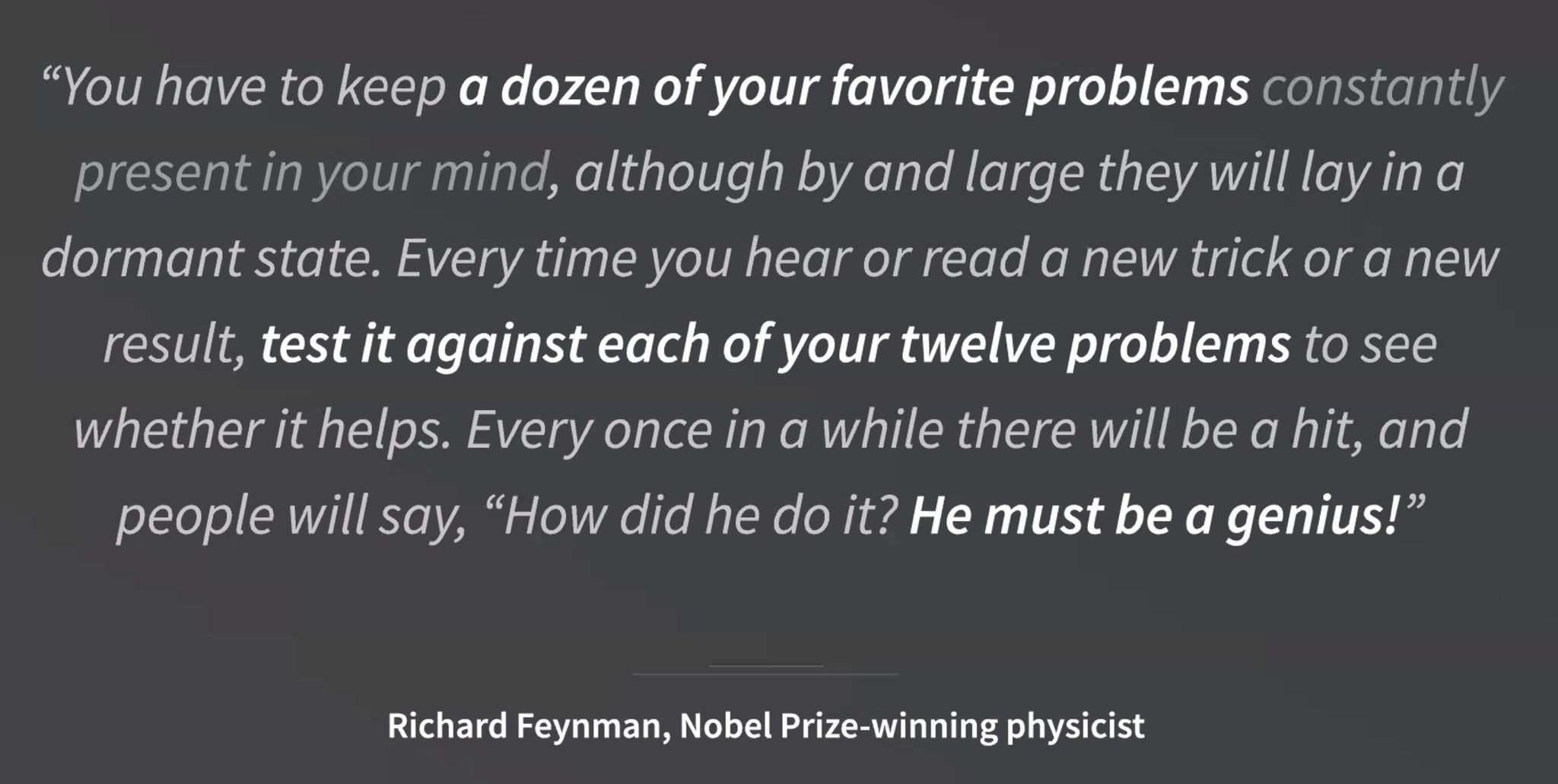
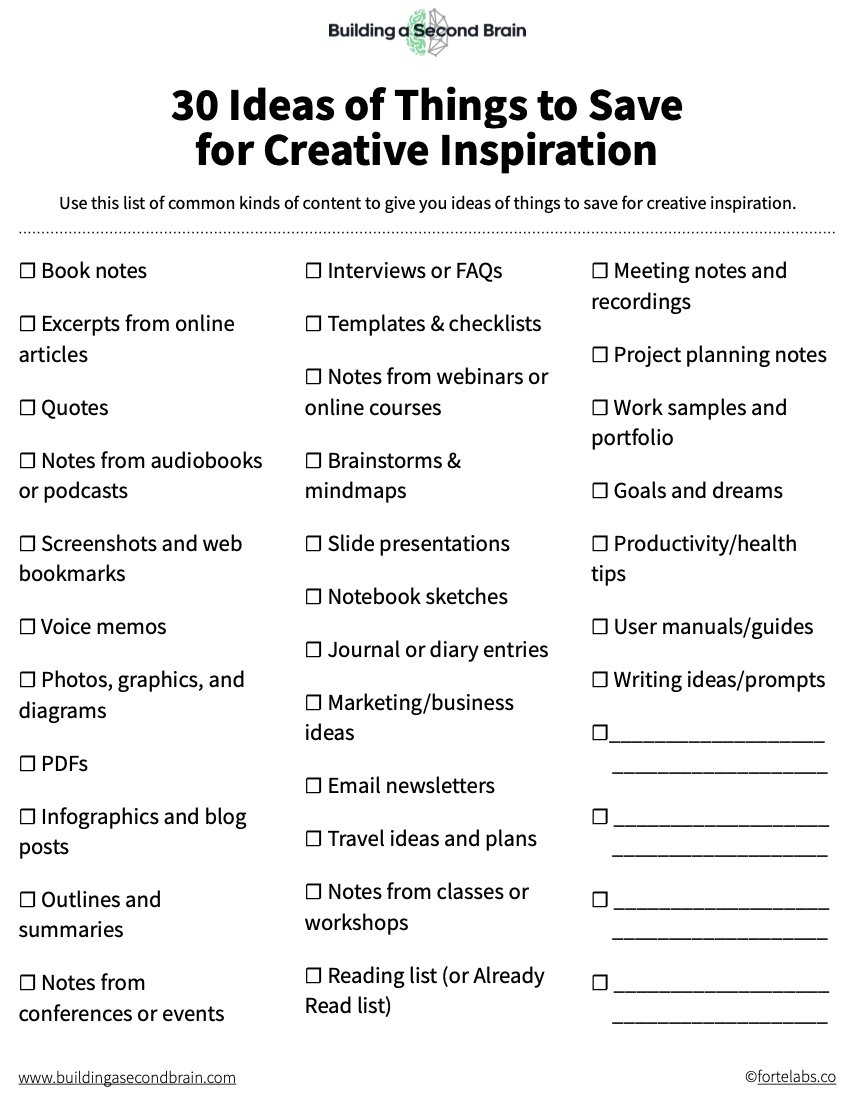
1/* Multiplayer in @RoamResearch is like the best parts of Wikipedia, GitHub, and Twitter thread-of-threads. Anytime you’ve had the thought “this reminds me of XYZ...” https://t.co/5wJkAHMSPK
Apr 18, 2020"There should be a good online class that anyone can take on ANY topic, and right now, there isn't. That, to me, is just criminal." — Tyler Cowen
Feb 24, 20201/ Why you need to document things to improve your decision-making, a thread: "The first principle is that you must not fool yourself and you are the easiest person to fool." ~Richard P. Feynman Feynman is one of my heroes, a brilliant physicist who was also a renaissance man 2/ If you read any of his books or the books written about him, you'll see he had an amazing capacity to challenge not only conventional views and beliefs, but also his own as well. As I've mentioned in other threads, that's a really hard habit to acquire. 3/ One reason why it's so hard is that our brain's have some funny kinks that exist to give us a "kinder and gentler" view of reality and ourselves than is warranted. One such kink is the foundation of hindsight bias, where our brain rewires our "memories" to make them consistent 4/ with current conditions. And the sneaky part is, we genuinely believe that our current "memory" of what we thought in the past is accurate. One way to see just how true this is is to keep a handwritten journal of decisions and beliefs throughout time. https://t.co/hyeVuU39pU 5/ If you can consistently record thoughts, decisions and beliefs over time, you'll quickly see that we are all "unreliable narrators." An unreliable narrator is a "narrator whose credibility has been seriously compromised. 6/ The term was coined in 1961 by Wayne C. Booth in "The Rhetoric of Fiction."" It's hard to describe the first time you adamantly maintain you held a certain view in the past, only to discover by returning to your handwritten journal that you did *not* hold that view. https://t.co/4WMSuTV6LG 7/ As an example, During the crash of 1987, I for a while well afterward felt that I "knew" the crash was coming and had amassed a large put position in anticipation of it. What I conveniently "misremembered" until going back to my journals is that I sold all those puts 8/ the *day before* the actual crash! My journal revealed that I had changed my mind and that I thought the worst had passed and was worried that the huge bull reversal would *crush* my put position. Here's the thing: I would have sworn under oath that wasn't the way things https://t.co/brogx2UL1K 9/ transpired. Why? Because my brain was doing me a "kindness" by rearranging my memory to make it consistent with my then current belief. Evolution wants we humans to maintain an "illusion of continuity and control" because frankly, without it, we could lose our minds. 10/ Imagine what would happen if our brains *didn't* edit and rework all of the data hitting our perception field. Given that we register only a fraction of all the data and stimuli we take in, taking it all in might genuinely lead to loss of control and madness. https://t.co/cMM8ZeZYl7 11/ If you follow the speculation in psychology and psychiatry, one potential reason for things like schizophrenia is filter failure, where the brain doesn't filter out extraneous data. So, what to do? I advocate keeping a handwritten journal of at least your *major* 12/ decisions and beliefs. Why handwritten? Because like the evil overlords in George Orwell's "1984," the Ministry of "Truth" was the opposite, flushing all embarrassing truths down the ‘memory hole,' our brains are formatted to do the same. That means if you have the 13/ ability to alter the record (say by changing the text of a word document) you might do so without really remembering that you did. I experienced this first hand while writing several of my books: I would make changes, save them without noting changes were made, and then 14/ being "surprised" that the text was different than I had recalled. (This is why marking changes and saving by version becomes so important when you are consciously trying to keep track of things.) This won't surprise people who have written books or long form essays, 15/ but it genuinely does surprise people who have not. Many who have not experienced this are incredulous and think "well, maybe that's a problem for you, but I would *never* do something so dumb!" Hint: that's another trick of the brain and, yes, you would. https://t.co/bUFiCnKINI 16/ So, in addition to some interesting speculation about writing things out by hand imprinted differently on your brain than typing things, the more pragmatic reason is--you can't scribble things out of a handwritten document without noticing that you have done so. https://t.co/Bqbvrg0OFB 17/ And seeing things in your own handwriting makes if very difficult to argue with or fool yourself. This process also makes your mind far more open to understanding that we do such things unconsciously and that it is generally a universal part of being a human being. https://t.co/5gxihn6J7p 18/ This very exercise leaves you far more open to understanding and combating these quirks of the mind and allows you far more flexibility in being more open to understanding them which, in turn, helps you begin to better optimize your mental models and thought processes. 19/ But, it's honestly hard to begin drilling down on yourself in this manner. It feels unnatural when you start and you might originally find yourself abandoning the practice. To that I say, of course you will, I did, we all do because we're all human and share similar https://t.co/XABAUCk09t 20/ software. But if you're diligent and get over the hump, you'll be amazed that you didn't realize this process was happening and after getting over the shock of seeing this happen the first time you go back to your journals, you'll actually begin to rewire your brain for https://t.co/RRyqqYksgN 21/ the better. Our brains are quantum supercomputers that do amazing stuff for us, but it's okay to understand that some of the programs they run are no longer useful to maximizing of decision-making capabilities and deleting and replacing them with better programs. https://t.co/rGHhtCiDEl 22/ We're amazing creatures that have the ability to optimize and improve ourselves, the trick is, like many new habits, to repeat it enough times to make it stick. And the first time you see your thought process improve, you'll be delighted you did. https://t.co/zmqAI38I5D
Jan 18, 2020Lessons from different fields: 1) Advertising: We overestimate our capacity for independent thought. 2) Poker: Life is probabilistic. We can do everything right and still lose. 3) Architecture: We're influenced by our environment, especially when we don’t realize it.
2019-11-07