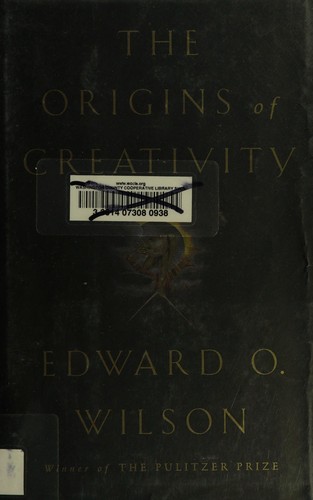
The Origins of Creativity
Key Takeaways
Kyle, in 2017 in Books: This was a book that drew my attention, in part as something applicable to a class I took called the History of Creativity and Innovation. Interdisciplinary synergies was one of the things we spent time on. And there was one quote that struck me, and it feels relevant to all types of learning — “Goals achieved lead to further goals, and the quest never ends.”
Side note, two reports that Wilson mentioned that I particularly enjoyed, are Rising Above the Gathering Storm (2007) and The Heart of the Matter (2013)
Many thanks to Book Passage By-The-Bay in Sausalito, CA for exposing me to it.
Edward O. Wilson’s argument that the sciences and humanities need each other. Kyle’s highlights are mostly the case for the humanities as an equal partner:
- The institutional complaint. The humanities are “widely viewed as immensely important for society, and accordingly esteemed. But institutionally” starved — “the overwhelming problem is poverty, and a lack of respect… almost never receive enough funds to finish.”
- Metaphor as the bridge. “The more closely we examine the properties of metaphors and archetypes, the more it becomes obvious that science and the humanities” share a method.
- Why the symbolic layer matters. “If there did not exist, floating over us, all the symbolic representations that art and music, religion, philosophy, and history” provide — the counterfactual Wilson uses to show the humanities aren’t decoration.
- What fiction uniquely does. “Knowledge of life obtained through fiction is only possible by another stage of self-consciousness” — an argument for novels as a distinct instrument of knowing, not a lesser one.
- The division of labour. “Science owns the warrant to explore everything deemed factual and possible, but the humanities, borne aloft by both fact and fantasy,” own the rest.
- The self-criticism. The opening: “We overreach, we boast, we fumble, we have an inordinate fondness for guns. Our most celebrated heroes are not poets or scientists.”
Kyle also preserved a poem in the voice of the Earth — “I don’t really need people but people need me… your actions will determine your fate, not mine.”
Connections
Books: Consilience — Wilson’s earlier statement of the same unification project. The Mirage of Knowledge on expertise and its limits.
Concepts: Open Source Knowledge · Republic of Letters — the science-and-humanities partnership is the intellectual case behind both tags. Creativity · Science.
People: Edward O. Wilson.
- The Myths of Innovation — Berkun pairs Wilson’s naturalist frame directly with his own: The Origins of Creativity is cited as treating creativity as recombination of distant ideas, offering “a naturalist’s frame on the same associative-ability thread Berkun draws from Simonton.”
- Zero To One — both books take opposite emphasis on the creativity question: Thiel leans on the singular founder and the “secret” where Berkun (drawing on Wilson) dismantles the lone-genius myth.
Highlights
- “We overreach, we boast, we fumble, we have an inordinate fondness for guns. Our most celebrated heroes are not poets or scientists; few Americans can name even a dozen of either living among us. Our heroes instead are billionaires, start-up innovators, nationally ranked entertainers, and champion athletes.”
- “In short, the humanities are widely viewed as immensely important for society, and accordingly esteemed. But institutions identified with the humanities do not receive support and operate anywhere close to their value as thus subjectively judged, while universities, like Yale, now stress the sciences in accepting freshmen and creating new courses.”
- “The overwhelming problem is poverty, and a lack of respect. The humanities almost never receive enough funds to finish the projects to which their artists and scholars aspire.”
- “I don’t really need people but people need me
Kyle: Yes, your future depends on me Kyle: When I thrive, you thrive Kyle: When I falter, you falter or worse Kyle: But I’ve been here for eons Kyle: I have fed species greater than you, and Kyle: I have starved species greater than you Kyle: My oceans, my soil, my flowing streams, my forests, Kyle: they can all take you or leave you Kyle: How you choose to live each day, whether you regard or Kyle: disregard me doesn’t really matter to me Kyle: One way or the other your actions will determine your fate Kyle: not mine. Kyle:
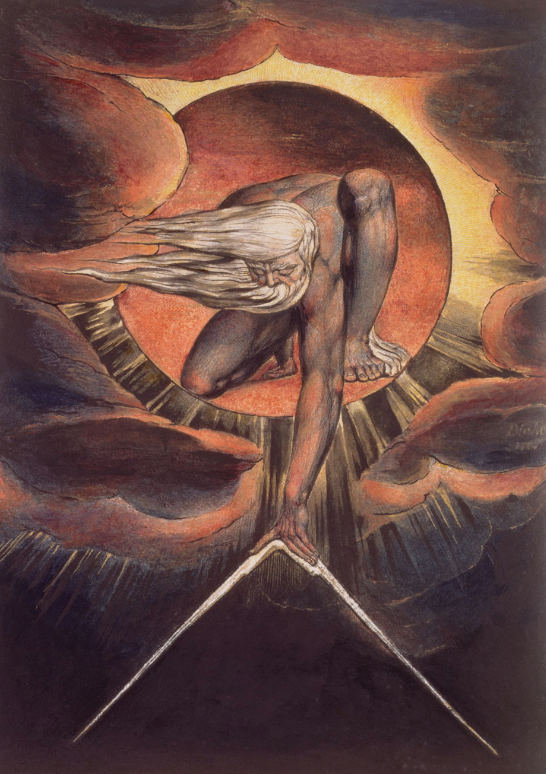
- “The more closely we examine the properties of metaphors and archetypes, the more it becomes obvious that science and the humanities can be blended. In the borderland of the new disciplines created, it should also be possible to reinvigorate philosophy, and begin a new, more endurable Enlightenment.”
- “If there did not exist, floating over us, all the symbolic representations that art and music, religion, philosophy, and history, have invented, and afterward all the interpretations and explanations of them that scholarly activity have passed on, what sort of people would we be?” Helen Vendler
- “Knowledge of life obtained through fiction is only possible by another stage of self-consciousness. That is to say, it can only be a knowledge of other people’s knowledge of life, not of life itself.” T.S. Eliot
- “Science owns the warrant to explore everything deemed factual and possible, but the humanities, borne aloft by both fact and fantasy, have the power of everything not only possible but also conceivable.”
Referenced in
- The Myths of Innovation book
- Zero To One book