How I Write
Apologies for the delayed send here; over the last couple days it’s been both my wife’s birthday and our 12th anniversary, so had family things to attend to before finishing this up.
Writing is what you do when you don’t know what you think. Force your ideas into the uncomfortable constraints of words and see how they hold up. That’s what I’ve been doing pretty consistently for near the last five years. Every week, ~245 weeks (counting this one) and over 600K words. And this isn’t the first time I’ve been led into a meta-analysis of my own writing. In fact, I’ve stopped to ask the question of why I write over and over and over and over again. At the end of each year, I also sit down and have a conversation with myself about the year’s writing, which is its own version of the question.
So why, then, am I feeling even more pensive about my own writing habit than maybe ever before? Well, let me explain.
Last week, I wrote a piece called Dynasties Die In The Dark. Within a day, two very different responses came my way. First? The… good?
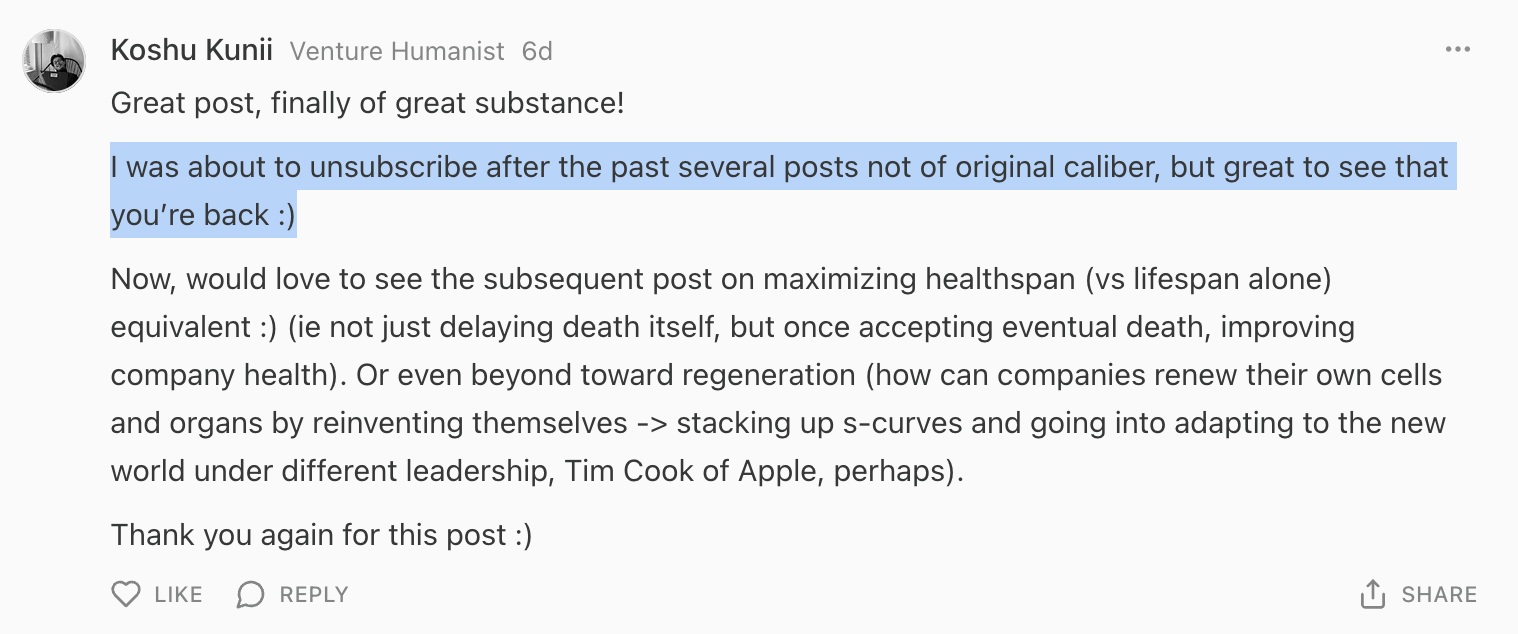
Uhh… thanks dude.
So I guess I’ve reclaimed my former glory?
Well, then I got the second response; the bad.
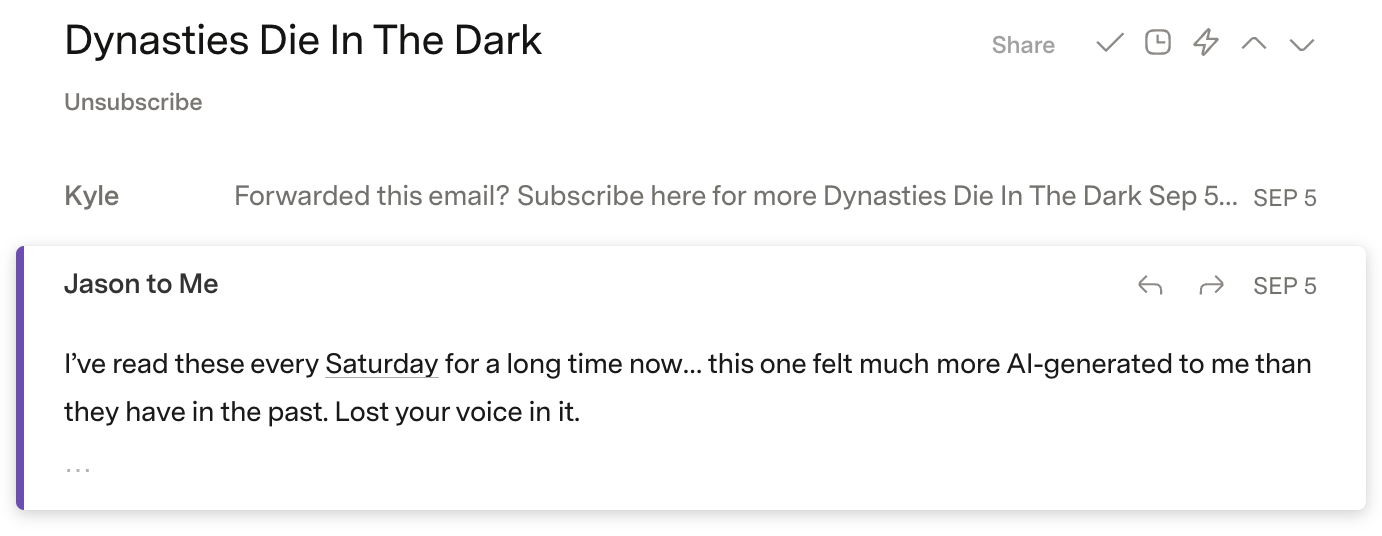
Ah. So, far from regaining my former glory I have, instead, fallen victim to AI slop.
Join me, if you would, on a journey through the psychological journey that this sent me down. First, the harsh reality. When it comes to writing, I’m a nobody. I have ~27K subscribers, growing slowly at ~10% a year. My average open rate is ~30%, which the internet says is fine, not great. David Perell built an entire series called How I Write out of interviewing people whose process is actually worth studying. So why would I deign to believe anyone should care about mine?
Writing, for me, is meant to act as a sort of “secret public journal.” I’ve turned endlessly to the Flannery O’Connor-ism: “I write because I don’t know what I think until I read what I say.” Since I started, I’ve always said I have one goal; just not to miss a week. And thus far I haven’t.
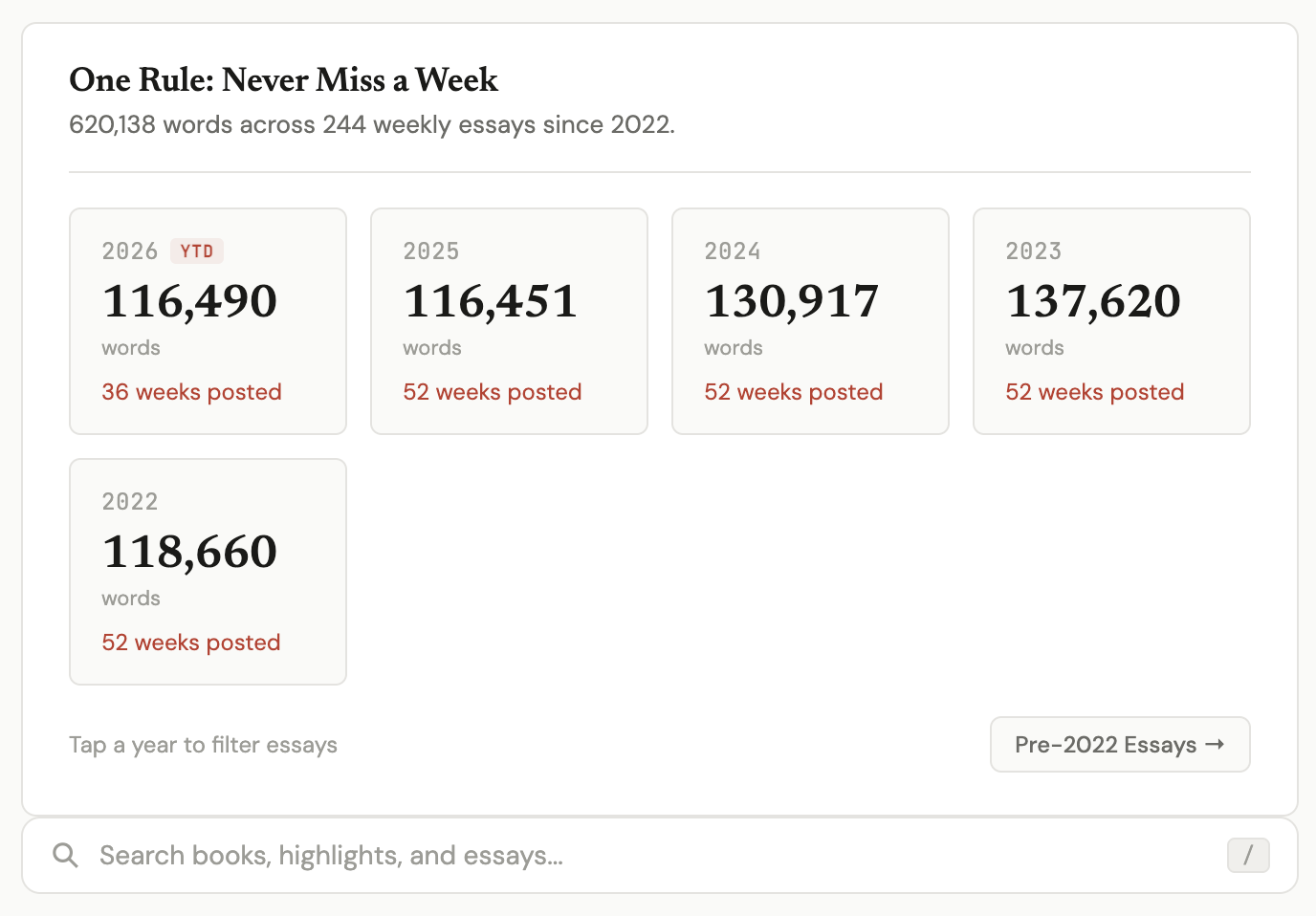
But because of that rule, I don’t optimize for anything else. Quality, subscriber count, open rates, anything. I write for me, not for thee. You’re welcome to come along, and I’m grateful when you do, but I’m successful whether you open it or not.
So why do I find myself, every few months, turning around to stare at my own process? In part because, as our good friend Socrates told his buddy Plato, the unexamined life is not worth living. But mostly because the best time to examine something is in the midst of change. And boy, has my writing process certainly changed over the last twelve months. David Perell’s question is how I write. Mine has always been why. But amidst the significant changes I’ve seen, I can unpack how in order to better understand the why.
I’ll start by unpacking the high-level outline of my thinking and writing process. From there, I’ll lay out the timeline of how my writing has evolved in the last 12 months or so. And I’ll end with whether I think it’s working or not. Because if my writing process isn’t working, then it means my thinking process isn’t working, and that’s a much bigger problem.
My Process
Panic Writing
Writing is a lagging indicator of observation. Those who do not observe will have very little to say. I wrote that in 2023 and it continues to ring true. In many ways, my whole intellectual life revolves around collecting what I’ve called atomic units of thought: a line from a book, a tweet, a thing someone said on a call, a scripture that hit differently on a particular morning. Then, at some point, I sit down and try to mold those observations into thoughts. The writing is where the molding happens.
I got an email from a reader in Berlin a few weeks ago with a one-year-old and no family nearby to help. She’d been reading my posts consistently through all the chaos, which is a high compliment. I know I certainly shed many of my commitments to various creators when I started having kids. And she asked a question I get a lot: “how do you manage to read, collect your thoughts, notes? I crave that time to learn and have failed to block time for it.”
Historically, that answer was often early morning sessions before the kids woke up. Even before I started this blog, that was true for reading.
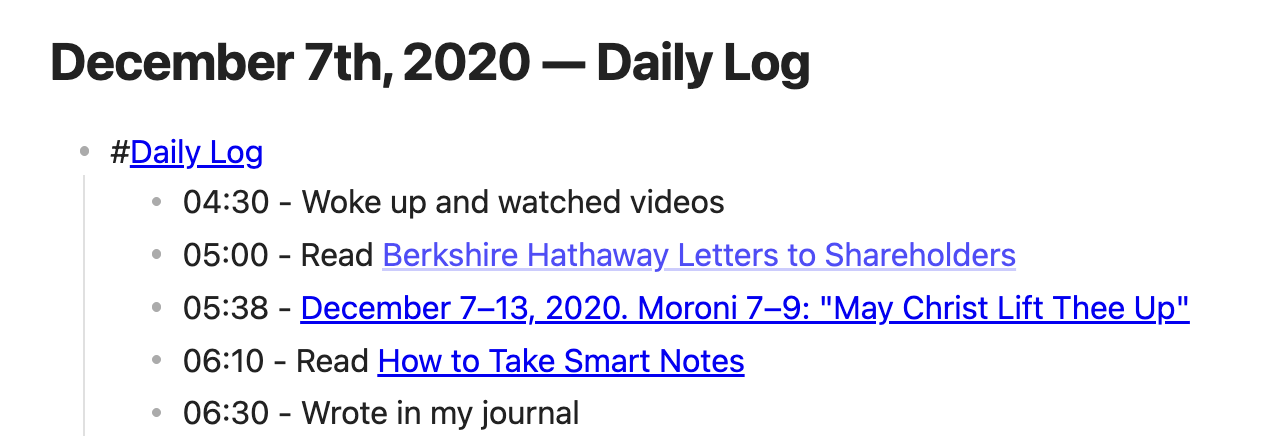
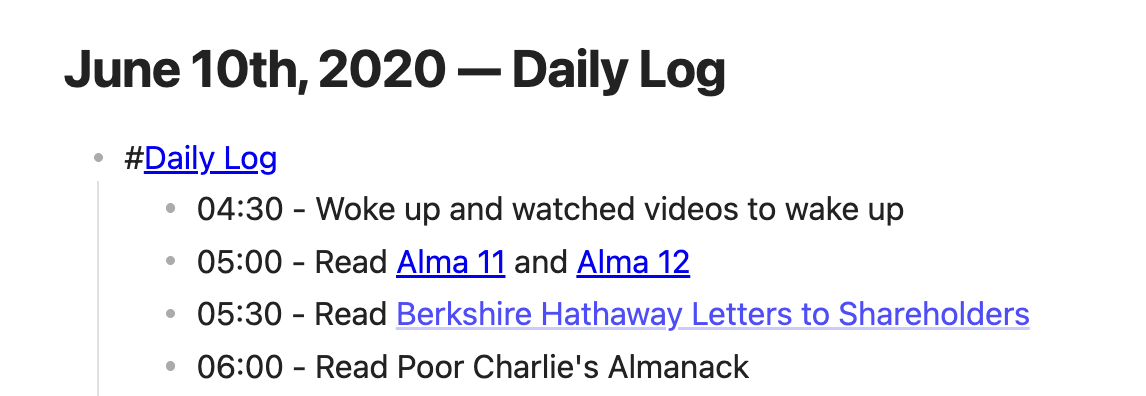
Then, when I started writing consistently in 2022 those early morning sessions transitioned from quiet contemplative reading to panic writing sessions where I had to write whatever I could muster and hit publish before the kids woke up. I wrote about it in 2023 and again in 2024. Then my boys figured out that if they got up early on Saturday, they got Marvel movies with Dad, so they started getting up earlier. As that window closed, I tried late Friday nights but my body rejected it.
For the last half of 2025, or so, I tried the sand and rocks approach. Here’s the object lesson. If you want to fit a bunch of sand and rocks into a jar, you can’t start with the sand cause the rocks just sit on top. You fill the jar with rocks and then you pour the sand in to fill the spaces between the rocks. That’s how I read and write. Now, I’m reading while riding in an Uber or waiting to pick up my kids. I’m reading fiction in bed at night. And, most importantly, I’m constantly observing titles opportunistically of what I want to write about.
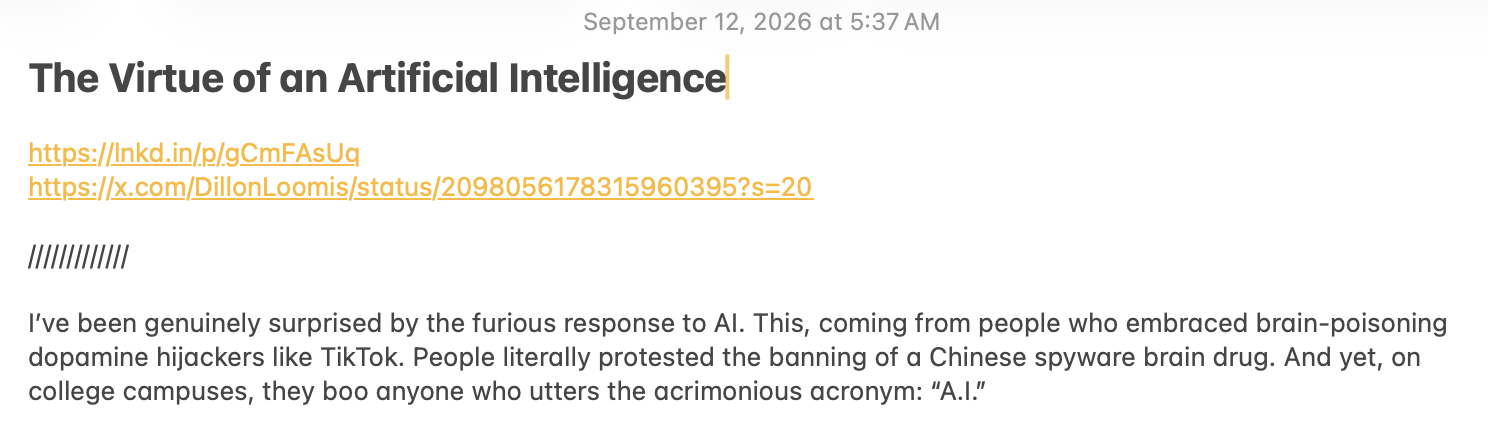
So my answer to my reader in Berlin isn’t that I’ve blocked time, because I’ve failed at that lately as consistently as she has. What I do, instead, is capture relentlessly within the spaces available and then trust that whenever the window opens, whether late at night or while I’m waiting to board a plane, the raw material will already be there.
There’s a quote from Ray Bradbury that I really like: “in quickness is truth. The faster you blurt, the more swiftly you write, the more honest you are.” My “panic” writing wasn’t the magic, but it helped. I think my particular flavor of panic only worked because the source material was already gathered. And that’s not new for me.
The Traveling Library of Alexandria
I refer, often, to my “corpus.” See, I’ve been a relentless notetaker since my LDS mission. I filled up eleven study journals in two years. When I got home from my mission, I became a rabid Evernote user. From there, I transitioned to Notion, then Roam. Shockingly, for many who have followed me for a long time, I’m increasingly using Obsidian (more on that later). But every one of those migrations was me refusing to give up hope that my little traveling Library of Alexandria would prove of use someday.
I struggle with podcasts cause I want to be taking notes and multi-hour discussions don’t lend themselves to easy notetaking. Same thing with books. I’ve never liked library books. Not having the asset, not marking it up, not being able to refer back to it and pull the highlights and notes out later. It was almost as if I was saying, “what good is reading this if I can’t also process it?”
I remember sitting in the Albuquerque temple of the Church of Jesus Christ of Latter-day Saints my senior year of high school. Temples are unlike casual chapels; they’re not just meeting houses, they’re the places where we feel most in tune with the Spirit of God. In one particular room you do some waiting, so they keep softly used, white-leather-bound copies of the Bible and the Book of Mormon there. I opened one and found where I was in my own reading. But then I stopped.
I physically couldn’t keep reading. What I wanted was MY scriptures. My scriptures, with my pen and my multi-colored marking pencil, where I knew what I wanted to mark things as, where I’d cross-referenced my other notes. Sure, I could flip around casually and feel just fine. But to read as part of active study and not have my own tools? I couldn’t do it.
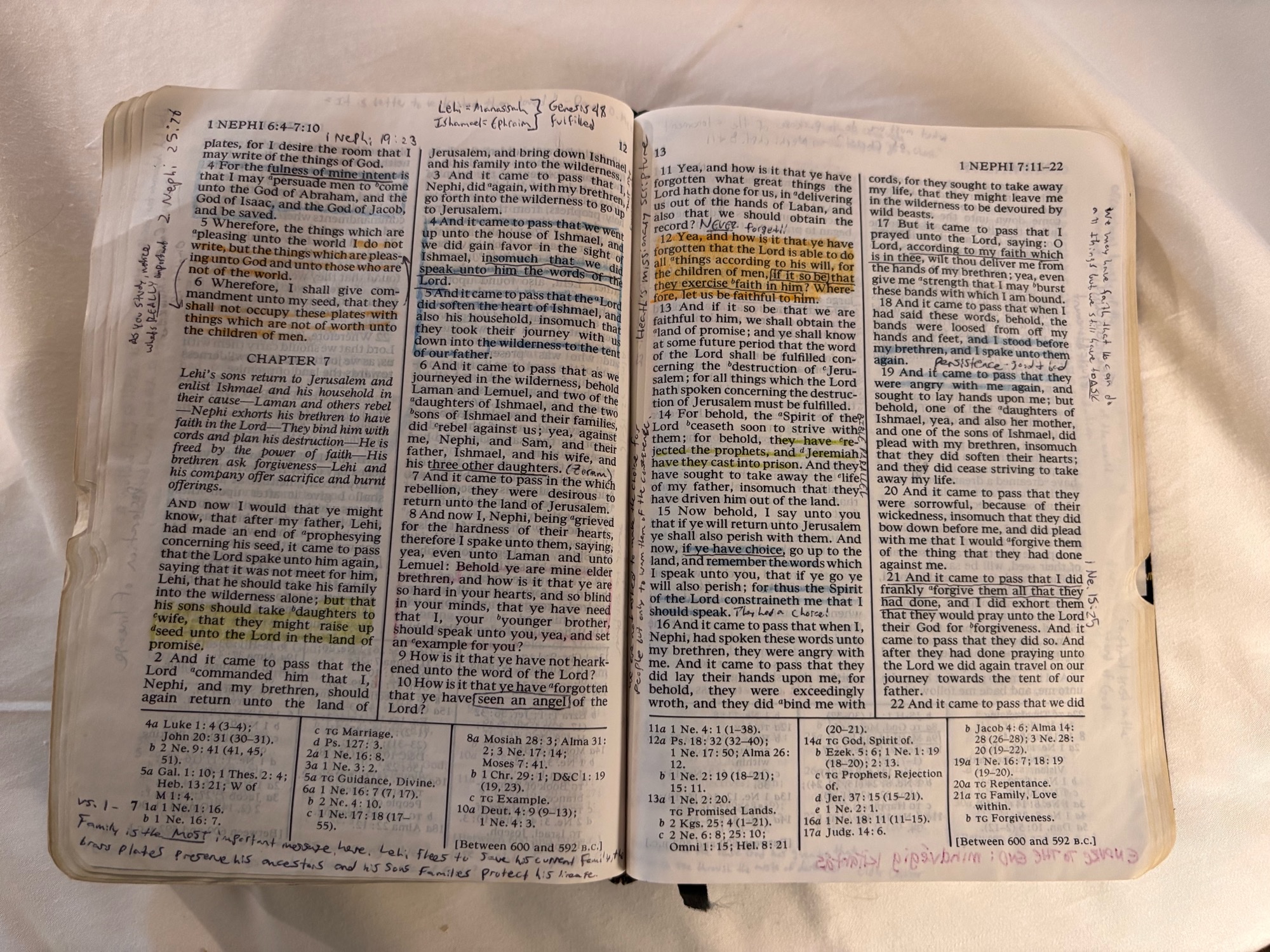
So my brain has worked the same way for at least 20 years. Reading without processing has never felt like reading to me. The highlights, the marginal notes, the cross-references. That’s the reading.
My current corpus is just the same product of that marking pencil, but at scale: ~18.3K highlights and ~2.2K of my own notes from ~300 books, ~2.8K saved tweets, ~2.2K call notes, twenty years of scripture study, and on and on.
That corpus has always been a critical part of my puzzle. But it has changed radically in the last six months and become dramatically more valuable to me.
What’s Changed
I Betrayed Roam
I feel like Bilbo Baggins… “I’ve put this off for far too long.” I have a confession to make. Since I first discovered it on March 2nd, 2020, I have been an “hourly active user” of Roam Research.

Discovering Roam Research has been one of the most important milestones in my intellectual journey. I came to understand the value of the atomic units of knowledge, not just seeing it as one endless list of folders, but an interconnected galaxy brain of potential value accretion. Almost exactly a year ago I wrote a whole love letter literally entitled “I Wish I Knew How To Quit Roam Research”.
At the time, I had written my 190th consecutive week of this blog inside Roam, leveraging its functionality to make it possible. But after 4.5 years, that came to an end. Rat’s Nest Problems, in July, was the last essay I wrote in Roam. Since then, my process has changed dramatically (more on that later).
I still love Roam. I still believe the thing Roam believed: that all of life is connected, that every idea, principle, habit, song, poem, and belief has a link and backlink, and that a global knowledge graph where references are known and traceable forward and backward is worth building. With AI, I think we’re actually getting there. We’ll have to solve the slop problem. We’ll have to isolate and crystallize what is worth being, in the words of my good friend Claude, “load bearing.” But we can synthesize, process, and actualize the collective knowledge corpus more effectively than at any point in history. What that means, personally, for anyone who wants to take advantage of that is that you still have to gather your corpus.
Karpathy’s Personal Knowledge Wiki
It wasn’t the increasingly ad hoc version of my panic writing that shifted my writing habit so dramatically. It was discovering Andrej Karpathy’s idea of a personal knowledge wiki. Built on plain markdown files a model can read and write, all manageable locally. That was not only what broke the chains that held me bound to Roam, but it was a fundamental unlock for how I view my thinking apparatus.
The fundamental idea is that I took my already massive corpus across books and articles I’ve read, companies I’ve studied, family history I’ve done, scriptures I’ve studied, conversations I’ve had, tweets I’ve saved, and built it into a dense interconnected web of knowledge. The easiest place for me to store what I was building was to do it locally on Obsidian. But it wasn’t just taking my Roam graph and organizing it with AI. It’s grown dramatically in breadth and what I can have it absorb. Maybe someday, once I have my wiki cleaned up, I can organize it and push it back into Roam for the higher quality backlinks. Time will tell.
Today, the combination of Claude + Obsidian has allowed me to expand. I went from a Roam Research graph, manually curated, representing 21,719 pages and 7.3M words. And have now expanded into a wiki that is 25,637 pages and 15M words (not including another 1.3M words of frontmatter; the metadata blocks that Claude adds to my pages). And it’s not just doubling my word count with AI.
- 6.2M words (42%) are from third parties (e.g. comments from people I’ve had calls with, stuff written by other people that I copied in, scriptures, etc.)
- 4.8M words (33%) are from AI (person/concept/company synthesis, summaries, connections, research banks)
- 3.7M (25%) are from me (written in journals, notes, or spoken on podcasts or in audio notes)
The real game changer was realizing I could have Claude pull things directly from my Roam graph with the API. 85% of my Roam graph is now in my wiki.
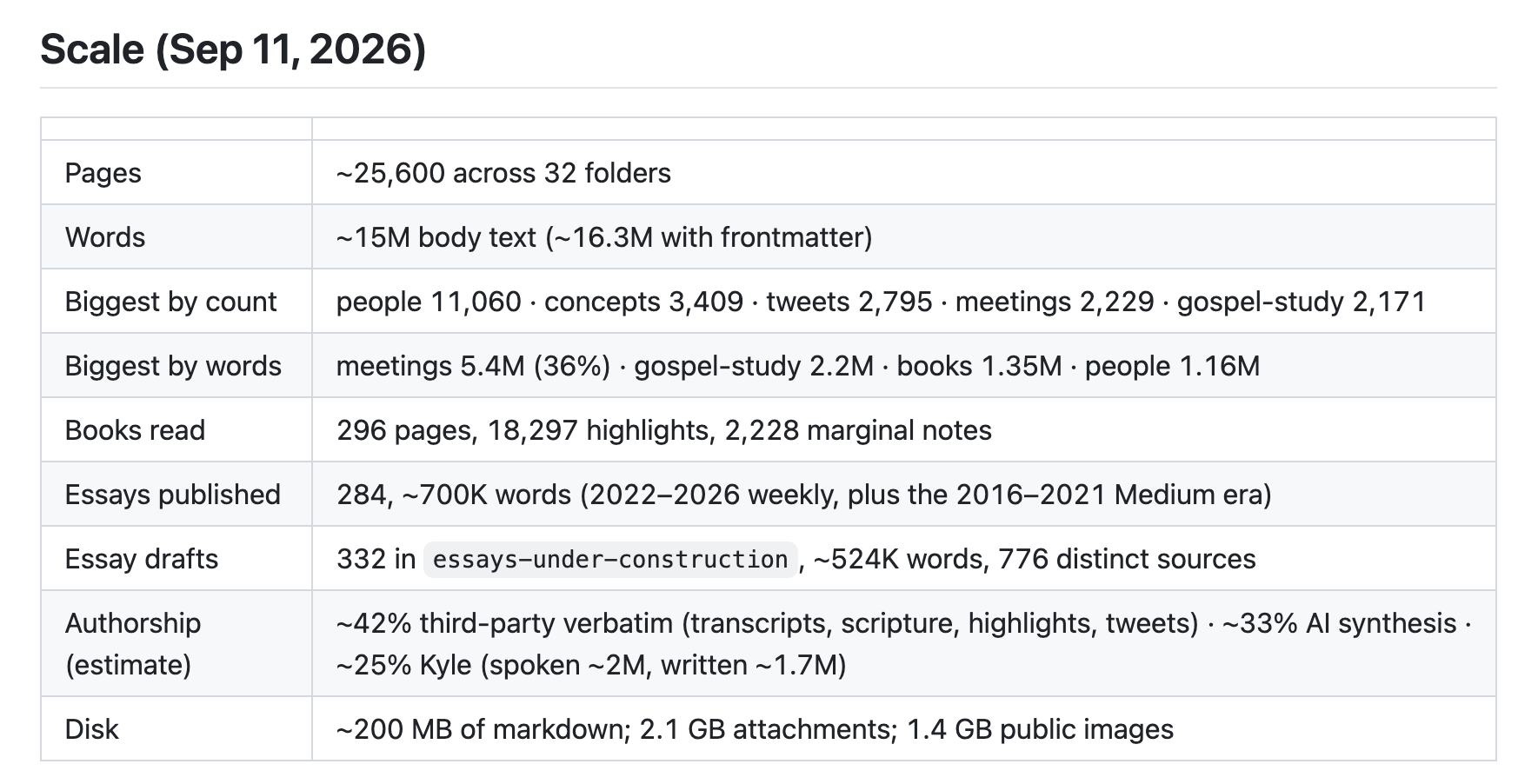
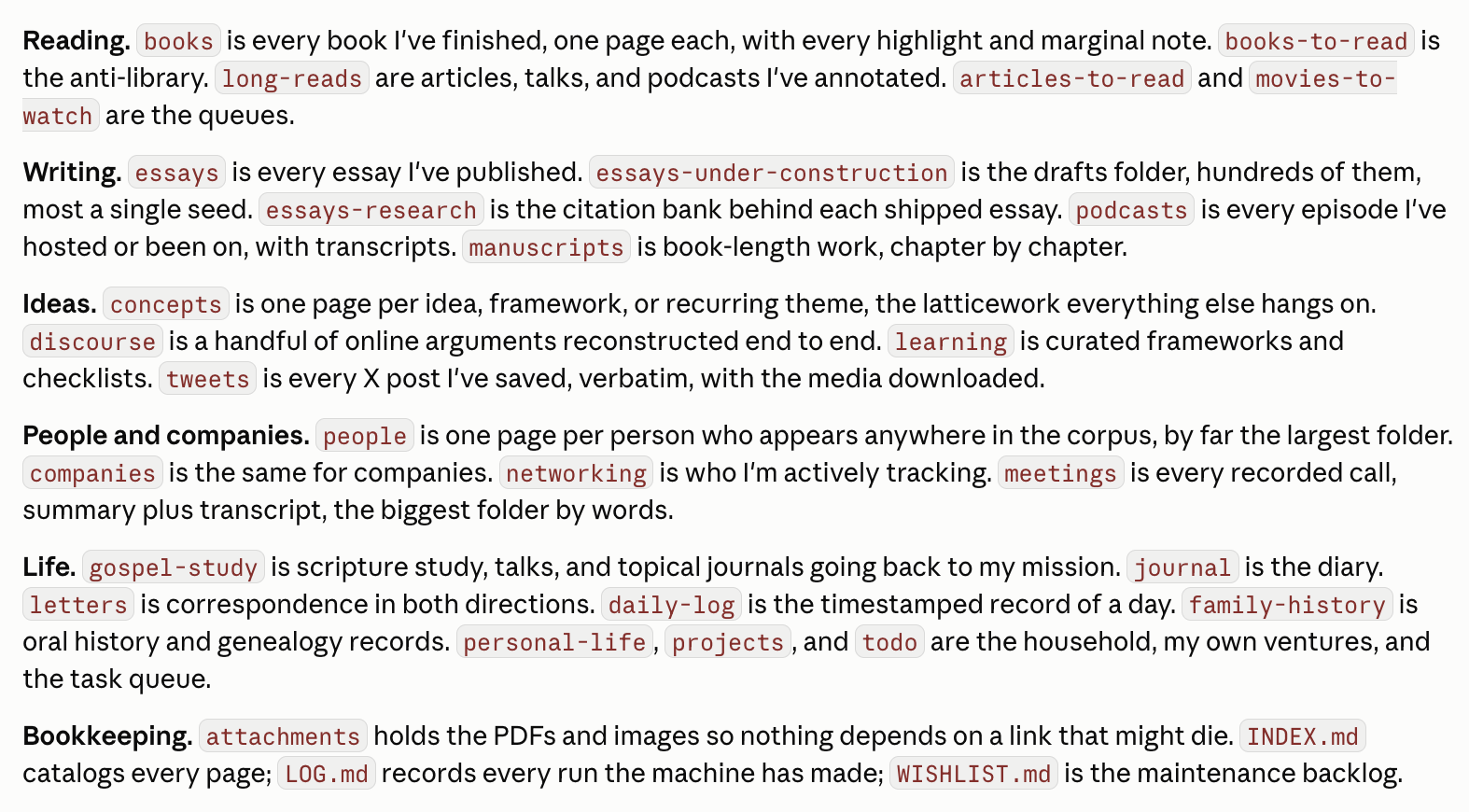
The existence of my wiki has been an incredible unlock for all of the work I’m doing across basically every aspect of my life. As it relates to my writing, in particular, there’s the fundamental of question: how am I’m using AI in my writing. And depending on what that process looks like, if writing is about finding out what I think, am I really reading what I think? Or what AI thinks for me?
Sloppy AI Slop
The more I’ve started to use AI in my writing process, the more sensitive I’ve become about criticism and shame calls of AI slop. Jason Mikula said it succinctly: “If you’re shipping newsletter LLM slop, you should stop and ask yourself, why wouldn’t someone just write their own prompt if they wanted to know this?” If the whole point of the writing is the thinking, and a machine does the writing, then what exactly did you think?
A couple weeks before ago, Stanley Druckenmiller published an op-ed in the Wall Street Journal about the bond market. Somebody ran it through Pangram, an AI detector, and it came back 100% AI-generated. Druckenmiller’s response was basically to shrug it off. “Of course I used AI. I write everything using AI now for the same reason I use a calculator when I do math problems.” And then the line that stuck with me: “My name is on the piece. It’s my message.”
Lulu Cheng Meservey framed it a different way:
“In Sparta, boys were encouraged to steal food but were beaten if caught. The penalty wasn’t for stealing, but for stealing badly enough to get caught. The same applies to AI writing. For sure, use AI. But you’ll be penalized if you use it badly enough to get caught.”
I think that’s right as a description of how the world works. Though, as a brief aside, I also think it’s a depressing description of what the responsibility of reading has become.
We’ve all quickly become trained to be on the lookout for AI slop. Fair enough, there’s plenty to go around. But it seems like that has shifted the reader’s responsibility from “did I like this, why or why not?” to “this is probably AI.” Increasingly, I’m seeing this vibe of “I don’t like it; must be AI slop” become a shortcut for judgement. What easier review could you write? It requires no argument, it can’t be wrong, and it lets the reader skip the hard work of asking what they actually thought.
Back in June, a guy on Twitter replied to a list of newsletters somebody had recommended, a list I happened to be on alongside Peter Walker, Jamin Ball, Packy McCormick, and half a dozen others, and dismissed the whole list with a wave of the hand: “the publications you listed are AI-written marketing.” Millions of words, thousands of hours of blood, sweat, and tears, all smugly dismissed by a guy who, clearly, is just not a fan. Ironically, turned out he was a pretty sloppy fella himself.
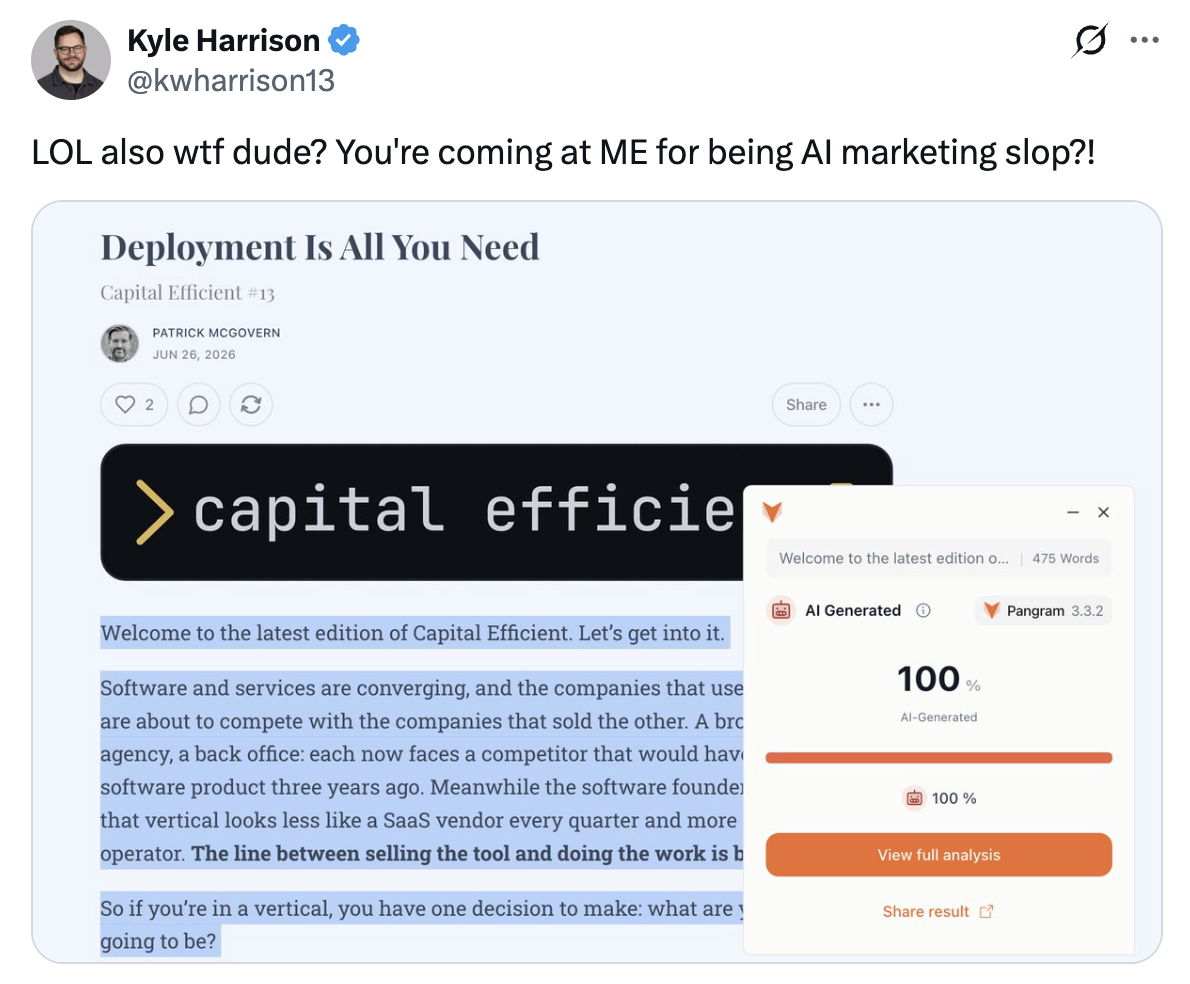
I’ve written before about Charlie Munger’s rule that you’re not entitled to an opinion unless you can state the arguments against your position better than the people who hold it. “I didn’t like it, must be AI” fails that test on both ends. The reader hasn’t done the judging. And, if they’re right, the writer hasn’t done the thinking. Even in my slop-for-slop rebuttal; that guy was calling us slop, likely without reading us, and likewise, I never read his stuff. A slop excuse for a slop excuse will make the whole world blind.
Granted, that was in June and I had just started using Claude to help me more with my writing, so maybe I was also feeling extra sensitive. As I grow increasingly nervous about whether or not I’ll “get caught” using AI, I wanted to conduct an audit. In my intellectually honest heart of hearts, I know I haven’t prompted an essay, slapped it in a Substack draft, and hit send. But am I losing the thread? Am I becoming the tool of my tools? So let me give an accounting of myself.
The AI Audit
First, there was the preparatory work. The benefit of any corpus is that it’s good training data. By the time I started building my personal knowledge wiki, I had hundreds of thousands of words of my own writing. So I trained a voice doc on my voice; what does a Kyle blog look like? The result was ~7.2K words of context on what my writing entails.
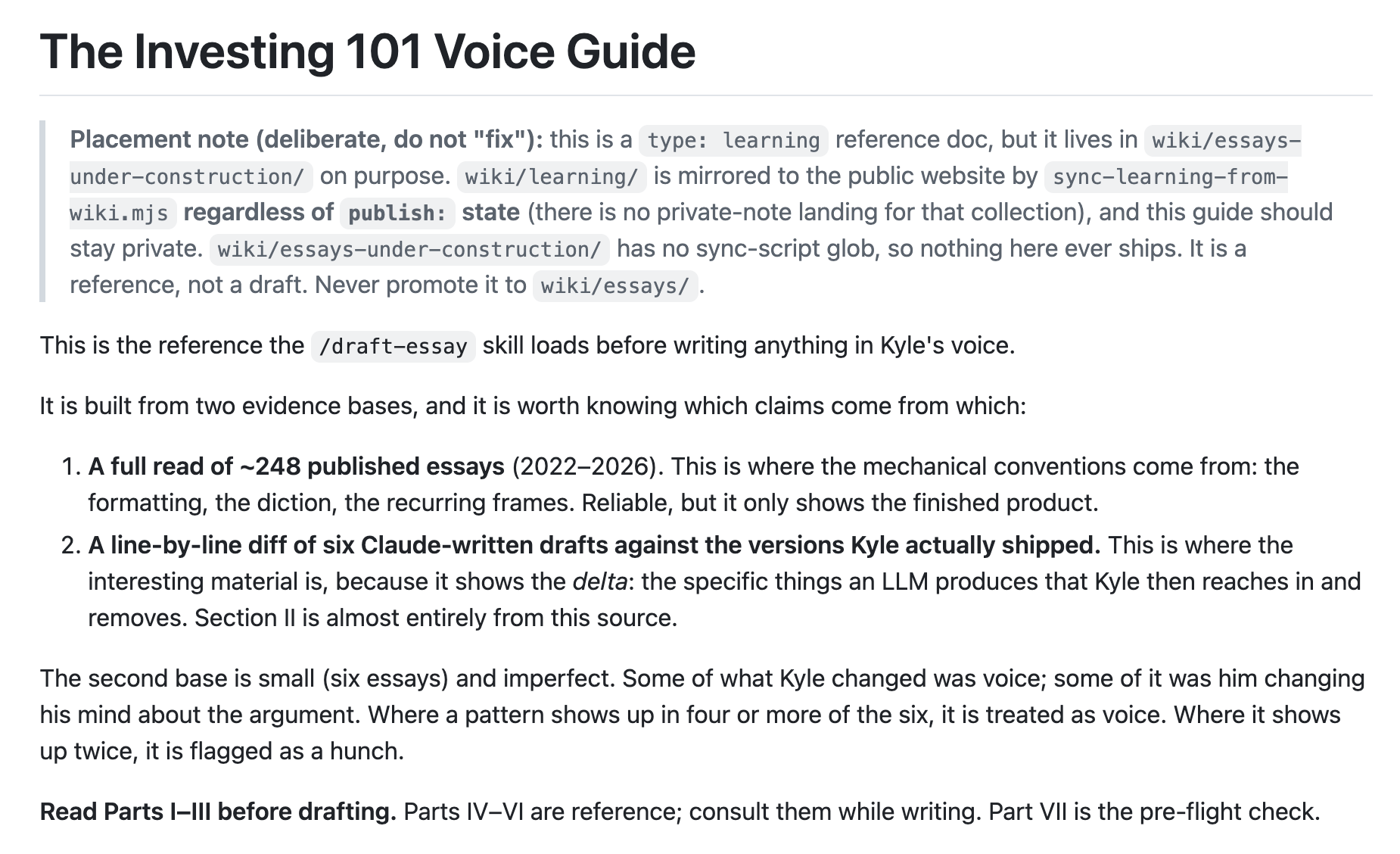
I’ll tell you what, you want AI to feel invasively intimate? Ask it to study an ungodly amount of your writing and then tell you about yourself. Couple examples?
- “Elegance at the punchline is the tell.” Claude wrote “losing money with excellent posture.” You replaced it with “trying to look chill while losing a shiz ton of money.” The guide’s verdict, verbatim: “The published version is worse as a sentence and better as Kyle.”
- The humor inventory. Your added jokes across six diffs are catalogued like specimens: “God speed.” / “Classic.” / “the lemmings grumble in agreement” / “Be cool.” (appended to a satirized SVB shareholder letter) / a bare 🤷 after “that vibe didn’t resonate with customers” / “Really-ey-er?” Plus the “my Mom reads this blog” gag as the documented explanation for “shiz” and “f*ck.”
Building my voice doc in early June was just the jumping off point into writing. What’s critical about my wiki is not just having a lot of blogs and a voice doc trained on it. It’s the 28K+ pages of context across my entire learning journey. Without that, I’m just getting regurgitated prose that sounds like me without the context as a foundation.
My first attempt at using AI in researching and drafting a blog post was Every Moat Becomes Moot. Since then, every single essay I’ve published, 12 in a row, has started with a Claude draft built from a research pass over my own notes.
What does that look like? Sometimes I’ll find myself rambling in a casual conversation with someone and think that the subject deserves more unpacking. That’s what happened with Capital Allocation Is Dead. I literally dumped the transcript from my call into Claude as a starting point for a draft.
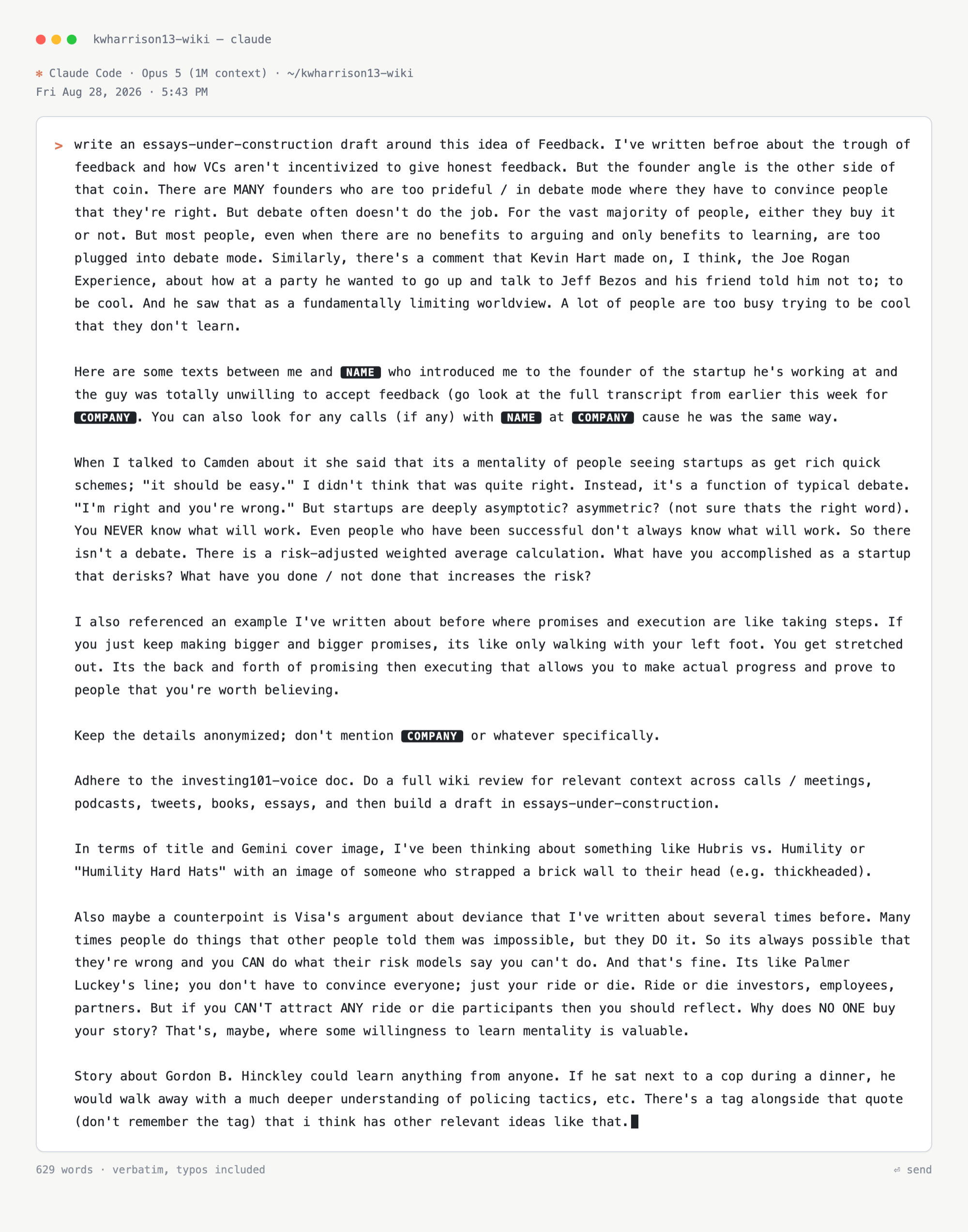
Another version is a pretty thorough prompt where I brain vomit what I’m thinking about for a particular topic, maybe referencing adjacent wiki context that I think is relevant. That happened recently with Humility Hard Harts. Here’s the prompt I started with:
And here was the result:
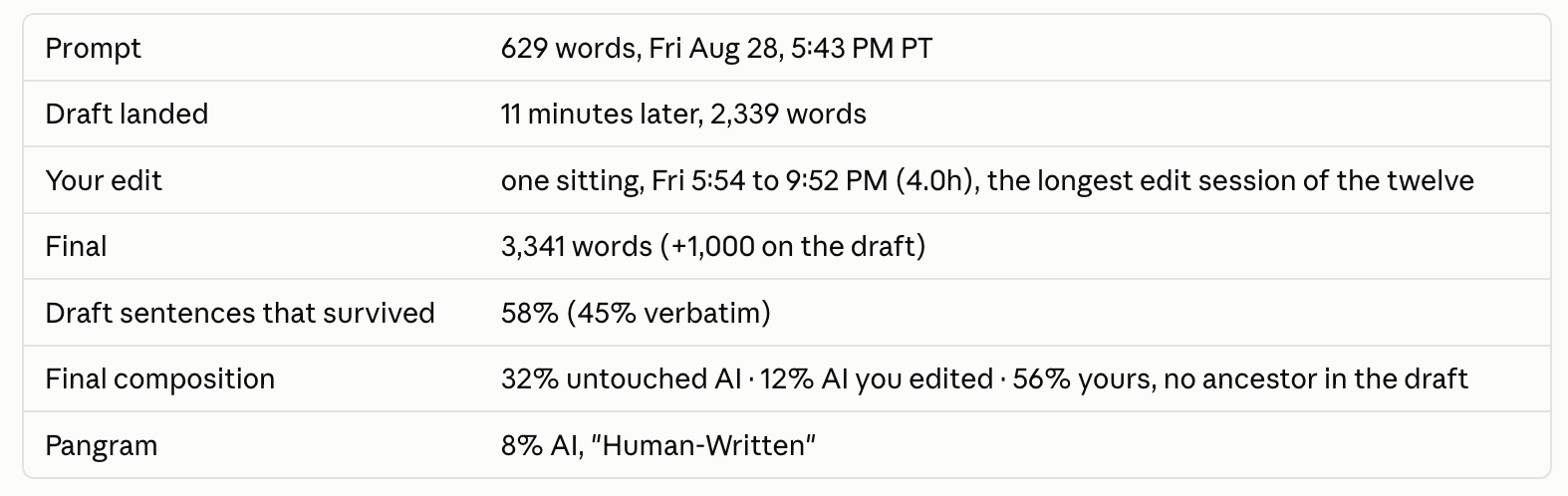
A 629-word prompt took 11 minutes to turn into a ~2.3K-word draft. Then, four hours later I’d added 1K words; 56% of the draft didn’t come from Claude at all. I assume the combination of (1) my prompt guiding the language, (2) my wiki providing the context, (3) my voice doc shaping the sentence structure, and (4) my edits together are what yielded a draft that, despite 32% of the writing coming from AI, an AI detector like Pangram only picked up on 8% of it.
That got me wondering. What does the rest of my AI-assisted corpus look like in terms of my contribution vs. AI’s. So I ran the numbers and here’s what I found.
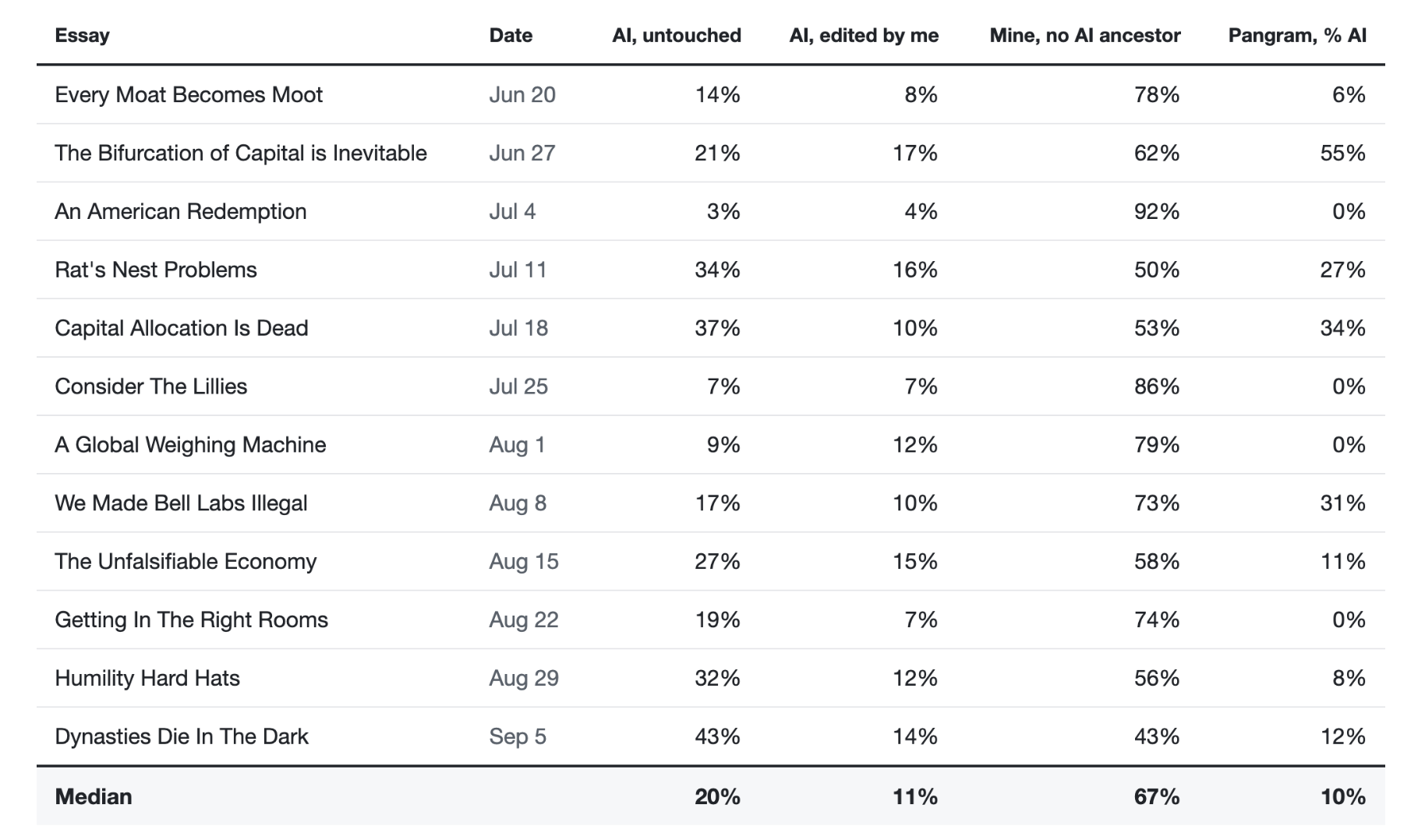
Couple observations.
First, I honestly had not really given much thought to what % was coming from AI. Either I was happy with the draft, or I wasn’t. But I was pleased to find that, typically, the majority of the sentences are still completely coming from me. What’s more, like I said earlier, I think the combination of prompt + wiki + voice doc + edits result in a low Pangram score, lower even than the actual AI-written sentence %.
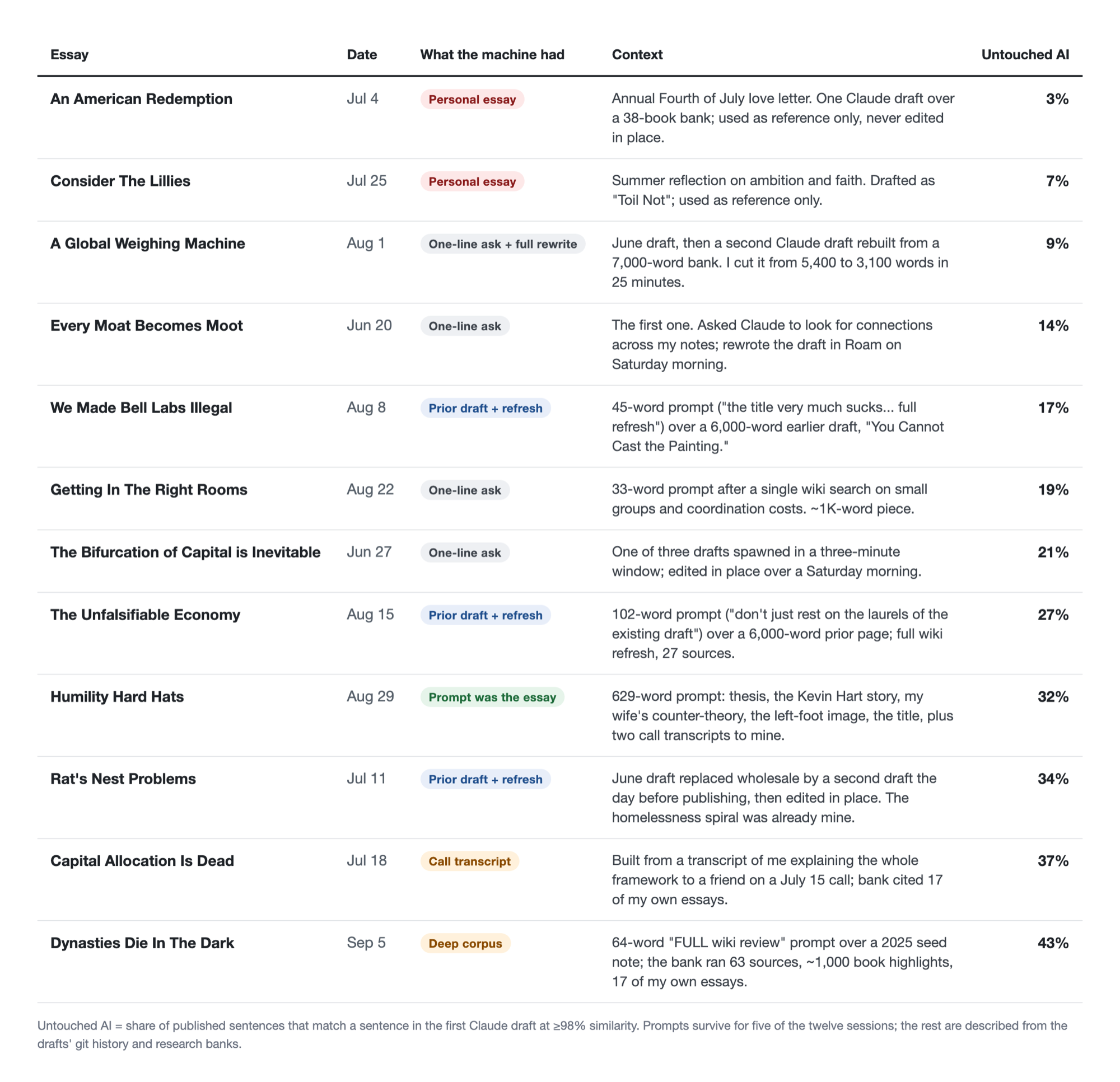
Second, it was interesting to see which drafts I kept the most untouched AI in: (1) Dynasties Die In The Dark (43%), (2) Capital Allocation Is Dead (37%), (3) Rat’s Nest Problems (34%), and (4) Humility Hard Hats (32%). In large part, because those are probably the pieces that I had the most context on to begin with. Capital Allocation Is Dead came from an hour long transcript. Dynasties Die In The Dark was the result of multiple sources, including 160 highlights across The Man Who Broke Capitalism and Flying Blind that were specifically about the poisoning of GE and 585 from the Berkshire Hathaway Annual Letters.
Unfortunately, a lot of my original essay prompts got pruned but the ones that I have reinforce that correlation. The more existing context in my corpus, the closer the AI can get to what I want it to say vs. needing to be changed.
Thinking vs. Saying
A couple months ago, Adam Grant posted a study of 370K college essays after ChatGPT: personal statements seemed more creative because they used more varied words, but actually featured fewer original ideas. His takeaway was interesting: “machines favor homogeneity.”
Maggie Appleton (one of my favorite follows on Twitter), in a piece this week on how writers actually use AI, got closest to the mechanism I wrestle with in this newly established AI-enabled writing paradigm I find myself in:
“How would an agent ever write the words I would write? How would an agent ever say the exact thing I’m trying to say? Even if it sees my notes, it doesn’t really understand the thing I’m trying to say, because I haven’t said it yet.”
“Because I haven’t said it yet.” So good.
See, that’s what I’m in pursuit of. Understanding the things I would say if presented with the opportunity to say them. I’m still working out the kinks of how to leverage the breadth of my wiki corpus while still engaging in an honest pursuit of the heterogeneity that machines seem to struggle with.
Jack Raines at Slow Ventures made a great distinction a few months ago that I’ve been chewing on since. Writing does at least two very distinct jobs. It’s thinking and it’s saying.
For the saying, I’m honestly not concerned. If I’m building a bookshelf and I need some geometry to figure out the angles, I’m not worried about what my brain looks like after the shelf is built. If anything I’d prefer my brain not be thinking about shelves. Plenty of writing is shelves. Summaries, overviews, etc. If I have a quick overview of something that needs to be out by Thursday, AI can be an excellent shortcut around unnecessary complexity, and I use it constantly. I’m neither going to pretend otherwise, nor am I’m gonna stop.
But the thinking is different.
Robert Bjork, the psychologist who coined “desirable difficulties,” is quoted in Range with a great line: “Frustration is not a sign you are not learning, but ease is.” Difficulty isn’t the cost of the learning, but is, in fact, the learning. The slowest growth happens on the most complex skills, and it looks, in the moment, like falling behind.
Sönke Ahrens says the same thing about writing specifically in How To Take Smart Notes. The warm feeling of having understood something disappears the moment you try to explain it in your own words. Suddenly you see the gaps. And then, he says, “we have to choose between feeling smarter or becoming smarter.”
Richard Feynman had it even blunter. When a historian called his notebooks a record of his thinking, he protested: “They aren’t a record of my thinking process. They are my thinking process. I actually did the work on the paper.”
So, in my mind, what I’m doing is not replacing the thinking. I’m introducing a machine into the value chain of inputs and outputs. Both how I catalogue and reference my inputs and how I organize my outputs. But the engine; the hand that turns the wheel, all the agency throughout the machine? That’s all me, baby. If I ever get to the point where my machine hands me an idea “pre-chewed” and I swallow it? Well that’s the die I die. Because, as Brigham Young liked to say, “when you stop learning, you die.”
Neil Postman warned in Amusing Ourselves To Death that Huxley, not Orwell, had the future right. “What Orwell feared were those who would ban books. What Huxley feared was that there would be no reason to ban a book, for there would be no one who wanted to read one.” People would come to “adore the technologies that undo their capacities to think.” Postman was writing about television, about distraction.
But the knife’s edge we’re walking with AI and its impact on the act of thinking, that’s far worse than any distraction. It’s substitution. With TV, output went down and you could see it. With AI, output goes up while the thinking goes down, so the loss is invisible. You publish more than ever and think less than ever and every metric says you’re fine. And then, say it with me, “you die!”
It becomes intoxicating. It is very satisfying to say “complicated thing,” hand it over to AI, and receive a non-complicated answer. I know because I’ve felt it. Just a few minutes after I type a prompt I could get a full “Kyle-like” draft in front of my eyes. Why not just hit publish and move on with your life? That’s a hell of a drug.
Ben Thompson wrote this week that insisting AI text be watermarked is like insisting a ballpoint pen advertise itself as the author. I think that’s right, but it sort of misses the thing I really care about. Druckenmiller’s right too: his name is on the piece, it’s his message. But there’s a version of “my name is on it” that means “I stand behind this” and a version that means “I read it once and it seemed fine.” Only one of those involved thinking. The pen doesn’t need a watermark, but the writer needs to have done the work. And that’s dramatically harder to audit.
One thing I’ve noticed, in particular, is where the dearth of content is expanding as I’ve used AI. The average word count of each of my essays has been relatively consistent over the years. That average has increased slightly with AI. But what has really exploded is the volume of content in my notes section for each piece.
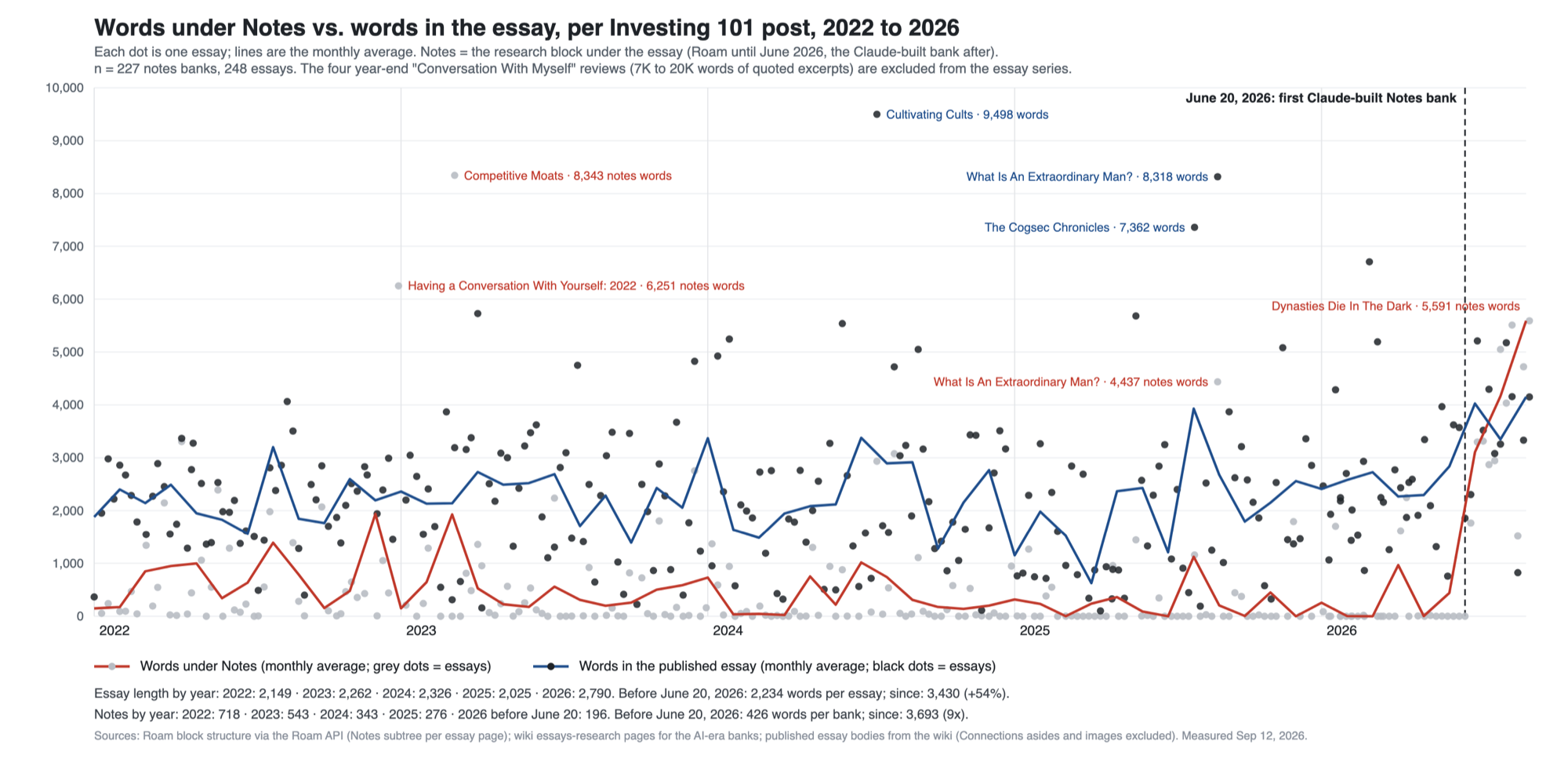
I went from an average word count per essay of 2.2K pre-AI to 3.4K post-AI (+54%). Meanwhile, my Notes list went from an average of 426 words to 3.7K (9x). That, I think, is indicative of the right approach. It’s not that I’m trying to lazily use AI to beef up my word count. It’s that I’m trying to surface dramatically more context around the idea that I’m exploring.
Of the 216 pre-AI essays, 79 shipped with an empty Notes block because they were pretty well-formed ideas in my head. Then 30, or so, had over a thousand words in Notes. But the big ones are usually indicative of where the real research happened: Competitive Moats had 8.3K words of notes, What Is An Extraordinary Man? had 4.4K. I have a draft called Super Uno Pluribus that I’d been drafting before I started using AI, so the Notes section is still me at 58,368(!) words.
What changed over four years is that the big ones got rarer and the empty ones got more common. I hadn’t stopped using the corpus, but I had stopped writing it down. The bank had moved into my head, and the Saturday panic was pushing me more towards reaching into it by memory. But, like any cognitive capability assessment, there’s plenty that I’m forgetting each time I do that.
Then the machine showed up and helped me reshape my corpus, bigger and better than ever. The average 2022 Notes section was ~700 words. The research bank under Dynasties Die In The Dark is ~5,600 words and 63 sources, a size only three of my hand-built banks ever reached. It’s not that AI magically bequeathed me with a new and expanded corpus. It was the same corpus, it’s just that it enabled me to use my own “second brain.”
Criticality of The Corpus
I think that is one of my most valuable takeaways from the experience of building a personal knowledge wiki. David Haber at a16z argued, in regards to AI notetakers, that the default is flipping from “don’t record unless you opt in” to “assume you’re being recorded,” because “the highest-value context lives in conversation,” not in the CRM. I’ve always been a prolific notetaker in meetings, so that just feels like the rest of the world catching up to me on the reality of what is most powerful.
But one of the things that brought me around on recorded calls / transcripts / AI notetakers was how much context is lost in processing. What was said into what was captured into what was interpreted. My Dad has a saying that my Mom hates: “I need you to hear what I’m trying to say, not what I actually say.” She hates that saying, but there’s some truth. The gap between what was meant and what got written down is where most of the world’s knowledge goes to die.
All of the universe’s mysteries are just trying to be understood. Actually, that’s not quite right. They’re not trying to be understood. They’re simply, indifferently, waiting to be understood. Understand them or not, that’s up to you. But they’re there, if you’re willing to stretch out your hand and seek them.
Building a Commonplace Coppermind
So… am I writing AI slop? I don’t think so. But also, I’ll draw your attention again to the mast head: “I write for me, not for thee.” So I don’t care. Now, if I ever catch myself understanding a topic no better after I’ve written a piece than I did when I started? Well, then I’ll know I’ve failed. But that has never happened.
In five years of writing I always walk away having a deeper understanding of a topic after I’d written about it. I think that’s why I also frequently find myself quoting myself. Not because I’m vain and desperate to name drop my blog (although, sure, who isn’t?) It’s because the writing was my thinking.
And to answer Jason Mikula’s tweet about “if you’re shipping newsletter LLM slop, you should stop and ask yourself, why wouldn’t someone just write their own prompt if they wanted to know this?” My answer is that (1) the level of touch I have on each piece makes it not slop. Or, if slop is simply raw materials, it is the finest of well-crafted slop that has been slapped together in the name of Kyle William Harrison. But (2) my answer would be because no one can write my prompt.
My prompt is ~300 books I’ve read with every highlight, ~280 essays, ~2.2K meeting notes, ~2.8K saved tweets, and years of scripture study, journal writing, family history, and brainstorming, all cross-linked. When I ask for a research pass, the machine isn’t inventing my ideas. It’s surfacing my own observations back to me faster than I could ever find them. That part is not slop.
Ryan Holiday talks about this idea of a commonplace book: a personal notebook where you copy out the passages worth keeping from everything you read and include your own reflections, organized by topic rather than by source. Another version of this is a phrase I learned from Conor White-Sullivan, the founder of Roam Research, about ideas having sex with each other. “Good ideas come from when ideas have sex: the intersection of different things that you’ve been reading or different things you’ve been seeing.”
The history of the commonplace book is rich. It comes from the Latin locus communis, a “common place,” meaning a general theme under which you file specific examples. From Seneca and Marcus Aurelius to Erasmus and John Locke, on through Jefferson, Bacon, Emerson, Thoreau, Twain, and Ronald Reagan, who kept his ideas on index cards in a box and pulled speeches out of it for forty years.
Here, I find myself ending where I began. Writing is a lagging indicator of observation. Notetaking is the willingness to value your observations highly enough to record them. What I’ve built is not a system for observation; that comes from natural curiosity. It isn’t a system for writing; I still have to wrestle with that each week, the discomfort of shaping abstract ideas down into form-fitting words. It’s not even a system for notetaking; I still have to do that. What it is is an accelerant. A coppermind, in the lore of Brandon Sanderson: a piece of metal a Feruchemist fills with memories so they can be stored outside the mind and drawn back out, perfectly preserved, whenever they’re needed.
I will continue to observe, to take note, to write. What I hope to get better at is augmenting my very human experience of learning what I think by reading what I say with a dramatic accelerant that far surpasses the RAM in my biological system.
Wish me luck.