Humility Hard Hats

One of my core quandaries about being a VC is that it is a fundamentally transactional job. In the vast majority of conversations I have, either I want something from them or they want something from me. But every once in a while, I have a stakes-less conversation. A family friend or casual acquaintance is working on a startup and I agree to offer any advice I have to give.
One such conversation happened this week. A family member introduced me to a founder. For a number of anonymity-maintaining reasons, I made it clear I wasn’t going to invest. But I was more than happy to be a resource and provide any advice I could. Twenty-five minutes later I was watching the founder defend his say-to-do ratio as a reason he didn’t need to show validation; investors should simply trust him.
I hadn’t questioned his “say-to-do ratio.” I’d told him that most investors in his category are going to want to see promise, delivery, promise, delivery well in advance of underwriting any big vision. In fact, my advice was that he should probably not raise venture capital at all. But he heard an accusation. **And at some point I realized we weren’t having a conversation anymore, so I wrapped up early with something like **well, it sounds like you’ve got what you need.
I’ve seen a version of that reaction literally dozens of times. They don’t like people like me coming in and telling them anything they’re doing is wrong. And they have a “pitch mode,” where they feel like they have to convince you, come hell or high water.
I’ve written before about why venture capitalists don’t give founders honest feedback. That piece has held up embarrassingly well; a friend who spent a decade as a VC and now coaches founders for a living told me last week that the whole reason he loves the new job is that he can finally say “the thing” out loud. If I’m feeling this, other people are feeling this. I’m just the only one who’s actually able to tell you.
VCs can’t always be honest because they don’t have an incentive. But founders also can’t always accept honesty because they don’t have the right mindset. In that same essay, I put it this way: “Other VCs have tried to give feedback, but some founders get combative and it doesn’t go well.” That’s what happen when honest feedback tries to speak to humility but runs face first into the brick wall of pitch mode.
Pitch Mode
I wasn’t surprised by this experience; like I said, its happened a bunch of times. But I was reflecting on what’s actually happening here. I was talking to my wife, Camden, about it and, at first, she thought it was greed. Founders thinking this should be a “get rich quick” scheme; “just trust me and give me the money.” But I don’t think that’s quite right. Most of the founders I watch do this are working brutally hard, and a lot of them have already given up money to be there. It isn’t necessarily that they think it’s easy.
I think it’s just the natural spirit of debate. It’s the only mode most people are familiar with when it comes to any disagreement. Somebody says a thing, you say the other thing, and whoever’s argument is still standing wins. School tries to teach it. Politics pretends to operate on it. The internet is literally dripping with it.
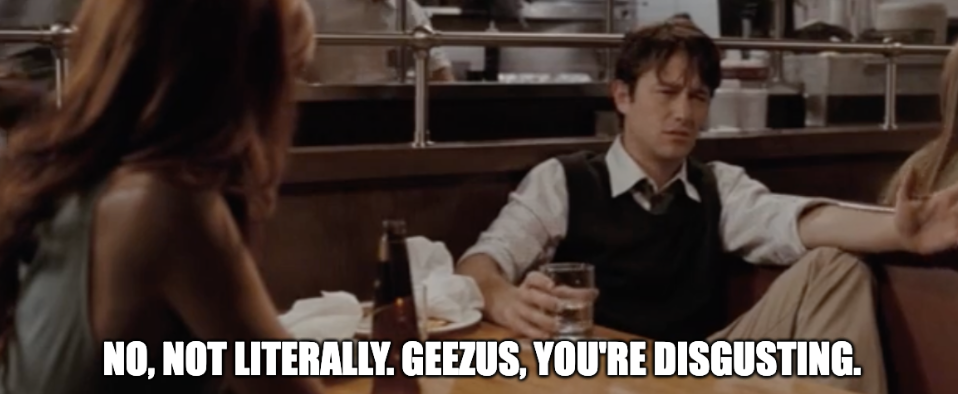
When a stranger with money says “here’s a risk you haven’t mitigated,” the reflex fires before the sentence finishes, and the founder is no longer listening, they’re constructing a rebuttal.
And in fairness to the guy I was talking to (and the dozens like him), that can often be the right reaction! A lot of the feedback a founder gets is pretty worthless. I’ve written before that the feedback loop most “deviants” get exposed to isn’t “you should think about this as you do xyz,” it’s more like “don’t do xyz at all.” If you actually absorbed all of it you’d never build anything. So founders develop a callus, and the callus works pretty well. But often that callus can also develop into a brick wall strapped to your head where you can’t tell the difference between an attack and an offering anymore.
The problem lies more in what debate mode is for. Debate is a mechanism best suited for winning in front of an audience. That’s why politics leverage it so often; it’s all performative. It works great when there’s a judge, a scoreboard, a room to persuade, and all that jazz.
But a fundraising conversation has none of those. There is no judge or audience. There is one person who is either going to wire money or not, and you can’t argue someone into wiring money. Ask any salesperson. Either they buy it or they don’t.
Debate can fit some instances. Honest feedback can be useful sometimes. But there’s a mismatch between wearing a hard hat against humility and being able to actually learn something.
Nobody Scores Cause Nobody Knows
Debate typically means there’s a right answer. But one of the obstacles in fundraising is that nobody actually knows the answer. Even people who have had plenty of professional success before can often be wrong (see Jeffrey Katzenberg with Quibi).
I’ve passed on dramatically more companies than I’ve invested in, and a meaningful chunk of those passes were wrong, to the tun of billions of dollars! And I’ll be wrong again this year. Instead of relying on a crystal ball, I’ve written before about what evaluating a startup mostly entails:
“Each risk is a dial. In some cases, certain aspects of a business can be relatively derisked, so the dial is low. In others, the crux of the business is dependent on a very high risk variable. Again, there is no binary equation that will yield a go / no go conclusion. Instead, it is a gradually deteriorating feeling of comfort.”
A weighted average of all the things that have to go right.
So in a fundraising conversation the question has more to do with how the dials of risk are being communicated. But it’s more like an inventory than a debate. If it’s devolved into a debate, it’s probably already a lost cause and the only thing left to accomplish is someone getting an ego high from “feeling right.”
Granted, as I’m the first to admit, VCs are just a bunch of dumb monkeys chasing shiny objects and big numbers, and it is genuinely stupid to shape a good business around what a dumb monkey wants to see. “We have dials” isn’t a good enough reason to make decisions with your life’s work. Heck. Plenty of great companies should never touch venture capital. But if you do need the money, you may have to dance to the dumb monkeys’ music, and the music is: which dials are up and which are down?
Walking On One Leg
When thinking about risks and derisks, I’ve had this same image in my head for years now. I’ve written before about promises and payoffs as two feet:
“Imagine yourself taking massive steps. You make a big promise. That’s one step. You manage to pull off a big payoff. That’s another step. Promise and payoff. Promise and payoff. But too often, people become obsessed with just one step: the promise. They end up spreading themselves wider and wider, all on one leg.“
Big promises are not the problem. If you never make big promises, very few people will care what you’re doing. The reality distortion field is real and it has built most of the very best companies. But it doesn’t just happen. You have to preach it.
However, the promise foot only takes you somewhere if the delivery foot follows. Otherwise you’re doing the splits in slow motion, and everybody watching starts to get anxious even before it starts to hurt.
Debate mode is a promise-foot activity. It is, structurally, the act of making a larger claim in response to doubt. Which means the more skeptical the room gets, the wider the founder in debate mode spreads their legs. They answer a question about traction with a bigger vision. They answer a question about the bigger vision with (get this) an even bigger vision.
The delivery foot has a much less satisfying vocabulary. It sounds like: you think employers will buy this as a benefit? Fine. Go cold call a thousand of them. If a hundred conversations produce zero signatures, go find out why, and change the product. That’s what moves risk dials. Either things you’ve derisked in a prior life or things you’ve already started to derisk in this one.
At Contrary Research the phrase we use to push back on each other is “prove it.” What small steps of payoff have I seen that merit taking another step on the credit of promise? Or, older and better, ye shall know them by their fruits.
Granted: Sometimes The Brick Wall Is Right
I can already hear the critical whines coming from my comments section saying what this whiny VC is pontificating about can be summed up just as “founders should be more agreeable,” but that’s not it.
I’ve written over and over and over again about Visa Veerasamy’s idea of deviance:
“Once you have succeeded at some kind of deviant shit your ontology is permanently corrupted. You can never again trust anyone else. In 2007, Elon Musk went to Russia to negotiate with some ex-generals to buy missiles to launch a rocket and try and land it again. And all his friends were like, ‘Elon, this is a stupid idea.’ And he was like, ‘I’m gonna do it.’ And he did it.“
That happens, and it’s beautiful. In fact, it happens more than the average risk model can really account for. Every single thing on my list of risk dials is a description of what usually happens; that famous VC pattern recognition at work. But usually is not always, and the entire reason the VC asset class exists is the gap between the usual and the exception. Somebody is going to do the thing I told them couldn’t be done, and they will be right and I will be wrong, and that’s fine. That’s part of the game.
So no, you don’t have to convince me. You don’t have to convince everyone. As Palmer Luckey put it, “you need to care about that 1% of the world that is going to be your ride or die.” Ride-or-die investors. Ride-or-die employees. Ride-or-die customers and partners. Everyone else is noise, and gratifying the haters will always just make more haters.
BUT. Here’s the danger zone warning kicker sign red flag alert: If you can’t attract a single ride or die, then YOU are probably the problem.
Not one investor? Not one early employee willing to take the pay cut? Not one design partner who’ll sign something? When I wrote about layer 3 dependencies I said that once you get there, I guarantee those likeminded people exist and you just have to go find them. I still believe that. Which means if you’ve looked and there is nobody, the honest read might just be that something in the story isn’t landing, and you are the only person with the incentive to go find out why.
Deviance says: you don’t need everyone to buy it. However. It does not say: it’s fine that nobody does.
The Hard Hat
So what’s the actual alternative to debate mode? It isn’t meekness or nodding along as the benevolent VC dispatches wisdom.
There’s a story in Gordon B. Hinckley’s biography that I think about constantly. He was the President of the Church of Jesus Christ of Latter-Day Saints for a good chunk of my growing up years. Russell M. Nelson, another leader of the church, traveled with him for years and said that regardless of the destination, he knew something about the history of the area and its people. In pear country he’d open a leadership meeting with a dissertation on pruning fruit trees in February so there’d be fruit in September.
“Whether it is medicine or law, education or plumbing, it doesn’t seem to matter. He grasps things quickly, has an amazing breadth of knowledge, and can apply what he knows.“
And then this, which is the story I think about all the time:
“One of the security officers assigned to us worked for the local police department. We had time between sessions, and President Hinckley grilled that officer for an hour about their procedures, techniques, and even the equipment they used. I marveled that he knew which questions to ask, each of which was law-enforcement specific.”
An hour with a security guard between busy meetings sessions, and he walks away a law enforcement aficionado. Another colleague summed it up: when he spends an evening at dinner with someone, he leaves knowing something about that individual’s expertise.
I’m not just talking about good people skills, this is a predatory level of curiosity. It’s the same trait Walter Isaacson points out in Da Vinci, who “would grill people from all walks of life, from cobblers to university scholars, to learn their secrets.” There’s that word again: grill. Sam Walton said it plainly: “It was a real blessing for me to be so green and ignorant, because it was from that experience that I learned a lesson which has stuck with me through all the years: you can learn from everybody.“
Kevin Hart told Joe Rogan about being in a private room after a Patriots Super Bowl win, Tom Brady up front thanking Robert Kraft (an important football person and ketchup entrepreneur, I’m told), when Jeff Bezos walked in. Hart said he’d love to go pick his brain. His friend told him not to. Why not? Because with a room full of people watching, you don’t want to look thirsty.
“Thirsty for what? For f—king information?”
His realization from that moment is, I think, a good sum up of what I’m trying to say:
“And that sh-t start to click to me. That’s the problem. Everybody’s too cool. Everybody’s too f—king cool. Everybody wants you to think that they know. You don’t know. You don’t know sh-t. We don’t know sh-t. There’s one Jeff Bezos.”
He went over. Took his wife with him. His approach, in particular, was interestingly unique. He introduced himself, said he admired what Bezos had built, said he’d love to talk sometime, and explicitly asked for nothing. “I’m not asking for anything. But what I did, I set myself up for another conversation for when I got the opportunity.”
“Either way, I was in a room with that man. There wasn’t a level of cool that I had that would keep me from just going in saying hello, or asking a question for that matter.“
A staggering number of people are too busy being cool to learn anything. In a pitch meeting the cool thing is to have already thought of it. To have an answer, and to never be seen as “thirsty” for something you haven’t thought of yet.
But Hart, in that same conversation, does the Hinckley thing without a hint of self-consciousness about it. Not with Bezos, but with a guy who manufactures industrial labels, a thousand every 30 seconds, a multi-million dollar business in a product nobody thinks about. Hart’s reaction: “even if I didn’t want to do that, I’m intrigued that that’s a thing.” Then he looks at the table in Rogan’s studio and starts asking who made it and where the wood came from.
“If you really dig into everything, it comes from a thought… So you can be a person that’s just around a bunch of brilliant thoughts and never ask questions, or you can soak some of that sh-t up.“
A prophet, a renaissance man, and a comedian, all arriving at the same operating instruction from a dramatically disparate subset of the lived experience. I think that’s a pretty universal lesson worth soaking up. Be predatorily curious! Ask the questions. And then listen!
Charlie Munger’s version of avoiding the hard hat of humility was mechanical: he wasn’t entitled to an opinion until he could state the argument against his position better than the people who actually held it. My own restatement is that you’re not suited to strongly hold an opinion until you can make the counter-argument more effectively than the people who want to argue with you. It converts the person disagreeing with you from an opponent into a supplier. They have the perspective inventory you need.
Munger also pointed out the failure mode, exhibited at CBS as just one example, where Chairman Paley was hostile to anyone who brought him bad news:
“The result was that Paley lived in a cocoon of unreality, from which he made one bad deal after another… The proper antidote is to develop, through exercise of will, a habit of welcoming bad news.”
A cocoon of unreality. There is not a better four-word description of what happens to a founder who (thinks) they win every conversation.
Therefore, What?
I don’t think the founders who do this are arrogant, exactly. I think they’ve confused two different games and are playing the wrong one very well.
Epictetus got there as the OG of this idea: “It is impossible to begin to learn that which one thinks one already knows.”
Hart’s version of it: “You don’t know everything. And you’re not that great to think that you do know everything, and you can get bit in the ass by thinking that. But you got to get bit to go, ‘oh, let me get better at that.’”
Another book that I love, called Faith is Not Blind, explain why debate loses even when it wins: “We value what we discover more than we value what we are told.”
You cannot argue anyone into belief. You can only build the thing and let them find it. Which, incidentally, is also the answer to fundraising.
None of this means you should turn the conviction down. The best founders I’ve met are paranoid in private and confident in public. They’ve already imagined every way the thing dies, and that’s what lets them be so calm when a stranger names one of them out loud. No threat of death is new to them, cause they’ve thought of it, but they’re eager to compare notes.
Confidence is a requirement, I’m not saying get rid of that. It’s when confidence translates into shutting off the receptors to any alternative perspectives. Especially where there’s zero cost in listening to the alternative perspective (e.g. a VC who has told you they’re not gonna invest, a customer who has told you they’re not gonna buy).
So be as convicted as you want. Ignore ninety-nine percent of us. Go do the thing everyone said couldn’t be done, and please, come back and tell me I was wrong; that is genuinely one of the best days of this job. I am much happier when someone turns out right and builds something awesome, even if it means I was wrong. What makes me sad is when stuff fails and I say, “yeah, that’s what my dials were afraid of”. And that happens a lot. But along the way, just keep the intake valve open, because the whole edge of being early is that you get information before other people do, and you cannot get information from a conversation you’re more focused on winning than benefitting from.
Being highly convicted is good. But if it comes at the cost of never being willing to admit when you’re wrong, then it’s bad. When the facts change, you’ve got to be willing to change your mind.
Take the wall off your head. You’ll hear better.