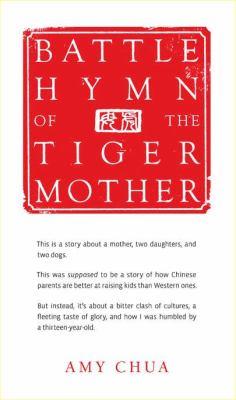
Battle Hymn of The Tiger Mother
Key Takeaways
Kyle, in 2019 in Books: Parenting is an exercise in creativity. Not only are you literally creating a person (their body, mind, habits, self-identity), but you have to get real creative in the way you go about raising this child. Every single person is different, and therefore the ideal parenting style for every child will be unique.
Amy Chua’s account of “Chinese” versus “Western” parenting, read by Kyle explicitly as a Parenting book:
- Competence precedes enjoyment. The load-bearing claim: “Nothing is fun until you’re good at it” — and its corollary, “every day that you don’t practice is a day you’re getting worse.”
- Against self-esteem as the goal. “Western parents worry a lot about their children’s self-esteem. But as a parent, one of the worst things you can do” is protect it from effort. Chua’s version of respect is assuming strength rather than fragility.
- The virtuous circle. Once a child “starts to excel at something… he or she gets praise, admiration” — which produces the motivation to continue. Effort precedes passion, not the reverse.
- Passion isn’t enough. “Just because you love something doesn’t mean you’ll ever be great. Not if you don’t work.”
- Two views of childhood, stated fairly. Chua contrasts Florence, who “saw childhood as something fleeting to be enjoyed,” with herself: “I saw childhood as a training period, a time to build character.” She also grants that “all decent parents want to do what’s best for their children. The Chinese just have a totally different idea of how to do that.”
- Family decline. “One of my greatest fears is family decline. There’s an old Chinese saying that ‘prosperity can never last for three generations.’”
- The honest cost. “The truth is I’m not good at enjoying life.”
- On fear. “Everything I’ve ever done that’s valuable is something I was afraid to try.”
Connections
Books: Outliers — the time-on-task and cultural-expectation argument from the other side. Dumbing Us Down — the opposite pole on schooling. How Children Fail / How Children Learn in the anti-library on the same question.
Concepts: Parenting · Mastery · Law of the Harvest — “nothing is fun until you’re good at it” belongs there.
People: Amy Chua.
Books: The Self-Driven Child — the direct counter-model on parental control vs. child autonomy. The Outcome Distortion Complex — essay that draws on the book. People: Amy Chua — the author. Concepts: Self-Determination Theory.
Highlights
- “Do you know what a foreign accent is? It’s a sign of bravery.”
- “Nothing is fun until you’re good at it.” #mastery
Kyle: “As a purely mathematical fact, people who sleep less live more.” #sleep
- “Every day that you don’t practice is a day you’re getting worse.”
- “Western parents worry a lot about their children’s self-esteem. But as a parent, one of the worst things you can do for your child’s self-esteem is to let them give up. On the flip side, there’s nothing better for building confidence than learning you can do something you thought you couldn’t.” #Parenting
- “But just because you love something, I added to myself, doesn’t mean you’ll ever be great. Not if you don’t work. Most people stink at the things they love.” hard work
- “There are all kinds of psychological disorders in the West that don’t exist in Asia.” Mental Health
- “Everything I’ve ever done that’s valuable is something I was afraid to try.”
- “Western parents try to respect their children’s individuality, encouraging them to pursue their true passions, supporting their choices, and providing positive reinforcement and a nurturing environment. By contrast, the Chinese believe that the best way to protect their children is by preparing them for the future, letting them see what they’re capable of, and arming them with skills, work habits, and inner confidence that no one can ever take away.”
- “The truth is I’m not good at enjoying life.”
- “Be modest, be humble, be simple. Make sure you come in first so that you have something to be humble about.” Spirit of Humility
- “All decent parents want to do what’s best for their children. The Chinese just have a totally different idea of how to do that.”
- “Chinese parents believe that their kids owe them everything.”
- “Never complain or make excuses. If something seems unfair, just prove yourself by working twice as hard and being twice as good.”
- “One of my greatest fears is family decline.There’s an old Chinese saying that “prosperity can never last for three generations.” I’ll bet that if someone with empirical skills conducted a longitudinal survey about intergenerational performance, they’d find a remarkably common pattern among Chinese immigrants fortunate enough to have come to the United States as graduate students or skilled workers over the last fifty years. The pattern would go something like this: The immigrant generation (like my parents) is the hardest-working. Many will have started off in the United States almost penniless, but they will work nonstop until they become successful engineers, scientists, doctors, academics, or businesspeople. As parents, they will be extremely strict and rabidly thrifty. (“Don’t throw out those leftovers! Why are you using so much dishwasher liquid?You don’t need a beauty salon — I can cut your hair even nicer.”) They will invest in real estate. They will not drink much. Everything they do and earn will go toward their children’s education and future. The next generation (mine), the first to be born in America, will typically be high-achieving. They will usually play the piano and/or violin.They will attend an Ivy League or Top Ten university. They will tend to be professionals — lawyers, doctors, bankers, television anchors — and surpass their parents in income, but that’s partly because they started off with more money and because their parents invested so much in them. They will be less frugal than their parents. They will enjoy cocktails. If they are female, they will often marry a white person. Whether male or female, they will not be as strict with their children as their parents were with them. The next generation (Sophia and Lulu’s) is the one I spend nights lying awake worrying about. Because of the hard work of their parents and grandparents, this generation will be born into the great comforts of the upper middle class. Even as children they will own many hardcover books (an almost criminal luxury from the point of view of immigrant parents). They will have wealthy friends who get paid for B-pluses.They may or may not attend private schools, but in either case they will expect expensive, brand-name clothes. Finally and most problematically, they will feel that they have individual rights guaranteed by the U.S. Constitution and therefore be much more likely to disobey their parents and ignore career advice. In short, all factors point to this generation”
Kyle: “Once a child starts to excel at something — whether it’s math, piano, pitching or ballet — he or she gets praise, admiration and satisfaction. This builds confidence and makes the once not-fun activity fun.”
- “Other studies indicate that compared to Western parents, Chinese parents spend approximately ten times as long every day drilling academic activities with their children. By contrast, Western kids are more likely to participate in sports teams.” #Parenting
- “Florence saw childhood as something fleeting to be enjoyed. I saw childhood as a training period, a time to build character and invest for the future.”
- “I think I can do it,” Lulu said. She had a lot of confidence, and, as long as it wasn’t me forcing it on her, she loved a challenge.”
Referenced in
- Amy Chua note
- complain note
- Mental Health note
- Self-Determination Theory note
- The Courage To Be Disliked book
- The Last Lecture book
- The Self-Driven Child book
- The Smartest Kids in the World book