Zillow and the Innovator's Dilemma
| Author | Jake Singer |
|---|---|
| Published | November 3, 2020 |
| Format | Article |
| Original | Read the original |
Zillow and the Innovator’s Dilemma
An issue of The Flywheel on Zillow’s 2018 decision to launch Zillow Offers, an iBuying business that buys homes outright, in response to Opendoor. Singer frames it through the Innovator’s Dilemma: most incumbents ignore an upstart and die, while Zillow attacked the threat head-on.
Summary
Before iBuying, Zillow had a high-margin, growing business and a clean flywheel. The Zestimate, an automated home-value estimate that was inaccurate at first but irresistible, drew enormous traffic (from 54M to about 200M monthly uniques between 2013 and 2019). Traffic let Zillow sell leads to real estate agents, which became its core business, and its scale eventually forced the regional Multiple Listing Services that once guarded listing data to sign data deals with it, which improved the product further. Singer notes the irony that a company set up to disrupt real estate ended up reinforcing the agent-centered status quo.
Zillow Offers changed the business: margins fell as homes became revenue, the company now manages people who inspect, buy, repair and sell houses, and it competes with the sellers’ agents who buy its leads. In his post-iBuying flywheel, Zillow’s traffic gives it cheap reach to make offers and more deals teach it to extract margin, but that loop does not feed back into the original one, and the leads and MLS relationships are strained.
He weighs three explanations. iBuying may become the new top of the funnel, as analyst Mike DelPrete argued, in which case partnering or merging with Opendoor would have been more rational. Rich Barton, back as CEO, may be pursuing a romantic disruptor vision, though the market overlap suggests Zillow simply copied Opendoor. His preferred reading is “sheer failure of imagination”: Zillow was right to act but chose a copycat poor fit for its flywheel, when, as Packy McCormick’s Zillow-plus-Airbnb thought experiment showed, there were more inventive paths.
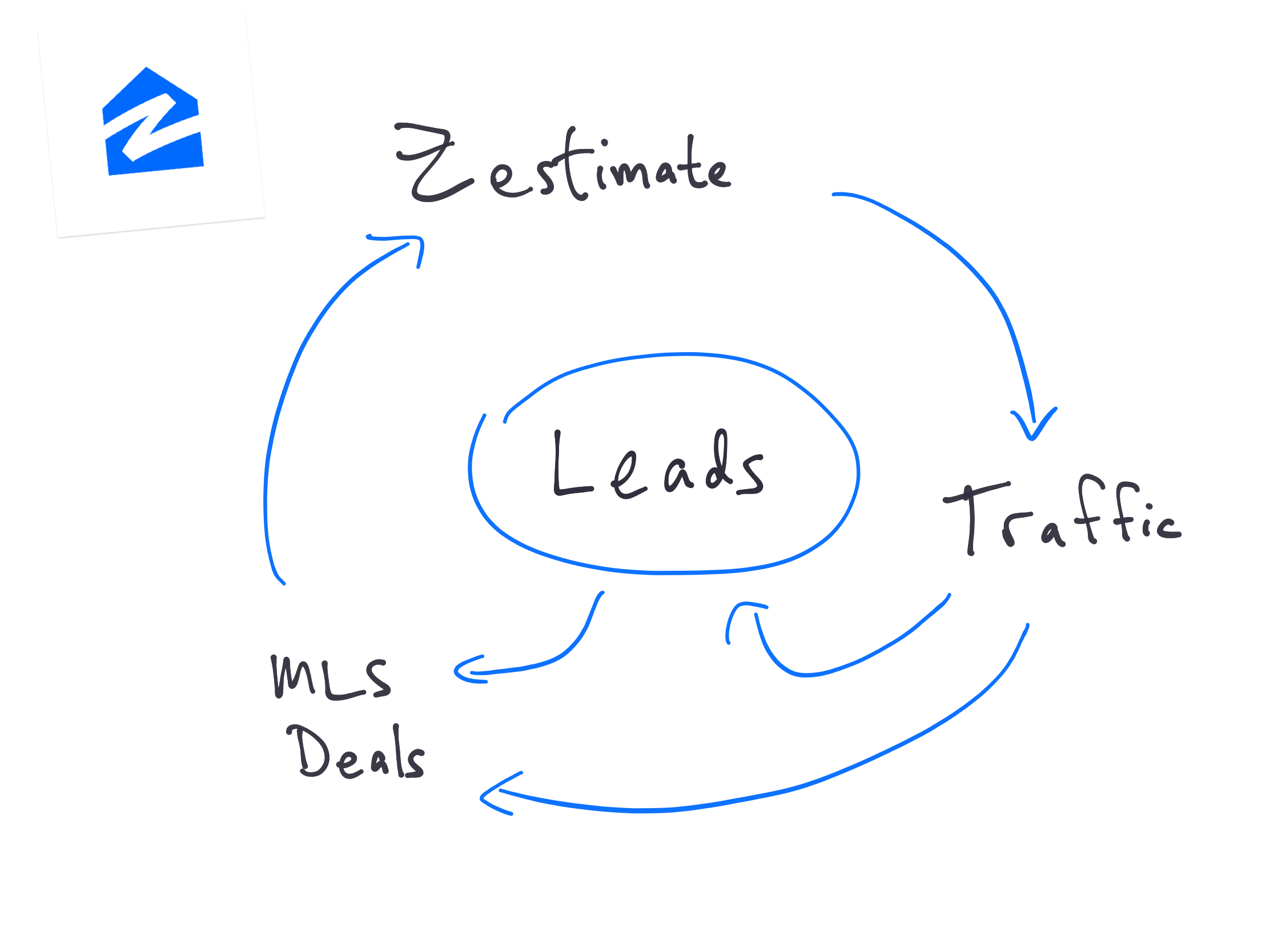
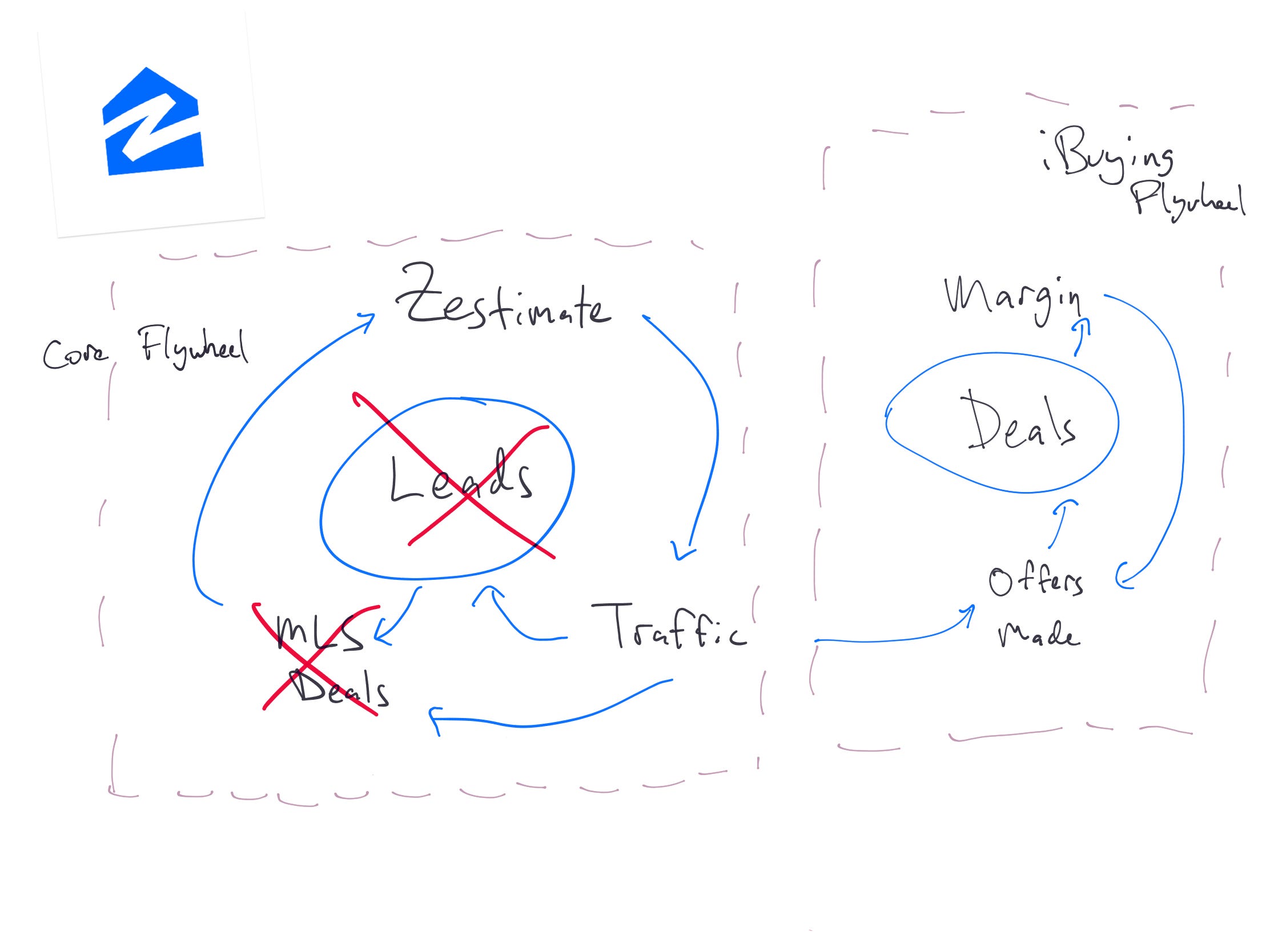
Zillow’s flywheel before and after iBuying (images: Jake Singer, The Flywheel).
Key points
- Pre-iBuying flywheel: Zestimate → traffic → agent leads → MLS data deals → better product.
- Zillow Offers is operationally different and puts Zillow in conflict with the agents who pay for its leads.
- The iBuying loop (offers → deals → margin learning) does not reinforce the core flywheel.
- Three readings: a new top of funnel, a founder’s disruptor ambitions, or a failure of imagination; Singer favors the last.
- Lesson: an incumbent responding to disruption should pick a move that fits its own flywheel rather than copy the entrant.
Connections
- The Flywheel · follows Stitch Fix’s Long Thread, followed by What’s On Deck for Business School
- Companies: Zillow, Opendoor, Airbnb
- People: Rich Barton, Spencer Rascoff, Packy McCormick, Ben Thompson
- Concepts: Innovator’s Dilemma, The Innovator’s Dilemma, iBuying, Disruption, Flywheels