Sweden Builds Houses and Apartments Like Lego Sets. Why Don't We?
| Author | Marina Bolotnikova |
|---|---|
| Published | November 6, 2026 |
| Format | Article |
| Original | Read the original |
Sweden builds most of its homes in factories, but the lesson for America is not the factories: it is the performance-based, nationally consistent building codes (and, more basically, the zoning) that let a prefab industry emerge, plus the overlooked HUD-Code manufactured-housing industry the US already has.
Sweden Builds Houses and Apartments Like Lego Sets. Why Don’t We?

Key claims
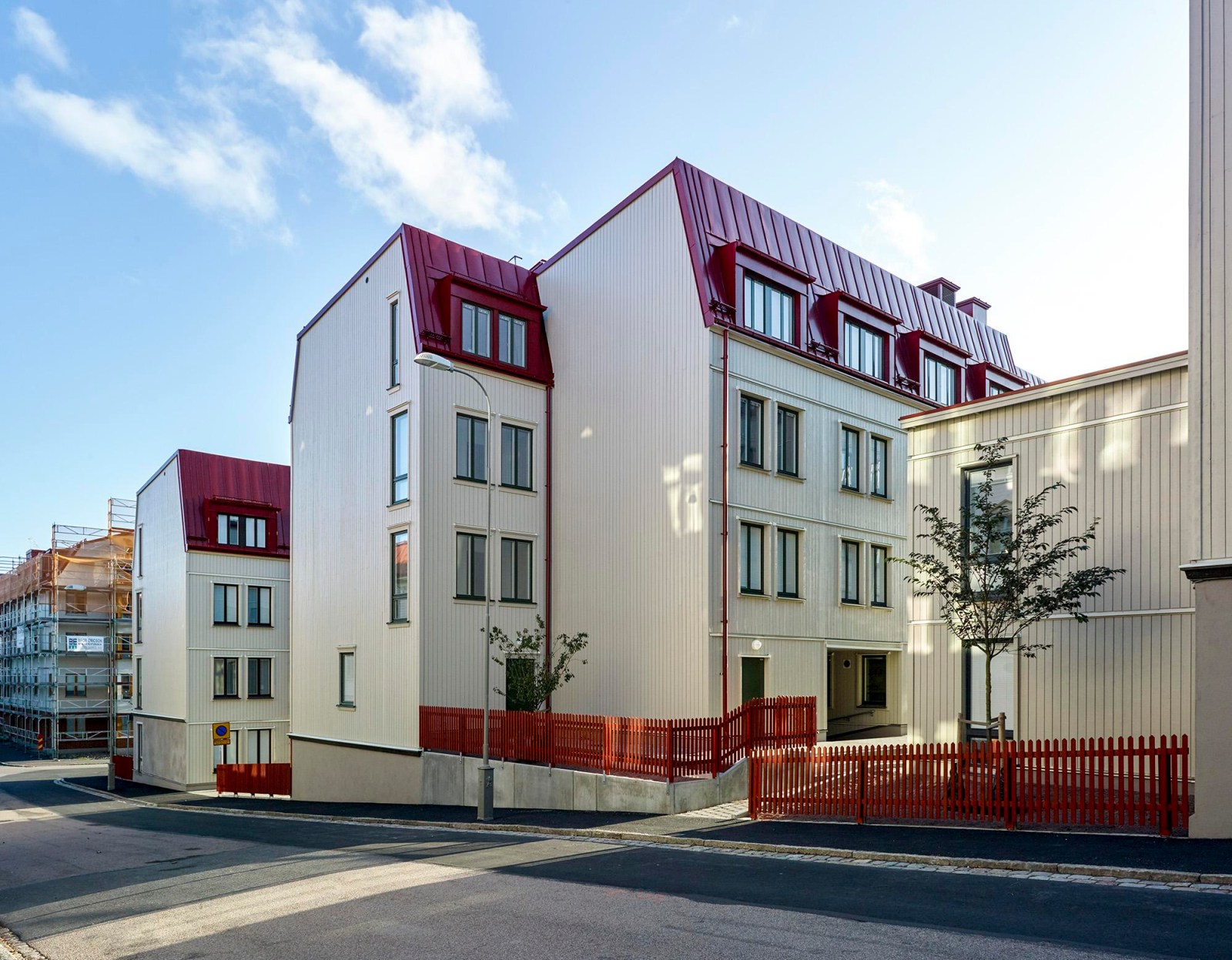
- Sweden’s prefab share is enormous. About 90% of new Swedish single-family homes use prefabricated timber systems (Susanne Rudenstam, Swedish Wood Building Council). Per Sweden’s statistics agency, 43% of new multifamily apartments use fully prefabricated structural frames and another 46% are partially prefabricated. One 114-apartment modular development by Lindbäcks was assembled on-site in about five weeks, and IKEA co-founded one of Sweden’s prefab housing ventures.
- The US share is tiny outside manufactured homes. HUD-Code manufactured homes are about 10% of US single-family construction. Outside that market, around 3% of single-family homes and 3% of multifamily buildings use modular or panelized prefab.
- The postwar experiment split the two countries. Sweden’s Million Homes Program (1965) targeted 100,000 homes a year for a decade and passed a million by 1974, becoming a laboratory for industrialized construction (Sweden had tried factory-made wooden houses as early as the 1820s). Japan built 6.7 million homes in 1966–70, about a quarter of its stock. In the US, HUD Secretary George Romney’s Operation Breakthrough (1969) produced 30,000+ units but disbanded in the mid-1970s after the GAO found no proven cost advantage; its lasting legacy was the uniform national code for manufactured homes.
- The decisive factor is the building code, not the factory. Sweden, like much of Europe, uses a performance-based code (mandate the outcome, such as a wall that resists fire for an hour, and let the builder prove compliance), which fostered an R&D culture. US codes are prescriptive and fragmented: Tyler Pullen (UC Berkeley Terner Center) counts “20,000-plus individual jurisdictions,” which kills the economies of scale prefab depends on. Architect Edward Palka’s forthcoming Center for Building in North America report argues the US code, though “ostensibly method-neutral,” was written around stick-built construction.
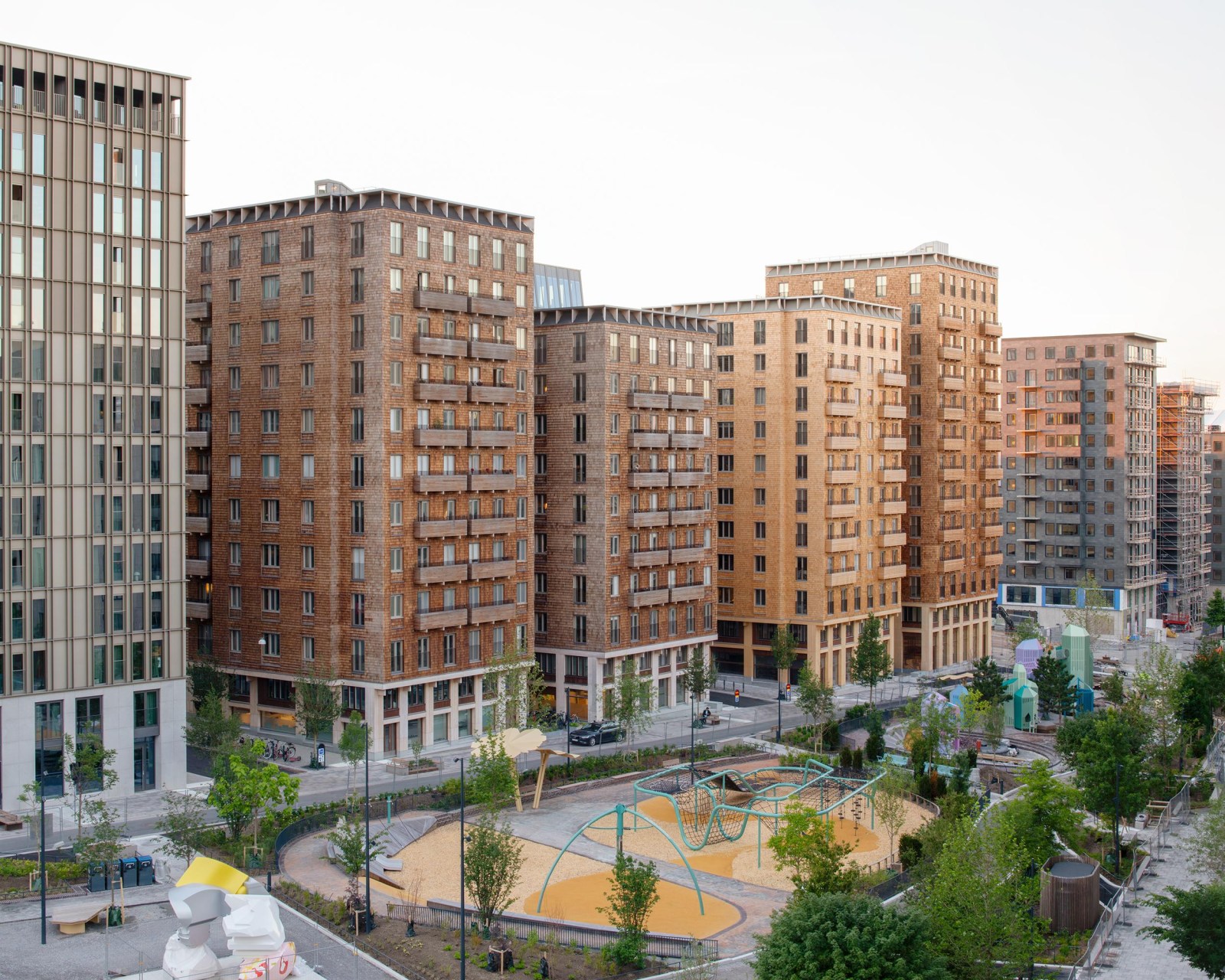
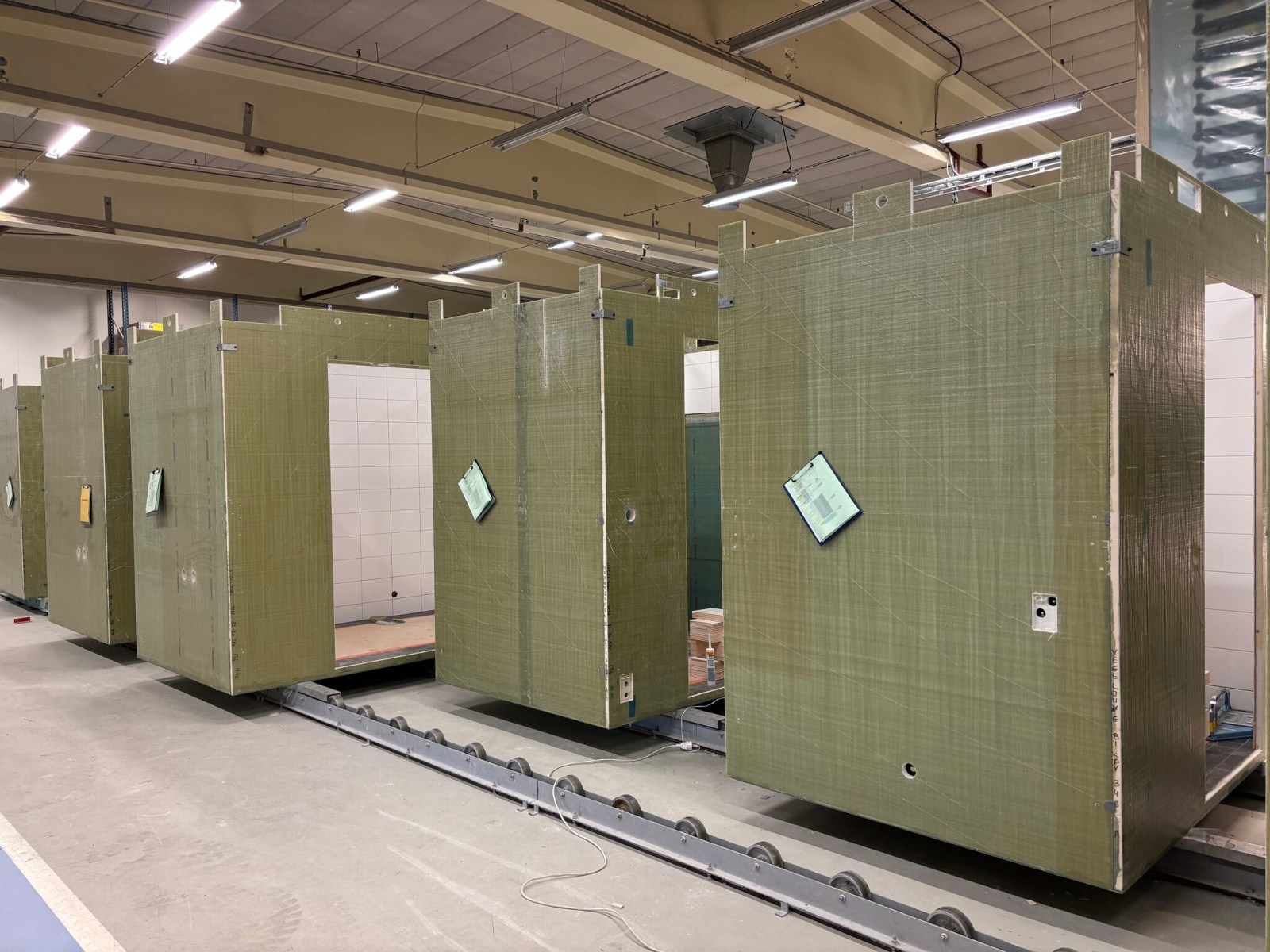
- What it enables. Stockholm’s Cederhusen, 10-to-13-story apartment towers of prefabricated cross-laminated timber clad in cedar shingles, would likely not be approved in the US. At Podcomp in Piteå, a robotic arm lays a tile every three seconds and the factory completes about 25 bathroom pods across two shifts. The caveat: a wood-facade building burned in 2025 (no injuries), prompting debate about Sweden’s facade fire testing.
- Don’t copy the factories. Stephen Smith (Center for Building in North America) says places that succeed with off-site construction get there as “the reward from getting all the details right,” and calls American study tours “the junket to Sweden.” Katerra is the cautionary tale: founded 2015, raised over $2 billion, built factories before proving it could build profitably, bankrupt by 2021.
- The boring details that matter. Union agreements that forbid drilling elevator-part holes in the factory; plumbing codes demanding complex piping layouts; New York City’s limits on plastic pipe and tower cranes; and above all Zoning, which makes apartments illegal on most US residential land and imposes large minimum lot sizes. Smith’s explanation for the inefficiency: American wealth “let us get a bit fat and lazy.”
- Prefab is not a silver bullet. Swedish construction productivity has stagnated like other rich countries’, Sweden has its own housing shortage, and Brian Potter (Institute for Progress) argues there is little evidence prefab has meaningfully lowered Swedish construction costs.
- The American path may run through manufactured housing. The HUD Code is already national and performance-based. The ROAD to Housing Act removed the permanent steel chassis requirement; a 2024 update allowed manufactured duplexes through fourplexes; HUD is exploring buildings of five or more units, which Amy Egerter (Terner Center) suggests could let a developer bypass the local code patchwork entirely. Oregon has also put $20 million into modular manufacturers. (The story was supported by a grant from Arnold Ventures.)
Notable quotes
“It’s not trailer parks. It’s nice housing.” Joseph Gyourko, on Nordic factory-built homes
“I don’t think the places that succeed with off-site construction do it because they were seeking off-site construction. I think it’s the reward from getting all the details right.” Stephen Smith, Center for Building in North America
“We have 20,000-plus individual jurisdictions, with exactly as many slightly unique building codes or zoning codes.” Tyler Pullen, Terner Center for Housing Innovation
“While the code is ostensibly method-neutral and only concerned with specific materials and their properties, the language was developed with traditional construction methods in mind, creating unintended barriers for innovative approaches…Requirements that make perfect sense for stick-built construction often become nonsensical, redundant, or impossibly burdensome when applied to volumetric modules or panelized systems.” Edward Palka, forthcoming Center for Building in North America report
“It goes faster. You don’t need the plumber, the electrician guy, the tiling guy.” Ulf Johansson, Podcomp
“I think it is because of our abundant wealth and resources. It’s let us get a bit fat and lazy and inefficient. We can afford a lot of inefficiencies that other countries cannot.” Stephen Smith, on why US housing regulation became hostile to innovation
“None of these things are really what people have in mind when they imagine policy for ‘prefab’ or ‘modular’ — they’re imagining one neat trick” … “the reason we have never succeeded in prefab is that we’ve never sweated the details.” Stephen Smith
“Removing the chassis means that this can be treated as more normal housing, and it will be more difficult to discriminate against it.” Amy Egerter, Terner Center
Charts and figures
The piece has no data charts; these are its reporting photographs.
How it connects
- I busted my ass on… (tweet): Bolotnikova’s own post sharing the piece; its t.co link resolves to this article.
- Prefab Construction and @_Brianpotter Prefab Construction Is Typically… (tweet): Potter’s point that prefab is not reliably cheaper is the caveat the article itself cites; the article’s answer is that the gains come from regulation that lets builders innovate, not from the factory as such.
- Prefab Housing, Modular Construction, Modular Housing: the one-, two- and three-dimensional prefab framework (components, panels, volumetric modules) sorts these terms.
- Housing, Affordable Housing, Alternative Housing, Tiny Homes: the HUD-Code manufactured home as the most affordable, most stigmatized US housing type.
- Zoning and The Housing Theory of Everything: Smith’s “more foundational problem” is zoning, not building codes.
- City Building and Abundance: a concrete case of the abundance argument that rules, not technology, are the binding constraint on building.
- George Romney: Operation Breakthrough, his 1969 HUD program, is the US counterpart to Sweden’s Million Homes Program.
- Hijacking The Huckster’s Hypebook and The Techno-Solutionist Commitment: Kyle’s essays list Katerra among venture’s spectacular failures, which is the same cautionary tale the article tells about leaping straight to factories.
- IKEA: a founder of one of Sweden’s prefab housing ventures.