Kyle Harrison
concept
Productization of Venture Capital
Productization of Venture Capital
Stub page — auto-generated from wikilink references. Not yet written. Referenced in 11 wiki pages.
Files from Roam
Recovered from Roam on 2026-10-27, where these were hosted and would have died with the graph.


Where this appears
- 1 Quick News Update That… (tweet)
- A Mental Model I Stole… (tweet)
- Founders, If a VC Was… (tweet)
- I Would Guess the Median… (tweet)
- No One Beats Eric on… (tweet)
- Scarcity of Capital Leads to… (tweet)
- The Impetus for More VCs… (tweet)
- The Present - Founders Build and… (tweet)
- This. Seems to Be a… (tweet)
- VC Brands Are Increasingly Important… (tweet)
- 🤔 Founders - When You Think… (tweet)
Verbatim source notes — restored from Roam, 2026-09-21
- Even though we’ve already got a highly commoditized capital base chasing startups we’re just getting started. More LP capital means more venture funds. So every VC can either stick their heads in the sand and pretend they’re a special snowflake or they can step back and evaluate what has changed about the startup landscape and innovate accordingly.
- Structure your organization around productization. Like I said, the center of a VC firm’s universe is the partnership. They dictate how everything works. Maybe start to borrow from an org structure that has created phenomenal products. Those organizational changes are already starting to happen. Kim Milosevich recently rejoined a16z as Chief Marketing Officer after spending almost 2 years in marketing at Coinbase. Most importantly, when she was at a16z before she was a Partner in charge of marketing. Now? She’s CMO. Things are changing.
- {{DONE}} ((XLFi10hEa))
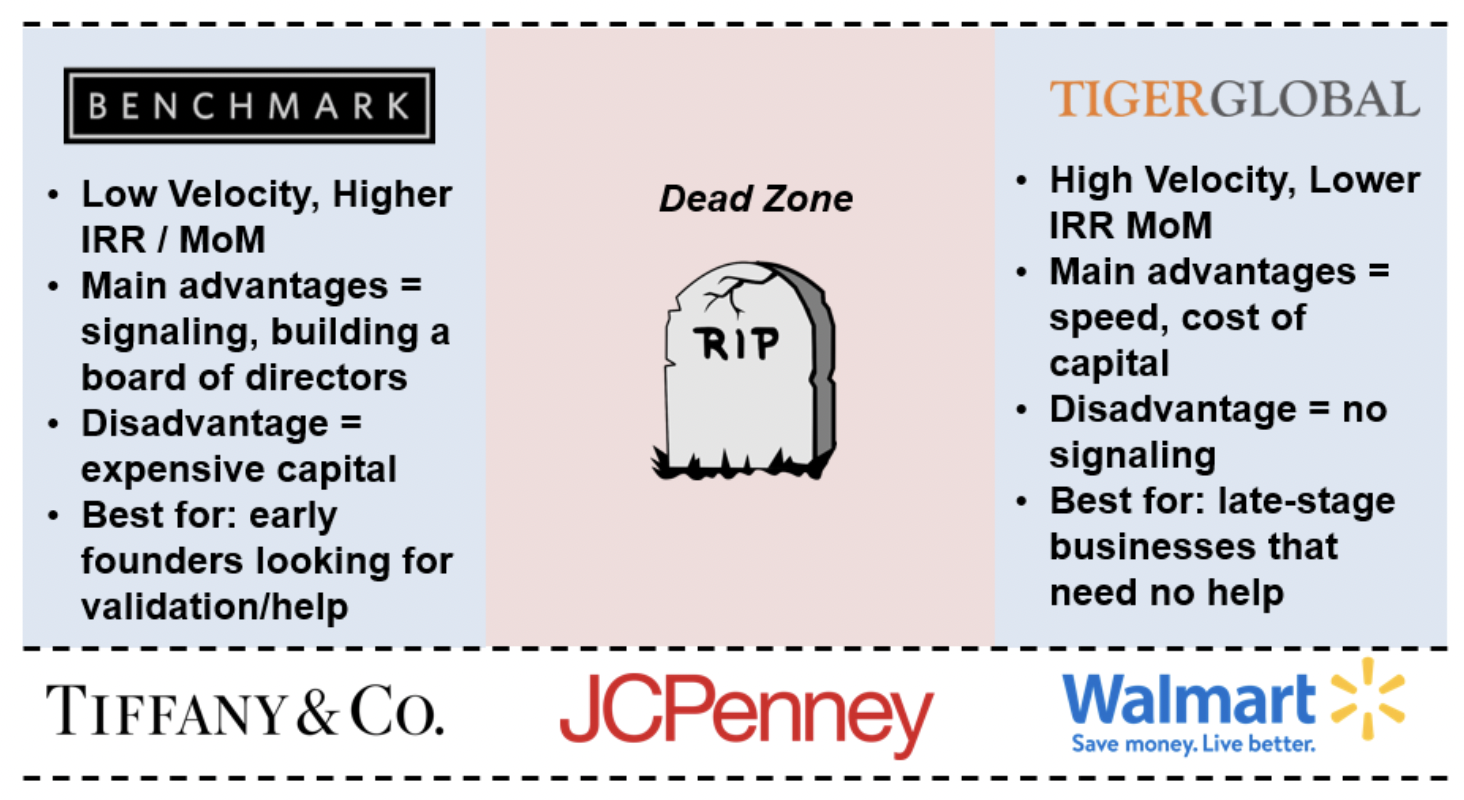
- Everyone’s takeaway last year when they read his piece was “I don’t want to get squeezed in the middle,” but very people stopped to think, “what does it mean to be in the middle?”
- Look at the sentiment of these answers. Pretty broad set.
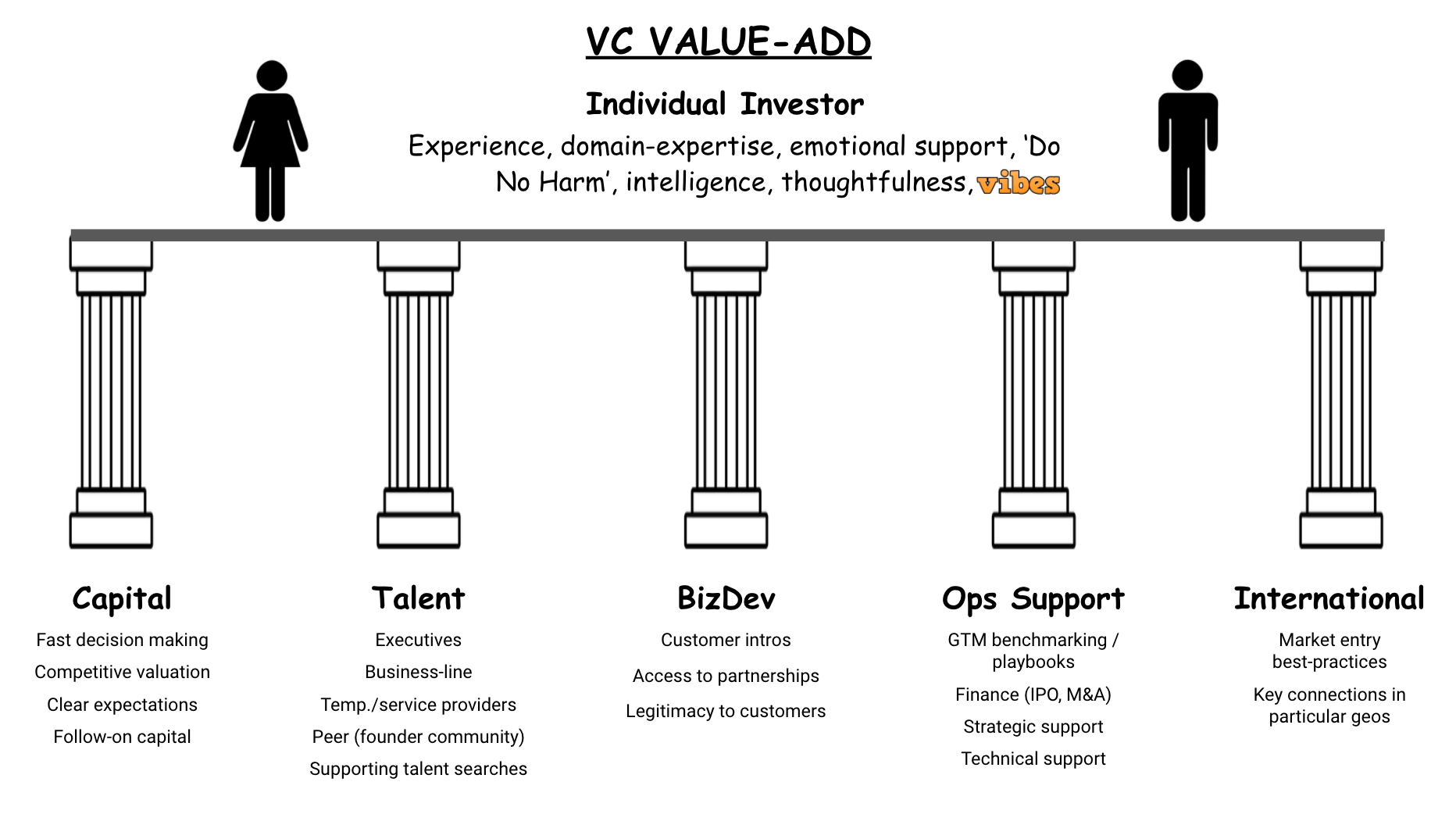
- Beyond that initial hesitation I got a number of responses. I expected some uniformity but I was surprised to find ~90% of the answers fit into some core buckets. If you’re a VC, take a look at the pillars and ask yourself if it sounds like your firm. If it does you may want to ask yourself “am I the J.C. Penny of VC?”
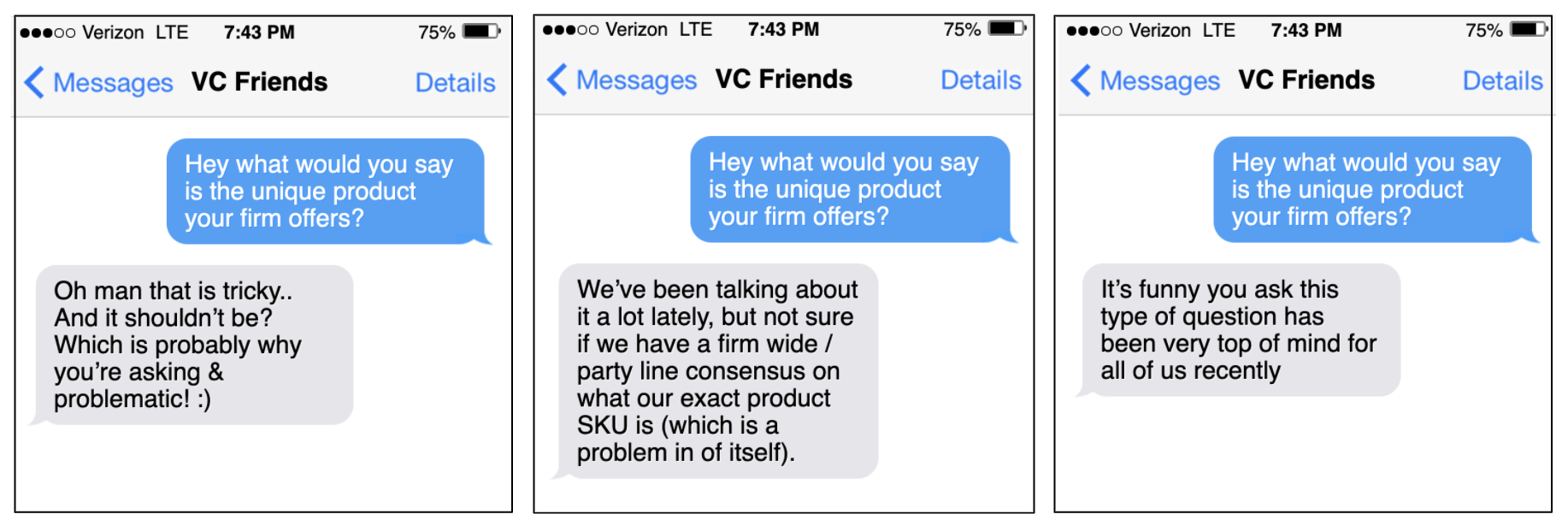
- The first common reaction was acknowledging that they didn’t have a crystal clear answer to the question. A lot of people have felt the pressure in the venture market during 2021 and have been pushed to think longer and harder about what their firms offer.
- {{DONE}} ((4mSY7nIud))
- {{DONE}} Perception of a value prop is not always the same as positioning
- {{DONE}} Pillars of VC value-add
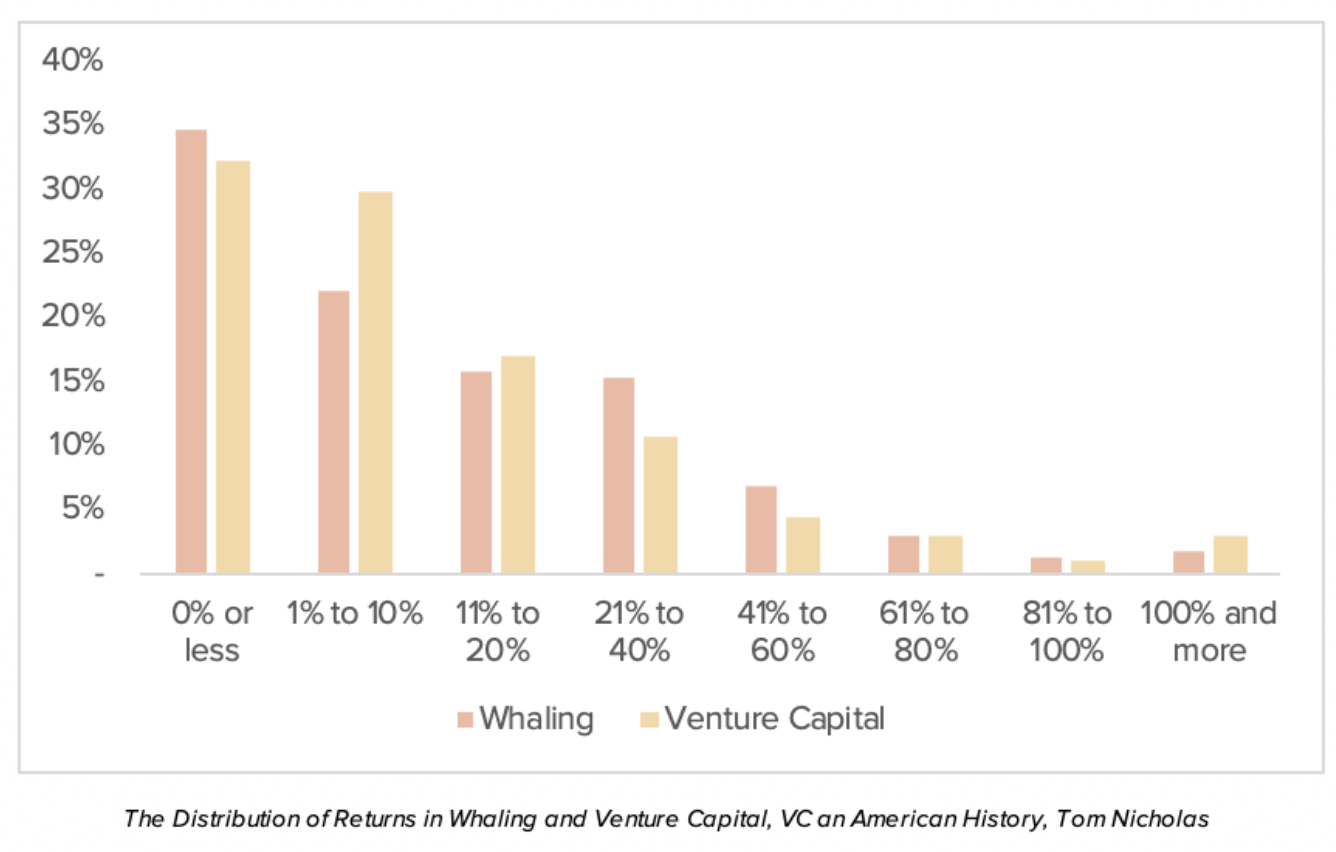
- You can read the details in VC: An American History by Tom Nicholas, but the TLDR has to do with risk and equity. Whaling, much like tech startups today, represented a majority-risk endeavor where only a small portion are big successes.
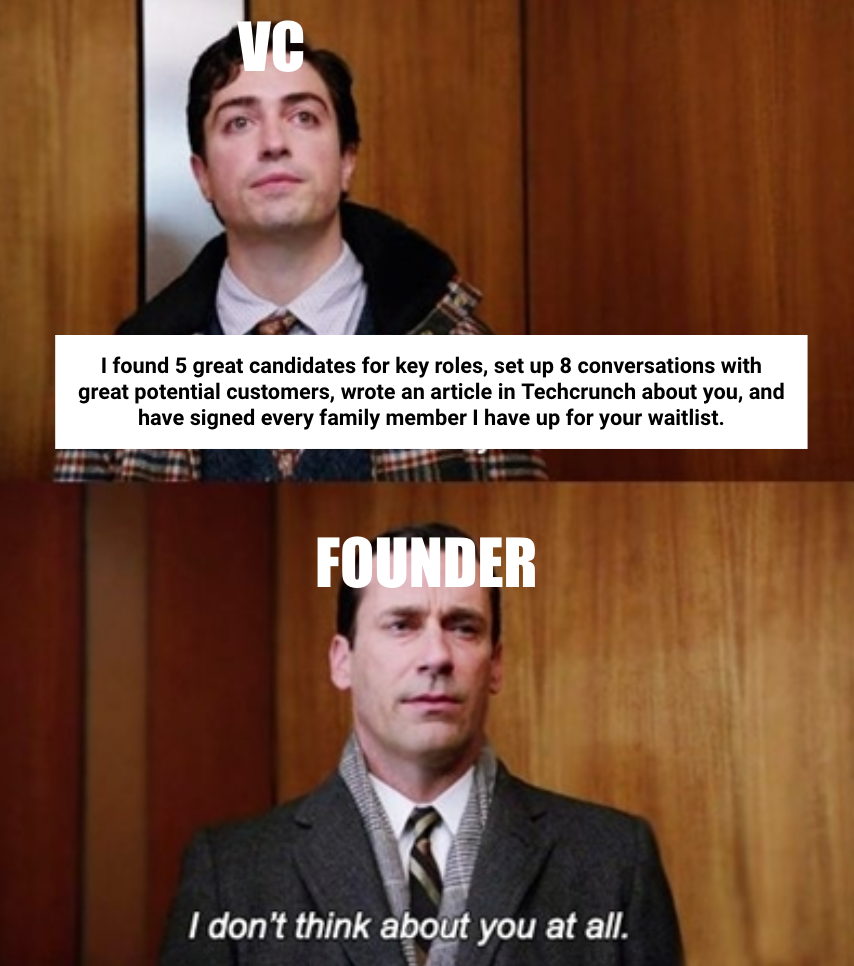
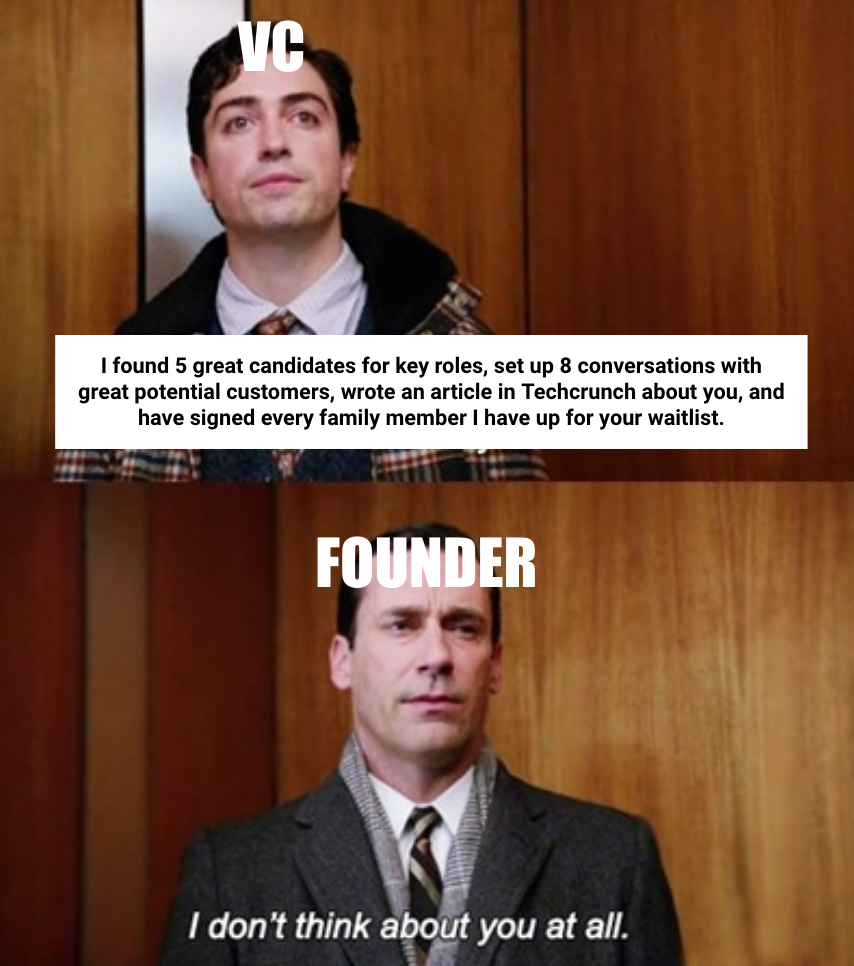
- “Having a distinct feel as a firm lets the people who jive with you opt in or out. The worst thing a founder can feel about you is nothing at all.” @EverettRandle
- The VC landscape is ever more crowded. Founders are confused and the picture is getting fuzzier. And as bad as it is to lose the opportunity to invest in a great company because you’re not the right fit it is even worse to be so unclear in your offering that they don’t even take time to think about you.
- I asked 90+ VCs at 70 different firms “what is your firms product?”
- {{DONE}} I don’t think about you at all
- Products can include groups of people, specific services, brand developed a particular way, or data-enabled technology. The key question is scalability. How do venture firms grow to take advantage of the opportunity they’re presented?
- Meritech the pitch is much more like a true partner. I know it’s cheesy but like each partner only does 1-2 deals a year and so their companies receive so much attention. A good example is in an expert call I heard the expert was going to drop one of our portcos. We immediately told the portco and now are calling in all favors to make sure it doesn’t happenz
- {{DONE}} ((QvXTiO1UA))
- While there are lots of services and offerings like community or talent these aren’t necessarily purpose-built for founders. Apply the same logic to a VC’s product as you do any other software product. What is the ideal customer profile? Saying your firm is building with founders in mind is like building a consumer product for humans. There’s no clear direction. There are thousands of different types of founders.
- Now there are over 4K companies with $1B+ in revenue. Within technology we crossed the 100 company mark in 2011. 100 companies with over $1B in revenue. In 2020 there were nearly 200 companies, having added 51 companies just in the last 5 years. Companies like RingCentral, DocuSign, Zendesk, Twilio, and Dropbox crossed the $1B revenue mark.
- {{DONE}} Align to what founders need (aka what companies need to succeed) vs. what you want
- ((vb7PqqFmg)) ((huBbIawFr))
- One of my favorite answers? Vibes.
- ((-th5_Dnjm))
- [SCREENSHOT and then include links so you can see them all in one tweet]
- {{TODO}} Examples of Product-Led Firms