The Context of Educational Deficiencies in Uganda
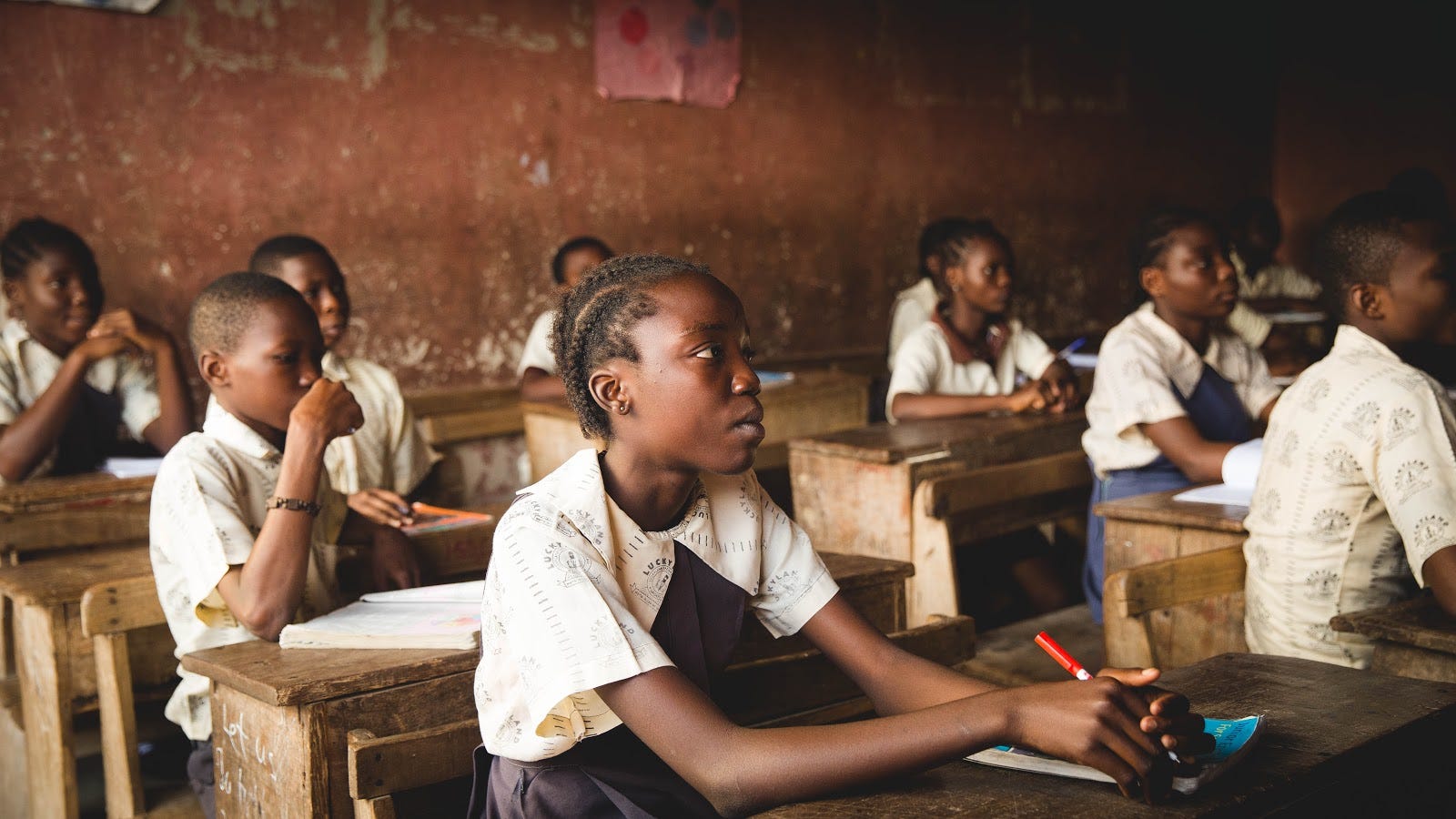
*Special thank to Felice An, Nicole Bennett, Jidy Chitta, Sergii Melnychuk, Andrea Rincon, Shantel Sanders, Johnny Gathright, and Natalie Tate for the rigorous research they did to complete this analysis.
Introduction: The Complicated Nature of the Problem
According to research compiled by UNICEF, as of 2013, 80–90% of Ugandan children participate in primary education. Unfortunately, by secondary school that number drops to 16–18% of children. Not only is there a significant drop-off of students attending school, those that do attend face a web of issues including: lack of food, hygiene, resources, and support. Education is particularly complicated because it involves various groups holding different perspectives. Many organizations approach education with a focus on symptomatic problems such as attendance, supplies, and funding. While these approaches can be beneficial, they do not get to the root of the problem.
The Conceptual Model
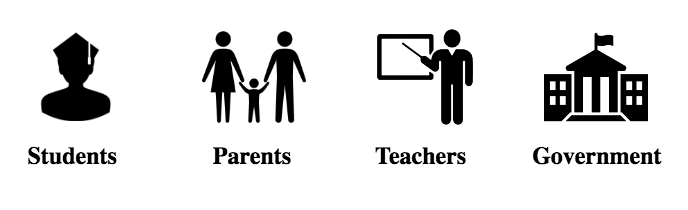
Instead, we recommend an approach that emphasizes a deeper understanding of the individuals involved: students, parents, teachers, and government. Our approach is to identify the interconnected issues within the Ugandan educational system by exploring people’s motivational context, creating a practical solution-oriented model. This contextual approach frames each group’s decision-making process and mutual interactions. By outlining these decision-making models, we can effectively identify the core issues within education and also create a tool that could aid other organizations to gain contextual perspective of the problems they face.
The concepts behind our model stems from behavioral economics, which provides a lens to consider the underlying causes of people’s decisions, and whether those decisions are optimal. Self-control is a finite resource that must be drawn upon whenever someone makes a decision. The harder the decision, the more self-control you need. People in developed countries “rarely need to draw upon [their] limited endowment of self-control and decisiveness, while the poor are constantly being required to do so.” The better we understand each participant’s underlying incentives, the more effectively we can design solutions to aid in making optimal decisions.
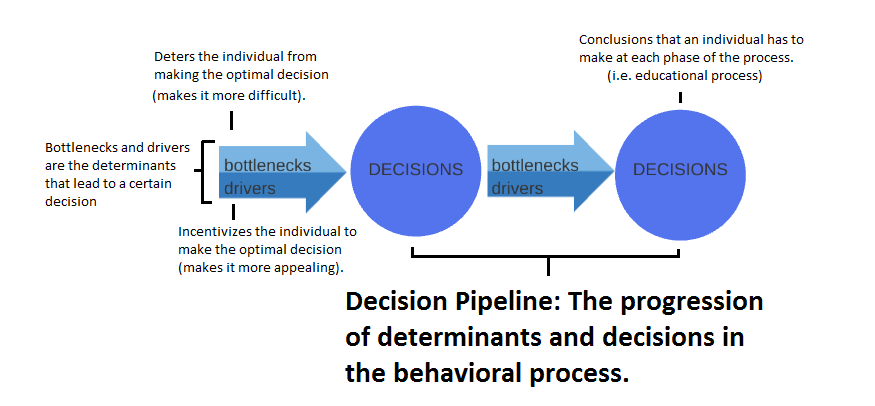
Below you can see a more visual representation of our research, which is also outlined in more academic rigor in the proceeding paragraphs.
The Highlighted Intricacies of the Problem Landscape
With our conceptual model, we identified five core issues that are deeply interconnected within the educational system in Uganda:
- Lack of Resources
- Lack of Accountability
- Lack of Effective Assessment
- Lack of Support Structure
- Decentralized Teacher Operations
Each area impacts at least two of these four groups:
Lack of Resources

One of the biggest bottlenecks preventing students from receiving a quality education is a lack of resources from the government, teachers, and parents. In 1996, the Ugandan government passed the Universal Primary Education policy (UPE) that provided facilities and resources to enable every child to enroll in primary school. This increased the student to teacher ratio to 150 students per teacher which prevented the government from providing free tuition, school resources, and uniforms. This high ratio caused students to have limited individual time with the teacher, leading to deficiencies in understanding and lack of resources such as additional tutoring and one-on-one attention.
Furthermore, financial resources are not disbursed regularly among urban and rural schools. In 2000 it was found that the expenditure per student in the capital city of Kampala was US $63, compared to only US $10 in the remote and poorest northern district of Kotido. Although, the UPE continues to provide free tuition for most students, it now requires students to pay for all other school supplies, exam fees, and uniforms. The median annual income in Uganda is only $520–640 USD. Most parents are unable to pay for these additional costs causing many students to drop out of school. In the early 2000s, it was found that in a class of 150, only 8 students moved on to college. High dropout rates are due to not only lack of government and teacher support, but are also worsened by an insufficiency of parental support. According to a 16-year old student in Kampala, she would be able to complete school only “if God wishes and if [her] mother gets money.”
Programs that are already in place focus on pouring moreresources into the educational system, however, by using a contextual approach, we can focus on allocating the existingresources more efficiently. Understanding the context of the government, teachers, parents, and students will allow us to diagnose the core problem of the lack of resources instead of only treating the endless surface-level problems.
Lack of Accountability

Authority and proper accountability are key determinants of behavior change. When organizations like the Parent Teacher Association (PTA) and school management committee had authority over employment and compensation of teachers, teachers were less likely to be absent and perform poorly. In addition “without inspection, there is an attitude of tiredness. In the urban areas, they might get inspected three times a year. In villages, often the teachers arrive late and leave early but they never get checked. Most of the time, children are on their own”. In fact, teacher absenteeism rates in 2009 were 27%, meaning that school staff will not show up to almost a third of their work days.
In terms of accountability, a contextual approach means that we understand that helping teachers become better teachers doesn’t necessarily make them more responsible. Instead, we focus on finding behavioral incentives that don’t just address symptoms of teacher apathy, but rather provide internal and external drivers for accountability.
Lack of Effective Assessment
Uganda’s school system has become overly focused on students’ test performances, as opposed to their knowledge retention. Because teachers focus solely on test results, the quality of education suffers. Furthermore, the feedback that students get doesn’t help them understand what needs to be improved, since it usually consists of only “good” or “bad” remarks. In addition, students that need special attention rarely receive help due to the disproportionate ratio of students per teacher. Even if teachers want to improve students’ experience, they are overwhelmed by the amount of content that needs to be graded.
Another important issue is that the school curriculum doesn’t facilitate personalized student learning experience. For example, many children aspire to become doctors or lawyers, but the curriculum doesn’t offer any opportunities for students to learn about potential careers. “Parents also feel schools do not create well- rounded individuals because they either exclude subjects such as art, sports, leadership skills and spiritual education or put little emphasis on the importance of these as they are not ‘testable’ subjects.” Lack of assessments prevent students from exploring different dimensions of the academic sphere in which they would excell.
In the current system, assessments not only fail to give students necessary feedback, but also forces them to focus on short-term test results. In a contextual approach, a change in assessments would help teachers, parents, and students focus on each student’s academic situation and the specific help they need to progress.
Lack of Support Structure
Due to lack of support from parents and teachers, students frequently drop out. Because UPE was implemented recently, the parents of current students often were not educated when they were children. The limited educational background and/or negative school experiences of parents leads to a lack of effort to help children stay in school. The parents are not necessarily naive to the broader benefits of education, they are just unaware of the level of interaction that is required to support and encourage their children. Before UPE, teachers and parents were able to effectively collaborate in support of the student’s education through the PTA. The UPE initially made this support illegal because the PTA involved funding from parents. This dramatically undercut the school’s ability to support educational standards. Although the government has attempted to recreate parent/teacher organizations, parents continue to withhold financial support and the initial purpose of these organizations are lost. Now, the network between teachers and parents is very weak, if not nonexistent. Parents do not feel welcomed by teachers, so they never offer support to the schools.
The undermining of the PTA and other policies weakened support structures throughout the education system. These decisions are a result of a lack of understanding of support networks across all four stakeholders. A contextual approach identifies decisions of mutual benefit in order to expose opportunities of collaboration and build up support structures.
Decentralized Teacher Operations
Decentralization refers to the relocation of primary decision-making authority to a local or lower level. In the case of the Ugandan educational structure, decentralization refers to a decrease in government involvement in the selection, training, and hiringof staff members. These important executive decisions tend to fall to those lead teachers who have been in the school district the longest but are not necessarily the most qualified to determine which teachers to hire. One of the main issues with this transfer of authority to the local level is that teachers who were initially selected do not get hired after the training period due to in-district biases and other conflicts of interest.
A contextual approach would seek to determine what causes bias at the local level when selecting teachers and then find a solution to overcome this bias. An example of a way to overcome bias would be for the government to allocate funds based on teacher performance in order to ensure a fair hiring process.
The Symptomatic Focus of the Solution Landscape
Various organizations like USAID, UNICEF, Aid for Africa, the NUHA Foundation, Educate Uganda, the Global Partnership for Education, and Save the Children have attempted to improve the educational system in Uganda. Their efforts focus primarily on access, whether that be to supplies (books, desks, classrooms), funding (school fees, school operational budgets), or attendance (proximity).
While all of these initiatives offer value to improving education, each organization’s strategy emphasizes a “lead the horse to water” approach, but fail to consider the thirst, or, in other words, why people do the things they do. Their approaches focus on things like ‘if we can just offer them supplies, if we can just get them to school, if they just had more money’ — these approaches fail to stop and understand the behavioral determinants each individual experiences.
Identifying Gaps: Utilization of the Conceptual Model
While we have applied our conceptual model to effectively outline five core gaps that are often not fully considered by organizations pursuing solutions, we have not unearthed every specific issue. Rather, the conceptual model could be applied to the decision pipelines of local businesses, community leaders, NGOs, and other stakeholders to more clearly map out the issues at hand. Utilizing the contextual approach, each perspective in any given issue can be better understood. The more deeply any organization understands the group they’re trying to help, and the more they become aware of the applicable needs, the more impactful the solutions will be. Our hope is that, in addition to our five focus areas, the contextual approach to education will shed light on the core drivers and bottlenecks that determine people’s decisions, and how we can better design solutions around their context.
Bibliography*
Personal Interviews*
Interview 1. Higher level official in the Ministry of Education, requested to be kept anonymous. [Interviewed by Kyle Harrison, and Shantel Sanders, 18 Feb. 2017]
Interview 2. 9-year old girl. Primary student. Requested to be kept anonymous. [Interviewed by Felice An, Kyle Harrison, Natalie Tate, 19 Feb. 2017]
Interview 3. 16-year old girl. Primary student. Requested to be kept anonymous. [Interviewed by Felice An, Kyle Harrison, Natalie Tate, 19 Feb. 2017]
Interview 4. 21-year old college student. [Interviewed by Nicole Bennett, 18 Feb. 2017
Kasey Beck, Founder of the Invictus Institute [Interviewed by Felice An, Kyle Harrison, Natalie Tate, 19 Feb. 2017]
Email Correspondence*
Lanyero Oyul, MSc in Education, Entrepreneur, Owner of recently opened KinderCare in
Kampala. [Conversation with Kyle Harrison, 15 Feb 2017]
Lizarazu Ian, Educational Instructor, Kampala. [Conversation with Kyle Harrison, 15 Feb 2017]
Journals & Articles*
Agaba, Adellah. “CHALLENGES IN UNIVERSAL PRIMARY EDUCATION — Red Pepper
Uganda.” Red Pepper Uganda. N.p., n.d. Web. 15 Feb. 2017. Available at:
http://www.redpepper.co.ug/challenges-in-universal-primary-education/
Bategeka, Lawrence, and Nathan Okurut. “Policy Brief 10.” Universal Primary Education | Uganda (Feb. 2006): 1–4. Secretariat of the Inter-Regional Inequality Facility. Web. 25 Feb. 2017. Available at: https://www.odi.org/sites/odi.org.uk/files/odi-assets/publications-opinion-files/4072.pdf
Baumeister, Roy E, Bratslavsky, Ellen, Muraven, Mark. Ego Depletion: Is the Active Self a
Limited Resource? (1998). Available at: https://www.psychologytoday.com/files/attachments/584/baumeisteretal1998.pdf
Bennell, Paul. TEACHER MOTIVATION AND INCENTIVES IN SUB-SAHARAN AFRICA AND ASIA. Thesis. Knowledge and Skills for Development, 2004. Print. Available at: https://pdfs.semanticscholar.org/0009/cc7e647c18899afbbf6b19a3362591fd8b32.pdf
Bird, Kate, and Kate Higgins. “Conflict, Education and the Intergenerational Transmission of Poverty in Northern Uganda.” Project Briefing 23 (Aug. 2009): 1–4. Overseas Development Institute. Chronic Poverty Research Centre. Web. 27 Feb. 2017. Available at: https://www.odi.org/sites/odi.org.uk/files/odi-assets/publications-opinion-files/4823.pdf.
Cardenas, Juan Camilo & Carpenter, Jeffrey. Behavioural Development Economics: Lessons
*from field labs in the developing world.*10 Nov. 2006. Available at: http://community.middlebury.edu/~jcarpent/EC499/Cardenas%20and%20Carpenter%20(2007)%20JDS.pdf
Crouch, Luis, and Winkler Donald. Governance, Managment and Financing of Education for
All: Basic Frameworks and Case Studies. 2008. Available at: http://unesdoc.unesco.org/images/0017/001787/178719e.pdf
Drajea, Alice J. “Influence of Parental Education and Family Income on Children’s Education in Rural Uganda.” Thesis. Trinity College Dublin, 2013. Global Education Review. Web. 27 Feb. 2017. Available at: http://files.eric.ed.gov/fulltext/EJ1055201.pdf
Datta, Saugato, and Sendhil Mullainathan. “Behavioral Design A New Approach to Development Policy.” CGD Policy Paper (2012): 1–33. Center of Global Development. Web. 27 Feb. 2017. Available at: https://www.cgdev.org/files/1426679_file_Datta_Mullainathan_Behavioral_Design.pdf.
“Equity of Access to Wash in Schools.” Center for Global Safe Water. Web. 27 Feb. 2017. Availble at: https://www.unicef.org/wash/schools/files/Equity_of_Access_to_WASH_in_Schools(1).pdf
Oirere, Milcah. “PERCEIVED EFFECTIVENESS OF DECENTRALIZED TEACHER RECRUITMENT IN PRIMARY SCHOOLS.” (2005): n. pag. Web. 27 Feb. 2017. Available at: http://erepository.uonbi.ac.ke:8080/bitstream/handle/11295/18571/MILCAH%20K.%20OIRERE%20M.%20ED%202005.pdf?sequence=3&isAllowed=y
Opolot-Okurut, Charles. STATISTICS IN UGANDAN SCHOOLS: CHALLENGES ON INSTRUCTION AND ASSESSMENT. Thesis. Makerere University, 2010. N.p.: International Association of Statistical Education, n.d. Print. Available at: http://icots.info/icots/8/cd/pdfs/invited/ICOTS8_10B3_OPOLOTOKURUT.pdf
Spears, Dean. “Economic Decision-Making in Poverty Depletes Behavioral Control.” The B.E. Journal of Economic Analysis & Policy 11.1 (2011): 1–41. Princeton University, 01 Dec. 2010. Web. Available at: https://www.princeton.edu/ceps/workingpapers/213spears.pdf
Marphatia, Akanksha A., Karen Edge, Elise Legault, and David Archer. “The Improving Learning Outcomes in Primary Schools (ILOPS) Project | Research Report on Parental Participation.” Politics of Participation: Parental Support for Children’s Learning and School Governance in Burundi, Malawi, Senegal and Uganda (May 2010): 1–40. Institue of Education University of London. Available at: http://www.actionaid.org/sites/files/actionaid/ilops_parents_final.pdf
Mpyangu, Christine, Eric Ochen, Eria Onyango, and Yovani Lubaale. Out of School Children Study in Uganda. Thesis. The Republic of Uganda, n.d. N.p.: Eriks Development Partners, 2014. Print. Available at: https://www.unicef.org/uganda/OUT_OF_SCHOOL_CHILDREN_STUDY_REPORT__FINAL_REPORT_2014.pdf
Wadesango, N., S. Machigambi, E. Mutekwe, A. Ndofirepi, and C. Maphosa. Impediments
Embedding Decentralisation of Teacher Recruitment Practices to Communities in Zimbabwe (2012): n. pag. KRE Publishers. Kamla Raj. Web. 25 Feb. 2017.
Van Den Berg, Roos, and Lissy Van Noort. “Parental Involvement in Primary Education in Uganda.” (2011): n. pag. Web.
THE DEVELOPMENT OF EDUCATION IN UGANDA IN THE LAST TEN YEARS Report
on the Development of Education for the 46th Session of (ice) 5th — 7th September 2001, Geneva, Available at: http://www.ibe.unesco.org/International/ICE/natrap/Uganda.pdf
Websites*
Anya. “The State of Education in Uganda.” Anya’s Blog. Word Press, 05 May 2013. Web. 27 Feb. 2017. Available at: https://anyawhitesideblog.wordpress.com/2013/05/05/the-state-of-education-in-uganda/
Bunting, Madeleine. “Debate: The State of Education in Uganda.” Katine Chronicles Blog. Guardian News and Media, 23 May 2008. Web. 27 Feb. 2017. Available at: https://www.theguardian.com/society/katineblog/2008/may/23/ugandawillachieveitsmillen
“Children of Uganda.” Aid for Africa. N.p., 18 Dec. 2016. Web. 20 Feb. 2017. Available at:
http://www.aidforafrica.org/member-charities/children-of-uganda/
“Education International — Uganda: Education Unionists Demand Fair and Decent Salary.” Education International — Uganda: Education Unionists Demand Fair and Decent Salary. Education International, June 2012. Web. 27 Feb. 2017. Available at: https://www.ei-ie.org/en/news/news_details/2183
“Education in Uganda.” NUHA Foundation — Education in Uganda. N.p., n.d. Web. 20 Feb.
- Available at: http://www.nuhafoundation.org/home/network/crps/uganda
“Educate Uganda.” Welcome to EducateUganda.org. N.p., n.d. Web. 20 Feb. 2017. Available at:
“Education | Uganda.” U.S. Agency for International Development. N.p., n.d. Web. 20 Feb.
- Available at: https://www.usaid.gov/uganda/education
Hodal, Kate. “UN Warns Universal Education Goal Will Fail without 69 Million New Teachers.”The Guardian. Guardian News and Media, 05 Oct. 2016. Web. 27 Feb. 2017. Available at: https://www.theguardian.com/global-development/2016/oct/05/un-universal-education-goal-fail-69-million-new-teachers-unesco
Kinyua, Wambui, Njoroge Jane Wanjiru, Sylas Ezekiel, Nashon Chiganga, Nyota Mercy, Isaac Arok Garang, and Ali Sugal. “Secondary Education.” School, Schools, Teachers, and Students — StateUniversity.com. State University.com, n.d. Web. 27 Feb. 2017. Available at: http://education.stateuniversity.com/pages/1587/Uganda-SECONDARY-EDUCATION.html#ixzz4ZcqKXJLO
Masinde, Andrew, and Conan Busing. “‘New Vision’ Awards Country’s Best Teachers. “Www.newvision.co.ug. New Vision, 7 Oct. 2016. Web. 27 Feb. 2017. Available at: http://www.newvision.co.ug/new_vision/news/1437139/-vision-awards-country-teachers
Muhaise-Bikalemesa, John. “Challenges Facing the Education Sector.” Fortune Of Africa — Uganda. Fortune of Africa, n.d. Web. 27 Feb. 2017. Available at:
http://fortuneofafrica.com/ug/challenges-facing-the-education-sector/
Muzaale, Fred. “Ganda: Government to Close Schools With Unqualified Teachers.” All Africa. N.p., n.d. Web. 27 Feb. 2017. Available at: <http://allafrica.com/stories/201509220385.htmlm>.
Mwesigye, Adrian. “The Advent of Universal Primary Education (UPE) in Uganda: Challenges and Possible Solutions.”Academia (2015): 1–12. Peaks Journals. Web. 27 Feb. 2017. Available at: http://www.academia.edu/11702973/The_advent_of_universal_primary_education_UPE_in_Uganda_challenges_and_possible_solutions
Mwesigwa, Alon. “Uganda’s Success in Universal Primary Education Falling Apart.” Millennium Development Goals: The Final Countdown. Guardian News and Media, 23 Apr. 2015. Web. 27 Feb. 2017. Available at: https://www.theguardian.com/global-development/2015/apr/23/uganda-success-universal-primary-education-falling-apart-upe
UNICEF. “Statistics.” UNICEF. N.p., 31 Dec. 2013. Web. 27 Feb. 2017. Available at: https://www.unicef.org/infobycountry/uganda_statistics.html
“The Millennium Development Goals.” United Nations Foundation. N.p., n.d. Web. 20 Feb.
- Available at: http://www.unfoundation.org/what-we-do/issues/mdgs.html?referrer=https://www.google.com/
Thompson, Derek. “Your Brain on Poverty: Why Poor People Seem to Make Bad Decisions.” The Atlantic. Atlantic Media Company, 22 Nov. 2013. Web. 27 Feb. 2017. Available at: https://www.theatlantic.com/business/archive/2013/11/your-brain-on-poverty-why-poor-people-seem-to-make-bad-decisions/281780/
“Uganda Desperately Needs Quality Teachers to Achieve Vision 2040.” Comment. The East Africa, 8 Aug. 2015. Web. 27 Feb. 2017. Available at: http://www.theeastafrican.co.ke/OpEd/comment/Uganda-needs-quality-teachers-to-achieve-Vision-2040-/434750-2824678-item-1-12bawf2z/index.html
“Uganda.” Global Partnership for Education. N.p., n.d. Web. 20 Feb. 2017. Available at:
http://www.globalpartnership.org/country/uganda
“Uganda.” UNICEF Uganda — LEARNING — Keep Children Learning. N.p., n.d. Web. 20 Feb.
- Available at: https://www.unicef.org/uganda/learning.html
“UNITED NATIONS GIRLS EDUCATION INITIATIVE.” UNGEI. N.p., n.d. Web. 20 Feb.
- Available at: http://www.ungei.org/infobycountry/uganda_181.html
“Uganda.” Save the Children. N.p., n.d. Web. 20 Feb. 2017. Available at:
http://www.savethechildren.org/site/c.8rKLIXMGIpI4E/b.6150481/k.C0C1/Uganda.htm
Wage Indicator. “Wages in Uganda. Wage Indicator Survey 2012.” Wages in Uganda. Wage
Indicator Survey 2012. N.p., n.d. Web. 20 Feb. 2017. http://www.wageindicator.org/main/Wageindicatorfoundation/publications/2012/wages-in-uganda-wage-indicator-survey-2012
Yates, Sabrina. “Uganda’s Struggling Universal Primary Education Policy.” The Borgen Project.
N.p., Nov. 2016. Web. 27 Feb. 2017. Available at: http://borgenproject.org/ugandas-struggling-universal-primary-education-policy/
“Youth Education & Development Issues in Uganda.” Youth Education & Development Issues in
Uganda. Foundation for Sustainable Development, n.d. Web. 27 Feb. 2017. Availalble at: http://fsdinternational.org/country/uganda/yeissues
Books & Media*
Allen, Reg and Outhred, Rachel. STRENGTHENING EXAMINATIONS AND ASSESSMENT IN
UGANDA: A ROADMAP (Feburary 2016)
Ariely, Dan. Predictably Irrational: The Hidden Forces That Shape Our Decisions. New York …: Harper Perennial, 2010. Print.
Baer, John, James C. Kaufman, and Roy F. Baumeister. Are We Free?: Psychology and Free Will.
Oxford: U, 2008. Print.
Banerjee, Abhijit V., and Esther Duflo. Poor Economics: A Radical Rethinking of the Way to
Fight Global Poverty. New York: PublicAffairs, 2012. Print.
Bertelsen, Preben. Free Will, Consciousness, and Self: Anthropological Perspectives on Psychology. New York: Berghahn, 2006. Print.
Kasente, Deborah. “Gender and Education in Uganda.” Thesis. Makerere University, 2003. Print.
Forgas, Joseph P., Roy F. Baumeister, and Dianne M. Tice. Psychology of Self-regulation: Cognitive, Affective, and Motivational Processes. New York: Routledge, 2009. Print.
Kavuma, Richard M. “Free Universal Secondary Education in Uganda Has Yielded Mixed Results | Richard M Kavuma.” Poverty Matters Blog. Guardian News and Media, 25 Oct. 2011. Web. 27 Feb. 2017. Available at: https://www.theguardian.com/global-development/poverty-matters/2011/oct/25/free-secondary-education-uganda-mixed-results
Skog, Ole-Jørgen, and Jon Elster. Understanding Choice, Explaining Behaviour: Essays in Honour of Ole-Jørgen Skog. Oslo: Unipub, 2006. Print.
Thaler, Richard H. Misbehaving: The Making of Behavioral Economics. New York: W. W.
Norton, 2016. Print.
Walsh, James, and Karla Hoff. “Bringing Behavioral Economics to Development | Brookings
Institution.” Brookings. Brookings, 28 July 2016. Web. 27 Feb. 2017. Available at: https://www.brookings.edu/blog/future-development/2015/05/19/bringing-behavioral-economics-to-development/
Other Acknowledgments*
Picture credit, free use, available at: