Networked Conviction 001
If you’re reading this, then that means you’re one of the 63 inaugural Investing 101 paid subscribers. Or you’re checking out the free teaser at the beginning for free users. In either event… Welcome!
Last week, I introduced the idea of a paid tier not because I’m looking to replace my income from investing. But because I was looking for a second promise. My first promise was when I launched this blog in January 2022: just don’t miss a week. Weekly consistency would build a habit in a way that seeking perfect writing wouldn’t. My second promise?
“I’ll commit to sharing at least a weekly entry in my investing journal, Networked Conviction, if not more (depending on how much context I come across that week). For folks who pay for my Substack, the goal is to offer a deeper, more unfiltered cut of my thinking and research. Knowing that people are paying for it forces me to take it seriously.”
So thank you. For letting me make a promise. Now let’s see if I can keep it as well as I’ve kept my first.
The goal of Networked Conviction is meant to be an avenue for three things: (1) portfolio updates on my active investing, (2) my own Request For Startups as I come across ideas worth exploring, and (3) generating investing ideas, lessons, and frameworks. For this first week, I’ve started with that last one: three investing lessons.
Getting Rich Slowly
First, some context.
I have a pod of fellows that I worked with at my first real investing job at TCV after I sold my first company. The four of us meet once a month to catch up, but more often than not we end up riffing on what we think are the most interesting investing ideas. One observation I made recently in that group, and my first investing lesson this week, is that often the best ideas feel obvious.
A few months ago I wrote a piece called Conviction-Led Contrarianism. In it, I ended with a “playbook for pursuing conviction-led contrarianism unto deviance.” One of the points I made is critical here:
Don’t be afraid to accept what’s obvious, if it’s true. Chris Paik made the point that, despite FAANG driving the majority of public market returns over the last few decades, many public investors avoided them because they were “too obvious.” In Paik’s words, “they wanted to be right AND clever.” Our conviction may not always lead us to contrarianism. It may just lead us to new beliefs that are widely held.
That idea of people wanting to be “right AND clever” reminded me of a few other similar encapsulations of that idea. The first comes from Ronnie Coleman:
“Everybody wants to be a bodybuilder, but nobody wants to lift no heavy-ass weights.”
An even better version of this idea comes from a conversation between Jeff Bezos and Warren Buffett. At one point, Bezos asked Buffett, “why doesn’t anyone copy you?” Buffett responded, without missing a beat: “Because no one wants to get rich slow.”
Wanting to be clever. Wanting to get rich quick. The ever present siren’s song of FOMO. These are psychological traps that keep people engrossed in hype cycles and fringe ideas. The reality is that many, many good ideas are obvious.
One example from my personal experience comes from Nvidia. ChatGPT launched in late 2022. Over the course of 2023, a common discussion topic was “what’s the AI bet?” Frequently, I would make the joke, “probably just buy Nvidia.” After the first four or five times, I realized that was an idea worth taking seriously. So I did. And it paid off.
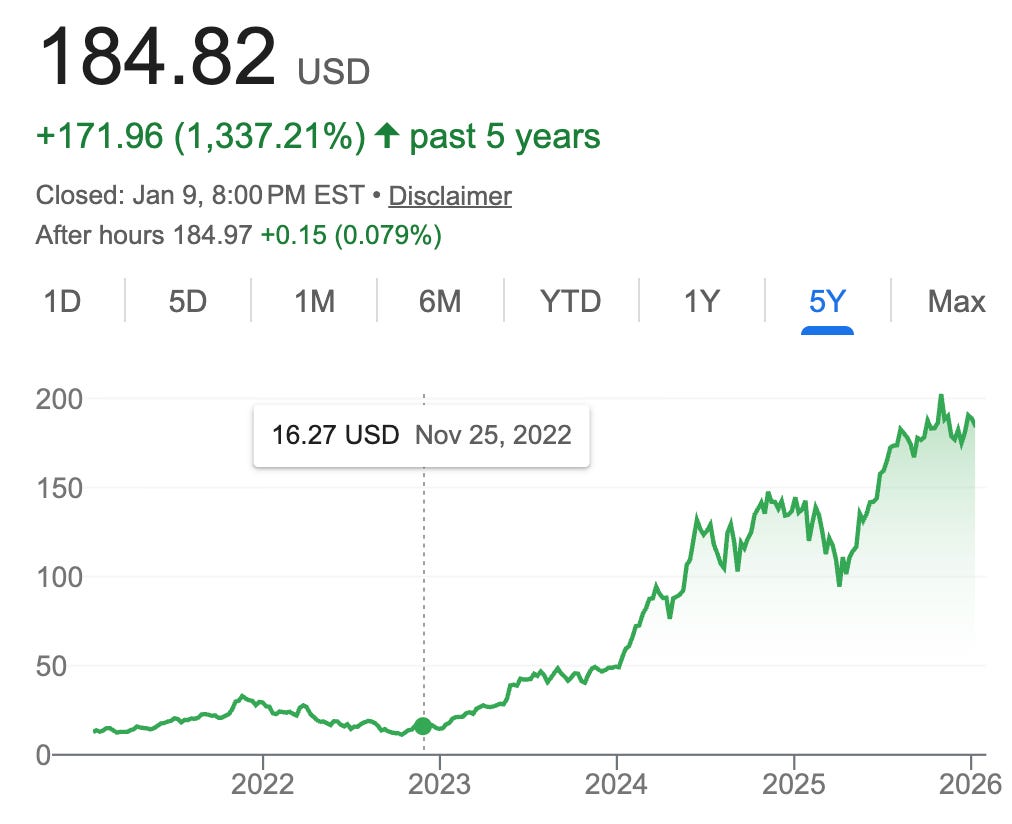
Ideas like that; ideas that feel so obvious that its more of a joke than a pitch, they often turn out to be quite accurate. So I try and pay attention when I stumble on obvious ideas.
Public Markets
Insert standard boilerplate disclaimer here: This is for entertainment and educational purchases only and does not constitute investment advice. Alright. Moving on.
My second investing lesson came from that same conversation with my TCV pod. One of my friends had some liquidity and was wondering where the most interesting place was to put some money in public markets.
Now, I’m no public analyst. And some people think that you’re better off focusing on a very specific stage, sector, etc. But most of my career has been split. Of the five investment firms I’ve worked at, two of them have been active crossover investors. I’m of the opinion that learning to analyze businesses across the spectrum makes you a more well-rounded investor. So, when I thought about where to put capital my thinking lent itself to the public markets.
As I reflected, my framework came from a foundation of that concept: obvious ideas. The manifestation ended up in two hypothesis: (1) software is over-sold, and (2) the biggest are going to get bigger.
The Over-Selling of Software
There are plenty of people who have done a better job than me of expounding on this, but the TLDR thesis revolves around how convinced the markets are of the AI narrative. Companies popping off over the slightest news, like an OpenAI deal that may never materialize, or even things like Jensen Huang saying new chips won’t need cooling, and shares of major heating / cooling companies plummeting.
Mostly Borrowed Ideas is someone you should be following if you’re not already. He had a post about how “the first trading day in 2026 was the worst day for software stocks since 2009 (and third worst in the last 20 years).”
The thinking is that AI will eat software; it’s only a matter of time. My thinking is that this is over blown. That doesn’t mean AI is fake or will have no impact. But the reality of AI is a compelling medicine without many effective delivery mechanisms. How do you take a technical capability and get it into human, error-prone processes? Don’t get me wrong, there are a number of AI companies that will figure it out to great success (many already have). And there are many traditional software companies that will die at their hands. But the death of software more broadly is greatly exaggerated.
So, despite it feeling like a boring thesis while everyone else is tripping over themselves to predict the future of AI, the obvious idea is likely that there are a core subset of software companies that will be net benefactors of AI. But it isn’t all of them. As a result, this exercise requires homework.
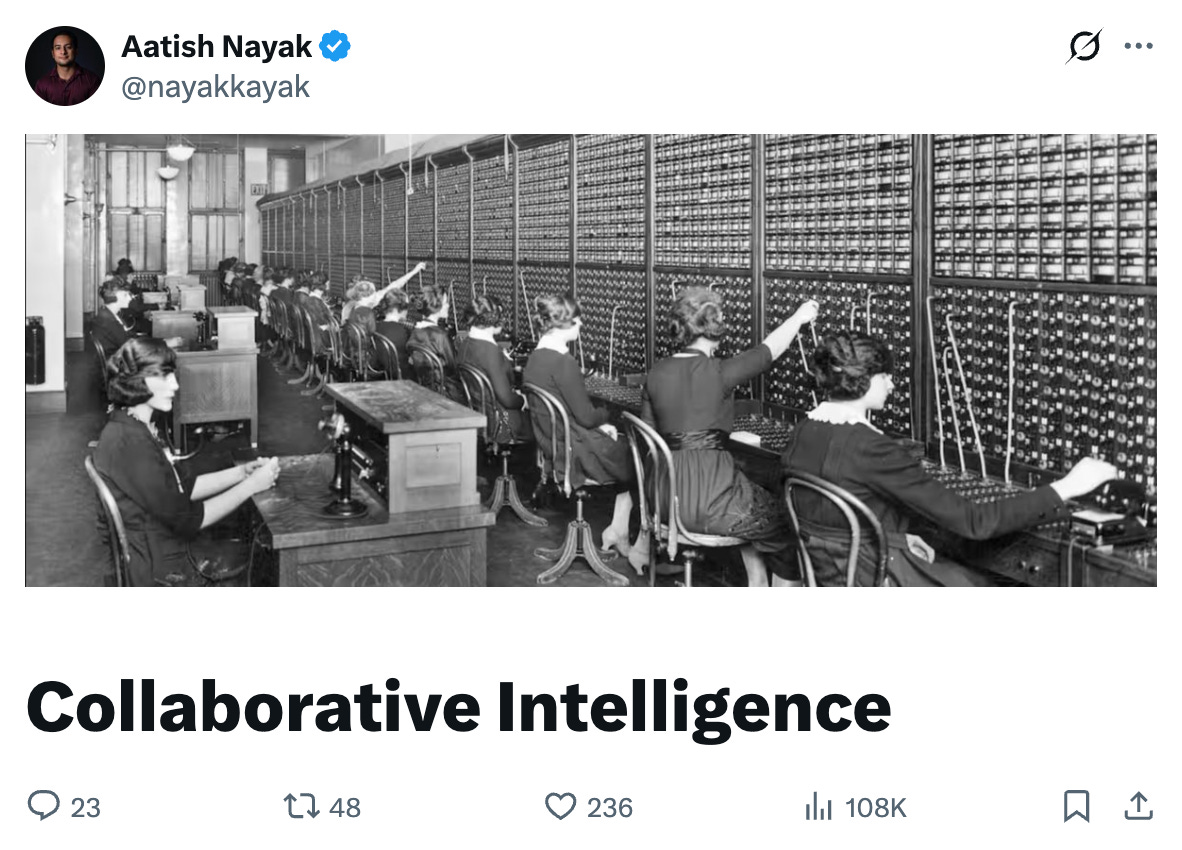
FinTwit can be an excellent place to find thoughtful perspectives on these companies, whether it’s Atlassian ($TEAM)…
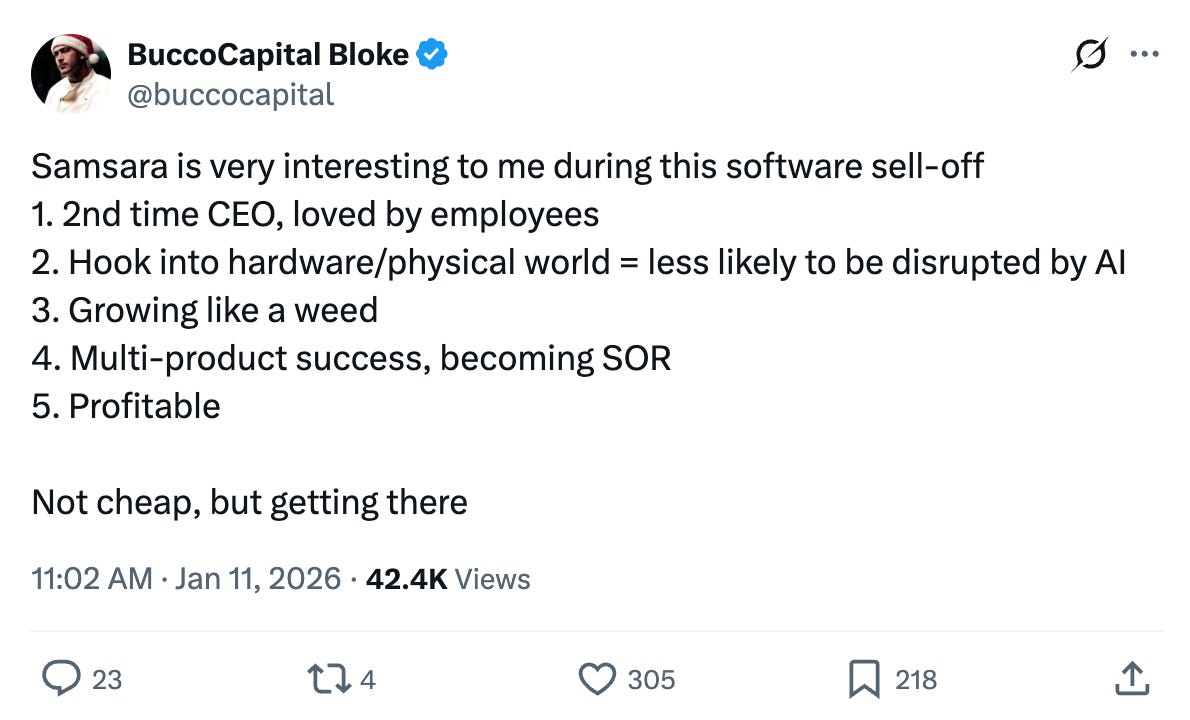
Or Verkada…
 Source: Twitter
My idea around this particular thesis is that (1) its the hiding in plain sight idea, and (2) it isn’t just picking fruit up off the ground; it takes work. But if you’re willing to put in the work I believe there are generational buying opportunities around identifying high quality software companies that have strong businesses independent of AI, but are also advantaged by AI.
The Big Get Bigger
The second obvious idea is that the bigger continue to get bigger. That point earlier about being “right AND clever” was made around exactly the point I’m going to make now. It also stems from a personal experience. In 2021, another one of my fellow TCV pod-mates sold me on the opportunity for Meta. The combination of Instagram, WhatsApp, the massive user base, and how that could continue to compound. So in April 2021, I bought for the first time. Then, over the course of 2022, Meta saw a massive sell-down.
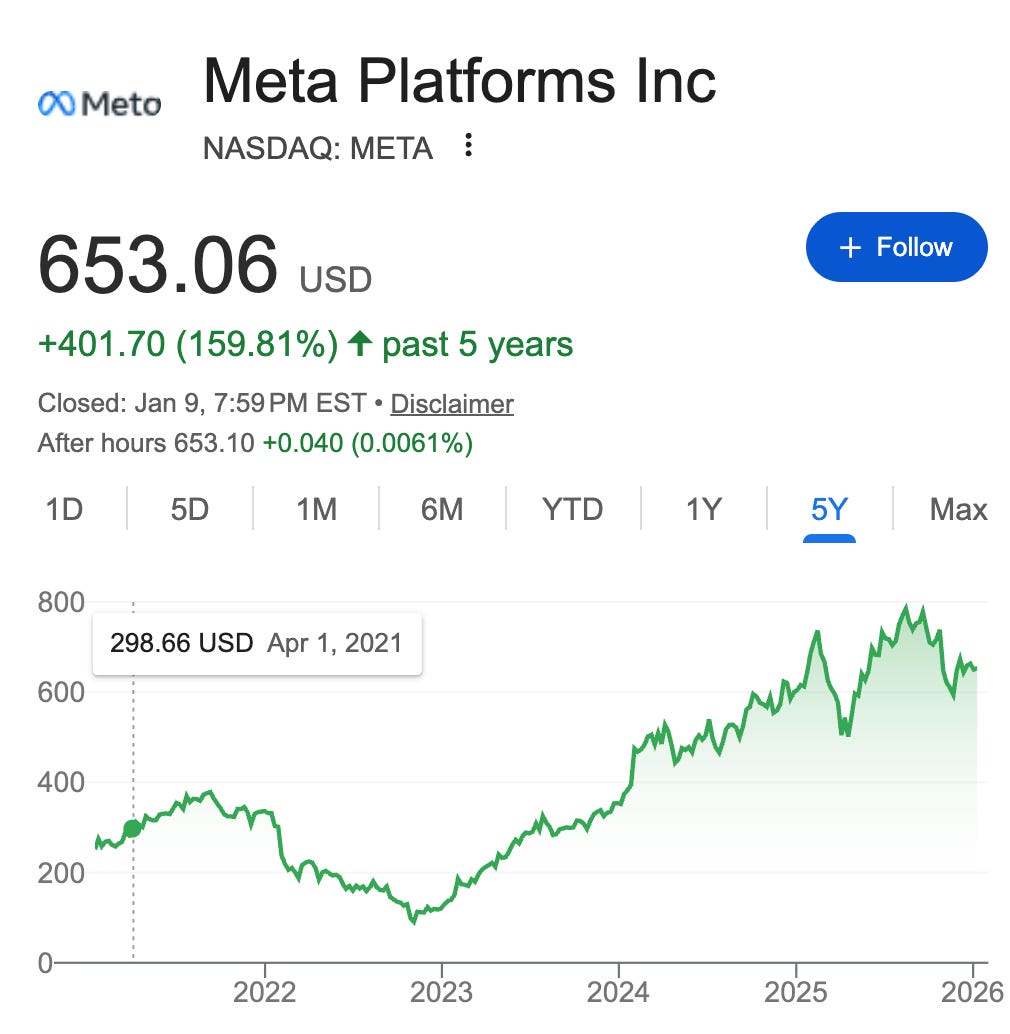
But the thesis didn’t change. So I bought the dip. The punishment was largely off of a VR allergic reaction. Meta changed its name at the end of 2021. Meta got to a low of $90, largely off that allergic reaction. But the thesis held. The company had a massively well-diversified base of products, users, and revenue. So buying all the way down felt obvious. But very few people committed to it.
I’d had the same thesis around Google. Google was everyone’s favorite AI loser. It felt like they’d rested on their laurels and lost out. Google languished for quite a while until early 2025. Then, everything started to come together. They won an anti-trust case, avoiding having to spin off Chrome. Gemini started to perform. And on and on. People came to appreciate that Google could be just as AI-positioned.
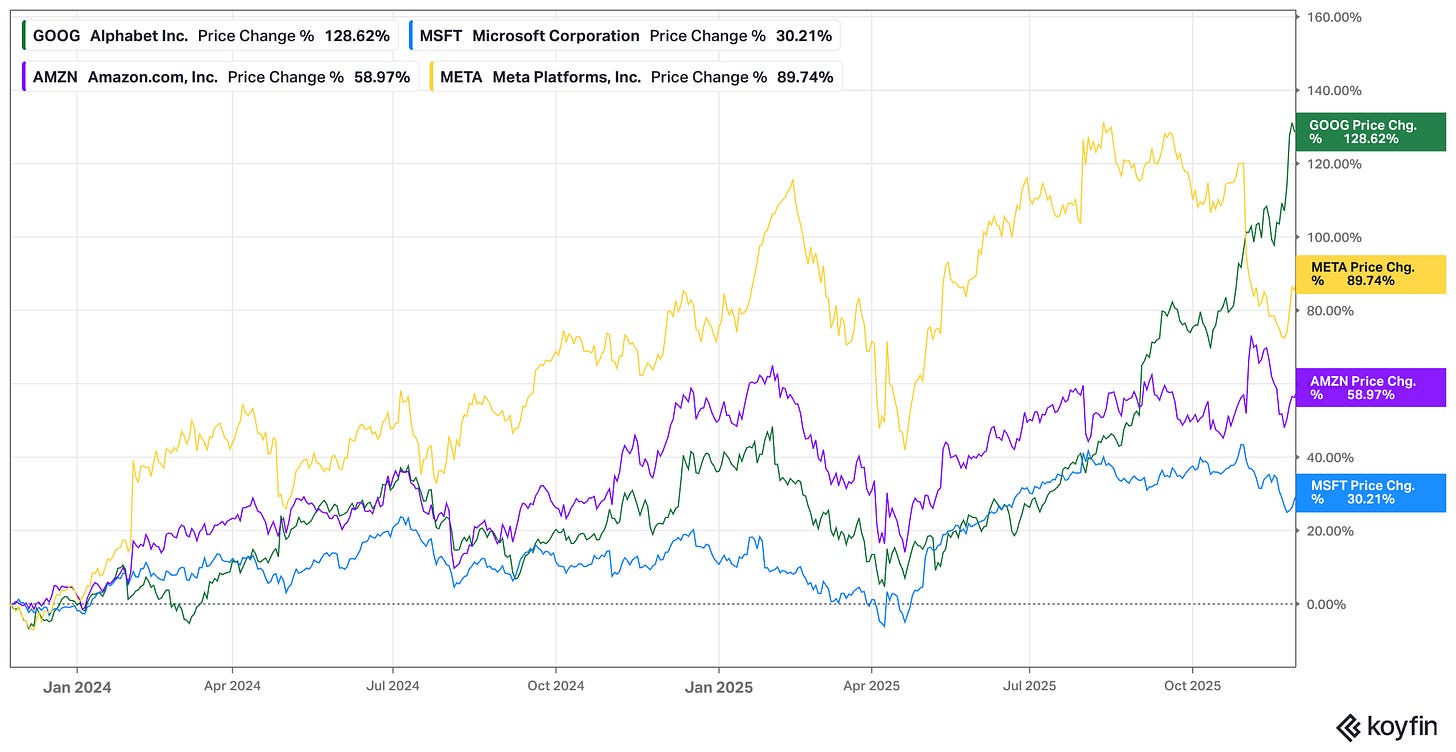
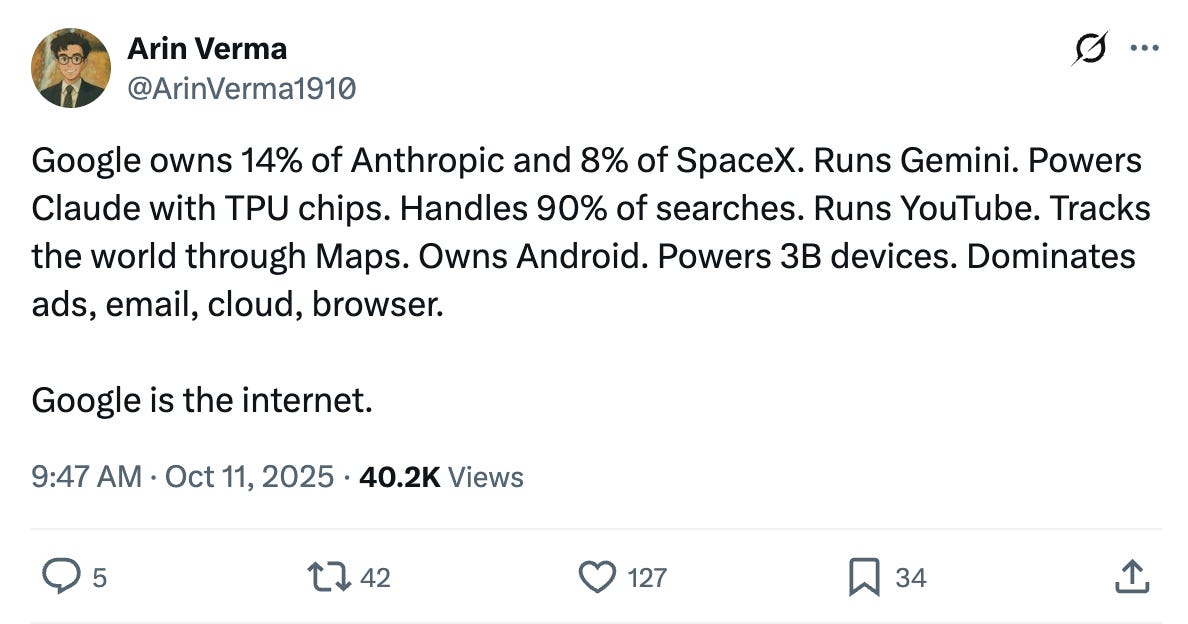
Sure. Meta performed in the past. Google did the same more recently. But surely the big can’t keep getting bigger, right? But here’s the obvious idea. They can. The Google thesis is just as strong today. See the list below (which even fails to include a massive position Waymo, among other bets).
 Source: Twitter
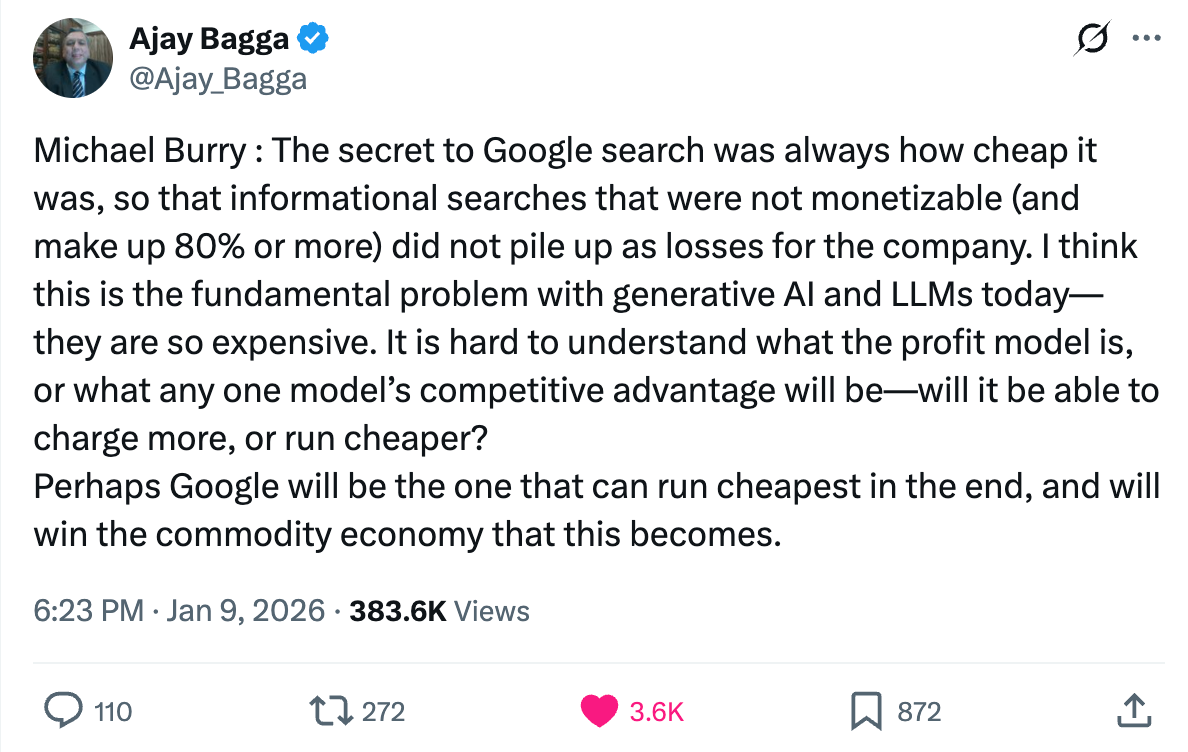
Beyond just the consistent well-diversified base of revenue, users, and bets, Google also has a viable AI bet. What if, as the point below makes, Google is able to, once again, become the cheapest commoditized AI provider around. More, even, than Anthropic or OpenAI.
 Source: Twitter
Now, I don’t mean to over-index to points that Michael Burry makes. As one of my co-conspirators from the TCV days accurately points out, Burry hasn’t been right about anything since the housing crisis. But this underlying diversification point holds across the hyperscalers.
 Source: Times of India
For this thesis, the obvious idea is that (1) the empires that have been built by Amazon, Google, Microsoft, and Meta are more akin to nation states than typical large businesses, and (2) the center of gravity will continue to hold for each of them barring some substantial Black Swan that decapitates their business. Outside of that, scale will actually make it easier to accrue value, not harder. Peter Thiel made the same point recently in regards to selling Facebook too early:
“The incorrect view I had back in 2012 was that it was fractal up to $100 billion… that somehow going from $100 billion to $1 trillion was much harder. In retrospect, going from $100 billion to $1 trillion was maybe the easiest.”
So… once again, I believe there is an obvious opportunity to buy either a basket or individual names among these nation states and, over the course of the next 5 years, say, continue to see massive value creation. If I was deploying capital to this strategy, I think I’d go all in on Google for the long-term. But that’s just me.
Sourcing 101
Finally, I’ll end with my third investment idea. A quick one. This third idea comes from a reflection of gratitude on growing up with a sourcing culture. My pod at TCV and many that came before, and have come since, were all trained to take an intense and systematic approach to sourcing. Build a pipeline, refine your mechanism for prioritization, and then pursue it relentlessly. I’m grateful for the solid mental framework that training provided me. There’s no problem that a good list and some hustle can’t fix.
Therefore, What?
There is one core thread I can see throughout each of these. The idea of being willing to do uncomfortable things. Get rich slow. Buy into obvious ideas. And finally… just do the work.
I’m looking forward to having a promise and a reason to pull out these insights from me each week. I may potentially get consistent enough that I can fire them off as they come, rather than just once a week. So. Until next time!