Don't Die With Your Music Still in You
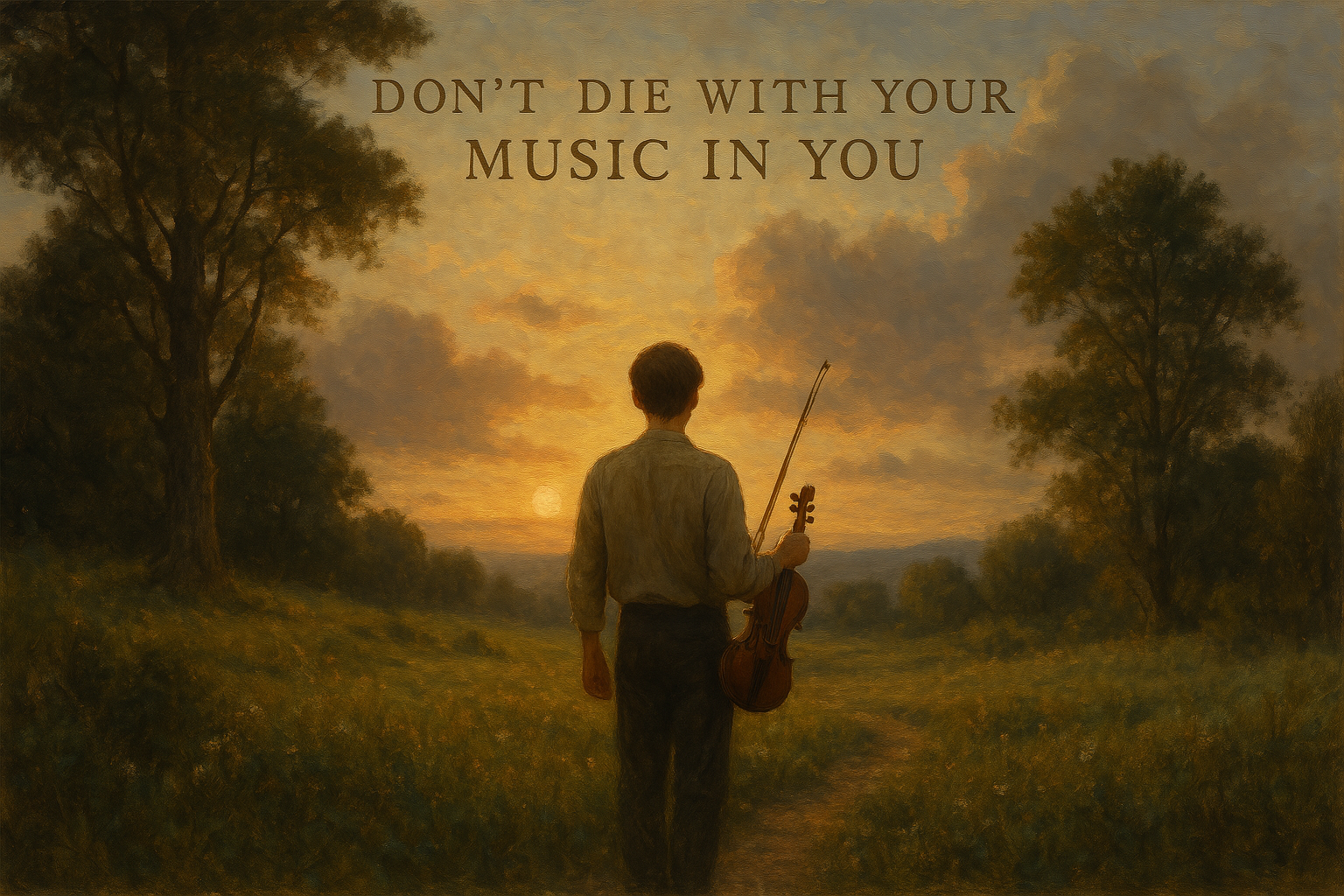
Knowledge is a burden. But, like any productive effort, we often carry a burden for a reason. We carry it towards something.
For most of my life I’ve been obsessed with note taking. I often feel the pressure of the knowledge I’ve amassed. Perspectives, playbooks, processes. They all jumble together, and I often feel them tumbling out. When I talk with people, I often say “here’s three threads that makes me think of.” And in those moments when I can share a snippet of thought or recited wisdom, I feel ever so slightly unburdened. Sharing the knowledge both justified why I carried it in the first place, and allowed me to alleviate the load — sharing the responsibility with someone else.
I remember listening to a sermon in 2013 when I heard the phrase, “don’t die with your music still in you.” And that phrase struck me.
At several different phases of my life, I’ve tried to encapsulate what I felt was my “music.” After my mission for my church, after college, after I finished one of my first investing jobs. I tried to create a canonical document that encapsulated everything I had learned. On my personal website, I referenced some of those collections on a page called My Music.
But I also have nuggets that have guided me through my life; different notes I’ve had played at different times:
- Whatever you are, be a good one.
- Don’t rain on somebody’s hustle.
- Prepare for the worst, and expect the best to come from it.
- Don’t look to complain. Look to improve.
Each of us has some version of the things we learn that guide our actions. I’ve written before about the moral obligation of wisdom acquisition. In it, I referenced a talk by Charlie Munger:
“The acquisition of wisdom is a moral duty. It’s not something you do just to advance in life. And there’s a corollary to that idea that is very important. It requires that you’re hooked on lifetime learning. Without lifetime learning, you people are not going to do very well. You are not going to get very far in life based on what you already know. You’re going to advance in life by what you learn after you leave here.”
So that knowledge we’re gathering? That isn’t a nice to have. It isn’t even just a helpful resource. It’s a moral imperative. Attaining knowledge is like writing music. We write music not because we want to, but because we have to.
Writing Music
For some people, your music becomes a collection of guiding principles. Some great examples include Morgan Housel’s Permanent Assumptions. He describes his music this way:
“Some things are always changing and can’t be known. There can also be a handful of things you have unshakable faith in – your permanent assumptions.”
Others, like Patrick Collison, collect it in bulleted lists of advice, or like Visa Veerasamy, in lists of “30 things I learned by 30.” Each of these are attempting to do the same thing: take the music they’re feeling swirl around them and then reaching out to capture it.
One of the reasons people feel so drawn to create is because thats how you write the music. Whether its writing, tweeting, singing, talking, making videos, rapping, building, crafting — we’re reaching out to the things swirling around in our hearts and heads, and then doing what we can to live up to what we feel like we’ve been given.
In Greek mythology, that’s what the relationship with the Muses entailed. In Hesiod’s Theogony, the Muses are described this way:
“They plucked and gave me a rod, a shoot of sturdy laurel, a marvellous thing, and breathed into me a divine voice to celebrate things that shall be and things that were aforetime.”
So the question is, what is your rod? What have you been given? What is your burden of knowledge? What music is inside of you? And, more importantly, are you willing to share it?
Why We Sing
Beethoven talks about how he considered killing himself. In reflection on why he didn’t end it all, he had this to say:
“Art! Art alone, deterred me. Ah! how could I possibly quit the world before bringing forth all that I felt it was my vocation to produce?”
And this is indicative in the seemingly incontrovertible drive that pushes so many ambitious people. It’s not a function of want, or logical aspiration. It’s a physical drive on a level that can rarely be easily articulated.
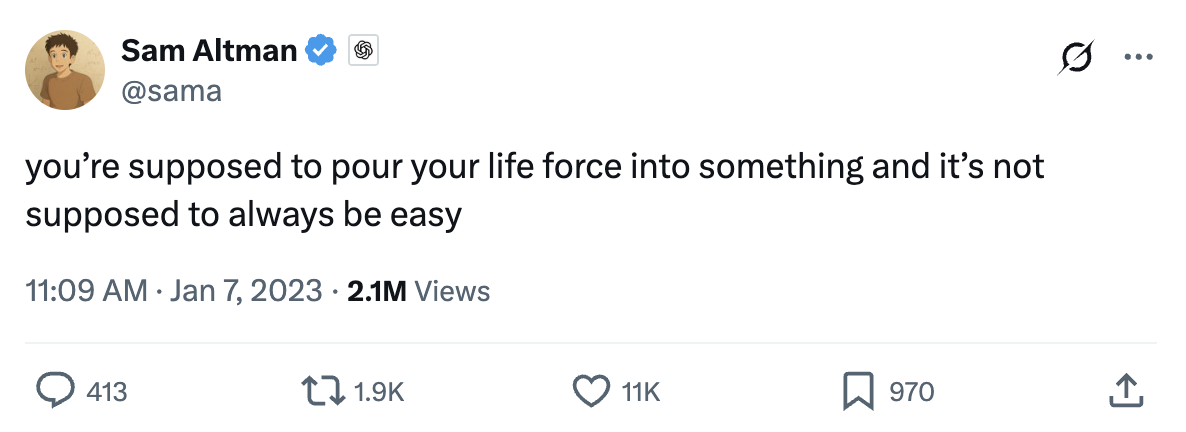
The moral duty of acquiring wisdom is not for the sake of wisdom itself.
Granted, you can learn something for the sake of learning and never do anything about it.
You can hear beautiful music and never do anything about it.
You can see a passionate image and never do anything about it.
But the moral duty goes unfulfilled. Knowledge, music, passion, art. These things exist to move us. And “move” is an action word. It is not enough to feel, or to know. We must do.
So the question is, “what will you DO with the music still inside you?” And my hope is that your answer is not simply, “Die.”